
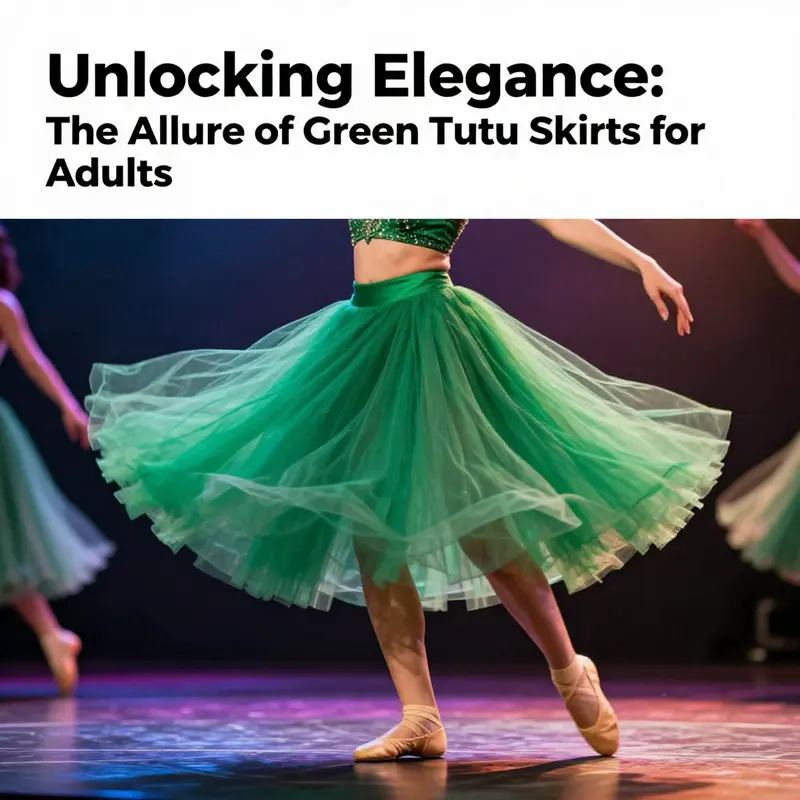
Green tutu skirts for adults offer a unique blend of style and functionality, making them a must-have for various performers, including ballet dancers, cosplayers, and event attendees. As a business owner, understanding the nuanced aspects of these skirts — from material quality and design features to cost-effectiveness and versatile performance applications — can empower you to make informed purchasing decisions. This comprehensive guide delves into each critical area, shedding light on the factors that influence the appeal and utility of green tutu skirts for adult buyers.
Silhouette That Moves: A Thorough Material Inquiry into the Green Tutu Skirt for Adults
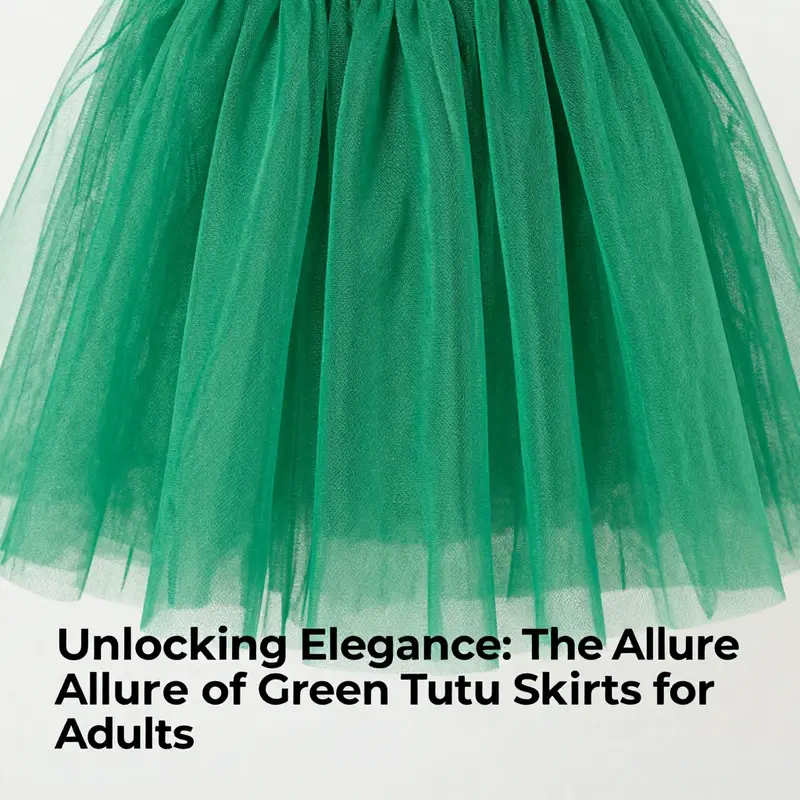
The green tutu skirt for adults is more than a whimsy of color and form; it is a carefully chosen tool that shapes motion, mood, and memory on stage, in clubs, and at costume events. When designers, performers, and hobbyists select a tutu, they are not merely picking a piece of apparel. They are selecting a fabric story, a staging device, and a level of comfort that can carry a performance from a breathy flutter to a confident, expansive glide. The material commonly chosen for these adult-ready tutus is a lightweight, flexible tulle, most often presented in soft, airy layers that catch air as the wearer moves. This fabric choice matters as much as the silhouette itself because the material determines how the skirt responds to a dancer’s leaps, spins, and even those slow, deliberate poses that punctuate a performance. The tactile experience—the way the fabric brushes the skin, the feel of the waistband against the torso, the whisper of each layer as the wearer shifts weight—contributes to confidence just as much as the choreography does. In the material narrative of the green tutu, comfort and versatility sit at the core of its appeal, enabling wearers to blend dance, cosplay, party ambiance, and casual whimsy into a single, wearable statement.
The construction details that repeatedly surface in material discussions center on two features: the waistline and the layering. The waist is typically finished with a satin elastic band. This combination—satin against skin with elastic in the back—provides a snug yet forgiving fit, accommodating a range of body shapes and movement demands. The satin texture adds a touch of smoothness that reduces pinching and helps the skirt stay in place as the torso contorts through turns and extensions. The elastic component is essential, because it broadens the skirt’s usable range without requiring individual tailoring. For adults who want to share the same playful aesthetic with a friend or partner, a waist that can flex from a more compact measurement to a larger one is a practical gateway to wearing the garment in a variety of contexts, from rehearsal to post-performance celebrations. The result is a versatile piece that respects the wearer’s comfort while preserving the ceremonial lift that a tutu promises.
Beyond the waistband, layering is the structural heartbeat of the tutu’s silhouette. A three-layer construction is a recurring standard in the design philosophy of many adult tutus. This configuration creates a full, globe-like flare that translates well under stage lighting, yet remains light enough to avoid fatigue during long performances. The layers are arranged to fan out from the waist, forming a full-circle or semi-full silhouette that enhances the waistline’s definition while providing room for movement. The three sturdy layers are balanced with the fabric’s inherent lightness; this balance is what yields that iconic, buoyant look—an effect that photographers and choreographers note for its ability to capture motion even in still frames. While some variants experiment with more layers to intensify volume, the central aim remains the same: a flattering, flexible profile that supports both short bursts of speed and slower, controlled gestures without weighing the wearer down.
Color fastness is another practical consideration tied to the material choice. Polyester-based tulle, the fiber family most commonly associated with adult tutus, is prized for its color persistence. The green hue in particular benefits from the dye technologies used in synthetic fibers, which are designed to resist fading under stage lights, UV exposure from photographs, and repeated washing or dry-clean cycles that the garment might encounter in its lifespan. While the exact fiber composition may vary by producer, the broader expectation in this category is a polyester-dominated fabric that offers durability without sacrificing the airy feel that defines the tutu’s charm. The result is a skirt that remains vibrant—whether it is worn for a bold theatrical piece, a cosplay event, or a festive nightclub appearance—without the color mood shifting over time.
Movement is inseparable from material choice in this domain. The fabric’s weight, texture, and drape guide how air flows around the wearer during spins and step-work. A tutu made from soft tulle is inherently light, enabling rapid, airy motion without introducing significant drag that could hinder performance. The interplay between fabric weight and layering also influences how the silhouette reads to an audience. In low light, the gliding motion of the green skirt can read as a soft, luminous halo around the dancer’s legs; under bright stage lighting, the color appears saturated, and the layers catch highlights in a way that accentuates the choreography’s dynamics. The goal is a garment that feels almost invisible in its comfort while remaining visually expressive in every gesture.
Durability, a frequent concern for adults who intend their tutu to be more than a one-off costume, remains closely tied to the fabric’s fiber content and construction methods. While the precise blend details may not always be publicly disclosed by every maker, the prevailing expectation in this market is a robust, non-fraying fabric structure. Polyester fibers resist unraveling at the cut edges and tolerate repeated wear and machine-safe cleaning, making them practical for regular use. This resilience matters when the wearer is performing in a club or festival setting where quick costume changes or frequent handling might occur. The skirt’s ability to withstand bending, twisting, and repetitive movement without losing its shape is essential to maintaining performance quality and wearer confidence. The three-layer design also plays a role in durability: multiple layers distribute stress more evenly across the fabric, reducing the chance that a single strand will fail at a seam during an intense routine.
Care and longevity are another axis of material concern, especially for adults who will invest in a tutu for extended use. Polyester-based tulle usually tolerates gentle machine washing or hand washing, but care instructions can vary by dye lot or by the presence of decorative elements; some variants may feature trims or embellishments that require more careful handling. In general, air-drying helps preserve the fabric’s shape and the integrity of the elastic waistband. The less fragile the fabric, the more forgiving the garment is for performers who rely on quick wardrobe changes between scenes or performances, or for party-goers whose outings might involve dancing from dusk until late. The overall impression left by the material is one of a practical luxury: a product that feels special in the moment yet remains sensible in daily use.
From the perspective of fit, aesthetics, and practicality, the green tutu skirt for adults often balances structure with flexibility. The silhouette benefits from a full or almost-full circle, which helps conceal underlayers, allowing for a clean profile from front to back. At the same time, the waistband and the layers must work in concert to prevent the garment from riding up or settling awkwardly during motion. The elasticized waist, in particular, is a focal point of comfort, enabling wearers to secure the skirt without constriction. Given the variety of body types among adult wearers, this adaptability is not an afterthought but a core design principle. It ensures that the tutu can be shared among friends, used in group performances, or trialed by beginners without the fear of an ill-fitting piece undermining the performance or the mood of the event.
In practical terms, a green tutu that uses these materials and construction techniques provides a versatile platform. It is equally at home in a ballet-inspired performance, a cosplay event, a masquerade party, or a casual social setting with a touch of whimsy. The turquoise or emerald greens that often characterize the palette offer an accessible, camera-friendly color that pairs well with neutrals, metallics, and complementary hues. A dancer can layer the tutu over a leotard or pair it with a cropped top for a more contemporary look, or treat it as a costume anchor for a full thematic ensemble. The uniformity of the three-layer design means most wearers will experience a consistent silhouette regardless of how often they edge into turns, plies, or slow, deliberate poses that require balance and grace. The result is a garment that remains faithful to its core purpose: to augment movement with a silhouette that breathes, rises, and glides as one with the body.
The products shaped by these design and material choices embody more than the sum of their parts. When a wearer slides into the green tutu, the experience is not merely about color or fashion; it is about how the fabric and construction support the expressiveness of the moment. The soft tulle feels comfortable against the skin, the satin elastic waistband keeps the garment secure without pinching, and the layered structure ensures a generous, flattering silhouette that still permits the freedom to dance. For performers who require a reliable base garment that can carry multiple looks through a single performance or a series of events, these material and construction choices deliver a practical confidence. For casual wearers, the tutu offers an opportunity to explore playful self-expression while enjoying a level of comfort and ease that a more rigid or heavy costume might not permit.
As the broader market for adult tutus grows, so too does the opportunity to understand how material choices shape usage. Readers exploring related designs can benefit from considering not only the color and decorative elements but also how the fabric, waistband, and layering interact with their specific activities. The green hue, in particular, serves as a versatile anchor color that can be paired with both warm and cool tones, enabling a wide range of styling possibilities without requiring specialized underlayers or accessories. For those who want to learn more about various tutu foundations and how they influence overall form and function, a deeper dive into the basic tutu categories can be illuminating. See the basic tutu category for a concise guide to how foundational silhouettes influence material choices and movement across different performance contexts. basic tutu category
In sum, the material analysis of the green tutu skirt for adults points to a design that thoughtfully combines comfort, durability, and expressive potential. The soft, airy tulle layered in a three-piece structure, anchored by a satin elastic waistband, yields a silhouette that is both flattering and forgiving. The polyester-based fabric lends color longevity and resilience, making the garment suitable for frequent wear in diverse settings—from rehearsal studios to crowded dance floors. The balance of structured volume and flexible comfort supports a range of activities, ensuring that the wearer can explore the choreography, the character, or simply the mood of the moment with confidence. This is not merely a piece of clothing but a wearable canvas that invites movement and imagination. The green tutu thus stands as a practical embodiment of how material science and creative design converge to produce an accessory that is at once functional, expressive, and enduring. An understanding of these material truths helps wearers select the right tutu for their needs and helps designers refine future iterations to better meet the demands of adult dancers, performers, and party enthusiasts alike. As color, silhouette, and motion continue to evolve in this space, the fundamentals—soft tulle, a comfortable waistband, and thoughtful layering—remain anchors that empower wearers to move with purpose and grace.
External resource: https://www.amazon.com/Adult-Tutu-Skirt-Classic-Elastic/dp/B0CZV7KXJY
From Avocado to Orbit: The Design Language and Movement of Green Tutu Skirts for Adults
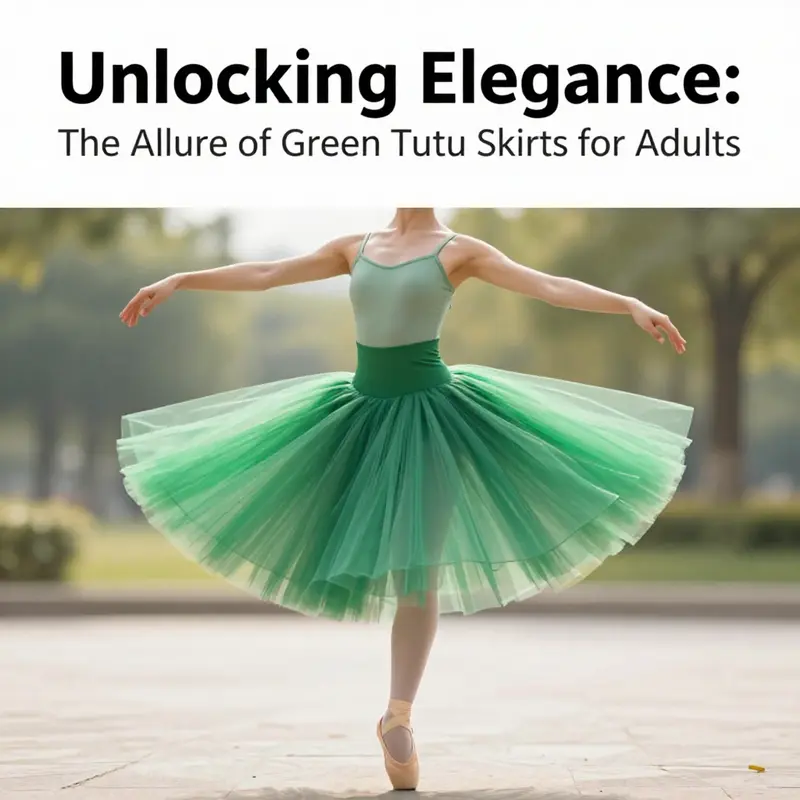
A green tutu skirt for adults is more than a costume; it is a study in movement, color, and balance that translates studio technique into street-ready whimsy. Designers pair a high waistband with a multi-layered silhouette in hues ranging from avocado to a deep forest, using lightweight fabrics like chiffon blends or tulle to create volume that breathes with every spin. The color must flatter a wide range of skin tones and lighting conditions, while the layers are cut to hold form without stiffness, so performers can move freely while the garment preserves its iconic silhouette. Careful construction, durable fabrics, and thoughtful finishing keep the tutu looking vibrant after rehearsals, trips to venues, and long performances, making it a reliable anchor for both professional shows and playful weekend wear. In practice, the design invites imagination: pair with simple tops for a bold pop of color, or layer with complementary accessories to highlight performance energy while remaining adaptable to different settings.
Green Tulle, Real Value: Navigating Cost-Effectiveness in the Adult Green Tutu Skirt
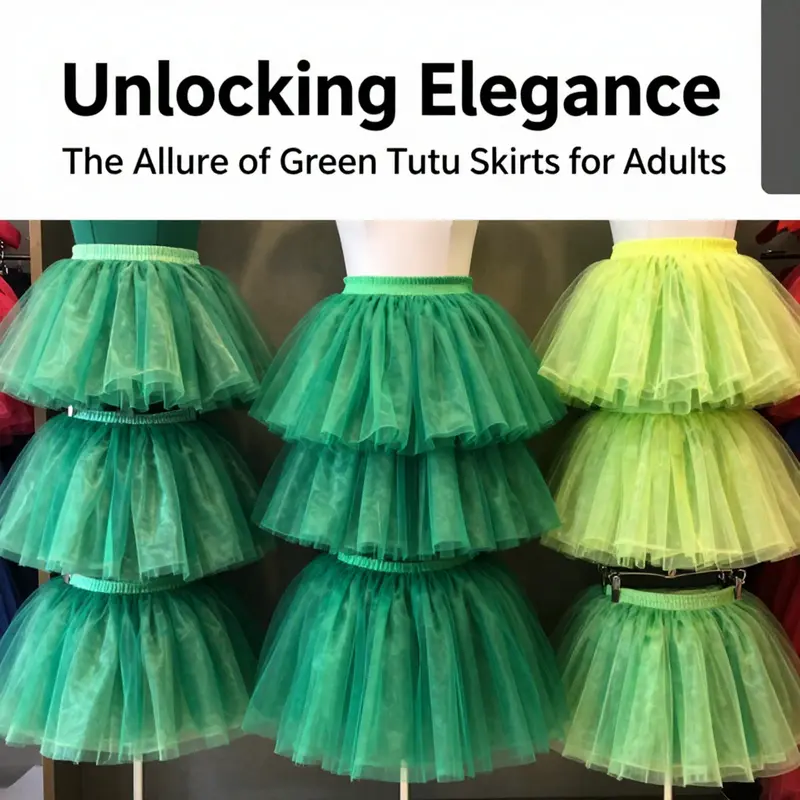
The appeal of a green tutu skirt for adults goes beyond color and whimsy. It sits at the intersection of performance practicality and personal expression, offering a wardrobe piece that can adapt to a range of occasions—from formal stage moments to playful theme nights. In evaluating cost-effectiveness, it is essential to look beyond the sticker price and examine how the garment performs across use cases, how long it lasts, and what the total ownership experience feels like. When the greens are so vivid and the silhouette so unmistakable, the question becomes not only how much the skirt costs, but how well it serves the wearer under real-world conditions. A well-chosen green tutu can deliver reliable volume, comfortable movement, and enduring appeal, turning a single piece into a versatile asset in a costume chest or dance kit. The cost-to-value equation hinges on several interwoven factors, from material choice to construction, from fit to after-purchase care, and from one-off purchases to bulk orders for lessons, performances, or themed events. Understanding these facets helps buyers, whether professional performers, hobbyist dancers, or costumed enthusiasts, to optimize both upfront spend and long-term enjoyment.
Material choice sits at the core of cost-effectiveness. Modern adult tutu skirts tend to favor lightweight, durable polyester tulle, a fabric known for its balance between structure and airiness. This material supports crisp movement, holds shape through dynamic spins and jumps, and dries relatively quickly after cleaning. The inherent durability reduces the risk of snagging or tearing during rehearsal runs, costume changes, or crowded events. In practice, the polyester tulle also tends to resist the ordinary wear that often accompanies frequent use, especially in busy performance calendars or party seasons. For anyone valuing low maintenance, the ability to machine wash or hand wash the skirt without losing its fullness is a meaningful savings in time and effort. The tulle’s translucence is subtle enough to maintain an elegant silhouette while still allowing the celebrated green hue to pop under stage lighting, outdoor illumination, or a dimly lit party atmosphere. These material traits collectively support a longer lifecycle, which in turn lowers the cost per wear and reinforces the garment’s value proposition.
The design architecture of an adult green tutu also informs cost-effectiveness. A common configuration features multiple layers arranged to create the classic tutu silhouette without overwhelming bulk, often described in industry terms as a three-layer or higher arrangement. A three-layer structure, when executed with careful attention to edge finishing and uniform layer separation, can yield a full, round skirt that reads clearly from a distance yet allows for intimate, close-up movements. Full-circle construction—where the circumference of the waist accommodates a generous sweep of fabric around the wearer—enhances the visual impact with modest fabric use, optimizing both fullness and ease of movement. The waistband design is equally consequential. An adjustable waist, frequently built with elastic or a drawstring system, accommodates a wide range of waist measurements, enabling one skirt to serve multiple body types and changing sizes. In practical terms, this translates into longer product life for the wearer and fewer replacements over time, a subtle but meaningful cost advantage for individuals who anticipate fluctuating needs or plan to share the garment within a dance troupe or family of performers.
Color options and finish details also shape value, particularly for buyers who want to match a specific theme or character. A green tutu skirt for adults is typically offered in several hues within the green spectrum, ranging from lime to forest tones, with add-ons such as subtle shimmer or matte finishes. While some buyers prefer brighter, more saturated greens for festival or carnival vibes, others opt for deeper greens for more formal or storytelling requirements. The ability to request custom colors or shades on a bulk basis can further tilt the cost equation in favor of larger groups or recurring productions. Customization, however, tends to influence unit cost and lead times, so it is wise to weigh the value of a precise color match against the convenience of ready-to-wear options. For individuals who crave batch consistency for a show or event series, designing the exact shade at scale can yield both visual cohesion and economy of scale, translating into lower costs per unit as volumes rise.
One of the most persuasive elements of cost-effectiveness lies in the transactional experience itself. The market for adult tutu skirts has evolved to include a broad spectrum of pricing strategies, with many options positioned in an affordable middle ground. A standard range often observed across major online platforms places widely available green tutus in the modest budget range, particularly when purchased as ready-to-wear items without bespoke embellishments. For the buyer, this translates into the possibility of acquiring multiple skirts for a cast, a troupe, or a family of performers without compromising the ability to still access quality materials and stable construction. The broad availability translates into competition among sellers, which can drive prices downward while maintaining acceptable standards of durability and finish. Seasonal promotions—think seasonal sales cycles and careful timing around holidays—are especially beneficial, creating opportunities for meaningful savings. The prospect of free shipping and free returns becomes a meaningful part of the value proposition, reducing the effective cost by removing common post-purchase frictions and enabling easier experimentation with fit and color.
From a consumer psychology standpoint, cost-effectiveness is also about risk reduction and confidence. The best purchases in this category combine a fair price with reassurance about fit, care, and durability. The ability to return a garment if it does not meet expectations is a powerful lever in the decision-making process, particularly for buyers who are acquiring a tutu skirt for the first time. The presence of generous return windows and clear care instructions reduces the perceived risk of trying a new style and fosters a willingness to invest in a higher-quality option when needed. In practice, the most satisfying experiences are those where price meets performance and where the garment remains a reliable companion across multiple events. In a customer feedback snapshot that has circulated in industry reviews, a lime green option achieved a highly favorable rating for shipping speed, communication, and seller reliability. While such anecdotes cannot stand in for broad data, they reinforce the idea that value is not solely about price but about the direct experiences of people who rely on these garments for important moments in their personal and professional lives.
Bulk and custom design options add another layer to the cost-effectiveness story, especially for groups that use tutus repeatedly across a season or year. Suppliers with manufacturing roots in large textile hubs can offer lower unit costs when orders are placed in bulk, given fixed setup costs and economies of scale. The main caveat is that bulk pricing often comes with longer lead times and higher minimum order quantities. For schools, dance studios, or event organizers, this is a trade-off worth negotiating: paying a little more per unit in exchange for faster delivery, easier sizing management, or a cohesive look across a lineup of performers. In markets where producers instrument flexible production, buyers may access custom design options at lower unit costs when they commit to larger quantities, especially if the design requires standardized dimensions or shared component systems like an adjustable waistband. When contemplating bulk orders, it is prudent to specify essential features such as layer count, waistband range, and color reproducibility to avoid scope creep and ensure that the final shipment meets expectations without surprises.
Care and maintenance contribute significantly to long-term cost effectiveness, and the practical realities of wearing a tutu skirt should inform initial choices. With polyester tulle, care routines tend toward straightforward processes. Most tutus tolerate gentle machine washing or careful hand washing, followed by air drying. This keeps the fabric free from stiffness and maintains the flow of the skirt during performances and photoshoots. Avoiding high heat in drying and ironing is important, as excessive heat can distort the shape of the tulle or affect the integrity of the elastic waistband. Proper storage is another efficiency factor. Hanging the skirt or laying it flat ensures the layers do not bunch and crease, which helps preserve fullness and reduces the need for frequent reshaping. For event planners and busy performers, practical care routines can save time, avoid last-minute wardrobe malfunctions, and minimize impulse purchases driven by worn-out or misshapen garments. In short, durable construction and simple maintenance procedures multiply the value of an investment, turning a modest upfront cost into a long string of wear opportunities.
Fit and sizing represent a critical hinge between price and performance. The most cost-effective choices are those that fit comfortably across a broad range of body types, as the wardrobe more readily adapts to different performers without requiring specialized alterations. An adjustable waistband is one of the simplest and most effective solutions. It accommodates a wide spectrum of waist measurements, reducing the need for separate sizing options or tailoring services. A thoughtfully designed tutu will also balance the silhouette by maintaining proportional fullness in relation to the wearer’s height and torso length. When the fit is right, movement feels easier and more natural, which translates into better performance, less fatigue, and fewer wardrobe incidents that require quick fixes during a show or a party. Buyers should measure accurately and compare waist and hip dimensions, as well as torso length, to ensure the skirt pairs well with other elements in the costume ensemble. In practice, the best value emerges when a single skirt can serve multiple roles, moving from a casual performance to a themed event with only minor accessory changes.
The path to cost-effectiveness also benefits from thoughtful integration with other wardrobe elements. A green tutu skirt can harmonize with a range of tops, jackets, or corsets, allowing the wearer to craft different looks from a single base piece. This capacity for mix-and-match styling amplifies the value of the investment, particularly for individuals who attend a variety of events throughout the year. The color versatility of green offers additional opportunities to coordinate with complementary hues, metallic accents, or patterned accessories, enabling a variety of on-stage personas or party appearances without additional purchases. In other words, the green tutu becomes a canvas rather than a single costume, expanding its utility and, by extension, its cost per wear. For performers and hobbyists alike, this adaptability is a decisive factor when weighing whether to purchase multiple tutus or to optimize a single, well-chosen option.
For readers seeking pathways to explore options without becoming overwhelmed, a practical recommendation is to consider a basic tutu category as a starting point before venturing into more specialized branches of the category. The basic tutu serves as a dependable baseline, offering essential fullness, comfortable fit, and straightforward care, while allowing room for personalization through color accents, accessories, or coordinating pieces. Deliberate exploration within the basic category can reveal how much variety exists within a simple framework and how much value such a garment can offer over time. This approach aligns with a broader strategy of prudent experimentation: begin with a solid, cost-effective foundation and expand only when a clear need or opportunity arises. For readers who want to investigate further, the basic tutu category acts as a gateway to more elaborate options without committing to the complexity or cost of specialized lines. To explore this route, consider visiting the basic tutu category page and examining how different silhouettes, layers, and waist adjustments affect both comfort and perceived value. basic tutu category.
In the broader landscape of choices, the ultimate message is clear: cost-effectiveness is not a single price point. It is a synthesis of quality materials, thoughtful construction, flexible sizing, and practical care, all aligned with the wearer’s intended use. A green tutu skirt for adults can deliver a lively aesthetic and a reliable performance platform when approached with a balanced eye toward upfront investment and long-term return. Buyers who calibrate their purchasing decisions with attention to layer structure, waistband adaptability, and finish quality will likely derive more uses and more joy from the garment than from a purely price-driven impulse buy. The value emerges most clearly when a single piece remains functional across different contexts, from a late-night carnival parade to a staged rehearsal, a cosplay meet-up, or a charity event with a color-coded theme. In these contexts, the green tutu becomes more than a costume accessory; it becomes a flexible tool that supports movement, mood, and memory. And in that sense, cost-effectiveness is not merely about dollars saved, but about the confidence to perform, the ease of care after performance, and the freedom to experiment with color and form without fear of waste or regret.
External resource: https://www.amazon.com.au/dp/B0CQYJZ9KX
Green Grace in Motion: The Performance Versatility of an Adult Green Tutu Skirt
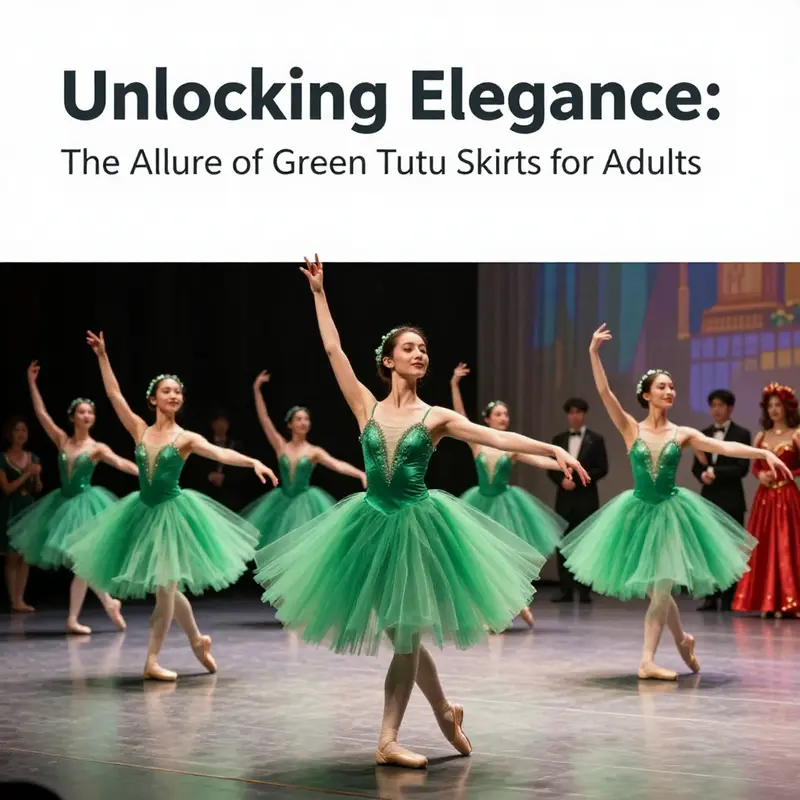
In the world of stage dress, few pieces manage to be both a signature silhouette and a flexible workhorse the way a green tutu skirt for adults does. It is not merely a costume accent or a decorative layer; it is a tool that can redirect a performer’s presence, reshape a scene’s mood, and expand the range of characters an ensemble can present. When the fabric catches the light, when the layered tulle swirls in a measured, gravity-defying arc, the wearer moves with a different cadence. The green tutu, especially in adult sizing, becomes a point where artistry, technique, and playful imagination meet. This is not a singular function garment but a versatile instrument in the dancer wardrobe. Its true power emerges when it is viewed through the lens of performance practice rather than as a mere aesthetic flourish, for a green tutu skirt can adapt to the demands of multiple genres, venues, and audiences while preserving the clean lines and control that serious performance requires.
At its core, the appeal of an adult green tutu rests on a thoughtful balance of fabric, construction, and fit. The material, a soft yet durable mesh or tulle, is chosen for its ability to hold shape without encumbering movement. A well made green tutu skirt presents a three layer, full circle structure that creates the iconic silhouette while still allowing the legs to articulate fully. The color itself matters as a living color on stage. Emerald, mint, and other green tones register differently under various lighting rigs, and that variation can alter a dancer’s lines, the perceived tempo of a sequence, and how performers interact with fellow cast members. The color becomes almost a character in its own right, reflecting mood, season, or narrative moment, from enacting forest spirits in a fairy tale to embodying a bold festive energy in a contemporary piece. The practical side of this versatility is equally compelling. The waist is typically adjustable, supporting a wide range of body types and ensuring a comfortable midline during long rehearsals and performance blocks. A reliable elastic or adjustable waistband keeps the skirt secure without constant readjustment, which in turn helps the dancer stay present in the music and avoid distracting fidgeting.
The dance floor is a place where surface appearance and choreographic intent must align. A green tutu skirt for adults is designed to flatter the dancer’s lines while accommodating the dynamic demands of repeated turns, leaps, and fouettés or their contemporary equivalents. The layers of tulle contribute to volume, but they do so in a way that does not weigh the legs down or stiffen the torso. The midsection stays close to the body so that the upper body can lengthen through the spine and the arms can articulate with clarity. This is essential when the footwear changes from ballet slippers to character shoes or even bare feet in a modern piece. The garment, therefore, must offer both structure and flexibility: structure to maintain silhouette in a spotlight or in a prologue, flexibility to absorb a vigorous sequence of extensions or a slow, breathy phrase that relies on subtle shifts in weight shift and balance.
A practical way to understand performance versatility is to consider the different contexts in which a green tutu can appear. In a traditional ballet setting, the tutu supports a classical interpretation. It does not merely clothe the legs; it frames the dancer’s extension and defines the space between the body and the audience. The darker greens, particularly, can communicate gravity and depth, which are useful in revivals of stories that want to point toward nature or myth without stepping outside ballet vocabulary. Yet the same garment also lends itself surprisingly well to non ballet stagework. In a modern or post modern context, a green tutu can serve as a counterpoint to stark lighting and minimalistic sets, acting as a counterweight to pared down movement with a splash of color that signals optimism, whimsy, or rebellion depending on how the body travels through space and time. In a cosplay or themed performance, the tutu’s playful lineage is a boon rather than a limitation. It signals character type with immediacy, whether the design is meant to read as magical, otherworldly, or whimsically retro. The garment’s ability to anchor a character’s identity while leaving room for improvisation makes it a surprisingly effective bridge between narrative intention and kinetic execution.
The piece also stands up to the practical realities of performance life. Rehearsals demand comfort and durability, not just flash. A green tutu skirt that tolerates repeated washings, resists snagging on props or set pieces, and dries quickly is worth its weight in chalk marks on the studio floor. In this sense, the material choice becomes a matter of working smart rather than simply looking the part. The versatility extends to care practices. Because many performances require multiple quick changes, the skirt’s construction should support easy maintenance. A design that tolerates careful hand washing or machine washing on a gentle cycle, plus quick line drying, means a dancer can maintain show-ready quality with less downtime between cues. In addition, the ability to compress or extend the skirt for storage between performances matters in crowded wings and backstage areas, where space is often at a premium. A thoughtfully designed waist and skirt length provide that necessary adaptability without compromising shape when hung or stored after a show.
From the perspective of repertoire planning, the green tutu’s versatility invites creative programming. When a company considers a double bill or a mixed program, the same skirt can appear in two very different roles with only slight adjustments in movement style, tempo, and lighting. The three layers of tulle support quick transitions between moods—lush and romantic in one moment, bright and jubilant the next—without requiring the dancer to switch costumes. For choreographers, this can be a boon, enabling a single garment to anchor multiple pieces in a cohesive evening while permitting performers to explore a broader spectrum of technique and interpretation. It is this elasticity that makes the green tutu a reliable mid career investment, offering both a recognizable presence on stage and a flexibility that younger dancers, whose repertoire is rapidly expanding, can lean into as they grow.
The broader cultural and event contexts also amplify the garment’s performance value. For holiday themed performances, the green hue can slip elegantly into seasonal color palettes, joining narratives in which woodland creatures, fairies, or festive spirits emerge. In more casual showcases, it can function as a centerpiece for celebration or a focal point during a pageant style sequence. The tutu’s silhouette, by virtue of its classic design, resonates with audiences across generations, providing a familiar frame through which new storytelling and movement can unfold. This is not about nostalgia alone; it is about how a simple, elegant garment can expand the language of movement and the possibilities for audience engagement without becoming burdensome for the dancer.
In practice, what makes a green tutu truly performative is the way it accommodates variation in scale and audience. On a small studio floor, close camera angles, and intimate audience proximity can reveal the garment as a living, breathing partner in the dance. The subtle swish of the layers becomes audible in a quiet rehearsal room, offering tempo cues and rhythmic confirmation that the dancer is aligned with the music. In a proscenium setting, the same swish registers as a visual punctuation, complementing the choreography’s accents and strengthening the design of the overall stage picture. Even in non traditional venues, where lighting may be less predictable or stage dimensions more prone to creative interpretation, the tutu maintains a presence that is both anchored and liberating. It provides a sense of structure while inviting risk in phrasing, spacing, and time signatures that thrive on improvisational energy.
The garment’s design also supports collaboration among cast and production teams. In a well coordinated program, the green tutu works in concert with lighting design, set texture, and soundscapes to create a sensorial reading of the performance. The green hue interacts with gels and LEDs in ways that can intensify or soften mood shifts, guiding actors and dancers toward a shared emotional trajectory. The layered geometry of the skirt can mirror or contrast with other fabric elements on stage, creating a visual dialogue that enriches the audience’s perception of space, movement, and light. Such collaborative complexity is precisely where the tutu earns its role as a versatile performance tool rather than a simple costume accessory.
From a practical standpoint, there is a rhythm to choosing a tutu that suits a given program. The more layered the skirt, the more dramatic the profile in motion. However, additional layers add weight and may demand greater core strength or control during leaps and spins. This is where the rehearsal process reveals the garment’s true value. A dancer who has grown accustomed to the tutu’s weight distribution learns how to channel energy efficiently, how to initiate turns with clean lines, and how to sequence steps so that the silhouette remains balanced from the first beat to the last bow. If a piece calls for rapid direction changes, a medium layer count might prove ideal, delivering enough volume to read on stage while keeping the dancer centered for quick transitions. If the emphasis lies on lush legwork or extended lines, increasing the layers subtly can provide the needed drama without compromising stability.
The price and accessibility of adult green tutu skirts further contribute to their performance value. When choreographers and schools need multiple units for company members, a wholesale option offers a practical path to scale. The possibility of bulk purchases lowers per unit cost while ensuring consistent color, cut, and construction across the ensemble. This consistency is critical for maintaining a unified stage picture, especially on tours or in remote venues where quick replacements may be necessary. Equally important is the potential for customization requests. While the base design offers a reliable, high quality baseline, performers can seek alterations that tailor the garment to specific roles or thematic needs, such as slight adjustments to waistband tension, precise shade matching for a seasonal production, or subtle embellishments that do not compromise the silhouette or movement.
To the observer, these choices may appear technical or logistical, but they translate directly into on stage confidence. When a dancer trusts her tutu, she can focus on execution—on the breath before a leap, on the line of the arm, on the micro timing of a port de bras. Confidence radiates outward, shaping the audience’s perception of character and story. The green tutu thus becomes more than fabric; it becomes a partner that helps synchronize intention, technique, and mood. This harmonization is the essence of performance versatility. It is what allows the same garment to anchor a rigorous classical routine and then pivot to a playful, whimsical segment without losing coherence across the program. In a well curated performance, the green tutu is a thread that ties disparate moments into a shared narrative fabric.
In considering the chapter’s broader arc, the green tutu skirt for adults emerges as a case study in how a single wardrobe item can serve a spectrum of performance needs. It invites dancers to think about what movement asks for in the moment: the need for volume to fill stage space, the desire for a silhouette that clarifies form for the audience, or the requirement for a garment that does not distract from technique. It also invites designers and directors to reflect on how color, texture, and form contribute to storytelling. The tutu is a tangible reminder that performance is not only about what is said or sung, but about how bodies express intention in space. When the dancer’s movements and the garment’s behavior are in honest dialogue, the result is a performance that feels inevitable, a moment where costume and choreography align so completely that the audience experiences movement as natural as breath.
For readers who are building or curating a collection of adult performance wear, a green tutu skirt offers a flexible foundation. It serves as a starting point for experiments in movement, character development, and stylistic exploration. It also functions as a reliable option for outreach and community events, where accessibility and visual impact are both critical. The garment’s adaptability makes it equally suited to formal studio recitals, community theater, youth outreach, and improvised street performances that still demand a certain stage presence. In every context, the tutu’s fundamental quality—graceful structure that releases through the dancer—remains unchanged. The result is a powerful reminder that true versatility in performance arises not from heavier fabrics or elaborate adornments, but from a well conceived silhouette that honors the body, respects the music, and invites the audience into a shared, lift-off moment. To explore how this versatile garment can fit your needs, consider starting with a trusted, well designed collection that prioritizes durability, fit, and color fidelity. The right choice will not only enhance your current productions but also encourage future experimentation and growth for performers of all levels.
For those ready to explore the practical side of this versatility, a reputable source of professional grade options offers a broad range of styles within a single collection. In particular, the professional tutu category provides a curated range designed to support performance quality across genres. This resource helps ensure you can consistently source items that meet the needs described here, including reliable waist adjustments, sufficient layering for volume, and a color palette that keeps the green hues rich and stage ready. As you plan your next recital, festival show, or classroom showcase, think of the green tutu as a living instrument—one that invites movement, supports technique, and enhances storytelling through color and form. The goal is not merely to fill space on stage but to enrich the moment when sound, motion, and light converge into something that feels both inevitable and magical.
Internal link for further exploration: professional tutu collection
To close this exploration, the performance versatility of an adult green tutu skirt rests on a simple premise: a garment built with thoughtful layers, a considerate fit, and a color that responds to light and movement can empower a performer to inhabit multiple identities on stage. The piece stands ready to be both anchor and catalyst, a familiar silhouette that can illuminate new moods and narrative possibilities. In the end, the green tutu is not just a costume; it is a prompt for expression, a bridge between technique and imagination, and a reliable companion for anyone who seeks to transform movement into clear, compelling performance.
Final thoughts
Green tutu skirts for adults epitomize a harmonious blend of style, functionality, and performance versatility. Their varied material properties, thoughtful design features, cost-effectiveness in purchasing, and adaptability for multiple occasions make them an essential addition to any performer’s wardrobe. Business owners will find the insights shared in this guide invaluable in identifying and capitalizing on the opportunities these skirts present in the marketplace. Investing in quality green tutu skirts not only enhances the aesthetic appeal of performances but also satisfies customer demands for diverse and reliable attire.