
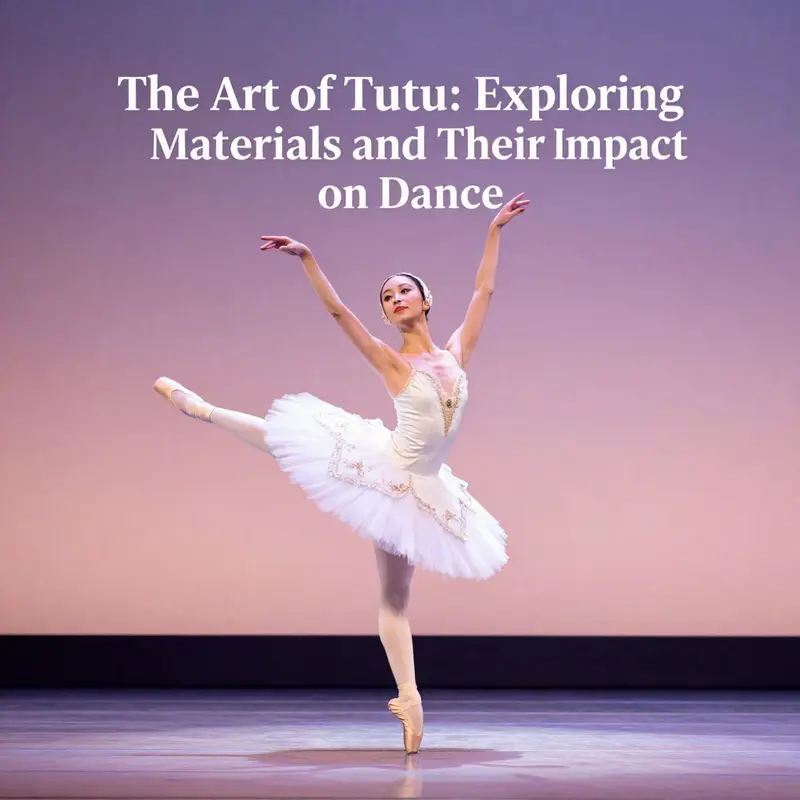
Understanding the intricate world of ballet requires an appreciation for its foundational elements—namely, the tutu. This iconic garment is more than a mere costume; it embodies grace, artistry, and the precision of dance. The materials used in tutu construction, from tulle to satin, not only determine the aesthetic but also the performance quality essential for both dancer and production. This article dissects the various materials involved in tutu manufacturing, outlines the technical standards for quality, explores applications beyond classical ballet, traces historical evolutions in design, and compares different fabric types for informed decisions. Each chapter contributes to a holistic view of how material choice impacts both performance and commercial success in the dancewear industry.
The Anatomy of a Tutu: Materials, Structure, and Movement on the Ballet Stage
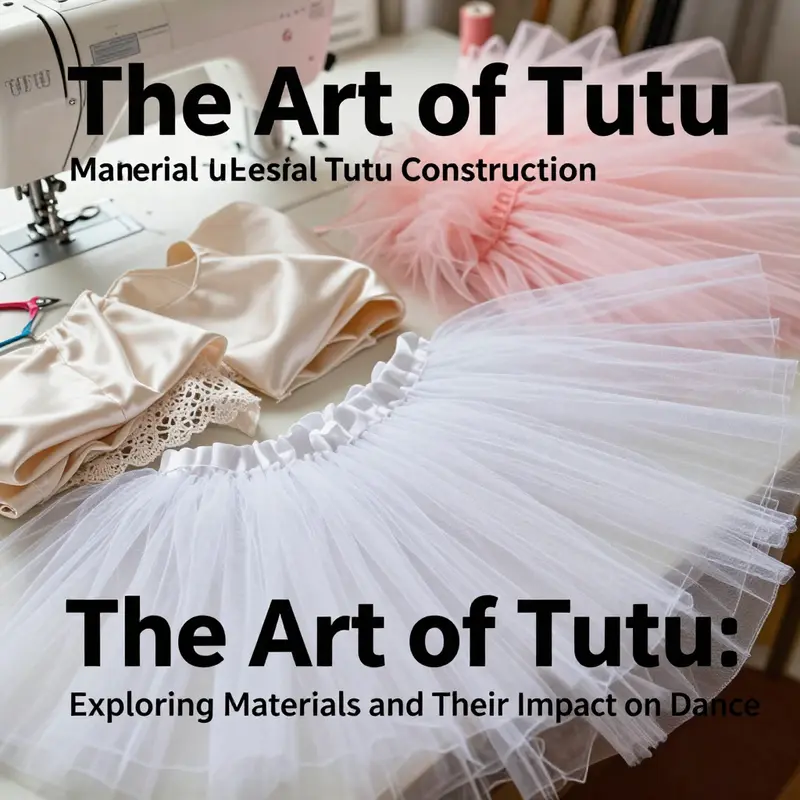
A ballet tutu is more than a skirt; it is a carefully engineered interface between performer and performance. Its power lies not in color or embellishment alone, but in how material choices translate choreography into a visible mass that breathes with the dancer. The eye reads volume, but the body feels restraint and freedom in the same moment. The skirt’s stiffness must be enough to hold its silhouette under bright stage lighting, while it remains light and responsive to every plié, leap, or sweep of a leg. This paradox—that a rigid form can enable fluid movement—rests on a precise blend of fabrics, weaves, and layers that have evolved over centuries of technique and theatre science.
At the heart of the tutu’s vocabulary is tulle. This fine, sheer netting is the canvas on which the silhouette is painted. Tulle provides the essential puff without excessive weight, a texture that catches light and holds a crisp edge. It comes in varieties spun from silk, nylon, or polyester, each bringing subtle differences in stiffness, memory, and durability. The most recognizable tutus rely on multiple layers of tulle to create that levitating halo of fabric just above the hips. Layering is not decorative only; it is structural. Each additional layer contributes to a controlled drift of shape—enough bulk to maintain the characteristic bell or plate form, yet flexible enough to respond to the dancer’s movement without becoming a hindrance.
But tulle alone does not define the tutu. The underlayers are where the piece gains its sinew. Organza often enters the stage as a crisp counterweight, added beneath the tulle to reinforce structure. It’s stiffer than many tulle options, yet still light enough to stay invisible to the audience until the light catches its edge. Satin, with its smooth sheen, can appear at the outer layer or as trim. When satin glimmers at the crown of the skirt, it amplifies the play of light and shadow across each veil-thin fold, emphasizing the geometry of the design. The combination of these fabrics allows the topmost tulle to project outward in a clean, parabolic curve while the layers beneath keep the shape anchored and predictable during a fast sequence of turns.
For higher drama or specialized needs, crinoline may be added. This stiffened fabric underlayer is designed to push outward with a more pronounced, almost architectural volume. It behaves like a supportive ribcage for the tutu, giving the dancer a tenure of space around the legs that helps the audience read line and intent from the farthest seat. When crinoline is used, it often signals a formal, classic look—the kind of tutu built to endure for long rehearsal cycles and a repertoire that demands consistent silhouettes under changing lighting and quick choreography.
Interfacing—an often unseen helper—also plays a crucial role. This auxiliary fabric can reinforce seams, anchor the layers, and contribute to a predictable stiffness. It acts like a backbone, ensuring that the tutu holds its shape even as the dancer shifts weight and changes direction in midair. The interplay between tulle, organza, satin, crinoline, and interfacing is a careful balance: too much stiffness risks limiting movement; too little risks a silhouette collapsing under stage heat and sweat. High-quality construction reads like a quiet conversation between fabric and dancer, a dialogue that ensures the skirt moves with grace rather than fighting the body’s momentum.
The design choices extend beyond raw materials to how a tutu is built and worn. The waistband and bodice anchoring determine where the fabric meets the body and how it distributes stress across the hips and torso. A well-fitted waistband is crucial to comfort during long rehearsals, allowing the performer to concentrate on technique rather than on adjusting a shifting garment. The alignment of layers, their edges, and their thickness contribute to a single, balanced profile. When the tutu is viewed head-on, the layers should appear uniform in thickness and symmetry; when seen in profile, the silhouette must project cleanly, like a sculpture in motion. This is why consistency across layers is a central quality standard in professional settings. It is not enough for a tutu to look right; it must behave predictably under the heat of the stage lights and the wear of repeated performances.
Material selection also shapes how a tutu can be cared for during a production. The same care that preserves a dancer’s physiology applies to the garment as well. Water, in particular, can be a quiet saboteur. Softening agents and laundering methods can reduce the rigid memory of hard tulle and other stiffened fibers, diminishing the ability of the tutu to hold its intended shape. The guidance for care is practical and precise: avoid aggressive washing, favor gentle cleaning, and resist soaking fabrics that rely on stiffness for their form. The garment should be treated as a performance companion, not a disposable prop. This caution is especially relevant for the more structured, “hard” tutus, where the layers are engineered to keep their geometry through repeated stage lighting and travel between venues. The emphasis on careful handling echoes the broader principle that material integrity allows choreography to unfold with confidence.
Beyond classical ballet, the same fabric logic informs contemporary uses of tutus in modern productions, as well as in theatre and film where costume designers seek a hybrid of movement and image. In these contexts, the materials may be adapted for different lighting conditions, stage dimensions, and audience perspectives. The choice to weave tulle with organza or to substitute satin embellishments can alter both the weight distribution and the way light plays off the surface. The result is a costume that remains legible to the audience while staying durable enough for long rehearsal schedules. The same structural thinking also guides simpler forms, such as the most basic tutu category, which still relies on a thoughtful mix of layers and stiffeners to achieve a recognizable silhouette. You can explore variations in that category to understand how even modest designs hinge on the same core principles of volume, balance, and movement. basic tutu
The social and aesthetic function of the tutu reinforces why these material choices matter. The skirt announces a dancer’s intention before a single step is taken. It frames the leg lines, enhances the line of the spine, and provides a stage-ready platform from which to express musical phrasing. The choice of fabric, the factory-level decisions behind layer counts, and the distribution of rigidity all contribute to an impression of control, elegance, and discipline. A well-made tutu communicates technical mastery even to eyes that cannot name the fabrics by their fiber content. The audience reads shape, not the individual stitches; the garment’s performance is measured by how reliably it returns to its intended silhouette after each movement, iteration after iteration.
There is also a consideration of durability and sustainability within the lifecycle of the tutu. The materials selected must withstand the abrasion of rehearsal, the travel between theaters, and the rigors of frequent laundering in some institutions. This reality pushes designers toward fabrics that resist tear and retain stiffness across many performances. It is a quiet salute to the craft that a tutu can look identical after a dozen rehearsals as it did on opening night. Yet the underlying logic remains practical and humble: robust materials, precise layering, and careful construction yield a garment that honors the dancer’s technique by staying true to the movement it frames. The tutu thus becomes a partner in the art, enabling the body to express intention with a clarity that is harsher to achieve with anything soft or improvised.
When we consider the tutu’s future, we see both continuity and change. The core idea—using layered, stiffened textiles to create a defined silhouette while preserving freedom of motion—continues to guide designers. The evolving demands of stage technology, such as new lighting rigs or flexible performance spaces, encourage ongoing experimentation with fabrics and supports. Yet any new material choice must pass the same tests: does it hold form under heat and motion? Does it fit securely without pinching or constraining? Does it maintain symmetry across the left and right sides, and across performances? The answers to these questions hinge on a deep understanding of material properties, from fiber weight and weave tension to surface finish and memory. In short, the tutu remains a demonstration that technical craft and artistic expression thrive when material science serves choreography rather than clashing with it.
For readers curious to explore this balance in greater depth, the broader literature on fabric properties and performance offers many pathways. External research emphasizes how material grades influence durability, shape retention, and comfort—insights that are directly applicable to tutu construction and care. This ongoing dialogue between fabric science and stage design illuminates why the tutu endures as a cornerstone of classical ballet, even as designers push the boundaries of form and function.
External resource for further reading: https://www.balletmaterialexperts.com/pettiskirt-tutus-materials-performance-industrial-uses
Stiff Silks and Stage Light: The Material Science Behind the Ballet Tutu
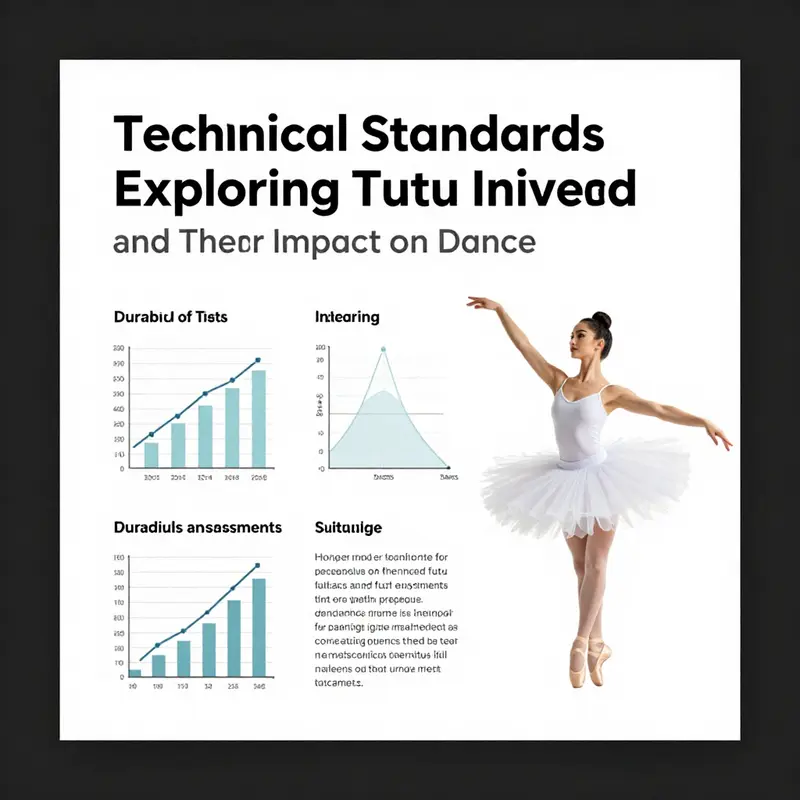
The tutu is more than a costume; it is a compact aural and visual physics lesson. Its signature silhouette—a crisp disk of fabric that bucks and yet carries the dancer’s weight with ease—depends on a careful balance between stiffness and lightness, between an artificial rigidity that holds shape and a supple flexibility that allows leaps, spins, and long hours of rehearsal. In pursuit of that balance, the material choices move from the purely aesthetic to the technically precise. Tulle remains the backbone of most tutus, but within that family of fabrics lies a spectrum of options that fundamentally alter how the tutu behaves under pressure, how it reflects light on stage, and how long it survives the demands of professional performance. The modern tutu therefore depends on a layered logic: a base of structural fabric, an outer layer that catches light with sheen, and an interior arrangement designed to fit the dancer’s body without sacrificing silhouette or comfort. Among the varieties of tulle used in tutu construction, the most common fibers are silk blends historically but today more often nylon or polyester. These synthetics offer a reliable combination of strength, elasticity, and cost-effectiveness. The stiff, voluminous look essential to the classical tutu emerges not from one thick fabric but from many thin layers of tulle that are cut and suspended so they resist collapse when the dancer is motionless and yet pliant enough to move with the hip, knee, and ankle joints. The inner structure often includes organza or a similarly crisp underlayer. Organza acts as a structural ally, offering extra rigidity without overly increasing weight. Satin, used on the outer edge or as decorative elements, provides a gleam that catches the footlights and enriches the tutu’s stage presence. Lace and embroidery then embellish, offering texture and narrative without tipping the balance between stiffness and movement. The choreography of fabric, light, and motion rests on a rhythm of these materials’ interaction. Recent conversations in the professional costume community have crystallized around a particular category of fabric known for delivering both stiffness and feather-light weight: flocked mesh tulle. The best material for tutu construction, according to industry discussions, is a flocked mesh tulle—specifically the dot-point texture variant sometimes identified by its texture as TJ2103. The flocked texture introduces micro-geometry that interacts with air and light in a way that helps the fabric hold a voluminous shape without adding bulk or weight. This texture contributes to a uniform stiffness across the layers, a quality that is critical for a tutu that must retain its circular profile after hours on stage and after repeated twists of rehearsal. It is not merely about thickness; it is about a controlled stiffness that resists sag and a writeable lightness that keeps a dancer from feeling encumbered. But stiffness is not the sole criterion. The tutu must be durably engineered so the layers remain consistent from one performance to the next. Consistency in weave density, colorfastness, and resistance to fraying or stretching are the quiet measures of quality that keep a production looking pristine under hot stage lights and through the strain of leaps where the fabric is tugged in multiple directions. Professional-grade tutus undergo durability testing that simulates the many stresses of movement: rapid changes in direction, repeated bending at the waist and hips, and the tug of costumes during lifts or partner work. These tests reveal whether the material will abrade, mar, or shed fibers, which would dull the surface or compromise the silhouette. The emphasis on consistency also extends to colorfastness—dyes must resist bleeding when exposed to sweat and stage lighting, ensuring the tutu’s appearance remains coherent under every cue of a performance. Safety and compliance are another axis of standard. Stage fabrics must meet flammability guidelines and use non-toxic dyes, particularly for tutus used in children’s performances or in productions that involve close audience interaction. The standard does not condemn a tutu to a rigid uniformity, but it does demand a predictable reaction to heat and a predictable level of comfort for long hours in costume. The fit is not a cosmetic footnote; it is part of the standard. Elastic waistbands or stretchable linings that conform to the dancer’s body without compromising the silhouette are essential in high-level performance. Everything is designed to balance an external stiff appearance with internal comfort, so that the dancer can maintain control of breath, posture, and line with minimal distraction from the fabric. The material choices can differ depending on the audience and setting. Baby tutus, for example, require soft, hypoallergenic materials with rounded edges to minimize the risk of injury. For adult or professional tutus, higher tensile strength and more precise layering are demanded to meet a higher bar of performance and longevity. Even as the silhouette remains recognizable—short, stiff, and spectacular—the underlying fabric science shifts depending on whether the tutu is a portfolio piece for a recital, a film production, or a theatrical run. In each case, the selection hinges on the way fibers respond to stress, how evenly the layers hold their shape, and how the fabrics interact with light and movement. A broader discussion of the tutu’s materials is not only a technical matter; it informs the choreography itself. The stiffness of the tutu interacts with a dancer’s technique, and the way light plays off the satin or the tulle can alter the perceived line of the arms, legs, and torso. A malleable outer layer might flutter at the edge of a leap, while the dot-textured TJ2103 flocked mesh tulle contributes a subtle, consistent edge that reads clearly to the audience without obscuring the dancer’s intent. The design process, therefore, is a dialogue between material science and performance aesthetics. It is a dialogue that must be kept in balance so that the tutu remains an amplifier of the dancer’s artistry rather than a distraction. For designers exploring the broader spectrum of tutu silhouettes and narratives, one can examine the costume-theme collection that gathers ensembles built around shared motifs and eras. This category offers a spectrum of styles—from the classic to the whimsical—within the same framework of fabric science and silhouette logic. Exploring these options can reveal how different surface textures, underlayers, and edge finishes change the way a tutu’s stiffness translates into movement on stage. The texture of the fabric, the thickness of the layers, and the sheen of satin all contribute to a visual language that can be read from a distance. In this sense, material choice becomes a storytelling device, guiding audiences through the character’s mood, era, and arc. Beyond the stage, the same standards frame tutus used in film, theater, and even education. The practical realities—how a tutu behaves under rehearsal lamps, how it launders, how it sustains repeated choreography sessions—bind the design to performance realism. The standards for material quality underpin not only visual fidelity but also the dancer’s safety and comfort. The creative impulse to dramatize a character with a towering silhouette must be harmonized with a fabric science that can endure the rigors of a production schedule. This is where the tutu reveals its dual nature: it is both a canvas and a contract between fabric and performer, a physical form that must endure the choreography while remaining faithful to the illusion it creates on stage. As the chapter moves toward its close, the insistence on material integrity—stiffness that holds, weave density that stays even, colorfastness that survives sweat, and safety measures that protect performers—becomes the invisible backbone of the tutu’s artistry. The best practice is to view the tutu through three lenses: the technical standards of material quality, the tactile reality of how fabric feels against skin and in midair as the dancer moves, and the aesthetic reading of how light and texture combine to tell the character’s story. When these elements align, the tutu stops being simply a garment and becomes a reliable instrument of expression. It remains true to its heritage while advancing with new fabrics, new textures, and new expectations of durability and performance. In this way, the material tutu emerges as a study in controlled contradiction: it must be stiff enough to stand upright in a full wheel turn and sheer enough to feel almost weightless in flight. It must gleam under stage lighting while avoiding glare that can distract the audience. It must be durable enough for repeated use and delicate enough to retain beauty after countless rehearsals. The dance of fabric science and stage craft continues, inviting designers to push the boundaries of texture, weight, and glow while staying true to the tutu’s timeless promise of elegance and power. External resource: https://www.balletcostumeexpert.com/guide-tutu-materials
From Stage to Studio: The Expanding Reach of Material Tutus Beyond Ballet
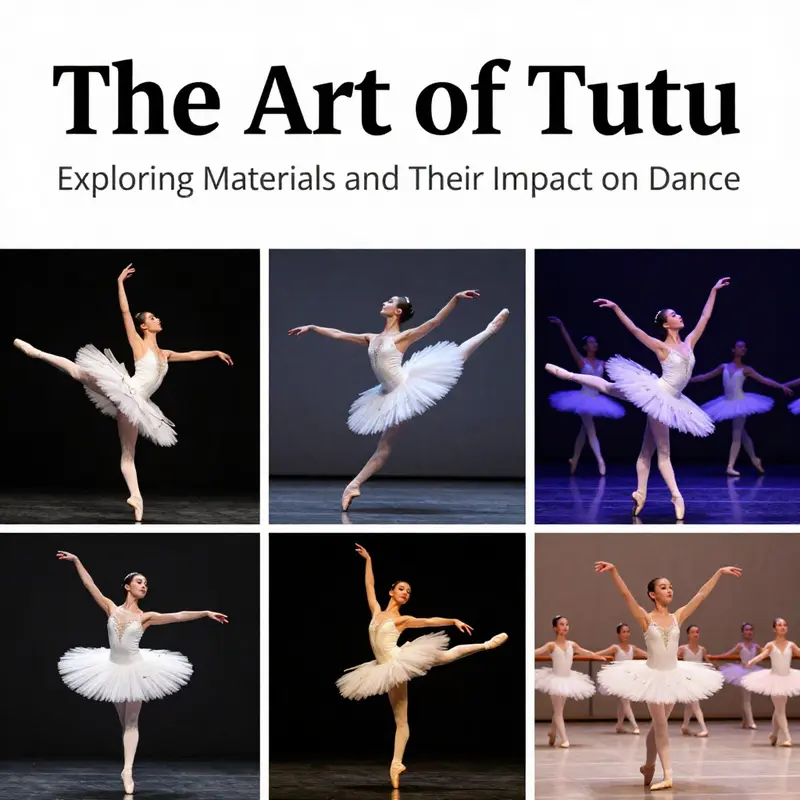
The tutu is more than a garment for dancers; it is a portable study in light, structure, and movement. The same architectural logic that makes a classical tutu read as a cloud of motion in a darkened theater also translates into the studios, ateliers, and galleries where fashion, film, and art struggle to capture a moment of suspended grace. When we look closely at the materials that compose a tutu—tulle, organza, satin, lace, and the embellishments that ride atop them—we begin to see a vocabulary that designers and makers borrow far beyond the proscenium. The layered stiffness of tulle, the crisp bite of organza, and the glossy glide of satin do more than hold a silhouette; they choreograph the way light travels through fabric, the way air seems to part and reform around volume, and the way a viewer’s eye travels along a shape that appears to float yet remains anchored to a chosen form.
Tulle, the backbone of most tutus, is a fine, sheer mesh that can be molded by weight and layering into a spectrum of visual density. Its perceived stiffness comes not from one thick piece but from the accumulation of many delicate sheets pressed into a coherent whole. When designers apply tulle beyond ballet, they exploit that built-in paradox: something light enough to drift, yet thick enough to hold its outline under the glow of stage lighting or camera radiance. Layered tulle can create a bloom that looks almost spherical in motion or a veiled cascade that catches the eye as it moves. Under different lights, the same fabric can shift from translucent to pearlized, giving costumes or installations a dynamic surface that breathes with the wearer or the observer.
Organza, often used as an underlayer or in tandem with tulle, contributes its own crisp, structured voice. It resists creasing and tends to stand away from the body, lending a sculptural presence to a silhouette. In fashion design, organza acts like a stride toward architecture in fabric form: it defines planes, supports dramatic drape, and helps a piece retain its shape through hours of wear or exposure to the cameras that chase a performance moment. The combination of organza and tulle is a deliberate dance between softness and rigidity, a duality that designers leverage to craft gowns and stage garments that can read as weightless in motion yet remain resolutely visible to an audience at any distance.
Satin, with its glassy surface and natural luster, adds another layer of meaning to tutu-inspired materials. When satin sits atop or interplays with tulle, it catches and refracts light in a way that heightens contrast and depth. In couture and costume work, satin can serve as the anchor that grounds a voluminous structure, offering a reflective counterpoint to the airy mesh beneath. The sheen of satin not only enhances visual richness on a runway or screen but also helps to sculpt the eye’s journey across a garment, drawing attention to the lines where fabric meets air, where silhouette turns from solid to suggestion.
Lace and embroidery, often woven into the upper reaches of a tutu-inspired design, inject texture, pattern, and narrative detail. They transform a surface from plain to telling, allowing designers to embed motifs that echo fairy-tale symbolism or historical ornament. The lace’s openwork and embroidery’s stitches become micro-sculptures that catch light differently depending on angle and proximity. In contexts outside traditional ballet, these elements invite viewers to linger, to inspect minute features that reveal a larger story about craft, time, and the hand that stitched.
The shift from a ballet stage to broader creative fields rests on a basic recognition: the same material behaviors that keep a tutu upright in a pirouette can translate into visual drama in fashion, theater, and installation art. The layered architecture—one sheer surface over another, each layer catching light and air differently—provides a toolkit for crafting immersive experiences. In fashion design, for instance, designers exploit the voluminous silhouettes enabled by tutu fabrics to push silhouettes toward the unexpected. A gown made from multiple translucent layers can read as both sculptural object and wearable sculpture, a study in motion frozen in time. The ethereal drift of tulle and the crisp geometry of organza become a language to describe lightness, gravity, and movement without relying on heavy materials.
This vocabulary also finds fertile ground in theatrical and costume production beyond classical dance. In musicals, fantasy films, and themed performances, tutu materials produce otherworldly looks that rely on layering to create depth and color variation as light travels through the fabric. The same panels that form a classical skirt can be repurposed to evoke fairy wings, spectral figures, or dreamlike creatures. The ability to layer multiple translucent fabrics enables subtle color gradients and shimmer effects, which, under stage lighting, become almost painterly gestures of light and shade. Durability remains essential in these settings, as the shapes must endure brisk rehearsals, quick changes, and repeated shots, yet the fabrics must stay supple enough to read as alive in motion rather than stiffly posed.
In event and wedding planning, tutu-inspired materials contribute to environments that feel intimate yet fantastical. Tulle drapery and backdrops offer a tangible sense of volume and airiness that can transform a space into a ballroom of floating silhouettes or a garden of wispy blossoms. The same principles translate into decorative elements: hair accessories, sashes, or pet-costume accents that nod to ballet aesthetics while remaining suitable for non-performance contexts. When planners select fabrics for these settings, they balance stiffness for longevity with softness for touch and mood. The result is spaces that read as poetic and curated, where light and texture converse with color, contour, and scale. And for accessibility, the basic tutu category serves as a practical reference point for makers seeking approachable, scalable options that still honor the lineage of these materials. basic tutu category
Art installations and performance art push tutu materials into the realm of large-scale sculpture and experiential environments. Artists use vast, suspended or ground-based forms built from tulle and organza to address themes of fragility, identity, and transformation. The sheer, repeated layers create a sense of mass while remaining surprisingly delicate to the touch of an observer walking through or beneath them. Such installations can invite viewers to move around, through, or inside the work, turning the fabric itself into a medium of perception. The repetitive, almost hypnotic rhythm of layered tutus can evoke meditative spaces or dreamlike landscapes, where light, color, and shadow perform as collaborators with fabric and form. This expansion from costume to sculpture and installation is not merely aesthetic; it challenges conventional ideas about material durability, audience interaction, and the boundaries between performance and visual art.
In the realm of commercial branding and advertising, the visual language of the tutu carries associations of elegance, precision, and crafted luxury. Campaigns that borrow tutu-like volume and translucence use these cues to evoke refinement and meticulous design. The soft glow of layered tulle, the clean edge of a satin surface, and the tactile contrast of lace can signal a product’s values without shouting. The challenge in such uses lies in translating the tutu’s performance-driven silhouette into static imagery that still conveys movement, grace, and control. When executed with restraint and thoughtful lighting, tutu-inspired motifs can become shorthand for a brand’s artistry and attention to detail, just as a performer’s pose might communicate narrative in a single frame.
Beyond aesthetics, sustainability and care emerge as practical considerations when tutu materials travel across contexts. The durability of the fabric depends on its composition and on how it is constructed. Strong seams, reinforced edges, and careful handling extend life in both wearables and installations. In wedding and event design, where possessions may be rented or reused, the ability to clean or repurpose components becomes a crucial factor in planning. The balance between the lightweight, airy feel and the need for lasting form shapes how designers approach maintenance, repair, and eventual transformation of these fabrics into new works or new styles.
The journey of material tutus—from classical ballet to fashion, cinema, events, and art—illustrates a broader principle: the bones of a traditional craft can become flexible scaffolds for contemporary storytelling. The interplay of texture, light, and volume translates across media, enabling creators to craft experiences that feel both timeless and contemporary. The same materials that keep a tutu buoyant on stage give rise to couture silhouettes, staged illusions, immersive environments, and brand narratives that hinge on precision and beauty. In each context, the fabric’s geometry—its capacity to hold shape without sacrificing air—remains the shared grammar that designers and artists read and rewrite.
For a broader look at tutu aesthetics in arts and design, see this resource: British Council Ballet in Arts and Design.
Stiff Silhouettes, Luminous Layers: The Material Odyssey of Ballet Tutus Through History
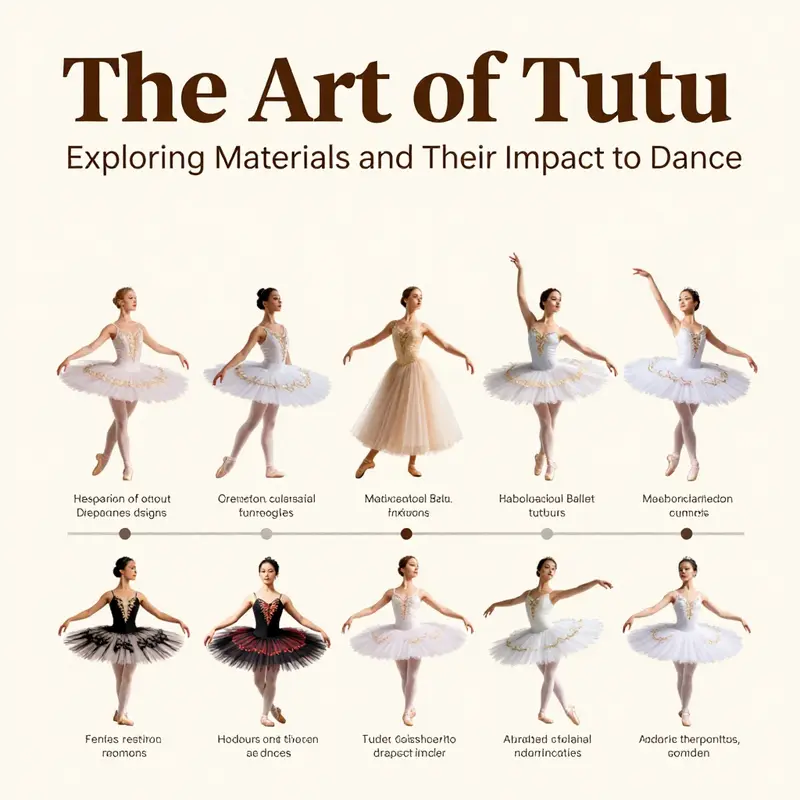
The tutu, in its many guises, is more than a costume. It is a material autobiography, a chronicle written in fabrics, finishes, and the stubborn discipline of the seam. Across centuries of performance, the tutu has traveled from modest practicality to an icon of stage design, its every layer a literacy of technique, lighting, and movement. To understand its historical evolution is to read the choreography of taste, technology, and storytelling itself. The earliest forms of the ballet dress, emerging in the late eighteenth century with the ballet d’action, were intentionally modest. Dancers needed garments that allowed the torso to translate emotion into line, without hindrance from voluminous skirts or cumbersome textiles. The fabrics were light and flexible—muslin, plain silk, even simple cotton blends—that could follow the arc of a leap without threatening balance. In those days the emphasis lay on body and narrative, and clothing performed a supporting role, never overshadowing the dancer’s physical poetry. The skirt’s length and stiffness were modest enough to permit grande battement and épaulement, yet long enough to maintain a visual poise when the footwork was at its clearest. What mattered most was the ability to breathe through form, to cue the audience’s eye to the dancer’s intent rather than to the costume’s weight. Over time, as ballet consolidates its vocabulary and the stage becomes a laboratory for spectacle, designers begin to experiment more deliberately with structure. The late nineteenth century marks a turning point: the emergence of the modern classical tutu, a silhouette that would come to symbolize the ideal of grace, control, and crystalline line. Under the influence of Marius Petipa and the Imperial Ballet in Russia, the tutu transfigured from a mere garment into a sculptural surface. It is no accident that these tutus are short, stiff, and layered. The structure is not merely decorative; it is engineered. The stiffened surface helps to lift the leg high, to reveal the ankle and the precise articulation of the knee. It also creates a stage picture that catches light in a way that amplifies the dancer’s form, turning each plié into a sculpture in motion. The materials that achieve this effect—the layered tulle, the underlying foundations, and the strategic use of texture—are central to understanding the tutu’s dramatic evolution. Tulle becomes the backbone of the modern tutu, chosen for its weightlessness and its capacity to hold shape when subjected to vigorous movement. The fabric’s sheer economy allows for a fullness that reads as luminous on stage, even under intense lighting. Yet tulle alone would be insufficient to sustain the iconic stiffness. Organza enters as a crucial ally, often deployed as an underlayer or in combination with tulle to enhance structure without sacrificing the dancer’s range of motion. Organza’s crispness lends an architectural edge, a resilience that keeps the layers from collapsing as the dancer spins, leaps, or performs the fast, exacting footwork of classical repertoire. For the outermost visual sweep, satin frequently provides the gloss and sheen that catches projection lighting, turning the tutu into a surface of shifting color as the dancer turns and the stage light travels through the skirt. Satin’s smooth surface also offers a refined counterpoint to the delicate transparency of tulle, creating a dialogue between opacity and light that makes each movement read more clearly to the audience. The interplay of these fabrics is not merely about aesthetics; it is a technical system that governs shape, balance, and the dancer’s proprioception. Lace and embroidery, then, step in as the narrative layer. In grand productions, which demand a heightened sense of drama, lace and intricate embroidery can encode character, mood, and even momentary symbolism. A bodice or the upper edge of the tutu may bear scrollwork or floral motifs, delivering texture that catches studio light and stage lighting from multiple angles. The resulting visual complexity enhances storytelling while preserving the essential clean line that modern classical performance requires. The evolution of materials is inseparable from the broader development of textile technology. Early tutus relied on available fabrics that could be manipulated by hand or with simple mechanical means. As synthetic fibers emerged, the possibilities multiplied. Nylon and polyester fibers offered improved durability, colorfastness, and resistance to wrinkling, which are critical traits in long rehearsals and performances under hot, bright lights. The ability to layer multiple tulle sheets with uniform thickness became more predictable, enabling designers to achieve the characteristic “plate” or “pancake” effect without overloading the dancer’s torso. This uniformity matters not just for appearance but for movement. A balanced tutu equals balanced movement; any uneven stiffness can pull the dancer off-center or create discomfort during extended practice sessions. In contemporary practice, a new generation of fabrics and interlinings has allowed for personalization without sacrificing performance. Specialized tulle blends offer reduced static and improved colorfastness, while subtle blends of organza and other textiles allow for more creative shapes while maintaining the silhouette that audiences expect from a classical tutu. Designers also experiment with color and finish, incorporating iridescent threads or laser-cut patterns that give the tutu a modern, almost kinetic texture that reads differently from different angles. This evolution is inseparable from the choreography itself. Choreographers increasingly commission custom-designed tutus that reflect a piece’s narrative arc, emotional tone, or structural ingenuity. The costume thus becomes a visual language that communicates intention as surely as the dancer’s body does. The tutu’s material history also mirrors shifts in stage technology: the rise of more powerful lighting, more responsive sound design, and the ability to project a narrative’s mood through textiles as much as through movement. The result is a virtuous circle where new materials enable new kinds of movement, and those movements, in turn, inspire further material innovation. It is not unusual to see contemporary productions that straddle reverence for tradition and appetite for experimentation. The modern tutu can appear almost as an engineered sculpture, with laser-cut patterns or integrated shimmering elements that catch the light differently as the dancer twirls. Yet even as design becomes more avant-garde, the tutu continues to serve a storytelling function. The silhouette, the stiffness, and the layered construction help delineate the dancer’s line, clarify the choreography, and cue the viewer’s eye to moments of narrative emphasis. In this way, the tutu remains a bridge between craft and art, a material artifact that embodies both technical instruction and expressive possibility. For students and designers alike, the tutu offers a practical guide to how material choices influence movement. The basic tutu category, a foundational reference point for many studios and makers, provides a starting point from which more elaborate designs grow. Reflecting on this lineage invites practitioners to consider not only the look of the costume but its tactile relationship with the body. The basic elements—tulle, organza, satin, and decorative touches—are not just fabrics but instruments in the dancer’s repertoire, shaping how a leg extends, how a torso twists, and how a turnout is perceived by an audience. If we follow this thread from simple beginnings to high-concept fabrication, we see how each era’s constraints and ambitions mold the tutu’s form. The early forms prioritized freedom of movement and mobility; later stages demanded a silhouette capable of withstanding the scrutiny of close lighting and long performances; today’s designs weave sustainability with spectacle, honoring the dressmaking craft while asking new questions about weight, balance, and audience perception. This continuity is not a straight line but a braided history, where technique, aesthetics, and narrative purpose entwine. It is a reminder that each layer of a tutu carries a memory: the stiffness that helped a grand jeté become a moment of suspended beauty; the sheen that made a single pirouette glimmer; the underlayer that preserved structure as the stage light shifted. To study the tutu is to study the history of ballet itself—its shifting ideals of beauty, its responses to technological possibility, and its enduring commitment to telling human stories through the language of movement and fabric. For more practical context on how these materials are selected and how a designer approaches the construction of the tutu, one can explore the basic-tutu category, which provides a starting point for understanding the spectrum of stiffness and volume that a dancer needs across different repertoires. basic-tutu category. As this history continues to unfold, designers and dancers alike will keep balancing tradition with innovation, continuity with experimentation, and the lure of luminous layers with the demands of every choreography they bring to life. External scholarship that illuminates these threads offers a broader view of how materials shape performance across eras and styles. For a comprehensive scholarly treatment of the tutu’s evolution and construction, see the study linked here: https://www.britishballetsite.com/2022/04/18/ballet-costume-the-evolution-and-construction-of-the-tutu/
Layered Silhouettes: A Material Science Perspective on Tutus
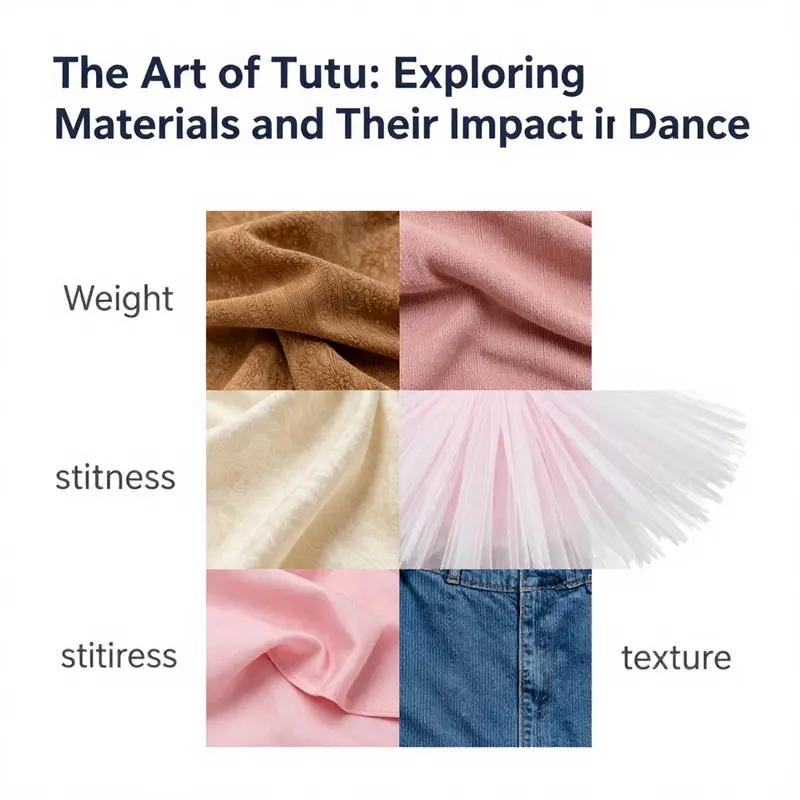
The comparative analysis of material tutu fabrics reveals a landscape shaped not merely by tradition, but by a careful negotiation between performance demands, visual impact, and the economics of production. Across ballet studios, theaters, and costume ateliers, the tutu has become a canvas where science and artistry meet. The modern tutu, though it preserves the iconic silhouette, is a product of material choices that balance stiffness with mobility, lightness with durability, and shine with safety. In this atmosphere, the most influential factor is not a single fabric, but the orchestration of layers, textures, and finishes that together create that unmistakable, gravity-defying form. Within this orchestration, polyester emerges as the most pervasive backbone, its role reinforced by a family of fibers and finishes designed to sustain repeated performances without collapsing into limpness or fraying. Microfiber polyester, for instance, offers a hand that reads as luxurious to the touch—soft enough for comfort against the skin, yet resilient enough to withstand the rigors of long rehearsals and quick costume changes. It is this dual sensitivity—soft to the wearer, stiff in the silhouette—that makes microfiber a favored choice for portions of the tutu that must read as plush and refined under stage lighting. In contrast, standard polyester tulle, with its higher stiffness and volume, provides the architectural backbone. This material is engineered to hold a fuller, more stately shape for longer periods, which is essential when the tutu must remain upright and visually balanced through multiple encores and a demanding sequence of lifts, turns, and repeated spins. The interplay between these polyester variants is a practical conversation about how much presence a layer should offer and how much movement a dancer requires. Layering remains at the heart of tutu construction. The tulle or mesh layers form the visible body of the skirt, while organza often serves as an underlayer or as a structural complement. Organza’s crisp, slightly stiffer hand helps to reinforce the shape without adding excessive weight, ensuring the upper edge maintains a clean, even line. Satin, when used for the outer lamina or decorative elements, brings a reflective sheen that catches the stage light in a way that accentuates the silhouette with a soft, controlled glow. The satin’s gloss also adds depth to the tutu’s surface, so that tiny movements register as flecks of light rather than becoming a flat plane. The result is a fabric geometry that reads not only as a costume, but as a sculpture in motion. Within this geometry there is a trend toward sophisticated surface treatment. Foil-printed tulle, a notable innovation for certain casual and semi-professional tutus, introduces printed patterns onto lightweight layers while preserving the essential pliability of the fabric. The effect is a visual texture that can suggest florals, geometric motifs, or whimsical patterns, offering a fashionable alternative without sacrificing the tutu’s lightness. This approach mirrors a broader shift in the industry toward multi-functional fabrics that marry aesthetic novelty with durability. It is a design logic that recognizes performance realities—ballet demands strict silhouette integrity, while fashion-inspired patterns demand colorfastness and resilience to repeated wear. The use of foil printing on tulle demonstrates how the material system can be extended beyond pure utility into expressive design, especially in productions that blend classical movement with contemporary visual storytelling. For adult performers seeking bold color narratives, rainbow tutu skirts—often constructed from higher-grade polyester blends—provide a different balance of shade retention, flexibility, and comfort. The vibrant hues require colorfast formulations and careful pigment dispersion to prevent fading after extended exposure to stage lighting and laundering. The adult market’s appetite for vivid, enduring color reinforces the idea that material choice is not merely about stiffness, but about a complete lifecycle: selection, wear, cleaning, and restoration of shape. Alongside these more decorative approaches lie functional variants designed for repeated use in non-traditional environments. Army-style tutu skirts, for example, employ rugged, high-grade polyester fabrics that resist tearing and hold form under repeated servicing and heavy handling. They are the workhorses of uniform-based performances, where the tutu must endure the roughness of dynamic chorus movements and stagecraft that may involve physical contact with props. Similarly, corset-and-tutu configurations reveal how deeper structural demands can shape material strategy. In historical reenactments or high-drama theatrical contexts, the corset component emphasizes support and silhouette control, requiring fabrics that can withstand longer wear while maintaining precise lines during sustained posing and action. These variations illustrate a broader principle: the tutu is a modular system. The outermost layer’s appearance is inseparable from the inner scaffolding, where the stiffness, thickness, and resilience of each layer determine how the silhouette travels through space. This is why consistency across layers is so critical. If one layer collapses or over-stiffens, the balance of the whole can be compromised, producing a wobble in the line that spoils the illusion of effortless lift. In professional settings, designers often refer to the professional tutu category for guidelines and shared standards that help maintain symmetry and performance reliability. Professional Tutu anchors the practical discourse in a cataloging of materials, constructions, and recommended care. The category serves as a touchstone for technicians who must translate an artistic brief into a tangible garment capable of withstanding the realities of rehearsal rooms, travel, and stage environments. Despite the widespread use of synthetic fibers, natural fabrics still appear rarely in mainstream tutus. Silk, for example, carries an allure of luxury and softness, yet it is expensive, less durable under duress, and prone to wrinkling and stretching. For a tutu intended to perform under bright lights and heavy rotation, silk overlays may be reserved for bespoke, high-art commissions where the aesthetic payoff justifies the trade-offs in durability and maintenance. The overall material strategy thus reflects a pragmatic calculus: designers optimize cost, durability, and performance by leaning on synthetics for the bulk of construction, while reserving limited, artistically justified natural fibers for accent or symbolism. As industry guides from 2025 and 2026 suggest, the future-facing direction for tutu fabrics lies in integrating fashion-forward design with practical functionality. Multi-layer textures, subtle printed surfaces, and color management innovations point to a field that treats the tutu not just as a costume but as a mutable texture on stage. The technical standards that govern these decisions emphasize durability, consistency, and fit. Each layer must remain uniform in thickness and stiffness to ensure a balanced silhouette, even after repeated bending, turning, or leaps. Fit and comfort remain non-negotiable; the stiff silhouette must not impede a dancer’s range of motion. The balance between stiffness and flexibility is a guided compromise, achieved through careful patterning, precise cutting, and thoughtful finishing—techniques that are as important as the fibers themselves. The broader applications of tutu fabrics extend beyond the classical repertoire. Contemporary dance, theatre, film, and even childhood education employ tutus that adapt the core principles of structure and motion to different audiences and environments. In these contexts, the material strategy can shift toward more forgiving, kid-friendly options like microfibre blends that retain shape while offering gentleness against developing bodies. The choices reflect an ecosystem in which a tutu is not a monolithic garment but a family of silhouettes defined by a shared aim: to sustain form while enabling free, expressive movement. The influence of trends also touches care and maintenance. A tutu’s performance lifetime relies on proper handling, gentle washing practices, and storage that preserves the layers in a plump, upright state. These practicalities matter as much as the initial material selection, because how a tutu ages informs future design decisions. Care instructions, like any scientific protocol, are part of the discipline that makes a stage-ready garment predictable and reliable across productions. For readers seeking deeper technical insight into material composition and industrial uses, a comprehensive external resource offers important context on performance standards and how materials behave under real-world conditions: https://www.tuftingfabric.com/material-composition-technical-specifications-and-uses-in-industry. The broader discourse remains anchored in the interplay between aesthetics and mechanics, where the tutu’s beauty is inseparable from the engineering that keeps it standing tall under the hot press of footwork and front-light, while also staying gentle enough for the performer to wear, move in, and perform with confidence.
Final thoughts
The choice of materials in tutu construction significantly influences not only the aesthetic appeal but also the functionality and durability of dancewear. For business owners in the dance industry, a thorough understanding of these materials, technical standards, and their applications can lead to better product choices and improved dancer experiences. By taking advantage of high-quality materials and understanding their history and evolution, you can enhance your offerings and appeal to a broader audience. Investing in quality tutus not only supports the artist’s performance but also elevates your business in the competitive world of dancewear.