
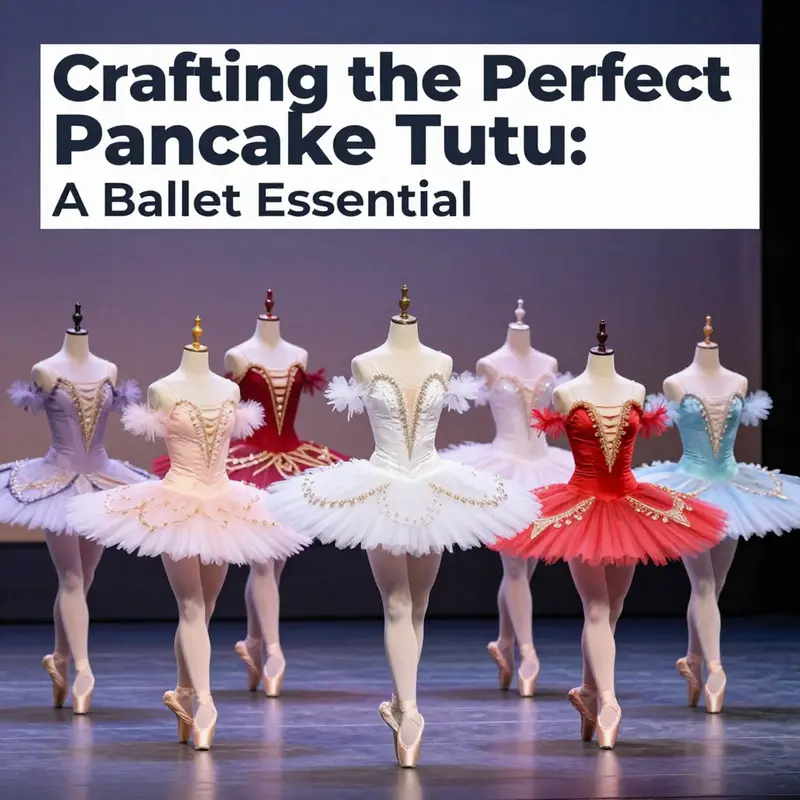
The pancake tutu is a hallmark of ballet, blending artistry with functionality. This structured style not only creates a stunning visual impact on stage but also is essential for character portrayal in both classical and modern ballet productions. In this exploration, we delve into four key aspects: the intricate design and structure of pancake tutus, the various types that cater to different performances, material innovations enhancing comfort and durability, and the evolving role of these tutus in contemporary ballet. Each chapter unveils the importance of pancake tutus in providing essential support for dancers while maintaining a flawless aesthetic, ensuring that business owners in the dance apparel world can appreciate both the artistry and the technical specifications of this iconic garment.
Flat Volume on Stage: The Design, Craft, and Story of the Pancake Tutu in Ballet
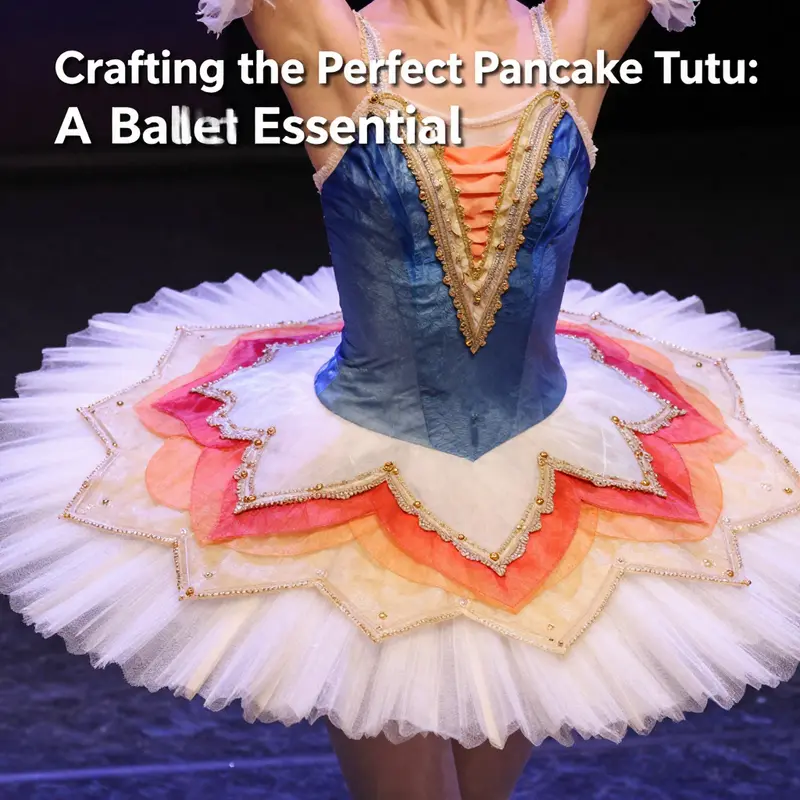
The pancake tutu occupies a paradox on the ballet stage: it is at once visually overwhelming and mechanically restrained, a wide, flat silhouette that seems almost sculpted from air. To the untrained eye it might appear simple, a disc of fabric balanced atop the hips; yet beneath its quiet exterior lies a careful convergence of design intent, material science, and tactile craft. In classical productions where narrative clarity and regal presence are paramount, this hard tutu—often described as a platter or pancake shape—serves as a functional monument. It flattens the line of the dancer’s torso outward, creating a stage-wide canvas that catches light and holds stillness while the legs move with precise, almost orthopedic control. This is not a costume that merely covers the body; it is a stage mechanism that shapes perception, supports character identity, and formalizes the dancer’s relationship to the music and the space around her.
The essence of the pancake tutu rests in its rigid internal architecture. A firm hoop or wire frame sits at the waist, anchoring a series of pleated or gathered tulle layers. This internal skeleton dictates the skirt’s flat horizon, resisting gravity so that the layers retain a cohesive, circular outline even during high-velocity turns or when a dancer suspends her movement in a dramatic pose. The silhouette is purposely horizontal, like a lens that broadens the visual field and makes every gesture immediately legible from the far house. In principle, the design prioritizes breadth of volume over height, a trade that aligns with the grand, narrative-driven moments found in repertoire classics such as those where courtly or magical identity is foregrounded. The effect is a kind of theatrical punctuation: a constant, shimmering presence that frames the dancer’s turnout and footwork, enabling leaps to feel as if they rise from a proscenium of fabric rather than from the dancer’s own legs alone.
Historically, the pancake tutu emerged as ballet’s counterpart to the evolving demands of stage spectacle. Romantic tutus, with their flowing, bell-like skirts, emphasize line and lyricism; the pancake, by contrast, compresses the skirt into a controlled geometry that can withstand the rigors of intense choreography while preserving the visual grandeur of a prima ballerina’s ceaseless momentum. The rigid structure also supports a crucial practical concern: during quick spins and large leaps, clothing that sags or shifts would obscure the dancer’s leg lines and threaten balance. The hard tutu reduces this risk, delivering a reliable frame that dancers come to rely on, season after season.
In discussing design, the bodice is inseparable from the skirt, even when their roles read as separate components to the audience. The bodice of a pancake tutu is typically constructed from stretch fabrics such as spandex blends, chosen for their ability to accommodate complex arm positions, rapid changes in direction, and sustained, repetitive rehearsals. A well-fitted bodice serves as a bridge between the dancer’s core strength and the external architecture of the tutu. It supports the upper body without binding, allowing the arms to articulate with the same ease that the legs sprint across the stage. This synergy between bodice and skirt is essential: if the upper body is restricted, a dancer may compensate with imprecise hip rotations or compromised turnout, thereby diminishing the very verticality the tutu is meant to amplify. Embellishment on the bodice—delicate beadwork, embroidery, or subtly embossed patterns—can harmonize with the tutu’s layered texture, offering visual coherence across the costume while allowing for artistic storytelling through light and shadow.
The materials that comprise the skirt deserve close attention. The layers are typically lightweight tulle or a similar semi-transparent fabric, chosen for its stiffness when pleated and its ability to hold a flat profile once mounted on the hoop. The interplay of layers—whether single, double, or triple—changes the costume’s silhouette and its onstage behavior. A single-layer pancake tutu emphasizes economy and speed in learning; it is ideal for neoclassical works or instructional contexts where movement is prioritized over grand visual impact. A double-layer design introduces a sense of depth and fullness, with the top layer staying slightly shorter to create an illusion of greater diameter. The most dramatic configurations, often the six-layer equivalents used in some Swan Lake productions, rely on multiple layers to deliver maximum volume and a commanding presence that remains stable through the most demanding sequences. The choice among these options reflects a balance between artistic ambition, technician feasibility, and the dancer’s strength and flexibility.
Durability is not an afterthought but an inherent design criterion. Each layer is pleated or gathered and then secured to a rigid base, with reinforced seams that resist the strain of repeated performances. Modern pancake tutus incorporate advances in fabric technology: breathable blends that manage heat during long rehearsals, moisture-wicking properties to keep the dancer comfortable, and stretch components that preserve fit as bodies warm and cool on stage. The internal frame itself is often a lightweight yet robust hoop or wire system, designed to maintain tension without cutting into the dancer’s waist or restricting breathing. In this sense, the tutu becomes a collaboration between costume designer and technician, where the aim is not merely beauty but reliability under the physical demands of professional ballet.
Customizability is a practical virtue of the pancake tutu in modern productions. Adjustable waistbands accommodate different body types and allow for precise, repeatable fittings across a company. Color options, embroidery, and decorative elements can be tailored to match a specific character or production aesthetic, whether that aligns with a noble court or a fantastical realm. The capacity for customization extends beyond ornamentation; it encompasses performance-specific adjustments, such as the density of the pleats, the lustre of the fabric, and the degree of stiffness in the interlayer connections. These considerations acknowledge that ballet is both a visual and a kinetic art form, where costume must respond to the choreography with predictability and grace. The result is a costume that is not only iconic but practical—an instrument that supports the dancer’s storytelling without becoming an obstacle.
For designers and performers, the decision to deploy a single-layer, double-layer, or multi-layer pancake tutu is guided by a constellation of factors. The production’s narrative demands, the dancer’s physical profile, and the choreographic tempo all influence the final configuration. In narrative ballets that prize character definition and dramatic authority, a more expansive silhouette may be preferred to articulate identity through silhouette and gesture. In neoclassical or contemporary interpretations, a lighter construction might be favored to preserve freer spine movement and quicker changes of direction. The internal decision often echoes the broader design philosophy of the company’s costume program, which seeks coherence across ensemble pieces while allowing individual artistry to shine. Within this framework, the pancake tutu becomes a telling example of how form follows function in ballet craft.
From a production standpoint, the workflow surrounding the pancake tutu mirrors the broader arc of costume development. Initial sketches give way to fabric trials and prototype fittings, followed by structural tests that verify hoop rigidity and pleat stability. Each stage demands collaboration among dressers, seamstresses, and the dancer. Fittings are not only about fit but about the choreography’s rhythm: how long a dancer can wear the costume before comfort becomes a factor, how readily the dancer can adjust a waistline during a performance, and whether the layers hold their shape when the legs launch into a sequence of fast turns. This meticulous process ensures that the final garment supports, rather than constrains, performance. It also reinforces the tutu’s status as a professional instrument, one that can be retired or refreshed as a production cycle dictates, with the same care a musician gives to a valued instrument.
The pancake tutu’s role extends beyond the stage, resonating with how audiences perceive the art form. Its flat, expansive shape reads at a distance as a bold disc of light and texture, a counterpoint to the dancer’s body that clarifies line, emphasis, and spatial relation. The silhouette becomes a kind of choreography in itself, guiding the viewer’s eye toward the dancer’s center and outward toward the theater’s architectural lines. In this sense, the tutu acts as both costume and choreography, shaping the dancer’s stage presence as surely as the company’s blocking or the orchestra’s tempo shapes the performance’s momentum. When the design harmonizes with the dancer’s technique, the result is a seamless fusion of engineering and artistry, where the silhouette supports a narrative presence without overpowering it.
For those seeking a tangible sense of how these ideas translate into real-world practice, designers and performers often look to established pathways within the costume world. In professional contexts, guidance is found in catalogs and category collections dedicated to the mature, high-visibility work of ballet productions—resources that outline construction techniques, permissible material sets, and the height of architectural stability required for touring. You can explore related design concepts through the professional tutu category, which offers insights into how silhouettes are engineered to perform under diverse stage conditions while maintaining aesthetic fidelity. professional tutu category.
Ultimately, the pancake tutu embodies a philosophy of balance. It seeks to maximize visual impact without compromising the dancer’s range of motion, comfort, or the production’s storytelling rhythm. Its layered geometry makes a visual argument about space, line, and presence, arguing that even in a world of swift, precise movement, there is value in a silhouette that remains poised and legible from every seat in the house. The design is not merely about keeping fabric stiff or preventing sag; it is about crafting a stage friend that understands the dancer’s needs and the audience’s gaze. In the end, the pancake tutu teaches that grandeur in ballet can be achieved through disciplined restraint—the power of a flat, radiant disk that holds its ground while the body, in constant motion, unspools its narrative with clarity and confidence.
For those who wish to glimpse a broader spectrum of visual references, consider this direction for inspiration: classic ballet tutu design is often showcased in curated image collections that emphasize performance-ready silhouettes, pleating geometry, and the interplay between fabric and light. A visual reference to these ideas can be found here: https://www.pinterest.com/ideas/ballet-outfit-performance/904314600629/. This resource offers a panorama of how designers translate the rigid geometry of the pancake tutu into expressive stage imagery, reminding readers that the same principles hold whether the world is a formal stage or a contemporary reinterpretation.
Layer Variations in Pancake Tutu Ballet: Sculpting Silhouette, Movement, and Stage Presence
The pancake tutu has long been a symbol of classical ballet’s architectural beauty, a garment whose exaggerated frontality makes the dancer’s lines instantly readable from the far seats of a proscenium stage. Its flat, layered silhouette creates a disciplined volume that seems to suspend the body in a moment of stately poise even as the feet whirl into fouettés or the chest slides into a lyrical phrase. In this sense, the layers are not merely fabric; they are a choreography in fabric form, a physical extension of the dancer’s intent that amplifies every turn, jump, and pause. The way those layers stack and cling to a waistline determines how the dancer enters a scene, how the character reads under the glare of footlights, and how the overall production reads as a cohesive visual language. The importance of layer variation becomes especially clear when we consider the most discussed configurations in professional ballet—those that balance drama with control, and visibility with mobility.\n\nThe tonal vocabulary of a pancake tutu is built from number and stiffness of layers. The 11-layer pancake tutu has earned a near-legendary status in repertory that demands both volume and definition. In variations like Paquita, these layers are stacked with precision to produce a silhouette that breathes with the dancer’s fastest spins and most exact positions. The accumulation of layers contributes to a robust rigidity that supports the tutu’s shape through rapid ensemble work, while the underlying frame and waistband keep the garment anchored to the core. The effect is twofold: a visible, almost architectural edge to the costume that reads as grandeur on stage, and a functional backbone that preserves form during demanding choreography. The 11-layer approach thus often becomes a practical compromise between maximum fullness and dependable stability, a choice that choreographers and costume designers use when the role requires both heroic presence and technical clarity.\n\nFor performances demanding even more striking silhouette, the 12-layer stiff tulle pancake tutu pushes fullness to a higher plane. The extra layer amplifies volume, especially under the harsh lighting of a contemporary theater where every contour of the skirt must read as a precise geometric shape rather than a soft halo. This configuration is typically associated with advanced or professional contexts where the tutu must maintain a dramatic edge beyond what 11 layers can guarantee. The additional layer, when paired with durable, flame-resistant tulle and reinforced seams, helps the costume resist the fatigue of long productions and the rigors of high-energy sequences. It also demands careful balance in weight distribution. The dancer relies on a carefully engineered inner structure—rigid or semi-rigid supports hidden within the fabric—to keep the outline crisp while allowing enough flex for lunging, turning, and quick direction changes. In this sense, the 12-layer model is not merely more fabric; it is a deliberate engineering choice that elevates stage presence without sacrificing precision.\n\nBeyond these two well-known benchmarks lies a spectrum of customizable layering systems that responsive productions now routinely explore. The idea here is not to surrender to a single standard but to tailor the silhouette to the needs of a specific ballet, a particular character, or a given dancer’s repertoire. Some tutus feature adjustable layering counts, or modular components that can be rearranged to increase or reduce fullness depending on the moment in a performance or the lighting design. For example, a director staging a more lyrical or neoclassical piece might opt for a lighter, slightly fewer-layered configuration to emphasize fluidity of movement and the dancer’s lines over theatrical volume. Conversely, a grand production with a score and scenery that call for larger-than-life presence might commission a higher-layered system to ensure the silhouette remains legible from the back row even when a corps de ballet fills the stage. In this evolving landscape, layering becomes a strategic variable as much as a stylistic one, bridging craft and choreography with the practical realities of rehearsal time, costume maintenance, and stage lighting. The modern tutu vendor ecosystem—often accessible through wholesale platforms that offer customization—makes this flexibility feasible, enabling designers and schools to craft a look that matches the drama of each ballet while keeping the dancer comfortable and empowered. For readers curious about how professionals navigate these options, a closer look at the professional tutu category reveals a breadth of configurations designed to support high-level technique and dramatic storytelling. Professional tutu category\n\nLayer count, however, is only part of the equation. The material choices and construction methods that accompany these layers shape how the silhouette reads in performance. The hallmark of a well-made pancake tutu is a balance between stiffness and pliability. A dense, reinforced tulle with a high degree of stiffness preserves pleating and pleat depth across sequences of fast pirouettes and leaps, while a breathable underlayer and a snug, ergonomic waistband keep fatigue at bay during long rehearsals. In practice, this balance means selecting tulle that holds its shape without binding the dancer’s hips, and pairing it with an inner frame or hoop that distributes weight evenly around the waist. The inner frame, often hidden within the waistline, acts as a scaffolding that resists gravity’s pull, ensuring the layers remain evenly spaced and the pleats stay crisp as the dancer moves. When the layers are properly tensioned and stabilized, the tutu reads as a seamless geometric field on stage, a living sculpture that frames the dancer’s torso and arms with a disciplined, almost architectural boundary.\n\nThe materials theory extends into safety and comfort. In modern practice, designers favor lightweight yet durable fabrics that wick moisture and remain skin-friendly over hours of rehearsal. Stretch fabrics such as spandex blends are used in the bodice or attached undergarments to allow for a more secure, even fit that does not distort the tutu’s shape during overhead lifts or partner work. Reinforced seams extend the tutu’s life, and adjustable waistbands accommodate varying body types without constraining movement. The result is a performance garment that supports precise technique while preserving the aesthetic of the classic silhouette. In high-intensity scenes, where spins accumulate and jumps accelerate, the tutu must resist pleat collapse and fabric creep. A well-engineered inner hoop or frame keeps the starched layers aligned, so the dancer’s lines remain clean and the narrative read remains unbroken by wardrobe distractions. This fusion of durability and comfort is not an afterthought but a core design principle in contemporary pancake tutu production, aligning with safety standards and the demanding choreography of revered ballets.\n\nThe expressive power of layering also ties directly to character identity in narrative ballets. In works like Swan Lake and The Sleeping Beauty, the silhouette of the tutu helps define a character’s regal presence and moral weight. A higher-layered tutu emphasizes grandeur, casting the protagonist in an almost sovereign light as the stage lights wash over the pleats and create a prismatic shimmer through the tulle. When a tutu’s layers are fewer or slightly more fluid in their stiffness, the dancer can move with a more intimate lyricism, drawing the audience into quieter, more nuanced moments of the story. The design choice thus becomes inseparable from the dancer’s interpretive plan and the dramaturgy of the corps. The audience experiences the character not only through the steps but through the garment’s geometry—how the skirt answers the tempo, how it catches a beam of light, and how it frames the dancer’s expression. This is the magic of layering: it translates music into visible shape, turning technique into emotion.\n\nIn practice, the decision to employ an 11-layer, a 12-layer, or a highly customizable system is rarely about sheer weight or spectacle alone. It is about the relationship between the choreographic demands and the dancer’s physical ecology. A technician may advise that an 11-layer setup delivers the necessary volumetric integrity for mid-length ballets while keeping the dancer nimble for rapid sequences. In more expansive productions, or in roles that demand a monumental, almost architectural stage presence, the 12-layer configuration can offer the extra gravity needed to anchor the ensemble in space and to uphold the line through a long crescendo. Some productions push beyond these fixed counts by enabling modular modifications, allowing the costume team to adapt the silhouette to the moment on stage, the lighting plan, or the specific dancer’s physique. This collaborative negotiation among choreographer, costume designer, and dancer is where the art of pancake tutu layering truly comes alive. The result is not a static costume but a living instrument that supports storytelling as much as technique.\n\nAs you move through the repertoire and observe variations in silhouette, it becomes clear that layering is a language in itself. It communicates the balance between control and drama, between the dancer’s breath and the stage’s glare. It reflects a disciplined approach to costume construction that respects both the history of classical ballet and the innovations of contemporary practice. The layered pancake tutu is a defined form with room for personalized interpretation, a garment that can be tuned to the emotional pulse of a performance. And in this tuning lies the artistry of costume design, the quiet craft that makes a grand gesture feel inevitable and a delicate moment feel monumental. For those drawn to the deeper mechanics of how to achieve the desired balance in layer count, material selection, and structural integrity, the path forward is a careful study of corsetry-like waist supports, the choice of tulle stiffness, and the integration of inner frames that keep the silhouette inertially elegant through the most demanding motions. The result is a tutu that does not simply adorn the dancer; it amplifies the dancer’s lines, honors the choreography, and elevates the entire production to a meeting point of craft and performance.\n\nExternal resource: https://www.alibaba.com/product-detail/Corsair-Pancake-Tutu-Split-Two-Piece1601798532528.html?spm=a2700.galleryofferlist.pproductdetail.4.6e2c5d8bNvOJmT&urlLocation=offerDetail
Material Innovations in Pancake Tutu Ballet Construction: Layered Silhouettes, Comfort, and Stage Power
The pancake tutu, long celebrated for its architectural silhouette on stage, has always been as much about engineering as it is about aesthetics. Behind the flat, disc-like expanse that crowns a dancer’s waist lies a careful convergence of structure, fabric chemistry, and ergonomic design. In the modern era, material innovations have reframed what a pancake tutu can endure, how it feels in motion, and how it contributes to storytelling through every spin, leap, and nuance of line. The result is a costume that not only holds a dramatic shape under the footlights but also supports the dancer’s artistry with lasting comfort and reliable performance. In this sense, the tutu becomes a partner in performance, responding to each demand the choreography places upon it while preserving a timeless visual grammar that audiences recognize instantly. The evolution begins with the very fibers that constitute the layers themselves, then expands to the way those fibers are woven, joined, and finished to become a wearable instrument rather than a mere garment. A modern pancake tutu blends breathable, moisture-managing fabrics with rigid yet lightweight supports, creating a harmony between the need for rigidity in profile and the dancer’s need for freedom of movement. This balance is not incidental; it is the product of deliberate choices about fiber blends, weave density, and the microclimate inside the costume. The core idea is simple in theory: you want a silhouette that stays crisp under a heavy beam of light and during rapid spins, yet the dancer beneath it should feel as unrestrained as possible. The practice of achieving that is a continual dance between form and function, a choreography of textiles that evolves in step with the demands of repertoire and the stamina of generations of performers. The most visible shifts have come from material science itself. In many modern designs, a breathable cotton is combined with durable polyester and lightweight tulle to establish a fabric system that is simultaneously sturdy and forgiving. This triad offers durability without sacrificing air flow, which matters in long, grueling rehearsal days and in performances that demand repeated grandes battements without overheating the legs. The result is a tutu that weighs less by nearly a fifth compared with all-cotton equivalents, a factor that translates into less fatigue and more expressive control in demanding sequences. The lighter load is especially meaningful during extended strings of fouetté en tournant, pirouettes, and high-velocity spins where every gram of fabric can influence the dancer’s balance and timing. Yet weight is not the sole consideration; it is the interplay of weight with structure that locks in the silhouette. The single-layer pancake tutu, for instance, can be surprisingly effective for neoclassical or streamlined interpretations, but it is often the multi-layer configurations that deliver true stage grandeur. A double-layer design introduces a subtle depth, as the top layer slightly shorter than the bottom creates a sense of dimensionality. This deeper fullness promotes a more legible character identity during ensemble scenes, a feature that matters greatly in productions where dramatic narrative hinges on clear, immediate silhouettes. For the most demanding roles, the triple-layer approach is a marvel of endurance. A six-layer hard mesh gauze version, famously deployed in certain Swan Lake contexts, demonstrates how layering can yield maximum volume with remarkable stability. Each layer is pleated and anchored to a discreet hoop, ensuring that the pleats stay aligned even through rapid changes in direction or tempo. This multi-layer philosophy trades off a bit of lightness for an unequivocal, imposing presence on stage, a visual cue that helps the audience perceive character elevation and mood with a glance. The material innovations extend beyond the layers themselves. Designers now lean on stretchable, form-fitting bodices and undergarments that work in concert with the tutu. Spandex-infused tulle, for example, creates a pliant shell that preserves the tutu’s rigid profile while granting the dancer a full range of motion at the hip and torso. The fabric’s elasticity supports the natural curves of the body and accommodates the micro-adjustments dancers often perform as they warm up into a demanding act. The result is a silhouette that remains visually pristine during dynamic movement—precise pleats, crisp edges, and a flat, stable top edge that never slips or warps under the pressure of a grand battement or a fierce jeté. This seamless collaboration between layers and bodice is essential when the choreography calls for extended sequences of series turns, where a loose garment can become a liability, while a well-mangled, precisely engineered system becomes a faithful ally. Yet the performance benchmarks are not merely about rigidity and lift. Comfort, fit, and skin friendliness matter as much as the visual outcome. Hypoallergenic fabrics, smooth seams, reinforced stitching, and adjustable waistbands help tailor the tutu to a dancer’s body while reducing the risk of chafing or irritation after hours of rehearsals. The modern pancake tutu thus becomes less about a single look and more about a wearable platform that supports stamina and confidence. As the industry leans into extended wear, producers increasingly seek certifications such as CE, BV, and ISO. These standards help assure buyers that the materials have been tested for safety, durability, and performance under rigorous conditions. The inclusion of these certifications reflects a broader shift toward professional accountability in dance costume production. When a dancer steps onto the stage in a pancake tutu, the audience experiences not just a visual effect but a sense of reliability—the feeling that the garment will respond with predictability to every demand the music and movement place upon it. It is this trust between performer and costume that allows choreographers to push the limits of narrative at the very moment the tutu rises into view. The material conversation does not end with fabrics and labels; it reaches into the realm of sourcing and customization. The modern market offers an array of options for color, embroidery, and sizing, all designed to be adaptable to individual dancers or bulk productions. In this ecosystem, suppliers and designers collaborate to tailor the fabric composition and finish to the specific demands of a role. Even within the same production, different units may require slightly different textures or silhouettes to visually delineate characters or to harmonize with lighting design and set color palettes. The tension between uniformity and individuality is resolved through careful material science, not merely aesthetic preference. For instance, in period pieces or dream sequences where the tutu must read as more opulent, velvet accents or velvet-like bodices can be integrated to deliver a high-end aesthetic that transcends the standard polyester blend. Velvet adds depth of color, a soft luster, and a sense of luxury that enhances storytelling without sacrificing the crispness of the tutu’s silhouette. This is where the craft of construction matters most. The hoop or frame, the cornerstone of the pancake tutu’s geometry, must be married to the fabric’s stiffness and the layer’s pleating. Modern approaches emphasize not only the rigidity required to hold a flat plane but also the resilience of the system under repeated stress. The rigidity is not purely a matter of thick materials; it is a function of hoop dimension, the density of pleats, and how the layers are anchored. When these pieces align, the performer experiences a stable platform that translates cleanly into precise lines on stage. A well-engineered combination of hoop, interlining, and layered tulle ensures that even under bright stage lighting, the tutu will maintain its shape, enabling the dancer to execute lines with the confidence that the silhouette will respond rather than collapse. The practical implications of these innovations extend into the rehearsal hall as well. Comfort-friendly fabrics reduce moisture accumulation and heat build-up, enabling longer practice sessions without compromising performance or form. This is crucial for dancers who must repeatedly rehearse entire acts, sometimes without the benefit of a lengthy break. The improved breathability also helps maintain a dancer’s core temperature and skin health, essential factors for sustaining technique under fatigue. In terms of design exploration, the material toolkit now supports a broader palette of creative directions. The classic stark white or ivory of traditional grand ballets can be reimagined with subtle shading or light-catching finishes that still honor the silhouette’s essential geometry. The ability to adjust drape, color saturation, and texture while preserving structure means choreographers can reframe a well-known role with fresh visual language while preserving the iconic pancake profile that audiences expect. This synergy between tradition and innovation reflects a broader impulse across the performing arts: to honor heritage by embracing contemporary materials that improve practice, safety, and expressive potential. For readers seeking practical pathways to engage with these innovations, a gateway into the professional tutu ecosystem—where the emphasis is on quality, fit, and performance readiness—can be found in the dedicated product categories that curate options for serious dancers.Professional tutu category. This entry point invites designers, studios, and individual artists to consider how a carefully chosen material system can elevate a performance without compromising the discipline’s rigor or the costume’s resilience. In that spirit, it is worth remembering that the pancake tutu’s enduring appeal does not hinge on a single technical trick but on a holistic approach to construction. The silhouette must be crisp; the movement must be unhindered; the fabric must endure the demands of a season, a tour, or a televised gala. The innovations described here show how modern textiles and assembly methods enable those conditions. They also remind us that the tutu’s visual drama is inseparable from the dancer’s commitment and the workshop that shapes it. Every pleat, every seam, every layer of tulle is the product of decisions made to support breath, balance, and expressivity. If the past was defined by an iconic shape, the present is defined by a constellation of small, precise choices that allow that shape to persist through ever more ambitious performances. In the end, the pancake tutu remains a testament to how tradition and technology can collaborate to elevate the art of ballet. It invites dancers to trust an ever more refined costume system as they push through the plateaus of technique and into the more expansive possibilities of movement, gesture, and storytelling. For readers and researchers who wish to explore further, the modern materials story is not only about fabric choices but about the culture of production and the standards that ensure safety and quality across the globe. External resource: https://www.alibaba.com/product-detail/Octavia-LY00001-Wholesale-Cheapest-Professional_1601748589453.html?spm=a2700.details.click&fsb=y&productId=1601748589453.html
Flat Grace on the Grand Stage: The Role of Pancake Tutu Ballet in Modern and Classical Performances
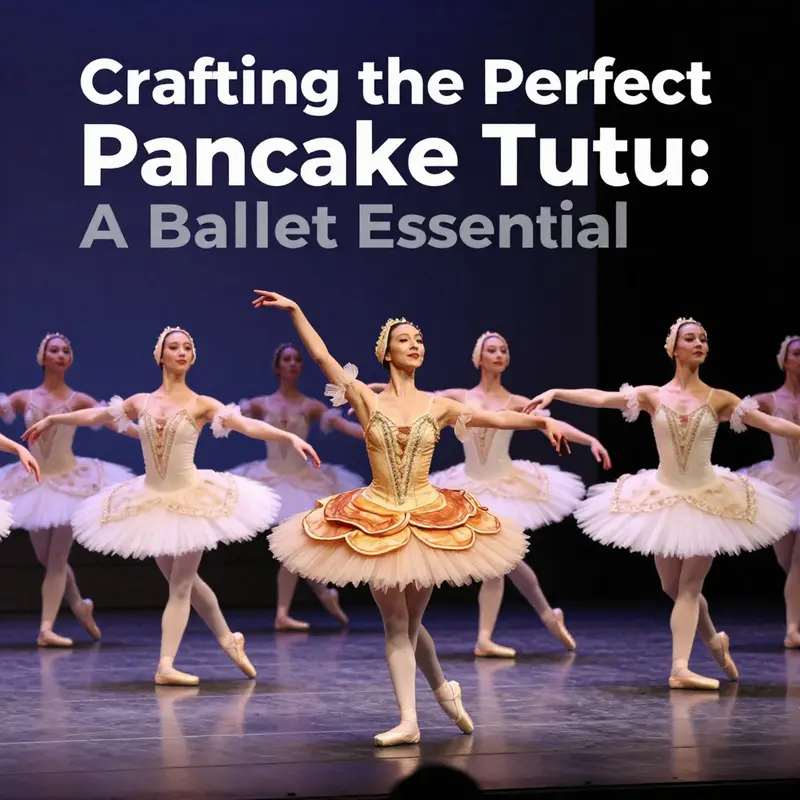
The pancake tutu has long carried a paradox at the heart of ballet: it is at once a garment of restraint and a catalyst for expansive storytelling. Its rigid, circular silhouette sits like a halo around the dancer, turning every movement into a visible line that the audience can read with clarity even from the far reaches of a theater. In classical stagings, this silhouette acts as a stabilizing frame for the body, a visual shorthand for tradition, form, and the heroic scale of ballet’s most emblematic narratives. Yet as productions evolved, so did the expectations placed on the tutu. It needed to hold its shape under demanding choreography, while also adapting to contemporary choreographic sensibilities, lighting designs, and performers who demand greater freedom of movement. The pancake tutu, with its layered stiffness and its flat, expansive flare, has proven uniquely suited to this dual task. It anchors characters in a moment of narrative certainty, even as the dance language around them pushes into neoclassical precision or modern abstraction. The result is a garment that has become less a costume and more a common language across eras, capable of signaling a dancer’s status, the mood of a scene, and the very tone of a production, all with a single, unmistakable silhouette.\n\nHistorically, the pancake tutu did not spring from nowhere. It emerged as an evolution of the romantic tutu of the early nineteenth century, when designers sought a way to project drama and legibility on stage without sacrificing the dancer’s mobility. The flat, circular, pleated fan of tulle that defined the pancake shape was engineered to catch and reflect light, to flutter and yet stay rigid enough to preserve its profile through the most vigorous turns and leaps. In productions like La Bayadère, Swan Lake, and The Nutcracker, the silhouette became a visual anchor for audience recognition. The tutu’s volume supports the dancer’s line from hip to toe, ensuring that the leg lines—the very essence of ballet’s vocabulary—remain legible even in the furthest rows. And because the frame around the torso is typically stiffened by a hoop or a rigid understructure, the waistline acts as a stabilizing fulcrum. This is not mere fashion; it is a carefully engineered interface between fabric, bone, muscle, and stage lighting, designed to maximize both spectacle and safety. The result is a costume that communicates immediately—royalty, danger, whimsy, or tragedy—before the first note of music has completed its ascent.\n\nIn practical terms, the construction of a pancake tutu has always been a balance among layers, weight, and shape retention. A single-layer version offers the lightest, most economical option, a leaner presence that favors neoclassical or more minimalist storytelling. It is most forgiving for beginners or for productions where the director seeks a subtler line rather than a towering silhouette. A double-layer design introduces a second, slightly shorter top layer, creating depth and a sense of fullness without making the wearer overburdened. This configuration often yields a more resilient silhouette, one that holds its shape through the tempo changes of a narrative ballet and through the rapid spins that define principal moments. A triple-layer or higher, as witnessed in the most grand Swan Lake interpretations, delivers maximum volume and an imposing stage profile. These multi-layered constructs are built for durability; their pleated layers are engineered to resist shifting during high-intensity sequences, preserving the iconic flat disk even as the dancer ricochets through jumps and fouettés. The hoop or frame at the waist is not a decorative element but a critical support, distributing tension evenly and maintaining the skirt’s geometry under pressure. Modern designers have further refined these architectures by selecting fabrics that strike a balance between stiffness and flexibility, employing reinforced seams, and integrating adjustable waistbands that accommodate long rehearsal days without sacrificing fit or comfort.\n\nThe evolution of materials has also broadened the pancake tutu’s performance envelope. Contemporary tutu design leans into breathable, lightweight tulle or mesh blends, sometimes paired with stretch fabrics in the bodice or undergarments to reduce fatigue without compromising the integrity of the silhouette. This balance matters profoundly when dancers move through long, physically demanding performances where heat, friction, and moisture can threaten both comfort and the tutu’s shape. Modern innovations also emphasize durability and safety, with fabrics that resist tearing, seams that stay precisely aligned under stress, and fittings that allow for quick adjustments between scenes or acts. Hypoallergenic fabrics and skin-friendly liners remind us that a costume is not merely an image but a wearable instrument of athletic performance. Costume designers and technicians now coordinate with lighting and stage teams to ensure that the tutu’s surface interacts effectively with the theater’s lighting, avoiding glare that could wash out the subtle pleats or the crisp edge of the silhouette. In practice, this means an integrated approach where the tutu is part of the dancer’s ensemble—sewn, fitted, and tested over countless hours of rehearsal to guarantee comfort, mobility, and the preservation of its dramatic geometry.\n\nThe role of the pancake tutu extends beyond mere aesthetics. In classical performances, it functions as a behavioral cue, signaling who the hero is, where the drama lies, and how the narrative will unfold. The most demanding roles require a tutu that can support both the subtle, storytelling moments and the high-velocity, virtuoso sequences without compromising the dancer’s range of motion. Even the choreography itself often reflects this physical logic: leaps framed by the skirt’s rim, turns magnified by the halo of stiffened tulle, and the line of the arm extending through the tutu’s clean, uninterrupted circle. The modern repertoire has embraced the pancake tutu as a flexible instrument capable of adjusting to new dramaturgies. In neoclassical or contemporary works, designers soften the silhouette with color shifts, embroidery, or subtle textural changes while preserving the essential flat plane that defines the form. The result is a costume that remains instantly recognizable to connoisseurs of ballet yet offers fresh possibilities for reinterpretation. The Swan Lake-inspired aesthetics, for example, demonstrate how a near-monochrome palette paired with precise, architectural layering can evoke the mythic, otherworldly nature of the piece while still honoring the historical silhouette that anchors the viewer’s gaze.\n\nFrom a production perspective, the pancake tutu’s adaptability is inseparable from the broader ecosystem of ballet staging. The tutu’s design and fabrication intersect with the dancer’s technique, the lighting plan, the stage’s acoustics, and even the audience’s perception of time and space. When the silhouette holds its form in the air, it amplifies the effect of pirouettes, jetés, and turns, transforming technical polish into narrative beauty. In turn, directors and choreographers increasingly seek designs that honor the tradition of the tutu while allowing for reinterpretation and personalization. Customization options, such as color variations, embroidery, or fit adjustments, enable companies or schools to tailor the tutu to a production’s specific needs while maintaining the garment’s architectural integrity. This collaborative process often involves fitting sessions, fabric testing, and rehearsals that test the tutu’s resilience against repeated locomotion and rapid sequence changes. In addition to the visual drama, safety considerations guide material choices and construction methods to reduce the risk of wardrobe malfunctions that could disrupt a performance or injure a dancer. The emphasis on secure fittings, breathable fabrics, and reinforced seams reflects an industry-wide commitment to dancer well-being alongside aesthetic excellence.\n\nThe modern ballet wardrobe also engages with global supply chains, recognizing that the pancake tutu is not a monolithic object but a family of designs that travel across studios and stages. Some productions source from makers who offer customizable options for color, embroidery, and sizing, enabling a single tutu design to serve many dancers or multiple productions. This accessibility broadens the tutu’s cultural reach, allowing it to participate in a wider range of stylistic explorations—from tradition-bound performances to contemporary reinterpretations—without sacrificing its core geometries. The conversation between designers and performers centers on balancing the timeless authority of the silhouette with the dancer’s need for comfort and expressivity. In this context, the tutu becomes a living artifact, its geometry reinterpreted to suit the artist’s evolving vocabulary while still carrying the memory of classic choreography and stagecraft. It is this tension between preservation and innovation that keeps the pancake tutu at the center of ballet’s visual language, ensuring that audiences continue to recognize the dance’s lineage even as the dance itself expands into new forms and ideas.\n\nFor readers exploring the practicalities behind this ceremonial garment, a deeper dive into modern interpretations reveals how contemporary designers push the silhouette into new territory, often combining the classic frame with lighter, more pliable textiles and adaptive fastening systems. Designers and technicians emphasize that the tutu’s durability is not merely a matter of aesthetics but of performance rhythm—stability during heavy spins, flexibility during lyrical phrases, and clean lines during ensemble sections. In sum, the pancake tutu remains an indispensable bridge between historical form and contemporary experimentation. It is less a relic than a dynamic instrument through which choreographers translate intention into motion, and through which dancers announce their presence with a disciplined, resonant clarity. Its enduring relevance lies in its ability to honor the lineage of classical ballet while inviting today’s audiences to witness a living practice that respects history while embracing possibility.\n\nExternal reading: For a concrete example of a modern interpretation with reinforced seams and flexible fabrics, see the broader discussion of pancake tutu design in professional practice at an external resource: https://www.alibaba.com/product-detail/Corsair-Pancake-Tutu-Split-Two-Piece-Professional_1600574924921.html?spm=a2700.1.x.detail-2378321163.13.4c3a7d23fKoWxS\n\nInternal link note: For curious readers who want to explore Swan Lake-inspired tutu variations within a contemporary catalog, you can browse the Swan Lake tutu collection here: Swan Lake tutu collection. This resource illustrates how designers preserve the signature silhouette while experimenting with color, texture, and fit to suit different productions and dancers.
Final thoughts
Understanding the pancake tutu goes beyond aesthetics; it’s about the marriage of design, material, and performance. As business owners in the dance industry, recognizing the nuances of these tutus can inform better product choices, tailored to the needs of dancers, and enhance the overall quality of performances. The pancake tutu remains not only an iconic garment but an essential element in building a dancer’s identity on stage, making it crucial to stay updated with its evolving designs and materials.