
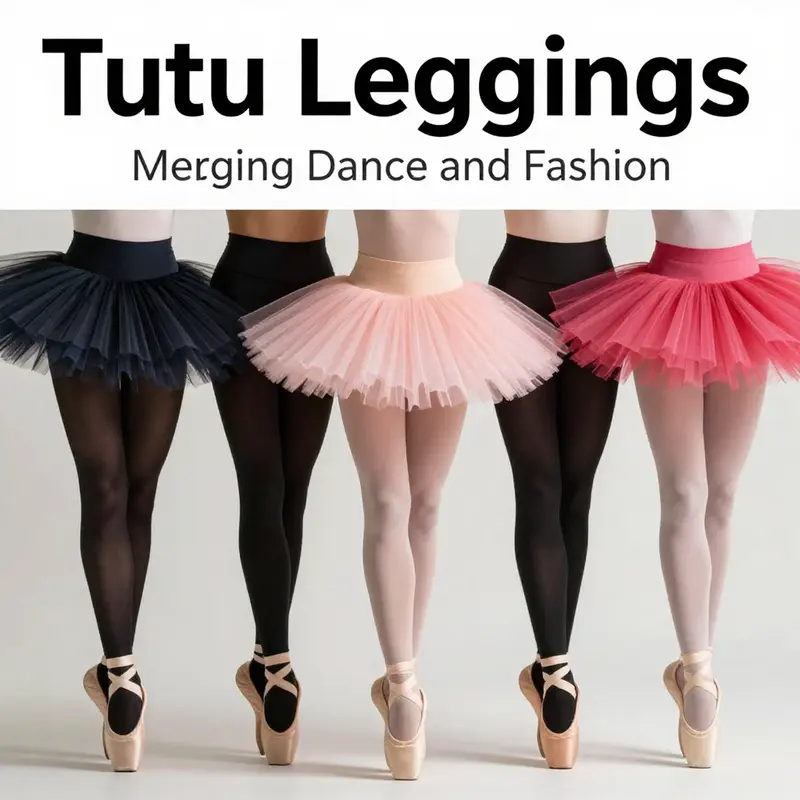
Tutu leggings represent a unique blend of functional dancewear and fashionable attire, captivating audiences in both performance and everyday settings. As a business owner in the fashion or dance industry, understanding this hybrid garment can open avenues for innovative product development. This article delves into the significance of tutu leggings in dance performance and training, examines their contemporary fashion trends, and explores the functional and aesthetic aspects that make them appealing to customers. By grasping these insights, you can better position your offerings in a competitive market.
Between Tulle and Tenacity: How Tutu Leggings Shape Performance and Practice in Dance
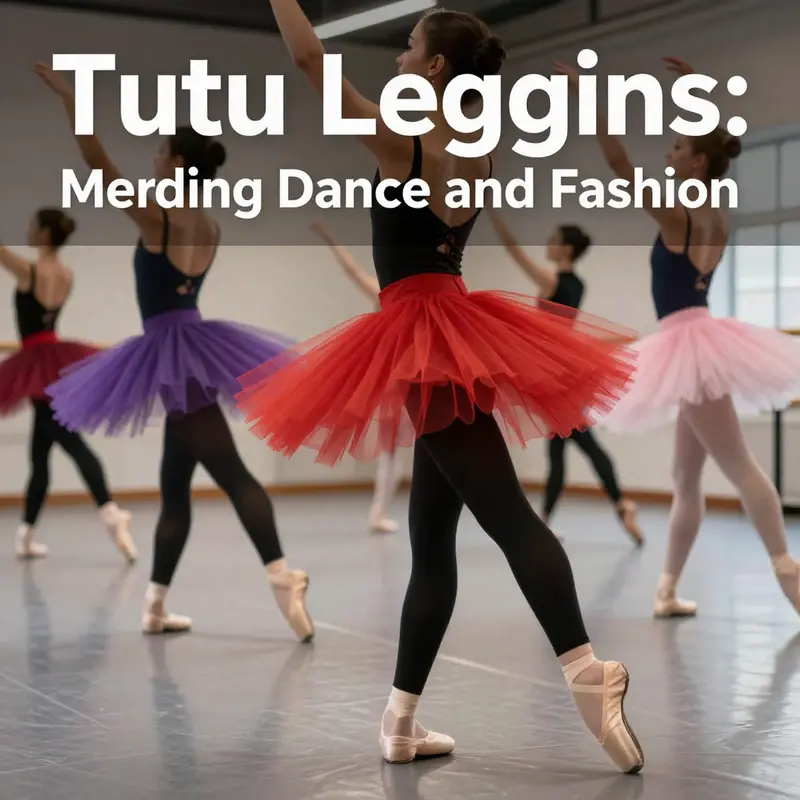
The fusion of two emblematic elements of movement—the ethereal bloom of a tutu and the disciplined precision of leggings—has given rise to a garment family that dancers, teachers, and designers increasingly recognize as more than a costume detail. Tutu leggings sit at a curious intersection between stage aesthetics and studio practicality. They carry the visual cadence of ballet’s tutu with the functional backbone of modern stretch fabrics, delivering a silhouette that communicates both artistry and athleticism. In practice, these garments are rarely about flashy novelty alone; they are engineered for the realities of movement, rehearsal time, and the varied bodies that perform. To trace why tutu leggings have gained traction, one must start with what each component contributes. A tutu, traditionally constructed from multiple layers of sheer fabric, provides that signature halo of volume above the hips. It is a visual cue as much as a garment, signaling character, mood, and historical reference. Leggings, by contrast, are lean, supportive, and relentlessly practical. They align with the dancer’s lines, permit a full range of motion, and manage sweat and fatigue through stretch and breathability. When combined, the result is not merely a fashion statement but a functional ensemble that can stay in place during dynamic sequences, repainting the dancer’s form with an added sense of narrative without compromising technique.
In the contemporary studio and on the stage, the tutu legging concept often appears in a few recognizable configurations. One common form attaches a short, layered tutu directly to a high-waisted, form-fitting legging. The design intent is straightforward: the legging delivers a secure, flexible base, while the tutu introduces volume and character without restricting leg lift or turnout. A more modular take features detachable tutu skirts that can be slipped over or removed from the leggings, offering versatility for repertory changes, character work, or simply varying the aesthetic for a performance. And in fashion-forward circles, tutu leggings have evolved into a broader wardrobe idea—a playful, yet purposeful, way to honor ballet lineage while accommodating streetwear sensibilities. Each iteration emphasizes a crucial principle: the garment must move with the body, not against it, allowing technique to unfold uninterrupted, while still signaling intention and mood through its silhouette.
Material science underpins this balance. The versions most commonly used in performance and training favor fabrics that stretch in four directions, retain their shape, and wick moisture away from the skin. The idea is to keep the dancer comfortable through long hours of rehearsal and through the heat of a live routine. A typical fabric blend often cited in industry guidance emphasizes a high proportion of stretch fibers with moisture-management properties, ensuring that the garment remains supportive as muscles heat up and lengthen. The tutu portions themselves are usually crafted from lightweight, semi-sheer materials that catch the light and create a sense of buoyancy when the dancer is in motion. The layering effect remains visually compelling, especially when stage lighting catches the tulle’s feathered edges, drawing the audience’s eye to the dancer’s lines and timing.
In performance settings, tutu leggings deliver a clear advantage in terms of presence. The tutu’s volume can visually extend the dancer’s line, emphasizing elevation and port de bras, while the leggings secure the lower body, enabling clean leg shapes and alignment cues for the audience and judges. This dual impact—enhanced silhouette and reliable practicality—explains why choreographers and costume designers alike gravitate toward tutu leggings when the aim is to marry storytelling with technical clarity. A well-made tutu legging helps dancers maintain focus on executing a sequence rather than adjusting garments mid-routine. It reduces the distraction of slipping waistbands or sagging hems, issues that can fragment rehearsal time and erode the precision of a complex turn or a delicate extension.
The dialogue between performance and training in tutu leggings also extends to how dancers experience the garment emotionally. A tutu can evoke character and narrative—turning a mere warm-up into a moment of role immersion. The leggings, meanwhile, offer a sense of security and readiness. This pairing has a psychological payoff: when a dancer feels visually supported by the costume, they can inhabit the role more fully and sustain expressive intent throughout a piece. The practicalities of the design—secure fit, durability under repetitive movement, and the ability to perform in varied temperatures and studio conditions—interact with the dancer’s sense of confidence. In this light, tutu leggings function as a kind of athletic costume that respects the body’s mechanics while inviting a certain theatrical latitude.
From a training perspective, the priority is not solely the cadence of a single recital but the rhythms of daily practice—repetition, muscle memory, alignment, and balance. Here, the comfort and coverage offered by high-elasticity leggings matter as much as the sensory cue of a tutu. The cut and texture of the legging can influence how a dancer senses their own lines in the mirror, how they feel about turnout, and how easily they can access pilates- or ballet-inspired positioning during a freeway of drills. Inclusive design has become a key consideration in modern tutu leggings, with attention paid to size variety, fabric weight, and waistband support. The industry’s push toward body-positive representation means that leggings are more often offered in a wider range of sizes, with fabrics that adapt to different shapes while maintaining the structural integrity necessary for dynamic practice. This inclusivity inevitably enriches training by making rigorous technique accessible to more dancers, who then bring greater diversity of movement to the stage.
The choreography of fabric and movement has practical implications that extend beyond the studio. For younger dancers, tutu leggings can serve as an early-stage introduction to performance discipline. The visual cue of the tutu fosters imagination and character work, while the leggings preserve modest coverage and freedom of expression. The combination makes it easier for instructors to guide students through complex sequences, since the silhouette helps illuminate technique and alignment. Yet the design also demands attention to safety and upkeep. If a tutu remains too stiff or a waistband too tight, it can impede breathing or restrict full hip rotation. Therefore, the most effective tutu leggings are those crafted with a sensitivity to the dancer’s physiology and the demands of a given repertoire. They are tailored with seam placements that minimize bulk at joint angles, with fabrics that stretch without losing shape after repeated use, and with finishes that resist snagging under stage lighting and during quick directional changes.
In discussing the cultural resonance of tutu leggings, it is worth noting how designers integrate ballet’s sartorial heritage with contemporary movement needs. The tutu, once a rigid symbol of classical form, becomes, in these hybrid garments, a flexible tool for storytelling. Designers may thread subtle references to the historical tutu into modern shapes—the volume and silhouette that evoke a dancer’s heritage—while ensuring the leggings deliver the performance-grade features that today’s dancers demand. This synthesis is not merely about aesthetics; it is about a mode of practice that respects the art form’s lineage while embracing the practicality required by modern training regimes. The result is a garment that can serve in a school recital, a studio workshop, or a professional production context where movement integrity and visual impact must be balanced with comfort and endurance.
The conversation around tutu leggings also intersects with contemporary fashion discourse. While rooted in dance, the concept has spilled into broader wardrobes, where stylists experiment with layering, texture, and color to evoke ballet’s mood without adhering to formal performance contexts. In these fashion-forward iterations, the tutu may be shorter, the leggings more opaque, or the color palette more daring, proving that the line between stage costume and streetwear can be both porous and productive. This cross-pollination underscores a broader principle in garment design: that performance-derived garments can inform everyday wear if they preserve the essential qualities—elasticity, breathability, and a sense of movement—that make them durable and expressive. The dancer’s body becomes, in this light, a canvas for design experimentation, while the garment remains a tool for practice, rehearsal, and stage presence.
From a technical standpoint, the mechanics of tutu leggings are fascinating. The waistbands are often reinforced to prevent slipping during leaps and fast turns, a feature that also helps instructors maintain a stable line during group work. The legging fabric typically employs a blend that resists pilling and maintains optical smoothness under stage lighting. The tutu attaches in a way that avoids interference with leg extension; layers are kept light enough to prevent drag but dense enough to create the desired silhouette when the dancer is in plié, relevé, or grand jeté. The weight distribution across the garment is considered to prevent fatigue in the lower back and hips, a common stress point for dancers as they train intensively. In this sense, tutu leggings function as a harmonious system—an ensemble that supports, rather than competes with, the dancer’s physical and artistic goals.
For educators and choreographers, the utility of tutu leggings lies in their predictability and adaptability. In rehearsal rooms and on studio floors, these garments simplify the process of costume coordination for ensemble pieces that require quick changes or character-driven second acts. They offer a reliable gait for rehearsing sequences with a strong focal point on line and port de bras while remaining forgiving enough to accommodate rapid variations in tempo. This reliability translates into more efficient scheduling, more consistent lighting and blocking, and, ultimately, clearer communication of movement intent to audiences. In short, tutu leggings embody a design philosophy that values movement clarity, tactile comfort, and narrative versatility as essential components of any serious dance training or performance program.
Practically speaking, care and maintenance influence how long a tutu legging maintains its performance characteristics. The tutu portion requires gentle handling to preserve its shape and avoid fraying of the delicate fibers, while the leggings benefit from protocols that protect elasticity and prevent color fading. Manufacturers and studio managers alike emphasize cold wash cycles, careful drying, and avoidance of harsh detergents that can degrade fibers over time. When properly cared for, tutu leggings remain viable through many cycles of rehearsal and performance, which is a noteworthy advantage for schools and studios operating under budgetary constraints. This durability, paired with the garment’s dual function, helps justify the initial investment from the perspective of both performers and program administrators, reinforcing tutu leggings as a practical asset in the world of dance training and stagecraft.
To stay connected with the wider ecosystem of tutu-inspired design and its practical applications, practitioners often look to a blend of professional guidance and peer experience. In this regard, the evolving consensus emphasizes a combination of four guiding principles: first, a secure, comfortable fit that moves with the body; second, materials that support prolonged activity without overheating; third, silhouette management that enhances rather than obscures technique; and fourth, inclusive sizing and adaptive design that accommodate a broad spectrum of dancers. When these principles align, tutu leggings become more than a garment choice; they become a reliable partner in the journey from studio basics to stage moments.
For those exploring foundational options that can anchor this aesthetic in a learner’s repertoire, a practical step is to start with a basic tutu framework paired with a high-performance legging. The pairing supports both the pedagogical aims of technique and the expressive aims of character work without requiring a specialized wardrobe for every new routine. This approach also provides an accessible path for studios building their own dress rehearsal vocabulary, ensuring that instructors can choreograph with confidence and that students can grow into the technical demands of more ambitious productions. If you are curious about broadening your tutu repertoire beyond a single look, consider exploring the basic tutu category as a starting point to understand how different materials, lengths, and layering choices influence movement dynamics. basic tutu category is a useful reference point for evaluating how a foundational piece can be integrated with performance-ready leggings to support a range of training and performance scenarios.
In sum, tutu leggings illuminate a practical truth about dance attire: when the dialogue between form and function is carefully calibrated, clothing ceases to be a mere shell and becomes a facilitator of artistry. The tutu contributes narrative and visual drama; the leggings provide core stability and comfort; together they sustain the dancer’s capacity to rehearse with focus, to perform with intention, and to inhabit character with conviction. The chapter’s materials remind us that the most effective dance garments honor the body’s mechanics while inviting imagination to take flight. They are not simply costumes; they are instruments of movement, capable of shaping time, line, and mood on the stage and in the studio. For practitioners seeking a nuanced balance of tradition and modernity, tutu leggings offer a compelling framework in which technique is nourished by design, and design, in turn, is validated by performance.
External reading can broaden this understanding of how performance fabrics and design philosophies influence contemporary dancewear. For a broader perspective on fabric performance and design thinking in dance apparel, see an external resource that surveys comfort, style, and function across modern dance clothing: https://www.dancewearreview.com/2024-best-dance-clothes.
Whispers of Tulle and Thread: The Quiet Rise of Tutu Leggings in Modern Wardrobes
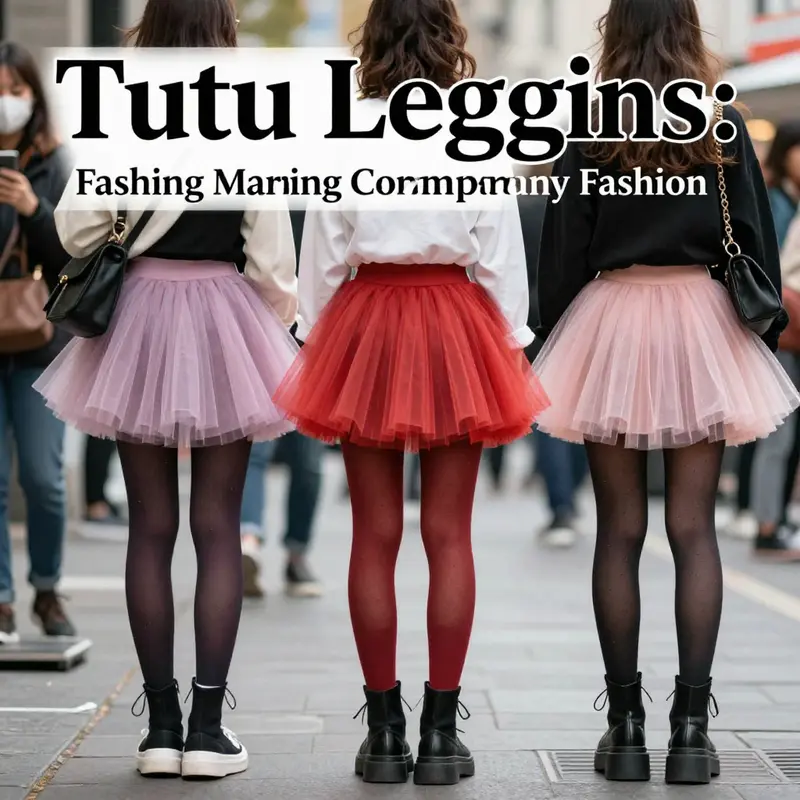
A delicate tension runs through modern clothing, where the language of dance and the discipline of sport meet the everyday ease of athleisure. The term tutu leggings, once a niche label in a handful of stage costumes, now surfaces in fashion conversations as a symbol of how design can fuse whimsy with practicality. This chapter traces that tension not as a manifesto but as a natural evolution—a look that began on studio floors and found its way into city streets, social media feeds, and backstage discussions about what a garment should do and what it can communicate. The tutu, with its cloud of tulle and its sense of suspended movement, has never purely been about decoration. It embodies an intimate idea of motion—how fabric can breathe, how layers can catch light, how the body can command attention without shouting. When a form-fitting legging meets a soft, flared skirt over the top, the resulting silhouette gestures toward both discipline and fantasy. It is precisely this paradox that makes tutu leggings resonate in a fashion landscape that prizes versatility above all else.
To understand their place, it helps to recall the core attributes of each element. A tutu, in its most iconic incarnation, is built from multiple delicate layers of mesh or tulle. It creates volume that appears to float around the hips and legs, while the wearer maintains full range of motion underneath. Leggings, conversely, are the epitome of sculpted relief: snug, supportive, and designed to move with the body through dynamic activity. They translate exertion into clean lines, suppressing friction and drag. When designers braid these two idioms together, they do not simply attach a skirt to a pair of tights. They choreograph a new tension between structure and air, between the body’s solid core and a soft halo that responds to every step, bend, and leap. This is why tutu leggings often feel less like a costume and more like an adaptive fashion statement—an item that can carry the seriousness of sport while soaking in the lightness of a stage prop.
Yet the chapter cannot pretend that tutu leggings have become a single, rigid category. In the market and in the studio, they appear in several guises. Some ensembles fuse a close-fitting pair of leggings with a detachable tutu skirt that can be swapped out for a more streamlined look when the occasion calls for it. Other versions embed the tutu as a short overlayer that sits just at hip or mid-thigh, allowing the legging to remain the unobtrusive workhorse of the outfit. There are even designs that substitute a layered, semi-sheer mesh around the waistband to evoke the tutu’s silhouette without the full volume—a compromise that preserves movement and avoids overwhelming the frame. In professional settings, the line between performance costume and streetwear becomes intentionally blurry. In casual contexts, a hint of tutu can read as a playful nod to movement culture, a gentle wink that signals confidence and a dash of theater in everyday life. The effect is not about novelty alone. It is about how a garment can be a bridge—a bridge between the disciplined practice of dance and the spontaneous, democratic taste of street fashion.
Market practitioners have noted that, in the current fashion climate, the most persistent demand surrounds three woven ideas: high waist, seamless construction, and multi-functionality. High-waisted leggings provide the most reliable silhouette for tucking, elongating the leg, and smoothing the midsection—qualities that modern wardrobes increasingly reward. Seamless or minimal-seaming designs reduce visual distractions and improve comfort under layers, a feature that matters as people pair leggings with tunics, long cardigans, or oversized sweaters. Finally, multi-functionality remains the aspirational core: a single garment that can move from gym to cafe, from a choreographed rehearsal to a casual night out, from a family photoshoot to a fashion editorial. A tutu overlay, when used judiciously, intensifies this multi-use potential. It adds a seasonal narrative to the item without requiring a different base piece for every mood. In other words, tutu leggings appeal because they are not merely an aesthetic choice but a practical reinvention of how leggings can be used across contexts.
Despite the poetic glamour of the tutu, there is a pragmatic backbone to these designs. The materials deserve attention because the promise of freedom and movement rests on fabric that stretches, breathes, and remains opaque under lights and shadows. Industry practice often leans toward comfortable blends that combine stretch with durability: a high percentage of elastane in the legging component ensures recovery after movement and resistance to bagging at the knee, while a substantial outer layer of tulle or mesh maintains a consistent halo around the upper leg without disrupting the legging’s natural line. The color palette tends to follow the same logic as other performance-oriented garments: monochromes for versatility, soft pastels for a playful nod to ballet heritage, and occasionally metallic or iridescent accents to catch the eye during performances or fashion week photo calls. The result is an ensemble that can feel at once athletic and romantic, refined and approachable. It is precisely this blend of attributes that makes tutu leggings an intriguing case study in how fashion designers navigate the space between utility and enchantment.
In sculpting a modern interpretation, designers are mindful of how the tutu’s volume interacts with the leg’s line. Too much fabric can disrupt the leg’s silhouette and impede movement; too little can strip the look of its intended aura. The most successful approaches privilege a restrained tutu that hints at volume rather than dominates the frame. A detachable layer offers the most flexibility: the wearer can reveal a clean, uninterrupted legline in a professional setting, then reintroduce the tutu for a performance or a playful weekend look. This strategy aligns well with current consumer expectations for modular pieces—garments that can be reassembled or reimagined to suit shifting moods and venues. The modern wearer wants a wardrobe that negotiates boundaries rather than surrendering to a single identity. In this sense, tutu leggings become a practical philosophy, a way of dressing that encourages experimentation while preserving everyday ease.
Culturally, the appeal of tutu leggings also rests on a nostalgia for movement. Ballet, with its discipline and grace, remains a potent cultural touchstone, even for those who never set foot on a studio floor. The tutu over a pair of leggings quietly channels that history—an acknowledgment that performance and daily life share similar rhythms. The look invites spectators to read intention into a simple action: a walk, a stretch, a turn. It is not merely about looking special; it is about projecting a willingness to inhabit both worlds—a world of practiced technique and a world of spontaneous self-expression. This duality matters in a time when fashion tends to reward authenticity over perfection. People want to feel aligned with a narrative that honors craft while embracing the unexpected. The tutu leggings, in this sense, are less about spectacle and more about a dress code for contemporary courage: a quiet invitation to bring a stage-ready mood into ordinary hours.
From a design perspective, there is a recurring tension between opacity and transparency that defines how a tutu legging is worn. Consumers increasingly seek garments that remain opaque under bright light and direct contact, even as the eye is drawn to the ethereal glow of a soft tutu. This tension has accelerated innovations in fabric technology: denser weaves with durable stretch, reinforced seams that withstand repeated flexion, and linings that preserve opacity without compromising breathability. The result is a garment that feels substantial enough to wear confidently in public while maintaining the delicate, dreamy aura of tulle. In practice, it is this balance that makes tutu leggings viable as more than a stage costume. They are, at their best, a thoughtful layering solution for those who want to carry a hint of orchestral poise into the bustle of daily life.
A crucial aspect of their growing presence lies in the language they enable. Fashion today privileges storytelling through fabric and silhouette. A tutu overlay does not overwhelm; it educates the eye about movement. It suggests a choreography that the wearer inhabits through posture, stride, and breath. The legging remains the anchor, the surface that keeps the look grounded in practicality. The tutu overlayer performs as a small theater in which the body acts out a narrative of balance, effort, and release. For the consumer, this translates into a sense of empowerment: a way to feel supported by a garment’s technical design while also indulging in a playful, almost cinematic mood. In a social media environment where images loop quickly, this narrative is powerful. It allows a viewer to infer complexity from a single outfit, a moment in which sport meets art meets street style.
An important, often overlooked dimension is the way tutu leggings adapt across ages and contexts. In children’s wear, the combination is almost intuitive: leggings provide stretch and safety, while the tutu adds sparkle and theatrical presence for class performances or family occasions. In adult fashion, the balance shifts toward an abstract interpretation of movement. A dancer might pair a sleek, high-waisted legging with a subtle, layered tutu for a rehearsal that still looks presentable off the studio floor. A fashion editor might envision a fuller tutu as a statement piece, styled with a long coat or a crisp, structured blazer for a night out. The versatility here is not a cheap trick but a deliberate design strategy. It reflects a broader trend toward clothing that can travel between the gym, the studio, and the street with minimal friction—a trend that, in turn, reshapes how wardrobes are assembled and how fashion narratives are told.
In thinking about the future of tutu leggings, three ideas stand out. First, the ongoing pursuit of modularity and customization will likely push designers toward elements that can be swapped or adjusted: detachable skirts, adjustable waistband heights, and interchangeable overlays. Second, the emphasis on performance materials will grow, not just for comfort but for sustainability. Recycled blends, responsibly sourced fibers, and fabrics engineered for durability can help these pieces remain relevant across seasons and activities. Third, the storytelling aspect will deepen. As consumers increasingly seek pieces with a personal history or a visible commitment to craft, tutu leggings will be perceived less as a novelty and more as a thoughtful, intentional choice. They can communicate an attitude—one that says the wearer respects technique, values comfort, and is unafraid to embrace a little theater in daily life.
For readers who want to explore the broader family of tutu-inspired garments without committing to a full costume, there is a gentle path. Consider the way these pieces can be layered with other wardrobe staples to achieve a refined, wearable look. The tutu overlay can be short and subtle, letting the legging do most of the talking, or it can be more pronounced for editorial impact. The key is to maintain a sense of proportion: the tutu should feel like a finishing touch rather than a dominating feature. When in doubt, start with a restrained approach—perhaps a single-layer, softly tinted overlay that grazes just above the knee—and observe how the rest of the outfit responds. As style evolves, the same garment can transition from a playful weekend outfit to a confident, work-appropriate ensemble, provided the rest of the styling is purposeful and restrained. The idea, at its heart, is not a uniform trend but a flexible invitation to reimagine what leggings can be and what a tutu can signify in a contemporary wardrobe.
In sum, tutu leggings occupy a nuanced corner of modern dress, one that honors the magic of ballet while championing the functional, multi-use ethos that defines today’s fashion. They are not a universal solution for every moment, nor are they a static throwback. They are a design story that travels across spaces—the studio, the street, the stage, and the screen—carrying with it a promise: clothing can honor gesture without surrendering practicality. The look invites the wearer to perform confidence in public and to savor the private ritual of movement at home. It is this blend—the discipline of the legging, the whimsy of the tutu, and the modern appetite for adaptable, expressive clothing—that makes tutu leggings more than a fleeting trend. They are a tactile reminder that fashion’s future lies in pieces that move with us, that celebrate our capacity for both work and wonder, and that quietly ask us to keep dancing, even when the music changes.
For readers who crave a more tactile sense of how these dress pieces connect to the broader spectrum of tutu-inspired garments, a gateway exists within the realm of theatrical and educational wear. See the basic tutu category for an example of how a simpler, wearable tutu can anchor a wardrobe without sacrificing ease of movement or everyday practicality. basic tutu category.
External resource: https://www.vogue.com
Between Tulle and Trail: The Functional-Whimsical Craft of Tutu Leggings
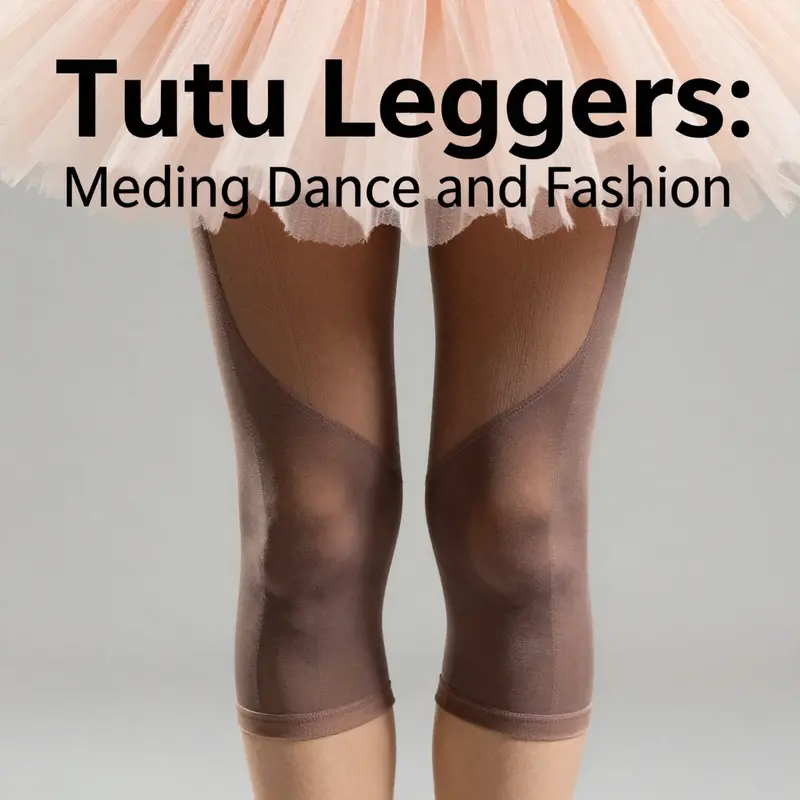
External resources offer additional perspectives on how designers translate athletic needs into customizable pieces. For readers seeking practical guidance on how to approach customization and design, a detailed resource on incorporating personal artwork into leggings design can be found here: https://www.printful.com/blog/custom-workout-leggings-design-maker/. This external link provides context on the broader design toolkit available to creators who want to merge function with personal expression, reinforcing the chapter’s central idea that tutu leggings are a versatile platform for movement, imagination, and style.
Final thoughts
In conclusion, tutu leggings embody a harmonious blend of functionality and style, appealing to both dancers and fashion enthusiasts. By recognizing the importance of these garments in dance training, contemporary fashion, and their unique design attributes, you can strategically cater to a growing market that values both performance and versatility. Embracing this trend could position your business at the forefront of innovation in the fashion and dance industries.