

The adult white tutu is more than just dance attire; it is an emblem of grace and artistry that has transcended its traditional roots to become a popular choice in various social and artistic contexts. In the world of ballet, the tutu symbolizes discipline and beauty, but in contemporary settings, it has taken on a life of its own, appearing in themed parties, festivals, and performances across genres. This article delves into the rich historical significance of the adult white tutu in dance, its diverse design variations for performances and parties, the materials that define its structure, and its profound cultural impact in modern society. Each chapter is dedicated to unraveling a specific aspect of this iconic garment, enhancing understanding of its relevance and appeal in today’s marketplace.
Threads of Purity and Performance: The Adult White Tutu as a Living Archive of Dance
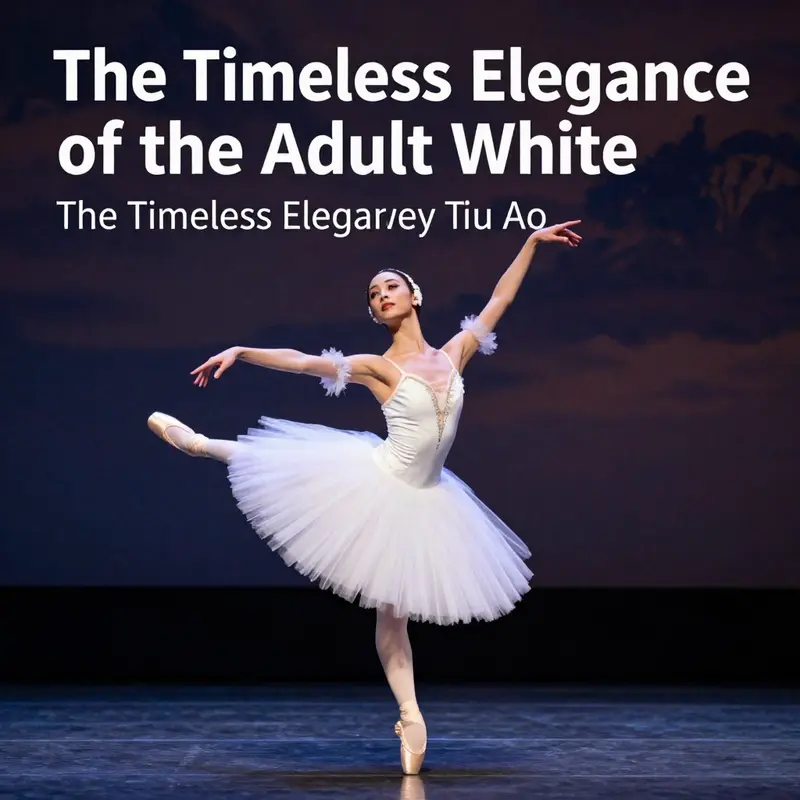
The adult white tutu sits at a unique crossroads of aesthetics, technique, and cultural memory. It is not merely a costume piece but a vehicle for expression that travels across centuries and performance contexts. From its origins in the Romantic era to its enduring presence on contemporary stages, the white tutu has carried a set of meanings that dancers, choreographers, and audiences recognize even when the choreographic language shifts. Its whiteness has long signified purity and possibility, a blank canvas that catches and amplifies every nuance of the dancer’s line, weight, and breath. In this sense, the tutu becomes more than fabric; it is a frame for movement, a conduit for storytelling, and a reminder of how form and function can converge to illuminate a narrative without words. The garment’s influence extends beyond the proscenium as well, echoing in community performances, festive pageants, and themed gatherings where the desire to conjure classical grace meets the demands of modern wearability. The white tutu, in its many iterations, thus embodies a living dialogue between history and present-day artistry.
If one traces the tutu’s lineage, the seed of its symbolic power can be found in the Romantic period of the 19th century. Dancers, costumiers, and patrons imagined the whiteness as a translator of ethereal realms, a garment that could carry the audience toward otherness while grounding the movement in precise technique. The classic full-length white tutu that later became a staple in principal roles was designed to reveal the dancer’s line with minimal distraction. Layers of tulle—often between five and seven—provided the necessary volume to create a silhouette that read legible from the back of the house, even under the glare of stage lights. Yet the design was more than a practical solution; it was a deliberate sculpting of space around the body. The stiffened, crisp structure of the tutu contrasted with the fluidity of the arms and torso, so that each articulate extension—the sweep of a leg, the turn of a wrist, the tilt of the head—could be perceived as a pure, controlled note within a larger choreographic score. In this sense, the white tutu functioned as a visual amplification of technique, a way to elevate precision into poetry on the stage.
The historical significance of the white tutu is inseparable from the professional identity it helps to crystallize. Dancers who devote years to mastering the intricate balance between line, weight, and musicality understand that the tutu is both partner and signal. It marks a threshold: a rite of passage when a dancer transitions from student to practitioner who can inhabit a role with authority. In classical repertory such as Swan Lake or Giselle, the tutu frames not only the body but the dancer’s career narrative. The garment becomes a badge of discipline, a visible reminder of the countless hours spent rehearsing élan, pirouette, and port de bras. Even as contemporary choreographers reinterpret the tutu for neoclassical or abstract works, the symbol endures. It signals a lineage—an unbroken chain of performers who have translated tradition into present-day meaning. In today’s diverse performance landscape, where artists negotiate tradition and innovation, the white tutu still communicates a standard of craft that audiences instinctively recognize and respect.
This continuity is deeply connected to the tutu’s status as a rite of passage. For adult performers, wearing the garment can feel like stepping into a lineage that predates them. It is a moment that couples humility with authority: a recognition of one’s training while claiming a voice within a storied canon. The tutu’s layers, their weight and rustle, become almost a tactile ritual. Dancers learn to manage the physical demands of the fabric—the way it catches air on a leap, the pressure it places on the lower back during longue battements, the way it shifts the center of gravity as the torso rotates. These are not merely technical considerations; they are experiences that shape stage presence and emotional resonance. In rehearsals, the tutu can become a companion that asks for mindfulness toward breath, timing, and line. In performances, it becomes a partner in storytelling, translating the choreographer’s intent into a visible, shared language with the audience.
The tutu’s cultural role extends beyond the theater, making it a broader artifact of performing arts culture. It functions as a symbol that audiences recognize, even when their engagement with ballet is episodic or casual. The silhouette speaks to universal ideas of elegance, discipline, and the human capacity to transform a simple material into a vessel of meaning. In community spaces, a white tutu can anchor a celebration of craft, a demonstration of technique, or a nostalgic nod to a more classically framed ideal of beauty. Its versatility has allowed it to cross into party costumes, theme events, and even ceremonial occasions where the aura of classical grace is invoked to elevate the atmosphere. While fashion and performance choreography continue to evolve, the white tutu remains a reliable conduit for memory and discovery, inviting new generations to explore the same questions that once defined a century of ballet’s most revered stories.
The technical design of the adult white tutu is inseparable from its expressive potential. The layered structure, usually employing multiple sheets of tulle, creates volume without sacrificing definition in the dancer’s legs. This balance between fullness and control is essential for both dance and cosplay contexts, where the garment must respond to dynamic movement while preserving a visually striking profile. The skirt’s fullness enhances the visibility of precise footwork and leg extensions, making it easier for audiences to follow the line of a grande battement or a high attitude. Yet the design also accommodates comfort and practicality, with elastic waistbands and optional built-in petticoats that support the wearer during long rehearsal sessions and performances. In addition to function, lighting and stagecraft work in concert with the tutu’s white surface. The whiteness catches and reflects light in ways that accentuate the torso’s sculpting and the arms’ phrasing, helping to communicate the subtleties of phrasing and phrasing’s relation to musical structure. Although contemporary productions may infuse the tutu with modern textures or shade the fabric for a specific mood, the underlying principle remains: the garment is a frame for breath, balance, and narrative intention.
Accompanying this historical thread is a wider cultural conversation about how performers inhabit and reinterpret iconic costumes. A white tutu can anchor a revival without becoming a museum piece; it can serve as a living notation of influence, inviting audiences to imagine how the same silhouette might bend to different choreographic demands. In this sense, the tutu embodies a continuum that respects the past while leaning toward the future. When choreographers craft new works, they often reference the tutu’s formal vocabulary—its clean lines, its emphasis on the leg’s kinetic clarity—yet reconfigure how the body interacts with the fabric. The result is not mere homage but a dialogue across eras. A modern interpretation might push the boundaries of tempo, dynamic range, or spatial design, but the white tutu grants continuity, a throughline that helps audiences orient themselves within evolving forms.
Within this evolving landscape, the tutu also intersects with the broader culture of performance attire. Its presence in non-traditional contexts—costume events, themed galas, and celebratory performances—demonstrates the garment’s adaptability. The white tutu becomes a shorthand for grace and artistry, a signifier that invites spectators to suspend disbelief and engage with movement as a language. Its ability to function across settings—from formal stage to festive stagecraft—speaks to the enduring appeal of classical form when filtered through modern wearability and imagination. In telling stories about character and mood, the tutu offers a tactile memory: a reminder that elegance can be engineered into fabric, that a silhouette can carry history, and that movement can be a translation of a long, shared human story about beauty, discipline, and aspiration.
For readers who wish to contextualize this history within a tangible catalog of aesthetics, consider how a specific take on this garment can deepen understanding of the dance tradition. The tutu’s architecture—its layers, length, and stiffness—corresponds to particular choreographic intentions. In some Romantic-era repertoires, the extended skirt allowed for sweeping, imaginative mimesis of ethereal beings; in more contemporary interpretations, the same silhouette can be adapted to reflect psychological or existential themes, while still acknowledging the lineage that shaped such movement in the first place. The tension between tradition and innovation is precisely what makes the white tutu a compelling object of study. It offers instructors, performers, and scholars a concrete entry point into larger questions about how costume shapes perception, how technique can be read through fabric, and how audience experience is choreographed by what the dancer wears as much as what they do with their bodies.
In summary, the adult white tutu stands as a durable emblem of dance’s history and its ongoing vitality. It encapsulates a set of values—discipline, expressiveness, and a reverence for lineage—while also embracing the flexibility that allows it to participate in modern performances and social occasions. Its layered geometry and luminous surface empower dancers to articulate line and nuance with clarity, while its cultural resonance invites audiences to witness a living archive rather than a static relic. As ballet continues to evolve, the white tutu remains a constant touchstone, a familiar beacon that helps audiences navigate the ever-expanding landscape of movement-based art. It is at once history, craft, and possibility—the garment that makes the body legible to the eye and the heart open to the stories the dancer seeks to tell.
For readers seeking a concrete touchstone within a related context, the Swan Lake tradition remains a touchstone for discussions of period silhouette and performance practice. The repertoire’s enduring popularity has kept the white tutu in the public imagination, offering a vivid example of how a single garment can carry a culture’s ideals across generations. To explore related costume themes in the same lineage, a curated category of stage dress that aligns with this aesthetic can provide further insight into how designers interpret timeless forms for today’s performers. See the curated Swan Lake category for a sense of how the silhouette has endured as a reference point for both historical and contemporary works. Swan Lake tutu collection
An initial reference point for readers interested in the broader historical arc of the tutu is a respected overview that traces its evolution from early practice to present-day usage. Britannica’s concise articulation of the tutu’s history foregrounds its emergence as a symbol of purity and narrative clarity in ballet, while also acknowledging its adaptation across eras and styles. This external resource provides a foundational context for understanding how a seemingly simple garment can illuminate a long tradition of technique, storytelling, and cultural significance. For those who want to connect a detailed scholarly thread to the practical realities of performance, Britannica’s overview offers a reliable point of departure. External resource: https://www.britannica.com/art/tutu
Silhouette and Spark: Designing Adult White Tutus for Stage Presence and Party Radiance
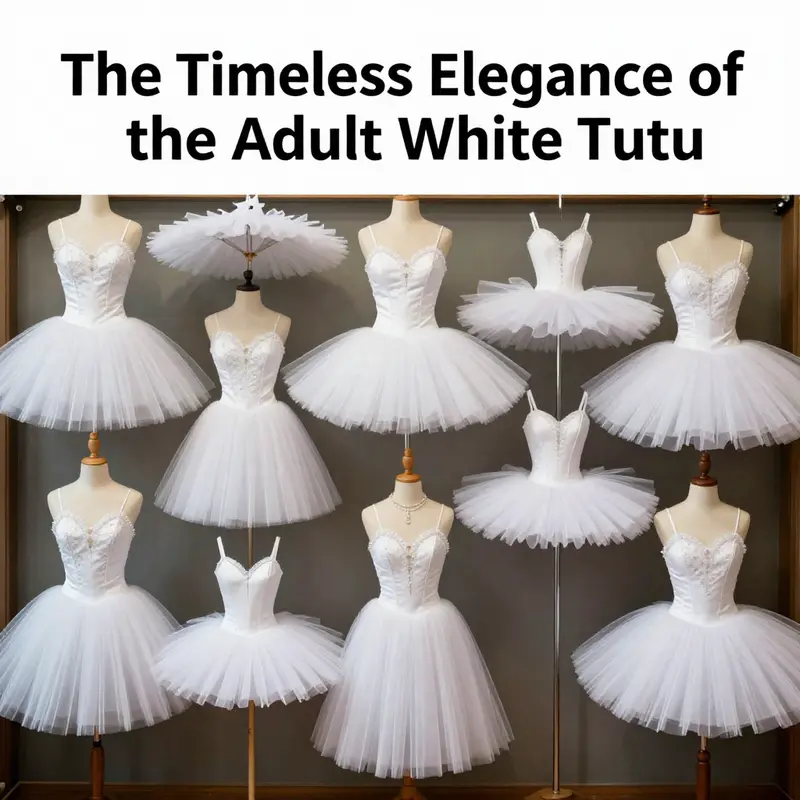
The adult white tutu is more than a garment; it is a dialogue between fabric, form, and intention. When the stage lights hit a white tutu, the wearer’s movements ripen into a language of shadow and glow, a visual vocabulary that can be read at eye level and from the balconies above. The classic silhouette—the short, stiff skirt made of layered tulle—anchors this language. Yet within that anchor lies a spectrum of choices that shift the garment from a rehearsal essential to a showpiece at a party or festival. Designers and wearers alike navigate a balance between volume, support, and comfort, recognizing that the same piece must perform under hot lights for hours or in the quick rhythms of a party floor. The design variations that unfold in this realm reveal how technique, material science, and cultural cues converge to evolve an aged symbol of ballet into a versatile instrument of celebration and storytelling.
At the heart of every adult white tutu lies a tension between structure and freedom. The layers of tulle form a graduated, resilient bloom that holds its shape even when the dancer leaps, spins, or slides across a polished floor. In performance contexts, the weight and stiffness of the fabric matter as much as the color. A seven-layer construction creates a denser core, giving the silhouette a pronounced halo of lift that remains visible from the back row and under the narrow beam of a spotlight. In contrast, a five-layer arrangement can feel lighter and more responsive in rapid sequences, with a softer, more natural swing that reads distinctly in close-up or intimate spaces. The choice between these configurations is not merely a matter of aesthetics; it is a practical calculation of how the garment interacts with the dancer’s body, the choreography, and the venue’s geometry.
Polyester emerges as a workhorse material within this ecosystem, prized for its durability and color integrity. Its fibers resist wrinkling and maintain rigidity after repeated washings, a critical feature for tutus that travel from rehearsal studios to theater stages and then to costume racks at the end of a long night. The layering technique—whether executed by hand or by machine—depends on the desired stiffness and the scale of the performance. Each layer of tulle contributes to a density that can transform a dancer’s lines, making extensions and leg shapes read as clean, crystalline forms under white light. The interplay of layer count and fabric density shapes not only the velocity of the skirt’s movement but also the silhouette’s perception from different audience vantage points. A well-executed seven-layer tutu becomes almost a sculpture in motion, a portable monument to discipline and craft.
For performers who need additional control, built-in petticoats or reinforced seams offer a practical solution. Petticoats act as a soft architectural guide, pushing outward the fabric at the right angles to amplify lift while preventing sag that can obscure line during a pirouette or a grand jeté. When petticoats are integrated into the tutu’s structure, they reduce the need for constant adjustments in mid-performance, allowing the dancer to concentrate on the specifics of turnout, balance, and timing. Reinforced seams—double stitching at stress points, and precision-finishing at the waist—extend the life of the garment, an important consideration for companies and schools that rely on consistent performance quality across a season. These features become even more valuable when the tutu doubles as a teaching tool, its silhouette teaching beginner dancers the geometry of line and the discipline of control.
In the realm of parties and themed events, the tutu’s role expands beyond pure technique. The same silhouette that communicates classical precision can become a vehicle for personal expression when designers reimagine the function of one or two layers, or when they incorporate elements that respond to the social rhythms of a celebration. Glowing or LED-lit tutus illustrate this shift vividly. In these pieces, the quiet, powdered luminosity of a white skirt takes on a new life as it brightens in time with music, emphasizing a dancer’s presence in dim environments or creating a party spectacle that travels with a troupe or a guest in a more impromptu setting. The incorporation of lights is not simply decorative; it engages the audience through movement, rhythm, and a shared sense of spectacle. A tutu becomes a point of light in a communal moment, a narrative cue that invites applause, laughter, and a sense of wonder. The construction for lighting is deliberately light, with elastic waistbands and lightweight tulle ensuring comfort and mobility. The wearer can focus on choreography or social interaction without the weight of a bulky power source becoming a distraction.
This glow-inflected variation also prompts a broader reconsideration of how white can function in a party context. White is not merely a color of purity or tradition; it is a canvas for contrast and interaction. In a dimly lit hall, a white tutu can appear to float, its multiple layers catching and animating the air with every turn. When embedded LEDs are coordinated with a choreographed sequence, the garment becomes a living instrument, translating musical cues into visual punctuation. In terms of wearability, designers prioritize rounded waistbands and soft edges, so the glow remains even and comfortable rather than becoming a focal point for irritation or itch. The result is a tutu that preserves the iconic technical silhouette while expanding its expressive range to a social and celebratory plane.
Customizability is another axis along which adult white tutus are increasingly designed for both practice and public appearances. Adjustable waistlines and reinforced seams respond to the realities of adult bodies and varied event settings. A tutu that accommodates a range of waist measurements without sacrificing the crispness of the silhouette can serve as a shared costume across households or institutions, reducing the need for multiple sizes and enabling a broader audience to experience the art form. Some versions incorporate flexible inner linings that can be cinched or released depending on the wearer’s comfort and activity level. This adaptability is especially meaningful for educational contexts, where a single garment might travel through different dancers’ bodies during a workshop or season. In such cases, ease of maintenance becomes a crucial consideration: the garment should tolerate careful laundering, while still returning to its original shape and brightness after each use.
The balance between home practice and public performance also shapes how designers approach the tutu’s internal architecture. For home practice, practitioners often prefer slightly more forgiving waistbands and softer edge finishes that reduce friction during long practice sessions. This preference does not negate the need for structural integrity. The most enduring designs integrate a hidden chassis that delivers support without bulk, preserving the clean line that counts in front-of-house views while minimizing fatigue during rehearsals. For public appearances, the metric shifts toward resilience and visual impact. In those contexts, the tutu must withstand rapid changes in tempo and direction and still present a frontal silhouette that commands attention. The same garment, with minor adjustments to layering and waist construction, can meet both demands when built with a thoughtful, modular approach.
In considering the broader design ecosystem, it is illuminating to reflect on how these variations reflect evolving expectations in contemporary dance and festivities. The adult white tutu has transcended its traditional role to become a flexible instrument for narrative and mood. In a classical ballet sequence, the tutu’s stiffness and volume help the dancer articulate precise lines, creating a visual language that enhances the score and communicates emotional content without a single spoken word. In a modern or themed performance, the same silhouette can be repurposed through a change in lighting, tempo, or accompanying costume elements to convey humor, whimsy, nostalgia, or solemnity. The garment’s adaptability is a testament to the ingenuity of designers who recognize that the audience’s perception of white can shift with context, lighting, and choreography.
From a practical standpoint, the care and maintenance of a white tutu matter just as much as design choices. White fabric shows every crease, bubble, or smudge, demanding meticulous storage and careful laundering. A well-made tutu resists these issues because the layers are shaped to hold their form, even after a demanding wear schedule. The care regimen often includes gentle washing, careful drying, and careful reshaping while the skirt remains suspended or laid flat. In this light, the tutu emerges as a long-term investment in a dancer’s craft and a host of performances across seasons. The more robust the construction and the more thoughtful the layering, the longer the garment can hold up under repeated wear, fittings, and cleanup.
For readers who want to explore the professional dimension of tutu design more deeply, the professional tutu category provides a window into the specialized choices that underwrite stage-ready performance. This path offers insights into how designers tailor silhouettes to different styles of movement, from classical to contemporary to theatrical reinterpretations. It also highlights how even a single element—the waist, the hem, or a single extra layer—can alter how a dancer interacts with gravity and air. If you are considering a tutu for a high-stakes program or a training regimen, the professional category is a useful guide to align expectations with the realities of performance. professional tutu category.
In sum, the design variations of adult white tutus reveal a spectrum of priorities. They range from steadfast, stage-ready constructs that honor a lineage of technique to contemporary adaptations that respond to social gatherings, lighting effects, and the joy of spectacle. The most compelling tutus function not as mere costumes but as extensions of the dancer’s intention. They translate breath, timing, and spatial awareness into a visible, tangible form. They also invite audiences to glimpse the artistry that lies behind the movement, offering a sensory bridge between disciplined rehearsal and celebratory release. The white tutu thus operates as a bridge between two worlds: the rigorous language of ballet, where every fold of fabric has meaning, and the festive language of parties, where light, music, and laughter animate the same silhouette in a different key. The result is a garment that remains enduringly relevant, capable of supporting both the quiet grace of a classical arc and the exuberant, shared memory of a dance-floor moment.
A final reflection centers on the future of tutu design. As materials science advances, we may see even more sophisticated light integration, smarter textiles that breathe with the wearer, and modular components that adapt to increasingly diverse stage and social contexts. The adult white tutu is poised to remain a versatile touchstone—an emblem of discipline and delight that can travel through careers, performances, and celebrations without losing its spine or its charm. In every valid iteration, the tutu sustains the promise of movement as art and community, a wearable scaffold for memory and joy.
External reference: https://www.dancewearpro.com/adult-tutu-designs
Threads of Light: Material Composition, Structure, and Gentle Care of the Adult White Tutu
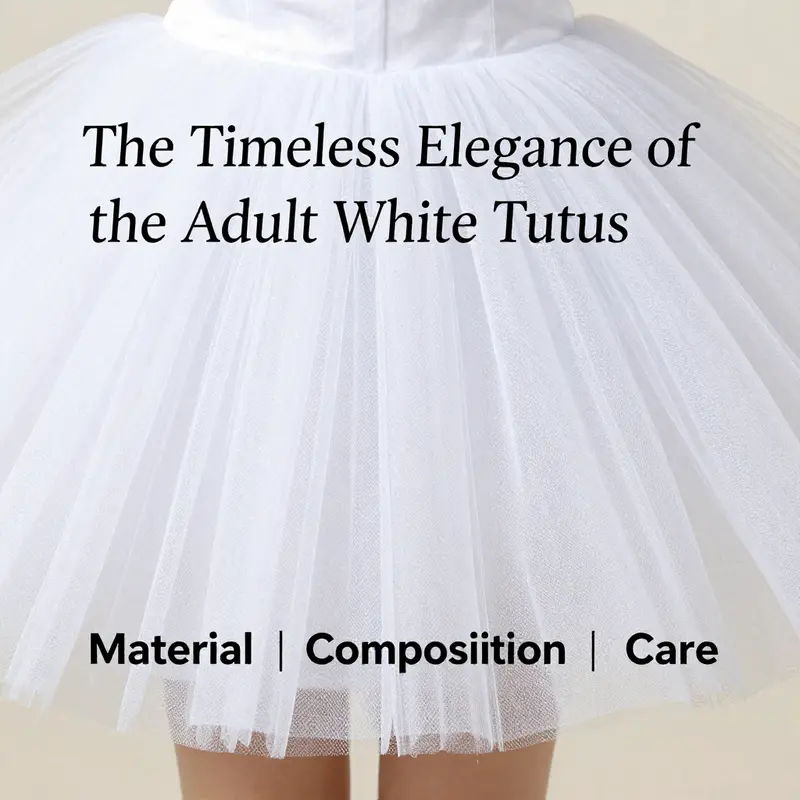
An adult white tutu carries more than a theatrical charm; it is a carefully engineered garment designed to hold a silhouette that seems to float with every breath. In the best examples, the fabric choice and construction are visible only as a quiet cohesion—the way the layers rise into volume, the way the waistband sits without pinching, the way the color remains crisp after a dozen performances. This chapter journeys through the material composition that gives the tutu its characteristic lift, the multi-layered structure that defines its shape, and the care practices that preserve its brightness and integrity across repeated wear. It is not merely a guide for maintenance, but a lens on how modern manufacturing meets classical aesthetics in a fabric that has carried dancers and party-goers alike into moments of unselfconscious, luminous movement. The white tutu, at its core, is a study in balance: lightness and resilience, rigidity and flexibility, tradition and practicality, all woven together in a way that supports performance while inviting playful use beyond the stage.
At the heart of most adult white tutus lies tulle, a mesh fabric renowned for its delicate appearance and surprising strength. The most common fibers for this purpose are nylon and polyester, each offering trade-offs that affect feel, durability, and care. High-quality tutus often rely on 100% polyester tulle because it holds color well, resists fraying, and maintains a crisp, structured surface after many wears. This is especially important in white, where even a faint dulling or uneven tint can disrupt the ethereal brightness the garment is meant to convey. The choice of fiber influences how the tutu behaves when moved through air on a dance floor or under stage lighting; a stiffer, heavier tulle will create more pronounced volume, while a softer weave may feel more flowing and flexible. Manufacturers frequently balance these properties by selecting a specific gauge and weft density, ensuring that the fabric contributes to the iconic shape without demanding excessive maintenance.
In addition to the tulle itself, many adult tutus incorporate a built-in petticoat or multiple underskirt layers that augment fullness without requiring the dancer to shoulder additional bulk. The full, multi-layered look—often achieved with five to seven distinct layers—forms the classic ‘bell’ or pancake silhouette that characterizes traditional white tutus. Each layer adds lift and structure, creating a silhouette that reads cleanly from a distance and remains cohesive up close. The layering also has practical advantages: it helps the tutu keep a consistent shape during movement, supports a dramatic boundary between the skirt and the legs, and reduces the risk of the outermost layer dragging on the ground during quick turns. The interplay of layers is a mechanical symphony where fabric weight, stiffness, and the overall cut all contribute to how the tutu holds its form when the wearer is in motion.
The waistband and inner architecture of the tutu are crucial to comfort and fit, which in turn influence performance. Many adult tutus use elastic waistbands or a combination of elastic with a satin-covered band to provide both secure support and a gentle touch against the skin. A well-designed waistband distributes weight evenly, minimizes shifting during jumps, and prevents fatigue that can arise from constant adjustments. For performance and event use alike, the ability to pull the tutu on and off quickly without sacrificing shape is as important as the outer appearance. In some designs, the waistband is reinforced to resist stretching over time, while in others it relies on a carefully chosen elastic blend that retains its tension through repeated wear. The result is a garment that not only looks pristine under lights but also feels manageable during long days of rehearsal, setup, or travel.
Care for a white tutu begins with an awareness of how the fabric responds to moisture, heat, and agitation. The same characteristics that give tulle its resilience—its fine mesh and synthetic fibers—also determine how care should be approached. The consensus among most makers is straightforward: hand-wash when possible, using cold or lukewarm water and a mild detergent that is free of harsh bleaches or additives. This approach minimizes the risk of fraying at the edges, preserves the color-fastness of the fabric, and prevents the layers from sticking together in a way that could compromise volume. When hand-washing is not convenient, a gentle machine-wash cycle in a garment bag and on a delicate setting can be acceptable for some tutus, but only with very careful attention to temperature, spin speed, and the absence of abrasive items in the wash. The goal is to maintain the crisp, airy appearance without introducing pilling, shedding, or distortion in the shape.
After washing, the care routine emphasizes gentle handling. Rinsing thoroughly is essential to remove detergent residues that can attract dust or alter the fabric’s softness. Very gently pressing out excess water—never wringing or twisting—helps preserve the integrity of the tulle’s weave and keeps the layers from collapsing into one another. Drying is best achieved by laying the tutu flat on a clean surface or, when feasible, draping it over a line or rack in a well-ventilated area away from direct heat or sunlight. Heat can soften the synthetic fibers, potentially altering the skirt’s stiffness and the alignment of its layers, which would undermine the silhouette that performers rely on for a clean line under stage lighting.
Storage is a silent guardian of the tutu’s shape and color. When not in use, it should be kept in a cool, dry place, protected from direct sun that can lead to yellowing or fading over time. A breathable garment bag or a clean, dust-free closet space helps shield the fabric from environmental contaminants while allowing air circulation to prevent mustiness. Some practitioners also store tutus with the skirts supported by a hanger designed for delicate fabrics and with tissues or soft padding between layers to reduce friction. The aim is to maintain the tutu’s lift and firmness, so the moment it is worn again, the silhouette remains as intended rather than collapsing into a flattened, lifeless shape.
A practical note for frequent use—especially in weddings, performances, or themed events—is to check the tutu’s seams and edges between wears. Small tears or loose threads can compromise both appearance and structural stability if left unaddressed. The outer layers can shed a glittering trail when mishandled or scrubbed aggressively, so repairs should be conducted with a light touch and, ideally, with thread that matches the fabric’s color and weight. A simple inspection before each engagement—whether a rehearsal or a run-through—can catch issues early and prevent interruptions during an important moment on stage or at the party. In addition to mechanical care, some care guides suggest avoiding harsh detergents, strong bleaches, or solvents that could degrade the fibers or alter the whiteness of the fabric. The aim is to keep the tutu as fresh as possible for repeated use without compromising its structural integrity.
From a manufacturing perspective, the material standards behind a white tutu must balance brightness, durability, and washability. The choice of tulle—polyester versus nylon, and the weave’s degree of stiffness—dictates how the garment looks after storage and how it responds to repeated laundering. A key factor in color retention is the fabric’s color-fastness, a property that determines whether whites stay bright after multiple cleanings. The use of non-fraying edges or reinforced hems can reduce the need for frequent repairs and maintain a clean, even line along the skirt. As care guidelines evolve with new fibers and finishes, some producers highlight that their tutus are designed for straightforward maintenance, a practical feature for performers who require reliable garments at frequent events.
For readers considering options in the broader market, the basic foundations of a tutu’s construction—layering, waistband design, and choice of fabric—are worth understanding as a starting point. The basic tutu category provides a window into how selection criteria translate into wearability and care. If you are exploring how to begin assembling a white tutu wardrobe, consider how many layers you prefer, whether you want built-in petticoats, and how much emphasis you place on ease of cleaning. The practical balancing of these elements often defines both the garment’s look on the body and its longevity through repeated performances or appearances. The journey from material to maintenance is a continuous loop: the fabric chosen influences the silhouette, the silhouette guides the care routine, and the care routine, in turn, preserves the fabric’s capacity to present that silhouette with clarity and grace. For those curious about how such decisions translate into a real-world purchase, you can discover the basics in the broader range of tutu options, including the basic-tutu category.
The basic tutu category offers a practical starting point for understanding how foundational construction informs both appearance and handling. Exploring this category helps illuminate how designers translate a single vision of whiteness and lift into a garment that can endure hours of rehearsal, multiple events, and the close scrutiny of stage lighting. It is in these foundations that the adult white tutu reveals its true character: not merely a costume piece, but a wearable instrument of light, shape, and timing. The interplay of fabric choice, layer count, and waistband design creates a flexible instrument that responds to movement with a poised, clean line, even as the wearer shifts, twirls, and turns under spotlights.
In thinking about care and material standards together, it is useful to remember that the tutu’s whiteness is more than color—it is a reflection of resilience. The material selection ensures that the fabric remains bright, the layers hold their volume, and the seams stay secure after repeated use. The care routine—gentle washing, careful drying, thoughtful storage—serves to extend that brightness and shape over time. The result is a garment that can travel between rehearsal rooms, studios, and celebration spaces without losing its sense of airiness or its capacity to command the eye.
Ultimately, the adult white tutu embodies a quiet philosophy of performance: great beauty rests on robust, maintainable craft. The choice of synthetic tulle with the right balance of stiffness and softness, the layered construction that yields iconic volume, and the practical details of waistband comfort all come together to create a piece that can team with a dancer’s motion or a party-goer’s playful aura. The care guidelines, too, are a kind of choreography—steps to preserve the tutu’s form, a rhythm for washing, drying, and storing that keeps the garment ready for its next appearance. This integration of material science and practical savoir-faire is what transforms a white tutu from a simple garment into a reliable companion for performances and celebrations alike. And as you plan your next look, keep in mind how the basic structure and careful stewardship of this fabric can be a model for thoughtful dressing across contexts.
External resources can offer deeper insight into industry-wide standards and best practices. For a deeper dive into material standards and best practices in the industry, see the care and materials guide: https://www.balletshoes.com/adult-tutu-care-and-materials-guide
Grace in Rehearsal and Reckoning: The Cultural Pulse of the Adult White Tutu in Modern Life
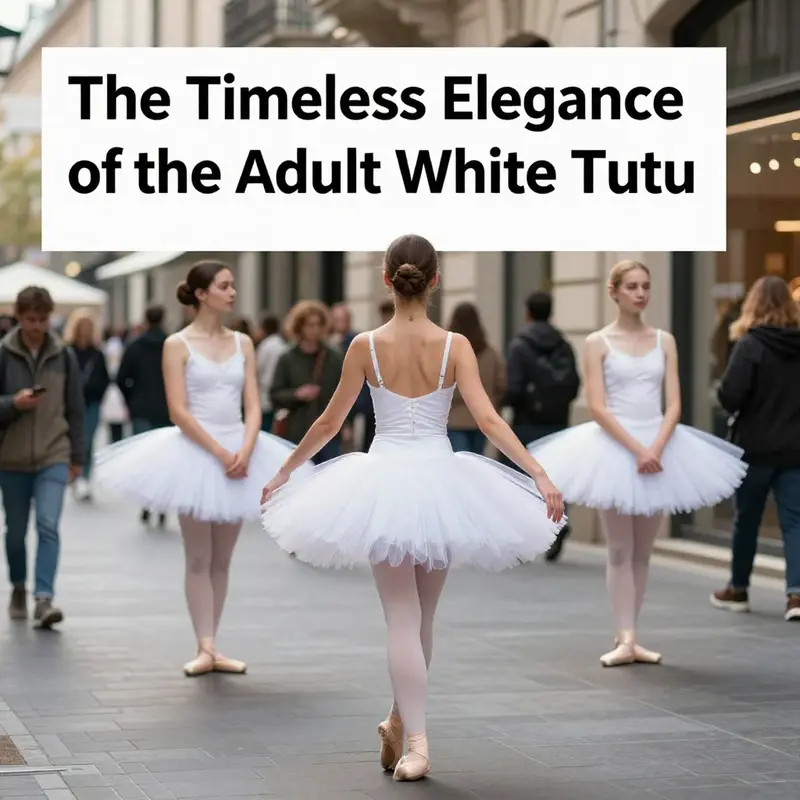
If we trace the arc of the adult white tutu, we find more than a garment. We find a cultural signal that slips easily between the stage and the street. It begins as a silhouette built for motion—clean lines, precise geometry, a veil of lightness that looks effortless even when it requires discipline to achieve. Yet over time this simple skirt has become a beacon for personal expression, a way to stage grace in a world that often asks grown people to be practical above all else. The white tutu, in its adult form, is not merely a costume or a festive prop. It is a statement about how we choose to show up—on a crowded dance floor, in a gallery, at a red carpet, or during a quiet moment of creative play. It embodies both nostalgia and rebellion, a double gift of memory and possibility that invites wearers to inhabit a persona that feels true, not merely appropriate. In this light, the tutu moves beyond the confines of classical ballet and becomes a versatile symbol of modern femininity and self-directed artistry.
The cultural impact of the adult white tutu is most evident in the way it migrates across contexts. On fashion runways, it offers a study in restraint and drama. Designers experiment with transparency, volume, and structure, bending the tutu’s familiar shape into new configurations that still echo its archival origins. The result is a dialogue between tradition and experimentation, where the white hue acts as a calm counterpoint to bold cuts, metallic embellishments, or unconventional textiles. The silhouette remains recognizable, but the intention shifts. What might have signaled formality in a theater foyer becomes a deliberate choice for a public stage where the wearer asserts a certain poise, even when the music swerves into unexpected territory. The tutu thus becomes a bridge between eras, a tactile reminder that elegance can accompany audacity.
In themed events and performances, the adult version of this garment turns from a mere prop into a vehicle for character, mood, and narrative. A white tutu can be a strand in a larger mise-en-scène, a clue that helps audiences navigate mood boards and storylines without heavy exposition. It offers a visual punctuation mark that can soften a scene or sharpen a moment of irony. In contemporary performance art, the tutu is employed not just for its beauty but for its capacity to communicate identity without words. A dancer may reveal a personal history through movement, then illuminate it with the tutu’s creamy, almost ethereal volume. The layers—often five to seven—create a sculptural body that reads from a distance and reveals nuance up close. The space between fabric and form becomes a stage in itself, inviting audiences to consider how elegance relates to power, how restraint interfaces with whimsy, and how maturity can welcome play as a legitimate mode of inquiry.
The social significance of donning an adult white tutu goes beyond aesthetics. It signals a reclamation of grace as a form of agency. In many circles, growing up can be associated with responsibility, practicality, and gravity. The tutu interrupts that narrative by offering a counterpoint: a playful assertion that sophistication and lightness can coexist. This is not about dressing childlike, but about choosing a shape that preserves the paradox of adulthood—the ability to be serious and to celebrate at once. The result is a broader cultural invitation to experiment with gender norms, with flirtation and fragility, and with the idea that clothing can carry multiple meanings at once. The white color heightens this invitation. It is a neutral stage on which individual stories can be projected with clarity, a canvas that invites interpretation rather than dictating it. In this sense, the adult white tutu becomes a social artifact, a visible sign of a culture willing to negotiate joy and responsibility in the same posture.
The everyday uptake of the tutu speaks to a wider shift in how people think about style and self-presentation. It is not confined to the disciplined routines of ballet studios or to formal performances. It enters households, social gatherings, and creative workspaces as a tool for mood, mood boards, and self-definition. A party guest might slip into a white tutu to signal a playful spirit or to accept a dare for self-presentation that steps outside the ordinary. A photographer may use the silhouette to craft a mood that blends innocence with edge, the frame capturing a moment that suggests both tradition and transformation. In music videos and celebrity appearances, the tutu is deployed as a symbolic prop—sometimes to communicate whimsy, sometimes to challenge expectations, often to fuse artful storytelling with a sense of lighthearted boldness. The garment’s versatility in these contexts is a case study in how fashion can serve multiple identities without losing coherence.
Material choices reflect this evolution as well. Traditional tulle and polyester blends provide the dreamlike volume that makes the silhouette legible from a distance. Multiple layers contribute to a full, almost cloud-like shape that holds its form when the wearer moves or spins. Built-in petticoats and elastic waistbands have become common features that balance comfort with dramatic effect, especially for longer events or performances where movement is essential. The design trade-offs—breathability, weight, washability—are navigated with a practical seriousness that mirrors how adults approach other wardrobes: with attention to fit, durability, and ease of care. Yet even when these practical concerns enter the room, the tutu retains its spell. A good tutu seems to defy ordinary physics, lifting a wearer into a lighter state where gravity feels negotiable and time can feel a little friendlier.
In shaping its modern usage, designers and wearers alike have embraced an indirect dialogue with the tutu’s past. The classical origin still informs the line and the flare, but the interpretation is open-ended. The white tutu becomes a blank verse in a longer poem about personal growth, sartorial courage, and creative risk. It invites a wearer to write a line or two about who they are now, and who they want to become. In this sense, the garment operates like a flexible stage set: it frames a moment, but does not prescribe its script. The wearer is the author of meaning, and the tutu is the prop that helps language materialize. As a result, the adult white tutu gains cultural gravity not solely because of its beauty, but because it invites ongoing dialog about identity, performance, and the art of living with intention.
The social ecosystem around the tutu also adapts to these shifts. The rise of themed parties, immersive performances, and art-forward photo shoots creates opportunities for adults to experiment with self-presentation in low-stakes, high-joy environments. The white tutu serves as a prompt for curiosity rather than a conclusion. It encourages people to explore how they want to be seen, and to do so in ways that feel authentic rather than performative. This openness helps to normalize playful fashion choices at any age, contributing to a broader cultural pattern in which style becomes a form of self-care and civic expression. The tutu, then, is not merely about how one looks; it’s about how one chooses to be present in a moment that might otherwise feel conventional or predictable.
For those who wish to navigate this trend with care, there is practical guidance to consider. The fit of an adult tutu matters as much as its color. A well-fitted waist and appropriate length help ensure comfort during movement and longevity of wear. The number of layers relates to the desired silhouette and the context of use. A five- to seven-layer construction often yields the most versatile volume, balancing drama with mobility. Care instructions, while straightforward, deserve attention: washing and storage practices preserve the fabric’s stiffness and softness in turn, maintaining the tutu’s ethereal presence over time. And then there is the sense of personal style that emerges when a wearer lands at their own intersection of whimsy and poise. The tutu becomes a partner in the day’s narrative, not merely a costume worn for a moment of spectacle.
In thinking about the broader cultural narrative, it helps to look at the tutu as a lens rather than a destination. It reveals how contemporary audiences negotiate tradition with modernity, how mature individuals reclaim spaces once reserved for youth, and how dress can function as both armor and invitation. The white tutu is a tool for storytelling—of grace under pressure, of play as a form of resistance, and of creativity as a daily practice. It invites spectators to rethink what it means to express joy, to own one’s presence, and to celebrate the ordinary act of simply being seen. The garment’s enduring appeal lies in its ability to be serious about play and lighthearted about consequence. Its cultural impact is not a single moment but a continuing chorus—an invitation to participate in a shared act of imaginative living.
For readers who want to explore how to select and style a white tutu with intention, resources that translate couture inspiration into accessible practice can be helpful. Consider starting with guidance on fit, fabric, and styling to tailor the look to personal shape and occasion. To discover a straightforward, practical approach to choosing a tutu that respects fit and function, you can explore the basic tutu category for a range of approachable options and sizing information that aligns with everyday wear and occasional performance.
External resource for further guidance on selecting and styling white tutus in adulthood: https://www.balletbeautiful.com/blog/how-to-choose-the-best-white-tutu-for-adults
Final thoughts
The adult white tutu stands as a testament to the evolution of dance attire and its broader implications in contemporary fashion and self-expression. This garment, deeply rooted in the traditions of ballet, has embraced change, adapting to modern uses and cultural contexts. Understanding its historical significance, design variations, material care, and cultural relevance empowers business owners to appreciate the market potential of adult white tutus. As a symbol of elegance and creativity, the adult white tutu continues to inspire performances and celebrations, making it a worthy addition to any artistic or retail collection.