

The bell tutu, an iconic dance garment, encapsulates both elegance and functionality in the realm of ballet. Its characteristic shape has evolved from its modest origins in the 18th century to the dynamic centerpiece of contemporary ballet. This article delves into the core features and historical evolution of the bell tutu, contrasts it with other tutu styles, and uncovers the meticulous craftsmanship involved in its production. Understand how these facets tie together to cement the bell tutu’s status as a symbol of ballet grace.
Clockwork of Grace: The Bell Tutu—Core Features, Origins, and the Romantic Arc of Ballet Silhouette
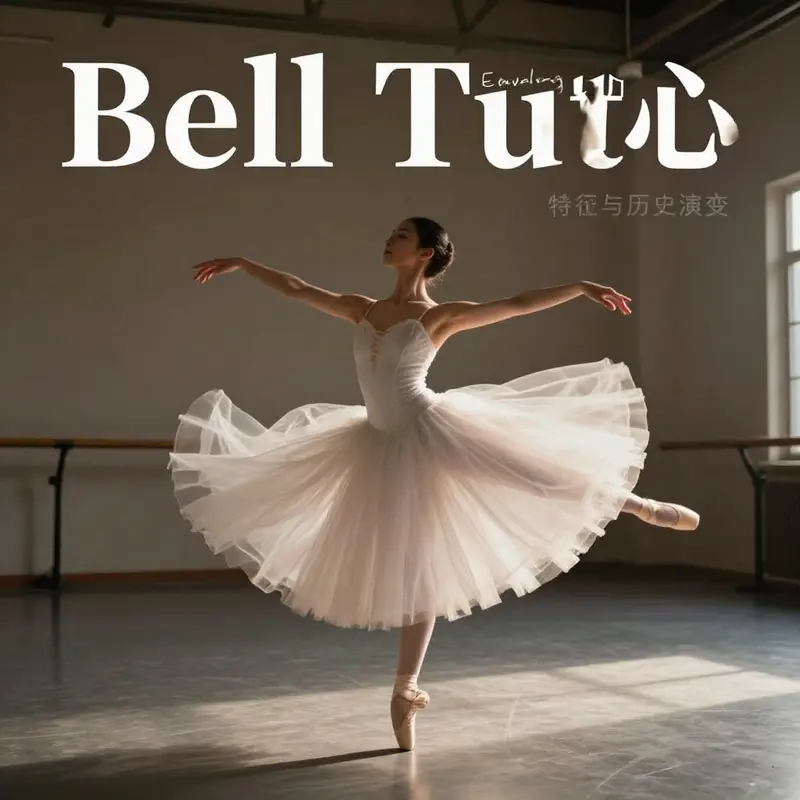
The Bell Tutu sits at the crossroads of physics and poetry in classical ballet. Its silhouette—narrow at the waist, blooming outward into a bell-like skirt—looks effortless, almost inevitable once a dancer begins to turn. Yet that appearance masks a precise fusion of material science, craft, and choreographic intention. The garment achieves what movement alone cannot: a volumetric presence that responds to gravity with a controlled, buoyant fall, enhancing the leg line, framing the footwork, and amplifying the dancer’s spatial expressivity. When the curtain rises on a performance featuring a bell-shaped skirt, the audience experiences not just the dancer’s skill but a physical narrative of how clothing can partner with motion to generate meaning. This chapter follows the bell tutu from its earliest threads of intention to its mature form on the stage, tracing how its form has become an enduring symbol of Romantic elegance and technical imagination in ballet.
The core features of the bell tutu are, paradoxically, understated and exact. It is built from multiple layers of lightweight tulle, usually totaling ten or more panels, each layer contributing a nuanced weight that allows the skirt to occupy space in a way that feels almost natural, as if gravity itself is choreographing the bloom. Importantly, there is no rigid hoop or stiff petticoat at the heart of its structure. Instead, the architectural logic rests on a waist-attached frame that is typically discreet and custom-fitted, so the fabric can drape and fold without any obvious mechanical support. This absence of hard scaffolding is part of the garment’s poetry: the skirt appears to grow from the dancer’s own core and from the subtle tension of the stitching that ties layer to layer. The result is a dynamic, living halo around the hips, a soft outer shell that swells with the turn and settles with quiet gravity when the body rests.
The fabric’s behavior is crucial to how the bell tutu reads on stage. Each layer is cut with intention, the hemlines graduated to encourage the skirt to sway in a controlled, wave-like motion as the dancer pivots, glides, or leaps. The outer layers catch the light and read as a bright, shimmering corona in the orchestra pit glare, while the inner layers remain close to the legs, maintaining the dancer’s line. The interplay between lightness and depth makes the skirt seem to have its own atmosphere, a kind of buoyant halo that neither lifts nor weighs down the performer, but rather negotiates a field of space around her body. The silhouette is short—typically not exceeding the knee—so that the legs, the engine of the dance, remain clearly visible. This deliberate shortening of the skirt foregrounds the feet and the toes, the very instruments that define the art of pointe in classical repertoire. The bell tutu’s length, its density, and its layering all contribute to a visual rhetoric: one that celebrates the dancer’s artistry while inviting the audience to witness how fabric and movement fuse to create a coherent, almost musical line.
Historically, the bell tutu is a product of a long evolution in ballet costuming that moves from courtly display toward the stage’s demand for expressive clarity. Its roots trace back to the broader lineage of tutus that emerged as choreographic storytelling intensified in the 18th and 19th centuries. In the early days, skirts were longer, heavier, and less able to reveal the precise articulation of the legs. To address the audience’s desire to see the footwork and the elevation of the dancer, designers began to shorten skirts and layer light fabrics in ways that could deliver both spectacle and legibility. A key turning point occurs in the Romantic era, particularly with the innovations celebrated in the works of Marie Taglioni. In the 1830s, Taglioni’s performances—most famously in the Romantic classic often associated with the airy grandeur of footwork and expressive line—pushed the boundary of what could be shown from the ankle to the toe. While early iterations of the short tutu bore the marks of transitional experimentation, it was the late 19th century that coalesced them into a recognizable, repeatable form. The bell shape, with its cascade of tulle and its gravity-driven silhouette, crystallized as a visual language. The adaptations of the period also reflect a shift in aesthetic preferences: the stage demanded something lighter, more diaphanous, and more capable of translating the dancer’s rapid shifts in space to the audience’s eye.
A further complexity arises in the social and cultural geography of ballet history. Although the tutu’s lineage traces back to earlier courtly garments, the modern bell tutu as we recognize it owes much of its mature development to Russian ballet schools and studios that refined technique, tailoring, and practical stagecraft during the 19th and into the 20th centuries. The Russian emphasis on precision, combined with European stagecraft, created an international diffusion that helped standardize the bell tutu as a canonical form for Romantic repertoire. The medium for this diffusion was not merely the choreography or the performers but the careful documentation and transmission of making techniques: the ways in which layers were cut, anchored, and finished, and how seamstresses negotiated the balance between ornamentation and mobility. In this sense, the bell tutu is not just a garment but a repository of technique accumulated across generations of craftsmen and dancers. The design philosophy rests on a simple premise: elegance arises not from overt ornament but from a disciplined, responsive structure that respects the dancer’s body and the audience’s gaze.
If one peer into the historical record for a moment, one discovers that the bell tutu’s defining moment is often associated with a particular repertoire—the piece where the costume becomes inseparable from the role. In the tradition of classical ballet, the tutu acts as a mirror for the character’s emotional state and narrative trajectory. The bell shape can intensify the perception of grace in slow, lyrical passages and sharpen the impact of a rapid turn or a precise petit battement. The low, almost whispered sound of rustle in silk and tulle accompanies the dancer’s breath and cadence, transforming the moment into an arc of movement that feels almost architectural. The effect is not simply visual but cinematic in the sense that it shapes how the audience perceives the dancer’s trajectory through space. The bell tutu thus becomes a living instrument: its fabric, weight, and fall contribute to the tempo, the phrasing, and the spatial awareness that a lead performer must negotiate during a performance.
To understand the bell tutu’s distinguishing features, one might contrast it gently with its closest cousins—the thin, pancake-like, flat, disk-based skirts that also populate the broader family of tutus. The pancake tutu relies on a stiffer structure, a more pronounced arc that can maintain a circular cross-section even in motion. It has a visual impact that is dramatic and bold, making a clear statement of surface pattern and silhouette. The bell tutu, by contrast, favors natural drape and gravity-driven fullness. Its multi-layered, soft-edged bloom is less about a rigid silhouette and more about a living, breathing swell that expands and contracts with the dancer’s center of gravity. The platter tutu offers a slightly more formal reconfiguration, often with a flatter plane that gleams with intricate surface decoration, suitable for majestic epics or large-scale productions. The powder puff tutu—perhaps the most whimsical of the family—emphasizes a plush, almost cloud-like volume, achieved through carefully calibrated degrees of stiffness and crimp. When seen together, these variations reveal a shared obsession with the way fabric can translate athletic prowess and dramatic intention into a coherent stage image. Yet it is the bell tutu that most faithfully embodies the Romantic ideal: beauty born of restraint, movement, and the quiet physics of layered fabric choreographed to the dancer’s feet.
The production process behind a bell tutu is itself a study in calibrated collaboration. It begins with precise measurements and a bespoke waist treatment, because the relationship between the dancer’s torso and the fabric’s mass is essential for achieving the desired fall and bounce. The craftsperson must determine where the layers will begin to flare and how the weight distribution will guide the skirt’s natural hang. The layers are cut with a careful eye for evenness and density, and they are stacked with deliberate spacing that influences the arc of the hem. Between each layer, a meticulous hand-stitch connects the fabric, not in a way that binds rigidly but in a manner that preserves motion, allowing the layers to respond to the dancer’s twists and turns. The number of layers—often ten or more—reflects a balance between opulence and practicality; too few layers and the bell loses its fullness; too many and the fabric becomes unmanageable, impeding the dancer’s lines or weight distribution. The midline expansion is typically engineered around the thighs, a deliberate design to maintain the lineage of the leg under the skirt and ensure visual continuity from hip to toe during quick turns.
As the rehearsal process reveals, the bell tutu is not a static costume but a living partner within the dancer’s technique. Its success depends on a harmony among the dancer, the seamstress, the choreographer, and the lighting designer. The light catches the threads as the skirt moves, throwing glints and soft shadows that emphasize the leg line and the hip contours. The choreography, in turn, often includes phrases that exploit the skirt’s buoyancy—rapid pirouettes, delicate relevés, and expansive frappés that seem to push the fabric outward in a halo of motion. The tapestry of collaboration forms the essence of why the bell tutu endures: it is not only a garment but a shared instrument, a historical artifact that continues to inform contemporary decisions about stagecraft, fabric technology, and the aesthetics of motion.
An interesting note about the name itself adds a layer of cultural context to the discussion. The word tutu derives from a French term that has often been linked to a practical need in the earliest designs: modesty. The multiple layers of transparency that support a dancer’s modesty in motion became the practical answer to concerns about coverage during high-velocity steps. The phrase has traveled through languages and time, yet the functional origin remains embedded in the garment’s essence: a smart, responsive solution to how a dancer can execute precise, edge-of-footwork while preserving artistic intention. Over time, the tutu has grown into a symbol of the ballet’s most cherished ideals—the precision of technique, the clarity of line, and the romance of movement that can seem almost effortless when viewed from the audience’s seat.
In contemporary practice, practitioners often reflect on the bell tutu not as an artifact of the past but as an enduring template for new work. Designers and choreographers explore subtle variations: the way a skirt’s density affects a dancer’s center of gravity, or how lighting can alter a silhouette’s perception of fullness. The bell tutu’s flexibility allows it to support a wide range of characters and moods—from the ethereal, dreamlike heroines of Romantic repertoire to the more nuanced, modern tales that require a balance between tradition and innovation. The garment’s legacy thus rests on its capacity to adapt without surrendering its essential logic: a slender waist, a cascade of light fabric, a gravity-driven bloom that frames the dancer’s feet rather than concealing them. This balance of concealment and revelation is what makes the Bell Tutu a timeless vocabulary in ballet—the simplest form that carries the most potent expressive charge.
The broader educational and cultural value of the bell tutu emerges when one considers its role in teaching and performance practice. For students, the garment presents a tangible case study in how costume design interacts with technique. The height of the hem, the density of the layers, and the placement of seams become part of a learning language about how to sustain alignment during complex combinations. For teachers, the tutu becomes a tactile reminder of how to balance aesthetic aspiration with physical feasibility. For audiences, witnessing a well-executed bell tutu is a lesson in the poetry of form: how a skillfully engineered piece of fabric can evoke a sense of weightless flight while respecting the gravity that anchors every dancer’s craft. In this sense, the bell tutu speaks to a larger truth about ballet’s history and future: innovation in stage costume emerges not from discarding the old, but from translating its disciplined logic into new expressions that keep the discipline legible and alive on stage.
To appreciate the full spectrum of the bell tutu’s influence, it helps to situate it within a network of related forms and influences. The other major tutus—pancake, platter, and powder puff—each emphasizes different narrative or aesthetic cues. The pancake tutu’s stiff structure yields a pronounced, almost architectural perimeter, prioritizing visibility of the skirt’s edge and a certain graphic clarity. The platter tutu, with its flat, glossy expanse, is often chosen for large-scale productions where the silhouette must register from a distance. The powder puff tutu, with its voluminous, cloud-like quality, invites a different kind of lyricism, a softness that can blur the edges of movement into a more diffuse halo. Yet the bell tutu remains the paragon of the Romantic ideal—the form that most fully embodies the relationship between the dancer, the fabric, and the stage’s light. It is a form that invites the eye to travel slowly along a line that begins at the dancer’s waist and travels outward in a gentle, musical arc, a line that leaves space for breath, for a pause, and for the moment when the foot completes a precise pointe before the next leap.
If the chapter leaves the reader with one image, let it be this: the bell tutu as an instrument of balance. It is a balance between mass and air, between coverage and exposure, between the dancer’s energy and the stage’s luminosity. It represents the moment when craft becomes choreography and choreography becomes sculpture in motion. The garment’s history is a testimony to a durable idea—that beauty in ballet is not a contradiction between form and function but a seamless integration of both. The bell tutu’s evolution—from its possible courtroom beginnings to its celebrated role in Romantic legend and its ongoing presence in modern staging—speaks to a larger story about how ballet preserves the past by translating it into the present, always ready to be reinterpreted by the next generation of dancers and designers. In this way, the bell tutu remains not only a relic of a bygone era but a living, breathing map of how the body, fabric, and light can co-author meaning on a stage shared by performers and spectators alike. For anyone curious about the layered craft behind ballet’s most iconic silhouette, the bell tutu offers a clear, intimate entry point—a reminder that the grace we admire on stage is the result of countless hands, working in concert to translate aspiration into fabric, form into movement, and memory into live, shimmering presence.
External resource: https://en.wikipedia.org/wiki/Tutu
Internal reference: For readers exploring how related Romantic-era silhouettes influence current practice, the romantic tutu category provides a useful context and showcases variations within the same lineage. See the romantic tutu category for related examples and discussions: romantic tutu.
钟形裙的轮廓对话:Bell Tutu在芭蕾裙款中的独特语调
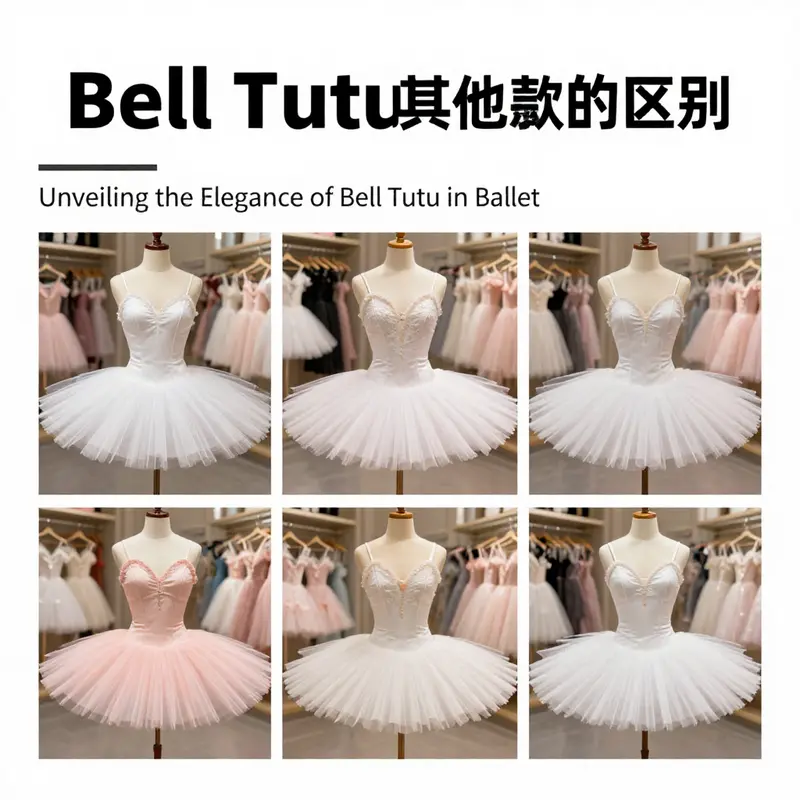
总结而言,Bell Tutu以其钟形轮廓的自然美、无硬撑的柔软结构、以及在浪漫主义与现代舞台之间的稳定定位,成为了理解Tutu裙款差异的核心案例。它让人看到,在舞台艺术的世界里,细节往往胜过宏大宣言。每一层网纱的重量、每一次缝线的精准,都在讲述一个关于时间、运动与美的故事。
Bell Tutu: The Craft Behind the Clock-Shaped Silhouette of Romantic Ballet
The Bell Tutu stands as the quiet center of Romantic ballet, a garment that seems almost to mold itself from air and light. Its silhouette—narrow at the waist, blooming outward in a soft, continuous curve—invites the eye to trace a slow, pendular arc as a dancer leaps, twirls, and lands with barely a tremor. But what seems effortless on stage is the product of a centuries-long conversation between fabric, technique, and an artistry that treats clothing as a partner in performance. The Bell Tutu is not merely a skirt; it is a carefully engineered instrument of motion and mood, designed to reveal the dancer’s technique while shaping the audience’s perception of space, weight, and velocity. When the curtain rises, the裙摆—its bell-shaped outward sweep—reads as a living sculpture, a clock face that records every spin, shimmer, and micro-adjustment of the body beneath. The garment speaks in the language of physics and poetry at once, a union that has spoken to generations of audiences about the glamour and fragility of the Romantic era.
To understand the Bell Tutu, one must begin with its lineage. The form traces its origins to a moment when ballet sought to amplify the observer’s perception of legwork and elevation. In the late 18th century, dress length, line, and the dancer’s silhouette were being reconsidered to enhance visibility of the feet and the line of the legs. Then, in 1832, Marie Taglioni appeared in a version of a Romantic ballet in which the skirt rose above the ankle, a deliberate choice to foreground the épaulement of pointe technique and the delicacy of elevation. This gesture—both practical and aesthetic—laid the groundwork for a new philosophy of costume, one that privileged the dancer’s footwork and the upper body’s pliancy while offering a stage-worthy cascade of fabric that could respond to every breath and beat of the music. The Bell Tutu embodies that shift: it is a garment breathless with possibility, its layers working in concert to create movement that feels both light as air and grounded in gravity.
The most arresting feature of the Bell Tutu is, of course, its structure. Unlike earlier, heavier skirts that hung like a curtain around the legs, the bell shape emerges from a precise choreography of fabric and technique. The skirt is crafted from multiple layers of soft netting, typically ten layers or more, each layer cut and assembled with surgical care. There is no stiffening hoop here; there is no rigid ring to force a shape. Instead, gravity does the work. The layers are stacked and tensioned so that the skirt falls in a natural, rounded arc that blooms away from the body. The effect is not simply volumetric; it is sculptural. The fine mesh catches the light, and with every turn, the skirt reveals new facets of its volume—the way the inner layers peep through the outer ones, the way the fabric catches a draft and settles again. It is a lacey, almost musical envelope that encases the dancer without pinching or restricting movement.
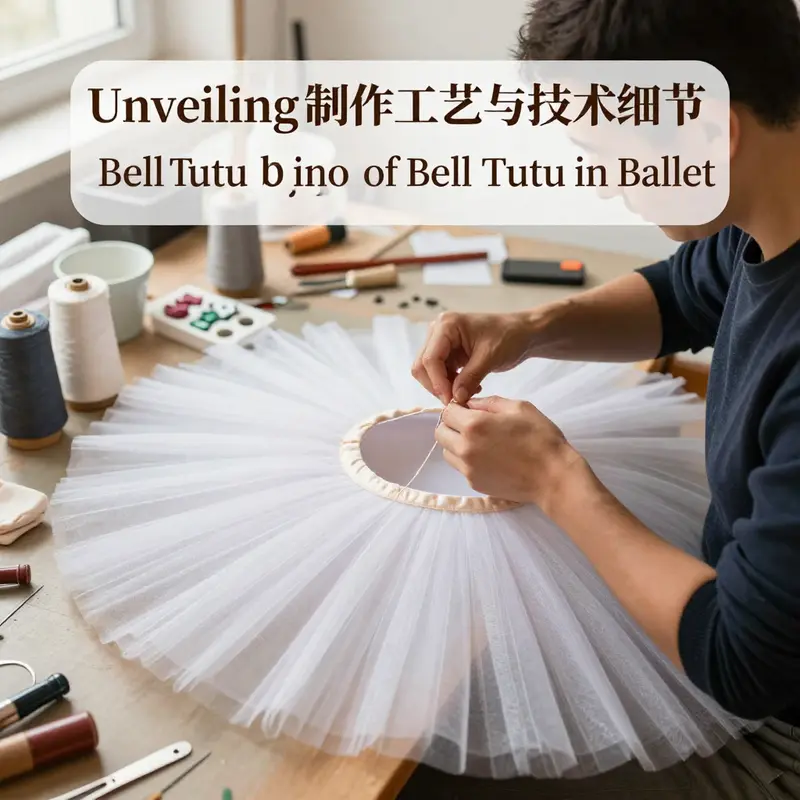
The construction of this garment demands a careful, almost intimate collaboration between maker and wearer. It starts with a custom-fitted undergarment—a short, skin-toned foundation that anchors the bells to the body. This understructure must sit snugly without binding, distributing weight evenly to prevent fatigue during extended sequences. Then the裁剪—cutting of the netting—begins in earnest. Each layer is measured with a precise ratio, and in the region of the thighs there is a deliberate broadening of the fabric, typically an extra margin of 1 to 2 centimeters. This extra width at the upper thigh ensures that the bell retains its voluminous shape even as the dancer lifts the leg, stretches into arabesques, or executes rapid pirouettes. It is a small but essential adjustment that preserves the illusion of effortless buoyancy when the body is in motion.
But the real artistry lies in the way the layers are connected. Rather than relying on metal hoops, the Bell Tutu depends on hand-tied connections—delicately spaced knots that bind each layer to the one above, creating a lattice that is at once robust and flexible. The spatial rhythm of these knots determines the skirts’ lift and its fall. If the knots are too dense, the fabric stiffens and the arc tightens; if they are too sparse, the layers drift, and the bell collapses under the dancer’s weight. The craftsman or craftswoman must compute not only the mass of fabric but also how that mass behaves as the dancer rotates, leaps, and lands. The result is a skirt whose silhouette seems to breathe with the wearer, a garment that responds to a single microadjustment of the hip or a subtle tilt of the pelvis with a corresponding drift or height in the hem.
The decorative layers add another dimension to the Bell Tutu’s sensory experience. For formal performances, one or two additional layers may be laid over the functional mesh to create depth and sheen under stage lighting. These outer layers are often lighter, more transparent, and sometimes more finely textured than the ones beneath. They glow in the proscenium light, catching the eye as the dancer completes spins or halts mid-turn. The interplay of shadow and gleam on the multiple fabric planes creates a visual language that can convey mood as effectively as a gesture or facial expression. The result is a choreography of fabric that complements the dancer’s line without ever competing with it.
A common question arises when people consider the Bell Tutu—the difference between this type of skirt and the other tutu variants that populate the repertory. The Belted, or bell-shaped, version is tall and airy, but not to be confused with the Pancake Tutu, which presents a flatter, disk-like silhouette built on a strong underlying structure; or the Platter Tutu, which offers a broader, flatter profile for larger stage presence. The Powder Puff Tutu, in contrast, seeks volume through extreme fullness, often with less emphasis on defining a continuous shell around the legs. The Bell Tutu, with its conical, bell-like fall, anchors itself in a Romantic ideal—the fusion of lightness and line, the sense that fabric can float as if carried by a gentle breeze while remaining anchored to the dancer’s core. This is not a mere fashion choice but a fundamental design philosophy that aligns the garment with the music’s tempo and the dancer’s breath, a harmony of body, fabric, and sound that becomes almost a third language spoken on stage.
The origin of the term tutu itself invites a small but telling digression. Contemporary readers often hear the word as a technical label for a style of ballet skirt, yet etymological lore suggests a different tale. The term tutu is sometimes linked to the French phrase cul-cul, humorously implying a reference to the bottom. In this reading, the multiple layers of fabric serve not only a visual function but also a practical one: they protect modesty and provide a stable surface upon which the dancer can execute high-kicks and leaps without fear of exposure. Whether this origin is apocryphal or partly myth, the enduring truth is that the tutu—the Bell Tutu in particular—emerged from a need to reconcile aesthetic spectacle with the physical realities of dance. It is a garment that can speak to both the audience’s longing for romance and the dancer’s insistence on control and precision.
The craft’s time commitment mirrors its complexity. A typical Bell Tutu demands sixty hours of dedicated labor, and for especially ornate or purpose-built versions, the process can extend to roughly 120 hours. This investment is not just a calculation of labor but an investment in durability and stage-worthiness. In a field where costumes must endure decades of use, a well-made Bell Tutu can remain serviceable for twenty years or more, given careful maintenance and periodic refurbishing of the decorative surfaces. Every stitch is a pledge of longevity, and every knot a pledge of future performance. From a costuming perspective, this is not merely craft; it is heritage work—an ongoing dialogue between tradition and modern staging needs, between the dancer’s evolving technique and the audience’s expectation that a timeless silhouette remain legible across generations of productions.
The sensory memory of wearing a Bell Tutu is not simply about weight or balance; it is about the body’s relationship to fabric. The dancer learns to sense the fabric’s weight distribution, to tilt the pelvis slightly to coax a higher lift, or to tighten a corset of core strength that keeps the spine aligned while the skirt dances around the legs. The feeling of air moving through ten or more layers of netting is almost palpable, a whisper of fabric that travels with every step. This intimate connection between garment and dancer is what gives the Bell Tutu its particular magic. It allows the audience to perceive effortless elevation even when the performer has worked for hours in a day’s rehearsal, and it allows the dancer to read the skirt as a second metronome, one that ticks in its own independent tempo, dictating turns and pivots with a subtle insistence that never overwhelms the body’s own rhythm.
In reflecting on the Bell Tutu, it is useful to consider its position within the larger spectrum of tutu styles. The Pancake Tutu—often used in contemporary pieces or those seeking dramatic stage impact—emphasizes a flattened, round surface, typically supported by a stiffened waist ring. The Platter Tutu presents a broader, plate-like silhouette that can project more mass onto the stage, while the Powder Puff Tutu seeks voluminous, cloud-like fullness achieved through maximum fiber loft and soft-handled support. The Bell Tutu, with its natural drape and gentle, continuous curve, anchors the ballet’s Romantic ideal: a gown of air that remains intimately connected to the dancer’s center. It tells a story by contour alone—the way the skirt swells when the leg is extended into a grand jeté, or how the hem’s arc softens when a turn slows and breath becomes audible through the music. The differences are not merely technical; they shape the narrative an audience reads from the stage—the difference between viewing a living sculpture and watching a performer push fabric into a different shape.
Crafting a Bell Tutu is thus an exercise in translation. The maker translates a choreographic intention into fabric behavior. The dancer translates that fabric behavior into kinetic poetry. The audience translates the kinetic poetry into emotion and memory. Each layer of netting, each knot, each extra margin of fabric at the thigh, becomes a note in a longer score—one that will be performed again and again, often with variation from one production to another but always anchored in the same core principle: the bell’s rise and fall should signal the ideal alignment of body and music, not merely the repetition of a fashionable silhouette.
The chapter of technique that this garment represents is not complete without acknowledging the role of documentation and teaching in keeping such craft alive. The maker’s knowledge passes through apprenticeship and careful practice, a lineage that respects both the science of fabric physics and the art of stage presentation. The collaboration spans the choreographer, whose demands for line and tempo guide the skirt’s behavior; the seamstress, who interprets those demands into measured cuts and intentional knots; and the dancer, who, through countless rehearsals, teaches the garment how to respond to her body’s language. When all are aligned, the Bell Tutu becomes more than the sum of its layers; it becomes a partner in performance, shifting its silhouette with each rotation, each lunge, each gravity-fed fall into the floor, and then rising again with the dancer’s next breath.
For readers who wish to explore the broader spectrum of tutu design, a practical entry point is the Basic Tutu category, which provides a foundation for those new to the craft. It introduces the essential elements—the fitted understructure, the layering logic, and the careful balance between flexibility and structure—that make the Bell Tutu possible. This is not to diminish the distinctive beauty of the romantic variant; rather, it emphasizes the continuum of craft from basic to extraordinary. By understanding how a basic tutu is built, one gains a clearer sense of the choices involved at each step of the Bell Tutu’s construction—the sizing, the layering, the spacing of threads, and the precise distribution of weight around the hips. Basic Tutu provides a useful window into how a seemingly simple garment can become an instrument of performance when every element is patiently tuned. The link is not merely a catalog entry; it stands as a reminder that the elegance on stage rests on a labored, iterative process that respects the dancer and the audience alike.
In sum, the Bell Tutu is a parable of balance. It speaks to the long arc of ballet history—from the practical concerns of visibility to the ethereal longings of Romantic storytelling. It demands exacting technique: layer upon layer of netting, each connected by carefully measured knots, each contributing to a shape that both holds and releases. It thrives on a collaborative ecosystem in which maker, dancer, and choreographer read each other as if in a conversation that takes place in fabric and breath. And it endures because, in its quiet capacity to hold a gaze and then release it with a momentary flutter, it embodies the very essence of ballet: the art of appearing effortless even as the body performs a disciplined, exacting craft. As the lights rise and the first notes hover in the air, the Bell Tutu becomes nearly invisible—until, at the precise instant of a turn, it reveals its truth: a bell-shaped, velvet-edged, lace-dusted instrument of memory that carries the audience toward a remembered grace. The garment’s history continues to unfold with every rehearsal, every curtain call, and every new staging that reimagines how far a dancer can travel within a circle of fabric and light.
External reference for broader context and technical craft: New York City Ballet’s Costume Design & Craftsmanship pages offer an authoritative overview of how major companies approach the care, creation, and maintenance of classic tutus, including Bell Tutu variants. https://www.nycballet.com/education/costume-design/
External resource: For a concise historical sketch and classification, see the general overview of the tutu on an established reference platform, which documents its evolution, forms, and craft practices across periods. https://en.wikipedia.org/wiki/Tutu
Final thoughts
The bell tutu stands as a testament to the artistry and dedication of ballet, embodying both historical significance and exquisite craftsmanship. From its origins rooted in the elegance of movement to its distinct silhouette, the bell tutu continues to inspire dancers and audiences alike. As ballet evolves, this iconic garment remains a steadfast symbol of grace and performance, ensuring that the beauty of dance endures.