
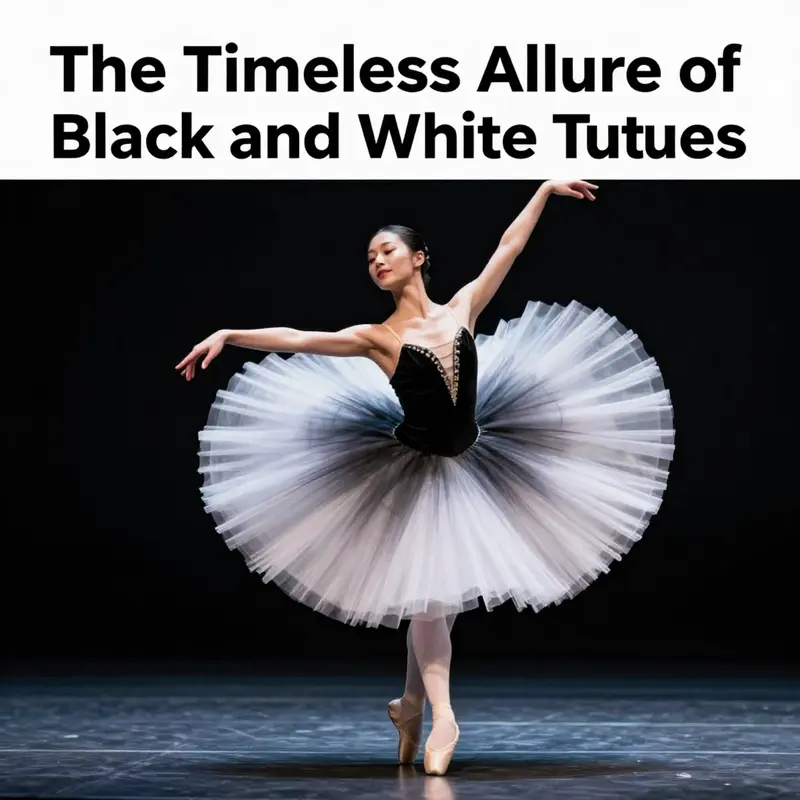
Black and white tutus are more than just a staple of ballet; they embody elegance and versatility across various artistic fields. Their distinctive design featuring layers of tulle creates an iconic silhouette, and their color contrast offers potential for limitless creative expression. This article delves into the design and construction of black and white tutus, exploring fashion uses, cultural significance, and performance applications. Each chapter provides insights to help business owners understand how these costumes can enrich their offerings and foster connection with their audience.
Between Contrast and Craft: Designing the Black and White Tutu
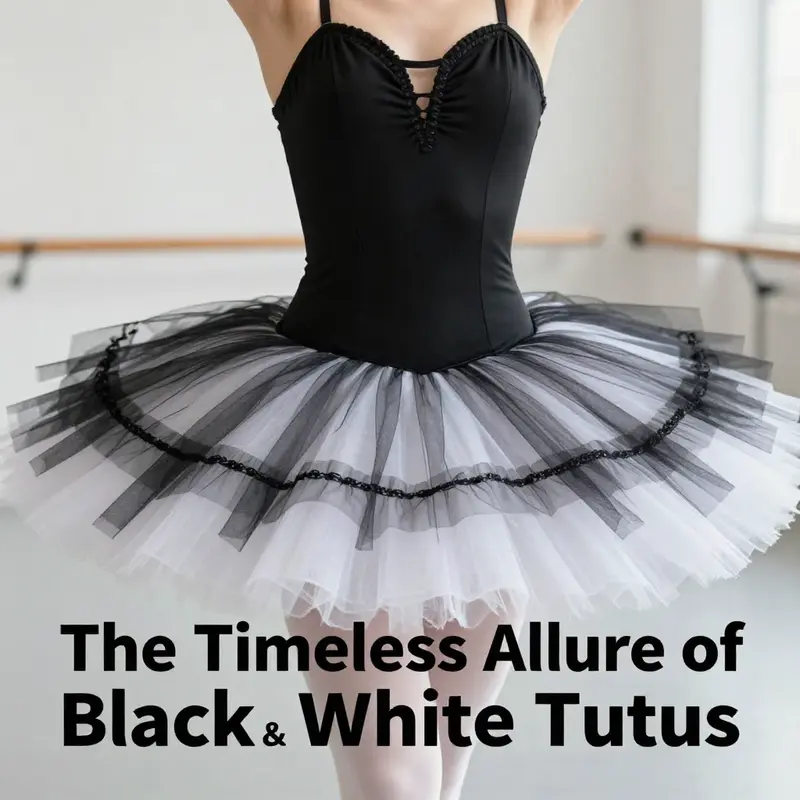
The black and white tutu sits at a striking crossroads of history, technique, and stagecraft. It is more than a costume; it is a compact system of design that translates a dancer’s intention into a visible architectural form. When we observe a performer in such a tutu, we are watching years of craft distilled into a few square meters of stiffened fabric, hidden stitching, and precise balance. This chapter follows that arc, from the Romantic roots that birthed the silhouette to the modern practice of constructing a garment that both supports movement and conveys meaning through color and shape. In doing so, we glimpse how a seemingly simple two-tone palette becomes a language of purity and duality, echoing the classic stories that continue to anchor ballet on contemporary stages.
Historically, the lineage begins with the Romantic tutu, a garment that rose from the need to reveal the line of the leg while preserving the air of fantasy. The long, flowing silhouette of the early piece allowed dancers to glide across the stage, the fabric catching light to create an aurora of motion. By the late nineteenth century, the shift toward the Classical tutu introduced a shorter, more rigid profile. Layers of stiffened fabric lifted the skirt into a bell-like form that could hold its shape under the force of leaps and spins. The white tutu worn by Odette in Swan Lake embodies the era’s ideals of grace, purity, and ethereal space, while Odile’s black counterpart materializes a counterforce—mystery, power, and a darker current that runs beneath the outward beauty. The colors are not mere decoration; they are performative forces that guide the audience’s perception and give the choreographer a tool for storytelling even before a single step is taken.
In contemporary practice, the design philosophy remains anchored in that dual heritage. A modern classical tutu is built around a body-hugging bodice, often constructed from stretchable fabrics such as Lycra or spandex to provide structure without restricting movement. The skirt, however, is where the signature silhouette lives. It is usually composed of six or more layers of stiffened, lightweight tulle or organza. The layers are carefully graduated and interlocked so the exterior maintains a crisp, bell-shaped plane while the inner layers remain pliant enough to respond to the dancer’s torso and hips. This layered architecture is essential: it preserves the visual line of the leg during grand jetés, piqué turns, and multiple blows of pirouettes, all the while presenting a sail-like expandability that breathes with every beat of the music.
The choice of color—black or white, or a deliberate juxtaposition of both—extends beyond aesthetic preference. White is often associated with innocence, ethereal beauty, and the supernatural elements of classic fairy-tale imagery. It brightens under stage lighting, creating a luminous effect that can read as almost celestial. Black, conversely, carries weight, mystery, and a sense of danger; it absorbs light and outlines the dancer’s form with a sharper, more dramatic edge. In performances where the story courts duality—an innately good counterpart facing a tempting dark force—the tutu becomes a visible metaphor of inner conflict. The design then transforms into a narrative instrument as much as a costume, guiding an audience’s emotional response with every shade under the footlights.
From a construction standpoint, the modern tutu is a study in precision and restraint. The bodice—the visible anchor of the garment—must provide support while allowing the upper body to breathe and move. The fabrication typically involves tightly fitted panels of stretch fabric, with seams placed to align with the dancer’s ribcage and waist. The interior architecture of the tutu’s understructure is where the craft becomes almost invisible. A stiffened core, often reinforced with a gentle wire or boning along the underskirt, preserves the skirt’s shape even as the dancer executes a sequence of high-powered jumps. The layers of tulle or organza, cut with exacting angles, are then tacked or heat-formed into place. Each tier is a small puzzle piece that must interlock with the next to produce that unmistakable conical silhouette. The process requires extended time and skilled handwork, because any variation in layer thickness, tension, or alignment can alter the tutu’s balance and, ultimately, the dancer’s performance.
Historically, the making of a tutu demanded hours of meticulous labor from skilled seamstresses who hand-stitched, trimmed, and reinforced every edge. Today, while some studios employ modern sewing techniques and pre-cut materials, the essence remains the same: the tutu must hold its shape while yielding to the dancer’s force. The sacrifice of purely flexible movement for the sake of a clean silhouette is a constant negotiation. Under modern stage lighting, the layers respond to warmth and heat, sometimes loosening ever so slightly, sometimes stiffening as the tulle absorbs perspiration and air, then reacting to the motions of the body. The careful balance of weight, stiffness, and pliability is what separates a mere skirt from a tutu that can perform at the highest levels without betraying its wearer during a long act.
The color choices and patterns within black and white tutus also reflect a long-standing relationship between design and storytelling. A two-tone design can emphasize the dancer’s axis—heightening the impression of elevation during leaps while drawing a stark boundary along the leg line that viewers instinctively read as precision. When designers choose polka dots, paneling, or split-color schemes, they’re not simply playing with fashion; they are engineering moments of visual interest that keep the audience’s gaze anchored on the dancer’s feet, legs, and turns. Patterning can create a rhythm in the air that complements the musical phrasing, while a plain black or white field can amplify the dancer’s form against a contrasting backdrop or lighting design. Even in two-tone versions, the technique remains the same: layers of stiff fabric and a carefully engineered silhouette that present a clean, legible image to the audience from any seat in the house.
The craft extends beyond the seam and into the realm of performance technology. While traditional tutu construction keeps to time-honored methods, recent experiments have explored the incorporation of LED-embedded fabrics to evoke halos of light or to trace the dancer’s movement with programmable glow. Such innovations exist on the edge of classical ballet and contemporary theater, illustrating how designers continue to push boundaries without sacrificing the essential clarity of the tutu’s form. Yet even with these innovations, most classical productions still rely on the proven approach: a carefully layered understructure, a stiffened outer shell, and a bodice designed to move in harmony with the torso rather than against it. The enduring appeal of the white and black two-tone remains a testament to the power of simple contrast to convey complex meaning.
For readers who would like to explore the practical breadth of tutu design and procurement, there is an approachable path within the broader catalog of professional tutus. The professional tutu category offers a range of options that can help a designer study silhouette, fabric weight, and ease of movement in real-world terms. See the professional tutu category for a sense of how different manufacturers balance stiffness and comfort, and how designers choose to harmonize the tutu with bodice fit, waistline height, and skirt length. professional tutu category.
As with any craft that intersects art and performance, the construction of a black and white tutu is as much about discipline as inspiration. It requires a meticulous eye for proportion, a sensitivity to the dancer’s physiology, and a willingness to test and revise. The tutu must be able to withstand repeated rehearsals and live performances, survive the rigors of quick costume changes, and still read clearly under variable stage lighting. A single custom-made piece can demand dozens of hours of labor, from initial patterning to final trellising of the last layer. When properly made, however, the result is not just a garment but a vessel for movement, light, and character. It is a tool that can turn a story into body language, an instrument through which the dancer’s technique—grand jetés, développés, and intricate pirouettes—becomes legible to every spectator in the hall.
To deepen the historical and technical context beyond the workshop floor, consider the archives of major houses that continue to influence contemporary costume practice. The Royal Opera House, for instance, maintains detailed documentation about the process of building stage costumes for productions like Swan Lake, shedding light on how designers and seamstresses collaborate to preserve tradition while accommodating new technologies and storytelling approaches. This blend of detail, care, and experimentation sits at the heart of why the black and white tutu remains a potent symbol of ballet’s enduring dialogue between purity and perception. External resources from such institutions offer a broader view of how costume craft is organized at the highest levels of performance, enriching our understanding of what goes into each tutu that graces a stage.
The visual impact of the black and white tutu is not accidental. It emerges from a long lineage of questions about visibility, form, and narrative clarity. The white tiered silhouette catches light in a way that can seem to suspend the dancer in space, while the black silhouette defines a dramatic line that reinforces precision, even in motion. Together, these elements create a charge that is both aesthetic and kinetic. When a dancer moves, the tutu does not merely accompany the body; it reveals the momentum, torque, and rhythm in a way that a smoother, more uniform fabric might not. The interplay of color and contour helps the audience discern technique—the height of a leg, the angle of a back, the timing of a turn—at a glance. In this sense, the black and white tutu becomes a living diagram of movement, a choreography encoded in fabric and light.
The design and construction of black and white tutus thus present a unity of historical reverence and practical ingenuity. They honor the pristine, almost mythic associations of Odette’s white swan and the shadowed, enigmatic Odile, while fulfilling the demands of contemporary stage direction and performer comfort. This dual allegiance—past and present—explains why designers continue to invest in the craft of the tutu, to refine its layers, to perfect its balance, and to explore new ways to tell a story through two contrasting hues stitched into a single, elegant form. In every rehearsed turn and in every decisive leap, the tutu speaks about faith in technique and belief in theater’s enduring capacity to translate human motion into a shared, luminous experience. External references and institutional archives illuminate the path from hand-stitched precision to modern, technology-infused practice, but the core remains simple and powerful: the two colors, the two halves of a whole, and the unbroken line of a dancer’s leg that the silhouette so proudly frames.
External reference: https://www.royalopera.org.uk/
Contrast in Motion: Styling Black-and-White Tutus for Stage, Street, and Celebration
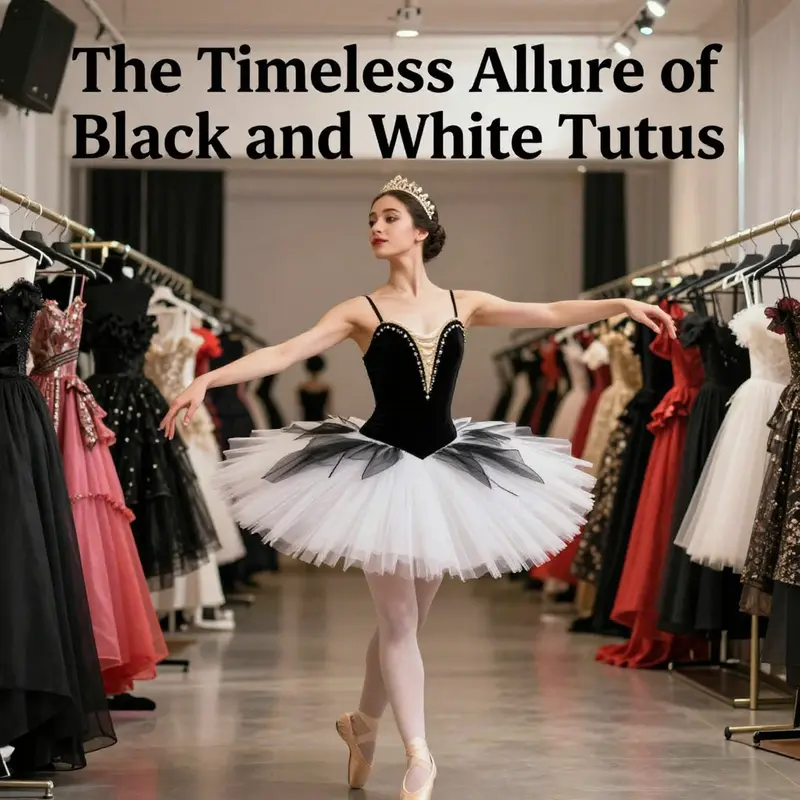
The black-and-white tutu is more than a costume piece; it is a language of line, silhouette, and rhythm that travels beyond the wings and into everyday life. Its dual, uncompromising palette—one that uses only two colors—offers a clarity that can read from a proscenium stage to a sunlit sidewalk. In the world of dance, the tutu’s stiff, layered tulle creates a sculptural halo around the dancer, a living sculpture that amplifies every plié, leap, and extension. Yet its fashion potential stretches far beyond the studio. When the same silhouette steps into casual wear or a themed gathering, it becomes a tactile study in how form and movement—two powerful ideas in visual design—interact with light, space, and the body beneath.
On stage, the contrast between black and white acts as a visual metronome. White suggests airiness and purity, while black introduces gravity and drama. The full, multi-layered skirt traps and releases air with each turn, making the dancer’s momentum legible even to the back row. In contemporary choreography, where lines and geometry drive the storytelling, this color pairing helps the audience track the arc of a dancer’s spine and the sweep of an arm through space. The white elements sharpen a dancer’s external contour, while the black sections deepen the silhouette, turning the body into a moving diagram. This is not mere nostalgia for a classical emblem; it is a practical tool for choreographers seeking clarity in motion and intensity in contrast.
But the appeal of black-and-white goes beyond performance. In fashion circles, the tutu’s volumetric shape has endlessly adaptable potential. The layered tulle can be treated like a canvas for texture and pattern. A two-tone version, for example, can be styled to echo architectural lines or graphic patterns, turning the tutu into a statement piece that commands attention without the need for loud embellishment. The silhouette itself carries momentum, so pairing it with restrained tops and shoes allows the skirt to do the talking. A soft ivory or pale cape, a sleek black bodice, or a simple white tee layered beneath a black mesh overlay can transform a costume favorite into a versatile wardrobe staple. This adaptability speaks to the broader idea that a strong, iconic silhouette—especially one built from stiff, structured tulle—has a longevity that goes beyond fashion seasons.
There is a practical side to the color pairing as well. In everyday styling, the tutu’s drama can tip toward playful whimsy or refined minimalism depending on how it’s accessorized. The materials—polyester blends, mesh tulle, or stretch chiffon—offer different drape, breathability, and comfort for long wear. A two-tone or polka-dotted pattern can anchor an outfit in whimsy, making it suitable for playful events or themed gatherings. For more formal occasions, adding a satin belt, a delicate crystal pin, or a slim, structured jacket can bring a sense of tailored polish while preserving the tutu’s edge. The aim is to balance the tutu’s volume with proportion and color restraint, so the overall look does not feel overwhelmed by too many competing elements. In this balance lies a mode of expression that is both modern and timeless.
The wraparound effect of color in these tutus also invites a discussion about fabric and finish. The stiffer layers of tulle create a platform that catches light in dramatic ways. White, especially, can appear airy and ethereal when the layers catch the stage lighting or a sunbeam, while black absorbs and refracts light to create a sense of depth and mystery. When styling for events such as parties or celebrations, designers often experiment with surface textures—metallic threads, sheer overlays, or subtle appliqués—to add dimension without sacrificing the clean contrast that makes black and white so striking. The result is a garment that can read as both art object and wearable fashion, capable of translating a mood from the gallery to the gala floor.
Within this spectrum, the two-color tutu also becomes a conduit for thematic storytelling. For designers and performers, the stark contrast can dramatize character dichotomies—the pure versus the enigmatic, the ceremonial versus the rebellious. A white tutu with a black waist panel can visually map a journey from innocence to intrigue, while a fully black tutu punctuated with white trims can suggest precision, discipline, and a tinge of theatrical danger. In choreographic terms, such contrasts help guide the audience’s eye toward the dancer’s core lines and the intention behind each gesture. The eye is drawn to the center of the body, then outward along the sweeping motion of the arms, and finally outward to the skirt’s edge where the light and shadow play becomes a living diagram of the performance.
Beyond stagecraft, the black-and-white tutu has found a welcome place in themed events and celebrations. Its graphic appeal makes it an excellent anchor for party decor and coordinated outfits. A black-and-white party theme can be rendered in many layers: simple monochrome accents with a few bold red or metallic touches, or a more restrained palette that keeps the room feeling modern and elegant. The tutu’s presence in such settings is less about costume and more about an intentional aesthetic: it signals playfulness with a nod to elegance, a balance between structure and whimsy. In children’s parties, a tutu in this palette can be both a costume and a fashion-forward element that inspires imaginative play without overwhelming the decor. In adult events, the same silhouette can serve as a dramatic focal point—a conversation starter that remains tasteful and chic rather than costume-like.
The cultural resonance of black and white as a symbol adds another layer to its styling power. The colors carry a long history of representing clarity, duality, and contrast—concepts that translate smoothly into the dance floor and the wardrobe alike. The idea that color can carry meaning helps explain why designers and performers repeatedly turn to this pairing when they want to articulate a narrative with subtlety and force. The tutu, with its sculptural profile and clear color story, becomes a portable canvas for such storytelling. It is not simply about looking striking; it is about shaping perception—how audiences see line, how they read velocity, and how they emotionally respond to the contrast between light and shadow on fabric and skin.
Practical tips for styling also emerge when the tutu moves from studio to street. For daily wear, consider pairing a two-tone tutu with a plain top that lets the skirt’s volume define the silhouette. Footwear choices can anchor or lighten the look: sleek sneakers in white for a casual, streetwise edge; or neutral flats and low heels to maintain a sense of ease and balance. Accessories should be understated to preserve the garment’s impact; a simple clutch or a slim belt that echoes the color contrast can tie the outfit together without competing with the skirt’s visual statement. For events that lean toward whimsy, a light scarf in a complementary accent color or a headpiece that echoes the tutu’s lines can harmonize the ensemble without overpowering the core design. The result is a look that feels intentional and high-spirited rather than borrowed from a costume drawer.
In terms of craft and construction, the appeal of the black-and-white tutu lies in its ability to be both a technical achievement and a flexible, living garment. The layers must hold their form through movement, yet respond to the wearer’s lines with enough give to remain comfortable. It is this tension between structural integrity and ease of wear that makes the tutu a long-standing favorite in both performance wardrobes and fashion explorations. When designers think about tailoring, proportion, and fabric choice, the tutu becomes a testbed for ideas about how volume interacts with a grounded, everyday silhouette. The result is a piece that can travel across contexts—studio, stage, street, and social celebration—without losing its core identity: a bold, clear, and endlessly adaptable statement of color and form.
For those who want to explore the basics of tutu styling further, a practical starting point is the basic tutu category, which gathers pieces that emphasize silhouette and ease of wear while still inviting experimental styling. This pathway invites a slow, thoughtful approach to color, texture, and proportion. It offers a way to study how a single garment can alter mood, gesture, and movement when paired with different tops, footwear, and accessories. By engaging with this foundational category, designers and enthusiasts can build confidence in mixing black and white with other hues, patterns, and fabrics, expanding the garment’s potential far beyond the stage into daily life and creative events.
In closing, the black-and-white tutu represents more than a dramatic costume choice. It embodies a philosophy of design where simplicity and contrast become a language for expression. Its iconic silhouette offers a framework within which movement and color translate into perception, emotion, and style. Whether gracing a rehearsal floor, a runway, or a festive party, the tutu remains a potent instrument—one that invites imagination while delivering elegance, structure, and a touch of whimsy. The dialogue between black and white continues to evolve, and so too does the way we wear and interpret this timeless garment. For visual inspiration and ideas that echo across contexts—from rehearsal to celebration—a curated collection of two-tone and patterned tutus can offer reference points that inform personal styling and creative choreography alike. External resource: https://www.pinterest.com/pin/476938347537267259/
Between Shade and Silhouette: The Cultural Significance of Black and White Tutus in Dance
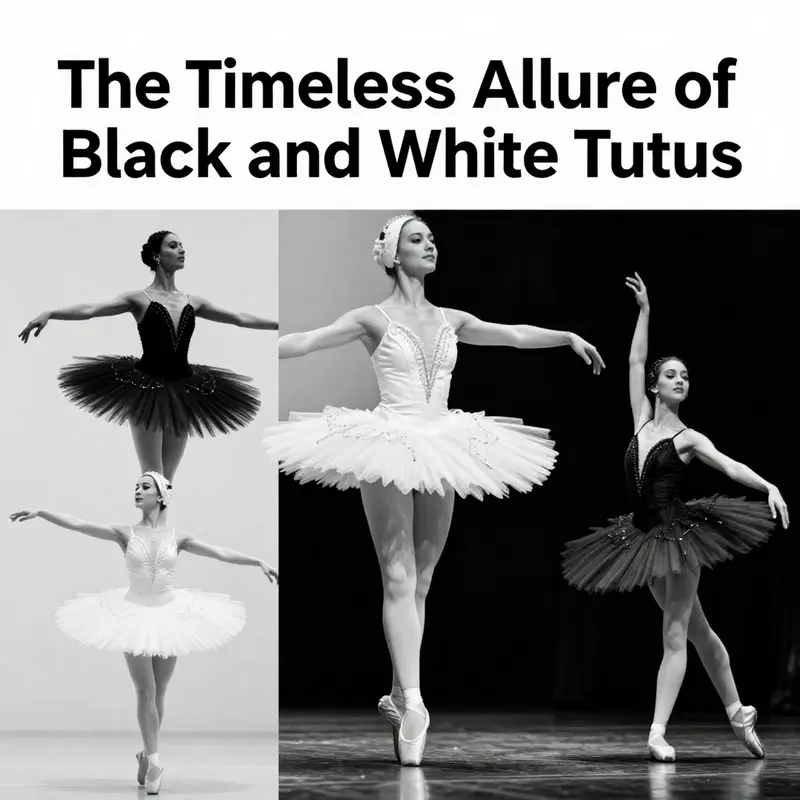
On a stage lit to reveal the texture of fabric and the precise line of a dancer’s extension, a black and white tutu can do more than frame movement. It can tell a story in movement before a single word is spoken. The stark contrast between the two tones acts like a visual punctuation mark, inviting audiences to read the performance as a negotiation between opposing forces: light and dark, innocence and edge, tradition and rupture. This duality is not an accident of design but a language that dancers and choreographers have long used to map complex inner landscapes onto the body. The white tutu has historically stood as the emblem of classical ballet’s most pristine aspirations. It conjures angels, swans, and the luminous arc of a perfected arabesque. Its beauty is inseparable from associations of purity, grace, and the idealized female form in the Western ballet canon. Yet beauty in this context is never merely ornament. It is a codified rhetoric that whisperingly requests the gaze of the audience to invest in a particular moral and aesthetic ideal. The white tutu, then, is a monarch of tradition, a symbol whose authority arises not only from its form but from the long cultural memory it carries. When that memory is allowed to meet its counterpoint—the black—an entire axis of meaning opens up, transforming the stage into a contested space where history and possibility collide.
The emergence of black and white in tutu design introduces a counter-narrative that has become a powerful instrument in performance. The two tones together create contrast that is not simply about visibility but about interpretation. Light against dark becomes a metaphor for tension: the lure of purity clashing with the lure of rebellion. The contrast asks the eye to switch between. It invites a reader’s mind to hold opposing readings at once: a dancer can appear at once angelic and insurgent, poised and in flux. This is no accident of fashion. It mirrors a larger cultural tempo in which many art forms began to reexamine inherited hierarchies and the stories they tell about who gets to perform, who gets to be seen, and what kinds of bodies and voices are invited to speak on stage. In this sense, the black and white tutu is less a costume than a decision about how to map a social world onto a living body.
In contemporary choreography, the use of black and white often signals an invitation to examine darker or more ambiguous narratives. Choreographers who work at the edge of tradition frequently turn to this color pairing to articulate psychological turmoil, social critique, or even feminist resistance. The stark color field can underscore a dancer’s interior life without recourse to spoken text. Movement becomes a script, and color becomes the subtext. A black silhouette moving against a white canvas can emphasize the elasticity of the spine, the tension in the shoulder, or the gravity of a turn that refuses to release. In these moments, the tutu is no longer simply a skirt that flares at the hip; it becomes a frame within which power dynamics are negotiated and redefined. The audience is asked to witness not just technique but the politics of gaze—whose gaze is centered, whose perspective is dialogued with, who is allowed to inhabit the stage with authority. The black and white tutu reframes the dancer as a complex subject rather than a singular emblem of beauty.
This reframing carries implications beyond the stage. It intersects with questions of cultural representation and aesthetics in ways that scholars have long debated. The ballet world’s historical emphasis on white imagery has often coincided with a Eurocentric canon that marginalized diverse bodies and narratives. The adoption of black in tutu design, therefore, can be read as a symbolic reclaiming of space. It is not simply about fashion or novelty; it is about who is invited to perform, who is seen, and whose stories are valued as part of the artistic conversation. The black element in the tutu can function as a political statement, signaling a break from rigid norms and a willingness to explore identities that have historically been underrepresented in classical settings. When designers and performers synchronize color with choreography, they are less constructing a fashion trend than constructing a dialogue about inclusion, visibility, and voice in the arts.
The dialogue between black and white thus becomes a conduit for examining power structures within performance culture. In many contexts, the white tutu remains a touchstone of tradition—an ideal that audiences recognize and respond to with a certain reverence. The black tutu, whether used solo or in combination with white panels, creates a counterweight that challenges what that reverence means. It pushes stage designers, lighting technicians, and conductors to rethink how color interacts with form under lights and shadows. The presence of black can intensify the line of a dancer’s leg, sharpen the edge of a port de bras, or deepen the impression of a dancer’s weight in a pirouette. The result is a more nuanced perception of movement, where color and metalanguage of the body work in concert to produce a more layered emotional experience for the audience.
Beyond the grand stages of classical institutions, the black and white tutu has found resonance in more intimate spaces and in crossover performance. It has become a versatile symbol for celebrations, and its visual grammar lends itself to cross-pollination with other art forms, fashion sensibilities, and theatrical genres. A black and white palette can anchor a contemporary dance piece as firmly as a painted backdrop, while also offering a flexible canvas for accessories, lighting, and staging ideas. In the classroom and studio, this color pairing can serve as an accessible entry point for exploring the grammar of movement and the politics of appearance. For students learning to embody balance and contrast, the tutu’s two-tone silhouette becomes a tactile lesson in how form and color communicate intention. A basic tutu, when viewed through this pedagogical lens, can be a living map of how tradition can be interrogated and expanded upon in practice. For those curious about what a foundational tutu looks and feels like, consider exploring the basic tutu category to see how color and proportion interact in different builds and fabrics. basic tutu category
In performance history, the white tutu’s purity has not resisted critique; instead, it has invited reinterpretation. Choreographers and designers have continually reimagined the white tutu by pairing it with lighting schemes, stage textures, and musical choices that reveal its malleability. The black companion, when introduced, acts as a counterweight that can redefine how audiences experience rhythm, tempo, and line. The combination of the two tones makes room for both reverence and rebellion, for both the serene beauty of classical line and the urgency of contemporary storytelling. The tutu thus becomes a vessel for cultural inquiry, a portable stage on which questions about identity, agency, and representation can be explored with precision and grace.
The political dimension of black as a design choice deserves particular attention. The aesthetics of color are never neutral. When a costume design signals a black presence on a stage historically saturated by white symbolism, it participates in a broader discourse about who gets to perform and whose experiences are considered central to the narrative. This is especially meaningful in contexts where audiences and students are observing how race and culture interface with body, movement, and artistry. The tutu, in its dual tone, becomes a site of dialogue about inclusivity and the ongoing negotiation of authority in the arts. It invites questions about curriculum, casting, repertoire, and audience expectations, prompting institutions to reflect on whether their programming represents a plural range of voices and histories. The exchange is not simply about color for color’s sake; it is about signaling a willingness to expand the canon and to welcome a multiplicity of perspectives into the fabric of performance.
The symbolic potential of black and white extends beyond the arena of ballet studios and theaters. It informs how audiences experience performances that blend traditional form with modern sensibilities. The two-tone silhouette can cut through cluttered stage design, drawing visual focus to the dancer’s edges as well as to the choreography’s phrasing. In this way, the tutu becomes a tool for dramaturgy, a piece of scenography that communicates with the audience on multiple levels. Color, movement, and space enter into a triad that shapes perception and memory. The black and white tutu, then, is not merely a costume; it is a statement about how performance negotiates the past and the present, how it honors lineage while insisting on relevance, and how it champions visibility without sacrificing artistry.
As scholars and practitioners continue to analyze the cultural implications of color in dance, the black and white tutu offers a compelling case study. It demonstrates how color can be a moral and aesthetic instrument, how it can support or challenge conventions, and how it can foster an environment where more voices are invited to tell their stories through movement. The tutu becomes a language—one that speaks through form, shadow, and light—and a medium through which audiences are invited to question what they are watching as much as what they are hearing and feeling. In this way, the chapter of color in tutu design is not a footnote to technique but a central thread in the evolving narrative of dance as a living, culturally engaged art.
For readers who wish to situate these ideas within broader discussions of costume and culture in modern ballet, a deeper exploration of how color and costume shape cultural narratives can be found in broader analyses across dance scholarship. Further reading: British Ballet Insights: Costume and Culture in Modern Ballet.
Silhouette in Contrast: Performance Applications of Black and White Tutus
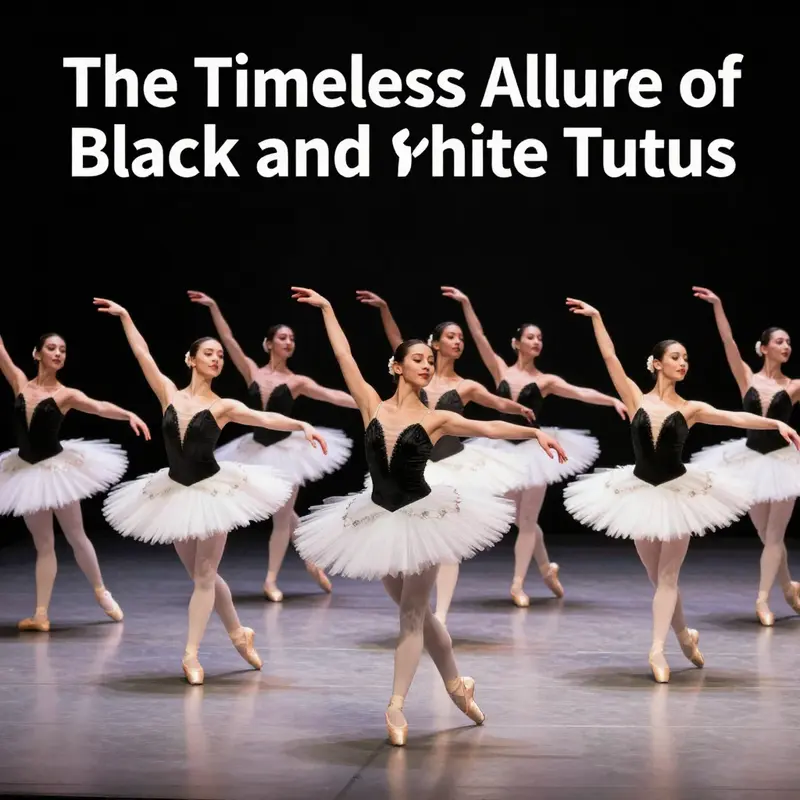
A black and white tutu carries with it a language of lines and light. It speaks before steps are taken, before a note is sung, before a character is introduced. In performance spaces, where every gesture is translated through the body and every angle of the stage is a frame, the stark contrast of black against white acts like a compass for the audience’s eye. The white can glow, catching and scattering light into a halo around the dancer, while the black can ground movement with a crisp, arresting edge. Together they form a visual rhetoric that is both ancient and immediate, a dual voice that can speak of tradition and challenge it in the same breath. This is not merely a choice of color; it is a decision about how a human body will exist in space when the lights come up and the music begins. The tutu, in its architectural honesty, helps an audience see movement as line, form, and intention long before the dancer’s facial expression registers.
At the heart of the black and white tutu lies a deliberately sculpted silhouette. The skirt’s architecture—layers of stiffened tulle fanning out from a fitted bodice—creates a luminous, almost two-dimensional plane that reads clearly from the far seats to the camera lens. The white portion tends to wash the upper contours with a clean, almost architectural glow, while the black portion inside and along the hem provides a counterweight that anchors the figure against the stage floor and the backdrop. This interplay makes every pirouette, jeté, and plié a study in contrast: light and shade, openness and containment, purity and gravitas. It is a visual shorthand for duality, a dramaturgical device that can be exploited to mirror the thematic currents of a piece without a single spoken line.
The technical craft behind such a garment is as vital as its pigment. A typical professional practice tutu features graduated layers of stiffened tulle that are carefully attached to a base structure, which in turn is integrated with a leotard or bodice to ensure secure, comfortable wear. The construction is designed to hold shape through long rehearsal hours and through the rigors of stage lighting—where heat and heat-induced fabric fatigue can alter silhouette. In a white section, the fabric’s stiffness helps preserve the clean, crisp edge that catches light and defines each line of the leg, hip, and torso. The black panels, when positioned with precision, intensify shadow along the outer contour, making a dancer’s extensions read more decisively to the audience. The result is a garment that is as much a tool of choreography as it is a costume, shaping how movement appears and how intent is perceived.
For dancers, the choice of a black and white tutu is rarely about fashion alone. It is a practical decision that concerns visibility, timing, and storytelling. In traditional ballet formats, white is a familiar, almost ritual color—suggestive of purity and classical grace. When a choreographer introduces a black element into the same white framework, the stage is suddenly opened to a dialogue about modernity, risk, or moral ambiguity. The body’s profile against white can seem larger, more expansive, as light floods the fabric; when the same frame is toggled to emphasize the black, the dancer’s lines become sharper, their presence more compact, their movement seemingly more controlled. Lighting designers love this potential. The tutu becomes a three-dimensional canvas that interacts with spotlights and color gels, reframing how a single pair of legs across a studio floor can become a choreographic diagram visible to all in the theater or on screen.
Beyond the confines of classical institutions, black and white tutus have found fertile ground in theatrical productions, contemporary dance, and even media-driven performances where the emphasis is on concept as much as on technique. They function as striking anchors in routines built around geometry, symmetry, or kinetic sculpture. In a contemporary sequence, a dancer might perform swift, angular turns that carve bright arcs across a dark stage; the white could blaze at the apex of a turn, while the black edges sharpen the tail of the movement, so that the choreography reads as a series of conceptual silhouettes rather than purely physical feats. In these contexts, the tutu ceases to be a costume and becomes a stage language—an instrument through which movement is interpreted, framed, and communicated with minimal ambiguity.
For designers and performers who wish to explore professional options, the search for a black and white tutu becomes a study in balance as much as in color. The choice of fabric weight, the degree of stiffness in the tulle, and the fit of the bodice all influence how the garment performs under the pressures of a live show. A tutu that holds its shape well under hot stage lighting can preserve a dancer’s line as they execute leaps with exacting timing. If the fabric is too light or the layers too few, the silhouette may collapse during a high-energy sequence, and the intended contrast can blur into a muddy or shadowy mass on stage. Conversely, overly rigid construction can restrict movement or create discomfort that hampers performance. The best pieces, then, strike a careful equilibrium: the stiffness must support silhouette integrity without compromising the dancer’s freedom of motion, and the color blocks must be arranged so that the eye travels along the intended musical and choreographic path rather than getting distracted by stray edges or misaligned panels.
The versatility of black and white is also evident in how it travels across performance spaces and even into promotional contexts. In a concert setting, the stark contrast can help a choreography read clearly from a distance, which is invaluable for large venues or televised broadcasts where camera angles and seat geometry vary. In a photo shoot for a dance program, the same garment can suggest purity and rebellion in equal measure, allowing the photographer to stage a series of compositions that reveal different facets of the same movement language. The costume thus takes on a dual life: one that supports the dancer during live interpretation and another that translates moments of performance into still images that communicate the work to audiences who may never witness a full live production.
The design philosophy behind the black and white tutu also embraces the idea that simplicity can be profoundly expressive. The two-color scheme reduces visual noise, enabling audiences to track subtle shifts in weight, breath, or balance that might be overlooked if the palette were more saturated. A pale foot catching light on a white surface, followed by a heavy black panel snapping into view as the leg sweeps through space, offers a rhythm of perception that mirrors the tempo of the music. It is not merely decoration; it is a disciplined approach to stagecraft where color, fabric, and form are harmonized to support a narrative arc. Even in a piece that aims for abstraction, the tutu anchors the performers to a shared visual vocabulary, ensuring that the audience’s gaze remains directed at expressive intention rather than at competing visual cues.
While the core appeal rests in the interaction between color and silhouette, the black and white tutu also invites experimentation with accessories and styling. Small touches—ribbons, sashes, or minimal embellishment—can pivot a look from starkly iconic to unexpectedly narrative. A thin red accent, for instance, can function like a punctuation mark, drawing the eye to a moment in the choreographic phrasing and reminding the viewer of a thematic through-line without overpowering the restrained geometry of the garment. Such enhancements must be chosen with care; they should complement the high-contrast base rather than compete with it. The result is a costume that remains legible at a distance while rewarding careful examination up close. In practice, many performers and designers lean toward accessories that echo the garment’s elegance rather than overshadow it, allowing movement to remain the primary source of storytelling.
To integrate this garment into a broader performance vocabulary, it helps to view the tutu not only as a costume but as a kind of choreographic instrument. It asks questions: How does a dancer’s turn read through the white, and how does the black edge emphasize the ending pose? How does the audience perceive the dancer’s line as the lights shift? In rehearsal, these questions guide choices about tempo, spacing, and energy. They also shape how stage directions are interpreted by lighting designers and stage managers, ensuring that transitions remain clean and the visual narrative stays legible. When a company or a creator leans into black and white with intention, the result can be a production whose visual identity is instantly recognizable, even when the rest of the design—sound, set, or projection—shifts between styles.
For those who want to explore professional options while preserving the orchestra of movement, a straightforward avenue is to consider the professional tutu category as a starting point. This path helps ensure that the garment you select offers reliable fit, robust construction, and a silhouette designed to endure the demands of touring stages, rehearsal studios, and festival environments. It also reduces the guesswork involved in balancing color, weight, and stiffness across multiple sequences, which can be a significant advantage during the intense tempo of a production cycle. The right piece supports the dancer’s core strengths—control, balance, and endurance—while enabling the visual clarity that audiences expect when black and white are used as the primary narrative vocabulary.
As a closing reflection, the value of a black and white tutu in performance rests less on novelty than on the disciplined elegance of its design. It is a garment that invites the audience to read form with precision, to perceive line as a kind of music, and to experience a story told through movement framed by color and contour. It is a canvas for technique and for interpretation—a canvas that, through careful construction and thoughtful staging, becomes a living, breathing instrument of performance. For those ready to explore its potential, the path is not about chasing trends but about embracing a durable, adaptable, and visually decisive language of dance. For designers and performers seeking professional options, the Professional tutu category offers a curated range that balances practicality with aesthetic impact. This is where the conversation between silhouette and shadow begins to unfold in earnest, guiding the dancer toward moments on stage that feel inevitable, inevitable in the sense that the costume has helped shape them into being seen clearly, powerfully, and with grace.
External reference for deeper technical guidance on selecting a black ballet tutu can be found here: How to Choose the Best Black Ballet Tutu: A Complete Buying Guide.
Final thoughts
Black and white tutus serve as essential elements in the world of dance and fashion, embodying both aesthetic beauty and cultural depth. Their unique construction and styling versatility make them coveted items among dancers and performers, while their cultural resonance continues to inspire artistic expression. For business owners, understanding the multifaceted nature of these tutus opens new avenues for creativity and engagement with customers, enhancing both product offerings and overall brand identity.