
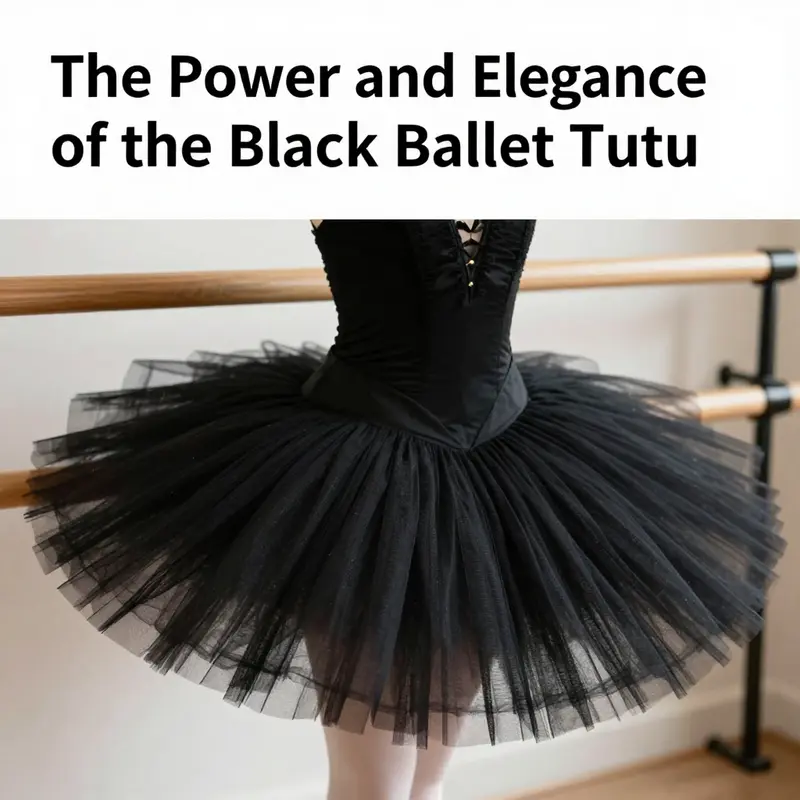
The black ballet tutu stands as a symbol of artistry, power, and elegance within the world of ballet. With its iconic role in the performance of Swan Lake, particularly associated with the compelling ‘Black Swan’ character, it represents the duality of grace and darkness. As we delve into the fabric and craftsmanship of these tutus, we uncover the innovative materials and design techniques that marry style and function. Beyond the stage, the black ballet tutu echoes through the realms of fashion and pop culture, showcasing its continued influence and adaptability. Finally, we will consider the performance-driven aspects of these garments, ensuring they provide not only aesthetic beauty but also ergonomic support for dancers in their demanding art. Each chapter reveals how this seemingly simple garment embodies deep cultural resonance and technical expertise.
Shadow and Spotlight: The Black Ballet Tutu as Odile’s Illusion in Swan Lake
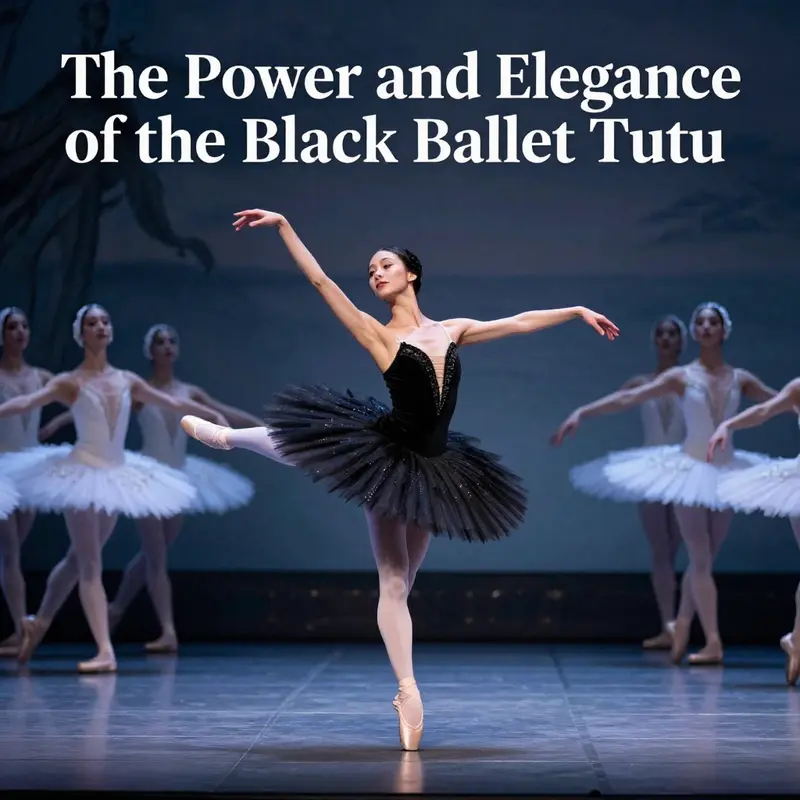
The black ballet tutu, as it appears in Swan Lake, is more than a costume; it is a forged instrument of narrative and perception. In the telling of Odile, the Evil Sorceress who deceives Prince Siegfried, the tutu’s color and cut become a language of suggestion. It speaks a dialect of mystery, power, and seduction that Odette’s pristine, white counterpart cannot. In this way, the black tutu channels a philosophy of transformation that lies at the heart of the ballet’s tragedy. The scene at the prince’s ball, where Odile appears in silhouette against the opulent ballroom, is not merely a moment of visual drama but a crystallization of the opera’s themes: duality, illusion, and the peril of misrecognition. The tutu helps sculpt those ideas into a kinetic experience; it is a moving backdrop that deepens the audience’s sense of peril as Odile’s charm quietly rewrites the story’s alignment of innocence and danger.
To understand how the black tutu functions in this narrative, one must first consider its silhouette. The classic black tutu—sleek, form‑fitting at the bodice, expanding into a layered skirt—has a lineage that leans toward the dramatic rather than the merely decorative. The body of the dancer becomes a vehicle for the fabric’s presence; the tutu’s vertical line heightens the perception of elevation in leaps and turns, while the opacity of the dark layers absorbs and returns light in ways that emphasize movement rather than static form. In Swan Lake, this silhouette is not a fashion choice so much as a character choice. Odile’s aura of danger is inseparable from the garment that encases her in shadow, a deliberate counterpoint to Odette’s light-drenched whiteness. The choreography benefits from such contrast, for it makes Odile’s movements read as cunning extensions of the costume’s own shadow-play. The dancer becomes not only an interpreter of steps but a living emblem of deception.
The psychology of color here matters as much as the cut. Black in a ball gown or a contemporary runway may signify power, but in classical ballet it channels a set of associations—mystery, the unknown, a raven’s gleam, a night flight. The tutu’s layered geometry catches stage light differently than a single, monolithic fabric would. Each layer catches and releases light in a manner that produces a subtle flicker, a visual tremor that unsettles the eye just enough to cue the mind toward doubt. In practice, this means the technician and designer must balance sheen and depth. Too much gloss can flatten Odile’s menace into mere show; too little texture can rob the figure of the menace that makes her convincing as a would-be deceiver. The result is a controlled interplay of matte bodice and shimmering skirt, with the fabric’s micro-texture playing across Odile’s torso and hips as she pivots, pirouettes, and glides across the ballroom floor.
Designers who shape the Swan Lake black tutu work within a lineage of technique and performance that blends aesthetics with physics. The bodice remains tightly shaped, often constructed from durable yet flexible materials that grant the dancer a full range of motion. The waistline is engineered to stay secure during rapid turns and extended holds, a practical necessity given the tempo of Odile’s sequences. The skirt, meanwhile, is typically multi-layered to preserve volume while allowing for the necessary fluidity of turn, lift, and suspension. Layer counts vary, but seven layers are common across many stage realizations, with some productions pushing toward even more elaborate configurations to achieve the desired dramatic sway during a grand jeté or a decisive beat of the arms. The fabric itself is a blend—polyester, silk, or a high-twist synthetic—chosen for resilience, lightness, and the ability to take on a controlled stiffness that helps preserve the tutu’s shape through countless performances.
The tulle’s weight distribution is another consideration that matters in practice. The goal is a look that remains buoyant and expansive without becoming unwieldy for the dancer. A tutu that feels heavy at the top can restrict the upper body or cause fatigue that dampens line and phrasing over the course of a long act. Conversely, a tutu that is too light may fail to present Odile’s imposing silhouette at the crucial moment when she faces Siegfried. Thus the construction relies on a deliberate distribution of fabric, with stiffer netting toward the edges and lighter material nearer the bodice to keep the overall balance harmonious. The dancer’s center of gravity remains central, while the external aesthetic communicates the character’s inner tension. It is a delicate equilibrium—between the garment’s shape memory and the dancer’s expressive need to embody a character who thrives on a calculated risk and a midnight allure.
Aesthetic details—feathers, metallic threads, subtle embroidery—are not mere decoration in this context. They function as cues to Odile’s identity as a raven-like incarnation of deception. Dark feather motifs can evoke a predator’s grace, while metallic threads catch the light in a way that suggests a dangerous glamour. Those design choices—whether they appear as a fine trace along the neckline or a glimmering fringe along the hem—help the audience intuit Odile’s power before she utters a single line. The choreography, conversely, reveals her guile through timing and contact with Siegfried. The eye follows Odile’s movements and, crucially, reads the tutu as part of the storytelling apparatus: a persona that can both allure and unsettle.
In performance, the black tutu also serves a functional role in terms of movement. The ensemble’s lightweight construction is not merely about theatricality; it is a technical asset that allows for rapid turns, high extensions, and dynamic leaps. The dancer can execute pirouettes with a clean line while the layered skirt remains in motion, creating a silhouette that remains legible from a distance and under varied lighting. This legibility is essential for the audience to perceive the character’s intent through form and gesture alone, especially in the balletic language of classical Swan Lake, which relies on precise alignment and musical phrasing to convey story. The tutu’s silhouette and how it carries light or absorbs it contribute to the audience’s experience of Odile as both enchantress and threat. It is the difference between a figure that simply performs and a figure that persuades the viewer of her improbable, dangerous charm.
From a craft perspective, Odile’s black tutu embodies the synergy of design, fabric science, and stagecraft. The bodice may feature reinforced seams and careful tailoring to ensure longevity under repeated performances. The tutu’s hem is double-stitched to resist fraying, and the layers are designed to hold their shape even as they are flexed, bent, and twisted by a dancer who moves with a ferocity born of narrative necessity. Breathable mesh panels can be integrated into the bodice or underarm areas to promote airflow during intense rehearsals and performances, an often overlooked but vital detail for performers in long acts or touring productions. The choreographer and costume designer collaborate to ensure that the tutu’s construction does not impede a dancer’s pointe work or the subtle articulation of the feet that is the bedrock of classical technique. In Odile’s moments of illusion, the tutu must be robust enough to endure the stress of shape retention, yet supple enough to respond to the quick, precise movements that define a cunning repertoire of gestures.
The cultural resonance of the black tutu in Swan Lake extends beyond the stage. While Odette’s white tutu is a paragon of purity and grace, Odile’s dark counterpart has shaped how audiences imagine transformation—how a character can appear to be a certain thing in one moment and reveal an opposite truth in the next. The black tutu thus becomes a symbol, in the larger culture, of face masks that fall away under scrutiny and of the ways power and seduction can be both captivating and perilous. This symbolic resonance has spilled over into fashion and art, where the tutu’s archetype—layered tulle, a form-fitting bodice, and a dramatic, sweeping skirt—continues to inspire designers who seek to capture a sense of controlled drama and sophisticated mischief. The tutu’s cultural imprint is a reminder that a single garment can carry a complex allegory about vulnerability, choice, and consequence.
In discussions of production design, one often sees a comparative impulse: to consider Odile in relation to Odette, to juxtapose the black tutu’s shadowed glamour with the white tutu’s luminous serenity. This contrast helps illuminate the ballet’s deeper arc—the fall from grace, the peril that lurks in illusion, and the possibility that even the most virtuous love can be compromised by misreading a single moment. The black tutu does not simply dress a villain; it encodes a set of moral and emotional stakes that the dancers translate through breath, line, and timing. It is a reminder that costume is never neutral. It is a medium through which the audience perceives the ebb and flow of fate, a quiet incantation performed in the language of fabric and movement.
For those seeking to appreciate the craftsmanship behind these garments, the white Swan Lake tutu provides a useful counterpoint. It helps illuminate how color, fabric weight, and silhouette work together to convey character. See, for instance, a depiction of a white rendition that emphasizes purity and restraint, which, in its own way, sharpens the sense of danger when Odile enters in black. Such contrasts are not mere mood lighting; they are legible narrative cues that a well-crafted production uses to guide the audience’s emotional and cognitive responses. The specific balance between color, texture, and structure in Odile’s black tutu is a careful response to the choreography’s demands. It creates a stage presence that is both seductive and intimidating, a perfect foil to Odette’s virtuous luminosity and Siegfried’s gullible ardor. The result is a tragedy that feels inevitable not only through the libretto and the score but through the tangible language of fabric in motion.
Within the broader discourse on performance costume, the black tutu’s evolution—from a stately, perhaps more austere silhouette to a dynamically layered, performance-ready garment—reflects shifts in rehearsal culture and audience expectations. Modern productions increasingly demand tutus that are robust enough for repeated touring, easy to repair, and adaptable to evolving stage tech. Dancers require materials that breathe, stretch, and return to form after leaps that press the fabric to its physical limits. The tutu thus becomes a collaborative achievement: choreographers, dressers, seamstresses, and dancers align to ensure that the garment serves the performance rather than obstructing it. The result is a seamless integration of garment and art—Odile’s illusion delivered with both aesthetic grandeur and practical reliability.
In closing, the black ballet tutu in Swan Lake stands as a paragon of how costume shapes storytelling in ballet. It is both symbol and tool, a garment that carries the weight of transformation and a technical instrument that enables a dancer to embody deception with clarity. The tutu’s layered structure, its strategic use of light and shadow, and its carefully calibrated balance between mobility and silhouette together compose a visual language that communicates before a single line of dialogue. Odile’s silhouette, lurking in the ballroom’s dim glow, is a study in controlled danger—a reminder that in ballet, as in our broader cultural imagination, appearance is never merely appearance. It is a doorway into motive, desire, and consequence, opened by the deft choreography of fabric and the fearless artistry of the dancer.
For readers who want to explore the aesthetic range of classical tutu designs beyond Swan Lake, a related reference point exists that juxtaposes white and black renditions of the same archetype. See the white Swan Lake tutu dedicated to Odette as a benchmark for contrast in color and sentiment: high-quality-white-ballet-costume-tutu-swan-lake-t0596. This juxtaposition illuminates how designers negotiate color, texture, and form to shape a dancer’s impression and the audience’s interpretation across the ballet’s dual narrative.
External reference: https://www.alibaba.com/product-detail/JW-Adult-Girls-7-Layer-Polyester-Dancewear_1600485972359.html?spm=a2700.12904156.0.0.5b1c5d3aQKzjXf
Velvet in the Spotlight: Materials, Structure, and Movement in Black Ballet Tutus
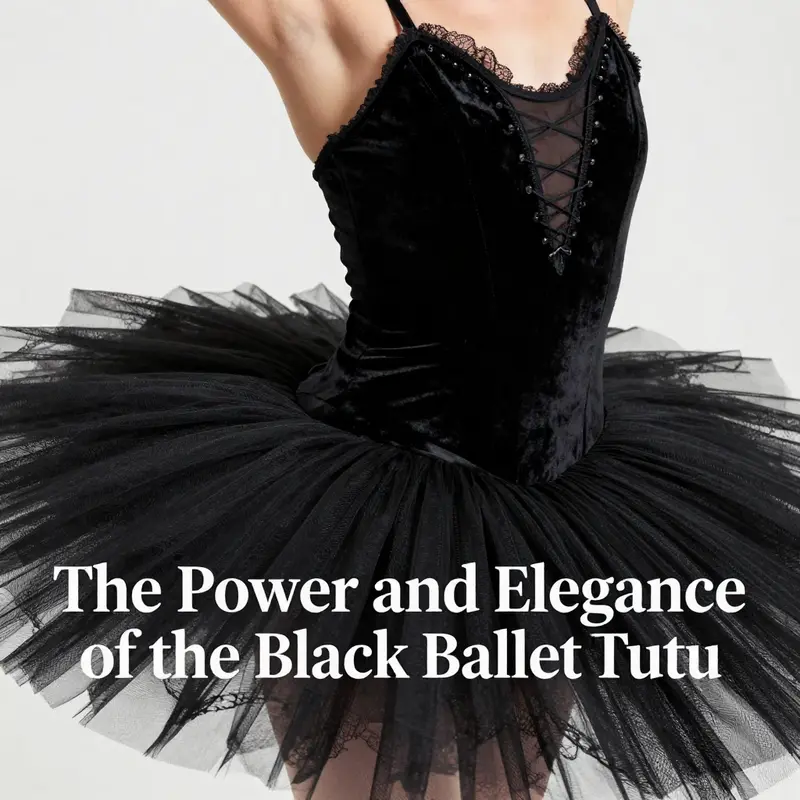
The black ballet tutu is more than a costume piece; it is a carefully engineered instrument of line, color, and motion. In the theater, where every moment hinges on a dancer’s ability to articulate space with precision, the tutu must perform as faithfully as the dancer does. Its black color contributes a quiet, inexorable power, a silhouette that absorbs and refracts light in ways white fabrics do not. Yet the drama of a black tutu arises not from darkness alone, but from the precise interplay of its materials and the design choices that shape how it moves. To understand the velvet edge of its presence, we begin with the core, the fabric that gives the skirt its grandeur: tulle. Tulle, a delicate yet resilient mesh, is the backbone of almost every professional-level tutu. In black, the fabric’s opacity carries weight in perception even as it remains light to the touch. The visual heft of the skirt comes from layers, and in serious professional pieces it is common to see three to five layers of tulle working in concert. Each layer is not merely added volume but an instrument of texture and shadow. When a dancer spins into a half-turn or pushes into a grand jeté, the combined tension across those layers resolves into a cohesive arc that reads clearly from the wings to the far seat in the house. The layering also has a practical logic beyond aesthetics. More layers confer a more stable silhouette, resisting the warp that vigorous movement can impose on fabric. A three-layer tutu can read as a crisp, defined circle that holds its shape under slower, deliberate movements, while a five-layer construction can sustain a more dramatic, buoyant halo during high-energy sequences. This is not a superficial choice; it is the result of a careful trade-off between volume, weight, and the dancer’s need for mobility. The black color amplifies the tutu’s presence on stage precisely because it gains depth from the subtle play of light across the tulle. Matte overlays against glossier underlayers can create a nuanced, almost sculptural texture. The interplay of matte and shine is not accidental; it is a deliberate design choice that helps the audience read the dancer’s lines against the floor and backdrop as the body traces its path through space. The bodice, the upper anchor of the costume, carries its own logic of structure. It is typically reinforced with stiffening elements that keep the torso aligned and the posture upright through hours of rehearsal and performance. Boning, whether plastic or steel, offers control over the ribbed and sternum regions, ensuring the wearer can maintain a clean, elongated line through turns and balances. In contemporary practice, stretchy fabrics such as spandex blends are often used in combination with traditional boning. This pairing provides a crucial balance: the body can breathe and flex within a controlled frame, and the dancer does not feel pinned inside a rigid shell. The presence of spandex in the bodice helps absorb movement without creating constriction, particularly during quick transitions where the torso needs to respond to the spine’s subtle adjustments. An ergonomic concern underpins every stitch: comfort. Modern designs consider moisture management and skin sensitivity, which matters in long rehearsals and performances. OEKO-TEX® certified materials are increasingly common, signaling that the textiles have met safety standards that minimize exposure to harmful substances. Such certification is not merely a label; it is a promise that the dancer’s skin will not encounter irritants as the costume rides close to the body for extended periods. The back of the tutu often features adjustable corset-style lacing, a feature that gives the design a personal, dancer-specific fit. This lacing is more than cosmetic adornment; it is a functional mechanism that allows the performer or fitter to tighten or loosen the torso coverage as needed. The result is a silhouette that remains smooth along the spine, a critical factor when the arms sweep and the torso twists. The harness-like support of back lacing also helps maintain even tension across the bodice, reducing the risk of shifting during powerful leg extensions or pirouettes. Reinforced seams are another essential engineering detail. The ballet stage is unforgiving; a costume must tolerate repeated bends, leaps, and grips. Double-stitched hems and cross-stitch reinforcement away from high-stress zones extend the garment’s life, which matters for performers who rely on a single, well-fitted tutu to carry them through a demanding repertoire. These threads, often invisible to the audience, hold the entire garment together through countless rotations, guiding the skirt’s arc so that it stays balanced and centered as the dancer moves through multiple passes. Velvet or satin panels on the bodice provide a tactile luxury that aligns with the costume’s visual drama. The combination of a soft, luxurious surface with the performance-focused rigidity of the underlying structure creates a paradox: elegance without sacrifice. The bodice’s textured surfaces catch stage light differently than the tulle, producing a subtle contrast that reads as depth rather than flat black. This contrast can be instrumental in communicating character and mood, particularly in productions that juxtapose the dark authority of a villain’s presence with the dancer’s grace. Embellishments, when used, are carefully integrated to enhance, not impede. Feathers, embroidery, or subtle appliqués may appear as accents that intensify a dramatic moment or help convey a character’s persona. The challenge for designers is to weave these features into the garment without compromising the tutu’s mobility or the silhouette’s integrity. The choreography itself informs material choices. A production that centers on quick, precise feet and tightly shaped upper bodies requires a different distribution of weight and a slightly stiffer back panel than a show that leans into long, sweeping lines. The tutu must respond to the demands of the choreography; the layers should unfurl with controlled freedom, not stand at odds with the dancer’s momentum. Consequently, the design process begins with a clear view of the role’s physical requirements. For a character steeped in mystery and intensity, the black tutu must project strength through its boundary line while remaining a faithful partner to the body’s movement. That partnership is what makes the tutu more than fabric: it becomes an instrument that translates the dancer’s energy into a visible drama that the audience experiences as pure motion. Some designers experiment with the balance of color and texture by integrating matte bodice fabrics with shimmering tulle, creating a subtle tension that enhances visibility under varying stage lighting. The matte surface of the bodice tends to absorb light, while the tulle catches and reflects it in a way that emphasizes the dancer’s turns and leaps. This deliberate contrast helps performers maintain clear profiles during complex sequences, ensuring that the silhouette remains legible even when the light shifts or the tempo increases. The choice of materials also embraces practical concerns about maintenance and durability. Black tutus — particularly ones intended for professional use — must withstand frequent rehearsals, many washes, and the occasional rough moment on stage. The multi-layer construction, reinforced seams, and the use of durable fabrics like nylon or polyester blends for the tulle help ensure longevity. Where possible, designers favor fabrics and finishes that resist pilling and stretching so the tutu retains its shape after repeated high-stress performances. If embellishments are added, they are positioned and secured with redundant stitching to minimize the chance of loosening during movement. The result is a garment that remains visually coherent even after long, demanding schedules. Context matters when evaluating the black tutu’s materials and design techniques. In contrast to the White Swan’s iconic plume-like white skirt, the black tutu occupies a different symbolic space. The contrast between the two is not just color; it is texture, light interaction, and narrative tone. The White Swan’s tutu can read as purity and vulnerability, while the Black Swan’s silhouette communicates control, power, and transformation. The two costumes therefore use similar construction principles in different ways, with color and lighting performing a crucial role in shaping perception. This philosophical distinction informs material choices and construction methods, guiding designers toward a monochrome grace that still reads with the same intensity as a more overtly ornate costume. In a broader design practice, black tutus have influenced fashion and visual culture beyond the stage. The iconic black silhouette has appeared in music videos and avant-garde runway settings, where designers test the boundaries between performance wear and art. The tutu’s capacity to hold a dancer’s form while projecting a mood—mysterious, sovereign, transformative—speaks to a universal language of movement that translates across disciplines. When a dancer steps into the wings wearing a black tutu, the garment’s components cooperate behind the scenes to support what the audience sees: a stretched line that begins at the crown of the head, travels through the spine, and fans outward into the legwork of the dance. The science of its design—layered tulle, stiffened bodice, adjustable lacing, reinforced seams, and thoughtful embellishment—represents a marriage of fashion craft and athletic engineering. It is a reminder that costume design in ballet is not a decorative add-on but an integral part of the choreography itself. For readers who wish to explore deeper practical example, one may consider the broader family of tutus that share the same core principles: multi-layered tulle for volume, a bodice anchored by boning or structured fabric, and ergonomics that respect the dancer’s breath and lines. The exact balance of components can shift with the specific production, the dancer’s physique, and the stylistic direction of the choreography, yet the underlying logic remains constant: a black tutu must honor the dancer’s artistry while delivering an unambiguous, stage-worthy portrait of form and movement. The craft, then, is a conversation between textile science and performance intuition, a dialogue that unfolds on the stage as a kind of whispered language. Although the public may see the finished silhouette as a single, elegant shape, the behind-the-scenes work is a choreography of its own, with threads and foams and weaving patterns plotting a dancer’s path before she ever steps into the light. The resulting garment is a partner in the truest sense: one that yields just enough to allow freedom, supports just enough to reinforce posture, and shines in the right moments to communicate character without shouting over the music. In this sense, materials and design techniques are not ancillary details; they are the architecture of performance, the quiet architecture that makes the black tutu capable of carrying a story from rehearsal room to the brightest proscenium. The black tutu thus stands as a sculpture in motion—an emblem of discipline and grace, created from a careful blend of technical choices and artistic intent. It embodies a philosophy that values durability as a virtue, beauty as a duty, and comfort as a necessity. The dancer’s body meets the garment’s logic, and together they perform the impossible: to suspend time, to declare power through a line, and to transform a stage into a frame for human potential. For readers who want to trace practical exemplars of this philosophy, a source that highlights the breadth of materials and the structural thinking behind modern tutu construction can be found in industry listings that showcase multi-layered tulle compositions and form-stable bodices. Such resources illuminate how the black tutu’s aesthetics are inseparable from its engineering, and why designers continually refine every seam and stitch in pursuit of that perfect balance between weight, movement, and light. Swan Lake white tutu offers a tangible contrast that helps frame the dialogue between color, texture, and silhouette, underscoring how a single color shift can alter the entire perception of line and presence on stage. External resource: Giselle Ballet Tutu Dress for Girls on Alibaba, illustrating the kinds of materials and layering strategies that inform even the most elevated professional pieces.
From Stage Shadow to Street Spotlight: The Black Ballet Tutu as a Symbol of Power, Fashion, and Transformation
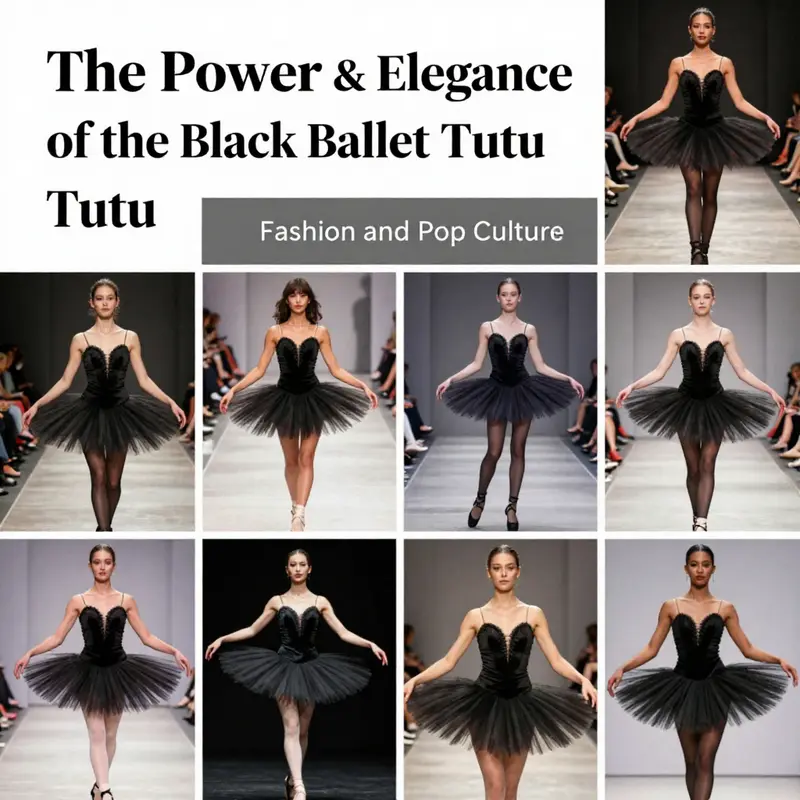
The black ballet tutu began on the classical stage as a dramatic instrument, its silhouette both a command and a whisper. In its form, dancers moved with precision, the bodice fitted, the skirt blooming into layers of tulle that caught light in ways white tutus could not. The Black Swan’s costume lent the color its meaning—mystery, intensity, and readiness to transform. Over time these stage elements moved from the wings into fashion and pop culture, showing that the tutu’s power does not require a stage, only a frame, a lens, and an audience hungry for drama.
In its sartorial grammar, the black tutu preserves technique while bending toward new purposes. Modern bodices, layered skirts, reinforced seams, and breathable fabrics balance lightness with durability, responding to lighting and movement. The silhouette remains iconic, but meaning widens as the tutu becomes a language for mood, stance, and intention beyond ballet.
When traced through fashion, the tutu’s appeal rests in translating stagecraft into everyday presence. In couture and ready-to-wear it provides volume against lean silhouettes, creating narratives of contrast: abundance of fabric versus a trained body, opacity against light. Designers gain a vehicle for exploration and for statements that challenge gender and performance norms.
In professional design, the tutu becomes a canvas for material experimentation and silhouette innovation. Textures range from translucent overlays to matte bodices, with multi-layer skirts stiffened to hold shape during movement, yet remaining responsive to line. Outside the theater, these attributes become a form of kinetic sculpture, inviting the body to become a living motif.
Pop culture has embraced the tutu as a symbol of empowerment and personal sovereignty. In music videos and performances it signals drama and metamorphosis, while coordinated black tutu outfits appear as sociable, celebratory attire in youth culture. The garment’s symbolic weight evolves with context, turning a classical artifact into a contemporary ritual of group identity and memory.
Finally, the black tutu remains a study in tension: traditional technique and radical expression, stagecraft and streetwear. Its evolution shows how a single garment can carry multiple meanings across stages, studios, and runways, inviting wearers to inhabit multiple identities and audiences to witness transformation.
Shadows in Motion: The Ergonomics, Engineering, and Stage Magic of the Black Ballet Tutu
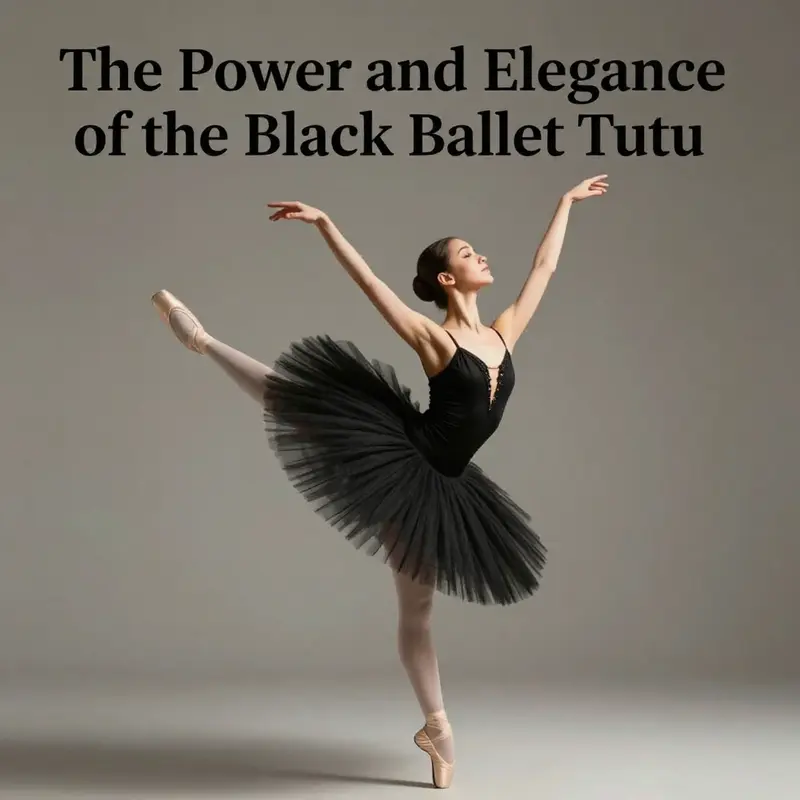
The black ballet tutu is more than a garment; it is a delicate instrument that translates a dancer’s breath, line, and intention into a disciplined silhouette on stage. In the dark materiality of velvet, satin, or a deep, smoke-tinted sheen, the tutu becomes a living frame for what the body can do and how the eye perceives it. The contrast between the black fabric and the gleam of stage lighting is not merely aesthetic. It is a deliberate technical choice that sharpens the dancer’s lines, intensifies phrasing, and clarifies the choreography’s geometry. In Swan Lake and in contemporary solos alike, the black tutu is both cloak and catalyst, hinting at mystery while providing a precise, responsive surface for movement. The best designs honor this dual role: they honor beauty without surrendering ergonomics, and they protect the dancer while amplifying the choreography’s intent. This balance—between form and function, between artistry and biomechanics—defines the modern black tutu as a performance tool as much as a costume piece. The discussion that follows threads through how the silhouette is achieved, how movement remains unhindered, and how designers and makers anticipate the needs of dancers from studio floor to premiere night. It is a narrative that moves as fluidly as a pirouette, even as it remains grounded in the hard realities of fabric, seam, and fit.
From the moment a choreographic phrase asks for a high, spinning turn to the moment it asks for a grounded, grounded stillness, the black tutu must respond with a quiet intelligence. The primary function of this garment is to illuminate the dancer’s lines, not to overwhelm them with volume or noise. To achieve that, the design prioritizes structural integrity and dynamic flexibility in equal measure. The inner architecture is not hidden by design but celebrated in its utility. Lightweight yet durable fabrics such as tulle, chiffon, or organza are layered with intention, their translucence and stiffness calibrated to keep the silhouette expressive without becoming a prison of its own construction. The layers, sometimes numbering a dozen or more, form a sculpted halo around the legs that helps the dancer read space, timing, and weight. Each layer has a purpose: some provide a backdrop against which the leg line reads clearly; others offer the vertical lift that helps with jumps and lift in grand jetés; still others stabilize the circumference so that a turn remains balanced rather than wobbly. When the piece moves with the body, the layers seem to answer the dancer’s impulses with a controlled, almost anticipatory resistance. This is not a static fashion statement; it is an engineered relationship between the body in motion and the fabric that carries and reveals that motion.
Ergonomics, in this context, is a careful negotiation of rigidity and suppleness. The skirt’s architecture often relies on internal wires, hoops, or stiffened panels that uphold the required shape while allowing room for articulation. The moment a dancer leans, pivots, or flares into a jump, the tutu must respond with the right level of support without restricting the extension or the range of motion. Yet modern practice has learned not to mistake stiffness for elegance. Excessive rigidity can turn a clean, linear line into a rigid, effortful gesture, especially during floor work or fluid contemporary sequences that demand a pliant waist and hip connection. Therefore, designers increasingly favor flexible supports, articulated construction, and seams that yield just enough spring to accommodate fast tempos and close, precise footwork. The result is a garment that asks for strength but never imposes it through discomfort or mechanical resistance.
Fit is the language through which ergonomics speaks most plainly. A black tutu must sit close to the dancer’s center, with a waistband that holds securely without digging in. The elastic must tolerate intense rehearsals and long nights of performance, maintaining its grip without creating pressure points that distract the dancer. Straps, if used, are designed to stay put during leaps and turns, avoiding shifting or bunching that would ruin the clean silhouette a moment later. The more precisely a tutu is fitted, the more the dancer can trust the costume to support technique rather than compete with it. This is especially important for young dancers, whose bodies are still developing and whose rehearsal schedules can demand rapid changes in movement with minimal time for adjustments. In professional settings, the attention to fit extends beyond the waistline to the bodice’s alignment, the arm straps, and the overall weight distribution. A properly fitted tutu reduces the risk of abrasion and chafing during long performances and lowers the chance that a movement, however slight, is sabotaged by a costume that shifts unexpectedly.
The color black, as a design choice, offers perceptual and practical advantages. On stage, black generates a stark, readable contrast against many lighting schemes and backdrops, focusing the audience’s attention on the dancer’s form rather than the fabric’s ornament. In Black Swan and in the broader ballet repertoire, the dark hue invites a narrative depth, letting light and shadow define the body’s arcs with clarity. It also harmonizes with a range of stage environments—from stark, modern sets to gilded, baroque backdrops—so the same tutu can participate in multiple productions without visual discord. This versatility is one reason the black tutu has become a durable staple in professional wardrobes. It is not a mere color choice; it is a strategic decision about visibility, mood, and the ability for lighting designers to sculpt the dancer’s presence with precision.
The performance considerations extend beyond the stage surface to how the tutu behaves under heat, sweat, and repeated rehearsals. Materials like spandex blends and moisture-wicking fabrics are often integrated into modern designs to keep the performer comfortable during long sessions. The interplay of moisture management, stretch retention, and shape retention is essential for endurance. It is not enough for the tutu to look magnificent during a single rehearsal; it must perform consistently through weeks of rehearsals, cue-to-cue moments, and multiple show runs. Rehearsal wear typically demands ease of care, durable stitching, and resistance to pilling or fraying after heavy use. Reinforced seams and double-stitched hems are common features in high-performance designs, reflecting an industry understanding that a costume should enhance artistry without becoming a liability through wear and tear. Some designs also aim for certifications or standards that address safety and quality for performers of all ages, which adds another layer of assurance for schools and companies selecting attire for developing dancers.
The design conversation about the black tutu inevitably touches on the relationship between costume and choreography. The garment must not merely accompany the movement; it must reveal the choreography’s architecture. A well-cut tutu can exaggerate the dancer’s lines when needed, emphasizing a perfect arabesque or a clean, extended leg. In other moments, it recedes into the air, letting the body’s motion become the sole storyteller. This dynamic is particularly important in productions that blend classical technique with contemporary sensibility, where the costume’s aura should be neutral enough to avoid erasing modern interpretive choices but dramatic enough to underscore a moment of transformation within a narrative arc. The black tutu thus acts as a feedback mechanism: it amplifies the dancer’s intention when the movement is precise and dramatic, yet it remains unobtrusive when the movement relies on subtler breath and weight shifts. The result is a garment that supports the dancer’s choices rather than dictating them.
For designers, the practical references that inform these decisions often come from established standards and industry examples that balance material science with stage psychology. A well-chosen professional tutu—one that speaks to longevity, ease of care, and ergonomic soundness—can be the difference between an interpretation that lands with clinical clarity and one that merely shines momentarily under the footlights. In this sense, the black tutu is as much a study in durability as it is a study in aesthetics. It invites designers, dancers, and technicians to think about how a costume can be a collaborative partner—an active participant in how a body moves, how a line is seen, and how a story is told through posture, tempo, and texture. The artistry, after all, is not only in the steps or the music. It is in the faithful translation of motion into a silhouette that can be read, felt, and remembered long after the curtain falls.
For designers seeking practical references, this is the moment to consult established practical resources that discuss how to balance silhouette with stability, and how to ensure the garment supports technique during high-stakes sequences. high-quality-classical-dance-tutu-for-ballet-white-golden-trims-t0465. Although the latter pages often showcase a range of colorways and decorative options, the underlying principles of fit, reinforcement, and movement-friendly construction remain central. They remind us that even a darkly elegant garment is built on predictable, repeatable engineering choices that keep the dancer free to explore and the audience free to believe in the moment unfolding on stage.
In the end, the black ballet tutu embodies a disciplined interdependence: the dancer’s body, the garment’s architecture, and the lighting and space around them. It is a performance tool that requires care, precision, and thoughtful design so that it does not overshadow the performer but rather reveals the essence of the art—motion made legible, emotion made visible, and technique made beautiful through restraint as much as through expression. The garment’s value rests in its ability to carry the dancer through the choreography with reliability and grace, to hold its own in a moment of startling energy, and to disappear into the moment when the music and the movement demand only breath and line. This is the quiet craft of the black tutu: not a showy flourish, but a trusted partner in the artistry of ballet.
External resource:
https://www.balletbazaar.com/blog/black-ballerina-skirt-types-technical-standards-and-practical-applications-in-industry
Final thoughts
The black ballet tutu is more than just a costume; it is a powerful symbol of expression that fuses artistry, technical mastery, and cultural significance. By understanding its role in Swan Lake, the innovative materials and techniques used in its creation, its pervasive influence in fashion and pop culture, and the ergonomic considerations essential for performance, we can appreciate its complexity and legacy in the world of dance. For business owners in the dancewear industry, recognizing the multifaceted nature of the black ballet tutu can inspire creative designs and marketing strategies that resonate with both artists and audiences alike.