
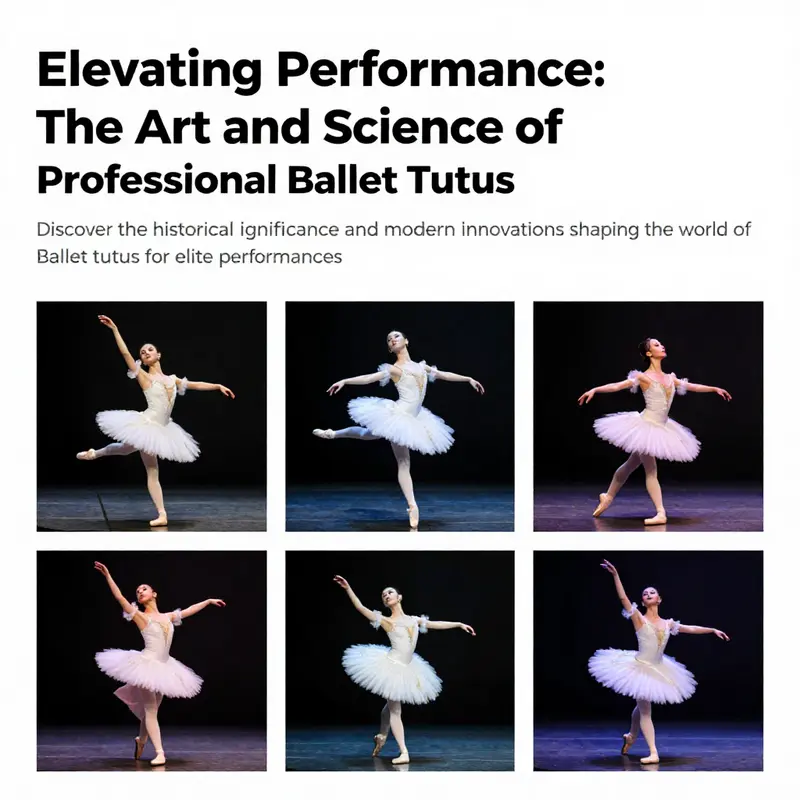
The ballet tutu, a quintessential element of classical dance, represents an intricate blend of artistry, history, and design technology. As crucial as a dancer’s technique, the tutu has evolved through centuries to meet the demands of modern ballet while retaining its classic charm. In professional settings, ballet tutus serve not only to enhance a dancer’s artistry but also to address practical concerns like comfort and durability. This article comprehensively explores the historical context and design features of classical tutus, the groundbreaking materials and performance standards that drive modern innovations, iconic designs from notable performances, and the role of education in integrating these advancements into the training of future dancers. As ballet enthusiasts and business owners look to invest in quality dancewear, understanding these facets can inform better decisions and elevate their practice.
The Modern Tutu: Engineering Stage Geometry for Professional Ballet
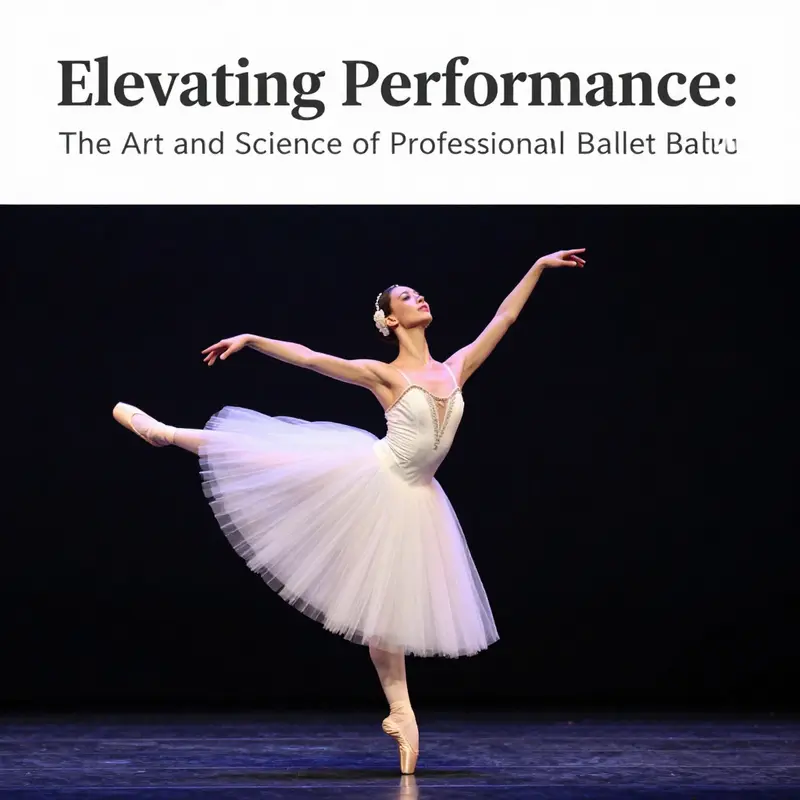
The tutu is at the intersection of aesthetics and engineering, a garment that translates breath into line and stage light into silhouette. It is more than fabric; it is a frame for the dancer’s movement, a sensitive instrument that must balance weight, stiffness, and mobility. The history moves from romantic soft skirts that skim the knee toward the modern tutu, short and reinforced with multiple layers of stiffened tulle. This transformation is not fashion alone but a purposeful engineering decision that sharpens leg lines, supports turnout, and holds its shape under hot stage lights and demanding leaps.
In design terms, the modern tutu balances bodice fit, skirt structure, and durable materials. The bodice must offer support without constraining breath, the skirt must hold its silhouette without obstructing legwork, and the overall garment must survive long seasons of rehearsals, quick changes, and frequent maintenance. Embellishments are purposeful accents, not competing elements; they guide the eye while preserving a clean line.
Choreography responds to the costume as much as the costume responds to it. A stiffened skirt clarifies jetés and turns, while a pliant line at the torso preserves musical phrasing and expression. In professional companies, safety standards and fabric tests translate artistry into reliability, ensuring the dancer can trust the instrument that carries their technique.
Today the tutu remains a living technology: it evolves with new fabrics, sustainable practices, and evolving pedagogy while preserving the clear, legible lines that define classical ballet. The result is a performance garment that feels almost invisible in use but essential in impact, a partner that helps the dancer translate physics into grace.
Silk, Stretch, and Safety: The Modern Ballet Tutu as Performance Technology
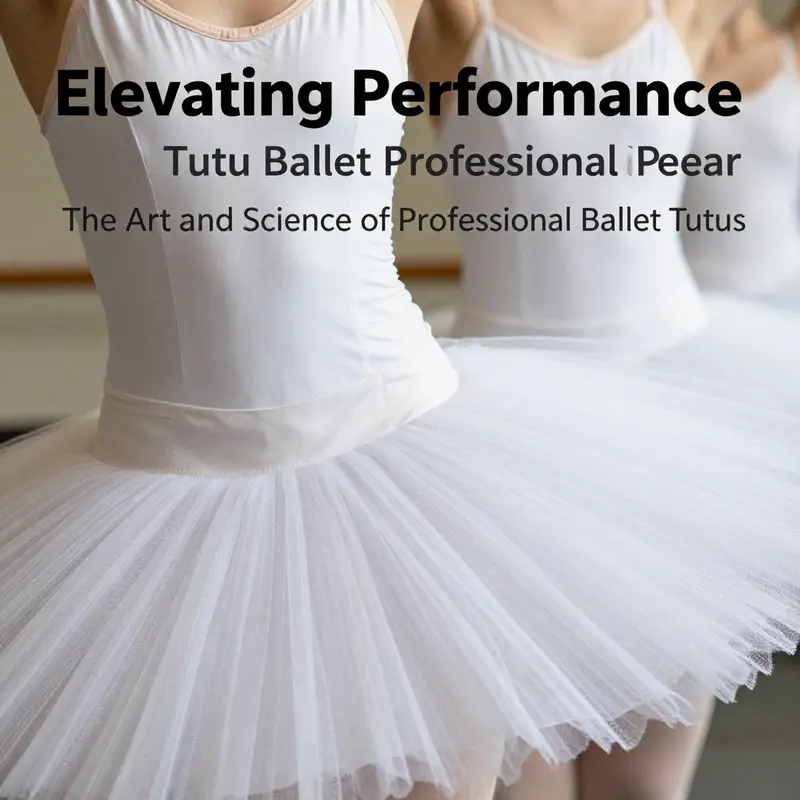
The ballet tutu has long stood as a symbol of grace, but in the best performances it is less a costume and more a carefully engineered instrument that helps a dancer translate breath into motion on a stage. In contemporary productions, the tutu no longer merely adorns the body; it responds to the physics of a leap, the precision of a pirouette, and the narrative demands of a choreographer who wants audience perception to follow the music and the feet with equal clarity. This is why the modern tutu sits at the intersection of aesthetics and engineering, a convergence where material science, safety standards, and performance psychology collaborate to elevate what the audience sees and what the dancer feels. The shift from tradition toward performance-driven innovation is not a rejection of history, but a thoughtful expansion of it—one that preserves the tutu’s iconic silhouette while reimagining its capabilities for the demands of higher-speed ensembles, longer ballets, and increasingly immersive stage environments.
At the heart of this evolution is a move from heavy, rigid structures toward lighter, more adaptable textiles that still retain the tutu’s signature volume. Nylon tulle has emerged as a foundational material in professional circles, prized for its strength, resilience, and reflective quality under stage lighting. Unlike older blends that could sag under repeated flexion, nylon tulle holds its shape with a reliability that dancers notice immediately during long rehearsal hours. The fabric’s microstructure interacts with light to create that ethereal glow that ballet audiences associate with grace, ensuring the skirt reads clearly from the moment the curtain rises to the final bow. But the material story does not stop with tulle alone. A modern tutu often features a breathable, stretch-friendly bodice constructed from fabrics like spandex or elastane. This hybrid approach—lightweight, transparent outer layers paired with a flexible, form-fitting core—permits the torso to sustain a broad range of motion without sacrificing the smooth, uninterrupted line that is essential to classical technique. Dancers move through turns, kicks, and leaps with a sense of unimpeded freedom, the bodice stretching to accommodate expansion in the chest and back while the upper skirt maintains its intended silhouette.
The structural integrity of the tutu rests on design principles that balance mass, stiffness, and fluidity. A belt-like waistline anchors the volume, while reinforced seams and durable multi-layer constructions preserve the skirt’s outward curvature during the most demanding sequences. The scientific logic here is straightforward: a stiff but lightweight exterior translates to a clearer, more legible shape during movement, which in turn clarifies the choreography for the audience. Yet there is a counterbalance to consider—the need for mobility. Too rigid a scaffold can impede turnout, complicate lifts, and constrain the dancer’s expressive range. The modern answer is a carefully tuned stiffness achieved through selective layering and treatment techniques that preserve legibility of line without dulling the dancer’s kinetic expression. This is why contemporary tutus often incorporate chemically treated or specially finished tulle layers that stiffen just enough to resist droop, while never appearing stiff or mechanical to the eye. The effect is a veil of motion—an illusion of weightlessness that lessens the risk of fabric fatigue after long performances and repeated wear.
Beyond raw fabrics, the shape and stability of the tutu owe much to subtle manufacturing innovations. The hierarchy of layers is the invisible backbone of the garment’s performance quality. The outer layers must read radiantly, catching light from multiple angles; the inner layers focus on volume retention and edge definition. When the dancer spins or pirouettes, the layers engage in a quiet, almost mathematical exchange, with the outermost sheets providing the flutter and the inner layers preserving density. The result is a silhouette that holds its form through the final curtain without requiring constant adjustments. This level of consistency matters not only for the look of the performance but for the dancer’s sense of security. Knowing that the skirt will support itself through multiple tempos of a single act can free a performer to focus more intently on breath, alignment, and storytelling.
In the broad arc of safety and quality standards, modern tutus are increasingly designed to meet explicit certifications that reassure studios, performers, and audiences alike. Products bearing safety credentials ensure compliance with vital requirements for materials, construction, and consumer safety, while also signaling environmental stewardship. The emergence of standards such as CPC certification for certain components underscores a commitment to keeping the rigors of professional stage use well within tested boundaries. OEKO-TEX certifications further reassure buyers that textiles have been evaluated for harmful substances, which is especially relevant for performers who spend long hours in close contact with fabrics. These certifications do more than protect the dancer; they communicate to educators and audiences that artistic craft now sits within a framework of verifiable quality and sustainability. The growing emphasis on sustainability reflects a broader shift in the performing arts toward responsible production practices that honor both the environment and the longevity of the equipment used on stage.
In parallel with safety and sustainability, customization has become a hallmark of professional tutu design. The modern tutu is now widely recognized as a customizable artifact, capable of reflecting character, mood, and dramatic arc through adjustable embellishments, color accents, and even embroidery options. The idea is not to overwhelm a dancer with complexity, but to offer scalable options that can be dialed in to match specific productions or character palettes. In this sense, the tutu becomes a partner in storytelling, offering visual cues that reinforce the narrative without overpowering the dancer’s technique. The capacity for on-the-fly alteration—be it in subtle color shifts to suit a different lighting scheme or in rhinestone placements that catch certain angles of the stage—means that productions can maintain cohesive aesthetics across performances and touring schedules. The modern tutu, thus, embodies a synergy of artistry and logistics, enabling stable performance across rehearsals, previews, and premieres.
Market dynamics have further accelerated this evolution by making advanced materials and construction techniques more accessible to studios and schools. Online platforms facilitate direct engagement with suppliers capable of providing high-performance fabrics, reinforced seams, and safe, certifiable components. In practice, this means studios can procure textiles and constructs that meet professional demands without incurring prohibitive costs or long lead times. The broader supply ecosystem supports a culture of experimentation in costume design, where choreographers and designers can test different silhouettes and textile blends in the service of the performance. It is a collaboration across disciplines—between fabric science, stagecraft, and pedagogy—driven by a shared aim: to preserve the tutu’s beauty while extending its technical life and reliability under the strain of professional use.
From an educational vantage point, institutions that integrate modern practice with established method books—such as the rigorous, technique-focused curricula that train dancers in the Vaganova lineage—stand to benefit most. When students train wearing attire that mirrors the performance environment, they develop a sensibility for how fabric interacts with turnout, alignment, and tempo. The tactile feedback from a properly engineered tutu can sharpen a dancer’s sense of how the body should connect with garment. This kind of embodied knowledge helps bridge classroom technique and stage execution. As students progress toward company-level performance, the tutu becomes less a decorative layer and more a responsive instrument that supports the artistry of the movement. The practice becomes integrated: a dancer learns to trust the garment to maintain shape in leaps and to glide through turns without distracting bias from fabric. In this sense, modern tutu innovation sustains a lineage of technique by creating an environment where the body can express the music with fewer external obstacles.
To illustrate how abstract principles translate into concrete aesthetic outcomes, consider the enduring appeal of a classical silhouette reframed for contemporary performance. The iconic bell-shaped, mid-length skirt remains instantly recognizable, but it now achieves its effect through a careful orchestration of materials and layers that respond to the demands of modern choreography. The silhouette reads clearly under both traditional stage lighting and the more dynamic, variable illumination common in contemporary productions. The gaze of the audience remains anchored to the dancer’s lines, but the tutu’s glow, lift, and control contribute to a more lucid perception of motion. In it, the tutu is not a static artifact but a dynamic tool that amplifies breath, alignment, and intention. The result is a refined balance; a unity of form and function in which artistry is preserved while the performer’s body is supported by the garment’s engineered properties.
A practical takeaway for practitioners—choreographers, costume designers, and educators alike—is that modern tutu excellence hinges on a conscientious dialogue between fabric science and performance needs. Decisions about which materials to employ, how to construct the layers, and which certifications to pursue are not merely compliance choices; they are creative constraints that shape what is possible on stage. The best tutus empower dancers to push tempo, height, and precision without compromising safety, while also offering room for interpretive nuance. This is the core promise of modern tutu design: to harmonize endurance with expression, durability with delicacy, and technical rigor with storytelling. As the art form continues to evolve, the tutu will likely adopt even more adaptive fabrics, smarter textile treatments, and perhaps even subtle responsive features that react to lighting, tempo, or the dancer’s own physiological cues. The future may bring a tutu that subtly modulates its stiffness in response to a choreographer’s cue, bringing a new texture to the language of movement while keeping the dancer in complete control.
For readers seeking a concrete example that connects these ideas to a vivid stage reality, a high-quality white tutu designed for Swan Lake demonstrates how timeless silhouette and contemporary technology can coexist. The garment preserves the visual clarity of the classic form while benefitting from modern fabric science and careful construction that keeps its shape consistent through long performances. This integration—of tradition and technical sophistication—exemplifies the path forward for professional tutu design, where every thread, seam, and fiber serves the dancer’s craft and the audience’s perception alike. high-quality white ballet costume tutu for Swan Lake.
In closing, the modern ballet tutu embodies a philosophy of performance that respects history while embracing science. It is a testament to the dancer’s discipline and the designer’s foresight, a garment that has grown with the art form and will continue to adapt as choreography, stagecraft, and audience expectations evolve. The tutu’s transformation from a romantic, bell-shaped garment to a sophisticated piece of performance technology reflects a broader trajectory in ballet: a discipline that advances not by discarding the past but by weaving it into a more resilient, expressive, and sustainable future. As studios and companies pursue excellence, they will look to this synthesis of material science and performance standards as a guiding principle, ensuring that the tutu remains a luminous partner to the dancer’s journey from studio to stage.
External resource: https://www.alibaba.com/product-detail/Professional-Dancerwear-Printed-Ballet-Tutu_1600582947347.html
Silhouettes that Speak: How Iconic Tutu Designs Shape Movement, Narrative, and Precision in Professional Ballet
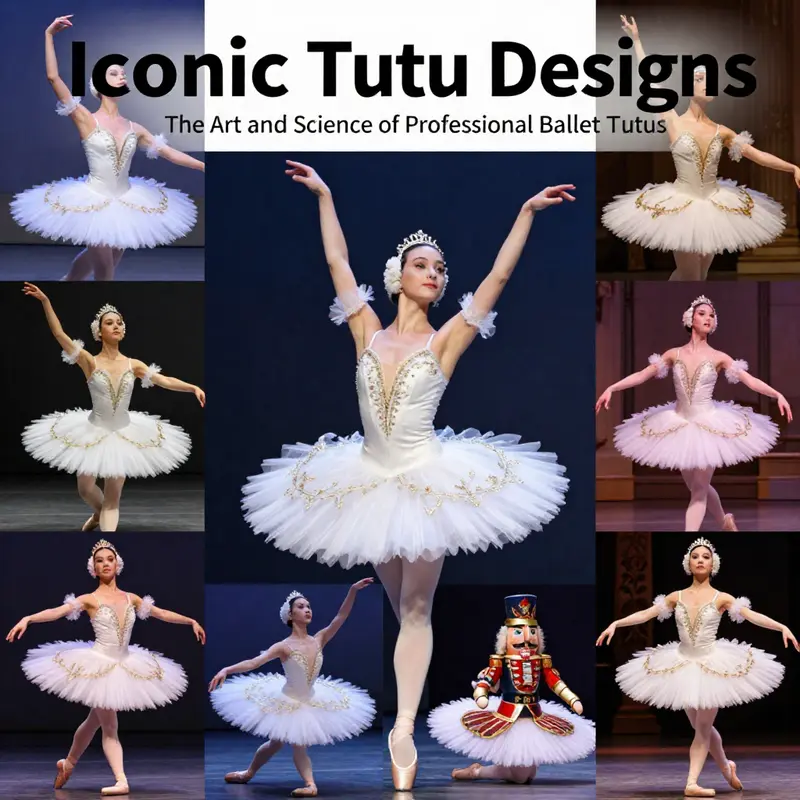
Iconic tutu designs are not merely costumes; they are partners in performance, shaping how a dancer carries line, breath, and intention through space. In professional ballet, the tutu becomes a visual and technical hinge on which the arc of a performance turns. The familiar bell-shaped skirt of the romantic era frames the body in a soft, floating halo, lifting the gaze toward the dancer’s extensions while preserving a generous view of the legs. This silhouette supports lyrical passages and narrative nuance by letting the torso and arms express emotion while the lower limbs articulate technique. Yet its very generosity can mask micro-phonetics of alignment during rapid sequences. Choreographers and costume designers therefore weigh aesthetics against the demands of tempo, precision, and the sheer dynamism of a live stage. In practice, the choice of tutu is a decision that reverberates through rehearsal rooms, lighting rigs, and orchestra cues, shaping not only how a moment looks but how it breathes, lands, and resonates with an audience that reads movement almost as a language of light and shadow. The romance of the 19th century silhouette sits beside the relentless, modern push for performance-ready engineering, and in this tension lies the true story of the professional tutu. It is a story of heritage meeting innovation, of tradition courted by science, of a garment that must hold its own under heat, glare, and the endless cycles of rehearsal that refine a performance into memory. In this sense, the iconic tutu is a wearable stage tool, designed to reveal the dancer’s lines rather than obscure them, to catch the light at exact moments, and to reveal the artist’s discipline through every micro-motion of the leg and spine. In Swan Lake, for instance, the white-act silhouette is asked to appear almost ethereal, a buoyant presence that can glide with grace through long phrases yet still retain a disciplined contour when the tempo tightens and the leaps become a test of endurance. In the Nutcracker, a different tonal demand emerges, where the tutu must suggest regal ceremony and festive sparkle while enabling precise footwork and quick direction changes. Designers respond to these narrative requirements not by abandoning tradition but by elevating it with materials and construction that honor form without sacrificing function. The modern tutu, with its refined balance of structure and lightness, speaks directly to the dancer’s body, allowing the spine to lengthen, the shoulders to settle, and the hips to rotate freely in sequences that require both grace and explosive mechanics. The craft lies in the subtleties: the way multiple layers of tulle can hold a soft, resonant weight, the manner in which the bodice anchors the torso without compressing the breath, and the intelligent use of stiffness that keeps the skirt from collapsing during a grand jeté while still letting the fabric respond to each air current as a living participant in the choreography. This is where the tutu earns its place as a technical instrument as well as a canvas for storytelling. The interplay between fabric, form, and lighting matters as much as the dancer’s feet in contact with the stage. A well-timed contour can clarify line in a split leap, a precise silhouette can reveal the intention behind a slow, expressive phrase, and a controlled lift can maintain symmetry across a complex sequence of turns. In contemporary practice, designers push beyond mere silhouette to address fatigue, safety, and longevity. Advances in fabric science and sewing techniques enable the creation of tutus that are lighter yet more durable, that breathe during long takes and rehearsals, and that resist drooping under the pressure of stage lights and repeated washing. A modern professional tutu can be 30 percent lighter than traditional counterparts, thanks to lighter tulle choices and a bodice built from stretch fabrics that move in sympathy with the dancer’s spine. This shift does not erase history; it honors it by translating a storied silhouette into a contemporary performance tool that meets today’s rigorous schedules and demanding repertoires. The structural competence of a professional tutu matters most in high-stakes moments. For dramatic, iconic moments—where purity of line must be preserved while the dancer navigates rapid pirouettes, elevates into haute-voltige, or closes a grand pas de deux—the skirt must hold its shape with the same reliability you would expect from a technical prop. The aim is a silhouette that remains legible under bright footlights and in close-up film or broadcast, where every angle can magnify a misalignment. To achieve this, designers employ a combination of stiffened tulle layers, reinforced seams, and carefully graded densities of fabric that keep the bottom edge buoyant without introducing bulk at the hips. It is a quiet engineering art, one that the audience perceives as grace even as the unseen hands of seamstresses, designers, and fitters choreograph the dancer’s lines. The result is a costume that not only frames movement but actively supports it, freeing the dancer to inhabit the choreography with confidence rather than compensating for costume limitations. Alongside silhouette fidelity, safety and quality standards shape modern tutu design. Breathable materials, non-toxic dyes, and durable finishes are not afterthoughts but prerequisites, especially on professional stages that operate under strict health and safety regimes. The certification landscape—whether it speaks to fabric safety, seam resilience, or color fastness—assures studios that performances can proceed with predictability. These standards also simplify the process of auditioning, fitting, and accommodating principals who require precise fit and tactile assurance from their attire. When a dancer has access to a consistently reliable costume across a rehearsal block, the learning curve toward high-level execution tightens. The garment becomes a shared language with the studio’s pedagogy, not merely a fashion statement pinned to a mannequin on a showroom floor. This is why many programs that aim to steep dancers in the discipline of professional ballet pair rigorous technique with standardized, internationally certified attire and equipment. It creates a replicable environment in which the expectations of the stage are mirrored back to the student in the studio, enabling a smoother transition to stage rehearsals and eventually to performances on larger national or international stages. The practical benefits of this alignment are evident in the way dancers approach repetition, fatigue management, and the choreography’s cognitive load. When the silhouette remains stable and predictable, the dancer can commit to timing, phrasing, and emotional intention with greater mental focus. The costume becomes a silent partner that reduces extraneous physical decisions, letting the dancer allocate neural resources to the artistry of breath, musicality, and character. This is not to suggest that the tutu confines individuality; to the contrary, it creates a frame within which individuality can bloom. The best designs offer a canvas that dancers can personalize through precise fittings, intricate embellishments, and expressive tailoring while preserving the essential mechanics that keep lines clean and movements readable for the audience. The customization ecosystem surrounding professional tutus has grown to accommodate studios seeking unique color palettes, embroidery motifs, and tailored proportions. The ability to adjust waist height, torso length, and skirt stiffness means that an ensemble can maintain a shared silhouette across different body types while honoring each dancer’s distinctive line. In the context of a company’s repertoire, such customization supports consistency across domestic runs and international tours, where stage rigs, lighting inventories, and audience vantage points vary from theater to theater. The broader educational impact of these developments is equally meaningful. TuTu Ballet, a program that integrates contemporary performance attire with traditional Russian method instruction, demonstrates how disciplined attire can reinforce an approach that emphasizes clean lines, structural clarity, and the embodiment of technique as a form of storytelling. When students train in clothes designed to mimic professional standards, their body memory aligns more quickly with the expectations of the stage. The result is a smoother pipeline from studio to stage, a transition that reduces adaptation time and puts more emphasis on the artistry of movement. And within this ecosystem, the tutu remains central to the narrative. It frames the dancer’s legs in a way that makes the footwork immediately legible, while the layers of fabric catch light and hold motion, creating a vibrating aura that amplifies the tempo and mood of each sequence. The interplay between material, craft, and choreography is most visible in the ability of a well-designed tutu to maintain its silhouette while responding to the dancer’s dynamics. In moments of grandeur and intimacy alike, the audience reads a perfect synchronization: the dancer’s breath, the tempo of the music, and the garment’s response—all harmonized to present a coherent, emotionally resonant performance. To those who study high-profile productions, the tutu thus emerges as a living archive of craft, one that records not only what a dancer can do but how well a studio can prepare, fit, and sustain a performer through a demanding repertoire. For a closer look at a white act silhouette designed for Swan Lake performances, consider this example: White ballet tutu for Swan Lake. External references and current industry insights also illuminate the scale of modern tutu design in professional contexts. A recent listing from a major online marketplace illustrates how the supply chain now supports diversified customization, rapid prototyping, and durable, stage-ready finishes that withstand repeated use and travel. In this light, the tutu becomes both artifact and instrument, preserving a long lineage of technique while actively shaping how future generations experience the language of ballet on stage. External reference: https://www.alibaba.com/product-detail/Edance-AL-T0085-Professional-Ballet-Tutu_1600743295753.html
Education as an Ensemble: Blending Vaganova Heritage with Modern Pedagogy in Tutu Ballet
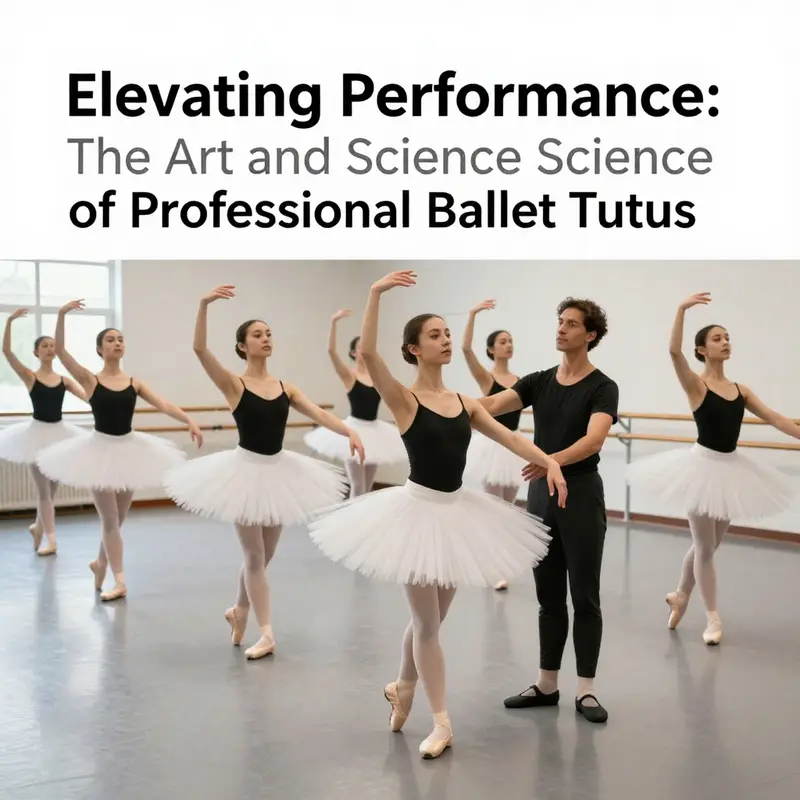
In the lineage of tutu ballet education, TuTu Ballet stands as a living bridge between time-honored technique and the demands of contemporary performance. The program embodies a fidelity to the Russian classical tradition through the Vaganova method, a system built on precise technique, musicality, and expressive artistry. The discipline is not merely about stern repetition; it is about translating complex lines, weight shifts, and line quality into a living language that a dancer can speak with presence on stage. This language is preserved through the careful use of original Russian textbooks and the exclusive instruction of Russian faculty, ensuring that students encounter the standard by which the art has historically measured excellence. Yet the school’s strength does not hinge on the past alone. It thrives because it has found a way to translate tradition into a living, evolving pedagogy that responds intelligently to today’s students and today’s stages. The result is a program that can feel both timeless and urgent, a rare cadence that preserves the past while inviting the future to join the rehearsal hall.
The educational philosophy at TuTu Ballet is less about choosing a side—between old masters and new methods—and more about orchestrating those forces into a coherent, resilient practice. The school consciously documents and curates a bilingual double-teacher standardized classroom model. In this setup, Chinese and Russian instructors collaborate in real time, side by side, translating ideas, clarifying technical points, and modeling the subtleties of movement in a shared, immediate feedback loop. The immediacy of cross-language dialogue accelerates comprehension, particularly for intricate concepts such as port de bras, turnout, and the alignment required for pointe work. Rather than a hierarchy where one voice dominates, the model creates a dialogue in which students witness the dynamic negotiation of technique across cultural lenses. This is not simply a linguistic convenience; it is a deliberate strategy to cultivate precision and interpretive depth, enabling dancers to internalize the vocabulary of movement with greater confidence and fewer mid-rehearsal misreadings.
Beyond language, the program emphasizes individualized course planning that respects the developmental stages of each dancer. Rather than imposing a one-size-fits-all timetable, instructors tailor progression based on age, physical readiness, and emotional maturation. Psychological insights and adaptive teaching strategies inform the curriculum, aligning with modern educational theory without sacrificing the core rigor that defines classical ballet. Students receive goals that are achievable yet ambitious, with clear markers for technique, artistry, and stage presence. This personalized approach does more than accelerate skill acquisition; it cultivates autonomy. Dancers learn to assess their own bodies, to anticipate fatigue, to modulate effort, and to sustain consistency under pressure. The result is a generation of artists who do not merely perform steps; they manage their growth as an ongoing practice, a mindset that serves them well during auditions, company work, and long tours.
Technology enters the studio as a facilitator rather than a replacement for human judgment. Digital video analysis, progress tracking software, and performance feedback systems augment the traditional barre and center-work routines. In a carefully calibrated balance, students watch themselves in motion to observe alignment, balance, and timing. Instructors interpret the data with sensitivity, translating numbers into actionable adjustments that align with the tactile feedback they provide in real time. This hybrid approach preserves the tactile, kinesthetic learning that characterizes classical training while introducing scalable methods for monitoring improvement. For a discipline in which subtlety can be the difference between a flawless pirouette and a stumble, the ability to quantify and reflect on progress without diminishing artistry is a powerful asset. The pedagogy thus becomes a living system that can document growth, maintain consistency across cohorts, and guide future innovations without destabilizing the integrity of the technique.
Yet the most compelling aspect of TuTu Ballet’s approach lies in its expansion of the student’s artistic horizon. The program positions technique as a vehicle for expressive storytelling rather than a mere display of athletic prowess. Instructors emphasize musicality, phrasing, and timing as essential tools for shaping emotion and narrative on stage. This emphasis mirrors the broader trend in professional ballet where choreography often requires a dancer to inhabit character and intention as fully as possible. The school thus channels the classical emphasis on technical accuracy into performances that resonate with contemporary audiences. It is not enough to execute a sequence impeccably; a dancer must articulate purpose through movement and breath, shaping lines and dynamics to convey a story with clarity. The result is a more complete artist, one who can sustain character across a long act and respond to the shifting energy of a live performance.
The education model also acknowledges the global nature of today’s ballet world. By preparing dancers to engage with international stages, competitions, and collaborations, the curriculum extends beyond technique to cultivate cultural literacy and professional adaptability. Students learn to respond to different choreographic voices, to meet varied rehearsal standards, and to navigate language and protocol in diverse settings. The program’s global orientation is complemented by a commitment to ethical practice and cross-cultural respect, essential for sustaining careers in an era of mobility and rapid professional transitions. This global readiness dovetails with the practical realities of touring companies, festival circuits, and international academies where a dancer’s adaptability can determine opportunities as much as their artistry. It also invites students to consider how tutu design and stage presentation intersect with performance, recognizing that the attire, lighting, and spatial demands of a production influence movement choices and stage behavior.
A central thread throughout this educational tapestry is the belief that professional readiness emerges from a continuum that links the classroom to the stage. The school intentionally curates opportunities for students to perform on international platforms, thereby translating classroom achievement into stage credibility. These pathways are not mere showcases; they function as critical testbeds for the holistic skills a modern dancer must possess. Performing publicly teaches risk management, composure, and the capacity to recover quickly from missteps. It reinforces the discipline of daily practice, as students witness the tangible consequences of consistency over time. The same discipline informs their approach to rehearsal, anatomy, and pedagogy. In this vision, the tutu is not a costume but a partner in learning: its weight, balance, and movement cues shape how students connect with their bodies and with the choreography they embody.
The educational ecosystem at TuTu Ballet also places a premium on leadership, mentorship, and community. Senior students function as peer mentors for younger dancers, modeling routines, etiquette, and professional expectations. This peer-to-peer framework reinforces discipline while fostering a collaborative spirit that can sustain a demanding training regimen. It creates a social environment in which students support one another’s growth, share feedback honestly, and cultivate resilience. The mentorship model mirrors the realities of a professional company, where experienced dancers guide apprentices, offer advice on repertoire, and contribute to a culture of accountability. Such social scaffolding helps learners negotiate the emotional rigors of intense study, from performance nerves to injuries, while preserving the joy of discovery that drew them to ballet in the first place.
The curriculum’s breadth also touches on the ethical and practical dimensions of costume, safety, and artistry on the modern stage. Instructors teach dancers to understand how wardrobe, fabrics, and stage conditions influence movement. Even as the school does not rely on a single product solution, it foregrounds safety, ergonomics, and the harmony between costume design and technical execution. The principle extends to the dancers’ awareness of their own bodies, including nutrition, rest, and injury prevention. Students learn to listen to signs of fatigue, to modify sequences when necessary, and to seek professional care preemptively. This pragmatic aspect of training helps ensure longevity in a field known for its physical demands. The result is a generation of dancers who move with reliability, grace, and an informed sense of responsibility for their own bodies and the broader stagecraft in which they perform.
In sum, TuTu Ballet’s educational paradigm is not a fixed formula but a living architecture. It honors the deep well of Russian technique while inviting modern pedagogy to expand the terms of what a dancer can be. It treats education as an ensemble, where multiple voices—linguistic, cultural, psychological, and technological—converge to shape a dancer who is technically precise, emotionally intelligent, and globally aware. The school’s model demonstrates that the most enduring form of excellence emerges when tradition is honored not as static reverence but as a foundation from which innovation can rise. It is a blueprint for the field: a pathway that respects lineage while embracing modern science, data-informed feedback, and cross-cultural collaboration. For students, it offers a clear line from the barre to the proscenium, and for the profession, a reproducible model for cultivating artists who can sustain their craft while navigating the evolving demands of the stage.
As this fusion of old and new continues to unfold, the tutu itself becomes more than a visual symbol of ballet. It becomes a companion in learning, a material partner that negotiates space, weight, and movement in ways that illuminate technique and expression alike. A dancer’s relationship with her tutu reflects a broader relationship with the art form: one of discipline, curiosity, and adaptive creativity. The education offered at TuTu Ballet thus serves as a microcosm of the field at large, where the most compelling professional pathways arise when traditional mastery and contemporary pedagogy are inseparable. In this sense, the chapter on education reads like a choreography itself—one that choreographs time-honored discipline with the energy and clarity of modern science, to produce dancers who move with intention, resilience, and a sense of shared purpose. For those seeking a comprehensive model of professional preparation in tutu ballet, the school’s approach offers both a map and a compass, guiding students toward the stages where artistry and technique flourish in concert.
The education strategy, while deeply rooted in classical rigor, also invites an ongoing dialogue with broader methodological advances. By inviting cross-cultural exchange, transparent assessment, and a culture of mentorship, the program not only preserves a venerable art form but also ensures its continued relevance in a global landscape. Dancers emerge ready not merely to perform but to contribute to a living tradition that honors its origin while continually testing and refining its practice. In this way, TuTu Ballet models a future in which professional training is not a closing of doors but a widening of horizons, where every barre session, every rehearsal, and every public performance becomes a chance to redefine what it means to be a tutu ballet professional. For readers and practitioners alike, the lesson is clear: when education acts as an ensemble, the artistry of ballet can endure, evolve, and inspire across generations.
Internal reference: TuTu Ballet official site offers a concise portrait of how tradition and modern pedagogy converge in their program, illustrating the principles described above. External resource: for a broader perspective on safety and fabric standards in professional costumes, see OEKO-TEX at https://www.oeko-tex.com.
Final thoughts
In the world of professional ballet, the tutu is much more than a garment; it is a vital instrument for expressing artistry and skill. As we have examined, the evolution from historical designs to modern innovations reflects a commitment to both tradition and advancement in the field of dance. Business owners seeking to enhance their offerings or attract aspiring dancers must consider how these elements—historical significance, material advancements, iconic designs, and effective educational techniques—interweave to create a comprehensive picture of ballet tutus today. By embracing these insights, stakeholders can appreciate the artistry behind ballet tutus and support the next generation of performers in their pursuit of excellence on stage.