

Tutu hangers are more than just decorative items; they embody a unique blend of functionality and whimsical charm that appeals to both children and adults. From ballet studios to children’s rooms, these cute door hangers resembling ballet tutus add a playful touch to any space. In this exploration, we’ll dive into the various aspects of tutu hangers, starting with their design and functionality, moving on to market trends and consumer preferences, and uncovering their creative uses that go beyond mere decoration. Finally, we’ll reflect on the impact of tutu hangers on children’s spaces and overall aesthetics. Understanding these elements can help business owners leverage this niche market effectively.
Preserving the Cloud: The Subtle Design Mastery of Tutu Hangers
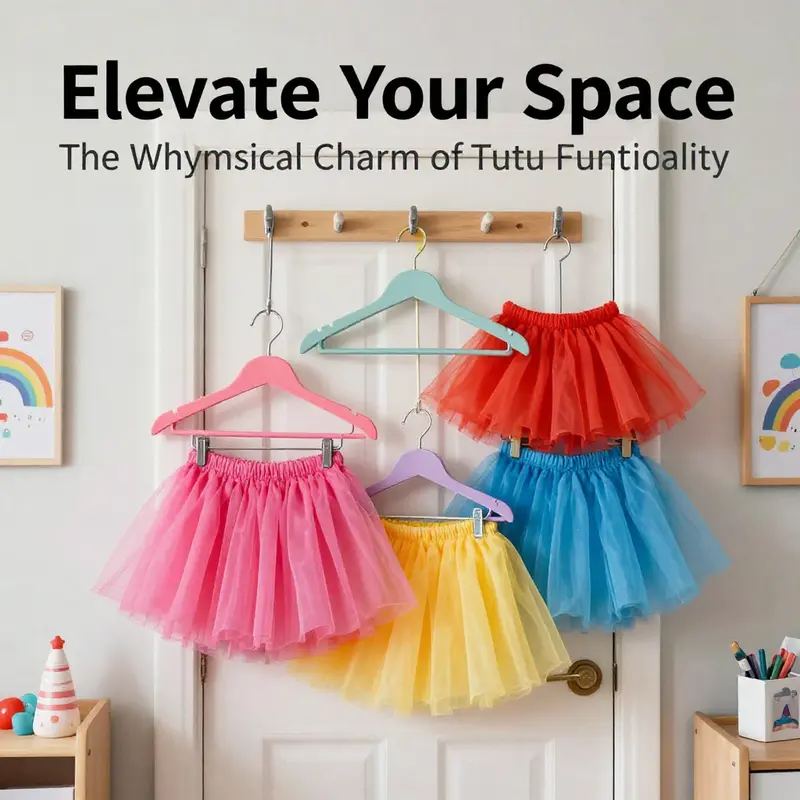
The tutu hanger exists at a curious intersection of utility and whimsy. It is not the centerpiece of a wardrobe, yet it shapes the way a delicate skirt behaves when it leaves the dance floor or the stage. In the quiet space of a bedroom closet or a backstage dressing room, these hangers perform an almost architectural task. They cradle the soft layers of tulle, the whisper of satin, and the lightness of chiffon, guiding each fold into a form that reads as both sculpture and garment. To understand tutu hangers is to notice how design disciplines subtle, almost invisible, alignments: how curves meet fabric, how padding distributes weight, how color and texture of the hanger itself affect the perception of the dress it supports. The result is not merely storage; it is preservation of a silhouette that often relies on a complex stack of layers and the careful balance of volume and drape.
Tutu hangers are purpose-built to maintain the integrity of a voluminous skirt in a way that ordinary hangers cannot. Their defining feature is a padded, rounded form that mimics the natural curve of the torso. This shape distributes pressure evenly across the waist and bust line, a detail that matters when a skirt comprises multiple layers of soft, mesh-like fabric. The padding is typically soft and gentle, wrapped in materials that caress rather than snag the fabric. The goal is not to compress or flatten the tulle but to support it so that each layer remains distinct and buoyant. When a tutu is hung with care, the skirt seems to hold its own gravity—like a little sculpture suspended in air. The hanger becomes an invisible co-creator of that effect.
The materials used for tutu hangers speak a quiet language of care. The outer surfaces are often finished in velvet, microfleece, or plush fabric that minimizes friction. The padding inside can be a forgiving foam or a soft composite that cushions without adding bulk. The result is a hanger that touches the fabric as little as possible while offering substantial support. The design avoids stiffening or rigid components that could ripple through the delicate fabric or produce unwanted creases. Instead, the hanger embraces the garment with a gentle control, allowing the skirt to keep its intended cloud-like expansion. This is especially crucial for tutus crafted from several layers of tulle, where a single misalignment can result in a cascade of creases that become stubborn to remove later with steaming or professional pressing.
A key consideration in the design is how to accommodate the multi-layered structure without intruding on the silhouette. The rounded form must be wide enough to cradle the bodice area, but not so wide that it compacts the upper layers or presses against the delicate waist seam. The curvature must rise to meet the natural arch of the torso while maintaining enough space for a bustle or the light petticoat that often accompanies a tutu. The result is a form that feels almost tailor-made for the garment, a deliberate echo of the dress’s own geometry. In practice, this means a hanger that presents the tutu as it would appear on a hanger in a boutique display—the smoother the silhouette, the more intact the fabric remains after long periods of storage or after travel in a garment bag.
The function of tutu hangers extends beyond mere preservation. They play a role in extending the life of a garment. When a tutu is hung on a regular wire or plastic hanger, the fabric cups and folds may press unevenly. Over time, such pressure points can lead to creasing that resists conventional steaming or professional corrections. A well-designed tutu hanger distributes stress across broader sections of the dress, lowering the risk of permanent creases at the waist or along the layers of tulle. For households and studios that rotate tutus for recitals, costume changes, or photoshoots, this ability to sustain form reduces the frequency of expensive alterations, repairs, or specialized cleaning. The tangible benefit is a longer life for a beloved costume, a garment that embodies memory and performance rather than mere fabric.
From a care perspective, tutu hangers encourage a disciplined approach to storage. They remind wearers to approach delicate garments not as one-offs but as part of a system—where lighting, humidity, and air circulation matter as much as the hanger’s padding. The gentle surface interaction reduces the likelihood of snagging on rough surfaces, jewelry, or rough closet rods. Even the choice of color and finish can influence how a costume hangs. A hanger wrapped in a soft, matte fabric reflects a calm aesthetic that complements the tutu’s own pale shimmer or vibrant hue. In a child’s room, where the space is infused with playfulness, the presence of a dedicated hanger can reinforce routines of care. It communicates that the dress is valued, not just worn, and that its beauty deserves intentional handling.
This attention to detail extends to the way tutu hangers are used in display versus storage. In retail or studio environments, the hanger can be a vehicle for showcasing the garment’s silhouette. The dress drapes freely, with the layers of tulle catching light in a way that emphasizes volume without becoming windblown or disheveled. When the tutu is hung for long-term storage, the same principles apply, but the emphasis shifts toward stability and protection from environmental factors. The hanger becomes a shield against gravity and motion, two forces that can distort the skirt’s carefully engineered fullness. In both cases, the hanger’s design embodies a philosophy: that delicate textiles deserve a form that respects their structure, not a form that imposes its own theory of how the fabric should behave.
Designers and makers have long iterated on the balance between form and function in tutu hangers. The classic approach centers on a rounded, padded silhouette, but contemporary interpretations explore a broader palette of materials and textures. Some models substitute a smoother, satin-like cover to minimize friction with the fabric, while others adopt a micro-textured finish to prevent sliding and shifting. The choice of padding density can affect how the fabric sits; too soft, and the tutu might sag in the center; too firm, and it risks flattening the very volume that is meant to float. The optimal solution often lies in a middle ground—one that gives gentle lift at the waist without creating a hard boundary that would alter the skirt’s shape. In practice, each tutu becomes a collaboration between garment and hanger, an exchange in which the hanger offers structure while the dress offers its own artistry.
The topic naturally expands beyond the closet; it touches on decor and display, where tutu hangers can be used as whimsical accents that evoke a sense of performance and possibility. In children’s rooms or dance studios, a tutu on its dedicated hanger may become a focal point—a small sculpture that hints at dances performed or stories told. The aesthetic value lies not in loudness but in the quiet confidence of a well-supported silhouette. The hanger’s presence, then, is a kind of visual cue: a sign that care and craft deserve a space, even in the most casual corners of a home. This subtle integration of functionality and decor aligns with the broader philosophy of household textiles, where everyday objects bear witness to artistry and memory as much as to practical use.
For readers exploring the broader tapestry of tutu aesthetics and costume construction, consider how related wardrobes and displays borrow from the same principles. A related context is the way costume designers conceive of storage for tutus and accessories. The balance between softness and support mirrors the care taken with other delicate fabrics, and the lesson translates well to home organization more generally. The same soft padding and rounded form that protect a ballet skirt can be found in storage solutions for wedding veils, petticoats, and layered organza gowns. The cross-pollination among these domains enriches our understanding of fabric care, teaching that the right mount, in the right material, with the right geometry, becomes a partner in preserving the garment’s intended drama.
To connect with readers who want a tactile sense of related style and materiality, imagine one of the tutu’s cousins—the decorative display piece that evokes a costume world without being a direct garment. This bridge between function and fantasy helps explain why a dedicated hanger matters. It is not merely a tool for hanging; it is a guardian of volume, a steward of silhouette, and a small, quiet stagehand that allows the tutu’s magic to endure beyond the curtain call. In the end, the best tutu hangers are those that disappear into the background while doing the heavy lifting: supporting the fabric’s lightness, enabling easy care, and preserving the dream of a full, cloud-like skirt. If you want to explore a related facet of tutu aesthetics in the context of costume color and texture, you can see an example of tutu-inspired costume variations here: pink-gradient-color-ballet-costumes-for-sale-golden-trims-t0391.
The final layer of this discussion concerns the daily realities of storage and handling. For households with limited closet space, the tutu hangers offer a compact, user-friendly solution that does not require elaborate wardrobe systems. Their rounded form reduces the risk of snagging on hooks or other garments and can be used effectively with garment bags designed for delicate costumes. When you travel for a recital or a family trip to a competition, the right hanger becomes part of an efficient packing protocol. You can nestle the hanger within a rolling garment bag, ensuring the tutu remains supported and unwrinkled through rough roads or airline racks. The benefit is not merely cosmetic; it is practical resilience that translates into reliable performance on stage, in back rooms, and in photographs. A well-kept tutu—preserved by thoughtful storage—retains its impact, the memory of a moment in which music and movement met fabric and form.
The broader lesson for designers, caretakers, and enthusiasts is simple: care for the hanger as a design object, and it will reciprocate by caring for the garments it supports. The craft of the tutu is a layered affair—one part choreography, one part textile science, and one part interior design. When these elements align in a single piece of hardware, the result is a trustworthy ally that makes the everyday act of hanging feel almost ceremonial. The tutu, in its delicate complexity, demands nothing less. And as with any nuanced garment, the way we store it speaks as loudly as the way we wear it. A cloud-like silhouette that endures is a silhouette afforded not solely by the fabric’s quality but also by the quiet, deliberate architecture of the hanger that holds it.
External resources can deepen this perspective. For readers who want a broader technical lens on the care and standards surrounding delicate tutu garments and related apparel, a comprehensive guide to tube top tutu dress standards, properties, and industrial applications offers context about how care practices intersect with material science and production realities. See here for a detailed exploration: https://www.fashionencyclopedia.com/2026/01/21/comprehensive-guide-to-tube-top-tutu-dress-standards-properties-and-industrial-applications.html
Delicate Threads, Smart Space: Reimagining Tutu Hangers as Style, Protection, and Market Insight

When a child’s room becomes a stage for imagination, the humble hanger often plays a quiet but telling role. Tutu hangers—decorative, ballet-inspired organizers that resemble tiny skirts—capture a moment when function and whimsy converge. They are not merely an accessory for keeping outfits neat; they are a small stage set for daily rituals, a reminder that organization can feel like play. The broader significance of tutu hangers lies in how they reflect evolving consumer desires: the wish for items that do more than hold garments, that communicate personality, protect precious fabrics, and align with broader values about sustainability and technology. In this sense, tutu hangers sit at an intersection where home decor, fashion accessories, and lifestyle trends meet, offering a lens through which to understand how households curate spaces that are both practical and expressive.
In examining the market, it becomes clear that the appeal of tutu hangers rests on more than their playful silhouette. They offer a combination of lightweight practicality and visual charm that resonates with contemporary households. The design language of these hangers speaks to parents who want their children’s spaces to feel alive and inviting, while still maintaining order. The garment they primarily cradle—a delicate, voluminous tutu made from tulle—demands careful handling and specific storage considerations. Tulle’s airy texture is prone to snagging and distortion if pulled over rough edges or exposed to friction. This creates a natural opportunity for product designers to emphasize protective features without sacrificing style. A well-made tutu hanger can incorporate soft, padded shoulders, smooth finishing on all contact points, and non-slip grips that secure garments without compressing their shape. In this way, the product becomes a small kit for garment protection, a guardian of fabric integrity in the very act of hanging and organizing.
The surrounding market signals a shift toward personalization and expressive design in everyday objects, a trend that has grown more pronounced by 2026. Consumers increasingly seek items that feel unique or that allow them to tell a small story about their tastes. The appetite for personalized fashion accessories—hangers that can be customized with initials, charms, or color accents—parallels broader fashion movements toward individuality. When applied to tutu hangers, personalization might translate into a choice of finish, color palette, or decorative trim that complements a child’s room theme or a family’s aesthetic. Such options do not merely decorate; they invite a sense of ownership and care. If a child associates a hanger with their own name or a favorite motif, the act of hanging a tutu becomes a personal ritual rather than a routine chore. That shift—from utilitarian object to personal artifact—enriches the user experience by turning daily organization into a small moment of self-expression. It also broadens the category’s appeal beyond purely functional needs to touch on sentiment and memory, which can foster brand storytelling that feels intimate rather than promotional.
This inclination toward personalization dovetails with a parallel movement: a growing emphasis on sustainability and ethical consideration in product design. Consumers today ask not only how a product looks or how well it functions but also how it is made, with what materials, and under what conditions. In the context of tutu hangers, there is clear potential for materials that align with ecological values—recycled plastics, responsibly sourced wood, or even biodegradable composites—that do not compromise the delicate balance between strength and gentleness required to support a tutu’s weight and shape. A hanger crafted from a high-quality, smooth material that minimizes friction reduces snagging risks. If the material is sourced responsibly and designed for durability, the hanger becomes a long-lasting solution rather than a disposable one. The move toward sustainability invites designers to think beyond a single product and toward a family of items that share a common ethos: form that respects materials, production methods that minimize waste, and end-of-life considerations that encourage recycling or safe biodegradation.
Beyond the aesthetic and ethical dimensions, the functional needs surrounding tutu hangers point to a clear technical niche within the broader storage category. Tutus are light, yet their volume is deceptive; the layers of tulle create a bulky silhouette that can easily lose its shape if mishandled. A specialized tutu hanger can address several practical concerns at once. First, a design that offers gentle, cushioned contact at the shoulders helps preserve the garment’s silhouette and prevents snagging on rough surfaces. Second, a smooth, snag-free bar or hook reduces friction that could pull threads or cause pilling on delicate fabrics. Third, a non-slip mechanism at the hanger’s grip keeps the tutu from slipping off, especially in rooms where doors are opened and closed or where elastic waists or delicate ribbons might shift with movement. Each of these features translates into tangible value for parents and studios alike. In homes with multiple queuing wardrobes—where dance practice, school events, and everyday wear intertwine—the ability to quickly locate a clean, well-preserved tutu becomes part of a smoother, less stressful morning or rehearsal routine.
The functional considerations invite a broader conversation about material choice and lifecycle. While wooden hangers have a reputation for strength, they may be heavier and slower to respond to gentle, deliberate care for delicate fabrics. Plastic hangers can be lighter and more economical, but the surface finish must be exceptionally smooth to avoid snags. A balanced approach could emphasize a blend: a core structure that provides stability, with a coating or padding that minimizes friction on the fabric’s surface. In a future-forward context, designers might explore recycled materials that meet these functional requirements while signaling environmental stewardship. The idea of a smart element also enters the conversation, though in a restrained way. Imagine a tutu hanger that integrates a low-power LED light to illuminate the garment as it hangs in a dim room, or an RFID tag that helps studios track inventory across a shared space. Such features would not redefine the product category but would extend its utility to organized studios, schools, and households that seek a more connected, efficient storage environment.
As the market for tutu hangers evolves, it becomes clear that the category benefits from an ecosystem of related products. The stair-step logic of fashion and home decor means that accessories connected to ballet-inspired wardrobes—costumes, practice wear, and display pieces—can reinforce a cohesive consumer journey. Parents and studios that invest in a high-quality tutu hanger may also appreciate complementary items that share design language and protective logic. This cross-category harmonization helps justify a premium in price and perception, particularly when the product carries an ethical story or a high-end aesthetic that aligns with broader tastes for refined, mindful consumer goods.
From a consumer behavior perspective, awareness of the broader trends in personal expression and sustainability translates into a more discerning buyer profile for tutu hangers. Buyers are less likely to choose the lowest-priced option if it compromises fabric protection or longevity. They gravitate toward products that demonstrate thoughtful construction, soft finishes, and a calm, cohesive look within a child’s room or studio environment. The desire for items that reflect personal values—an emphasis on gentle materials, a preference for non-toxic finishes, and a belief in responsible manufacturing—shapes how tutu hangers are designed, marketed, and presented in retail spaces, whether in physical stores or online. In this changing landscape, storytelling becomes a crucial component of value. A tutu hanger is more than a hanger: it is a narrative device that signals care for a child’s belongings, an appreciation of detail, and an alignment with contemporary ethical standards.
The chapter’s exploration of trends resonates with broader fashion and home-décor trajectories. Personalization, sustainability, protective design, and subtle technology integration map onto the way consumers engage with fashion accessories at large. A tutu hanger embodies these tendencies in a microcosm: it translates the aesthetics of a ballet-inspired wardrobe into a practical, repeatable act of organization that can be customized, responsibly produced, and gently used over time. It is not merely a decorative piece but a participant in daily routines, a small interface between a child’s imagination and the orderly space that houses it. In this light, the tutu hanger becomes a reflection of people’s evolving relationship with their belongings: an instrument for nurturing care, creativity, and a sense of responsibility toward the spaces where families live and learn.
In considering how to navigate this market, one practical takeaway emerges clearly. The most compelling tutu hangers will be those that balance form and function with a transparent, values-driven story. Personalization options should feel authentic and easy to implement, sustainability should be visible in materials and production practices, and protective features should be integral rather than add-ons. The result is a product that does more than hold a garment; it reinforces a room’s atmosphere and a family’s commitments. For designers and retailers, the message is straightforward: provide items that enable parents to curate spaces that feel individual yet cohesive, and do so with materials and processes that respect both people and the planet.
To connect this broader narrative to related product conversations, consider how a family might extend the ballet-inspired aesthetic across a room. A linked collection of items—ranging from costumes to display pieces and storage solutions—can create a unified mood that elevates routine moments into small daily rituals. For those curious about how ballet-inspired fashion intersects with home accessory design, one related example in the broader catalog of dance-themed products offers a glimpse into cross-category appeal and consumer appetite for cohesive storytelling across spaces. See the pink ballet costumes for adults and children to understand better how color, silhouette, and lightweight materials translate into a family’s taste and how that taste informs storage choices like tutu hangers. pink-ballet-costumes-for-adults-child-sleep-beauty-t0617
In sum, tutu hangers sit at a promising crossroads of whimsy and practicality. They embody a shift toward personalized, ethically considered home accessories that protect delicate fabrics while enriching spaces with character. The coming years are likely to bring refinements in materials, finishes, and optional features that respect the garment’s need for gentleness while embracing a broader consumer desire for sustainability and smart living. The result will be a refined, resilient product category that treats storage as an extension of personal style and family values, a small but meaningful way to nurture a child’s love of dance, organization, and beauty in everyday life.
External resource for further reading on evolving fashion and consumer trends in 2026: https://www.vogue.com/article/fashion-trends-2026
From Whimsy to Utility: The Hidden Versatility of Tutu Hangers
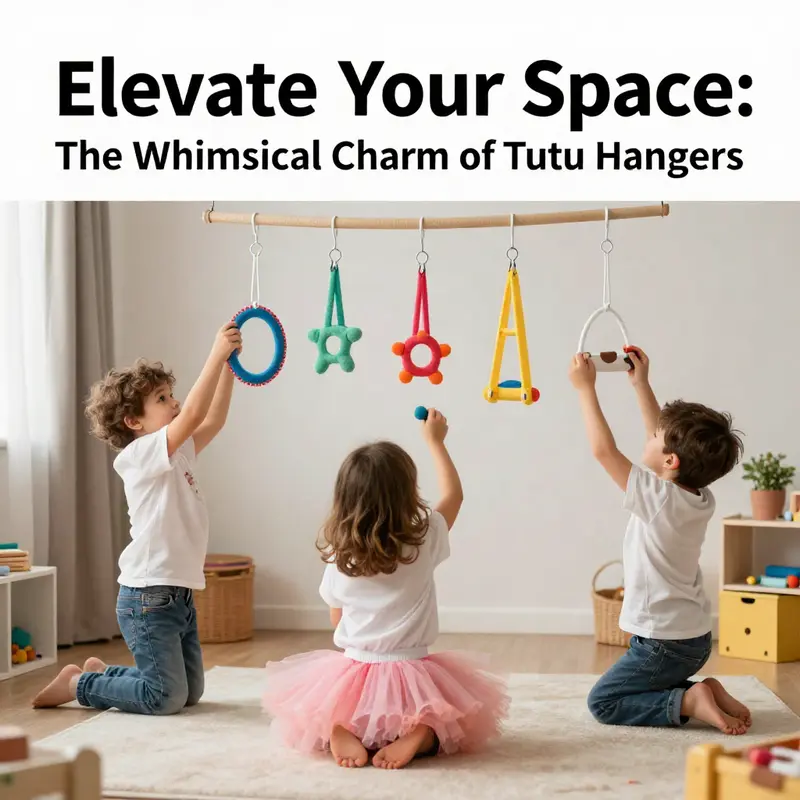
Tutu hangers began as charming, ballet-inspired accents that could turn a plain door or wall into a moment of lift and play. They embody a delicate juxtaposition: a silhouette that moves between the practical and the poetic. In many homes, they invite a gentle reminder of movement and discipline without shouting it. Yet over time, these humble fixtures have proven themselves capable of far more than simply holding a costume or a towel. They have become versatile tools that bridge organization, craft, and celebration, inviting a broader conversation about how a simple form can support everyday life in surprising ways. What starts as whimsy often reveals a philosophy of space: a vertical, flowing structure that can hold, display, and illuminate, all at once. And in that dual role—the practical rack and the playful sculpture—tutu hangers reveal a larger truth about home design: decor can serve a function without losing its sense of wonder, and function can gain a new texture when it is wrapped in a story of movement and grace.
Garment organization is perhaps the most straightforward of the new uses these hangers have adopted. Because they are slim, light, and designed to cradle soft fabrics, tutu hangers lend themselves to lightweight garments that might otherwise slump on a hook or crease in a drawer. Scarves and shawls, with their tendency to twist and tangle, often find a gentle home on a tutu hanger. Small handbags, too, can be displayed along a wall or closet door, their straps looping over ribbons or the hanger’s curve in a way that keeps the bag’s shape intact. The trick is a simple technique that respects the fabric while maximizing storage capacity: the looped ribbon method. By tying two long ribbons—each more than a meter in length—into four loops, users can create a vertical rail of tiny hangers that can hold multiple items without stacking them or pressing them together in a cramped closet. The result is a display that reads like an art installation. Fabrics stay smooth, colors stay vivid, and the items feel accessible rather than buried. It is the kind of system that invites a child to choose an outfit with confidence, while a parent appreciates the care with which the garments are presented. It is a small ritual that makes daily dressing feel ceremonial, an effect that is particularly welcome in rooms designed to nurture creativity and growth.
This same sense of aesthetics translates nicely into DIY home décor projects. The tutu hanger’s vertical, cascading form acts as a scaffolding for light, easy-to-handle decorative elements. Fairy lights can be woven through the fabric or simply hung along the hanger’s edge to create a gentle glow that animates a seasonal display. Garlands can drape along the ribbons, cascading down in subtle folds that catch the light as you move past the door or wall. Seasonal décor—whether it is evergreen accents for winter holidays or paper blossoms for spring—can be suspended from the hanger to create a rotating, ever-evolving focal point in a family room or a child’s bedroom. Because the hanger’s silhouette mirrors the curves and folds found in many holiday accessories, it provides a natural stage for color, texture, and light without overwhelming the space. The result is a decor moment that feels both curated and effortless, a reminder that decoration can be flexible and reversible, never forcing a room to commit to a single look.
Event planning offers another compelling canvas for tutu hangers. In themed parties—think a ballerina-inspired celebration or a Nutcracker–meets–winter fantasy—these hangers can function as overhead installations that transform the environment without requiring a full gallery of props. Hooks and cords can suspend decorative elements above tables, dance floors, or seating areas, creating a sense of vertical space that makes the event feel larger and more immersive. When used in this way, tutus become more than a souvenir of a costume; they are a motif that threads through the venue, echoing movement and grace in a way that guests can sense without touching. The charm lies not only in the surface whimsy but in the way the hangers draw the eye upward, inviting guests to look beyond the table centerpieces to the ceiling’s soft architecture. In practical terms, this approach is lightweight and reusable. It allows planners to craft a moment—whether a birthday, recital viewing, or holiday party—that feels cohesive and intentional, while keeping logistics manageable and cost-effective.
Beyond human uses, the tutu hanger has begun to enter the realm of pet styling in understated, tasteful ways. Pet owners increasingly seek practical yet charming solutions to display tiny outfits or to stage miniature photoshoots. A tutu dress for a small dog or a cat can be showcased on a hanger that holds the garment upright, wrinkle-free, and ready for a quick portrait. In this context, the hanger doubles as a display stand, preventing fabric from pooling or becoming misshapen when not worn. The key here, as with any pet-related display, is safety and comfort. The hanger must rest in a location that avoids tangling, overheating, or pulling on delicate seams, and it should be used only with garments sized to fit the animal. When done with care, the effect is both playful and practical—a space where memory-making outfits can be showcased with the same regard you would give a prized photograph. The use of tutu hangers in this way speaks to a broader cultural shift: the blending of everyday practicality with moments of whimsy that celebrate the beauty of motion, even when it’s contained within the still frame of a room.
Aesthetic and sustainability considerations naturally accompany these emerging uses. Because tutu hangers lean into vertical display and gentle handling, they encourage a kind of minimalism that prioritizes function over excess. Instead of stashing away garments in drawers that can dull their shape, residents can curate a rotating display that changes with the seasons, the activities of the household, or the child’s evolving interests. This encourages mindful wardrobe management: fewer creases, easier access, and a system that makes it simpler to spot what is needed. In practice, this can reduce waste—items are less likely to be forgotten at the back of a closet and more likely to be put into regular rotation. The same principle applies to décor. Rather than purchasing new vignettes for every holiday, homes can lean on a single structure to support a changing cast of elements. The tutu hanger, with its sculptural silhouette, becomes a reusable frame for color, texture, and light, a kind of portable museum piece that can be reinterpreted with each season or celebration.
For those who worry about the line between display and clutter, the key lesson lies in intentional placement and gentle scale. A single tutu hanger can anchor a corner, but the most effective installations balance the rest of the room’s geometry. Think about how the hanger’s curves interact with doorframes, wall art, and shelving. A doorway that remains open and accessible benefits from a hanger that sits at a comfortable height—high enough to avoid head bumps, low enough to invite a child to participate in choosing how the space looks. When used with care, tutu hangers become part of a room’s choreography rather than its distraction. They invite children to participate in the routines of organization, decoration, and seasonal transformation, turning the act of tidying into a small, daily performance.
A few notes on materials and maintenance help ensure these uses stay practical as well as enchanting. The ribbons tied into the looped method should be chosen with durability in mind; where possible, opt for fabrics that resist fraying and are easy to wipe clean. If a hanger supports lights or garlands, ensure that electrical pieces are kept away from moisture and that cords are secured to prevent accidental pulls. When pet outfits or lightweight garments are displayed, consider occasional reshaping and air-drying to maintain their form. The ritual of adjusting items, smoothing fabrics, and reimagining the scene can become a craft in itself—a small ritual of care that mirrors the larger dedication many families bring to nurturing young dancers and curious minds. In this light, tutu hangers are not purely decorative accessories but active participants in the home’s daily life, quietly reinforcing discipline, creativity, and the joy of movement.
For readers who want a tactile example of how one might approach this practice with a focus on balance and display, a practical reference you can explore is a product page that demonstrates the kind of clean, minimalist silhouette these hangers offer. professional-ballet-tutu-paquita-gold-white-t0601. The page’s emphasis on a tall, structured form helps contextualize how the hanger can serve as a vertical anchor in a room, not merely a hook. By opening up space above eye level, you can create an airiness that makes the room feel larger, while still keeping the items easily accessible for daily use or for a spontaneous photo moment.
This broader perspective on tutu hangers also invites us to rethink the relationship between adornment and utility. The habit of decorating spaces with a single, playful motif can be extended beyond seasonal displays into routines that shape the way a family experiences time at home. A doorway becomes a stage, a wall becomes a canvas, and a closet becomes a gallery. The tutu hanger does not demand that one choice be made between form and function; it offers a graceful compromise where both can flourish. In this light, the hanger’s presence is a gentle nudge toward a life that values beauty and practicality in equal measure, a life in which the aesthetics of movement are reflected in the way we organize, celebrate, and remember small, everyday moments.
As this approach to tutu hangers evolves, the line between decorative object and functional tool continues to blur in thoughtful, productive ways. The hanger’s clean lines, its delicate but resilient materials, and its capacity to hold diverse items all point to a broader design philosophy: that everyday objects can be designed to perform multiple roles without losing their character. This is not merely about clever hacks or clever craft; it is a reminder that a well-crafted object can accelerate creativity, support memory keeping, and encourage a playful, participatory household culture. And in a world that often feels cluttered, the tutu hanger offers a model of restraint and possibility—a small artifact that can help a space feel both organized and alive, a place where the art of moving through life is as important as the things that move within it.
External resource for further inspiration: https://www.tiktok.com/@dancemommy/t/7251984673404542218
Dressing the Door, Designing a Space: The Subtle Power of Tutu Hangers in Kids’ Rooms
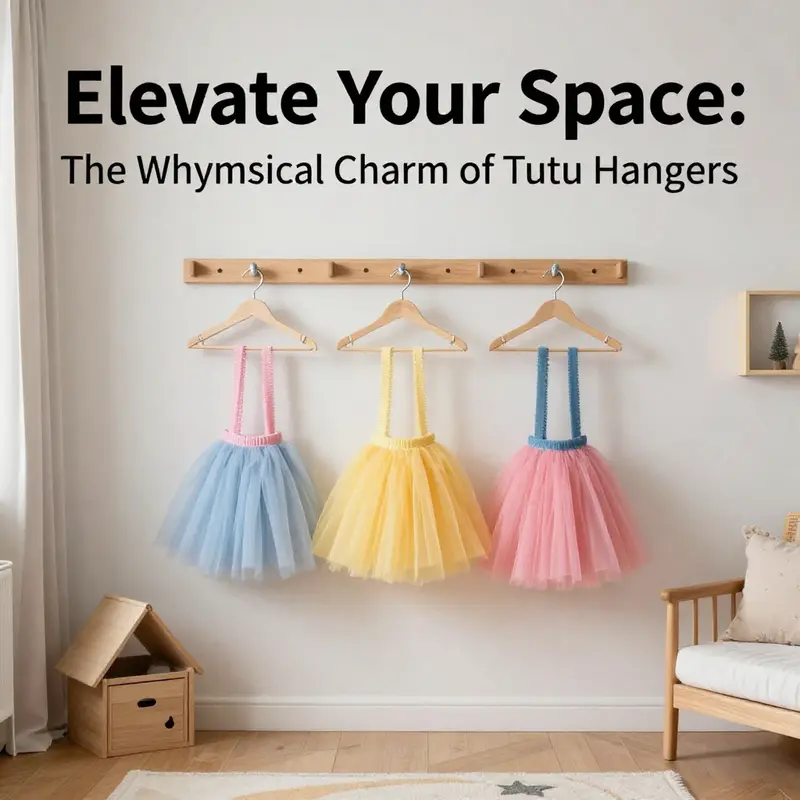
Tutu hangers do more than hold delicate fabrics; they quietly reframe a child’s daily space, blending function with fantasy in a way that changes how a room feels and how a child experiences it. A tutu, when hung on a purpose-built door hanger, becomes both garment and sculpture, a small performance that lives in the margin between utility and story. These lightweight, ballet-inspired hangers invite a child to approach storage as an act of care and creativity rather than a chore. In this sense, tutu hangers become a kind of soft architecture for a room, extending the reach of a child’s imagination into the way daily items are organized and displayed. The result is a space that reads as intentional rather than cluttered, where every folded tutu is an artifact with a narrative, even when the family is simply tidying up after a busy afternoon of play.
At the heart of tutu hangers is a practical principle: fabrics like tulle are notoriously delicate and prone to creasing when stored haphazardly. A properly chosen hanger helps preserve the garment’s full, voluminous shape, preventing the warp and crush that can dull the garment’s sparkle. When a tutu hangs away from the confines of a drawer or a crowded closet, it breathes. It keeps its silhouette intact and resists the fatigue that can come from being pressed into a cramped space. This care translates into longer garment life, fewer replacements, and less frustration for the child who wants to reach for the same favorite piece week after week. Such preservation matters not only for the fabric but for the child’s sense of competence; neat, well-maintained costumes reinforce a relationship of respect between the wearer and the thing worn, a small but meaningful step in developing responsible habits.
Beyond the protective function, tutu hangers contribute to the room’s atmosphere in a way that feels light, playful, and just a touch theatrical. When a door or a wall becomes a gallery of soft pinks, whites, pastels, or metallic accents, a space stops feeling purely practical and starts to feel adventurous. Decorative or themed hangers can harmonize with other design elements—wall decals that echo a dance motif, ribbons tied into gentle bows, or even a soft padding that mirrors the texture of the tutu itself. The result is not merely storage; it is a design gesture that frames the child’s belongings as part of a larger story about play, performance, and personal identity. In this sense, a tutu hanger can serve as a quiet anchor for a ballet-inspired aesthetic, a subtle cue that the space values performance and self-expression as everyday experiences rather than extraordinary occasions.
This is especially true in small or shared bedrooms, where space is a premium and every square inch must do double duty. When tutus and other costume pieces are hung neatly, they become visible design elements instead of hidden items that accumulate in drawers or bins. The act of hanging—choosing a spot, adjusting the hanger, aligning it with other garments—turns storage into a daily ritual. It teaches organization as a creative practice rather than a punitive duty. A child who watches orderly displays come together may internalize a sense of pride in the room itself. The room becomes a reflection of that child’s personality and preferences, rather than a generic box that merely contains toys, clothes, and clutter. In this way, tutu hangers help cultivate an environment where tidiness feels like part of an ongoing, joyful project rather than a sporadic effort to appease parents or stress the daily routine.
Another layer unfolds when the hangers become a canvas for personalization. DIY and customizable tutu hangers have gained traction on social media and in households where craft time is a regular rhythm. The appeal lies in turning a functional object into a personal statement. A child can choose fabrics, ribbons, or painted accents that echo a favorite color or character, transforming storage into a small craft project that culminates in a reusable display. Such customization nurtures autonomy and fosters a sense of ownership over one’s space. It also invites collaborative routines—parents and children negotiating color schemes, deciding where to place each piece, and revisiting arrangements as tastes and wardrobes evolve. The result is a space that feels alive and dynamic, never static or prescriptive. In this light, the tutu hanger is less a fixture and more a catalyst for ongoing dialogue about space, imagination, and belonging.
Of course, the trend toward decorative storage intersects with broader conversations about how children develop spatial literacy. When a child scans a room and reads its storage as a map—where to find a favorite costume, how to replace it after use, where to hang it again—these experiences teach practical problem-solving. They lay groundwork for organizing not only costumes but other belongings across life stages. The discipline of returning a tutu to its hanger, of keeping the display neat, builds a habit of mindful care. This habit, though small in scale, may flourish into a lifelong appreciation for orderly environments. It is not merely about appearance; it is about cultivating a sense of stewardship for one’s things and space. The tutu hanger becomes a small but meaningful instrument in that education, a quiet mentor that makes structure feel approachable and intimate rather than rigid or punitive.
Such practical and aesthetic benefits are complemented by a social ethic embedded in a shared space. In many families, the room is not the child’s alone but a canvas for shared routines and values. A well-organized display can reduce the friction of morning routines, after-school transitions, or bedtime wind-downs. When costumes are visible and accessible, children can participate in the process of dressing for the day with greater ease and autonomy. They can locate the pieces they want, decide how to pair items, and anticipate the choreography of getting ready for a rehearsal or a party. In this light, tutu hangers contribute to a culture of care and cooperation. They invite children to contribute to the room’s upkeep, to participate in a shared ritual of tidying, and to observe how beautiful order can coexist with whimsy. That balance—order with imagination—becomes part of the room’s enduring appeal.
The social and emotional dimensions intersect with a broader authority that parents and caregivers exercise in shaping spaces. The choice of a particular hanger style—whether soft-edged, padded, or sculptural—speaks to values about safety, durability, and comfort. A hanger designed with gentle curves and soft materials reduces snagging hazards and makes the act of hanging less intimidating for small hands. It also communicates care for the child’s costumes, the fabrics that carry memories of performances, practices, and celebrations. In a sense, the hanger is a steward, guarding the costume’s integrity while inviting the child to participate in a daily ritual of upkeep. This combination of safety, durability, and aesthetic charm matters because it reinforces consistent routines that children can rely on. When a space feels predictable yet playful, children experience a sense of security that supports creative exploration, which in turn nourishes confidence and curiosity.
To fully appreciate the practical artistry of tutu hangers, it helps to consider the varieties that families might encounter. Some hangers offer a padded cradle that cushions delicate edges and prevents stretching, while others emphasize a slim, minimalist silhouette that makes the tutu look like a sculpture on display. A few are designed to accommodate multiple pieces, turning a single hook into a mini-gallery wall for a rotating collection of costumes. There are even options that incorporate color coding or labeling, enabling children to learn organization beyond the act of hanging itself. The key is to align the hanger design with the room’s overall palette and the child’s wardrobe. A cohesive system makes the room feel harmonious, and when the wardrobe feels supportive rather than chaotic, a child’s sense of control and competence expands naturally.
In weaving together function and fantasy, tutu hangers also offer a conduit for family storytelling. A child who loves a particular character or story may choose a hanger that echoes that tale, and the room can reflect that narrative through subtle cues—soft textures, color accents, or a few tasteful props that echo the theme. The display ceases to be merely practical storage and becomes a tapestry of the child’s interests and aspirations. This narrative quality matters because it reinforces a child’s sense of identity and belonging within the home. When a space feels reflective of who a child is, it invites play, practice, and everyday rituals that help the child grow more confident in expressing themselves. The tutu hanger thus acts as a small but essential thread in the fabric of a healthy, imaginative home.
For readers seeking concrete paths to bring these ideas into their homes, a curated option that blends ready-made design with the personal touch of customization can be a strong starting point. A tutu-themed hanger can be selected to align with a room’s palette and a child’s wardrobe, offering a guided approach to storage that still leaves room for personality. The chooser can begin with a simple, functional hanger that protects fabric and gradually layer in decorative elements—soft padding, ribbons, or color accents—that echo the room’s theme. This phased approach supports gradual growth in both design confidence and organizational habits, ensuring that the solution remains scalable as tastes and needs evolve. To explore a tangible example that illustrates how a tutu hanger can look and function within a classical ballet-inspired setting, consider this example from a catalog that centers on a classical ballet tutu for a beloved story. The product exemplifies how a single decorative piece can tie together costume care and room aesthetics, providing a model for parents who want to blend practicality with storytelling in a single, cohesive display. See the linked item for a sense of how materials, scale, and finish come together in a ready-made option: classical-ballet-tutu-little-red-riding-hood-t0399.
As families continue to explore how to optimize spaces for children, the debate about storage often returns to the balance between utility and delight. Tutu hangers exemplify a thoughtful middle ground: they perform the essential task of protecting fabric while elevating the room’s atmosphere with a touch of whimsy. They acknowledge that organizing is not just a chore but an opportunity to reinforce values like care, ownership, and creativity. The child learns that belongings deserve thoughtful handling, that rooms can tell stories, and that routine can be a form of joyful self-expression. In that light, tutu hangers are not merely accessories for a child’s wardrobe; they are small instruments in the education of everyday life, teaching patience, pride, and the pleasure of a space that is both beautiful and orderly. They remind us that the ordinary act of hanging a skirt can become a ritual that strengthens family bonds, nurtures a child’s growing sense of self, and crafts a room that feels less like a nursery and more like a stage where each day rehearses a little ballet of daily life.
External resource and practical note: for an example of how DIY and social-media-inspired customization can elevate tutu hangers, many families follow tutorials that guide the transformation of simple hangers into personalized display pieces. These approaches marry craft with routine, allowing children to participate in design decisions while keeping the garment’s form secure and accessible. For readers who want to see a contemporary, hands-on approach to this idea, a popular TikTok guide demonstrates how to store and organize tutus with DIY tutu hangers, illustrating how a practical solution can become a creative project that reflects a child’s personality. External resource: https://www.tiktok.com/@danceorganizer/video/734567890123456789.
Final thoughts
Tutu hangers offer business owners a unique opportunity to tap into the intersection of functionality and whimsical design. With their growing popularity in children’s decor, understanding the nuances of this market can lead to fruitful endeavors. From enhancing the aesthetic appeal of children’s spaces to providing practical solutions, tutu hangers resonate with both parents and children alike. Embracing this charming trend can elevate product offerings, bringing joy and creativity to homes and play areas everywhere.