
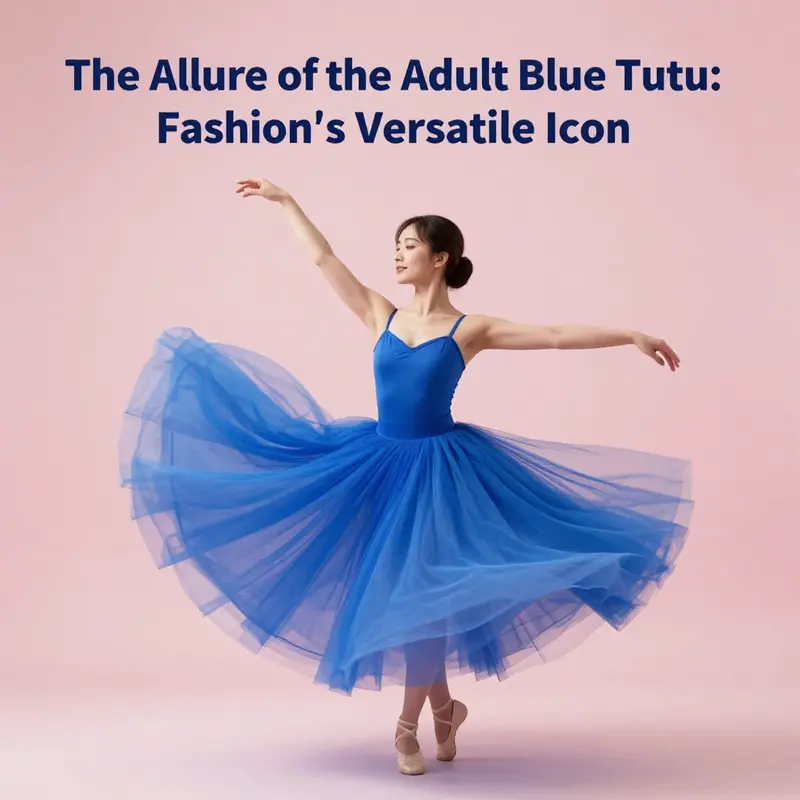
The adult blue tutu is not just a garment; it represents a fusion of artistry, performance, and cultural expression. Known for its vibrant color and voluminous shape, the blue tutu appeals to a wide range of audiences, from dancers to fashion enthusiasts. This article delves into the intricate design elements that define the adult blue tutu, its pivotal role in the domain of fashion and costumes, and its rich cultural significance across various communities. Each chapter will highlight crucial aspects that collectively emphasize why integrating the adult blue tutu into your offerings could elevate brand appeal and customer engagement.
The Poise and Puff: Designing the Adult Blue Tutu for Performance and Presence
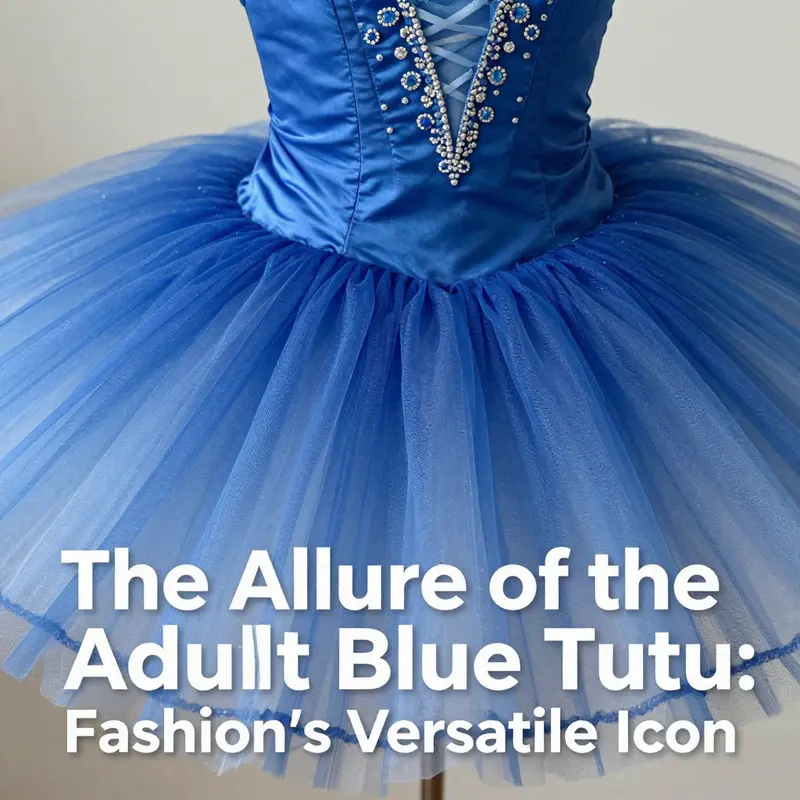
In designing an adult blue tutu, the aim goes beyond color; it seeks a living architecture that supports performance while inviting expressive motion. The adult tutu is a paradox of restraint and amplification: a garment that appears to float yet remains firmly tethered to the body, offering both a stage presence and practical ease. The essence of its design rests in a careful balance between silhouette, fabric behavior, and the dancer’s ability to inhabit the garment with conviction. When a blue tutu is cut and assembled with intention, it becomes a partner in choreography rather than a mere costume. The opening gesture of any tutu conversation is the skirt itself, the portion that first meets the eye and the first constraint the wearer perceives. A multi layered tulle skirt stands at the heart of traditional tutu design, and in an adult version the layers are calibrated not only for visual impact but for siting the performer’s center of gravity, airflow, and leg visibility. Typically three to six layers of soft, lightweight tulle work together to create the signature fullness. Each layer is thin enough to remain airy, but together they build a volume that reads as a luminous disk around the hips. The poof, so prized in classical aesthetics, emerges from the precise filtering of tension along the waistline and the careful distribution of fabric weight across the circumference of the garment. The layering is not arbitrary. It is a choreography of fabric: the lower layers anchor the weight and keep the skirt from fluttering out of control, while the upper layers catch light and create the halo effect that makes a blue tutu look as if it has momentum even at a standstill. In practice, the construction requires a skilled hand to avoid bulk near the waist that can restrict turnout or force the torso into an awkward stance. The designer’s aim is a comfortable, secure fit that breathes with the body, enabling the dancer to articulate lines with the spine and hips while maintaining that generous vertical edge that defines the tutu silhouette. Movement is the true test, and the layered skirt must respond with a soft, even resistance that enhances lines rather than obscuring them. Even the simplest turn should reveal a uniform halo of blue that shifts with rhythm and light, never a clump that hides the leg behind a wall of fabric. The color itself—the second pillar of the design—requires a subtler approach than merely selecting a shade. Blue, in its many guises, communicates mood as surely as form. A bright electric blue can electrify a stage, making energy flash across the surface of the skirt and flare like lightning in a summer storm. A deeper navy can ground a performance, offering a sense of gravity and mystery that suits dramatic interpretation or narrative ballet. A sky blue, pastel, or gradient transition offers a different emotional spectrum, suggesting airiness, innocence, or whimsy. The choice of hue interacts with the lighting plan and the dancer’s skin tone, so designers often test swatches under stage lights and in daylight to observe how color shifts across angles. Some ensembles employ a subtle shimmer or a gentle gradient, a deliberate treatment that invites the eye to travel across the surface as the dancer moves. The color decisions are never trivial; they are part of the choreography as much as the steps themselves. The waistline, the third major element, grounds the silhouette in comfort and security. An adjustable waistband is essential for an adult tutu, where the garment must accommodate a range of torso shapes and movement intensities. Most waists feature either a zipper or an elasticized band, sometimes with a built in lining to minimize skin contact from rough edges and to keep the fabric smooth against the torso. A well designed waistband distributes tension evenly around the midsection, reducing the risk of pinching or slipping during spins, leaps, or quick direction changes. Some adult tutus incorporate a quiet inner petticoat or lining for added structure and modesty, a feature that helps the wearer feel wrapped in a protective shell while still enjoying the freedom of movement. The continuity of fabric and the absence of rough seams at the waist contribute to an uninterrupted transfer of energy from the dancer through the skirt and back into the floor. When the waist is constructed with a soft seam and a clean finish, it becomes almost invisible in performance, yet its influence on posture and timing can be decisive. The fourth design thread concerns the fabric properties themselves. Modern tutu makers favor materials that offer both resilience and flexibility. Stretchy tulle or soft polyester blends are commonly chosen because they resist wrinkling and sagging, yet permit the wearer to articulate the leg with vigor. The right blend can endure repeated turning and plié without losing the crispness of the skirt’s edge. This is crucial for long rehearsals and demanding performances where the dancer’s energy output is high. The fabric must be breathable enough to prevent overheating while maintaining a degree of stiffness that helps hold the disk-like shape. Maintenance considerations also shape material choices. Many designers prefer machine washable fabrics or blends that tolerate gentle washes and careful drying, a practical detail for costumes that travel between studios and stages. The tactile experience matters as well; the surface texture of the tulle plays into how light interacts with the garment. A soft, fine netting tends to diffuse light evenly, producing a glow rather than a glare as the dancer moves through a wash of color. A stiffer satin faced or nylon edged layer can sharpen the skirt’s silhouette, especially in high angle or overhead lighting, yielding a more dramatic cross section of blue against the body’s contours. The rhythm of the design continues with attention to detailing that complements the skirt without competing with it. Additional styling elements abound in the world of adult blue tutus, ranging from headbands with decorative accents to detachable tails, coordinated bodysuits, or matching accessories that unify the look. Yet the guiding principle remains that the core silhouette—the puff of the tutu—should not be overwhelmed by extraneous ornamentation. A carefully chosen accessory can heighten the impression of a completed costume, but the skirt’s volume and color must stand as the primary storytelling device. Within this framework, the interplay between surface ornamentation and garment architecture is a delicate negotiation. For example, a headband or a small set of decorative elements can create a showcase moment without disturbing the line of the tutu. The aim is to enrich the character being portrayed rather than to distract from the dancer’s motion. The final layer of consideration concerns how the tutu sits on the body and how it behaves during movement. The alignment of the skirt with the hip line is critical; if the disk appears to drift up or down, the perception of the dancer’s center of gravity shifts, and the pose can feel unstable. A well tuned tutu will move with the performer rather than against them, responding to shifts in weight and changes in angle with steady buoyancy. The garment should be so integrated that the dancer can rise onto the ball of the foot, open the chest, and pivot with confidence. What emerges in practice is a narrative of texture meeting tempo. The layers catch, release, and settle with each beat of music, the color deepening in the shadows and brightening in the bursts of light. The result is a living sculpture that communicates mood through motion. Designers who approach the craft with this mindset often begin from the bottom up—focusing on the waistband, then the pile of tulle that forms the disk, then the choice of color and optional shading—before testing on a live dancer. The testing phase is essential: a layer by layer evaluation reveals how much lift each ply contributes to the overall silhouette and whether the fabric’s weight distribution aligns with the dancer’s technique. The process is iterative and highly tactile, requiring a balance of artistry and engineering. A three layer design might present a robust and clear silhouette that does not overwhelm the leg line, while a six layer construct can achieve a more ethereal, cloudlike appearance. The decision hinges on the context of use: a recital piece with grand arc lines may justify greater volume, while a contemporary work that emphasizes precise, fast footwork may benefit from slightly lighter layers that keep the body at the center of gravity and the feet unhindered. Color theory also plays a role beyond personal taste. The blue family offers a spectrum of emotional cues that suit different genres and stages. For a formal classical piece, a deeper blue might be paired with stark, luminous lighting to create dramatic shadows on the skirt’s surface, emphasizing the sculptural form of the dancer’s movements. For a lighter modern or theatrical piece, a brighter blue or a gradient that shifts toward turquoise can evoke wind, water, or the idea of open sky. The wearer brings another layer of interpretation, as the dancer’s skin tone, hair color, and makeup can influence how the blue registers on stage. In this sense the tutu is not only a garment but a communicative instrument. The narrative woven by the color and the silhouette becomes a language of its own, whispering about strength, grace, and the character the performer embodies. It is here that the idea of a versatile adult blue tutu reveals itself as less about a fixed template and more about a toolkit. A thoughtfully designed tutu accommodates a range of body types, movement styles, and performance contexts. It remains adaptable through adjustable waists, careful fabric choice, and a disciplined approach to layering. This versatility is what makes the tutu a reliable companion for a performer who needs both tradition and modern usability. To support practitioners in exploring these possibilities, it helps to consider a few practical pathways. First, start with the base: a reliable, comfortable waistband and a modest lining that protects skin and enhances fit. Then, choose the layering strategy that corresponds to the planned performance. For a high-energy piece with multiple turns, a slightly lighter upper layer can reduce overheating and increase the ease of movement. For a staged piece focusing on form and line, slightly heavier upper layers can reinforce the silhouette and improve visibility of the leg line from a distance. The color plan then refines the effect: a single shade for a clean, cohesive look, or a gentle gradient to create depth as the dancer moves from stage left to stage right. The details of care follow, ensuring that the garment remains pristine across rehearsals and performances. The layered structure benefits from careful washing and drying practices, avoiding excessive friction that could cause pilling or distortion of the tutu’s disk. With mindful maintenance, the tutu keeps its shape, color, and buoyant energy across many uses, maintaining a sense of freshness that audiences associate with a confident performance. This is where the theory of design meets the reality of stage life. The wearer and the maker share a dialogue across the life cycle of the garment—from drafting and cutting to fitting and finally to performance. It is a dialog that respects tradition while embracing contemporary needs for comfort, convenience, and expressive potential. For readers who wish to explore the practical catalog of tutu options and see how different design choices translate into real garments, a helpful place to start is the basic tutu category, which presents foundational silhouettes and fabric options that inform more elaborate adult designs. basic tutu catalog. By examining these building blocks, designers and hobbyists can trace how a simple disk of tulle grows into an adaptable costume piece that can suit many characters, moods, and genres. The journey from thread to theater is a study in proportion and performance, where every decision about the skirt, the color, and the waistband echoes in the dancer’s body and on the audience’s eye. The final dimension of this exploration is the critical question of how to present an adult blue tutu as a living garment rather than a fixed object. The answer lies in the attention paid to movement, lighting, and the relationship between fabric and form. A well designed tutu makes the body look more capable, more expressive, and more present in the room. It becomes part of the choreography, rather than a spectator to it. As the dancer lifts, twirls, and lands, the skirt reveals the truth of its design: fullness without bulk, color with purpose, and a waistline that locks the garment in place while allowing the legs to speak through the fabric. In this sense the design elements come together to form a cohesive whole that honors the tradition of tutu craftsmanship while addressing the realities of modern stagecraft. The result is not merely a visual spectacle but a practical instrument for performance. It invites movement, supports technique, and frames the dancer’s lines in a way that enhances, rather than competes with, the music and the storyline. This integrated view of design emphasizes that the adult blue tutu is best understood not as a single feature but as a system where each element informs and reinforces the others. The layered skirt, color strategy, waistband, fabric properties, and optional styling details work in concert to deliver a garment that performs with its wearer. The design becomes a language of its own, speaking through volume, light, and color to convey mood and character. In the end, what makes the adult blue tutu compelling is its ability to adapt without losing its essence. It can be a formal instrument in a classical tableau or a playful prop in a contemporary vignette. It can hold a pose with quiet dignity or explode into motion with electrifying energy. The craft lies in anticipating how those possibilities unfold on stage, and in shaping a garment that can keep pace with them. For designers and performers alike, the tutu is a reminder that clothing is not merely fabric and stitch but a collaborator in art. A successful adult blue tutu is one that remains faithful to its core anatomy while remaining responsive to the moment of performance, ready to lift the wearer into a space where color and movement become one. To detailed research results and practical demonstrations of three layer designs and color depth seen in market examples, readers may refer to external samples that illustrate the tangible outcomes of such choices. external blue tutu sample for reference: https://www.aliexpress.com/item/1005005827394516.html
Blue Tutu Renaissance: Adult Playful Couture in Modern Wardrobes
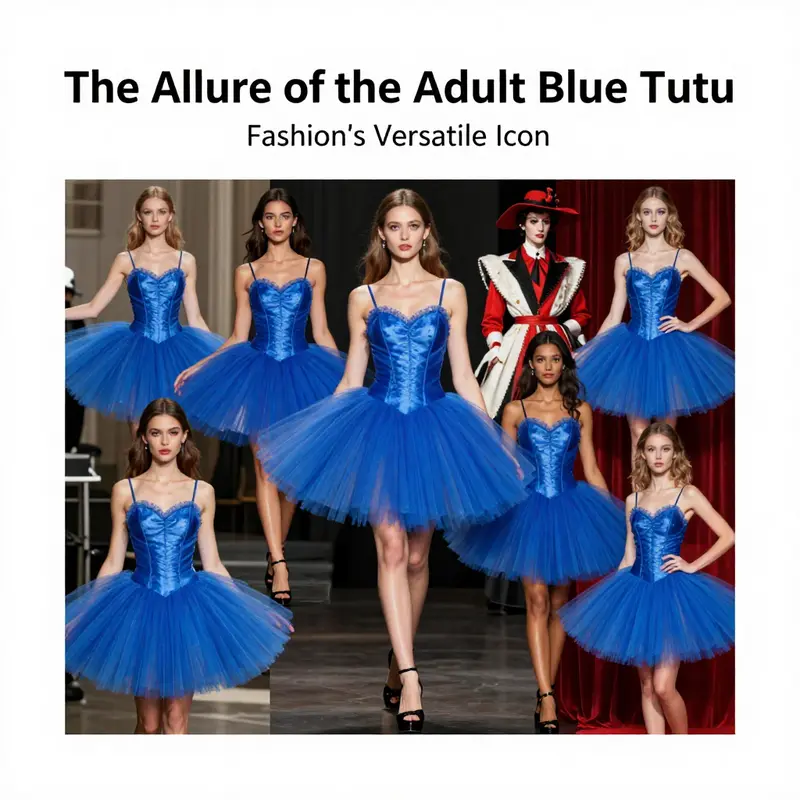
In contemporary fashion, the adult blue tutu has evolved from a costume staple to a versatile wardrobe element. Its silhouette remains instantly recognizable, with a voluminous tulle skirt that captures light and movement. The royal blue hue adds depth and sophistication, inviting wearers to blend whimsy with polish. Paired with a crisp shirt, tailored blazer, or sleek footwear, the tutu can read as casual-chic, festive, or formally elevated. Designers emphasize fit, proportion, and texture, suggesting stackable layers, metallic accents, or understated jewelry to tailor the look to occasion. Beyond aesthetics, the tutu becomes a storytelling device, signaling openness to playful self-expression while maintaining confidence and poise in public settings. The market reflects this versatility, offering variants that span length, volume, and finish, enabling a spectrum of moods from city-street style to stage-ready elegance. This chapter invites readers to experiment with color, balance, and silhouette to integrate the blue tutu into adult wardrobes without sacrificing personal identity.
Blue Beyond the Stage: The Adult Tutu as a Lens on Identity, Liberation, and Modern Womanhood
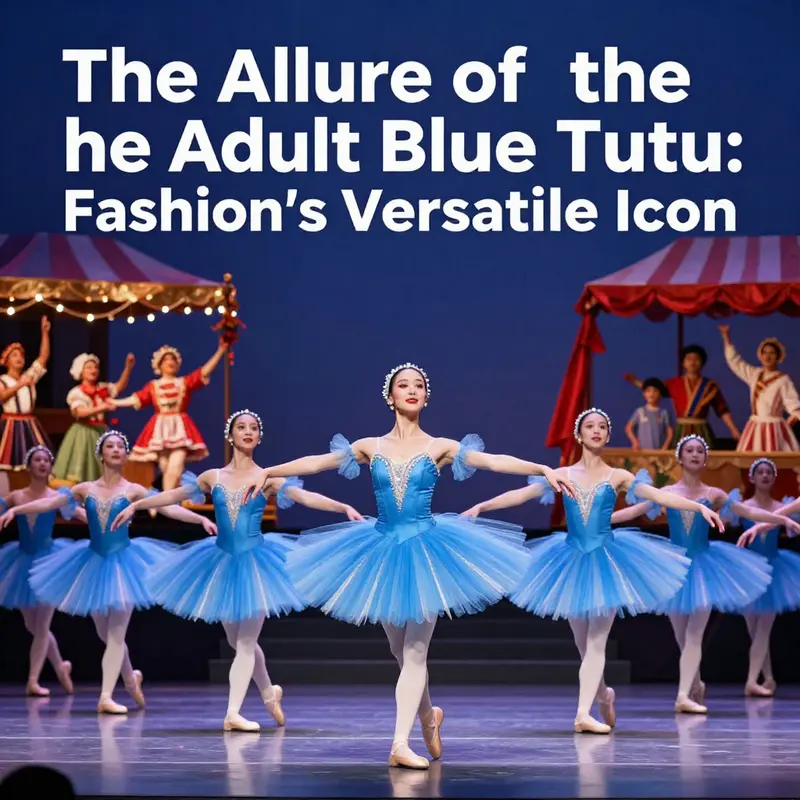
The adult blue tutu sits at a surprising crossroads of memory, performance, and everyday life. It is not merely a garment but a cultural artifact that invites reflection on how we negotiate age, gender, and creativity in contemporary society. When we encounter this blue silhouette, we glimpse a larger conversation about what it means to wear symbolically charged attire as an adult. The tutu begins as a memory of childhood ballet, a symbol of discipline and grace. It is tied to the image of a dancer in a pristine studio, the sound of a practiced plié echoing through quiet air. Yet the adult blue tutu swiftly moves beyond that initial association. It travels into theaters that have long embraced experimentation, into community spaces where performance is a form of gathering, and into private moments where fashion becomes a private manifesto. In these spaces, the blue tutu ceases to be a one dimensional sign of youth. It becomes a flexible instrument for exploring identity, power, and presence in public and private spheres alike.
Traditionally tutus have been linked to classical ballet and to the energy of young dancers. They symbolize a specific kind of grace, a strict discipline, and a lineage that many audiences recognize instantly. Those associations are not erased by the emergence of adult versions. Instead they are refracted through adult experience. The tutu becomes a bridge between memory and present purpose. It preserves the language of movement while inviting adults to redefine what that language can express. In this sense the color and materiality of the blue tutu reinforce a broader shift. Blue, in color psychology and in everyday symbolism, signals calmness, thoughtfulness, and a sense of sophistication. The shade can soften the perception of the wearer while sharpening the reader’s recognition of intention. A deep cobalt might imply authority and depth; a vibrant electric blue can project exuberance and openness. The result is a garment that feels both serene and daring, a paradox that aligns with many people’s lived experiences as they navigate aging, career, family, and personal reinvention.
The modern uptake of the adult tutu rests on the idea of liberation through self expression. It appears in performances that defy conventional genres, in parties where the dress code invites whimsy as a form of commentary, and in wardrobes that blur lines between costume and everyday wear. This is not mere fashion play. It reflects a deeper cultural practice: reclaiming symbols that once served as markers of childhood innocence and transforming them into tools for agency. When an adult wears a blue tutu in a setting that does not demand ballet, they underscore the point that symbolic attire can offer a stage for voice and visibility. It is a quiet rebellion against the idea that certain outfits belong only to a single stage of life or a single social role. The blue tutu becomes a sign of permission—permission to experiment, to be photographed, to be watched, and to be heard.
Color matters here as more than ornament. The hue of blue carries a suite of associations that deepen the garment’s impact. It evokes water and sky, suggesting movement and openness. It invites a sense of cool confidence rather than heat and aggression. Wearing blue can imply a stance of steadiness amid change. In social media streams and gallery spaces, this color occasionally acts as a subtle counterpoint to louder fashion statements, a reminder that restraint and daring can coexist. The blue tutu thus becomes a color coded proposition about personal mood and social intent. It invites observers to read the wearer as deliberate, mindful, and expressive in ways that challenge conventional femininity or conventional performance culture. The color helps to frame the tutu not as a childish symbol but as a sophisticated instrument of storytelling.
Beyond personal symbolism, the adult blue tutu marks a wider cultural shift in how communities respond to symbol laden attire. Adults reclaim childhood signifiers not only for nostalgia but as a form of reinvention. The tutu moves between private imagination and public performance, becoming a shared cue that signals openness to experimentation. This is especially visible in online communities and at live gatherings where people collaborate to reinterpret the garment for diverse bodies, ritual spaces, and collective creativity. The tutu becomes a social object that invites participation rather than a solo artifact to be admired from a distance. It is a vehicle for body positivity, inclusive practice, and creative leadership. In this sense the blue tutu plays a small but telling role in the broader story of how contemporary womanhood is imagined, performed, and discussed in public forums.
Part of this process is a redefinition of what counts as performance. The adult tutu stretches the categories of stage presence and audience. A formal recital is no longer the only proving ground. A public square, a club night, a charity event, or a street festival can function as a stage when the wearer claims the space through movement and posture. In these contexts the tutu is not merely decorative; it is a portable instrument of narrative. It allows the wearer to choreograph attention and to invite others into a shared moment of art, vulnerability, and communal joy. The garment thus acts as a catalyst for conversation about courage, resilience, and the ongoing process of crafting identity within a social world that is increasingly attentive to the language of self presentation.
The social dimension of the adult blue tutu is inseparable from issues of inclusivity and accessibility. In digital spaces, people post images and short performances that celebrate imperfect bodies, diverse ages, and varied cultural backgrounds. The blue tutu becomes a common ground through which many find a voice. The garment is not exclusive to those with traditional dance training; it is accessible to many who want to experiment with form, color, and movement. This democratization is a significant part of its cultural life. It allows individuals to negotiate personal boundaries and to insist on a place within cultural conversations that have long been dominated by narrow standards. The tutu’s adaptability invites collaboration across disciplines—dance, theater, fashion, and visual art—further enriching its cultural resonance and offering new pathways for intergenerational dialogue.
The association with gender and identity is another key thread in this evolving story. The blue tutu does not fix gender in opposition to tradition; it often dissolves rigid expectations. Women of different ages, bodies, and expressions have used the garment to explore how they present themselves in the world. Some wear it in performances that honor classic ballet while others use it as a prop in experimental works that question binary definitions of femininity. The tutu thus becomes a site where gender performance is examined rather than merely performed. In doing so, it aligns with broader cultural movements that seek greater fluidity in gender expression and a more nuanced understanding of how identity can be crafted through clothing as well as through choice of body language and stance. The result is a cultural pattern in which the adult blue tutu is recognized not as a relic, but as a flexible symbol that accommodates a spectrum of identities without erasing tradition.
The material and spatial dimensions of the blue tutu amplify its cultural significance. The lightness of the tulle, the way it catches air, and the color interplay with lighting and textiles in performance spaces create an aesthetic language all its own. Movement through space becomes a kind of dialogue between wearer and environment. A gentle sway can suggest introspection; a brisk twirl can convey joy or defiance. The garment thus teaches a simple but powerful lesson: the meaning of clothing is co created by the wearer and the world that witnesses them. When the blue tutu glides across a stage or a sidewalk, it asks observers to slow down, to notice the texture of air, and to consider how a single color and silhouette can carry a layered set of ideas about mood, intention, and community. In this way the tutu serves as a bridge between disciplined craft and liberated creativity, linking historical memory with contemporary life in a way that feels both respectful and unruly in the best possible sense.
In considering the cultural significance of the adult blue tutu, it is impossible to ignore the role of community. Online forums, local dance groups, and community theaters have embraced the garment as a shared resource. This collective approach to a visually striking object emphasizes inclusion and experimentation. In these spaces individuals learn from one another how to adapt the tutu to different bodies and abilities, how to choreograph with limited rehearsal, and how to treat performance as a form of communal storytelling rather than a solitary display. The tutu thereby becomes a social act that fosters dialogue about body positivity, accessibility, and creative risk taking. It supports a culture in which adults can explore, perform, and present themselves with a sense of curiosity and courage that transcends age or social expectation.
For those who want to explore starting softly, the basic form offers a practical entry point into this wider conversation. A basic tutu invites curiosity without overwhelming the wearer or the audience. It can be a starting point for experimenting with color, fabric weight, and movement. The invitation is not a retreat into nostalgia but a doorway to ongoing personal exploration. To learn more about the simplest incarnations of this garment, readers can explore a straightforward collection that foregrounds ease of use and comfort, with the option to expand later into more elaborate designs. This approach mirrors how many people approach identity work in daily life: a gradual, iterative process rather than a single bold declaration. The basic tutu thus functions as a kind of creative scaffold, supporting experimentation while leaving room for growth, risk, and change. Its presence in conversations about fashion and performance reinforces the idea that self expression is not a finish line but an evolving practice that can be revisited across stages of life.
As the public conversation about adult attire continues to unfold, the blue tutu remains a compelling focal point because it crystallizes the tension between memory and possibility. It honors the past by acknowledging the enduring codes of ballet and performance, while also bending those codes to accommodate diverse experiences. The color signals calm resolve, which can empower individuals in moments of risk taking or social scrutiny. The silhouette asserts visibility in a culture that often defaults to silence or conformity. And the social life surrounding the tutu—its shared tutorials, its performative clips, its themed gatherings—creates spaces where people of different backgrounds can learn to listen to one another through movement and color. In this sense the adult blue tutu becomes less a single garment and more a cultural instrument, a way to live more deliberately in a world that is increasingly attuned to questions of identity, community, and resilience.
For readers who wish to situate this discussion in broader cultural currents, consider how symbols from childhood are re encoded in adulthood for purposes of empowerment. The adult blue tutu embodies a longer arc in which people reclaim symbols not merely for nostalgia but for new social uses. It is a reminder that clothing can be a form of social commentary as well as personal expression. The garment stands at the confluence of art and life, inviting audiences to reconsider how color, form, and texture can function as a narrative language. When we view the tutu through this lens, we recognize that fashion is not only about appearance but about testimony: a public statement of willingness to inhabit spaces in which one is seen, heard, and valued. This is the deeper significance of the blue tutu, a garment that helps people articulate who they are and how they want to be perceived in a world that is increasingly attentive to the stories behind the clothes.
Within this evolving landscape, the adult blue tutu also serves as a catalyst for collaboration across disciplines. Dancers, designers, choreographers, educators, and fans share a vocabulary that grows with each new collaboration. The tutu becomes a thread that links studios, theaters, living rooms, and online streams, weaving a network of practices that support experimentation and education. In classrooms, it can spark conversations about movement, balance, and self confidence. In community spaces, it can foster inclusive performances that celebrate a spectrum of bodies and abilities. In galleries and pop up performances, it becomes a sculpture in motion, a living piece that changes with light, sound, and audience energy. The cultural life of the blue tutu thus demonstrates how a seemingly simple object can illuminate complex social dynamics and aspirations. It invites ongoing attention to how adults choose to present themselves, how communities respond to such choices, and how cultural symbols evolve when people refuse to let them be owned by a single age group or gender.
The external resonance of this discourse can be seen in scholarly and artistic work that treats costume as a form of cultural inquiry. The adult blue tutu is a case study in how symbols migrate, mutate, and gain new meanings when real people wear them in real spaces. It is a reminder that fashion and performance are not distant from questions of identity, power, and belonging. As conversations about gender, age, and self expression continue to unfold, the tutu appears not as a relic but as a living record of how communities imagine themselves into being. In embracing this garment, individuals participate in a larger practice of cultural creation, contributing to stories about courage, creativity, and the everyday possibilities of self invention. The blue tutu is, in the end, less about color and more about scale—how a small, bright piece of fabric can carry the weight of shared dreams and the momentum of collective growth.
External resource: https://www.britishballet.org.uk/insights/adult-tutus-and-the-reinvention-of-ballet. For readers seeking a broader scholarly perspective on how adult tutus intersect with personal identity and cultural expression, this external article offers additional context and examples that complement the themes presented here.
Final thoughts
Understanding the multifaceted role of the adult blue tutu in design, fashion, and cultural significance provides valuable insights for business owners aiming to capitalize on this timeless garment. By recognizing its appeal across different sectors, brands can better connect with their audiences and enhance their offerings. Whether for dance performances, fashion shows, or cultural events, the adult blue tutu remains a beloved piece that celebrates creativity and expression. Integrating this iconic garment into your inventory could not only diversify your product line but also attract a wider customer base.