
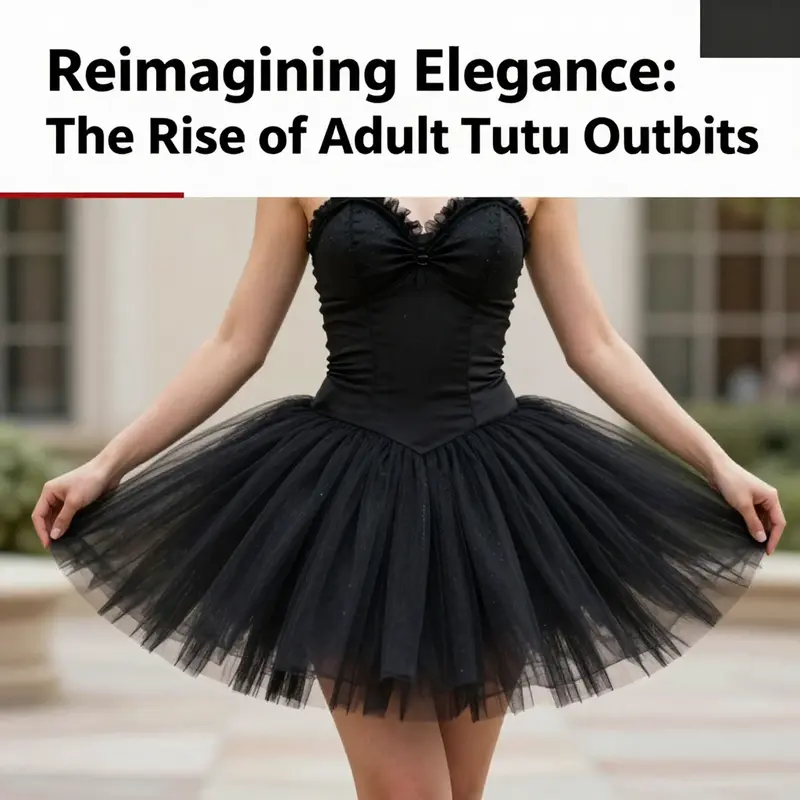
Adult tutu outfits have transcended their childhood origins to become a vibrant expression of individuality and style among adults. This exploration highlights the diverse design variations of adult tutus, showcasing both classic and contemporary styles, while emphasizing their playful yet sophisticated role in today’s fashion landscape. In addition, we will delve into the cultural significance and popularity of these outfits, examining how they resonate with different audiences across various contexts. Lastly, understanding purchasing trends—including materials used, costs, and retail channels—will equip business owners with insights to effectively enter this dynamic niche market. Together, these chapters create a comprehensive overview of the adult tutu phenomenon, from aesthetic appeal to practical considerations for business development.
Tulle Without Borders: Designing Variations in Adult Tutu Outfits from Classic Grace to Contemporary Edge
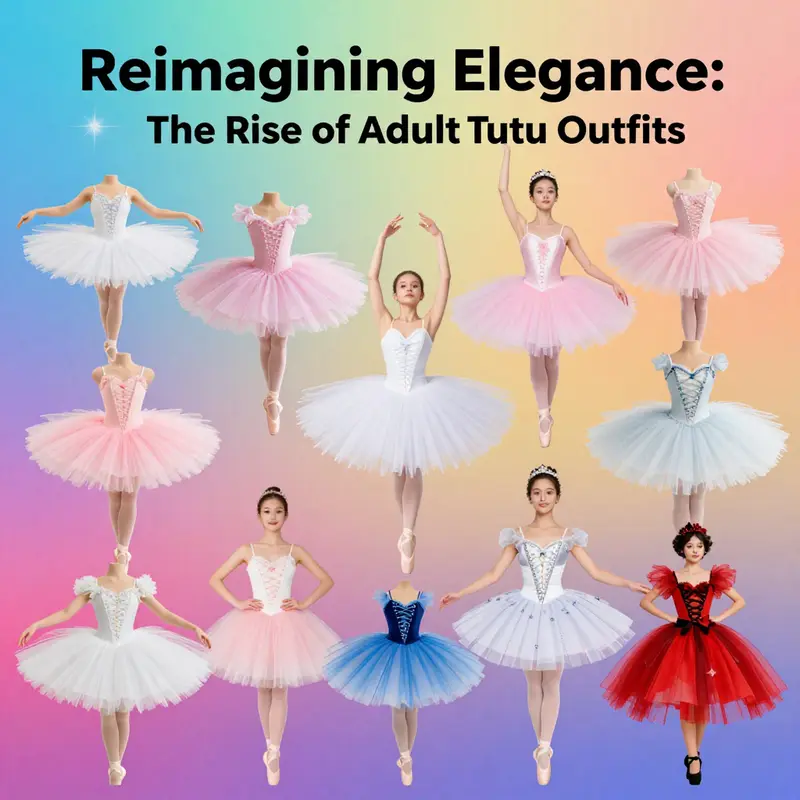
Tulle has ceased to be a parlor-door memory of childhood costumes. In contemporary wardrobes, the adult tutu is a language for self-expression, capable of speaking softly at a wedding or shouting across a gallery floor. The evolution from a traditional, ballet-informed silhouette to a spectrum of design possibilities tells a larger story about fashion, performance, and personal style. Designers and wearers alike treat the tutu less as a fixed uniform and more as a flexible canvas. They layer, cut, and color the tulle in ways that honor the garment’s history while pushing it toward new destinations. The result is a discipline of variation that remains anchored in the tutu’s core identity: a waist-defining shape crowned by volume, ready to move with the body and the moment. When we examine design variations in adult tutu outfits, we see a continuum that spans delicate restraint and exuberant drama, making the tutu relevant to a wide range of occasions, from high fashion runways and theatrical productions to weddings and personal celebrations. It is this continuum that helps explain why the tutu has endured as a versatile tool for both craft and couture.
Classic ballet-inspired tutus anchor the discussion with a sense of structure. In these interpretations, the silhouette remains recognizable: a fitted bodice or corset anchors the upper body, while the skirt unfolds through layered, evenly distributed tulle that holds a precise line. The layers are carefully weighted, the hems are meticulously finished, and the overall effect is one of crystallized elegance. Yet even within this classical frame, designers experiment with the underpinnings. A touch of satin binds the waist, a whisper of metallic thread threads through a few tulle plies to catch the light, and subtle ergonomic shaping ensures that the wearer can move with clarity and control. This is not a recipe for rigidity but a blueprint for grace, where restraint serves as a counterpoint to the tutu’s inherent volume. For those who favor a grounded, adaptable option, a basic tutu category offers a straightforward canvas that can be dressed up or down. basic tutu options become a practical starting point for individuals who want a reliable foundation before layering on color, embellishment, or thematic motifs.
Progressing beyond the classics, contemporary interpretations redefine how a tutu sits on the body and how it communicates. Asymmetrical cuts, bold color blocking, and avant-garde silhouettes push the garment into a new theater of possibilities. An asymmetrical hemline can transform the tutu from a symmetrical sculpture into a dynamic, kinetic piece that catches the eye from every angle. High-low designs—where the front rises to reveal an ergonomic underlayer and the back cascades in a fuller sweep—offer a playful tension between reveal and concealment. In other cases, the tutu becomes a chasm of color energy: panels of contrasting hues stitched in a cascade that makes the wearer glow on stage or at a party. The palette can oscillate from stark monochrome to riotous multicolors, depending on the occasion and the wearer’s temperament.
Materials contribute heavily to the mood of the design. Beyond traditional tulle, designers now weave in sheer overlays that drift and shimmer with movement. Metallic finishes—whether through foil-pressed threads, lamé highlights, or reflective coatings—catch light and audience attention in a way that elevates the tutu from costume to couture. Sheer fabrics layered over opaque tulle create a sense of depth, like a sculpture viewed through a translucent veil. Embellishments—seed beads, crystals, embroidered motifs—offer tactile sparkle that reads beautifully in close quarters and from a distance alike. Each embellishment is chosen not merely to decorate but to amplify the wearer’s presence; sequins along the waistband can mirror the gleam of stage lights, while subtle beadwork along the hemlines catches the eye as the wearer moves. These details transform the tutu from a single garment into a small performance piece, capable of telling a story with every turn of the dancer’s hip or the sweep of a guest at a gala.
Color, too, has moved from a conservative spectrum to a bold, expressive language. Ivory and pale pastels retain their wedding-market appeal, offering a soft, timeless elegance. Yet the contemporary tutu embraces loud color stories: primary blocks that clash with a headline confidence, or a gradient that shimmers with a sense of sunset or ocean depth. A six-layer cascade-style tutu, with a high-and-low design that allows for customizable hues, stands as a vivid example of this push toward personal expression. Such designs invite performers, festival-goers, and fashion-forward audiences to curate their own color journey. The cascade effect not only adds visual interest but provides a practical framework for color organization. Each layer can echo a theme—say, a bridal palette on one layer while another layer speaks to a festival’s electric energy—without turning the entire piece into a single uniform spark.
Customization has become a central thread in this narrative of design variation. The market’s openness to personalization means wearers can request specific layering techniques, choose between dense or airy tulle, and insist on particular color palettes that reflect their mood or the event’s tone. The rise of handmade studios and small-scale ateliers has enabled intimate collaborations between designer and wearer. In these exchanges, the tutu is not merely purchased; it is crafted, measured, and tuned to the wearer’s movement, silhouette, and persona. This shift toward customization resonates with broader fashion trends that prize individuality, craft, and a sense of ownership over one’s wardrobe. It also underscores a cultural shift: fashion is no longer solely about fitting into a prevailing trend but about narrating one’s own story through clothing.
The educational thread that links the classic to the contemporary lies in technique and experimentation. The knotting, layering, and finish work required to achieve a sculptural tutu demands a balance of technical precision and creative risk-taking. When a designer introduces an asymmetrical silhouette or a color-blocked ensemble, the pattern-making process becomes more complex. The designer must preserve structural integrity while allowing the layers to articulate motion. This often involves careful calibration of weight distribution, fabric density, and seam placement. The result is a garment that remains wearable, even as it challenges conventional proportions. The performative context also influences design choices. Onstage tutus benefit from secure waistbands, reinforced seams, and ventilation considerations, ensuring confidence and comfort during movement. For ceremonial or editorial uses, the emphasis might shift toward silhouette purity, refined embellishment, and a heighted sense of drama. Across these contexts, the tutu functions as a flexible instrument—one that can be coaxed into quiet dignity or bold spectacle depending on the wearer’s intent.
Inspiration travels quickly in the digital age, and studios increasingly draw from a global tapestry of references. Platforms that curate visual ideas become a kind of shared sketchbook, where a single image can seed a whole collection of variations. For creators and aficionados, Pinterest remains a prolific resource for creative cues. It hosts collections that explore custom-designed adult tutus with innovative layering techniques and personalized color palettes. One standout example, a multi-colored six-layer cascade-style tutu with a high-and-low design, demonstrates how contemporary trends redefine the boundaries of the classic tutu. This kind of design invites a wearer to tell a story through color, let the layers interact with light, and use tapering to guide the gaze across the garment’s architecture. This visual language—where color, texture, and silhouette converse in a single garment—has become a touchstone for designers who want to push beyond conventional forms while staying rooted in the tutu’s essential charm. The example also serves as a reminder that inspiration travels in multiple directions: from runway to living room, from stage to street, from a finished garment to the mind of the next maker. https://www.pinterest.com/pin/123456789012345678/
The practical implications of these design variations are wide-ranging. For performers, the ability to customize a tutu means more precise alignment with choreography, lighting, and stage presence. A six-layer cascade with self-selected hues can turn a routine into a coordinated color journey, with moves that reveal or hide layers in sync with music cues. For brides and wedding guests who want something more personal than a standard formal gown, a tutu offers an option that is both romantic and contemporary. The ivory tulle might be paired with a delicate lace bodice or a silk sash to create a look that is ceremonial yet modern, timeless yet current. For those seeking everyday wear with a high-fashion edge, a more streamlined silhouette—perhaps with fewer layers and a hyper-clean line—can function as a striking, wearable statement piece within a chic, urban wardrobe. In all cases, the key remains the same: design variation must serve expression. The most successful adult tutu outfits do not chase novelty for novelty’s sake; they translate mood, theme, or narrative into garment form while respecting the tutu’s kinetic, dance-friendly nature.
Culturally, the adult tutu intersects with cross-generational fashion, performance culture, and the broad arc of personal adornment. It speaks to a common impulse to celebrate whimsy while maintaining a chorus of elegance. The ability to mix elements from classical ballet with streetwear sensibilities or high-end couture silhouettes has democratized the garment in important ways. It invites people from diverse backgrounds to experiment with a garment that was once codified by a specific tradition. This is not a reclamation of a single lineage but a synthesis—a modern fusion that honors technique, invites playful experimentation, and makes room for a range of occasions, from formal events to themed festivals.
If readers are curious about how to navigate this spectrum in their own lives, the first step is to consider the function of the tutu within a larger outfit. Will it be the centerpiece, a generously dramatic accent, or a subtle nod to a theme? Once the function is defined, the designer or wearer can select a silhouette that aligns with movement, fabric behavior, and comfort. The choice of layers, the distribution of volume, and the interplay of color will begin to form a coherent visual story. The modern tutu invites a dialogue between history and novelty, between constraint and freedom, between the discipline of technique and the exuberance of imagination. It is a garment that rewards experimentation, yet it respects the demands of real-world wear: ease of wear, practicality of care, and the ability to be styled across multiple contexts.
In closing this chapter, we recognize that design variations in adult tutu outfits are not a mere eccentricity. They are a testament to fashion’s enduring interest in form, movement, and storytelling. From the quiet precision of classic layers to the audacious drama of contemporary silhouettes, the tutu remains a powerful tool for personal expression. Whether one leans into the dignified poise of a wedding-ready ivory ensemble or ventures into a color-saturated, high-energy cascade for a festival stage, the adult tutu offers a space where craft and imagination can coexist. This is the garment’s evolving promise: to be at once familiar enough to comfort and daring enough to transform a moment into memory. The journey from classic to contemporary is not a straight line but a braided path, where historians, designers, and wearers weave together threads of tradition with threads of possibility. The result is a living tradition, continually retold through fabric, motion, and the choices we make about how we want to be seen.
Twirling Beyond Childhood: The Cultural Rise and Modern Allure of Adult Tutu Outfits
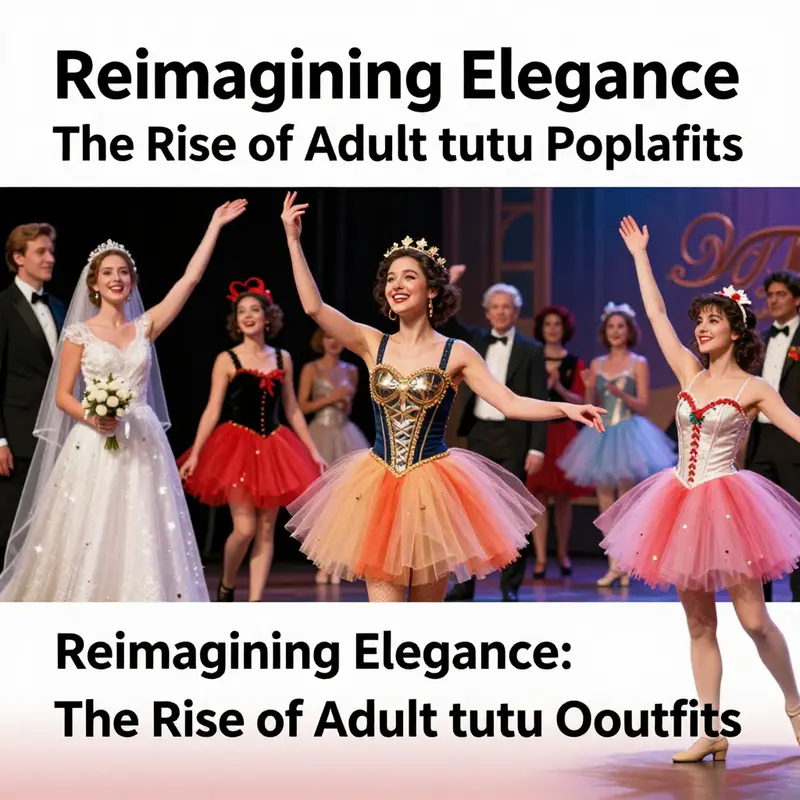
The adult tutu has traveled a long arc from rehearsal halls to runways and red carpets. It is not merely a costume; it is a lens on how fashion negotiates age, authority, and whimsy. The tutu’s return to adulthood did not happen by accident. It emerged from a broader rethinking of what counts as appropriate attire and what fashion can express. In many settings, the tutu has shed its status as a child-sized prop and become a versatile silhouette that can anchor a look with drama, poetry, or humor.
This shift is not about abandoning tradition but about remixing it. The ballerinas who wore tutus as part of a disciplined craft left behind the sole association with childhood when designers began to see the skirt as a fluid shape capable of transforming mood and narrative. The adult tutu now appears in festivals, at weddings, in theatre productions, and even as everyday wear for those who crave a touch of whimsy. It travels across cultural contexts, carrying different meanings depending on the setting. In some communities, the tutu signals celebration and liberation; in others, it nods to performance heritage or a playful critique of formality. The result is a garment that sits at the crossroads of art, craft, and personal storytelling.
Contemporary popularity rests on several interwoven threads. One is the long-standing appetite for fashion that blends narrative with spectacle. A tutu offers immediate visual impact: layered tulle that catches the light, a cinched waist that anchors the silhouette, and a skirt that sways with every step. Another thread is accessibility. Consumers can choose from off-the-rack options in a spectrum of colors, or opt for fully custom pieces that reflect an individual’s body, voice, and mood. Materials range from soft ivory and pale pastels to saturated neons and metallics, and designers experiment with length, volume, and texture to shape a look that feels both theatrical and wearable. The result is a spectrum that invites experimentation rather than prescribing a single style.
Weddings have become a notable domain for adult tutu outfits, where the playful formality of a tutu can translate into a mood that is both romantic and contemporary. An ivory-toned or champagne-hued tutu can serve as an alternative bridal accent or as a bridesmaid ensemble that foregrounds movement and lightness. In other scenes, such as festival grounds or city-wide celebrations, the tutu becomes a badge of festive identity, signaling participation in a collective moment of joy. In theatre and performance contexts, the tutu is both tool and symbol — a prop that helps an actor inhabit a character while also signaling a certain level of artistry to the audience. For cosplayers and performers, the tutu can function as a modular element, paired with different tops, jackets, or accessories to create a character or mood on cue. The visual grammar of the tutu—its volume, its softness, its shimmer—translates easily into a mood, whether dreamy, comic, or bold.
The marketplace for adult tutu outfits has grown in tandem with fashion’s broader democratization. Handmade options on platforms such as Etsy give wearers a sense of intimacy and customization, aligning with the desire for crafted pieces that feel unique. At the same time, mainstream retailers have embraced the tutu’s versatility, offering a range of silhouettes that can be worn beyond the confines of a single event. The semi-custom route—where measurements are taken and color choices are made to suit a particular wearer—becomes a popular middle ground between mass-market tees and bespoke couture. For many shoppers, the purchase journey reflects a pragmatic blend of style, value, and convenience. Consumers increasingly filter for features that simplify decision-making, such as free shipping and easy returns. This reflects a larger pattern in online shopping where confidence in a purchase is reinforced by predictable logistics and clear policies.
The cultural significance of the adult tutu also hinges on its openness. It crosses age, body type, and cultural expectations with less friction than in the past. The garment signals a willingness to experiment, to challenge norms around what is considered appropriate attire for adults, and to redefine personal style as a form of self-care and joy. In communities where performance culture is celebrated, the tutu stands beside other expressive costumes as a recognized vehicle for storytelling and identity. In everyday life, it invites wearers to reimagine their routine—perhaps stepping out in a soft ivory version for a brunch or choosing a brighter, bolder color to highlight a personal moment. The tutu becomes a living narrative, a garment that invites dialogue about taste, risk, and the boundaries between dress-up and daily dress.
Beyond individual occasions, the adult tutu intersects with community gatherings and performance cultures. In many cities, dance schools, theatre collectives, and cosplay circles host workshops where adults can learn the craft of tutu-building, from choosing the right gauge of tulle to mastering a waistband that stays comfortable during long rehearsals. These workshops foster a culture of sharing, where older participants pass on tips to younger ones, weaving a sense of continuity between generations. The result is not merely a fashion item but a collaborative artifact that embodies skill transfer, mentorship, and the joy of making something with one’s own hands. In this light, the tutu also becomes a bridge between professional performance and hobbyist creation, strengthening communities who value craft and self-expression. When people gather around a sewing machine or a cutting table, the tutu stops being just fabric and becomes a moment of connection and shared purpose.
Looking at the color psychology and styling possibilities further reveals the tutu’s adaptability. A pale ivory shade may evoke tradition and romance, while a bold turquoise or magenta signals modern playfulness. Metallic threads or sequins can add a stage-ready glow, especially when paired with lighting and a performance arc. The exact choice—how many layers, how dense the tulle, whether to add a liner or a petticoat—speaks to personal appetite for drama versus everyday wear. Some wearers treat the tutu as a weekend ritual, slipping into it for a brunch with friends or a photo shoot that captures a chapter in their life. Others curate it as a long-term wardrobe investment, perhaps using it as the structure for a recurring costume in a theatre program or a festival troupe. The novelty fades as wearers discover how easily a tutu can slot into their existing wardrobe, giving every outfit a sense of movement and narrative. The result is a durable form of novelty that rewards risk-taking with long-term satisfaction.
The social and cultural ecology that sustains this trend cannot be overlooked. The tutu’s resurgence is not simply about novelty; it is part of a larger conversation about how fashion borrows from performance to enrich daily life. It resonates with audiences who crave visual storytelling and those who want to wear their emotions rather than keep them hidden. It intersects with communities that celebrate theatre, dance, cosplay, drag, and festival arts, offering a shared language in which fabric becomes voice. And because the tutu is inherently adaptable, it acts as a bridge between different worlds—between formal events and casual gatherings, between tradition and experimentation, between time-honored technique and contemporary flair.
In short, the appeal of adult tutu outfits lies in their capacity to turn ordinary moments into occasions. They remind us that clothing can be a form of performance art, a means of self-propulsion, and a record of growth. The era when playful dress was dismissed as childish is fading; in its place stands a fashion landscape that values courage, craft, and the joy of possibility. The adult tutu, once a symbol of rehearsal depths, has thus become a symbol of personal breadth. It invites every wearer to script a moment in fabric—a moment stitched from memory, imagination, and the courage to present oneself with grace and levity.
As you explore these silhouettes, consider how a seemingly simple component of a costume can carry a complex web of meaning. The same skirt that might grace a dance floor can also anchor a bridal party, a stage, or a street-style photo. The beauty of this trend lies in its openness: there is room for someone who wants a delicate, nearly transparent layer that catches the sun, just as there is room for someone who wants a bold, saturated color that commands attention. The tutu’s adaptability is not a marketing line; it is an invitation to reframe the way we think about specialty garments. It makes the extraordinary accessible and the daily more expressive. In that sense, it functions as a microcosm of fashion’s larger evolution toward inclusive, playful, and narrative dress.
For readers curious about how these pieces are categorized within a broader catalog of dress, the Costume Theme category offers a window into the range of styles. Costume Theme category.
As fashion continues to blur the lines between performance and daily life, the tutu remains a compelling reminder that clothing can be a voice, not just a garment. It can declare confidence, invite play, and endure as a familiar, beloved ritual of self-expression. The modern adult tutu is thus not a childish echo but a mature assertion that joy, artistry, and personal narrative belong in every closet.
External resource: https://www.amazon.com/UNDERWRAPS-Blue-Adult-Tutu-Set/dp/B0B1KXZ2LW
Soft Tulle, Bold Choices: Materials, Prices, and Pathways in the Adult Tutu Market
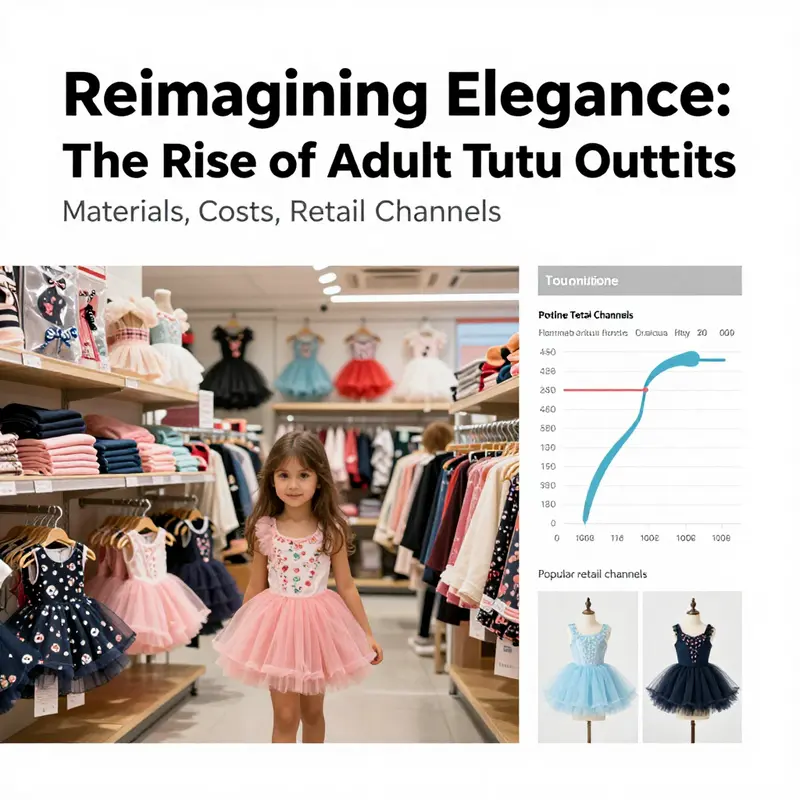
The adult tutu has moved beyond its childish origins to become a flexible, expressive garment that sits at the crossroads of performance, fashion, and personal storytelling. When shoppers consider a tutu as an everyday statement rather than a one-off costume, they begin a buying journey that blends nostalgia with modern needs: durability for repeated wear, predictable fit, and a look that feels polished rather than performative. The market has learned to speak in multiple dialects—the dancer, the party host, the cosplayer, and the stylish minimalist seeking a touch of whimsy—each with distinct tolerances for cost, texture, and volume. In this landscape, a tutu is no longer a single garment. It is a category with a language of materials, a spectrum of prices, and a web of channels that tell a buyer not only what to buy, but how and where to buy it. The result is a form of wardrobe flexibility that appeals to adults who want to experiment with shape and color without surrendering everyday practicality.
The materials used for adult tutus have a direct line to how the garment performs on the body and under different conditions. Among the options, cotton viscose blend polyester—often described in shorthand as a CVC blend—has emerged as a workhorse for both wholesalers and specialty retailers. This blend is not a single material but a careful recipe that balances softness with structure. The tulle, if you will, maintains its buoyant lift, helping the skirt keep its fullness even after hours of wear. At the same time, the fabric resists wrinkling enough to look crisper in photos and onstage while still offering a forgiving hand that doesn’t irritate the skin or restrict movement during long events. For performers, this balance translates into a tutu that can be worn repeatedly without the dreaded collapse of shape after a single use. For fashion-forward buyers, it delivers the look of a classic, archival silhouette with modern staying power. The practicality of CVC polyester makes it a natural choice for wholesale lines that aim to serve both the small-event market and more ambitious productions where a single outfit might cycle through several performances.
The market’s emphasis on durability and fit comes with a nuanced understanding of how fullness and drape are achieved. A tutu’s silhouette is not merely about hanging fabric; it is about architecture. The distance between the bodice and the hem, and the way the layers of tulle catch and hold air, create a visual tempo that reads differently from stage to street. In wholesale and retail contexts, the fullness is often engineered through multiple layers of tulle or through the use of stiffer underlayers that help the skirt spring back into shape after repetitive bending or twisting. This is especially important for adult wearers who may perform or pose for extended periods, as well as for cost-conscious buyers who want to minimize replacement costs over time. When a buyer encounters a piece that uses a well-considered blend—soft to touch, yet structured enough to maintain a crisp silhouette—there is a quiet confidence that the garment will perform beyond a single occasion. Yet there is room for those who seek a higher tier of luxury, a shade more polish in the weave, perhaps a silk blend or a higher grade of tulle, where the texture reads as almost dreamy under soft light. These premium iterations come with a different calculus of cost, described more fully in the next section.
Pricing for adult tutus is a hinge on both craftsmanship and sourcing, and the range reflects a spectrum from practical, budget-friendly options to luxury-oriented designs. In many circles, the base tier sits in the range of roughly fifteen to forty dollars. This band often features mass-produced pieces, sometimes imported, where the emphasis is on providing a functional, aesthetically pleasing silhouette at an accessible price point. The trade-off is usually in the subtler details: a straightforward waistband, standard-length hems, and finishes that are solid enough for occasional wear but less aggressive about long-term wearability. Yet even within this category, buyers can encounter meaningful differences. Some skirts may use multiple layers of standard tulle to create extra volume, while others rely on a single, well-tapped layer with a clever understructure to simulate fullness. The result is a package that offers visible drama without a prohibitive cost, making it feasible for party throwers, casual performers, and cosplay enthusiasts who want to test the waters before committing to a more expensive piece.
Beyond these budget-friendly options lies a tier that tends toward more precise tailoring and richer materials. Premium adult tutus command higher prices due to several converging factors. First, the fabric choices themselves may be upgraded: finer tulle, silk-blend materials, or higher-thread-count linings contribute to a tactile experience that feels more refined to the touch and more resilient to repeated wear. The construction quality becomes another point of differentiation. Hand-finishing on every seam, reinforced waistbands, and structural supports that sustain fullness over time translate to a garment that holds its shape after repeated wear and laundering. The fit, too, commands attention. A well-proportioned waist and a cut that flatters varied body types reflect a designer’s intent to balance whimsy with comfort. In practice, these pieces are often found in boutique environments or curated fashion collections, where the buyer accepts a higher price in exchange for longevity and authenticity. The market recognizes that for some buyers—stage professionals, serious hobbyists, or individuals seeking a standout piece for meaningful life events—these attributes justify a longer-term investment.
The channels through which adult tutus reach buyers have also evolved, reflecting broader shifts in how people shop and how small businesses operate. Traditional brick-and-mortar stores still offer essential tactile experiences: the ability to judge the drape with one’s own hands, to see how light plays across the layers, and to gauge how a waistband feels when the body moves. However, online platforms have become dominant in wholesale and bulk purchasing, bringing scale, variety, and logistical efficiency to a market that often relies on flexible production runs. For event planners and theatre groups, the promise of exclusive discounts on large orders, combined with streamlined global shipping, has made it easier to assemble complete outfits or themed collections without sacrificing consistency or quality. The abundance of options online means buyers can compare weights, textures, and hues side by side, and the ability to mix and match with other pieces—tops, underskirts, or layering garments—further expands what a tutu can become.
This expanded ecosystem also echoes a broader fashion trend: the rise of coordinated full outfits that pair a tutu with thoughtfully chosen tops, jackets, or layered pieces. Rather than purchasing a single skirt, buyers are increasingly seeking ensemble-ready options that reduce decision fatigue and speed up event preparation. A classic ivory or pale pastel tutu might be paired with a lace bodice and a sheer overlay, or layered with a cropped top and a light cardigan for a street-style vignette. The market’s response to this demand has been the emergence of catalogues and listings that present these combinations as cohesive units, making it easier for non-specialist buyers to achieve a polished, themed look without the need for extensive styling know-how. In the spirit of practicality and creativity, one can readily imagine options that span from the romantic to the avant-garde, each accompanied by a suggested pairing strategy that helps buyers envision the finished outfit in the context of a specific event or mood.
As buyers navigate this landscape, the value they place on material integrity often guides their decisions. The choice between a pure aesthetic statement and a garment designed for frequent, varied use can be a deciding factor. A tutu that feels light and airy but begins to wear thin after a few washes may be perfect for a single event but less appealing to someone who expects longevity from a piece. Conversely, a slightly higher upfront cost can translate into a garment that maintains its shape, color, and texture through repeated wear, laundering, and even minor accidental mishaps. In practical terms, durability translates into less replacement overhead for performers and less risk of wardrobe malfunctions during important moments. It also means fewer returns, fewer concerns about fit after movement, and a greater sense of confidence for the wearer. For those who embrace the tutu as a versatile element of their personal style, durability and fit are not mere conveniences but essential criteria that shape the overall value equation.
Another layer of consideration involves the logistics of sourcing and supply. For buyers planning events, productions, or themed photo shoots, the ability to source in bulk matters more than the flavor of a single purchase. The procurement process often includes evaluating supplier reliability, production timelines, and the ability to customize details such as waistbands, lining, or the precise shade of tulle. In some cases, buyers require flexibility for small adjustments, additional colorways, or specific sizing options that go beyond a standard one-size-fits-most approach. Wholesale pathways that offer customization on a limited scale become particularly attractive in these situations. The value proposition goes beyond the garment itself; it encompasses the ease of aligning multiple outfits under a shared design philosophy, ensuring a cohesive look across a cast or ensemble.
The interplay between cost, material choice, and channel strategy is not merely a technical calculation. It is a narrative about how adults interpret and inhabit the tutu. When a buyer leans into a basic tutu category for everyday wear, the emphasis is often on comfort, ease of care, and a look that reads as playful rather than ceremonial. The pieces in this tier can be woven into a casual, semi-formal, or even corporate event wardrobe, where a single tasteful ribbon or a delicate overlay can transform the garment from a weekend costume into a real fashion statement. In other circumstances, the attraction is purely performance-driven: a meticulously engineered silhouette that holds its shape through the choreography, a durable understructure that withstands the demands of a high-energy routine, and a palette tuned to stage lighting. The language of the tutu shifts with the wearer’s aims, and in that shifting language lies the market’s richness. The same garment can be a prop on one stage and a conversation starter on a city street, proving that the tutu’s appeal is not tethered to one narrow use but to a broad, enduring appetite for playful elegance.
From a consumer behavior standpoint, the growth of online marketplaces and bulk purchasing channels reflects a broader desire for accessibility and speed without sacrificing quality. Buyers are increasingly discerning about fit, and this is where the industry’s attention to sizing and tailoring becomes a competitive advantage. The rise of measurement guides and more generous return policies in some segments helps to reduce the risk associated with online shopping for garments whose fit can be notoriously tricky. The tutu, with its elastic waist or adjustable closures, can accommodate a surprising range of body types, but the best experiences come from clear sizing information, accurate product photography, and transparent construction details. When these elements align, the buyer feels confident in a purchase that might otherwise have seemed whimsical or risky. The result is a market that rewards those who balance practicality with imagination, enabling more adults to embrace a garment whose essence is both playful and refined.
The purchasing landscape is also evolving in terms of how buyers seek inspiration and reassurance before committing to a purchase. In a world where images flood social feeds, shoppers increasingly look for reliable signals about fabric quality, finish, and fit. Descriptions that emphasize the tactile properties of the fabric—softness, weight, drape, and resilience—gain prominence. Visual cues matter as well: how the tutu catches light, how fullness behaves in movement, and how a specific color reads in different lighting conditions. The integration of real-world reviews, sizing charts, and material transparency helps buyers move from curiosity to conviction. For many, the tutu is a symbol of possibility, and the confidence that comes from well-informed choices turns possibility into a preferred wardrobe option rather than a one-time costume.
To knit these observations into a practical mindset for readers of this article, consider this synthesis: the adult tutu market rewards buyers who value a thoughtful blend of material quality, structural design, and flexible sourcing. The most satisfying purchases often come from pieces that balance comfort with character, a texture that invites touch without sacrificing durability, and a silhouette that flatters diverse bodies while maintaining a sense of theatrical charm. The best buys deliver a length of fabric that offers enough fullness to sway with movement, but not so much that it becomes cumbersome in crowded rooms or busy dance floors. They deliver a waist that hugs securely without constricting, allowing for hours of wear without discomfort. And they deliver color and finish that look true to life under both daylight and artificial lighting, ensuring that photos taken in a social setting or onstage capture the tutu’s essence rather than its limitations.
If there is a through-line to remember, it is this: a tutu is a wearable mood. Its value lies not only in the initial wow factor but in the length of time it remains a source of delight and creativity. The adult tutu market recognizes this truth and responds with products and channels that honor both whimsy and practicality. Whether purchased as a practical base layer for a recurring performance, a bold fashion statement that punctuates a street-style look, or a romance-inspired piece for a wedding or celebration, the tutu remains a surprisingly versatile instrument of self-expression. The chain from material selection to purchase experience, from the choice of channel to the final fit, maps a user’s personal narrative as it unfolds across events and everyday moments alike. In this sense, the tutu is less a garment and more a small theater—one that invites adults to step into a role where confidence, color, and movement converge into something timelessly delightful.
For readers who want to explore more concrete options and discover how the market is expanding to accommodate cross-genre styling, a broad look at the online catalogues and themed collections offers a practical starting point. The internet has made it possible to compare fullness, color, and finish within a single afternoon, turning what used to be a daylong shopping mission into a few focused hours of exploration. As you navigate this landscape, keep in mind the core attributes that drive satisfaction: the texture and drape of the fabric, the quality of the waistband and seams, the accuracy of color representation, and the ability to mix with other pieces to create a cohesive outfit. When these elements come together, the tutu becomes more than a novelty. It becomes a reliable, expressive component of a personal style toolkit, ready to be worn with pride at a party, on a stage, or in a moment when whimsy is precisely what the moment calls for. This is the value proposition of the adult tutu in today’s fashion ecosystem—a blend of playful charm and practical design that invites adults to embrace a timeless accessory in fresh, modern ways.
For those who want direct access to a broader spectrum of tutu styles, a practical starting point is to explore a category that gathers pieces suitable for various occasions while maintaining a focus on quality and wearability. basic-tutu provides a snapshot of the simpler, more versatile silhouettes that can be styled for everyday life as well as special events. This collection can be a useful reference point when weighing the trade-offs between cost and longevity, as it foregrounds the essential qualities buyers often seek in a foundational tutu piece. It also serves as a gentle reminder that even in a market saturated with novelty and flair, foundational options remain relevant for those who prefer understated elegance over flashier statements. The chapter’s broader aim, however, is not to prescribe a single path but to illuminate the options and dynamics that shape how adults purchase, wear, and reimagine the tutu as part of a modern wardrobe.
From the perspective of supply dynamics and consumer access, one of the most telling shifts is the increasing simplicity of procurement for bulk buyers. The availability of wholesale lines that balance volume with quality has lowered the barriers to entry for small event-planning outfits and community groups. A bulk-ready tutu can be integrated into a larger costume ecosystem with relative ease, allowing organizers to outfit a cast or a team with consistent silhouettes and colorways. Even for individual buyers, the growing array of customization options means that a single silhouette can be adapted to many personalities and occasions. The tutu’s adaptability, once a niche feature of theatrical wardrobes, now threads through social events, artistic performances, and fashion experiences with a level of flexibility that makes it feel almost universal in its appeal.
In closing this exploration of purchasing trends, it is worth reiterating how deeply the material, cost, and channel choices influence the tutu’s role in contemporary life. The market rewards buyers who balance aesthetic longing with practical considerations—durability, fit, and ease of access—while recognizing that the most memorable tutu moments often arise from the courage to pair whimsy with purpose. Whether one seeks a simple, repeat-wear piece or a couture-influenced, performance-grade garment, the adult tutu market offers a landscape rich with opportunity. The keys to smart shopping lie in evaluating fabric quality and construction, understanding how the fullness will behave in real-world situations, and selecting a retail channel that aligns with one’s needs for customization, scale, and speed. As fashion continues to blur the lines between costume and daily life, the tutu remains a durable symbol of playful elegance—an invitation to move, dream, and express, one fold of tulle at a time.
External resource for further exploration of pricing, materials, and supplier listings on a major wholesale marketplace: https://www.alibaba.com
Final thoughts
The exploration of adult tutu outfits reveals their transformation from nostalgic childhood wear to a statement of artistic expression for adults. Acknowledging the vast array of design variations, the cultural significance of these outfits, and the intricacies of market trends equips business owners with essential knowledge for success in this dynamic niche. As the popularity of adult tutus continues to grow, those in the fashion industry have a unique opportunity to cater to a diverse clientele seeking creativity and uniqueness in their wardrobe. By embracing these elements, businesses can effectively position themselves to thrive in a market ripe for innovation and individual expression.