

The classic white ballerina tutu, an emblem of grace and artistry, has remained integral to ballet performance. This article delves into its importance in ballet shows, the meticulous craftsmanship behind its design, and its rich cultural significance in both dance and society at large. By understanding these facets, business owners can appreciate the value and traditions embodied in this iconic garment, empowering their endeavors in the dancewear market.
White as Movement: The White Ballerina Tutu and the Timeless Language of Classical Ballet
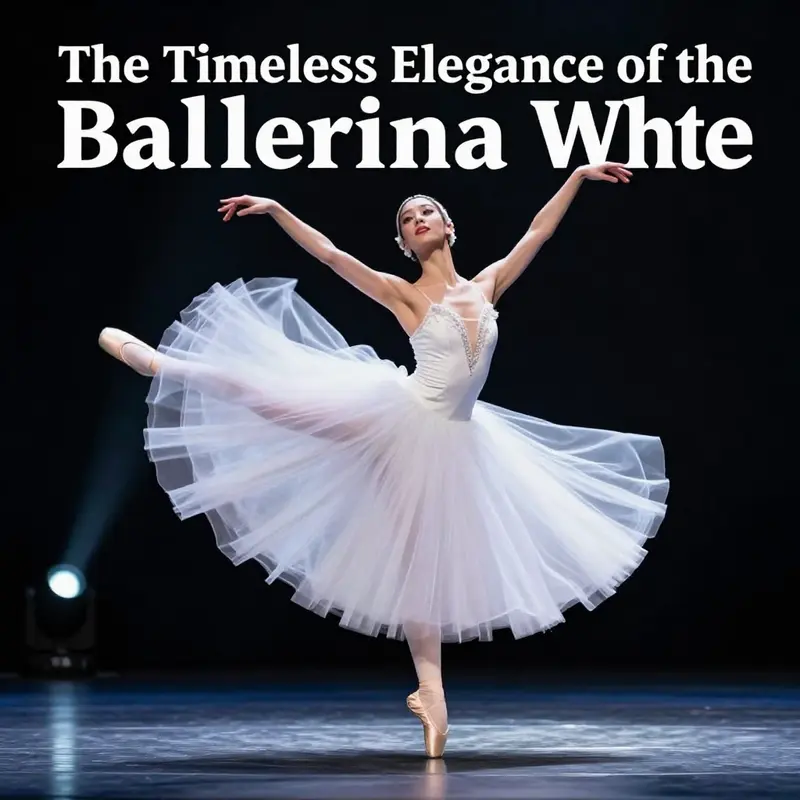
The white tutu is more than a garment. It is a language spoken in fabric and light, a guiding frame through which the dancer’s body translates music into visible form. In the discipline of ballet, where every gesture is measured to the heartbeat of the score, the white tutu operates as a strategic ally. Its sheer whiteness acts as a blank canvas upon which the dancer’s lines, extensions, and balances can be read with surgical clarity. When a dancer lifts a leg into an arabesque or carves a precise turn across the stage, the silhouette of the tutu helps the audience perceive the intention behind every angle, every micro-shift of weight. The garment contributes not by drawing attention to itself, but by sharpening the focus on technique and execution. In this way, the white tutu embodies a paradox that is central to classical ballet: something that appears modest and restrained on the outside can illuminate the highest degrees of athletic precision within the body beneath it.
The historical arc of the white tutu is inseparable from the century that shaped ballet’s modern form. In the 19th century, as choreographers reimagined the grammar of movement for larger stages and higher technique demands, the tutu emerged as a design solution that could articulate both lyric line and dramatic intent. The earliest white tutus in formal repertoire were not merely costumes; they were instruments for storytelling. They required a certain stiffness, a precise sweep that would hold its shape under bright stage lighting and the audience’s gaze. The short, structured silhouette—often supported by multiple layers of tulle—brought a new legibility to movement. Movements that might have dissolved into fabric in softer skirts remained crisp and legible because the tutu translated weight shifts into visible contours. In productions that have since become canonical, such as Giselle and Swan Lake, white tutus became more than wardrobe: they crystallized the ideal of purity and disciplined grace that audiences came to expect from the fullest expression of classical ballet.
To understand why white is so powerful on stage, one can begin with the way light interacts with fabric. White reflects rather than absorbs, and the tutu’s net and tulle create a surface that catches and refracts light with a delicate, almost crystalline quality. This interaction makes the dancer’s lines appear more precise, the legs and feet more defined against the backdrop of the orchestra. When a pirouette unfolds, the tutu’s stiff silhouette helps to hold the leg’s position cleanly in space, so the audience can track the precise timing of each turn. The tutu’s structure does not obscure. Instead, it clarifies. It is not a veil over movement but a scaffold that supports the articulation of form as music unfolds. The choreography becomes the melody, and the tutu translates that melody into a visible map of technique for those watching.
The white tutu’s design is not arbitrary. It is optimized for both aesthetics and function. The layers of gathered tulle are carefully tightly arranged to create a buoyant yet controlled fullness. The waistline is reinforced, not merely to secure the garment but to distribute weight evenly, preventing sag and ensuring the silhouette holds its intended shape during leaps and balances. This is especially important in classical repertoires where the choreography demands crisp extensions and precise line from the shoulders through the hips to the toes. A tutu that loses its stiffness mid-performance can blur a dancer’s lines, breaking the visual precision that is essential to storytelling in these works. A high-quality white tutu is thus as much a technical ally as a ceremonial costume. It bears the dancer’s effort in a way that spectators can perceive, even from the furthest row of a grand theater.
In discussing the tutu’s form, it is important to acknowledge the dual symbol it carries. On the one hand, the whiteness of the tutu is associated with purity, ethereality, and the almost otherworldly status of the principal dancer. On the other hand, the tutu is a symbol of discipline and craft. The dancer’s body is trained to perform within its constraints; the tutu, in turn, is manufactured to accommodate those trained shapes. The classic white tutu does not hide how hard the body works. It makes visible the line, the reach, and the control that are the essence of classical technique. In this sense, the tutu is not a mere costume. It is a partner that complements and sometimes challenges the dancer, forcing clarity of line and economy of movement that the audience can read with immediate comprehension.
The historical weight of white tutus also informs their continued status in classical ballet. The most celebrated productions in the canon—where the white tutu is not simply a costume choice but a tradition—relate to a set of expectations about form, symmetry, and the seamless flow of movement. The visual language of whiteness supports the storytelling by reducing visual noise. When a company mounts Swan Lake or Giselle in their most formal form, the white tutu becomes a unifying thread that connects generations of dancers and audiences. The silhouette—short, upright, and sparingly adorned—invites the audience to focus on the dancer’s ability to maintain posture through the rigorous demands of the score. The result is a performance that feels both pristine and intensely human, with the dancer’s choices still audible in the cadence of breath and the timing of a jump.
Historically, the white tutu’s prominence also reflects a broader aesthetic of ballet as a pursuit of idealized form. In the romances that many ballets tell, whiteness suggests a purity of aspiration, an unblemished surface upon which the drama can unfold. Yet whiteness does not erase tension; it amplifies it. When the music crescendos and the dancer vaults into an adagissimo sequence, the white tutu’s structure becomes the stage on which the tension of the moment is played out. The garment’s edge—its hem, its stiffness, the way the tulle catches the air—becomes part of the narrative. This is why the tutu’s maintenance is essential. Any looseness or fraying would betray the very sense of precision that the piece demands. As with any instrument, care in preparation—care in cleaning, storage, and fitting—ensures that the tutu can perform at the highest level for each performance.
The discussion of white tutus cannot ignore their role in rehearsal culture. In rehearsal, the tutu’s function extends beyond its appearance. It serves as a constant reminder of discipline and technique. Students learn to coordinate movement with the garment’s mass and stiffness, learning to harness gravity in order to maintain clean lines. The practice room becomes a laboratory where every repetition hones muscle memory that will translate to stage confidence. In rehearsals, the whiteness of the tutu also helps instructors assess alignment and line. Subtle deviations in hip or shoulder position become more visible when the silhouette is unadorned and uniform. The tutu, then, is a pedagogy—a living tool that communicates the ideals of classical ballet through its own form.
There is a paradox at the heart of the white tutu’s appeal. It appears simple and restrained, and yet it demands an extraordinary level of technique to be perceived as simple. A dancer can move with the same energy and complexity under a different costume, but the white tutu invites a particular scrutiny. The eye is drawn to the quantifiable aspects of performance—the exactness of a retire, the extension of a leg, the lift of the spine. In that sense, whiteness is a magnifying glass; it does not diminish the dancer’s response to music but rather heightens the visibility of the dancer’s decision-making. When the audience sees a perfect turnout in a grand battement, or a flawless alignment in a fourth-position plie, the white tutu helps to communicate not just the beauty of the movement but the fidelity with which the dancer has internalized the choreographic logic.
The design and symbolism of the white tutu also inform its future within both traditional and contemporary repertoires. Even as modern choreographers experiment with color, texture, and silhouette to express new ideas, the white tutu remains the benchmark for formal classical presentations. Its enduring presence signals a respect for lineage and technique, while its continued use underlines a belief that certain formal truths about balance, line, and rhythm endure across generations. Some contemporary pieces may incorporate color or hybrid forms, yet the white tutu’s role as the standard-bearer for formal classical work persists. Its relevance is not only historical but functional: it anchors the stage picture, allowing movements to be measured with the same clarity by audiences and by critics who seek to understand how technique translates into performance.
If one looks beyond the body to consider the broader ecosystem of ballet, the white tutu also interacts with other elements of production. Lighting design, stage geometry, and even the auditorium’s color palette contribute to how the tutu reads in performance. Clothing, which may seem static, in fact becomes a dynamic partner when the lights shift and the orchestra nudges the tempo. A white tutu under a bright, cool wash can read differently from the same tutu in a warm, amber glow. Designers and choreographers anticipate these readings as they map out a production. They understand that the tutu’s whiteness can either consolidate a dramatic, pristine image or reveal a more ethereal, dreamlike state depending on the optical choices of the production team. In this collaborative sense, the tutu is a catalyst for a cohesive, interpretive experience that unites movement, lighting, space, and sound into a single language.
The craft behind a white tutu deserves close attention, particularly for dancers who intend to specialize in classical repertory. High-quality tutus are crafted with meticulous attention to the gathered layers of tulle, the stiffness of the fabric, and the durability of the waistband. The materials must withstand the energy of repeated rehearsals and the high demands of live performance. The craftsmanship ensures that the silhouette holds true whether the dancer is executing a rapid ensemble of pirouettes or performing a restrained, poised pose. These technical choices—from the density of the tulle to the method of attaching the layers to the waistband—translate into confidence for the dancer. When everything is aligned—the fit, the weight distribution, the fabric’s response to air and heat—the dancer experiences a trust in the equipment. The stage becomes a place where technical choices can be executed with clarity because the garment supports rather than complicates the movement.
Historical costume design in ballet also reflects social and artistic shifts. The white tutu, with its unembellished surface, was long associated with the idealized female form in classical storytelling. It embodies a certain purity of aesthetic, yet it also invites a nuanced interpretation. In some productions, the tutu may be tailored to highlight the dancer’s physique more than to conceal it; in others, the silhouette remains conservative, preserving the tradition that has shaped audiences’ expectations for generations. The tension between tradition and innovation is not a contradiction here but a continuum. While the white tutu remains the gold standard for formal classical performances, its usage in contemporary works reveals an evolving understanding of how costume communicates character and mood. The tutu can be a portal through which new choreographic ideas enter, while still preserving the essential clarity that whiteness provides.
For those who study ballet or who regularly attend performances, the white tutu offers a tangible link to the discipline’s formal roots. Its history is not merely a chronological record but a living influence on how dancers train, how choreographers conceive movement, and how audiences experience the art form. Watching a dancer perform in a white tutu invites the viewer to appreciate the choreography not as a sequence of steps but as a refined conversation among body, sound, and light. The tutu’s whiteness helps to strip away extraneous ornament, enabling a focused appreciation of technique as expressive grammar. In that sense, the tutu’s power lies in its restraint; its ability to reveal the precise, deliberate choices that constitute mastery.
An observer may note that the white tutu is not the same as a fantasy costume with glittering embroidery or color-saturated fabrics. Its beauty resides in its quiet confidence. The absence of embellishment invites the audience to listen to the music more closely and to watch the body’s quiet decisions—the slight tilt of the head, the almost imperceptible breath taken before a jump, the way a dancer harnesses momentum to glide from one pose to the next. Those subtleties are what many critics and historians point to when they discuss why the white tutu endures, why it continues to be the baseline against which all other dress choices are judged. It is a standard not only of taste but of technique—a measure by which ballet’s ongoing dialogue with itself is conducted.
To bring this back to a practical note for performers and students, the whiteness of the tutu is not a guarantee of simplicity. It is, instead, a reminder of the demand for consistency in technique. It requires a commitment to precise alignment, to the careful management of energy and breath, and to the discipline of maintenance that keeps the garment poised for performance. This is why the tutu is a source of pride for dancers who carry its history with them into every rehearsal and every curtain call. When a dancer steps onto the stage in a white tutu, they are not just wearing a costume. They are stepping into a lineage of artists who have used the simplest of tools to reveal some of the most complex human feats—the capacity to transform music into something both visible and profoundly moving.
For audiences, the effect of the white tutu is often to heighten the sense of the ballet as a ceremonial, even sacramental event. The formality signaled by white fabric on a classical stage can create a sense of occasion that invites emotional engagement while also encouraging rigorous attention to technique. In the quiet, measured cadence of a pas de deux or the crisp, ceremonial precision of a corps de ballet, the tutu helps to maintain a shared visual vocabulary. It becomes a familiar rhythm in the complex symphony of motion and sound, a constant that allows both performers and spectators to rest in a common frame of reference even as the story unfolds. In this way, the white tutu stands as a paradox again: it is a simple thing, and yet it makes possible some of the most intricate and luminous moments in ballet.
To return to the practical, the white tutu is also a reminder of the importance of quality education and training in ballet. The possibility of achieving the clean lines and exact timing that the tutu rewards rests on years of study, repetition, and refinement. It is a symbol of the discipline that is expected in classical repertoire, one that students accept as part of a long apprenticeship. The tutu, in this context, becomes a marker of progress: its shape changing subtly as a dancer’s technique evolves from student to apprentice to mature artist. It is a signpost that points toward mastery, a constant that anchors a dancer’s journey toward the high standard that the art form requires.
For readers who may be curious about how white tutus connect to specific repertoires beyond Swan Lake and Giselle, one can think of the broader lineage of classical works where this garment has earned its place in the canon. The white tutu remains a staple for formal performances because it supports the clarity of storytelling that these pieces demand. When audiences watch a production that respects tradition while inviting thoughtful interpretation, the white tutu becomes more than costume—it becomes a conduit for the music, the choreographic intention, and the dancer’s craft. In that sense, the tutu is a keeper of memory and a beacon for future dancers who will continue to carry its symbolic and technical responsibilities forward into new stages and new audiences. It is a reminder that beauty in ballet—far from being a mere surface attribute—often resides in the disciplined, deliberate choices that together create the illusion of effortless movement.
The practical and symbolic dimensions of the white tutu converge in the experience of performance, where the garment’s quiet authority allows the dancer’s artistry to shine with maximum clarity. It is this convergence that continues to define the tutu’s status as an enduring emblem of classical ballet. Though fashion and design may evolve, the tutu’s fundamental role in shaping how movement is perceived remains steadfast. In a world where audiences are increasingly looking for authenticity and physical storytelling, the white tutu offers a direct, powerful channel for communicating the dancer’s commitment to the craft. It invites viewers to look not at the garment itself but through it—to observe how technique, breath, and expression come together to reveal the essence of ballet.
To explore related visual references and broader costume contexts within the same ballet tradition, readers may consider viewing the Swan Lake costume theme as a point of comparison and continuity. Swan Lake tutu category offers a window into the practical variations available within a white-tutu framework, while maintaining the formal standard that anchors classical performances. This linkage highlights how tradition informs contemporary choices, and how a single wardrobe item can carry centuries of performance history while still adapting to today’s stage demands. For broader reading on the philosophical and practical rationale behind white tutus, external perspectives like the discussion on why white ballet tutus are the ultimate choice provide valuable context and critique. External reference: https://www.balletbeyond.com/why-white-ballet-tutus-are-the-ultimate-choice
The Silent Architecture of the White Tutu: Craftsmanship, Design, and Stage Poise in Ballerina Attire
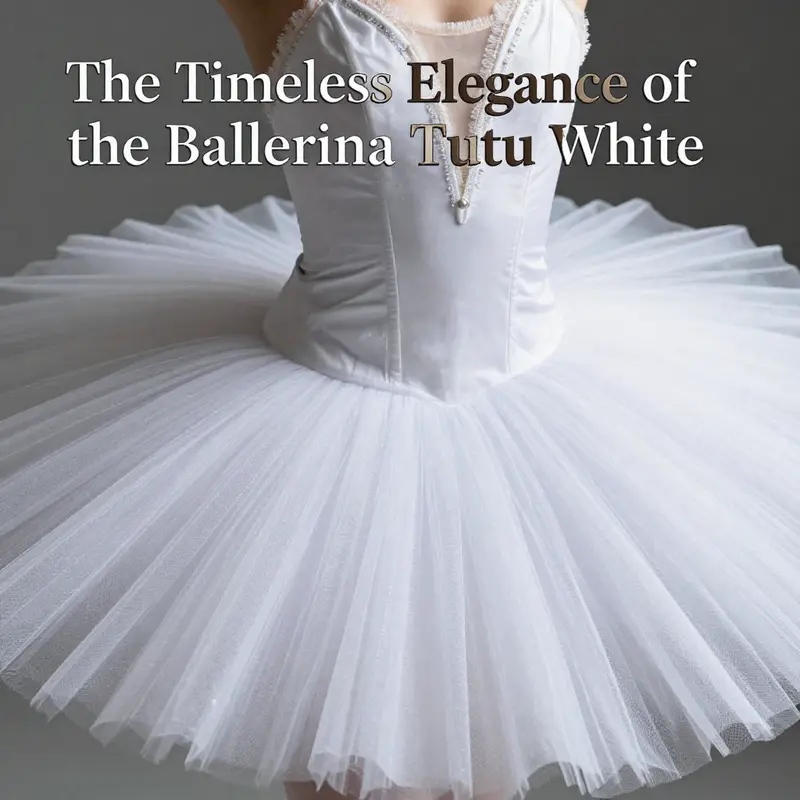
A white tutu is not simply fabric arranged around a dancer’s hips; it is an instrument built for precision, balance, and the storytelling pulse of ballet. When light hits the layers of tulle, the garment seems to exhale a quiet discipline, a kind of latticework that translates the dancer’s every extension, turn, and leap into a visual line that reads clearly from the far wings to the front row. In classical repertoires, the white tutu is both a beacon and a constraint. It must celebrate the leg’s range and the spine’s alignment, while remaining utterly faithful to the character’s mood and the production’s dramaturgy. This combination of beauty and exactitude marks the tutu as a study in craft as much as a piece of stage attire. The whiteness itself is more than color; it is a cultural shorthand for purity, discipline, and the timeless grace that generations of dancers have pursued in unison. Yet beneath the luminous surface lies a rigorous engineering that makes the illusion possible.
At the heart of the tutu’s allure is craftsmanship. The workroom where tutus are born is a site of patient, almost silent, labor. In this space, movement is anticipated before it happens, and fit becomes performance. The process begins with the careful selection of materials. The bodice, often crafted from Lycra or similar stretch fabrics, must grip the torso securely enough to hold the dancer in place during abrupt changes of direction, but still yield to the pliancy required by grand jetés, piqués, and multiple spins. The skirt, a cascade of lightweight tulle, must rise and fall with the dancer’s rhythm while preserving a crisp silhouette that refuses to collapse under heat, sweat, or the pressure of repeated rehearsals. The layering is not decorative fluff; each tier performs a kinetic role. Too many layers can hamper movement; too few can undermine the line and resilience that the choreography demands. Skilled makers balance these variables with the same care that a luthier uses to tune strings. The result is a tutu that feels almost invisible to the dancer, yet becomes indispensable to every gesture the performance requires.
The craft surrounding the white tutu is deeply rooted in tradition, yet not immune to modern refinements. The Royal Ballet’s Revival Workroom, cited in contemporary discussions of tutu making, is a touchstone for understanding how reverence for technique coexists with evolving standards of fit and durability. The makers here are not simply seamsters; they are custodians of an evolving vocabulary of methods. Techniques are handed down through generations, refined in response to the dancer’s evolving bodies and ever-changing stage technology. This lineage confirms that a tutu is not a static artifact but a living artifact of a living art. The bodice, for instance, is guided by a precise geometry that accommodates a dancer’s range of motion while supporting posture and core integrity. The waist is reinforced to endure hours of practice and sustain the tension that keeps the silhouette impeccably crisp across performances. The stitching, too, carries a quiet authority. It must be strong enough to withstand the stress of leaps and turns, yet delicate enough to preserve the sheer, translucent quality of the tulle. The balance between strength and suppleness is a constant negotiation, a dialogue between fabric and function, between a dancer’s breath and a seam’s intention.
In terms of design, modern white tutus extend beyond the traditional box-like layers that defined earlier eras. Contemporary designers aim to harmonize functionality with stage presence. The tutu remains highly customizable; sizing can be tailored to each dancer, ensuring a stable fit that respects long rehearsal days and the physical realities of different bodies. The bodice is often structured with a sculpted silhouette, providing upper-body support that is essential when arms trace long lines or when the neck engages in expressive angles. While white conveys purity, designers incorporate nuanced features to manage lighting and texture. Subtle ivory shading, pearl embroidery, or pale silver thread can catch the stage lights without overpowering the monochrome field. Such details are not mere decoration but strategic choices that influence perception from the orchestra pit up to the highest balcony seats.
Lighting plays a decisive role in how the white tutu communicates on stage. In the way light interacts with fabric, texture and translucence become storytelling tools. A soft, even wash can reveal the tutu’s geometry, making each layer’s edge read as a clean, continuous line. A sharp, high-contrast beacon can carve out a dancer’s leg lines, intensifying the perception of height and extension. Designers often choreograph the tutu’s moments to line up with the lighting cues of a production, recognizing that a white surface will reflect and refract in ways that reinforce the character’s expressive arc. The tutu thus becomes part of the lighting design, not merely a garment that wears the dancer. This collaborative dynamic between costume and lighting technicians is a testament to the way ballet integrates craft disciplines to serve storytelling with exactitude.
Beyond the stage, the tutu’s design language travels through time and memory. The ornate, decorative possibilities that sit alongside the white foundation speak to ballet’s long history of ritualized performance. Even as contemporary companies push toward faster, more athletic display, the white tutu remains the anchor that communicates lineage and form. In this sense, the tutu functions as a bridge between past and present: a piece of clothing that is at once familiar to audiences and deeply specialized for the demands of a tested repertoire. The memory of classics such as Swan Lake or The Nutcracker informs today’s design decisions, guiding the balance between noble restraint and dynamic risk. The silhouette must honor the choreography while providing space for the dancer’s voice to emerge—an interplay of memory and improvisation that lives at the edge of every performance.
There is also a broader ecosystem around the white tutu that reaches beyond the visible fabric. In practice, tutu design involves meticulous patterning, precise cutting, and careful testing on dress forms and, eventually, on dancers themselves. The waistbands, often reinforced with durable materials, anchor the tutu to the body, while the tulle layers are cut and layered with a sense of choreography in mind. The interplay between the bodice and the skirt is not accidental; it is crafted to support impeccable lines without constraining breath, shoulders, or the torso’s essential mobility. The modern tutu embraces a synthesis of traditional handcraft with emerging production techniques. Mannequin displays, for instance, allow designers to visualize how the garment will perform under stage lighting before a single stitch is made on the final piece. OEM services also make it possible for choreographers to collaborate with makers who can translate a dancer’s character into a costumes with precise, reproducible specifications. In short, the tutu is a product of both hands and numbers—a rare combination that makes artistry reproducible without becoming mechanized.
There is also a decorative and nostalgic current that threads through the white tutu’s story. Miniature versions found in music boxes or collectible displays speak to the cultural symbolism that ballet has wrought over centuries. Even when these items are not worn, they reflect how the tutu has become a talisman of grace and narrative. The fascination is not purely visual. It extends to the engineering beneath the gloss: the way the layers stack, the way the waistbands clasp, and the way stiffener or interlining shapes the pieced architecture. This is the quiet magic of the tutu: a garment that communicates through tension and release, stiffness and drift, discipline and freedom. The tutu’s whiteness casts a generous, reflective surface that allows light to narrate the dancer’s every turn, inviting the audience to read intention in the smallest tilt of the head or the sharpest kick of the foot.
For readers who are seeking a practical sense of how design decisions translate into wearability, a look at the basic tutu category can be instructive. It reveals how materials, proportion, and finishing techniques are scaled for different levels of performance and experience. The basic structure—a bodice, a waistline, and multiple tulle layers—remains constant, but the details shift with purpose. A recital piece may require a lighter, more flexible construction for speed and ease, while a full-length production might favor a stiffer silhouette to preserve line through long acts. Even within the same color field, the subtleties of weave, edge finishing, and texture can alter how the tutu catches light and how it feels against the skin during hours of movement. In this way, the white tutu embodies a philosophy of design: clarity of form, fidelity to purpose, and respect for the dancer’s physical needs.
The chapter of necessity and beauty that the white tutu embodies is not finished with its visible edges. Behind the scenes, the conversation between designer, maker, and dancer continues to evolve. The tutu prompts questions about how bodies move in space, how costumes influence that movement, and how design can honor both physiology and expression. When a dancer enters the stage wearing a white tutu, the audience experiences not only a moment of visual poetry but also a history lesson in fabric engineering, pattern making, and collaborative artistry. The whiteness frames the energy of the performance; the construction sustains it. In this sense, the tutu’s quiet drama lies in its capacity to be both a reveal and a shield—revealing the dancer’s intent through a transparent cascade of tulle while shielding the body from distraction and fatigue. The result is a garment that is not merely worn but inhabited, a moving extension of the dancer’s will that reads as one of ballet’s most enduring signs of mastery.
As productions continue to push the limits of speed, flexibility, and storytelling, designers are mindful that white tutus must adapt without losing their essential identity. The craft remains anchored in the old conversation between fabric and form, but it welcomes innovations that enhance fit, durability, and visual effect. The modern tutu can accommodate longer runs, more physically demanding choreography, and more elaborate lighting schemes, all while preserving the iconic silhouette that audiences have learned to recognize with every revival. The work is to keep the balance intact: to honor the discipline of the dancer, the elegance of the art form, and the integrity of the garment itself. In this ongoing dialogue between tradition and invention, the white tutu persists as a visual language—the language of lines, light, and the breath that sustains a body in motion. It is, in the fullest sense, the silent architecture of ballet’s most enduring moments.
External resource: https://www.balletworld.com/professional-tutu-design-standards
White Tulle, World on Tiptoes: The Cultural Significance of the Ballerina Tutu in Dance and Society
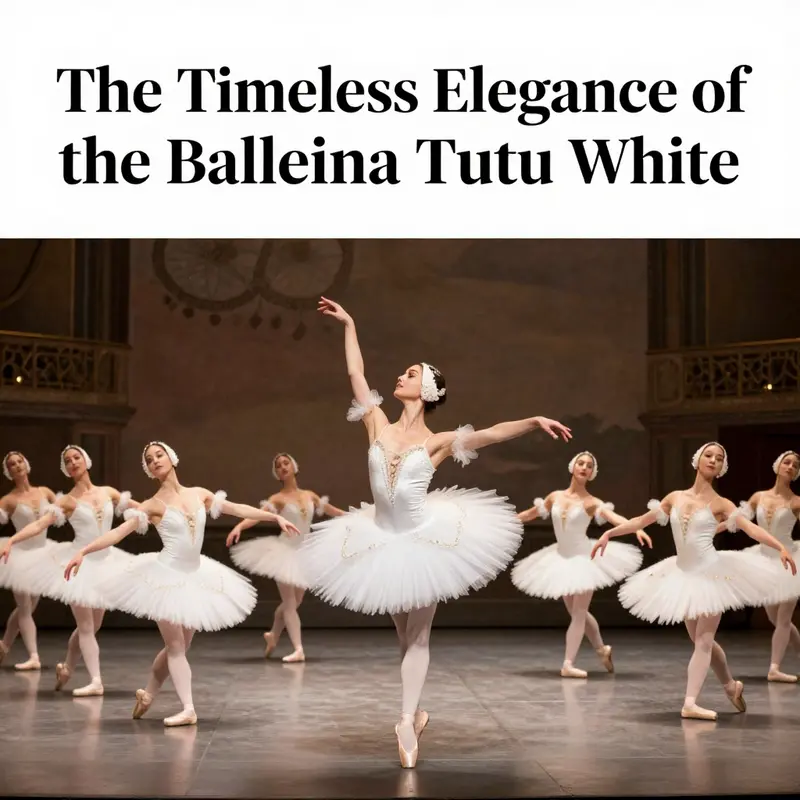
The ballerina tutu, in its purest white, has long stood as a visual hinge between artistry and culture. It is more than a costume; it is a vessel that carries centuries of ideas about beauty, discipline, and the human capacity to transform technique into perception. When a dancer steps into a white tutu, the room shifts: light threads catch the air, the silhouette tightens into precise lines, and time seems to both slow and accelerate with every plié, turn, and leap. The tutu’s whiteness amplifies what the eye already expects from classical ballet—the impression of an ethereal body moving with exactitude and inevitability. Yet that whiteness also invites scrutiny. It is a color loaded with cultural associations about purity, innocence, and the fragility of the ideal. To watch a dancer in a white tutu is to witness a negotiation between aspiration and reality, between the dream of effortless grace and the real labor of strength, endurance, and craft that makes such grace possible. In that tension lies the tutu’s enduring power as a symbol not only for ballet, but for how society contends with ideals of femininity, form, and performance.
Historically, the white tutu did not emerge as a blank uniform but as a deliberate evolution in ballet dress during the 19th century. It crystallized during the Romantic era, a period when dancers were elevated from virtuosi of movement to figures of myth and moral imagination. The layered, full skirts of earlier courtly costumes gave way to a shorter, stiffer garment that could hold its shape under the demanding mechanics of the body in motion. The white color was chosen with purpose; it suggested a world beyond the ordinary, a realm of purity, transcendence, and otherworldly beauty. The tutu announced a shift in how the body was to be seen: not as a hidden engine beneath heavy fabric, but as an articulation of line and intention. The white tutu did not merely cover; it revealed. By reducing the visual noise around the legs, it allowed audiences to read the dancer’s technique more clearly—the precise angle of a leg, the extension of the foot, the crisp position of a hip. It was a design that rewarded discipline and punished deviation, a mirror that demanded clarity of purpose from both performer and viewer.
The design itself—short, stiff, and constructed from multiple layers of tulle—was chosen for both aesthetic and functional reasons. The stiff silhouette keeps the fabric from fluttering with every movement, allowing the observer to detect the dancer’s exact lines as they unfold. This is not mere ornament; it is a surgical instrument for perception. The layers of tulle create a lush texture, but the overall form remains compact, so the dancer’s torso and arms stay conspicuously on display. The waistbands are reinforced to withstand hours of practice and repeated crashes into pirouettes and balances. All of this matters because the tutu becomes a map of intention: where the dancer places a leg, where the torso remains aligned, how breath feeds into balance, and how the body translates fatigue into flight. When the tutu shines white under stage lights, it frames the dancer as a living sculpture, a vessel for a storyline that unfolds through movement rather than spoken word. The garment, in short, is a partner in the art form—one that demands precise cooperation between fabric, body, and choreography.
Beyond the stage, the white tutu has become a cultural emblem that travels far beyond the theatre. It has appeared in films, photographs, fashion editorials, and public celebrations of dance as a universal language. In popular culture, the tutu’s whiteness often conjures an ideal of femininity that is at once approachable and aspirational. This is not to say that the image is universally celebrated without critique. Critics point out that the tutu can symbolize a form of beauty that foregrounds surface and carnet-like perfection, sometimes at the expense of acknowledging the dancer’s full labor, risk, and resilience. The tutu’s form can obscure the strenuous training, the repeated injuries, the sleepless nights spent refining a single phrase. The tension between display and diligence is part of what makes the white tutu so compelling as a cultural symbol. It is a reminder that the public face of art is inseparable from private discipline, from the innumerable hours poured into turning raw potential into a polished, public product.
As a cultural icon, the white tutu embodies a constellation of meanings that have shifted as social ideas about gender, power, and artistry have evolved. It represents an ideal of feminine grace that has often been valorized in Western art and media. Yet within that ideal lies the possibility of critique: the image can reinforce traditional gender roles by presenting women as objects of beauty and spectators as judges. This critique does not indict the art form as a whole; rather, it calls attention to the ways in which visual tropes shape our expectations of performers. The tutu’s silhouette can accentuate vulnerability while simultaneously enabling extraordinary feats of strength. The discipline required to achieve even the most effortless-looking movement is one of the art’s deepest secrets, and the tutu, by drawing the eye to the dancer’s core lines, makes this hidden labor visible to audiences who might otherwise take artistry for granted. In this sense, the white tutu acts as a mirror for society’s evolving understanding of what constitutes beauty, skill, and female agency in performance.
In modern interpretations, the white tutu remains a cornerstone of classical ballet, but its meaning is no longer fixed. Contemporary choreographers often treat the tutu as a flexible sign, capable of revealing new narratives or challenging old ones. They might preserve the form while altering its physical properties, combining it with unexpected materials, or placing it within non-traditional contexts to question established conventions. The whiteness that once signified purity can be reinterpreted to express resilience, rebellion, or ambiguity. Some productions use the tutu to explore ideas of memory and lineage, as if the fabric carried generations of dancers within its fibers. Others play with the idea of color as a counterpoint to tradition, introducing red, black, or even iridescent shades to evoke different emotional terrains. This dynamic tension—between reverence for a venerable form and curiosity about reinventing it—keeps the tutu relevant in a world that increasingly questions inherited symbols. In effect, the white tutu acts as a canvas, inviting both performers and audiences to reinterpret what beauty means in a living art form that continues to grow in breadth and depth.
The tutu’s influence extends well beyond the stage because it sits at a crossroads of culture and identity. In film, the white tutu can function as a shorthand for a mythic past or an idealized present, depending on how the camera frames the dancer and how the music frames the moment. In fashion, designers borrow the tutu’s geometry to explore notions of texture, layering, and silhouette, translating dance’s vocabulary into garments that speak to movement even when still. In visual art, the tutu becomes a symbol for the body’s capacity to contain and release energy, a praise of the body’s architecture and its lines. In the broader public imagination, the tutu helps educate audiences about ballet as a discipline that blends athleticism with artistry, technique with emotion. It makes visible the long history of dance while inviting new audiences to encounter it through a language that feels both familiar and extraordinary.
To understand the tutu’s impact in a contemporary cultural landscape, it helps to consider its role as a living archive. Each performance situates a dancer within a lineage of artists who have worn the same white skirt and moved with the same requirement to honor the score. Yet each generation redefines that requirement in small but meaningful ways. A dancer might preserve the purity of the classic line while infusing a phrase with modern sensibility, or a choreographer might map a narrative that reframes the tutu’s whiteness as a space for contemplation about history, memory, and identity. In this sense, the white tutu remains both anchor and sail: a stable reference point for technique and tradition, and a vessel by which dancers navigate new ideas about who can tell which stories, how those stories are told, and for whom they are meaningful.
In the ongoing dialogue between tradition and innovation, the tutu’s whiteness is less a limiter than a lens. It frames what audiences expect to see when a dancer steps onto a stage and what they come away with after the curtain falls. The lens can magnify the beauty of technical precision, or it can reveal the complexities of training that make that beauty possible. The tutu, in its simple elegance, makes room for spectators to notice the interplay between control and risk, between the dancer’s private hours of work and the shared public moment of resonance. This is not merely a matter of aesthetics; it is a matter of cultural literacy. How we read the white tutu—its texture, its silhouette, the way light plays across its surface—tells us something about our own collective relationship to art: that beauty is rarely purely decorative, that it grows from rigorous practice, and that it travels through time as a living conversation rather than a fixed invitation.
For those who seek a tangible connection to this heritage, the white tutu remains a reliable entry point. It is easy to recognize in its simplest form, yet difficult to master in practice, and even more intricate to interpret in meaning. As audiences encounter the tutu in both classical performances and contemporary reimaginings, they participate in a larger cultural dialogue about how beauty and strength can coexist on the same stage. To appreciate the tutu is to appreciate the dancer’s body as instrument and symbol, the choreography as a sequence of choices that reveal character and narrative, and the audience as co-creator of a shared moment of transformation. The white tutu, then, is not merely a garment; it is a doorway into a history of art, a present tense of performance, and a future-facing invitation to imagine how dance will continue to shape and be shaped by society.
Within this evolving landscape, one can observe a subtle but persistent pattern: the tutu’s whiteness frequently serves as a yardstick by which new ideas are measured. When a company produces a revival that stays faithful to the original staging, the white tutu reinforces a sense of reverence for the past. When a production experiments with form, color, or narrative, the same garment becomes a marker of risk and inquiry. In either scenario, it remains a central figure in the choreography of meaning. The audience, too, plays a role in translating those meanings into personal resonance, whether through quiet awe, critical reflection, or an awakening of curiosity about the craft that supports such spectacle. The tutu’s whiteness is thus not a passive attribute; it is an active prompt for discussion about craft, gender, and the social life of performance.
In thinking about the tutu as a cultural artifact, it is worth acknowledging a broader artistic ecosystem that surrounds it. Institutions that preserve and study ballet costumes emphasize the careful craftsmanship involved in creating a garment that can endure countless rehearsals, outfits, and stage directions. The tutu’s survival over decades and across generations speaks to a shared reverence for the discipline ballet demands and a recognition of the garment as a carrier of memory. The whiteness itself, while offering clarity on stage, invites scholarly inquiry into the symbolism of color, the politics of representation, and the evolving standards of beauty across cultures. When viewed through this lens, the white tutu becomes a case study in how a single object can traverse the lines between art, culture, and history, shaping expectations while inviting continuous reinterpretation.
As this chapter threads through history, design, iconography, and critique, it makes a case for why the white tutu endures as an anchor for conversations about dance and society. It is a garment that invites awe and invites debate, that demands both reverence for tradition and courage for revision. The tutu’s whiteness is a field of tension where the eye rests long enough to notice form, breath, and intention, then moves on to wonder about what lies beyond the fabric—the stories of dancers who bear the weight of a lineage and the audience who receives those stories with empathy, wonder, or challenge. In that continuous loop of seeing and being seen, the white tutu remains a fundamental explorer of how art communicates, how bodies perform, and how culture absorbs, reshapes, and reimagines both beauty and labor across time.
For readers who wish to explore a related visitation to a curated collection that foregrounds the theme of this chapter, the Swan Lake tutu category offers a relevant point of reference that echoes the lineage described here. You can explore that collection here: Swan Lake tutu category.
To deepen understanding of the historical arc and symbolic meanings discussed, a foundational external resource is The History of the Ballet Tutu from the Victoria and Albert Museum, which traces the evolution of the costume from its Romantic roots to contemporary reinterpretations: https://www.vam.ac.uk/articles/the-history-of-the-ballet-tutu.
Final thoughts
The white ballerina tutu stands as a symbol not only of the aesthetics of ballet but also of the intricate craftsmanship and cultural narratives intertwined with dance. Recognizing its significance can empower businesses to align their products with the rich tradition and passion of the ballet world. As the dance community continues to evolve, the tutu remains a powerful reminder of the elegance and artistry that ballet champions.