
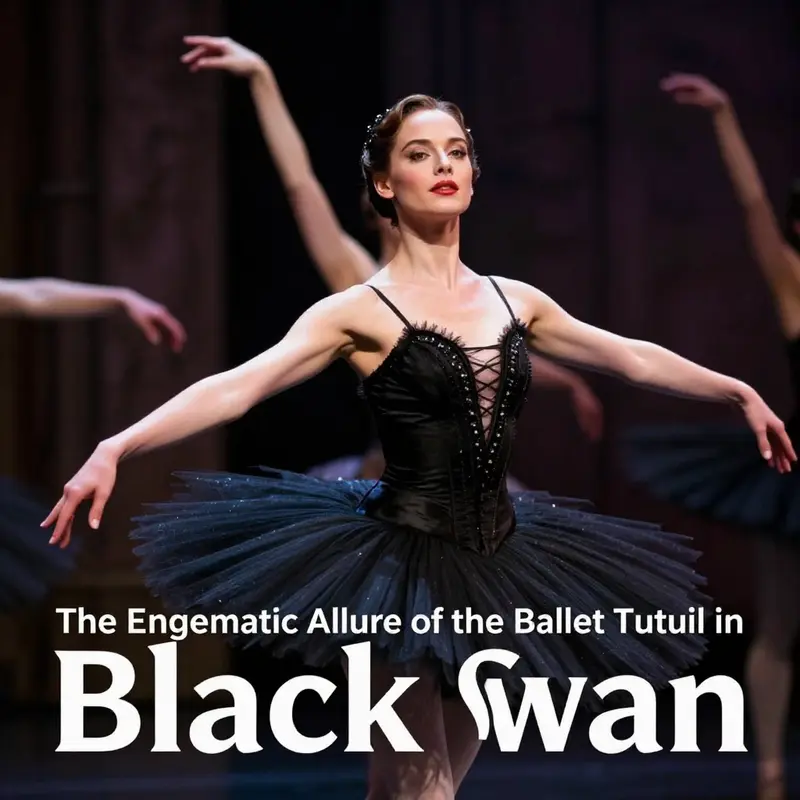
The iconic black tutu from the 2010 film Black Swan has transcended the screen, becoming a symbol of artistry, transformation, and dark elegance. This captivating costume, worn by Natalie Portman as she portrayed Nina Sayers, is a study in the duality of character—a blend of innocence and seduction that is central to the film’s narrative. As we delve into the intricate costume design, the thriving market for reproductions, its profound cultural impact, and the technical aspects behind its creation, we unveil the layers of meaning and significance this garment holds within the realms of fashion and film. Each chapter offers insights into how this costume not only represents a character but also influences trends and inspires artisans in the costume design industry.
Shadows in Tulle: The Black Swan Tutu as a Ballet of Duality and Cinema
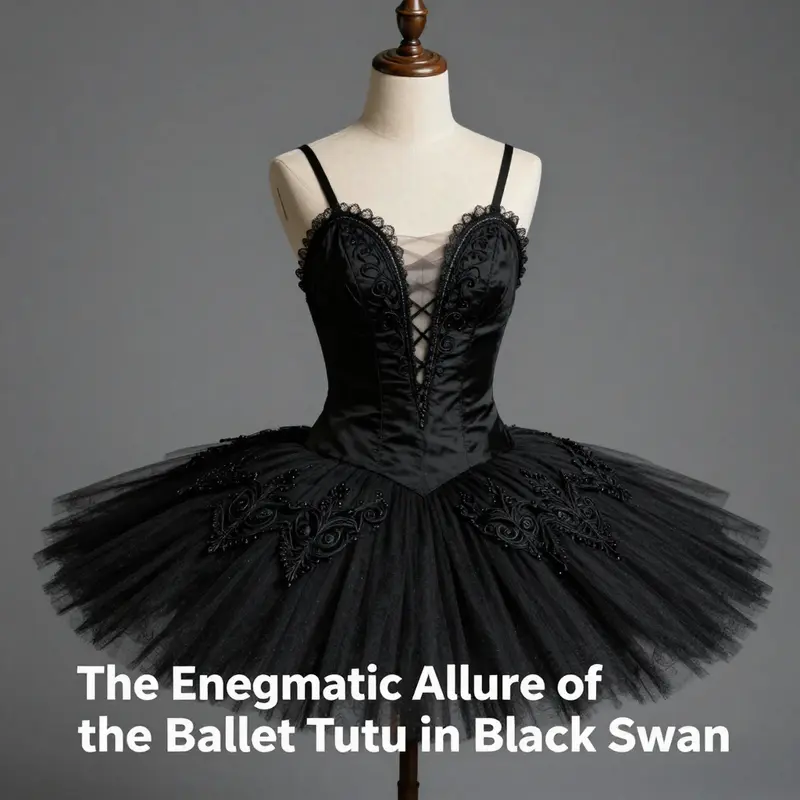
A single garment can carry a storm. In Black Swan, the black ballet tutu does more than clothe a dancer for a climactic ascent into character. It acts as a visual punctuation mark for Nina Sayers’s psychology, a textile map of desire and danger that mirrors the film’s long, breath-held seesaw between control and delirium. The image of a dancer in a white, pristine tutu had long stood for classical purity, a tableau of technique and restraint. But when Nina’s journey turns toward the shadowed edge of performance, the costume world tilts with her. The black tutu that follows her transformation is not a mere color swap or a fashionable twist; it is a deliberate reframing of the ballet body, a new silhouette that encodes appetite, seduction, and the primal music of fear. The choice to shift from white to black tracks the narrative arc from disciplined form to liberated, dangerous expression, and it does so with a decisiveness that registers first in the eye and then in the mind.
The design team behind Black Swan—most notably the Rodarte collaborators, the Mulleavy sisters—did not merely adapt a ballet costume for cinema. They reinterpreted the entire vocabulary of stage dress to express Nina’s interior weather. The Maiden Tutu, with its pale satin and delicate, cloud-like layers, is a memory of early training, a cue to the audience about the girl before the storm. The Odile Tutu—black, bold, and embroidered with intricate silver feather motifs and sequins—exists as a counterpoint that seems almost sculptural, a wearable metaphor for concealment and revelation. In many ways, Odile’s appearance on screen is less about fashion and more about dramaturgy. The dancer’s body becomes a moving canvas upon which light and shadow play, but the costume also acts as a second skin, shaping the dancer’s line and tempo. The silver feather embellishments, glinting as notes in a score, catch the eye and insist on a new kind of authority. There is a sense that the garment is listening to the body, guiding it into a more primal kind of articulation—the sly tilt of the hip, the computed tremor at the shoulders, the way a gaze can become a weapon when wrapped in silk and satin.
The decision to cast the Odile look in black is not accidental; it is a deliberate inversion of the ballet world’s grammar. The tutu has long been a symbol of airy innocence and exacting technique, a visual shorthand for the classical. But Black Swan treats the tutu as a dual instrument—one part adornment, one part psychological instrument. The black silhouette, contrasted with the White Swan’s angelic glow, crystallizes the film’s central tension: Nina’s strict, inner imperative to master her craft against the lure of a wilder, less controllable self. The Odile design does more than stage villainy; it articulates the film’s most intimate argument about a performer’s autonomy and surrender. The garment becomes a magnifying glass for desire’s reach, a visualization of how art and psyche can fuse to create something that feels both dangerous and exhilarating. In this sense, the black tutu is a story in fabric: the start of cautionary whispers and the spark of a dangerous, exhilarating bloom.
From a technical standpoint, the tutu’s fit and structure are crucial to how the character moves. The design team paid meticulous attention to the bodice’s tailoring, the skirt’s layering, and the back’s tapering lines, all calibrated to amplify the required range of motion for the choreography while preserving a visually commanding silhouette. The tailoring is not merely about form; it is about enabling a specific kind of spatial gravity. The back of the tutu is tapered to draw the eye upward and backward, creating a dramatic line that makes the dancer’s extensions feel heavier, more decisive. This is not vanity in fabric; it is kinetic philosophy. In the Odile sequence, every leap, every swift turn, is assisted by the way the garment anchors and releases the body at precise angles. The adherence to traditional ballet principles through the base structure is deliberately disrupted by the ornamentation and the color, so the dancer’s lines can feel both familiar and newly unsettling. Such a synthesis demonstrates how costume can be a co-director in a scene, shaping reception as much as movement.
The design’s symbolic logic aligns with the film’s broader meditation on identity. Nina’s journey passes through a rite of passage where disciplined control becomes a threshold for darker desire. The black tutu does not simply clothe an actress; it marks a psychological transition. The whiteness of the Maiden Tutu signifies a mind trained to polish, rehearse, and resist. The black of Odile marks the moment when restraint loosens into something fierce, a collision between the refined exterior and the unguarded interior. This is how the film renders the idea of transformation: not a sudden eruption but a carefully staged perceptual shift. The audience witnesses it through the body’s translation of music into motion, and the costume is the amplifier of that translation. The silver embellishments on the Odile tutu shimmer like a second memory, catching light the way a memory catches breath, glimpsed but hard to hold. The costume, in effect, becomes a language by which Nina communicates changes she cannot yet admit to herself.
The Black Swan costume is also a landmark in the broader history of ballet couture. It draws from the lineage of ballet attire—where a performer’s line, silhouette, and presence were choreographed in fabric as much as in steps—and upgrades it with a modern, interiorized sensibility. The Mulleavy sisters, known for their intricate, textile-forward aesthetics, allowed the black tutu to function as more than a dramatic costume; it became a narrative instrument. This shift contributed to the rise of what fashion scholars call balletcore, a trend that elevates the ballet aesthetic from stage to street with a sense of disciplined drama. The tutu’s silhouette remains instantly recognizable, yet its meaning is re-coded: no longer simply a display of technique, but a symbol of psychology, an emblem of a mind that can see itself both through the lens of precision and the blur of a burgeoning, perilous appetite. The film’s visual language thus contributes to a long legacy in which costume design becomes a central language of storytelling, capable of revealing inner life with an economy of gesture and a richness of texture.
The costuming life beyond the screen is equally telling. After Black Swan, the black tutu proclaimed a new kind of cultural capital. It became a recognizable shorthand for reinvention, a costume that could travel across seasons while remaining tied to a single, cinematic moment. The look carries with it the aura of a performance that is always on the cusp of danger, a reminder that art is as much about risk as it is about beauty. The public’s response to the tutu’s iconic status—its repetition in Halloween ensembles, fashion editorials, and artistic reinterpretations—speaks to the way cinema can re-encode a garment’s significance. The tutu stops being merely clothing and becomes a sign of the psyche’s capacity to expand and threaten its own boundaries. The film’s costume design thus functions as a crossroad where fashion, theater, and psychology meet, inviting viewers to read not just the surface beauty, but the intention behind the stroke of black satin and silver thread.
For those who seek authentic or inspired versions of this look, the modern marketplace now offers a spectrum of interpretations. Reproductions—often marketed with nods to Natalie Portman’s portrayal or to the film’s Halloween resonance—arrive with the smoky eye makeup and the high-necked bodice that anchors the tutu’s dramatic line. The availability of replicas speaks to a broader cultural pattern: when a cinematic costume captures the public imagination, it travels beyond the screen, becoming a reference point for how we dress, impersonate, and reinterpret the self. Yet even as copies proliferate, the original film design maintains its authority as a crafted synthesis of movement, color, and narrative intention. The Odile tutu, with its black silhouette and the feathered ornamentation, endures as a model of how ornament can evolve into meaning when placed on a body in motion. It is a reminder that costume is not decoration alone but a form of dramaturgy—an exteriorization of interior life, destined to travel between rehearsal rooms and living rooms, between stage and screen, between the uncanny and the intimate.
In contemplating the Black Swan tutu, one encounters a broader meditation on how films can redefine dance attire. The costume’s impact on fashion, and its continued presence in discussions of modern ballet styling, attest to a transgressive potential: a classical form that allows for improvisation, a tradition that can accommodate a riot of personal symbolism. The white Maiden Tutu and the black Odile look together stage a dialogue about the tension between purity and appetite, control and surrender. The narrative of Nina Sayers is not simply a tale about a dancer’s ascent; it is a case study in how cinema recodes a ballet garment into a living symbol of human frailty and resilience. When the lights rise on a dancer who wears Odile, the audience does not merely see a costume; they witness a careful orchestration of fear and beauty, a moment when form becomes a vessel for the deepest questions art asks about itself: What does it cost to become whole? What must be shed in order to perform with truth? The black tutu is the answer the screen gives, a textile signature of struggle, transformation, and the audacity of self-reinvention.
For readers who wish to explore further visual references related to ballet costumes and the way Swan Lake-inspired pieces translate into contemporary design, a related interior reference is available through a high-quality white ballet tutu tied to the broader Swan Lake lineage. This resource offers a detailed look at how classic white tutu aesthetics can coexist with modern interpretations, underscoring the continuity between traditional ballet attire and the innovative silhouettes seen in film. See the resource here: high-quality white ballet costume tutu Swan Lake.
External perspectives on the production design, including behind-the-scenes conversations and design rationales, echo the film’s meticulous approach to color and form. To gain a fuller sense of the costume’s place within the cinema of Black Swan, readers can consult the production materials that accompany the film’s official presentation. These resources illuminate how the Odile look was conceived in dialogue with the choreography, lighting design, and the actor’s performance, reinforcing the idea that a single skirted garment can anchor a complex psychological landscape. A widely cited reference that chronicles stills, costume imagery, and production notes from the film can be found on the film’s archival pages, which provide a visual ledger of the tutu’s role in the climactic sequence and its enduring resonance in pop culture.
Ultimately, the Black Swan tutu stands as a testament to how costume design can carry a narrative across moods, genres, and moments of cultural memory. It is a reminder of the power of material culture to reveal inner storms without ever surrendering the elegance that costumes can embody. It also shows how cinema can reframe a heritage costume—one anchored in ballet history—into a contemporary sign of psychological risk and creative courage. The tutu’s stark binary of white and black, its intricate embellishments, and its precise, movement-enhancing construction together tell a story about art’s ability to birth new meanings from old forms. In the end, the black tutu is not only a garment worn by a performer; it is a vessel for questions about the nature of transformation, the cost of mastery, and the exhilarating, terrifying moment when a character steps into herself—fully, irrevocably, and unforgettably.
External resource for further context on production design and costume imagery in Black Swan can be found here: https://www.imdb.com/title/tt0947798/mediaviewer/rm3547560704.
Echoes in Black Tulle: Availability, Market Dynamics, and the Afterlife of the Black Swan Tutu
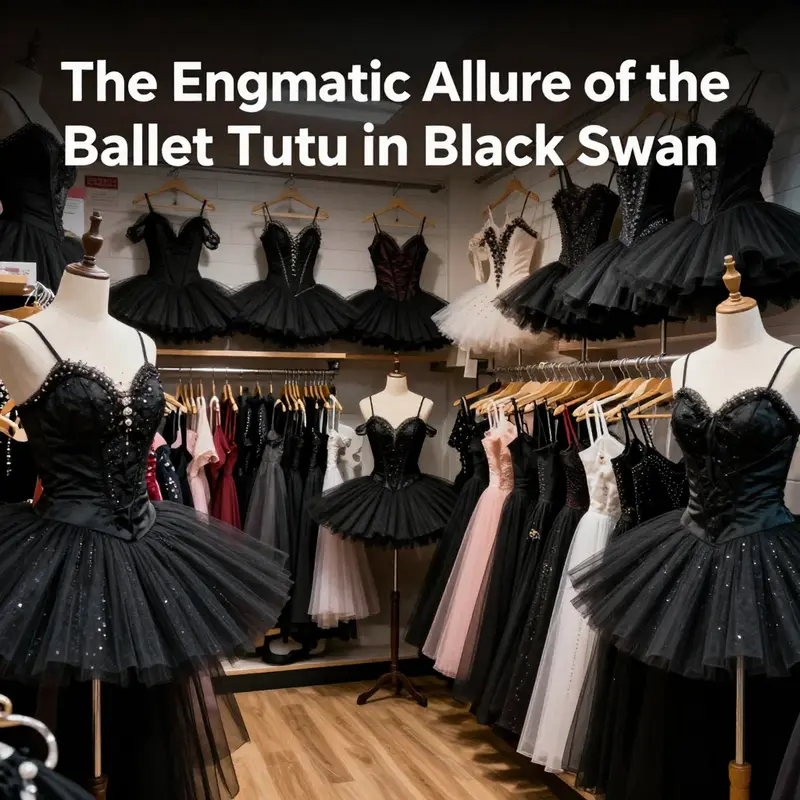
The black tutu from Black Swan functions as more than a costume; it crystallizes a mood of gravity and desire into a single silhouette. On stage, the garment signals a threshold between purity and peril, and it becomes a catalyst for the drama it inhabits. In conversations about reproduction, the tutu is less a prop and more a symbol and instrument that translates psychology into fabric. This dual role helps explain why reproductions remain in demand long after the film’s debut. The tutu has moved from a moment in cinema to a visual shorthand for ambition, identity, and transformation. Availability and market dynamics are therefore about cultural memory as much as about textiles and craft.
To understand how a screen costume enters everyday life, consider the design logic that gave the Black Swan tutu its power. The piece contrasts the white swan by amplifying darkness and drama. The black silhouette tends to be longer and more sculpted, with a sense of command and vulnerability. Designers translate this look into fabric choices, layering, and fit that perform well on stage and in staged photography. Buyers seek fabrics that echo the mood: dark tulle, subtle shimmer, and a bodice that feels both timeless and contemporary. The professional team behind the film set a standard for how far a screen look can travel, shaping expectations about pattern, finish, and mobility.
The market for reproductions spans a spectrum from high end bespoke pieces to accessible mass produced options. At one extreme are custom, museum quality reproductions designed for serious performances, with precise patterning, premium tulle, and bespoke embellishments that mimic the on screen texture. These serve dance companies, theater programs, and devoted cosplay communities that value fidelity, durability, and range of motion. At the opposite end are lower cost, mass market interpretations aimed at Halloween or casual cosplay, where construction quality and longevity vary. Between these poles lies a broad middle tier that balances visual fidelity with practicality, offering reliable color saturation, reasonable weight, and standard sizing appropriate for a wide audience. Price, material, and finish encode different levels of authenticity and usage.
Timing matters as well. Fall and winter seasons, festival calendars, and school programs often drive spikes in demand, while rental arrangements for theatre environments emphasize repeat performances. Buying decisions may favor rental for one off events, outright purchase for ongoing wardrobe use, or bespoke fabrication when the wearer needs a fully tailored piece that supports technique. The practical realities of wearing a Black Swan inspired tutu include mobility, turnout, and comfort during long rehearsals, as well as the ability to withstand stage lighting. Materials such as luxury tulle, mesh panels, and sequined accents are chosen for both appearance and function.
Beyond fabric and finish, authenticity plays a central role in how buyers evaluate options. Some seek exact replicas of the on screen look, including the silhouette and hem line, while others pursue reinterpretations that preserve the piece’s mood and energy while adapting it to personal needs. The tension between fidelity and adaptation becomes a productive conversation about cinema, dance, and fashion. The availability landscape thus acts as a living archive, with each new version adding to the dialogue rather than simply replacing what came before.
Behind the scenes, production notes and archival materials offer a window into decisions that gave the tutu its distinctive look. Understanding how the garment catches light, how fabric behaves in motion, and how ornamentation reads on camera helps buyers articulate preferences. This knowledge becomes part of the market: it informs how a replica is judged for accuracy or for its new context. In short, the market for Black Swan tutu reproductions is a cross between craft, spectacle, and memory.
For readers exploring this topic, the parallel lines of white and black tutus offer a useful frame. White tutus sit in a lineage of classical ballet lines, while black tutus amplify drama and psychological resonance. The conversation travels across dance, cosplay, and visual art, revealing how film costumes migrate into everyday life while retaining their aura. The Black Swan tutu thus persists as an emblem and its reproductions continue to circulate in galleries, studios, and online storefronts, inviting ongoing dialogue about identity, transformation, and the art of a perfectly dark silhouette.
Silk Shadow, Dark Swan: The Black Tutu’s Quiet Revolution in Black Swan
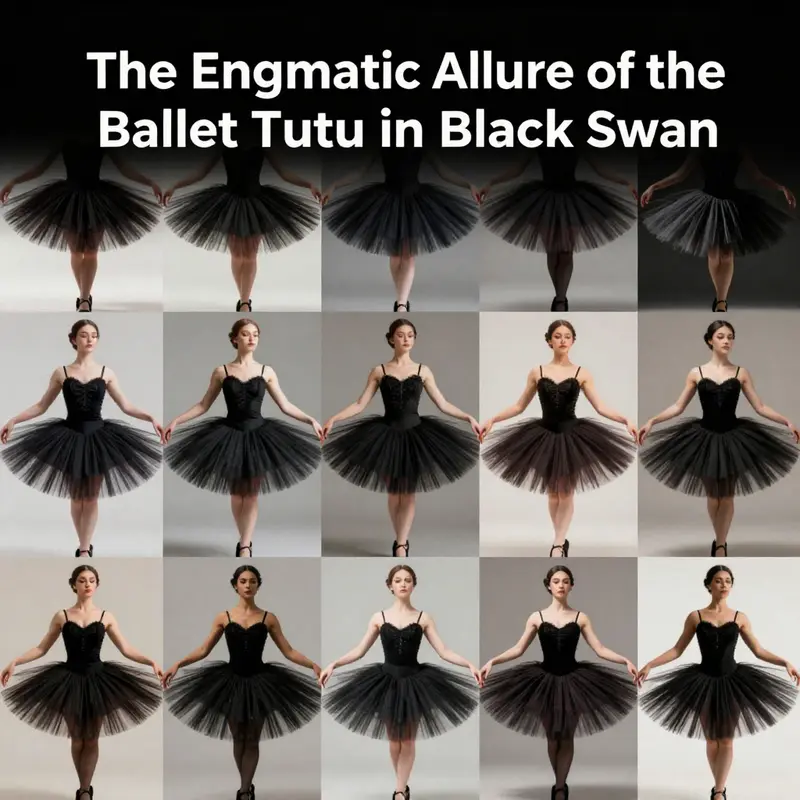
The moment when Nina Sayers steps into the ominous glow of the stage, and the camera lingers, is less a scene of dancing than a study in metamorphosis. The black tutu worn by Natalie Portman in Black Swan does more than outline a dancer’s body; it marks a turning point in cinematic costume design, a boundary-pushing reminder that clothing can be a living, unruly force inside a character’s mind. The film reimagines a familiar ballet ritual—the journey from innocence to experience, from white purity to dark intensity—and casts the costume itself as a player in that drama. The black tutu is not merely a garment; it is a narrative engine. Its stark contrast to the white tutu of the White Swan becomes a visual shorthand for the dual forces that pull Nina toward the edge of herself, toward a form of artistry that risks becoming its own undoing. In that sense, the tutu acts as a map of psychological terrain, a symbol that moves with the body as it moves within the body’s limits and fears.
To understand why the black tutu resonates so deeply, one need only attend to its silhouette and texture. The design sits on the line between tradition and invention. It inherits the architecture of classical ballet costumes—the tutu’s exaggerated length on the skirting, the way the bodice anchors the torso, the silhouette that makes every port de bras read as a ritual. Yet the Black Swan version pushes those conventions to a new extreme. The tutu often appears tighter, more sculpted, its edges edged with a shadowy sheen that catches light in a way that can feel almost supernatural. The effect works on multiple sensory levels: visually, it reads as a bold statement of command; tactically, the fabric’s stiffness reinforces the perception that Nina’s body is an instrument being tuned, pressed, and strained by a mind under siege. The black color itself—absent the warmth of daylight—absorbs rather than reflects, inviting the audience to lean in closer, to notice how the garment seems to press in on the wearer as much as it encases the wearer in it.
The contrast with the classical white tutu is not accidental. The White Swan look, with its pale translucence and airy buoyancy, embodies purity, restraint, and a certain ethical ideal at the core of the dramatic arc. The Black Swan tutu, by inversion, becomes a mirror that shows how obsession, discipline, and desire can twist that ideal into a consuming lens. Color here functions as a confidant for Nina’s inner weather: when the white tutu stands for a virtuous architecture of technique, the black tutu represents the storm that tests the architecture from within. The shift is not only aesthetic; it is existential. The film makes a case that perfection, when pursued in a vacuum, can become a kind of parasite—an entity that feeds on appetite and fear alike. The costume then is a visual articulation of that philosophy, turning fabric into a language that narrates a psyche in flux.
From a design perspective, the black tutu also embodies how cinema can refine and redefine the language of performance costumes. The film’s creators reinterpreted traditional ballet attire to fit a modern, nocturnal sensibility. They braided the lineage of stage glamour with a camera’s appetite for texture, shadow, and micro-detail. The silhouette remains recognizably of ballet, yet it is unmistakably tailored for a film medium that can linger, zoom, and reveal. This is where the designers’ intent becomes most transparent: they did not simply dress a dancer; they stage a psychology. The costuming team, including the coalesced voice of the designers who shaped the film’s visual world, spoke of wanting costumes that visually express the mental state of the heroine. The transition from white to black is an overt metaphor, yet it remains profoundly intimate—the garment carries Nina’s secrets as much as it carries her steps. The aesthetic operation is clear: the costume is a partner in the performance, guiding the audience’s perception of Nina as she vacillates between control and surrender, between the discipline that ballet demands and the urge that ballet can corrupt.
Behind the on-screen magic lies a practical, craft-focused reality. The black tutu’s fashioning involves more than satin and starch; it requires a careful balance of stiffness, drape, and movement. The filmmakers embraced a dual strategy: exploit the tutu’s traditional power on stage while exploiting the close proximity of the camera to reveal how the fabric behaves under strain. This is not merely an effect for a single climactic sequence; it becomes a continuous thread, a visual motif that recurs as Nina’s perception fractures and reforms. The costume’s texture—the way light kisses the surface of the fabric, how the layers hold their shape as the dancer twists, how the edges catch a stray beam—becomes a kind of secondary narrator. In close-up, the tutu’s edge sharpens, almost cutting into the scene; from a distance, it reads as a silhouette of danger, a black halo of artistry around a performer who wants to be flawless yet cannot escape the shadows that perfection invites.
In this sense, the black tutu transcends the screen and enters a broader cultural conversation about performance and psychological visibility. The film’s visuals did not merely stage a transformation; they invited audiences to reflect on the price of obsession and the fragility of identity under pressure. The tutu’s stark color becomes a cultural shorthand for the rituals and pressures that accompany elite performance. This is not simply a fashion moment; it is a cultural gesture that acknowledges how costumes can illuminate inner life while shaping public perception. The iconic look has since entered the public imagination in ways thatB persist beyond any single film. It has inspired Halloween ensembles, editorial photography, and conversations about the aesthetics of danger embedded in a wearer’s posture, line, and breath.
The cultural ripple effects extend into discussions of fashion, art, and identity. The black tutu, as seen in Black Swan, helped crystallize what many describe as balletcore—a fusion of classical ballet vocabulary with contemporary sensibilities, an aesthetics of disciplined elegance tempered by a tactile sense of risk. Designers and fashion commentators speak of balletcore as something more than a trend; it is a language that recognizes the body’s capacity to convey narrative through posture, fabric, and rhythm. The public’s resonance with that language is not surprising—the image of a dancer poised between control and surrender, wearing a garment that seems to consume rather than contain, taps into a universal tension. It speaks to a longing for beauty that does not deny complexity or danger, for technique that can still feel unsettled when pressed to its limits. In this way, the black tutu becomes a cultural artifact that travels from the stage to the street, from the set to the screen, and finally into a language of style and self-expression.
The designers responsible for Black Swan remind us that costume is a narrative device, not just a garment. The Mulleavys, whose work shaped the film’s visual lexicon, emphasized that the costumes were crafted to reveal the mental state of the heroine throughout the arc. Their approach invites a reader to consider how clothing can map a mind in flux, how color and form can become a diary of panic and resolve. The black tutu thus emerges as a kind of character in its own right, a symbol that evolves with the plot and with Nina’s evolving self-perception. The garment’s presence on screen is not merely to adorn a dancer but to stage a psychological weather system—one that can be read as a chart of ambition’s bright peaks and its inevitable abysses.
As this chapter threads through the cultural life of the black tutu, it is worth acknowledging how the look has traveled beyond cinema and into everyday influence. The tutu has become a touchstone in discussions about how classical ballet can sit alongside streetwear, how delicate fabrics can be worn with sneakers or combat boots to negotiate a dialogue between refinement and edge. This contemporary synthesis, often labeled balletcore, signals a broader appetite for performance-informed aesthetics. It is a testament to how a single costume can catalyze a dialogue across media, inviting designers, choreographers, and performers to experiment with the tension between tradition and modernity. In the process, the black tutu continues to illuminate something essential about human experience: the desire to transform oneself through discipline, the fear of losing oneself to that same discipline, and the stubborn hope that art can hold both truth and ambiguity in its fabric folds.
The value of costume as narrative becomes especially clear when we compare the black tutu to its white counterpart, and even to a lineage of classical ballet attire that precedes the film by centuries. The white tutu stands as a reminder of purity and the aspirational norms of classical technique. By contrast, the black variation offers a counterpoint, a dramatic counter-chorus that speaks of the temptations that come with mastery. The interplay between these two visions helps modern choreographers and designers think anew about how color, texture, and silhouette encode meaning on stage and screen. For those curious about the lineage and the applied contrasts, a contemporary look at the white Swan Lake-inspired tutu can provide a useful reference point. See the white tutu here: high-quality-white-ballet-costume-tutu-swan-lake-t0596. This related example underscores how tradition can be reinterpreted in ways that sharpen our attention to shadow, line, and intention.
The conversation about Black Swan and its black tutu would be incomplete without a nod to archival and behind-the-scenes sources that document the film’s conversations about costume and mind. Official behind-the-scenes materials and interviews with the production team illuminate the intention behind the look. The designers articulate a clear plan: to narrate Nina’s psychological journey through what she wears, to let the clothing carry the audience toward comprehension of the protagonist’s most intimate struggles. This approach reframes costume as a living instrument of storytelling, a partner that does not simply clothe the body but clarifies how the mind inhabits it. The result is a kind of synergy between fabric and psychology, a reminder that clothing can be a conscious actor in a film’s drama, guiding perception as much as reflection. The black tutu thus is not simply a costume; it is a cultural icon that continues to shape how audiences parse the intersections of beauty, obsession, and danger within the performing arts today.
For those who wish to explore the broader cultural and performative significance of ballet costumes across the canon of classical works, the field remains rich with insight. The movement of color, form, and narrative meaning through costume design shows how attire can function as more than mask or ornament. The Black Swan look demonstrates the potency of costuming as a way to externalize internal states and to invite viewers to engage with the fragility and resilience that coexist within disciplined bodies. As ballet and cinema continue to dialogue with fashion, audiences will likely encounter new interpretations that challenge the assumptions of what a tutu can symbolize. The black tutu in Black Swan remains a benchmark, a signpost indicating that the relationship between art and the psyche can be mediated by something as everyday as fabric and as extraordinary as a performer’s will.
External resource for further reading: for a deeper dive into the original design and its production specifics, see the film’s costume details on IMDb. https://www.imdb.com/title/tt0947798/mediaviewer/rm3547560704
Silhouette in Shadow: The Technical Craft of the Black Swan Tutu
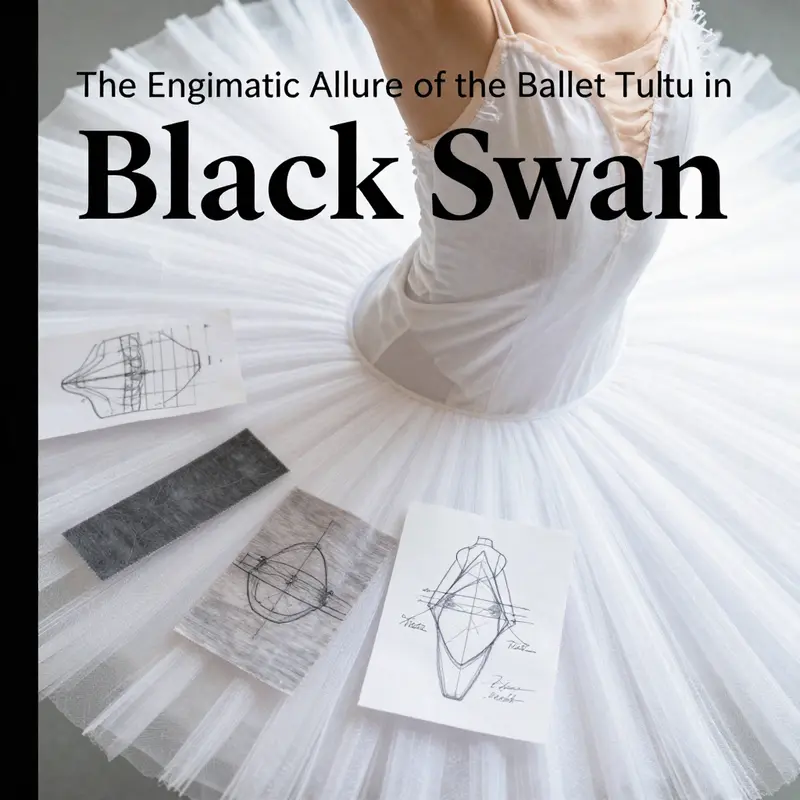
The Black Swan tutu is not merely a costume; it is a condensed poem of motion, psychology, and stagecraft all woven into a single, uncompromising silhouette. In the hands of a dancer, the rigid elegance of the pancake skirt becomes a vehicle for narrative, a visual hinge where the character’s inner dark shifts swing into shared perception with an audience. The chapter of this design reads like a long breath taken on stage: a deliberate articulation of form, function, and feeling that transcends fabric and threading to become an instrument of transformation. At its core lies a deliberate duality. On one side, the tutu’s silhouette demands drama: a flat, expanded plane that pushes outward from the hips while preserving a dancer’s line. On the other, it requires interior resilience: a body-wrapping support system that allows for the precision of classic ballet technique—port de bras, fouettés, pirouettes—without compromising the rigid geometry that signals the character’s otherworldly authority. The Black Swan tutu embodies a synthesis of traditional tutu vocabulary and an unabashed reinterpretation shaped by cinematic needs. It owes its striking presence not only to its stark aesthetics but to a system of construction that translates screen demands into stage-grade reliability. The pancake-style construction, widely cited in contemporary costume discourse, anchors this system. It is a method that folds discipline into drama. The skirt is intentionally voluminous and flat, a paradox of abundance in a single, controlled plane. Achieving this effect begins with a core decision about layers: a tightly layered tulle foundation, often twelve layers or more, treated with a chemical stiffener that preserves the skirt’s four-hemmed, radiused edge rather than allowing it to collapse or billow into subordinate volume. The result is a silhouette that holds its shape with a stubborn poise, a form that can endure dynamic movement and the quick tempo of a climactic performance without surrendering its signature defiance against gravity. The technical intimacy of that construction is easy to miss in stills, but its impact becomes clear when a dancer pivots, spins, or arches her back in a way that would topple a lighter, more conventional tutu. The stiffened layers act like architectural bracing, enabling rapid turns and sustained poses to coexist with long, audacious lines. This is not simply about a dramatic exterior; it is a fully engineered platform that supports the choreography at the highest velocity without facading as mere costume. The choice of materials is the next layer of the story. The bodice, often a velvet or velvet-like finish, presents a matte, luxuriously grounded surface that absorbs stage light rather than reflecting it with glare. Velvet, with its dense pile and diffusive texture, contributes to a stage presence that reads as control and intention, a counterpoint to the gleaming translucence of the tulle. The velvety surface anchors the dancer in space, giving visual weight to the upper body and thereby reinforcing the narrative that this version of the character is not simply a derivative of the White Swan but a deliberate, deliberate force of will. Underneath, the inner lining is composed of moisture-wicking fibers such as polyester blends, chosen for their breathability during rehearsal and performance. This pragmatic layer may seem beneath the spectacle, yet it is essential; comfort translates directly into stamina, which in turn preserves line and focus through long runs, sudden direction changes, and the heat of the footlights. The juxtaposition of softness and stiffness—soft lining, stiff outer architecture—creates a corporeal tension that mirrors the dual psyche of Nina Sayers as she steps into the Black Swan. Structural integrity is not a luxury; it is a requirement. Reinforced seams and double-stitched hems resist the strain of repeated abuse from vigorous work at the barre and the explosive demands of the climactic sequence. The longevity of a well-cut Black Swan tutu is measured not only by how it looks on the day of a premiere but by how it holds up across tours, until the last curtain call of a long run. Durable construction reduces the wear that can cause sagging, uneven drape, or misalignment between the skirt and the torso. The result is a costume that remains true to its silhouette, maintaining the crisp separation between the pancake skirt and the dancer’s body even as the choreography pushes toward the edge of technique. Breathability, too, is woven into the garment’s philosophy. The moisture-wicking linings, while not always visible, play a critical role in sustaining a dancer’s performance. The goal is comfort that lasts through long rehearsals and even longer performances. This is where ergonomic design becomes more than a matter of fit; it becomes a matter of control. The cut of the bodice, including the deep V neckline and flexible straps, is carefully contoured to allow unrestricted movement without compromising support. The balance of tension and flexibility is essential for precise execution of port de bras and clean spins. A dancer must feel secure enough to extend an arm fully, to elongate the spine during the promenade, or to tilt the head to catch an incidental light without feeling drawn into the costume’s fabric. In this way, the Black Swan tutu is an ergonomic sculpture as much as a garment. The interaction of materials with stage lighting further amplifies the tutu’s voice on stage. The matte velvet absorbs and diffuses illumination, while the tulle—often a smoky, semi-opaque weave—catches and disperses light to create a halo around the silhouette. The contrast between the solid, opaque upper body and the shimmering, airy lower plane is not incidental; it is a deliberate storytelling device. The design reads as a choreography of light and shadow, a tactile echo of the film’s themes of transformation and concealment. Customizable options, including OEKO-TEX-certified materials and adjustable sizing, extend the design’s reach beyond a single body type. This inclusion is not merely about fashion; it is about accessibility in a discipline defined by physical diversity. The Black Swan tutu, in its refined version, acknowledges the varied bodies that interpret this demanding role, ensuring that the aesthetic integrity of the silhouette can be sustained without compromising comfort or safety. The design’s cinematic lineage is equally important. The costume’s evolution from a more traditional tutu to a darker, more commanding silhouette mirrors the film’s broader narrative arc. In production discussions, the silhouette’s genesis is traceable to a conscious choice to visually separate the Black Swan from the White Swan, not only by color but by the very geometry of the garment. The pancake skirt’s rectilinear silhouette becomes a metaphor for the protagonist’s emerging control over a psyche that has long resisted easy categorization. Behind the scenes, the designers, sculptors of fabric and form, respond to more than the needs of movement. They respond to the lens, to the camera’s preference for silhouettes that hold their shape under fickle lighting, to the way a frame can suddenly compress a dancer’s silhouette into a symbol with live resonance for an audience. This sensitivity to the cinematic frame is a reminder that the tutu’s magic is not born from fabric alone; it arises from a collaborative tension among choreographers, designers, cinematographers, and dancers who translate a psychological arc into a visible, tactile machine. And yet, this machine remains deeply human. The choreography pays heed to the tutu’s demands; the dancer learns how to draw the silhouette into a space, how to time the port de bras with the skirt’s edge, how to align the spine with the tutu’s vertical axis to maximize a line that reads from every angle. The result is a performance that feels inevitable, as if the silhouette has taken on a life of its own and is simply guiding the dancer through the narrative rather than constraining her. Beyond the stage, the Black Swan tutu has grown into a cultural touchstone. It sits in the public imagination as a Halloween touchstone and as a symbol of artistry that has walked out of a film and into a repertoire of modern fashion storytelling. The accessibility of replicas has helped disseminate the image, but the most compelling interpretations remain those that honor the garment’s technical backbone—the pancake layers, the disciplined construction, the careful distribution of weight and pressure, and the ethical choices around materials that prioritize durability, comfort, and inclusivity. For those who study or curate this design, the lesson is clear: the Black Swan tutu is a synthesis, not a mere costume. It is a technical system that translates theatrical ambition into a durable physical form, a bridge between the stage’s lived gravity and a screen’s broader myth. Its construction speaks to a history of ballet that has always balanced grace with constraint, artistry with engineering, and silhouette with movement. The most memorable moments in the climactic sequence hinge on how the silhouette holds steady while a dancer’s expression contorts with meaning. A well-crafted pancake tutu becomes a stage partner, allowing the performer to inhabit a persona that feels both present and spectral. For researchers and designers, the tutu invites a disciplined curiosity about how fabric behaves under heat, motion, and light; how layered stiffness interacts with the body’s energy; how a sculptural edge can feel both imminent and liberating in the same breath. It is a reminder that costume design is, at its most essential, a collaborative practice—one that respects the organic life of the dancer while shaping it into something larger than any single performer. In this spirit, the Black Swan tutu stands not only as a visual icon but as a living instrument of storytelling, its every seam testifying to a careful dialogue between craft and character. The journey from concept to curtain call is a careful choreography in itself, a sequence of choices that honor tradition while inviting new interpretation. The pancake silhouette, reinforced with modern fabrics and quality construction, sustains a performance that must feel effortless even as it embodies an engineering precision. The result is a garment that can carry the weight of narrative as gracefully as it carries the weight of fabric, a true partner in the theater of emotion where the Black Swan finds her voice. For scholars and audiences alike, the tutu remains a testament to how couture can meet cinema, how textile chemistry can meet stage lighting, and how a single, darkly luminous garment can crystallize a film’s most enduring questions about desire, danger, and the self that refuses to be easily read or confined. To explore the tangible thread of this design, one can consult practical discussions of related pancake-style tulle constructions pancake-tutu-for-ballet-with-flower-cost-effect-t0321. This reference acts as a conduit between analysis and application, offering a concrete example of how a shared design vocabulary translates into a functional, performance-ready garment. In the end, the Black Swan tutu’s technical craft is inseparable from its storytelling power. It is a reminder that the most striking costumes are not merely decorative; they are architectural, logistical, and lyrical in one breath. The silhouette’s stark geometry gives a frame for a haunted brilliance to unfold, and every layer of its construction supports a moment of cinema that remains etched in memory long after the curtain falls. External resources illuminate further details about production choices and fabric techniques, such as those discussed in industry references that map the intersection of fashion and performance. For readers seeking a broader lens on the topic, an external reference provides technical context about the materials and durability discussed above: https://www.alibaba.com/product-detail/Professional-Women-Adult-Dance-Costume-Black1600875989373.html?spm=a2700.1.w1.x&source=youtube&from=productdetail.
Final thoughts
The black tutu in Black Swan remains not just a costume, but a vivid representation of psychological complexity and duality, influencing both the fashion industry and the worlds of theatre and cinema. As cinematic artistry continues to evolve, the legacy of this iconic garment persists, inspiring new generations of designers and captivating audiences with its haunting beauty. Understanding its design, availability, cultural significance, and the technical mastery involved offers a comprehensive view of how such costumes can transcend their original purpose, resonating far beyond the screen.