
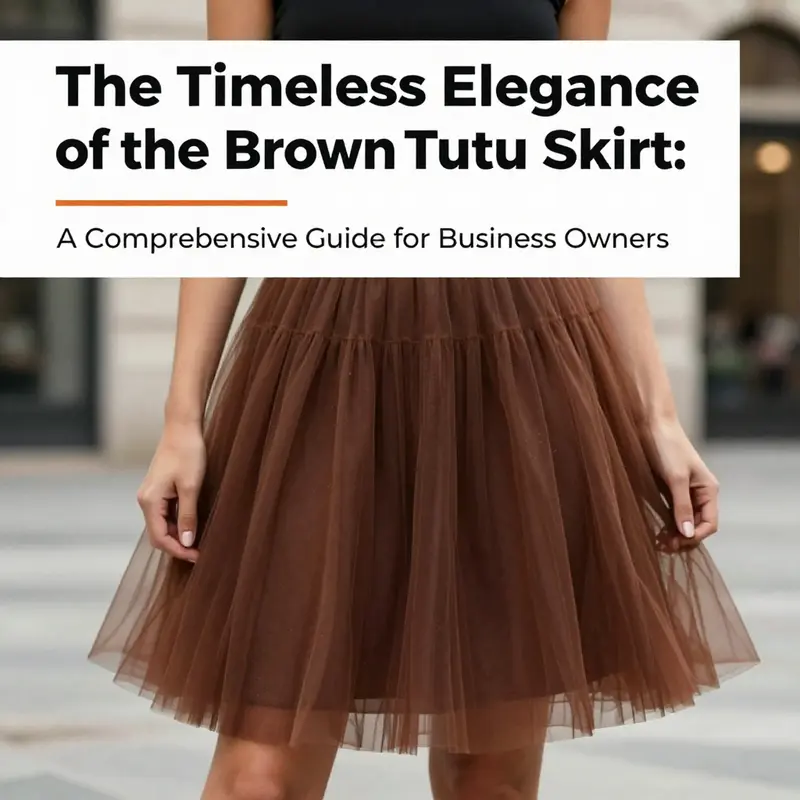
The brown tutu skirt, a delightful fusion of elegance and playfulness, has re-emerged as a prominent staple in contemporary fashion. With its roots tracing back to the classic European design, this iconic piece has evolved through the decades. As business owners in the fashion sector, understanding the nuances of the brown tutu skirt—from its design elements to cultural significance—can empower your brand to tap into diverse markets. This article explores these dimensions, highlighting current fashion trends, guiding you through sizing and fit, discussing its place in popular culture, and providing a comparative analysis of pricing on major e-commerce platforms.
Weaving Warmth and Whimsy: The Design Elements that Define a Brown Tutu Skirt

Brown tutu skirts occupy a nuanced space where playfulness meets restraint, where movement is amplified by fabric and the color itself anchors the silhouette in a shared memory of warmth and elegance. The design elements that give these skirts their signature character are not merely decorative; they are functional choices that govern how the skirt sits on the body, how it moves, and how it reads in different settings. In modern renditions, the brown hues—ranging from deep espresso to sunlit chocolate—provide a sophisticated counterpoint to the more common pastels and brights. This earthy palette does more than flatter skin tones; it grounds the tutu in a sense of steadiness that can be both whimsical for a performance and refined for everyday wear. The layers, the waist, the length, and the subtle embellishments all work in concert to produce a garment that can feel theatrical on a stage while still slotting comfortably into a casual closet. To understand the design, one must look beyond the flutter of the skirt’s surface and into the architecture that makes a brown tutu skirt stand out without shouting. The core concept is volume performed through a disciplined layering system, one that balances weight, breathability, and bounce so that movement remains unimpeded and visually striking.
The construction hinges on a thoughtful layering protocol. Most contemporary browns use five to twelve layers of lightweight fabrics such as tulle, organza, or chiffon. Each layer is cut with care and then gathered at the waistband, creating a graduated silhouette. The effect is not simply a heap of fabric; it is a controlled fullness that flares out dramatically when the wearer moves. The layers are deliberately varied in length, with the outer tiers longer to form an elegant hemline that sways with every step. This graduated approach ensures the skirt has depth without appearing bulky. The lightness of the fabrics is essential, because it is the airiness that lets the brown color catch and refract light, revealing subtle shifts in tone as the wearer shifts from stillness to motion. In a performance setting, this dynamic is crucial: each movement amplifies the fabric, making the skirt appear to undulate like a living thing while remaining entirely wearable for long rehearsals or extended hours of wear.
Color and aesthetic choices are the linchpin of the brown tutu’s identity. Brown, especially in warm chocolate or deep espresso shades, offers a sense of maturity and richness that brighter hues cannot. It contrasts with the pale glow of skin and the cool reflections of metallic or satin tops, enabling a versatile pairing with a broad palette of shirts, blazers, and knitwear. When seen under stage lighting, brown can emit a soft glow rather than a harsh highlight, courtesy of the way the layers diffuse and reflect light. This makes brown tutus well suited to themed events that call for warmth, earthiness, or a vintage-inspired mood. The color’s gentleness also means the skirt won’t overpower a delicate lace or a tailored top; instead, it complements and enriches those pieces, creating a balanced silhouette that can lean toward whimsy in a more controlled, almost couturier manner.
From a construction standpoint, the waistband is where comfort and practicality meet aesthetics. A common design feature is an elastic waistband, typically about one inch wide, integrated seamlessly into the skirt’s overall look. The elasticity is not merely a convenience; it is a functional necessity that accommodates movement and varying body shapes. This snug, flexible band supports the gathered layers and lets the wearer move freely, whether dancing, performing, or simply walking. The rise and fit of the waistband influence how the skirt sits at the natural waist, how it defines the waistline, and how the fabric gathers from that point outward. A well-executed waistband helps prevent the skirt from riding up or slipping, preserving the intended line of the silhouette across different activities.
Layering itself is an art form. The tutu’s five to twelve layers are not interchangeable blocks but a symphony of density and texture. Some layers are cut shorter and tucked beneath longer tiers to create a sense of depth; others are left at uniform lengths to emphasize a clean, modern line. The interplay between tulle, organza, and chiffon adds tactile interest—the stiffness of organza supporting the form, the softness of tulle adding bounce, and chiffon offering a whisper of movement at the edges. This combination yields a skirt that feels substantial yet remains surprisingly light on the body. The interior surfaces are typically lined to ensure comfort and prevent the layers from riding against the skin. A satin or soft cotton lining can reduce friction, which is especially important during performances where the wearer is in motion for extended periods.
The visual impact of a brown tutu is also shaped by subtle design details that elevate the garment without overpowering it. As a general rule, the more mature the color, the more restrained the embellishments should be. Lace appliqués, delicate pleats, or softly gathered ruffles can be added as adornments to echo a romantic or vintage mood, or they can be kept minimal for a more modern, streamlined effect. In a few contemporary variations, designers blend textures with a vintage sensibility—such as cords and plush fabrics that nod to retro tailoring—while preserving the tutu’s buoyant silhouette. These variations demonstrate the brown tutu’s flexibility: it can fit a formal stage, a fashion-forward editorial, or a daily outfit that wants a touch of theater without looking costume-like.
The silhouette itself is a statement. The fullness of the skirt, its length, and how dramatically it expands when in motion all contribute to a sense of drama. Long, floor-skimming versions exude sophistication and are well suited to formal occasions or themed events with a vintage touch. Shorter, mid-thigh or knee-length styles, with a pronounced bounce, lean toward playfulness and contemporary streetwear applications. The choice between long and short forms often depends on the wearer’s physique, the venue’s atmosphere, and the desired narrative. A long brown tutu can elongate the body by creating a continuous vertical line, while a shorter version places more emphasis on leg line and tempo of movement. This is not a rigid dichotomy; it is a spectrum where the designer tailors the fullness and length to achieve the intended effect, whether it is a poised, urn-like silhouette for a formal dance or a lively, twinkling silhouette for a storytelling performance.
Beyond the core construction, a brown tutu skirt offers an invitation to versatile styling. Pair it with a crisp white shirt and a tailored blazer for a modern, professional vibe that still nods to the skirt’s theatrical heart. Alternatively, a simple tee and a cropped cardigan can transform the tutu into a casual, edgy piece for city wear, depending on the fabric and length chosen. The color’s depth supports a wide range of textures—from matte knits to satin blouses—allowing the wearer to shift the mood from refined to playful with incremental changes in top, footwear, and accessories. Even the choice of hosiery and shoes can alter the perceived formality. In performance contexts, color harmony between the tutu and the other stage garments becomes a crucial element of the overall design language, guiding lighting choices and the choreography’s visual footprint.
For newcomers curious about the practicalities of building this kind of garment, starting with a basic tutu can illuminate the fundamental techniques of layering and gathering. A beginner’s tutu typically emphasizes a simpler waistband and a smaller number of layers, which makes the learning curve gentler while still conveying the essential fullness that defines the silhouette. As comfort with construction grows, one can introduce additional layers, vary the lengths, or experiment with different fabrics and trims to achieve a fuller or more nuanced effect. The process becomes a dialogue between the maker’s intention and the fabric’s behavior, with color acting as a constant, grounding force that keeps the design cohesive.
Within this framework, it is helpful to consider how the brown tutu may intersect with retro-inspired or vintage-inspired wardrobes. A limited use of texture—like a hint of velvet or a subtle corduroy texture integrated into the long skirt variant—can evoke a historical mood while still benefiting from the tutu’s modern construction. This blending of eras illustrates the brown tutu’s capacity to be both a nostalgic homage and a contemporary statement. The key to success lies in restraint and balance: letting the volume do the talking, while color, fabric choice, and length keep the look from tipping into costume territory. As a result, the brown tutu skirt can be a flexible core piece for a wardrobe that values movement, texture, and quiet sophistication as much as it does charm.
For readers seeking practical guidance on fabric behavior and assembly, a detailed, step-by-step home guide offers deeper insights into the craft behind the design. This resource delves into the nuances of cutting, gathering, and finishing the layers to achieve a professional-looking outcome that still remains accessible to hobby crafters or aspiring designers. It highlights how the interplay of elasticity, seam finishes, and layer alignment contributes to the skirt’s overall ergonomics—ensuring that fullness and flexibility are maintained across wear and use. As with any refined garment, the design elements of the brown tutu skirt reveal a careful balance of form and function. Each choice—from the lip of the waistband to the final hem—serves a purpose in shaping how the wearer experiences the garment, how others perceive it, and how it holds up over time under the demands of daily life or stage performance.
Internal link for further exploration: for beginners who want to understand the basics of tutu construction, see the Basic Tutu category. Basic Tutu.
External resource for practical construction techniques: a comprehensive step-by-step guide to making tutu skirts at home can be found here. https://www.thesprucecrafts.com/how-to-make-a-tutu-skirt-4136099
From Ballet Floors to Runways and Beyond: The Enduring Evolution of the Brown Tutu Skirt

The brown tutu skirt has grown from a specialized garment worn in rehearsal studios into a versatile icon that threads together nostalgia, whimsy, and practical glamour. Its journey is not a straight line but a looping arc that mirrors how fashion continually revisits the past while reimagining it for today. In its earliest forms, the tutu functioned as a costume element, designed to exaggerate movement and illuminate a dancer’s line under bright stage light. Yet even then, the brown version—less stark than the starkly white interpretations often associated with classical ballet—carried a note of earthy maturity. It suggested not just performance, but a sense of grounded elegance that could cross over into everyday life. As designers experimented with structure, the brown tutu skirt evolved beyond the stage into a garment that could anchor a blouse and blazer, or soften the edge of a denim jacket. This evolution was less a revolt against its origins than a dialogue with them, a way to honor the past while answering the demand for a more flexible, personality-rich silhouette in contemporary wardrobes. The shape retained its signature volume, but the arc of the skirt began to whisper differently—the layers could be gentler, the waistline more forgiving, the underpinnings more adaptable to real-world movement and comfort. In short, the brown tutu skirt moved from a defined performance piece to a flexible fashion staple that could anchor both tailored and casual looks without losing its romantic punch. The path it followed highlights a broader trend in fashion: the merging of craft with consciousness, of spectacle with everyday wear, and of heritage with modern identity. The mid-20th century, when fashion houses began to push the boundaries of silhouette and texture, provided a fertile ground for the tutu’s second life. Designers pushed the idea of volume to new extremes, but in doing so they also paved the way for versions that could be worn beyond a stage curtain. The brown hue—chosen for its warmth and versatility—proved especially amenable to a range of outfits, from the most demure to the most daring, because it promises depth without demanding attention away from the wearer. As contemporary lines reassert that balance, the brown tutu skirt often appears with refined silhouettes such as high-waisted A-lines or softly pleated layers. It is a garment that invites layering—over a crisp T-shirt for a poised day look, under a structured blazer for business casual, or paired with a sequined top for a party—that remains faithful to its voluminous heritage while remaining practical enough for modern errands and social occasions. This dual nature is part of what makes the brown tutu skirt enduring: it carries the memory of a performance, yet it offers a stage for personal expression in almost any setting. The design dialogue today is less about proving a point and more about enabling a mood—one that can be sweet and reserved or bold and theatrical, depending on the choices of fabric, texture, and pairing. Contemporary skirting often embraces sustainable fabrics that respect the planet as much as the wearer’s taste. Recycled polyester blends, plant-based dyes, and other eco-conscious innovations sit alongside classic tulle, showing that the language of the tutu can be both responsible and chic. The result is a new cadence of texture and tone: translucent layers that catch light softly, nested pleats that create controlled volume, and a disciplined waist that highlights the torso without constraining it. Within this frame, the brown tutu skirt becomes a canvas for identity rather than a simple silhouette, inviting wearers to present themselves with a gentle crown of fabric that moves with them, rather than against them. The shift toward sustainability—the push to extend the life of a garment through durable construction and mindful materials—has only amplified this effect. A growing share of shoppers now looks at fashion through the lens of longevity and responsibility. They seek pieces that can travel from one occasion to another, that pair well with what they already own, and that can be repaired or updated rather than discarded at the first sign of wear. This mindset aligns perfectly with the tutu’s inherent adaptability. Designers have responded with high-waisted, elongated options that skim the hips and elongate the leg line, while still preserving the skirt’s characteristic lift. Layered fronts, fine pleats, and subtle wovens add complexity without clutter, allowing the wearer to present a quiet, confident version of themselves. For those who crave a more playful or retro vibe, shorter lengths with soft, bouncy volume offer a nod to past dance styles while remaining comfortably suited for today’s social calendars. The brown palette itself supports this integration: warm, earthy, and surprisingly versatile across skin tones and accessory choices. The color invites pairing with earth-toned knits, cream blouses, charcoal suiting, or a punch of color in footwear or jewelry, creating a spectrum of looks that are as appropriate for a gallery opening as they are for a weekend brunch. The evolution is also about how the garment communicates identity. In a moment when fashion matters for more than aesthetics, the brown tutu skirt acts as a wearable expression of personal narrative—one that says the wearer appreciates craft, values comfort, and embraces a touch of theatrics without sacrificing practicality. To that end, the latest iterations embrace both vintage reverence and forward planning. Designers look to vintage silhouettes for proportion, then reimagine them with contemporary cuts or performance-oriented fabrics that hold shape through a long evening or a crowded dance floor. They also incorporate details that reference the tutu’s theatrical roots—delicate ruffles, sheer overlays, or jewel-toned accents—without letting the piece become costume. The result is a balanced garment that can be as sophisticated as a pencil skirt with a hint of volume, or as unabashedly romantic as a ballgown-inspired pleat, all while retaining the brown’s grounded warmth. For the consumer, this means fewer shelves lined with pieces that feel disposable and more with items designed to endure. The shift toward durable construction—tight seams, reinforced waistbands, and weight-balanced layers—ensures that the tutu retains its shape with movement and time, which, in turn, sustains its place in daily life rather than relegating it to seasonal novelty. The modern brown tutu skirt, then, stands at the crossroads of craft, comfort, and conscience. It is a garment that acknowledges where it comes from and who it serves. It invites a creator to add their own marks—whether through DIY embellishments, careful tailoring, or thoughtful styling choices—without losing its essential character. To support beginners who want to explore this aesthetic with confidence, many enthusiasts point toward a foundational approach: start with a well-constructed base and build your look outward with layers, textures, and accessories. For those curious about starting with a simple foundation, the basic tutu category on a dedicated craft platform offers approachable options that emphasize fit and balance before experimenting with bolder silhouettes. This pragmatic entry point keeps the focus on personal form and comfort, ensuring the wearer can experience the tutu’s signature buoyancy without struggling against it. The broader narrative, however, remains aspirational: fashion that embraces history, champions sustainability, and empowers individuals to tell their story through fabric and fold. The brown tutu skirt makes this story tangible. It is not merely a trend but a reimagined heritage that travels through time with a light, yet deliberate, touch. It invites the wearer to move through the world with a subtle crown of tulle, to smile at the memory of dancers who first taught it to move, and to claim a space where sweetness, authority, and ease converge. In this sense, the brown tutu skirt is less about a single moment of style and more about a continuum of expression—one that invites everyone to perform, in their own way, wherever life happens to take them. For readers and shoppers seeking a practical entry point into this evolving world, exploring the layering options and pairing ideas can be illuminating. The garment is adaptable enough to hold its own with a leather jacket or soften the edge of a crisp shirt, with color harmonies that range from monochrome neutrals to rich contrasts. If you want to see how the movement and volume translate into everyday wear, you can imagine a simple, polished look built around carefully chosen underpinnings and a single, well-placed accessory. In the end, the brown tutu skirt is a testament to the idea that fashion can be both nostalgic and contemporary, both playful and poised, and always capable of evolving with the person who wears it. It is a relic that remains relevant because it respects the present as much as the past, and because it offers a canvas that invites personal interpretation without demanding conformity. For those who want to dive deeper into the practicalities of construction and design, a selection of online tutorials walks through material choices, cut lines, and structural strategies that help recreate the tutu’s iconic silhouette with modern safeguards for comfort and durability. This fusion of techniques underscores the larger shift in fashion where beauty and responsibility converge, and where a brown tutu skirt becomes not just a garment but a story told in fabric. As the chapter closes, the sense of potential lingers: the ability to update a classic by choosing sustainable fabrics, to tailor the fit for a specific body, and to find new ways to style it that honor both the garment’s history and the wearer’s present life. In this ongoing dialogue between past and present, the brown tutu skirt endures as a luxurious, approachable emblem of how fashion can be both generous to the wearer and conscientious toward the world. It remains, in every season, a reminder that elegance does not have to be fragile, that volume can be controlled and refined, and that a single skirt can carry a long, carrying thread from stage to street and back again. For readers interested in exploring a foundational entry into this aesthetic, one can start with the basic tutu category to understand the essentials of fit and construction before venturing into more elaborate styling or fabric innovations. basic tutu category. And as the broader conversation about fabric and design continues, the evolving brown tutu skirt provides a compelling case study of how fashion can honor its roots while committing to a future that values both artistry and responsibility. External resources on sustainable approaches to textiles also illuminate how today’s designers are rethinking what garments like the brown tutu skirt can be—bridging the romance of old-world volume with the practical demands of a conscious wardrobe. For a tangible look at how eco-conscious materials are being used to craft modern silhouettes, you can explore industry examples on online platforms that showcase recycled blends and plant-based dyes as part of a broader movement toward responsible fashion. External resource: https://www.alibaba.com/product-detail/Ecowalson-Fashion-Tutu-Tulle-Skirt-Long-Maxi_1600732474191.html
Sizing and Fit: Finding the Perfect Brown Tutu Skirt

Brown tutu skirts sit at a crossroads between whimsy and refinement. Their voluminous silhouette reads playful or polished depending on how it fits, moves with the body, and is sized for the wearer. This chapter guides a measurement-first approach to finding a brown tutu skirt that feels both comfortable and flattering. The goal is not a single number but a proportion that harmonizes waist, hip, fullness, and length with the wearer’s movements. Because tutu construction often involves multiple layers and an interior lining, the fit should work with and without the base garments, without pinching or binding at the waist. The art of fit begins with honest measurements and continues with careful consideration of fullness, fabric, and design intent for any occasion.
Start with the core numbers: waist circumference, hip circumference, and the total length from waist to hem. Use a soft measuring tape and have the wearer stand naturally. For the waist, measure at the natural waist or just above the hip bones. For the hips, measure at the fullest part, keeping the tape parallel to the floor. For the length, measure from the natural waist to the intended hem line, noting where the skirt will sit on the thigh or just above the knee depending on style. Be aware that different brands may interpret the same size differently. Check the brand size chart for waist and hip numbers and any notes about length. If you are between sizes, choosing the larger option with a flexible waistband is often safer for comfort and movement.
Design details matter. A tutu with many stiff layers or a built in underskirt can feel tighter around the waist than a lighter, single layer version, even if the waist measurement is identical. If fullness differs between candidates with the same waist number, favor the option with a waist that feels forgiving for long wear and active movement. Conversely, if you want a more cinched look, you might select a smaller waist or an elasticized option that still allows some give. Length affects line and mobility: taller wearers may carry a longer silhouette that elongates the legs when paired with the right shoes; shorter wearers may choose a shorter cut for agile movement. For children, ensure the hem clears the knee when standing and still sways when moving. For adults, consider adding a little extra length if dancing or sitting for extended periods.
Practical fitting tips. Try a twirl test in front of a mirror to observe how the fabric moves and whether there are pockets of gathering or waist stiffness. If your budget allows, choose a size that leaves room for minor adjustments with a drawstring or elastic, and rely on the drawstring or small waist ties to fine tune fit instead of forcing the body to fit a perfect one. Remember to consult the brand chart and keep in mind that growing children may wear the same waist measurement across sizes while requiring a longer overall length over time. For those shopping across brands, the same waist measurement may require a different length to achieve the intended silhouette, so emphasize both fit at the waist and length when selecting size.
A practical approach to selecting size: start with the wearer’s current measurements and compare them to the target brand’s chart. If between sizes, pick the larger waist option and adjust with waist features. If a high waist versus lower waist cut is offered, consider torso length and desired silhouette, since the waist position affects the flare of the layers above. An inner lining can affect feel against tights or skin, so look for a smoother lining if you expect long wear. When fullness is uncertain, choose a slightly looser first layer with a forgiving second layer to preserve volume while enabling movement.
In short, fit is a conversation between measurements, design intent, and movement. By measuring accurately, reading charts carefully, and testing with movement, you can discover a brown tutu skirt that fits comfortably and looks poised for any occasion. For more practical guidance, see the Basic tutu category and understand how adjustable features can extend the life of the garment. External reference: https://www.example.com/buying-guide/tutu-sizes
Brown Tutu Skirt in Popular Culture: Nostalgia, Whimsy, and Everyday Empowerment

The brown tutu skirt sits at an intriguing crossroads in contemporary style. It is not the instantly iconic icon of ballet’s pristine white silhouette, yet it has quietly insinuated itself into fashion’s scrolling conversations, cosplay corners, and the wardrobes of people who want a touch of fantasy without losing practicality. Its color—earthy, warm, almost earth-toned dessert—offers a softer alternative to black or saturated jewel tones. This warmth translates into versatility: the brown tutu reads as approachable in daylight and surprisingly polished after dark when paired with the right textures. In popular culture, the garment acts as a bridge between nostalgia and modernity, between whimsy and intention, inviting wearers to craft a personal narrative rather than follow a single template of elegance. The result is a garment that feels both familiar and surprising, a proof that whimsy can live in everyday moments rather than only on stage.
Its cultural footprint grows where fashion becomes a language of self-expression. The brown tutu skirt has thrived in spaces that celebrate vintage-inspired looks and retro reimaginings. The resurgence of mid-century silhouettes and the playful, reconstructive spirit of late twentieth-century street style have given this piece a natural home. The result is not a rigid revival but a flexible dialogue—imagery that nods to the elegance and dramatics of the past while embracing the casual, mix-and-match sensibility of today. In these contexts, the brown tutu is less a costume and more a wearable mood: it signals an affinity for texture, movement, and a sense of play that refuses to submit to rigid dress codes. This mood arises in fashion blogs, street-style roundups, and image boards where enthusiasts curate looks that feel both curated and free-spirited, a paradox that the brown tutu manages with ease.
The garment’s silhouette—lush, multi-layered tulle perched on a cinched waist—provides a natural stage for storytelling. Its voluminous skirt flares with movement, catching light and lending a sense of drama to even quiet, everyday activities. Designers over the decades have shown a fondness for buoyant skirts that can be dressed up or down, and the brown tutu’s adaptability makes it a favorite for those who want a nod to whimsy without devolving into costume. In popular culture this translates to real-world wear: a long, modest version that sweeps the floor for a romantic, nearly ballgown aura, and a shorter, playful cut that suits club nights, festivals, or coffee-shop performances. The two forms reflect broader social use—one ideal for formal events or stage-ready moments, the other for casual outings that demand a dash of character. This duality keeps the brown tutu relevant across generations and contexts, from school performances to adult cosplay scenes, and from elegant brunches to late-night gallery openings.
The broader cultural movement surrounding nostalgia helps explain why the brown tutu skirt feels so timely. In an era that prizes story-rich aesthetics and individualized style, looking back is less about replication and more about remixing. The brown tutu becomes a tool for personal storytelling—a way to conjure a specific era or mood while staying firmly in the present. Pinterest and similar image-sharing spaces reveal a steady appetite for vintage-inspired ensembles that feel aspirational yet attainable. Users experiment with pairing a brown tutu with cropped sweaters, leather jackets, or tailored blazers, crafting looks that nod to the glamour of past decades while maintaining a contemporary edge. It is this balance—nostalgia without stiffness—that makes the brown tutu a durable cultural artifact rather than a fleeting trend.
A significant part of the brown tutu’s cultural resonance lies in its approachable fantasy. Unlike some costumes that can feel exclusive or performative, a brown tutu skirt accessible in online catalogs invites everyday performers: dancers warming up in studio corners, cosplayers crafting nuanced interpretations of darker fairy-tale heroines, or professionals who want to inject a spark of whimsy into a conference or presentation. The garment’s waistline often emphasizes the torso and hips, creating a flattering silhouette that translates to a confidence boost in reflective, daily settings. Its ability to function at multiple social stratas—from coworking spaces to evening events—speaks to a broader cultural shift where fashion becomes a form of personal empowerment rather than a rigid social signifier.
In the realm of online fashion culture, the brown tutu’s reach extends well beyond traditional runways. Digital communities, small studios, and cross-border marketplaces have enabled a democratized approach to style that suits diverse bodies and purposes. The skirt has become a canvas for creativity: lace layers, delicate pleats, and ruffles add texture and refinement; sheer overlays or velvet trims can shift the mood from sweet to sophisticated without sacrificing whimsy. This adaptability makes the brown tutu particularly appealing to people who want to experiment with identity through clothing. A person might blend a brown tutu with a graphic tee for a street-style statement, or pair it with a velvet blazer and opaque tights for a more refined, evening-ready appearance. It is a garment that rewards personal curation as much as it rewards skilled tailoring.
The inclusivity dimension has grown alongside the brown tutu’s rising profile. Modern designers and sewing enthusiasts have embraced variations that expand who can wear the look with confidence. Form-fitting lines, plus-size friendly cuts, and adjustable waists help ensure comfort and flattering fit across diverse silhouettes. This shift is more than a marketing trend; it mirrors a cultural commitment to body positivity and personal agency. The brown tutu, in its multiple incarnations, invites people to own stage-worthy style in ordinary settings. It becomes a portable form of expression—whether one is performing, attending a themed party, or simply feeling theatrical in a daily wardrobe. The rise of these inclusive approaches also strengthens the garment’s capacity to convey empowerment. When a brown tutu is designed to flatter a broader range of bodies, it invites more people to embrace a look that radiates confidence and joy, reinforcing the idea that fashion should invite participation rather than exclude.
Of course, the brown tutu’s journey through popular culture is not confined to high-gloss social media or curated fashion shoots. Its presence in cosplay, dance communities, and school events demonstrates a broader cultural appetite for garments that symbolize whimsy without sacrificing practicality. The tutu’s airy layers accommodate movement, making it a natural fit for performances that require fluidity and exuberance. In cosplay, the color and texture of brown can anchor a character with a grounding, earthy vibe, enhancing storytelling through costume. In everyday life, a longer brown tutu can evoke a sense of romance or nostalgia during soft-lit evenings, while a shorter version can pivot a simple coffee run into a moment of personal theater. In all these contexts, the brown tutu’s value lies in its ability to morph with intention, not by necessity, and in its power to remind wearers that fashion can be a playful extension of who they are.
For those newly drawn to this look, a practical doorway exists in the form of a basic, introductory option that preserves the essential silhouette without overwhelming the wearer. The basic tutu category offers accessible entry points for those curious about the style, providing clean lines and comfortable construction that empower experimentation. See the basic tutu collection here: basic-tutu. This starter tier reinforces the idea that one garment can spark countless stories when paired with the right top, shoes, and outer layer. As curiosity grows, many discover that the brown tutu can serve as a gateway to more complex textures and embellishments, from ecclesiastical lace to playful rosettes, depending on the mood sought for a given moment.
The chapter of popular culture continues to unfold with new voices and new aesthetics, as digital media remix and reinterpret vintage cues with contemporary materials and ethical choices. The brown tutu skirt remains an emblem of that ongoing dialogue—a warmth-touched silhouette that welcomes experimentation, inclusivity, and a sense of personal theater in everyday life. Its enduring appeal rests not in a single story but in a tapestry of moments: a small act of dressing that shifts a routine day into something memorable. If fashion is a language, the brown tutu is a gentle, flexible dialect that anyone can learn to speak, with its own cadence of nostalgia and modern confidence. External perspectives, such as the broad array of ideas circulating in visual-sphere communities, reinforce its place as more than a garment; it is a small, portable stage for self-expression.
External resource: https://www.pinterest.com/search/pins/?q=Brown%20Tutu%20Skirt&rs=typed&prev=guided_search
Pricing Across Platforms: Tracing the Market Pulse of Brown Tutu Skirts in the Digital Bazaar

The brown tutu skirt, born from a lineage of European fashion that favored volume and playful silhouette, has evolved into a modern staple that can read as sweet, polished, or whimsically chic depending on the accompanying pieces. Its pricing story across online marketplaces offers a window into how a single garment type can be perceived, valued, and resold in vastly different ways. Rather than a straight-line summary of cost, the landscape reveals a spectrum shaped by platform dynamics, buyer intent, and material choices. The result is a narrative about affordability meeting restraint, and about the invisible work that transforms a simple tulle bloom into a durable, versatile wardrobe piece.
On consumer-facing platforms, the brown tutu skirt typically lands in a price band that makes it accessible to a broad audience. A basic iteration can often be found within roughly nine to fifteen dollars, with most listings clustering near the lower end of that range. This pricing strategy signals an emphasis on instant, occasion-based use—holiday parties, classroom performances, or light-duty fashion statements—where the goal is to offer an attractive entry point rather than a lasting investment. A representative example on a major retail site shows a low starting price, accompanied by a separate shipping fee, which together push the total a notch higher. What matters in this space is the perceived value: the skirt should look full enough to read as a tutu, feel comfortable around the waist, and survive a few outings before needing a replacement. The emphasis is on volume of wear at a modest cost, a calculus that suits impulse purchases and seasonal needs.
This consumer pricing reality also reflects how units are produced and distributed. A standard brown tutu skirt on the retail shelf is often constructed with layered tulle and a supportive underskirt, designed to maintain a rounded silhouette without requiring constant adjustment. The hardware—whether a simple elastic waistband or a drawstring—affects the fit and, by extension, the shopper’s satisfaction. The build quality at the lower end tends to favor economy in fabric weight and stitching, which translates into a lower price but shorter longevity. Mid-tier options frequently offer an improved balance: sturdier seams, thicker tulle, and sometimes added features such as lace trim or pleating that elevate the visual appeal without a dramatic price rise. This mid-range sweet spot—roughly twelve to fifteen dollars—often delivers the best durability-to-cost ratio for buyers who plan to wear the skirt with more than one top or in more than one setting.
But price is not solely a reflection of fabric and form. The platform itself orchestrates a distinct narrative about value. On general consumer marketplaces, the presentation matters as much as the product. Clear images, straightforward size guidance, and return policies shape a buyer’s willingness to pay a given amount. A skirt priced around twelve dollars but packaged with easy sizing and a forgiving return window will feel like a safer bet to someone shopping for a one-off event. Conversely, a similarly priced item with limited sizing or vague product details can trigger buyer hesitation, despite the nominal price. In this context, the brown tutu skirt functions as a bargain accessory: its appeal grows when shoppers feel confident in what they’re getting for the money spent, and when the listing communicates a realistic expectation of wear and care.
Yet the picture shifts dramatically when the lens widens to wholesale or bulk purchasing. Here the math includes economies of scale and direct-to-retailer margins. B2B platforms and factory-direct channels reveal a far different price ceiling, with unit costs dipping well below the consumer price range once orders reach a certain threshold. In practical terms, quantities exceed a hundred units, and the per-unit cost can fall into the few-dollar range. This is not just a matter of discounting. It reflects a different buyer profile altogether: resellers, boutique operators, event planners, and costume departments that must outfit groups rather than individuals. Bulk pricing is predicated on a shift in value perception—from a single appearance to a managed inventory and predictable landed cost. The wholesale calculus excludes typical consumer frictions like shipping and duties in the moment of quote, but it does not erase them. Buyers must still account for freight, import fees, and potential tariffs when the goods cross borders, which means the final landed cost to the retailer can skew higher than the raw unit price suggests. The gap between consumer and wholesale pricing, then, is not merely a matter of markup; it is a reflection of different supply-chain realities and expectations about how often the product will change hands.
This divergence also casts light on the quality spectrum within the brown tutu skirt category. The consumer-end options that hover around nine to fifteen dollars often rely on lighter materials and thinner reinforcement. The practical upshot is a skirt that reads full enough for a moment on stage or a party, yet may not sustain repeated wear or heavy washing without visible wear to the tulle or seams. Mid-tier products strive for a sturdier profile: reinforced layers, more precise stitching, and sometimes a more substantial waistband that holds its shape after movement. The best value, in many shoppers’ eyes, lies here—where the skirt maintains its silhouette across several uses without tipping into the realm of fragile and throwaway. In contrast, genuine wholesale or factory-direct variants may push the price even lower on initial quotes but carry different expectations around durability, fabric consistency, and turnaround times, the trade-offs being part of the wholesale negotiation. These differences illustrate a simple truth: the price tag cannot be read in isolation. It must be read against durability, expected wear, and the total cost of ownership across the item’s lifecycle.
The price story, then, is not a single thread but a braided tapestry. Buyers who seek a one-time, festive look may gravitate toward the lower end of the consumer spectrum, quick to accept a shorter lifespan if the event is near and the visual impact remains strong. Those who want reliability for multiple performances, recurring parties, or a curated wardrobe capsule may opt for mid-range choices that deliver a more robust silhouette and longer service life. For organizers responsible for outfits across a cohort or troupe, wholesale pathways offer another kind of value: predictable costs, consistent sizing, and a predictable supply line that aligns with an event calendar. The strategic approach, in short, is to map intent to price discipline: personal wearers can embrace affordability with reassurance about return policies and care, while retailers and planners must weigh landed costs, quality consistency, and the cost of maintaining stock.
Readers exploring these dynamics can gain practical footing by examining how price translates into choice. A shopper empowered with knowledge of the tiered market recognizes that the most attractive price is not always the best value. If a listing presents a bargain that seems too good to be true, it is worth considering the stability of the product’s construction and the credibility of the listing’s details. On the flip side, a modest premium for a skirt that offers fuller volume, stronger stitching, and a comfortable fit can yield a more satisfying long-term experience, especially for someone who plans to wear the item repeatedly. For those who manage or curate a collection, this translates into a simple decision rule: anchor purchases in durability and landed cost, not only sticker price.
An avenue worth exploring for readers who wish to compare offerings more tangibly is to browse the basic tutu category on a well-trafficked catalog site. This category serves as a reference point for core silhouettes, providing a sense of standard proportions and construction across a spectrum of colors, including brown variants. The catalog’s structure helps buyers assess how much of the price variation stems from stylistic embellishments—such as lace hems or ruffled edges—versus fundamental factors like fabric weight, reinforcement, and waistband design. A closer look at such listings reinforces the notion that the brown tutu skirt is not a monolith but a flexible tool for personal expression and event-ready styling. For readers who want a practical starting point, the basic tutu category offers a curated window into what most consumers expect from a standard brown tone and silhouette, aiding price comparisons with greater specificity.
The decision framework becomes more concrete when shoppers and buyers consider landed costs and total value. For a consumer purchasing a single item, the calculation is straightforward: price plus shipping plus any minor handling fees, with a quick read at the return policy. For a wholesale prospect, the calculation is more complex: unit price, minimum order quantity, freight terms, duty/tariff exposure, and the cost to store or display a new shipment. In both cases, transparency matters. Sellers who disclose fabric weight, layer count, and waistband construction empower buyers to estimate durability more accurately. Meanwhile, buyers who ask pointed questions about seam strength, washing care, and color fastness protect themselves against post-purchase disappointment. The brown tutu skirt stands as a case study in how market structure shapes consumer expectations and how buyers can optimize their purchases through disciplined evaluation of both price and performance.
In closing, the pricing narrative across platforms for the brown tutu skirt is a reminder that fashion economics operate on multiple scales. The same garment can be priced for a single moment or priced for repeated use, and the reasoning behind those prices reveals much about the broader market, the supply chain, and the roles of retailers, wholesalers, and end users. Whether you are shopping for a one-time event or stocking a boutique, a careful read of the price spectrum—and a mindful assessment of quality indicators—will yield the best balance between cost, aesthetics, and longevity. As with all wardrobe decisions, cost is inseparable from purpose; the best value arises when price, durability, and style align with how you intend to wear the brown tutu skirt.
External resource: https://www.amazon.com/dp/B0CZQKJXW7
Final thoughts
In conclusion, the brown tutu skirt represents a unique blend of timeless elegance and modern versatility, making it an attractive option for fashion retailers. Understanding its design elements, cultural significance, sizing options, and the current market landscape can offer valuable insights for business owners aiming to incorporate these skirts into their offerings. The shifting fashion trends and the growing demand for adaptable clothing underscore the potential profitability of including the brown tutu skirt in your inventories. As you navigate this market, leverage the insights gathered in this guide to position your brand effectively while providing style and comfort to your customers.