
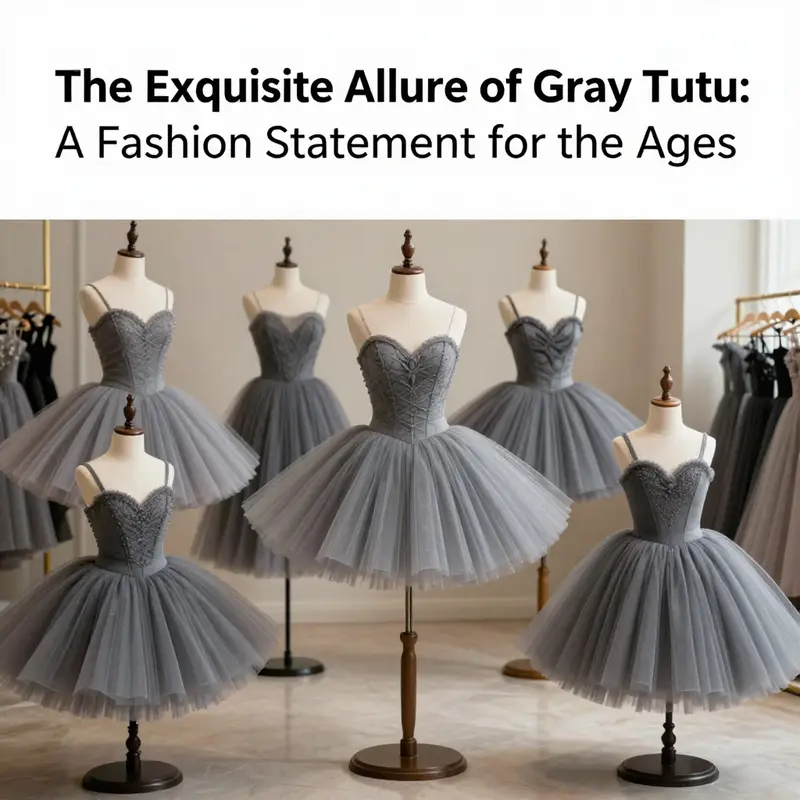
The gray tutu, with its ethereal charm and sophisticated design, has made a significant mark in women’s and children’s fashion. This article delves into the craftsmanship and quality of gray tutus, shedding light on the design processes that elevate them to a class of their own. Beyond mere clothing, gray tutus embody cultural significance, symbolizing nuanced interpretations of beauty and complexity. A comparative analysis will reveal their competitive stance in the children’s fashion market and the unique role they play in performance arts. Lastly, we will explore innovations in their design, showcasing how traditional elements can seamlessly blend with contemporary aesthetics. Each chapter reveals a facet of the gray tutu, providing valuable insights for business owners looking to understand this nuanced market.
Weaving Silence and Shine: The Design, Fabrication, and Subtle Sophistication of the Gray Tutu
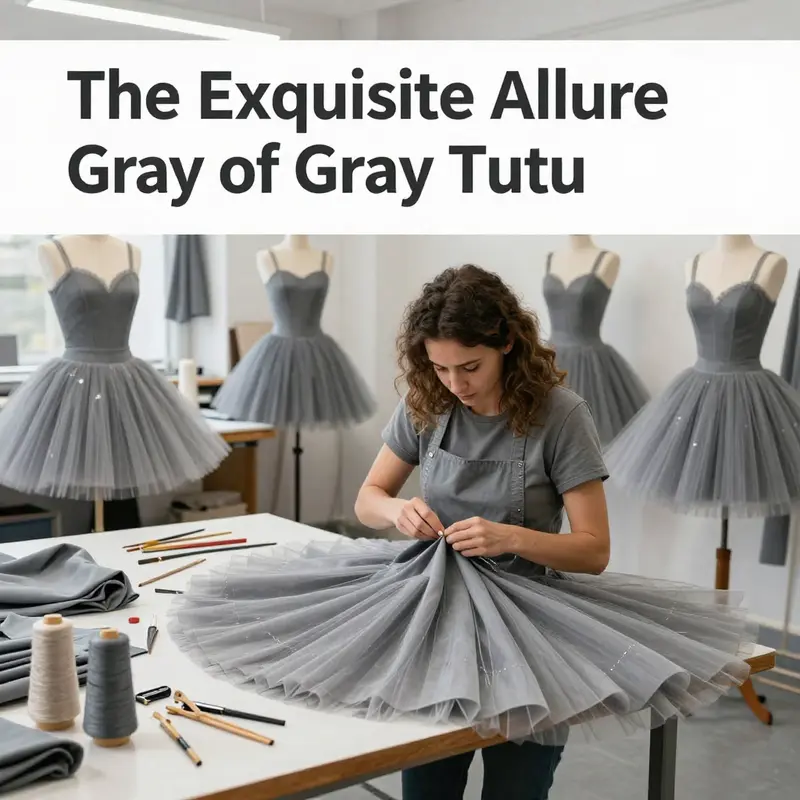
The gray tutu sits at an intriguing intersection of delicacy and discipline, a garment that speaks in whispers rather than shouts. It is not merely a skirt suspended on an elastic band; it is a curated sculpture in motion, a crafted performance piece that relies on a precise balance between structure and softness. In examining its design and fabrication, we glimpse how a color that is quiet by instinct becomes a stage for light, shadow, and the kinetics of a dancer’s body. The gray you see is the result of choices that span from the way the fabric falls to the way a seam meets a seam, from the choreography of layers to the ethical clarity of safety and comfort for the wearer. This is a chapter in which technique and mood converge, where the tutu becomes both a visual accent and a vehicle for expression, capable of anchoring a romance of the moment or lifting a frame into a dreamlike photograph. The silhouette of a gray tutu borrows from a classic lineage—the timeless ballerina skirt that has traveled through centuries as a symbol of poise and discipline. Yet the color shifts everything. Gray, in its many tonal possibilities—from a cool graphite to a warmer stone—delivers a versatility that vibrant hues rarely achieve. In a stage or studio setting, the gray tutu reads as a neutral chorister, allowing the wearer to become the melody of light and movement without overwhelming it. This subtlety is not accidental. It arises from a deliberate design philosophy: the tutu should frame the body, not overshadow it; it should offer a stage for motion, not confine it. The fabric’s weight, the density of the layers, and the finish of the edges must all work in concert to preserve the fluidity of a pirouette while preserving the plush, cloud-like volume that defines a tutu’s signature silhouette. Material selection forms the first and most consequential chord in this composition. Traditional tutus lean on netting that holds its shape with unyielding stiffness. In a modern gray interpretation, designers explore a spectrum of fabrics that soften the edge of form without surrendering dimension. Layering remains essential, but the layering strategy is nuanced. The inner lining is often crafted from a skin-friendly fabric that provides a gentle, velvety barrier between the scratch of stiffer layers and the delicate skin of a dancer or the close contact required by a photoshoot subject. The outer tiers might be crafted from tulle or a tulle-like fabric, chosen for its ability to hold a plump, buoyant form when gathered and sewn in concentric rings. The goal is a silhouette that can bloom with motion—when a child runs, the skirt rises in a series of soft, ripple-like waves; when a performer holds a pause, the layers settle into a quiet, gravity-defying halo. The tactile experience matters as much as the visual impression. A soft, slightly brushed surface or a satin-lustre finish can translate stage lights into a gentle pearlescent glow, which adds depth without overpowering the wearer. Behind the visual poetry lies a thread of craftsmanship that binds precision to patience. Whether a tutu is assembled by hand or with refined industrial techniques, the attention to detail remains the same. Each seam, each tuck, each hem is a stitch in a larger plan: to build a garment that moves with the body, breathes with it, and endures the rigors of repeated wear. Inner finishing is crucial. A well-executed finish—like a smooth seam that lies flat against the skin, or a reinforced edge that resists fraying—minimizes irritation and preserves the integrity of the layers beneath. The embroidery or decorative elements, when used, must be judicious in the gray palette, otherwise they risk transforming the piece from ethereal to over-stimulating. The weight distribution across the tutu is another subtler truth. If the upper layers carry too much heft, the fall becomes heavy, hindering effortless elevation. If the layers are too light, the volume collapses too readily, robbing the wearer of the buoyant drift that defines the form. Mastery lies in calibrating these forces so movement feels almost weightless, even as the skirt does the heavy lifting of visual drama. The fabric’s behavior under light reveals how urban and studio configurations influence the garment’s character. In daylight, the gray can reveal a spectrum of micro-tones—slate, graphite, and charcoal—each catching the angle of the sun or the glow of a lamp with a slightly different personality. Under a spotlight, the subtle sheen emerges, not as a showy flourish but as a quiet halo around the wearer. This is where the tutu earns its place in both performance and photography. For a dancer, the garment must respond to the kinetic demands of jumps, turns, and leaps, maintaining its sculptural integrity while yielding to the energy of the body. For a photographer, the gray provides a versatile background that harmonizes with a range of skin tones, prop colors, and backdrop textures. The resulting images avoid the saturation and saturation-limiting tendencies of brighter hues, instead delivering a timeless elegance that can anchor a modern editorial as readily as a studio portrait. The role of comfort cannot be overstated in the design dialogue. The tutu’s beauty should not come at the expense of wearability. An adult or child in motion wears more than fabric; they wear air, temperature, and pressure. The inner layer needs to be soft against the skin, with a finish that reduces friction. Elasticity plays a quiet but decisive role. A well-chosen waistband supports sustained wear without digging in, while the drape of the upper layers should not create constricting folds that snag against jewelry, tights, or bodices. The seam placements should avoid high-stress zones, where repetitive motion could loosen the construction or cause discomfort. The result is a garment that invites movement rather than demands it—a tutu that becomes a partner in dance, rather than a cage. Ethics and sustainability also thread through the discussion of gray tutu fabrication. The choice of materials can reflect a commitment to safe, non-irritating textures and dyes that are friendly to sensitive skin and to the environment. In practice, this means opting for fabrics with stable colorfastness, low chemical loads, and finishes that resist pilling or fraying over time. A well-made tutu thus becomes a durable companion, encouraging reuse and longer lifecycles rather than rapid disposal. The craftsperson who brings such a piece to life must balance economy and endurance, ensuring that each layer contributes to longevity as well as to beauty. This is a quiet manifesto: that quality remains valuable even as fashion systems evolve toward faster cycles. The gray tutu becomes a case study in sustainable chic, proving that restraint and refinement can coexist with youthfulness and fantasy. Color, shape, and texture converge in a final, essential conversation: the gray tutu as metaphor. Gray in cultural discourse often signals complexity, the gray area between binaries. In a narrative sense, the garment embodies a poised tension between innocence and experience, between the unblemished magic of childhood and the nuanced contemplation that accompanies growth. When photographed or staged in a performance, the garment can carry a narrative weight, becoming a visible emblem for nuanced emotion rather than a simple prop. This dual capacity—the ability to enchant while inviting reflection—underlines the gray tutu’s staying power. It is not merely about being subtle; it is about being deliberate, about shaping a space where light, shadow, and motion collaborate to reveal subtle truths about the wearer and the moment. For designers who seek to explore the gray tutu’s possibilities, the thread of guidance winds through both principle and experimentation. Start with the silhouette—the volume and tiering that create the signature lift. Then consider how the interior warrants comfort and longevity, aligning fabric choices with skin sensitivity and practical wear. Next, test the interaction of light on the surface, evaluating how different gray tones read on camera or in stage lighting. Finally, thread the discipline of craft through every edge and seam, investing in finishes that endure repeated performances and washes. In this way, the gray tutu becomes more than a garment; it becomes a living artifact, a wearable study in how restraint can yield grace and how grace can invite imagination, transforming any space into a stage for possibility. For readers who wish to explore a practical entry point into the broader family of tutus, the Basic Tutu category offers a foundational look at the silhouette’s core elements and variations, inviting beginners and seasoned makers alike to experiment with proportion, fabric, and finish in a single coherent conversation. Basic Tutu. The fabric and form of a gray tutu tell a story about care, craft, and the quiet magic of transformation. It is a reminder that elegance need not shout, that beauty can live in restraint, and that the most powerful instrument in a dancer’s wardrobe may be the soft breath of fabric turning with every step. As the wearer moves through space, the tutu’s layers catch and release the light in a gentle choreography, hinting at a deeper narrative: a life lived in balance between clarity and mystery, between the bright moment and the slow, deliberate arc of memory. In that balance lies the extraordinary quality of the gray tutu—the ability to be both companion and muse, to spark a sense of romance and introspection in equal measure, and to remind us that sometimes the most compelling color is the one that whispers, rather than shouts, its truth. External resources offer a window into the physical realities that underpin this elegance. For those seeking a deeper understanding of fabric behavior, texture, and the tactile nuances that contribute to silhouette and comfort, a closer look at specialized fabric characteristics can be enlightening: https://www.amazon.com/dp/B0BQZ8KX5Y?th=1. This external reference provides context for how fabric structures translate into movement, weight, and touch—details that inform every choice in the gray tutu’s design and construction. The chapter thus closes with a practical note and a broader invitation: to consider how color, craft, and movement intersect, and to imagine new possibilities for the gray tutu in performance, photography, and everyday wear.
Grey Tutu as Modern Myth: Symbolism, Identity, and the Subtle Reframing of Girlhood
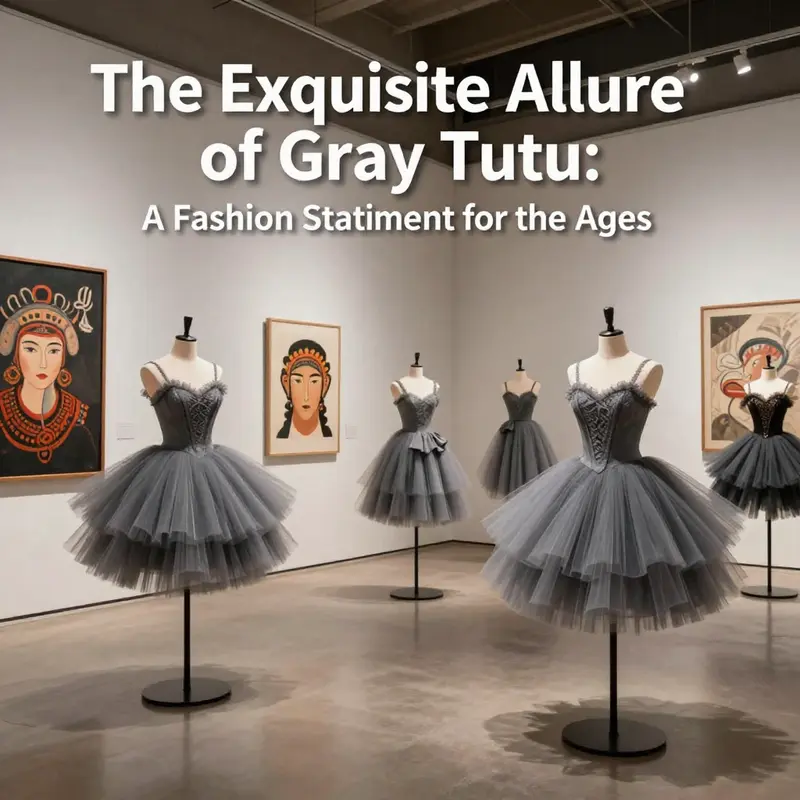
From the first glance, a grey tutu does not announce itself with the bright exhale of white or the glint of silver. It speaks in a quieter register, a suspended note between light and shadow, between innocence and introspection. The grey tutu is not merely a garment; it is a cultural statement about how beauty, movement, and young femininity are imagined today. It sits between tradition and experimentation, honoring ballet’s lineage while inviting personal voice and contemporary sensibilities.
Within the sphere of handmade craft, grey tutus can signal ethical production and attention to materials. A tutu sewn with care becomes a small manifesto about durability, comfort, and respect for makers. In this light, grey shifts from color to narrative thread about time, process, and value.
The color itself invites reflection on girlhood in public narratives. Grey resists pink essentialism and opens room for a more nuanced portrait of a young person learning to move and perform with poise and authenticity. It accommodates a spectrum of emotion, from the quiet rehearsal to the poised bow, suggesting a form of autonomy designed to be felt rather than shouted.
Beyond stagecraft, grey as a neutral palette aligns with broader fashion trends that favor depth over flash. The garment can reveal the sculptural quality of fabric under light, soften silhouettes, and invite viewers to interpret mood and intention rather than simply admire sparkle.
In closing, the grey tutu stands at a crossroads of tradition and possibility. It invites audiences to witness movement with curiosity, to linger on the interplay of light and fabric, and to consider how color, texture, and form carry meaning in childhood and performance.
Quiet Glamour in Motion: Reframing Gray Tutu in the Modern Children’s Fashion Landscape
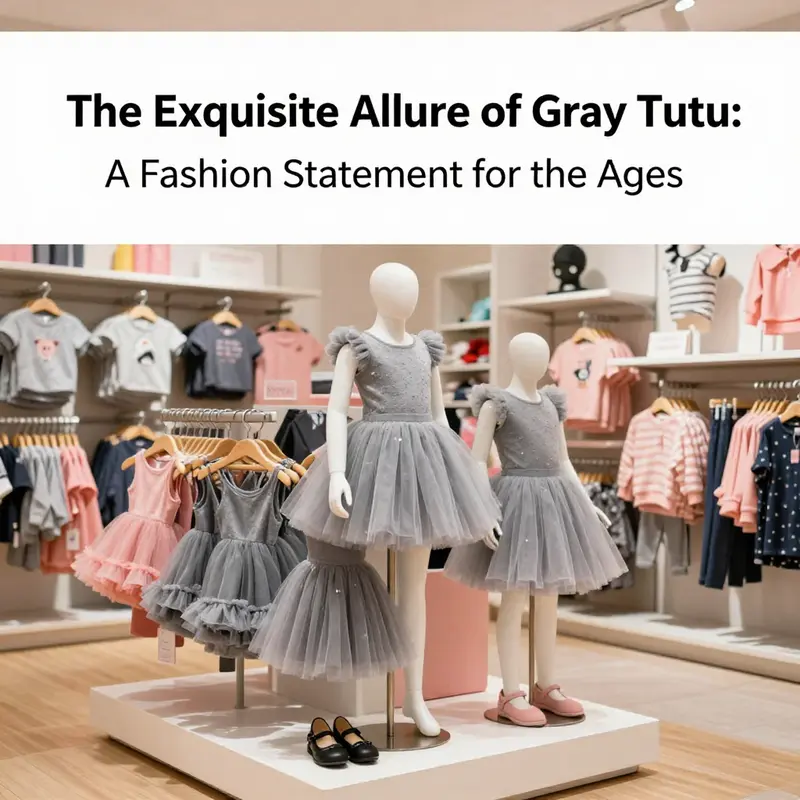
The gray tutu emerges not as a mere variant of a traditional party dress, but as a reflective surface for contemporary taste in children’s fashion. In markets long saturated by bright pinks and pastel whimsy, gray offers a different promise: softness and restraint that can be playful in motion yet appropriate for formal occasions. It is a color that does not shout its presence but proves its value through structure, fabric, and tailoring. As families seek elegance without costume-like excess, gray tutus become a versatile option that speaks to a broader appetite for neutral styles, refined detail, and lasting value. The shift is about color and a philosophy of dressing children in pieces that can journey through settings—birthday parties, family photos, school performances, and holiday gatherings—without needing to be discarded after a single use. In this light, the gray tutu stands at the crossroads of innocence and sophistication, inviting both practical wear and imaginative play.
From a materials perspective, gray tutus tend to lean toward soft, forgiving fabrics that support active play while maintaining a graceful silhouette. Common choices include polyester tulle in multiple fine layers, sometimes blended with cotton or other fibers to improve breathability and comfort. The layering is not gratuitous: it creates volume that gives a tutu its characteristic bounce, yet when designed with care, the layers remain light enough for a child to wear for hours without fatigue. The construction often emphasizes a gentle waistband, smooth against the skin, and a lining that enhances comfort while preserving the outer look. In premium iterations, subtle embellishments appear as fine metallic threads, delicate lace trims, or understated embroidery. These details elevate a tutu beyond a simple costume into a wearable artifact suitable for family portraits or formal ceremonies, where the goal is to capture a sense of timeless elegance.
The aesthetic appeal lies in its adaptability. The neutral palette pairs with a broad spectrum of footwear, from gloss-finish ballet flats to sparkly Mary Janes and even small boots in cooler weather. Accessories can be strategic rather than overpowering: a satin cardigan, a soft bolero with a hint of shimmer, or a lightweight shawl can transform the look for a fall party or a winter pageant. This flexibility makes gray a practical choice for households seeking a single outfit that travels well across seasons and occasions. Parents can lean into metallic accents for a festive mood, or opt for matte textures to emphasize understated grace. The result is a wardrobe piece that remains legible and attractive as a child grows, rather than becoming quickly dated.
Between Silence and Shine: The Gray Tutu as a Lens for Modern Performance
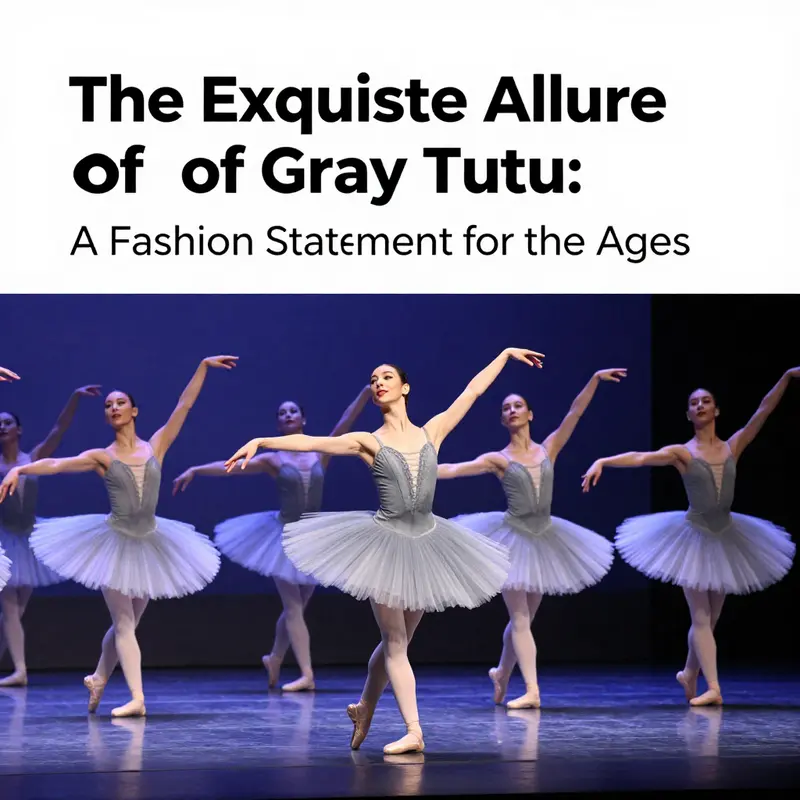
The gray tutu began as a quiet counterpoint to the white and pastel skirts that have dominated classical ballet’s visual language for generations. It arrived not with the thunder of a new genre, but with a patient shift in perception: a soft, equal light that refuses to crystallize a story into a single, bright emotion. In performance, gray is less a color than a mood, a tonal space where stillness and motion can cohabit. The silhouette—tenderly stiffened by layers of tulle, gathered into a cloudlike circumference—still recalls the ancient shape of the tutu. Yet its color renders that shape malleable, capable of speaking without shouting. In intimate duets or expansive group sequences, a gray tutu acts like a mute chorus, allowing dancers’ bodies to carry the emotional weight rather than the hue alone. The result is a stage language that invites viewers to listen for nuance rather than to anticipate a dramatic peak, and to witness a form that can bend with, rather than resist, the complexities of human feeling.
Craftsmanship plays a pivotal role in this delicate conversation between fabric and meaning. The gray tutu, to achieve its rich, non-obtrusive presence, often relies on meticulous layering, with hundreds of meters of high-quality tulle folded and sewn into a pliant yet voluminous core. The internal structure must preserve fullness while remaining light enough to float with the dancer’s breath. Craftspersons balance density and gravity, using boning, slips, and carefully graded hem lengths to maintain the tutu’s silhouette through leaps, turns, and grounded steps. The color, too, is no mere pigment; it is a controlled interplay of light and dye, a canvas that responds to stage lighting with shifts that can feel almost kinetic. When the lights brighten, the gray can brighten with them, catching glints that are almost silvery. When the stage dims, it sinks into a velvet hush, highlighting the dancer’s lines and the choreography’s quiet entropy. This tactile, material intelligence of the gray tutu makes it not simply a costume, but a partner in storytelling, one that can shift its role as the narrative demands.
In the repertoire of contemporary performance, the gray tutu has come to symbolize ambiguity, introspection, and emotional complexity. It is not a costume that shouts its themes; instead, it asks audiences to read the space between gesture and meaning. The color’s neutrality gives choreographers room to stage inner lives—conflicts that are not resolved in a single moment but examined over a progression of scenes. This has been most evident in the way some modern choreographers weave gray into the fabric of their works to explore issues of identity, resilience, and social expectation. The gray becomes a visual metaphor for the boundaries and blur between self-definition and external pressure. In such works, the tutu’s rigidity is tempered by color’s elasticity, and the body becomes a site where cultural scripts about gender, age, and desire are questioned or reimagined. The audience, too, participates more actively, filling the gray with personal memory, ethical questions, and imagined outcomes, rather than merely following a preordained fairy-tale arc.
The broader reception to gray-tinted costumes in performance has sparked a lively debate about tradition and innovation. Purists argue that the white tutu embodies ballet’s lineage and purity, a precise emblem of virtuosity and historical continuity. Proponents of color experimentation counter that the stage remains a living art form, and that color is a powerful, nonverbal tool for shaping perception and mood. In recent seasons, notable choreographers have embraced gray as a strategic device, using it to frame moments of tension, restraint, or existential questioning. The visual contrast created by a structured, racketed tutu against a gray field—whether in a solo reverie or a tightly synchronized ensemble work—produces a charged dynamic. The eye discerns the rigidity of the form while the mind contemplates the soft, uncertain gray compared with the sharper lines of movement. It is a paradox that speaks to contemporary sensibilities: progress in art often comes not from breaking the frame but from widening it, allowing the old to exist beside the new in a shared resonance.
Color, light, and memory intersect in gray’s stage presence. Lighting designers learn to treat gray as a dynamic surface rather than a static shade. A cool gray can feel clinical when the choreography leans toward clinical clarity, but under warmer cues it can bloom into something almost wistful. Dancers report that gray, in this sense, can coax a certain restraint into the body’s expression; it makes the flourishes feel earned rather than performed. The audience experiences this as a more contemplative cadence—a lingering sense that emotion is not shouted but insinuated, that a movement’s gravity can carry weight without the need for loud color to announce it. The gray tutu reframes the audience’s expectations of tempo and tone, inviting a slower, more deliberate pace that mirrors the interior landscapes of the characters. In this way, the costume becomes a partner to the narrative rather than a mere setting for it.
In discussions of design and dramaturgy, gray is also a practical ally. It reduces color-driven distractions, allowing other production elements—set design, lighting, sound—to assume greater influence over mood. This is particularly valuable in contemporary works that explore memory, moral ambiguity, or political resonance. When the stage picture remains visually calm, the choreography’s shifts—an abrupt change in tempo, a pause that seems to stretch into an eternity, a subtle misalignment of timing—read as intentional commentary. The gray tutu gives choreographers space to stage such commentary without sacrificing the audience’s emotional engagement. And while the discussion continues about where tradition ends and experimentation begins, many viewers perceive gray as a bridge that respects the past while inviting the future to step forward with a measured, thoughtful stride.
The practicalities of production also shape the gray tutu’s reception in performance spaces around the world. The material choices, the nuances of dye density, and the care with which the garment is pressed and stored all influence how the color holds under different theaters’ lighting ecosystems. In some venues, the gray might pick up a lilac or a blue undertone from certain fixtures, subtly altering the silhouette’s perception. In others, it may read as a soft, neutral expanse that foregrounds a dancer’s athleticism and emotional clarity. The interplay of fabric, dye, and light thus becomes another language on stage, a dialect that complements spoken dialogue and silent gesture alike. Designers and directors who embrace this complexity frequently report that gray fosters a more versatile palette for storytelling. It allows the performers’ bodies to alternate between stillness and surge, between restraint and release, without the color itself forcing a particular emotional outcome.
For those who curate or study performance, the gray tutu offers a case study in how costume can participate in structural storytelling without dominating the discourse. It encourages viewers to attend to spatial awareness, breath, and line, to listen for the cadence of steps rather than the punch of a single striking image. In this way, gray becomes a pedagogy of presence—a reminder that stagecraft is an ecosystem where lighting, sound, choreography, and costume converge to translate intangible experiences into shared perception. This is not a retreat into minimalism for its own sake, but a invitation to a more nuanced dialogue about what a performance can be when color is not the loudest voice in the room. As audiences become more accustomed to these layered approaches, gray’s reception grows more sophisticated: it is understood not only as a visual choice but as a philosophical one, a way of acknowledging complexity in a world that often prizes certainty.
As the field continues to evolve, the gray tutu will likely remain a flexible and provocative instrument. Its capacity to hold space for ambiguity—without collapsing into dullness—makes it a resonant partner for movements that explore identity, memory, and the friction between individual will and collective expectation. The costume’s quiet power can also become a catalyst for collaborations across disciplines, inviting designers, dramaturgs, and lighting artists to experiment with rhythm, texture, and color in ways that reveal new layers of interpretation. In many ways, gray is a mirror for contemporary audiences: it invites projection, reflection, and sometimes discomfort, because it refuses to offer simple answers. The result is a performance culture that values the coexistence of multiple truths, where a single step can carry moral and emotional weight as different audiences interpret it through their own lenses.
For readers and researchers looking to connect this discussion with broader conversations about color in performance, the visual symbolism of gray sits at a compelling crossroads of tradition and innovation. The subject invites ongoing study of how costume, lighting, and choreography collaborate to shape meaning. It also raises questions about how audiences respond when familiar mythologies are reinterpreted through subtler, less ostentatious cues. The gray tutu thus stands not as a replacement for the classic tutu but as a provocative extension of its lineage, a sign that the stage remains a place where old forms can be reimagined to illuminate new questions. For designers contemplating future projects, it is a reminder that color—when wielded with intention and care—can become a quiet but persistent engine of narrative and empathy.
Internal links and further resources can provide pathways into this ongoing conversation. For those seeking a practical starting point in costume planning that respects the gray tutu’s delicate balance of form and mood, the costume-theme category of relevant stagewear catalogs can be a helpful touchstone. Explore the catalog to see how gray can anchor a range of designs while allowing other expressive elements to breathe. You can visit the costume-theme category here: costume-theme category.
External reading that expands on color’s symbolic roles in dance costumes offers broader cultural context. As color theory and performance practice continue to intersect, researchers and practitioners alike can benefit from considering how gray communicates subtlety and restraint across diverse choreographic languages. For a thoughtful exploration of color and its meanings in ballet costumes, see the BBC Culture coverage on the subject: https://www.bbc.com/culture/article/20231017-the-meaning-behind-the-colors-of-ballet-costumes. This resource underlines how color choices shape audience perception and the storytelling power of costuming in performance, complementing the gray tutu’s evolving presence on contemporary stages.
Innovations in Gray Tutu Designs for Modern Life: From Quiet Grace to Everyday Edge
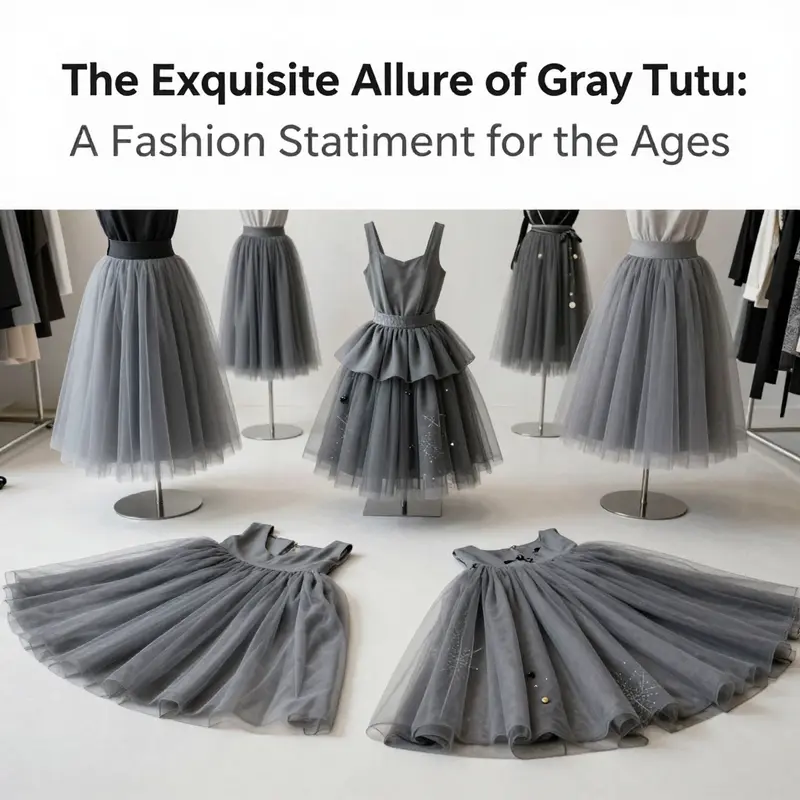
The gray tutu emerges as more than a color or a silhouette; it is a narrative that travels from the disciplined poise of traditional stagewear into the fluid tempo of daily life. In its soft, muted shade, gray carries a paradox: it can feel at once restrained and expansive, innocent and intriguing. This duality invites designers and wearers to imagine a garment that performs in multiple arenas—on the dance floor, in a casual street setting, or as a quiet, sculptural statement under a tailored jacket. The evolution of gray tutu design speaks to a broader shift in contemporary fashion, where material science, craft, and storytelling converge. Rather than being confined to a single purpose, the gray tutu now acts as a versatile canvas, inviting movement, interpretation, and reinterpretation across the spectrum of modern experiences. The garment becomes a dialogue between heritage and experimentation, a text that reads differently depending on who holds it and where it is worn.
Fabric technology has played a pivotal role in this transformation. Traditional tulle, with its delicate yet fragile reputation, often demanded careful care and limited stretch. Modern gray tutus, however, are increasingly woven from stretchable blends that fuse nylon and spandex. These fabrics offer elasticity that supports dynamic movement, whether a dancer lofts a leg or a child spins with unbounded energy at a party. They also introduce resilience: the fabric resists wrinkling and recovers its shape after repeated wear, a practical advantage for pieces that may transition from performance to playground without a wardrobe malfunction. The moisture-wicking properties of these blends keep the wearer comfortable through long events, a small but meaningful upgrade in a garment once deemed too delicate for extended use. This convergence of comfort and performance helps the gray tutu shed its reputation as mere décor and become a reliable part of a modern wardrobe. In a world that prizes efficiency and ease, the gray tutu answers by delivering fluid movement without compromise.
Design elements reflect a similar push toward versatility and nuance. Contemporary gray tutus embrace asymmetrical hems that suggest motion even at rest, layered textures that create depth as light shifts across the surface, and mixed-material constructions that pair the ethereal with the tactile. A touch of lace or mesh can soften the silhouette, while subtle metallic threads or foil accents introduce a controlled shimmer that feels chic rather than theatrical. These choices allow a single piece to suit a semi-formal event, a theatrical rehearsal, or a casual afternoon outing, depending on how it is styled. The addition of a wrapped or tiered structure can add volume without sacrificing ease of wear, and designers are experimenting with combinations of tulle, satin, and fine mesh to produce a tactile panorama that rewards close inspection. In this arena, the gray tutu ceases to be a static garment and becomes a sculptural medium, capable of expressing restraint, sparkle, and storytelling in equal measure.
A further frontier lies in modular design. The ability to adjust volume and length within one garment aligns with a broader fashion imperative: flexibility. Modular gray tutus enable wearers to scale their impact—from a quiet, minimalist daily look to a dramatic stage-ready presence with minimal changes to the outfit. This adaptability reduces the need for multiple pieces while expanding creative possibilities. A single tutu can become multiple silhouettes: a knee-grazing sheet for a refined streetwear ensemble, a mid-length flare for a subtle performance, or a fuller, more voluminous layer for a bold, ceremonial effect. The modular approach also speaks to sustainability in practice. Fewer pieces in a wardrobe mean less production waste and reduced clutter, a practical appeal in an era where mindful consumption and enduring design drive consumer choices. The result is a gray tutu that respects both artistry and practicality, a garment that invites experimentation without demanding new purchases for every mood or occasion.
Sustainability sits at the heart of today’s gray tutu story. Fashion circles increasingly reward brands that trace their supply chains, minimize environmental impact, and embrace recyclable or recycled materials. In response, producers are turning to recycled polyester and organic cotton blends, reimagining the inner life of the tutu as well as its outer shine. Even packaging and manufacturing ethics come under scrutiny, with brands seeking to reduce plastic waste and ensure fair labor practices. The gray tutu thus becomes a vehicle for ethical storytelling—an emblem of how a traditionally light, airy aesthetic can align with a responsible, forward-looking philosophy. The color gray in this context is less a bland modifier and more a deliberate choice: a signal that elegance does not have to come at the planet’s expense, that beauty can be produced with conscience, and that fashion can evolve without abandoning craftsmanship.
Styling the gray tutu for modern wear extends its reach beyond the studio into everyday life. It pairs gracefully with cropped hoodies or knit layers for a balanced streetwear vibe, where the tutu’s airy proportion is offset by the compact silhouette above. Worn over leggings or ponte fabrics, it achieves a relaxed elegance suitable for casual outings, galleries, or informal gatherings. Layering the tutu under a structured jacket or blazer creates an arresting silhouette: the soft volume peeking from beneath a tailored line, a whisper of romance against architectural lines. Footwear shifts the narrative too—sneakers lend a playful, contemporary edge, while ankle boots or loafers push the look toward refined urban chic. The gray tutu’s adaptability makes it a quiet anchor for a wardrobe that refuses to be either strictly formal or strictly casual. Its muted tone carries an easy sophistication that allows it to harmonize with other neutrals and to stand out when a more dramatic pairing is desired.
The cultural and emotional resonance of gray within fashion also informs the evolving language of the tutu. Gray, traditionally seen as a bridge between black and white, carries undertones of ambiguity and balance. In stories and design discourse, gray can be used to stage a tension between innocence and depth, between the spark of performance and the calm of day-to-day life. When a tutu speaks in gray, it invites contemplation: can a garment that looks innocent also carry a sharper, more contemplative mood? Can a dress worn for play become the vehicle for a personal statement about identity or taste? This interpretive space—where softness meets awareness—adds a layer of narrative to the garment. Designers lean into this space by choosing textures that reward close observation, by layering materials that reveal themselves in movement, and by selecting hues that read as elegant without shouting. The gray tutu, then, becomes not merely a costume or a trend, but a language through which wearers articulate a nuanced line between lightheartedness and thoughtfulness.
Craft and origin stories also illuminate the modern gray tutu’s appeal. Behind many of the most compelling pieces lies a tradition of careful handwork and intimate knowledge of fabric behavior. The craft ethos—often tied to small workshops in places with long-standing textile legacies—emphasizes patience, minute attention to seam and cut, and a respect for fit that machines alone cannot guarantee. The idea that a tutu can be made with meticulous hand sewing, tested through countless folds and twirls, adds a layer of reverence to its use. In this lineage, the gray tutu is a modern heirloom: it carries the imprint of skilled hands, a nod to the past, and a readiness to adapt for future wearers. While contemporary forums often celebrate scalable production, there remains a quiet appeal to the artisanal approach. It invites wearers to participate in a ritual of making and wearing that honors technique, material truth, and the sensibility that great garments become meaningful through the care they receive.
For readers navigating this evolving landscape, the gray tutu’s trajectory offers a practical guide to building a versatile, thoughtful wardrobe. A contemporary piece can be a portal into a broader conversation about movement, texture, and light. It invites us to consider not just how a garment looks, but how it feels, how it travels with us through hours of living—across classrooms, studios, streets, and stages. In embracing fabric innovations, design experimentation, and sustainable practices, designers craft a tutu that honors its theatrical origins while embracing the demands of a bustling, interconnected life. The wearer, in turn, becomes a collaborator in this dialogue, negotiating balance between form and function, between the intention of the moment and the memory of the next. The gray tutu is a garment with multiple duties: it can anchor a quiet afternoon, animate a dance routine, or frame a bold, artistic statement in a gallery or street scene. It is precisely this multi-vocation quality that makes gray not merely a color but a vantage point from which fashion can observe and respond to the rhythm of modern life.
As the chapter winds toward its close, a practical note anchors the reader: the value of ease without surrendering aesthetics. An accessible gray tutu that blends stretch, comfort, and durability invites more spontaneous movement and less wardrobe anxiety. The modular concept supports quick, confident transitions. Sustainability practices remind us that beauty can co-exist with responsibility. And the styling possibilities—whether paired with a cropped hoodie for an urban outing or layered with a sharp jacket for an evening event—demonstrate that fashion’s best innovations often lie in subtleties: a hem that moves with a dancer’s arc, a shimmer that catches the eye without overpowering a look, a fabric that breathes as life flows. The gray tutu, in its current iteration, articulates a modern season of fashion where history, craft, and forward-thinking materials converge. It is a testament to how a single, quiet shade can carry a spectrum of intentions, each ready to be discovered by readers who choose to look, move, and wear with intention.
To connect this discussion with hands-on exploration, readers can discover the basic tutu category, a starting point for understanding how a simple silhouette can evolve with layering, length, and fabric composition. This accessible entry point invites experimentation and helps build a bridge between everyday wear and performance needs. basic tutu collection
External resource for further context on contemporary gray tutu aesthetics: https://www.amazon.com/Gray-Tutu-Skirts-Elegant-Casual/dp/B0XXXXXXX
Final thoughts
The gray tutu represents more than just a garment; it encapsulates grace, modern aesthetics, and deep-rooted cultural narratives. As we explored the intricate craftsmanship involved in creating these tutus, along with their market significance and artistic resonance in performance, it is clear that they hold a vital place in both children’s fashion and beyond. For business owners, understanding these elements can not only enhance product offerings but also help in tapping into the emotional connections consumers have with gray tutus. Moving forward, the fusion of traditional designs with contemporary innovation will undoubtedly shape the direction of gray tutu fashion, making it an exciting space for growth and creativity.