
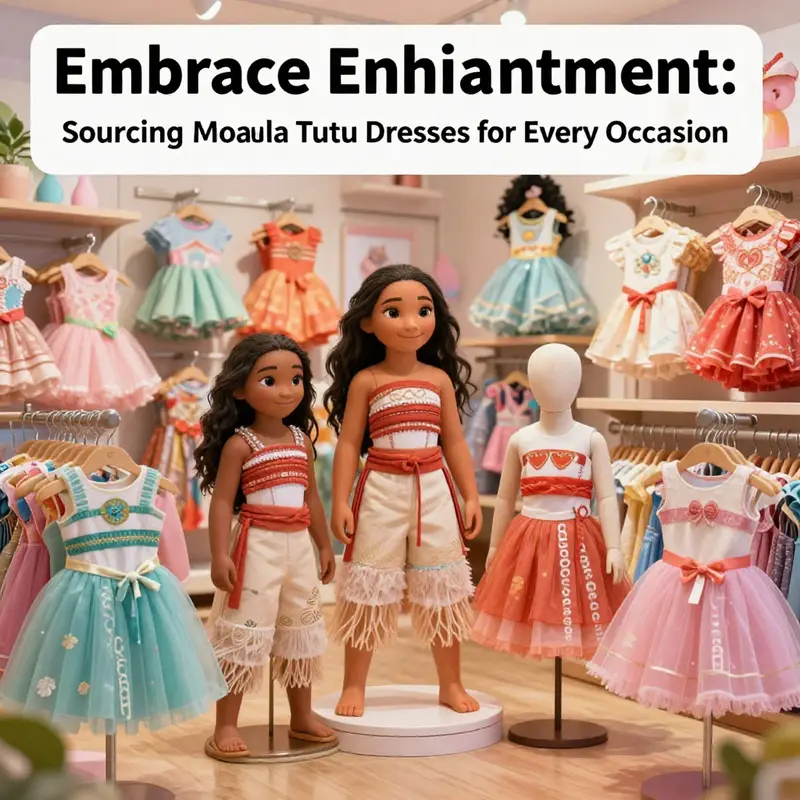
The enchanting world of Moana continues to inspire countless children’s parties and themed events. As a business owner in the children’s apparel market, understanding where to source Moana tutu dresses is essential not only for capturing customer interest but also for maximizing profit margins. This article explores various platforms—from bulk sourcing on Alibaba.com to unique, handcrafted designs on Etsy, competitive pricing on eBay, and the ever-changing seasonal trends in retail. Whether your focus is on fashion trends, quality craftsmanship, or cost, this guide encapsulates everything you need to know about Moana tutu dresses to effectively supply your customers’ needs.
Currents of Craft and Commerce: Sourcing Moana-Inspired Tutu Dresses Across Global Markets
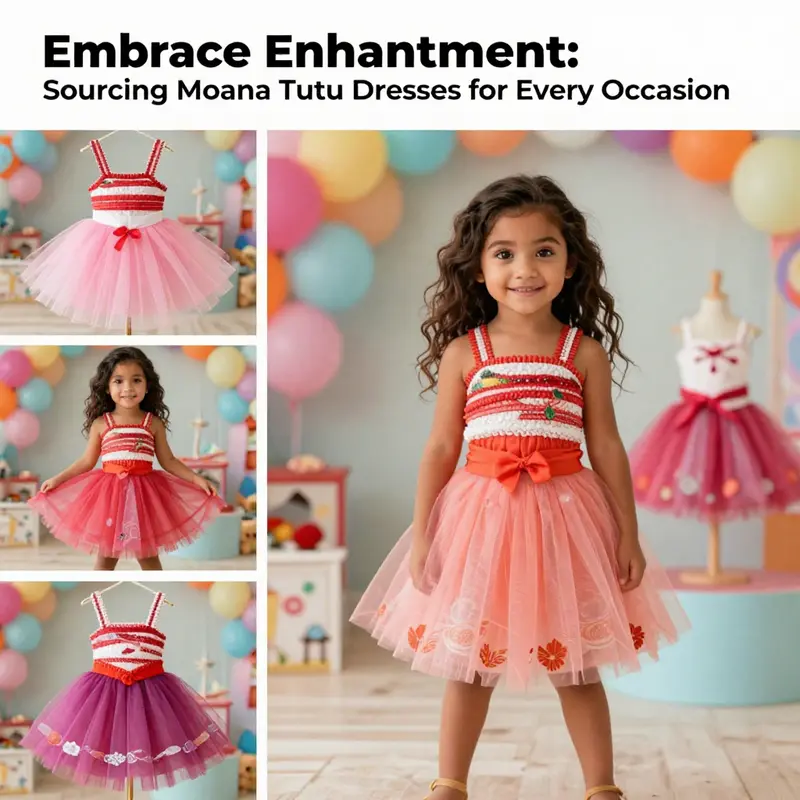
When a family seeks a Moana-inspired tutu dress for a party, a festival, or a playful cosplay moment, the search often feels like charting a coastline: broad, glittering, and full of possibilities, with hidden coves that reward patient exploration. The Moana-inspired tutu aesthetic—a full, layered tulle skirt paired with a coordinating top or bodice and a hint of Polynesian-inspired color and movement—exists at a lively intersection of handmade charm, mass-market practicality, and cultural celebration. In this space, sourcing is less about choosing a single item and more about navigating a spectrum of options that balance price, quality, customization, and speed. A well-informed approach blends three currents: bulk-capable suppliers for events, artisan-made offerings for keepsakes and gifts, and quick-turn options for last-minute needs. This is the pulse of modern costume sourcing, where ideas travel as readily as shipments and where the timing of a party can steer the entire buying journey toward one mode of sourcing over another.
Diving into the bulk-ordered, customization-friendly side of the market reveals a marketplace oriented toward planning, scale, and branding. A global sourcing platform offers a wide spectrum of Moana-inspired tutu ensembles designed specifically for little girls, with the potential to include a matching headpiece and sometimes a small bag. The allure here is clear: ready-to-ship sets that can be deployed for school events, party packages, or themed celebrations, often priced to accommodate bulk purchases. The strategic advantage is the ability to fulfill multiple orders from a single supplier, with predictable lead times and the option to tailor packaging or add a graphic design element to the box. This kind of customization can be a game-changer for event organizers who want consistency across dozens of outfits while preserving a sense of cohesive storytelling at the party. What makes these offerings compelling is not just the price point, but the convenience of bundling a complete, themed look in one purchase. The ability to select a bulk quantity and still expect a coordinated presentation helps planners maintain a uniform mood across an entire lineup of attendees, whether the goal is a school performance, a community event, or a large family gathering.
Within this bulk-oriented stream, the pricing architecture often starts with a low per-unit baseline for small orders and grows more favorable as volumes rise. For a two-piece minimum—a setup that works well for small teams or early-stage event planning—the per-unit cost tends to be accessible, with meaningful discounts unlocking as quantities move into the dozens or hundreds. This tiered pricing is not just about cutting costs; it also enables buyers to experiment with different sizes, ensuring fit across siblings and friends, and to allocate budget toward complementary pieces like headbands or small bags that reinforce the Moana-inspired theme. The opportunity to tailor the order through customization options—such as bespoke packaging, graphic elements, or branded tags—further expands the value proposition. These features turn a simple costume into a branded experience, aligning the product with school fundraisers, community events, or themed celebrations where a polished, cohesive look matters as much as the outfit itself.
The toolset accompanying these sourcing options is equally informative. Advanced search technologies and supplier-matching services streamline discovery, even when the shopper begins with a rough concept rather than a precise SKU. One feature highlights the ease of finding near-matches: a visual search capability that lets buyers upload a photo of a desired Moana-inspired tutu dress and receive a list of similar styles, along with pricing, customization options, and supplier details. Such tools reduce the friction of product discovery and help buyers compare variations in silhouette, fabric blend, and color palette with a few clicks. Behind the scenes, the platform also offers a structured path for requests for quotation (RFQ), connecting buyers with pre-vetted suppliers who understand bulk orders, quality assurance, and on-time delivery—a critical pipeline for event planners who must commit to a timeline and a budget. This combination of image-driven search and RFQ acceleration makes the procurement process more predictable, which is especially valuable when coordinating outfits for large groups where consistency in look and fit can define the success of the event.
Beyond the bulk-centric approach, the same marketplaces host options that cater to more individualized tastes. Artisan-made offerings—often two-piece sets featuring hand-finished detailing, carefully chosen fabrics, and personalized headbands—appeal for birthday parties, first birthdays, or intimate gatherings where keepsakes carry sentimental weight. These pieces emphasize craftsmanship, the warmth of human touch, and the durability of materials chosen for soft textures, vivid color, and wearability. Shoppers seeking one-of-a-kind pieces may value the stories embedded in these designs, where each stitch and every ribbon can be dialed to reflect a particular mood or memory. In this space, the pairing of a Moana-inspired tutu with a hand-crafted headband becomes more than a costume; it becomes a memento, a photograph through which a child’s imagination can reminisce long after the party lights fade.
Shopping across these dimensions also means negotiating the realities that accompany any international supply chain. Production timelines can vary with factory workloads, fabric availability, and seasonal demand. Lead times must be aligned with the event calendar, whether a weekend birthday party, a Halloween masquerade, or a school performance. Shipping from distant factories introduces considerations about transit times, packaging integrity, and import duties, especially when orders include multiple sizes or require careful labeling. The cost calculus isn’t limited to the sticker price of the garment; it expands to freight, insurance, and the risk of delays that could ripple through an event schedule. Thus, buyers increasingly evaluate suppliers on a composite score: price per unit, minimum order quantity, customization capability, packaging options, production lead time, and reliability of delivery commitments. In practice, this means balancing a wish for speed with a preference for quality and a desire to honor the storytelling intent behind a Moana-inspired look.
Within this ecosystem, there is an explicit invitation for practical experimentation. For families who want a fast, budget-conscious route, a basic tutu dressed in Moana-inspired colorways can serve as a flexible foundation. The beauty of starting with a simple, compliant silhouette is that it allows for on-theme embellishment—whether sprinkles of color, locally sourced accessories, or a few hand-sewn touches—without committing to a more expensive, bespoke design from the outset. The basic tutu category can be a staging ground for fit tests and style experiments, enabling parents to gauge what their child loves about the look before investing in more elaborate pieces. This approach mirrors the broader principle of phased sourcing: begin with a reliable, scalable option, assess satisfaction, and then layer in customization as needed. For families who prefer a quick, ready-to-wear solution while maintaining cohesive styling, the basic tutu route often proves both practical and satisfying. To explore this approach in a real-world catalog, consider browsing the basic tutu category, which can be a quick doorway into Moana-inspired color stories and silhouette shapes that read well on stage or in party photos.
For those who seek a broader, more nuanced spectrum of options, the marketplace ecosystem also hosts a spectrum of independent designers and small studios. Etsy, for instance, showcases handcrafted, artisanal Moana-inspired tutu dresses that emphasize unique detailing, personalized touches, and high-quality materials. These designs are often paired with matching headbands that echo the character’s iconic look while allowing for custom color choices and fabric treatments. While the Etsy options tend to be more limited in bulk applicability, they offer a crucial counterbalance to mass-market assortments by anchoring the dress in a sense of craftsmanship and memory. The contrast between bulk-ready outfits and handcrafted keepsakes reflects a broader truth about party attire: there are moments when speed and uniformity triumph, and others when memory, texture, and individuality take center stage.
The conversation around sourcing Moana-inspired tutu dresses would be incomplete without acknowledging the cultural dimension that informs these designs. Many interpretations blend playful, child-friendly silhouettes with subtle references to Polynesian-inspired prints and color palettes. Ethical sourcing and cultural sensitivity become important guardrails in this space. Buyers are increasingly mindful of how designs honor cultural motifs and how outfits balance fun with safety. Materials are chosen with non-toxic dyes, soft textures, and child-friendly finishes in mind, and sizing is thoughtfully aligned with age ranges to ensure comfort during movement and play. In this way, the process of sourcing becomes a careful dialogue between imagination and responsibility, between the thrill of a themed party and the duty to ensure the child’s well-being and dignity.
As the journey continues, the role of the retailer—whether a teacher, a party planner, or a parent organizing a neighborhood event—emerges as a guiding influence. Retail listings around seasonal peaks often reflect the dance between demand and supply: a flurry of new arrivals as Halloween and summer celebrations approach, followed by a rapid turnover that rewards timely decision-making. In practice, this means staying attuned to catalog refresh cycles, understanding which pieces are likely to disappear from shelves, and forecasting sizes to avoid overzealous stockpiling. The dynamic is less about chasing trends and more about fashioning a consistent, age-appropriate visual narrative across a spectrum of sizes and parties. The beauty of this approach is that it lets families curate a story rather than a single look. A Moana-inspired tutu can be the centerpiece of a portrait session, a dance recital, or a playful afternoon, and good sourcing makes all those moments feel part of the same thread.
For readers who want to cultivate a sense of practical discovery, the internal catalog of a family-owned shop nearby can be a valuable companion to global sourcing. A quick path to this is to explore the basic tutu category on a familiar children’s costume retailer, which can make the process of measurement, fit testing, and color matching feel more intimate and immediate. In this way, global and local sources work in tandem: the global market provides range and scale, while the neighborhood shop offers touchpoints for fit, comfort, and the tactile reassurance of trying on a sample. The synergy between these modalities supports a more confident purchase, whether the goal is to outfit a dozen children for a school ensemble or to celebrate a child’s special day with a keepsake that lasts beyond the party.
Ultimately, the decision to pursue a Moana-inspired tutu dress through a bulk supplier, an artisan studio, or a hybrid approach hinges on timing, budget, and the desired sentiment of the event. The sourcing journey becomes a narrative about balancing a shared celebration with individual preference. It is about how well a costume can carry the child’s imagination—from the moment a party invitation is opened to the final photo that captures a smile mid-dance. And in this balancing act, the ability to access customization, reliable logistics, and meaningful packaging plays a central role. The currents of global markets offer stability and scale, while the shorelines of handmade design offer warmth and memory. The best outcomes often emerge when these elements meet in the same party plan, weaving together a spectrum of outfits that tell a coherent story while respecting the joy of personal expression. For readers who want to explore a practical starting point, consider the basic tutu category as a fast bridge to Moana-inspired color stories and silhouettes that translate well to photos, performances, and everyday play. Basic tutu category is one navigational waypoint that can anchor a broader sourcing strategy.
External resource: Alibaba’s product page offers a concrete example of how bulk pricing, customization, and rapid dispatch can support event-scale sourcing in this space. Alibaba product page.
Handcrafted Moana-Inspired Tutu Dresses: Cultural Craft and Childlike Wonder on Etsy
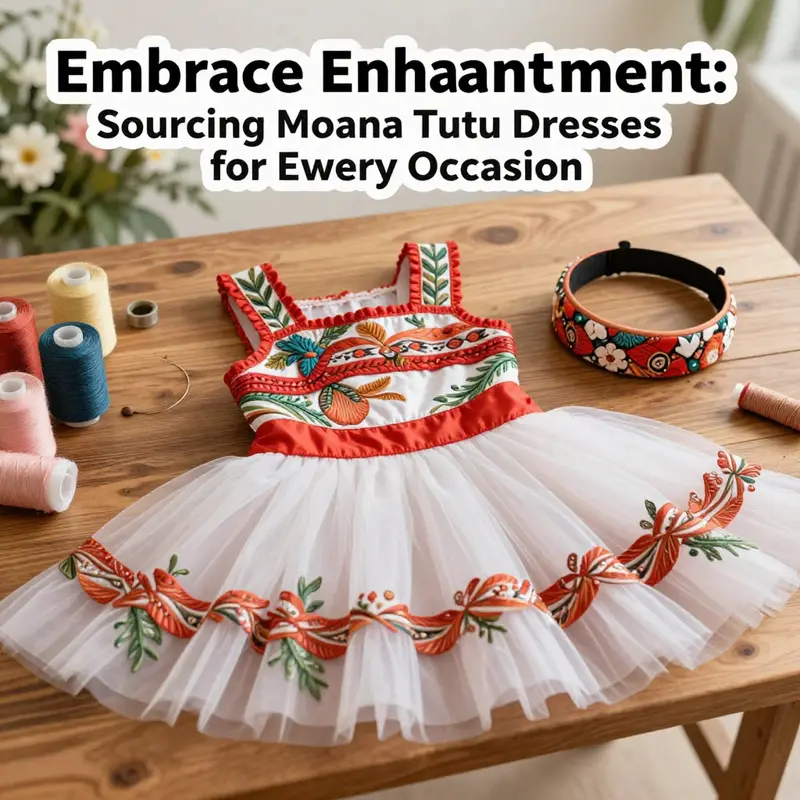
The search for a Moana-inspired tutu dress is more than a quest for a costume; it is a journey into a space where art, culture, and childhood imagination converge in fabric and thread. On a quiet screen, a world unfolds where independent artisans translate the spirit of the voyage—of waves, islands, and courage—into two-piece sets that pair a fitted top with a full, swaying tutu. In this corner of the handmade economy, designs are often conceived as gifts to young wearers who will someday tell stories about their own explorations. Rather than a single mass-produced item, these dresses become a small portfolio of ideas: how color, texture, and cultural symbolism can coexist in a single garment designed for a child’s daily play, a birthday party, or a first trip to a theme-park wonderland. The result is not just apparel; it is a wearable narrative that invites children to step into a mythic sea of self-expression, while parents glimpse the care and intention embedded in every stitch.
What makes the Etsy ecosystem—if we call it that, a reflection of a broader handmade marketplace—distinct for Moana-inspired tutu dresses is the emphasis on artisanship and cultural mindfulness. Many of the profiles behind these outfits foreground techniques learned through generations, or by studying Polynesian-inspired motifs and the practical realities of a child’s wardrobe. The dresses often feature a full tulle skirt that moves with a child’s laughter, a bodice with comfortable elastic or soft closures, and a headband that completes the look with a lei-inspired flourish. In the hands of skilled makers, the tutu is not just a silhouette. It is a canvas on which natural materials, symbolic flowers, and oceanic color palettes come together to evoke the character’s island home and the courage she embodies in her adventures. This fusion of design and meaning is what elevates a dress from a cute costume to a keepsake that can be cherished long after the party has ended.
At the heart of many designs is a devotion to respectful cultural representation. A growing thread among artisans is the careful integration of Polynesian-inspired elements in ways that acknowledge sources of inspiration without reducing them to novelty. You will see flowers such as plumeria or hibiscus represented in leis or hair adornments, crafted with attention to texture and scent-suggesting details that delight a child’s senses. Some designers lean into natural materials—linen, cotton, or silk blends—in the bodice or the bow, balancing durability with comfort for little wearers who are active and imaginative. Color palettes tend to echo the sea and the shore: blues and teals mingling with coral and sunset oranges, with metallic accents used sparingly to reflect sunlit water or the shimmer of shells along a shoreline. The crafted approach often extends to the accessories embedded in the set—a soft shell necklace, a tiny wooden bracelet, or a delicately woven headband—that can be worn together or separately, offering versatility across multiple occasions.
The two-piece structure of many Moana-inspired tutu dresses adds practical value for parents and the joy of choice for children. A dress that can be worn with or without the matching headband gives caregivers the flexibility to adjust the look for different events without needing to purchase an entirely separate costume. The headband is more than an afterthought; it can be an artful extension of the lei-inspired motif, sometimes featuring crocheted flowers, hand-sewn beadwork, or stitched knots that mimic tidal textures. These details also reflect an understanding of a child’s daily realities: the easiest possible dress-up in the morning, secure fastenings that stay in place during active play, and fabrics that handle gentle washings after a day of pretend sea voyages and island discoveries. When a seller describes a piece as toddler-friendly or child-sized, the conversation becomes more than sizing. It evolves into a conversation about ergonomic fit, fabric stretch, and the long-term wearability that parents rightly value when investing in a costume with emotional significance.
What also distinguishes the Etsy experience is the opportunity for customization, which sits at the intersection of personal narrative and craft. Some designers offer options to tailor the dress length to a child’s height, ensuring the tutu falls just right and doesn’t impede movement during a dance or a game of make-believe. Others invite customers to tweak color intensity or incorporate a favorite flower motif into the lei or waistband. In a few cases, sellers may introduce detachable elements—shells that can be taken on and off, or a necklace that can be swapped for a different pendant—so a single garment can be repurposed to suit multiple occasions. Customization in this space is less about chasing a perfect replica of a film costume and more about capturing the spirit of the character while honoring the wearer’s own story and preferences. The result is a garment that feels personal, not borrowed, and that can become part of a family ritual—an outfit saved for a birthday, a first trip to a Disney park, or a seaside vacation where a child can imagine herself as a navigator of new worlds.
Central to the discussion of handmade Moana-inspired tutu dresses is material responsibility. The conversation around sustainability rarely stays on a lonely thread of eco-friendly dyes or recyclable packaging; it threads through every decision a maker makes, from sourcing fabric to the choice of trims, from the way seams are finished to how packaging is presented. A number of artisans foreground organic fibers, low-impact dyes, and small-batch production as a norm rather than an exception. This emphasis is not purely about aesthetics; it is a philosophy that gifts children a world where beauty does not come at the expense of future generations. Parents who value this approach often find themselves drawn to layers of care in the product descriptions: the way a skirt holds its shape after repeated washings, the gentle elasticity that survives a year’s worth of dress-up sessions, and the absence of sharp edges or loose embellishments that could pose little safety concerns for adventurous toddlers. The tactile experience of the dress becomes a classroom in itself: how soft cotton or linen feels against the skin, how sturdy stitching resists pulling during a game of pretend, and how the weight of tulle provides a sense of graceful movement that a child can feel in every twirl.
An important point of connection emerges when families reflect on the learning opportunities these handcrafted pieces present. A Moana-inspired tutu is more than an outfit; it is an invitation to discuss exploration, courage, and cultural storytelling. Parents often use the dress as a lens through which to share windward winds and ocean currents, to explain why flora and fauna of the Pacific are celebrated in leis, and to discuss respectful representation. This educational dimension is frequently echoed in the language of the sellers themselves, who describe their work as a blend of storytelling and craft. Some designers provide notes about symbolism in their product descriptions, offering a gentle primer on the significance of certain blossoms or colors, and explaining how these elements can be woven into a child’s social cue set as well. The interplay between the story the dress tells and the real-world lessons a family chooses to teach can transform a party costume into a stepping-stone for curiosity, empathy, and cultural awareness.
For many shoppers, the allure of handcrafted Moana-inspired tutu dresses lies not only in the visual drama of a twirling skirt but in the community they foster. The marketplace becomes a village where a child’s imagination is joined by a chorus of creators who share a reverence for the craft, a passion for storytelling, and a respect for the cultures that inspire the design language. When a parent reads a seller’s note about how a dress is made, they often feel a sense of trust that extends beyond the purchase. They picture the care with which a small team threads hem lines, measures for a perfect fit, and wraps the final package in compostable tissue. The moment of unboxing becomes part of the enchantment, a precursor to the play that will unfold once the dress is donned. In this milieu, a tutu is not merely a garment; it is a bridge between a child’s current world of make-believe and the broader, more nuanced world of craft, culture, and responsible consumption.
From a practical viewpoint, buyers are often drawn to the flexibility of ordering from independent makers who run small studios. This model supports shorter supply chains and more transparent production timelines, which matter when a party date looms or a family trip is planned. Many sellers offer detailed size guides and fabric swatches, allowing for careful comparisons without the need to guess at fit. The absence of mass-market mass production can also translate into longer lead times, a factor families weigh when their event calendar tightens. Yet this is part of the charm and value of the experience: it becomes a collaboration between family needs and maker schedules, a shared calendar of anticipation in which both sides invest care. The result is a garment that feels earned, by the child who will wear it and the artisan who created it with intention.
In the broader landscape of dress-up culture, these handmade Moana-inspired tutu dresses occupy a special niche. They offer a counterweight to fast-fashion cycles by prioritizing quality, meaning, and longevity over instantaneous novelty. They encourage parents to consider how a dress can be a repeated presence in a child’s life—a costume to be loved, mended, and stored as a memory rather than discarded after a single season. This mindset aligns with a growing awareness that clothing chosen for children should be resilient and versatile, capable of becoming a canvas for a thousand stories rather than merely a prop for a single scene. The dresses, with their soft textures, ethical materials, and culturally informed detailing, become heirloom-like pieces in a child’s wardrobe, albeit one that is meant to be worn and enjoyed today rather than tucked away for future generations only.
For readers wanting to explore the breadth of options in a practical sense, the catalog of a basic-tutu category provides a window into the spectrum of styles that accompany handmade Moana-inspired designs. The basic tutu serves as a foundational silhouette that larger outfits build upon, allowing families to envision how a motif-inspired bodice can pair with a simple, durable skirt. This approach highlights the careful balance between aesthetic flourish and everyday wearability, a balance that sits at the core of many successful handmade children’s garments. If you want to see a representative cross-section of these options within a catalog, you can begin your exploration here: luneballet.com/product-category/basic-tutu/.
Beyond the practical and pedagogical benefits, there is a playful, almost ritualistic joy in owning a handmade Moana-inspired tutu dress. The dress becomes a prop for storytelling aloud, a prop that travels with a family on vacation, and a cherished first costume that a child will someday describe with pride. The craftsmanship invites a careful gaze from adults who recognize the time and skill poured into each element—the way the bodice’s seams lie flat against the torso, the fullness of the skirt’s underlayer, the precise placement of decorative flowers, and the neatness of the finishing touches. This appreciation does more than reward the maker; it deepens a child’s sense of value for crafted things and the people who make them. It nourishes a reverence for handmade work and encourages families to consider the ethical implications of their purchases, from materials to labor practices, as part of everyday decision-making.
As with any thoughtful purchase, discernment matters. Prospective buyers are well served by reading product descriptions with care, paying attention to how sizing is handled, and noting the return policies of individual makers. High-quality listings tend to offer clear measurements, fabric content, and care instructions, which are essential when a dress will be worn repeatedly in various climates and settings. The best sellers also provide responsive communication, sharing progress updates on custom requests and confirming approximate production timelines. In turn, buyers bring patience and clarity to the process, articulating their needs—whether it is a taller child needing extra length or a particular color clash with a party theme—and trusting the maker’s expertise to translate those preferences into a finished garment that feels cohesive and confident.
The narrative of handcrafted Moana-inspired tutu dresses—woven from thread, memory, and care—speaks to a larger trend in children’s fashion: the desire for garments that honor craft, culture, and childhood itself. It is a reminder that clothes can be more than apparel; they can be carriers of stories, values, and curiosity. For families, choosing a dress in this vein is a moment to honor both the child’s imagination and the communities of makers who keep needle, thread, and design alive in a digital age. It invites parents to reflect on the kind of wardrobe they want to cultivate: one that values slow fashion, thoughtful storytelling, and respectful representation as core elements of design. In this sense, a Moana-inspired tutu dress crafted by an artisan is more than a costume choice; it is a conscious act of play that acknowledges history, honors culture, and fuels wonder in equal measure.
External resources enrich this exploration by offering broader perspectives on handmade, culturally mindful children’s costumes. For a wider window into the world of handmade, independent dress design and the range of Moana-inspired pieces that families consider, readers may consult the following external reference: https://www.etsy.com/search?q=handmade+moana+tutu+dress. This link provides access to a spectrum of designers who foreground craftsmanship, customization, and cultural storytelling in their work, underscoring how a single garment can carry a multitude of meanings beyond its surface beauty.
In sum, the allure of handcrafted Moana-inspired tutu dresses on the handmade marketplace rests on a few enduring threads: artistry, cultural respect, durability, and the magic of play. The dresses become more than costumes; they become shared rituals that families weave into birthdays, park visits, and everyday adventures. They invite children to imagine themselves as navigators of waves and winds, while offering parents a tangible reminder that care, craftsmanship, and community still have a vital place in the wardrobe of childhood. The marketplace’s smaller scale provides a canvas where each dress can tell a unique story, and where each purchase becomes a vote for the kind of world we want our children to inherit—one stitched with care, colored by ocean tones, and filled with the pluck and curiosity that define every good voyage.
Pricing the Island Wardrobe: Navigating Moana Tutu Dresses in Online Markets
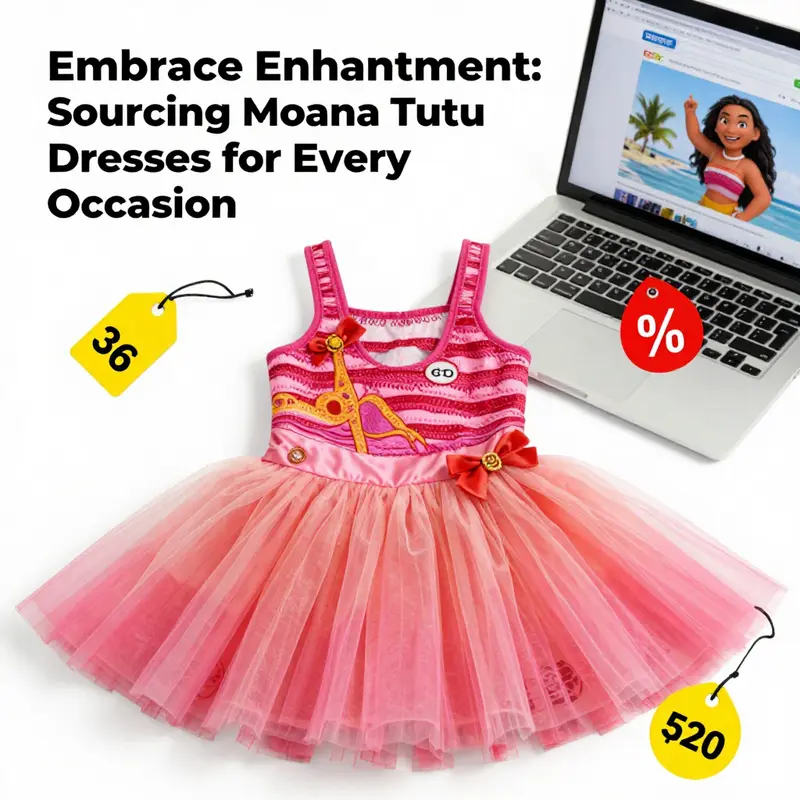
The search for a Moana tutu dress can feel like a voyage through a busy online market. Prices vary with condition, bundles, and shipping. A new dress with accessories may cost more, while a gently used version can be affordable but requires careful checks of size and quality. Buyers should compare listings, confirm measurements, and watch for included items like headbands or bags. Free shipping, when offered, can significantly affect the total cost, especially across regions with currency differences. For families, anchoring on total landed cost—dress price plus shipping, taxes, and any duties—helps budgeting. The market often shows two tiers: used items around the low teens to mid-teens in local currency, and new, unbranded options in a higher band. The presence of a complete set can justify a premium for convenience. Always read return policies and seller ratings to reduce risk. The overall guidance is to treat price as part of a broader value proposition: fit, comfort, and the joy the outfit will bring to a child.
Tides, Tulle, and Tempos: Seasonal Currents in Moana-Inspired Tutu Dress Retail
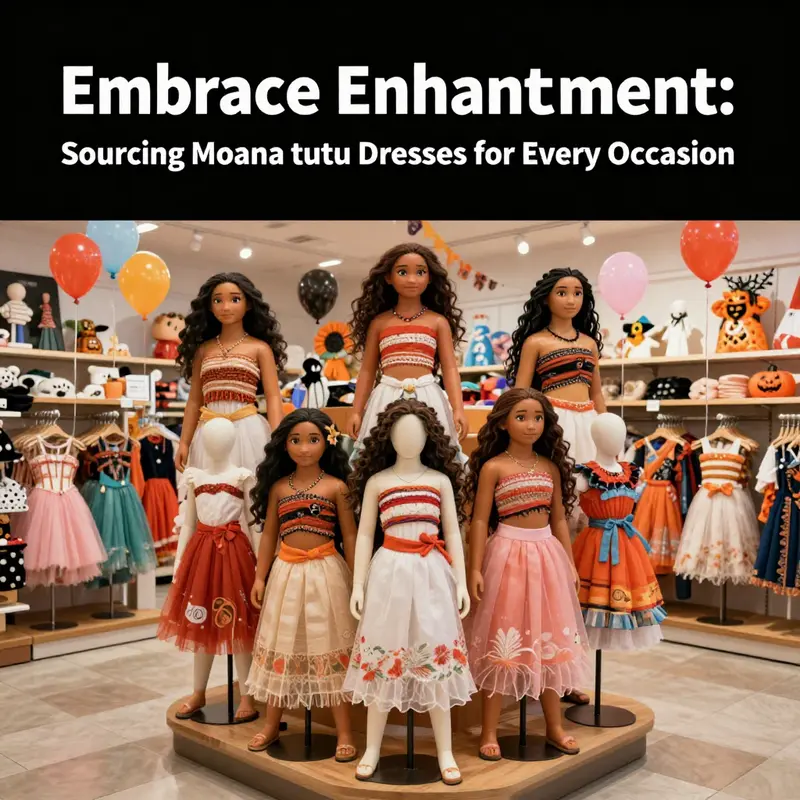
The seasonal rhythms of fashion rarely move in straight lines. They curve with holidays, family gatherings, and the weather’s mood, weaving stories that children wear as much as they wear the outfits themselves. In this particular thread of the broader trend landscape, Moana-inspired tutu dresses sit at an intersection of whimsy, celebration, and cultural storytelling. Their appeal lies not only in the bright colors and airy layers of tulle but also in how they map onto the calendar’s own peaks and troughs. As parents and guardians plan costumes for Halloween, birthday parties, or summer beach gatherings, these tutu sets become tangible artifacts of memory—little canvases where sunlit afternoons and festive evenings leave their imprint. Shopping data around early 2026 suggests a clear pattern: demand climbs when the leaves begin to turn and again as the calendar fills with party dates, then steadies into the long, warm lull of late summer before another uptick for back-to-school celebrations and fall festivities. In practical terms, retailers and buyers alike sense the year’s pulse through a blend of online searches, seasonal promotions, and the cadence of new arrivals that follow the holidays. Across global marketplaces, the push and pull of supply and demand for island-inspired tutus reflect these cyclical seams. The most telling signal is not a single spike but a sustained elevation during two distinct windows—Halloween preparations and midsummer family events—where parents seek outfits that feel both festive and practical for outdoor activities. The scenes are familiar: a little girl twirling in a mint-green, coral-accented dress under string lights at a neighborhood party, or a sunlit afternoon party where a turquoise tutu catches the eye as petals drift by. In this seasonality, the Moana-inspired tutu becomes more than a costume; it becomes a portable narrative device, a small stage on which a child’s imagination can perform a story of voyage, courage, and joyful exploration. Within this broader arc, the very design of these outfits adapts to the calendar. Designers and makers lean into tropical motifs—the palm-frond silhouettes, floral prints, and wave-like trims that echo the sea itself—while balancing comfort for long hours of play with the eye-catching drama that makes a party ensemble feel complete. The tropical palette—turquoises, blues, sunlit yellows, coral pinks—works in harmony with outdoor lighting, helping the wearer stand out in photos and in moments of candid celebration. The result is a dress that reads as both costume and keepsake, a piece that can be folded into a memory box or passed along to a younger sibling as a cherished reminder of a particular summer or a birthday party spent chasing bubbles in a warm breeze. The seasonal cycle also informs the way outfits are offered. Retailers, recognizing the need for variety, present a spectrum of options: some buyers seek a fully coordinated set that includes a matching headband and a small bag, while others prefer a single dress with the freedom to accessorize. The two-piece route—dress with a detachable headband—often becomes the preferred option for families who plan multiple uses for the garment, from casual play at the park to a more formal celebration elsewhere. In terms of material and construction, the priority is to strike a balance between durability and dreaminess: soft, multi-layered tulle that maintains fullness without being heavy, satin ribbons that won’t irritate sensitive skin, and linings that keep the silhouette comfortable for hours of movement. The practical realities of dressmaking and sourcing shape these choices. In peak seasons, visibility matters as much as value; buyers gravitate toward outfits that arrive ready to wear, with little need for alterations, while some families embrace customization to better reflect personal style or to honor a specific event. This customization trend has grown alongside the broader appetite for storytelling through clothing. Parents are increasingly drawn to options that allow color choices, motif emphasis, and accessory pairing—whether to highlight a favorite flower, a particular shade that matches a party theme, or a skin-tone inclusive palette that makes the ensemble feel intimate and thoughtful. The desire for meaningful, personalized gifts also surfaces in the demand for keepsake quality. The Moana-inspired tutu is not merely a costume; it can become a lasting memento, a first “special occasion” outfit that shows up in photographs for years to come. This is where the balance between mass production and handmade craft becomes most visible. In a world where quick-turn fashion is abundant, many buyers seek out creators who can infuse the piece with a sense of artistry—hand-sewn appliqués, hand-cut tulle layers, and bespoke headbands that echo the dress’s color story. The tactile appeal of handcrafted elements can tip the scales for gift-givers who want to give something that feels unique, something that will be kept rather than discarded after a single night. It is no accident that Pinterest boards and social media feeds remain prolific with searches centered on island-inspired tutu designs, showcasing how the aesthetic has captured ongoing interest beyond a single season. The images circulating in these networks—floral prints, ruffle borders, and the way a bow or bead catches the light—help fuel demand by providing aspirational reference points for parents planning outfits. The seasonal peak often aligns with spring through early summer as families prepare for birthdays, family gatherings, or weddings that call for festive but age-appropriate attire. A gentle expansion of the design vocabulary accompanies this shift: the introduction of lighter fabrics that drape more softly, the adoption of simpler silhouettes that still carry the character of a tropical adventure, and the refinement of colorways to suit outdoor light. In tandem with these aesthetic adjustments, buyers increasingly value fit and longevity. A dress that can be worn for multiple occasions, or that can be styled with different accessories to produce new looks, tends to find a longer shelf life in a child’s wardrobe. This practicality—paired with the emotional resonance of a favorite character—defines the contemporary Moana-inspired tutu as more than a seasonal costume. It emerges as a ritual object for family life, a small but potent touchpoint where storytelling, celebration, and everyday play converge. Customization options, though, are a major driver of this convergence. Parents who want to tailor a dress to match a party theme or a child’s personal preferences seek out suppliers who offer color choices, embroidery or appliqué accents, and compatible headbands that form a cohesive look. The ability to select, say, a particular shade of teal or coral, or to emphasize a blossom motif on the bodice, adds a layer of meaning that goes beyond mere appearance. In this context, a practical piece of guidance emerges for shoppers and designers alike: when planning a Moana-inspired tutu for a seasonal event, consider how the garment will be used. If the dress will be worn outdoors in warm weather, prioritize breathability and a light structural foundation. If it is meant to be a keepsake or a formal event accessory, consider enhanced details that will photograph well and endure the test of time. For families who prize authenticity and respectful representation, there is value in seeking out makers who approach Polynesian-inspired motifs with care and sensitivity. The goal is not to appropriate but to celebrate, to honor the storytelling tradition in a way that feels sincere and respectful while still delivering the charm and whimsy families seek. As consumers navigate these choices, a practical touchstone becomes the online catalog of outfits organized by event type or theme. A parent planning a birthday party or a Halloween gathering might browse within a dedicated category that aligns with costume-theme aesthetics, where the range is curated to emphasize coherence with a broader celebration. In this sense, the path to a seasonally resonant Moana-inspired tutu is not just about the dress itself but about the surrounding ecosystem—the way listings are organized, how color stories are coordinated with accessories, and how the final presentation reads in photographs and memories. This ecosystem is mindful of the end user: a child who wants to feel like a hero of her own story, a family that wants a meaningful purchase rather than a disposable costume, and a community that values craftsmanship, comfort, and care. For those who want to explore more of the broader catalog of costume themes and to see how this particular style sits within a larger design conversation, the costume-theme category offers a navigable, inspirational entry point. It provides a lens through which buyers can compare options, gauge the balance between price and quality, and imagine new pairings that suit their event and preferences. The seasonal dimension remains central, however. Retailers track calendars with a pragmatic eye, recognizing that the moment when a child’s gaze meets a fluttering skirt during a family gathering can define a garment’s lasting impact. In turn, parents who invest in a well-considered Moana-inspired tutu often find that the dress becomes part of a cherished narrative—first adventures on a windy beach, a birthday ride along a sunlit boardwalk, the memory of a song and a shimmer of tulle that lingers after the party ends. The interplay between the season, the design, and the story someone wants to tell is what shapes the purchasing mindset across the year. This is the heart of the phenomenon: a seasonal fashion moment that is at once practical and magical. For those who want to bridge the gap between trend and memory, the path is about recognizing the value of thoughtful, nuanced design and the role it plays in shaping a child’s earliest encounters with storytelling through dress. The journey from a first spark of imagination to a finished ensemble is a shared one—between maker and wearer, between family and party hosts, and between the calendar and the small but radiant moments that fill a child’s day with wonder. To learn more about how these seasonal dynamics unfold in practice, readers can explore the broader category that houses costume-theme offerings, which serves as a gateway to understanding how designers translate narrative intent into wearable form. costume-theme category The broader lesson is simple: timing, texture, and tone matter. When a family plans a Moana-inspired tutu for a season-filled celebration, they are not just selecting clothing; they are curating a memory, one that will ripple through photographs, stories, and future moments of play. The dress carries with it the cadence of fall’s edge and spring’s promise, the glow of a summer sunset, and the quiet awe of a girl stepping into a tale that feels as timeless as the sea. External resources continue to enrich this conversation, offering market signals and trend analyses that help illuminate why certain styles rise in particular months and how customization options expand the ways a parent can shape a dress to reflect personal values and family narratives. For readers seeking a broader view of current retail dynamics in seasonal children’s costumes, an external trend resource provides a wider lens on how themed outfits perform in today’s market: AliExpress Moana tutu dress trends.
Final thoughts
In summary, the thriving market for Moana tutu dresses offers business owners multiple avenues to enhance their product offerings. By sourcing from Alibaba.com, exploring unique designs on Etsy, leveraging competitive pricing on eBay, and staying updated on seasonal trends, retailers can captivate a growing audience. The key lies in understanding customer preferences and aligning product offerings accordingly. By taking advantage of these insights and tools, your business can successfully tap into the enchanting realm of Moana-inspired fashion.