
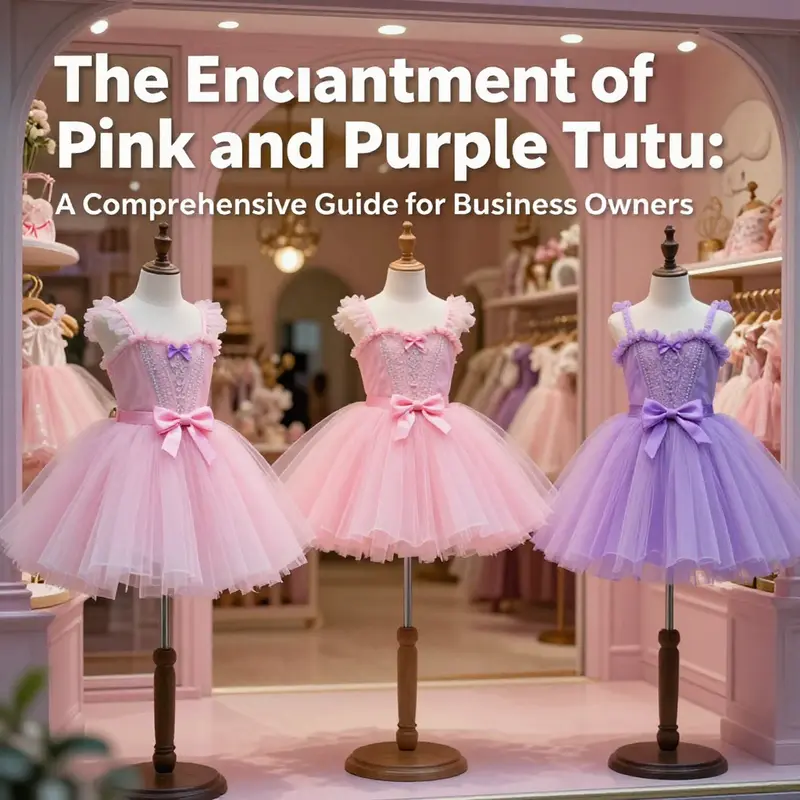
Pink and purple tutus represent more than mere fashion statements; they are a celebration of creativity and joy, particularly in children’s fashion and performance arts. This article will delve deep into their design features, emerging market trends, and the manufacturing processes that bring these enchanting garments to life. Each chapter provides essential insights that aim to empower business owners in leveraging the popularity of pink and purple tutus, helping them to make informed decisions that align with consumer demands.
Whimsy in Motion: The Design Language and Market Magic of Pink and Purple Tutus
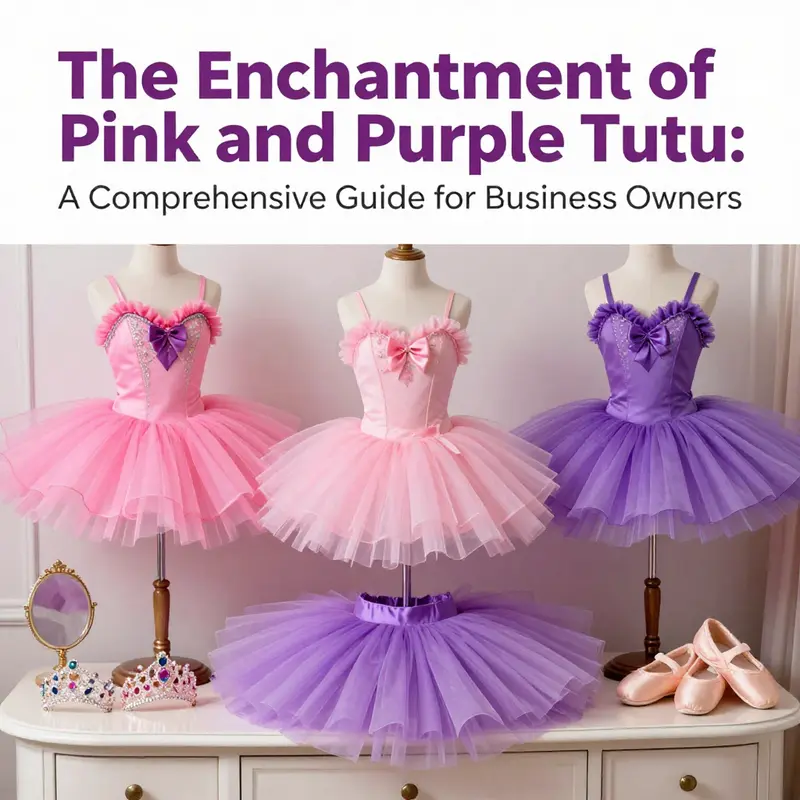
Color has a voice, and in the world of pink and purple tutus that voice speaks in lilting harmony. It sings not only of sweetness and imagination but also of the practical theater of childhood: the way light catches on layers of tulle, how the waist holds secure without pinching, and how every seam supports a child’s movement during a birthday celebration, a school performance, or a playful photo session. The research into the design features of pink and purple tutus reveals a confluence of aesthetics, comfort, and market sensibilities that together explain why these garments have endured as a favorite in children’s wardrobes. The tutu is more than fabric and color; it is a small stage in itself, a wearable story that children pretend to star in, and parents recognize as an easy, dependable way to spark joy while keeping pace with the everyday demands of dressing a child who is curious, energetic, and expressive. The layers of tulle, the careful choice of color gradation, and the thoughtful construction all work in concert to deliver a piece that feels magical yet remains practical enough for daily life. In this chapter we weave together the core design features identified in the study, examining why each detail matters, how it serves both form and function, and how these choices translate into market appeal across a range of occasions. At the heart of the pink-and-purple tutu is a delicate balance: the desire to conjure a fairy-tale moment while ensuring the garment is wearable, durable, and comfortable for hours of play. The analysis that follows is not a catalog of superficial attributes but a narrative about how design decisions shape experience—from the first moment a child sees the garment on a hanger to the final moment of a performance or a memory-filled birthday shoot. A guiding thread through this chapter is the recognition that color and silhouette are not ornamental add-ons but primary communicators that tell a child’s story with a single glance and a shared smile. This is design thinking translated into fabric and stitch, where multi-layered structure, ergonomic fit, and tasteful embellishments converge with color psychology to craft an item that feels both timeless and current, a paradox that modern children’s fashion often embraces with grace.
The foundation of the tutu’s appeal lies in its fluffy, voluminous silhouette. The defining characteristic is the layered structure built from soft, airy tulle. Each layer adds volume, and when these layers are stacked with precision, the resulting puff becomes the garment’s signature, a visual cue that instantly signals playfulness and fantasy. The puff is not merely aesthetic; it enhances the perception of motion, exaggerating every step, spin, and twirl. For a child, the act of spinning under twinkling lights or sunlight can evoke a narrative where they become a character of their own choosing—a princess, a woodland sprite, or a chorus of performers in a grand parade. The fluffy silhouette also has a practical dimension: it helps the wearer feel surrounded by fabric, which can create a sense of security and delight. In performance settings, the silhouette reads as dramatic even from a distance, ensuring that the child’s movements are clearly visible to an audience and to photographers, which is essential for events where memory is captured in photographs and videos.
Linked to the silhouette is the construction of the waistline. A structured waistband or bodice is a recurring feature that defines the tutu’s shape while preserving comfort and mobility. The design often employs stretchy, form-fitting materials such as spandex blends or soft cotton blends to cradle the core without constricting the hips or abdomen. This engineering detail matters because a well-fitted waist acts as a stable anchor for the entire skirt, preventing sagging or shifting during vigorous spins and leaps. It also simplifies the dressing process for caregivers who must adjust a garment quickly between activities. When the waistband is thoughtful, it translates into hours of carefree wear for the child. Thebalance of stretch and support is a silent but essential element, ensuring that the tutu remains inviting to wear rather than a distraction caused by shifting fabric or uncomfortable tension points. The bodice or waistband, therefore, becomes a quiet, invisible partner in the storytelling of dress-up and stagecraft alike, blending comfort with an sense of refined structure that elevates a playful costume into a small, wearable stage.
Delicate embellishments are another hallmark of contemporary pink and purple tutu design. Lace trims, sequins, rhinestones, and metallic thread accents—often in gold or silver—are deployed with restraint to heighten elegance without overpowering the overall whimsy. These embellishments function on multiple levels. Visually, they catch light and add sparkle that is especially effective in photography and on stage, where camera flashes and stage lighting intensify luminance. Tactilely, subtle textures invite touch, inviting children to explore the garment through sensation as part of their imaginative play. The careful application of embellishments is also a study in balance. Too many adornments can overwhelm the airy quality of the tulle and disrupt movement, while too few may fail to convey the sense of fairy-tale polish that many want in a special-occasion outfit. The designers thus walk a fine line, selecting embellishments that complement the color story—pink and purple in gradients or ombre transitions—without stealing the spotlight from the child’s expression. The result is a garment that glows with a gentle sophistication, suitable for both formal events and more intimate celebrations, preserving an invitational charm that invites a child to step into a character of their own making.
Coordinated accessories form an essential extension of the tutu’s design language. Tutus are frequently supplemented with matching tiaras, headbands, bows, or small jewelry pieces, creating a cohesive princess-inspired ensemble. The accessory ecosystem reinforces the narrative of transformation that a tutu offers. When a child pairs a tutu with a complementary headpiece, the total effect is greater than the sum of its parts—the headpiece frames the face, the skirt frames the body, and together they establish a visual story that is instantly legible to observers. The practice of including accessories also enhances the perceived value of the outfit, encouraging parents to purchase the set as a complete look rather than a single garment. In this context, the tutu becomes an anchor piece around which a whole celebratory experience is built: the child feels momentarily crowned, the photos gain a fairytale aura, and the caregiver gains a reliable, expressive option for dressing up during special occasions. The accessory strategy is thus not merely an afterthought but a deliberate extension of the color and silhouette language established by the tutu itself.
Versatility in styling is a hallmark of modern tutu design. Designers increasingly offer features such as detachable sleeves or adjustable straps, enabling a customizable fit that grows with the child or adapts to varying event requirements. This adaptability broadens the tutu’s utility beyond a single occasion, making it suitable for casual dress-up at home as well as more formal performances. The ability to reconfigure a single garment to suit different contexts translates into longer product life and greater value for families. It is also a nod to sustainable design practices in the market, where longevity and adaptability are valued as much as aesthetics. In practice, a child might wear a shorter version for a daytime party and transform it into a longer, more dramatic silhouette for a nighttime dance recital by adjusting straps or adding or removing layers. The versatility of styling thereby expands the tutu’s role in a child’s wardrobe, reinforcing its status as more than a novelty piece and elevating it to a dependable option for a range of celebratory moments.
The color story—pink and purple in combinations that range from soft pastels to bold gradients—plays a pivotal role in how the garment is perceived and chosen. Pink retains associations with childhood sweetness, innocence, and warmth, while purple evokes imagination, magic, and a hint of regal elegance. When these colors appear in gradient form, the visual narrative becomes more dynamic, suggesting movement and depth even when the child is standing still. Gradient effects can also help mask minor wear or shedding that might occur with frequent washing, giving the garment a longer life in the eyes of caregivers. The color strategy is not merely a matter of taste; it aligns with cultural cues about fantasy, celebration, and self-expression, all of which are central to why these tutus are chosen for birthdays, dance showcases, and festive photos. The design language, therefore, is a careful synthesis of color psychology and practical fashion, aimed at delivering an outfit that feels both enchanting and usable.
Length variations add another layer of choice, balancing charm and function. Tutus come in a spectrum of lengths, from short, playful versions ideal for casual daily wear to longer, more dramatic incarnations designed for stage presence. Shorter lengths are easy to move in and quick to wash, lending themselves to everyday play and informal gatherings. Longer lengths create a visual impact that can carry a performance or a formal photograph session, yet they require consideration of movement and comfort to avoid tripping or overheating. The market’s breadth in length options mirrors the diverse needs of families, enabling a child to participate in multiple activities with a single, well-designed wardrobe piece. This variety underscores a broader principle in the design of children’s costumes: flexibility is essential when color, silhouette, and embellishment have to work in harmony across different contexts and activities.
From a market perspective, the tutu’s appeal is reinforced by accessible price points and the way these garments translate across platforms. The research notes that typical price ranges on popular resell platforms fall between $20 and $50, depending on the brand and design features. This positioning places pink and purple tutus within reach for many families while preserving room for variations that emphasize higher-end materials, fine embellishments, or intricate beading. The pricing dynamics reflect a balance between mass-market accessibility and the desire for a touch of luxury in a special-occasion outfit. For retailers and designers, the implication is clear: there is value in developing a tiered range that preserves the core attributes—volume, comfort, color integrity—and offers differentiated options such as premium trims or enhanced耐 wear efficiency without sacrificing the playful essence that makes the tutu a beloved cultural object.
In practice, the study’s findings illuminate how these design decisions translate into real-world appeal. When families consider a tutu for a birthday party or a school recital, they are weighing a constellation of factors: the volume of the skirt, the snugness and comfort of the waistband, the shimmer of embellishments, the sense of a complete look created by accessories, and the garment’s adaptability to different activities and outfits. The design language of pink and purple tutus, then, speaks to a broad desire for garments that spark joy and support confident self-expression in young wearers. It speaks to the ways in which clothing becomes a stage for imagination, a canvas for storytelling, and a practical companion for busy parents who want outfits that are both charming and functional. The chapter’s synthesis is that the success of these tutus rests on a delicate integration of aesthetics and ergonomics, color storytelling and durable construction, decorative detail and everyday wearability. This integration enables the tutu to transcend mere costume status and become a cherished item that a family can return to for multiple occasions, preserving value and delight across seasons.
In closing the exploration of design features, it is worth returning to the idea that a tutu is as much about the experience as it is about the fabric. The child’s sense of movement, the caregiver’s ease of care, and the observer’s moment of wonder converge in a single garment that plays a small but meaningful role in childhood rituals. The pink and purple tutu, with its fluffy silhouette, structured fit, delicate adornments, coordinated accessories, and adaptable styling options, embodies a design philosophy that understands the power of color, texture, and form to nurture imagination. It is precisely this philosophy—where whimsy intersects with thoughtful construction—that explains why pink and purple tutus endure as favorites across generations and why designers continue to refine their approach to make each new iteration feel both familiar and freshly magical. For readers seeking a practical example of related aesthetic and retail presentation, one can explore a representative product page that demonstrates how a pink tutu set can be styled and marketed in a cohesive package, including its matching accessories and the potential for gradient color effects. The page illustrates how the principles described here translate into real-world offerings, providing a tactile sense of the design language that underpins the tutu’s enduring charm. See a related listing for a sense of presentation and market framing: pink-ballet-professional-tutu-costumes-sleep-beauty-t0609.
From an external perspective, contemporary product listings and visual merchandising on major retail platforms also reflect these design priorities. They showcase how light, texture, and color interplay in a way that makes the tutu immediately legible as a fantasy garment, even at a quick glance. The emphasis on a cohesive look—tutu with matching headpieces, curated color palettes, and subtle embellishments—supports the narrative that these garments are not only costumes but also meaningful props for family celebrations and child-centered storytelling. For readers who want a broader view of how such apparel is positioned and perceived by consumers in the market, a representative external reference offers a tangible sense of how the product is presented in practice: External resource.
In sum, the design features of pink and purple tutus emerge as a finely tuned blend of form, function, and fantasy. The fluffy, layered silhouette communicates whimsy at a glance; the structured waistband anchors comfort and movement; embellishments add just the right note of glamour; accessories complete the narrative; and the capacity for versatile styling ensures that a single garment can accompany a child through a spectrum of events. Color choices reinforce a storytelling arc that resonates with both children and adults, and length variations offer practical flexibility that respects different body sizes and activity levels. All told, the tutu’s appeal rests on a robust design logic that honors the child’s experience while delivering meaningful value to families and retailers alike. In this light, pink and purple tutus emerge not merely as costumes but as a small-scale design ecosystem—a wearable stage where imagination can flourish while practical requirements are met with care and precision.
Color in Motion: The Expanding World of Pink and Purple Tutus as Fabric, Fantasy, and Family Culture
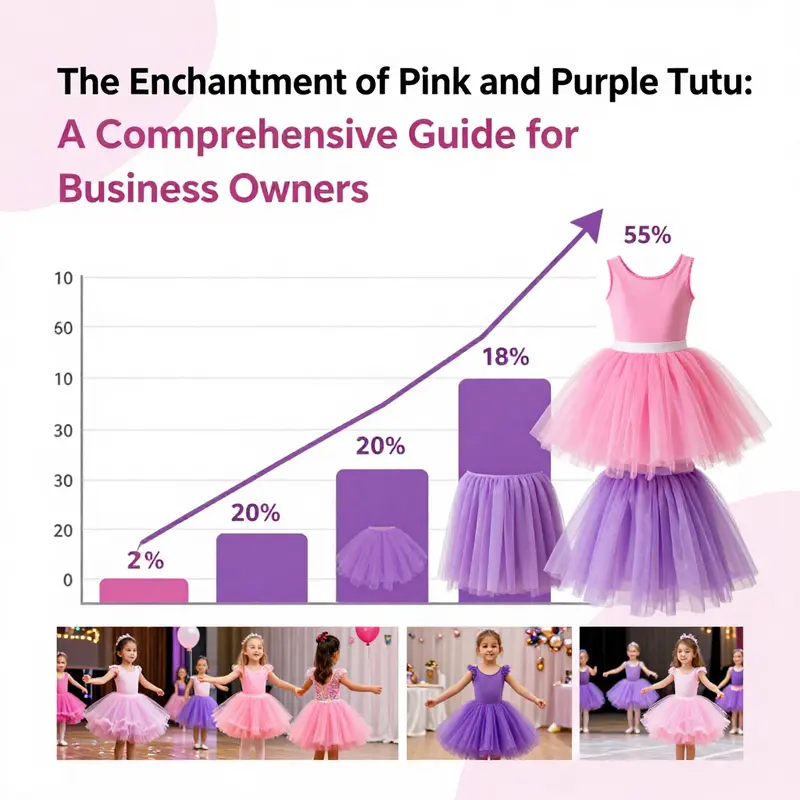
The pink and purple tutu has emerged from the theater and playground alike as more than a costume. It has become a portable poem of color, movement, and mood. In the design studios and sewing rooms that churn out these airy skirts, the tutu is less a single garment than a philosophy of whimsy translated into fabric. Multi-layered tulle, light as a sigh, forms the silhouette, each layer catching air and light in a way that makes even a small child feel taller, more confident, more ready for a stage or a party. The specific shade of pink or purple matters not only for aesthetics but for the emotions it carries. A soft blush can feel tender and hopeful; a dusty lilac can read as gentle and imaginative; a bright fuchsia can shout courage and playfulness. In this sense, the pink and purple tutu becomes a conduit for self-expression, a democratized piece of fantasy that children and families can own in their own homes and at their own celebrations.
The market shifts around this garment mirror broader cultural movements toward expressive, inclusive fashion that values fantasy as a form of personal storytelling. The current era has witnessed a growing appetite for costumes and partywear that blend gender expectations and invite play. Parents seek items that are not only visually striking but comfortable enough for hours of movement, soft enough to be worn next to sensitive skin, and affordable enough to encourage playful experimentation rather than exclusive splurges. The tutu satisfies all of these criteria when engineered with the right fabrics, construction, and sizing. It is designed to move, to spin, to glow under stage lights, and to photograph well in family moments that become memories. In that sense, the pink and purple tutu functions as a bridge between everyday dress and performative costume, a bridge many households now cross with ease.
From a design perspective, the tutu’s signature volume is achieved through a precise layering of lightweight materials. Most modern versions rely on multiple tiers of tulle or chiffon-like fabrics, with elastic waistbands that accommodate growth and a range of body shapes. The result is a garment that feels buoyant yet secure, capable of rapid changes in pose, from a poised pirouette to a carefree leap. Color dynamics play a critical role here. Designers often employ a gradient or a curated mix of pinks and purples to create depth and a sense of magical movement. The eye travels through pale rose toward amethyst or magenta, catching subtle shifts in light as the wearer moves. This is not mere decoration; it is a crafted optical experience that amplifies the sensation of dancing, of becoming a character or a creature from a storybook. Clothing in this space becomes a prompt for imagination, inviting children to improvise stories as vivid as their own dreams.
As interest in these garments grows, so does the vocabulary around their construction and sourcing. The production ecosystems in regions with long histories of textiles and light garment manufacturing—areas known for high-volume capacity, customization options, and cost efficiency—have become central to meeting demand. Factories in these hubs routinely blend efficiency with flexibility, enabling short runs for novelty designs and larger batches for core colorways. Suppliers now offer a spectrum of fabric weights and finishings, from matte to subtly shimmering, and they can tailor trims, waistbands, and attachment methods to fit a broad size range. The result is a tiered market that can serve both casual wear for parties and more upscale interpretations for stage performances, all while maintaining comparable price bands across platforms.
The economic pulse of pink and purple tutus is driven by visible indicators that consumer behavior is moving toward faster, more fluid shopping patterns. E-commerce has become a core channel for discovery, with platforms that emphasize visuals and quick returns shaping purchase confidence. A prominent listing that has garnered attention in recent months features a vivid pink-and-purple interpretation described by buyers as both whimsical and practical. It offers a generous return policy and secure checkout, signaling a buyer-friendly environment where families can shop with less hesitation. This pattern—strong product presentation paired with perceived reliability—has amplified the appeal of these tutus in the children’s and partywear segments. Buyers are drawn not only to color but to the total experience the listing offers: clear sizing information, straightforward care instructions, and an assurance that the item will perform during movement and play.
Beyond the technicalities of design and the mechanics of online shopping, the social life of the pink and purple tutu plays a crucial role in its rising status. Social media platforms, particularly those centered on short videos and visual storytelling, have become accelerants for fashion imaginaries that are inclusive and joyful. Clips showing children and families engaging in themed parties, dance rehearsals, or photo shoots while wearing pastel-toned tutus have helped normalize these looks as everyday possibilities rather than special occasion attire. The effect is not to prescribe a fixed gendered wardrobe but to open doors to creative self-presentation. Brands, recognizing this shift, broaden their color narratives beyond tradition to include soft pastels such as dusty rose and lilac alongside bolder hues like amethyst and fuchsia. The result is a spectrum that invites movement, performance, and storytelling across a wide range of ages and settings.
From a market standpoint, the demand story aligns with broader shifts toward self-expression and the democratization of fantasy fashion. The appeal is not limited to a specific event; families increasingly see the tutu as a repeat-use item—an investment in a tool for play, celebration, and creativity. This broader utilization underpins a sustainable dimension of the trend: items that move through households quickly become worn, washed, and enjoyed anew, rather than languishing in closets. Retail analytics released in early 2026 highlight a substantial year-over-year surge in searches for terms related to fairies, princess outfits, and pink-and-purple color stories, peaking during holiday and spring seasons when celebrations are most common. The content shared on social feeds reinforces a communal sense of fantasy, with families exchanging ideas about choreographies, party ideas, and photo setups that showcase the tutu as a central prop in joyful occasions. Such social proof further reduces perceived risk for new buyers and encourages experimentation with color and form.
For retailers, the logistics of sourcing and fulfillment become central to sustaining growth. The tutu’s popularity depends not only on design quality but on reliable supply chains that can deliver consistent product quality and timely delivery. With manufacturing clusters in regions known for textile and garment production, suppliers can offer a balance of price, speed, and customization. Small brands and niche retailers contribute to a diversified ecosystem, providing specialized patterns and limited-edition runs that keep the market fresh. It is common to see coordinated ranges that pair a pink-tade tutu with complementary tops, crowns, or accessories designed to extend the storytelling potential of the outfit. A key factor in maintaining momentum is trust—between the creator, the retailer, and the family purchasing the garment. Transparent sizing charts, clear care directions, and straightforward warranty or return policies all contribute to a sense of reliability that translates into repeat business.
The physical experience of wearing a tutu—its lightness, its swish as the wearer spins, and the way it catches light—also shapes demand. Comfort is not a mere afterthought; it is part of the design brief. Lightweight fabrics, breathable linings, and flexible closures help ensure that movement remains unimpeded, whether a child is practicing a routine in a living room or performing beneath stage lights. For families, the tutu becomes a practical choice that supports an active lifestyle. The design ethos, therefore, threads together aesthetics, comfort, and play, creating a garment that is as much a tool of movement as it is a symbol of fantasy.
In discussing the practicalities of production and purchasing, it is useful to consider a representative example of the modern marketplace. A listing that captures the essence of current consumer interest—colorful, movement-friendly, and backed by consumer assurances—illustrates how e-commerce platforms shape expectations. It showcases the kind of product detail that buyers expect: color story, fabric composition, care instructions, sizing ranges, and a straightforward returns policy. It also demonstrates how specialized retailers contribute to the ecosystem by offering curated selections aligned with party aesthetics, birthday themes, or stage-ready costumes. These factors—design sophistication, supply chain reliability, and an integrated shopping experience—collectively sustain the pink and purple tutu as more than a seasonal favorite. They position it as a durable, expressive option for families who value creativity, movement, and shared moments of celebration.
For readers who want a tactile sense of how color and movement converge in this garment, one can look to closely observed patterns across a spectrum of colors and design treatments. The pink and purple palette—often with lighter tints and soft saturations—offers a versatile canvas that pairs well with a variety of top styles, accessories, and props used in party settings or dance studios. The effect of this palette extends beyond the garment itself to the overall presentation of a celebration, a photo moment, or a rehearsal. In this light, the tutu becomes a focal prop that helps frame a child’s joy, a visual anchor for family memories, and a bridge between everyday dress and the theater of performance. The practical value of these garments, then, rests on their ability to support the rhythms of play and performance while remaining accessible and affordable for a broad audience.
In practice, a chapter of the market’s story unfolds through careful attention to sourcing, design, and distribution. The fabric selection is more than a matter of texture; it is a statement about how the garment will perform during movement and how long it will retain its color and shape through repeated wear and washing. The best options balance a gentle hand against the demands of busy households, offering fabrics that drape beautifully but also withstand the routine care that families provide. Trims and embellishments—such as subtle metallic threads or softly glittering accents—add sparkle without overpowering the overall balance of color. The waist closures, often elastic or drawstring-based, must adapt to growing children while remaining secure enough to prevent discomfort or wardrobe mishaps during play. Each design choice contributes to the tutu’s ability to function as a trusted companion in the various movements of a child’s day—from dancing at home to posing for favorite party snapshots.
The social and cultural resonance of pink and purple tutus should not be overlooked. As representations of fantasy, they offer a non-threatening space for children to explore roles and narratives. In embracing bright, non-binary color storytelling, the market challenges older norms about costume and gendered wardrobes, encouraging a more inclusive approach to dress-up. This shift, in turn, influences how families select outfits for events, photos, and performances. It is not simply a matter of choosing a color but choosing an attitude toward self-expression, an embrace of imagination, and a willingness to allow children to lead in how they present themselves to the world. Such dynamics also echo broader trends in media and education, where diverse storytelling and inclusive aesthetics are increasingly valued. The tutu thus sits at an intersection of design, culture, and daily life, a small garment with a surprisingly large footprint in how children imagine themselves and how families celebrate their moments together.
From a narrative perspective, it is worth noting how small, well-made items like the pink and purple tutu can carry meaning within family rituals. A party, a recital, a birthday morning—these occasions often become the stage on which a child first practices agency. The tutu, in its brightness and buoyancy, becomes a vehicle for that agency. It invites a child to choose, to imagine, and to perform with intention, even if the setting is a cramped living room rather than a formal studio. The garment’s ability to support that play is a reflection of thoughtful design and careful material choices, as much as it is a sign of evolving social norms that celebrate creativity in all its forms.
For readers looking to explore related fashion vocabularies, one may follow a path through curated catalogs and thematic collections that connect music, storytelling, and movement with color psychology. Such explorations reveal how color palettes are chosen to elicit specific moods and how those moods align with the activities in which the tutu is most often used. The result is a more nuanced appreciation of the tutu as a cultural object—both a practical garment and a symbol of imaginative play. As the market continues to evolve, designers and retailers will likely experiment with even broader color conversations, textures that enhance movement, and sustainable materials that align with growing consumer concerns about the environmental footprint of fashion. The pink and purple tutu, with its enduring appeal and adaptive design, stands as a compelling case study in how color, craft, and culture come together to shape a small garment into a large, shared experience.
Internal link note: for a related discussion of pink ballet styling that illustrates how color stories translate into coordinated party wear, see this example: pink ballet costumes for sale Sleep Beauty gilded edge. This link points to a broader catalog that demonstrates how color narratives are extended across complementary pieces, providing a practical sense of how one color story can inform an entire party wardrobe without needing to buy a single, isolated item. Such cross-category consistency can help families build cohesive looks for events while maintaining affordability and ease of care.
External resource: to ground the observed consumer interest in a concrete marketplace example, see a representative listing on a major online retailer that highlights a bright pink and purple interpretation, accessible with a standard checkout and a return policy that supports shopper confidence. This external reference illustrates the observed consumer behavior in a real-world context and complements the discussion of color storytelling, movement-friendly design, and the role of platform reliability in shaping purchasing decisions. https://www.amazon.com/dp/B0XXXXXXX
Stitching Fantasy: The Hidden Craft Behind Pink and Purple Tutus
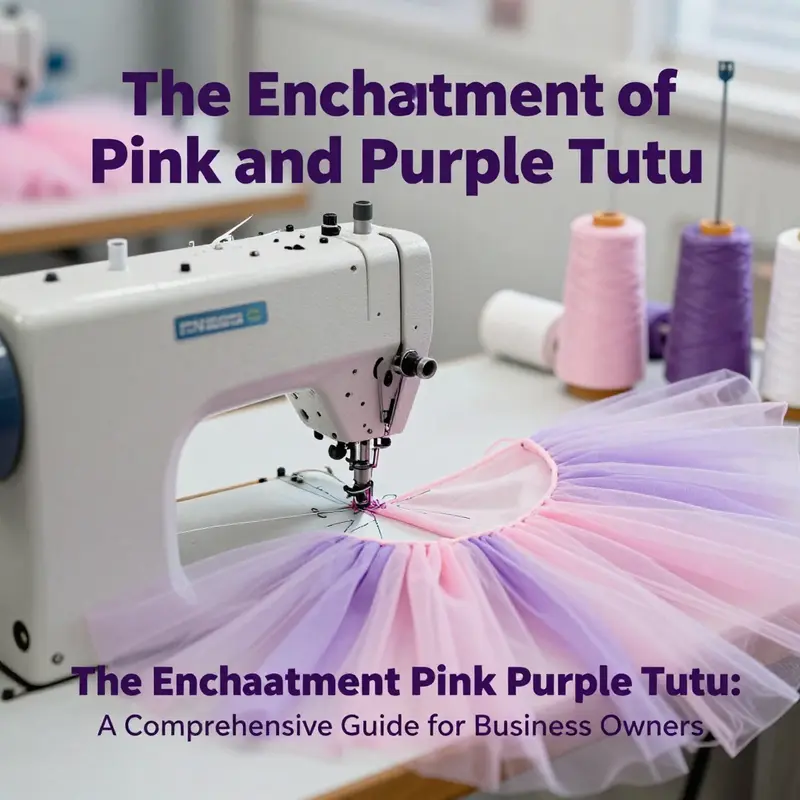
The pink and purple tutu exists at a delicate intersection of whimsy and technique. Its shimmering surface catches the light in the way a fairy tale does, but the beauty is not merely in the color or the silhouette. It rests on a careful choreography of materials, cutting, gathering, and reinforcement that translates a simple strip of netting into a garment capable of dramatic movement on stage or playful sparkle at a birthday party. This chapter follows that journey from the raw promise of pale pinks and rich purples to the finished garment, tracing how modern production blends time-honored handcraft with contemporary manufacturing efficiency. It is a journey that reveals how designers and makers translate color psychology and kinetic needs into a tangible object that can entertain, comfort, and endure.
At the heart of every tutu is a philosophy of lightness married to form. Sheer fabrics like tulle or netting are chosen for their ability to float and to resist collapsing under the weight of multiple layers. In pink and purple variations, the dyeing approach matters as much as the weave. The shade—whether a soft pastel pink or a vivid magenta-purple—drives the entire garment’s mood and how it performs under stage lighting. In many cases, color is dyed into the fabric before construction. This ensures even saturation across the layers, which is crucial for a garment that relies on translucence to convey depth. There are exceptions, of course. For white or very light tulle, color can be applied after assembly through dyeing or staining, though this route demands careful control to avoid blotching or uneven tone. The result, when done well, is a cake of color that reads as a single hue even through the multiple layers of crinoline and netting that define a tutu’s volume. The interplay of color and light then becomes a choreographed dance with the dancer’s movements, where every twist of the torso and flick of the leg reveals a new facet of the color, from blush to shadow, from glow to glow-laden edge.
The material logic of the tutu is equally important. The core structure relies on a thick hierarchy of layers that must be light enough to move yet stiff enough to hold a silhouette. The outermost layers are typically long, narrow strips of colored tulle that flutter on the breeze of a leap. Beneath them, additional layers add body and shape. These layers are often cut in varying lengths to create a tapered, circular, and buoyant profile once they are gathered at the waistband. The process of cutting and sorting by length matters as much as the act of sewing. A well-organized studio will sort strips by length, aligning them in a precise order before stitching. The technique of attachment—usually a zigzag or overlock stitch—minimizes fraying and helps the fabric accept repeated bending and movement, a practical necessity for costumes intended for frequent use.
A tutu’s ability to hold its form is not left to chance. A structural backbone—usually a stiffened waistband—acts as the anchor. This waistband might incorporate plastics, wires, or hidden hoops that provide the rigid circular silhouette essential for stage-ready pieces. Inside the layers, additional reinforcement often exists in the form of crinoline or stiffer tulle as a secondary underlayer. In more performance-focused or professional contexts, designers may embed slim rings or discreet supports to preserve a perpetual roundness around the hips. The goal is not merely fullness but consistency: the tutu should look the same in every frame of movement, whether the dancer is standing still or executing a high kick that could otherwise wilt a delicate fabric under its own weight.
Modern manufacturing supports a broad spectrum of outcomes. Large-scale producers, leveraging the capacities of automated cutting tools and high-speed sewing machines, can produce thousands of tutus in a single season. These operations, often located in textile hubs, optimize material use, standardize layer counts, and implement quality checks that catch tangles or misalignments long before the garment reaches a client. In this space, color consistency across batches is a priority, and dyeing steps are calibrated to minimize variation from roll to roll. For the consumer, this approach translates into accessible price points and reliable delivery timelines. Yet the same landscape also nurtures a countercurrent: handcrafted and boutique productions that aim for bespoke symmetry and individualized detailing. In these cases, the craftsman’s hand remains the final arbiter of balance and line. Each tutu becomes a product of careful hand-stitching, layering, and subtle judgment calls about where a frill should flare and where it should retreat to preserve a dancer’s freedom of movement.
The manufacturing tale is inseparable from the color design that most often anchors the tutu’s appeal. For pink and purple palettes, color application follows two primary routes. The first is dyeing the tulle material before it is cut, a method that yields a uniform, saturated field across the entire strip. The second route involves dye staining after assembly, which can accentuate the depth of color by letting the white base peek through in places, creating a more nuanced, almost watercolor effect. In both cases, finishing touches—such as sequins, lace trim, or embroidery—function as accents rather than the core of the garment. These decorative elements, though sometimes subtle, can determine whether a tutu reads as a pure fairy-tale costume or a couture-like piece designed for a gala, a festival, or a dance recital.
Cost considerations illuminate another facet of production. A high-quality professional ballet tutu—prepared to endure years of meticulous use and care—can command substantial investment. Even within the category of pink and purple, the range extends from accessible party-ready options to studio-grade pieces worthy of stage lighting and long-term display. The market forces at play are straightforward: material cost, labor intensity, and the scale of production. While mass-produced tutus benefit from economies of scale, high-end pieces gain value through the tactile precision of hand-finishing and the durability of reinforced components. The contrast between these two ends of the spectrum is a reminder that the tutu’s magic is the product of both efficient process and patient craftsmanship. As buyers compare options, they weigh heftier upfront costs against longevity and performance that might justify the price over time. In this context, the tutu becomes more than a garment; it is a long-term investment in how a child moves through space with color in motion.
The chapter’s themes also reflect the social and cultural uses of pink and purple tutus. In homes and classrooms, these garments often serve as playful dress-up that fuels imagination. They are the costumes of choice for birthdays, recitals, and school performances that appreciate color as a storytelling device. In professional settings, the same color logic extends to stage silhouettes where the hue helps define character and mood under stage lights. The audience’s eye reads color as a cue: pink conveys softness and charm, while purple can imply mystery or regal elegance. This semantic layer interacts with the garment’s physical properties to create a complete sensory experience. The tutu’s capacity to communicate emotion through hue, volume, and movement is a reminder that design lives at many intersections: engineering, artistry, and psychology, all threaded into a shared seam.
From the workshop floor to the showroom floor, the value chain behind pink and purple tutus weaves together two essential narratives: the precision of technique and the poetry of color. Along this path, the craft of neckline to hemlines, the balance between weight and buoyancy, and the discipline of color finishing converge to deliver a garment that not only fits a dancer but also inspires one. The result is a tutu that can function in the literal sense—as a garment that stays in shape, supports movement, and lasts through wear and care—and in the figurative sense, as a catalyst for confidence, fantasy, and performance. When seen in motion, the layers ripple in harmony with the dancer’s body, and the color shifts with each light and shadow. It is an effect that no single component could achieve alone; it arises from the integration of design intent, material science, and artisanal skill.
In practice, designers often look to exemplars that demonstrate the pinnacle of the tutu’s potential. For those seeking a reference in form and finish, the idea of a high-quality white ballet costume tutu for Swan Lake serves as a useful standard. The tutu’s integrity—its circular silhouette, consistent fullness, and clean lines—offers a benchmark for how a pink or purple variation might perform when scaled in fullness and adjusted for color saturation. The link to a carefully crafted, stage-ready example highlights how color, structure, and texture fuse in a garment designed to live under bright lights and in the hands of a dancer who knows how to move with it. high-quality white ballet costume tutu for Swan Lake is a reminder that, even as pink and purple dominate the palette for everyday cheer and party ambiance, the underlying principles of tutu construction remain consistent across color families. It is in the disciplined application of those principles that color becomes not merely cosmetic but an active participant in performance.
The manufacturing narrative of pink and purple tutus, then, is not simply a tale of fabric and dye. It is a chronicle of how people, materials, and processes converge to translate childlike wonder into tangible form. It narrates the tension between volume and mobility, between the desire for a wing-like skirt and the practical realities of sewing, cutting, and reinforcing. It speaks to a culture that values both tradition and invention, where a grandmother’s hand-stitching might share the same table with an automated cutting table. And it invites us to see beyond the fluff to the work that makes that fluff hold its shape, catch a breeze, and stay vibrant through countless performances. In that sense, pink and purple tutus become more than costumes; they become carriers of memory, motion, and meaning, stitched layer by layer into a garment that is at once a fairy tale and a field guide to the craft of dressmaking.
Final thoughts
The allure of pink and purple tutus lies in their whimsical design, vibrant color palette, and their adaptability to various markets, particularly in children’s clothing and performance sectors. By understanding their design features, keeping an eye on evolving market trends, and mastering the manufacturing processes, business owners can create appealing product lines that resonate with customers. The ongoing demand for these delightful garments presents a unique opportunity to expand or refine your offerings, ensuring relevance in a competitive marketplace.