
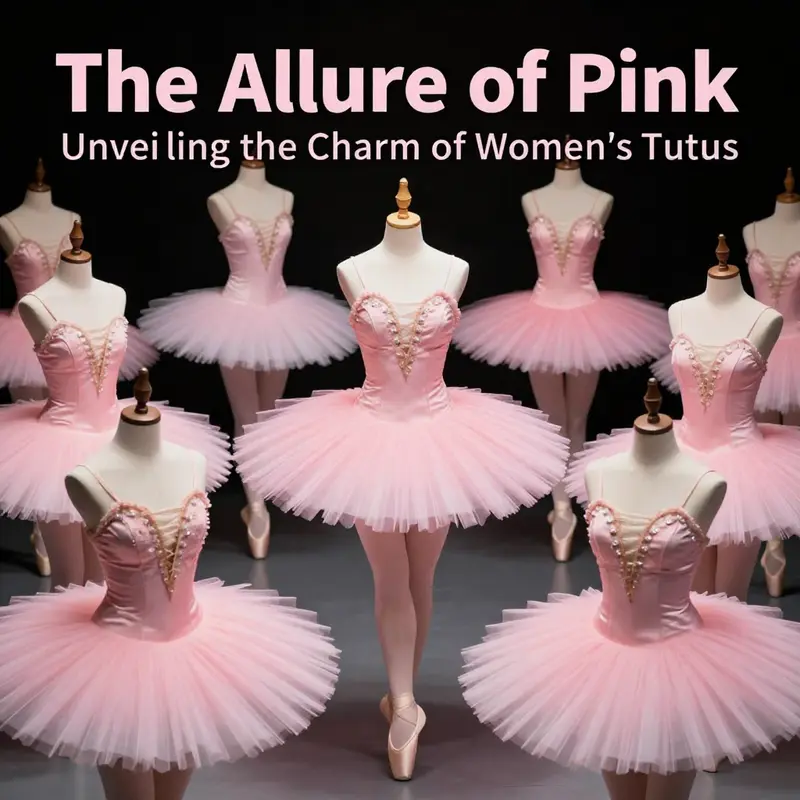
Pink women’s tutus represent a delightful blend of elegance and playfulness, capturing hearts in dance, costume parties, and themed events. Made from luxurious materials like elastic satin and tulle, these tutus often feature multiple layers for that quintessential puffiness. Whether bright pink, rose, or light pink, they cater to both adults and children, becoming staples in wardrobes for performances and social occasions alike. This article will delve into the intricate design and material features that define pink tutus, explore their cultural significance, analyze current market trends that are impacting their popularity, and discuss accessory choices that enhance their appeal. Each aspect is crucial for business owners looking to capitalize on this trend in the vibrant world of fashion.
Layered Light: Design, Material Magic, and Movement in Pink Women’s Tutus
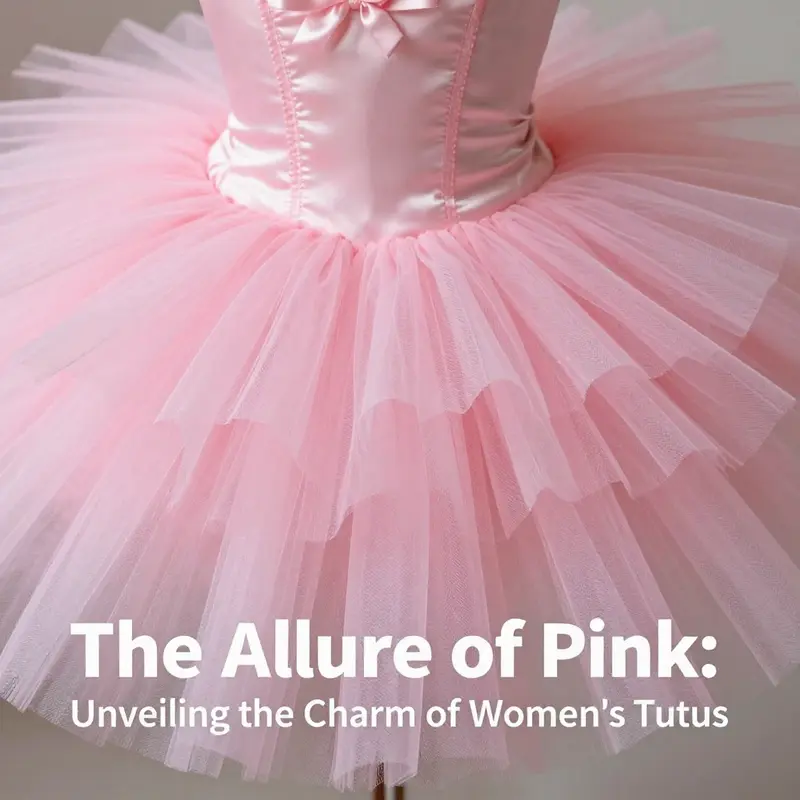
Pink women’s tutus sit at a graceful crossroads where craft, performance, and fashion meet. They are not merely garments; they are engineered spaces that hold a certain breath of whimsy while delivering the practical confidence a dancer, performer, or event-goer needs. The design and material features of these tutus reveal a careful balance between aesthetic appeal and physical ease, a balance that becomes especially visible when the tutu is put to work on a dance floor, under stage lights, or in a photo studio where color and texture must translate across lenses and into long, fluid takes. At their heart lies a layered tulle skirt that, when the waist is cinched by a tailored bodice, creates a voluminous silhouette that can travel with ease through a range of motions. The most common, and most instantly recognizable, silhouette is the fit-and-flare, a form that hugs the midsection with a secure waistband and then sweeps outward into a cascade of fabric. This shape is not simply about looking romantic; it is a design choice that supports the dancer’s lines, offers a wide surface for lighting to play against, and provides a visual cue of movement even when the body is momentarily still. The layers themselves are where the tutu earns its character. A graduated stack of tulle—five layers or more in many contemporary versions—creates the necessary buoyancy. Each layer adds a whisper of volume, a subtle step in the fabric’s choreography, so that the skirt catches air with every turn, every leap, every small pivot that makes a performance feel larger than life. The result is a silhouette that feels timeless even as it remains undeniably contemporary, a pink that can read soft or electric depending on the lighting and the surroundings, and a texture that invites a viewer to reach out and imagine the fabric rustle in the breeze of a stage kiss or a camera-flash moment. The color palette itself tends to cluster around bright pink, rose, and light pink, hues chosen for their ability to convey warmth, romance, and a certain playful energy. These shades are not just decorative; they influence the way the body reads in motion. A vivid pink can sharpen the line of the dancer’s leg and accentuate the arc of an arm, while a softer pink can soften edges and enhance a sense of delicate fluidity. Color, cut, and fabric work together to ensure that the tutu communicates even in the peripheral vision of an audience, where a hint of pink can signal a character, a mood, or a narrative thread without a single spoken line. The inner construction supports this outward effect by using high-quality polyester tulle as the standard material. This fabric is chosen for its durability, lightness, and the way it holds a shape long enough to be photographed, filmed, or danced through a long repertoire. It is soft against the skin, breathable for longer wear, and resistant to wrinkles and tearing, key traits for performers who may be in motion for extended periods. The structural memory of polyester tulle helps maintain the tutu’s silhouette through repeated use, while its airy properties keep the garment from feeling heavy or confining. For those seeking a touch of stretch and a more forgiving fit, designers often blend tulle with spandex or add stretch panels at the waistband. The waistband itself—elasticized, adjustable, or a combination of both—plays a crucial role in comfort and security. A snug yet flexible waistband ensures that the bodice sits properly and that the skirt holds its form, even as a performer shifts from a poised pose to a dynamic leap. The choice of waistband can influence how long a dancer can perform without needing to adjust the garment, and it can also impact the overall line. The material world inside the tutu extends beyond the outer layers. Underlayers may include reinforcing fabrics, sometimes a light lining or mesh that prevents cling and adds comfort during long sessions of movement. These supportive components matter as much as the visible layers, because they determine how the tutu behaves under stage lighting, how it feels against the skin during quick turns, and how resistant it is to fatigue after multiple performances. In terms of design elements, the tutu offers a spectrum of possibilities. Classic versions often favor solid pastel or bright pink tulle, stacked in a gradient that shifts from a denser shade at the waist to a lighter tone toward the hem. This gradient not only looks appealing but also assists in visually elongating the line of the leg, an effect that is especially valuable in photography and live performance where every millimeter of movement counts. More playful interpretations introduce embellishments that give the tutu an individualized character. Lace applications along the waistline or scattered rhinestones catch light and draw the eye, while satin ribbons can add a polished finish that ties the whole look together with a touch of elegance. Some designers also experiment with rainbow accents or layered coloration to create a sense of movement and liveliness that resonates with contemporary staging and themed events. These details elevate a pink tutu from a simple costume to an expressive statement piece, capable of serving both formal performance needs and more whimsical, themed occasions. The applications of pink tutus are as varied as the people who wear them. In formal settings, they anchor a performer’s stage presence, offering a regal silhouette that harmonizes with classical choreography and modern interpretations alike. For weddings or holiday celebrations, a pink tutu can serve as a centerpiece for photography and storytelling, embodying a mood of romance, joy, and sophistication. In professional photography or fashion shoots, the tutu becomes a prop that allows the model to inhabit a character or a moment of fantasy, its layers catching light and movement in ways that create texture and depth in still images. And for themed events or parties, the tutu can anchor a costume narrative, providing a instantly recognizable motif that blends nostalgia with contemporary styling. The research surrounding pink tutus also points to a robust presence on global eCommerce platforms, where buyers explore an array of options—from budget-friendly to premium-grade iterations. The availability of different layers, fabrics, and embellishments means that the same garment can be styled for a funeral of whimsy or an exuberant celebration, depending on the wearer’s intent. This breadth of choice mirrors a larger trend in fashion where performance and everyday wear intersect, and where a single color can carry multiple emotional threads within different contexts. In considering the design and material features, it is important to recognize that what appears as a simple skirt is, in fact, a carefully engineered system. The layers work as a lightweight scaffolding, giving shape and volume without imposing rigidity that would impede motion. The polyester tulle, while inexpensive and widely accessible, is engineered to behave consistently under heat and pressure, resisting creep so that the hem remains even after repeated spins and leaps. The occasional spandex blend at the waistband isn’t just a comfort feature; it enhances the garment’s ability to move with the wearer, ensuring that the fit remains secure without constricting. These elements together create a tutu that reads as both artful and practical. They enable a performer to inhabit the moment with confidence, to chase light across a stage, and to present an image of romance and charm that aligns with the broader cultural memory of ballet and fantasy. The tutu is thus a bridge between two kinds of knowledge: the craft knowledge of fabric manipulation and the performance knowledge of how a garment behaves in space. The hands that cut, sew, and assemble the layers must understand not only the aesthetics of pink but also how fabric will respond to the demands of movement, wind, and camera. Designers, draped in the discipline of pattern making, learn to partition the volume of tulle in a way that ensures each layer contributes to the whole rather than competing against it. The result is a garment that feels effortless to wear and dramatic in appearance, a paradox that lies at the heart of tutu design. When readers consider the pink tutu as a cultural artifact, it becomes clear that it functions as a flexible form. It can be a formal dance costume, a fashion moment, or a playful prop in a photo essay. The color pink itself continues to carry associative weight, evoking warmth, gentleness, and a sense of celebration. The layers, with their airy texture and sculpted shape, seem to encode that mood into fabric, so that movement becomes a visual language as recognizable as a syllable in a sentence. In this way, the pink tutu does more than cover the body; it frames intention, invites interpretation, and provides a reliable stage on which the wearer can perform a story. For readers hoping to explore variations or begin their own journey with this garment, a practical note can offer guidance without overwhelming the imagination. The basic tutu category serves as a helpful starting point, offering straightforward options that emphasize core construction and comfort while remaining adaptable to different events and aesthetics. Explore this path to gain a sense of proportion, fit, and the way the layers interact with light. As you broaden your understanding, you may find yourself drawn to more embellished approaches or to color-tuned gradient arrangements that speak to a more narrative approach to costume design. The conversation around pink tutus then shifts from pure form to the experiential, from the look of the layers to the way the wearer feels inside them, a dimension that is every bit as important as the fabric itself. The modern tutu remains a versatile instrument in the wardrobe of performance and celebration, a garment that grows with the wearer—economical enough for frequent use yet refined enough to carry a sense of ceremony. Its layered construction invites motion, and its color invites storytelling. In a studio, on a stage, or at a festive gathering, the pink tutu holds a promise: that beauty can be practical, whimsy can be wearable, and movement can be both seen and felt. External and internal influences converge to shape what ends up on the rack and what finally makes it onto a dancer’s frame. Designers must balance durability with comfort, and the wearer must balance style with ease of wear. In the end, the pink tutu remains a vivid, adaptable emblem of how fashion can honor tradition while remaining responsive to contemporary needs. For those curious about practical entry points, the category that presents basic tutu options can provide a gateway to crafting a look that is both approachable and expressive, a starting line for a wardrobe that values motion as much as mood. To learn more about foundational tutu options and how they can be paired with complementary accessories, consider exploring the basic tutu category. https://luneballet.com/product-category/basic-tutu/ The tapestry of pink tutu design continues to evolve as new fibers, dyes, and finishing techniques emerge, but the core idea stays steady: a handful of layers, a secure fit, and color that captures the light while leaving room for the wearer’s own light to shine. This is not merely about a skirt; it is about creating a stage-ready companion that supports performance, storytelling, and the simple joy of movement in a hue that has long brightened the world. External resource: https://en.wikipedia.org/wiki/Tulle
Pink Tulle, Broad Horizons: The Cultural Pulse and Everyday Life of the Pink Women’s Tutu
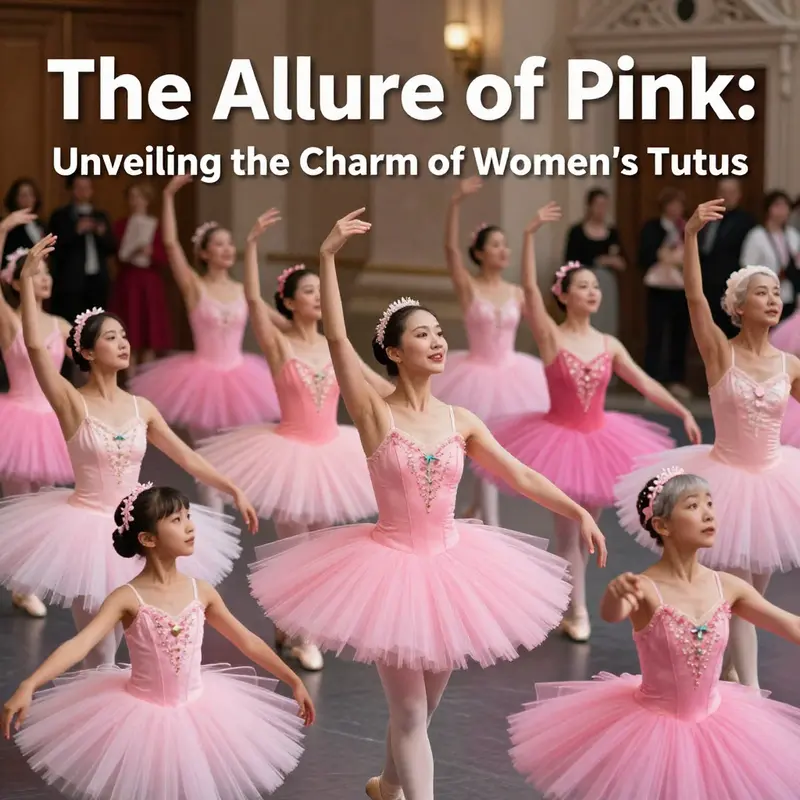
The pink tutu exists at a curious crossroads where history, artistry, and daily life mingle. It is not merely a costume or a fashion item; it is a cultural artifact that carries stories of discipline, whimsy, and community. When the soft, fluttering layers of tulle catch the light, they reveal more than a silhouette. They reveal a willingness to perform, to present joy openly, and to transform space—whether a polished stage, a crowded charity run, or a sunlit photoset. The color pink here is more than a palette choice. It functions as a signal, inviting a playful mood while also anchoring a tradition of refinement that began on the ballet stage and migrated into contemporary celebration and personal expression. This chapter traces how such a seemingly simple garment accrues meaning as it moves across contexts and audiences, shaping how people see themselves and how others perceive their moment of performance, celebration, or just everyday possibility.
The tutu’s origins lie in the long arc of ballet history, where the costume evolved from the medieval and early modern constraints of dance into a symbolic shorthand for grace and rigor. The tutu that modern audiences recognize—a short, structured skirt built from multiple layers of light fabric—emerged through a lineage of tailoring that prized projection and clarity of form. Pink, as a color, has carried a parallel development. In many cultural moments, pink signals youth, warmth, and approachability, yet it is equally a color of resistance and solidarity when deployed in groups seeking visibility and voice. The pink tutu thus becomes a compact package that carries both personal delight and collective intent. It invites the wearer to inhabit a space where movement is both art and message, where lines and curves translate into emotion, where a single swirl becomes a shared moment of recognition among spectators and participants alike.
In contemporary life, the pink tutu has traveled far beyond the recital hall. It has found a place in settings that emphasize community, wellness, and inclusivity. Charity runs and fitness challenges often use pink tutus to create instantly identifiable participants who stand out in crowds, turning a run into a spectacle that elevates morale and promotes awareness. The bright hue amplified by the flutter of tulle makes it easy for volunteers and supporters to locate teammates and cheerleaders amid thousands of runners. The tutu thus absorbs social purpose, becoming a visual emblem of solidarity and encouragement rather than a mere costume. This shift reflects a broader cultural recognition that fashion items—especially those with a strong color narrative—can participate in causes while still delivering aesthetic pleasure. The pink tutu performs its role with a delicate balance: it preserves the elegance of traditional craft while embracing the spontaneity and symbolism of modern campaigns.
Pop culture and social media have further transformed the pink tutu from a stage prop into a versatile cultural signifier. It appears in photoshoots that aim for a whimsical yet confident mood, in themed parties that celebrate nostalgia and joy, and in cosplay or festival contexts where storytelling takes center stage. The tutu’s lightness and airiness translate well to the lens; images capture the way the wearer moves, breathes, and interacts with the world around them. The garment becomes a portable canvas for self-expression, inviting wearers to experiment with identity in a setting that rewards playfulness and originality. In a world where personal style is often curated for the algorithm as much as for the eye, the pink tutu offers a reliable, high-contrast focal point. It draws attention without feeling aggressive, and it signals a readiness to engage with others in moments of shared celebration.
Material and construction play a crucial role in this cultural narrative. Most pink tutus rely on layers of tulle to create the signature puff. The structural backbone—an elastic waistband and the gathered, layered skirts—serves both aesthetic and practical purposes. The layers, typically ranging in number to achieve varying degrees of volume, influence how the garment moves and reads from a distance. A tutu with three to seven layers, selected with care, can deliver just the right balance between stiffness and flexibility. This balance matters: rigidity supports a clean silhouette during performance, while enough pliancy accommodates quick shifts in pace and direction during dance or playful movement at a party. The elastic satin or similar fabrics used for the waistband provide comfort across extended wear, allowing the tutu to ride with the body as it bends, twists, or leaps. When paired with appropriate footwear and accessories—headbands, gloves, or ballet flats, for example—the tutu becomes a cohesive mini-costume that can adapt to an array of events without losing its essential character.
The social meanings attached to pink tutus are reinforced through communal rituals and occasions. In charitable contexts, the garment signals participation and contributory spirit. In performance art, it acts as a visual cue that anchors a narrative of grace, discipline, and femininity. In everyday life, it becomes a bold but approachable fashion statement that invites conversation and engagement. The mix of performance heritage with street-style sensibility makes the pink tutu a flexible symbol: one moment a reminder of classical technique, the next a beacon of contemporary self-expression. The wearer is invited to straddle these poles, to honor tradition while writing new, spontaneous chapters of personal style. This duality—respect for craft accompanied by fearless experimentation—helps explain the tutu’s staying power and evolving appeal.
For practitioners and designers who work with tutus in a more professional or semi-professional context, there is a nuanced conversation about fit, scale, and movement. The professional tutu category, for example, has specific expectations around weight, balance, and durability. Designers and seamstresses emphasize cut lines that preserve freedom of legibility in motion while maintaining a silhouette that photographs and stages well. An understanding of the wearer’s torso, hip flexibility, and core strength informs decisions about layer density, stiffness, and the arrangement of tulle bands. In this space, the tutu becomes more than a costume—it is an instrument of performance, a wearable technology designed to support artistry. The conversations extend to the relationship between the tutu and the rest of the ensemble: how bodices, shoes, and even makeup harmonize with the pink tulle to tell a cohesive story under lights or in daylight. The result is a look that is unmistakably feminine but not limited by tradition, an artwork that lives in the breath of the performer and the gaze of the audience.
From a consumer perspective, the pink tutu occupies a particularly democratic position in the market. Global eCommerce platforms have broadened access to a wide range of designs and price points, enabling both seasoned performers and casual shoppers to explore options that suit their needs. Buyers can find tutus intended for formal performance, as well as versions designed for playful wear at parties or family gatherings. The spectrum of choices mirrors the broader fashion landscape, where the same garment can be a serious costume in one context and a whimsical accessory in another. This versatility is a key driver of demand. Shoppers are drawn to the tutu not just for its ability to beautify but for its capacity to transform a moment—whether a rehearsal, a social event, or a simple afternoon out—into something that feels special. As with many fashion items that cross from niche use to everyday life, the pink tutu benefits from the accessibility of online reviews, size guides, and community recommendations, which help buyers navigate sizing and quality with greater confidence. The result is a burgeoning, layered market that appeals to adults seeking a confident, playful aesthetic as well as to younger wearers who are exploring identity through movement and color.
Within the ecosystem of online offerings, a practical dimension often emerges in discussions about fit and sizing. The waist measurements compatible with adult wear typically span a range suitable for many body shapes, enabling a broad audience to enjoy the garment. Length and fullness are used as proxies for the wearer’s intended activity, whether a formal stage performance that benefits from a pronounced puff or a more casual setting that calls for subtler volume. For educators, choreographers, and event organizers, these details matter because they influence how a piece can be integrated into a broader program or theme. The pink tutu’s adaptability is one of its signal strengths: it can anchor a formal ballet segment, anchor a themed party, or serve as a prop in a playful photo shoot, all while maintaining a coherent aesthetic that remains easily recognizable across contexts. This adaptability also helps maintain its relevance as fashion and performance aesthetics evolve, ensuring that the pink tutu continues to resonate with new generations.
The tapestry of meanings surrounding the pink tutu is reinforced by its role as a canvas for personal storytelling. A wearer may choose a bright pink for exuberance, opt for a softer rose shade to evoke tenderness, or lean toward a pale pink to strike a balance between whimsy and elegance. Accessories—headbands, tights, dance shoes, or decorative tights—can tilt the tango of mood toward fantasy, nostalgia, or modern chic. In social media feeds, these choices become visual narratives, each post a small chapter in a broader diary of self-expression. The tutu’s ability to pair with different textures and tones makes it a dependable ally for people who want to experiment with identity in a controlled, low-risk way. It offers a gentle invitation to play with tradition while honoring one’s own pace and preferences, a dynamic that sits at the heart of current conversations about fashion and empowerment.
For readers who want to explore curated sources that provide deeper context or practical guidance, the following example of an category page illustrates how a producer or retailer might present a range of tutus designed for various uses and audiences. Within the professional tutu category, designers emphasize structural integrity and stage-friendly materials, ensuring that performances read clearly to audiences under lights while still allowing freedom of movement. This balance is essential when moving between rehearsal room and concert hall, where the garment must perform consistently and reliably. The category structure also helps educators and event planners identify options that align with specific performance goals, whether that means a classical ballet look or a more theatrical, narrative-driven piece. The tutu, in this sense, acts as a bridge between discipline and imagination, between tradition and experimentation, inviting wearers to inhabit a space where technique and joy reinforce each other rather than compete.
In sum, the pink women’s tutu stands as a versatile symbol of how fashion can translate cultural memory into contemporary relevance. It carries the discipline of classical technique into settings that celebrate community, health, and creativity. It invites individual expression while offering a shared visual language that audiences recognize and respond to. The garment’s enduring appeal lies in its capacity to be both an emblem of femininity and a conduit for empowerment. Whether worn for performance, charity, cosplay, or casual self-expression, the tutu remains a bright, buoyant reminder that color and form can elevate ordinary moments into occasions worth remembering. Its layers of tulle, its elastic waist, and its careful construction come together to create a garment that moves with the wearer and speaks to the world with a smile, inviting others to join in the dance of possibility.
For readers seeking a broader, more practical perspective on fit, sizing, and usage, consider exploring one of the retailer’s dedicated sections that catalogues tutus by category and purpose. The page references a professional tutu category that may help guide choices for performers and educators alike. professional tutu category. This internal reference provides a stepping stone for deeper exploration of options that meet specific performance needs while acknowledging the tutu’s larger cultural resonance. As with any garment that travels across contexts, the pink tutu’s strength lies in its ability to adapt without losing its essential character, a testament to how color, shape, and craft can shape our sense of movement, memory, and possibility.
External reference: https://www.amazon.com/dp/B0CQWZ8V9F
Between Fairy-Tale Fantasy and Stage Realities: The Market Pulse and Economic Footprint of Pink Women’s Tutus
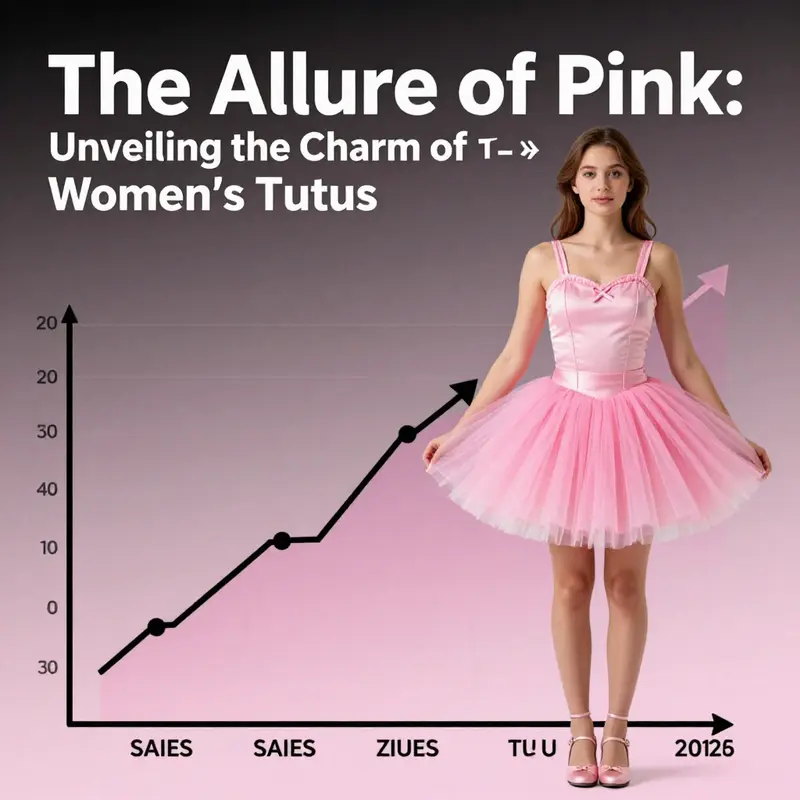
The pink tutu sits at the intersection of memory and performance, a garment that carries both the weight of dress-up history and the responsibilities of contemporary stagecraft. Its market arises not merely from a need to cover a body in fabric, but from a desire to translate a story into movement. In performances, photos, and themed gatherings, the tutu becomes a visual shorthand for magic, discipline, and joy. The rhythm of demand follows cultural cues as well as practical demands: events that celebrate femininity, eras of classic ballet, and moments when a single swath of pink fabric can transform a room or a stage into a cinematic moment. The market therefore operates on multiple planes at once, melding artistry with commerce and nostalgia with contemporary style. It is a telling example of how fashion items that are seemingly simple can sustain complex economies when they sit at the heart of performance and celebration. The result is a product that travels beyond the box, moving from rehearsal rooms to party halls to professional studios, each setting demanding its own balance of form, function, and price. The tutu becomes not only a costume but a catalyst for storytelling, a device that invites movement and memory to merge in real time.\n\nMaterial choices matter as much as the silhouette. The tutu commonly relies on tulle for its signature puff, with layers chosen to create a density that reads under lights and on camera as both luminous and buoyant. Elastic satin often appears as a waistband or accents, delivering comfort and a secure fit during long rehearsals or energetic photo sessions. The layering strategy is where designers and wearers exercise their most deliberate control: three layers deliver graceful swoosh and portability, while seven layers produce dramatic volume that persists on a crowded stage. The range matters because different contexts demand different weights and airiness. For a school recital, a lighter, easier-to-wear option can keep a dancer moving with less fatigue. For a costume gala or a professional shoot, a deeper, more sculpted silhouette may be preferred to register against strong lighting and bold backdrops. The palette—bright pink, rose, and light pink—speaks to a spectrum of moods, from exuberant celebration to delicate charm. Each shade invites a different narrative: an electric bloom for confidence and showmanship, a rose tone for warmth and romance, a pale tint for innocence or ethereal storytelling. The wearer’s age also matters, since adult silhouettes often require careful proportioning to ensure comfort and mobility, while children’s designs must be scaled for safety and ease of wear. In each case, the tutu becomes a vessel that carries not just fabric but intent, turning a simple skirt into a conduit for expression and performance.\n\nFrom a market perspective, the pink tutu operates within a broader ecosystem of occasion wear and performance attire that grows easiest in spaces where nostalgia and spectacle intersect. Demand swells during events that celebrate femininity and childhood wonder, such as birthday parties, princess-inspired gatherings, and holiday photo shoots, but it does not vanish after such moments. Professional photographers and event organizers frequently seek out outfits that photograph and move well under varied lighting, so the tutu earns a steady presence in portfolios and catalogs alike. The online marketplace, with its vast reach and flexible pricing, has amplified this reach, enabling shoppers to explore options that range from understated to extravagantly theatrical. The accessibility of a broad spectrum of densities and finishes means designers can tailor offerings to diverse needs, from school plays that require durable, cost-conscious pieces to high-impact performances that demand couture-level volume and sheen. This flexibility is essential in a market where customers evaluate not only beauty but durability, ease of cleaning, and the ability to maintain shape after repeated wear. The tutu invites a sense of ritual in the purchasing process, because each choice—layer count, fabric texture, waistband design, and color saturation—affects how confidently a wearer will perform and how vividly a moment will be captured on film or in memory.\n\nThe commercial landscape around pink tutus also reveals how niche products sustain small businesses, independent designers, and wholesale channels. Because the product straddles fashion, costume design, and event planning, makers frequently cultivate relationships with a variety of buyers, from studios and schools to individual consumers seeking special-occasion attire. The result is a market characterized by small batches, handmade touches, and a willingness to customize. This niche economy supports talent that might otherwise struggle to find a home in mass-market apparel, creating space for artisans who understand the choreography of fabric, movement, and light. The emphasis on customization is a recurrent thread, with suppliers offering adjustable densities, varied waist measurements, and length options that accommodate both adult performers and younger wearers. The financial dynamics reflect a spectrum of price points, enabling a broad range of customers to participate in the experience of donning a tutu, while also sustaining a tier of more premium, atelier-style offerings for those seeking a standout piece for a major project or event. In this sense, the pink tutu market is more than a fashion accessory; it is a microcosm of how creative labor and consumer desire intersect in an economy that values handcraft, performance potential, and the ability to turn a wardrobe into a stage.\n\nYet there is a critical dimension to this market that scholars and policymakers increasingly scrutinize: pricing justice. The pink tax, a term used to describe the usually higher prices that women pay for goods and services that are not inherently more costly to produce than analogous items marketed to men, has found a particularly vivid illustration in consumer circles around feminine costume wear. Even when the construction of a tutu involves similar materials and labor to a comparable piece marketed toward a different gender, perceived value and gendered pricing can create a cumulat ive economic disadvantage for women. The phenomenon matters because it directly affects the affordability and accessibility of items that are central to mobility, performance opportunities, and identity expression. A layer of cost that accumulates across purchases can restrict participation in dance programs, theater opportunities, and themed events, particularly for families balancing budgets across multiple needs. International discussions have highlighted the need to address these disparities, with organizations calling for reforms to ensure pricing practices do not impede equal access to economic opportunities. The tutu, in this frame, becomes a lens through which capacity for participation and aesthetic self-expression can be analyzed and debated. It invites readers to consider how a seemingly small garment intersects with larger questions of gender equity and economic fairness, urging a close look at who gains from the market and who bears the cost of cultural expectations.\n\nIn cultural terms, the pink tutu remains a powerful symbol that travels beyond the confines of studios and stages. Its appeal is anchored in fairy-tale aesthetics that resonate across generations, from children who imagine themselves as princesses to adults who seek to recapture or reinterpret youth through performance and photography. This cultural pull supports steady demand but also challenges marketers to balance tradition with contemporary sensibilities. The modern tutu must perform at a high level in both artistic and commercial contexts. It must be workable on a crowded stage and photogenic under a camera’s lens, while also offering the comfort and durability that let wearers pursue expressive movement without distraction. Designers respond with thoughtful engineering: choosing fabrics that respond to light, shaping layers to hold their architectural form, and calibrating waistbands so that a dancer can focus on technique rather than fit. In doing so, they craft garments that can be integrated into school showcases, professional productions, or family celebrations, each context reframing the same basic garment into a different kind of story. The overarching message is that pink tutus are not simply costumes; they are instruments of narrative, capable of shaping the way a moment feels and the way a memory is kept.\n\nMaterials, customization, and cultural resonance converge in the way buyers approach the tutu. Consumers weigh comfort against spectacle, price against longevity, and personal taste against the consensus of a party or production. The decision is rarely about a single attribute; it is a synthesis of fit, fabric behavior under lighting, and the alignment of color with the desired mood. An event organizer may favor a three-layer piece that travels well on a tour, while a photographer may champion a seven-layer option for its dramatic silhouette in studio lighting. A parent selecting for a school recital might prioritize easy washability and a secure elastic waistband, accepting a more manageable appearance in exchange for reliability. A hobbyist aiming for a fantasy photoshoot could push toward a full-bodied, multi-layer design that reads as opulent on camera, even if it requires more attention during rehearsal. In every case, the tutu acts as a partner to movement, a physical artifact that invites the wearer to inhabit a story with confidence and grace.\n\nFor readers who want to explore options more deeply, a practical starting point is to consider the basic tutu category, which offers an approachable gateway into the broader world of pink tutus while preserving access to customization and durable design. This pathway allows buyers to experiment with layering and color within a manageable framework, assessing how different densities influence polish, movement, and overall impression. It also provides a constructive bridge between everyday wear and performance-grade pieces, highlighting how adjustments in length, waist size, and fabric finish can yield surprising variations in appearance and function. The evolving market thus rewards curiosity and hands-on learning, inviting customers to test ideas and observe outcomes in real time. As the field continues to expand, the tutu remains a compelling example of how fashion can support performance, storytelling, and inclusive participation in cultural moments that celebrate color, movement, and memory. And while the price landscape may reflect broader patterns of gendered pricing in consumer goods, the ongoing dialogue around fair access and transparent value remains a crucial companion to the craft, ensuring that beauty and performance do not become barriers to participation. For a broader perspective on how pricing practices intersect with gender and access, readers may consult international analyses that advocate for reforms and greater equity in consumer markets, including resources that examine the pink tax as part of a larger conversation about economic opportunity and fairness for women. https://www.unwomen.org/en/digital-library/publications/2022/07/pink-tax
Pinking the Spotlight: Styling a Pink Tutu for Everyday Glamour
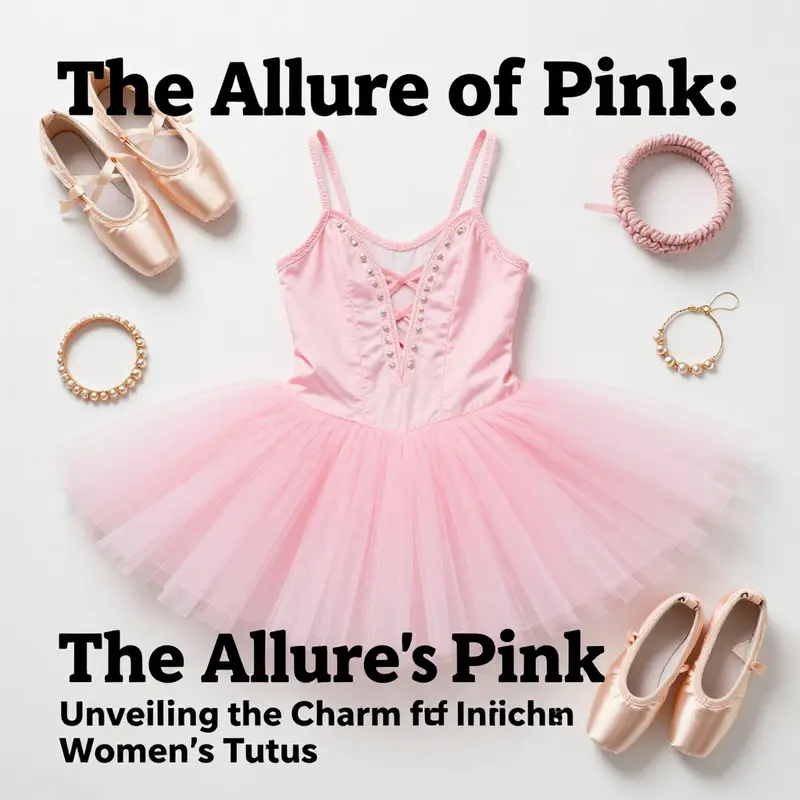
A pink women’s tutu has moved from the wings of the stage to the streets, proving that volume can feel modern and wearable. Its charm lies in how it balances whimsy with poise, making a bold statement while inviting practical styling choices. The result is an outfit that reads as polished, playful, and purposeful.
Fabric and structure shape the tutu’s personality. An elastic satin lining offers comfort at the waist, while multiple layers of tulle define the silhouette. Designers often describe a range of three to seven layers; fewer layers feel lighter and more casual, while more layers create a sculptural fullness that photographs beautifully.
Daytime looks soften the drama with a fitted graphic tee or crisp white shirt, a denim jacket, and white sneakers or ankle boots. Keep accessories minimal—a slim belt, a delicate necklace, and a small bag let the tutu remain the focal point.
For evenings, switch in a sleek silk camisole or tailored blouse tucked into the waistband, add strappy heels or classic pumps, and choose a structured clutch. Simple jewelry—a pendant and stud earrings—helps the look read as modern rather than costume.
Care and longevity matter: store the tutu hung with gentle support to preserve fullness; gentle washing with air drying protects the elastic and delicate tulle. The tutu’s volume invites thoughtful care to keep its silhouette ready for future styling.
Market and inspiration reflect a pink tutu’s versatility. From playful daywear to refined evening ensembles, designers emphasize adaptable tones from bright pink to soft blush, reinforcing the tutu as a core piece that evolves with personal style.
Final thoughts
The charm of pink women’s tutus lies not only in their aesthetic appeal but also in their rich versatility and cultural significance. As business owners, recognizing the enduring appeal and growing demand for these enchanting garments can provide unique opportunities to cater to customers from various segments. By understanding the intricacies of design, market trends, and styling options, businesses can effectively position their products, making pink tutus an essential offering that enhances wardrobes and occasions alike.