
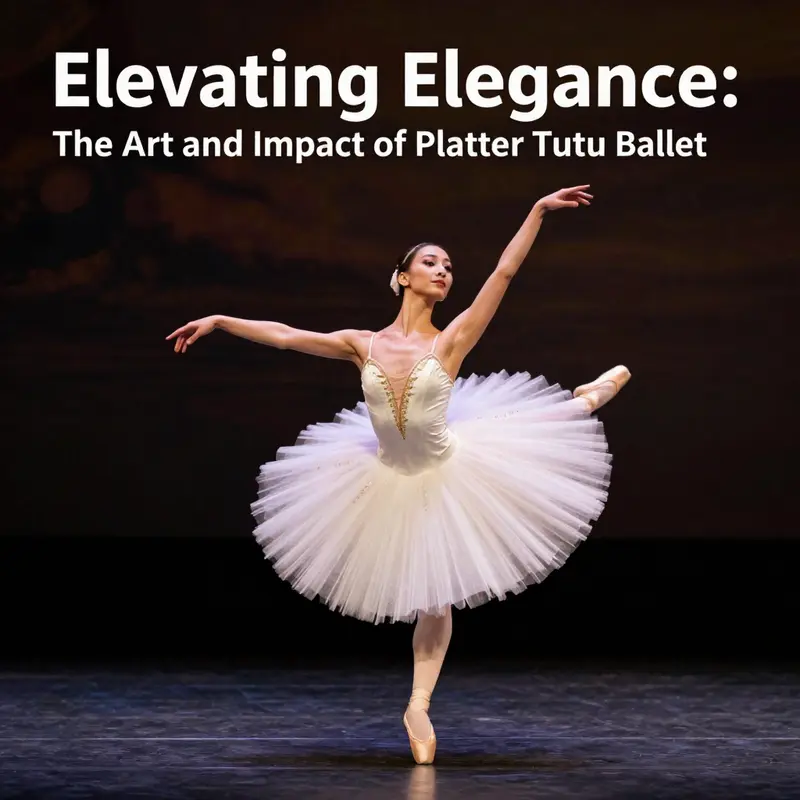
Platter tutu ballet stands as a quintessential symbol of classical ballet, renowned for its distinct flat silhouette and dramatic effect on stage. This garment, originating in the late 19th century, plays a pivotal role in conveying the elegance and power that classical ballet embodies. For business owners in the dance apparel and performance sectors, comprehension of the platter tutu’s features, historical significance, and application scenarios is crucial for catering to a discerning clientele. Through an exploration of its core characteristics and structural design, an insight into its rich historical background, and a thorough analysis of its suitable performance contexts, this article will provide a holistic understanding of platter tutu ballet and its enduring relevance.
圆盘式美学在舞台中的力量:Platter Tutu芭蕾舞裙的核心结构与材质
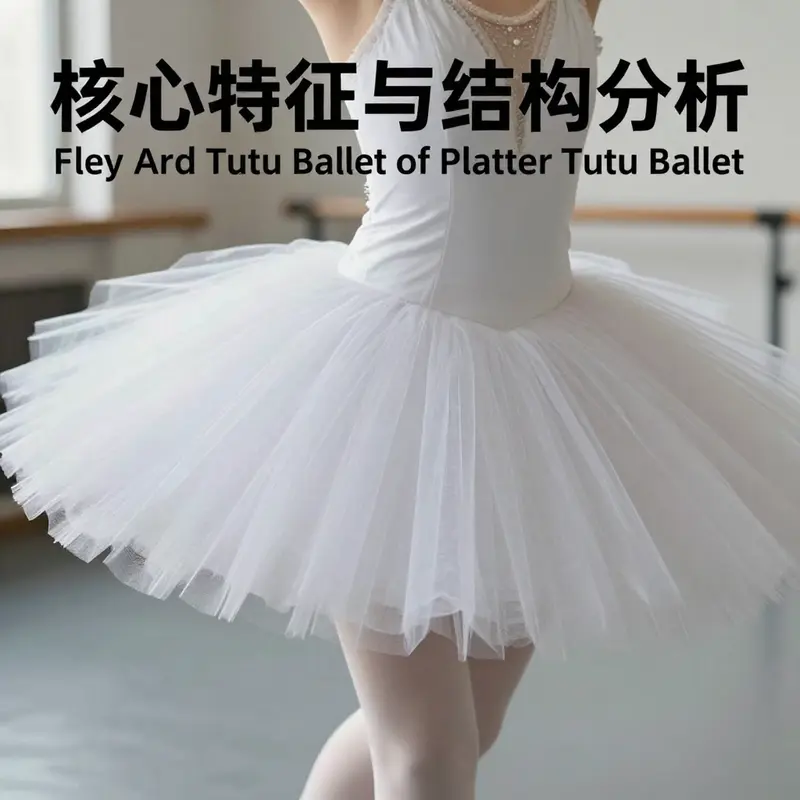
在古典芭蕾的光泽与阴影之间,Platter Tutu以其平直而广阔的裙摆成为最具辨识度的舞台轮廓之一。它的美,不仅来自视觉上的圆盘形状,更来自背后那套严谨的工程与材料选择所构成的稳定性。裙摆从腰部向外延展,几乎在水平线上铺展,形成一个近似圆形的轮廓,仿佛一张被拉紧的帆布。舞者在这样的结构之下,能够以极高的足尖技巧和清晰的腿部线条来讲述舞蹈中的每一个节拍。这个轮廓的产生并非偶然——它源自19世纪末的审美理想,也是对当时舞台技术与表演需求的一次精准回应。天鹅湖、睡美人、胡桃夹子等经典剧目在那个时代确立了这类裙装的标准地位,成为对古典芭蕾技艺的最直接象征。对观众而言,跳跃、旋转、抬腿与离地动作的每一个瞬间都被这扇“圆盘”放大与清晰呈现,仿佛观者的目光被引向舞者的每一个细小脚尖与肌肉协作的瞬间张力。
从设计的角度看,Platter Tutu的核心特征并不仅限于外观的几何美。它在结构上通过在多层薄而坚韧的网眼布料之间嵌入稳定支撑来实现。裙摆的刚性来自于环形骨架的存在——金属丝或硬质塑料制成的环形骨架巧妙地置于裙摆内部,沿着裙边分布,确保扁平、外扩的形态不因体态变化而破坏。这种刚性支撑不仅承载着圆盘状几何的稳定,也让舞台灯光在裙身表面产生明确的光影反射,进一步增强舞台的视觉冲击力。
在材质层面,Platter Tutu的主力通常是高密度尼龙与聚酯纤维的混纺tulle。这类合成纤维以耐用、抗皱、易悬垂著称,能够承受反复穿着、清洗与舞台灯光下的热辐射,同时保持轻盈的触感,减轻舞者的负担。多层tulle叠加的做法并非简单的堆砌,而是经过反复的核对与手工缝制,以确保裙摆的圆形轮廓在任何动作中都保持均匀的厚度与弹性。为了在灯光下呈现更为璀璨的效果,某些高端版本会选用具有光泽或微闪效果的面料,使裙身在聚光灯下呈现出更强的反射特性,从而增强舞台的戏剧性。这样的细节设计对于儿童版的普拉特裙尤为重要,因为它们在较小的舞台上同样需要通过亮度与光泽来捕捉观众的目光。
对材料的选择并非仅仅出于美观。tulle的密度、悬垂与手感直接影响裙摆的可控性与穿着舒适度。高密度的网眼布有助于保持形状的稳定,避免在高强度跳跃中裙摆产生过多的摆动而模糊动作的线条。与此相对,过于软性的材料容易在快速旋转时失去轮廓,削弱视觉清晰度。因此,设计师在多层之间往往采用微妙的间距与叠层次序,以确保裙摆在视觉上的“圆盘”效果不会因为动作幅度的变化而变形。
在工艺层面,Platter Tutu的制造常常需要 ten层到十二层甚至更多层的叠加,且多数层次都以同等的密度与长度来实现均匀分布。这些层次往往是手工缝合的细密网布片段,彼此错位、交错地堆叠,形成裙摆的体量感与稳定性。边缘的修饰,诸如珠片、亮片或刺绣,既是一种视觉点缀,也是一种通过光影来强化轮廓的手段。要达到与灯光的互动效果,裙摆的表面往往被设计成对光线有良好反射的质感,避免表面过于粗哑或吸光,影响舞者在舞台上的可见度。
这一切并非简化的美学追求,而是对舞台需要的一种精准工程学回答。硬性裙摆的稳定性使得肢体线条与足尖的呈现更为清晰,观众的视线往往被引导回舞者的核心控制——核心肌群、臀胯的支撑、以及踝腕的协调性。环形骨架的存在让裙摆拥有可预见的几何边界,舞者在快速转体时也能避免裙摆卷入自身动作之中,减少视觉干扰。这种可控性在古典剧目中尤为重要,因为它帮助表演维持在一个高度成熟的技术层级之上,观众会在灯光、纹理与轮廓之间感知到一种历经训练的优雅。
对照现代舞或当代舞的需求,Platter Tutu的设计显然更倾向于传统技术的光辉展示。其极强的结构刚性与几何稳定性对地面动作的广度与流动性形成一定障碍,因此在这类舞种中往往被视为不适合的选择。舞者的地面滑动、自由滚动与跨越式的髋部动作在硬质裙摆的束缚下难以自由释放,这也是为何圆盘裙在现代编排中较少见于长时间的地面动作段落。相对地,古典剧目的典型段落——如王后型的抬腿、男主角的高难度旋转与腿部线条的呈现——都在这种裙摆的帮助下,以一种几何化的美学呈现出最为稳定的舞台图景。
在造型与材料的交汇处,设计师们也会考虑年龄层次的差异。儿童版本的Platter Tutu通常在材料上更强调耐用性与安全性,同时在外观上保留舞台光泽与华丽感,借助更亮的底光与柔和的面料涂层来增强视觉冲击。为了确保儿童舞者的舒适与安全,裙摆通常仍维持相对轻量的整体重量,但会通过更密集的层叠来保持轮廓——这是一种在美学与功能之间的平衡。与此同时,一些制作单位会在材料选择上探索轻量化与耐用性之间的折中,例如选用更细密的合成纤维纱线以及更高强度的支撑材料,以延长裙摆在排练与演出中的使用寿命。
在对这套装束的理解中,最重要的是认识到它并非单纯的服装,而是一种舞台语言的物化。它把“静止的几何美”和“动态的肌肉控制”合成为一个可被观众瞬时解读的画面。观众看到的圆盘,不是简单的平面,而是舞台灯光在网布层间折射后形成的光学错觉,也是舞者足尖与踝部力量在稳定支撑下转化为线条美的证据。从某种意义上说,这种裙摆让技术成为可见的艺术,而材料本身则是语言的质感。为了让这种语言真正被理解,设计师与制作团队需要跨越美学的追求与工艺的约束,寻找一个既能满足舞台需求、又不牺牲演出过程中的舒适与安全的解决方案。
正是在这样的综合考量之下,专业实践逐渐将“硬性扁平裙摆”的概念转化为可复制、可维护的舞台标准。它不仅是舞蹈史的一部分,也是舞台美术与服装科技共同演化的见证。在未来的潮流中,圆盘裙的形态也许会在材质、重量、亮度与可操作性之间继续被优化,但它作为古典芭蕾舞技艺术标志的地位,将持续以难以替代的方式存在于观众的记忆之中。
如同从专业塔裙资料中获得的设计洞察所示,这种裙摆的工程与美学的结合,正是芭蕾舞服装的独特魅力所在。若想更深入了解这类裙装在实务中的应用与变体,可以参考相关的专业塔裙资源,以获得对不同场景与年龄段的具体要求的洞察。 专业塔裙资料
展望未来,Platter Tutu将继续作为舞台美学与技术实验的交汇点存在。它提醒我们,舞台的壮丽不仅来自灯光与音效的合力,更来自服装结构与材料选择对身体表达的支撑。每一层tulle的堆叠、每一个环形骨架的放置、每一次边缘的细工缝制,都是对舞者技艺的尊重与赞美。舞台上的圆盘,仍会在观众心中保持一种纯净而强烈的存在感,像是一枚被精心雕刻的符号,提醒我们:美,可以在严格的结构与细致的手工中被放大。
外部参考资源: https://en.wikipedia.org/wiki/Tulle
圆盘芭蕾裙:Platter Tutu在古典芭蕾中的历史与象征
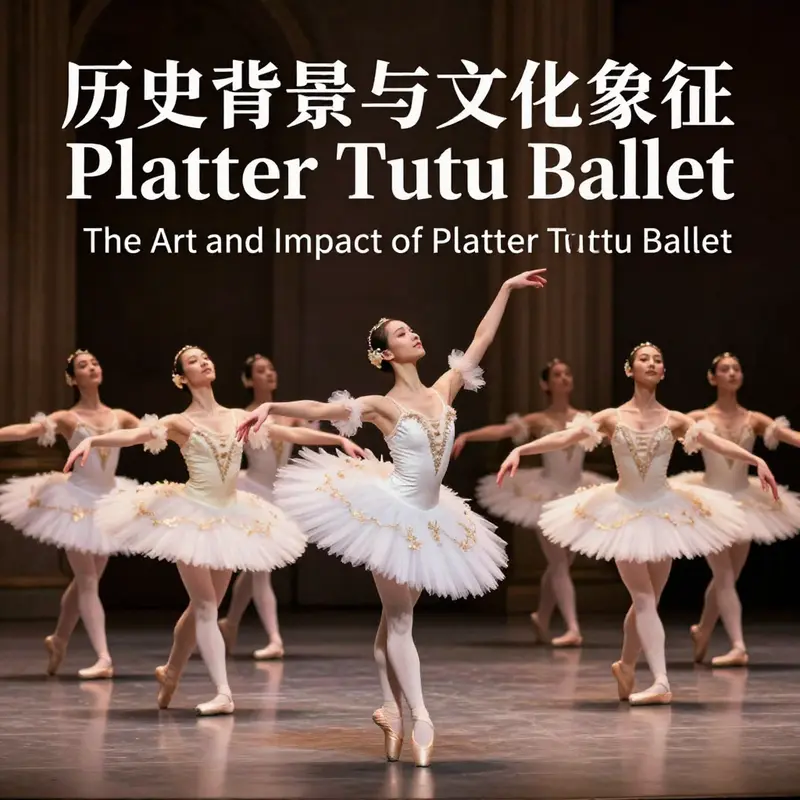
圆盘芭蕾舞裙不仅是一件舞服,它更像一个被时间抚平的镜面,反映出技术、审美与舞台实践的互相作用。Platter Tutu凭借圆盘形的裙摆、多层硬纱与内置支撑,在19世纪末至20世纪初的古典芭蕾中确立了对稳定性与可控性的美学追求。这种造型将腰部线条延展成一个水平的几何面,使旋转与跃起在视觉上更易被捕捉,同时对舞者的核心力量、呼吸控制和舞台灯光设计提出更高要求。
其对舞台语言的贡献并不仅限于外观。它将“轻盈”与“稳定”并置为核心美学,促使舞蹈教育把身体线条训练、肌群平衡与脊柱延展放在更显著的位置。舞台上的硬质裙摆在灯光照射下会形成清晰的边界,观众的视线沿裙摆边缘运动,形成一种几何化的时间与空间体验。尽管浪漫时期偏好柔美的流线,Platter Tutu强调的是对技术的掌控与形体语言的可预测性,这一传统也被俄罗斯学派的训练体系和后来的舞台理论广泛吸收。
进入现代,设计师在保留圆盘轮廓的前提下,探索材料的轻量化与工艺的微调,以提升舞者的灵活性与舒适度。不同地区的剧团也在保持核心美学的同时,结合本地舞台条件进行改良,使圆盘裙在多样剧目中仍然传达相同的技术气质与舞台张力。Platter Tutu因此成为跨时代、跨地域的舞台语言范式的一个重要象征。
Applications and Scene Adaptation: Mastering the Platter Tutu Ballet on Stage
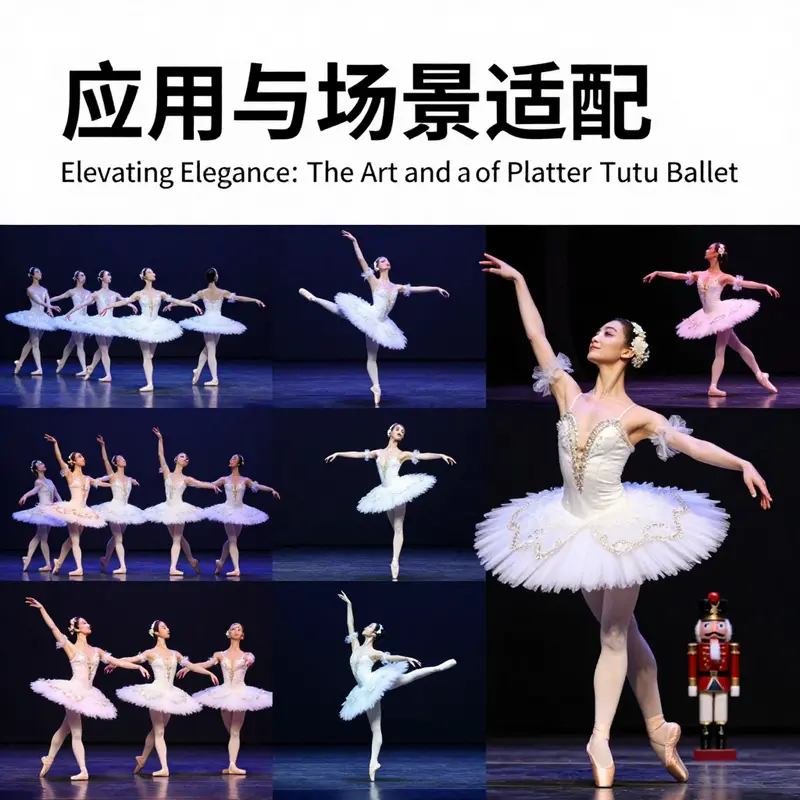
The Platter Tutu, with its rigid, disk-like silhouette and a voluminous, multi-layered skirt, is one of classical ballet’s most instantly recognizable costumes. Its drama lies not only in its striking geometry but in the way it enforces a dancer’s postural discipline and a performance’s spatial logic. When the skirt unfurls horizontally from the waist, it becomes a projection screen for light, line, and intention. The effect can be so overpowering that the dancer’s body feels like a hinge between the formal language of technique and the narrative demands of a given moment. In the repertoire most associated with the Platter Tutu—the great nineteenth century ballets that shaped the old stage from Swan Lake to Sleeping Beauty—the tutu is more than clothing. It is a stage partner that asks for precise alignment, measured breath, and a storytelling economy that makes the most of every pause, every turn, and every gesture. Yet as performance contexts shift—from a full classical production to a school recital, from a conservative virtuoso’s showcase to a contemporary hybrid piece—the tutu must be interpreted through a lens of adaptation that respects its historical core while welcoming the demands of new audiences and new choreographic languages. This is the expressive tension that defines the modern practice of Platter Tutu ballet: the balance of fidelity to old craft and curiosity about how form can translate into current stage presence without losing the essence that once defined the art form.
To begin with the classical frame, the primary function of the Platter Tutu is to articulate the dancer’s lines with a geometry that can be seen clearly from the back of a large theatre. The tutu’s flat, circular skirt extends outward in a way that visually cushions and elevates the dancer’s upper body. In moments of sustained adagio or in the exacting precision of series of entrechats, the stiffer, layered tulle keeps a silhouette that is legible to the audience across a proscenium and through the long views of a live orchestra pit. In Swan Lake, Odette/Odile is not merely a dancer moving through space but a figure whose emotional truth is reinforced by a costume that can speak of purity, illusion, and peril in a single glance. The costume’s whiteness—often achieved through layers of white or pale-tinted tulle, sometimes with pale or pearlescent sheen—helps the audience perceive purity and fragility as architectural fact, not merely allegory. The tutu thus functions like a visual instrument, its rigidity an amplifier for the dancer’s spine, chest, and arms, which in turn carry the ballet’s narrative weather: the breath of longing, the tremor of fear, the determination to endure.
From a practical standpoint, the Platter Tutu demands a particular attention to height and edge so that the performer can execute movements with freedom while keeping the silhouette intact. The hemline of the skirt is typically cut to hover above the knee, preserving mobility for allegro sequences while ensuring the tutu’s profile remains legible to the audience at varying depths of the stage. The skirt’s multiple layers, often ten or more, are painstakingly stitched to hold their shape, with delicate edges sometimes reinforced by metallic threads or narrow netting to resist collapse during spins and leaps. These structural choices are not merely aesthetic; they are choreographic enablers. In a long, languid port de bras, the tutu’s flat plane becomes a stage for the dancer’s arms, neck, and head to translate emotion into geometry. In a crisp series of turns, the skirt becomes a living compass, guiding the dancer’s rotation and helping audiences sense the momentum of the movement even when the body is moving away from them.
Yet the Platter Tutu cannot be treated as a museum piece. Contemporary productions—whether they reinterpret a classic tale or stage a new narrative with echoes of the old vocabulary—present the tutu with a broader palette. Some productions experiment with color, texture, or combined fabrics to evoke specific moods, themes, or symbolic codes. In these contexts, the tutu is still a tool for shaping line and space, but its color or texture may be used to reflect a reinterpretation of the character or to underscore a mood that the text or the staging cannot rely on alone. Designers may introduce deeper hues like navy or charcoal, or play with panels of sheer or metallic fabrics to catch light in novel ways. The effect can be striking: the same fundamental silhouette, but read through a different emotional lens. The process requires a dialogue among choreographers, costume designers, and lighting designers to ensure that the tutu’s physical properties—its weight, stiffness, and surface reflexivity—harmonize with the lighting, set pieces, and stage geometry. The tutu becomes a collaborative surface upon which a production can recast time, place, and mood without discarding the essential grammar of classical technique.
The range of applications for Platter Tutu extends well beyond the grand classical repertory. In youth or community performances, the tutu often serves as a practical anchor for the dancer’s confidence. The added volume and the silhouette’s clarity can heighten stage presence for young performers who are still developing proprioception and coordination. Weight considerations become paramount here. To balance the tutu’s imposing form with the dancer’s developing strength, designers frequently employ lighter fabrics—such as thinner layers of poly-satin and voile—without sacrificing the tutu’s structural integrity. This adaptation is not about diluting the costume’s grandeur; it is about preserving its visual impact while honoring the health and safety needs of younger performers. In such contexts, the design may also favor simpler ornamentation—smaller rhinestones or subdued embroidery—so the emphasis remains on the accuracy of lines and the clarity of musical punctuation rather than on the intensity of adornment.
For modern choreographers, the Platter Tutu can become a flexible instrument for exploring themes like constraint, memory, or identity. A contemporary piece might deliberately disrupt the tutu’s traditional rhetoric by introducing non-traditional silhouettes or juxtaposing the rigid exterior with a fluid modern movement vocabulary. The tutu’s hard edge can be used to create a visual counterpoint to expressive, sometimes improvisational movement, producing a dialogue between old technique and new dramaturgy. In such works, lighting designers may exploit the skirt’s flat geometry as a screen for projection or as a dynamic surface that interacts with shifting shadows and colors. The tutu ceases to be merely a costume; it becomes a living, unfolding element of the choreographic architecture, capable of suggesting the presence of a character before the dancer speaks a word or before the music reaches its peak. The result can be a pivotal moment in which the audience feels both the weight of tradition and the exhilaration of its reconfiguration.
The range of scene contexts also includes non-traditional stages and non-ballet spaces that invite a wider audience to encounter classical vocabulary in unexpected ways. In outreach or fusion performances, where the goal is to make ballet language approachable without diluting its integrity, the Platter Tutu can be scaled or styled to fit a broader spectrum of movement and audience expectation. This can mean shorter, more practical versions of the tutu for site-specific performances, or a reinterpretive approach that keeps the silhouette intact while allowing for freer floor work or contemporary partnering. The key in these contexts is discernment: knowing which features of the tutu are non-negotiable—its silhouette, its proportion, and its sense of line—and which aspects can be adjusted to serve the story and the space without erasing the ballet’s core grammar.
In considering how to guide performers through these transitions, performance guidance becomes more nuanced. First, the dancer’s body must be supported by a well-fitted corset and bodice that allow for full breathing while preserving the tutu’s exterior rigidity. Proper fitting is essential because a poorly fitted bodice can distort the dancer’s line, hinder breath support, or create discomfort that steals focus from the performance. A well-fitted tutu is not a decorative feature; it is a structural partner that shares responsibility for maintaining alignment across the spine, pelvis, and shoulders. The dancer’s training then must address the interplay of core stability and limb articulation. Balance work, rapid weight shifts, and controlled turns require an awareness of how the tutu’s mass affects momentum and how the dancer’s center of gravity travels with each movement. Instruction should emphasize conscious cueing of the knee, hip, and trunk to ensure that the skirt remains a coherent part of the dancer’s line rather than an obstacle that defeats the legwork.
One practical aspect often overlooked is how to manage the tutu during rapid sequences or extended performances. The flour of the tutu’s layers can trap heat, listen for the wearer’s breath, and influence stamina. Costume teams typically design with ventilation in mind and may place panels or allowances where the dancer’s movement is strongest, ensuring that the layers do not bunch or chafe during long phrases. Dancers benefit from a pre-show rhythm that includes gentle warm-up with the tutu on, to feel the skirt’s weight distribution in motion. This preparation helps a performer anticipate the intervals of stillness and action—the times when the silhouette can glow most dramatically and the audience can appreciate the tutu’s sculptural presence. Stage rehearsals should therefore include a period of integration where movement, lighting, and sound design are combined with the costume’s physical properties. Only through repeated integration can the tutu’s full potential emerge—the way its flat disc catches a beam of light to outline the spine, or how it blooms to fill the stage when the dancer translates a single breath into a sweeping pirouette.
The social and performative implications of the Platter Tutu are also worth noting. In classical contexts, the tutu often signals status, character, and a set sequence of stylistic codes. Odette’s whiteness, for instance, is not simply about color; it is an extension of a narrative ideal of purity and vulnerability that the music and movement amplify. When designers or choreographers reinterpret these cues for a new audience or a different cultural context, the tutu’s power remains intact only if the new elements support the same visual and musical clarity. A modern reinterpretation may play with color or light to evoke a parallel emotional truth, but it must still honor the tutu’s historical function as a readable, legible line on stage. In other words, the Platter Tutu is a bridge—between centuries of technique and the present moment’s need for fresh storytelling. It invites performers to honor a lineage while inviting audiences to experience the familiar through new eyes. And it invites designers to think of costume not as an adornment but as an active participant in the choreography’s narrative and spatial architecture.
In planning a production or a study program around the Platter Tutu, one can keep a few guiding questions close at hand. How will the silhouette be perceived from multiple vantage points on the stage? What textures and finishes will preserve the tutu’s shimmer without causing unwanted glare under bright stage lights? How can the apparel facilitate, rather than hinder, expressive choices in both classical and contemporary contexts? How might the tutu support a performer’s safety and comfort over the duration of a piece? Answering these questions requires a close collaboration among choreographers, costume designers, technical directors, and the dancers themselves. The best results arise when each party understands the core function of the tutu — its ability to map the body’s lines with crystalline precision and to offer a robust yet elegant frame for the dancer’s intent — while remaining flexible enough to adapt to the demands of a new stage, a new audience, or a new kind of movement.
To bring this into concrete theater practice, designers and educators can turn to the professional discourse surrounding dance costumes and their practice. Designers should consider the tutu’s weight distribution, the fabric’s breathability, and the skirt’s edge finish as integral elements of the staging plan, not afterthoughts. The tutu’s construction must be legible to the audience yet comfortable for the dancer, balancing aesthetic ideals with safety and endurance. As choreographers push for more nuanced storytelling, they may use the tutu to reveal or conceal dimensions of a character or to provide a visual counterpoint to the music’s emotional arc. In these moments, the Platter Tutu becomes a character in its own right, capable of signaling change in the narrative as clearly as the dancer’s eyes or the curtain’s rise.
For those who want to explore these ideas further, designers often consult catalogs and professional resources that align costume practice with the demands of stagecraft. The professional tutu catalog serves as a practical navigating tool, offering a spectrum of shapes, weights, and finishes that can be tested against the needs of a given production. It provides a language for designers to discuss with dancers which configurations of structure, surface, and color will best capture the required line and aura. The catalog helps bridge the gap between the dancer’s kinetic reality and the costume’s formal rhetoric, enabling a shared vocabulary that supports precise rehearsal decisions and more expressive performance outcomes. In this sense, the tutu becomes a collaborative instrument—one that flows with the body’s movement while safeguarding the discipline, history, and grandeur that define the art form.
As we close this synthesis of application and stage adaptation, it is worth returning to core principles: the Platter Tutu remains a symbol of classical rigor, a garment that demands exacting technique, and a catalyst for imaginative staging when allowed to breathe within a modern dramaturgy. Its rigid outward form belies a flexible capacity to support both tradition and invention. The challenge for performers, designers, and educators is to honor the tutu’s architectural integrity while embracing the stories and spaces of today’s theatres. When all these elements align, the tutu does more than dress a dancer; it elevates the moment, making a single turn or a quiet pose feel both ancient and suddenly new.
Internal reference to industry practice can be found in specialized catalogues that align costume design with performance outcomes. For designers seeking a curated library of formal options, the professional tutu catalog offers a tested framework for matching the dancer’s skill level with the production’s demands, helping ensure that the silhouette supports, rather than obscures, the storytelling. This approach supports a rigorous rehearsal process where each movement, sound cue, and lighting change has a clear visual counterpart in the costume’s silhouette. In this way, the Platter Tutu remains a living tradition within a contemporary stage, a symbol of mastery that continues to adapt as the art form evolves. For those involved in planning or studying productions, considering how a Platter Tutu interfaces with choreography, lighting, and space can illuminate a path toward more cohesive, compelling performances.
External resource: costumes and attire guidelines. https://www.ballet.org.uk/education/dance-costumes-and-attire
Internal hyperlink for exploration: professional tutu catalog. professional tutu catalog
Final thoughts
Understanding the platter tutu ballet’s design, history, and appropriate contexts is essential not only for those in the ballet world but also for business owners catering to this field. The platter tutu is a symbol of classical ballet, representing the art form’s enduring elegance and technical precision, making it a valuable asset in the repertoire of any performance or dance apparel line. As the ballet world evolves, the platter tutu remains a beloved classic that continues to inspire both performers and audiences alike.