
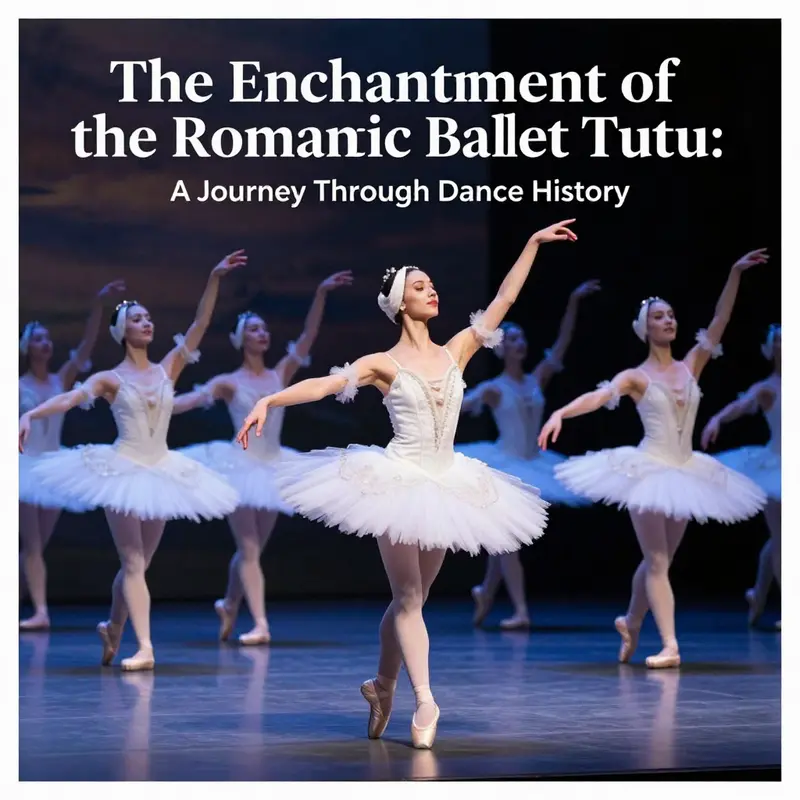
The romantic ballet tutu represents a significant evolution in the world of dance, encapsulating the spirit of the Romantic era through its ethereal design and cultural relevance. Originating in the early 19th century, the tutu has become an iconic symbol within the ballet community, exemplifying grace, femininity, and artistic expression. This article delves into the origins and historical significance of this dancewear, highlighting its exquisite design elements, the cultural impact it has had on art and performance, modern adaptations in today’s performances, and iconic ballet shows featuring the romantic ballet tutu. Each chapter will provide insights that collectively reflect the tutu’s lasting legacy in the ballet canon.
Wings of Cloud and Stage: The Romantic Ballet Tutu
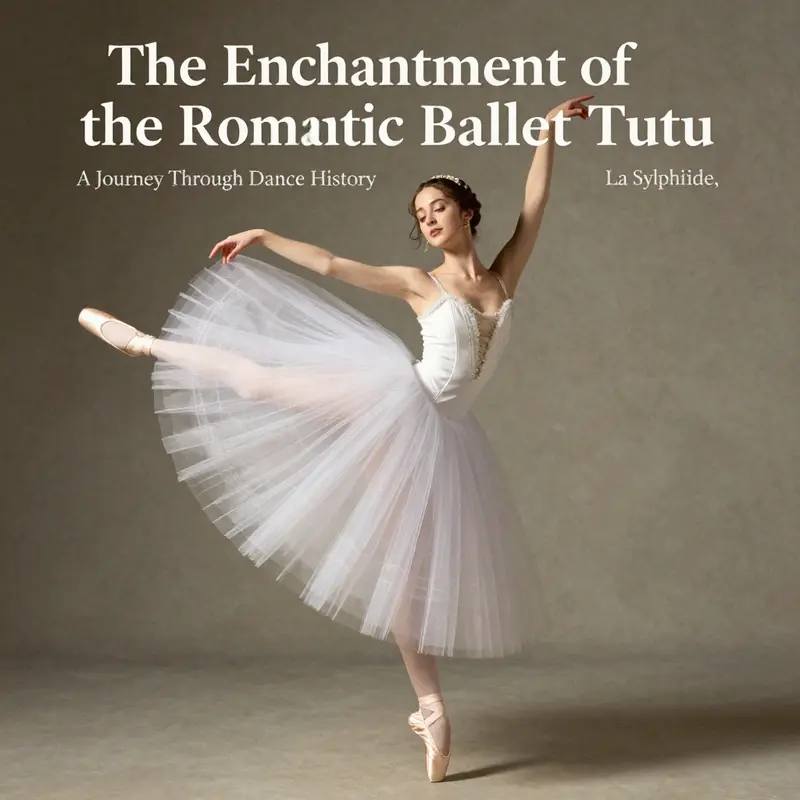
The Romantic ballet tutu rose from the stage like a whisper turned into fabric, a visual echo of the era’s fascination with emotion, nature, and the supernatural. In the early nineteenth century dance was more than technique; it was a space where belief could be staged and the unseen could be perceived through lightness of form and movement. The tutu, soft and diaphanous, became the language through which choreographers translated Romantic ideals into living theater. A pivotal moment is often marked by the Paris Opera staging of La Sylphide in 1832, when Marie Taglioni stepped into the role of the sylph with a silhouette that seemed to hover between earth and air. The gown, a long white veil of tulle, invited audiences to glimpse a world where gravity could be softened by fabric and intention alike. The effect was not only aesthetic but psychological: the dancer was seen as a creature of dream and fragility, yet also as a being of inner strength capable of luminous arcs with precise footwork.
From color and silhouette to movement, the origins of the romantic tutu lie in a shift toward a shorter, lighter silhouette designed to reveal the feet more clearly. Layers of fine fabric gathered at the waist created a bell that moved with the dancer, while the absence of stiff supports allowed the fabric to respond to breath and momentum. The tutu thus acted as a wingscape that could lift the gaze and suggest weightlessness, with three to six layers of tulle or chiffon forming the body of the garment. The result was a visual language in which the costume and the body work together to convey the longing, otherworldliness, and moral intensity of Romantic storytelling.
As the era matured, designers refined the silhouette and choreography, foreshadowing the classical tutu while maintaining the core idea that movement and cloth could make emotion visible. The white tutu became a symbol of purity and the sublime, a canvas for the stage to render dreams with literal lightness. In performance, the tutu is not simply clothing but a device that shapes perception, guiding the audience to read the dancer’s lines, breath, and balance as part of a larger narrative about memory, myth, and transformation.
Whispers in Silk: The Design Language of the Romantic Ballet Tutu
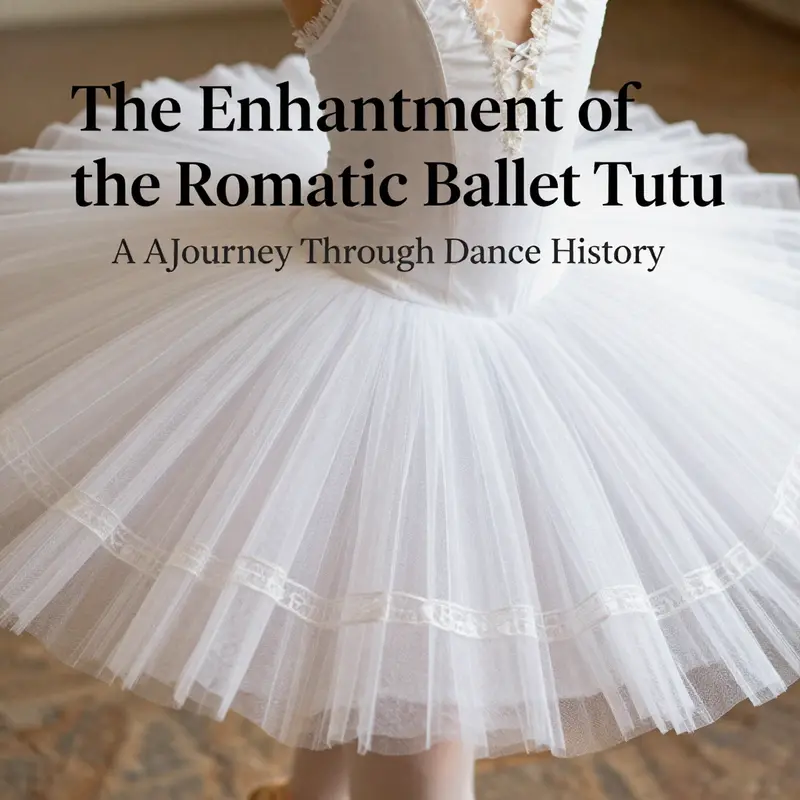
When the curtain rises on a Romantic ballet, the visual conversation begins long before the first spoken line or the first note of music. It starts with a costume that seems almost to breathe on its own, a shimmering bell of fabric that frames the dancer’s body and, through that frame, reveals a mood, a story, a longing. The Romantic ballet tutu, born in the early 1830s, is not merely a skirt but a carefully orchestrated instrument of narrative where fabric, light, and movement fuse into a living silhouette. Its defining quality is not rigidity or grandeur but a soft gravity that allows air to become a partner in the dance. The skirt, from the waist to just above or below the calf, graduates from a modest lift of cloth into a floaty, bell-shaped chorus that sways with every breath and every turn. This shape, achieved without stiff crinoline or ironed support, unlocks a different kinesthetic poetry than later, more architectural textures would demand. Its lines are designed to be read by the audience as a sequence of whispers rather than proclamations; the eye follows the dancer’s leg lines and the skirt’s halo of sheer fabric as if watching a cloud skim across a moonlit lawn. The result is a garment that seems to catch the very breath of Romanticism—an era fascinated with the supernatural, the ethereal, and the idealized feminine beauty that strays toward the otherworldly. The tutu becomes a story in motion, a costume that tells its own fable in the space between steps and silences. The practical effect is as important as the aesthetic ambition. A lightweight tulle or chiffon layer, typically between three and six sheets, layers itself into a soft opacity that still maintains a translucent aura. The fabric choice matters as much as the seam lines; the fabric is chosen not to hide but to reveal the dancer’s expressive range. A single gesture—an arched wrist, a tilt of the head, a pointed toe—receives amplified meaning because the fabric around it behaves with a nonchalant, unforced sway. This is not a garment that demands attention through volume or corset-like restraint. It earns reverence through its ability to disappear into the air while remaining legible to the audience. The dressmaker’s art, in this sense, is almost invisible: the layering is precise, the hems clean, the body’s rhythm allowed to guide the viewer’s gaze. The silhouette’ s gentle bell and its bottom-sweeping, cloud-like movement were meant to complement the bolder choreographic choices of the era. In pieces like La Sylphide and Giselle, the tutu operates as a partner to the storytelling—an incantation of the supernatural and the sublime that a more rigid sugar-petal shape could not convey. The dancer’s footwork on pointe, the lift of the arms, and the line of the spine work in a dialogue with the skirt’s own physics. The air becomes an elastic partner; the fabric, curiously, yields the illusion of effortless ascents and weightless descent. It is precisely this sensation—weightless presence in a tangible world—that makes the Romantic tutu a perfect artifact of its age. The shift from earlier, more rigid forms toward a softer, more forgiving structure mirrors the period’s artistic impulse: to value emotion and atmosphere over architectural propriety. That is not to say the design was improvised. There is a disciplined craft behind the dream. Constructing a romantic tutu requires a balance between strength and surrender. The layers are sewn with exacting care, each one contributing to a crescendo of lightness rather than a rigid stack. The hems waft with the dancer’s steps, and the cut keeps the footwork free. The upper body, by contrast, is usually fitted with a close, streamlined bodice that emphasizes the dancer’s line without competing with the skirt’s airy halo. Off-the-shoulder or modestly scooped necklines, often supported by delicate piping or subtle boning, help maintain a continuous line from shoulder through hip to toe. The overall effect is not merely decorative but expressive: the wearer’s vulnerability and grace are amplified by the fabric’s translucence, its floating edge catching lamplight as if the world itself were pausing to listen. The design thus becomes a language of sensation, translating mood into silhouette with an economy of means that modern costumes sometimes struggle to achieve. The practitioner of this craft understood that the tutu’s power lies not in shock or ostentation but in the nuanced interplay of light and shadow, proximity and distance. When the dancer pirouettes, the skirt’s layers billow and collapse in a way that reads as a soft, cumulative crescendo. The tutu does not shout; it hums. Its music is the sigh of the fabric as it passes through the air, the tiny crackle of a thread catching a stray beam, the way the edge of a veil-like panel greets the stage with a faint, almost musical rustle. This is why the Romantic tutu has endured as an icon of the era’s aesthetic. It is not only about what the audience sees at a distance; it is about what the dancer experiences at the center of the stage. The absence of stiff inner supports gives room for the body to articulate emotion through every micro-movement—shoulder blade shifts, the gentle tilt of the pelvis, the delicate pull of the abdominals that breathes life into a single phrase. In the best examples, the fabric seems to have memory of the choreography; it holds a faint trace of past spins and leaps, like pages in a diary that remember every performance. The tutu’s legibility in this sense is part of its magic. Its length—extending toward the knee or mid-calf—keeps the line clear from hip to toe and prevents the garment from overpowering the footwork that defines Romantic-era technique. The dancer’s feet remain the primary instrument of storytelling, while the skirt provides a luminous backdrop for those feet to articulate longing, danger, or dreamlike surrender. This dynamic is an elegant counterpoint to the later, more iconic classical tutu, where the stiffened, upright silhouette foregrounds technique over emotion. The Romantic version retreats from that architectural spectacle and leans into the orchestra of movement and mood. Designers and costume-makers in contemporary practice often look to this lineage not to imitate but to interpret. The modern romantic tutu is a conversation with the past: a faithful echo that can be adapted to new choreographies without losing the essence of the era’s poetry. In educational settings, this means teaching students to feel the fabric as a collaborator. They learn that the skirt’s volume should arise not from force but from the dancer’s breath, that the layers must drift softly rather than puff up aggressively, and that every turn should be a gentle invitation the fabric accepts with grace. It is also a reminder of the era’s broader artistic project: to capture the invisible, to render the unseen palpable through the craft of dress. The garment’s poignant elegance aligns with the Romantic ideal of beauty as a synthesis of fragility and strength. It situates the dancer as a figure both part of the scene and apart from it, a presence that invites awe without demanding it. In modern staging, historians and designers may consult collections and catalogs that trace the tutu’s lineage, including the ways in which the silhouette has been revived, resurrected, or reinterpreted for modern audiences. For readers curious about the broader category and its variations, exploring the romantic tutu category offers a focused lens into this design vocabulary and its ongoing resonance in performance culture. romantic tutu category serves as a portal into how designers translate history into cloth, a reminder that even the softest fabric carries a history of devotion to craft and performance. In weaving together memory, technique, and imagination, the Romantic ballet tutu remains a luminous emblem of how dress can shape, and be shaped by, the dreams of the stage. Its design is a study in restraint and release, a reminder that the most potent beauty in the theater often lives in the space between a dancer’s breath and a veil of fabric that seems to float on the air like a whispered legend. The result is a costume that not only frames a dancer but deepens the tale being told, turning the performer’s body into a conduit for a myth that feels both ancient and urgently contemporary. The tutu’s soft bell, the transparent layers, and the unforced movement all converge to create an optical poetry of performance—one that invites the audience to believe in the magic of possibility, even if only for the duration of a single, breath-held moment on stage. External reference: https://dictionary.cambridge.org/dictionary/english/tutu
Cultural Impact of the Romantic Ballet Tutu in Art and Performance
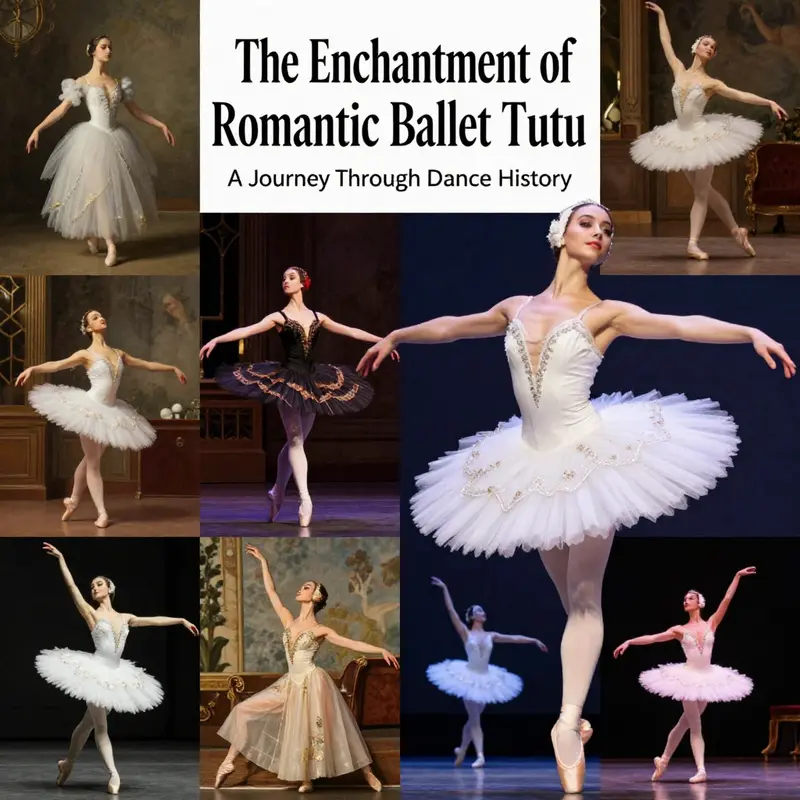
From the velvet hush of Parisian stages to the gleam of gallery and cinema screens, the Romantic ballet tutu has endured as more than a costume. It is a cultural emblem that embodies a particular dream of beauty—delicate, elevated, almost unattainable—and a way of telling stories that treat emotion as a visible force. The moment of ignition comes with Marie Taglioni and the premiere of La Sylphide in the early 1830s, when the dancer stepped into a world where the body could become a vessel for the supernatural. The tutu she wore—a soft, bell-shaped cascade of light fabric, flaring from the waist to just above the calf—was not merely attire. It was a design philosophy in motion, a sartorial choice that invited the audience to suspend disbelief and to float with the dancer into realms where sylphs and spirits triangulated a narrative of longing and transcendence. The silhouette, achieved through layers of ultra-fine chiffon or tulle often amounting to three to six sheer layers, did not rely on stiff supports or iron bones. Its strength lay in its weightless fall, its natural drape, and the way the fabric pooled into a softly buoyant arc that kept the dancer’s legs visible on pointe while hinting at something almost otherworldly about the body in space. This was a radical departure from the more rigid forms that had preceded it, a statement that beauty could be felt as a suspension of gravity rather than a display of overt power. In La Sylphide and later in Giselle, the tutu helped translate a script’s ethereal promises into physical poise, turning the dancer into a moving emblem of fragility and resilience. The wearer’s breath seemed to rise through the fabric, the air between fabric and skin becoming a partner in performance, a third character who whispered of danger, desire, and renunciation. The effect was not only visual but narratively electric: the layers of the tutu created a visual echo of the tale’s emotional ascent and descent, a choreography of mood that allowed the audience to read a character’s every wavering intention with almost Newtonian clarity.
As the century unfurled, the tutu’s influence rippled beyond the stage and into the wider arena of Western art and fashion. Visual artists, illustrators, and designers found in its silhouette a form that could translate the Romantic ideal of the sublime into images and garments that could travel across media. Paintings and lithographs adopted the tutu’s airy line as a symbol of feminine grace, vulnerability, and a longing to surpass the limits of the everyday. In couture and dress design, the silhouette reframed notions of femininity around lightness and translucence, a visual language that suggested both purity and peril. The tutu’s soft, bell-shaped skirt carried with it a cultural memory: a memory of women as muses and as agents of narrative transcendence, capable of channeling the intangible through a carefully layered structure of fabric. In this way, the Romantic tutu helped to codify a particular era’s fascination with the magical and the moral, with beauty as an aspirational force rather than a mere aesthetic. It became a reference point for how movement could be read as emotion, how a dancer’s line could carry a dream across a stage and into the mind of a viewer long after the curtain fell.
Today, the tutu continues to exercise a strong pull on both performance practice and public imagination. It remains a powerful emblem of classical ballet, frequently revived in productions that seek to honor the Romantic era’s ideals even as they reframe them for contemporary sensibilities. While the practical demands of modern staging—vigorous touring schedules, heightened safety standards, and dynamic repertory—mean that many current productions lean toward streamlined or reinforced costumes, the Romantic tutu endures as a touchstone. It is invoked in teaching demonstrations, archival exhibitions, and thematic programs that aim to capture the ephemeral, dream-like quality of early Romantic storytelling. In rehearsal rooms and conservatories, the tutu is studied not only for its beauty but for its historical significance: it represents how designers and choreographers approached the body as a narrative instrument, how fabric could become a partner in storytelling, and how a dancer could perform vulnerability with extraordinary technical clarity.
The design’s emphasis on soft structure—no stiffening wires, no heavy underpinnings—shaped how dancers learned to balance, to spin, to rise on pointe with controlled ease. The skirt’s light weight allowed a longer, more fluid port de bras, a wider range of turn-out, and a sense of buoyancy essential for portraying light beings like sylphs or wilis. This is not merely a matter of aesthetics; it is about how a costume can alter a dancer’s relationship to gravity, enabling a choreography of breath and gesture that reads as otherworldly in the hands of a seasoned performer. The tutu’s effect extended beyond the stage. In visual culture, the image of a dancer in a translucent, fluttering skirt became a recurring motif—often rendered with soft edges and pale palettes that suggested moonlight and mist. In fashion, designers drew on the silhouette to evoke a mood of ethereal fragility, pairing the idea of flight with the cultural preoccupations of virtue and moral purity that the 19th century so often linked to femininity. The tutu’s enduring resonance is also a reminder of how the arts communicate across generations: the same silhouette that thrilled audiences in La Sylphide can spark a contemporary choreographer’s impulse to reinterpret mythic forms for new audiences, or a gallery curator’s eye for light and shadow in a painting or installation.
The cultural footprint of the Romantic tutu thus traverses multiple domains. It anchors performances that aim to honor historical accuracy while inviting fresh interpretive layers. It informs exhibitions that juxtapose stage costumes with paintings, drawings, and fashion plates, creating dialogues about the ways women were imagined, celebrated, and sometimes constrained within the moral horizons of Romantic ideology. The tutu’s allure—an illusion of weightlessness, a suggestion of fragility, a storytelling device that is both visible and invisible—continues to animate conversations about the capacity of dress to convey emotion and to shape the arc of a story. It invites us to consider how a single, carefully engineered silhouette can carry centuries of meaning, from the footlights of a Paris Opera House to the bright lights of a contemporary theater or a museum’s archival gallery.
For practitioners and enthusiasts exploring this lineage today, the silhouette persists as a reference point for how to honor history without stagnation. The contemporary conversation around costume design often centers on how to preserve the integrity of the original Romantic line while adapting for safety, mobility, and expressive range. It is a reminder that the most enduring costumes are not relics but living forms—capable of guiding new audiences toward the same emotional truth that inspired the first audiences to dream with the dancers. If you seek a tangible entry into this world, you can explore the dedicated archive of pieces that reflect the legacy of the romantic tutu in contemporary catalogs and collections, such as the dedicated category that gathers historically informed romantic tutus. romantic tutu category.
External resource: for a broader scholarly perspective on the era’s costume aesthetics and performance practice, see the British Ballet overview that surveys how Romantic-era tutus and the art of ballet performance shaped both stagecraft and visual culture. https://www.britishballet.com/romantic-era-tutus-and-the-art-of-ballet-performance
From Stage to Street: How the Romantic Tutu Lives On in Modern Performance and Fashion
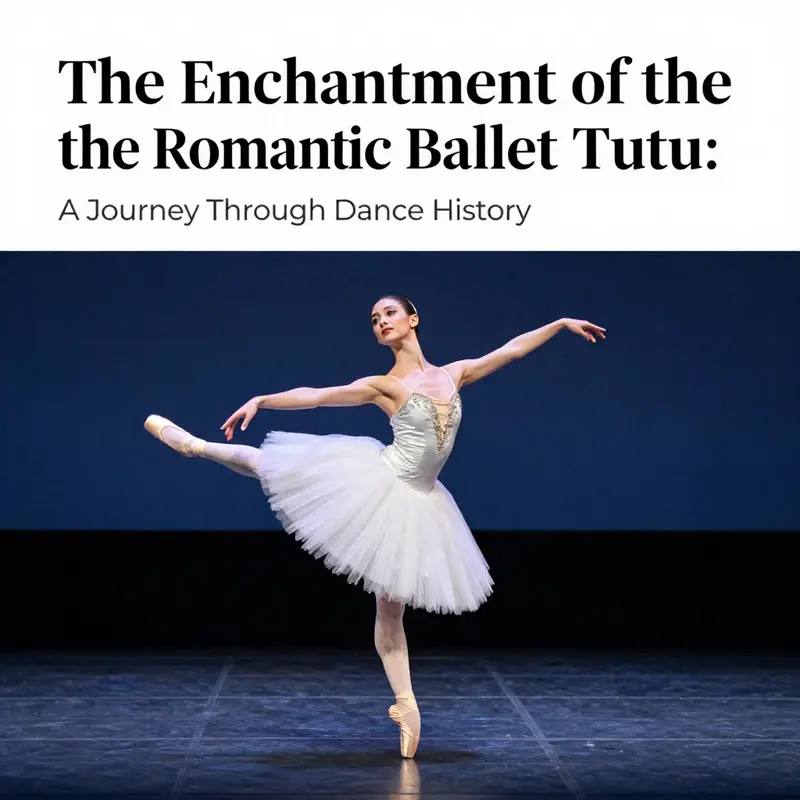
Modern Adaptations and Uses of the Romantic Ballet Tutu
The Romantic tutu, born of early nineteenth-century imagination and technical innovation, continues to exert influence far beyond its original theatrical purpose. Its soft bell silhouette, layered sheerness, and suggestion of weightless movement once framed stories of sylphs and spirits. Today those same visual cues are repurposed across dance genres, fashion ateliers, and popular visual culture. This chapter traces how the Romantic tutu has been adapted for new choreographic vocabularies, altered for modern stagecraft, translated into couture and costume, and adopted by communities that prize its dreamy, symbolic power.
On contemporary stages, choreographers treat the Romantic tutu as both a historical reference and a malleable tool. Some works preserve the classic length and float while altering fabric weight and opacity. Where nineteenth-century skirts relied on multiple layers of fine gauze to evoke a ghostly presence, modern makers use micro-mesh, ultra-fine tulle, or even laser-cut synthetics. These materials maintain the appearance of translucence but respond differently to light and motion, allowing designers to sculpt silhouettes that read cleanly at distance while retaining delicate detail up close. Others push the silhouette outward: adding asymmetry, varying hemlines, or combining soft skirts with sculptural bodices to create tension between fragility and strength.
Neoclassical and contemporary ballets often require costumes that move with faster, more athletic choreography. To meet this demand, designers pare back volume, reduce the number of layers, or introduce stretch panels in the bodice to preserve the tutu’s essence without hindering dynamism. In some productions metallic threads or iridescent finishes are woven into the skirt to catch stage light. These subtle interventions create a shimmering effect that reads as supernatural onstage, but is engineered for durability and washability offstage. Liquid foil finishes and metallic yarns have become especially popular for productions that aim to marry Romantic-era lyricism with twenty-first-century spectacle; under modern lighting rigs they produce a continuum of reflections that animate even static poses.
Beyond purely visual updates, practical adjustments have made the Romantic tutu more functional for touring companies and dance schools. Skirt attachments with modular layers let wardrobe teams adapt volume quickly for different venues. Reinforced stitching, hidden waistband elastic, and removable petticoats simplify maintenance without sacrificing the skirt’s float. These pragmatic shifts keep the tutu stage-ready while reducing backstage labor and cost. They reflect a broader trend: honoring historical aesthetics while optimizing for contemporary realities.
Perhaps the most notable evolution is cross-genre use. Contemporary dance companies borrow the Romantic tutu to interrupt audience expectations. A dancer in pointe shoes and a soft, calf-length skirt can appear both classical and startlingly contemporary. Choreographers use this duality to comment on tradition itself—framing classical references within modern narratives about identity, memory, or femininity. In ensemble scenes, the uniform whisper of skirts amplifies group patterns; in solos, the same skirt can isolate a figure, making each movement read as intimate and otherworldly.
Outside of staged dance, the Romantic tutu has migrated into fashion and media with surprising versatility. Designers borrow its volume and layering to invoke romance or theatricality in evening wear and bridal collections. The skirt’s ability to read as both structured and soft makes it a favored device for designers who want to balance architecture and whimsy. On runways, the tutu’s layered silhouette is often exaggerated or hybridized—combined with leather jackets, tailored blazers, or transparent overlays—to create contrast that feels fresh while referencing classical lineage.
Film, television, and music videos employ the Romantic tutu for its instant visual shorthand. A long, diaphanous skirt connotes fragility, dreaminess, or a period sensibility without explicit exposition. Costume designers manipulate fabric choice and movement qualities to match cinematic lighting and camera movement; close-ups favor finer, delicate materials, while long shots use sturdier layers that preserve shape under wind machines and action choreography. The tutu’s recognizability helps storytellers cue emotional tone quickly and effectively.
Commercial and social uses also keep the Romantic tutu in circulation. Themed events, photoshoots, and amateur performances often adopt simplified versions of the skirt for accessibility. These versions prioritize affordability and wearability while retaining the core visual language of the Romantic tutu: layered translucence, mid-calf length, and a fitted off-the-shoulder bodice or neckline. The garment’s presence at varied levels of production—from professional stages to community events—speaks to its cultural persistence and symbolic resonance.
In educational contexts the Romantic tutu functions as a teaching tool and cultural artifact. Ballet schools use historically informed skirts when presenting excerpts from canonical Romantic works. Students learn not just steps but how costume affects phrasing, port de bras, and stage presence. Wearing a Romantic-style skirt alters a dancer’s proprioception; the weight distribution and skirt movement invite slower, more lyrical phrasing. This embodied lesson helps preserve performance practices linked to a particular sound, tempo, and line quality.
While the Romantic tutu often appears to signify femininity and delicacy, contemporary adaptations interrogate and expand that association. Choreographers cast dancers of different genders in these skirts or pair the tutu with utilitarian garments, thus questioning fixed readings of the garment. Designers and companies deliberately play with scale, texture, and context to propose new meanings. A metallic-sheen Romantic tutu on a powerful, athletic dancer complicates the viewer’s assumption about who and what the skirt represents. These experiments show that the tutu’s symbolic weight is not fixed; it can be retooled to explore gender, power, and narrative ambiguity.
Sustainability has also entered the conversation. Traditional tulle and netting can be produced with significant environmental cost. Some ateliers now experiment with recycled synthetics, biodegradable meshes, and zero-waste cutting techniques to reduce impact. Upcycling vintage skirts or repurposing surplus layers keeps the aesthetic alive while honoring ethical commitments. These changes echo the broader responsibility felt in performing arts communities to adapt historical practice within contemporary ecological constraints.
For those seeking ready-made Romantic tutus—whether for performance, teaching, or themed events—specialized suppliers now offer a spectrum of options. From cost-conscious, simplified consumer models to professionally tailored skirts that replicate historical detail, the market reflects the tutu’s ongoing demand. For a curated selection focused on historical silhouettes and modern adaptations, see the romantic-tutu category for many examples and options.
Finally, the Romantic tutu’s endurance is not only technical but emotional. Its association with flight, fragility, and otherworldly grace continues to resonate. Modern adaptations make that resonance accessible to new audiences without erasing the garment’s origins. Whether filtered through metallic threads on a contemporary stage, reimagined in streetwise couture, or worn in a classroom as a pedagogical tool, the Romantic tutu remains a living emblem. It remembers the past, adapts to the present, and opens possibilities for future reinterpretation; its layers are, quite literally, a fabric history still unfolding.
For a broader look at contemporary reinterpretations and vendor perspectives, see this overview: https://www.dancewear.com/romantic-tutus
Iconic Moments in Motion: The Romantic Ballet Tutu Across Swan Lake, The Nutcracker, and Sleeping Beauty
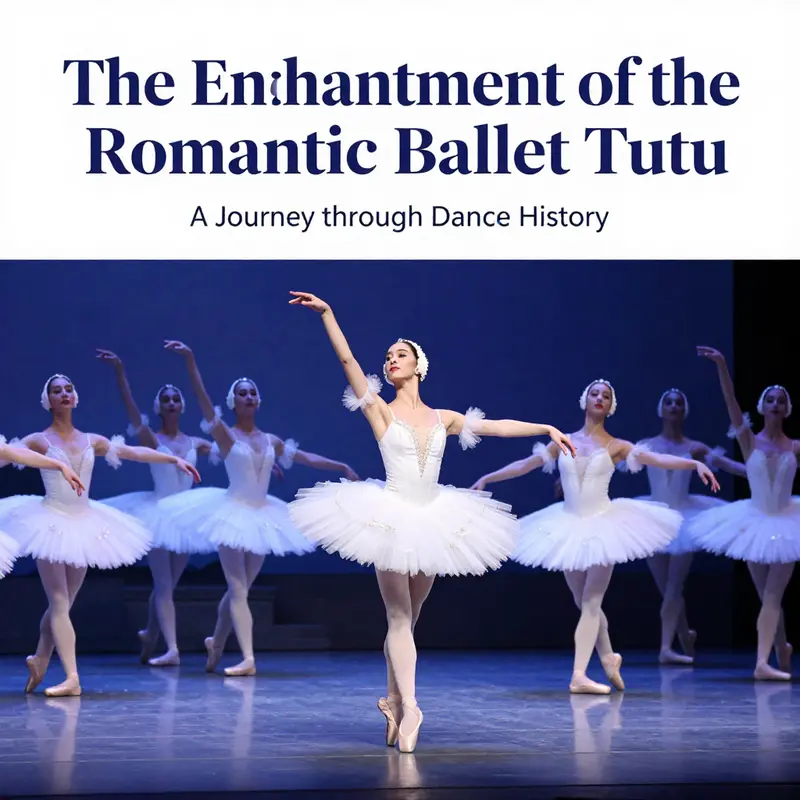
The Romantic ballet tutu arrives in memory as a whisper made visible, a garment that seems to float rather than cling, turning the dancer into a creature of air and suggestion. Its history begins in a moment when ballet sought to dissolve boundaries between the physical and the ineffable. In the early 1830s, in Paris, Marie Taglioni stepped onto the stage wearing a dress that did not merely cover the body but carried it, lifting it with air rather than weight. The long tutu, extending from the waist to just below the calf, created a silhouette more cloud than cloth. Layer upon layer of soft tulle hung in a way that relied on gravity and lightness to hold its shape. There was no stiff bone or wire frame pressing the fabric into a fixed clock; instead, the fabric fell into a natural bell that seemed to float with every breath of movement. This was not merely a costume choice; it was a promise of a new kind of grace, a visual language that spoke of poetry, dream, and the supernatural—key ideals of Romanticism itself. The tutu became the stage for a ballet’s mythic aspirations, a garment attuned to tell a story in the most lyrical way possible. Iconic performances codified the tutu as a symbol of the era’s aesthetic. In Swan Lake, the tutu is inseparable from Odette and Odile—the white swan and her darker double. The choreography leans on the tutu to carve through the music’s ebbs and flows. Odette’s journey from fragile innocence to fate’s tremor is mirrored in the way the skirt catches light and sways on pointe. When Odile appears, the tutu’s translucence and the way it catches stage lighting intensify the illusion of danger and duplicity. The audience experiences not just a character but a mood—the hush of moonlit water, the dreamlike breath that cannot be fully grasped. The tutu is a conduit for subtleties: the skill to keep fabric in gentle motion, the discipline to avoid stiffness, the artistry of letting layers breathe with each rotation of the foot. The Nutcracker introduces a different flavor of magic, one that leans into winter wonder and confectionary dreamscapes. In the Snow scene, the bridal whiteness of the tutu amplifies the sense of snowfall on stage. The layers of tulle ripple with a light touch, and the dancer’s turns become a soft, spinning snowfall of motion. The Sugar Plum Fairy’s appearance is another facet of the tutu’s capacity to symbolize otherworldliness; here the fabric reflects the stage’s dreamlike lighting, turning the dancer into a memory of sweetness and reverie. The tutu’s length and weightlessness allow for a procession of delicate steps that convey the fairy’s authority and benevolence without a word. The costume becomes a storytelling tool, carrying the narrative forward through a visual grammar of drift and glow. Sleeping Beauty offers a regal register of the same garment. Aurora moves through a world of courtly ritual and moral dreamwork, where elegance and fragility are the same blade. The romantic tutu lends her a stateliness that is both approachable and aspirational. Its floor-to-calf range presents a middle ground between sweeping grandeur and intimate truth of a dancer’s breath and balance. The tutu’s layers read as a sequence of weather, light as mist and more substantial as tempo shifts. The fabric’s buoyancy supports the spine’s alignment, allowing the upper body to register nuanced phrasing. Because the romantic tutu favors the torso’s clean line and the leg’s long extension, it helps the dancer articulate subtle gestures—the tilt of the head, the softening gaze, the barely perceptible release that signals a character’s emotional turn. The result is a performance grounded in technique yet elevated into the realm of fable. What makes the romantic tutu enduring across these works is its capacity to shape movement itself. The sheer, multi-layered fabric creates a clocklike silhouette when still, yet yields to momentum in ways that feel almost inevitable. The garment does not resist motion; it reveals it. The layers unfold with revolutions, providing a visual echo of the music’s phrasing. That echo becomes a language for ballet to narrate emotion without words. The tutu’s softness invites a surface light—dappled and shifting as the dancer spins—where the eye reads an ethereal texture rather than a solid garment. It is a paradox of presence and absence: something seen, yet dissolving at the edge of light. In contemporary performances that honor these Romantic roots, the challenge remains to preserve the look while ensuring comfort and freedom. The modern dancer seeks a balance between airy fall and practicality for long nights of performance. The fabric, often nylon or polyester blends chosen for durability, still respects the historical lineage by cascading in soft folds and maintaining a voluminous bell-shaped profile when the dancer is at rest or in mid-turn. The technique has evolved: dancers glide through turns with a clean line that keeps the tutu’s weight from becoming a barrier. The gear that supports such performances—bodices that lace snugly, belts that distribute weight evenly, seam work that allows the skirt to ripple without snagging—remains a careful craft, a testament to the collaborative art of staging a myth. The tutu’s legacy extends beyond the aesthetic; it embodies the romance of choreography that teases the audience with what is possible when body and fabric share a single dream. For readers who wish to explore tangible echoes of these silhouettes, modern catalogs and studios celebrate historical accuracy and present a path to the look without sacrificing safety or mobility. If you are drawn to the aesthetic, you can explore collections that foreground the Romantic tutu’s spirit; the look travels from stage to rehearsal hall and theater floor, carrying the memory of Taglioni’s breath and the spectral glide of Odette, Odile, and Aurora. As this journey through Swan Lake, The Nutcracker, and Sleeping Beauty reveals, the romantic tutu remains more than a costume. It is a vehicle for reverie, a medium through which ballet translates the soul’s longing into motion. Its long, flowing tiers become the stage’s wind, its soft texture the medium of dream, and its timeless silhouette the visible trace of a century’s worth of artistry. The tutu’s magic lives where technique and imagination meet, in the precise moment when a dancer’s foot pushes from the toe, the skirt swells with the turn, and the audience leans forward as if listening for a whisper from the past.
Final thoughts
In summary, the romantic ballet tutu not only symbolizes the grace and beauty of ballet but also resonates with the artistic ideals of the Romantic period. Its inception marked a transformative moment in dance, paving the way for various interpretations and innovations up to the present day. The designs, cultural significance, and adaptions we’ve explored illustrate the enduring legacy of the tutu as an art form. As ballet continues to evolve, the romantic ballet tutu remains a cherished icon, inspiring both dancers and audiences alike.