
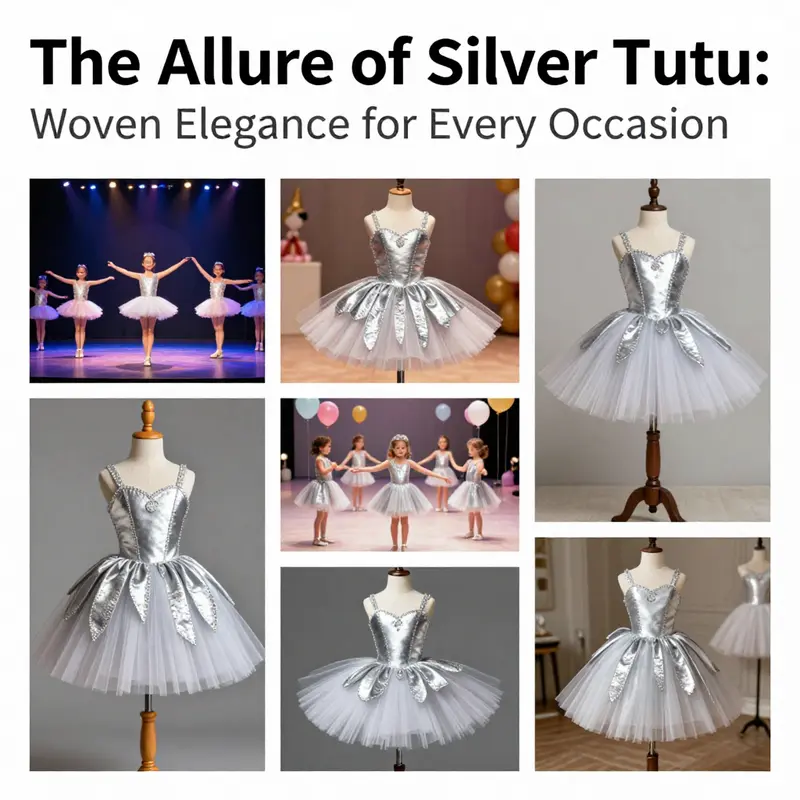
The silver tutu, with its ethereal charm rooted in ballet and reinvigorated in children’s fashion and event decor, captivates audiences worldwide. From its intricate design features to its cultural importance, the silver tutu stands as a symbol of elegance and artistry. This article delves deep into its design elements, the significance it holds within ballet, its role in children’s fashion and party themes, the craftsmanship that distinguishes high-quality pieces, and the economic trends surrounding silver tutus. By examining each aspect, business owners can better appreciate the value of this garment and explore potential market opportunities.
Glimmer and Structure: How Silver Tutus Marry Light, Material, and Movement
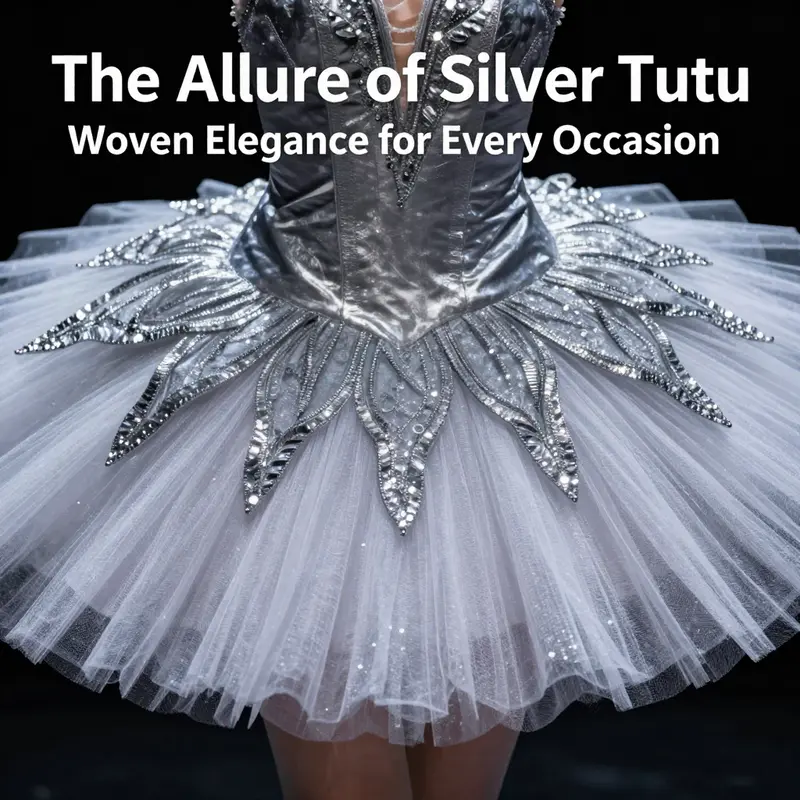
A silver tutu lives at the intersection of theatercraft and textile science, where light becomes part of the costume and the costume becomes part of the storytelling. Designers who work with silver tones do more than choose a color; they compose with reflectivity, texture, and engineering. Every fold of tulle, every sewn-in metallic thread, every structural choice influences how a dancer reads in space, how a character is perceived, and how movement is translated into visual poetry. This chapter follows the design logic behind a silver tutu, tracing how materials, lighting, and support systems combine to produce a garment that is both delicate and commanding.
At its heart, the silver tutu begins with material selection. Traditional tutus rely on layers of lightweight tulle to create volume without weight. A silver tutu retains that essential lightness but adds complexity through metallic finishes. These finishes take several forms: metallic threads woven into tulle, silver-coated fibres, and reflective overlays that catch stage light. The difference between a tutu that merely glitters and one that glows under stage conditions lies in how the metallic elements are integrated. When metallic threads are woven through multiple layers, the effect is depth rather than surface shine. Light penetrates the top layers, scatters among woven metallic fibers, and returns as a soft, luminous sheen. Conversely, a silver coating applied superficially can create a mirror-like flash that risks overpowering the silhouette. Designers choose integration over coating when the goal is to maintain a sense of ethereality.
Surface treatment is only one half of the visual equation. The way the tutu interacts with stage lighting determines its expressive capacity. Silver surfaces respond to light direction, intensity, and color temperature more vividly than matte fabrics. Upstage lights produce rim highlights that trace the dancer’s outline; downstage washes can coax a cool, moonlit aura; and spotlights render metallic threads into a constellation of shimmering points. Contemporary design increasingly incorporates programmable elements—tiny LED fibers woven into seams or embedded along the bodice—that allow the costume to change character across a performance. These additions must be handled with discretion. The best effects complement choreography, accenting a reach or a turn, rather than distracting from technical clarity. When lighting and metallic fibres are conceived together, the costume becomes a dynamic collaborator that extends choreography into visual gradients of light.
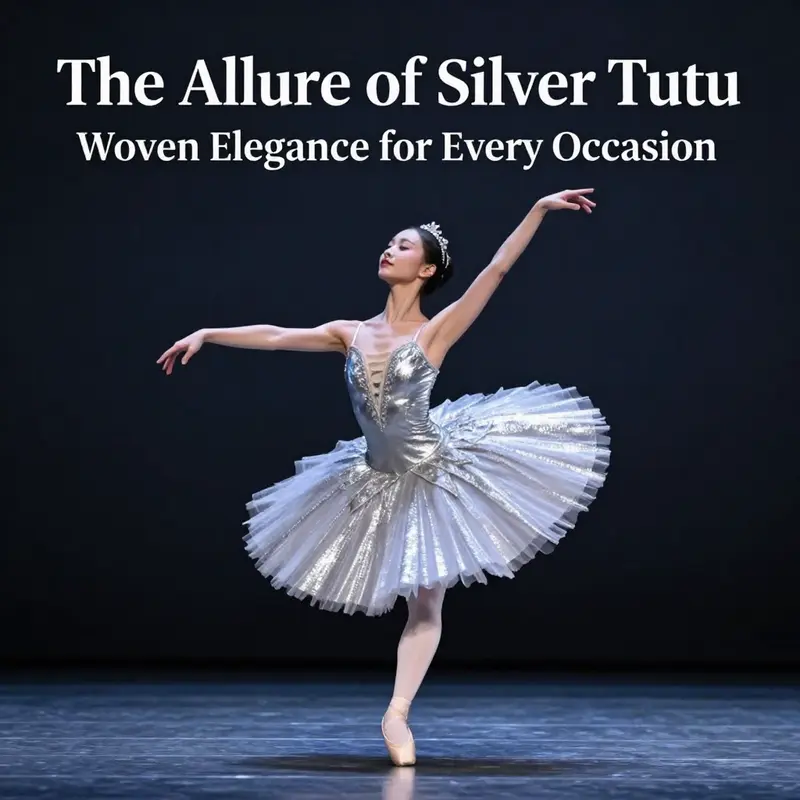
Structural design governs how a silver tutu holds that visual promise in motion. A tutu must allow full range of movement while retaining its intended shape. Traditional pancake or platter tutus rely on layers of horsehair braid and strong tulle construction to keep the skirt flat and horizontal. Modern silver variants often incorporate flexible supports made from lightweight composites that may be silver-embedded or coated to maintain a cohesive aesthetic. These materials add durability and a consistent silhouette without stiffening the garment to the point of mechanical motion. A dancer needs a skirt that responds to the breath and the spin, one that retracts and fans with the exact timing of a jeté or a fouetté. Structural innovations aim to synchronize material memory with movement. Where older designs focused only on form, contemporary construction considers the choreography the costume will face.
Comfort and safety are inseparable from aesthetics. Metallic elements can be abrasive or add weight if not carefully moderated. Designers address this through selective placement: metallic weaves concentrate where light strikes most dramatically—the edges of the skirt, the high points of the bodice, and the hems of sleeves—while high-contact areas remain lined and soft. Lining choices matter; a breathable, silky inner layer prevents chafing and reduces heat buildup from embedded electronics. For LED-enhanced tutus, wiring is routed along seams and anchored to flexible support strips so motion does not stress connections. Batteries and control units are placed in pockets near the waist or on the back bodice in a way that preserves the dancer’s center of gravity. The result is a costume that appears to float, even as it contains a network of functional components.
Color strategy in a silver tutu is subtle but crucial. Pure silver can read cold or distant, so designers often blend tones to achieve warmth and depth. Pale grays, mother-of-pearl iridescence, and nearly white silvers are layered to suggest form and curvature. Accents in complementary hues—soft blues for nocturnal scenes or warm gold threads for regal figures—allow the silver to act as a reflective mediator, picking up and amplifying stage color. When LED elements are present, color control can shift the perceived temperature of the silver instantly, moving from ethereal coolness to an ember-like glow that serves a narrative beat. This adaptive color behavior makes silver tutus uniquely responsive to storytelling needs.
Textural contrast sharpens the costume’s language. Pairing smooth metallic sheens with matte tulle creates visual planes that read well from a distance. Embellishments such as tiny appliqués or concentrated beading can be used to define bodice lines or to suggest motifs relevant to character. These details should be balanced; excessive ornamentation diminishes the readability of a dancer’s technique. Instead, embellishments are best applied as punctuation—small, deliberate marks that highlight key gestures or musical accents.
Sustainability and maintenance are practical considerations in contemporary design. Metallic finishes and embedded electronics pose challenges for cleaning and long-term care. Designers now favor modular approaches: detachable lighting modules, replaceable battery packs, and skirts constructed in separable layers. This modularity extends a costume’s life and simplifies repairs between performances. It also allows for adaptation: a single base tutu can be remixed with different overlay treatments to suit multiple productions, reducing waste and production cost.
Finally, the symbolic role of silver should not be underestimated. Silver carries cultural associations with the moon, with nobility, and with the liminal spaces between reality and fantasy. In a performance, a silver tutu can declare a character’s otherworldliness instantly. When design, material, and technology align, the costume does more than ornament a dancer; it amplifies narrative intent and molds audience perception. The silver tutu becomes a visual voice, articulating mood, status, and emotion through a combination of light and movement.
Designing a silver tutu is therefore a multidisciplinary effort. It demands knowledge of textiles and metallurgy, fluency with lighting design, sensitivity to human ergonomics, and an understanding of dramaturgy. The most successful designs are those in which these disciplines converse—where the reflective properties of a fabric are planned with the lighting designer, where structural supports are developed with the principal dancer in mind, and where electronic augmentations are choreographed as carefully as steps. In that convergence lies the costume’s power: not as a static object but as a responsive element of performance that changes with every spin, every lift, and every hush of breath.
For designers and companies exploring these possibilities, practical case studies and technical analyses offer valuable guidance. A thoughtful review of contemporary costume practices can illuminate how to integrate these elements without compromising movement or narrative clarity. For further insight into how innovative costume design is conceptualized and implemented in modern ballet, see this resource: https://www.balletboston.org/insights/innovative-costume-design-in-modern-ballet
If you wish to explore thematic silver costumes and variations that inspire choreography and stagecraft, consider browsing a curated collection of themed costumes that includes silver-fairy interpretations: silver fairy theme.
null
null
Shimmering Whimsy: Silver Tutus in Children’s Fashion and Party Decor
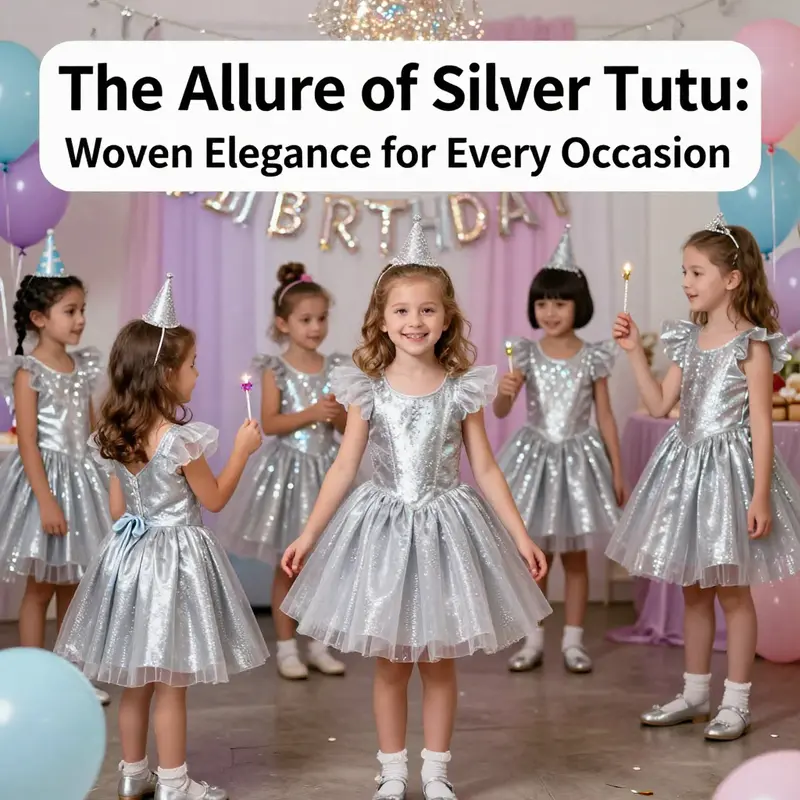
A silver tutu does more than cover a small body with fabric. It catches light, it gathers attention, and it invites the imagination to step closer. In the world of children’s fashion and party decoration, the silver tutu has moved beyond a simple costume accessory to become a versatile icon of whimsy and refinement. Its appeal lies not only in how it looks but in how it behaves. It is light enough to flutter with every step and sturdy enough to hold its shape through a lively parade of birthdays, dance moves, and festive games. When a child spins, the layers of tulle ripple like a tiny waterfall of moonlight, and the soft, reflective surface seems to blur the lines between the ordinary and the magical. The result is a garment that feels special without demanding spectacle, a balance that makes it a natural choice for both everyday dress up and formal celebration.
The core of the silver tutu rests in its materials. Most versions are crafted from lightweight tulle or organza, fabrics chosen for their airy movement and their ability to catch light from every angle. The color is typically an iridescent silver, which shifts through subtle tones as the child moves—cool ice, a hint of pearl, a whisper of metallic sheen. This shifting effect is not accidental. It is achieved through careful layering and a thoughtful approach to texture. Unlike simple static fabrics, the tutu relies on multiple layers of sheer material to create depth and volume. Three or four layers are common, and each layer contributes to a fuller, more sculptural silhouette. The result is a garment that reads as both delicate and durable, a costume that can withstand the excitement of a party while still looking poised under stage lighting during a recital.
In practice, these design choices translate into a garment that feels age appropriate while still carrying a sense of ceremony. The bodice is often fitted, providing a gentle contrast to the volume of the skirt. The waist sits comfortably at the natural line, allowing for easy movement and a confident posture as a child walks, twirls, or leaps. The layered tulle catches air with each motion, so even a simple twirl becomes a miniature ballet that audiences can enjoy. When the lights dim for a party or a performance, the embedded light-catching properties of the silver tones come to life. The fabric does not merely shine from a single flash; it seems to glow from within, as though a small constellation had found its way into the hemline. This sense of radiance is what makes silver tutus especially suitable for stage performances and themed events where the atmosphere of wonder matters as much as the look itself.
The appeal of the silver tutu also lies in its versatility. It slides easily between the roles of costume and decor. In a party setting, the garment can function as a focal costume for the birthday child, a prop for a photo moment, or a dramatic accent in a themed display. The same fabric that graces the child’s waist can thread through the decor as table skirts, balloon accents, or wand toppers, creating a cohesive visual narrative. For younger children, the effect can be playful and gentle—softly shimmering table skirts that tuck around the edge of a cake display, or a line of silver-tinted tulle that accentuates a doorway like a fringe of stardust. For older children who crave a touch more drama, a classic ballet style tutu paired with a metallic crown or a sparkly wand can transform a living room into a temporary stage, where every breath and step feels part of a story told in light.
The design variety available to families mirrors the broad range of occasions that call for a silver tutu. Some versions lean toward a classic ballet silhouette, with a snug bodice and a lean, elegant skirt that skims the hips and falls in clean lines. Others embrace a fluffy, voluminous aesthetic that feels more playful than formal, with longer layers that flutter like the sails of a tiny boat when the wearer moves. There are also mini versions sized for toddlers and babies, where the cut is softened and the waist is elastic for comfort and ease of wear. While the garment is frequently associated with special events such as birthdays and dance recitals, it also finds a place in everyday dress up, in bath time adventures, and even in seasonal celebrations where a dash of silver can echo a winter wonderland. The key, as designers and parents have learned, is to match the tutu to the mood of the moment. A quiet family tea party might benefit from a refined, satin bodice and neatly layered tulle, while a lively birthday burst could be amplified by a more exuberant, fluffy version that can stand up to energetic party games.
In terms of availability and style, the silver tutu has become accessible through a broad spectrum of channels. Online retailers and specialty costume shops frequently stock a range from understated to showstopping, ensuring that families can find a version that aligns with their budget and aesthetic. The common thread across these options is the emphasis on lightweight construction and the play of light. Even without a sizable budget, a child can enjoy the shimmering effect that makes a silver tutu feel special. And for those who want something uniquely tailored, there are opportunities for customization, from color harmonies to integrated accents such as metallic threads or sequined appliques. Custom options echo the same principle that underlies the best party decorations: coherence and intention. The same elements that shape the wearer’s look—layering, movement, and reflective surfaces—can be echoed in the room design to create a unified celebration experience.
In the realm of party decor, silver tutus are frequently repurposed beyond wear. A row of tiny tutus can hang from a backdrop or a balloon arch, their gentle shimmer adding depth to the stage set. They can be used as chair sashes, draped over small seats to reserve a special space for the birthday child, or as an accent on the cake table to frame the centerpiece with a halo of silver. This cross-functional use is part of the broad appeal because it allows households to achieve a cohesive look without purchasing a separate decor kit for each area of the room. For many, the effect is a dreamlike scene where every turning corner reflects a hint of silver and every surface seems to catch a glint of light as if the stars themselves have descended to mingle with a child’s celebration.
As an idea generator, the silver tutu invites a gentle, cooperative approach to planning. Parents can begin with a single garment and then extend the theme into accessories and decor that echo the same mood. A delicate headband could be complemented by a matching wand and a scattering of silver-tinted confetti to mirror the tutu’s shimmer. The goal is not to overwhelm with monotone shine but to create a layered scene where multiple textures—soft tulle, smooth satin, and perhaps a touch of glitter—work together to sustain interest and delight. For those seeking a more immersive design, a linked styling concept can be discovered under a broader costume theme focused on silver fairy motifs. This idea, often represented in children’s party planning resources, embraces a little forest magic along with the elegance of ballet inspired silhouettes. To explore a related stylistic direction, readers can consider looking at the silver fairy theme in curated costume categories, which can be accessed through dedicated sections such as silver fairy collections in specialized shops that curate a cohesive look. For a direct example of a linked theme, see the silver fairy costume theme here: silver-fairy costume theme.
What makes the integration of a silver tutu into an event feel authentic is the balance between aspiration and accessibility. It is not necessary to stage a full-length ballet to justify the shimmer. A well chosen silver tutu can anchor a moment in time, turning a simple afternoon gathering into a memory that feels almost cinematic. The sensory cues are strong: the way the fabric sways, the way it catches the light, the soft rustle as a child moves. These cues become a kind of nonverbal storytelling device, hinting at themes of grace, wonder, and the magic of youth. In addition, the silver tutu tends to photograph well, translating a dynamic, happening moment into still images that families can treasure. The photographic value is not merely about aesthetics; it is about capturing motion and mood—the child caught mid-twirl, a halo of light around the head, a fabric train that seems to glow in a dimmed room.
Beyond the garment itself, the broader cultural resonance of silver as a motif lends depth to its use in children’s celebrations. Silver evokes stars, moonlight, and winter sparkle, all elements that can deepen a narrative around a party theme without veering into sentimentality. When used thoughtfully, silver accents can harmonize with other color stories such as pale blues, soft pinks, or even pure white to create a cohesive event that feels whimsical yet polished. The result is a space in which a child can feel celebrated as a young artist, a little dancer, or a storyteller stepping into a stage-lit moment. The ornamentation—whether it is the tutu, the wall décor, or the table setting—reads as a single thread of design that ties the whole experience together.
For families who wish to extend the aesthetic into the realm of memory keeping, there is merit in reserving space for interactive elements that invite participation. A simple activity such as a tiny dance corner with a mirror, a soft music player, and a handful of prop wands can transform a living room into a mini rehearsal studio or a backstage moment. The silver tutu becomes a passport to play and practice, a gentle prompt that encourages movement, rhythm, and self-expression. The impact of this approach is not merely about looks; it is about cultivating an atmosphere where children feel free to explore their creativity within a supportive, celebratory context. It is this combination of movement, light, and narrative that makes the silver tutu a compelling choice for both fashion and party planning, a small garment with the power to open doors to imagination.
For those who are assembling a themed celebration, the practical paths to coordination are straightforward. Begin by selecting a tutu that matches the scale of the event, considering whether the day calls for a refined, stage-ready silhouette or a more casual, fluffy look. Then consider matching accessories and decor that reinforce the same mood without duplicating effort. A well crafted plan might pair the tutu with soft, iridescent balloons, a few silvered table accents, and a backdrop that reflects moonlit textures. In this way, the silver tutu becomes the anchor point for a multi-sensory celebration, where sight, movement, and touch converge to create a memorable experience for a child and their guests.
In reflecting on the artistry of the silver tutu, one can observe how a single garment has become a conduit for storytelling in modern childhood celebrations. It stands at the intersection of design and play, where fashion knowledge meets party choreography. The result is a look that can feel simultaneously elegant and approachable, a testament to how thoughtful craft can elevate everyday moments into enduring memories. By focusing on layering, movement, and a careful use of reflective materials, designers and families alike can cultivate a sense of grace that is as much about character as it is about appearance. Whether worn for a recital, a birthday, or a simple playful afternoon, the silver tutu carries with it an invitation to dream, to dance, and to celebrate the spark of childhood with a little extra glow.
External inspiration for visual language and styling can be found in a range of curated mood boards that showcase the shimmer of silver against softer palettes. These boards often illustrate how the tutu can harmonize with accessories and decor to produce a coherent event aesthetic. For readers seeking a visual touchstone, a Pinterest collection offers a companion gallery of ideas that echo the themes discussed here. The collection provides a sense of how silver tutus move in real-world settings, from staged performances to intimate parties. It is a reminder that the magic of the tutu is not confined to a studio or a theater; it can enchant any space where a child’s imagination is free to soar. https://www.pinterest.com/pin/671530956941742746/
Silvery Veil: The Subtle Craft Behind High-Quality Silver Tutus
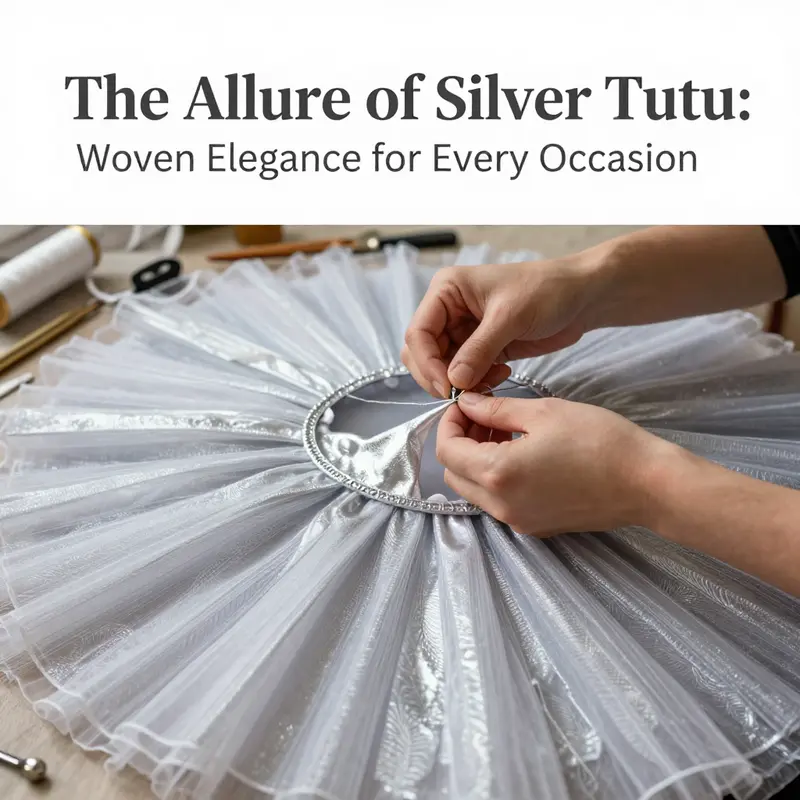
A silver tutu merges light and movement into a material instrument. In professional practice, it is not a single technique but a choreography of fabric, structure, and lighting that must travel with the dancer. Designers balance multi-layer tulle, edge finishing, and discreet internal supports to create a halo-like silhouette that remains buoyant and comfortable. The surface responds to stage light with a dynamic shimmer, achieved through metallic threads, lamé accents, and precise weight distribution so every stitch supports performance rather than glare. Because detailed public procedures are scarce, designers translate adjacent textile technologies into a working grammar for the tutu, combining craft, physics, and stagecraft to make light legible on stage.
Market Currents and Economic Drivers Shaping the Silver Tutu Niche
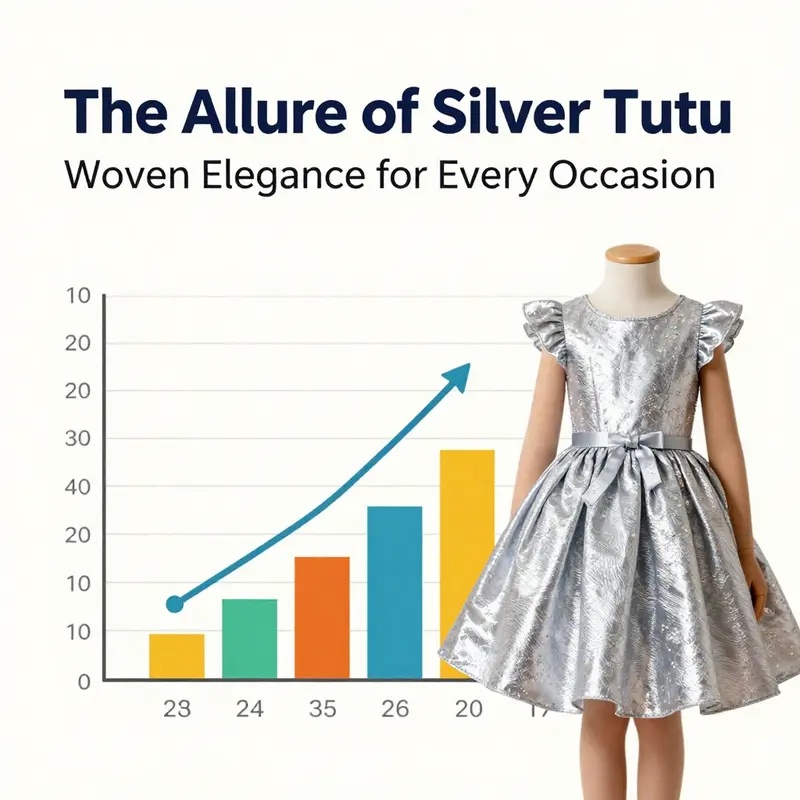
Market Currents and Economic Drivers Shaping the Silver Tutu Niche
The silver tutu occupies an unusual intersection of performance wear, children’s celebration attire, and trend-led fashion. Though it is a narrow product category, it draws influence from broad economic and cultural movements. Understanding these forces helps makers, retailers, and marketers position silver tutus to capture value. This chapter synthesizes consumer trends, scene-specific demand drivers, and strategic choices that determine whether a silver tutu remains a fleeting novelty or becomes a resilient, high-margin niche.
Demand for silver tutus follows a pattern common to specialty garments: purchases concentrate around defined life events and creative contexts. Key scene drivers include stage productions, themed parties, photography sessions, and social-media-led styling. Each context values different attributes. Performers and dance studios prioritize structure, durability, and light-reactive materials that enhance stagecraft. Parents booking milestone photos or themed celebrations seek aesthetics, size fit, and easy care. Content creators chase garments that translate on camera and create shareable moments. Recognizing this diversity in buying motives is essential. It underscores why a one-size-fits-all product approach rarely works for silver tutus.
Macroconsumer shifts toward quality and experience amplify opportunity for premium iterations. As discretionary spending reallocates to meaningful experiences, buyers pay for clothing that elevates an event or performance. This creates room for a quality premium when the product delivers superior fabric, construction, and visual impact. For silver tutus, that premium is justified by multi-layer tulle with embedded metallic threads, expert hemming, and thoughtful fittings, rather than by surface glitter alone. The perceived value rises when buyers see a clear functional gain: better drape under stage lights, reduced shedding of shine, or easier use in photography setups.
Scene-based merchandising and bundled offers multiply conversion. In the same way that themed party suppliers thrive by selling sets, silver tutu sellers succeed by combining complementary items. Matching headpieces, underskirts, bodices, and accessories convert a single purchase into a one-stop solution. Bundles reduce decision friction for time-pressed buyers planning parties or recitals. They also open opportunities to tier the offering: a basic bundle for casual parties, and a premium kit targeting professional recitals or stylized shoots. This narrative mirrors successful patterns in adjacent categories where convenience and completeness drive higher average order values.
Platform dynamics and visual discovery shape how demand translates into purchases. Short-form video platforms emphasize quick visual hooks and reproducible styling. Silver tutus that photograph well under varied lighting conditions perform strongly in algorithmic feeds. This means finishes and textures matter. Fabrics that reflect light without creating hot spots, and designs that maintain silhouette on camera, will win attention. Retailers who invest in content showing real-world uses—stage, studio, and party—lower purchasing risk for buyers and improve conversion.
Supply-side economics are equally important. Producing a convincing silver effect requires choices that change unit costs. The most impactful is material selection: multi-layer tulle with embedded metallic filament demands more precision in weaving and sometimes different suppliers. Construction techniques that prevent unraveling and shedding add labor cost. Therefore, margins hinge on balancing perceived premium against production realities. Vertical integration or long-term supplier relationships reduce variability and support predictable quality. Conversely, overreliance on low-cost surface treatments undermines the premium positioning and increases return risk when appearances degrade after use.
Pricing strategy benefits from clear segmentation. A value entry product targets occasional buyers who need a look for a single event. A mid-tier line appeals to repeat buyers or those who want better durability. A premium tier addresses professional studios and discerning parents who expect superior materials and fit. Each tier requires different marketing messages. For the premium offer, emphasize material provenance, construction details, and real-use imagery. For the value offer, highlight accessibility, ease of cleaning, and quick shipping. A tiered approach captures a broader slice of market demand without diluting brand credibility.
Distribution choices affect growth velocity. Direct-to-consumer channels allow storytelling and margin control. They also facilitate customer feedback loops that refine fit and function. Wholesale channels into dance schools, costume shops, and event planners scale volume but demand consistent supply and support. Pop-up placements at festivals, recitals, and trade shows create low-friction encounters with the target audience. Hybrid distribution—using own channels for branded premium lines and wholesale for standardized kits—often makes strategic sense.
Sustainability and material transparency are emerging purchase considerations that can influence long-term viability. Even in specialty garments, buyers increasingly ask about fabric origins and care impacts. For silver tutus, this means exploring recyclable filaments, low-impact dyes, and clearer care labeling. A measurable sustainability narrative supports higher price points and reduces friction among eco-conscious parents and institutions.
Branding must balance spectacle with trust. A silver tutu promises flash and fantasy. But buyers also expect reliability: correct sizing, low-shed finishes, and consistent visual effect under performance lighting. Brands that deliver both imaginative design and rigorous quality control earn repeat customers and referrals from professional circles. Crafting a brand voice that speaks to both creatives and pragmatic buyers strengthens market foothold.
Marketing investments should focus on demonstration and context. Show the tutu under stage lights, in studio shoots, and at themed events. Displaying how the garment behaves in movement reduces buyer uncertainty. Testimonials from dance instructors, photographers, and event planners build credibility. Educational content—how to choose tutu length, how to care for metallic filaments, and styling tips for themed shoots—converts curious browsers into confident buyers.
Finally, global fashion currents provide tailwinds. Trends that favor texture, soft metallics, and retro-futuristic themes increase the appeal of silver-hued garments. When paired with scene-specific marketing, these currents expand the potential customer base beyond traditional recitals and children’s parties. A silver tutu designed for versatility can migrate between contexts: a studio prop in one week and a small-scale stage costume the next.
To summarize the economic landscape: silver tutus can capture premium pricing if they solve real problems for buyers. The path to durable market presence runs through careful material choices, scene-tailored product bundles, content-driven discovery, and distribution that balances brand control with scale. Anchoring product development in the needs of performers, parents, and creators yields better retention than chasing transient viral moments. For stakeholders willing to invest in quality and contextual merchandising, the silver tutu category offers a niche where visual distinctiveness meets tangible buyer needs.
For deeper insight into the broader consumption shifts that inform this outlook, see the 2026 consumer trends analysis referenced by industry researchers: https://www.iimedia.cn/38917.html
For a closer look at professional stage garments and specialized tutu styles, the professional tutu collection offers context on design and use cases: https://luneballet.com/product-category/professional-tutu/
Final thoughts
The silver tutu is more than just a garment; it embodies artistic expression, cultural heritage, and ongoing fashion relevance. Its allure can captivate a diverse audience, from ballet companies to children celebrating milestones. As trends shift and markets evolve, understanding the silver tutu’s multifaceted role enables business owners to align their offerings with consumer desires, ultimately enhancing brand engagement and profitability. Emphasizing quality craftsmanship, innovative design, and cultural significance will position your business favorably in a competitive landscape.