
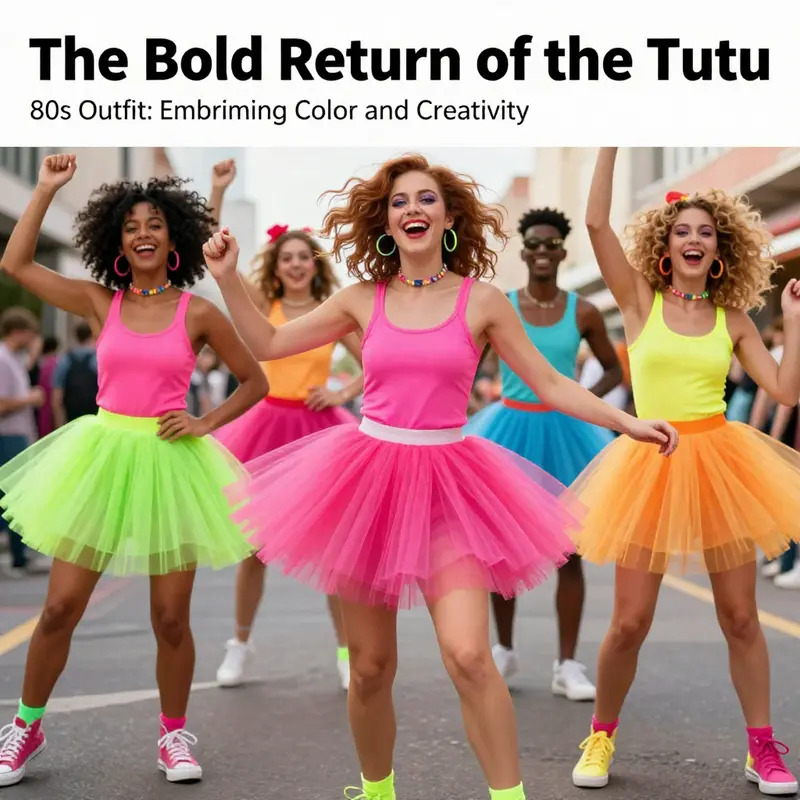
The tutu 80s outfit is more than just a fashion statement; it represents a powerful blend of nostalgia, individuality, and expressive style that has re-emerged in recent years. Renowned for its vibrant colors and theatricality, this unique fashion choice is currently influencing various sectors, from themed event planning to retail. In exploring the cultural impact, key elements, evolving trends, and market demand for the tutu 80s outfit, businesses can find a crucial understanding of leveraging this trend for greater engagement and profit.
Shimmer and Rebellion: The Tutu 80s Outfit and Bold Self-Expression
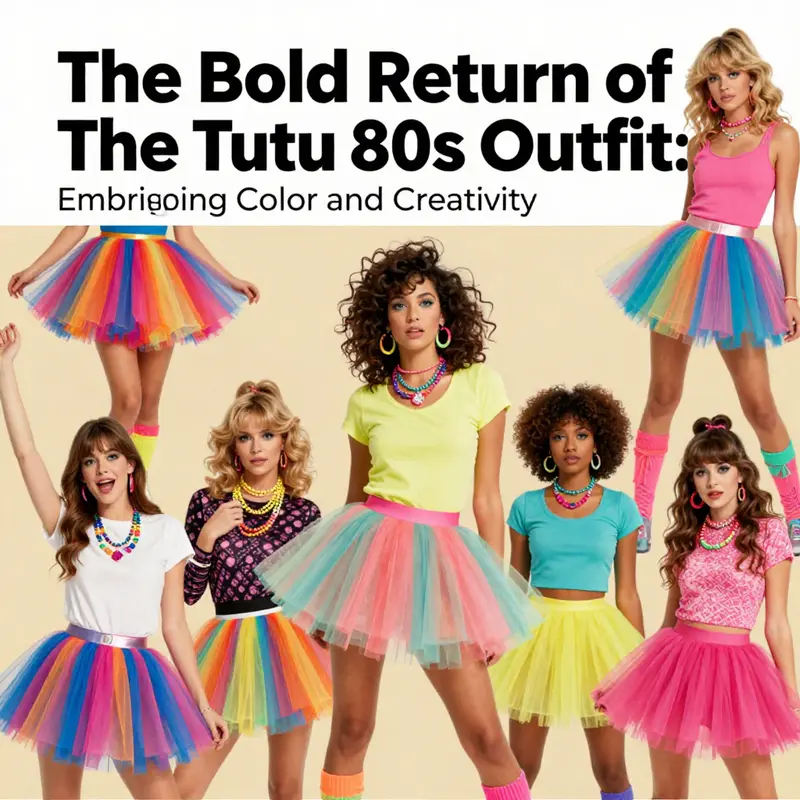
The tutu 80s outfit is more than a look lifted from a dance studio or party costume; it is a borrowed spark from a decade that thrived on maximal self-assertion. In the 1980s, the fashion world moved away from restraint and toward spectacle, and the tutu—an object historically tied to ballet’s poise—became a rebellious badge of joy, fearlessness, and public identity. It relied on contrast: the innocence of tulle paired with the audacity of neon color, the familiarity of a skirt silhouette turned on its head by layers of stiffness and volume, the formal aura of stagewear mingling with street-ready audacity. This was a period when the body could declare itself in a room full of spectators, when fashion was less about conforming than about announcing one’s presence with brash confidence. The tutu, in its many variants, became more than fabric; it became a visual manifesto, a way for people to signal that they would not shrink to fit a conventional expectation of femininity, masculinity, or performance.
The cultural engine behind this shift was pop music and its global reach. Madonna, Cyndi Lauper, Grace Jones, and a constellation of stage stars popularized silhouettes that exaggerated every curve, every gesture, every moment on screen or on the concert floor. The tutu was often integrated with fishnet gloves, metallic fabrics, and a deliberate over-structure that drew eyes from every corner of the arena. This was an era that celebrated the thrill of theater in everyday life; the line between stage costume and streetwear blurred as audiences demanded more flamboyance, more color, and more storytelling through what they wore. The tutu became an emblem of this narrative: a short, stiff, layered skirt that could pivot a mood from playful to defiant in an instant. It wasn’t purely about aesthetics; it was a social signal that the wearer embraced performance as a core part of identity, a claim that style could be a form of citizenship.
As scholars and watchers note, this 80s look drew from a blend of punk irreverence, pop-saturated spectacle, and dance culture’s insistence on movement as a form of expression. The tutu, with its sculptural volume, allowed wearers to experiment with posture, stride, and presence. It was a garment that invited action—whether it was a walk down a neon-lit street, a posed moment for a photo shoot, or a choreographed routine under bright lights. The cultural footprint of the 80s tutu extends beyond the garment itself; it shaped the way people talked about fashion. It stood for excess without apology, for a style that invited performance rather than passivity. Contemporary retrospectives describe the look as inspired by punk, pop, and dance culture—a synthesis that underscored a broader shift away from minimalism toward something more theatrical, tactile, and inclusive of flare. Its aura was not simply visual; it signaled a social climate that rewarded confidence and the willingness to entertain.
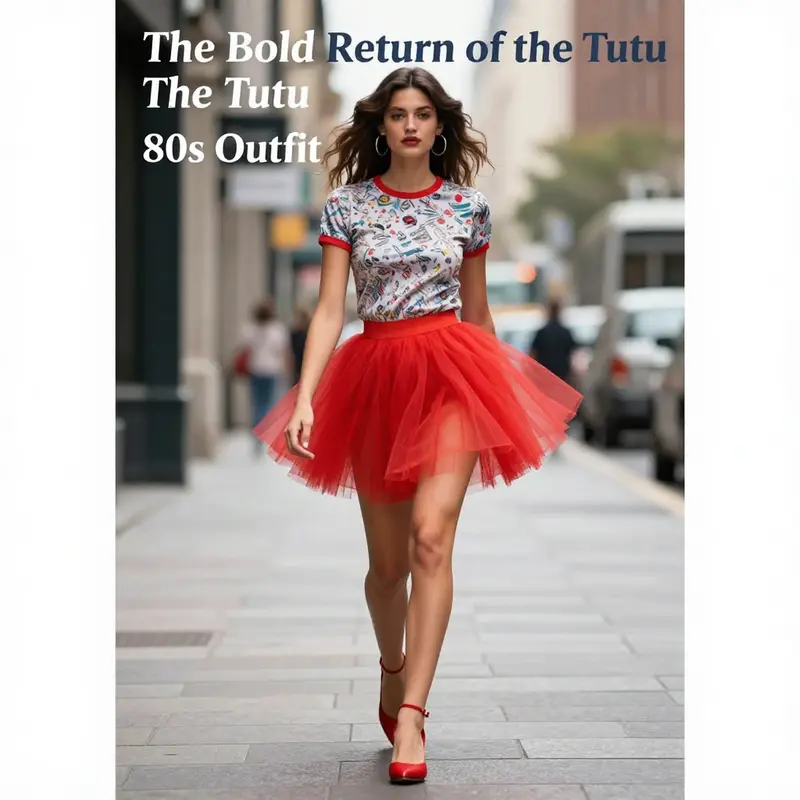
Jumping forward to the present moment, the tutu 80s outfit has re-emerged with a distinctive twist. The revival around 2025–2026 is not a pure revival of a past trend; it is a reimagining that blends the original flamboyance with modern comfort, accessibility, and cultural nuance. The new look retains the tutu’s essential silhouette but couples it with off-the-shoulder tops, cropped jackets, graphic tees, and a mix of legwear that can range from leg warmers to opaque tights. The color palette has expanded—from neon brights to metallics and even softer pastels—reflecting a broader, more inclusive approach to personal style. The look has found surprising new venues: themed events, school functions, and even streetwear scenes where performance and public display intersect with everyday life. In these contexts, the tutu transforms from a mere costume into a wearable canvas for personal storytelling. It becomes a way to say: I am here, I am loud, I am joyful, and I am not afraid to be seen.
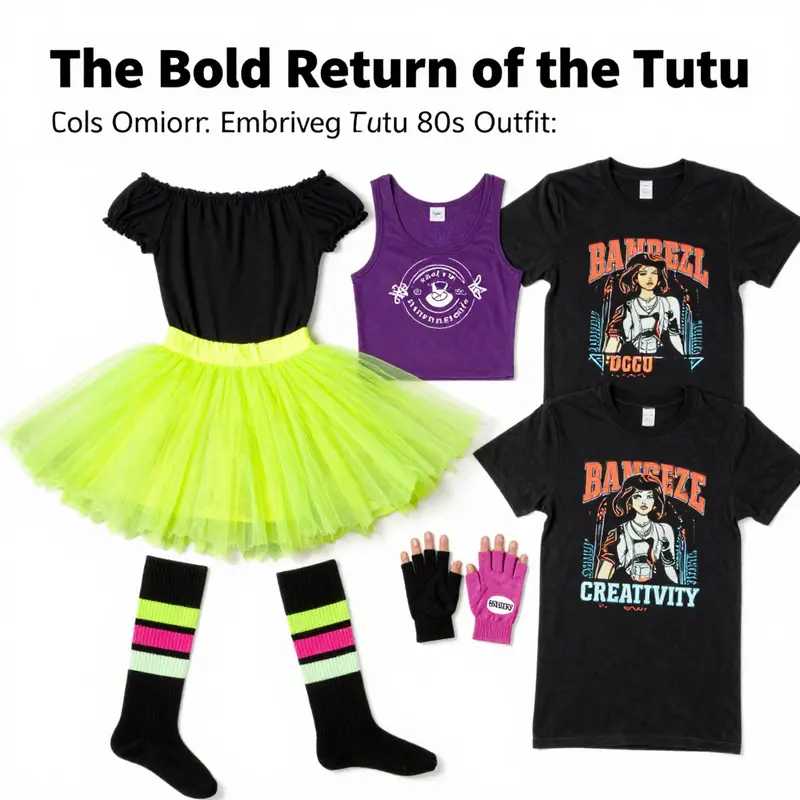
Part of the contemporary accessibility story lies in how curated and affordable options have become. Platforms that connect makers and consumers have become central to how people assemble a complete look. The modern consumer can source a ready-made kit that includes a printed T-shirt, leggings, a tutu skirt, sunglasses, and gloves, enabling a complete look with minimal effort. This democratization mirrors the broader cultural shift toward democratized fashion where a kid’s party costume can carry the same aura of spectacle once reserved for stage productions. The convenience does not erase the artistry; it amplifies it by making the look programmable. A young dancer preparing for a school talent show, a festival-goer chasing a photogenic moment, or a costume party attendee seeking a bold identity can recreate the 80s drama with a few well-chosen pieces. This ease of access is part of what sustains the tutu’s cultural resonance: it travels easily across ages, genders, and contexts, inviting a wide audience to claim its vibrant energy.
In the interpretive space where fashion, performance, and memory intersect, the tutu 80s outfit also functions as a form of cultural nostalgia. Nostalgia, in this sense, is not passive longing but an active toolkit for empowerment. It invites wearers to draw on the emotional charge of the era—the MTV era’s glitter, the disco ball’s sparkle, the unfiltered exuberance of club cultures—while reworking it for contemporary sensibilities. The enduring appeal lies in how color, texture, and form are used to create a kinetic mood in which the wearer feels visibly alive. The tutu’s texture—soft, airy tulle layered into a sculptural volume—contrasts with the bite of modern accessories: chunky jewelry, fingerless gloves, retro sunglasses. The combination evokes a sensory memory while still feeling immediate and personal. Within this framework, the tutu becomes a vehicle not only for self-expression but for shared experiences—the way a crowd at a themed event responds to a familiar silhouette reimagined for now. This social dimension helps explain why a wave of interest in retro and nostalgic apparel continues to drive online search trends and seasonal fashion cycles.
The cultural impact of the tutu 80s outfit also intersects with questions of gender and performance. While the silhouette originated in a setting traditionally associated with female dancers, the modern re-uptake is notably non-exclusive. Men and non-binary individuals wear the look for performances, festivals, or bold, personal statements, expanding the dialogue around who can inhabit and reinterpret the aesthetic’s exuberant codes. Schools, community stages, and public spaces become arenas where the costume’s rules loosen—where bold color, oversized silhouettes, and theatrical accessories can be part of a shared language of celebration. The look’s openness resonates with contemporary values around self-definition and creative courage, encouraging wearers to be seen as they are, rather than as a prescribed fashion script would expect. The social and cultural conversation around this outfit thus travels beyond fashion history: it touches on education, community performance, and the politics of visibility in a world that often urges restraint.
Yet the 80s tutu’s cultural force did not rest solely on nostalgia or spectacle. It also prompted reflection on how fashion markets govern taste and how heritage aesthetics can be repurposed with contemporary ethics and practicality. The revival is accompanied by conversations about sustainability, upcycling, and the reuse of vintage pieces in new contexts. The tutu’s layered construction, once a symbol of care and craft, now invites experimentation with sustainable fabrics, remixed silhouettes, and mixed-media outfits. The result is a dialogue between reverence for a beloved era and the creative immediacy of today’s global fashion ecosystem. The tutu’s transformative power—its capacity to be both a performance tool and a personal branding element—illustrates how a single garment can carry a complex, evolving meaning. It speaks to an era that valued spectacle as a form of storytelling and shows how modern wearers can harness that language to articulate presence in a crowded social landscape.
As the look continues to travel through time, its footprint in both private life and public performances remains pronounced. The tutu 80s outfit has become a cultural touchstone that suggests a broader, more inclusive vision of fashion—one that prizes color, texture, and gesture as much as line and silhouette. It invites wearers to step forward with confidence, using color blocks, glitter, and volume as instruments for presence. The chromatic energy of the look—its ability to turn a moment into a memorable frame—helps explain why it persists as a reference point in contemporary styling, editorial experiments, and school-age celebrations alike. And it remains a reminder that fashion, at its best, is a dialogue between history and imagination, a conversation in which the tutu’s piecing together of theater and everyday life continues to offer a blueprint for fearless self-expression.
null
null
null
null
Neon Demand: Market Dynamics Fueling the Tutu 80s Outfit Revival
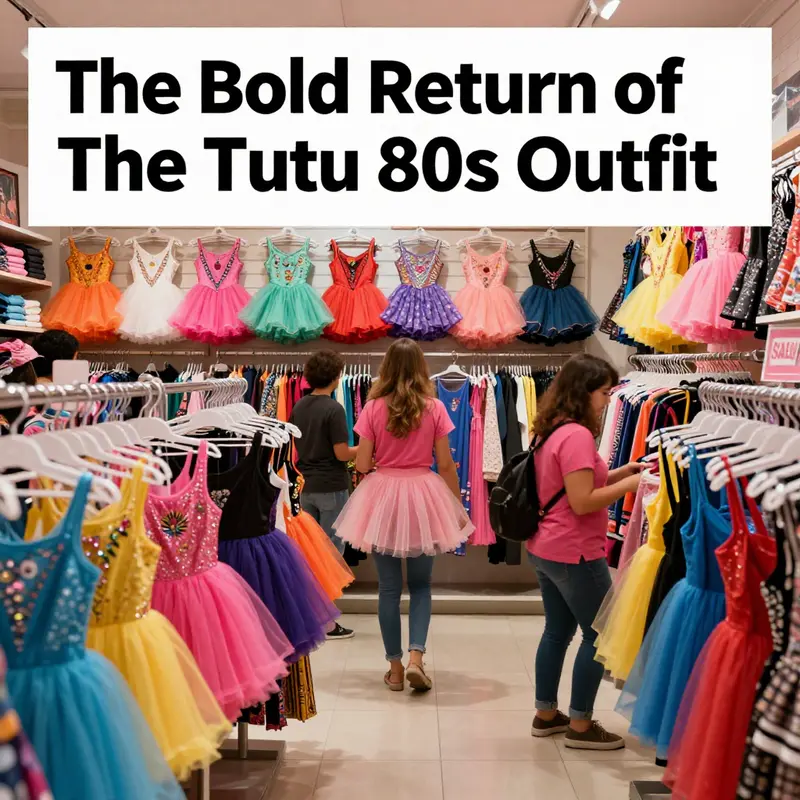
The tutu 80s outfit has moved from novelty to a cultural instrument, a bright banner waving at the intersection of nostalgia, self-expression, and the push and pull of contemporary markets. The current surge in demand is not merely a nostalgic itch; it is rooted in a set of market dynamics that mix the stubborn pull of retro when it feels fresh with the modern appetite for customization, performance, and social visibility. In this landscape, the tutu’s appeal rests on more than its visual punch. It is a portable crate of memory and possibility, a wearable invitation to step into a performance moment, whether at a party, a festival stage, a school event, or a street-cantilevered photo shoot. The result is a marketplace that prizes bold color, texture, and theatrical silhouette, while also demanding practicality, safety, and inclusivity for a broad spectrum of wearers.
First, the demand is deeply anchored in a cultural memory that refuses to fade. The 1980s were a period of unabashed spectacle, where MTV, disco balls, and dance culture turned clothing into narrative. The tutu, with its stiff layers of tulle, became a visual shorthand for fearless performance. Today, that shorthand travels through time via a resurgence that is less about replication and more about re-interpretation. Consumers want the glow and glamour of the era but within the frame of contemporary comfort, mobility, and everyday wearability. The market’s response is to deliver pieces that can be worn for a night out or adapted for a school function, a cosplay moment, or a club performance. The result is a spectrum—from neon mini-tutus paired with graphic tees to more subtle, glow-in-the-dark versions that can be charged by stage lighting or LED accents. The interplay between past and present is not simply a didactic throwback; it is a fluent design language that speaks to a modern appetite for bold self-expression.
Second, consumer demand in this niche is highly attuned to the social and experiential economies of the moment. People seek outfits that are not only visually striking but highly shareable. A tutu that catches the eye on a crowded street can become content gold for social media, generating feedback loops that feed demand. The modern buyer judges value not only by how it looks but by how it performs in front of a camera, how durable it feels during a long event, and how easily it can be styled across different contexts. This is why the market favors modular components: neon tutu skirts that can be combined with off-the-shoulder tops, cropped jackets, or graphic tees; leg warmers that can be layered or swapped; fingerless gloves; and oversized sunglasses. The fashion system supports rapid styling experimentation, and the consumer responds with enthusiastic experimentation of their own. This dynamic is amplified by the rise of themed events, cosplay cultures, and performance wear where the piece is part of a bigger story—one that can be improvised and reshaped with every outing.
Third, supply chains and marketplaces have become critical to how this demand translates into actual purchase and use. Platforms that connect buyers with makers have lowered the barriers to entry for audiences seeking to realize an 80s-inspired look. Buyers now actively search for items described as “statement pieces that stand out,” a phrase that captures both the emotional and functional impulse behind this trend. The market has responded with a growing catalog that includes neon-colored tutu skirts, leg warmers, shoulder pads, and retro windbreakers, all reimagined for modern wear. This is not simply about replicating old silhouettes; it is about offering a toolkit for self-styling. The trend is especially visible in adult-sized tutu dresses that glow or sparkle under party lights, designed for parties, hen dos, clubwear, and stage performances. Accessory sets—fishnet gloves, fanny packs, necklaces, bracelets—are part of the same ecosystem, enabling a coordinated look that can be assembled quickly and with a clear sense of drama. The result is a robust, dynamic market with strong engagement signals across listings on major platforms, including quick turnover for customizable 80s disco costume sets and neon tutu ensembles.
From a consumer psychology standpoint, the appeal hinges on identity performance and the desire to stand out in an age of highly curated feeds. The tutu 80s outfit offers a physical manifestation of personality—color, texture, and silhouette become extensions of self. The bright palette and architectural forms invite experimentation with mood and attitude. The tactile elements—the rustle of tulle, the bite of sequins, the glint of metallic hardware—contribute to a multisensory experience that resonates with the era’s kinetic energy and translates into today’s online and offline performances. The market benefits when designers and retailers capture this energy in a way that balances glamour with wearability. In practice, this means designing pieces that are not only striking but also comfortable enough for longer wear, safe for various body types, and adaptable to different event contexts. The modern tutu is less a single one-off costume and more a modular outfit system, capable of evolving with a wearer’s needs and preferences.
Fourth, inclusivity and accessibility have emerged as central concerns in shaping demand. The 80s look was famously bold, but the contemporary iteration seeks to remove barriers around size, gender expression, and cultural background. The market now embraces a wider range of sizes, and the very idea of who can wear a tutu is broader than it used to be. This shift is driven not only by fashion sensibility but by social expectations and the democratization of dress-up culture through social media. People want to feel seen and celebrated in a look that once belonged to a narrow subset of performers. As a result, retailers and makers respond with inclusive sizing, adjustable fit features, and adaptable styling options. The trend also extends beyond women to men and non-binary wearers who are increasingly using the tutu 80s aesthetic for performances, drag, or personal expression. This inclusivity strengthens demand by expanding the potential audience for the look and by encouraging longer engagement with the product category.
The market’s current vitality can be read in the way buyers articulate their needs. A phrase often heard is a plea for “something that stands out yet remains versatile.” This paradox—visible yet adaptable—defines the contemporary tutu. Retailers meet it with color-forward palettes, high-contrast contrasts, and fabrics that couple the stiffness of tulle with the softness of satin or mesh. The 80s influence persists in the silhouette’s emphasis on volume and energy, while the materials and construction respond to modern wearability standards. In this sense, the tutu 80s outfit is a case study in fashion’s ability to marry spectacle with practicality, to transform a moment of bold expression into a recurrent, wearable idea that can be reinterpreted across contexts and generations.
The sourcing side of the equation reveals a landscape where buyers increasingly seek curated kits and complete looks. A single shopping experience might include a printed top, leggings, a tutu skirt, sunglasses, and gloves, enabling a consumer to assemble a full look with minimal friction. This trend strengthens the velocity of demand, as buyers can quickly confirm a look and move on to other creative configurations. The convenience factor matters, as does the assurance that the pieces will coordinate visually and hold up during performances or events. With this in mind, retailers who offer customizable combinations, transparent sizing, and clear care instructions gain a distinct competitive edge. The emphasis on quality relative to price remains a constant negotiation point, with consumers willing to invest in durable fabrics and reliable embellishments when the payoff is a look that travels well from party to parade, from photoshoot to stage moment.
In visual terms, the market dynamics revolve around a palette of neon brights, metallics, and iridescent finishes, punctuated by the texture of layered tulle and the sparkle of sequins. The aesthetic is unmistakably 80s, yet the consumer is not seeking a perfect archival reproduction. Instead, they want a contemporary riff—a piece that carries the essence of the era while functioning as a versatile tool for modern storytelling. The tutu becomes a prop for storytelling, a wearable stage that invites the wearer to improvise, perform, and share. As designers and marketers interpret this demand, they increasingly position the tutu 80s ensemble as part of a broader lifestyle statement: a playful, confident, and inclusive attitude that rejects minimalism in favor of color, texture, and personal velocity.
For readers curious about where such looks live in the actual shopping ecosystem, one can explore specific catalog entries that reflect the ongoing appetite for standout pieces. A highlighted option in the broader catalog is the page pink-ballet-costumes-for-sale-sleep-beauty-gilded-edge-t0377. While rooted in a classical ballet lineage, this item’s branding hints at a wider utility—the idea that a single tutu can anchor a bold, stage-ready outfit when paired with the right accessories and tops. It is not a relic of a past decade but a signpost of how modern buyers curate nostalgia with purpose, crafting looks that can be adapted for performances, parties, or social media moments. The market reacts to that adaptability by expanding choice, encouraging experimentation, and rewarding those who can balance drama with comfort. This is precisely why the 80s tutu has endured as a living, evolving fashion narrative rather than a brief flash in the pan.
Looking ahead, the market dynamics suggest a durable arc rather than a vanity spike. Nostalgia will keep fueling demand, but the next phase will likely emphasize smarter fabrication, better safety standards, and greater customization options that align with a health- and performance-conscious consumer base. Expect more modular kits, color-matching tools, easier wash-and-wear fabrics, and design features that enhance mobility without sacrificing impact. The tutu 80s outfit will continue to migrate through distinct life moments—from school events to nightlife and performance art—because it sits at the sweet spot where memory, possibility, and style converge. In this sense, the market’s strength lies not only in how much people want to wear a tutu but in how effectively the garment enables them to tell a story about themselves.
As we move through the chapter, it becomes clear that the tutu 80s outfit is a case study in fashion as a living dialogue between past and present. Market dynamics—driven by demand for bold expression, the power of social storytelling, and the efficiency of modern sourcing—have enabled a renaissance that feels both playful and purposeful. The revival remains anchored in the era’s symbolic elements—color, volume, glitter, and performance—yet it is remixed for today’s wearers, who expect comfort, inclusivity, and style that travels well across contexts. The result is a fashion moment that invites everyone to step into the spotlight, if only for a little while, and to do so with confidence, color, and a sense of fun that refuses to fade.
External resources for trend context and real-time product availability provide further depth to this story. See the broader trend landscape and sourcing dynamics at a well-known marketplace where buyers actively seek “statement pieces that stand out.” Real-time insights into current trends and product availability can be explored here: https://www.alibaba.com
Final thoughts
The tutu 80s outfit epitomizes not just a style but a cultural phenomenon that resonates with today’s consumers seeking joy and expression in fashion. By acknowledging its historical significance and adapting its elements, business owners can tap into a lucrative market that values nostalgia paired with modern comfort. Embracing this trend can enhance product offerings and foster deeper connections with a diverse audience, leading to sustained engagement and growth.