
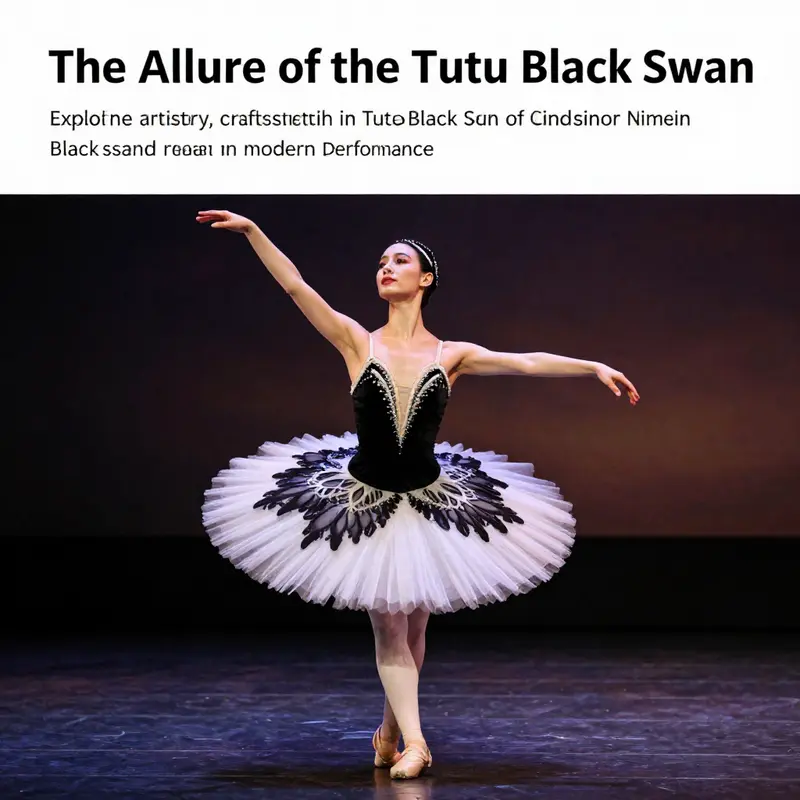
The Tutu Black Swan stands as a pinnacle of creativity, intertwining classical ballet aesthetics with contemporary design. It symbolizes elegance, mystery, and power, alluring not just performers but also business owners keen on tapping into this niche market. By delving into its artistic inspirations, craftsmanship, market variations, cultural significance, and practical applications, we unveil a multifaceted view of this iconic garment. Through each chapter, we explore how the Tutu Black Swan continues to influence both the performing arts and commercial opportunities.
null
null
Shadow, Silk, and Myth: Crafting the Tutu Black Swan
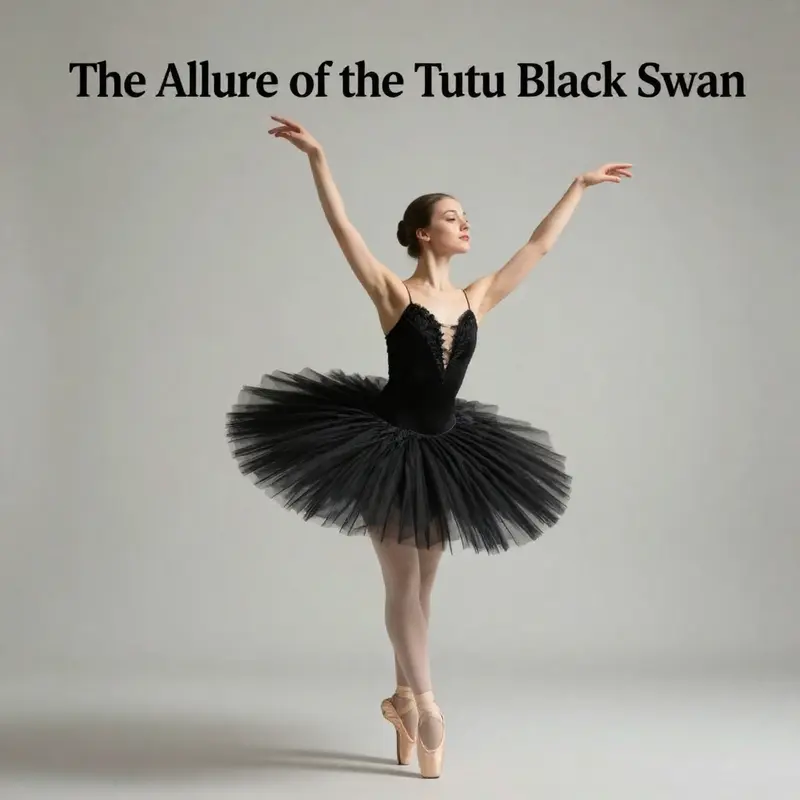
The Tutu Black Swan is more than a costume; it is a living emblem of transformation, a vessel in which myth and technique meet on the blank, dark stage. From the moment a dancer steps into the garment, a visual poem unfolds: the silhouette arrests the air, the fabric absorbs light, and movement becomes a dialogue between what we expect and what we dare to reveal. The Black Swan, borrowed from the Odette-Odile duality of Swan Lake, encodes a paradox of purity and danger. In performance, this paradox is not merely dramatized in the steps but carved into the garment itself. The color, the weight of the fabric, the stiffness of the layers, and the fragments of embroidery all contribute to the way the dancer’s body becomes a conduit for narrative. The tutu thus functions as a partner—quiet, yet indispensable—in the architecture of meaning that the stage seeks to project.
Color and Symbolism play a decisive role in shaping that partnership. The deep, velvety black is not merely a hue; it is a language. It communicates mystery, authority, and an unspoken invitation to look beyond innocence toward the dangerous potential contained within. Black creates depth on stage in a way white cannot; it sculpts the dancer’s line with shadows that flicker as the lights wash over the tulle. The contrast with a White Swan tutu, when present in the same production, sharpens the narrative arc—an abrupt threshold between two states of being: one that glimmers with daylight and one that absorbs it and returns it in a new, sometimes perilous form. The fabric’s opacity allows light to play along its edges, teasing the eye with glimpses of movement rather than a single, static image. The effect is not simply beautiful; it is strategically cinematic, guiding gaze through the arc of the solo, the duets, and the ensemble with a choreography of color as potent as any pirouette.
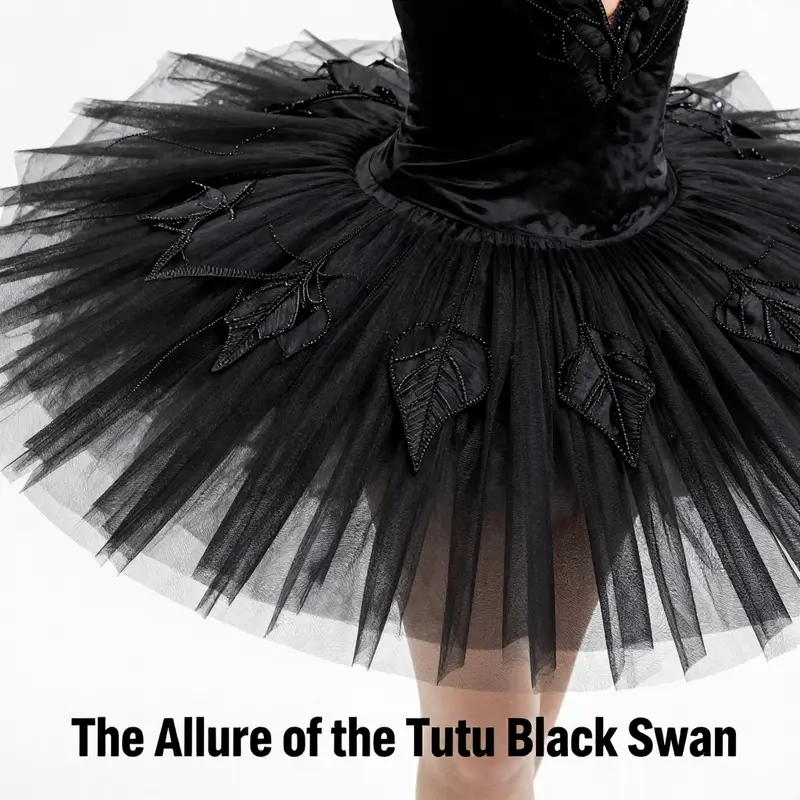
Structurally, the Black Swan tutu defines its silhouette through a disciplined geometry. It is often a pancake or platter style, built from multiple levels of stiffened netting that fan out into a bell-like or disc-like form. The layers are not casually arranged; they are carefully weighted and positioned so that the skirt holds a precise circumference even as the dancer spins at high speed. A rigid understructure—sometimes a wire frame or hoop—serves as the skeletal system of the garment. This undercarriage maintains the shape without stifling the dancer’s mobility, allowing leg lifts, leaps, and rapid turns to unfold with the same crispness that appears at rest. The effect is paradoxical: a garment that seems to suspend gravity while still acting as a powerful amplifier of kinetic energy. The assembly of each layer—cut, gathered, and sewn—demands exactitude. The density, the stiffness, and the way the netting catches light all contribute to the perceptual volume. In the most striking interpretations, sixty hours or more of hand-stitching and tailoring culminate in a surface that reads as a single, seamless sculpture when viewed from the auditorium’s far rows.
Craftsmanship, in this context, reveals itself as a microcosm of devotion. The process begins with the choice of netting and voile, with attention to weight, weave, and translucency. Each layer is sewn with precision to preserve symmetry, a requirement that becomes even more exacting when the dancer executes rapid pirouettes and intricate port de bras. Embellishments—delicate embroidery, subtle metallic threads, or crystal beads—act as light catchers. They refract spotlights into a microcosm of stars, so the skirt itself seems to shimmer as the dancer moves, echoing the swan’s gleam on moonlit water. The craft thus operates as a form of slow choreography: every stitch is a beat in a refrain that returns the garment to its original integrity after each dynamic gesture. And as contemporary design experiments push toward more theatrical extensions—detachable wing-like structures or iridescent accents—the core discipline remains: a tutu must be both materially resilient and aesthetically pliant, capable of following a dancer through lift, lean, and the infinitely varied language of a modern interpretation.
Movement and the drama of light are inseparable from the Black Swan’s tactile identity. The black mesh’s interplay with stage lighting yields a living, breathing texture. When a dancer slows a turn, the fabric’s surface seems to ripple; in a fast sequence, it blurs into a velvet dusk that conceals and reveals the leg in precise moments. This visual music—how the material reads at different tempos—becomes an essential guide for choreographers. It shapes how the dancer chooses to approach a phrase, where to lift, where to hold, and how to let the fabric articulate a gesture the body would otherwise have to improvise. In some modern reinterpretations, the garment’s edges are slightly softened or extended, offering more air for the arms or a more dramatic arc for the torso. These alterations are not mere spectacle; they reflect a deeper trust in the garment as a partner that negotiates risk with the dancer, a co-creator that can amplify nuance without dictating the tempo.
The conversation between garment and dancer also reaches into contemporary design sensibilities beyond the proscenium. The Black Swan motif, with its aura of midnight grace, has rippled into broader cultural currents. It informs not only what a stage costume can be but what a wearable object might suggest about identity, power, and allure in everyday life. The allure of the Black Swan as a symbol has encouraged designers to explore how a piece of attire can carry a narrative weight beyond its function. In this sense, the tutu becomes a bridge—linking classical ballet’s rigorous lineage with present-day explorations of form, material science, and artisanal technique. The emphasis on craft, on a threshold where simplicity of silhouette yields complexity in texture, resonates with a broader audience that looks for beauty grounded in skill and patience.
In market contexts, the spectrum of Black Swan-inspired options expands to accommodate a range of needs while preserving the motif’s integrity. For professionals, the emphasis remains on performance-grade materials and construction—heavy bodices, multi-layered skirts, and fabric blends engineered to hold their shape under bright stage lights and the stress of movement. For amateurs and enthusiasts, there are more accessible renditions that offer a taste of the silhouette—still with the pancake shape, still with the sense of weight and poise—but with more approachable fabrics and finishings. Across this spectrum, a common thread persists: the garment’s design must respect the dancer’s body and the choreography’s demands, while also delivering a visual language that communicates the Black Swan’s duality to an audience seated several meters away. In every case, the garment’s responsibility is to support, not overshadow, the performer’s artistry.
From a maker’s perspective, the relationship between technique and symbolism is especially revealing. The Black Swan tutu is a case study in how artisans translate a story into form. The choice of fabrics—netting of varying thickness, the stiffness needed for architectural volume, the delicate embroidery that catches light without overpowering the silhouette—embodies a philosophy: beauty comes from disciplined restraint and purposeful risk. When a designer adds detachable wings or shimmering accents, those elements must be balanced by the core silhouette. They move with the dancer without breaking the line, and they read as extensions of the swan’s wingbeat rather than as independent adornments. The result is a choreography of fabric where the garment never merely sits on the body but acts with it, shaping breath, spine, and reach.
For readers curious about tangible references that mirror this aesthetic discipline, consider a reference tutu designed for Swan Lake traditions that foreground the white-to-black lineage of the Swan characters while maintaining the same structural clarity. high-quality-white-ballet-costume-tutu-swan-lake-t0596 provides a tactile sense of how a classic silhouette can be reinterpreted in contemporary materials. See the linked example for a concrete sense of silhouette, density, and finish as you imagine the Black Swan’s darker counterpart. high-quality-white-ballet-costume-tutu-swan-lake-t0596
The craft of the Black Swan tutu also nods to interdisciplinary sources that guide designers toward more durable, eco-conscious choices. Materials and finishes are increasingly selected with safety and environmental impact in mind, including certifications that reassure performers and audiences about material properties and labor ethics. The practical demands of rehearsal rooms, backstage tempo, and the dancer’s skin tolerance under lights have driven many studios to adopt fabrics that balance gloss, breathability, and resilience. The sum of these choices is a garment that honors tradition while embracing responsibility, a combination that is reflected in the broader discourse about stage and studio wear across ballet and contemporary dance. The garment’s future will likely involve even more nuanced material science and tailored fit techniques, preserving the mystique of the Black Swan while reducing wear and tear on the dancer’s body and on the environment.
For scholars and practitioners seeking a window into the theoretical and practical underpinnings of stage costume, a broader production-design perspective offers valuable context. The process by which iconic costumes are conceived—materials research, silhouette testing, lighting studies, and onstage rehearsal—has been documented in accessible guides that illuminate how designers balance form, function, and narrative. Such resources remind us that the magic of the Black Swan tutu rests on a careful fusion of technique, storytelling, and performance physiology. The tutu’s power is not solely in its beauty; it lies in its capacity to sustain a story over hours of rehearsal and performance, to translate a fable into a physical form, and to echo the dancer’s expressivity with quiet authority. In this sense, the Black Swan tutu stands as a touchstone for how contemporary craft can honor classical drama without surrendering to mere spectacle.
External resources can deepen this understanding further. See the Ballet Production Design Guide for a deeper dive into construction methods, materials, and symbolism behind iconic tutus and other stage costumes. https://www.roh.org.uk/education-and-arts-projects/ballet-production-design-guide
Market Variations of Tutu Black Swan Products: Craft, Commerce, and the Dance of Darkness
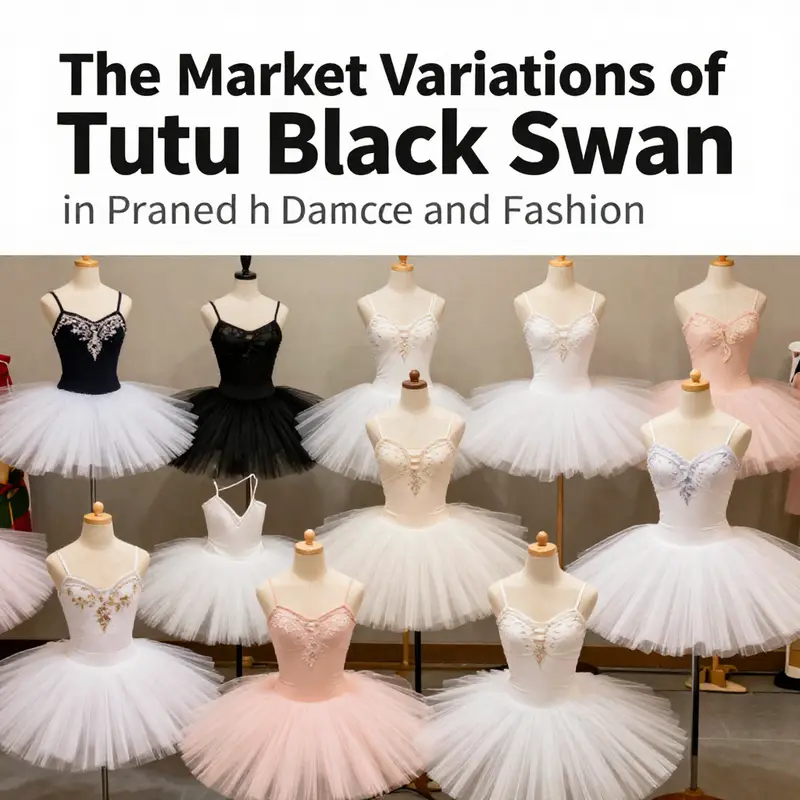
The image of the Black Swan in tutu form has long pirouetted from the realm of the grand stage into the broader theatre of modern design and consumer imagination. In markets that span professional theaters, dance schools, cosplay communities, and themed events, the Black Swan tutu has become more than a costume; it is a language. It speaks of constraints and freedoms—the need for aerodynamic movement during intricate sequences, the desire for a silhouette that reads clearly under bright stage lights, and the hunger for a look that captures mythic mystery without sacrificing comfort. As the market for these garments expands, a chorus of variations emerges, each tailored to a different relationship between wearer, space, and purpose. The result is a spectrum in which the same symbol—an elegant, darkened swan—can be worn as a serious instrument of performance or as a costume that conjures a mood for a night of play. This chapter surveys that spectrum, not as a catalog of products, but as a map of how contemporary production, material science, and consumer taste come together to reinterpret a classic figure for diverse audiences.
At the heart of professional performance variations lies a commitment to stability, flexibility, and endurance. In the most demanding contexts, the tutu is built from a carefully engineered harmony of shoulders, bodice, and many layers of fabric that sustain form during high-velocity spins and sustained lines. The bodice tends to be robust yet contoured, providing the dancer with a secure anchor while allowing the torso freedom to articulate through dramatic port de bras and crisp épaulements. The skirt, often composed of multiple layers of sheer material, is treated to resist drooping and to hold its silhouette across the course of a full act. The production discipline behind these choices is not merely aesthetic. It is biomechanical, ensuring the dancer can lift, pivot, and recoil with precision while the fabric remains responsive rather than a liability. In this professional lane, the design ethic privileges performance fidelity: every thread and layer is chosen to maintain shape and flow under bright lighting, fast speed, and the exacting demands of choreography.
Where the line between art and craft blurs, customization becomes the engine that translates a dancer’s needs into a tangible instrument. OEKO-TEX® certified materials often appear in the more serious offerings, signaling a compliance with safety and environmental standards that matter to studios and performers who spend hours in close contact with fabrics and dyes. Adjustable shoulder straps, a deep V-neckline for ergonomic support, and ergonomic cut lines are not decorative extras but essential features that accommodate a range of body types and movement patterns. The ability to dial in sizing, weight distribution, and fabric tension means a tutu can function as a tool that respects anatomy as much as it flatters silhouette. This emphasis on fit is echoed in professional procurement channels, where company catalogs and atelier portfolios foreground not just beauty but measurable reliability. Such attention to detail makes the professional market a realm where design becomes a kinesthetic ally, translating into steadier pirouettes and longer rehearsal endurance.
The market for customized tutus broadens the horizon beyond the pro stage to include studios, schools, and private celebrations. Online stores—across platforms that host artisans and small workshops—offer a range of bespoke options. The appeal here is the promise of a garment that speaks to an individual imagination while retaining the allure of the Black Swan myth. Customization might involve color tuning, silhouette refinements, or specialized embroidery and finishes, all coordinated to meet specific performance aesthetics or event themes. Price points in this sector reflect the labor intensity of handcrafting, with designers quoting at premium levels that align with the care invested in patternmaking, fabrication, and finish work. The accessibility of such options invites a new audience to encounter the Black Swan as a personal statement rather than a uniform stage piece. In this space, the tutu becomes a vehicle for self-representation, a conversation between wearer and fabric that can be read as a signature rather than a standard set of measurements.
In parallel with bespoke services, the market responds to demand for more accessible interpretations. Cosplay, party themes, and rehearsal looks drive demand for visually striking yet affordable options. Here the design objective shifts toward bold silhouettes and dramatic presence at a lower price point. The layer count of the skirt, the stiffness of the underskirt, and the type of tulle or mesh employed are levers that creators pull to balance drama with wearability. The result is a more ubiquitous Black Swan aesthetic, one that can be adopted by hobbyists and first-time performers without a steep learning curve in how to move within the garment. Yet even within this more democratized segment, there remains a subtle emphasis on workmanship; a well-cut bodice and a skirt with stable volume will behave better in a crowded venue or a social gathering, projecting poise even when the wearer is not in a fully choreographed sequence.
A striking feature of today’s market is how a common cultural symbol translates into diverse production strategies across platforms. On marketplaces that host direct-to-consumer shops and small ateliers, customers encounter a wide range of fabric weights, layer configurations, and finishing touches. The same symbol—the Black Swan—appears with multiple facial expressions: some versions favor a dense, structured silhouette designed to withstand heavy stage use; others favor a lighter, more breathable form that is ideal for cosplay or rehearsal. This diversity mirrors a broader consumer trend toward transparency and choice. Buyers can inspect material certifications, ask for custom dimensioning, or request fabric swatches before committing. In this sense, the Black Swan tutu becomes less of a fixed object and more of a negotiated agreement between maker and wearer about performance expectations, comfort, and the desired aesthetic mood.
The digital marketplace plays a pivotal role in shaping how these variations are discovered, evaluated, and purchased. Detailed product descriptions, material specifications, and measurement guides help buyers translate a dream into a garment that actually fits and moves as intended. Yet beyond the technical, visual storytelling matters: the way a product photograph captures the way the skirt sways in light, or how a maker’s narrative communicates the garment’s ethos, can tilt a buyer toward one variation over another. This is where a particular trusted reference can serve as an anchor for consumer decisions—an example of the kind of professional option that demonstrates the balance between technical rigor and aesthetic ambition. For readers who want to explore a representative option that embodies professional-grade design in a stylized package, see the entry for the blue-gold high-end professional line described elsewhere in the catalog.
The convergence of craft and commerce also invites reflection on sustainability and safety. The variety of materials—ranging from state-of-the-art synthetic tulles to heavier fabrics with reinforced seams—requires careful consideration of wear, wash, and long-term use. Studios may push for fabrics that endure repeated cleaning cycles, while individuals attending events may prioritize comfort and ease of care. In every case, the value chain—from raw fiber selection to dyeing processes and finishing techniques—carries ethical implications: worker safety, environmental impact, and animal welfare considerations. Buyers increasingly look for documentation of these practices, integrating values into their purchasing decisions much as they weigh silhouette, color, and silhouette integrity. The market’s ability to deliver elegant, dramatic looks without sacrificing safety and environmental responsibility marks a maturation in the way Black Swan tutus are imagined and used.
For readers curious to connect what they read here with a concrete production example, a representative professional option can be explored through a dedicated product page that emphasizes technical performance alongside color and fit. This internal reference demonstrates how professional households, studios, and schools approach the same dream of a striking, authoritative Black Swan silhouette in a way that respects the body and the stage. It provides a practical glimpse into how designers translate myth into a tool that dancers can wield with confidence. External markets, meanwhile, remind us that the tug between artistry and affordability continues to drive innovation, pushing makers to push the boundaries of what is possible within real-world budgets and timelines. The result is a continually evolving marketplace where the Black Swan tutu remains a potent symbol—one that can be tuned to the rhythm of the room, whether it be a formal stage, a school recital, or a themed celebration.
In closing, the variations in Black Swan tutu products reflect a broader pattern in performance apparel: classic forms endure, but the fabric of their expression mutates with the needs of new communities. The myth remains constant, while the garment adapts—so that a single emblem of nocturnal elegance can be inhabited by dancers and dreamers alike. The market’s versatility ensures that the Black Swan’s drama travels far beyond any single production, carrying with it the precision of studio craft, the intimacy of customization, and the exuberant reach of contemporary fashion. It is a reminder that in dance, as in design, myth and material continually co-create one another, moving in tandem toward ever more expressive possibilities.
External resource: https://www.alibaba.com/product-detail/Customizable-12-Layer-Velvet-Black-Swan_1600478575877.html
Mirror in Black: The Tutu Black Swan as Art, Psyche, and Cultural Icon

The tutu black swan is more than a costume. It is a sitting mirror held up to culture, a symbol forged in the intersection of classical art, psychological drama, and contemporary craft. From the choreographic lungs of lakeside ballets to the panoramic glare of cinema, the black swan tutu travels as a living emblem of transformation. It carries the lineage of Odile, the Black Swan in the old story, and, in a broader frame, the modern impulse to dramatize the psyche through clothing that functions as both armor and invitation. The tutu’s silhouette–short, stiff, and conspicuously engineered to hold its shape while motion ripples through it–has always been more than fashion; it is a device that constrains and liberates the body at once. When black fabric replaces white, the garment ceases to be merely attire and becomes a stage itself, a frame within which the dancer negotiates identity, power, and peril. The black palette adds a gravity that white cannot, inviting the audience to witness the hidden drafts of desire and fear that swirl behind the performer’s eyelids and fingertips. This duality, so central to the Black Swan mythos, is incarnated not only in the dancer’s technique but in the garment that clings to the body and, in turn, clings to the body’s secrets.
The cultural significance of the black swan tutu deepens when we trace its metamorphosis in contemporary performance practice. The tutu, while rooted in centuries of ballet vocabulary, becomes a versatile canvas for the era’s most pressing questions about identity, embodiment, and the price of precision. In the figure of the black swan, the tutu becomes a visual shorthand for a thematic struggle between restraint and release. The character is at once seductive and dangerous, disciplined and volatile, a living paradox that unfolds as the dance intensifies. The garment’s modesty on the surface–dark, elegant fabric, a tight bodice, a narrow waist–belies the accruing tension in every turn, every step, every waver of the skirt’s edge. The audience reads not only the dancer’s skill but the costume’s choreography as it moves before them. The tutu is thus a co-creator of meaning, shaping perception just as it is shaped by the dancer’s breath and momentum.
In the broader cultural imagination, the black swan tutu has acquired an almost emblematic status. It signals a willingness to engage with the darker aspects of artistry—the obsessiveness, the vulnerability, the peril that accompanies peak performance. This is the texture of the filmic and theatrical narratives that followed the era-defining moments of Black Swan, where the tutu becomes a visual code for the psyche’s territories. The image of the black swan in a delicate, instrument-like garment suggests beauty that costs something. It stages the paradox that art often demands: beauty, discipline, and the willingness to traverse the boundaries where form might crack or bloom. Scholarly readings, including analyses that interpret the film’s tension as a postmodern fairy tale, illuminate how the tutu marks the boundary between civilization and the animal self. In these readings, the garment functions as a scaffolding for a narrative of decomposition and reintegration, a visual metaphor for how culture expects order while the self thirsts for release. The tutu’s edges, frayed in imagination if not in fabric, become a map of how modern audiences negotiate the sacred and the profane in artistic pursuit.
In performance, the craft of constructing such a tutu embodies a remarkable fidelity to craft and an integrity of line that matches the demands of contemporary stage lighting and projection. The materiality of the black tutu—netting and tulle layered to create depth, weight, and cloud-like movement—permits the dancer to carve space through air as if carving space in the mind. The manipulation of light across the dark fabric can evoke a starry night or a storm-swept shoreline, depending on how the piece is cut, sewn, and supported by a hidden architecture. When the hem lifts with speed, the skirt reveals a controlled chaos that mirrors the internal turmoil the character endures. The inner lining, whether silk or a performance-friendly knit, is chosen to give the wearer ease of movement while preserving a silhouette that reads cleanly from every audience angle. The garment, then, participates in the choreography as a responsive partner—soft enough to yield to a trembling breath, stiff enough to hold a dramatic pose, and cunning enough to reveal nothing of the limits it hides beneath its black velvet night.
What makes the black swan tutu especially compelling is its potential to democratize the experience of transformation. As a cultural artifact, it travels beyond the proscenium arch into galleries, fashion shoots, and public performances that seek to interrogate the boundaries between classical elegance and modern vulnerability. It invites designers, dancers, and audiences to consider how clothing can become a narrative engine, capable of producing meaning without words. The symbolic charge of the garment resonates with contemporary inquiries into selfhood, especially the idea that identity is not a fixed trait but an evolving performance. The black swan, wrapped in a garment that embodies both control and relinquishment, becomes a case study in how artistry negotiates the shadows that define human desire. In this sense, the tutu is not merely an object of aesthetic admiration; it is a conduit for an ethical inquiry about discipline, freedom, and the ethical costs of perfection.
The intertwining of classical form and modern interpretation also reveals a broader social truth. The black swan tutu embodies a tension between timeless grace and the risk of toppling into excess when perfection is pursued at a relentless tempo. It suggests that the most powerful performances—whether on ancient stages or in contemporary rooms—emerge when tradition and innovation are not enemies but collaborators. The tutu’s stark beauty invites viewers to contemplate what is sacrificed for the sake of beauty and what is gained when the ritual of repetition is infused with new meaning. The garment becomes a witness to this negotiation, a quiet oracle of how art can renew itself by acknowledging its own fractures. As audiences recognize the black swan’s danger and allure, they also recognize their own complicity in the cycles of aspiration that drive performers to push beyond known limits. In such moments, the tutu stops being a mere accessory and rises as a symbol of collective striving, a reminder that culture, like the dancer, lives most vividly when it dares to inhabit the spaces between light and shadow.
For readers seeking a deeper theoretical lens on the suspension and reintegration of self within this symbol, there is rich scholarship that frames Black Swan as a postmodern fairy tale—a narrative that uses myth, body, and cloth to reveal the costs of chasing perfection. This scholarly perspective, while challenging, does not diminish the tutu’s beauty; it sharpens its meaning by showing how the garment can function as a language through which culture speaks about fear, desire, and the boundaries of the human. The tutu’s blackness, far from simply negating light, invites a more nuanced reading of the arts ecosystem as a place where fragility and strength coexist, and where beauty can emerge from the complexity of the psyche rather than from a flawless surface alone. The result is a durable image that continues to evolve as performers reinterpret the role, as designers experiment with new fabrics and construction techniques, and as audiences bring their own memories of fear and awe to the experience.
The journey of the tutu black swan thus remains a compelling itinerary through time, space, and imagination. It is a reminder that the most potent cultural objects are not static relics but living conversations. The garment is a hinge between the discipline of ballet and the unruly imagination of contemporary art, a conduit through which audiences are invited to witness not only a dancer’s prowess but the very human drama of falling and rising again. In that sense, the black swan tutu transcends its function as attire. It becomes a shared experience—an invitation to look beyond the surface, to listen for the quiet music beneath form, and to accept that artistry, at its best, demands a balance of light and shadow that only the most carefully woven fabric can contain.
As a practical touchstone for those who wish to explore the variety of interpretations and performances, one may consult resources that document the evolution of iconic tutu design. See, for example, a reference that centers on the Swan Lake-inspired aesthetic and its contemporary adaptations in white-tine and black-tine outfits across contexts. high-quality-white-ballet-costume-tutu-swan-lake-t0596. This link provides a tangible instance of how designers translate the storied past into present-day craft, even as the symbolic load travels with the garment from stage to street. For readers seeking further scholarly grounding on the film’s thematic language and its reception, an external discussion offers a rigorous interpretation of Black Swan as a postmodern fairy tale and its reflection on the culture of perfection. See MDPI’s exploration of Aronosky’s film as a broader cultural tale, which probes the decoupling of beauty from safety and the purchase of artistic authenticity through risk. https://www.mdpi.com/2075-4690/13/1/1.
Practical Applications of the Tutu Black Swan in Modern Dance
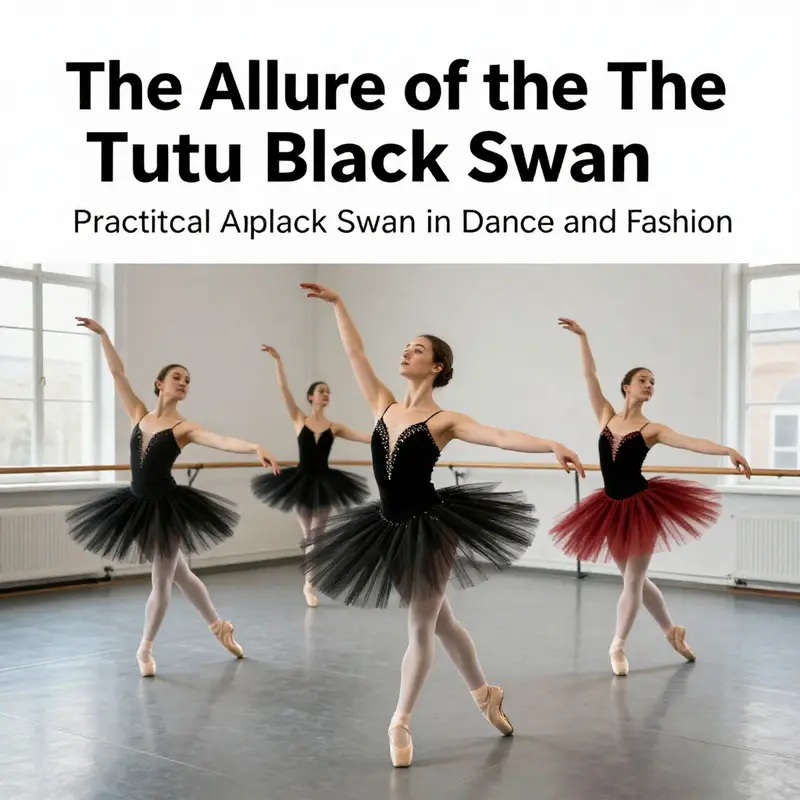
The Black Swan tutu has moved well beyond its origins in classical ballet to become a potent instrument for modern dance storytelling. Its defining features—a deep, enveloping black silhouette, a fluttering, multi-layered skirt, and a silhouette that can transition from restrained elegance to dramatic volume in an instant—offer choreographers a physical vocabulary to express transformation, ambiguity, and inner force. In contemporary works, dancers harness the tutu’s visual language to delineate the arc of a character who moves between conflicting identities, much as the title character in a well-known psychological narrative does on stage and screen. The visual impact comes not from mere color, but from a choreography of air and gravity: the skirt’s mass catches and releases, guiding the dancer’s turns and stops, while the body’s lines are redefined by the way light interacts with the fabric’s texture and depth. This is not costume as garnish; it is a dynamic extension of motion and mood, a moving sculpture that communicates even before a syllable is spoken.
The translation from a classical form to a modern practice often hinges on how the garment supports technique without constraining it. The Black Swan tutu’s dramatic, asymmetrical design—featuring jagged, feather-like edges and a transition in visual language from pale to shadow—offers a framework for exploring dualities of self. In modern works, where themes of duality, tension, and metamorphosis recur, this sartorial choice becomes a reliable partner for the dancer. The tutu does not merely accompany movement; it calibrates it. When a performer executes a grounded, textured phrase in Horton technique or couples a sharp, staccato gesture with a long, sweeping line, the costume’s structure helps to anchor the spine, encourage precise épaulement, and cue the breath toward a central, sustaining core. In that sense, the Black Swan tutu acts as a narrative accelerator—its blackness absorbing space, its volume shaping the silhouette, its edges catching the stage light to reveal a choreography that feels both intimate and monumental. A subtle, yet telling phenomenon occurs as the dancer rotates: the fabric’s density and the multiple layers create a halo of motion that exaggerates or retracts the line depending on the angular relationship between dancer and spotlight. The result is a living diagram of intensity that the audience reads almost instinctively, translating movement into emotion with a clarity that words sometimes cannot achieve.
From a practical standpoint, the construction of the silhouette is central to performance reliability. Modern Black Swan-inspired tutus leverage layered tulle that is often chemically treated to hold shape during extended sequences and rapid spins. This treatment, complemented by a silk or stretch-knit lining, helps reduce friction against the skin and ensures a smooth transition between acceleration and deceleration. The design must accommodate a spectrum of body types and stage conditions, so fit systems are intentionally forgiving: waistbands that can be adjusted without compromising silhouette, and internal supports that keep the bodice from riding up during high-velocity turns. In a production landscape where dancers often perform repeatedly over days of rehearsal, the tutu’s balance between stiffness and flexibility becomes a critical factor. It must be pliant enough to allow a dancer to spring from a plie into a grand jeté without causing fatigue or restraint, yet firm enough to maintain its dramatic profile when the lights rise and the tempo accelerates. The result is a costume that provokes confidence as much as it provokes awe, because the dancer feels the garment’s contribution to control and expression as a partner rather than an obstacle.
A deeper layer of advantage emerges when designers treat the tutu as a platform for research into movement physiology and choreographic language. When a piece blends the high-energy, grounded vocabulary of modern dance with the virtuosic lift and turn of classical technique, the costume must be compatible with both worlds. The Black Swan tutu’s architecture—its multi-layered, airy skirt and the way it supports, then releases, the leg line—offers a physical map for sculpting phrases that move through gravity with intention. Dancers can experiment with micro-phrases that emphasize the torso’s counter-movements, chest openers, and rib cage isolation, while the skirt frames these explorations, catching light to highlight a shift in mood. The garment thus invites a collaboration: the dancer tests momentum; the fabric records it, and lighting design then interprets it. In rehearsal, this triad—body, cloth, and light—becomes a laboratory for discovering how contemporary choreography can retain classical legibility while expanding the expressive range to include inner conflict, vulnerability, and resilience. The audience experiences a narrative that is felt as much as seen, with the tutu’s presence amplifying the emotional stakes of the choreography without shouting over it.
The cultural payload of the Black Swan tutu also lends itself to flexible performance contexts beyond the proscenium stage. Its stark, iconic silhouette translates readily to festival environments, multimedia installations, and photographic series where stillness and motion are equally valued. In photographs, the tutu can function as a sculptural element, a blackened bloom that punctuates a composition with texture and shadow. In live performances, the costume becomes a catalyst for audience engagement: the moment of contact between the tutu’s edge and the air draws the eye, inviting spectators into the rhythm and tension of the work. This broader reach aligns with how modern dance continually seeks to democratize its imagery—making the aura of a legendary character accessible to varied audiences without diluting its psychological core. For choreographers, the tutu thus serves as both muse and tool: a source of visual symbolism that can be recombined with other elements—sound, projection, or set—to tell a more expansive story. And for dancers, it offers a reliable vehicle for testing new phrasing and compositional devices, safe in the knowledge that the garment will respond with predictable poise as the tempo and stakes rise.
A practical detail that often defines the success of a Black Swan-inspired performance is material safety and inclusivity. Contemporary practitioners increasingly prioritize OEKO-TEX®-certified fabrics to ensure skin compatibility and environmental responsibility. This emphasis matters not only for professional companies but also for educational and community-based programs where repeated wear and diverse body types are the norm. The ability to customize sizes and adjust fit without compromising the garment’s integrity makes these tutus accessible to a wider range of dancers, enabling more voices to inhabit the same dramatic archetype. In a field where rehearsal time is precious and the cost of costume repair can be high, the combination of robust construction, safe materials, and thoughtful fit translates into fewer interruptions and more fluid creative exploration. The aesthetic remains uncompromised: the tutu’s silhouette continues to project power and mystery, while the dancer experiences comfort and security that sustain expressive depth across rehearsal blocks and performance runs.
The dynamic between form and function in the Black Swan tutu ultimately reflects a broader principle of modern dance: costume can be a co-creator rather than a mere accessory. This approach invites dancers to inhabit the character’s shadow and light with tangible, embodied certainty. When the stage lights cut through the black fabrics, the skirt becomes a dynamic surface that refracts emotion and intention. The dancer’s breath, the articulation of the spine, and the micro-adjustments of the shoulders, all harmonize with the garment’s structure to produce a coherent, persuasive arc. The choreography benefits from a garment that supports precision while leaving room for improvisation, a critical balance in contemporary performance where spontaneity and design must coexist. As audiences respond to the unfolding drama, they experience a seamless fusion of technique and symbolism, where the costuming is not a costume at all but a partner in storytelling. See an exemplary reference to a white Swan Lake-inspired tutu to observe how color and form can transition in a single piece to evoke very different tonalities on stage. High-Quality White Ballet Costume Tutu—Swan Lake
The practical, aesthetic, and ethical dimensions of the Black Swan tutu converge in a vision of dance that is both historical and contemporary. It honors the lineage of classic technique while inviting fresh interpretations that push the boundaries of what stagecraft can convey. The result is a costume that is not only seen but felt—an instrument for inquiry, a vessel for transformation, and a guide for performers seeking to translate inner tumult into outward, legible form. In this sense, the tutu becomes a living artifact of modern dance’s ongoing negotiation between memory and invention, a reminder that the most compelling performances are often born where craft, concept, and courage meet. For readers seeking broader perspectives on the production and resilience of such garments, an industry reference offers additional design insights and practical specs: https://www.alibaba.com/product-detail/Customizable-12-Layer-Velvet-Black-Swan_1600584783813.html. This external resource details the technical underpinnings—multi-layered structure, chemical stabilization, and size customization—that support sustained impact on stage and in rehearsal alike.
Final thoughts
The Tutu Black Swan represents more than just a costume; it is a significant cultural artifact that merges artistry with commerce. For business owners, understanding its implications—from artistry to craftsmanship, market variations, cultural significance, and practical applications—offers valuable insights into consumer demands and opportunities in the dancewear market. This iconic symbol continues to inspire innovation and creativity, inviting exploration into its future potential within the arts.