
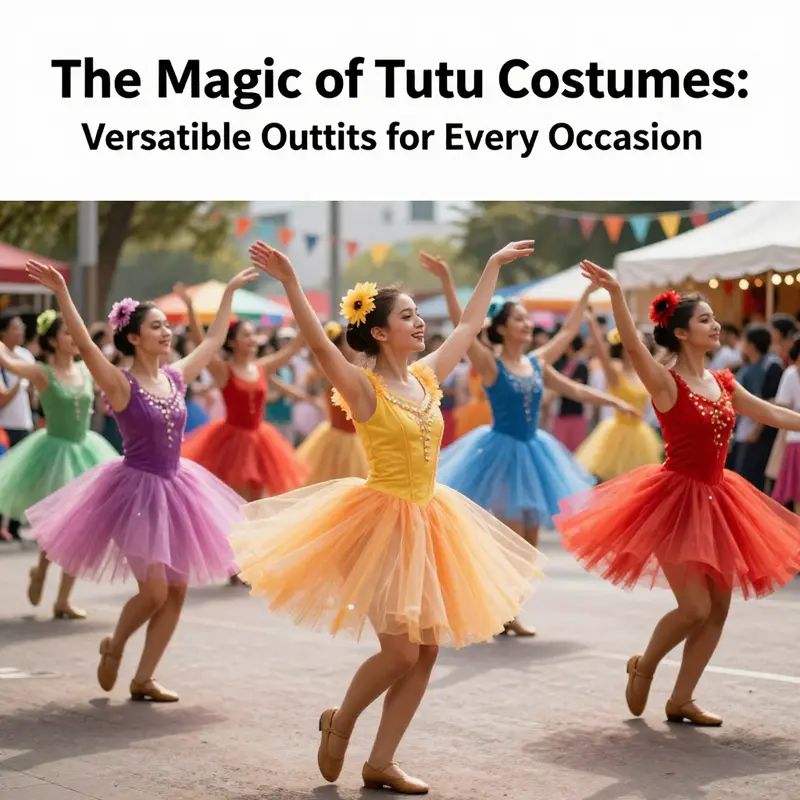
Tutu costumes epitomize whimsical charm, blending elements of fantasy and performance with practical design. Their appeal spans generations, making them a staple for business owners in the costume and dance industries. This article explores the versatility of tutu costumes, detailing their thematic designs, functional aspects for performance, and opportunities for customization. Each chapter will provide valuable insights tailored to enhance the offerings of business owners while emphasizing the engaging aesthetic of tutu costumes.
From Stage to Spectacle: The Unbounded Versatility of Tutu Costumes
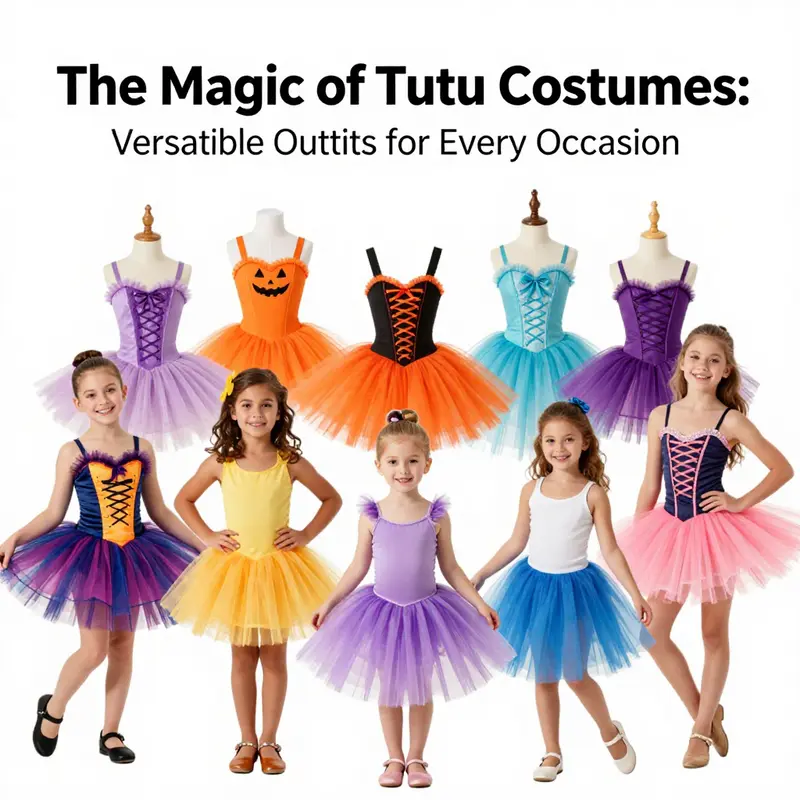
A tutu costume is more than a single garment. It is a dynamic threshold between imagination and movement, a piece that can morph with the occasion and the wearer. The iconic circular or tiered tulle skirt is not a mere silhouette; it is a canvas that captures light, sways with breath, and reframes the space around the wearer. When a dancer lifts and twirls, the tutu becomes a living sculpture in motion. When a party guest steps into a themed gathering, the same garment folds into a story, a character, a memory in the making. The versatility of the tutu arises from its balance of volume and flexibility, its capacity to be dressed up or pared down, its ability to honor a traditional lineage of dance while embracing the playful experiments of contemporary costume culture. In this chapter we will trace how the tutu costume traverses ages, occasions, and aesthetics, revealing why it endures as a favored catalyst for creativity and expression across many different social worlds.
For children, the tutu is a portal to role play that happens in real time. It is a doorway to pretend adventures that your home or classroom can host with a single garment. The classic leopard tutu, with its generous layers of soft tulle and a bodice that contrasts in color, speaks a universal language of animal charisma and playful energy. It is instantly recognizable, and its simplicity makes it approachable for everyday play or school events. Yet the beauty of the tutu lies in the possibility of extension beyond the initial outfit. When plush ears and a tail are added, the costume becomes a doorway into a fully realized character. A child can inhabit the role of a forest cat or jungle wanderer, moving through imagined landscapes while the skirt flares with every step. Safety and comfort remain integral to this magic. Child-friendly designs emphasize soft fabrics, breathable blends, and gentle elasticity so play can go on without discomfort. Even the addition of a child-safe makeup kit with non-toxic paints can complete the transformation while keeping the experience gentle on delicate skin. The tutu then becomes not just clothing, but a complete, end-to-end moment of play that can be revisited with ease, washed and stored for future adventures, and shared with siblings or friends who want to borrow a favorite look.
Adults insert a different kind of energy into the tutu equation. For many, the tutu is a performance tool, a stage garment that must withstand the physics of dance while maintaining its aesthetic grandeur. Performance tutus for adults often lean into the stretch and resilience of modern fabrics such as lycra and spandex, pairing them with the dramatic silhouette of layered tulle. The waistbands are crafted for comfort during long rehearsals and demanding routines—elastic, adjustable, or even drawstring designs that honor the need for a secure fit without restricting movement. In a performance context, the tutu becomes a conversation between form and function: the padding of the layers contributes to a striking shape on stage, while the underlying stretch fabric supports a wide range of leaps, turns, and extensions. Yet the same tutu can step out beyond the studio or theater, becoming a standout element at parties, photoshoots, or special events. Its bold presence—often realized through a spectrum of pinks, blacks, or contrasting monochromes—offers a visual shorthand for glamour, whimsy, and celebration. Wholesale pink tutu sets, for example, find new life not just in rehearsal halls but in community celebrations and festive gatherings, where the tutu acts as an accessible, reusable expression of mood and character. Black and white combinations, too, carry a certain stark elegance that translates well to themed events and stage appearances, underscoring the tutu’s adaptability from pure performance to thematic spectacle.
Beyond age and setting, the tutu costume demonstrates a surprising adaptability to different cultural moments and seasonal demands. Multi-layered tutu skirts are a staple for many adult Halloween ensembles and party outfits, delivering the right balance of drama and mobility. The tension between a full, voluminous silhouette and the practical needs of a wearer is navigated through thoughtful design choices: the use of lighter mesh in outer layers to preserve movement, the careful distribution of stiffness to keep the hemline crisp, and the insertion of flexible linings to prevent chafing during long wear. The discussion of seasonal styling reveals the tutu as a living, changing garment rather than a fixed tradition. When an outfit aims for authenticity in a salute to a classic story or character, designers lean into era-appropriate touches such as scalloped hems or satin linings. When the goal centers on a more contemporary, fashion-forward mood, designers experiment with color blocking, metallic threads, or detachable elements that allow the wearer to reshape the outfit mid-event without needing a whole new costume. The balance between authenticity and comfort becomes a dance in itself, with every adjustment affecting movement, heat retention, and the ease of storage after use.
Customization is another key thread in the tutu’s versatility. Adjustable waistbands and detachable accessories provide a modular approach that expands how a tutu can be used. A child can don a leopard-themed set for a school pageant and later remove the ears or tail for a simpler everyday look, extending the garment’s life and usefulness. Adults can tailor a performance tutu to match a particular choreography, adding embroidery or patches that reflect a character or a narrative motif without changing the underlying silhouette. Such modularity matters because it turns a costume purchase into a long-term investment in creativity. It is the difference between a one-off look and a reusable wardrobe staple that invites experimentation, whether for a cosplay event, a dance recital, or a themed festival. The care that goes into detachable components—secure Velcro fastenings, sturdy snaps, or tie-on ribbons—reflects a broader design ethos that values convenience, longevity, and safety.
Material choice underpins all these possibilities. The vast majority of tutus available to the general wearer rely on durable polyester blends that balance cost, washability, and resilience. For many performers and enthusiasts, this means a garment that can withstand frequent wear without losing its shape or color. Yet high-end variants exist that employ silk or metallic threads for added glamour, offering a different tactile quality and a richer drape. The contrast is not a simple matter of luxury; it is a practical consideration that affects how the tutu holds its form during motion, how it feels against the skin, and how it performs in a costume change scenario. A tutu made for everyday play might prioritize a softer inner lining, gentler elastic, and a forgiving, machine-washable exterior to ease upkeep. A performance tutu, by contrast, may prioritize crisper stiffness, specialized interlinings, and more precise hemwork to preserve a dramatic line on stage. The common thread is that comfort and safety are never afterthoughts; they are integral to the wearer’s ability to express itself fully through movement and pose.
From a production and consumer perspective, the tutu’s reach extends into education, community theater, and even social photography. The garment’s universal appeal lies in its ability to translate mood. A tutu can signal whimsy and youth in a child’s birthday celebration, or it can dramatize strength and poise in a contemporary dance piece. The same silhouette, repeated in different fabrics and colors, can evoke a spectrum of emotions and narratives. The result is a flexible armor of sorts for self-expression, allowing wearers to explore different aspects of their personalities through one garment—without needing a whole closet of elaborate outfits. This adaptability makes tutu costumes a practical choice for costume rental programs, school productions, and community events, where a single piece can serve multiple roles across different performances or occasions.
Of course, the practicalities of care and storage matter, especially for families and clubs that reuse costumes across the year. Soft, breathable fabrics that are easy to clean, machine-washable materials, and adjustable features all reduce the friction of repeated use. Detachable accessories simplify packing and prevent tangles during travel, while secure fastenings help ensure that pieces stay in place during a performance or a bustling celebration. When considering wearers of all ages, the tutu’s versatility is not simply about aesthetic options; it is about a reliable experience that couples sparkle with practicality. It is also about sustainability: a well-made tutu can be a long-term companion through growth and change, a thread that ties together birthday parties, dance classes, school pageants, and cosplay events across years.
For readers curious about the most fundamental variations, the basic-tutu category offers accessible entry points that can function as stepping stones toward more complex ensembles. The basic design provides a sturdy foundation on which to layer themes and accessories, allowing both children and adults to experiment with different looks without sacrificing comfort or mobility. The idea is to start with a versatile, well-fitting base and let creativity take shape through carefully chosen embellishments, color accents, and detachable pieces. This approach makes the tutu a flexible partner in the wearer’s story, whether the goal is a lighthearted party look or a dramatic stage presence. To explore this foundational spectrum, you can visit the basic-tutu category and see how a simple skirt can become a complete, adaptable costume piece that still travels well between venues and seasons.
The tutu’s capacity to cross boundaries is reinforced by its role in education and family life. In a recital or school performance, a tutu helps convey a narrative with clear, legible lines. The layered structure of the skirt emphasizes the dancer’s lines, while the need for secure, comfortable support encourages thoughtful choreography and rehearsal planning. In home performance or community events, the tutu serves as an accessible entry point for younger children to participate in a shared story, a chance to feel part of something larger than their own play for a moment. The garment’s aesthetic energy—its buoyant volume, the subtle glimmer of tulle catching the light, the gentle sway that follows every step—becomes a catalyst for confidence, collaboration, and memory creation. That is the heart of the tutu: a garment that can be a simple prop for costumes or a transformational piece for personal storytelling, a shared experience, and a lasting impression.
The durability and adaptability of tutu costumes also invite reflection on how we curate wardrobes for creative expression. Rather than seeing a tutu as a specialized item for niche events, many households and communities treat it as a versatile artifact that can grow with a performer. A kid might begin with a leopard-inspired tutu for pretend play, then switch to a lighter pink variation for recital practice, and later involve a more sophisticated version for teen cosplay or a themed photo shoot. Across the lifecycle, the tutu remains a steady, recognizable silhouette—an anchor that helps performers focus on movement, expression, and narrative rather than constantly reconstructing their outfits. The same principle applies to adult performers who customize their tutus for different works or collaborations. The fabric choices, the inner linings, and the placement of seams all contribute to a garment that can adapt to diverse choreographies, from lyrical contemporary to theatrical jazz, without compromising the wearer’s comfort or the piece’s visual impact.
In the end, the tutu costume embodies a philosophy of design that values accessibility, flexibility, and imagination. It bridges the gap between the disciplined heritage of ballet and the wide-ranging culture of costume play. It stands as a reminder that clothing can be a daily instrument of self-expression, not merely a shield or a uniform. The tutu invites wearers to move with intention, to choose a mood with their color and texture, and to tell a story with their stance, their pose, and the gentle arc of the skirt as it rises on the inhale and settles on the exhale. As a garment, it is both intimate and public, personal in its fit and universal in its appeal. Its enduring appeal rests on a simple truth: the tutu costume unlocks movement and meaning in equal measure, allowing a dancer, a child, a student, or a party-goer to step into a role with confidence and joy. For designers, educators, and hobbyists alike, it remains a reliable partner, always ready to transform a moment into something memorable. For readers and wearers, it is an invitation to play, to perform, and to dream—an invitation that travels well, connects communities, and remains stylish across generations. For more on the most fundamental variations, consider exploring the basic-tutu category at the link above, and for broader guidance on selecting a garment that will endure through rehearsals and recitals, a well-regarded external guide offers practical insight into fit, fabric, and care that can help you navigate decisions with confidence and ease. https://www.dancewear.com/adult-tutu-buying-guide
Threads of Enchantment: The Thematic Tutu as a Moving Storybook
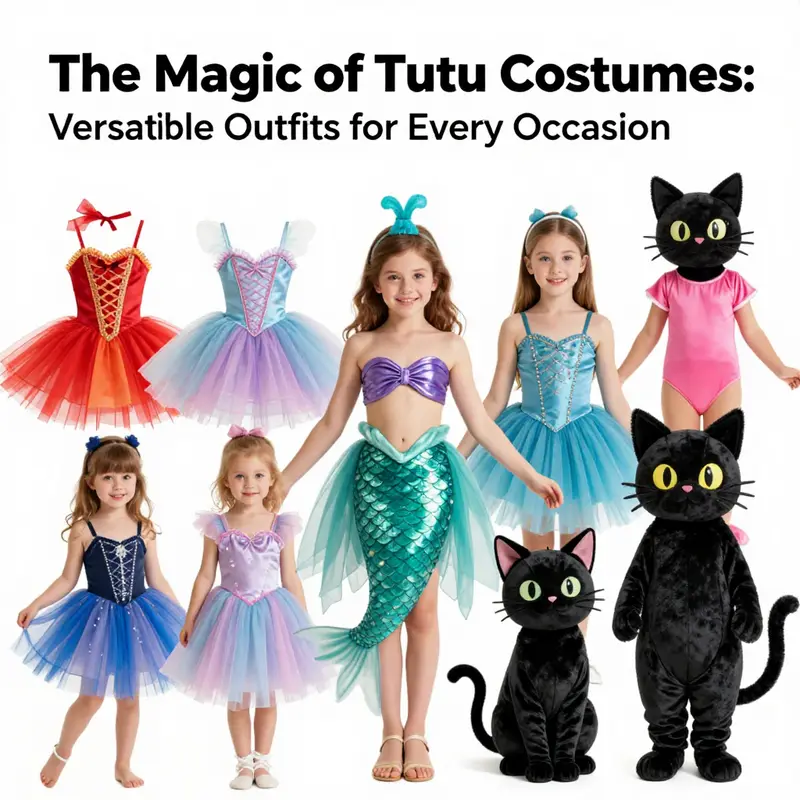
In the realm of children’s celebrations and staged performances, the tutu costume becomes more than fabric spun into a skirt. It is a moving storybook, a wearable stage where imagination can unfold with every pirouette and swirl of tulle. Thematic tutu designs harness that magic by translating beloved narratives, fairy tales, and playful fantasies into a visual language the eye and body can read in a single glance. The result is not merely a costume but a catalyst for memory-making—photos that capture a moment of pure storytelling, parties that feel like short voyages into other worlds, and dances in which a child’s movements echo a character’s bravado, tenderness, or mischief. When design and narrative align, the skirt’s layers become like pages turning in a favorite story, each layer catching light and movement in a slightly different way. The child wearing it is invited to inhabit a role, to test courage in a dragon’s shadow or to glide like a sea breeze beside a mermaid. It is, in short, wearable theatre that fits every age and every occasion with the same core principle: tell a story through fabric, color, and form, so that the wearer becomes both actor and audience in one shimmering instant.
The appeal starts with story. Children’s favorite characters—whether drawn from modern adventures or timeless fairy tales—provide a ready-made narrative scaffold. A tutu themed around a sea princess might feature a deep blue satin lining peeking through a tulle exterior, with scalloped edges and appliqués that mimic waves and shells. A princess-inspired ensemble might lean on soft pastels, delicate rhinestones, and a touch of metallic thread to suggest crown and magic. A more adventurous look, such as a brave Merida or a daring pirate, uses richer textures, bolder color contrasts, and practical design elements that support movement during play and performance. In each case, the design team does not just choose a color palette; they craft a mood. The mood is the emotional through-line that guides a child’s storytelling during a birthday song, a school pageant, or an impromptu dance session at home. The tutu becomes a visual cue that invites a story to begin—and a promise that the story will unfold with every little step.
Thematic designs thrive on a careful balance between fabric, form, and function. The heart of a tutu—its layered tulle—offers the visual drama of volume without sacrificing mobility. The inner lining, often satin or a soft blend, provides comfort against the skin during hours of wear or rehearsals. This comfort is not a luxury but a necessity because a child’s energy during a party or a performance translates into sustained motion. Designers often pair the lightweight tulle with a sturdier underskirt or a stretchable waistband to ensure the silhouette remains even as a child hops, spins, or leaps. The silhouette itself—whether a classic bell-shaped tutu or a shorter, more practical dance version—serves the storytelling. A longer, fuller skirt can convey grandeur and magic, while a shorter, streamlined cut can suggest speed, action, or whimsy. Choosing the right balance is less about chasing fashion trends and more about preserving the integrity of the story the costume is meant to tell. When fabric choices align with the intended motion and the narrative moment, the child’s performance feels cohesive rather than costume-driven.
Color plays a pivotal role in guiding mood and meaning. In themed tutus, color is rarely accidental; it is calibrated to cue the audience to a character’s role, to echo a scene’s atmosphere, or to harmonize with the event’s décor. A sea-themed tutu may mix deep ocean blues with aquamarine highlights and a pearly sheen that catches the light like sunlit surf. A woodland creature look might weave moss greens with warm browns and delicate leaf motifs that read playful and earthy at once. Even within a single theme, designers layer hues to create depth. The play of light on satin against the matte finish of tulle can simulate moonlit magic or the ripples of water, helping the wearer inhabit the moment more fully. The palette also supports practicalities, such as matching event colors or coordinating with other performers in a group routine. In this way, color becomes a storytelling tool that helps create a shared narrative space for audience and performer alike.
Accessories are the punctuation marks in the sentence of a thematic tutu. A wand can signal a spell, a cape can suggest heroism, a headband can crown a quiet confidence, and tiny props can anchor a tale as simply as a page would. Accessories extend the narrative beyond the skirt and into the child’s hands, guiding their play and reinforcing character cues. A fairy godmother’s wand, a pirate’s hat, or a mermaid’s shell-embellished tiara can transform a scene from a simple dance into a story performance with clear objectives and stakes. The best designs anticipate movement and safety. Earrings or small adornments are kept secure, hats are lightweight, and capes are designed to flow with activity without snagging on furniture or costume parts. Customizable elements—detachable tails, adjustable waistbands, or interchangeable badges—grant flexibility as the story shifts. A party may pivot from a princess celebration to a bedtime tale, and the ability to adjust the costume accordingly preserves the narrative continuity without requiring a new outfit.
The decision to opt for a thematically themed tutu often centers on the event’s purpose. For formal birthday celebrations, a narrative-driven design can elevate the occasion from mere festivity to a storytelling moment that families will remember in photographs and conversations. For photo shoots, the costume functions as a prop that guides posing and expression, helping a child embody a character rather than simply posing in front of a camera. Fairy-tale or storybook celebrations benefit from a cohesive look where each guest contributes to a shared world, and every tutu acts as a clue to that world’s lore. In dance recitals or school performances, the theme helps cue choreography, dictating not only what the audience sees but how performers move in relation to one another. A well-conceived thematic tutu is mindful of the choreography’s needs, ensuring that embellishments do not impede line, turn, or extension. The result is a performance that feels intentional and tight, where costume, movement, and story are inseparable elements of a single experience.
From a design perspective, thematic tutu creation hinges on a few guiding principles. Proportion matters: the skirt’s fullness should echo the scale of the character’s persona and the performance’s venue. A grand, operatic look may suit a formal stage but can overwhelm a small recital space; in such cases, designers pare back some layers or temper the volume with lighter fabrics to retain the silhouette without sacrificing readability. Texture is another critical lever. Layered tulle can be interspersed with satin ribbons, organza trim, or metallic threads to add shine and depth. This textural variety gives the costume a tactile richness that translates well in photos and on stage. Embroidered motifs, appliqué patches, or hand-painted accents can reinforce the narrative with subtle storytelling cues—ribbons that mimic waves on a sea-themed tutu or tiny stars sprinkled along the hem of a night-sky dancer’s outfit.
The ethical and practical dimensions of thematic tutu design deserve attention as well. High-quality construction is a safety asset. Soft fabrics and properly finished seams minimize the risk of irritation during active play. Detachable accessories should fasten securely yet detach easily in an emergency; after all, imaginative play can be exuberant, and a costume must withstand those moments without turning unsafe. Durability matters when families invest in outfits intended for multiple events or for sharing among siblings and friends. Polyester blends, chosen for their balance of affordability and resilience, typically offer a reliable option for repeated wear. Yet, when the look calls for a more premium finish or a special effect, designers may introduce satin linings or subtle metallic threads that elevate the garment without compromising comfort or safety. The goal is a tutu that invites youthful energy and storytelling while remaining practical for everyday wear, laundry routines, and the inevitable choreography of a birthday party.
Inspiration for these designs often travels through the wide channels of visual culture. Parents and event planners crowdsource ideas from lookbooks and mood boards, then translate those sparks into tangible ensembles. Platforms that curate collections of thematic looks—such as dedicated categories that group costumes by theme and character—offer a practical starting point. For those seeking real-world guidance, a quick visit to a costume-theme gallery or shop section can yield a treasure trove of ideas. The key is to translate inspiration into a cohesive set of fabric choices, embellishments, and accessories that support safe, joyful play. Thematic tutu design is as much about storytelling discipline as it is about surface glamour. The best creations honor the story’s heart while ensuring the child can inhabit it with ease and grace.
For families curious about where to begin, envisioning a theme and then mapping its elements can help. Start with a central character or scene, then select a color family that aligns with that mood. Choose fabrics that balance volume with comfort, and plan accessories that enhance the narrative without inviting overcomplication or risk during active moments. If a child’s imagination leans toward animal friends, consider delicate appliqués, soft plush accents, and quiet, tactile textures that invite touch and interaction during playtime. If a heroic tale is the aim, channel bold lines and dramatic silhouettes, but temper them with child-friendly closures, easy washability, and adjustable fittings that accommodate growth and movement. The design then becomes a dialogue between intention and whimsy, a balance that respects both the storytelling impulse and the child’s everyday life.
The practical side of thematic tutu design also includes an eye for future reuse and storage. Detachable elements enable easy laundering and quick redress for a different scene. Standardized waistbands, adjustable straps, and modular pieces empower parents to reassemble costumes for new stories without buying entirely new outfits. This adaptability is especially valuable in households where cousins and siblings share wardrobes, or where a child’s preferences shift with the seasons. A well-planned thematic tutu can thus become a starting point for countless narratives, each one shaped by the child’s curiosity and the family’s creative energy. The result is not only a costume but a toolkit for imagination—an invitation to invent, perform, and remember.
As a closing note, the world of thematic tutu design sits at an intersection of art, play, and careful craft. It asks designers to listen to children’s wishes, to translate them into manageable realities, and to honor the spontaneous joy that comes from dressing up. When the design process aligns with the storytelling moment, the tutu becomes more than fabric and stitching; it becomes a companion in play, a catalyst for confidence, and a memory-maker that families will revisit long after the music fades. If you are exploring ways to deepen a party or a school event with a cohesive narrative look, consider exploring the costume-theme category, where themed outfits are organized to support storytelling with ease and balance. This small step can open a world of coordinated coloring, movement, and mood that transforms a celebration into a live story unfolding in real time. For further visual inspiration, platforms such as Pinterest offer extensive mood boards and design ideas that can spark new, child-centered narratives. External resources, including illustrated boards and design compilations, provide a gallery of possibilities to complement your choices: https://www.pinterest.com/pin/1234567890/.
The Living Silhouette: Functional Craftsmanship of Tutu Costumes in Dance and Performance
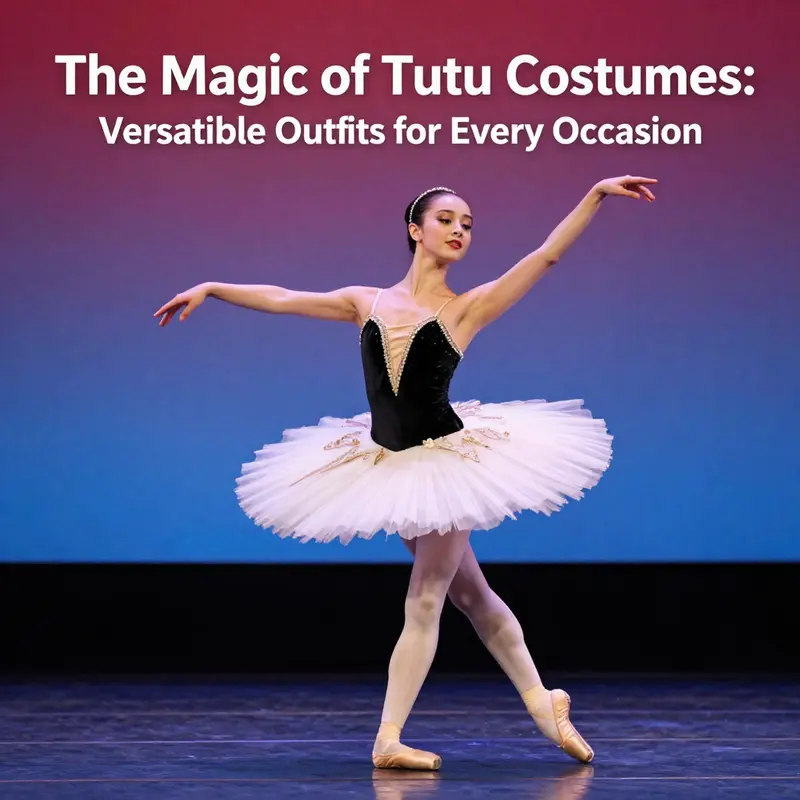
A tutu costume is not merely a costume; it is a carefully engineered interface between a dancer and the space around them. In performance, movement is not only about what the body can do, but how the body appears to move. The tutu, with its distinctive circular skirt and starched, gleaming surface, acts as a visual amplifier, turning the subtleties of a leg line, a turn, or a leap into a silhouette that can be read clearly from the farthest seats. This is where form meets function in a delicate, often almost invisible balance. The core idea behind a well-made tutu is simple in intention and complex in execution: the garment must be light enough to feel almost like a second skin, yet structured enough to hold its shape under dynamic lighting and the gravity of movement. The result is a living sculpture that breathes with the dancer, revealing the precision of technique in every extension, jeté, and pirouette. To appreciate this balance, it helps to consider the primary materials and the design logic that shape the dancer’s experience as much as the audience’s perception. Tulle, the signature fabric, is lighter than air, a mesh of fine fibers that flutters with the tiniest breeze. When layered and stiffened, it creates lift without weight, so the skirt fans out in controlled waves rather than collapsing into a cloud of fabric. Spandex or stretch lining often provides the necessary give at the waist and hips, allowing the tutu to stay centered on the dancer’s core while the legs and feet move freely. The garment becomes almost a partner in the routine, granting confidence to the dancer and clarity to the viewers.
The silhouette a tutu creates is a study in geometry. The classic ballet tutu—short and layered—forms a flat, disk-like face that extends outward from the hips. This short, crisp profile reads sharply on stage, defining the line from toe to fingertip with mathematical immediacy. Yet the visible surface is only part of the story. Beneath the exterior lies a carefully engineered structure: an inner lining that keeps the waist comfortable and the skirt aligned, along with elastic or adjustable fastenings that accommodate different body shapes and performance needs. The balance of stiffness and softness is crucial. If the layers are too rigid, the dancer’s movement can feel restricted; if too soft, the lines become blurred, and the skirt can collapse or droop at critical moments. The choice of materials—whether a polyester blend with a high memory, or a lighter, more breathable mesh—affects both the performer’s endurance and the audience’s experience. The goal is to preserve the iconic shape while preserving comfort.
In practice, designers pay particular attention to how the tutu behaves under light and shadow. Stage lighting can transform a costume in an instant, turning a matte surface into a gleaming surface that catches every spark of a lamp and exaggerates the dancer’s every contour. The layered tulle can be finished with subtle edging or gentle sequins to catch highlights without overwhelming the choreography. Color plays a role here as well; a pure white tutu reads differently from a black-tabric version, and both must still maintain the clarity of line that audiences rely on during fast sequences. The texture, too, matters. A tutu with a satin inner layer and a tulle outer layer can feel sumptuous to wear while presenting a pristine outline to the audience. The contrast between the inner comfort and outer drama is part of the design’s success. Even the seams and waistbands are chosen with care, stitched discreetly to avoid interrupting the dancer’s skin or snagging on tights and dance shoes. The result is a garment that disappears in performance as clothing, while the dancer remains entirely legible as a moving sculpture.
Beyond the classical form, tutu designs have evolved to meet the needs of modern performance. Some productions favor a shorter, more flexible cut that still respects the tutu’s signature outward flare but allows for high-energy contemporary movement. Others lean toward a longer, more romantic interpretation, reflecting historical styles while employing lighter, more stretchable materials to keep the performer expressive and safe. The range of choices—from a robust, dance-floor-ready short tutu to a more elaborate, character-specific piece—reflects a broader understanding of how a costume supports different choreographies and narratives. A well-crafted tutu is often a collaborative achievement, combining the dancer’s experience with the costume designer’s knowledge of movement, fabric behavior, and stage technology. The aim is to harmonize garment and gesture so that the costume becomes an extension of the dancer’s intent rather than a separate ornament waiting to be displayed.
Functionality in a tutu also extends to fit and care. An adjustable waistband or elasticized closure ensures a secure fit across rehearsals and performances. Detachable accessories—such as tails, headbands, or decorative brooches—offer flexibility for quick changes between scenes or characters. This is particularly valuable in stage productions where quick transitions are essential and where the same dancer might embody multiple personas within a single program. The ability to detach or rearrange elements means repairs or reconfigurations can be accomplished with minimal disruption, preserving the flow of the performance. In a practical sense, the detachable elements also support storage and reuse: a single base tutu can be transformed to suit several looks with small additions, reducing waste and increasing the garment’s lifetime. This reflects a broader principle in costume craft: objects that perform well on stage should also serve the realities of touring, frequent handling, and varying stage dimensions.
The wearer’s comfort is another central pillar. Soft, breathable fabrics help regulate temperature during long rehearsals and performances. A tutu’s waistband sits directly on the torso, so it must be both sturdy and gentle. Gentle stretch and a contoured shape minimize chafing, especially under lighting that can intensify heat. The interior usually features smooth lining to prevent skin irritation and to help the skirt settle into place, so the lines stay clean from any angle. Because a dancer’s work is physically demanding, designers increasingly consider moisture management and odor control—attributes that should be invisible in the moment of performance but crucial for the dancer’s stamina over time. The best pieces marry elegance with ease, so the dancer is liberated to focus on technique, timing, and expression rather than on adjusting a garment mid-routine.
A practical chapter in tutu design is the standard ballet tutu’s relation to other performance patterns. The classic short tutu, stiffened by petersham or crinoline layers, aims to project outward as the leg moves, ensuring the leg lines remain visible even during rapid elevations. However, in more narrative-driven productions, designers may incorporate elements from the romantic tutu tradition, where the skirt extends further and sways with the dancer’s steps, creating a flowing, lyrical effect. Such a choice has both aesthetic and functional consequences: it invites a different set of movements and requires careful coordination with the dancer’s core and back, so the extended silhouette does not impede turns or jumps. In any case, the tutu remains a product of careful proportioning, where the skirt’s width, the waist’s height, and the bodice’s support work in concert to create an appearance that is at once powerful and graceful.
To illustrate how these considerations materialize in practice, consider how a choreographer might think about a single performance. The choice of tutu begins with the character’s identity and the desired stage image. A mischievous cat persona might favor a lighter, more flexible tutu that allows rapid, agile footwork and sudden directions of travel, while a regal figure might demand a crisp, impeccable silhouette that holds its shape for the duration of a slow, sweeping sequence. In both cases, the garment must withstand the rehearsal process and the quick, repeated motions of a live show. The dancer’s feedback is essential here; she or he notices how the fabric returns to place after a jeté, how the tulle catches and releases light, and whether the waistband remains comfortable through long sessions. The design’s success rests on this ongoing dialogue between wearer and garment, a dynamic relationship that evolves as the performance practice grows more demanding or more nuanced.
For those who study or participate in a broad range of dance disciplines, the tutu’s functional design offers a vocabulary for understanding movement as craft. The garment’s capacity to transform air into visible rhythm is not incidental; it is a deliberate effect achieved through precise construction and thoughtful material choices. The notion of a “living silhouette” captures how the skirt acts as a partner in the dance, translating speed, depth, and direction into a readable, aesthetically compelling line. In classrooms, studios, and on stage, aspiring dancers learn to read the tutu as a sign of technique: a well-tuned piece facilitates lines that extend cleanly, holds a stable center, and responds to the dancer’s intent without demanding constant compensation. It is this synergy—between clothing, choreography, and lighting—that makes the tutu a central emblem of dance performance and a touchstone for the theatrical imagination.
In practical terms, if a reader wants to explore options that balance reliability with a range of looks, a visit to the basic-tutu product category can offer a dependable starting point. Such a category typically presents a spectrum of foundational pieces designed for repeated use, ease of care, and consistent performance under stage conditions. It is a reminder that even in the most theatrical contexts, there is value in choosing a well-made base garment that supports artistry rather than complicating it. basic-tutu product category offers a reference point for performers and educators who aim to invest in durable, versatile pieces that can be adapted with accessories and color accents without sacrificing function.
In sum, the functional aspects of tutu costumes emerge from a deliberate integration of science, craft, and performance practice. From the airy physics of layered tulle to the tactile realities of comfort and fit, the tutu stands as a refined instrument for movement. Its value lies not only in its beauty but in its capacity to enable dancers to extend their technique and their storytelling. The best tutu costumes feel almost invisible—that is, they vanish as impediments and instead reveal the clarity of the dancer’s line, the ethics of timing, and the emotional truth of the performance. As audiences respond to the sweeping arcs and crisp angles of the choreography, they are also witnessing a crafted partnership between body and garment, when design and technique converge to illuminate the art of movement. For students and professionals alike, appreciating this functional dimension of the tutu deepens both technique and interpretive possibility, allowing the silhouette to become a dynamic source of expression rather than a fixed costume. To that end, the tutu remains a testament to the idea that elegance in dance is a result of precise, thoughtful construction as much as it is of spontaneity and feeling. External resources can further illuminate the historical and technical context of tutu design, offering readers a broader frame for understanding how this iconic garment continues to evolve with every new performance. For a broader historical context of the tutu, see https://en.wikipedia.org/wiki/Tutu.
Weaving Identity into Tulle: The Art and Promise of Customization in Tutu Costumes
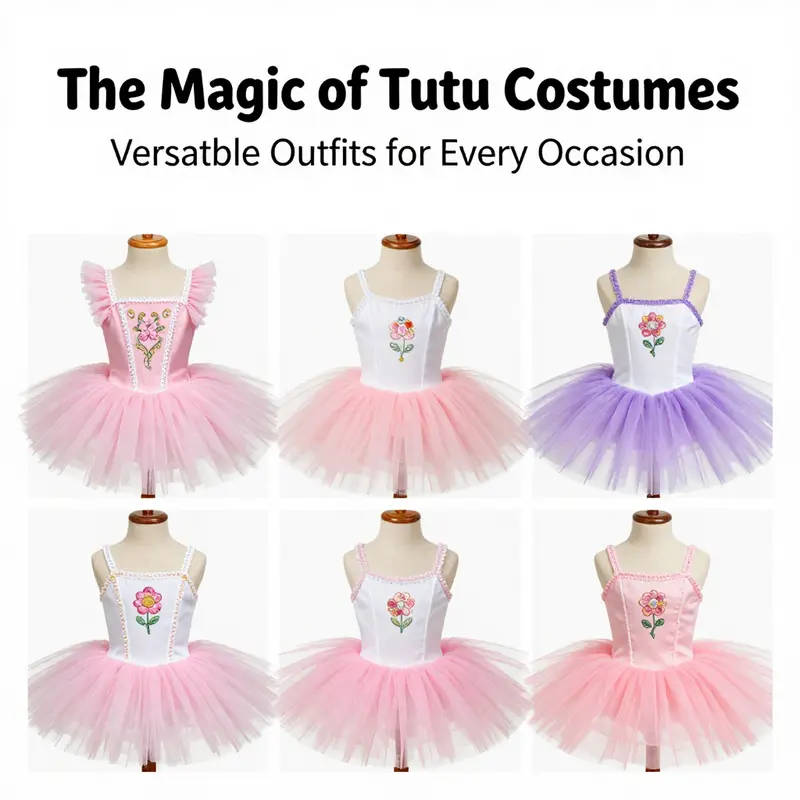
A tutu costume has always carried a particular kind of promise. It is not merely a dress of layered tulle and a circled silhouette; it is a doorway to movement, mood, and moment. In recent years, that promise has expanded, as designers, makers, and wearers alike have learned to treat the tutu as a canvas for personalization. Customization extends well beyond size and fit. It becomes a language of expression, a way to declare who the wearer is, what they love, and how they want to move through a crowded room or a quiet stage. In this light, the tutu evolves from a ready-made garment into a bespoke performance tool and a wearable memory, capable of turning a simple costume into a story told in swirls of color, texture, and shape. The result is a spectrum that covers professional performance, school and community events, themed parties, and everyday play, all anchored by the same core feature: a soft, breathably constructed skirt that invites dynamic motion without sacrificing comfort or safety.
At the heart of customization in tutu costumes is a shift from uniform mass production to deliberate, artisan-like craft. For performers who rely on precise silhouettes and dependable movement, bespoke tutus are not extravagance but necessity. They demand high-quality materials—layered tulle and gauze for body and lift, lining fabrics that glide against the skin, and reinforced waistbands that hold a dancer’s form through complex sequences. The customization process often begins with a concept and a close dialogue between maker and wearer, sometimes through a design studio that specializes in dance costumes. The aim is to translate the dancer’s needs into a fabric map: the weight and stiffness of the tulle to hold a hoop, the stiffness of the bodice to encourage upright alignment, and the way color shifts or gradients catch the stage lights during a performance. In this ecosystem, embroidery motifs, such as stylized flowers or winged creatures, are not mere embellishments; they are symbolic extensions of the piece’s narrative. A rose motif might echo a classical ballet story, while a bluebird motif could signal a lighter, more whimsical mood. These details matter because a tutu is, above all, a visual cue—telling the audience where to place attention, and how to feel as the performer moves.
The practical side of customization for professionals often centers on function as much as form. Dance is about clarity of line and freedom of movement; any costume that tethers the body or distracts from motion becomes a liability. Bespoke studios respond with cut and fabric choices that honor the dancer’s range of motion. They tailor hoop size, adjust the balance of the tutu’s layers, and select fabrics that resist sagging after repeated spins and jumps. The result is a costume that holds its shape without choking the performer, that breathes during long rehearsal days, and that transitions gracefully from the quiet of backstage to the thunder of a final bow. For those seeking a tailored solution that aligns with professional standards, there are pathways to access these services through dedicated professional tutu categories. For example, you can explore options within the professional tutu category to see how a studio might approach the balance of aesthetics and performance. professional tutu category. This link points toward a space where designers detail their approaches to cut, color, and movement, offering a window into how customization translates into onstage presence.
Materials chosen for professional custom tutus reflect a careful negotiation between durability and beauty. Layered tulle remains the workhorse, providing the characteristic flare and volume. Gauze or organza can add a whisper of texture at the edges or a subtle shimmer that catches the light during a slow, gliding turn. The inner layers often use satin or soft lining for next-to-skin comfort during long performances, with reinforced stitching at stress points to withstand the rigors of rehearsals and touring. When color is involved, designers may create gradients that begin as a deeper hue at the waist and fade toward softer tones at the hem, offering a visual metaphor for ascent and momentum. Embroidery and appliqué provide an extra dimension of artistry. A rose, a bluebird, or a cluster of tiny sequins can be stitched or fused with care to avoid adding unnecessary weight. Each additional element is weighed against the dancer’s needs: will it snag on stage hardware, will it interfere with airflow, and can it be cleaned effectively after a performance? The manufacturing ethos, in this case, centers on longevity and repeatability, ensuring the costume can be repaired, stored, and reused for multiple shows without losing its form.
This elevation of customization is not limited to elite artists. It extends into the realm of everyday wear and community events, where personalization becomes a shared ritual rather than a rare luxury. A tutu can be adapted for a birthday party, a festival parade, or a school performance, allowing families to participate in the creation process and to see their ideas realized in fabric. Here, personalization favors versatility and practicality. Standalone tutu skirts offer a simple, adaptable option for children who are still growing, with adjustable waistbands that accommodate growth spurts and frequent wear. These pieces can be layered with a variety of tops—from cropped tanks to long-sleeve leotards—enabling a quick transformation from classroom rehearsal to a weekend outing. The emphasis on machine-washable fabrics and sturdy elastic waistbands makes such designs especially friendly for households with energetic kids, frequent costume swaps, and the need for easy care after a costume party or a post-game celebration. In this everyday axis, personalization often leans toward color coordination and detachable accessories that unlock multiple outfits from a single base piece. A detachable tail, a headband with ears, or a sparkly belt can shift the same tutu from a playful cat theme to a heroic heroine, preserving the core silhouette while updating the mood with a few simple add-ons.
Thematic elements become a powerful tool in personalization. A black cat tutu illustrates how a single concept can drive a complete wardrobe of accessories and styling cues while staying within a coherent aesthetic. Detachable tails, cat ears headbands, and carefully chosen fabrics can render a costume that is simultaneously chic and playful, elegant yet approachable for children and adults alike. The design logic stays practical: detachable features simplify storage and reuse, while sparkly fabrics retain the dramatic flair that makes the tutu silhouette so arresting in dimly lit venues. The same principle guides more intricate character-inspired tutus, such as those modeled after fairy-tolk or mythic figures, where the outer layer might be glossed to resemble a seashell or a wing with a soft gloss, complemented by a satin inner layer for comfort. In each case, customization helps bridge the gap between a character’s identity and the wearer’s corporeal presence, allowing the audience to experience the character as a living, moving extension of the performer.
Beyond performance and fashion, personalization in tutu design speaks to a broader cultural impulse toward individuality. Consumers want garments that feel earned, not borrowed. A customized tutu communicates care, time, and attention—the sense that someone took the effort to understand the wearer’s story and translate it into fabric and form. This cultural shift toward individuality has practical implications for producers and retailers alike. It broadens the market from a few standard options to a landscape of possibilities. It invites customers to participate in the design process, to choose color stories, embroidery motifs, and even the proportions of the skirt. It also encourages sustainability, as personalized tutus often find longer life cycles through reuse in family celebrations, photoshoots, or school productions. The tactile nature of the process—pinning a mock-up, adjusting a waistband, trying on a sample, refining a stitch—turns costume-making into a collaborative art that binds maker and wearer in a shared memory.
To support this movement, marketplaces and studios have begun to emphasize safety and usability alongside style. Costume fabrics are selected for their breathability and stretchability, reducing heat buildup during performances and practice. The waistbands are designed to be secure yet forgiving, accommodating a range of body shapes while preserving ease of movement. Detachable elements are standardized to stay with the wearer during vigorous activity, but they are also easy to detach for quick wardrobe changes or for laundering. In addition, many customizable tutu offerings provide care guidance, ensuring that repeated use across different events does not degrade the garment. This attention to care is particularly meaningful for families who wish to keep a single piece in rotation for many years, transforming it into a treasured heirloom that travels from one celebration to another.
The relationship between customization and technology also enters the tutu story in subtle but meaningful ways. Digital design tools enable designers to prototype color gradients, embroidery patterns, and seam lines before a single thread is cut. Virtual fabric swatches and 3D simulations help ensure the silhouette reads correctly from every angle, an important consideration for staged performances and street parades alike. Even with all the digital aids, the tactile reality of the finished piece remains central. There is a quiet magic when the first flutter of tulle meets a stage light and the dancer feels the fabric respond with lift rather than resistance. The best personalization honors both the eye and the body: it is as much about how the tutu looks as how it carries and supports a performer through space.
In embracing customization, the tutu costume moves toward a holistic practice that honors craft, performance, and personal narrative. It becomes a bridge between individuals and communities, enabling children to choreograph their own stories and adults to don new identities for special nights. It invites educators to involve families in school pages and community theaters to celebrate local talent through unique costumes rather than off-the-rack options. It also opens invitations for collaboration across disciplines: designers, dancers, seamstresses, parents, and students can co-create costumes that tell a shared story in a singular voice.
Even as customization grows, the tutu retains its essential essence. The circular, layered silhouette remains its most powerful attribute—a kinetic sculpture that amplifies rhythm and grace. The material choices, from the softness of the tulle to the satin underlayers, keep comfort at the music of the design, ensuring a wearer can perform, pose, and play with confidence. Personalization does not erase the tutu’s lineage in classical ballet; it enriches it by inviting contemporary imagination to fuse with tradition. The result is not a disposable fashion item but a living garment, capable of evolving with the wearer through seasons of life, performance, and celebration.
As customization continues to shape the tutu’s future, there are practical considerations that guide every decision. Fit remains paramount; an adjustable waistband and carefully measured hoop determine how the skirt sits and moves. Care and maintenance follow closely; most modern tutus prioritize machine-wwashable components or easy-clean fabrics to support busy households and touring schedules. The materials chosen need to balance stiffness for lift with softness for comfort. The aesthetic choices—color, texture, embroidery—are weighed against durability and the practicality of repeated use. In this evolving landscape, the tutu stands as more than a costume. It is a collaborative project that reflects a wearer’s imagination, a designer’s craft, and a community’s shared desire for expressive, celebratory movement.
The journey of customization in tutu costumes also hints at a larger ecosystem of supply and skill. Education and access increasingly enable more people to participate in personalizing their costumes. Workshops, community studios, and online guides demystify the process, teaching families and aspiring designers how to select fabrics, plan embellishments, and execute reliable finishes. The result is a more inclusive market where more voices can contribute to the design conversation, turning a once-limiting costume into a platform for creative experimentation. In this sense, the tutu becomes a microcosm of a cultural shift toward participatory fashion, where individuality is not a fringe benefit but a fundamental attribute of modern costume culture.
The chapter in customization thus threads together several strands: professional demands for performance-ready precision, family-friendly practicality for everyday wear, and the imaginative freedom that makes each tutu a personal statement. It recognizes that the most compelling tutu is not merely a pretty skirt but a well-considered instrument of expression. The wearer’s story—whether a dancer preparing for a solo, a child preparing for a school recital, or an adult stepping into a festive alter ego—is enriched when the garment is built to carry that story across stages and days. In this sense, personalization is not a garnish but a core instrument, enabling a tutu costume to speak in louder, more intimate ways.
The future of customization in tutu costumes looks toward deeper integration of performance data, more refined fabric science, and an even broader palette of themes that invite new audiences into the fold. It also points toward responsible design practices that value longevity, recyclability, and safe care. As costumes cycle through rehearsals, performances, and celebrations, the ability to tailor, repair, and adapt ensures the tutu remains a relevant, beloved garment across generations. In a world where fashion often aims for rapid turnover, the tutu stands out as a counterpoint—a garment designed to endure, to be remade, and to grow with the person wearing it. This is the power of customization: turning a timeless silhouette into a living, evolving expression of identity and imagination.
For readers curious to explore how professional and bespoke tutu projects come to life, a closer look at the professional tutu category can offer practical insight into design motivation, material choices, and construction logic. It serves as a gateway to understanding how customization channels artistic intention into fabric, stitches, and seams, while maintaining the dancer’s comfort and performance integrity. The tutu, in its most personalized forms, becomes not only a costume but a collaboration—between maker, wearer, teacher, and audience—learning to speak in motion about who we are and what we can become.
Within this broader landscape, personalized tutu designs also echo a sentimental dimension. Customized newborn outfits with named revisions, playful adult interpretations for nightlife or themed events, and nostalgia-laden family ensembles reveal how deeply costume can be braided with memory. These stories—whether of a first recital, a milestone birthday, or a shared pageant in a school gym—highlight why the tutu endures as a beloved form. It blends the discipline of ballet with the whimsy of fantasy, the practicality of everyday wear with the drama of the stage, and the intimate imprint of personal taste with the public act of performance. In short, customization does more than alter a costume; it deepens the experience of wearing it, making each motion and each moment feel specific, meaningful, and memorable.
As the craft continues to unfold, designers and wearers alike will likely push the boundaries of what a tutu can carry—be it through even more adaptive materials, new embroidery languages, or interactive elements that respond to movement. Yet the essence remains clear: a tutu costume, when customized with care, becomes a bridge between the wearer’s inner landscape and the outer world that witnesses their expression. It is in this bridge that the tutu proves its enduring relevance—an ever-evolving garment that keeps faith with its roots in classical performance while opening doors to modern storytelling and personal resonance.
External resource for further reading on customizable tutu design and versatility can be found here: https://www.annashi.com/collections/tutu
Final thoughts
Tutu costumes represent a remarkable fusion of tradition and creativity, offering extensive versatility, thematic character, and functional design tailored for performance. As business owners, recognizing the array of options in tutu styles and their adaptability can make a significant impact. Capitalizing on these opportunities for customization is key to attracting diverse clientele and reinforcing brand appeal. Embrace the enchanting world of tutu costumes, and watch your business flourish by providing customers with quintessential outfits for every occasion.