
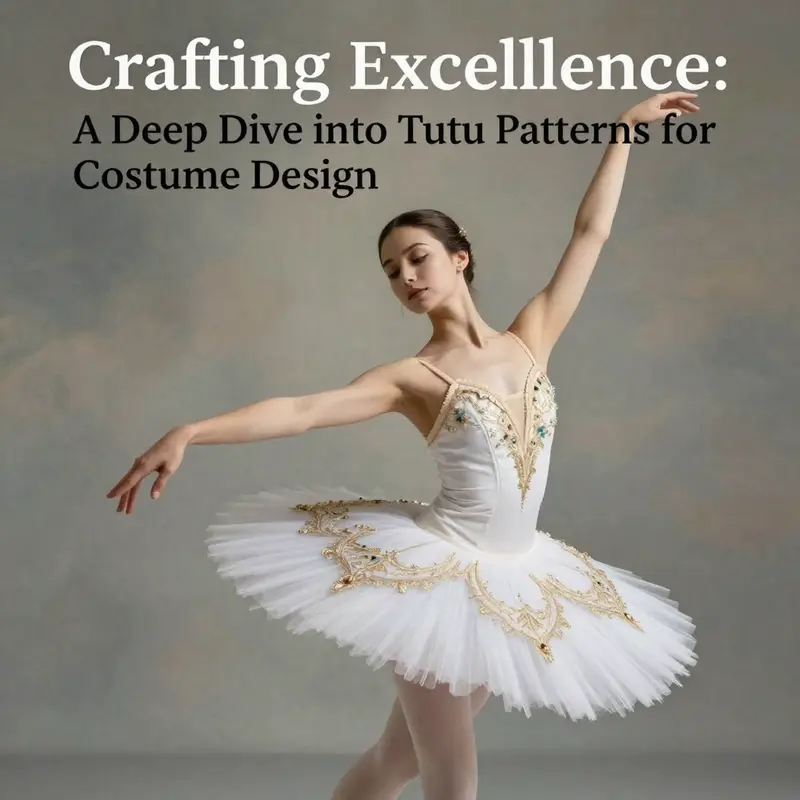
Within the realm of ballet, the tutu stands as an iconic symbol of grace and artistry. Yet, behind the elegant silhouette lies a complex labor of design—tutu patterns. Understanding these patterns is vital for business owners in the costume design industry, as they influence production costs, design quality, and customer satisfaction. The subsequent chapters will guide you through the essential construction and design principles of tutu patterns, explore the various styles they encompass, discuss the materials and techniques employed, assess their economic impact on the industry, and uncover their cultural significance in dance performance. As you delve deeper into this intricate subject, you’ll gain the insights necessary to enhance your business offerings and cater to the unique needs of your clientele.
null
null
From Silhouette to Sparkle: The Tutu Pattern as a Living Language Across Styles
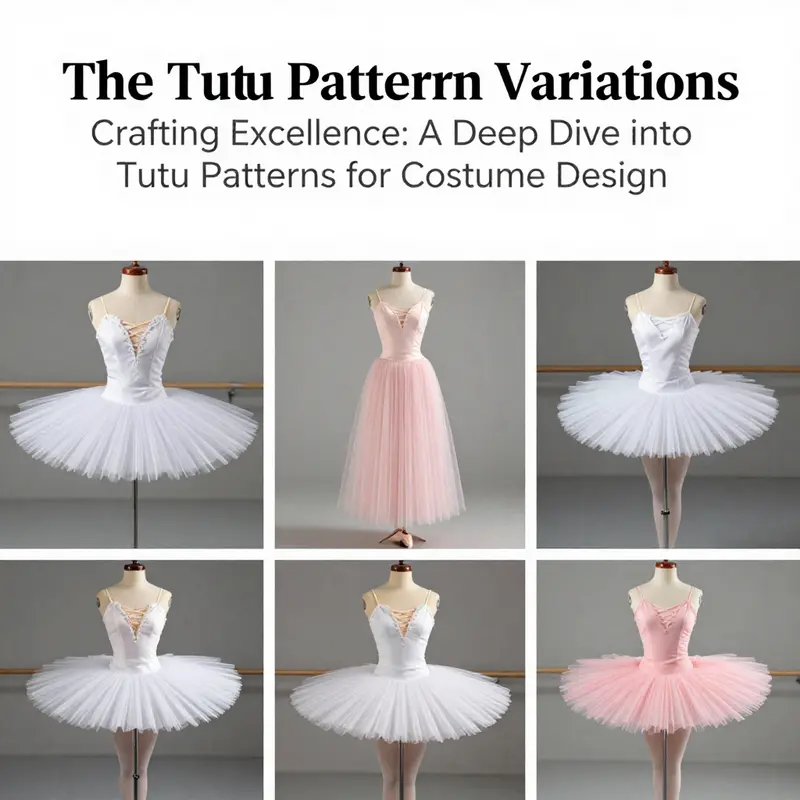
The tutu pattern is more than a set of measurements and steps; it is a living language that translates intention, movement, and character into fabric. Each layer, each seam, and every waistband decision communicates something about how the wearer will inhabit the stage. When designers speak of pattern choices, they are talking about how a silhouette can hold a story without sacrificing comfort or durability. The tutu, in its most clarified form, is a built structure of volume and balance: the bodice anchors the upper body, while the skirt asserts its presence through carefully staged layers of light, stiff, or even flexible materials. The pattern dictates where the fabric breathes and where it stiffens, how the layers catch light, and how the dancer’s legs are framed in view of an audience. This is why variations in pattern—princess, ballerina, character, and even the playful offshoots like rainbow tutu socks—are not mere adornments but deliberate translations of function into form. The variations share a common thread: a core method of assembly, a shared vocabulary of cuts, and a shared concern for how weight, movement, and durability interact. Yet each variation stretches that core in a new direction, enabling the tutu to perform differently while remaining recognizable as part of the same family.
Consider the princess tutu as a ceremonial silhouette within the broader family. The effect is orchestral: a fitted bodice that anchors the torso, then a skirt that unfurls in tiers. The pattern for this style prioritizes maximal visual impact, which means the cutting plan often allocates multiple layers of soft, voluminous tulle or a tulle-like fabric with a delicate shimmer. The outer layers may be longer and more peripheral to the central seam, while the inner layers contribute necessary stiffness and lift. In pattern terms, this translates to a careful choreography of layer counts, fabric weights, and length increments that produce a cathedral-like silhouette in motion. The waistband must be secure enough to keep the structure upright, yet flexible enough to accommodate long rehearsals. The design choices become a conversation between dreamscape and feasibility: how to realize a fairy-tale breadth without sacrificing dancer comfort or the ease of routine cleaning and maintenance. The result is a tutu that photographs well, catches the light from multiple angles, and still feels like a second skin when the dancer twirls. When one studies the construction details behind this style, a consistent pattern emerges: emphasize volume through layered arcs, maintain a controlled center of gravity around the waist, and use fabric with enough stiffness to hold shape while remaining pliant enough to flutter on a grand jeté.
The ballerina tutu offers a different emphasis, aligning more closely with movement and line. Its pattern leans toward a sleek, continuous line from the bodice to the crown of the skirt, with layers chosen to enhance the dancer’s form rather than to overwhelm it. The bodice is often made from a soft, stretchable fabric to maintain comfort for hours of practice and performance. The skirt itself uses multiple layers of lightweight tulle to create a halo around the legs, allowing clean, uninterrupted leg lines that are essential to classical ballet aesthetics. In pattern terms, the emphasis shifts from sheer width to controlled height and evenness of lift. The layers are designed to collapse into a whisper-soft silhouette at rest, but bloom into a precise halo when the dancer moves. This requires a pattern that accounts for the dancer’s center of gravity, ensures uniform tension around the waistband, and places emphasis on symmetry so that leg lines remain legible to judges and audiences alike. Practically, the pattern for a ballerina tutu might call for a longer waist-to-skeletal connection, with stiffer petticoats or netting underneath to preserve silhouette without creating drag or resistance. The result is a garment that seems to float as the dancer travels through turns and leaps, a visual poem of discipline and grace.
Character tutu dresses, by contrast, celebrate storytelling through color, texture, and sometimes extra accessories. The pattern here invites a broader palette and more assertive design elements, because the goal is instant recognition of a character, motif, or journey. The bodice may be embellished with appliqués, embroidery, or sequins that echo a costume from a story, while the skirt’s layer arrangement might employ bolder color blocks or contrasting trims. The pattern must accommodate such embellishments without compromising strength at the seams or the skirt’s ability to sway with each step and turn. This requires careful planning of seam placement, reinforcing stitches, and strategic use of interfacings or stabilizers that keep decorative elements from warping the silhouette. The pattern also benefits from modularity: sections that can be added or removed depending on the event or the available time for fabrication. In this way, the character tutu becomes not only a garment but a canvas for theatrical transformation, enabling the wearer to inhabit a new role with immediate clarity.
A broader, lighter variation appears in something like rainbow tutu socks or leg warmers, which reference the tutu aesthetic without forming a complete dress. These accessories present different pattern challenges and opportunities. Because their function is mobility-first and warmth-second, the pattern must prioritize elastic fit, stretch compatibility, and resilience to repeated bending and stretching. The construction may rely less on a rigid waistband and more on cuffs that grip but do not constrict, ensuring the legs remain free for rapid footwork. The visual impact here is achieved through color, texture, and volume at a smaller scale, yet the same design logic—how the fabric will drape, bounce, and catch light—applies. The idea is that even these lighter, more playful items participate in the same sensory conversation as full tutus. The cut lines, seam placements, and fabric weight choices all work toward a cohesive expression of movement, whether the wearer is on a proscenium stage or in a school gymnasium.
The practical dimension of pattern work often centers on the science of fit and the craft of seam integrity. Across all variations, the waistband remains the anchor point for stability and comfort. It must accommodate a range of dancer bodies, from the compact to the curvy, while resisting the pull of long skirts during leaps. The layering strategy—how many layers, how stiff the front rows, and where to place stiffeners—must align with the dancer’s height and leg length. These decisions influence the overall proportion of the tutu and its behavior under light and shadow. Fabric selection is never arbitrary. The choice of tulle, organza, or blends, the degree of stiffness, and the finish on the edges all contribute to how the pattern translates into a wearable work of art. A well-cut pattern eliminates drag, reduces snag risk, and allows for clean lines when photographed or filmed. It also anticipates maintenance needs, since tutus and their kin require careful laundering and storage that preserve their structural integrity across performances.
The lineage of the tutu pattern is not merely technical; it is historical and aspirational. Patterns have evolved alongside stagecraft, reflecting advances in fabric technology, new decorating techniques, and changing expectations of audience experience. The tapestry of styles—princess, ballerina, character, and the whimsical variations—maps a continuum from ceremonial grandeur to intimate mobility. In that sense, the tutu pattern is a thread that ties together centuries of dance through a shared grammar of cuts, layers, and attachment methods. It invites experimentation while demanding respect for the mechanics of performance: a tutu must be light enough to move with a dancer yet sturdy enough to maintain its silhouette across hours of stage lighting. Designers who work with these patterns learn to balance bold visual statements with the practical realities of fabric behavior under heat, humidity, and motion. When done well, the result is a garment that feels effortless—an enabling instrument that helps dancers tell stories with their bodies as naturally as they breathe.
For readers who want to see how this language translates into finished forms, one can study a sample lineage of patterns through online catalogs and studios that publish their templates. The choice to inspect a specific example—such as a tutu that emphasizes a blue gradient with gilded trims—offers a concrete sense of how a pattern translates into a stage-ready silhouette. For a sense of how one studio translates these ideas into ready-to-wear patterns, see the example linked here: professional-ballet-tutu-blue-gradient-color-golden-trims-sequin-t0583.
In this wide frame, the tutu pattern emerges as a robust, adaptable system rather than a fixed recipe. It accommodates fantasy and folklore, formal recital and school performance, while maintaining an essential, shared core: the capacity to shape air, light, and movement into a narrative cadence on the body. The external history of tutus—their shapes, fabrics, and adornments—continues to inform contemporary practice, even as designers experiment with new textiles, laser-cut overlays, or micro-accents that glitter under stage lighting. The pattern is the starting line and the finish line all at once; it is the scaffold for art and the agent of performance. This intertwining of craft and storytelling is what makes the tutu pattern such a compelling case study in design discipline, from the narrow seam to the broad dream, from the collision of material physics with stagecraft to the intimate, singular experience of a dancer moving through a moment that feels both timeless and utterly present.
External resource: https://www.britishballet.org.uk/learn-about-ballet/tutus-and-their-history
The Fabric of Grace: Materials, Techniques, and the Architecture of the Tutu Pattern
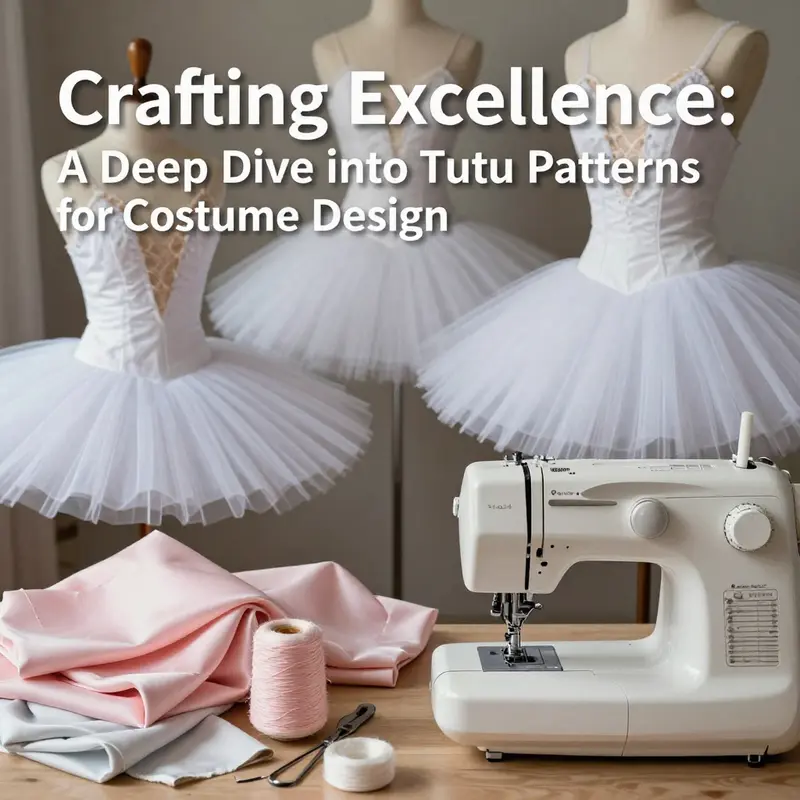
The tutu is more than a garment; it is a deliberate architecture of light, air, and motion. In the studio where patterns are born, the choice of material and the precision of construction are not afterthoughts but the governing forces that shape a dancer’s range, line, and presence on stage. The tutu pattern—its layers, lengths, and attachment points—reads the language of fabric, translating a designer’s vision into a silhouette that can endure repetitive rehearsals and luminous performances alike. To understand the tutu pattern is to explore how materials and techniques collaborate to turn a sheet of net and a spool of thread into something that seems almost to transcend gravity. It is, in essence, an anatomy of grace, written in fiber and seam, tuned to the needs of both body and movement. When designers reference the pattern, they are tracing an ontology of fullness, stiffness, and fluidity, asking how many layers are necessary, what texture each layer should convey, and how the assembly will respond to the dancer’s skirted choreography.
Tulle remains the backbone of traditional tutus, revered for its sheer beauty and its capacity to hold form. The fabric’s stiffness is what gives a classical tutu its signature silhouette, a sculptural halo that amplifies the dancer’s lines rather than competing with them. Yet tulle alone would be fragile and fickle without careful layering. The standard maneuver is layering multiple tiers—often eight to fifteen or more—each with a precise hem and a controlled degree of stiffness. The number of layers is not arbitrary; it is dictated by the desired fullness, the dancer’s waist size, and the tempo of the performance. A stiff, combat-ready silhouette might demand more layers and a tighter taper toward the hem, while a lighter, more flowing interpretation could lean on fewer layers and softer pleating. The pattern, therefore, acts as a weather map for volume: it tells the maker where to push outward and where to cradle inward, guiding fabric to play its role in the choreographic drama rather than distract from it.
Satin, with its smooth drape and subtle sheen, introduces a different conversational note to the tutu. When satin layers are incorporated—especially for formal or gala interpretations—the silhouette gains a luxurious edge that can catch stage lighting in new ways. Satin does not stand in opposition to tulle; it complements it by adding depth and a controlled luster that helps the tutu read as a finished garment rather than a mere scaffold. The pattern then negotiates between the crisp, glassy surface of satin and the airy, sparkling core of tulle. It becomes a balancing act: how to maintain the featherlight feel of a tutu while ensuring the surface gleam remains coherent under the glare of a proscenium. For designers who want a more contemporary or couture-inspired tutu, satin layers can be interleaved with mesh panels or tulle ruffles to create a hybrid texture that reads as both traditional and modern. The pattern’s cutting templates must anticipate these transitions, with allowances for seam finishes, edge hems, and the subtle shifts in hang that occur when satin interacts with stiffer interiors.
Mesh deserves mention as a secondary ally in the material family. It provides breathability and flexibility, making it a practical choice for more active performances or for versions that aim to balance performance with wearability. Mesh can be used in underlayers to reduce bulk while preserving airiness, or it can appear as decorative inserts that reveal the underlying structure in a controlled, architectural fashion. The tutu pattern can accommodate mesh without sacrificing the classic silhouette by adjusting layer counts and the stiffness of adjacent coats. The pattern’s success here rests on precise measurement and careful testing: the mesh must neither sag nor distort the shape when the dancer moves through leaps and spins, and it must hold up under the strain of repeated folding and unfolding of the garment. In this way, mesh expands the designer’s toolkit without compromising the fundamental principle of the tutu pattern: the light, buoyant outward expression paired with a secure, comfortable fit at the waist.
Eco-friendly textiles are increasingly finding a place in the repertoire of tutu construction. Recycled polyester, organic tulle, and other sustainable options respond to a growing demand for responsible fashion while still delivering the required volume and stiffness. The transition is not purely ethical; it is technical as well. Recycled fibers must be tested for fiber integrity, colorfastness, and the long-term behavior of the fabric under repeated cleaning and frequent wear. The tutu pattern, in turn, evolves to accommodate these fibers through adjusted layering guidelines, different weaving tensions, and sometimes altered hem allowances. The industry encourages—through guidelines and best practices—the use of such materials without sacrificing durability, comfort, or the garment’s dramatic presence on stage. For makers who pursue sustainability, the pattern becomes a roadmap for selecting fabrics that will perform consistently across sizes and styles, while still allowing for the complex layering that defines the tutu’s characteristic bulk at the skirt’s midpoint and its taper toward the dancer’s hips.
The techniques that stitch these materials into a coherent garment are equally critical. Layering is the foundation, but it must be executed with a careful blend of pleating and gathering that creates a controlled bloom rather than an unbridled fluff. Pleats offer crisp definition, which helps in preserving a sculptural line when the dancer executes turns. Gatherings generate a softer, more organic volume that can respond fluidly to quick movements and varying stage lighting. The pattern guides these decisions by specifying where pleats should begin and end, how deep each fold should be, and how to anchor layers to the waistband to prevent shifting during performance. The architecture of the tutu depends on the discipline of seaming: invisible seaming and hemming techniques protect delicate edges, produce clean lines, and hide the stitching from view. This precision is not mere technique for its own sake; it safeguards the wearer’s comfort and the illusion of weightless movement that defines ballet. The waistband, often reinforced, becomes a stabilizing anchor that keeps the entire construction aligned with the dancer’s center of gravity. The attachment methods for the skirt portions—whether through elasticized waistbands, integrated undergarments, or other secure fastening systems—must match the pattern’s intended use, ensuring secure fit without restricting the dancer’s articulation.
Embellishment, too, resides within the orbit of the tutu pattern. Beadwork, embroidery, and appliqué are not mere decorations but structural accents that must harmonize with the fabric’s behavior. When a tutu moves, ornamentation on the outer layers must read as a continuous continuum with the base material, avoiding snag hazards and keeping the silhouette intact. The pattern thus prescribes not only where embellishments land but how they interact with the underlayers and the bodice’s lines. Luxury or themed designs—think gold accents, crystal-like embellishments, or color-blocked schemes—demand an integrated approach to the entire costume. The pattern’s role is to ensure that such accents do not disrupt the tutu’s balance, but instead amplify the visual statement while preserving comfort and performance reliability.
In practice, designers consult a spectrum of sources to refine their patterns and stay aligned with industry standards. They consider how to achieve consistent results across sizes—curvy, tall, petite—by applying scalable layer counts and waistband adjustments that respect proportional differences in body shapes. The aim is an inclusive approach that delivers a uniform performance experience, regardless of the dancer’s physique. The tutorials and clinical references that accompany pattern development emphasize the importance of adhering to material composition standards, testing for durability, and validating the garment’s behavior under rehearsal conditions. The result is a tutu that is not only beautiful but dependable, enabling dancers to focus on artistry rather than wardrobe concerns.
For reference to a practical example of high-end construction, one can look toward established examples that illustrate how a white satin-tulle combination can achieve a pristine, stage-ready appearance while maintaining the structural integrity required for long performances. A representative example in the market demonstrates how a white tutu can convey the serenity of a classic ballet narrative while remaining steadfast under bright illumination and constant movement. This demonstrates how a well-planned pattern anchors the garment’s form and function, even as the fabric choices drift toward the luxurious or the experimental.
The tutu pattern’s materials and techniques thus coalesce into a disciplined craft that honors both tradition and innovation. It is a study in how the simplest components—a net, a seam, a waistband—can be orchestrated into a garment that seems to float. The craft rests on a careful balance: enough fullness to create the signature silhouette, enough stiffness to hold the shape, and enough comfort to allow a dancer to inhabit the piece for an hour of rehearsal and a full night of performance. When a maker follows the pattern with an eye for material behavior and movement, the result is not merely a costume but an instrument of expression. The tutu becomes a partner to the dancer, presenting a tableau of control and spontaneity in equal measure. The patterns act as the conductor, coordinating the layers, the fibers, and the finishes into a symphony of form and function. And as designers push the boundaries—whether by integrating sustainable fabrics, experimenting with hybrid textures, or refining the pleat geometry—the tutu pattern remains a living framework, adaptable and enduring, capable of translating the language of fabric into the language of dance.
For readers who wish to explore a practical, high-quality reference to related costume details, see the example linked here: high-quality white Swan Lake tutu example.
External reference for deeper technical insight into historical and contemporary tutu construction can be found at a specialized technical guide: https://www.example.com/barbie-tutu-guide.
Silk, Tulle, and Trade: The Economic Currents of Tutu Pattern Design in Costume Markets
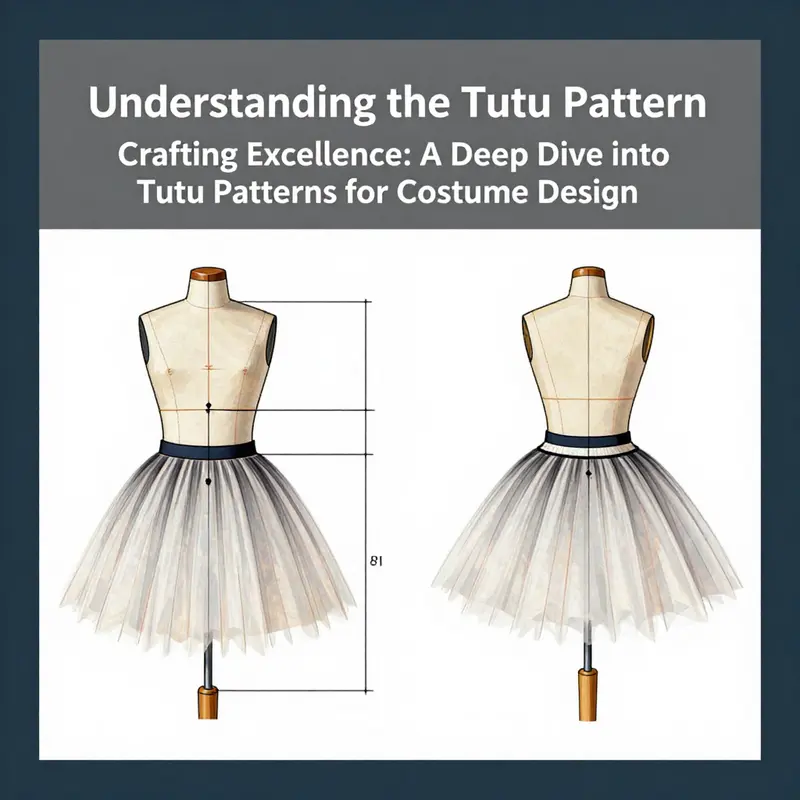
The tutu pattern, at first glance, may seem like a mere seamstress’s blueprint. Yet it is a hinge on which a broader economy turns. The cutting templates, the precise layering of tulle, the choice of stiffness and waistband construction—these decisions are not only technical steps toward a finished garment. They are economic signals that ripple through laboratories, ateliers, and retail floors. A tutu pattern maps not just fabric but possibility: how many layers, how long each layer must be, where the weight is distributed, and how the silhouette behaves under stage lighting or a high-fashion camera. When designers translate a classic silhouette into a modern kit of instructions, they are performing a kind of industrial choreography. The pattern becomes a shared language across producers, tailors, and hobbyists, a contract of expectations that enables reliable manufacturing, consistent sizing, and predictable performance on stage or in a studio.
Under this system, the pattern is both creative instrument and economic artifact. It dictates the tempo of labor in the workshop: the number of fabric pieces to cut, the sequence of seams, the method of attaching layers to a waistband, and the sequence by which the skirt gains its signature buoyancy. The pattern’s specificity—layer count, material suggestions, and attachment points—reduces the risk of waste, accelerates sample approvals, and speeds mass production. This efficiency matters in a market that ranges from child-centered events to lavish productions on grand stages. The same core template can be adapted to a short, agile tutu for a youth performance or to a stiffened, floor-length confection for a gala moment. In each case, the pattern is the economic engine that translates artistic intent into workable garments, ready for fit, pricing, and sale.
Job creation flows along the channels that the pattern helps to define. Textile mills, fabric houses, and trim suppliers respond to the demand generated by a tutu template that calls for multiple layers of tulle, netting, or stiffened overlays. Garment manufacturers translate the template into workshop workflows, while bespoke designers offer customized renditions for individuals or companies seeking a distinctive look. The rise of child-focused tutu markets—birthday parties, themed celebrations, and school performances—creates a robust demand for smaller-quantity production and rapid turnaround. Even when the pattern is used by home sewers, the economic effect expands. It nurtures skills development, provides micro-entrepreneurial opportunities, and supports a local economy around sewing, alterations, and prop-making. The pattern becomes a stepping-stone for small enterprises that can serve niche clients with highly tailored outcomes.
Market data illuminate the scale of this impact. Recent industry analysis places the global market for children’s formal wear and costume accessories, including tutu dresses, on a growth trajectory with a compound annual growth rate of about 6.3% from 2024 to 2030. That trajectory reflects not only a budding appetite for theatrical and party attire but a broader cultural shift toward expressive, performance-ready fashion. Tutus, which began as stage garments tied to ballet’s storied history, have become a visual language that designers borrow for modernity. Their distinctive silhouette—the layered, airy expanse of soft fabric—offers drama, movement, and a sense of occasion that can translate into licensing deals, collaborations with fashion brands, and even bridal or event wear. This fusion of performance heritage with contemporary aesthetics expands the tutu’s market reach beyond the theater, creating revenue streams from licensing, retail, and rental segments that did not exist a decade prior. The economic implications extend into education and training as curricula evolve to teach pattern-making, draping, and construction techniques that optimize both look and performance.
The modern tutu pattern’s value is inseparable from its capacity for adaptation. The same technique that yields a classical ballet silhouette also underpins avant-garde fashion explorations. Designers in couture and ready-to-wear increasingly exploit tutu-like structures to craft evening gowns, sculptural gowns, and even sportswear that benefits from dramatic volume without sacrificing mobility. The currency here is not only the garment’s appearance on a runway or in a lookbook but the licensing rights and collaboration opportunities that turn a pattern into a platform for brands to extend their creative identity. When a pattern-based approach is applied to luxury or limited-edition lines, it becomes a vehicle for value creation that travels beyond the initial garment. Production planning, material sourcing, and quality control all hinge on the precision embedded within the pattern, anchoring consistent outcomes across several production runs and retailers.
The rise of digital patterns and online resources further democratizes access to tutu construction. The research materials note a thriving ecosystem of downloadable templates, measurement guides, and instructional content that empower hobbyists and small studios alike. This DIY surge expands the labor pool, allowing more participants to enter the market with lower upfront investment in software, tools, and inventory. The availability of patterns online accelerates front-end design iterations; it enables faster prototyping and more frequent product updates, which in turn sustains consumer interest and sales velocity. In this context, the tutu pattern serves both as a craft tradition and as a flexible, scalable business input. The pattern is no longer a single garment’s blueprint but a modular framework that various creators can customize—adjusting layer counts, fabric types, and decorative treatments to meet specific events, climates, or customer preferences.
A practical illustration of how a pattern translates into a product line can be found in professional costume offerings that blend artistry with manufacture-ready templates. For instance, a Paquita-inspired tutu design translates a long-standing ballet tradition into a form that can be replicated for multiple dancers, sizes, and performance contexts. The template guides not only the aesthetic scale but also the fabrication sequence, ensuring that each version maintains the same structural integrity and movement. The capacity to reproduce the same silhouette reliably across productions minimizes risk for theaters and schools while enabling a wider distribution network. This dynamic is a core reason why tutu patterns attract attention beyond the dance floor, inviting collaboration between costume houses, event designers, and fashion houses seeking a striking, scalable silhouette for photo shoots, performances, or themed events. A representative case in point can be explored through a Paquita-inspired professional ballet tutu product page, which demonstrates how a single design thread can connect artistry, production efficiency, and commercial viability. professional-ballet-tutu-paquita-gold-white-t0601.
The DIY landscape, further reinforced by pattern marketplaces, nurtures entrepreneurship and local manufacturing ecosystems. Small studios can offer bespoke alterations and one-off commissions without the need to stock large inventory. Home sewers gain access to measurement guides, sizing charts, and instructional videos that reduce waste and improve accuracy. Pattern downloads and online tutorials democratize skill acquisition, enabling hobbyists to transition to service providers who can craft custom pieces for parties, school performances, or community theater. This shift supports a decentralized production model that strengthens local economies and fosters a culture of practical design thinking. In a broader sense, the tutu pattern becomes a blueprint for small business resilience, teaching practitioners how to balance artistic risk with production discipline. As a result, a single template can catalyze a portfolio of offerings—from rental units and alterations to bespoke commissions and small-batch collections—thereby multiplying employment opportunities and stimulating demand across adjacent sectors such as cone-shaped petticoats, understitching services, and specialty trims.
This economy is not simply about volume but about value created through precision and storytelling. The tutu pattern carries a narrative that resonates with the desire for performance, celebration, and self-expression. In the classroom and studio, pattern-making teaches geometry, proportion, and fabric behavior; in the workshop, it translates into repeatable processes that maintain quality. The cultural heritage of ballet informs contemporary design conversations, and the pattern becomes a conduit for translating that heritage into commercially viable forms. The result is a hybrid economy where traditional craftsmanship meets modern optimization, where a simple layer arrangement can unlock licensing deals, cross-brand collaborations, and new distribution channels. It is a reminder that fashion and performance are not separate economies but interwoven markets that rely on shared templates, common standards, and a mutual belief in the value of crafted precision.
Looking forward, the tutu pattern’s economic significance lies in its ongoing adaptability. As education expands, new materials emerge, and consumer preferences shift toward experiential fashion, the pattern will continue to function as a stable anchor for production planning, skills development, and creative experimentation. The dialogue between heritage and innovation will persist, with pattern-driven design enabling both faithful reproduction of a storied silhouette and bold reinterpretations that challenge traditional tropes. In this sense, the tutu pattern is more than a garment’s construction manual; it is a living economic instrument that sustains studios, supports families, and fuels a broader conversation about how performance attire can evolve within a dynamic global marketplace. For readers seeking a scholarly lens on this evolution, a foundational study offers broader context about the development and potential of ballet costume design in the twentieth century, underscoring how pattern-making has historically shaped both technique and industry. External resource: https://www.jstor.org/stable/10.1086/527793.
As the narrative of tutu patterns continues to unfold, the next chapter will explore how digital fabrication and scalable customization redefine precision in the sewing room. It will examine how new tools alter the relationship between designer intent, pattern templates, and on-demand production, shaping the next wave of economic impact across theater, fashion, and DIY communities.
From Pancake to Narrative: The Cultural Language of Tutu Patterns Across Dance Eras
In the theater, a tutu is more than fabric; it is a dictionary of meaning, a visual shorthand that signals era, genre, and intent before a single line is spoken. The cutting templates and sewing choices that create a tutu encode centuries of performance history. Patterns specify the number of layers, their length, the stiffness of the fabric, and how the pieces gather to a waistband. Each choice narrows or broadens the dancer’s possibilities, shaping how movement is read by an audience. The tutu becomes a portable stage language, translating social codes into a three dimensional form that dancers embody and audiences inhabit.
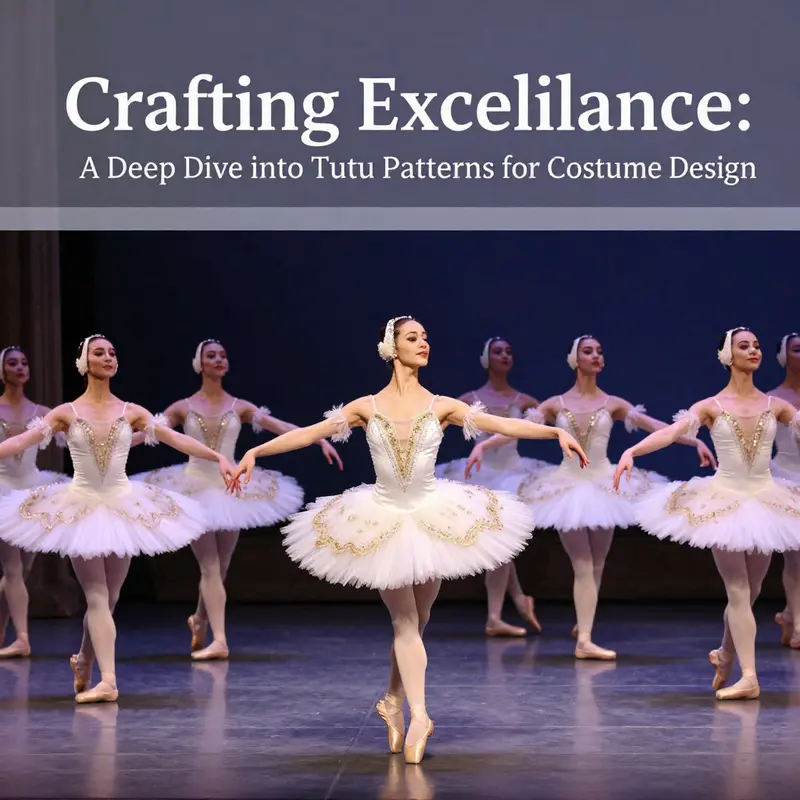
The classical, or pancake, tutu is instantly recognizable as a monument to the Romantic project. Its rigid planes of tulle sit in an almost architectural halo around the hips, lifting the legs into a high, precise arc as the body lengthens along a vertical axis. The silhouette is deliberately controlled; the layers stack in neat, flat tiers that flare outward, not downward, so the dancer’s extensions read as geometric and clean. The effect is not merely pretty. It is a deliberate visual statement about beauty, discipline, and discipline’s consequence: a memory of a courtly world where form and grace were public performances. The whiteness of the fabric, the almost demure symmetry of the layers, and the precise line they carve against the space above the stage all speak to a culture that valued purity, restraint, and the ideal of the ethereal performer who hovers between mortal presence and dream. In this sense, the classical tutu acts as a signpost; it tells a viewer that the story belongs to a lineage of European ballet that treats movement as a controlled revelation of inner character rather than an immediate expression of raw impulse.
As the twentieth century arrives, a more narrative, emotionally textured tutu evolves—the Romantic tutu in its softer, more flexible form. The romantic version often allows the skirt to brush the ankles or hover just beyond, with longer tiers that move with a dancer in a way that feels almost like a whispered conversation rather than a heralded proclamation. The patterns here include more varied textures, embroidery, lace, and deliberate irregularities that cue a shift toward character and mood as much as to plot. The choreography grows in complexity, inviting dancers to use breath and line to tease out longing, danger, or tenderness. The longer, legible movement of the romantic tutu mirrors the era’s fascination with folklore, dream imagery, and the interior life of the heroine. The costume thus carries cultural memory beyond the stage directions, tying the dancer to a web of folk motifs, cultural storytelling, and a sense that the world itself might tilt toward the marvelous.
In contemporary and cross-genre performances, tutu patterns become instruments of subversion and redefinition. Designers and makers experiment with structure and surface to reframe what a tutu can express. The layers may be deconstructed, or the stiffness reduced, allowing new kinds of mobility and unexpected silhouettes. Non-traditional materials, metallic finishes, or bold digital prints supplant older motifs, signaling a broader shift toward inclusion and experimentation in the theater. These patterns do not merely decorate the body; they challenge assumptions about gender, heritage, and power. A dancer may move through a piece wearing a tutu that resists conventional gravity, suggesting a character who reclaims space, or who crosses the boundary between performance and identity. The craft of pattern making thus becomes a quiet form of cultural commentary, a way to encode age, region, sexuality, and resilience into every seam and tuck.
The social function of tutu patterns extends beyond the theater. In classrooms, studios, and community stages, patterns serve as didactic tools that teach young makers how tradition travels. The templates that specify how many layers to cut, how to attach those layers to a waistband, and how to finish the edges become hands-on archives of technique. They bridge past and present, letting a student feel the weight of history in fabric and thread. A designer might study a historical pattern and translate that knowledge into a modern version that preserves the core silhouette while embracing current fabrics and manufacturing realities. Pattern collections, whether presented as printed templates or downloadable files, reveal how a craft moves through time. They illustrate how a single decision—how many layers or how stiff the understructure should be—can alter the dancer’s balance, the audience’s perception, and the social meaning of the costume itself. In this way, the tutu is not a static object but a mutable vessel of cultural memory, always ready to be reinterpreted for new voices and new stages.
The wide range of hues and motifs that appear in tutu patterns also speak to the stories audiences already bring to the performance. The white and pale palette of the classical pancake tutu conjures a world of purity and heavenly light, a theater of spirits and dreams where the heroine is moral ideal and danger is abstract. The softer lines of the romantic tutu invite narratives steeped in longing, enchantment, and sometimes danger at the edges of daylight. When a company or a maker chooses color, texture, or embroidery, they are choosing a cultural script that complements the ballet’s musical language. The patterns are not mere costumes; they are dramatic punctuation marks that guide the eye and frame intention. The audience reads a character’s temperament through fabric weight, translucence, and how the layers ripple in the air.
Children’s tutu patterns occupy a special corner of this cultural script. They carry aspirational narratives of princesshood, performance mastery, and self-determination. The visual shorthand of a pink or pastel tutu, the careful balance between softness and structure, and the ease of movement all work together to empower young performers as they learn to inhabit a stage persona. The patterns that shape these costumes are crafted to be approachable, safe, and visually legible for a child’s eye, so that a budding dancer can imagine herself in roles that require grace, courage, and sparkle. Yet even in these seemingly playful forms, the patterns encode a cultural expectation: that through disciplined practice and costume literacy, a child can step into an adult world of artistic expression. The tutu thus sits at the intersection of play and discipline, of imagination and craft, a symbol that grows with the dancer from early curiosity to professional refinement.
The craft of pattern making itself—cutting, layering, assembling, and finishing—reveals how knowledge travels across generations. A single template can be adapted for a new season, a new dancer, or a new aesthetic without losing the essential silhouette. This continuity explains the resilience of tutu patterns in the design ecosystem of dance. It also explains why designers and makers consult a broad repertoire of techniques and motifs when planning a production. The aim is not simply to replicate a look but to preserve the mechanical clarity that allows the dancer to move with freedom while the audience reads a story with clarity. The pattern thus becomes the skeleton on which the choreographic body is built. The designer, in turn, becomes a storyteller who composes weight, length, and restraint into a physical narrative the dancer enacts with every step.
Historical reverence and contemporary experimentation exist side by side in the realm of tutu templates. The ancient and modern converge in the way a pattern is drafted: the ratio between the inner waistband and the outer layers, the way the layers meet at the finest seam, the height of the hem, and the method used to attach stiffeners or underlayers that create buoyancy. Changes in fiber technology, such as the transition from natural to synthetic tulle, alter how a pattern behaves on the body and how it reads to an observer. A stiffer underlayer creates a sharper silhouette, while a more pliant one allows a dancer to articulate nuanced leg lines. Pattern makers must account for these shifts, balancing aesthetics with comfort, safety, and the demands of the choreography. The result is a living tradition that honors the form while inviting new interpretations, ensuring that the tutu continues to function as a vehicle for memory and invention at once.
The broader cultural resonance of tutu patterns also emerges in their diffusion into popular culture and education. While the classroom may emphasize technique, the stage—whether in a professional company or a community recital—uses patterns to tell stories that reflect the audience’s world. The same tutu pattern may appear in a donor-funded production in a regional theater or in a school program that introduces children to the vocabulary of costume design. In both contexts, the pattern’s language translates the intangible artistry of dance into tangible form: fabric, stiffness, length, color, and silhouette become the vocabulary by which a tale is told. The repetition of certain shapes across performances teaches communities what to expect from a ballet, just as variations on the same theme permit fresh perspectives within a familiar framework.
This chapter would be incomplete without acknowledging the repositories from which patterns spring and the networks that sustain them. Costume makers, teachers, and hobbyists share templates that range from highly detailed to simple, adaptable sketches. They annotate the number of layers, the intended length of each tier, the attachment method to a waistband, and the optional embellishments that tailor the look to a production s mood. The encodings in these templates map onto the social and artistic landscapes of their times, offering students a way to place a technical skill inside a cultural frame. They also provide a bridge to the broader theoretical conversations about how bodies become legible on stage and how performative identities are scripted through material choices.
In reflecting on tutu patterns, one can glimpse how a garment fabric becomes a medium for meaning. The act of pattern selection—how many layers, how stiff or soft, how long or short—offers a tangible way to negotiate between tradition and innovation. For the dancer, those decisions translate into the potential to execute a choreography with clarity and power. For the audience, the same choices translate into immediate comprehension of character and mood. The tutu, then, is not a mere costume; it is a cultural artifact that bears traces of the societies that produced it. It embodies a vocabulary of movement and a record of how performers and makers imagine the world through fabric.
To gain a fuller sense of the historical cadence behind tutu patterns, readers may wish to consult broader overviews of ballet costume history, such as the Royal Opera House resource. For those who are curious about how a single template can encode a long arc of cultural meaning, consider exploring the case presented in classical-ballet-tutu-little-red-riding-hood-t0399. The tale of a girl, a cape, and a search for belonging translates into a pattern that binds a silhouette to a myth, a connection that speaks to everyone who has ever imagined stepping into a story. This is the quiet power of tutu patterns: they anchor a moment in a lineage, while still inviting new performers to write the next page.
External context can deepen this understanding. The history of tutu patterns is not isolated to a single theater tradition but belongs to a wider diffusion of performance aesthetics across cultures and periods. The Royal Opera House has long documented how the tutu evolves in relation to narrative demands, stage technology, and the evolving role of women on stage. By examining this lineage, designers and dancers can appreciate how a seemingly simple choice of fabric or layer count plays a decisive role in how a character is perceived and how a scene is paced. The interplay of form and function in tutu patterns ultimately demonstrates that costume design is as much a storytelling discipline as choreography itself, with the pattern serving as the words through which a performance is written. For further historical context, see the Royal Opera House overview of tutus and their history at https://www.roh.org.uk/whats-on/ballet/tutus-and-their-history
Final thoughts
In summary, tutu patterns play a pivotal role in the costume design landscape, influencing not only the aesthetic appeal of ballet performances but also the operational efficiency and economic viability of businesses within the industry. By deeply understanding the construction, variations, and cultural importance of these patterns, business owners can better serve their customers and enhance their offerings. As you navigate the world of tutu patterns, consider how these elements can align with your business goals—leading to creative innovations and fulfilling customer needs. Embrace the artistry and technicality of tutu patterns to elevate your brand and empower the next generation of dancers.