
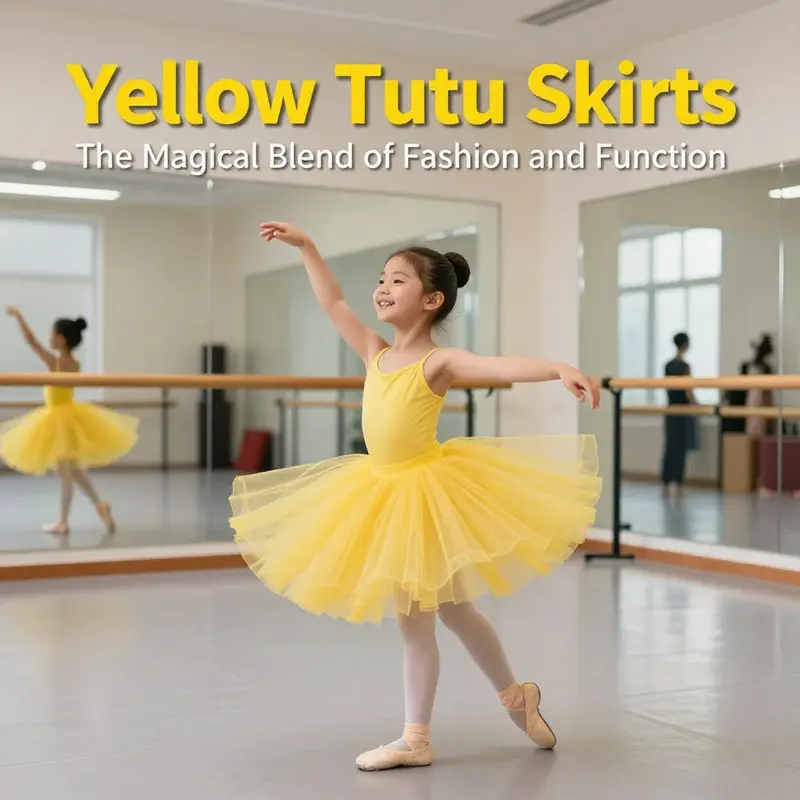
Yellow tutu skirts encapsulate joy and creativity, essential elements in children’s attire. Not only do they signal fun and playfulness, but they also play a significant role in broader fashion trends and cultural expressions. From stage performances to casual playdates, these skirts have proven remarkably versatile. In this exploration, we will delve into the fashion trends surrounding yellow tutu skirts, their cultural significance in children’s play, the economic realm they inhabit, the materials and technology used in their production, and their broad versatility spanning various activities. Understanding these facets empowers business owners to make informed choices in design and marketing.
Yellow in Motion: A Detailed Look at Tutu Skirts as Color, Craft, and Cultural Expression
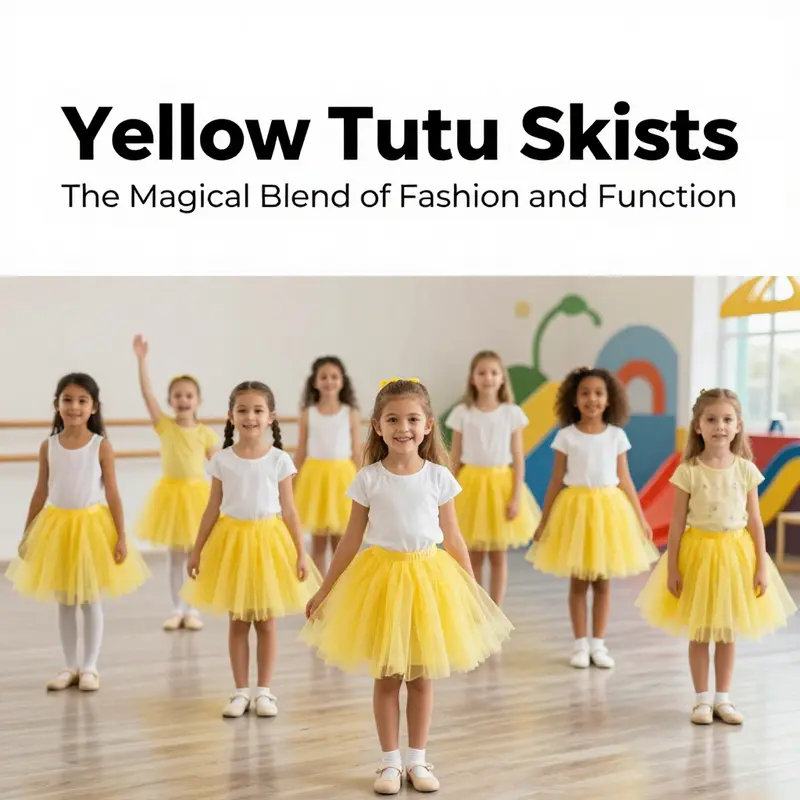
Across the playroom, the stage, and the crowded party hall, the yellow tutu skirt moves with a brightness that feels almost musical. It is more than a piece of fabric; it is a small, spinning portal into a world where intention becomes motion and color becomes storytelling. The skirt’s hallmark is its voluminous silhouette, built from layers of soft, airy tulle that catch the air with every turn and whirl. The elasticity of the waistband provides a comfortable, forgiving fit, a quiet promise that movement will be unimpeded by shifting seams or tightness. In this combination of light muscle and light fabric, the yellow tutu skirt assumes a dual role: a practical garment designed for posture and spin, and a symbolic one, inviting the wearer to inhabit a character, a mood, or a narrative with visible energy and playful confidence.
What makes the yellow tutu skirt particularly compelling is not merely its color or its flouncy layers, but the way the form supports movement. In the context of dance and performance, tulle is prized for its ability to hold shape while remaining pliant. The skirt’s multiple tiers create a buoyant bloom when the wearer moves, a visual rhythm that punctuates steps, leaps, and twirls. Each layer catches light differently, adding depth as the dancer’s shadow flickers over the fabric. For children, this translates into a tactile cue for storytelling: a princess or a sunbeam, a superhero or a winged creature—roles that are as much about perception as they are about technique. The garment becomes an instrument for imagination, a tactile partner in the play of pretend worlds.
The charm extends beyond childhood play. Adults crop up in costume parties, theatrical productions, and community events, drawing on the yellow tutu’s universal appeal: it communicates cheer, whimsy, and a certain theatrical boldness without requiring a rider on their message. The color yellow, in itself, carries cultural rhythm. It signals warmth, optimism, and energy. It is a color that can invite gaze, spark conversation, and soften heaviness with its lightness. When paired with movement, the color becomes more than an aesthetic choice; it becomes a narrative device that helps the audience register mood shifts, character intentions, and plot momentum in a manner that is immediate and intuitive. The tutu does not just clothe a performer; it frames their presence, guiding how audiences perceive and engage with the character on the stage or in the living room.
The production logic behind a yellow tutu skirt, particularly for children, centers on accessible comfort and durable construction. The elastic waistband is a small, practical innovation that makes the garment adaptable across a wide age range. In a market where a single design must accommodate growing bodies and evolving tastes, flexibility is essential. The multi-layered tulle, while delicate to the touch, is engineered to withstand repeated spins and gentle roughhousing that accompany spirited play. The color itself, while vibrant, is chosen with colorfast dyes that resist fading through repeated washing and frequent use. This is more than cosmetic care; it is an acknowledgement that a child’s imagination does not pause for maintenance, so the garment must meet the moments of exuberant play with reliability.
In the broader marketplace, yellow tutu skirts sit at a nexus of costume culture, children’s fashion, and performance wear. They migrate across contexts—from birthday celebrations and school recitals to community theater and cosplay gatherings. The economic pulse of this niche is shaped by seasonal peaks, especially around festive events such as Halloween and community fairs, when costumes become a social currency and a shared ritual of transformation. Even these economic currents reflect larger ethical considerations embedded in garment production. As brands and makers respond to consumer demand, they increasingly weigh sourcing practices, fabric traceability, and labor standards. The playful spirit of the yellow tutu should not obscure the fact that its creation involves careful choices about materials and processes. In a conscientious supply chain, tulle might be produced with attention to fiber content and dye chemistry that minimize environmental impact, while the elastic bands and trims are sourced from suppliers that uphold humane labor practices. The reality is that a fabric as light and airy as tulle can also be a vehicle for responsible manufacturing when care is given to sourcing and stewardship.
Advances in textile technology have subtly shifted what is possible with a yellow tutu skirt. Developments in dye chemistry and fabric finishing have allowed more durable coloration that remains bright after repeated washing and drying. Fabrics can be treated to maintain resilience under the stress of spins and rapid directional changes required in dance. Even the texture of the fabric has evolved; modern tulle can be refined to feel gentler against small skin, reducing irritation during long performances or lively play sessions. Lightness remains its centerpiece, but the embrace of durability and comfort is now part of the design brief. These technical refinements translate into a garment that looks as if it exists in a perpetual state of gentle breeze, catching, retuning, and releasing light as the wearer moves from step to step.
Color does the heavy lifting in conveying mood and intention, and yellow does so with particular gusto. In fashion discourse this hue is frequently linked to optimism, vitality, and openness. When a tutu skirt is yellow, the wearer’s silhouette can read as a beacon—visible in motion, easily read by observers, and capable of lifting the energy of a room or stage. In a costume design context, yellow can function as a storytelling signal, indicating sunlit settings, bright personalities, or moments of levity that punctuate a narrative arc. Designers who work with such garments often consider color harmony as a suite of relationships: yellow may pair with the cool crispness of blue or the soft romance of pink and lavender, creating a palette that supports both character and scene. Even when the wearer is not enacting a formal story, the choice of yellow can democratize attention, inviting onlookers to engage with the moment and participate in the mood the wearer creates.
The social dimension of the yellow tutu skirt is equally poignant. It sits within conversations about gender norms and fashion, challenging rigid boundaries by offering a garment that is inherently playful and expressive. The skirt invites all children, regardless of gender presentation, to explore performance, cosplay, and imaginative dress. This is not a mere relic of childhood adornment; it is a reminder that clothing can be an accessible medium for self-expression and identity exploration. The yellow tutu makes room for experimentation—whether a child imagines themselves as a sun in a village pageant or a heroic figure defending a make-believe realm. The act of choosing color and form becomes part of the child’s learning about selfhood, community, and the shared culture of play.
For readers curious about related garment families, a broader understanding of tutu forms can begin with the Basic tutu category, which highlights the foundational shapes that many variants build upon. This entry point can ground an appreciation for how a single color, a single silhouette, or a single moment of movement can carry layered meanings. You can explore this broader category here: Basic tutu category. Understanding the baseline helps illuminate why a yellow tutu skirt feels so particularly alive in performance, and how variations in layers, length, and volume contribute to the storytelling capacity of the garment.
The ways we encounter yellow tutu skirts in daily life, in classrooms, and on stages reflect a larger pattern in fashion: color and form acting together to invite participation, curiosity, and joy. They remind us that clothing can function as practical gear for movement and as a cultural artifact that captures a moment of shared imagination. The garment’s lightness invites a kind of ethical simplicity—focus on play, on safety, and on inclusivity—while its color and shape prompt conversations about aesthetics, mood, and community. In that sense, the yellow tutu skirt becomes more than a cute costume accessory. It is a living artifact that helps people, young and old, remember that clothing can be a tool for exploring feeling, space, and social belonging.
For readers seeking a deeper dive into the broader topic of tutu-related content and related costume themes, consider exploring related resources under costume-theme and related categories, which offer contextual examples of how color, form, and story intertwine in performance garments. As you navigate these resources, you may encounter a wide range of styles—from romantic and ethereal to playful and fantastical—each a reminder that a simple skirt, when charged with color and movement, can become a powerful vehicle for expression.
External reading for color psychology and its tie to yellow can offer further insight into how audiences perceive and respond to bright color in movement. To explore this dimension, see https://www.verywellmind.com/color-psychology-2795824
Yellow Tutu Skirts as Playful Portals: Color, Movement, and Imagination in Children’s Performance
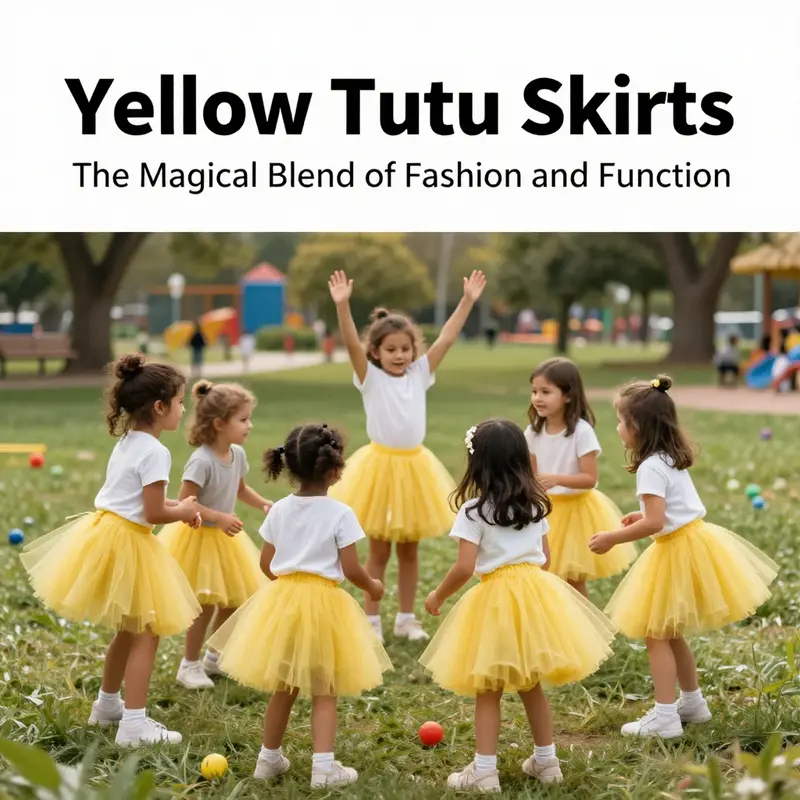
The yellow tutu skirt—bright, buoyant, and almost buoyant in spirit—opens a door to a world where movement becomes language and color speaks before words. In the realm of childhood play, it does more than clothe the body; it invites the wearer to inhabit a role, to rehearse a moment of performance, and to test the edges of possibility. The skirt’s signature is not simply its sunshine hue or its delicate layers of tulle, but the way it translates energy into motion. A child in a yellow tutu can feel the room respond to their steps, a tangible cue that play is valuable, that imagination can be organized into a small, joyful product of effort and grace. This is why the yellow tutu has endured as a symbol of joy, creativity, and unrestrained expression across many contemporary settings. Its charm lies not in myth or tradition, but in a shared, evolving understanding of childhood as a space for experimentation, where color and fabric become tools for self-discovery and communal storytelling.
What makes this garment so resonant in children’s play is its form. The tutu’s multiple layers of tulle create volume without weight, a lightness that seems to suspend a child in the middle of a leap or a twirl. The elastic waistband anchors the design in comfort, allowing for the kind of broad, unselfconscious movement that dance teachers prize and playtime demands. A yellow tutu moves with a child and, in turn, moves a child toward a sense of rhythm. The fabric’s softness invites touch and exploration; the way the light passes through the layers gives the skirt a rippling, almost magical quality as the wearer moves. In this sense, the yellow tutu operates like a small stage prop that is also a personal instrument. It gives a young dancer a quick, visible way to test a character’s mood—glee, courage, mischief, wonder—before any dialogue is spoken or any written script is consulted.
In a broader sense, the yellow tutu aligns with the modern child’s encounter with performance culture. Though there is no single ancestral meaning attached to yellow tutus, the color itself has long carried associations with energy, visibility, and optimism in many traditions. The garment becomes a portable theater, a wearable emblem that a child can don before stepping into a class, a party, or a makeshift performance in the living room. It supports a social script in which creativity is not merely a hobby but a meaningful practice. Children wearing yellow tutus are often asked to contribute to the story being told through movement—the fairy tale, the fairy, or the soaring creature dancing among imagined stars. In this shared dance of roles, the tutu helps knit a social fabric that values experimentation, risk-taking, and collaborative storytelling. The color’s brightness can also serve as a cue to peers and adults that a moment of play is underway, inviting participation and encouragement rather than self-conscious retreat.
The social significance of the yellow tutu in play spaces is further amplified by the context in which it is worn. In dance classes, performances, and informal play, the garment becomes a visual shorthand for a certain kind of energy: the ready-to-perform spirit. It signals to teachers and classmates that a child is prepared to explore steps, shapes, and tempo in a safe, guided environment. For many children, the tutu helps demystify the idea of performance. It marks the transition from solitary play to collaborative artistry, where peers contribute to a shared tempo and story arc. When children practice sequences in tutus, they are practicing more than technique; they are learning how attention to detail, posture, and timing can elevate a moment from ordinary movement to expressive communication. In this way, the yellow tutu doesn’t merely adorn the body; it scaffolds confidence, enabling children to stand taller, leap farther, and project a sense of self that feels both authentic and celebrated.
What we observe in classrooms and playrooms is a delicate negotiation between autonomy and guidance. The elastic waist gives personal control; the layered skirt offers a stage. When a child spins, the skirt’s rotation becomes a visible reminder of how body and fabric interact: air passes through the tulle, the layers shimmer, and the child’s heart rate might seem to rise in sync with the tempo of a drumbeat or a favorite song. This embodied learning—feeling the music in the body, translating emotion into motion—shapes more than a dance step. It shapes a sense of agency. The yellow tutu thus acts as a bridge between fantasy and agency, a playful device that helps children rehearse not only technique but identity: who they want to be on the stage of their own lives.
From a design and materials perspective, the tutu’s enduring appeal rests on a balance between spectacle and practicality. The layers of tulle must hold their volume through repeated washes and playful wriggles, yet they cannot dampen the child’s enthusiasm or restrict movement. The fabric choices have evolved with advances in textile production, offering softer textures, more vivid colorfastness, and greater resilience. A well-made yellow tutu will retain its cheerful hue even after several performances and a handful of laundry cycles. This reliability matters because consistency in color and form helps children develop a stable association between their actions and outcomes. When a child learns a dance sequence and sees the color and movement align in predictable ways, confidence follows. The tutu becomes a faithful companion in practice, a trusted symbol that growth is possible with time and effort.
In this light, the market for yellow tutu skirts—especially those designed for children aged roughly one to eleven—reflects a broader cultural pattern. The availability of multi-layered designs, comfortable fits, and a spectrum of sizes makes the garment accessible to a wide range of families and activities. The emphasis on versatility means these skirts are not restricted to formal recitals; they are equally at home in birthday party photo booths, impromptu backyard parades, or classroom dramatizations. Such adaptability speaks to a contemporary understanding of play as a daily, evolving practice rather than a series of occasional events. It also raises important conversations about sustainability and ethical production, reminding us that a garment worn by active, growing bodies should be crafted with care for the environment and the people who make it. In other words, the yellow tutu is not a fleeting costume but a small, portable system for creative development—one that invites ongoing attention to how we design for play and how we value the labor behind the fabrics that move with a child’s imagination.
To readers seeking a practical doorway into this world, the basic-tutu category provides a straightforward starting point that still honors the spirit of experimentation. It invites families to explore the beginner-friendly options that help a child first encounter the blend of movement and color that makes the tutu so compelling. For those curious about how beginners progress toward more elaborate looks or specialized themes, a simple step is to explore the basic tutu as a foundational piece. This approach helps caregivers and young performers cultivate a relationship with their own evolving style, allowing the yellow tutu to remain a source of delight rather than a fixed indicator of sophistication. The journey from simple to more complex costumes mirrors the child’s own growth in skill and imagination, with the garment serving as a steady ally through each new spark of inspiration.
Beyond personal play, the yellow tutu also touches on broader questions about how costume design intersects with childhood identity and social experience. The shift toward colorful, dynamic outfits in children’s fashion and performance reflects a cultural emphasis on play as a vital arena for emotional and artistic development. Bright hues, especially yellow, are not mere aesthetic choices; they signal openness to risk, curiosity about new roles, and a readiness to be seen. In this light, a yellow tutu is more than fabric and fringe. It is a social instrument that can invite peers to participate, celebrate effort, and recognize progress. The skirt becomes a shared artifact in a community of young performers where feedback, encouragement, and collaboration help children translate intention into action. As such, it contributes to a compound form of literacy—one that encompasses movement, color, rhythm, and social rapport—that supports children as they learn to navigate performance spaces with confidence and care.
The story of the yellow tutu, then, is not a single tale of fashion or trend but a layered narrative about play as a training ground for imagination, empathy, and resilience. It asks us to consider why children are drawn to bright colors and why a seemingly simple garment can become a powerful scaffold for growth. In classrooms and living rooms alike, the tutu’s magic lies in its ability to democratize performance. It provides a democratic stage where every child, regardless of background, can try on a character, test a movement, and claim a moment of spotlight. This is not about perfect technique or flawless display; it is about the act of showing up with courage, curiosity, and a willingness to be seen. The yellow tutu, light as air and bright as a new idea, makes those moments more accessible and more memorable.
External resource: For more on how costume design influences children’s performance and identity, see BBC Newsbeat. https://www.bbc.co.uk/newsbeat-58264931
Color, Commerce, and Play: The Economic Pulse of Yellow Tutu Skirts in Children’s Costume Markets
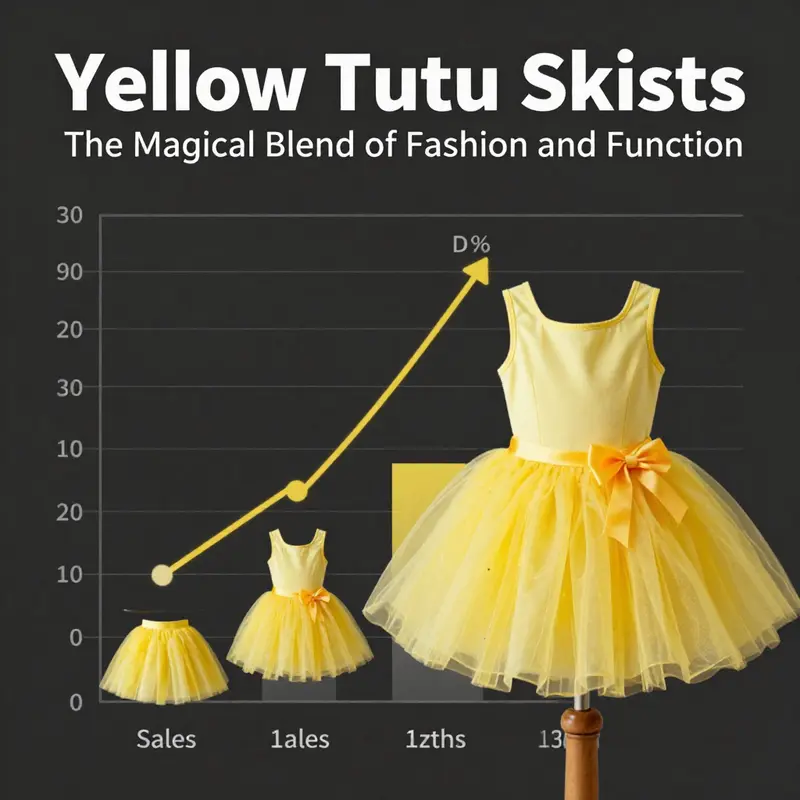
The yellow tutu skirt sits at a curious intersection of whimsy and commerce. It is a garment that carries color into the everyday realm of childhood, turning routines into performances and ordinary play into a small staged event. Its economic imprint emerges not from a simple line item on a balance sheet but from a cascade of choices across design studios, factories, retailers, and family budgets. When a bright, layered skirt is chosen for a birthday party or a school recital, it is also selected as a vehicle for imagination, for the momentary eruption of a character the child wants to inhabit. In that sense, the yellow tutu is as much a consumer product as it is a social artifact, and its market dynamics illuminate broader patterns in how children’s fashion blends delight with practicality, color with comfort, and play with commerce.
Market analyses in the wake of 2025 reveal a robust, yet uneven, geography of demand. North America accounts for a commanding share—approximately seven-tenths of global sales—while Western Europe trails with about one-fifth, and the Middle East lines up at around four percent. These figures are more than numbers; they map the places where family calendars are crowded with celebrations, where schools broadcast performances, and where the ritual of dressing up remains a reliable, year-round activity. The predominance of North America reflects dense consumer networks, seasonal shopping rhythms tied to holidays and recitals, and a high tolerance for fashion experimentation among caregivers who seek colorful, soft fabrics that minimize fuss and maximize ease of movement for active children.
At the heart of this market lies the yellow tutu’s visual appeal. The color, the layered structure, and the feather-light feel of tulle combine to create a look that photographs well, reads clearly on stage, and travels well from home to party venue. The fabric matters as much as the idea. High-quality tulle provides a soft, safe surface for little legs to kick and spin, while the multiple layers deliver volume that can sway with a fluttering ease. The elastic waistband is not a trivial feature; it is a design decision that supports freedom of movement during dance routines or spontaneous twirls during a party. In practical terms, this means retailers and manufacturers emphasize materials that hold their shape after repeated wash cycles and maintain a bright color through countless wearings in varied lighting conditions. These fabric choices, while technical, translate into tangible consumer satisfaction—kids look, feel, and move better in a skirt that remains buoyant and comfortable after a full afternoon of activity.
The demand is driven by events that place the yellow tutu in the center of social rituals—princess parties, birthday milestones, and even staged family photos. In many households, a tutu is not merely clothing but a prop for storytelling. A child might dress as a heroine or bestow a character’s signature aura with a few twirls and a bashful bow. For photographers, these pieces become essential elements of a vivid, memory-making tableau, urging parents to seek durable pieces that deliver in front of the camera and on a stage. The result is a steady pull of orders across both home markets and professional settings such as dance studios and theatrical groups. The demand for versatility—the ability of a yellow tutu to be a base layer for a party costume or a standalone recital outfit—keeps a broad catalog of options in play across retail shelves and online storefronts.
The retail ecosystem for these skirts demonstrates the multi-channel nature of contemporary children’s fashion. In-store displays entice shoppers with tactile samples, color contrasts, and the assurance of soft-touch fabrics. Online platforms expand the audience, presenting tools that help caregivers compare thickness, length, and layering. The ability to filter by age range, fit, and occasion accelerates purchase decisions, particularly for time-sensitive events such as birthdays or school performances. Across these channels, wholesale suppliers report growing interest in coordinated sets that pair yellow tutus with complementary shades—often pinks and lighter tones—to meet the demand for coordinated party outfits. This wholesale momentum supports bulk orders for events and studio programs, reinforcing the economic spine of the category.
As the market grows, so does attention to the ethical dimensions of production. The broader conversation about sustainable sourcing and fair labor practices finds a corresponding place within the tutu segment. Buyers increasingly seek assurances that fabrics are manufactured under responsible conditions, with attention to dyes that are colorfast but non-toxic for children and to processes that minimize environmental impact. This awareness translates into longer-term relationships between manufacturers and retailers, as well as a shift toward certifications and transparent supply chains. The economics of accountability may raise production costs in the short term, but they also yield long-term benefits in brand trust and repeat purchases, particularly among caregivers who want both joy and safety in the garments they choose for their children.
Technology has not stood still in this niche. Advances in textile manufacturing have refined tulle to improve its resilience, softness, and ability to hold color through repeated wear and laundering. Lightweight yet structured, modern tulle can encapsulate voluminous silhouettes without becoming bulky, which matters for ease of movement and storage. Colorfastness, a key attribute for bright yellows that tend to fade with exposure to light and moisture, has improved through better pigment chemistry and fabric formulations. The upshot is a product that preserves its visual punch across performances, photoshoots, and birthday parties, supporting a predictable consumer experience that encourages repeat purchases and referrals within social circles where party planning is a shared activity.
In economic terms, these product characteristics feed into pricing strategies that balance affordability with perceived value. The yellow tutu’s value proposition sits at the intersection of aesthetics and practicality. Parents seek a garment that captures a moment of joy and can withstand a period of enthusiastic exploration—think of the countless spins, throws, and mid-tarty dances that define a child’s party time. Crafting this balance requires careful material selection, smart construction, and a willingness to innovate with accessories and layering options that do not compromise safety or comfort. The result is a market that rewards suppliers who offer consistent quality and reliable sizing options, paired with responsive after-sales service and straightforward care instructions. In a sense, every tutu becomes a small case study in customer satisfaction, and a chorus of micro-decisions across design, production, and distribution can lift or dampen demand in a given season.
The social implications of colorful, playful attire are not incidental to these economic patterns. Yellow, a hue associated with optimism and energy, operates as a cultural signifier that encourages imaginative play across gendered expectations of clothing. While this chapter focuses on market mechanics, it is important to acknowledge how such garments can democratize expression, inviting children to explore different identities through costumes without the constraints of traditional gender scripts. This dimension, while subtle, shapes demand by broadening the audience for yellow tutu skirts beyond conventional party-goers to include schools, community ensembles, and youth theater programs that prize expressive styling and narrative potential.
Retail and consumer behavior also reveal the complementary role of accessory ecosystems. The yellow tutu is seldom an isolated purchase; it tends to appear in bundles with tights, headbands, and other decorative elements designed to complete a look for a specific event. Retailers benefit from highlighting coordinated sets that simplify decision-making for caregivers, reducing friction in the purchase journey. For children, the result is a cohesive aesthetic that can be adapted to multiple occasions, from a casual dress-up moment at home to a formal recital on a studio stage. The flexibility of the garment thus enhances its market resilience, making it a dependable item for retailers to stock across a wide window of the calendar year.
The economic narrative of yellow tutu skirts also intersects with broader market trends in children’s costumes and party wear. The overall market for kids’ costumes continues to expand, with growth fueled by cultural events, media-driven party themes, and the ongoing popularity of stage-friendly attire. This expansion creates opportunities for retailers to broaden assortments and for designers to experiment with layers, textures, and embellishments that maintain the tutu’s core identity while offering new visual variants. The balance between novelty and familiarity is delicate; too much novelty risks diluting the recognizable silhouette, while too little ingenuity can render the product forgettable in crowded retail environments. Success in this space hinges on understanding how a yellow tutu communicates joy and energy while delivering performance-ready functionality for the child who wears it.
For readers who want a tangible sense of how these dynamics unfold in real-time commerce, consider exploring a broad catalog of tutu options available through major online retailers. Such listings illustrate how the market translates design decisions into consumer choices, revealing patterns in sizing, layering, and color presentation that shape everyday purchasing. These insights are not just about fashion; they reflect how households plan celebrations, allocate budgets for costumes, and rely on dependable products to support children’s experiences that are, in essence, expressions of play and creativity. One practical takeaway is the importance of clear sizing charts and easy care guidance, which reduce post-purchase uncertainty and increase satisfaction across repeat buyers.
Within this ecosystem, a glimpse into the basic tier of tutu offerings can provide a foundational understanding of the market’s architecture. Retailers often present a spectrum of styles that share core attributes—elastic waistbands, multi-layered tulle, and bright shades—while enabling shoppers to discern subtle differences in thickness, length, and finish. For those doing deeper market analysis or catalog design, examining a basic tutu category can reveal how volume, color, and price converge to create a reliable baseline from which more elaborate collections can expand. A reference point for this exploration is the basic tutu category in a common catalog space, which can be accessed here: basic tutu collection.
As this chapter closes its loop, the yellow tutu skirt emerges not merely as a piece of fabric but as a catalyst for a robust economy that blends play with proportion, color with function, and imagination with measurable outcomes. Its market performance is a testament to how children’s fashion can navigate the tension between ephemeral trendiness and lasting value. The stories it enables—of party parades, stage rehearsals, and family photo albums—are reflected in demand curves and production planning alike. In the chapters that follow, we extend this narrative to the adjacent realms of design aesthetics, sustainability considerations, and the evolving consumer expectations that shape how yellow, and every color, continues to brighten the market for children’s costume life.
External resources offer a window into current listings and market movements beyond the analytical frame of this chapter. For ongoing reference, see the broad retail listings that capture how yellow tutus are positioned in the marketplace today: https://www.walmart.com
Hue, Hardware, and Harmony: The Materials and Technology Crafting Yellow Tutu Skirts
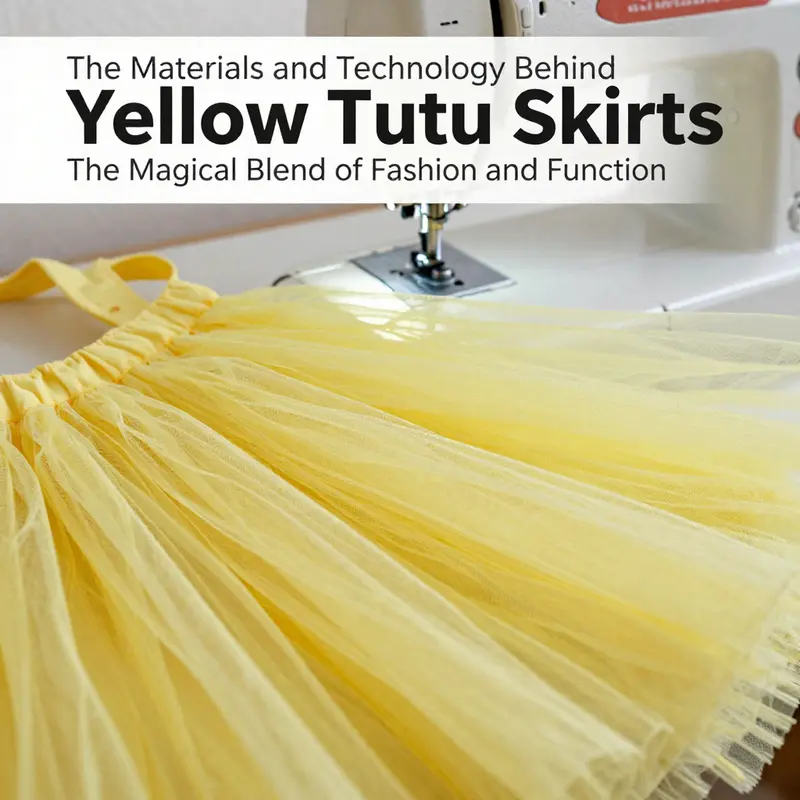
The yellow tutu skirt is more than a splash of color in a dancers’ repertoire or a festive photo moment. It is a careful synthesis of material choices, engineering decisions, and performance needs that together create the skirt’s signature buoyancy, color, and survivability under lights and movement. In a single garment, you can trace a story of how texture, stiffness, stretch, and colorfastness work in concert with the wearer’s intent—whether that intent is to enchant an audience in a formal recital, to spark imagination at a party, or to support a child’s fearless play. When we look closely at the yellow tutu, the material itself becomes a partner in the performance, shaping what the skirt can do and how it communicates with the body it drapes. The interplay of fabric, finish, and the tiny engineering choices behind elastic waistbands, multi-layered sheers, and subtle embellishments gives the tutu its capacity to hold form while allowing movement to read as weightless and effortless on stage and in play alike.
At the heart of most tutu constructions lies the primary fabric: tulle or netting. These fabrics are chosen not for luxury alone but for a precise blend of lightness, airiness, and stiffness. Tulle, a fine mesh often manufactured from nylon or polyester, provides the skirt with its characteristic halo—volume that seems to rise from the waist without pulling the wearer down. The yellow color is achieved through dyeing processes compatible with synthetic fibers, ensuring vivid, saturated hues that stay true under the glare of stage lighting. For professional performances, designers favor stiffer, harder-synthetic variants of tulle or layered netting. The goal is to maintain a defined silhouette even as a dancer twirls, leaps, or spins, because the visual impact depends on a crisp, angular line rather than a floppy, fluid drape. These choices influence not only aesthetics but also the dancer’s range of motion, as the fabric resists wrinkles and maintains a set shape that reinforces the tutu’s iconic flared profile.
Quality considerations extend beyond the color and surface. High-grade tutus often rely on fabrics that resist creasing and re-shaping after wear. The stiffness in professional tutus is achieved through deliberate fabric selection and, in some designs, lightweight internal supports or stiffeners that preserve the tutu’s structure during rapid movement and long rehearsals. Because performance costumes endure repeated uses and cleaning cycles, care requirements become a central design consideration. Dry cleaning is commonly recommended for premium tutus to avoid moisture that can weaken stiffeners or cause the layers to lose their snap. In professional contexts, where a moment on stage must land with precision, the cost of meticulous care is accepted as part of preserving the garment’s integrity and the production’s visual impact.
As technologies evolve, so too do the possibilities for the yellow tutu. Smart textiles, for instance, are beginning to emerge in more experimental or digital theater contexts. Light-conductive fibers can be woven into the skirt to create subtle glow effects or color shifts that synchronize with music or stage cues. While such features are not yet standard in every production, they illustrate how the material science of a tutu can extend beyond static color to become an active element of storytelling. 3D printing also opens doors for customization, enabling intricate, lightweight structural components that support the tutu’s silhouette without sacrificing mobility. In practice, this can mean tailored stiffeners or decorative elements that maintain airiness while adding a crafted, futuristic edge to traditional yellow hues.
Yet many yellow tutu skirts exist outside the high-stakes realm of professional ballet. For children’s parties, classroom performances, or casual events, softer materials and budget-conscious blends take precedence. Cotton netting or polyester blends offer a friendlier touch against skin and a lower price point, while still delivering the recognizable layered volume. The balance shifts toward comfort, ease of care, and durability, with finishes designed to tolerate frequent wear and machine-friendly maintenance. Embellishments such as sequins or embroidery may be incorporated in these contexts as well, but their application typically prioritizes durability and safety, ensuring that decorations stay in place during playful movement.
The zipper between material and meaning for the yellow tutu also lies in the waistband. Elastic waistbands, often soft and wide, provide a forgiving fit and full range of motion, essential for young dancers or cheerful party participants who may be adjusting their posture mid-play. The fit must be secure enough to prevent shifting during a leap yet comfortable enough to accommodate a long rehearsal without pinching or constricting. Where the skirt ends up on the wearer—whether fluttering softly around the hips in a spin or standing tall in a dramatic pose—depends on the careful calibration of fabric weight, layer count, and the internal support that keeps the silhouette intact.
The chapter’s material choices are not merely technical decisions; they echo broader themes in costume design and consumer culture. The yellow tutu speaks to a desire for color—an expressive language that invites imagination and performance. It signals a world where color is not just cosmetic but expressive and communicative. In production contexts, colorfastness remains crucial, particularly under bright stage lights that can quickly dull or alter hues. The dye used for the yellow must retain its intensity, resisting fading from heat or repeated washing when a costume is part of a recurring show. This requirement aligns with the market realities described in consumer contexts, where a vibrant yellow tutu can be a staple in a child’s wardrobe or a recurring on-stage outfit, reinforcing the notion that aesthetics and resilience go hand in hand in fashion for performance.
Alongside these material realities, the ethical and environmental dimensions of tutu production increasingly shape design choices. The drive toward sustainability encourages sourcing fabrics from suppliers who minimize environmental impact and uphold fair labor practices. Even when the consumer is buying a simple, affordable children’s tutu, designers and manufacturers face the challenge of balancing color brilliance with responsible practices. In practice, this might mean selecting dye systems with lower environmental footprints or opting for recycled fibers in some layered components. These choices do not erase the demands of performance or the charm of the yellow hue; rather, they reframe them in a way that honors both artistry and accountability.
From an industry perspective, the spectrum of options—from professional tutus to basic party-ready pieces—illustrates a market that values adaptability. The same underlying principles apply: stiffness must preserve silhouette, color must endure, comfort must be guaranteed, and care instructions must be practical for the end user. Professionals might lean toward specialized, frame-supported designs that retain dramatic shapes after repeated performances, while amateurs and children’s costumes emphasize soft texture, ease of wear, and affordability. The evolution of these garments reflects a broader trend in dress and performance: the fusion of traditional craft with modern materials and manufacturing techniques to produce a garment that is both visually striking and practically resilient.
For designers seeking inspiration or functional examples, the internal landscape of options at the professional tutu category offers a glimpse into how makers translate these materials into wearable art. The category houses pieces that emphasize stage-ready construction, meticulous finishing, and dependable fit—principles that can inform even more playful or casual yellow tutu designs. This practical knowledge, grounded in fabric science, can help explain why some skirts hold their shape so convincingly while others waver with each spin. The result is a tutu that not only catches the eye with its sunny hue but also respects the wearer’s movement and comfort, turning color into a meaningful element of performance rather than a mere surface treatment.
In this context, the yellow tutu becomes a study in how a simple garment can function as a bridge between craft and choreography. The color’s vibrancy, the fabric’s stiffness, and the waistband’s elasticity work together like instruments in an orchestra toward a single, unified effect: a skirt that communicates imagination and poise in equal measure. The story of its materials and technology is, at heart, a narrative about intention—how designers choose, test, and refine fabrics to support the body’s language in motion. It is a reminder that even a playful piece of clothing can embody precision, performance, and responsibility when design thinking is informed by material science, care ethics, and the audience’s experience.
To connect this discussion to concrete resources, one can explore the professional tutu category on a costume retailer’s platform to see how these principles translate into garment construction, sizing, and care directions. For readers seeking a broader technical reference about the fabrics themselves, an overview of tulle and its properties provides context for why this material remains a staple in both traditional ballet costumes and contemporary playful designs. As color, texture, and movement continue to define the yellow tutu’s appeal, the conversation around materials and technology will only deepen, inviting designers, performers, and everyday wearers to engage more thoughtfully with what lies beneath the bright, buoyant surface.
External resource: https://en.wikipedia.org/wiki/Tulle
A Burst of Sunshine: The Yellow Tutu Skirt’s Quiet Revolution from Ballet Stages to Everyday Moments
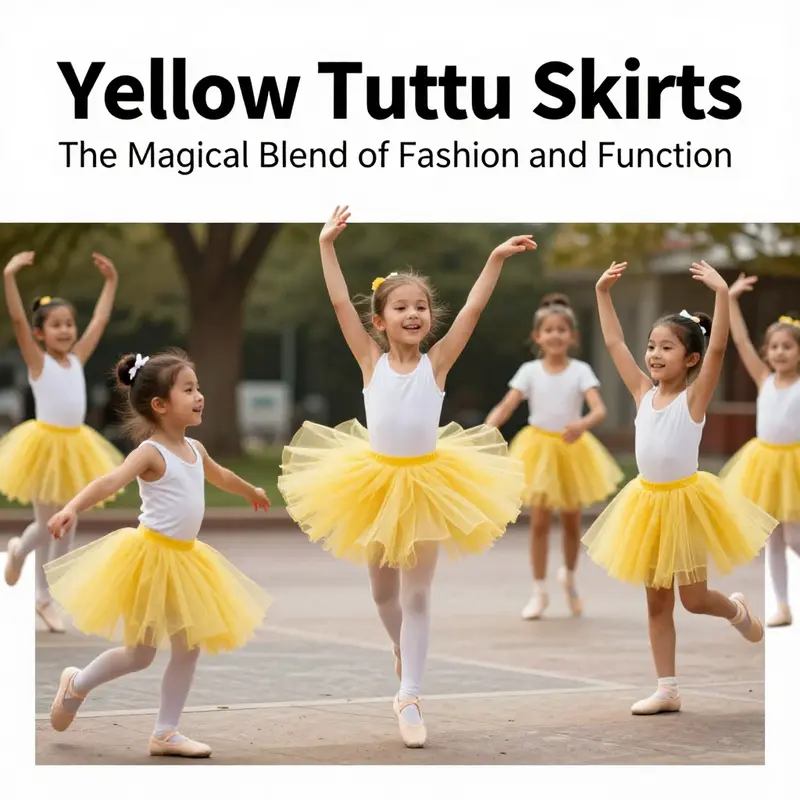
Yellow has a language of its own. It speaks of sunlit mornings, of laughter that echoes across a playground, of a spark that catches the corner of the eye and refuses to be ignored. When that yellow is stitched into a tutu skirt, the garment becomes more than a piece of clothing; it becomes a portable mood, a small theater in motion, ready to transform the ordinary into something exuberant. The tutu, with its flared silhouette and swirls of delicate fabric, carries a lineage rooted in performance. Yet the yellow variation, vibrant and unapologetic, gradually migrates beyond the stage. It slides into birthday parties, weekend streetwear, and the kind of everyday play that feels like a small rebellion against the drabness of routine. This chapter traces that migration, not as a marketing trend but as a cultural habit of self-expression that invites both children and adults to move with intention and joy.
At the heart of the yellow tutu’s versatility is its construction. The garment is built to move as freely as a child can move, with an elastic waistband that hugs the waist and allows for quick changes in posture, pace, and direction. The layers of tulle are more than decorative; they create a buoyant weight that lends a buoyancy to every step. When multiple layers—often five or six or more—are stiffened just enough to hold their shape, the skirt becomes a living sculpture. It frames movement, catching light with every spin and pirouette, yet remains light enough to permit playful tumbling and running. This blend of structure and freedom is what enables the yellow tutu to anchor a child’s dance recital on one day and brighten a casual afternoon on the next. The fabric, too, has a voice. Tulle’s transparency and softness create an ethereal shimmer as the wearer passes through a sunlit doorway or darts across a schoolyard, producing a sense of magic that feels almost folklore-like in its simplicity.
The color choice matters as much as the construction. Yellow is, by design, attention-grabbing and mood-enhancing. In a world of neutrals and understated hues, the yellow tutu acts like a bright exclamation point. It signals confidence without shouting, joy without irony, and playfulness without apology. Yet the color’s impact is not purely aesthetic. It becomes a social signal, inviting peers to engage, to celebrate a moment, to join in a game that encourages imagination. In classrooms, community centers, and living rooms alike, the yellow tutu’s presence can shift a moment from ordinary to memorable. It becomes a shared shorthand for possibility, a reminder that playtime can be an important, legitimate form of expression for both children and adults.
In practice, the skirt’s versatility arises from its ability to pair with a wide range of tops, accessories, and footwear. With a white tee or simple bodice, the tutu reads as a cheerful focal point—an anchor for a clean, balanced outfit. Add a denim jacket or a cropped cardigan, and the look transitions from recital-ready to street-smart casual. For more formal occasions, a structured blazer or a sleek top can temper the exuberance into something more polished, proving the same garment can cross the line from performance to party attire and back again without losing its core energy. Accessories matter, too. A slim belt, a glittering hairpiece, or a pair of ballet flats can subtly change the mood, while a pair of sneakers can tilt the ensemble toward playful, athletic ease. The result is a wardrobe cornerstone that responds to context with grace, rather than needing to be swapped out for a different piece entirely.
The practical payoff is equally compelling. High-quality versions of the yellow tutu are designed to withstand active use. Layers of stiffened netting hold their shape even during quick spins, jumps, and the occasional tumble. The elasticity of the waistband supports a comfortable fit across a range of ages and body types, ensuring that the garment remains easy to wear for long periods—an essential consideration for both dancers in training and parents managing a packed day of activities. The soft yet resilient nature of the fabric means it can be worn for extended play, repeated costume changes during a party, or a full-length recital without losing its form. In this sense, the tutu functions not merely as a costume, but as a practical accessory that accommodates movement rather than constraining it. The wearer’s posture benefits, too. The skirt’s volume gently frames the torso, creating a flattering silhouette that can be both playful and graceful, depending on how the wearer carries themselves. This kind of versatility is not incidental; it arises from thoughtful design that recognizes how children move and how adults mix roles—from performer to audience member to host of a celebration.
Beyond the mirror, the yellow tutu taps into broader conversations about fashion, gender, and the philosophy of dress. It challenges traditional scripts about who can wear bright colors or participate in dances that have historically been associated with specific genders or age groups. When a child or adult steps into a tutu and chooses yellow over a more subdued palette, they participate in a practice of self-authorship. The garment becomes a tool for testing boundaries and exploring identity in a space where play is encouraged and performance is celebrated. This is not about abandoning practicality for fantasy alone; it is about recognizing that clothing can be a catalyst for social interaction, storytelling, and personal discovery. The tutu, in its capacity to layer narrative upon movement, becomes a wearable theater—one that makes everyday moments feel staged in the best possible sense: choreographed by whimsy, grounded by comfort, and shared with others who respond to its bright invitation.
From the vantage point of families and fashion communities alike, the yellow tutu also sits at an intersection of culture and commerce. The market’s buoyancy—especially during festive seasons and school terms—reflects a broader appetite for imaginative attire that does not demand a heavy price in time or effort. Parents seek outfits that can transition across settings: a birthday party, a classroom presentation, a family photo shoot, or a casual weekend outing. The tutu, with its straightforward care, simple assembly, and forgiving fit, becomes a reliable ally in a busy calendar. This reliability is amplified by a growing awareness of material quality and ethical considerations in garment production. The conversation around sustainability informs color choices, fabric sourcing, and production practices, nudging the industry toward more responsible options even within playful, child-focused segments. Craftsmanship matters here as well. A true tutu is not just a mass-produced veil of color; it is a garment where layers are aligned and stitched to preserve shape during movement, where seams are reinforced to endure repeated wear, and where finishes keep color vibrant after frequent laundering. In such cases, the yellow tutu can retain its luminous character over time, offering longer-term value and reducing the temptation to replace it with a cheaper, lower-quality alternative.
As trends evolve, so does public perception of what a tutu can signify. It is increasingly common to see grown-ups in costume parties or theatrical settings embracing the yellow tutu as a symbol of accessible creativity—proof that performance aesthetics can belong to anyone who wants to tell a story through dress. The cape-and-costume idea of transformation becomes less of a spectacle and more of a daily invitation: a summer afternoon, a backyard theater, a community event where children lead the stage and adults cheer from the wings. In this sense, the yellow tutu’s versatility reflects a larger movement—one that values play as a legitimate activity, that treats dressing up as a form of personal expression rather than a diversion from adulthood, and that recognizes color as a social language rather than a mere decorative tool.
For readers who want a practical starting point for exploring these ideas, the site’s basic tutu category offers a streamlined entry into the world of foundational pieces that support this kind of versatility. It provides accessible options that emphasize fit, comfort, and the ability to pair with a wide range of tops and accessories. By examining such foundational pieces, one can begin to assemble ensembles that honor both performance aesthetics and everyday wear, blurring the line between stagecraft and street style. basic-tutu category
In the broader landscape of children’s fashion and performance gear, this yellow tutu’s enduring appeal reminds us that clothing can be a shared language across generations. The same garment that makes a girl twirl with confidence on a recital day can become a shorthand for joy in a family photo session or a spark for imaginative play during a rainy afternoon. It is not merely a costume but a cultural artifact that captures how a simple idea—color, movement, and an elastic waist—can ripple outward, shaping social moments, guiding creative play, and encouraging a more playful relationship with everyday life. The yellow tutu thus becomes emblematic of a wider truth: fashion, at its best, negotiates between memory and possibility, between the discipline of technique and the freedom of expression, inviting wearers to rehearse happiness and perform it, in little acts that accumulate into a more joyful everyday world.
External resource for the curious reader who wants a broader historical perspective on the tutu: Tutu – Wikipedia
Final thoughts
Yellow tutu skirts symbolize a joyful intersection between fashion and playful imagination. They are not only a staple of childhood but also a significant element in cultural expression and economic trends. Through understanding their role within fashion, culture, and commerce, business owners can harness their popularity to create innovative products that resonate with consumers. With a diverse range of applications, from dance recitals to everyday play, the yellow tutu skirt demonstrates its adaptability in a constantly evolving market, ensuring its position as a beloved garment for generations to come.