
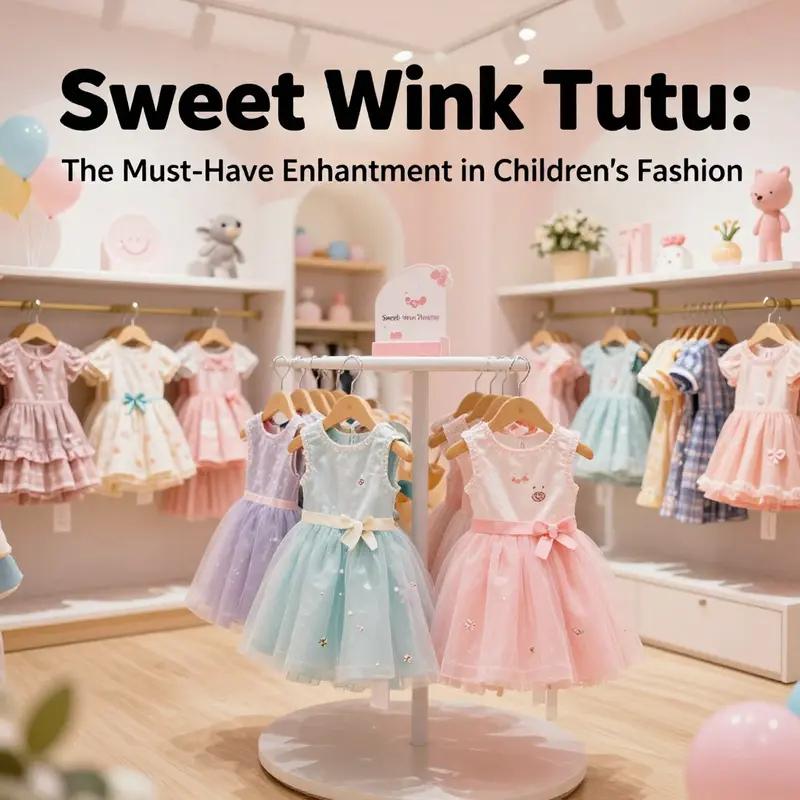
The Sweet Wink Tutu represents more than just a garment; it embodies joy, creativity, and the spirit of childhood. This enchanting tutu skirt, designed for girls aged 3 to 10, seamlessly marries function with flair, making it a staple in both parties and casual settings. As we delve into the intricacies of the Sweet Wink Tutu, we’ll explore its design and usage, material choices, market trends, pricing strategies, and its cultural significance in children’s fashion, providing business owners with insights that can guide their merchandising and marketing strategies.
A Whirl of Color and Motion: The Multi-Colored Tulle Skirt for Little Dreamers
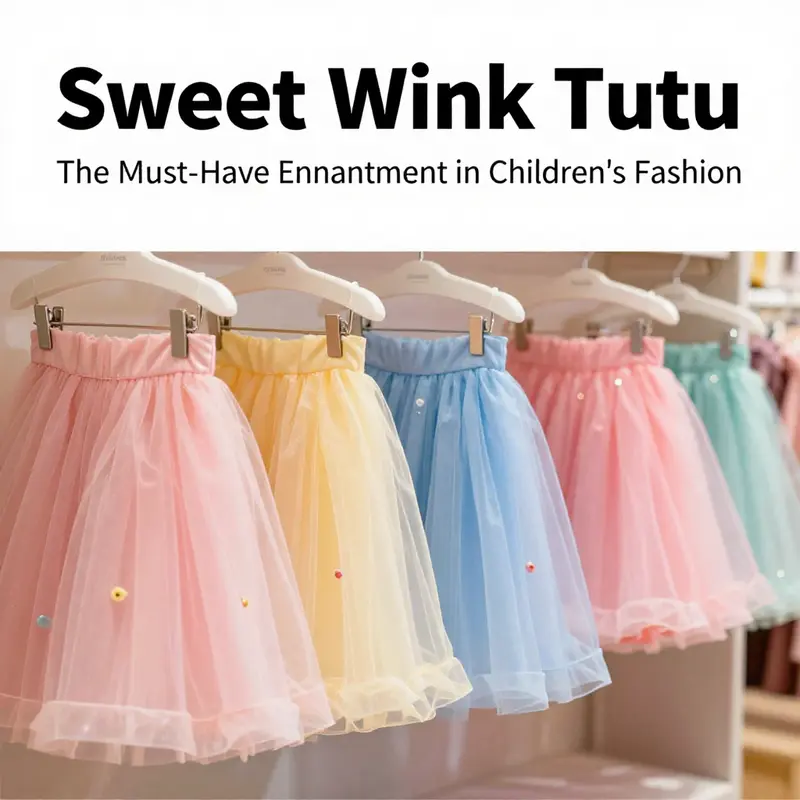
The moment a child spins in a light, airy skirt made of delicate tulle, the room seems to brighten with a small, infectious pulse of joy. This chapter follows that fluttering arc of fabric from the first playful twirl to the last graceful sway of a day, exploring a design that pairs whimsy with practicality. The garment in question is a multi-colored, fluffy skirt tailored for youngsters—an everyday invitation to imagination as much as a stage-ready costume for special occasions. It is not merely a piece of clothing; it is a catalyst for story, dance, and photo-worthy memory. In design terms, it sits at the intersection of comfort, movement, and visual delight, crafted to suit children aged roughly three to ten who live in a world where play is the work of growing up. The appeal lies not only in its palette but in how the fabric behaves when a child runs, hops, or leaps. The layers of fine tulle catch the air, forming a soft halo that follows every motion with buoyant grace, while the waistband anchors the silhouette without pinching or constraining. For parents and caregivers, that balance—beauty without fuss, drama without discomfort—counts as a quiet triumph in the realm of kids’ wear.
Material choice matters as much as color. The fabric is lightweight and breathable, allowing skin to stay cool during energetic play and outdoor adventures. The airy quality of tulle means it drapes with natural volume rather than stiffness, so the skirt swirls rather than stiffly holds a pose. Even at rest, the lower layers create gentle movement that suggests a light breeze around a child standing still. The design often embraces an elastic or partially elastic waist, a small yet crucial detail that supports an active daily life. Elastic waistbands accommodate growth and routine bathroom breaks without requiring constant adjustment, while some cuts include a soft inner lining to prevent any itch or scratch from the tulle’s edge. Movement is the goal here, and the skirt delivers it by nature of its construction. The layers work together to create fullness that looks effortless from afar and feels comfortable up close, making it suitable for a child who is transitioning from structured activities to unstructured play or who enjoys participating in family gatherings or small celebrations with a touch of theatrical flair.
Color is the second, equally important character in this garment’s narrative. The multi-hued approach offers a spectrum that can reflect a child’s mood, a party theme, or simply the joy of bright, cheerful tones. Blue, pink, lemon-yellow, lavender, emerald, and coral may mingle in a single piece, or a chosen palette can be tailored to coordinate with a favorite top or a pair of tights. Color has a practical magic here: it invites pairing ideas, stimulates visual curiosity, and supports an inclusive approach to dress-up. Rather than dictating a single look, the skirt suggests a mood, a moment, or a story, and the wearer is invited to narrate it through color combinations and accessories. It also translates well to photography and performance contexts. In family portraits, the swirls of color can accentuate a child’s features and create a lively backdrop that captures the energy of youth. For a small dance recital or a playful home video, the skirt’s volume helps exaggerate movement and makes every step feel more magical.
The garment’s simplicity on the surface conceals a thoughtful approach to fit and wearability. Kids are constantly in motion, and the best apparel for them supports that motion rather than restricting it. The cut typically adheres to a kid-friendly silhouette that sits comfortably at the waist and falls softly to mid-thigh or knee, depending on the cut. The length is chosen to allow free leg movement while still delivering the iconic tutu silhouette that many children find enchanting. The interior finishes are designed to minimize snagging or uncomfortable seams—the kind of careful attention that turns a garment into a reliable companion for daily wear, school days, parties, and weekend adventures. The fabric has a gentle stretch at the waist and a forgiving construction that accommodates varying body shapes typical of early childhood. In practice, this means a skirt that stays put during a tumble or a quick turn, yet remains easy to slip on in the morning rush.
Beyond the physical attributes, the skirt becomes a stage for social and creative development. Dressing up plays a crucial role in how children explore identity, experiment with roles, and practice social interaction. When a child chooses a colored skirt and imagines a persona—perhaps a dancer at a festival, a character from a favorite tale, or a citizen of a make-believe city—the garment supports that imaginative exercise. The soft sway of fabric under the arms during a pretend flight, the swirling motion during a spontaneous dance, or the candid leap toward a family camera all contribute to a sense of agency. For parents, this translates into more than a cute photo; it becomes a window into how a child negotiates self-expression and explores narrative through movement and color. The skirt’s forgiving design makes it an ally in those moments when confidence might waver, offering a tangible, tactile vehicle for expression without the pressure of precision or grown-up expectations.
Caring for such a piece is straightforward but worth noting for longevity and continued charm. The delicate texture invites mindful handling—gentle washing, cold water, and air drying to preserve the fabric’s loft and color integrity. When stored, it responds well to hanging, a simple step that helps maintain its shape and prevents permanent creases. Colorfastness is a practical consideration with bright palettes, but most designs incorporate dye techniques that resist running with gentle care. Parents are advised to avoid high heat in washing and drying, as heat can affect the delicate tulle and any inner linings. A little routine care—a quick rinse after an outdoor party, a gentle shake to remove crumples, and timely air-drying—keeps the skirt looking fresh and ready for the next adventure. In daily life, such habits support not only the garment’s beauty but the child’s ongoing comfort and confidence during play.
The decision to choose a multi-colored tutu for a child can be a gentle shift in how a family approaches dress-up. It invites a broader sense of possibility, a readiness to experiment with color combinations, and a willingness to let play be a frequent, welcomed part of the day. For caregivers seeking a balance between practicality and delight, this kind of piece offers a dependable option that can harmonize with various wardrobes and occasions. A practical tip is to view the skirt as a versatile base layer: pair it with a solid-colored top to ground the look, or mix and match with patterned tights or leggings to create a dynamic, cohesive outfit. Layering with a cardigan or light jacket can adapt the ensemble for seasons beyond summer and early autumn, extending the garment’s usefulness. The same piece can be a dance costume in one moment and a party-ready party staple in another, illustrating how design and function can merge to accompany a child through different moments of growth.
For families exploring their options, a reachable entry point lies in a basic tutu category, a straightforward pathway that offers similar silhouettes and fabric characteristics in a more streamlined set of options. This approach provides a gentle foundation from which to expand—adding colors, sizes, and styles as needed. The basic tutu serves as a practical reference point for those beginning their journey into dress-up wardrobes, offering clarity about fit, care, and wearability while leaving room for personal expression through color and accessories. In this sense, the multi-colored version is not just an isolated item but part of a broader family of playful, movement-friendly garments designed to celebrate childhood through fabric and form. It is a reminder that fashion for children is less about trend and more about enabling moments of joy, imagination, and shared stories.
As the fabric settles on a growing frame and a small smile appears on a child’s face, the larger narrative becomes clear: clothing can be one of the first and most enduring teachers of self-expression. A skirt that catches the light with every twist and turn does more than clothe a body; it invites a child to experiment with identity, to rehearse kindness in a social setting, and to document a memory with a photograph that captures both movement and mood. The design, the color, and the fit all work together to make dress-up feel effortless, personal, and deeply playful. In a world that often asks children to conform, a bright, buoyant tutu offers a gentle counterpoint—a wearable invitation to be seen, to imagine, and to grow.
External reference: https://www.amazon.com/dp/B0BQJZ9K5V
null
null
Soft Glamour and Playful Volume: Trends and Consumer Preferences in Children’s Tulle Partywear
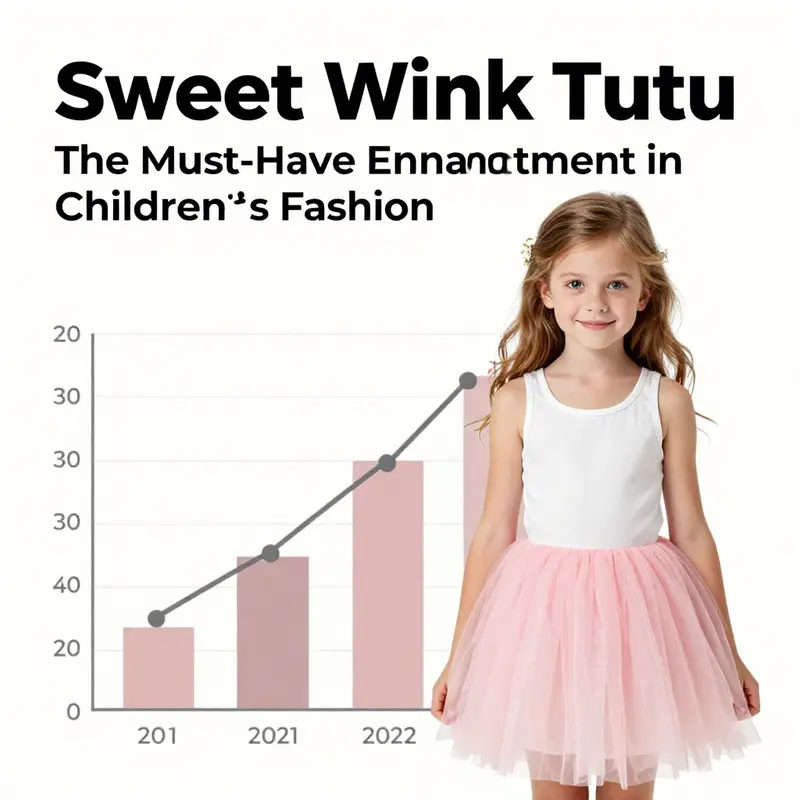
From a party invitation to a closet staple, the trajectory of children’s tulle outfits reveals more than a seasonal fad. It maps a shifting landscape where design, comfort, and social conversation converge to shape what parents seek for their children’s celebrations and everyday moments. The most telling pattern is not merely how fluffy the skirts look, but how they perform in real life: how the fabric feels against sensitive skin, how easily a dress can be dressed and undressed for an active child, and how color stories resonate with both kids’ imaginations and parents’ sense of practicality. In this sense, the appeal of multi-layered, voluminous skirts created from lightweight tulle rests on two intertwined desires. First, there is the thrill of ceremonial sparkle—the kind of garment that signals a special day without requiring a ceremony actually to accompany it. Second, there is the everyday magic of a piece that reads well in photos, travels well in bags, and moves with the child rather than against them. When these factors align, a fashion choice shifts from a mere purchase to a trusted tool, one that supports mood, mobility, and memory-making during a formative window of childhood.
Designers and retailers who understand this balance tend to emphasize three core elements. The first is structure that holds delight without sacrificing comfort. Multi-layered tulle skirts are iconic because they create volume and movement, yet modern iterations often incorporate softer underlayers, breathable linings, and trims that do not irritate delicate skin. Parents respond to this balance with requests for fabrics that feel gentle to the touch, are easy to wash, and endure repeated wear. The second element is color versatility. A palette that ranges from airy pastels to vibrant primaries expands the appeal across occasions and seasons. Color, in this context, becomes a storytelling device. A skirt can read as party-ready for a birthday, yet still read as a playful option for family gatherings or casual weekends when paired with a simple top. The third element is fit and sizing that acknowledge a child’s growth spurts without sacrificing proportion or comfort. In practice, this translates to adjustable waists, forgiving cuts, and clear guidance for parents on how a garment may adapt as a child grows.
Consumer feedback gathered from online platforms underscores a dual hunt: parents seek items that are cute and eye-catching while also being lightweight and cost-efficient for a garment that children may outgrow quickly. The repeated emphasis on “cute,” “lightweight,” and “high cost-performance” in reviews signals a sustained preference for visual appeal coupled with functional value. In this light, the most successful offerings are those that can be worn beyond one single event. A versatile design—suitable for a party, a family photo, or an everyday moment—cultivates a longer shelf life in a child’s wardrobe and a stronger sense of value for the buyer.
But the story does not stop with fabric and fit. Social media has become a powerful amplifier, reshaping what counts as desirable in children’s fashion. Platforms that celebrate parent-generated content provide a stage where little outfits are modeled, photographed, and discussed in real time. Hashtags and community posts create a shared vocabulary of expectations: what constitutes quality, what looks cute, and which combinations spark confidence in both child and caregiver. The cultural pull of these online conversations means that trends can propagate quickly, sometimes outpacing the pace of traditional retail cycles. In response, brands that nurture authentic storytelling—showing real kids in real settings, highlighting how a garment moves, folds, or wears with minimal fuss—gain traction faster than those relying solely on aspirational photography. The result is a feedback loop: consumer insight informs design, social dialogue leaders to new iterations, and the market rewards brands that listen and respond with thoughtful improvements.
From a product-development perspective, the emphasis on comfort and safety has become non-negotiable. Lightweight, breathable materials that still deliver a dramatic silhouette are prized. Parents increasingly scrutinize fabric content, seam quality, and care instructions. A garment must endure hands-on play, quick transitions from indoor to outdoor environments, and the occasional tumble during a hopscotch sprint or a birthday game. The most highly regarded items manage to be forgiving of movement while preserving a crisp, festive appearance. This tension between freedom of motion and staged aesthetics is the sweet spot retailers chase, and it often determines whether a piece earns repeated wear rather than a single-use spot in a memory album.
There is also a subtle but important shift in how the category positions itself within the broader wardrobe. Rather than existing solely as occasion wear, many designers are crafting options that pair easily with everyday pieces. A tutu-inspired skirt paired with a simple tee or a cardigan can be transformed from party attire to everyday playwear with minimal effort. This flexibility matters for families juggling time, budgets, and storage space. It also widens the garment’s appeal across a spectrum of activities—from a small family gathering to a weekend outing, to a spontaneous photo moment on a sunny afternoon. In this sense, the garment becomes less of a costume and more of a personal expression tool for both child and parent, a small but meaningful invitation to imaginative play.
Supply chains and retail channels further color the consumer experience. The rise of direct-to-consumer platforms means some families can access a broader range of colorways and sizes with comparable price points. Yet, the tactile reassurance of in-store experiences—trying on a soft skirt, feeling the weight of the fabric, testing how the lining falls—remains indispensable for many shoppers. This paradox invites retailers to blend digital convenience with sensory-rich in-person discovery. For families that value speed and assurance, standardized sizing and through-line quality controls help reduce uncertainty that can accompany online purchases. Meanwhile, for those who want to explore styling possibilities, curated color stories and coordinated accessory suggestions offer a way to envision outfits across occasions without investing in multiple separate pieces.
The internal landscape of consumer preference is also shaped by cultural context and family routines. In some communities, a single outfit carries the emotional weight of a special occasion, while in others, children are encouraged to express their evolving personalities through an expanding wardrobe. Across contexts, however, the need for practicality—ease of care, resilience to wear, and a garment’s ability to endure a day full of movement—unites parents. Designers respond by offering robust finishing, careful stitching, and materials that stay comfortable even after a day of wear. It is this blend of whimsy and practicality that explains why a fluffy tulle silhouette continues to attract attention year after year. Retailers who recognize this dynamic are not chasing a passing trend but cultivating a durable, emotionally resonant category that grows with families as their needs shift.
For readers who want to explore a foundational option in this family of garments, a product category that emphasizes the basics—clean lines, soft fabrics, and adjustable fits—offers a useful reference point for understanding broader trends. It serves as a practical touchstone for parents who are weighing options within a busy shopping landscape while aiming to balance beauty, comfort, and value. As the market evolves, what endures is not a single design flourish but a holistic approach: a garment that invites joy, supports movement, and fits into the cadence of family life with ease. This is the essence of contemporary children’s tulle partywear—a space where imagination and everyday practicality meet, and where a well-made skirt can become a little engine of memory, turning ordinary days into moments worth remembering.
Internal resource for readers seeking a broader context on related foundational styles can be found here: basic tutu category.
External resource: https://www.maisonette.com/collections/sweet-wink-tutus
Sweet Wink Tutu and the Tiny Economy: How Price Shapes Playful Fashion for Little Hearts
On a quiet afternoon, a party-ready tutu shimmers in the light like a promise. It is more than fabric and color; it is a doorway to imagination, a tangible cue that a child’s moment of celebration deserves a little extra sparkle. Yet beneath the glitter, there is a quiet arithmetic that families weigh with every purchase: what does this piece cost, and what is its lasting value in a world of frequent dress-up and spontaneous photo moments? The chapter that follows moves through that balance, reading the price tag not as a limit but as part of the story of how small wardrobes carry big meaning in a child’s life. The tutu in question sits at a mid-range price point in the market for children’s party wear. One variant, described in the data as a silver-toned, sequined design with a multi-layered tulle silhouette, is priced at thirty-eight dollars. It is presented in a way that signals accessibility without sacrificing a sense of specialness. The listing is tagged as an all-time bestseller, a label that speaks to enduring appeal across seasons and families who repeatedly return to the option. The presence of wishlist and quick-shop features reinforces a particular consumer behavior: these small items act like impulse purchases in the realm of everyday shopping, yet the moments they support—birthday parties, school performances, quick photo opportunities—recur with comforting regularity. In other words, price here is not merely a number; it is a gatekeeper and a promise at once, shaping how often a child can wear a tutu and how often a parent can say yes to a moment of shared joy.\n\nThis balance between cost and delight sits within a broader market structure that offers choices along a spectrum. Beyond the sequined, multi-layered silhouette, other designs exist in similar categories, with prices that swing based on color, size, finish, and the intricacy of the layering. The data hints at variation by design: a toddler version with layered tulle and sparkles suggests that color and dimension can push the price in proportion to the size and finish. In practical terms, parents are evaluating not only the look but the longevity and the likelihood that the garment will survive repeated wear and wash cycles. A piece that captures a child’s imagination for a dozen parties or more embodies a different value proposition than something worn a single time. In this sense, the economics of a tutu are not simply about upfront cost; they encompass durability, ease of care, and the garment’s ability to be reimagined across holidays and class events.\n\nWhat makes the pricing story especially telling is how it aligns with consumer expectations for simplicity and choice. The pricing data, though specific to one variant, reveals a distribution pattern that mirrors broader market dynamics: mid-range price points for well-made costume pieces that balance affordability with a sense of occasion. The presence of a single listed price at thirty-eight dollars does not imply a rigid ceiling or floor. Rather, it signals a common anchor around which promotions, bundles, or multi-pack offers might revolve. Parents who track budgets can appreciate that such pieces sit in a tier where quality feels assured without tipping into high-end territory. The visual appeal of sequins, the shimmer at a party, and the playful structure of the layers—all these elements contribute to a perceived value that justifies the cost in the eyes of many caregivers. When a product is labeled as a long-standing bestseller, it reinforces a narrative of reliability. repeat purchases by families point to a tacit trust: this design works across ages, fits a variety of body types, and travels well between events and everyday dress-up play. The data, in short, paints a picture of a market that rewards constancy and recognizability, even as it remains responsive to color trends, size differences, and the allure of sparkle.\n\nFrom the standpoint of supply and demand, the price is a heartbeat in a larger machine. The garment’s materials—tulle, elastic waist, interior lining, and sequins—come with a cost profile that scales with the scope of production. In a market that serves children from roughly three to ten years old, sizing complexity rises alongside consumer expectations for fit and comfort. A multi-layered silhouette with sequins offers visual drama but also demands careful construction to ensure durability and safety. A well-made tutu must balance softness with strength, a light touch with secure stitching, so that even repeated wear stays intact. These manufacturing realities underscore why the price point exists where it does and why it can be seen as both accessible and aspirational. For families, the decision to purchase is a negotiation among desire, occasion, and practical logistics—whether a child has multiple events on the calendar, or whether the garment will become a cherished prop in imaginative play that lasts beyond a single season.\n\nThe consumer journey surrounding such a product is also shaped by the digital shopping environment. Features like wishlists and quick-shop taps turn a simple browse into an intent to purchase, a subtle nudge that convenience matters as much as cost. When a piece is flagged as an all-time bestseller, shoppers may interpret it as a safe bet: a garment with a track record of appeal, suitable for gifting, and capable of pleasing both child and caregiver. The communication around these items—clear sizing, color options, and the presence of multiple finishes—molds expectations and reduces uncertainty. Yet even with clear information, price remains a factor in decision-making. For families counting pennies between birthdays and school events, a thirty-eight-dollar tutu becomes a practical choice when it stands up to wear and keeps its sparkle after washing. It is the blend of charm and resilience that keeps demand steady and makes such items part of a recurring retail ritual rather than a one-off splurge.\n\nCulturally, the small dress-up piece plays a compact but meaningful role in how children experience celebration and social life. A tutu of this type supports self-expression, confidence, and social signaling in a context where communication often happens through clothes and poses rather than spoken words. The economic side—the price, the ease of purchase, and the ability to find it within a trusted shopping flow—helps families balance the desire to celebrate with the practicalities of daily life. In communities where frequent parties, performances, and classroom celebrations are common, a readily available, reasonably priced option becomes a default choice. It is not simply about owning a pretty garment; it is about empowering moments of play that can reinforce a child’s sense of belonging and joy, without imposing a heavy financial burden on caregivers who juggle many other essentials.\n\nFor readers exploring a wider catalog of tutu options, the broader category landscape offers a spectrum of styles that can satisfy different aesthetics and budgets. If a preference leans toward minimalism or everyday wear rather than party-specific sparkle, the basic tutu category presents an approachable entry point. You can explore that collection here: basic tutu category. Within that space, one encounters a different set of textures, tempos, and price expectations—still designed for children, still full of potential for imaginative play, but often with fewer embellishments and a focus on everyday usability. Such a contrast helps illuminate how price and design work together to meet diverse needs in a market that values both whimsy and practicality.\n\nIn sum, the economic considerations surrounding a mid-range sequined tutu for children reveal more than a single price. They reveal a pattern where value is negotiated through durability, ease of care, and the capacity to support repeated moments of joy. The thirty-eight-dollar price tag signals both accessibility and care—an invitation to families to say yes to a moment that can brighten a party, a performance, or a shared afternoon at home. When explored alongside other catalog options, including the simpler tutu designs, it becomes clear how price acts as a compass in a landscape designed to nurture imagination while staying mindful of everyday budgets. The result is a market that can sustain small wardrobes that travel through memory as much as through fabric, with price acting as the quiet steward of a child’s cheerful dressing room.
Whispers in Tulle: The Multicolored Tutu as a Language of Modern Childhood
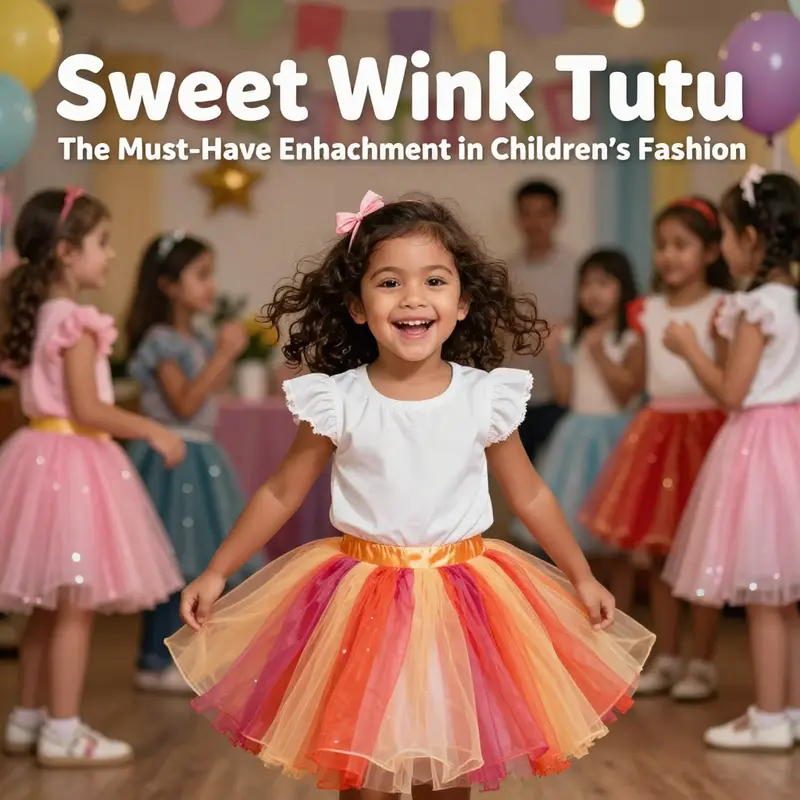
Color is the first vocabulary of a child’s wardrobe, and nowhere is color more articulate than in the multicolored tutu skirts that drift through parties, parks, and quiet afternoons with equal ease. The tutu, with its delicate layers of tulle and its soft, buoyant swirl, feels almost like a wearable song. It offers a tactile invitation to movement, a permit slip for fantasy, and a gentle reminder that dress can be both a shield and a stage. When we watch a child turn and twirl in a skirt that brushes the knees in bright hues, it becomes clear that these garments carry more than fabric. They carry a message about how children might want to be seen and how families want to celebrate their early years. The appeal lies not just in the cut or the color, but in the timeless ritual of dressing up as a form of play, learning, and social connection. In contemporary contexts, the tutu has become a universal symbol of celebration, innocence, and the festive mood that often accompanies childhood milestones, from birthdays to photo moments that families will revisit for years to come.
From a cultural perspective, the tutu skirt is rooted in Western performance and fashion histories. Ballet costumes, with their light, layered silhouettes, offered the earliest template for how movement and fabric could cooperate to create an impression of air and effortlessness. Victorian-era girls’ dresses added a domestic, celebratory aura to the garment; over time, the tutu was reframed from a strict performance garment into a popular, everyday expression of childhood whimsy. In today’s global marketplace, these threads are recombined and repurposed. The modern version of the tutu skirts—softly structured, multi-layered, and available in a spectrum of colors—has traveled far beyond its original Western frame. E-commerce platforms and fast-fashion ecosystems have accelerated this diffusion, turning a locally meaningful garment into a near-universal option for families across continents. The result is a shared visual language: bright tulle, cascading ruffles, and the sense that the skirt is a wearable invitation to dream, celebrate, and participate in moments large and small.
The social life of the tutu in childhood fashion is rich and nuanced. It functions as a signal of festivity, yes, but it also becomes a canvas for identity exploration. For many children, the act of choosing a particular color or combination is a small act of agency. A child might decide to pair a sunny yellow with a soft pink, or perhaps to combine several hues in a way that mirrors a favorite scene from a story or a color that resonates with a mood of the day. Parents and caregivers, in turn, interpret these choices through the lens of occasion, practicality, and the child’s evolving sense of self. The tutu’s buoyant texture enhances sensory engagement: the rustle of tulle, the bounce of each step, the way light plays across the fabric—these sensory cues can become part of a child’s narrative of movement and play. In this sense, the garment transcends mere aesthetics. It becomes a tool for storytelling, a way to choreograph daily life into moments that feel magical even in ordinary settings.
A globalized fashion culture amplifies the tutu’s role as a shared symbol. In many households, a party dress or a play outfit is less about branding and more about participating in a broader cultural practice: commemorating a milestone with a burst of color, capturing memories in photos, and building a routine of celebration around childhood. The tutu thus becomes a conduit for family rituals, connecting the intimate space of home with the public space of gatherings, schools, and performances. It is both a product of consumer culture and a medium through which families cultivate aesthetics as early literacy. The repetitive exposure to such garments across different households—across cities, languages, and climates—creates a common visual grammar: luminous color, airy volume, and a sense of whimsy expressed through movement. In that sense, the skirt is not merely a fashion item but a cultural instrument that helps shape how children perceive joy, propriety, and self-presentation.
Design-wise, the appeal of the tutu lies in its balance between structure and spontaneity. The layers of tulle are light enough to float with a child’s steps, yet dense enough to retain a silhouette that reads clearly from a distance. The color stories range from soft pastels to saturated primaries, often arranged in ways that resemble a painter’s palette or a party bouquet. This intentional color coding invites a sensory exploration: how different hues feel to the eye, how they reflect light, and how they interact with skin tone and environmental lighting. The garment’s versatility also matters. It can be worn for formal celebrations, as a playful everyday accessory, or as part of thematic dress ensembles for costumes and performances. This flexibility mirrors a shift in many families’ approach to clothing—prioritizing pieces that support a spectrum of activities and moods rather than a single use. The result is a wardrobe layer that feels both practical and magical, a rare combination in the practical economy of children’s apparel.
Within this landscape, accessibility plays a crucial role. The proliferation of multi-color tutu skirts across online marketplaces means more families can participate in the cultural ritual of dressing up without sacrificing budget or convenience. The ability to choose from a range of lengths, styles, and finishes allows parents to tailor the garment to a child’s stage of development and activity level. For many households, a basic tutu collection serves as a timeless entry point, offering a versatile foundation upon which personalized outfits can be built. For those exploring this idea, a simple, durable option—carefully designed to hold up to frequent wear and washing—often proves to be the most valuable companion in a child’s wardrobe. The “basic tutu collection” can be the thread that ties together a child’s everyday play with the ceremony of special occasions, a small but meaningful bridge between the home’s intimate space and the larger world of childhood imagination.
As this garment travels across borders and cultures, it also invites a careful look at how childhood aesthetics are negotiated in public discourse. The emphasis on sweetness, brightness, and celebratory mood aligns with a broader cultural narrative about early aesthetic education. Parents often seek to cultivate a sense of joy, curiosity, and expressiveness in their children, and clothing becomes one of the most accessible tools for fostering these dispositions. Yet there is also a conversation to be had about how the language of cuteness interacts with notions of agency, diversity, and comfort. The tutu’s fairy-tueled charm can be a doorway for creative exploration, but it can also reflect pressures to conform to a narrow standard of appearance. A mindful approach to dressing for children acknowledges both the delight and the responsibility that comes with shaping how young wearers see themselves in the world. In this delicate balance, the tutu remains a powerful cultural artifact: small in scale, but resonant in meaning, a portable reminder that childhood is a time of possibility, color, and movement.
This ongoing story of color and movement is not merely about fashion trends. It is a reflection of communities, rituals, and learning that take place through clothing. It speaks to how families celebrate growth, how schools and communities welcome participation, and how children begin to understand their own bodies as sites of expression. In a world where visual culture travels quickly and widely, these skirts offer a subtle form of connectedness—an invitation to share wonder across homes, neighborhoods, and continents. The swirls of fabric become a quiet chorus that accompanies the daily acts of play, learning, and care. The tutu’s enduring appeal lies in its ability to be more than fabric—it is a gentle prompt to notice color, to listen to movement, and to honor the small moments that accumulate into a child’s first memories of joy and belonging.
External reference: The Guardian discusses broader trends in children’s fashion and the rise of the kids’ tutu as a global phenomenon, recognizing the cultural significance of this playful garment in contemporary society. https://www.theguardian.com/fashion/2023/jun/15/childrens-fashion-trends-and-the-rise-of-the-kids-tutu
Final thoughts
The Sweet Wink Tutu is not just a fashionable item; it encapsulates the whimsy and imagination of childhood while serving as a key player in the children’s fashion industry. Its thoughtful design, quality materials, and cultural resonance make it an essential offering for any retailer in the children’s apparel market. As this tutu continues to be embraced by young girls and their families, understanding its market presence will be crucial for business owners looking to capitalize on this trend. A well-curated selection of Sweet Wink Tuuts can enhance customer satisfaction and establish a solid market position.