
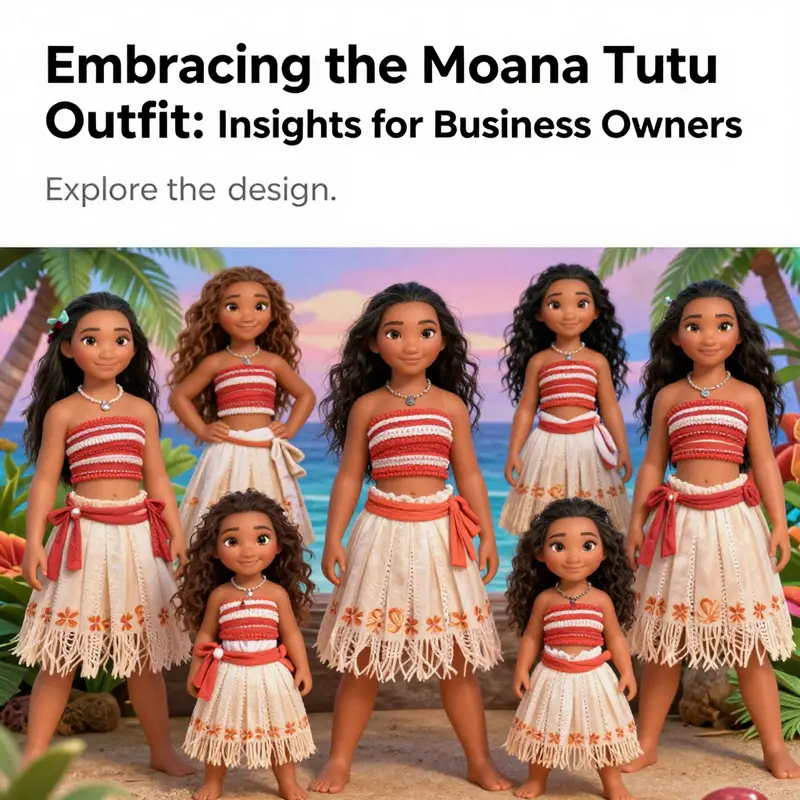
The Moana tutu outfit has transcended the realm of children’s costumes, becoming a staple in festive celebrations like Halloween, birthday parties, and themed events. Inspired by the beloved Disney character, these outfits not only appeal to young audiences but also present varied opportunities for retailers. The significance of understanding cultural elements associated with such attire cannot be overstated; it informs design choices and marketing strategies alike. This article examines the cultural significance, design elements, retail trends, pricing strategies, and the essential need for cultural sensitivity surrounding the Moana tutu outfit. Each chapter aims to equip business owners with knowledge to navigate this vibrant market responsibly and thoughtfully.
Weaving Meaning Into Play: The Cultural Significance of the Moana Tutu Outfit
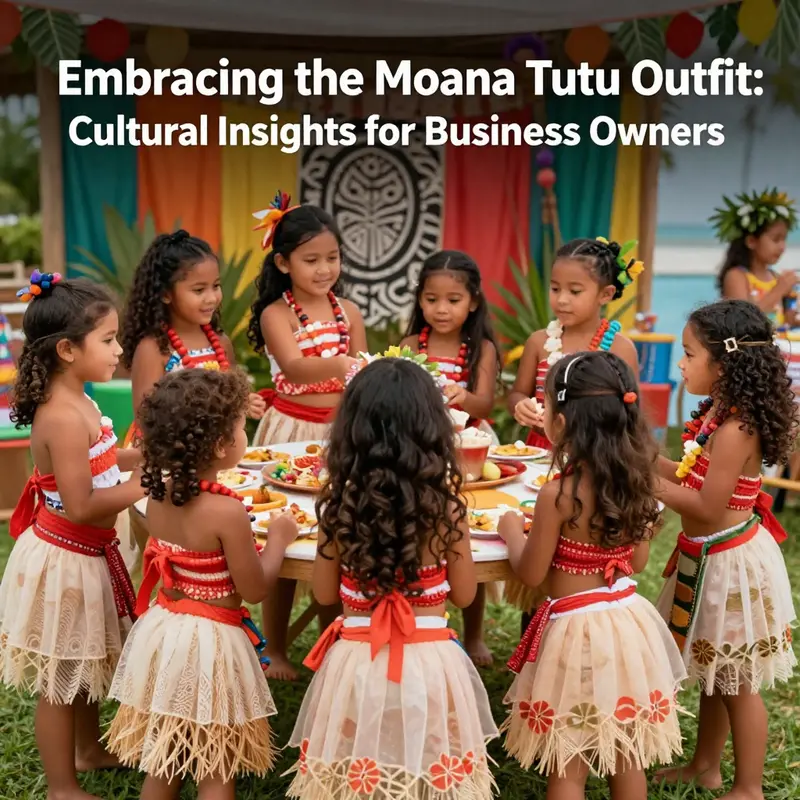
In a sunlit living room, a child spins with the bright energy that only a tutu can translate into motion. The red and gold of the skirt catch the light, and for a moment the world feels like a vast ocean, full of possibility. The Moana tutu outfit, as it appears in play and at celebrations, is more than a cute costume. It carries a set of meanings that extend beyond color and fabric into culture, storytelling, and the ways children begin to understand different ways of living in the world. This chapter treats the outfit as a cultural artifact within a broader educational and imaginative landscape. It does not pretend to be a faithful replica of real clothing from a specific community, yet it resonates with themes of heritage, navigation, and harmony with nature that many Pacific Island cultures value. The result is a garment that invites curiosity, conversation, and care when used in playful contexts, schools, or family gatherings; its power lies in the conversations it can spark as well as the dress itself.
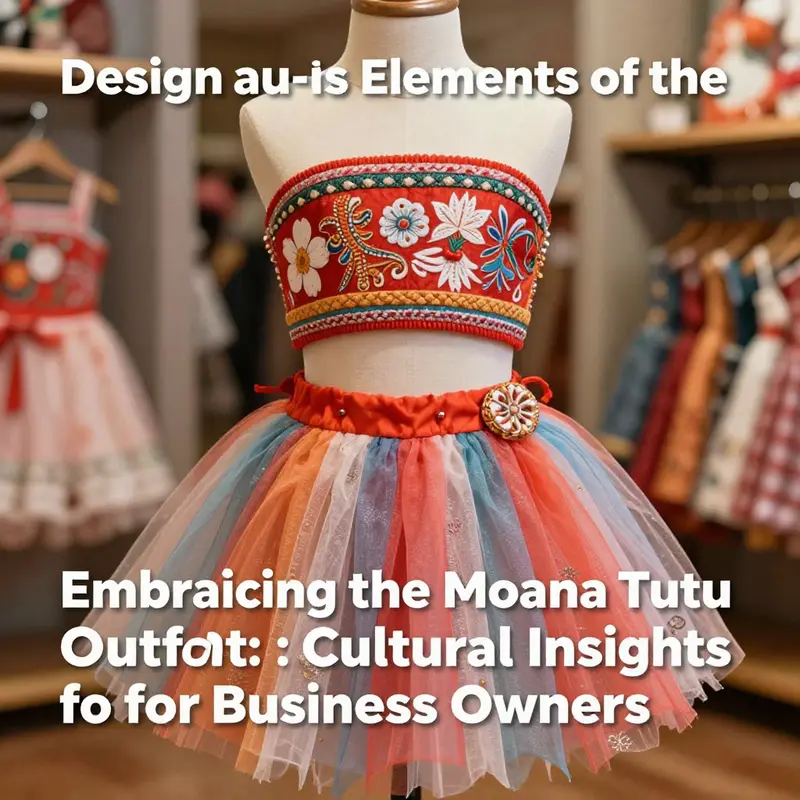
The design cues of the Moana inspired look are unmistakable on sight: a bright, geometric pattern that nods to the bold textiles and carved forms found across Polynesian artistry, paired with a silhouette that emphasizes movement and freedom. The film’s costume system uses colors like red and yellow to signal vitality, courage, and the sunlit energy of the sea. In the world of the film, these elements are more than decoration. They are storytelling devices that help audiences read a character who embraces both courage and curiosity as a way to navigate a changing world. When children wear a tutu that echoes these motifs, they borrow a language of motion and meaning. They are not simply dressing up; they are stepping into a narrative space where heroism is linked to stewardship, resilience, and a sense of belonging to something larger than oneself.
However, it is essential to distinguish fantasy costume from authentic, living cultural dress. The Moana outfit is a stylized, screen inspired interpretation designed for broad audience appeal. It distills visual aesthetics from a broad swath of Polynesian-inspired art rather than representing a single tradition or ceremonial garment. Within this distinction lies a crucial opportunity. When a child moves in a costume inspired by a character who embodies respect for the natural world and a willingness to learn from elders and navigators of the sea, the wearer can engage with ideas about heritage in a way that feels personal and accessible. Yet the line between admiration and appropriation should be navigated with care. Adults and educators are urged to encourage play that foregrounds curiosity and learning while avoiding the replication of sacred or restricted cultural symbols. In this light, the tutu becomes less about imitation and more about exploration—an invitation to ask questions, listen to responses, and recognize the power of stories to connect communities across generations.
The symbolic resonance of the outfit also invites families and classrooms to engage in dialogue about shared human values. The red and yellow palette, for instance, evokes energy, life, and the sun, motifs that recur in many Pacific traditions and narratives as symbols of endurance, family, and the daily rhythms of life at sea. When a child dances in this color palette, the moment becomes a patch of light that can lead to deeper discussions about how different communities view the relationship between people and the natural world. This is not merely about aesthetics; it is about inviting children to see patterns, to ask why certain colors or shapes appear in many different cultures, and to recognize that artists and weavers use symbol and form to tell stories about identity, memory, and belonging.
Education and play intersect elegantly when children are guided to reflect on the materials and choices behind clothing inspired by a film. The tutu can serve as a starting point for asking questions like what kinds of materials are used to make costumes, who designs these outfits, and how clothing can convey a sense of place and character without compromising respect for real world cultures. In a classroom setting, or at home, adults can frame this exploration with open-ended prompts that honor curiosity over judgment. For example, a teacher might prompt a small group to compare the red and yellow color story of the outfit with other items in the room that draw attention to color and form. Another prompt could invite children to brainstorm questions they would ask a respectful talk with someone who knows about Pacific Island cultures, such as a community elder or a cultural educator. The goal is not to extract heritage from a costume but to cultivate a learning posture that values listening, questions, and responsible interpretation.
In this broader educational context, the Moana inspired tutu becomes a lens through which children can explore themes like navigation and ocean stewardship. The narrative arc around Moana, the film’s central figure who sails to discover and safeguard her world, offers a platform for discussing how people historically navigated by the stars, the currents, and the winds. Children can connect the idea of agility and adaptability in a costume to the real world lessons of resilience and problem solving. They might explore how real navigators used knowledge passed down through generations, or examine how communities balance tradition with change. These conversations extend well beyond the classroom, guiding families in forming respectful curiosity about the cultures that inspire such stories. The child wearing the outfit becomes an ambassador of questions, a tiny explorer who helps bring curiosity to the fore rather than leaving it unspoken.
The cautionary note that accompanies the practical wonder of dressing up is not a dampening of imagination but a guide to responsible imagination. Experts emphasize the importance of distinguishing between a film inspired look and authentic cultural attire. Choosing outfits that celebrate the character’s spirit while avoiding sacred or restricted garments is a practical rule of thumb. This approach respects cultural boundaries while preserving the educational impulse that makes the outfit a powerful learning tool. When adults model this careful approach, they teach children to value culture as something living and diverse, not as a static costume to be copied without context. The result is a playful form of cultural literacy that acknowledges both the beauty of design and the dignity of real traditions.
In practice, a thoughtful use of the Moana inspired tutu can involve integrating stories, music, and hands-on activities that deepen understanding. A simple classroom activity might begin with a short viewing of the film’s scenes that focus on exploration and resilience, followed by discussion of the characters’ choices and the lessons those choices convey. A handout or a simple craft project can allow children to design their own mini charts of navigation or to create color palettes inspired by the ship, the sea, and the sun. A teacher can connect these activities to broader science and geography concepts, such as wind patterns, currents, and the science of sails. In this way, the costume is not an endpoint but a doorway to inquiry that can extend into science, art, and social studies.
The ongoing conversation about representation and learning is enriched by families and educators who approach costumes as opportunities for dialogue rather than defaults for imitation. A 2025 discussion in educational circles raised an important distinction between fun, age-appropriate play and misrepresentation. The idea that costumes can be a doorway to learning is widely supported, but it requires thoughtful framing that centers respect for the cultures that inspire the visuals. When children wear a Moana inspired outfit, their play becomes a springboard for questions about who created the design, what it draws inspiration from, and how communities express identity through language, ritual, and art. The sense that clothes can carry a story becomes a valuable tool for building empathy and cultural awareness, both inside the classroom and in family life.
For those who want to explore a wider range of tutu forms while remaining grounded in this approach, the basic tutu category offers a simple starting point. It provides a platform to experiment with movement and color in ways that can be harmonized with culturally respectful learning journeys. See the basic tutu collection to begin crafting a play environment that honors imagination while honoring the real lives behind the stories that inspire costumes. basic tutu category
As the story of the Moana inspired tutu continues to unfold in homes and classrooms, it remains a dynamic reminder that costumes can be both joyful and meaningful. Children can embody the character’s energy and curiosity, while adults guide their play toward conversations about heritage, community, and the ethics of representation. The practice of mindful play turns a bright tutu into a bridge—linking imagination with history, wonder with respect, and fun with responsibility. When done with care, the outfit can help illuminate a world of learning where culture is not reduced to fashion but celebrated as a living, evolving narrative that belongs to many people and places. For those who wish to deepen their understanding of how such costumes can support respectful education, there is a wealth of guidance available from cultural educators. This is not about policing play but about enriching it, so that every moment of dress up becomes a moment of learning and connection. For further guidance on respectful representation and inclusive storytelling, you can consult the external resource provided by the film’s cultural outreach initiative: Disney’s guidance on Moana’s costume education.
null
null
From Island Charms to Everyday Wardrobe: Retail Trends Shaping Moana Tutu Outfits
The Moana tutu outfit has drifted from a simple party costume into a small but telling barometer of how families shop for children’s clothing in a world that values versatility, respect for culture, and sustainable consumption. In spring 2026, retailers report a noticeable shift that mirrors broader moves in the fashion world: the once-dominant idea of one-and-done outfits built around a single event is giving way to a more enduring, mix-and-match approach. Parents who once viewed a tutu set as a quick costume for Halloween are now weighing that choice against the long-term utility of each piece. The result is a more thoughtful balance between immediacy—easy party dress-ups for upcoming celebrations—and longevity, where a tulle skirt or a tropical-printed top can anchor a child’s everyday wardrobe as well as a special look for a party or a festival. This is not a rejection of the magic that Moana-inspired attire can evoke; it is a recalibration of value that makes the attire more meaningful, more durable, and more respectful of cultural context.
One clear through-line across retail commentary is the movement away from “one-time use” toward “reusable with purpose.” Parents today increasingly seek pieces that feel special for a moment, yet can be worn again with different outfits and in different settings. The economics of this shift become compelling when you compare the lifecycle of a single, brightly colored tutu skirt that might only see a handful of wearings against a carefully chosen, high-quality standalone item—such as a tulle skirt purchased separately from an accompanying top or tunic—that can anchor a growing child’s wardrobe for seasons to come. This echoes a broader conversation stirred by a 2025 analysis that questioned whether complete Moana costume sets are the most economical choice in the long run. Those discussions, though originally framed around cost versus value, have evolved into a practical guide for families: invest in one or two versatile pieces, and let them be worn with other tops, prints, and accessories. In practice, this means that a tulle skirt—lightweight, durable, and easy to launder—takes on many roles. It can be paired with a solid red top for a bold, season-spanning look, layered with a linen cardigan for cooler days, or used as part of a beach-day ensemble when paired with a breathable tank and sandals.
To understand how these pieces are being designed for flexibility, it helps to note the influence of what the industry is calling the Island Old Money aesthetic and the Romantic Boho mood that gained momentum in the spring-summer runway conversations. The Island Old Money idea centers on fabrics with a natural, breathable feel—linen blends, cottons with a soft slub, and prints that nod to Polynesian-inspired motifs without over-typing them. The palette tends toward earthy tones—sand, terracotta, seafoam, and coral—paired with the bright punch of a Moana-inspired red or teal. The Romantic Boho effect brings in textured overlays, delicate embroidery, and subtle layering that makes the outfit feel curated rather than constructed for a single event. The combination is deliberate: it invites adults to see Moana-inspired pieces as a subset of a child’s daily wardrobe rather than a theme-centered costume once the party is over. It is about creating a sense of vacation-ready, island-inspired ease that a child can wear to school, at a birthday party, or during a family trip to the park, all while maintaining a coherent aesthetic across different moments.
This shift also speaks to the practical and aesthetic demands of modern families, who value fabrics that strike a balance between comfort and style. The new Moana-inspired outfits favor breathable fibers, light and forgiving textiles, and finishes that can withstand repeated wear and washing without losing shape or color. Quick-dry, water-friendly fabrics, once a niche feature, have become more common in lines designed for kids who swim, splash, or play in water at a beach or pool party. The capability to move from a sunlit afternoon to indoor activities without a wardrobe change has grown from a luxury to an expectation for many households. When you couple these fabric choices with designs that emphasize clean silhouettes and practical closures—zips, hidden elastic waists, and adjustable bands—the outfits become better suited to real life, not just a staged photo or a holiday event.
Cultural authenticity and sensitivity are not peripheral considerations in this new retail narrative; they are central to how products are developed and marketed. In a market where conversations about cultural representation are increasingly sophisticated, retailers are exploring ways to honor Polynesian heritage while avoiding stereotypes. Some brands highlight the inspiration behind their Moana-inspired lines, and better ones include details that reflect traditional crafts—handwoven textures, natural dye tones, and motifs inspired by the ocean and reef life—without turning the clothing into a costume parody. This approach aligns with a broader consumer expectation that fashion, even when playful or child-centered, should acknowledge the origins of its aesthetic. It also dovetails with the broader shift toward inclusive sizing and body-positive marketing, which mirrors the fashion world’s journey toward more diverse representations than a single, idealized body type. The dialog around cultural respect also surfaces in how outfits are marketed to families: the language used to describe inspiration, the care taken in showing real-life children wearing the clothes, and the clarity about what is being borrowed from tradition and what is a playful interpretation for a young audience.
Technology and experience design have quietly transformed how families discover, select, and purchase these outfits. Retailers employ smarter recommendation systems that consider a child’s age, size, and the activities families anticipate—be it birthday parties, a beach day, or a dance recital. This makes the purchase feel tailored rather than generic, and it supports the idea of a capsule wardrobe rather than a one-off costume. Fabrics engineered for performance—fast-drying blends for kids who swim, stretch panels for active play, and fabrics that resist wrinkles without sacrificing comfort—are increasingly standard in Moana-inspired lines. The digital experience also mirrors the physical one: shoppers encounter cohesive collections that mix separate pieces (a printed top with a neutral, versatile skirt, or a solid-hued tunic that can be layered with a printed scarf or sash) rather than a single package that is meant to be worn only in a single setting. This is a sign of retail maturity in the children’s wear space, where the lines between costume and everyday clothing are blurring in a way that respects both the fantasy element of Moana and the practical needs of parents.
In practice, this broader retail philosophy translates into real-world shopping patterns. Families are gravitating toward a small, curated set of items that can be combined in multiple ways. A high-quality tutu skirt in a neutral coral or sea-blue becomes a reliable base to anchor an entire look, with top options that range from a simple tank to a patterned blouse that nods to Polynesian-inspired prints without overpowering the ensemble. A single top can be paired with the tutu for a dressy party look, or worn with denim shorts for a casual, day-at-the-park outfit. The ability to reuse pieces across occasions reduces the pressure to buy everything for a single event, which is especially appealing in a season where many kids have multiple parties in quick succession. Retailers are also paying attention to the layering possibilities that enable year-round wear: cardigans, light shawls, and sashes can shift the mood of the same underlying pieces from festive to everyday with subtlety and ease.
From a shopper’s perspective, the practical upshot is clarity and confidence. When a customer sees a Moana-inspired line designed as a modular, mix-and-match system, the decision becomes less about investing in a costume and more about investing in a wardrobe. It is a small but meaningful transformation in how families experience fashion for children: the Moana motif remains a source of joy and imagination, yet the clothing has become a more reliable, durable, and versatile companion across seasons. This is a stark contrast to the era of mass-market, one-size-fits-all costumes that could look appealing in a storefront window but offered little in the way of daily wearability. The new Moana-inspired offerings acknowledge that children’s fashion is not a single moment but a series of moments—a birthday party, a beach day, a school project, a dance rehearsal, a family photo session. The best pieces, then, are those that can flow between these moments while remaining faithful to the character’s spirit and the culture from which the inspiration arises.
For those navigating the shopping landscape, a practical tip emerges from this trend analysis. Start with a solid, high-quality tutu or a simple, well-cut top that can be worn with multiple bottoms. It is easy to add one or two statement pieces—a printed top or a textured overlay—to expand the range without tipping into a cluttered, single-use wardrobe. This approach aligns with the idea of “one item, many wears,” a principle that has gained traction in sustainable fashion conversations. In this context, Moana-inspired pieces are not merely costume accessories; they become part of a thoughtfully assembled, modern child’s wardrobe that respects cultural origins, embraces diverse aesthetics, and supports long-term value. The result is a more satisfying shopping experience for parents, a more expressive outlet for children, and a model for retailers that sees clothing as a lasting form of play, rather than a disposable impulse.
Within this evolving landscape, it is also worth noting the potential for educational value embedded in these choices. When families choose Moana-inspired outfits with care, they can leverage them as conversation starters about Polynesian cultures, storytelling, and the meaning behind the character’s goodwill, courage, and adventurous spirit. When educators or caregivers incorporate these garments into classroom or community activities, they can frame them as gateways to learning about oceans, geography, and shared human narratives. The key is to pair the costume-like elements with context that honors the source material and broadens children’s understanding, rather than reducing it to surface-level aesthetics. In other words, the Moana-inspired outfit has the potential to be more than a wonderful dress-up option; it can become a small but meaningful bridge between play, culture, and daily life.
For readers seeking a starting point in this shift toward a modular, value-driven Moana wardrobe, consider exploring the basic tutu options that anchor many of these looks. The basic tutu category offers a low-entry point that can be layered with a range of tops and accessories to suit different occasions and seasons. This simple, versatile element helps families experiment with styling without committing to a full ensemble for every event. It also serves as a practical reminder that fashion for children, even when inspired by a beloved character, can and should be adaptable enough to fit a child’s rapidly changing interests and activities. The broader lesson of these retail trends is clear: the most enduring Moana-inspired outfits will be those that invite daily wear, pair well with a variety of other pieces, and embody a respectful, mindful approach to cultural influence. A single skirt, when thoughtfully chosen, can become the foundation of countless looks that celebrate imagination, comfort, and inclusive style.
As the market continues to shift, retailers face the challenge of balancing enchantment with practicality. They must maintain the magic that makes Moana-inspired attire appealing to children while delivering the durability and versatility that parents increasingly prioritize. The best programs will also foreground cultural sensitivity, offering transparent information about inspiration and design choices. In doing so, they will nurture trust with families and build long-term relationships that extend beyond a single party or season. The result is a fashion narrative that honors the character’s spirit and the real-world cultures it draws from, while simultaneously supporting sustainable shopping habits, inclusive sizing, and smarter, more flexible wardrobe planning for kids. This is the evolving face of Moana tutu outfits—a fusion of celebration and practicality, a nod to heritage, and a testament to the power of thoughtful design to transform a costume into a lasting wardrobe staple.
External reference: https://www.popfashion.com/trends/2026-spring-summer-fashion-weeks-women
Value Across the Seas: Pricing Variations and Market Availability for Moana Tutu Outfits
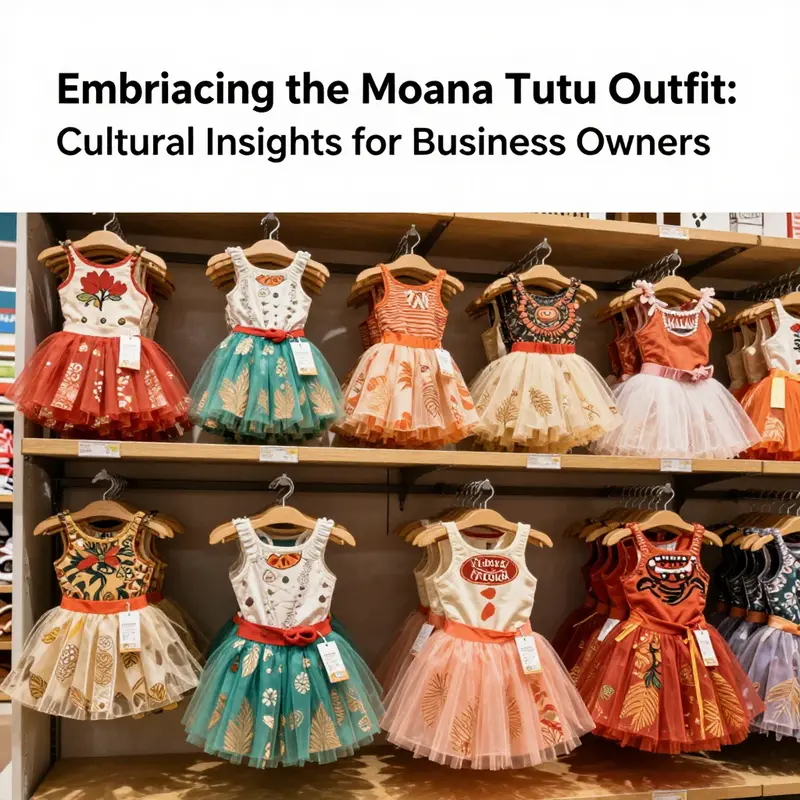
The Moana-inspired tutu outfit has moved beyond a simple party costume to become a familiar wardrobe shorthand for celebration and imagination. In markets around the world, families weigh color, fit, and the sense of play against a shifting price landscape that reflects production methods, licensing decisions, and the seasonal pulse of demand. Pricing sits at the intersection of logistics and culture, shaping not only what is affordable but what feels appropriate for a given celebration. As with any popular character-inspired apparel, the choices range from bulk, event-ready packages designed for resellers or school functions to individually purchased ensembles aimed at a single child’s Halloween stroll or birthday party. The scene is not static; it shifts with volume, with the nuances of customization, and with how much a family values authenticity versus convenience. Understanding this mosaic can help caregivers navigate decisions that balance budget, quality, and respect for the cultures that inspired the costume in the first place.
On the bulk side, price per unit often falls as order quantity climbs, a pattern familiar to anyone who has planned a larger event or program. In a bulk scenario, a seller can price a costume skirt package at about ten dollars per unit when ordering 49 pieces, and this unit price can dip further—toward the mid to high nine dollars—when the order reaches around two hundred units. The economics behind this shift make bulk purchases appealing to organizations planning Luau-themed gatherings, school events, or charity celebrations where matching outfits create a cohesive look and reduce on-site confusion. Importantly, bulk deals frequently come with customization options that extend beyond the fabric and color. Branded logos, custom packaging, and even coordinated accessories can be bundled into the deal, turning a simple costume into a coordinated theme kit. For planners who need to manage inventory in advance or who want to present a uniform experience to dozens of children, these features can offer both practicality and brand consistency. The promise of savings is real, but it comes with considerations about lead times, minimums, and the commitment to order now rather than later when demand spikes.
For individual consumers, the price picture widens in both scale and purpose. A single, ready-to-wear outfit that aligns with licensing standards can present a higher price tag than bulk purchases, reflecting licensing rights, fabric quality, and the precision of the character’s design. Typical figures for new, unused licensed outfits can hover around a modest mid-range price, with occasional promotions nudging prices downward. In some cases, a new yet officially licensed Moana-inspired tutu set can be found for a price point in the low to mid-tens, while premium or premium-access options—often tied to pre-orders or limited-edition runs—can approach higher figures. These variations reflect not only the strength of the licensing framework but also the materials involved, the extent of embellishments, and the sophistication of the included components, such as mesh overlays, elastic fittings, and accessory packs that complete the look. For families seeking a more budget-friendly option, there are lower-cost packages that still capture the character’s tropical vibe, though those may compromise on certain finishes or durability over time. Free shipping and occasional bundled incentives help balance the sticker price, especially for online shoppers who compare multiple listings for fabric feel, seam strength, and sizing accuracy. In practice, a child-oriented costume can be a thoughtful, expressive purchase that aligns with a child’s growing sense of play and storytelling, provided caregivers evaluate quality alongside price rather than privileging price alone.
Market availability is shaped by where shoppers look and when they shop. In broad terms, these Moana-inspired outfits populate a spectrum of marketplaces that attract different kinds of buyers. Major online marketplaces tend to carry both new and pre-owned items, which means buyers can encounter a range of conditions, finishes, and histories of wear. Stock levels rise and fall with the calendar. Halloween seasons, party seasons, and school celebrations push more units into circulation, while off-season months may see inventories that linger longer or drop prices as retailers clear space for newer stock. The geographic reach of these outfits is wide, enabling families far from large urban centers to access similar designs through international or cross-border sellers. That accessibility is a strength, but it also requires careful attention to sizing charts, shipping windows, and returns policies, since international shipments can involve longer transit times and variable duties or fees.
Authenticity and cultural sensitivity intersect with pricing in meaningful ways. Officially licensed merchandise tends to command higher prices, reflecting licensing costs and brand safeguards—an important factor for families who want a representation that aligns with the source material and its cultural context. In contrast, unlicensed or loosely inspired pieces may appear at lower price points, but they carry risks related to quality, fit, and the potential misrepresentation of Polynesian traditions embedded in the character’s story. A growing body of discussions around age appropriateness and cultural portrayal reminds buyers to consider intent and impact. Rather than focusing solely on price or trendiness, parents and educators can weigh questions like: Does the outfit support respectful engagement with Polynesian-inspired themes? Is the wearer able to understand or appreciate the cultural layers behind the character, and is the costume chosen with that understanding in mind? These reflections do not erase the fun of the play, but they help ensure that costume choices contribute to inclusive, thoughtful celebrations rather than reinforcing stereotypes.
The practical implications of price and availability extend into planning and classroom or party contexts. For schools, clubs, or community organizers tasked with coordinating outfits for many children, bulk pricing becomes an essential lever for budgeting. The ability to bundle skirts, tops, and accessories into a single order reduces complexity, simplifies distribution, and ensures that children feel part of a unified visual narrative. It also invites considerations about portioning and replacement: if a size runs small or if a piece wears out after repeated use, the organization needs a plan for replacement or repair. For families, a balance must be struck between the thrill of the character and the realities of daily wear, storage, and the potential for rapid outgrowing as children grow. In this sense, pricing is not merely a sticker on a product but a signal of lifecycle cost—the initial purchase, the duration of use, and the possibility of repurposing the costume for future celebrations.
A useful frame for navigating these choices is to think of the costume as a short-term investment in a moment of play, rather than as a long-term fashion piece. The price signals you see reflect both the immediacy of that moment and the potential for reuse. Families who anticipate recurring events—birthdays, school performances, or cultural celebrations—may find value in investing in a higher-quality, officially licensed set that offers durability and consistent size ranges. On the other hand, those who need to outfit a one-time event may opt for more economical, non-licensed designs that capture the character’s essence while staying within a tighter budget. This spectrum of options is not simply about cost; it is about aligning resources with goals: creating a shared magical moment for a group of children, while also being mindful of cultural representation and respect for the traditions behind the imagery.
For those who want to explore the broader universe of tutu varieties that can complement a Moana-inspired look, note that many retailers organize their catalogs around core categories that emphasize simplicity and versatility. A practical step in planning is to browse the general tutu category, which often showcases a spectrum from basic to elaborate designs and can help families compare construction, color fidelity, and sizing without getting overwhelmed by licensing distinctions. See the basic tutu category for a sense of what foundational options exist and how they can be adapted to evoke a tropical, island-inspired vibe while keeping the ensemble appropriate for a child’s wardrobe needs. basic tutu category.
In weighing pricing and availability, it is also essential to consider delivery timelines and return policies. Online shopping offers convenience, but when a party date looms, shipping speed and the reliability of returns become central to a successful purchase. Some listings offer free shipping or easy returns, which reduces the risk of ending up with an outfit that does not fit or meet expectations. For those planning ahead, placing orders early and using size guides can mitigate the need for last-minute exchanges. For organizers who operate with a fixed budget, tiered pricing models tied to volume can be a powerful tool, allowing a single line item to accommodate either a small party or a large-scale event, while still keeping options open for substitutions if a preferred style or size runs out.
As the market for Moana-inspired tutu outfits continues to evolve, the interplay of price, availability, and cultural awareness will shape how families curate costumes for celebrations. With bulk options offering potential savings and customization, and with licensed items providing assurance of authenticity and character fidelity, a wide spectrum of choices awaits. The best decision often emerges from a clear sense of the event’s scope, the importance of cultural representation, and the practical realities of time, money, and space. A thoughtful approach considers not only the cost per unit but the story each outfit helps tell—the shared memory a child will carry long after the party ends.
External resource: https://www.alibaba.com/product-detail/Carnival-Halloween-Princess-Moana-Costume-with_1600813572177.html?src=1&productType=1
From Fantasy to Respect: Navigating Moana Tutu Outfits with Cultural Sensitivity
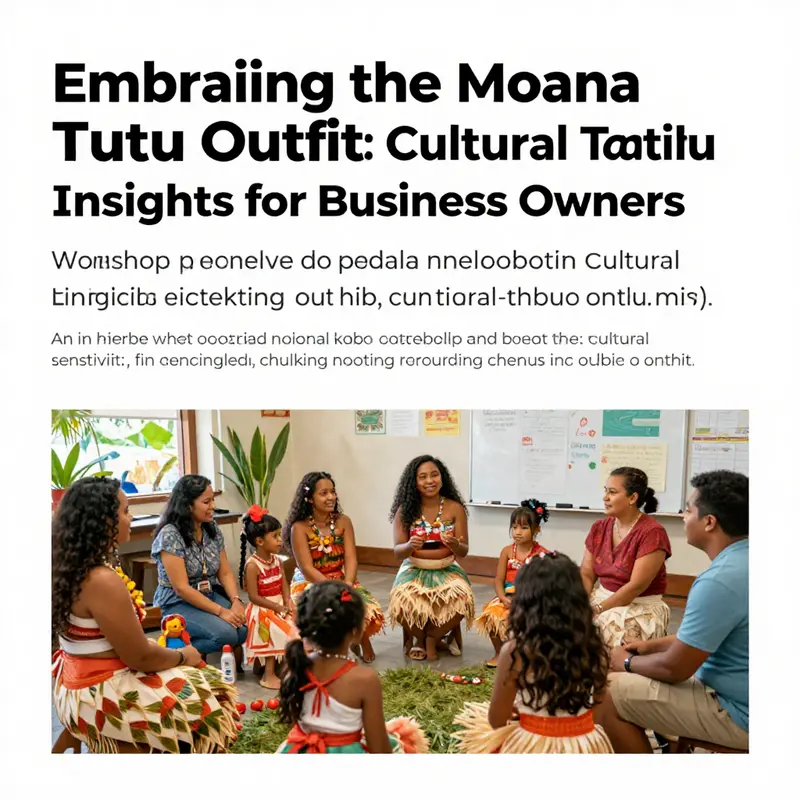
Children’s costumes often blend imagination with familiar characters, letting little ones explore stories, worlds, and emotions in a playful way. Among the most enduring choices is the Moana-inspired tutu outfit, a bright, tropical cue that feels both accessible and celebratory. These ensembles commonly pair a full, fluttering tulle skirt—designed to mirror the character’s dynamic, sunlit presence—with a top in warm earth tones or ocean blues. The result is a look that resonates at Halloween parties, birthday celebrations, and school events, where the dress-up moment becomes a shared memory rather than a simple costume. Yet behind the sparkle lies a layered conversation about culture, representation, and the responsibility that caregivers carry when dressing their children in outfits that nod to real-world traditions. The chapter that follows moves through that conversation with care, offering a lens for families and educators to balance joy with respect, play with context, and celebrate creativity without reducing a living culture to a mere prop.
At its core, the Moana-inspired tutu evokes a world of bright reefs, red hibiscus, and a coastlinescape of greens and teals. The design invites movement; the tutu catches air and twirls with a child’s gallop, echoing the character’s fearless, adventurous energy. But the same energy that makes the outfit so captivating also calls for thoughtful choices about what is being worn and why. The world from which the character arises is not a costume shop shelf, and the aesthetic signals more than just style. Polynesian-influenced motifs, such as natural fibers, floral adornments, and oceanic colors, carry meanings rooted in history, cosmology, and daily life. When worn as a casual homage at a party or a street parade, these elements can drift into a kind of mini-lesson about culture—one that may be received as respectful or as rote mimicry, depending on context and intent. The distinction matters because children are learning what it means to honor others through the things they wear, and adults are modeling that lesson in real time.
Educators and parents increasingly understand that cultural appreciation is not a fashion trend but a practice of listening, learning, and adapting. The first step is to acknowledge the lineage behind the aesthetic. Moana’s world is not a single borrowed costume idea but a synthesis of storytelling traditions from Pacific Islander communities, where clothing, patterns, and adornment are entwined with history, language, and ritual. In many cultural frameworks, certain garments or adornments carry sacred or ceremonial weight. A wrap top that echoes a traditional garment, for instance, may be known for its practical significance as much as for its beauty. A tutu, as playful and modern as it appears, sits atop that deeper set of meanings. For families seeking to honor the lineage while keeping costumes age-appropriate and lighthearted, the path is to reinterpret rather than replicate. That means choosing fabrics that are breathable and comfortable for kids—cotton or rayon blends that feel pleasant against skin—while reimagining patterns and silhouettes in ways that convey admiration without claiming mastery over a culture’s sacred codes.
The balance between homage and appropriation is never static, and it shifts with the setting. In a classroom, for example, a teacher may frame a Moana-inspired look as a starting point for a richer discussion about Polynesian storytelling, navigation across the Pacific, and the significance of ocean ecosystems. The goal is to move beyond surface aesthetics and toward informed curiosity. When a child wears a tutu to a family party, the emphasis can be on storytelling and color—how the turquoise and bronze hues echo sea and earth, or how the floral accents recall island flora—while avoiding an attempt to reproduce a specific cultural ritual or costume that requires contextual understanding. These conversations can be age-appropriate and concrete: why certain colors are associated with different times of day in the Pacific, how wind and water influence design, or how communities share dances, songs, and crafts with visitors in ways that are respectful and reciprocal. The aim is not to sanitize the experience but to broaden it, turning a playful look into a doorway for learning.
Parents and educators can also explore practical ways to differentiate fantasy play from cultural representation. One practical approach is to widen the frame beyond the character and connect the outfit to broader themes such as ocean literacy, island ecology, and the importance of traditional crafts. A child wearing a tutu and a wrap-top-inspired top can be introduced to the idea that clothing and adornment tell stories about a people’s relationship with land, sea, and harvest. To support that learning, caregivers might incorporate short, kid-friendly narratives about the sea’s role in navigation, or invite a conversation about how communities use natural materials in daily life. In this sense, the Moana tutu becomes a vehicle for understanding rather than a generic costume choice. It becomes possible to celebrate the zest of a character’s journey while acknowledging that the cultural world behind the look deserves respect, not repetition.
Another layer to consider is the evolving language of branding and representation. In recent discourse, some observers point to a shift in how mainstream media and consumer culture present cultural motifs, aiming for more thoughtful engagement rather than broad caricature. This evolving conversation matters for costume choice because it signals a growing awareness about how brands and markets engage with real cultures. When adults approach costume shopping with an eye toward cultural sensitivity, they model a process of critical thinking for children: ask where the inspiration comes from, who holds the knowledge behind the imagery, and what the effect of replication might be on those communities. The guiding questions can be simple yet powerful: Is this an affectionate homage or an attempt to commodify someone else’s traditions? Does this outfit invite curiosity and dialogue about the people who inspired its design, or does it flatten complexity into a single, film-like snapshot? Answering these questions with honesty and care helps ensure that the costume moment remains a positive, educational, and respectful experience.
For those seeking a more everyday or classroom-friendly alternative to a direct replication of a character’s outfit, a broader, more inclusive approach can be rewarding. A Moana-inspired look can be reimagined as a tropical, adventurous ensemble that foregrounds comfort, movement, and cultural respect. In this light, the emphasis shifts from reproducing a costume to crafting an outfit that captures a vibe—the openness of a voyage, the brightness of a reef, the warmth of a Polynesian sunset—without locking into particular ceremonial garments or sacred motifs. The practical effect for families is that the wardrobe choices become more versatile: a basic tutu can serve as a canvass for multiple adventures, farther removed from any single cultural template. For the parent choosing a tutu, there is a quiet satisfaction in knowing the garment functions as both playwear and a doorway to conversation, rather than a replica of a living culture. And when the dialogue is ongoing, the child grows more confident in asking questions, in showing curiosity, and in recognizing that clothing can be a starting point for learning rather than a final statement.
In the realm of shopping for such outfits, the ethical considerations extend to how imagination is packaged and sold. The available designs span from simple, ready-to-wear skirts to more elaborate ensembles that include accessories and coordinated tops. The temptation to lean toward the most striking or the most affordable option is real, especially for time-pressed families preparing for a party. Yet the most constructive choice is one that foregrounds context and learning: selecting pieces that are comfortable, age-appropriate, and aligned with a respectful frame of reference. For example, a child can wear a bright turquoise skirt with a simple, solid-colored top and a floral headband, and adults can use the moment to share a short story about the ocean, traditional weaving, or the ways communities honor nature through craft. By focusing on interpretation rather than imitation, the wearer’s story becomes a collaborative one, enriched by questions, listening, and new awareness.
The chapter doesn’t pretend to offer a universal verdict. Cultural sensitivity in dress is a living practice, evolving as communities reflect on how their visual cultures are presented to younger audiences. What remains clear is that a well-considered Moana-inspired tutu can be a joyful form of admiration when it is coupled with curiosity and responsibility. It can become less about replicating a sacred or ceremonial aesthetic and more about celebrating character-building traits such as courage, generosity, and resilience—qualities that resonate across cultures and age groups. For families who want to explore this path, the next step is to invite dialogue about origins, to model respectful consumption, and to choose interpretations that emphasize learning and connection. In this light, the tutu is not a mere costume but a prompt—a prompt to listen, to ask, and to grow in the same way a child grows when faced with a new idea or a new culture.
To support thoughtful decisions in everyday life, consider the practical option of exploring a broader wardrobe ecosystem that accommodates both play and education. A simple, versatile tutu set in a tropical palette can be paired with different tops and accessories to suggest a range of adventures, from island exploration to sea-splashed escapades. This flexibility allows a family to craft meaningful outfits that remain emotionally resonant while avoiding overfitting to a single cultural signature. The goal is to create dress-up experiences that are inclusive, informative, and fun—the kind of memories that endure long after the party ends. And as children learn to interpret the world around them, these outfits can serve as gentle prompts for empathy, respect, and shared storytelling, turning a moment of dress-up into a lifelong habit of thoughtful engagement with other cultures.
In sum, a Moana-inspired tutu can be a source of delight and imagination when approached with mindfulness. The challenge—and the opportunity—lies in recognizing that cultural motifs are more than color and pattern; they are living expressions of people’s histories and identities. The best practice is to pair play with learning, to choose silhouettes and fabrics that honor the spirit of the culture rather than mirror a final, static image, and to keep conversations open, honest, and age-appropriate. When parents and educators anchor costume choices in respect and curiosity, the Moana tutu morphs from a momentary costume into a doorway for exploration, a reminder that joy and responsibility can share the same stage. If we want future generations to wear their imagination with dignity, we begin by modeling how to ask the right questions, to listen for the answers, and to celebrate the beauty of cultures without reducing their depth to a single, cinematic snapshot. The tutu becomes a shared canvas where wonder can thrive and where respect remains the most vibrant color of all. For readers seeking a practical, everyday pathway to this balance, consider exploring the basic tutu category as a versatile starting point, and let education, curiosity, and care guide every choice: basic tutu category. For a broader perspective on the ethics of cultural representation in popular media and branding, see the following external discussion. External context highlights how brands navigate cultural respect in global storytelling, underscoring why thoughtful costume choices matter in classrooms, homes, and party aisles alike: https://www.theguardian.com/arts/2025/jan/15/disney-vaianna-moana-cultural-respect-global-branding
Final thoughts
The Moana tutu outfit is not simply a popular costume; it serves as a bridge between fantasy and cultural representation. For business owners, understanding the layers of significance, design intricacies, and market dynamics surrounding these outfits is crucial for making informed decisions that respect the cultural backdrop. By fostering a respectful and thoughtful approach to marketing and selling Moana-inspired costumes, retailers can appeal to consumer interests while simultaneously honoring the cultures that inspire them. Ultimately, this balance can lead to a richer, more responsible participation in the vibrant costume market.