
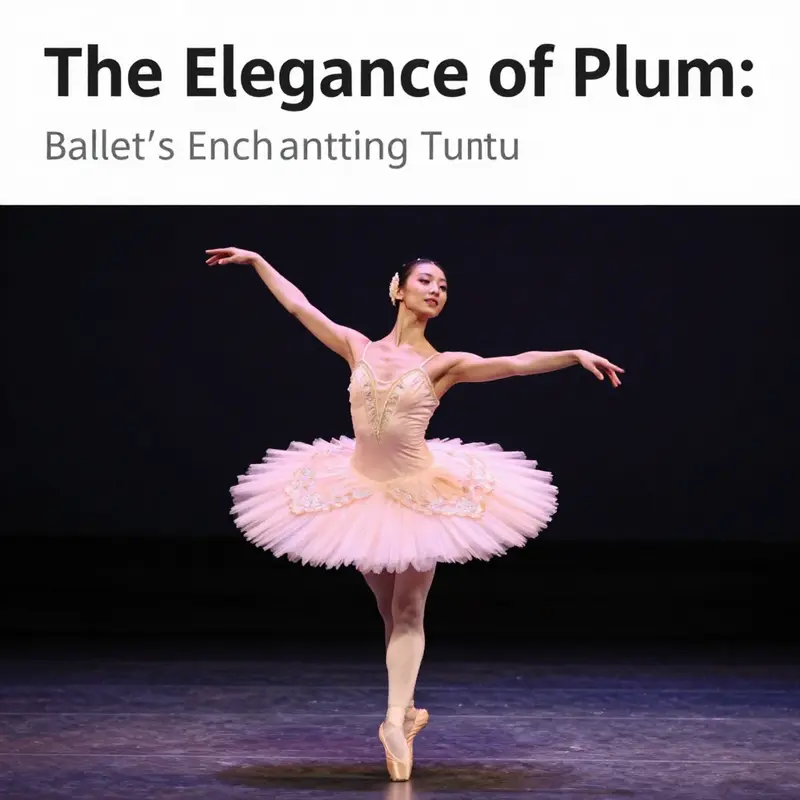
The “plum tutu” is not just a stunning visual piece in a ballet performance; it embodies the fusion of color, movement, and cultural significance. At the intersection of elegance and expression, this rich, deep red-purple garment captures attention among audiences and dancers alike. In the chapters that follow, we’ll explore the meaning of the color plum, delve into its significance in ballet, track the current fashion trends that feature the plum tutu, and uncover the deeper symbolism behind this delightful attire, ensuring a holistic understanding of its place in both performance art and contemporary culture.
Velvet Reverie: The Plum Hue and Its Dance with the Tutu
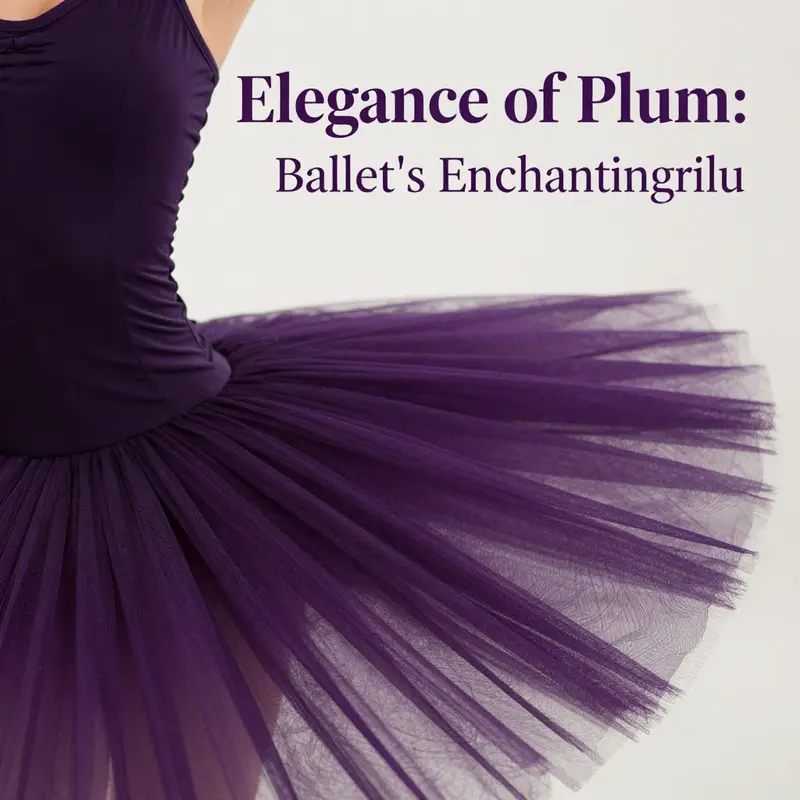
The phrase plum tutu conjures a precise image long before a dancer lifts her legs in a practiced arc. It is not merely a color applied to a garment; it is a story told in fabric, light, and motion. Plum, in its most evocative sense, is a deep, luscious shade that sits between red and purple, a color that reads as both regal and intimate when caught by stage lighting. In a plum tutu, the dancer wears a color that whispers of autumn’s ripest fruit and twilight shadows, a hue that carries warmth without sacrificing sophistication. The tutu, with its layers of stiffened tulle and its signature skeletal silhouette, provides a stage for color to breathe, to deepen, to shimmer with the nuance that only a fully realized shade of plum can supply. When a performer glides across the floor in such a costume, the audience doesn’t just see a costume; they perceive a mood, a season, a memory in the making. The plum tutu becomes a living color story, a pivotal thread in the larger tapestry of a ballet’s visual language.
To understand why plum works so powerfully in this context, one must pause at the door of color theory and step into the theater of performance. Plum is not flat. It shifts with light, revealing hints of blue at one angle and a touch of red at another. In practical terms, that means a plum tutu can read as deeply as a wine-stained velvet under a warm cave light, or as vibrant as a held breath under a crisp follow-spot. The costume designers who work with plum often lean into that dynamism, selecting fabrics that preserve depth while allowing glow. Silk organza overlays, satin panels, or subtle metallic threads woven into the tulle can catch a beam and release a quiet, eye-catching gleam. The result is not a uniform color field but a living spectrum, a garment that seems to respond to the dancer’s energy, the orchestra’s tempo, and the audience’s gaze.
The cultural resonance of plum as a color in performance is also meaningful. In ballet, shade choices are seldom arbitrary. They align with character, mood, and narrative function. A plum tutu may signal authority, mystery, or a certain gravity—traits that suit roles ranging from princely figures to sultry leads, from the solemn to the sensuous. Yet plum remains versatile enough to anchor lighter, more lyrical moments when paired with soft lighting or pale makeup. The color’s depth adds gravity to a solo while its subtlety permits a duet’s delicacy to shine through. This balance is part of what makes plum a compelling option for modern choreographers who want tradition and innovation to coexist on stage. The tutu’s design reinforces this interplay. Its many layers of stiffened net or tulle create a sculptural silhouette that holds itself in space, allowing the plum to read as a thick wash of color when viewed from audience’s distance and as a precise pocket of hue up close under the ballet’s rigors of timing and precision.
The physical construction of the tutu is inseparable from how the color behaves on stage. A traditional tutu’s skirt consists of several tiers of rigid fabric, each layer contributing to the way light travels across the surface. Darker, saturated colors like plum absorb more light, producing a velvety surface that feels tactile rather than merely visual. The wearer can move, turn, and pulse without losing the garment’s architectural integrity, while the fabric’s color maintains its intensity through a range of movements. In rehearsal, designers test plum under varying lighting conditions—warm amber footlights, cool blue side lights, and the harsh clarity of a center spotlight. The goal is to preserve plum’s richness in all those conditions, ensuring the color never appears muddy or dull, even as the dancer’s body reshapes the silhouette with every step. The subtle interplay of fabric weight, stitch, and dye depth matters just as much as the hue itself. A heavier dye can create a more saturated plum, but it risks flattening the fabric’s texture. A lighter application preserves texture while still delivering the color’s signature depth. The art lies in balancing these factors so the costume’s color feels inevitable rather than decorative.
There is also a striking practical cadence to choosing plum for a tutu. The color reads differently on different skin tones, producing a chorus of hues rather than a single uniform shade. For some dancers, plum sits closer to a burgundy, warming the skin with an almost candlelit glow. For others, it tilts toward a cool, wine-tinged purple that makes the eyes pop and the cheekbones catch light in a way that enhances portrait-like moments on stage. This adaptability matters in both ensemble scenes and solo passages. It also means plum can function across a spectrum of storytelling contexts: a regal prince’s festival parade, a sly, nocturnal encounter in a dream sequence, or a modern reinterpretation of a classical pas de deux. The color’s versatility extends beyond the dress alone. The bodice, trim, and accents can be deliberately coordinated with plum to produce a cohesive yet dynamic visual system that changes with the choreography. When the entire costume remains in the plum family, the dancer’s lines—tip of the toe, the extension of the arm, the turn of the head—become more legible as a single movement. When plum is paired with brighter or cooler rivals like gold, champagne, emerald, or navy, the effect is a deliberate conversation between color families, a dialogue that enhances narrative clarity while preserving the costume’s inherent luxury.
Designers who work with plum tutu often lean into a broader palette that can elevate the tone without overpowering the central hue. Metallic threads, subtle embroidery, or beading can introduce points of light that break through the velvet-like density of plum, creating a constellation effect as the dancer moves. In other words, plum is not a wall of color; it is a surface that can reveal a constellation of smaller design choices. Gold and ivory accents can glow against plum, especially under warm stage lighting, but so can soft silvers that catch the cool hues from a sidelight. A deep navy or charcoal edge on the hem or a velvet sash at the waist can anchor plum in a theatrical gravity that is at once timeless and contemporary. The capability to borrow from adjacent color families without losing the plum identity is precisely what makes plum tutu a powerful design choice.
Beyond the surface beauty, there is a narrative discipline that governs color choices in ballet. The plum tutu speaks in a moral and emotional register that a pink tutu rarely can. It communicates a maturity without sacrificing the dreamlike quality that defines classical ballet. This is especially salient in contemporary choreographies that reference fairytale imagery while inviting adult audiences to experience a more nuanced emotional arc. For the dancer, the color serves as a partner—one that accepts the light and returns it with a twice-remembered glow. The tutu thus becomes a collaborator in storytelling, inviting the audience to read the color as a character in its own right. In rehearsal rooms and on stage, the plum garment attunes to the music’s tempo and the dancer’s breath, responding to the tempo shifts with a visible, color-driven cadence. The audience might not name the hue, but they instinctively perceive the mood shifts that plum helps to articulate. This kind of color-language literacy—where hue informs emotion and movement—embodies the essence of choreography that respects tradition while inviting new interpretations.
The pronunciation of plum, a small but meaningful detail, also plays into the cultural and linguistic texture of this topic. The word is pronounced /plʌm/, with a short, clipped vowel that sits compactly in the mouth. This phonetic simplicity mirrors the garment’s elegance: a word and a dress that are straightforward in form but abundant in implication. Pronunciation matters because it anchors the color within a shared linguistic frame, making it easier for designers, dancers, choreographers, and audiences to discuss shade choices with precision. For learners and professionals alike, hearing the correct pronunciation reinforces the association between plum and the color’s aesthetic potential. Cambridge University Press offers a trusted pronunciation reference that can help dancers and designers articulate the color with confidence in meetings, fittings, and rehearsals. Access to reliable audio resources ensures that the color’s identity remains stable as it travels across studios, stages, and cultures.
In terms of practical navigation for readers who want to explore the broader ecosystem around plum-tinted ballet costumes, it helps to acknowledge how accessible the plum palette has become in design catalogs and costume categories. For instance, a glimpse into online catalogues that curate professional tutu options reveals how plum is positioned within a spectrum of dance costumes. This category often features plum-tinted garments alongside other rich tones, revealing how color hierarchies are constructed in commercial offerings. The way designers present plum—in combination with metallic trims, sheer overlays, or structured bodices—offers a compact lesson in color application. The aim is not to commodity-shop the color but to learn how plum can be integrated, tested, and refined within the constraints of performance spaces. When designing a plum tutu, the designer must consider the stage’s geometry, the dancer’s physiology, and the lighting designer’s plan, weaving these elements into a single, coherent color story.
The chapter would be incomplete without a lived sense of what it feels like to perform in plum. Imagine stepping into a backstage corridor where the lights are low, the air is still, and a chorus of sound begins to rise as the orchestra tunes. The plum tutu absorbs some of that backstage hush, but as the curtain lifts, the color takes on a different life. The first glint of stage light travels through the layers, and the fabric seems to come alive in a quiet, almost breathing way. A well-chosen plum reads as both memory and possibility—the memory of a mature elegance, the possibility of a fresh interpretation, a reminder that color in ballet is not decoration but a fundamental vehicle for emotion and narrative. In that sense, plum is not simply a shade; it is a dramaturgical device that helps translate music into sensation, and sensation into movement.
For readers who wish to see how plum fits into the practical catalog of costume planning, a closer look at available tutu categories offers useful context. The professional tutu section, in particular, often presents plum as a sophisticated option for ensembles that demand both impact and nuance. Within such a category, plum can anchor a costume’s character while leaving room for complementary pieces in the rest of the wardrobe. This approach aligns with the broader design philosophy of using color to unify a production’s visual language without constraining individual performers to a single mood or design vocabulary. The color, in short, becomes a shared language—one that helps the ensemble tell a larger story with clarity, depth, and grace. To explore relevant categories further, readers can consult the professional tutu section linked here: professional tutu category.
As a closing reflection, the plum tutu embodies a synthesis of tradition and invention. It honors the lineage of classical color choices in ballet while inviting contemporary sensibilities to reframe and re-interpret those choices for new audiences. The color’s depth lends gravitas to mythic or ceremonial moments, while its warmth can soften a narrative’s more intimate scenes. The tutu’s silhouette preserves its timeless rhythm, with color performing in parallel to movement rather than lingering as static surface. This alignment—between garment engineering, stage lighting, color psychology, and narrative intent—defines what makes plum a compelling choice for ballet costume design. In every rehearsal, in every cue-to-cue, plum plays a role in shaping how a dancer’s body reads on stage, how a character’s arc unfolds, and how audiences experience a story that moves not only through space but through hue.
External reference: https://dictionary.cambridge.org/pronunciation/english/plum
Plum Tutu: Color as Choreography in Ballet’s Language
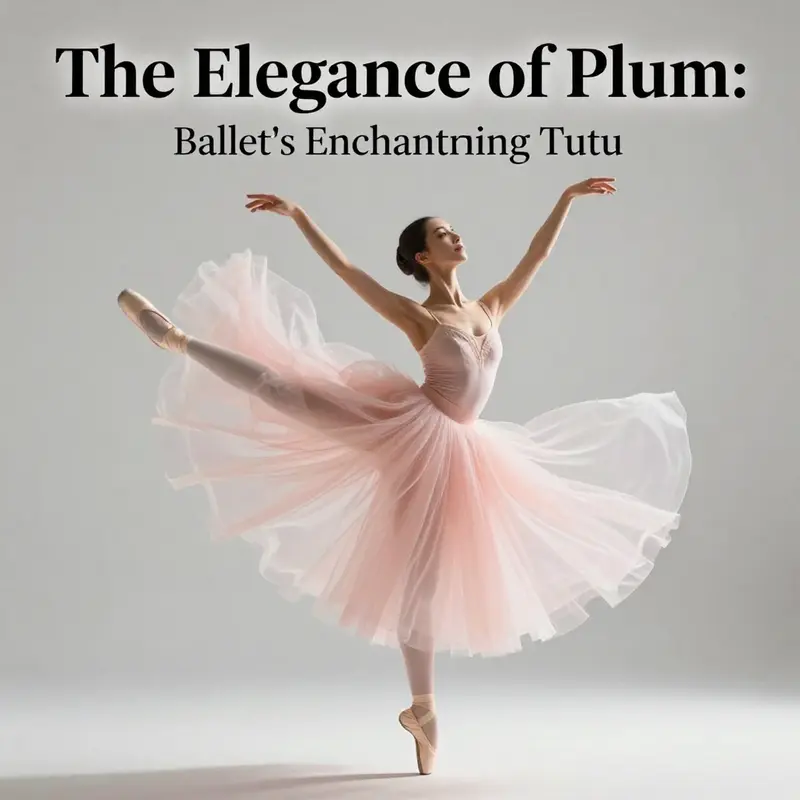
A plum tutu is more than a shade on a swatch; it is a language device on stage, a brushstroke in the painterly grammar of ballet. When audiences imagine a ballet, they often summon a silhouette of powdery white, a classical halo around the dancer as she moves through space. Yet color, especially a tone as resonant as plum, does more than decorate the costume. It frames intention, modulates mood, and carries the narrative with an almost tactile texture. The plum tutu, with its deep red-purple aura, sits at an intersection where history, design, and performance meet. It embodies the evolution of ballet’s visual vocabulary, and in doing so it helps us understand how color can guide perception, influence movement, and illuminate the fragility and power that lie at the heart of dance itself. The tutu’s significance has always extended beyond aesthetics; it mediates rhythm, line, and storytelling, turning the dancer’s body into a moving sculpture whose color amplifies each gesture. A plum hue, carefully chosen and lit, can soften the line of a leg lift, sharpen the silhouette of a pirouette, or heighten the drama of a dramatic entrance. In this sense, plum is more than pigment. It is a dramaturgical tool that supports the dancer’s voice without overpowering it, a quiet yet stubborn collaborator in the pursuit of expressive clarity.
The color plum belongs to a family of hues that ballet has long treated with reverence. It sits between the warmth of red and the cool depth of violet, occupying a space that suggests both passion and mystery. In the era of Romantic ballet, color entered the narrative as a gateway to heightened emotion. Princesses wore pale peach and soft pinks to signify innocence; villains wore stark blacks and cobalt blues to signal threat. Yet the throne of the stage has always loved a color that can suggest more than a single feeling. Plum, with its built-in suggestion of dusk and velvet, can hint at romance and secrecy at once. On the stage, such a color can appear to glow or to recede, depending on lighting and fabric. The interplay between plum and light is almost alchemical: tulle, organza, or satin can catch a beam differently, turning the skirt from a solid Italianate canopy to a shimmering surface that seems to breathe as the dancer breathes. In this way, the plum tutu becomes a partner in the choreography, not merely a garment that encases the body.
To understand the plum tutu as a cultural object is to trace its lineage within the broader history of the tutu itself. The tutu’s journey from the undergarment of early courtly costumes to the iconic floating platform of the Romantic era and then to the sculpted, punctuated silhouette of the Classical period mirrors ballet’s own changing priorities. In the Romantic tutu, long, flowing layers of fabric created a sense of weightlessness and ethereality. The dancer could seem to hover, the artifice of gravity suspended by delicate materials and the illusion of the dancer’s control. Plum, introduced in this transition, amplified the mood: the hue could be saturated to evoke a moonlit landscape or subdued to imagine a twilight forest where the sylph might dwell. By the time the Classical tutu arrived, the need for a clear, readable line became paramount. The plum shade could be calibrated to read cleanly against stage lighting and against the dancer’s skin tone, offering a bold counterpoint to the white or ivory tutus that dominated the repertory’s most storied moments. The color thus shifted from a mere fashion choice to a functionally descriptive instrument, signaling alliances with certain characters or emotional states. The plum tutu’s significance, then, lies partly in its adaptability: it can anchor a scene in a particular mood, or it can become a flexible canvas for the ballet’s evolving themes of longing, transformation, and resilience.
The practical aspects of realizing a plum tutu on stage reveal a meticulous choreography of materials, structure, and lighting. The classical tutu’s stiff, layered silhouette is designed to project outward with a precise circular shape. When the color is plum, the fabric’s undertones come into sharper relief under footlights and follow-spot gazes. The shade can appear jewel-like under warm light, almost ruby in some angles, while at other angles it softens to a plum-rose that seems to melt into the shadows of the wings. The choice of fabrics—tulle for buoyancy, satin for depth, perhaps a delicate overlay of organza to catch the light—affects how uniformly the color reads from different viewing angles. A plum tutu with a dense, opaque underlayer can present a saturated field of color, ideal for moments that demand visual intensity, such as a crucial leap or a dramatic turn. A lighter plum, perhaps achieved with a sheer overlay, can capture the dancer’s movement as it shifts through space, allowing the color to fluidly respond to the tempo of the music. The choreography and the design thus become a single vector: color not only clothes the performer but also amplifies the body’s lines and the audience’s perception of speed, gravity, and grace. In this sense, the plum tutu becomes a living instrument, attuned to the dancer’s breath and to the orchestra’s cadence.
The dramaturgy of color on the ballet stage owes much to how audiences experience color universes. Plum, with its density and latent warmth, can signal a transformation arc without a word spoken. In a narrative ballet, a lead character might begin swathed in pale tones to signify vulnerability and then progress into plum as resolve hardens and the emotional stakes escalate. The color acts as an internal meter, a subconscious cue that the audience receives before the dancer’s movements register as plot. Designers and choreographers often rely on color to help shepherd the audience through a story’s emotional geography. Plum’s implication of richness and maturity can be especially potent in scenes that demand a shift from innocence to experience, from hesitation to decisive action. The audience doesn’t just see the plum tutu; they sense a narrative resonance in the fabric’s depth. This resonance is not a mere ornament but a perceptual hinge that helps the body communicate its interior life, a phenomenon that artists have practiced since the tutus’ early iterations but refined with contemporary lighting and digital projections. When the curtain falls, the plum remains a memory of texture and mood long after the final bow, a reminder that color can make a dancer’s language felt as well as seen.
In contemplating the plum tutu, one appreciates how performance design and costume literacy intersect with cultural memory. The color palette of a production—whether it leans toward the pale, toward the dramatic, or toward something more intimate and velvety—frames the audience’s expectations. Plum stands as a robust middle ground: not as austere as black, not as innocent as white, but capable of harboring both intensity and introspection. It is a color for a dancer who must hold a conversation with gravity while flirting with the possibility of surrender. The plum tutu makes this conversation legible to observers without translating it into mere symbolism. It gives the dancer a stage partner of its own: a chromatic witness that amplifies the music’s swell, the steps’ exactness, and the moments of suspended breath when a grand batterie or a delicate pique turns the room into a single instrument. In such moments, the color becomes a collaborator, staying close enough to reveal the dancer’s intention while remaining sufficiently broad to allow the audience to project their own meanings onto the performance.
In the broader discourse of ballet costume and design, the plum tutu invites us to rethink how we categorize and appreciate color as part of technique rather than as a superficial flourish. The tutu’s role in highlighting lines—hips, legs, feet—remains fundamental, but plum adds a second layer of function. It can contour the leg line in a way that foregrounds the dancer’s extension, especially when the lighting is calibrated to maximize the color’s depth. It can also calm or intensify the visual impact of a phrase, depending on tempo and dynamic markings. For designers, plum offers a palette from which to compose a complete stage picture. It pairs with the skin tone of many dancers, balancing warmth and contrast so that movements read clearly from every seat in the theater. It has the power to unify the stage’s chromatic environment, offering a coherent color story that echoes the music’s narrative arc. The result is a performance where color and motion are complicit in a shared sense of time and space, and where the plum tutu acts as both a shield and a beacon for the dancer’s expressivity.
As one engages with the historical trajectory and contemporary practice of the plum tutu, it becomes clear that costume is never neutral. It is a cultural artifact, shaped by moments of innovation and by the rituals of rehearsals, lighting tests, and the intimate decisions artists make about how best to honor a role. The plum tutu embodies a philosophy of performance in which beauty resides not only in the form of the dancer’s arc but also in the way a single shade can carry a chorus of emotions—the quiet reverence of a pas de deux, the fierce resolve of a solo climactic moment, the grave tenderness of a farewell. For those who study ballet as both artifact and living practice, the plum tutu offers a concrete example of how color, form, and movement persistently co-create meaning. It is not simply about wearing a colored skirt but about participating in a shared tradition that links centuries of dancers, designers, and audiences through a common language of sight and sound. The plum tutu thus belongs to the canon not merely as a costume choice but as a dynamic component of ballet’s ongoing dialogue between how the body moves and what the body communicates through the body’s color.
In keeping with this understanding, practitioners and enthusiasts alike can explore the plum hue not as an isolated curiosity but as part of a larger toolkit for interpreting and staging ballet. The color invites experimentation with lighting, fabric weight, and silhouette to craft performances that feel both traditional and freshly imagined. It can anchor a revival with reverence for the past or serve as a gateway to contemporary reinterpretation, where designers push the boundaries of texture and shade while remaining aware of the tutu’s iconic silhouette. In such endeavors, the plum tutu becomes a bridge—the bridge between history and invention, between the dancer’s breath and the audience’s gaze, between what is seen and what is felt. And as the curtain rises again and again, the plum color remains a steadfast signal: a reminder that in ballet, every choice—no matter how small—can alter the way movement is perceived, understood, and remembered.
For readers curious to see how a plum-toned ensemble can function across different repertories and aesthetics, the professional tutu category offers a compelling starting point. It presents a spectrum of options that range from the most restrained, classical executions to bolder, expressive interpretations. Engaging with such a collection invites dancers, choreographers, and designers to imagine how plum might inhabit roles from the white swan’s solitary radiance to a heroine’s tempered ardor or a villain’s calculated poise. It also highlights the practical dimension of color: durability under stage lighting, resistance to color fading after repeated washings, and the way plum interacts with the skin’s undertones and the surrounding visual environment. In embracing plum, one accepts a nuanced approach to costume that respects tradition while inviting dialogue with contemporary design sensibilities. The plum tutu, in this sense, becomes a microcosm of ballet’s larger evolution—a discipline that honors its roots while continually asking how to tell a story more vividly through color, form, and motion. And as with any enduring symbol in the performing arts, its meaning deepens the more it is watched, studied, and reimagined by each generation of dancers.
Internal link reference: For readers exploring the breadth of tutu styles and how plum-colored designs are deployed in professional contexts, consider exploring the professional tutu collection. This resource offers a curated view of how designers approach plum hues within the constraints and possibilities of modern stagecraft. professional tutu
External resource for further reading: To situate the plum tutu within the wider historical and cultural conversation about ballet costume, see a broader overview of tutu history and terminology at an external reference. https://en.wikipedia.org/wiki/Tutu
Plum in Motion: Quiet Luxury and Modern Wear
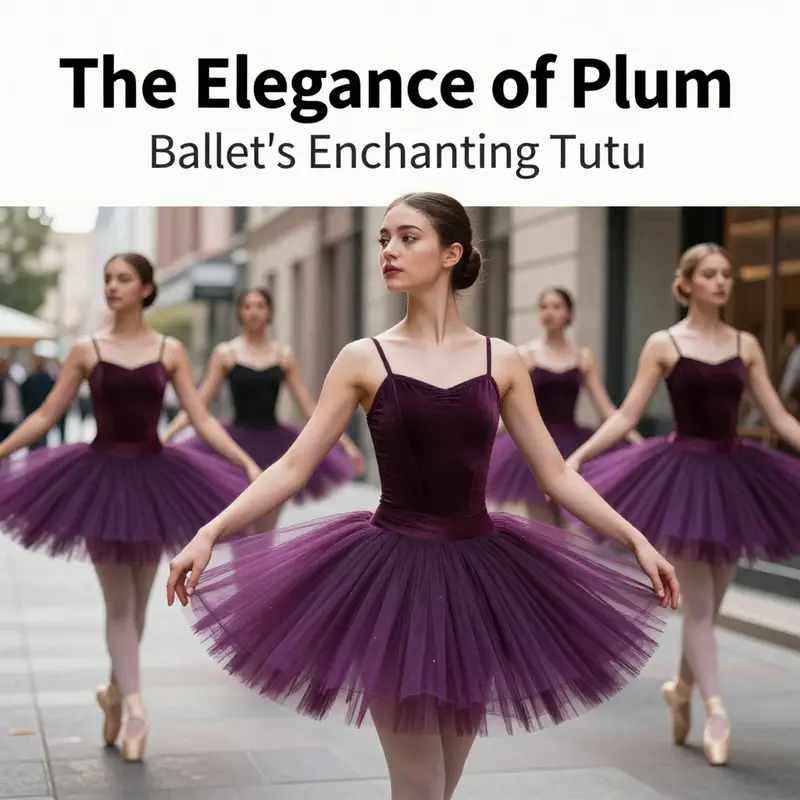
The plum tutu sits at the crossroads of theatre and street, a symbol of how color, silhouette and craft can converge into a narrative about restraint and intention rather than spectacle. Plum, a deep refined purple that leans toward burgundy, carries a weight of storytelling. It evokes theatres with velvet ropes, midnight rehearsals, and the moment when a dancer catches the light, turning a routine into a memory. In fashion language, plum is not merely a color; it is a mood, a whisper of depth, a reminder that color can carry the gravity of an idea without shouting. A plum tinted tutu becomes more than a costume piece. It is a study in how performance heritage can inform contemporary wear, how a stage worthy silhouette can be reinterpreted for days that demand both polish and restraint.
To situate the plum tutu within the current mood, one can trace a shift away from overt display toward a philosophy of Quiet Luxury. The year 2026 has been described as a pivot toward pieces that feel expensive because of their make, not because they crackle with ornament. Quality becomes a language in which the wearer speaks through controlled, precise choices. Fabrics that cooperate with the body, such as silk, fine wool, cotton blends, and densely woven tulle that holds shape, become the medium through which a plum tutu can express sophistication. In this frame, the tutu is not a costume to be pulled for performances. It is a garment that lives in daylight, in city shadows, in galleries and quiet dinners, allowed to reveal its personality through how it moves, how it is layered, and how it is worn with restraint.
The color theory of plum supports this transition. Plum s depth rests between the warmth of burgundy and the coolness of purple, inviting both warmth and distance. It pairs gracefully with a spectrum of neutrals—creamy ivories and pale browns, charcoal and graphite, or even the softer greens and blues that mirror winter gardens. In a modern wardrobe, a plum tutu becomes a focal point or a quiet counterpoint, appearing as a single dramatic element in an otherwise restrained outfit. Placed against a matte black or a soft ivory, the plum reads as a sculpture in motion, a line drawn by fabric and light. The real power, though, emerges when plum is treated as a story thread rather than a loud note. A plum tinted tutu can glow beneath a tailored velvet blazer, or it can be paired with a minimalist slip dress in a duskier shade to amplify texture without saturating the palette. The choice of fabric and the way the tutu is cut matters because plum s narrative is a patient one. It asks for space to breathe on the body, for the eye to travel along the layers of tulle and the subtle differences in depth that catch light with quiet confidence.
Tutus carry layered histories. They began as stage costumes, ethereal and buoyant, designed to create a silhouette that defies gravity under bright stage lighting. In a modern setting, a plum tutu must balance that sense of lift with everyday wearability. The most compelling reinterpretations are those that respect the tutu s aspirational origin while reimagining it through contemporary tailoring. This means exploring the plum tutu not as a definitive uniform of dance but as a texture rich option that can rotate into a capsule wardrobe. A well cut tutu can be longer, shorter, or mid length depending on the occasion, and it can be given shape with a waistline that is slightly higher or lower to suit the wearer s torso. The magic lies in the subtleties: a sheer underlayer that softens the color, a hand finished hem that refuses to fray at the edges, a waist that sits securely without suffocating movement. Comfort and control become design features, ensuring the plum tutu remains animate rather than ornamental.
In this landscape, the plum tutu should not be perceived as a fixed item but as a flexible idea an invitation to experiment with proportion, texture, and layering. Consider the possibility of pairing a plum tutu with a crisp, oversized blouse in a neutral tone, letting the tutu peep out from beneath the hem to reveal a hint of color against the blouse s clean line. Or imagine a plum tutu worn with a soft, longline cardigan and a sleek, sculptural belt to anchor the silhouette. The aim is a balance a controlled sense of drama that does not overwhelm the rest of the ensemble. Textural play becomes a crucial ally here. The plum hue can be enriched by pairing it with fabrics that carry different light responses—matte silk mousseline for a hazy glow; twill or sateen for a subtle sheen; or a delicate organza overlay that catches an angle of light and reveals a new depth of color at every step. The result is not a single statement but a choreography of surfaces, where color, cut, and fabric waltz with the wearer s posture and pace.
The practical virtues of the plum tutu align well with the 2026 emphasis on control and function. A modern tutu is not merely aesthetic; it is a technical garment that respects movement and versatility. A plum tutu designed with modest adjustable elements such as a softly elasticized waist, a detachable underskirt to modulate volume, or a reversible overlay that shifts the color depth from plum to a lighter shade becomes a more democratic piece. It invites the wearer to curate the presentation of their own body through the garment, rather than submitting to a preordained silhouette. In this sense, the plum tutu becomes a tool for self-expression, offering a spectrum of expressions from restrained elegance to subtle theatricality depending on how it is styled and layered. The wearer’s confidence, in turn, becomes the real ornament. The most persuasive plum tutus are those that acknowledge this power, letting the garment push the boundaries of what is considered appropriate for different moments while preserving the courtesy of good taste and the clarity of a well-proportioned line.
Styling the plum tutu for contemporary life also requires attention to the way lighting shapes perception. On a runway, plum can appear almost electric under the glare of spotlights, revealing the dye s complexity and the fabric s inner texture. In daily wear, natural light can soften the hue and reveal warmth in the plum that might be missed in harsher illumination. Designers and stylists who work with plum understand that color is not a fixed signature but a living quality that shifts with context. This awareness leads to thoughtful choices selecting undercolors and overlay tones that harmonize with the wearer s skin tone, hair color, and the rest of the wardrobe. It also encourages experimenting with accessories that draw out the plum s best facets. A minimal gold or brass detail, for instance, can echo the warm undertones of plum; a cool gray metallic can heighten its mystery. Yet the aim remains quiet. The plum tutu should not dominate a scene; it should anchor it, providing a sense of gravity while inviting the eye to move through the layers of fabric and the lines of the body.
The social and cultural resonance of a plum tutu in 2026 is tied to the broader conversation about performance archetypes and personal agency. In a world where fashion often borrows from theatre to signal mood, the plum tutu signals something more nuanced: it says that one can acknowledge performance aesthetics while crafting a personal, everyday uniform that respects speed, movement, and the body s autonomy. This alignment with personal control resonates with audiences who value garments that respond to the wearer s life rather than demanding a fixed role. When a plum tutu is styled with a contemporary ease soft tailoring unstructured outerwear or a streamlined sneaker it becomes a bridge between stage heritage and street sensibility. It asks for a slower, more intentional approach to dressing, where each element speaks with the wearer s voice rather than dictating a dramatic mood from the outside.
In thinking about a plum tutu it s helpful to recall that fashion s strongest conversations often unfold in the gaps between categories. A ballet inspired silhouette invites movement and grace, but when filtered through a nonchalant city ready lens it can become a symbol of disciplined play. This aligns with a broader instinct to honor craft while rejecting excess. The emphasis shifts from how much is seen to how well the garment is made, how thoughtfully it fits, and how clearly it communicates the wearer s intent. A plum tutu, then, is not a gimmick or a novelty item; it is a compact case study in how to translate theatrical DNA into a durable modern wardrobe piece. Its beauty emerges from the discipline of its construction the careful handling of grain the deliberate choice of fiber the precise grading of fullness rather than from an abundance of frills. The result is a garment that can exist across moments a transitional piece that feels appropriate in a gallery opening an intimate dinner or a daytime event with a touch of evening glamour.
As readers explore the idea of the plum tutu within a broader wardrobe strategy a practical footnote appears. The interpretation of plum in this context is versatile precisely because it invites controlled experimentation rather than a single solution. A plum hue can be used as a backdrop to showcase texture; it can be layered with neutrals to achieve a sophisticated palette; or it can stand alone, with the silhouette doing most of the talking and the color refining the edges of the overall look. The tutu s voluminous lineage makes it an ideal canvas for subtlety its layers whisper rather than shout. The modern plum tutu, therefore, can be perceived as a quietly radical statement a garment that champions craftsmanship and personal poise over spectacle, and in doing so, redefines what it means to be fashion forward in a year that prizes balance and intention.
For readers curious about related directions, the concept of the romantic side of tutu design offers a complementary lens. The romantic tutu category with its focus on soft lines, drape, and delicate layering can illuminate how plum might be integrated into more understated forms without losing its character. In this sense, the plum tutu can be seen not only as a bold color choice but also as a bridge to gentler more intimate silhouettes that still carry the sense of movement and grace associated with the original tutu. A careful blend of plum with the romantic ethos can yield looks that feel both timeless and contemporary preserving the tutu s lineage while granting it a voice that fits today s appetite for refined elegance and personal storytelling. For readers who want to see how this category translates into real world options the online catalog offers an avenue to explore textures and volumes that echo the discussions above through curated styling examples.
Velvet Light: Plum Tutu as Color, Craft, and Cultural Moment
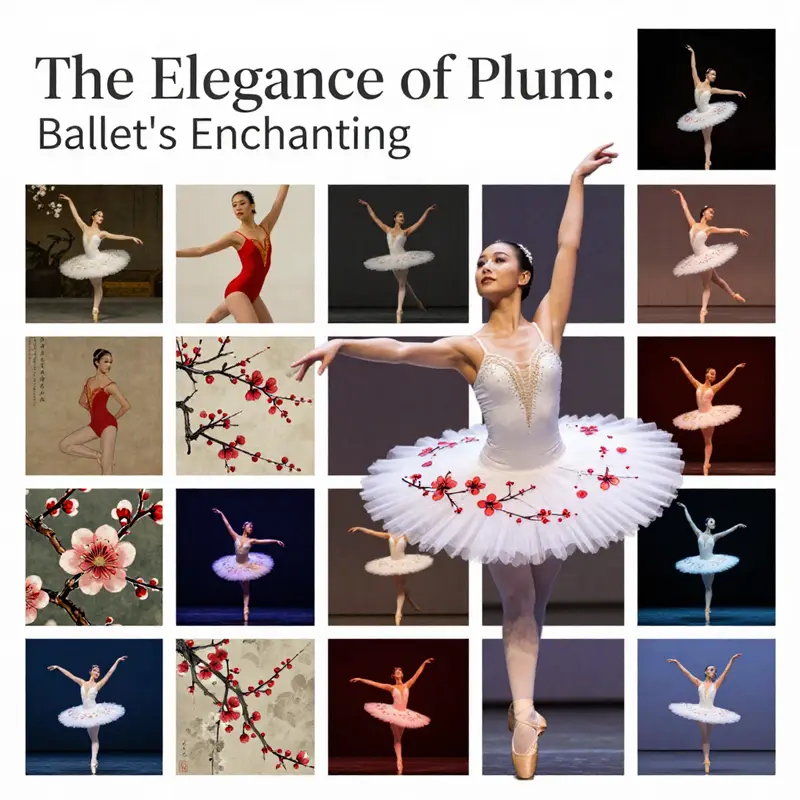
Plum tutu conjures an image equal parts velvet night and stage light. The deep plum shade sits between red and violet, a color that promises romance and mystery. In a ballet context, color is not decoration. It becomes a language that dancers speak without words. The tutu frames a moving body, and its layers act like sculpture that breathes with every turn. When plum is chosen, the gaze moves toward something intimate and elevated at once. This chapter follows that thread, tracing how color and form fuse in a single costume to shape memory, mood, and meaning. Theatrical lighting—golden room light, cool LEDs, or the soft diffusion of a rehearsed studio—alters the effect of plum. In one scene, it glows with a wine-red warmth; in another, it sinks into the shade of a twilight shadow. The audience perceives color as a conductor, guiding attention to arcs, lines, and the dancer’s breath. The plum tutu becomes a compact instrument that amplifies the music of movement and the music of mood.
Historically the tutu did not begin as plum. It arrived through a lineage of stage costumes that sought to reveal a line while preserving theatrical mystery. In the Romantic era dancers wore gowns that softened movement, and the stage itself felt like a painting. As technique evolved, designers raised the skirt, creating a silhouette that could catch light from many angles. The plum shade on such a silhouette offers a modern counterpoint to those earlier robes. The color acts like a velvet door that hints at an interior world of luxury and discipline. A dancer inside the plum tutu collaborates with the costume; movement and color become partners in a drama that travels beyond the footlights. The chair of history sits behind every pleat, with the skirt signaling where technique ends and expression begins. A plum tone helps to delineate character choices without a single spoken word, letting posture and phrasing carry the narrative weight. The tutu remains both mask and proscenium, a boundary that defines stage space while inviting the audience into a private moment of beauty.
Symbolically plum carries depth, refinement, and a touch of sensual authority. In fashion and interior design the color signals seriousness without dullness. It implies a midnight conversation after a performance, a pause that follows the crescendo. In theatre a plum tutu can mark a character who carries responsibility or the weight of memory. The hue helps the audience read a role before a line is spoken. At the same time the tutu embodies a paradox. It is a rigid silhouette yet a vehicle for fluid motion. The stiff pleats hold form, but the dancer uses them to press air into arcs and spirals. This tension between containment and release lies at the heart of ballet. Plum amplifies it by adding a psychological charge to the costume. In this sense the plum tutu becomes more than clothing; it is a small stage where color and choreography exchange promises. The same color can feel regal in one choreography and rebellious in another, depending on lighting, music, and the dancer’s tempo. A well chosen plum shade helps the audience feel the arc of a leap before it happens.
Beyond the theatre, the plum tutu resonates in contemporary design and digital culture. Designers experiment with plum as an anchor in palettes that merge couture imagination with performance craft. The result is a silhouette that speaks of ritual and wonder. A plum tutu can be imagined on a gallery floor, at a festival, or in a studio where dancers rehearse the next season. The elegance of the plum shade invites the viewer to linger and notice the subtleties of hue. Light travels along the fabric, revealing or concealing texture, depending on angle. It is not a loud color; it invites quiet attention. The tutu remains a symbol of technique and discipline. The dancer translates taught lines into living motion, and color plays the role of a silent coach, guiding the eye, clarifying the cadence of turns and leaps. In the spaces where fashion meets dance, plum becomes a genuine language of mood and form. It values depth over flash, balance over bravado, and movement as the living expression of color. For designers and performers, plum in a tutu becomes a field of experimentation where tradition meets risk, and where every stage light redraws the color map.
This exploration nods to practical realities as well. In the vocabulary of costume making, plum is not merely an aesthetic choice but a decision about how fabric weight, dye depth, and seams interact with motion. The tutu is a framework that turns any sequence of steps into a visual rhythm. When the color is plum, the rhythm gains a particular gravity: a measured, almost ceremonial cadence that reminds the audience of both elegance and restraint. The texture of plum on fabric interacts with body heat and stage air, changing slightly as the dancer ferociously executes a series of turns and balances. The result is a cascade of light and shadow, a living painting that shifts with every breath. The garment becomes a stage for memory, a portable archive of past performances and future possibilities. In this sense the plum tutu is not static; it is mutating through time, a symbol that grows more expressive as technique deepens and as lighting designers refine their craft. The audience reads the color not as a single moment but as a thread that runs through scenes, linking key gestures and emotional peaks with quiet background tones.
There is a practical thrill in recognizing how a single hue can expand its narrative range when paired with a tutu. The plum of the color family can carry warmth or coolness depending on the complementary lights and surfaces around it. A plum tutu on a warm stage can glow with an almost wine-like richness, suggesting dusk in a forest clearing. On a cooler set with blue-tinged light, plum can drift toward a more mysterious, nocturnal aura. The dancer then negotiates two worlds at once: the immediate physical demands of technique and the longer arc of character development that color helps to encode in the viewer’s memory. The choreography itself becomes a partner to color, a dance of intention and perception that unfolds as much in the mind of the spectator as in the muscles of the performer. The plum tutu thus becomes a canvas that invites interpretation, while still delivering the precise signals of timing, balance, and spatial awareness that define great ballet.
Cascading from stage to street and from studio to screen, plum and tutu also travel through digital design and fashion discourse. Designers increasingly treat plum as an anchor hue within broader color systems that cross disciplines. The result is a language in which ballet informs fashion, theater informs graphic storytelling, and digital palettes translate physical texture into code. Plum becomes a symbol that is easy to recognize yet difficult to master, inviting a range of interpretations from romantic to adventurous. In education and rehearsal spaces, trainees learn to read color as part of a performance vocabulary. They study how plum interacts with lights, how it shifts with rapid changes in tempo, and how the folds of a tutu respond to gravity. The practice of choreographing with color becomes a discipline of listening as well as seeing, where the color is not a garnish but a vital instrument in the orchestration of movement. It is in these interstices between art forms that the plum tutu reveals its richest potential: a small costume that opens the door to large conversations about taste, memory, and the evolving aesthetics of performance. For readers who want to connect theory with something tangible, the plum shade often appears in basic tutu offerings, providing an accessible entry point into how plum is realized in fabric, cut, and silhouette basic tutu category.
Color is never only visible; it is heard. The plum tutu carries references to classic fairy tales and to the aesthetic of late nineteenth century stage production, where audiences expected spectacle and grace. It calls to mind the Sugar Plum Fairy, a figure that surfaces in winter performances and in memory. That character ties together color, music, and motion in a way that makes plum feel almost musical. Yet the plum tutu also points toward experimental futures. In contemporary stage craft color is treated as a variable in a living work, able to shift with lighting design, with stage composition, and with the dancer’s rhythm. The purple red hue can fuse with pale pinks, cool blues, or metallic accents to create scenes ranging from intimate romance to otherworldly fantasy. In this way plum is not merely a hue but a signal that space is about to transform. The tutu, long associated with innocence and precision, gains new association when dressed in plum: it becomes a beacon of refined risk, a commitment to beauty that does not shy away from complexity. For readers building or analyzing a costume in a performance, the plum tutu offers a case study in how color, fabric, and form collaborate to produce a coherent emotional arc. It shows that design choices, even subtle ones, can guide audience perception and support a narrative without stating content aloud. The plum tutu stands as a compact manifesto of aesthetics: it values depth over surface, restraint over excess, and movement as the living expression of color. Digital tools broaden this vocabulary, enabling designers to experiment with plum in combination with constructed lights and textures. Color can become a chorus that accompanies motion, guiding tempo and timing. The chapter thus invites close looking at a single costume as a gateway to a wider cultural conversation about how color, dress, and performance shape memory and meaning. As this exploration continues into the next chapters, readers are encouraged to imagine plum not as a static shade but as a living actor on stage, ready to respond to a new score and a new gaze. For readers seeking practical aspects of plum in real garments, remember that a basic tutu category can provide a starting point to study how this hue is realized in fabric, seam, and silhouette. External resources about color theory and contemporary palettes can deepen this understanding, such as the Plum Paradise and Tutuji Pink palette in digital color tools, which demonstrates how a single color family can be reinterpreted across media. See https://color.adobe.com/color-theme/Plum-Paradise-Tutuji-Pink-1267985 for an accessible example of how plum is positioned alongside soft pinks and other neutrals to shape mood and narrative potential.
Final thoughts
The plum tutu stands as a symbol of artistry, grace, and cultural richness in ballet. By understanding its color significance, role in dance, contemporary fashion trends, and its underlying symbolism, business owners can appreciate and market this exquisite garment effectively. As the world of dance continues to evolve, the plum tutu represents not only a piece of clothing but an enduring legacy of elegance and creative expression in performance art.