
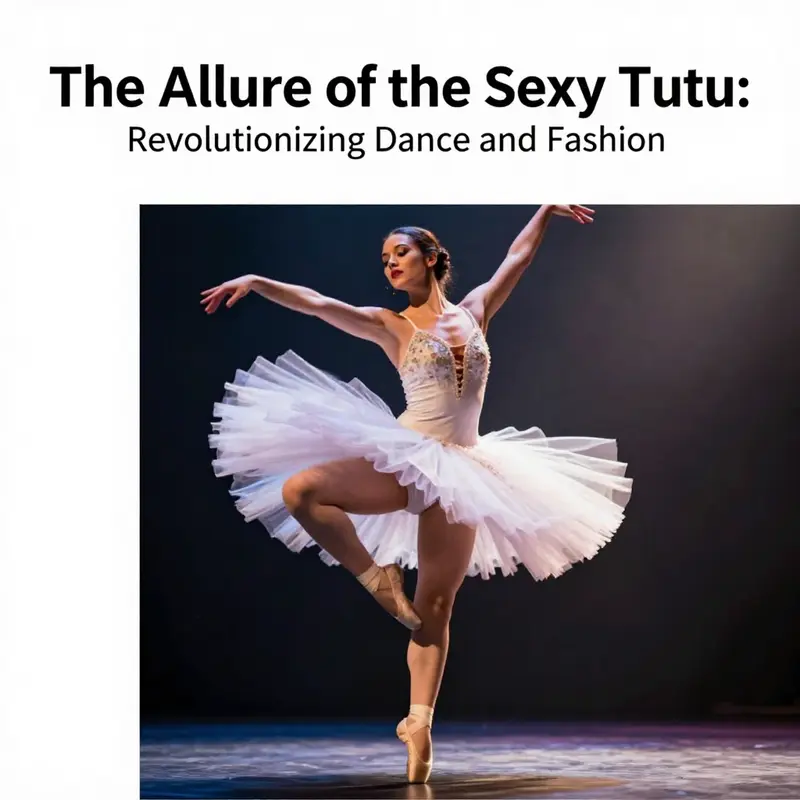
The sexy tutu stands at the crossroads of dance and modern fashion, transforming the traditional ballet silhouette into a contemporary icon of allure and performance. This article explores the evolution of the sexy tutu from its origins in classical ballet to its place on fashion runways and dance stages around the world. We’ll delve into the innovative materials and designs that define this garment and discuss its profound cultural impact on contemporary dance and performance. Each chapter builds a comprehensive understanding of how the sexy tutu embodies both artistic expression and modern allure, making it a staple in creative and commercial spaces alike.
From Baroque Gowns to Bold Silhouettes: The Seductive Evolution of the Sexy Tutu
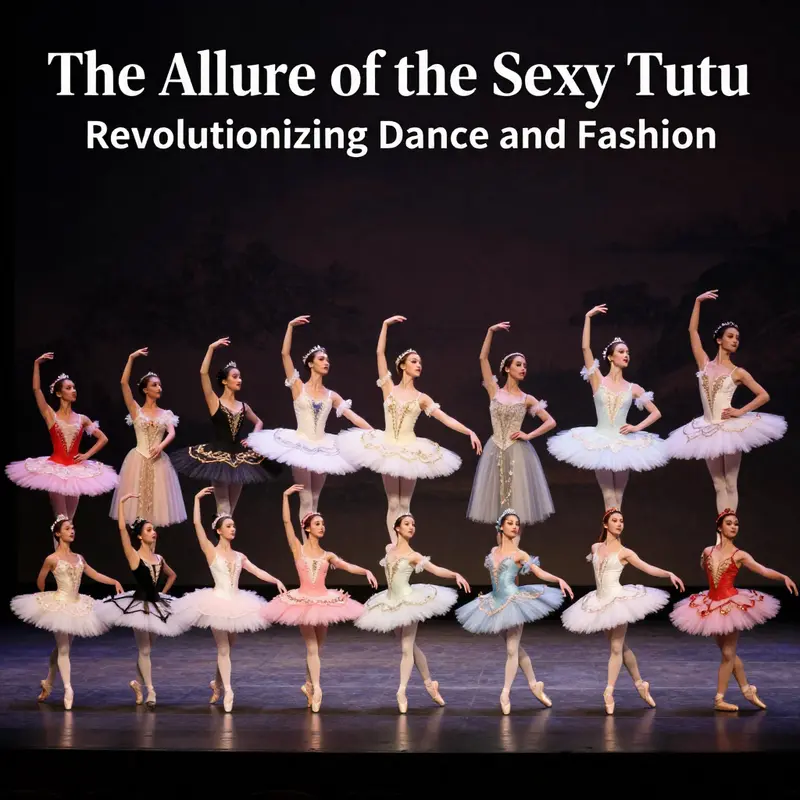
The tutu has long offered more than a simple costume element; it is a visual shorthand for how a dancer moves, how a culture perceives performance, and how fashion absorbs and reframes ritualized beauty. When we think of the word sexy in relation to ballet, we are not merely noting a parading of skin or a provocative cut. We are witnessing a vocabulary shift that has unfolded in layers over centuries. The evolution of the sexy tutu is a story of sculpture meeting breath, of constraint yielding to form, and of movement becoming the most persuasive argument for aesthetic allure. The journey begins in a world ruled by ornate court dress, where clothes existed to signal rank, wealth, and ceremony, and where function often took a back seat to spectacle. In that milieu, the dancer’s body could be obscured by yards of fabric and embroidery, the legs hidden, and the line of motion only glimpsed through the hush of a crowded hall. Yet even there, the seeds of a more revealing approach were sown, quietly beginning to reframe what a costume could do for the body in motion.
The Baroque era, with its pillared theaters and exploding degrees of ornament, set the stage—literally and figuratively—for a costume revolution. Dancers wore gowns that trailed behind them, heavy with silk, lace, jewels, and the weight of centuries of courtly display. These garments, while awe-inspiring, did not move with the dancer as an ally. They often blocked, rather than liberated, the foot’s precise articulation and the leg’s line. The first signals of change arrived not as a manifesto but as a practical insight. A dancer, a young woman named Marie Camargo in the 18th century, began to shorten the skirt to just above the ankle. It was a small alteration, but it illuminated the footwork—the ankle, the ankle’s carousel of turns, the clean line of the leg in jeté. The audience could finally see the dancer’s technique—the very thing ballet sought to celebrate. The modification was modest, yet it reframed what the costume could do: it could become a vehicle for technique rather than a mask for ceremony.
As the Romantic era blossomed in the 19th century, the tutu moved further toward a new ideal of feminine beauty and mobility. Marie Taglioni, a luminary of La Sylphide, popularized pointe work and wore a tutu that fell just below the knee, with a diaphanous fabric that seemed to dissolve the dancer into a creature of air. The effect was not merely ethereal; it was a declaration of movement’s sovereignty. The dancer’s leg, the line of the ankle, the lift of the thigh—these became the new protagonists of the stage, and the tutu’s midriff-preci-sion aided the drama of elevation. Aesthetically, the tutu’s fabric choice—tulle and similar light, translucent materials—amplified the sense of weightlessness and speed. The silhouette, once a symbol of constraint, began to signal possibility. It was a reimagining of femininity that did not merely constrain the body, but rather displayed the dancer’s capacity to negotiate tension, balance, and gravity with grace.
By the late 19th century, the classical tutu emerged in its most recognizable form: a stiff, bell-shaped, and highly structured skirt that stood away from the hips. This design, often described as the pancake or plate tutu, did not conceal the dancer’s legs; it framed them as a living architectural feature. The tutu’s fixed circumference turned the body into a visible instrument of line and precision. In this phase, the tutu’s role shifted from a decorative frame to a performance tool, sharpening the audience’s gaze on the dancer’s technique. The silhouette made leg lines legible from every corner of the auditorium, turning mere movement into a language that could be read with exacting clarity. It was no accident that the era’s choreography increasingly demanded clean, impeccable lines—grand glissandi, precise beats, and a secure sense of balance on points. The skirt’s geometry served as a constant reminder of the dancer’s authority over the body and the space it occupied.
Into this history stepped the so-called modern interpretation of the sexy tutu—a democratized, fashion-forward sensibility that does not abandon technique but amplifies its communicative power. The modern “sexy” tutu is less about provocative skin than about a confident articulation of movement, line, and presence. Designers began to experiment with fabrics—more daring weaves, metallic threads, and strategic translucencies—that could catch the light in ways that intensify the dancer’s profile on stage. Cut and construction evolved too. The silhouette could be pared down or reimagined with sculptural draping, allowing for a greater range of motion or a more dramatic pause between steps. A dancer’s torso could feel more liberated as the tutu’s stiffness was engineered to support dynamic lifts while still honoring the leg’s visibility. The goal was not to reduce the dancer to a provocative shape but to present a heightened, almost cinematic, language of performance where sensuality arises from mastery, risk, and narrative clarity.
This is where the contemporary conversation about the sexy tutu intersects with broader cultural shifts. The 18th and 19th centuries were anchored in notions of virtue and idealized femininity shaped by social conventions. Today, the discourse around sensuality in ballet costuming is more capacious, reflecting a spectrum of bodies, purposes, and audiences. The sexy tutu has become a symbol of agency: it is a choice a dancer makes to present power and control as much as allure. It is about the dancer’s ability to carry not just the weight of the fabric but the weight of expectation. The performer’s gaze is directed not at drawing the audience into a gaze but inviting them into the dancer’s conversation with space, tempo, and light. The costume acts as a partner, a collaborator that intensifies a moment of breath and release, a cue for a pivot, a landing, a flourish at the edge of a saut de chat.
Historically, the tutu’s evolution mirrored shifts in technique and performance goals. The Baroque court dress, with its heavy ornament and sweeping lines, served a ritual function more than a kinetic one. When Camargo shortened the skirt, she did more than show a leg; she acknowledged that leg work is ballet’s core language. The Romantic tutu, with its delicate sheerness, became a visual metaphor for the dancer’s weightless ascent toward the imaginary realm of the Sylph. It is tempting to read the tutu as mere costume, but its true power lies in how it amplifies the dancer’s capacity to articulate space and emotion through line and tempo. The late-century rigid tutu made a bold claim: that the body’s geometry matters as much as, if not more than, the music and the plot. In performance, this geometry becomes the architecture by which a narrative stands or falls. A well-designed tutu does not simply frame movement; it invites the audience to see where the foot ends and the air begins, to witness the arc of a leg before a leap, and to feel the moment when stillness is interrupted by propulsion.
In contemporary fashion, the sexy tutu travels beyond the proscenium arch, crossing into runways, editorial shoots, and pop performances. Designers reinterpret the tutu as a convertible object—one that can be armored with metallic threads for a future-forward mood, or softened with pliant tulle to evoke classic romance. The lines of the silhouette can be reimagined with asymmetry, or the skirt can be shortened for a modern, streetwise edge. In such contexts, the tutu ceases to be a historical artifact and becomes a living template for how bodies express themselves under lights that can be both flattering and intimidating. The interplay between the dancer’s body and the garment now includes considerations of performance psychology: how a costume can affect confidence, how a fabric’s texture can cue a motion, how the shape can frame the spine and core in ways that coax a dancer toward bravura rather than reserve. The result is a tutu that looks sexy not for its overt exposure but for the dancer’s authority and the choreography’s bravado.
To understand the full arc, it helps to consider the choreography that accompanies these physical garments. A historically oriented production might rely on crisp, extroverted lines that a stiff, bell-shaped tutu can exaggerate, letting the audience read the precision of each leg extension. A more contemporary work might demand a subtler, more fluid silhouette that remains bold but allows for a broader range of motion, sometimes achieved with a modern, lighter form of the tutu or even a hybrid approach that combines the classical structure with stretch fabrics. The choreography and costume design thus become a dialogue: the dancer asks for range and control; the garment answers with support and release. The audience experiences a synthesis where movement and attire are inseparable from the storytelling and emotionality of the moment. It is in this synthesis that the tutu becomes not simply clothing but a language—one that can translate strength, vulnerability, defiance, and grace in the same breath.
No longer confined to the stage, the sexy tutu has found a second life in fashion and culture that continues to refine its rhetoric. Designers borrow from ballet’s lineage—its discipline, its emphasis on line, its sense of drama—and blend it with contemporary silhouettes, textures, and technologies. The result is a garment that retains the historical potency of visibility and technique while projecting a modern willingness to play with boundaries. The sense of “sexy” now arises from the dancer’s command of the body and the garment’s ability to heighten the perception of movement, not from surface allure alone. The tutu’s sensual power, in this sense, is earned through training, risk, and artistry. It is the difference between a costume that merely decorates a figure and a costume that participates in a narrative of power and constraint softened by skill.
Within this continuum, the tutu remains a living archive. It preserves the memory of each epoch’s ideals—courtly magnificence, revolutionary clarity, ethereal fantasy, and contemporary audacity—while continuing to adapt to new audiences and new forms of expression. The “sexy” dimension is not static; it shifts with fashion’s fabrics, with lighting design, with the evolution of stagecraft, and with dancers who insist that beauty be inseparable from technique. The tutu’s power endures because it invites every generation to read a body in motion with fresh eyes. As audiences watch a leg carve a line across the air, or a turnout hold in a moment of suspended stillness, the tutu quietly performs the history of how beauty, risk, and movement have learned to coexist.
Readers curious to see how this lineage translates to a specific mood or era can explore selections that foreground different tonalities of romance, heroism, or decadence within the broader spectrum of tutu design. For a modern interpretation that leans into the Romantic lineage while embracing contemporary silhouettes, the romantic tutu collection offers a tactile sense of how fabric and cut can evoke both nostalgia and immediacy. It is a reminder that even as fashion absorbs ballet’s discipline, it remains responsive to the evolving textures of society and self-expression. You can glimpse such expressions in curated lines that juxtapose classic form with bold details, enabling performers to evoke mood as effortlessly as they execute a pirouette.
In the end, the sexy tutu is not merely about the skin it reveals or the silhouette it shapes. It is about a relationship—the relationship between the body and the garment, between movement and space, between history and change. It is a testament to how art can reframe desire, not by denying complexity but by making complexity visible through form. The tutu’s evolution mirrors a broader cultural project: to honor tradition while inviting risk, to celebrate technique while embracing invention, and to preserve the dignity of performance even as it becomes increasingly legible to a diverse audience. In the dance of thread and breath, the sexy tutu remains a powerful instrument for telling stories about human possibility, resilience, and beauty.
For readers who want to explore more of the lineage and to situate contemporary designs within a broader catalog, a visit to the romantic tutu collection provides an accessible touchstone. It offers a tangible sense of how the classic lines can be challenged or celebrated without losing the underlying grammar of ballet movement. This continuity—between the past’s reverence for line and the present’s appetite for fearless experimentation—defines the modern tutu as a living artifact rather than a fixed relic. The history it embodies is not merely about attire; it is about how a dancer’s body has been taught, tested, and acclaimed through periods of constraint and bold invention.
As the curtain falls on this chapter of evolution, the conversation about the sexy tutu invites us to consider what it means to be visible as a dancer today. Visibility is not about shock value alone but about the clarity with which a performer can reveal the structure of motion—the strength of the core, the control of the ankle, the open line of the leg reaching into space. The tutu, in its many permutations, remains a partner in that revelation: a fabric that does not hide the body so much as reveal how it uses space to tell a story. The ongoing dialogue between history and fashion ensures that the tutu’s sexy appeal will continue to transform, reflecting not only what audiences find alluring but also what dancers crave as they push the limits of speed, balance, and grace.
To close this thread, it is worth returning to the earliest questions that guided this evolution. How does a garment become more than a garment? How does it enable the body’s truth to emerge under stage lights? The answers lie in the choreography that follows every leap, in the engineering that stabilizes every spin, and in the cultural eye that continually redefines what counts as attractive, powerful, and true to the art form. The sexy tutu, in its fullness, embodies a long arc of human ingenuity—an arc that stretches from courtly splendor to contemporary boldness, and that keeps moving whenever a dancer takes flight just beyond the edge of a shy, but resolute, smile. For those who wish to trace that arc in more concrete terms, the historical arc and the visual rhetoric of the tutu offer a compass: a way to understand how clothing and technique collaborate to shape not just a performance, but a cultural moment.
External resource for further context: https://www.britishballet.org.uk/learn/ballet-history/tutu
Internal reference for a related collection: romantic tutu collection
Weaving Light and Lace: Materials, Contour, and Innovation in the Sexy Tutu
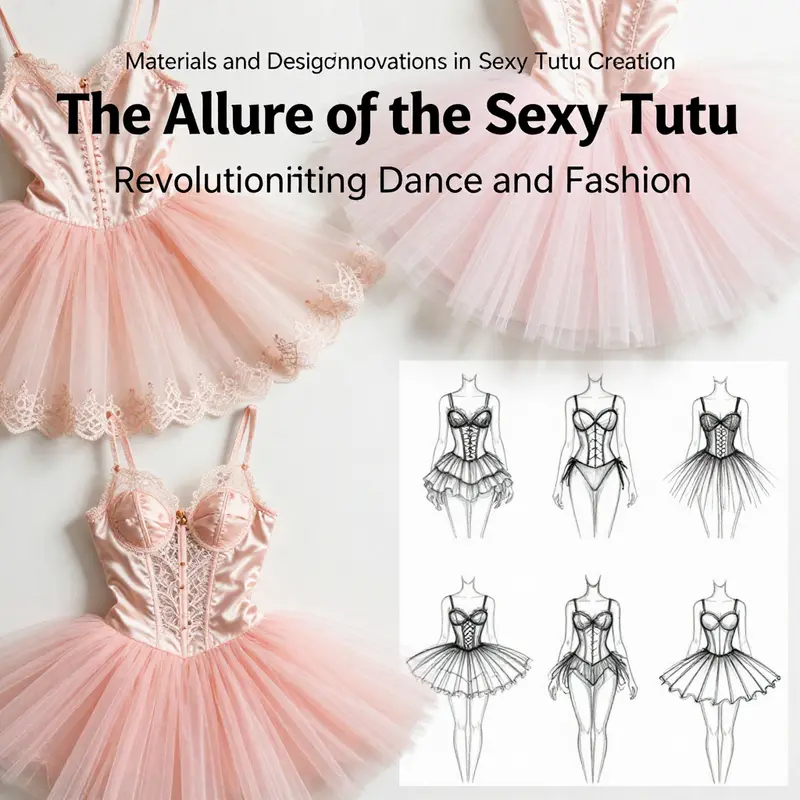
The sexy tutu sits at a curious crossroads where centuries of ballet tradition meet the restless tempo of contemporary fashion and textile science. It is not simply a garment that aims to reveal more skin or silhouette; it is a carefully engineered piece that must move with a dancer, breathe with the body, and visually seize the eye from the moment the curtain parts. In this space, materials and design innovations converge to redefine what a tutu can be: a lightweight sculpture that enhances form, a stage-ready fabric system that respects comfort as much as aesthetics, and a canvas for a chorus of textures—from sheer floral lace to smooth, luminous seams. The modern sexy tutu is less about provocative surface and more about an integrated discipline of fabrication, fit, and philosophy. It asks how fabric interacts with motion, how cut lines sculpt the body without pinching, and how the eye reads depth and translucence when every layer is as intentional as a lyric line in a choreography.
To begin with, the very heart of a sexy tutu is its body. Designers increasingly favor fabrics that balance stretch, strength, and drape in equal measure. Elastic fibers form the backbone of the silhouette, providing a responsive embrace that can accommodate leaps, turns, and pointe work without losing a measured firmness at the waist and hips. These elastic components are paired with sturdy yet lightweight base fabrics such as polyester or rayon blends. The result is a surface that holds its shape, resists sagging under stage lights, and returns to form with minimal resistance after each grand battement. The goal is a smooth, continuous line that flatters the dancer’s natural curves instead of competing with them. In practice, this means a bodice and skirt region that feel almost second skin: resilient where support is needed, supple where freedom of movement matters most. The coupling of elasticity with robust woven substrates creates a silhouette that reads cleanly to audience eyes, even from the far corners of a proscenium stage.
The seductive charm of a sexy tutu often hinges on the interplay between opacity and translucence. Here, sheer mesh and fine lace step into prominence. Materials chosen for these components are typically nylon or polyester blends designed for high–elasticity and subtle luster. The lace’s delicate patterns—often floral, botanical, or abstract—contribute a visual whisper of complexity that does not overwhelm the wearer’s form. When placed strategically, these patterns guide the gaze along the dancer’s lines, accentuating a fully extended leg or a poised port de bras without creating visual noise or compromising comfort. The lace is not merely an exterior decoration; it is an engineered fabric with a specific microstructure that can be soft against the skin while maintaining a degree of resilience. The lace used in these designs has to be non-irritating and breathable, a challenge manufacturers meet by selecting looser weaves in high-sweat areas and employing finishing processes that reduce rough edges. The result is a skin-friendly membrane that remains breathable under intense stage lighting and long rehearsal hours, a crucial factor for performers who move at high speeds and require sustained comfort.
In the most contemporary incarnations, 3D cutting techniques redefine how a tutu fits and moves. Rather than relying on a series of flat panels sewn into a rigid framework, 3D cutting enables the fabric to be shaped around the body in a more natural, contoured fashion. This approach minimizes the need for bulky seams and hidden tacks that could hinder flexibility. By sculpting the fabric around key anatomical zones—hip flexors, gluteal curves, and the waistline—designers can achieve a zero-drag effect that makes the dancer feel almost as if they are suspended rather than bound by cloth. The seams, where they exist, are engineered to behave like invisible joins, often using micro-stitched g entries or ultra-fine embroidery threads that disappear against the body’s line. The outcome is a tutu that both reveals and respects form: a silhouette that appears to float yet is anchored by a secure, precision fit.
A pivotal element in this design palette is the use of high-elasticity panels, particularly around the waistband and hip region. These zones require a balance of grip and give: enough hold to prevent shifting during a turn, yet enough stretch to accommodate a full range of motion without pinching or binding. In practice, this can mean a waistband constructed from a double layer of elasticized fabric or a core of elastic fibers encased in a soft knit that rests gently on the skin. The broader effect is a sense of “zero gravity” in the torso: the tutu stays in place with minimal conscious adjustment, allowing the dancer to focus on artistry rather than wardrobe management. This design principle not only improves fit but also contributes to the tutu’s visual rhythm. A securely anchored waistline translates into cleaner lines and a more defined hip contour, which, in turn, enhances the overall sculptural quality of the costume.
Beyond the basic fabric architecture, the construction discipline behind a sexy tutu places a premium on wearability. Breathability and moisture management become essential, not optional. Lace weaves have advanced to accommodate larger surface areas without overheating the skin. The soft, breathable textures are achieved through careful fiber selection, calendared finishes, and controlled knit structures that permit air flow while preserving the garment’s shape. The result is a tutu that can be worn for extended performances without the wearer feeling clammy or restricted. In addition, the fabric’s surface finish can influence how light interacts with the costume. Smooth, micro-sateen-like surfaces reflect stage lighting with a disciplined gleam, while matte lace panels absorb light to provide a subtler, enigmatic glow. The dance floor becomes a canvas for light, and the tutu becomes a medium that captures the moment’s emotion through texture, sheen, and translucence as much as through line and pose.
From the perspective of production, designers increasingly view the tutu as a system rather than a collection of separate parts. The integration of materials—elastic layers, lace panels, mesh inserts, and stiffened tulle—requires precise interfacing. The aim is to ensure that the layers interact harmoniously under stress, not to fight each other when a dancer pivots or leaps. This is where innovations in material science prove decisive. Advanced knits and bonded fabrics reduce the risk of snagging and fraying, and laser-cut edges create refined, clean finishes along hems and lace borders. The marriage of technology and craft here is deliberate: it seeks to preserve the tutu’s iconic poise while expanding what the garment can endure in the heat of a live performance. The choreography dictates the garment’s limits, but the fabric, cut, and construction discipline push those limits forward, enabling more daring, expressive movement without sacrificing control.
Sustainability enters this narrative with quiet rigor. A growing number of labels are adopting Global Recycled Standard (GRS)-certified materials to reduce environmental impact across the supply chain. Recycled fibers find their way into lace motifs and netting components, while post-consumer waste becomes part of the fabric’s backbone. This shift is not merely ethical posturing; it is an engineering decision. Recycled content supports lighter weights, reduces the energy cost of production, and still delivers the tactile softness and visual delicacy a tutu requires. When done well, recycled lace weaves can be just as comfortable and luminous as traditional materials, enabling designers to maintain the visual language without compromising on sustainability. The adoption of GRS-certified materials signals a broader industry willingness to reconcile couture aesthetics with ecological responsibility, a convergence that resonates deeply in a field that often travels from studio to stage and from showroom to audience with a consumer’s eye for quality and care. To those who want to explore the broader market, the Basic Tutu category offers a gateway into the ancestry and evolution of tutu design, showing how foundational shapes have transformed into contemporary statements (Basic Tutu: https://luneballet.com/product-category/basic-tutu/).
In the context of a broader wardrobe and performance ecosystem, a sexy tutu also negotiates the tension between visibility and restraint. Designers are careful to balance sheer patterns with strategic coverage, ensuring that the look remains alluring without overexposing. This balance is achieved through intentional pattern placement and layering. The floral lace, for example, might be concentrated at the hip or along the outer thigh to accentuate movement without excessive translucence across the midsection. The layered nature of the tutu—an outer lace panel over a solid, supportive lining—gives the wearer the best of both worlds: the intrigue of texture and the certainty of coverage. By leveraging 3D cutting and integrated elastic zones, designers can place these features precisely where movement occurs, ensuring that every pose and turn is aesthetically intentional. The transformable potential of such a design is notable: a single tutu can perform across moments of intensity and quiet drama by simply adjusting the body’s posture and alignment, which the garment’s architecture then reinforces rather than resists.
This synthesis of materials and design strategies does more than create a visually arresting costume. It creates a performer’s ally, one that responds to breath, muscle, and rhythm with a tactility that feels almost intuitive. The dancer’s skin communicates with the fabric, and the fabric returns through the choreography—softly, efficiently, and elegantly. The sexy tutu becomes not merely a prop but a co-architect of performance, shaping how a dancer threads movement with emotion. When the dancer whirls, the lace catches light in delicate patterns; when the leg rises, the elastic panels hold fast while allowing fluid expansion. The risk of discomfort is reduced because the lace is engineered to be breathable, and the seams are minimized or integrated with the body’s natural lines. In this sense, the modern sexy tutu is a study in empathy: it anticipates the performer’s needs and translates them into textile language that the audience can read as beauty and vitality.
As the craft continues to evolve, the broader gaze shifts toward sustainability, responsibility, and accessibility without sacrificing spectacle. The path forward invites designers to experiment with new fiber blends, new knitting and bonding technologies, and new finishing techniques that maintain skin-friendliness while supporting bolder artistic visions. The goal remains the same: to capture the essence of elegance and eroticism in a way that honors the dancer’s body and the audience’s sense of wonder. The materials and designs described here are not a retreat into comfort at the expense of drama; they are a commitment to keeping the tutu at the heart of stagecraft—a garment that can be both an instrument of movement and a vehicle for storytelling. The layered textures, the shimmering translucence, and the sculpted lines all combine to make a tutu that reads as both contemporary fashion and timeless ballet.
For readers who want to see a wider range of tutu typologies and to understand how designers map fabric choices to performance outcomes, the Basic Tutu category offers a tangible entry point into the choreography of materiality. It is a reminder that even within the spectrum of sexy tutus, there is a lineage that begins with fundamentals and expands into a language of bold textures and sustainable innovation. The evolution of tutu design, then, is not a simple matter of making something more revealing. It is about reimagining how fabric, fit, and form work together to support artistry. It is about recognizing that the audience’s gaze is a partner in the performance, and the garment must respond with grace, resilience, and a whisper of daring. In this light, the sexy tutu is less a costume and more a crafted dialogue between body and cloth, between tradition and transformation, between the dancer’s breath and the stage’s light. It is a testament to how far textile science has come and how far performance fashion can go when those two worlds walk in step.
External resource for further reading on sustainability standards and material certifications can be found here: https://www.sedex.com/global-recycled-standard/.
Dancing Boundaries: The Sexy Tutu as a Modern Lens on Power, Desire, and Cultural Dialogue
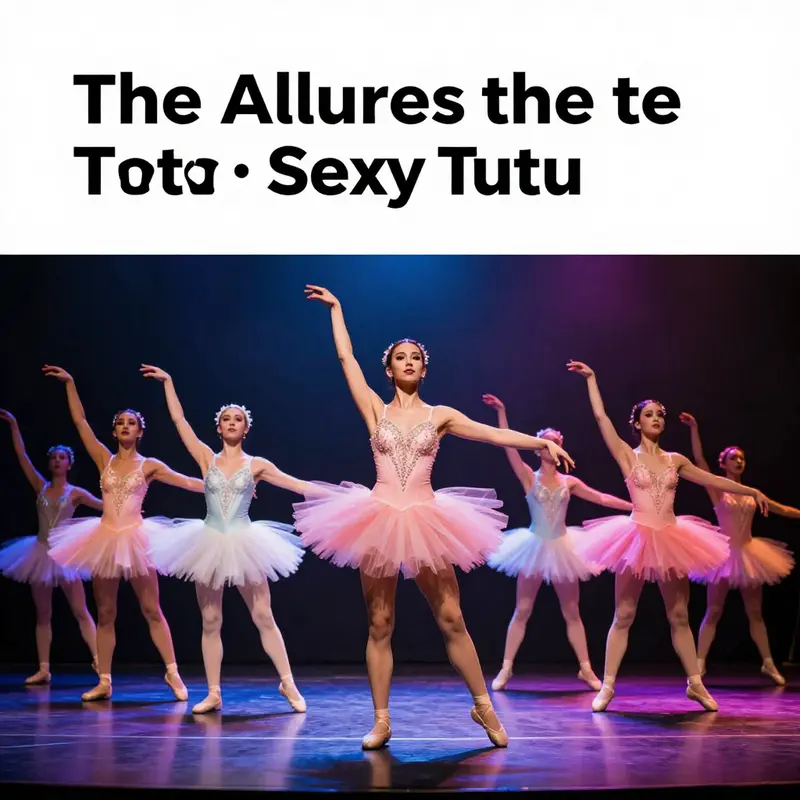
The tutu has long carried the aura of delicate purity, a symbol of classical rigor and ethereal femininity. Yet in the contemporary performance landscape, the same garment is being reshaped into something more provocative, more outspoken, and more deeply social. A “sexy tutu” is not a mere costume choice; it is a deliberate act of rethinking how bodies move, how gender is staged, and how audiences are invited to read a performance. This chapter unspools that shift, tracing how the sexy tutu functions as a catalytic symbol in the evolution of modern dance, theater, and visual culture. It sits at the intersection of craft, choreography, and cultural commentary, reminding us that attire on stage is never neutral. It is a medium through which artists negotiate history, desire, and agency in real time, across borders and across media ecosystems.
The origin of the tutu, as a practical ballet garment, anchors the conversation in tradition. The Cambridge definition captures the tutu as a skirt built from many layers of thin, stiff material—a structure designed to flare and hold shape as a dancer spins and leaps. The classic tutu’s form was never accidental; it was engineered to support the ethereal line the repertoire demanded. Yet the term itself, born from a linguistic flirtation with the French language and its own playful associations, has long hovered between technical vocabulary and flirtatious performance. In the hands of contemporary designers and choreographers, the tutu’s exterior evolves while its spine—its ability to frame movement—remains central. The result is a garment that can read as innocent and dangerous in the same breath, a paradox that modern productions lean into with intent.
What distinguishes the sexy tutu in today’s theaters is a conscious blending of sensual appeal with physical prowess, narrative clarity, and social commentary. It is not a gratuitous display of form but a strategic tool that can heighten tension, reveal strength, and complicate spectators’ expectations. In many contemporary works, the tutu becomes a canvas for exploring the friction between vulnerability and power. The body wearing it is not merely an object of gaze but an active, negotiating presence—one that moves through space with athletic precision, while also carrying a charge of meaning that extends beyond the stage directions. This is not to deny the beauty of the garment. Rather, it is to recognize that beauty, in these contexts, is inseparable from consent, agency, and intention. A dance can be technically virtuosic and emotionally candid at once, and the sexy tutu is often the visual fulcrum around which that duality pivots.
In recent discussions of performance costume, the tutu’s role has broadened from pure illustration of classical lineage to a platform for narrative propulsion. Choreographers increasingly view costume as a third partner in the creative process, alongside lighting and sound. The garment’s silhouette, its fabric behavior under a dancer’s motion, and its interaction with the stage geometry all contribute to how a story is felt before it is spoken. When a designer chooses a tighter fit or a more revealing cut, the alteration is not simply cosmetic. It signals a shift in how the body can be read—by audiences, by critics, and by the performers themselves. A sexy tutu can support a character who embodies risk, agency, and self-definition. It can underscore a protagonist who commands attention not through submissive ritual but through controlled charisma and athletic command. The relationship between costume and narrative deepens as performers push the boundaries of technique and intention at once.
Across the spectrum of contemporary works, we see the tutu reimagined in ways that echo broader cultural conversations about sexuality, autonomy, and the politics of representation. Productions like Sheng: Into the Strange Realm, along with other innovative performances staged at major festivals, demonstrate how traditional forms are recontextualized through a modern lens. These reimaginings are not content to rest on the beauty of a familiar silhouette; they invite audiences to question what beauty means in a world where bodies perform both strength and desire on the same stage. The reinvigorated tutu becomes a symbol of a broader aesthetic shift—from the idealized, almost sacral femininity of older repertories to a dynamic, multi-layered language that can speak openly about longing, drive, and the complexities of identity. It is as if the tutu finally receives permission to be more than a vessel for grace; it becomes a vessel for voice, for risk, and for a new kind of public conversation about what dance can reveal about the self.
The cultural dialogue surrounding the sexy tutu is seeded in not only dance studios but also the broader media ecosystem. The rise of performers who foreground sexuality as a facet of storytelling helps refract onstage bodies through a contemporary lens. Figures such as Sydney Sweeney, whose work in television and film has stirred discussions about sexuality, autonomy, and mental health, mirror a larger cultural current: sexuality has moved from being a private or purely aesthetic matter to a central axis of narrative and social critique. While Sweeney is not a dancer, her visibility as a young female artist who treats sexuality as a spectrum of agency resonates with choreographers and designers who seek similar audaciousness and truth in performance. The stage becomes a place where audiences are invited to scrutinize desire as a legitimate, interpretable, and consequential part of storytelling—not merely as spectacle, but as a meaningful dimension of character and politics.
This evolution is not merely about shock value. It is also about skillful integration of movement vocabulary, costume construction, and stagecraft that allow performers to explore new terrains without sacrificing precision or safety. The design of a sexy tutu must preserve the dancer’s core mechanics: the ability to execute leaps, turns, and rapid changes of direction with integrity. fabrics that hug the body must also release with the pliancy needed for dynamic phrases. The layering of tulle, mesh, or satin can be engineered to catch light and shadow in ways that amplify power rather than constrain it. In this sense, the sexy tutu is a technical problem solved with artistry; it requires careful collaboration among choreographers, costume designers, and performers who share a language about movement, form, and meaning. The result is a garment that serves the body rather than merely adorning it, enabling performers to communicate intimacy and force with equal clarity.
A crucial thread in this discussion is how the sexy tutu navigates the tension between cultural heritage and contemporary storytelling. On one hand, the garment remains anchored in ballet’s historical lineage, a lineage that carries classical music, disciplined training, and a reverence for form. On the other hand, the same garment is weaponized—or rather, repurposed—as a vehicle for new myths. It can be a conduit for reclaiming female bodies in art, challenging the long-standing associations of femininity with passivity, and offering audiences a more forthright view of desire as something enacted, negotiated, and interpreted rather than simply observed. In this sense, the tutu becomes a stage for the negotiation of power: a reminder that the gaze is not fixed, that spectatorship can be recast, and that the body on stage may control the narrative as much as it performs it.
Directorial visions and production choices further shape how the sexy tutu communicates its message. In some contemporary productions, the curtain rises on a constellation of cultural references that interweave Chinese aesthetics, Western ballet, and global contemporary music. The result is a hybrid spectacle in which the tutu does not stand alone as a symbol but participates in a larger tapestry of meaning. Costumes may borrow silhouettes from traditional forms while incorporating modern cuts and sensory materials that respond to the dancer’s movement as much as to the lyrical or percussion cues of the score. This approach highlights the tutu as a living artifact—one that evolves with the performer’s body and the audience’s perception. It is not a static relic but a flexible instrument for storytelling, capable of carrying multiple layers of significance at once. The choreography may press against expectations, inviting spectators to reexamine what they consider appropriate on stage and how desire should be understood in the theater milieu.
The performative possibilities opened by the sexy tutu extend beyond the arena of high art and into broader cultural discourse. The garment becomes a reference point in conversations about gender dynamics, body autonomy, and the politics of representation in performance spaces. In an era where audiences increasingly demand authenticity, artists are turning to the tutu to pose questions about who gets to define beauty, desirability, and power on stage. The costume thus becomes a kind of social barometer, reflecting shifts in attitudes toward sexuality, consent, and empowerment. It signals a willingness to engage with difficult topics through movement, music, and mise-en-scène, rather than through didactic dialogue alone. In this reflective mode, the sexy tutu acts as a trigger for conversation—about the body’s capacity to be both object and agent, about the politics of gaze, and about the ways culture can hold space for both vulnerability and fortitude.
The cross-cultural potential of the sexy tutu also deserves emphasis. When designers borrow mood and mood’s accessories from diverse traditions, the tutu becomes part of a global conversation about how forms travel and mutate. In festivals and residencies that foreground cross-cultural collaboration, the tutu is reimagined as a point of contact between heritage and innovation. Costuming choices acknowledge the past while inviting new languages of movement. In such environments, performers may integrate rhythmic patterns, martial arts influences, or folk-inspired embellishments into the choreography, with the tutu acting as a unifying frame that accommodates these varied vocabularies. The conversation expands from a narrow discourse about “sexiness” to a broader inquiry about how sexuality can be a vehicle for empowerment, community, and shared storytelling across geographical and cultural boundaries.
Return to the studio is essential here. The choreographer’s and designer’s collaboration shapes what the audience experiences as the performance unfolds. The tutu’s energy interacts with lighting shifts, with the tempo of the music, with the dancer’s respiration, and with the audience’s gaze. Each element must be calibrated to honor both the athletic intensity required by modern movement and the emotional honesty that contemporary audiences seek. When a dancer channels longing or defiance through the rapid sway of the tutu’s hem, the garment becomes a living metaphor for the way society reads bodies under pressure: as engines of beauty and engines of critique, as vessels of memory and agents of change. The choreography, in turn, benefits from the costume’s extra layer of information—it can cue intent, suggest backstory, or foreshadow a turn in the narrative arc. In this mutual reinforcement, the sexy tutu demonstrates its true value: it is a design that amplifies, clarifies, and sometimes unsettles meaning, inviting audiences to stay engaged with the performance as a complex conversation rather than a closed spectacle.
As we observe the shifting repertoire of contemporary performance, one practical outcome of the sexy tutu’s rise is a new dialogue around artistry and body literacy. Performers train to execute demanding combinations with a garment that can intensify physical expression while complicating the body’s line in space. This demands heightened control and a refined attention to proprioception, breath, and core engagement. The tutu’s sculptural quality makes subtle differences in posture more legible to the eye, which in turn intensifies the viewer’s interpretive experience. Audiences learn to read the body not only for its movement vocabulary but for the way fabric, color, and silhouette translate intention. The result is a more nuanced appreciation of how dress communicates as much as the dancer’s skill itself. In short, the sexy tutu is a facilitator of a more articulate, more mature conversation about what dance can mean in a modern society that increasingly expects candor about sexuality, autonomy, and power.
To close the circle, the sexy tutu embodies a contemporary aesthetic that honors tradition while inviting critique. It acknowledges the lineage of ballet’s refined lines and delicate poise, then pivots toward a future where women’s bodies are seen as dynamic loci of agency. The garment is not merely a pretty shell; it is a medium through which performers can negotiate identity, desire, and authority on stage. It invites audiences to witness the beauty of athleticism and the complexity of emotion at once. In this sense, the sexy tutu becomes more than costume; it becomes a cultural instrument that holds space for conversation, risk, and transformation. If we listen closely to the stage’s whispers—the rustle of fabric, the cadence of footwork, the hush before a leap—we may hear a chorus of voices speaking about who gets to perform desire, who gets to define beauty, and how art can lead the way in rethinking power in the public sphere.
For readers who want to explore costume design within this lineage further, the costuming options and thematic explorations available in dedicated collections offer a tangible way to understand how a single garment can host a spectrum of meanings. In particular, the lineage of Swan Lake costume themes provides a historical touchstone for analyzing how traditional silhouettes can be revived or reinterpreted in the service of new narratives. You can explore this through the dedicated costume-theme collection here: Swan Lake costume themes.
External resource for further reading on how contemporary performances fuse classical forms with new visions can be found in a broader cultural report: China Daily coverage.
Final thoughts
The sexy tutu represents a fusion of tradition and innovation, enriching both the world of dance and modern fashion. As an enduring symbol, it empowers performers to express their artistry while appealing to contemporary sensibilities. Embracing the sexy tutu allows artists not only to honor its rich heritage but also to make bold statements on today’s artistic platforms. By continuing to innovate in design and materials, the sexy tutu will remain a vital component of performance and fashion, inspiring future generations.