
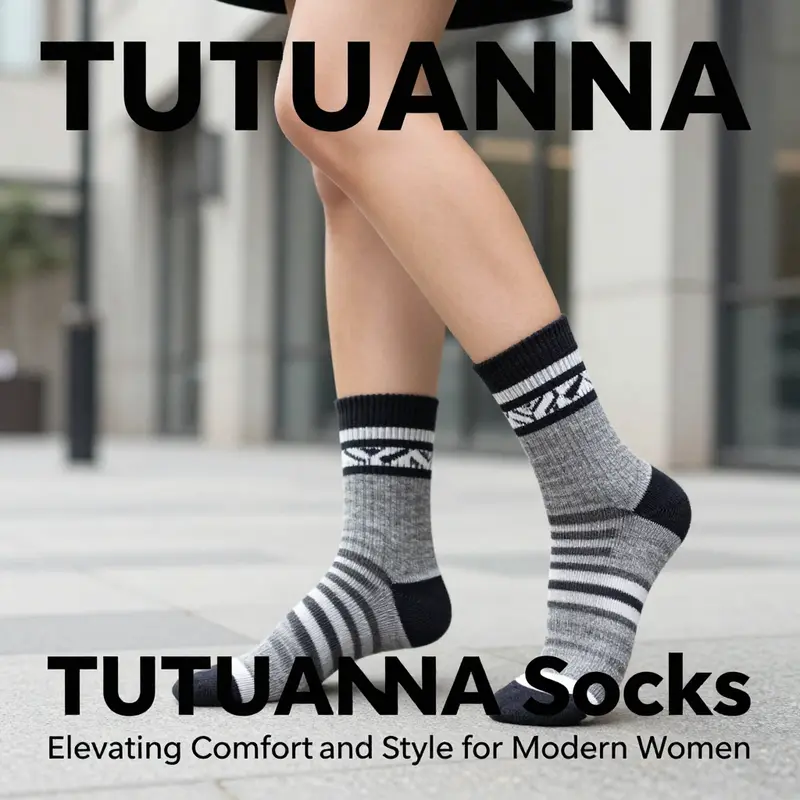
TUTUANNA, a brand steeped in rich history since 1979, specializes in socks and lingerie designed especially for young women. With an emphasis on quality, fashion, and comfort, TUTUANNA has carved out a significant niche in the competitive hosiery market. This article will explore various aspects of TUTUANNA socks: detailing the brand’s legacy, the innovative technologies that enhance comfort and wearability, the functional benefits these products offer, their versatile styling options, and finally, the brand’s strong market presence and consumer reception. Each chapter will provide insight into how TUTUANNA socks not only meet but exceed the expectations of today’s discerning shoppers.
Bare Skin, Global Reach: A Historical Overview of TUTUANNA Socks
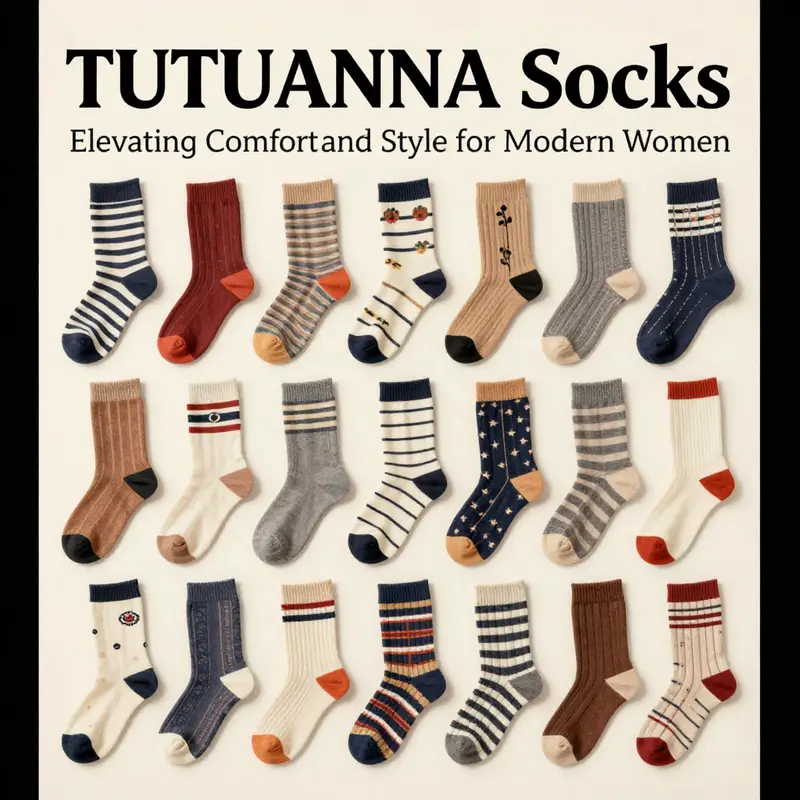
TUTUANNA socks tell a story that begins in a small Osaka wholesale shop and ends among the most admired labels in contemporary hosiery. The thread of that story is not simply about fabric and fit; it is about a philosophy that treats the leg as a canvas for comfort, grace, and quiet confidence. The brand’s origins trace back to 1973, when a modest family business named Yumon Shōten operated in Osaka’s Tennoji district. Its early strength lay in stocking a practical, functional need for women who valued reliable socks as an everyday essential. In 1979, as the business matured, the company restructured and rebranded as TUTUANNA Co., Ltd. A new name carried with it a new sense of purpose: not merely to supply socks, but to redefine what high-quality hosiery could feel like against the skin. The transformation from wholesale to a devoted retail identity marks the first major turn in a long arc of steady growth and meticulous craft.
From the mid-1990s onward, retail presence became central to the brand’s strategy. The first flagship store opened in Japan in 1994, signaling a shift from wholesale partnerships toward direct engagement with the wearer. This move was not just about sales; it was about storytelling through product experience. The company began building a regional presence across Japan, laying the groundwork for a reputation rooted in comfort, durability, and an understated elegance that could elevate any outfit. A dedicated logistics framework emerged in 2001, a quiet but crucial element behind the brand’s reliability. For a consumer, this meant consistent availability, reliable sizing, and the confidence that a pair of socks would perform as promised, season after season.
The late 2000s brought a bold step onto the international stage. In 2009, the brand opened its first overseas retail outlet at a flagship department store in Tokyo’s Ginza district, a milestone that announced the label’s readiness to travel beyond domestic boundaries. The shape of its international ambitions quickly settled in Shanghai, where the first overseas location appeared in 2009. The opening of the Shanghai Jinguang Department Store location marked the company’s official entry into mainland China, where interest in premium, skin-like hosiery proved powerful and enduring. By 2013 the mainland Chinese network had grown to 73 stores, and by 2015 that footprint swelled to over 230 locations. The rapid ascent in China reflected a larger demand for meticulous craftsmanship and a refined approach to everyday wear that could pair with business attire, casual outfits, or weekend leisure with equal ease.
Expansion did not stop in East Asia. In 2014 the brand crossed the Taiwan Strait, opening its first store in Taiwan at Pacific Sogo Chunghua, a move that underscored a broader regional strategy and a belief in the universality of its design language. Across these markets, the product development narrative remained anchored in an unusual blend of technical performance and aesthetic sensibility. The label introduced lines such as the Sōki Series, celebrated for its skin-like appearance, and the Wool Series, crafted from merino for warmth without bulk. These families of products exemplify a philosophy that comfort and refinement can coexist with technical innovation. The brand’s growth also extended beyond clothing to related lifestyle offerings, including children’s wear and accessories, signaling a broader commitment to a premium, design-conscious lifestyle.
What makes the brand’s story distinctive is not only where it went, but how it approached the core problem of legwear: how to make a garment that feels invisible, yet performs in the cold, and remains elegant whether worn with a pencil skirt or a casual knit. The design team pursued a near-skin-level translucency that minimizes the artificial edge typical of traditional pantyhose. They employed advanced knitting techniques and a complexion-mimicking gradient that avoids the stark line between fabric and leg, creating a seamless visual transition that appears almost second skin. With a blend engineered to maximize transparency without sacrificing warmth or durability, the brand achieved a texture that communicates understated luxury rather than obvious branding.
Function follows form in a way that has defined the label’s enduring appeal. The knitting structure, described in technical terms by designers and evaluators, uses a high-density 300D weave and ultra-fine filaments. The fabric is knitted to create a warm, dense layer that remains surprisingly light, and it relies on moisture-wicking fibers to convert body moisture into heat. The warmth can endure several hours in cool environments, a practical feature for long commutes, office days, or evenings out. The aim is not merely warmth, but a steady, gentle comfort that does not constrict movement or alter posture. These elements—breathability, warmth, and a soft hand—align with the brand’s overarching promise of a bare-skin sensation with a touch more presence than bare legs could offer.
The design is also oriented toward structural support that helps maintain silhouette and comfort across hours of wear. A cloud-soft waistband and anti-slip silicone details help prevent digging or slipping, particularly for those who sit for long periods. The 3D ergonomic approach informs the overall cut: ankle tapering by a few millimeters, a slight expansion above the calf, and a Y-shaped seam to reduce wrinkles and ensure a smooth line under clothing. Such details translate into a wearer’s everyday experience: a leg that looks elongated and even, with fabric that behaves under different postures without pinching or bunching. These choices demonstrate a precise confidence in technical textiles married to a refined sense of tailoring, a combination that resonates with women who demand both aesthetics and practicality from their hosiery.
As the brand expanded, the corporate footprint grew with careful attention to culture and quality control. The headquarters, relocated to Morinomiya in Osaka in 2015, satellites its distribution center in Suminoe Ward, and headquarters infrastructure expanded to support a broader international distribution. The numbers tell a story of scale that never sacrifices precision. In markets as varied as office culture, casual weekends, and outdoor activities, the label’s products offer a balanced solution—polished enough for professional settings, comfortable enough for extended wear, and adaptable enough to layer with other wardrobes. Across these contexts, the brand’s signature glaze remains a subdued, almost matte texture that suggests refinement without shouting for attention. The result is a product line that is both deeply Japanese in its attention to detail and globally legible in its design language.
That global reach also carries a philosophy. The brand has embraced social responsibility through initiatives that emphasize community support and sustainable practice. While these dimensions may seem distant from the product’s physicality, they are integral to how the company envisions its role in the fashion ecosystem: not only to supply a superior product but to contribute to a positive cycle of design, manufacture, and care for wearers who value longevity and integrity in what they buy. The story of this label thus reads as a careful balance of heritage and modernity, tradition and innovation, local roots and global aspiration.
Within this broader tapestry there is also a practical invitation for readers who want to explore the spectrum of foundational pieces that underpin such elevated hosiery. For readers who are building a wardrobe with a minimalist underlayer that can accompany a wide range of outfits, it is worth considering the broader category of foundational tutus. You can explore the Basic tutu category to understand how simple pieces can form the backbone of numerous looks, offering a quiet canvas on which more dramatic fashion statements can be built. Basic tutu category.
External resources for further reading on the brand’s history and philosophy anchor what has been described here. The company’s heritage is best interpreted not only through its flagship milestones but also through the textures and finishes it has perfected over decades. A visit to the official site offers a direct window into current collections, material innovations, and storytelling that continues to evolve with each season. External resource: https://www.tutuanna.com
How Advanced Materials and Knitting Craft Elevate TUTUANNA Socks
How Advanced Materials and Knitting Craft Elevate TUTUANNA Socks
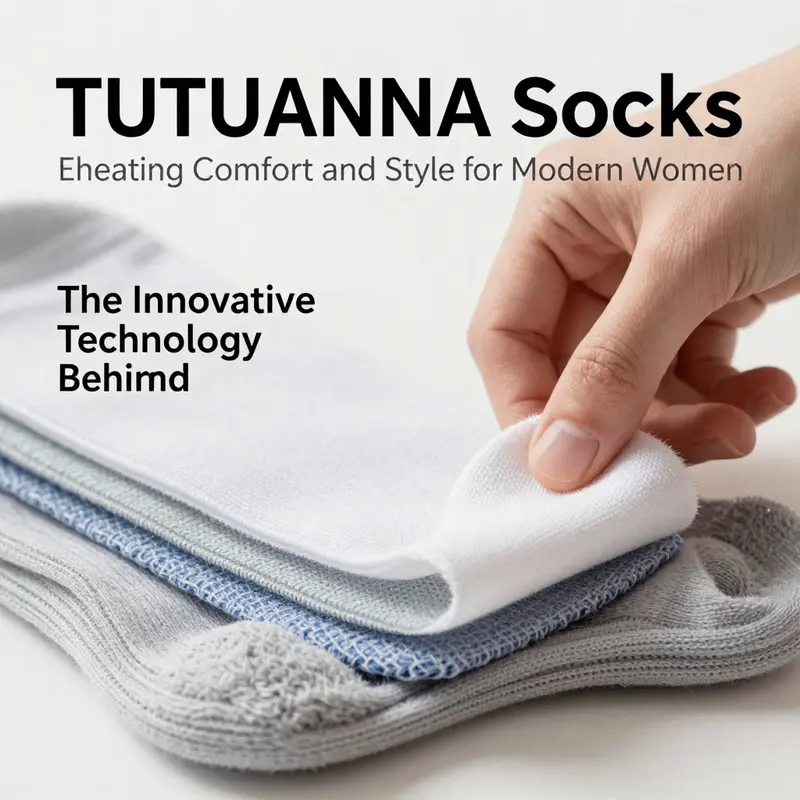
The difference between ordinary socks and those that feel engineered lies in the union of material science and thoughtful construction. For a brand focused on delivering a near-skin experience, the engineering begins at the yarn level and extends through every twist and stitch. This chapter explores how dense knitting structures, ultra-fine yarns, moisture-to-heat conversion fibers, and smart surface engineering come together to create warm, comfortable, and resilient legwear suited to many occasions.
At the heart of the thermal performance is a high-density knitting architecture. A 300D specification describes a fabric built for tightness and uniformity. When fibers are drawn into ultra-fine filaments and then arranged with a cross-over weave, they form a dense barrier that traps air close to the body. That trapped air becomes an insulating layer, slowing heat loss. The practical result is measurable: fabrics with this construction can sustain comfortable warmth for extended periods in cold conditions. Tests show a retention of heat for over four hours at low temperatures, which translates to roughly double the insulation of many common tights. This is not merely marketing copy; it reflects the physics of heat transfer and the role of fabric density in reducing convective and conductive loss.
Ultra-fine yarns are a second pillar. Yarns with diameters around 0.08 mm allow a fabric to feel lightweight while still packing many fibers per square centimeter. This creates two advantages. First, a higher yarn count increases the number of interstitial pockets of air, improving insulation without bulk. Second, the fine filament surface produces a smoother drape and better skin conformity. The sensory outcome is important: when a textile mimics the softness and subtle sheen of skin, it appears seamless beneath skirts or dresses. That visual subtlety is amplified by surface treatments and knitting patterns designed to avoid the shiny, plastic look of cheaper hosiery.
Moisture-to-heat conversion fibers add a dynamic element to the passive insulation. These fibers are engineered to capture water vapor emitted by the body and convert the latent energy carried by that vapor into warmth. The mechanism relies on hygroscopic materials that undergo exothermic interactions as they absorb moisture. In practice, the effect scales with the difference between skin temperature and ambient temperature: the greater the gradient, the more effective the conversion. For someone moving between indoor and outdoor environments or engaged in light activity, this feature stabilizes microclimate and keeps extremities comfortable without resorting to thick layers.
Cushioning and sweat management are often overlooked in descriptions of legwear but they matter for daily comfort. A towel-like loop base, known in textiles as a loop pile or hair loop structure, provides targeted cushioning under the foot. This structure increases surface area for moisture capture while remaining breathable. When woven into socks intended for longer wear or light exercise, the looped base absorbs sweat quickly and disperses it across a larger area for evaporation. The result is less dampness against the skin and reduced friction-related discomfort. Coupled with moisture-to-heat fibers, the looped base becomes part of an integrated system that blends warmth, comfort, and dryness.
Durability arises from material choices and reinforcement strategies. Blending elastomeric and high-tenacity nylons with a core-spun approach increases tensile strength while preserving softness. A composition that includes a significant proportion of wrapped or core yarns resists laddering and fray. Real-world testing confirms this: fabrics constructed with these techniques demonstrate several times the abrasion resistance of ordinary hosiery and retain much of their elasticity even after dozens of washes. For consumers, that means a pair that holds its shape, resists runs, and maintains a reliable fit across seasons.
Fit and visual shaping are achieved through precise, anatomically informed knitting and cut engineering. Drawing on three-dimensional body data, designers adjust wale density and tension in targeted zones to produce subtle shaping effects. Narrowing the ankle by a couple of millimeters and introducing a gentle flare above the calf create a lengthening illusion for the leg. A Y-shaped gusset or three-dimensional crotch panel reduces bunching and keeps the fabric lying flat, which enhances both comfort and aesthetic. These small geometries make a disproportionately large difference. When socks conform to the body with minimal slip and no visible creasing, they appear more seamless and refined.
Waist and cuff comfort is another engineered detail. Broad, soft cotton-blend bands with integrated silicone or rubber grippers prevent downward migration without compressing skin. The expansion and recovery characteristics of the cuff are tuned to avoid marks while maintaining position through hours of movement or sitting. For people whose routines include long periods of desk work or commuting, these features preserve both circulation and appearance.
Surface finish and color science complete the sensory picture. A matte or slightly textured finish reduces glare and mimics the diffused reflectance of skin. Gradual shading or shadowing in the knit pattern creates the illusion of depth, softening transitions around the ankle and knee for a more natural look. Color-matching strategies target light transmission and refractive indices similar to human skin, avoiding the artificial sheen that betrays many hosiery fabrics. When the leg appears subtly veiled rather than overtly covered, the overall effect reads as elevated and intentional.
Finally, versatility in design allows these technical foundations to serve many wardrobes. The same insulating knit that warms a cold commute can be scaled into thinner, nearly sheer variants for dressier looks. Loop-cushioned bases lend themselves to athleisure and indoor comfort pieces. The underlying technologies are adaptable, enabling a consistent brand promise across multiple silhouettes and use cases.
For a deeper look at the construction techniques and the brand’s broader design philosophy, explore the basic collection showcased on this product page: basic tutu collection. For official technical details and product specifications, see the manufacturer’s website: https://www.tutuanna.com
How Tutu Anna Socks Blend Skin-Like Aesthetics with Real Winter Performance
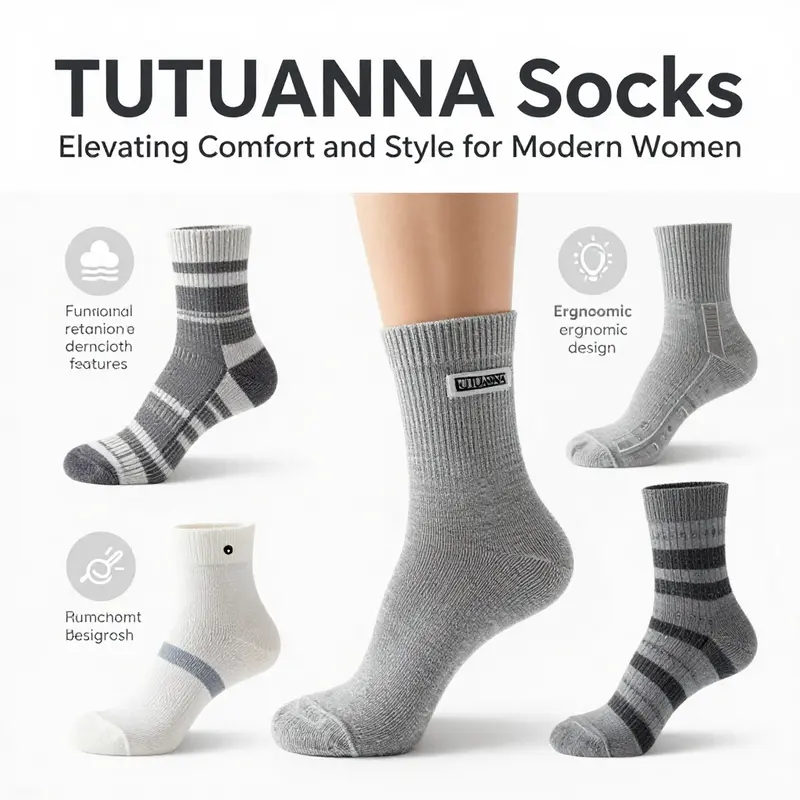
A single garment can elevate both how you look and how you feel. For legwear, that balance means delivering a natural, flattering appearance while meeting the practical demands of cold weather and daily movement. The approach taken by Tutu Anna socks centers on this dual ambition: textiles engineered to disappear visually yet work powerfully as a thermal layer and a comfort system. The result is hosiery that reads as an extension of the body and performs as purposeful clothing—an invisible ally for styling and warmth.
At the heart of the aesthetic strategy is a deliberate imitation of skin’s optical behavior. Rather than relying on a uniform tone that often creates a glossy or plastic finish, the design uses a subtle shadow-gradient effect and tightly controlled yarn dyeing. The fabric transitions in shade from thigh to ankle, mirroring the small tonal shifts found in natural skin. This visual modulation reduces the likelihood of a fake or prosthetic look and yields what many wearers describe as a ‘bare-leg’ impression even when garments are layered over skirts or dresses. Laboratory measures back this up: light transmission and refraction values have been engineered to closely match those of human skin, which helps the hosiery reflect and transmit light in similar ways. When a leg briefly appears between layers of a skirt and sunlight, the interplay is soft and believable rather than reflective and artificial.
But appearance is only one axis. Performance, especially thermal performance, is critical for seasonal hosiery to be worth choosing. The socks and tights in this line utilize a high-density knit—often described by its denier and a complex cross-knit pattern—to trap air and reduce heat loss. Ultra-fine fibers are woven in a cross-pattern that builds a dense, insulating layer while keeping the fabric supple and thin. The engineering aim is clear: avoid bulky insulation that adds weight or changes silhouette, and instead create micro-cavities that hold warmth close to the skin.
Testing of these structures shows tangible benefits. In cold ambient tests, the insulated knit sustains higher skin-surface temperatures for extended periods compared with standard thermal leggings. Much of this efficiency stems from pairing density with functional fibers that convert moisture and body heat into additional warmth. These moisture-activated fibers are not an add-on lining but function as an active component of the knit. As humidity from the body rises, the fibers interact with that vapor to generate small increments of heat. That makes the garment especially useful in real-life scenarios where indoor and outdoor temperatures fluctuate: stepping from a heated office into winter air, or moving between transit and a chilly street, the hosiery helps moderate rapid thermal shocks.
A defining, and often overlooked, detail is where the insulating surface sits relative to the skin. Instead of placing a warm layer on the outside, these garments incorporate a micro-fleece treatment on the inner surface so the insulating structure is in direct contact with the wearer. This inside-out design creates a sensation akin to a personal hand warmer—heat generated and retained close to the body rather than trapped under layers and dissipating quickly. The benefit is twofold: improved warmth and a steady, comfortable feel that does not make legs sweat excessively or overheat in brief indoor moments.
Comfort considerations extend beyond temperature. Fit, pressure distribution, and secure placement all influence daily wearability. The tights adopt a segmented pressure philosophy, varying compression along the length of the leg to deliver shaping where it flatters and gentle support where circulation benefits. This graduated approach slims the silhouette visually while reducing fatigue and limiting daytime swelling. The waistband is another carefully balanced element: widened, cushioned, and equipped with a gentle grip, it prevents slippage without pinching or leaving marks. Small but thoughtful features like reinforced toes and Y-shaped gussets reduce tension points and minimize bunching, enhancing the sense that the garment moves with you rather than constraining you.
Durability matters when premium fit and feel are claimed. To keep softness while improving tensile strength, the yarn composition often blends core-spun nylon with increased elasticity. The result is a surface that resists abrasion and snagging better than typical hosiery. Real-world wash tests reflect this: repeated laundering maintains elasticity and shape far beyond standard expectations. That longevity reinforces the value proposition—these are not disposable fashion items but engineered wardrobe components.
A final, practical advantage lies in styling versatility. The matte finish and nuanced shading let legs appear slightly veiled rather than starkly exposed, which reads as higher-end and more intentional. That subtlety makes it easier to transition from office to evening, pairing well with structured skirts and soft knits alike. For colder outings, the tights layer seamlessly under dresses or beneath trousers without bulk, while for casual looks they pair well with chunkier boots and layered socks.
If you want to see adjacent product groups that focus on theatrical silhouette and foundational design, a useful reference is the basic tutu collection at this site: https://luneballet.com/product-category/basic-tutu/. It underscores how thoughtful construction defines both form and function across different garments.
Taken together, the brand’s approach marries optical science with textile engineering. The visual mimicry of skin reduces the need to choose between style and modesty, while the thermal architecture and ergonomic shaping make the piece effective in real conditions. For anyone selecting hosiery for colder months, the combination of near-skin optics, interior-focused insulation, moisture-responsive fibers, and considered fit offers a compelling alternative to either sheer fashion tights or bulky thermal leggings.
For technical reference and additional product specifics, see the official product overview example here: https://www.tutuanna.com/en/products/60d-velvet-tights
Barely-There Luxury: Styling TUTUANNA Socks Across Silhouettes and Seasons
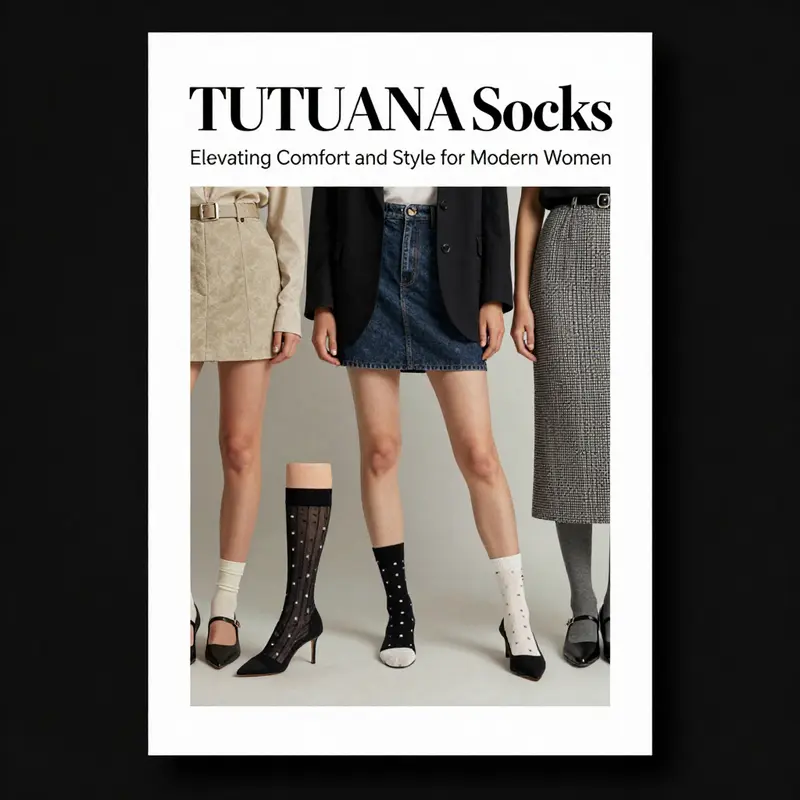
TUTUANNA socks have become a touchstone for how utility and elegance can coexist. The design centers on a precise balance of shape, texture, and color that lets the sock disappear along the leg while elevating the line of the silhouette. This is not solely about warmth; it is about skin-like translucency, soft matte finishes, and subtle shading that creates the impression of a natural gradient rather than a hard edge. The result is a leg line that feels elongated and cohesive, with a quiet couture feel that does not shout but rather invites a second glance.
The technical backbone includes a 300D knit for durability and a fine 0.08 mm yarn that keeps the fabric light. The construction employs a cross-weave pattern that retains warmth without sacrificing breathability, making the socks comfortable from a chilly office morning to a brisk weekend walk. In testing, the fabric held up well across many wash cycles and retained elasticity that keeps the fit secure over time.
Fit and wearability are designed to be as thoughtful as the fabric. A soft, wide waistband sits gently on the torso and a silicone grip along the interior edge helps keep the sock in place during long days. Subtle adjustments, such as slightly narrowing the ankle and easing the calf into a gentle flare, create a visually lengthening effect that complements a range of silhouettes. The result is a versatile piece that pairs seamlessly with skirts, dresses, or tailored trousers, serving as a refined base layer that adds depth and warmth without dominance.
In styling terms, the socks work across both formal and casual looks. Worn with a pencil skirt and a structured blazer, they add a quiet polish; paired with denim and oversized knits, they bring a tactile finish that lifts a streetwear mood into something considered. The palette leans toward skin-tone inspired hues and soft neutrals that read as part of the leg rather than a separate garment, helping outfits feel cohesive and balanced. The effect is a wardrobe anchor that supports creativity rather than prescribing it, letting the rest of the ensemble lead while the socks provide reassurance of fit, texture, and silhouette.
null
null
Final thoughts
TUTUANNA socks stand out not only due to their rich historical roots and innovative technological advances but also because of their significant functional benefits and versatility in fashion. As consumers increasingly seek quality products that combine comfort, style, and performance, TUTUANNA continues to adapt and thrive in the competitive market. The positive reception from consumers underscores the brand’s commitment to quality and aesthetics, positioning TUTUANNA as a preferred choice for young women today. Business owners looking to engage with TUTUANNA should explore the market opportunities that this brand uniquely offers, aligning quality with consumer needs.