
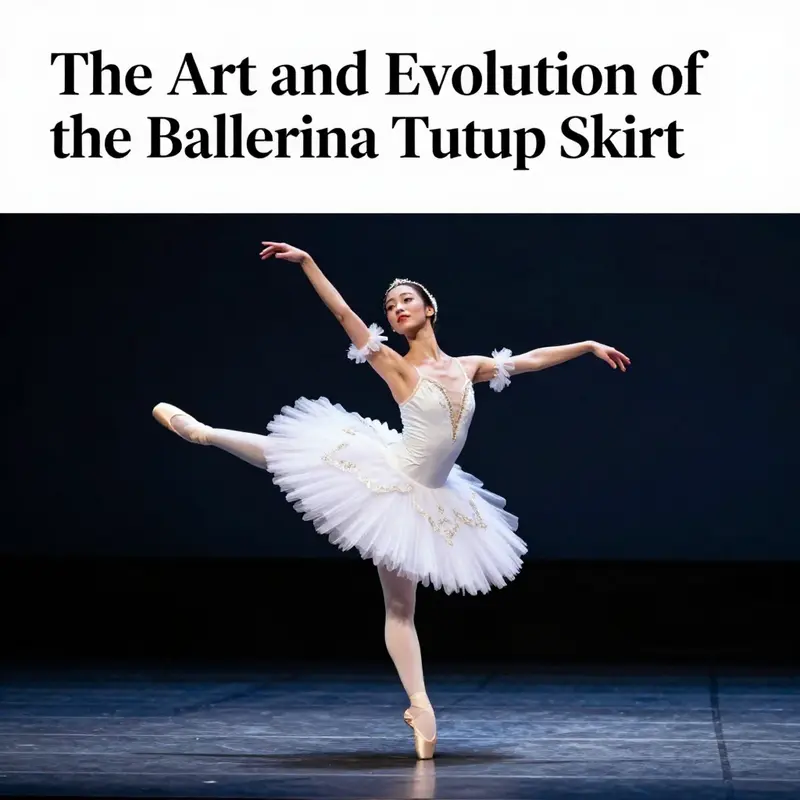
The ballerina tutu skirt is much more than just a piece of clothing; it is an essential element of ballet that signifies artistry, excellence, and precision. Emerging from a rich history that spans centuries, the tutu has evolved from the flowing Romantic style to the structured Classical forms we recognize today. In the following chapters, we will explore the transformation of the tutu across various eras, delve into the intricate craftsmanship behind these garments, and examine the prevalent variations worn during performances. Additionally, we will assess the tutu’s cultural impact beyond the dance floor and highlight the innovative adaptations that keep it relevant in contemporary fashion. This comprehensive overview will provide a deeper understanding of the tutu skirt’s significance within the ballet world and its ongoing legacy.
Stitches of Gravity: Tracing the Ballerina Tutu from Romantic Dream to Classical Precision
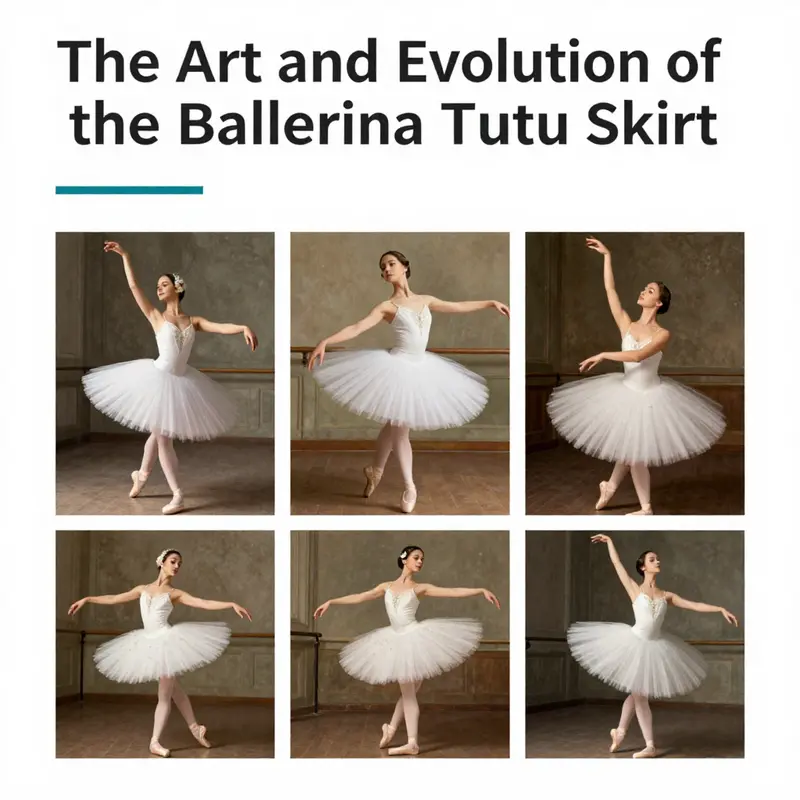
The tutu is more than a garment; it is a language spoken in silk and layer upon layer of tulle. It holds a dancer upright against gravity while inviting the eye to travel along leg, ankle, and toe. Its history reads like a map of ballet itself, moving from Romantic dream to the disciplined geometry of classical technique. In this journey, the tutu becomes both foil and amplifier, shaping what the body can reveal and how an audience experiences a single movement. The silhouette is not incidental; it is the ballet’s own score written in light, weight, and space, signaling emotion, era, and intention before the music swells or a line is drawn through the air.\n\nThe Romantic tutu emerges from a moment when dancers began to free themselves from rigid attire and give form to a new ideal of sensation. In the early nineteenth century, fashion and choreography converged on a vision of the dancer as a translucent force, delicate yet capable of striking force if required. The first true Romantic tutu arrived around 1832, in a performance marked by the dancer’s name and the era’s appetite for otherworldly grace. The design combined a tight bodice with a long, airy, multi layered white skirt that fluttered to just below the knee. The effect was ethereal, almost suspended, as if the wearer could glide between matter and myth. This length and openness allowed the leg to speak through every plié, every turn, every extension, and it invited the audience to read movement as if it were a breath captured in fabric. The tutu did not merely cover the hips; it framed the leg in a way that made lightness visible. It welcomed the eye to travel along the line of the knee and ankle, tracing the dancer’s path as though the very air bent toward a poised, unearthly grace.\n\nAs ballet evolved toward more athletic and technically demanding performances, the late 19th century demanded a new silhouette. The Romantic flow gave way to a form that could hold its own under the honest scrutiny of stage lighting, long sequences, and demanding footwork on pointe. Around 1880, the tutu rose high on the hips, and the skirt stiffened. This marked the birth of the classical tutu, a garment designed not just to look beautiful but to become a technical instrument. The skirt split into layers of stiffened tulle, held in place by a boned or padded waistband, creating a bell, a platter, or a powder puff profile. The geometry of the silhouette—its height at the waist, the outward flare, and the degree of stiffness—was inseparable from the choreography it accompanied. The bell tutu allowed a broad sweep of the leg at the front, enhancing line and extension for bold ensembles like the bravura runs of Sleeping Beauty. The pancake or platter tutu offered a flatter, almost architectural plane, its rigidity helping illuminate the dancer’s precise footwork and the delicate articulation of toes and ankles. The powder puff, with a softer, airier fullness, could lend a more voluminous silhouette without sacrificing the contrast between leg and skirt, especially in ensembles that demanded a generous, yet controlled, visual mass.\n\nModern classical tutus crystallize these historical tensions into two dominant forms: the pancake tutu and the platter tutu. The pancake tutu is famously stiff and flat, the silhouette a crisp, horizontal plane that foregrounds the legs in their most exacting lines. The platter tutu, slightly more domed, yields a curious balance between volume and separation from the body, preserving a sense of buoyancy while maintaining controlled structure. Both styles rely on a careful layering of tulle, the stiffening agents, and a waistband that distributes weight and holds the garment aloft. The dancer’s core becomes a center of gravity for that weight, a reminder that beauty in the tutu is inseparable from the body’s strength and balance. Light falls differently on each form. On a pancake, the light curls around a flat plane, revealing the sharp arch of the instep and the precise angle of the leg. On a platter, the light folds into a softer dome, highlighting the curvature of the thigh and the gentle arc of the knee. In performance, this interplay between garment, movement, and illumination is not decorative flourish; it is a crucial component of storytelling. The tutu does not just accompany the dancer’s lines it amplifies them, making the choreography legible to an audience even from the far reaches of a theater.\n\nBeyond form, the tutu embodies the craft of a long lineage of makers. Historically, these skirts were handmade through a patient process that could span months, even years, of meticulous construction. The work begins with a sturdy foundation—waistband and hoop or a lattice of structural supports—upon which layers of stiffened tulle are stitched. Each layer must be calibrated for even tension and uniform height, so that every movement reads as a deliberate line rather than a wavering puff of fabric. The stiffening is achieved through time-honored methods and contemporary adaptations alike, from earlier starch-based techniques to modern synthetic interlinings. The result is a garment that can endure decades of rehearsals and performances, worn by dancers across generations. The intangible payoff is visible in the way a tutu holds its shape under the lights and the breath of a dancer who has learned to trust the garment as much as the technique it supports.\n\nThe tutu’s evolution mirrors shifts in artistic taste and stagecraft. The Romantic era valued fantasy, dream, and the sensation of floating through air. The Romantic tutu, with its ankle- or calf-length flirtation with tradition, allowed set pieces of narrative to unfold with a sense of fragile, otherworldly beauty. As the century turned, ballet embraced a more muscular, precise vocabulary. The classical tutu became a visual shorthand for that vocabulary: it signaled a dancer who could sustain long, demanding sequences and reveal the leg’s exact geometry in every moment. It allowed choreographers to sculpt scenes that required bold, expansive lines as well as delicate, exacting footwork. The modern era continues this dialogue, with designers and makers exploring new fabrics, tighter weaves, and subtle innovations in support that preserve the garment’s iconic silhouette while enabling even more daring movement.\n\nAs ballet embraces collaborations across cultures and climates, the tutu productively migrates beyond the stage into broader cultural imagination. Designers in fashion, theater, and performance increasingly reference the tutu for its purity of line and its emblematic aura. The garment’s purity of silhouette continues to inspire contemporary reinterpretations, often reimagining the tutu’s role as much as its form. Yet the essence remains the same: a garment built to reveal and relieve the dancer’s body in motion, to keep the gaze anchored on the leg’s path, and to hold a story in its silhouette without a single spoken word.\n\nFor dancers pursuing the integrity of these traditions, the available options span from custom-fit, performance-grade construction to more ready-made approximations. The spectrum speaks to a simple truth: the tutu, in its most authentic form, is a product of precise craft and disciplined technique. It is not merely a costume but a partner in performance, a garment that tests the dancer’s balance, breath, and belief in the choreography. A practical thread running through this history is the idea that excellence in the tutu is measured less by its extravagance and more by its ability to translate intent into movement. The more exact the fit and the more controlled the stiffness, the more clearly a dancer can articulate a line, a pique, a turn, or a leap. In that sense, the evolution from Romantic lightness to Classical structure is not only a stylistic journey but also a testament to how costume design can elevate technique into artistry.\n\nFor readers curious about authentic garment construction and the standards that govern the craft, an external resource provides a broader technical lens on tutu types and their applications in industry. It offers deeper insight into how designers balance aesthetics with function and how the historical forms inform modern practice. External resource: https://www.balletcostume.com/tutu-types-and-standards. If a deeper dive into specific production variations is desired, a case study of a high-quality white tutu designed for classic productions can be explored through related internal references that investigate tailoring practices, fabric choices, and the maintenance required to preserve shape and sheen over years of use. Within the continuum of this chapter, a practical example of ongoing innovation is the link to a dedicated product page that demonstrates how contemporary makers approach the art of fit and form while honoring the tutu’s storied lineage. See for example a detailed product page that foregrounds the fidelity of a Swan Lake era silhouette and its modern adaptations: high-quality white ballet tutu for Swan Lake\n\nIn sum, the tutu remains a living artifact of ballet’s history and a functional engine for its present and future. Its evolution—from the airy, dreamy Romantic skirt to the disciplined, leg-shaping classical forms—reflects broader shifts in technique, storytelling, and craft. It is a garment that teaches the eye to read movement and the body to trust a silhouette that has, for centuries, enabled dancers to reach toward the ideal of gravity-defying grace. The tutu stands at the intersection of art and engineering, where fabric, stiffness, and line converge to translate the music of a performance into a visible aspiring arc. The result is a garment that endures not because it remains unchanged, but because it continues to satisfy the dancer’s demand for expression within a precise, almost architectural, frame.
null
null
Silhouettes in Motion: How Romantic, Classical, and Hybrid Tutus Shape Ballet Performance
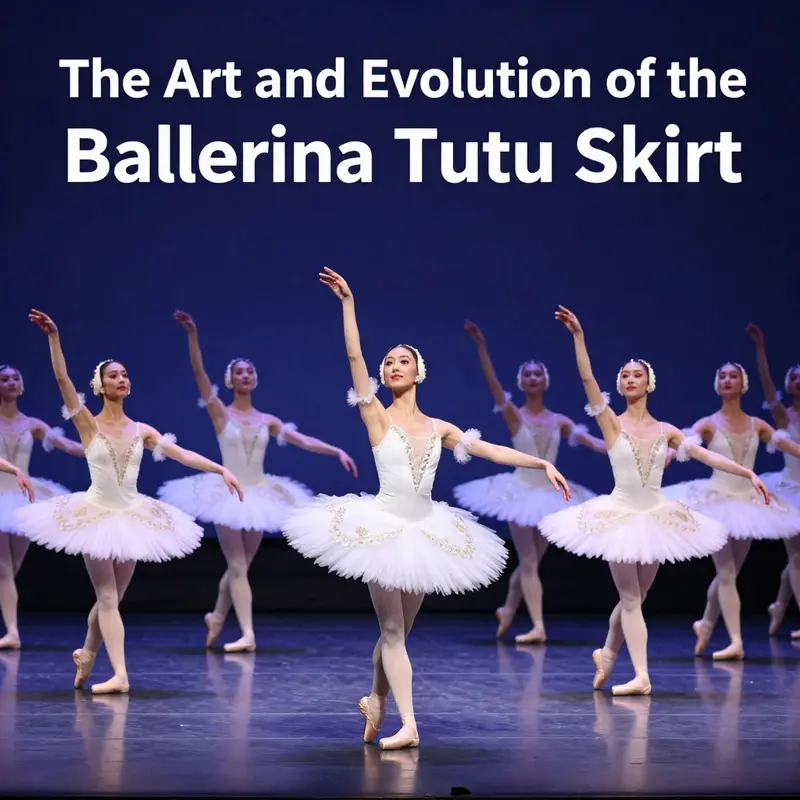
The ballerina tutu is more than a skirt; it is a sculpted instrument of movement, a fabric hinge that translates breath into line, weight into weightlessness, and narrative into form. When a dancer steps onto the stage, the tutu becomes part of the choreography, its layers and stiffness guiding what the audience sees and how the body appears within the light. The variation and design of the tutu—Romantic, Classical, or hybrid—are not simply cosmetic choices. They are decisive factors in the execution of a performance, influencing elevation, extension, and the very arc of intention in every port de bras and leap. To understand how these variations function is to listen closely to the dialogue between garment and motion, between the dancer’s intent and the technician’s craft.
The Romantic tutu unfolds like a soft overture to motion. Its silhouette is bell-shaped, a gentle cascade of tulle or chiffon that reaches toward the lower leg or ankle. This length and drape are not accidental; they cultivate a sense of fluidity that mirrors the painterly, in-between space of a character who moves through memory and dream. In pieces such as Giselle or Swan Lake, the Romantic tutu amplifies the dancer’s capacity for expressive, narrative gesture. The fabric’s lightness allows the legs to breathe through endless arabesques and delicate footwork, so the movement seems to float as much as it is powered. The texture—thin, multi-layered, almost translucent—responds to the audience’s gaze as if the air itself turns to silk in the dancer’s wake. Weight is distributed in a way that softens the impact of a leap, making the landing feel like a sigh, even as the muscles drive the torso toward a higher point. In this form, the tutu acts as a companion to storytelling: it frames the body’s interior life, helps to communicate a character’s vulnerability, and reinforces the sense that the scene is both intimate and otherworldly. The romance of the silhouette relies on mobility that remains unforced, with layers that yield to gravity in a way that preserves line while suggesting a glimmer of the ethereal.
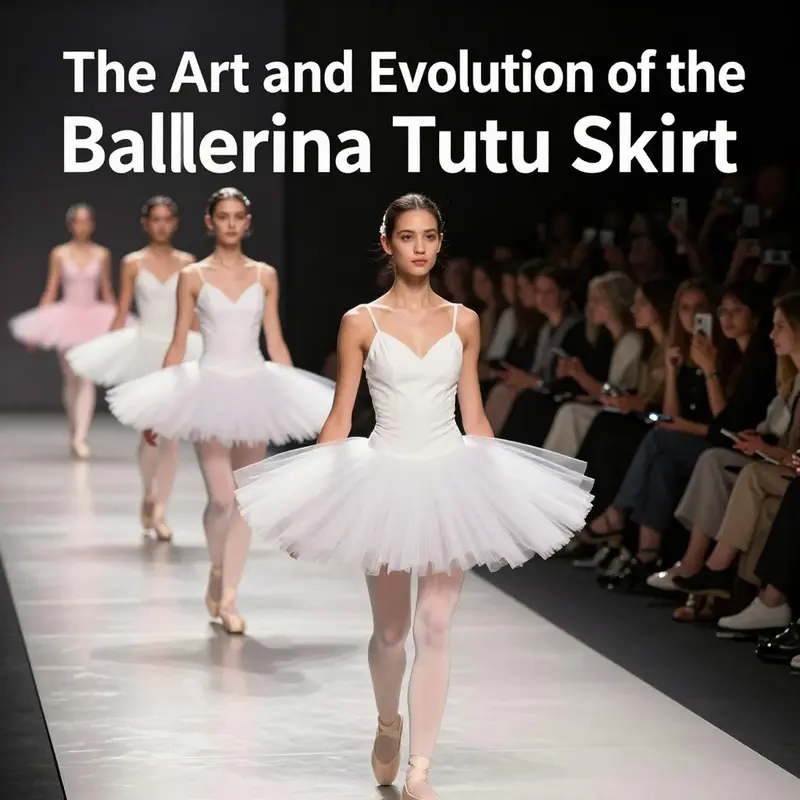
Then there is the Classical or pancake tutu, a technical counterpoint to the Romantic and a cornerstone of many grand classical narratives. This version features a stiffness and structure that produce a flat, circular silhouette perched high on the hips. A rigid inner frame or hoop supports dense layers of tulle, enabling a crisp, architectural line that can cut through stage lighting and audience perception with precision. The pancake tutu is designed for clarity of form: it presents the dancer’s legs in a straight, uninterrupted vertical sweep, emphasizing the geometry of the line rather than the softness of motion. This makes it exceptionally well-suited to full-length ballets such as the grand pas de deux, where snelle grande jeté, high landings, and a chorus of corps de ballet demand a silhouette that can hold its shape from first pose to final reverence. The discipline of the Classical tutu lies in its ability to maintain a strong, visible profile while accommodating strenuous, controlled energy. It invites the eyes to follow exacting lines—hips, knees, and feet aligned with deliberate intent—creating a visual language that is as much about architectural balance as it is about emotional storytelling. The weight and stiffness require careful, sometimes arduous, training, but the payoff is a stage picture that reads cleanly from any distance, a testament to the choreographic precision that defines many iconic repertory works.
Between these poles lie hybrid tutu forms, a lineage of experimentation that mirrors evolving choreography. Modern productions increasingly blend elements of softness and stiffness, layering fabric and support in novel ways to support contemporary movement. Hybrid forms may weave in more pliant textiles alongside subtle structural supports, or experiment with asymmetrical cuts and textures to reflect a dramatic thesis that diverges from tradition without discarding it. These innovations respond to choreographers who seek to challenge the audience’s expectations, to stretch the perception of what a tutu can do on stage. The result is a continuum rather than a dichotomy: the tutu becomes a canvas for innovation, a garment that adapts to shifting styles while still honoring the lineage of the form. In these hybrid designs, the dancer often experiences a more complex relationship with the garment—lighter in some zones, sturdier in others—allowing for rapid changes of direction or a sudden, almost sculptural, angling of the torso that reads as contemporary storytelling. The hybrid is a dialogue between old and new, a living archive that still values the tutu’s capacity to frame the leg and the line while embracing the unpredictable demands of modern movement.
A shorter, more rehearsal-friendly tutu also plays a crucial role in performance preparation. Short tutus, often with fewer layers or simplified mesh, prioritize practical ease while preserving the essential aesthetic of the traditional silhouette. They support rapid rehearsals, solos, and moments of improvisation where the dancer’s quick decisions in space and tempo must be mirrored by the garment’s behavior. The visual impact remains intact—the skirt still rises and falls with the leg, catching the light and giving the audience a sense of the dancer’s intent—yet the fabric feels lighter in the hand and more responsive to on-the-fly adjustments. This practical versatility underpins the rehearsal process as much as the final performance, reminding us that the tutu, though emblematic, is also a tool that must bend to the rigors of repetition, tempo, and the countless micro-decisions that go into a production’s execution.
There is also a broader artistry embedded in how tutus interact with the stage universe: the lighting, the set design, and the dancer’s own shadow on the wings. The tutu’s stiffness or floppiness changes how light travels across the fabric, shaping the visual rhythm that accompanies musical phrasing. A rigid Classical tutu catches highlights with angular brilliance, throwing the body into a crisp relief that can feel almost sculptural. A Romantic tutu, by contrast, catches light in a thousand tiny, shimmering facets, inviting the audience to lean closer into the dreamlike atmosphere. In hybrid and short forms, the way light wraps around the skirt can become a narrative beat in itself, signaling a shift in mood or a pivot in the dancer’s approach to a phrase. The audience’s perception thus emerges not only from the movement of the body but also from the garment’s response to the theater’s illumination, turning fabric into a partner in storytelling.
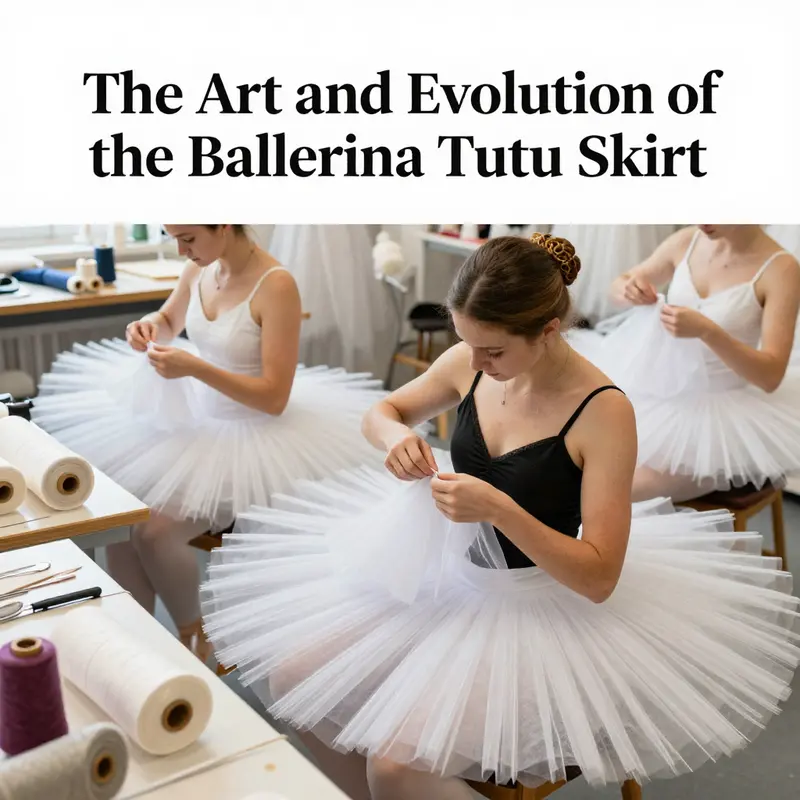
The craftsmanship behind these variations is a quiet testament to the discipline and artistry of ballet’s backstage culture. Traditionally handcrafted, tutus are the product of patient layering, careful shaping, and a precise understanding of how stiffness, weight, and fabric will behave under the pressure of performance. The tutu is engineered to endure: decades of wear through countless performances, each conjuring a new interpretation of an old standard. It is not merely a costume; it is a historical artifact that records the aesthetics, the technological advances, and the taste of different eras. The transition from heavy, dense constructions to lighter, more versatile designs mirrors changes in choreographic language itself, embodying a growing appetite for fluidity, clarity, and precision without sacrificing the tutu’s signature silhouette.
In contemporary productions, the tutu has also become a site of cross-pollination with fashion and technology. Designers borrow the ethereal aura of the tutu to craft modern visions, while lighting designers explore new ways to coax color or glow from the fabrics. The result is a performance culture in which the tutu remains at the heart of classical identity even as it branches into new forms of expression. This is why a performance reliant on a Romantic, Classical, or hybrid tutu is not merely about the dancer’s technique; it is about an ecosystem of craft, design, and interpretation that elevates the art form. The tutu helps to anchor the story in a recognizable visual language even as the choreography asks for fresh energy, a new angle, or a daring stretch beyond established norms.
As the repertoire continues to evolve, so too does the audience’s relationship to the tutu. The garment invites spectators to consider not only the grace of the dancer but also the ingenuity of the makers who give breath to fabric and bone. The tutu carries a lineage, a set of expectations, and a future possibility all at once. When the lights rise and the curtain swells, the viewer is invited into a shared imagination where the world of a beloved classic and a bold contemporary conceit meet. The tutu, with its layered fold and disciplined silhouette, remains a powerful translator of movement—an enduring emblem of how ballet can be both rooted in tradition and continually reimagined through form, function, and fearless choreography. For students and seasoned performers alike, attending to the nuances of tutu variation becomes a kind of applied history, a way to read a ballet’s ambitions through the fabric that frames every turn, leap, and pause.
For readers who wish to explore further, a concise overview of tutu styles can be found in curated resources that discuss the different silhouettes and their choreographic implications. pancake-tutu-for-ballet-with-flower-cost-effect-t0321 offers a practical sense of how structure influences motion in the most iconic of classical repertoires. The broader conversation about tutu styles is also captured in comprehensive guides that trace the evolution from Romantic to classical to contemporary hybrids, highlighting how these garments serve as both historical record and living tool in performance. To extend the dialogue beyond the stage, an external reference that surveys the variety and symbolism of tutu forms can enrich understanding of how these silhouettes communicate with audiences across contexts: https://www.ballettutu.com/ballet-tutu-styles/. By attending to design, technique, and meaning, dancers, designers, and spectators alike can appreciate why the tutu remains, centuries after its inception, a resonant instrument of performance that continues to shape how ballet looks, sounds, and feels onstage.
null
null
Tulle Reimagined: The Living Silhouette of the Ballerina Tutu in a Tech-Infused Era
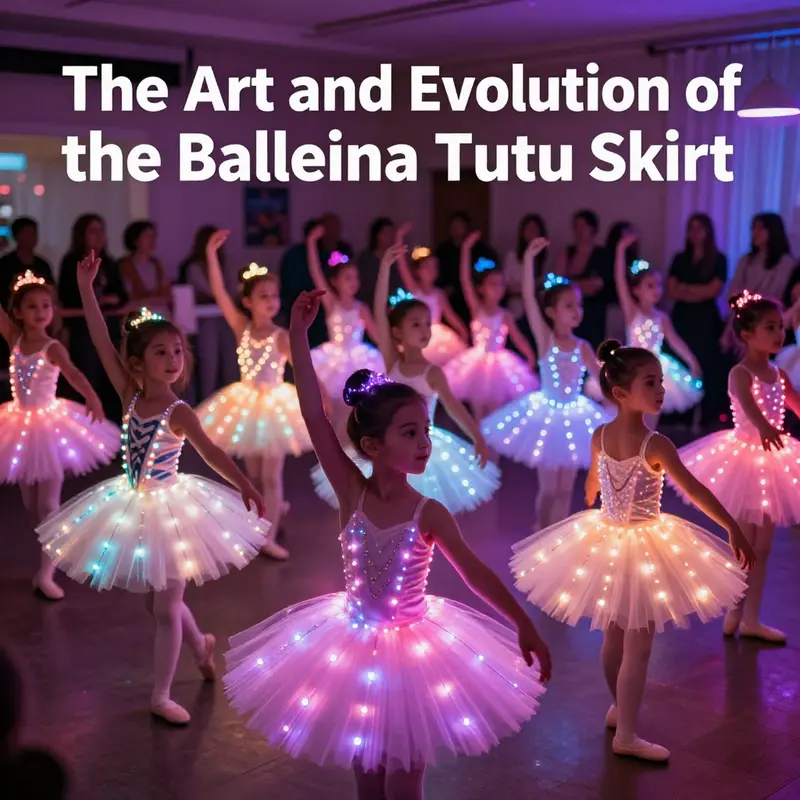
The ballerina tutu skirt has always been more than a wardrobe choice. It is a language spoken in tulle and stiffness, a device that translates weight, breath, and momentum into a visible arc of movement on stage. Yet as designers, choreographers, and dancers collaborate across studios and borders, the silhouette remains constant even as its vocabulary expands. Modern innovations do not replace the tutu’s iconic lines; they refine and reframe them. The result is a living silhouette that preserves history while embracing the demands of contemporary technique, performance contexts, and personal expression. In rehearsal rooms and theatres alike, the tutu has evolved from simple fabric and wire into a dynamic instrument, lighter, more responsive, and more versatile than ever before. This evolution unfolds not as a rejection of tradition but as a careful negotiation between established form and new possibilities.
At the heart of this shift is material science. Traditional tutus relied on layers of stiffened tulle, sometimes augmented by crisper petticoats and a rigid core that kept the skirt bowing outward in a disciplined horizontal plane. Today’s designs experiment with lightweight, high-performance tulle blends and moisture-wicking fabrics that prioritize comfort without sacrificing projection. The dancer’s core remains free to move, while the skirt maintains its characteristic sweep and luminosity. In practical terms, this means longer rehearsal sessions and more dancers able to sustain crisp, legible lines during intricate sequences. The weight reduction translates to quicker transition between poses, cleaner lines in multiple turns, and less fatigue in jumps that demand both height and precise lower-body control. Such gains are not merely about ease; they enable a dancer to execute technically demanding combinations with greater ease and less distraction, which, in turn, preserves the purity of the choreographic intent.
Structural enhancements have become a defining feature of contemporary tutus. Designers are threading ergonomics into the fabric of the garment, literally and metaphorically. Built-in corsetry and flexible frames can provide controlled support at the torso and hip zones, preserving the tutu’s outward projection while accommodating a dancer’s changing shape and movement range across a performance. This integration of flexible, body-aware architecture allows the skirt to respond to subtle shifts in weight or torque, offering a stable silhouette during pirouettes and beautifully buoyant arcs during leaps. Importantly, these innovations do not flatten the expressive potential of the tutu. Instead, they heighten it by allowing dancers to negotiate lines with a more intuitive sense of balance and center. When a choreographer asks for a whip-fast sequence or a sudden, airy extension, the modern tutu can hold the line without pinching or dragging, translating intention into a visible, camera-ready arc.
The conversation around form has also grown to include the tutu’s role beyond the proscenium. Modern tutus are increasingly tailored for versatility that reaches well past the stage. They appear in dancewear collections meant for fitness and cross-disciplinary performance, where the aesthetics of ballet meet athletic function and urban fashion. The skirt’s structure now accommodates a broader range of movement contexts, from contemporary pieces that experiment with destabilization and asymmetry to streetwear-inspired looks that celebrate the tutu’s ethereal beauty in everyday life. Digital printing technology has become a transformative companion to these shifts. Intricate patterns, gradient color schemes, and even narrative motifs can be embedded directly onto the tulle or through lightweight synthetic overlays, turning each tutu into a visual storyteller. The canvas is no longer limited to the stage lights; it extends into studio mirrors, fashion shoots, and public performances where the tutu manufactures a moment of shared imagination for audiences that may never have seen the original choreography in live ballet.
These innovations are not merely about aesthetics. They address the dancer’s experience, a factor sometimes overlooked when the curtain rises. The modern tutu acknowledges heat, moisture, and comfort as performance variables that affect timing and energy management. Fabrics that wick moisture away reduce the risk of overheating during long rehearsals, while breathable linings and seamless joins minimize friction against the skin. With lighter materials and smarter construction, dancers feel less encumbered when they are required to pivot rapidly or sustain a series of demanding grand jetés. The result is not only a more comfortable garment but also a more precise tool for translating physical intention into stage craft. In a discipline where seconds matter, even small reductions in drag can yield meaningful gains in execution and confidence.
From a choreographer’s perspective, the tutu’s modern iterations are invitations to reimagine movement vocabulary without sacrificing the silhouette that cues the audience to ballet heritage. The classic Swan Lake aesthetic, with its pale, disciplined geometry, can exist side by side with more experimental forms that borrow the tutu’s halo-like glow for avant-garde works. In this sense, the tutu becomes a bridge between two moments in dance history: the codified language of the 19th-century grand pas and the open-ended dialogue of 21st-century movement theatre. The built-in support systems, carefully tuned stiffness, and smartly distributed weight all work together to ensure that the memory of the geometry—flat, broad, horizontal lines—remains legible even as the piece evolves. The result is a garment that honors memory while enabling contemporary dancers to push the boundaries of speed, control, and expressivity.
The cultural reach of the modern tutu has widened as well. It sits at the intersection of performing arts, fitness, and fashion, inviting collaborations that would have seemed improbable a generation ago. Fitness studios may embrace tutu-inspired silhouettes for performance-driven workouts that celebrate grace and stamina, while fashion designers draw on its architectural cues to craft couture that flirts with movement as a living accessory. This cross-pollination is helped by a broader ecosystem of makers who offer customization options, from sheer color variations to precise measurements and tailored support scaffolds. In this ecosystem, the tutu is no longer a single-purpose artifact but a modular garment whose components can be adapted to new choreographic demands. The result is an evergreen icon that remains legible in a world where the body meets multimedia storytelling through dance.
In practical terms, the modern tutu’s evolution has also spurred a richer ecosystem of educational and artisanal knowledge. The craft of building a tutu—once dominated by years of apprenticeship within dance communities—now shares the stage with product development and material science. Dancers, designers, and technicians collaborate to test fabrics for resilience under repeated flexion and impact, optimize hoop rigidity for different musical tempos, and tailor liners that balance comfort with performance longevity. This collaborative spirit echoes the tutu’s historical lineage as a handcrafted garment built to endure decades of productions. Today’s tutu, while benefiting from industrial processes and advanced textiles, still rests on the same foundational principles: a silhouette that must project outward, a balance that must remain centered, and a lineage that must honor the aesthetic and emotional intent of ballet.
For readers who want a tangible sense of how these principles translate into contemporary practice, consider how a high-quality white ballet tutu, styled in a Swan Lake lineage, demonstrates the interplay of form, function, and performance. high-quality-white-ballet-costume-tutu-swan-lake-t0596 offers a reference point for the enduring elegance of the canonical silhouette while hinting at the modern enhancements that expand its capabilities. The juxtaposition of traditional lines with supportive scaffolding and lighter materials is visible in the way the skirt holds its horizontal plane across a demanding sequence, yet remains responsive to the dancer’s subtle shifts in hip alignment and ribcage rotation. It is a reminder that tradition does not vanish in the presence of innovation; it is reinterpreted through the lens of current technique and performance contexts.
In sum, the modern ballerina tutu skirt stands as a testimony to how a single garment can carry the weight of centuries while bending toward the future. Its silhouette remains a beacon of grace and discipline, its mechanism a canvas for engineering and artistry, and its cultural resonance broader than ever. The tutu’s evolution maps a wider story about how dance sustains itself through invention without surrendering its core ideals: precision, clarity of line, and an unmistakable sense of beauty that travels beyond the footlights into contemporary life. As dancers continue to explore faster spins, higher leaps, and more expressive storytelling, the tutu serves as a trusted partner—light enough to float, strong enough to anchor, and always, in its way, a form of poetry cast in fabric and air. External resource for further exploration of modern tutu design and practice can be found here: Ballet Beautiful – Modern Tutu Designs, published February 2026, at https://www.balletbeautiful.com/modern-tutu-designs.
Final thoughts
The ballerina tutu skirt stands as a timeless symbol of grace and artistry within the realm of dance. Its evolution reflects broader changes in ballet and culture, from the romantic styles that captured the imaginations of centuries past to the diverse interpretations seen in today’s performances. Moreover, the technical mastery of tutu craftsmanship underscores the dedication required to create these iconic garments. As the tutu continues to influence modern fashion and inspire creativity, its legacy grows stronger, embodying both tradition and innovation. In celebrating the tutu, we recognize not just a garment, but a profound statement about the beauty and expressiveness of dance.