
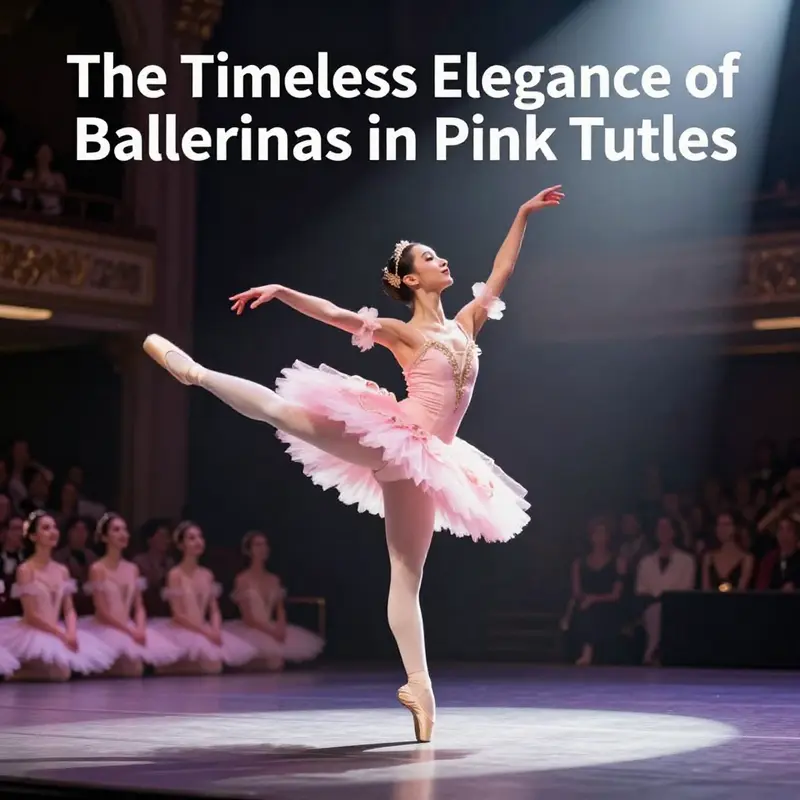
The captivating image of a ballerina in a pink tutu resonates with artistry, elegance, and cultural significance. This article delves into the rich history of the pink tutu, showcasing its evolution from classical ballet attire to a mainstream symbol of grace. Business owners can gain insightful perspectives on the demand for balletwear, the influence of popular media on merchandise, and the artistic expressions associated with this iconic costume. Each chapter will unravel a different facet of the ballerina’s journey in a pink tutu, providing a comprehensive understanding that aligns with both heritage and modern trends.
Timekeeping in Tulle: The Pink Tutu as a Living Chronicle of Ballet’s Grace
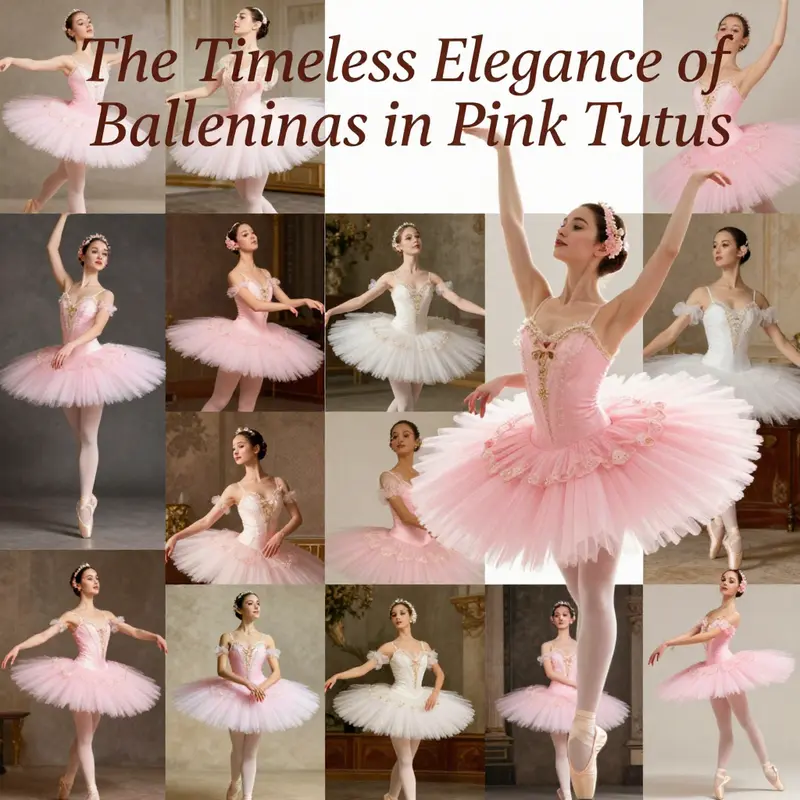
A pink tutu is more than a costume. It is a movable echo of ballet’s long dialogue between form, light, and intention. When a dancer steps into a stage dimly lit and raises the skirt with a precise flick of the foot, the fabric becomes a timekeeper, signaling both memory and aspiration. The pink tutu, in particular, carries a quiet authority. It is not merely a color; it is a language that has evolved with choreography, theater lighting, and the social meanings attached to femininity and performance. Across generations, the garment has shifted from a simple, practical covering for movement to a symbol that readers and viewers recognize in an instant. Its journey mirrors the arc of ballet itself: from the intimate, candlelit courts of Romantic repertoire to the vast, electric theaters where contemporary artists push pace, line, and perception in ways that would have seemed impossible a century ago. The tutu’s pink hue has become inseparable from the idea of the poised, disciplined dancer who seems to levitate, not by magic but by the decision of countless rehearsals, seamstresses’ craft, and designers who understood how color interacts with stage light and the dancer’s own breath and intention.
The story begins in the Romantic era, when the tutu was still a long, gauzy silhouette that glowed under soft illumination. Ballet’s first stars wore light fabrics that fluttered with a ghostly tenderness. Yet as the art form grew more dynamic and the music grew more demanding, performers needed a silhouette that could translate every plié and leap into legible motion for audiences at larger theaters. The transition to the classical short, stiff, layered tutu did not come from a single fashion impulse. It emerged from a practical synthesis of form and function. The stiffened, multi-layered structure allowed the legs to be seen clearly from the audience, a crucial advantage for appreciating precise footwork and the sculptural lines that define a virtuoso moment on stage. It is within this structural shift that the pink shade began to acquire its most lasting significance.
Color, in ballet costuming, is never incidental. Early tutus were often white or ivory, chosen to reflect light and evoke a sense of purity on stage. Yet as productions moved into larger houses with more sophisticated lighting rigs, the demand grew for costumes that could read vividly from back rows and under the variable heat and glare of modern stagecraft. The choice of pink did not happen by accident. Over the course of the 20th century, pink tulle—often described in theaters as “ballet pink”—became standardized because it harmonized with the skin tones of many dancers under strong illumination. The effect is not merely cosmetic; it is optical. Pink tulle enhances the dancer’s line, so the legs and feet appear to float more cleanly, and the torso reads as a center of quiet energy. In this sense, the pink tutu is a crafted illusion, a prosthetic of grace that makes the body’s effort appear effortless. Institutions with strong costuming traditions, such as major ballet companies, helped cement this standard. They demonstrated how a color can carry a shared cultural expectation, a norm that audiences instantly recognize and trust as a signal of classical mastery.
The cultural resonance of the pink tutu extends beyond the proscenium. It enters everyday life through fashion, illustration, and the many representations of ballet in media. People associate the pink tutu with virtues that go beyond dance: discipline, perseverance, and a certain feminine ideal of poise. Yet the tutu’s meaning is not static. It has absorbed shifts in perceptions of femininity and performance. Contemporary designers and choreographers experiment with color, silhouette, and scale, exploring how a pink tutu might converse with a modern body, a new stage configuration, or a different storytelling goal. Still, the iconic pink remains a touchstone—a familiar reference point to gauge how much a new production or a new dancer has evolved, and how far the art form has traveled from the smoky salons of its earliest romantic iterations.
From the backstage to the audience, the tutu’s construction reveals a long collaboration between dancer, maker, and stage crew. The layers of tulle, sometimes stiffened with interfacing or netting, create a silhouette that holds its shape while still allowing the gliding, precise footwork that ballet requires. The design is a study in balance: too rigid, and the dancer cannot articulate the feet; too soft, and the lines disappear into the fabric. The middle ground—where the tutu flares into a crisp, readable outline—became the ideal form as technique advanced. In performance, this silhouette becomes an instrument: it catches the eye, casts shadows that sculpt the dancer’s body, and frames every leap with a moment of suspended beauty. The pink hue, catching and refracting light, often makes the dancer appear lighter than air, a sensation that audiences have come to expect and celebrate.
In photography and visual representations, the pink tutu often carries an additional layer of meaning. A high-resolution image of a dancer practicing and smiling reveals how technique and emotion intertwine. The precise planes of the leg, the turn of the hip, and the slight tilt of the head are made legible by the tutu’s geometry, which acts as a stage for the body’s language. In another stark image, a dancer stands en pointe against a dark backdrop, the vivid pink presenting a dramatic counterpoint to shadow and negative space. These visual contrasts capture the tutu’s ability to translate inner resolve into outward posture. The garment does not force emotion; it clarifies it, turning a private labor—years of practice, discipline, hours in the studio—into a public, legible moment that can be admired, imitated, or reinterpreted in a new light.
This lineage also informs how the pink tutu travels beyond the theater. In the realm of education, illustration, and youth culture, stylized depictions—hand-drawn, vector, or simplified cartoons—adapt the tutu’s charm to new audiences and formats. The charm remains rooted in the same idea: a pink skirt that punishes gravity with grace and invites a child’s imagination to take flight. Yet even as these adaptations proliferate, they honor the tutu’s central truth: that beauty in ballet is not merely a matter of form but a discipline of listening—listening to breath, to tempo, to the tempo of the heart as it synchronizes with a music score.
For readers curious about contemporary manifestations, the pink tutu persists as a bridge between performance and everyday life. It has slipped into fashion and merchandise as a timeless emblem of possibility. The tutu’s presence in classrooms, studios, and dress-up play underscores its enduring appeal: the belief that with practice, a simple skirt can become a portal to artistry. It is not just a costume in a box; it is a reminder that technique, when worn close to the skin, can transform posture into poetry. And while designers push toward bolder palettes and experimental fabrics in some modern interpretations, the pink tutu continues to function as a recognizable anchor. It signals to the viewer that what unfolds before them is not just movement, but the culmination of a lineage—an education in balance, precision, and grace that has been refined over generations.
For those exploring the practical side of this evolution, contemporary audiences and dancers alike now encounter a spectrum of pink-tinted possibilities. Variations in shade, from pale blush to deeper rose, can alter perceived line and weight, influencing how an audience reads a dancer’s leg, hip, and extension. Costume designers consider the interaction of pink with lighting, stage color, and even the dancer’s own complexion. The result is a dynamic conversation between fabric, light, and movement. Yet the classic pink tutu remains the reference point against which new ideas are measured. It is a reminder that tradition is not static but a living practice, capable of absorbing innovation while preserving the integrity of the form.
If you wish to explore examples that carry the pink tutu’s legacy into broader contexts, you can encounter references to pink ballet costumes for sale, a modern expression of how enduring aesthetics meet practical use in education, performance, and community events. This connective thread—between stage artistry and everyday accessibility—reflects ballet’s continuing ability to adapt without losing its essential language. The pink tutu remains a quiet ambassador of the art form’s history, a wearable archive that travels with dancers from studio to stage and from rehearsal to audience, inviting viewers to witness the slow, persistent work that makes a fleeting moment linger in memory. For a broader historical perspective on how the tutu evolved, see The Evolution of the Tutu in Ballet, which traces the stylistic shifts and cultural significance from the 1800s to the present day: https://www.britishballet.com/history-of-the-tutu/.
[Internal Link] For readers curious about how pink ballet costumes for sale can still connect learners with technique and tradition, learn more here: pink ballet costumes for sale.
External resource: https://www.britishballet.com/history-of-the-tutu/
Cultural Significance of the Ballerina in Pink Tutu
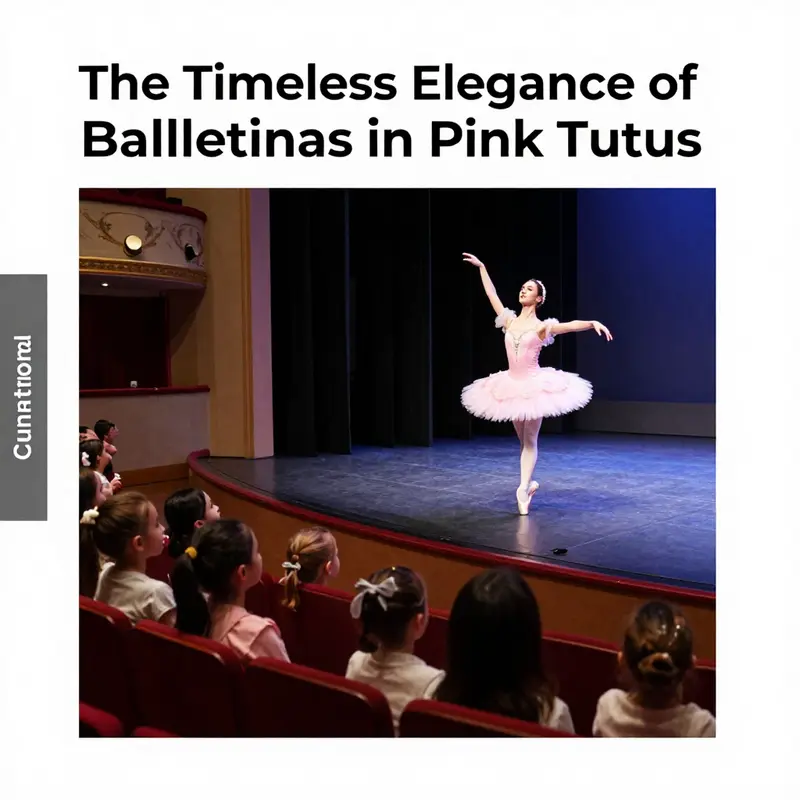
The pink tutu travels from studio to stage and into the wider world, signaling a discipline and a dream that extend beyond rehearsal. It invites audiences to read movement as expression and to recognize the craft behind every poised gesture.
The tutu’s silhouette creates a recognizable frame that dancers learn to shape with breath, balance, and timing. Pink lightens the stage and suggests gentleness, yet the performance reveals strength in precision and focus in practice.
Across eras the pink tutu has adapted to new choreographies and diverse bodies, remaining a shorthand for elegance and effort while linking generations of performers who have worn the same color and form.
Public life amplifies its meaning. In magazines, posters, and school performances, the pink tutu becomes a cultural emblem bridging serious study and everyday imagination, inviting participation, imitation, and storytelling about art’s value.
Yet there is critique to consider. The tutu can foreground idealized femininity and set standards that challenge inclusivity and body diversity. The ongoing design evolution—lighter fabrics, more flexible construction—reflects ballet’s impulse to honor tradition while expanding access and expressive potential.
In sum, the pink tutu endures as a living artifact: a visual cue that beauty, craft, and perseverance can coexist, and a reminder that cultural meaning is continually reimagined through performance, education, and shared memory.
The Pink Tutu: Craft, Geometry, and the Quiet Science of Ballet Costumes
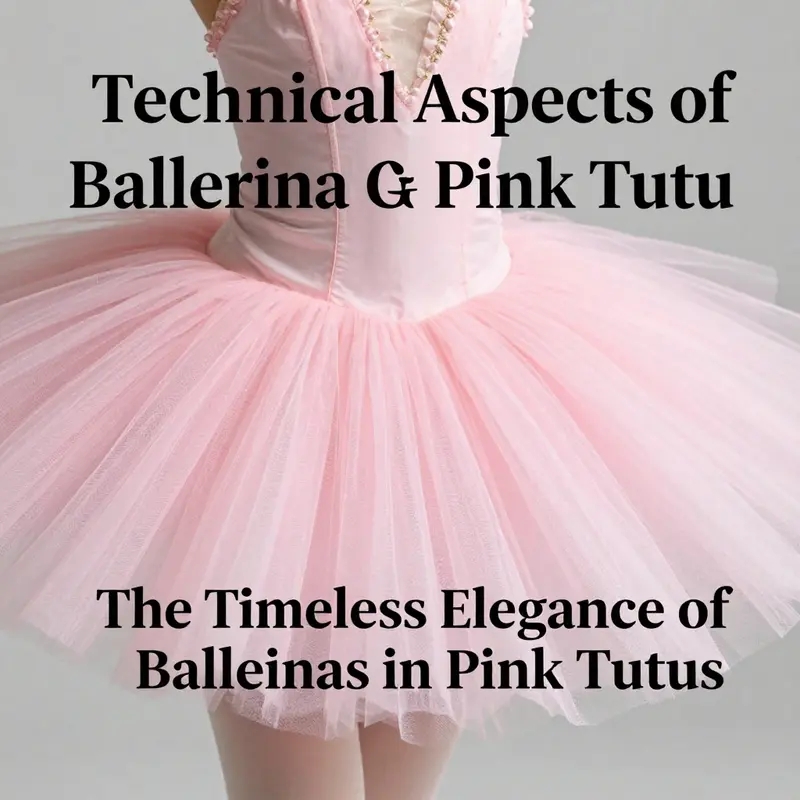
The pink tutu is both an emblem of grace and a piece of precise engineering. It blends aesthetic tradition with mechanical design, turning fabric, gravity, and light into a readable line on stage.
Historically, the pink tutu evolved from romantic to classical forms. The romantic tutu favored a flowing, knee‑length silhouette that suggested ethereal ascent, while the classical style adopted a shorter, stiffer silhouette to read clearly under stage lighting. The modern tutu uses layered tulle over a rigid frame, creating a controlled halo of fullness while keeping the dancer’s torso free to lengthen the spine and articulate the arms.
Material science sits at the heart of this balance. Layers of tulle provide volume, while a rigid understructure—whether lattice netting or a corset-like foundation—defines the silhouette. The way the fabric behaves under tension, its stiffness, and its ability to shed air during spins all feed back into how a dancer accelerates a line with a practiced movement.
An essential nuance is the balance between rigidity and fluidity. The garment must present a sharp, geometric outline without restricting movement. The pink hue is chosen to harmonize with stage lighting and to complement the dancer’s skin tone, softening under warm light and sharpening under cooler beams. Color becomes a tool of choreography as much as line and tempo do.
Durability and comfort matter, too. Reinforced seams, moisture-wicking linings, and careful anchoring of layers help the tutu hold its shape through hours of rehearsals and performances, while remaining comfortable for the dancer in hot theaters.
Beyond the stage, the tutu informs education, fashion, and culture. It appears in educational drawings and media as a symbol of discipline and possibility, and in fashion as a playful emblem of elegance. The pink tutu thus travels across contexts, preserving a lineage of craft even as it adapts to new audiences.
In the end, the pink tutu is a living dialogue between fabric and dancer, between tradition and innovation. It embodies a quiet mathematics of balance, geometry, and timing that makes a moment of lift on pointe feel effortless and eternal.
The Pink Tutu Phenomenon: Ballet’s Icon in Media, Memory, and Market
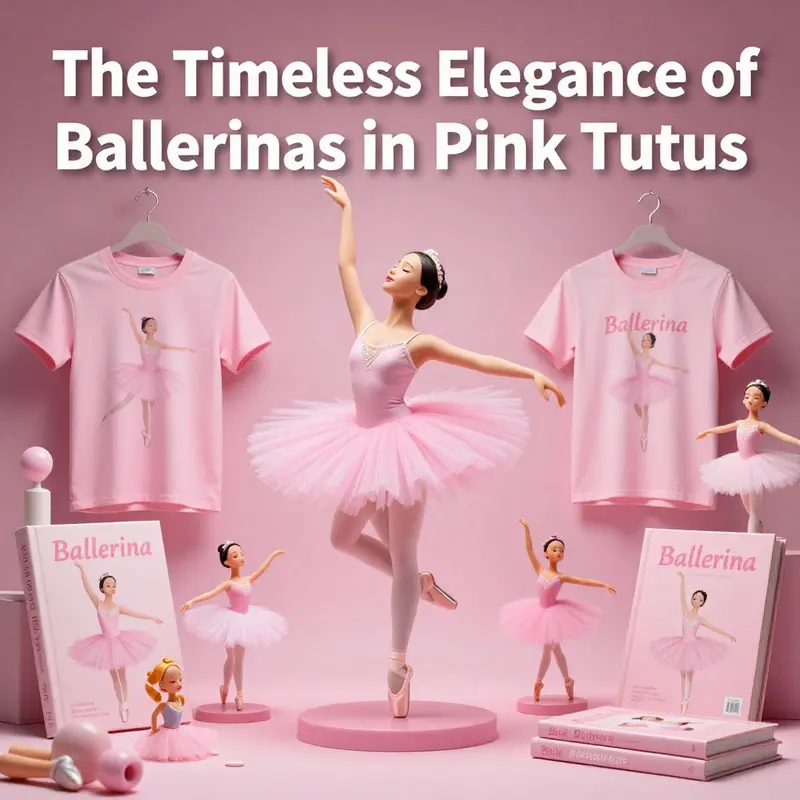
From stage to screen and into daily life, the pink tutu has become a recognizable cultural symbol. It stands for grace, discipline, and the idea that beauty can be practiced and earned. In media, toys, and decor, the pink tutu translates performance into everyday imagination, inviting both children and adults to imagine movement, balance, and joy. This evergreen motif travels across contexts, evolving with design while preserving a core message of elegance born from study and effort.
The ensemble of media and merchandise creates a feedback loop: representations drive demand, and the availability of pink tutu objects reinforces the memory of performance, feeding future curiosity and participation.
The Pink Tutu as Mirror and Myth: Artists Rewriting the Ballerina’s Story
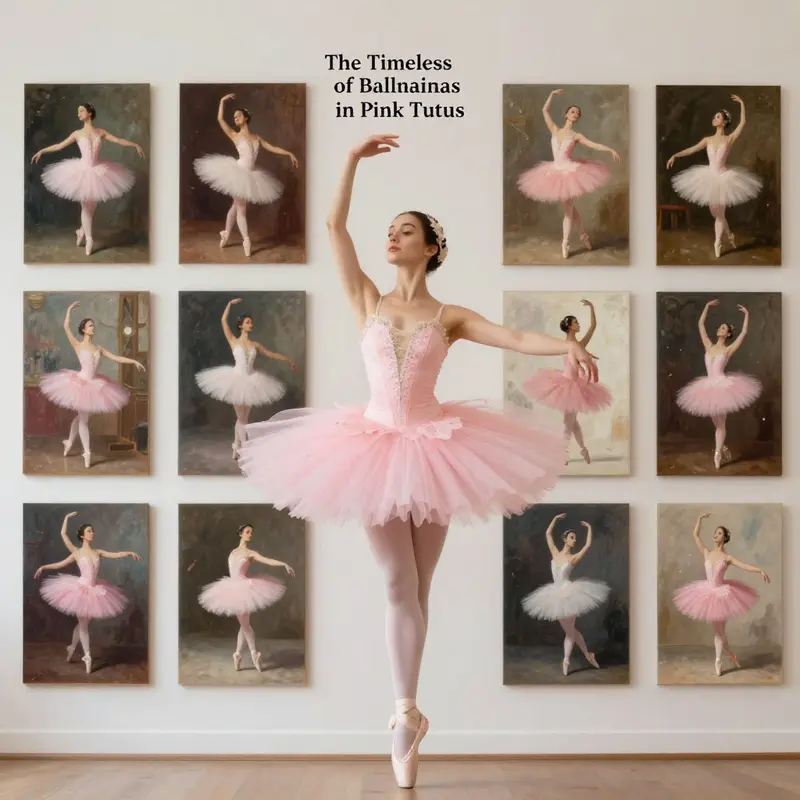
The pink tutu has long stood as a portable emblem of ballet’s dual language—that which instructs the eye and betrays the body. In art, the garment becomes more than fabric; it is a visual shorthand for grace and discipline, a symbol that folds together innocence, aspiration, and the stern labor that underwrites performance. From Degas’s patient studies of motion to contemporary reimaginings by artists who foreground identity and power, the pink tutu functions as a mutable sign, capable of both flattering and destabilizing the conventional image of the prima ballerina. The tutu’s silhouette—a bloom of tulle, a flare of circumference around the legs—frames each plié, hop, and tour jeté not merely as movement, but as a narrative beat. The garment invites the viewer to read the body through color, volume, and the way light unsettles the surface of fabric, as though the tutu itself were a responsive instrument, pliant to both the dancer’s intention and the viewer’s gaze.
The arc of this emblem in art history begins, famously, with Degas, whose pastel and graphite drawings crystallize rehearsal as a kind of quiet theater. Degas’s ballerinas are not idealized mannequins but real bodies negotiating time, space, and fatigue. The pink tutu rides the line between dream and labor, catching the air in a way that makes stillness appear dynamic. InDegas’s world the tutu is less a costume than a hinge that translates backstage endurance into public beauty. This lineage of intimate realism informs later generations who insist that the tutu’s charm cannot be separated from its costs. When later painters and photographers, and then digital artists, approach the pink tutu, they inherit a history in which beauty is not a reward but a negotiation—between airflow and muscular memory, between a dancer’s breath and an audience’s memory.
As modern and contemporary artists widen the frame, the pink tutu becomes a site where identity and authority contend with the traditional myth of the balletic feminine. Julie Mehretu’s expansive lines and layered matrices reframe the tutu within a larger cartography of power, massed color, and social encounter. The figure of the dancer dissolves into an abstract terrain, yet the pink still functions as a mnemonic thread—there, a note of vulnerability, there, a countervailing surge of agency. Kehinde Wiley, meanwhile, repositions the ballerina within portraits that insist on presence, lineage, and negotiation of gaze. In Wiley’s sphere, the tutu anchors a dialogue about visibility and gendered representation; it is no longer merely a stage costume but a social badge that asks who gets to inhabit the icon of beauty and strength, and under what terms. These reinterpretations do not discard the tutu’s historical allure; they complicate it, turning the garment into a vehicle for commentary about labor, expectations, and the precise choreography of power that accompanies any public performance.
In this continuum, the tutu’s color becomes a register of cultural meaning as much as a hue on fabric. Pink, culturally coded as soft and innocent, can be deployed to reveal the stamina beneath the surface. The juxtaposition of the tutu’s frail delicacy with a dancer’s formidable technique creates a paradox that artists have exploited to illuminate vulnerability alongside resilience. Some contemporary works treat the pink tutu as a sculptural object—an architecture of fabric that encases the body and negotiates gravity, light, and shadow. Others treat it as a political statement, a symbol through which questions of labor, gender, and representation are staged. In each case, the pink tutu remains a hinge between dream and reality, between the idealized myth of the graceful figure and the lived experience of practice and performance. The long, quiet hours of rehearsal, the pressure of technique, and the insistence on poise—these elements do not vanish; they intensify when placed under the artist’s optic, revealing how beauty itself can be a form of disciplined labor.
The image of the ballerina in a pink tutu conducted across different media—paint, photography, sculpture, digital art—further demonstrates the tutu’s capacity to travel beyond the stage and into cultural conversation. Photographers can freeze a smile mid-practice, capturing the moment when technique and emotion meet in a delicate pose. In painting and digital art, the tutu can become a field of color and texture, a space where light refuses to be simply decorative and instead becomes a protagonist in the narrative of the image. The tutu’s translucence and buoyancy invite a viewer to consider air as a partner in performance; it is not only the dancer’s power but also the physics of fabric that creates the illusion of gravity suspended in time. In sculpture and installation, the tutu can be magnified, blown up into monumental scale, or juxtaposed with other elements—such as industrial materials or architectural forms—to foreground the tension between artistry and labor, between the ethereal and the built environment. In all these forms, the pink tutu remains a thread of continuity, a way to trace how a single garment has been repurposed across centuries to speak about beauty, endurance, and the social meaning of feminine artistry.
Cultural commentators have also threaded the tutu into everyday aesthetic and fashion conversations, turning a stage costume into a symbol visible in streets and shops alike. The pink tutu’s penetrance into lifestyle imagery and consumer culture underscores a broader point: the public imagination keeps returning to the tutu because it embodies idealized aspiration and the reality of dedication. When seen through the lens of fashion and design, the tutu transforms into a study in materiality—how layered tulle catches the light, how seams hold a voluminous silhouette, how the weight of the fabric contrasts with the dancer’s feather-light steps. This ongoing dialogue between performance, representation, and everyday wear shades the tutu’s aura with new meanings while preserving its core values: discipline, elegance, and the possibility of dreamlike transformation. The tutu thus acts as a cultural bridge, linking the intimate labor of rehearsal with the shared wish for grace that marks both performance and everyday life.
From an educational perspective, artists and educators have used the pink tutu as a versatile device for exploring identity and agency with younger audiences. Hand-drawn illustrations and vector graphics reimagine the dancer for children’s books and classroom materials, offering approachable entry points into the world of ballet while hinting at deeper themes of perseverance and self-expression. In such contexts, the tutu becomes a teaching tool—an emblem through which students can discuss the relationship between body, movement, and storytelling. The enduring charm of the pink tutu makes it ideal for interdisciplinary projects that weave dance, visual art, and literary narrative into a single, cohesive inquiry. As viewers encounter these varied representations, they are invited to consider their own perceptions of beauty, strength, and the social narratives that accompany the ballerina’s image. The tutu’s capacity to carry multiple meanings at once—delight, discipline, critique—provides a fertile ground for ongoing dialogue about art’s role in shaping how we see and value the body in motion.
Within the broader scholarship, the tutu’s significance extends beyond aesthetic appeal. It becomes a contested site where cultural politics, gendered expectations, and labor histories converge. Jennifer Fisher’s work on the tutu and its cultural context offers a framework for understanding how this seemingly delicate garment also serves as a monument to the work that sustains artistic production. The tutu’s fabric, cut, and color do not simply decorate the dancer; they act as indicators of social negotiation—how communities imagine femininity, how institutions regulate performance, and how audiences respond to representations of strength wrapped in softness. By reading the pink tutu through this critical lens, viewers gain a richer understanding of how ballet’s most iconic costume also functions as a metaphor for power, resilience, and the ongoing renegotiation of beauty and worth in the arts. This chapter thus becomes less a celebration of a costume and more a meditation on the tutu as a dynamic vehicle for cultural memory and creative resistance.
For readers seeking a concrete scholarly anchor to these ideas, the study “Tulle as Tool: Embracing the Conflict of the Ballerina as Powerhouse” offers a rigorous analysis of how the image of the ballerina has been shaped by and has helped shape societal expectations of women. This article, drawn from Dance & Society, foregrounds the tutu as more than ornament; it identifies the garment as a site of embodied power and contested rhetoric. It is essential reading for anyone who wants to trace the complex relationship between costume, performance, and identity in artistic representations of the ballerina. The conversation it prompts resonates with the way contemporary artists reinterpret the pink tutu—acknowledging the labor, acknowledging vulnerability, and celebrating agency.
To anchor the discussion in a tangible point of reference that invites further exploration, the following example offers a practical lens on how designers and educators translate the pink tutu into real-world contexts while staying true to its symbolic charge. pink-ballet-costumes-for-sale-sleep-beauty-gilded-edge-t0377. This link serves as a nod to how the tutu travels beyond the stage into classrooms, stages of community life, and decorative culture, without losing sight of the formidable craft that makes it possible. The pink tutu thus remains an enduring mirror—a surface on which art reflects society and society, in turn, refracts art’s changing face.
External resource: https://www.jstor.org/stable/10.1525/jod.2025.68.3.479
Final thoughts
The ballerina in a pink tutu stands as a universal symbol of grace, beauty, and devotion to the art of dance. Through its rich history and cultural significance, the pink tutu not only enchants audiences but also fosters a vibrant merchandise market, appealing to both children and adults alike. This exploration has revealed how the pink tutu transcends the stage, influencing fashion, art, and popular culture. By understanding its journey, business owners can leverage this symbol of elegance in their offerings, connecting deeper with customers who admire the artistry of ballet.