
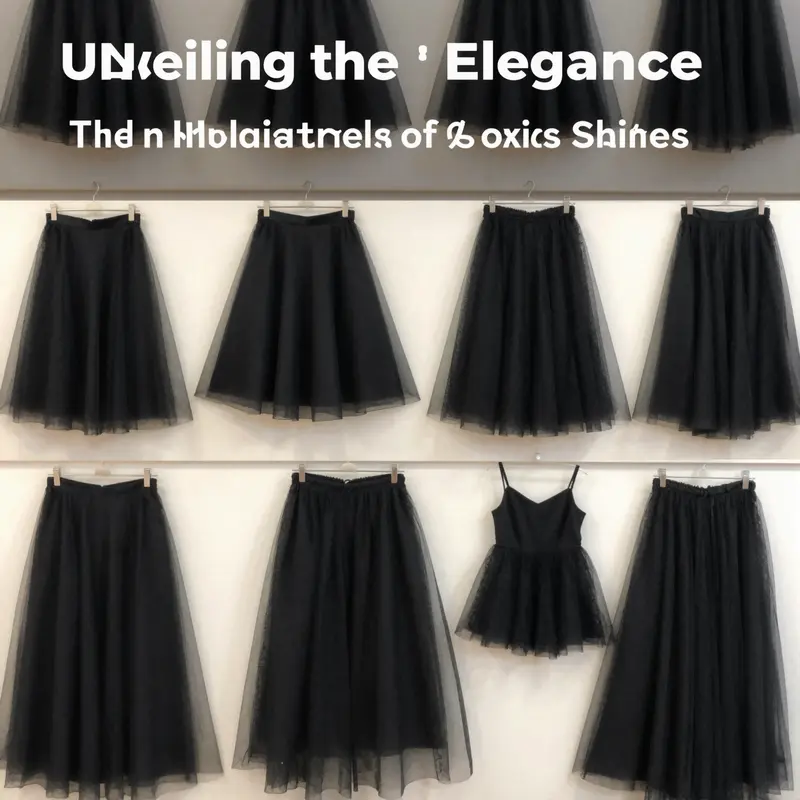
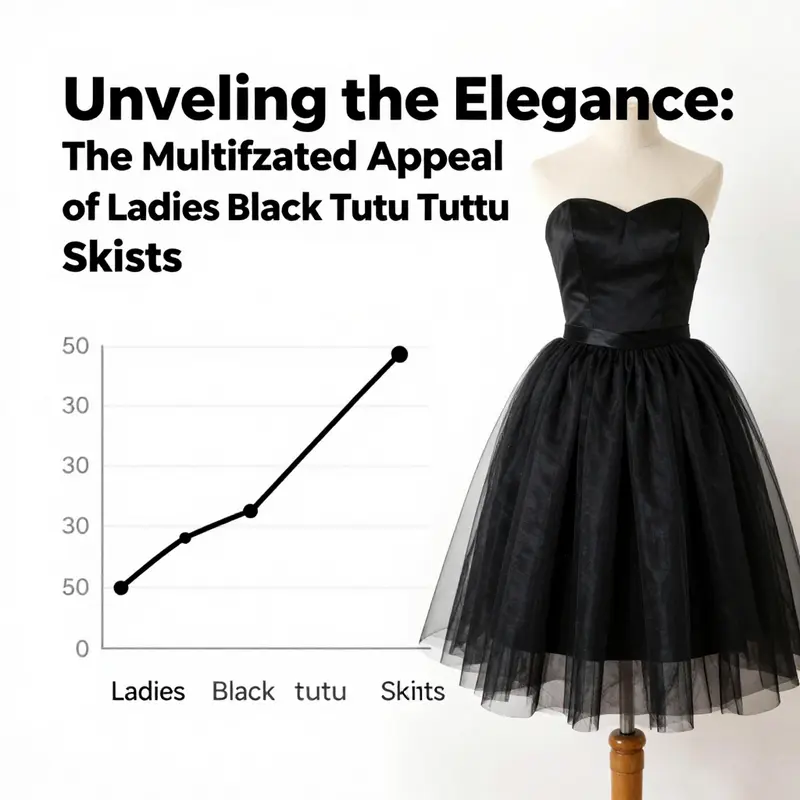
Ladies black tutu skirts have become a staple in contemporary fashion, catering to a diverse range of occasions and personal styles. Their characteristic layers of tulle provide both comfort and aesthetic appeal, attracting a wide consumer base. This article delves into the versatility of these skirts, examining their various uses across different contexts. The unique construction and design features that make black tutu skirts popular will be outlined, highlighting their significance in women’s wardrobes. We will also explore the cultural implications that elevate their status within fashion narratives, before culminating with a look at market trends and consumer preferences. Each chapter provides insight into how these skirts resonate with today’s fashion landscape.
From Runway to Rave: The Enduring Versatility of Ladies’ Black Tutu Skirts
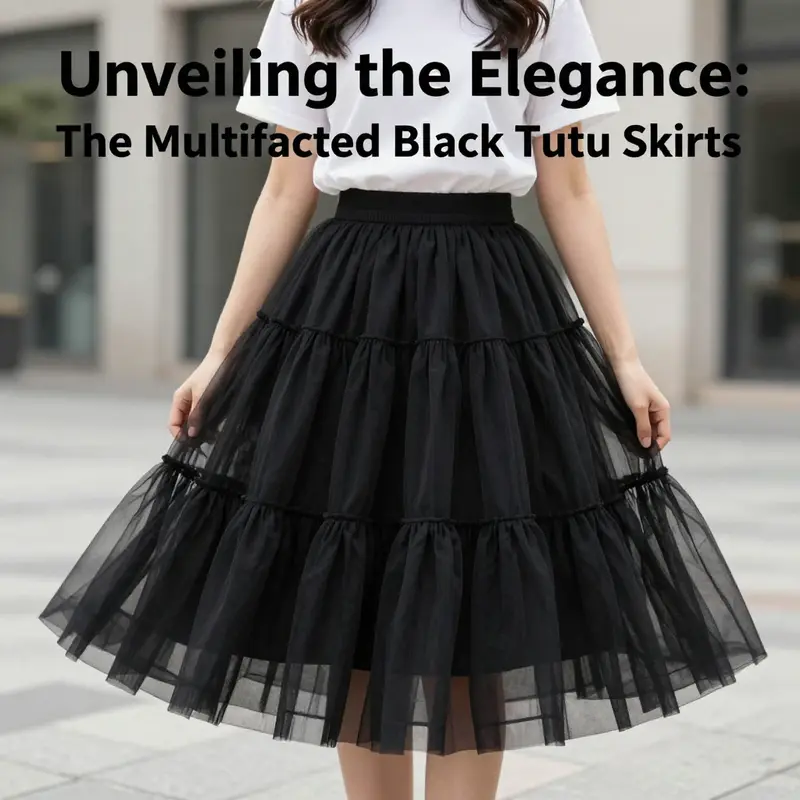
Fashion thrives on contrast, and the ladies’ black tutu skirt is a striking study in such tension. The light, cloud-like drift of multiple layers of tulle meets the grounded gravity of black, a color that absorbs trend while reflecting dimensional depth. The fullness of the silhouette is more than a visual cue; it is a dynamic canvas for mood and movement. A typical five-layer construction emphasizes volume and fluidity, with each layer catching light at different angles and responding to the wearer’s motion. When the skirt moves, its fabric seems to ripple with intention, inviting the wearer to claim space on the floor, on a stage, or in a well-lit street scene. This combination of buoyant texture and somber tone creates a garment that feels at once whimsical and poised, capable of shifting its energy to suit a vast array of occasions without asking the wearer to change a single fundamental layer of itself.
Behind the drama of that silhouette lies careful craft. Construction matters as much as color. Modern iterations of the tutu balance fullness with comfort, ensuring the skirt can travel from rehearsal to party with ease. The waistband, often elasticized or softly structured, must anchor the volume without pinching or slipping. A comfortable lining reduces irritation during long wear, and hems are finished to resist snagging while maintaining the skirt’s graceful sway. Fabric choices matter too. Designers blend fibers to optimize breathability, resilience, and drape, so the tutu holds its shape without becoming stiff or brittle after repeated wear. The result is a garment that behaves like a partner in movement; it supports rather than interrupts the wearer’s personal rhythm, whether she is dancing, posing for photographs, or simply stepping through a busy evening.
The black tutu’s versatility begins with its tone. Ebony or midnight hues offer an immediate sense of polish that can anchor more elaborate styling or balance a minimalist look. This color acts as a neutral stage on which texture and silhouette can perform. It makes pairing straightforward: pair it with a simple top for a clean, modern look; layer with a structured blazer for a sharper, party-ready silhouette; or add metallic accents, lace, or velvet to introduce romance or glamour. The ability to adapt across formality levels is precisely what keeps the black tutu relevant beyond any single season. It can be dressed up for a refined event or dressed down for a casual street moment, proving that one garment can answer a spectrum of fashion needs without becoming repetitive.
The practical appeal aligns with evolving consumer expectations. Research notes that fit, size range, comfort, and ease of care are central to contemporary women’s fashion choices, and the black tutu aligns with these priorities. A well-designed waistband accommodates a range of body shapes, and a forgiving stretch can soften the boundary between comfort and style. The color’s forgiving nature also helps, because black tends to photograph well and can be worn across a broad set of environments without looking out of place. For families and adults alike, convenience matters: machine-washable fabrics, color-fast dyes, and quick-drying finishes expand the tutu’s utility beyond a single event. When care is straightforward, the garment earns a longer life in a wardrobe that prizes both form and function.
In everyday wardrobes, the black tutu can function as a performance-ready layer without requiring a leap into costume territory. It can anchor a dance class outfit or serve as a dramatic accent in a casual ensemble. For children, a tulle skirt with star accents or a subtle sequined waistband can transform a regular day into a small celebration, while remaining comfortable enough for routine wear. For adults, the same item can anchor a bachelorette party look, a bridal shower, or a themed night out, such as a Halloween gathering or a visit to a magical venue where costumes feel appropriate but not obligatory. The power of the silhouette lies in its ability to signal intention through posture and pairing: a fitted top and ankle boots can sharpen the line, while a soft sweater and flats can soften it. Across these permutations, the black tutu invites experimentation and self-expression rather than prescribing a single mood.
Styling ideas flow naturally from the garment’s inherent drama. TikTok and fashion feeds capture playful, diverse approaches: a basic turtleneck tucked into the waistband for an edgy, modern contrast; layering over leggings for a dance-inspired silhouette; or pairing with a cropped jacket to fuse streetwear with theatre. The skirt’s fullness becomes a kinetic accent rather than a constraint, allowing the wearer to control the narrative through movement, stance, and pace. Texture adds nuance: a velvet top creates a midnight-romance mood; a sequined belt can catch the eye without overpowering the overall line; a leather jacket might frame the tutu with a graphic edge. The key is to respect the balance between whimsy and elegance, letting the silhouette lead while the rest of the wardrobe lends context.
A note on durability and practicality helps explain why this piece persists in many wardrobes. Modern versions increasingly feature fabric blends that marry breathability with structure, enabling all-day wear at rehearsals, events, or photoshoots. Such blends maintain fullness while preventing overheating or discomfort as the day progresses. Finish quality matters as well: reinforced seams, tulle tiling that resists excessive shedding, and careful edgework all contribute to the garment’s longevity. The result is a tutu that looks fresh after multiple wears and cleanings, retaining its iconic silhouette without appearing generic or worn. In this way, the black tutu skirt becomes a reliable foundation for personal style rather than a one-off statement. It invites repeated experimentation with confidence, because its core shape remains recognizable even as its styling evolves.
Beyond the practical and stylistic considerations, the black tutu carries cultural resonance that enriches its appeal. It evokes performance—ballets, stage costumes, and cinematic moments—while translating easily into contemporary fashion challenges. The silhouette offers a bridge from the discipline of movement to the freedom of self-presentation. A wearer can embody discipline in the precision of her pose and release in the fluidity of her gait. In social settings, the garment signals playfulness and sophistication at once, a combination difficult to achieve with many other wardrobe pieces. The black tutu thus becomes not just clothing but a mood—one that says the wearer values craft, enjoys creative risk, and refuses to be drawn into a narrow understanding of what a garment should be.
For readers curious about how similar pieces are being styled in real-world wardrobes, a simple exploration of pink ballet costumes for sale demonstrates the breadth of playful yet polished options that can complement the black tutu’s drama. pink ballet costumes for sale offers a window into how color accents and softer textures can sit beside the classic black to create looks that feel modern and approachable. The contrast between the delicate pink and the dark base amplifies the sense of movement and lightness, reinforcing the tutu’s adaptability across seasons and occasions. This microregional study of styling shows how a single garment can anchor multiple personas, from stage performer to casual trendsetter, depending on the wearer’s choices.
External reference for broader context: https://www.walmart.com/ip/AJIWYH-Girls-Tutu-Skirt-with-Stars-Sequin-Little-Girls-Tutu-Skirt-Kid-Party-Princess-Dance-Tutu-Princess-Dress-Ballet-Skirt-Black-12-24-Months/1369758433
Shadow on the Stage: The Craft and Structure of Ladies’ Black Tutu Skirts
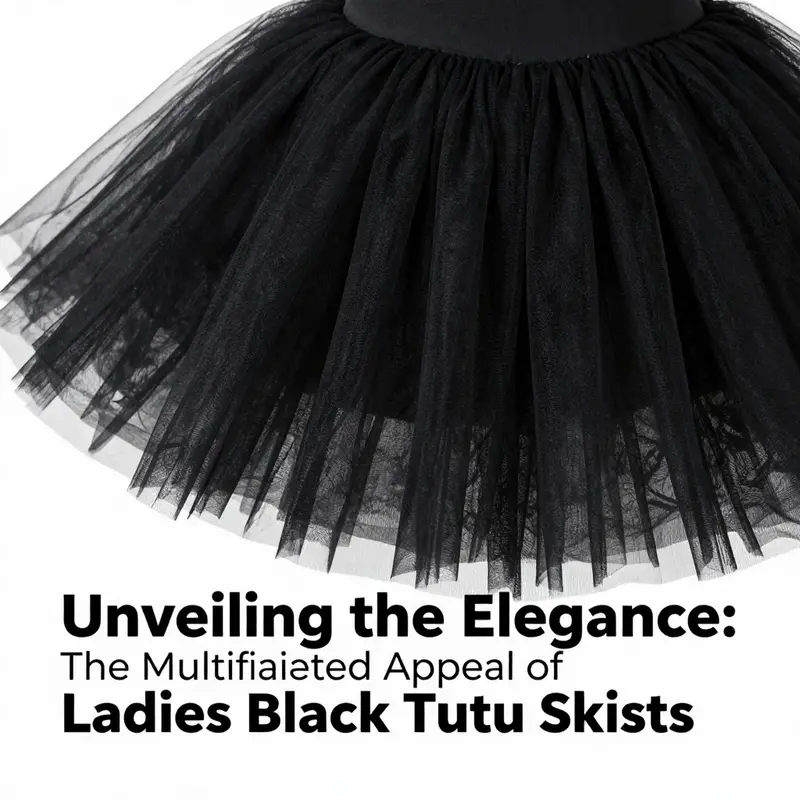
The black tutu skirt is more than a decorative layer of fabric; it is a compact testament to how imagination meets engineering on the body. When the lights rise, a performer’s silhouette is read not just as movement but as a carefully choreographed dialogue between fabric, tension, and space. In this sense, the black tutu becomes a controlled halo of volume. Its fullness is achieved not by a single piece of fabric but by a layering discipline that blends art with physics. A typical design relies on multiple layers of stiffened fabric, often tulle or a polyurethane-coated mesh, arranged in either a circular, hoop-backed, or tiered configuration to produce that iconic, encircling shape. The layers, number and stiffness, determine how the skirt behaves as the dancer moves, leaps, or pivots. Some designs whisper with as few as eight layers, while others rise to more than fifty, delivering a density and resilience that can withstand the most demanding choreography. This vertical stack does more than catch the stage lights; it provides the structural memory that keeps the shape intact even when air and motion threaten to smear it out of place. Heat-setting and internal supports, such as a light hoop or a discreet wire, are common allies. They act as invisible frame guards, ensuring the skirt returns to its intended form after every extension and every landing. In practice, this means a tutu designed for a high-velocity routine will carry a stiffer core than one intended purely for a photographic moment, where a softer, more fluid line might read more gracefully under a different angle of light. The artistry of construction, then, lies in calibrating stiffness, weight, and flexibility to support the choreography rather than fight it. The outermost layers often do most of the visual lifting; their stiffness translates movement into arching lines and a lush silhouette that the audience reads as confidence and control. The inner layers contribute substance and substance, in turn, shapes the skirt’s feel against the body. The result is a garment that can be as commanding as a set piece and as forgiving as daily practice, depending on how it is cut, finished, and worn. In the realm of black, color heightens both drama and legibility. The deep shade creates a theatrical counterpoint to skin tone, lighting, and costume detail, turning every flick of the wrist or tilt of the head into a defined, almost sculptural gesture. The color becomes less about concealment and more about framing the body’s movements with a shadowy, elegant backdrop. The black tutu thereby functions as a stage of its own, a portable architecture that holds, frames, and amplifies what the dancer is about to express. The waistband, often a keystone in the garment’s comfort and range of motion, is crafted from materials chosen for stretch and grip. Spandex blends or satin-backed bands offer snug support while remaining flexible enough to accommodate a full range of motion. Hidden elastic, adjustable ties, or even discreet velcro add customization, ensuring the skirt sits at just the right height and remains stable through spins and extensions. The choice of waistband is not merely about fit; it governs the ease with which a dancer can transition between different poses and steps without having to adjust the garment mid-performance. This is especially critical in long rehearsals or gala showcases, where tiny shifts in fit can disrupt balance and line. Designers also pay attention to the seams where layers meet. Reinforced stitching at these stress points helps prevent fabric fatigue from repeated bending, sudden stops, or the tension of leaps. Moisture-wicking linings can be added to the inner layers to improve comfort during extended sessions, reducing friction and heat buildup. While performance-oriented features emphasize endurance, fashion-forward interpretations of the tutu explore subtler refinements. Subtle lace trims, embroidery along the waist, or metallic accents at the hem can add visual texture without compromising the silhouette’s clean geometry. In this sense, a black tutu is not a monolith but a canvas. It can be pared back for a stark, almost sculptural effect or embellished for stage richness, depending on the choreographer’s intent and the designer’s touch. Some contemporary interpretations experiment with asymmetrical layering or varying the lengths of the tulle, creating a sense of movement that reads differently from every angle. It is not unusual to see a black tutu paired with fabrics such as velvet or chiffon to create tactile contrasts—softness against rigidity—while preserving the skirt’s iconic volume. The result is a garment that can cross boundaries, working equally well in a formal recital and a fashion-forward event. The versatility that makes the black tutu a staple also hinges on its care and maintenance. Fit, size range, and comfort remain central concerns for buyers and performers alike. A well-cut tutu with inclusive sizing accommodates different body types and movement patterns, from the elongated lines of classical ballet to the more playful, contemporary interpretations. Comfort is not an afterthought. The layering must not irritate the skin, nor should the stiffness impede breath or flexibility. Many designers choose fabrics with a degree of elasticity and a smooth interior finish to minimize abrasive contact against the dancer’s skin. Easy-care considerations, such as machine-safe faux-tulle variants or straightforward hand-washing guidelines, broaden the tutu’s practical appeal for rehearsal schedules and event planners, who juggle multiple costumes and changing timelines. The balance between elegance and practicality is itself a design statement. The modern black tutu’s mass appeal comes from a careful compromise: enough structure to command presence, enough lightness to feel effortless, and enough adaptability to suit the wearer’s distinct voice. This is where a performer’s individuality begins to emerge through the garment. A dancer’s posture, line, and phrasing partner with the skirt to make the full picture—one that audiences perceive as a living sculpture rather than a static piece of fabric. To illustrate the spectrum of interpretation without breaking the narrative thread, consider the historical lineage of the tutu as a performance object. The silhouette has evolved from rigid, cage-like forms to lighter, more flexible constructions that still deliver dramatic volume. Today’s black tutus can echo classical disciplines while enabling bold, contemporary movements, a dual capacity that keeps the garment relevant across generations of performers. For readers who want a tangible touchstone, a classic reference to the broader ballet tutu tradition can provide orientation. One example of a classical design is represented in the dedicated repertory pieces that feature a traditional tutu with its iconic layering and disciplined silhouette. You can explore a relatable instance of this lineage through a well-known classroom or stage example such as the classical ballet tutu Little Red Riding Hood, described in product contexts that emphasize the balance of form and function. classical ballet tutu: Little Red Riding Hood. This anchor serves as a reminder that even within the realm of performance costumes, the practical concerns of fit, durability, and movement remain at the core of design decisions. The reference also underscores how designers translate centuries of technique into contemporary garments that still honor tradition while inviting new interpretations. As with any iconic garment, the black tutu’s appeal also lies in its capacity to adapt to different event contexts. In formal settings, it can pair with sleek bodices, satin or velvet, and understated jewelry, giving the wearer a poised, almost ceremonial presence. In casual or social environments, a black tutu can be dialed down with a softer top and simpler accessories, turning an onstage staple into a daytime fashion statement. The transition from stage to street, or from rehearsal room to red carpet, depends on a few decisive moves: the cut of the waistband, the weight of the inner layers, and the degree of stiffness that the designer opts to embed into the fabric. Each choice alters the dancer’s sense of anchor and the garment’s behavior under lighting and movement. The modern tutu thus embodies a dialogue between restraint and flourish, where the fabric’s geometry translates a body’s intention into visible form. It is a reminder that the beauty of this garment rests not only in its looks but in its carefully engineered capacity to support, frame, and elevate the human form in motion. For anyone involved in costume planning, whether for a studio rehearsal or a formal production, the black tutu offers a reliable baseline with room for personalization. Its sturdiness, combined with the freedom to adjust fit and ornamentation, makes it adaptable across genres and scales. The story of its construction—layered stiffness, inner frames, and thoughtful waistband design—reads as a blueprint for how clothing can be both art and tool. Finally, the broader conversation around this garment invites reflection on craftsmanship as a daily discipline: the choices in fabric, the decisions about how many layers to add, where to put the seams, and how to finish the edges—all of these details accumulate into a single, compelling silhouette. The result is not merely a piece of clothing but a platform for expression, a black canvas upon which movement becomes the focal point, and a reminder that great design often looks effortless because it wears the weight of careful calculation. External resource for further reading: https://www.balletbarn.com/learn/tutu-skirts
Elegance as Resistance: The Cultural Language of the Ladies’ Black Tutu Skirt
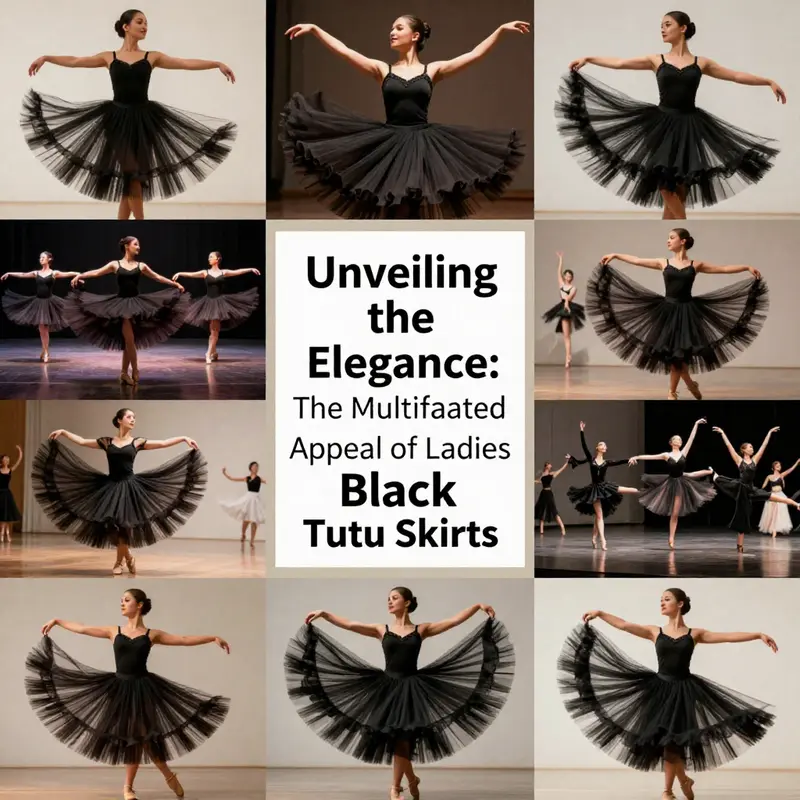
Across stages and studio floors, the ladies’ black tutu skirt has moved beyond its functional origins. It has become a kind of cultural compass, signaling both heritage and possibility. In the shadow of classical ballet, where the tradition often reads as Eurocentric, the black tutu emerges as a counter-narrative. It carries the memory of many Black women who trained, performed, and created spaces within and sometimes outside conventional ballet. The garment is not merely a garment; it’s a statement about visibility, about belonging, about choosing a sartorial language that can speak when words falter. Its fullness—created by layered tulle—reads as both celebration and defiance, an outward sign of inner resolve that can bend the gaze of an audience without compromising personal dignity. This is not a costume confined to a recital hall; it travels with the wearer into classrooms, galleries, streets, and living rooms where dance becomes a language of everyday resilience and imagined futures.
Historically, ballet costumes have framed identity in rigid terms. Dancers of African descent were often directed toward roles that did not require technical depth or artistry, or they faced exclusion altogether. In this context, wearing a black tutu becomes an act of reclamation. It translates the language of the stage into a personal manifesto: a Black woman entering a space that once tried to erase her presence now declares her artistry with the same stroke of fabric used by generations of dancers who came before. The color black, in this setting, is not merely a palette choice. It signals resilience, sophistication, and an assertion of self that challenges the assumption that beauty in ballet must always be pale or pale-pastel. The silhouette—soft at the edges yet strong in its presence—allows the wearer to command attention without shouting, to reveal technique through the hush of movement rather than loudness of expression. In this sense, the tutu becomes a bridge between inherited discipline and personal invention, a move from inherited constraint to earned agency.
Color, as a medium of meaning, plays a crucial role here. Black is at once practical and symbolic: practical in its ability to hide minor wear during long rehearsals; symbolic in its capacity to absorb light, turning a dancer into a moving silhouette and then into a point of focus. In performance, the black tutu becomes a canvas for light design, for shadows that sculpt the body into form. It can embody elegance—the quiet luxury of a single, perfectly placed leg line; it can evoke strength—the endurance of a dancer who refuses to yield to fatigue; it can carry mourning or memory, acknowledging losses that shape a community’s shared history. The garment thus operates like a language, where every flutter of tulle, every fold, every hinge of the knee is a syllable that splices together ancestry and possibility. In contemporary fashion circles, these letters are read not as nostalgia but as active, ongoing dialogue between tradition and invention. As audiences witness new choreographies that interrogate power, the black tutu becomes a flexible instrument for negotiating identity, space, and time on stage and off.
Outside the studio, the black tutu travels into classrooms, galleries, and stage performances that do not pretend to be the old ballet alone. It becomes part of a broader lexicon of performance art, used in music videos, live shows, and experimental works where movement meets social critique. Its versatility—owing to its neutral hue and the pliant memory of tulle layers—lets wearers reimagine a formal piece for streetwear-inflected events or transform a casual blouse into a poised costume moment. In this sense, the black tutu is not simply a costume but a vehicle for motion through identity. It carries associations with discipline and rigor while inviting playful gender expression, a friction that can kindle new audiences and widen the circle of participation in dance and art. The garment’s dual capacity to comfort the wearer and to command a room helps literature and choreography converge into a shared cultural statement about visibility and value. The design invites a conversation about how form and feeling circulate through time, offering a persistent form that is adaptable to whatever story a wearer wishes to tell.
Construction details reveal why this piece holds such cross-cultural appeal. A five-layer or similarly tiered tulle composition creates the necessary volume without clumping, offering a buoyant swing that responds to the smallest shifts in weight. The choice of a soft waistband or an elastic cut expands inclusivity across sizes and shapes, a practical feature echoed in consumer feedback across platforms. The black fabric’s ease of care matters to busy performers and casual aesthetes alike, preserving color integrity through frequent wear and washing. What looks like a simple skirt on a hanger becomes a curated instrument on the body, poised to catch a dancer’s line or the candor of a city street. Its ability to pair with a range of tops—bare shoulders for a performance-lean silhouette or a knit for everyday elegance—speaks to a philosophy of dressing that privileges adaptability without demanding sacrifice of personal taste. The result is a garment that negotiates form and function with an almost conversational ease, inviting the wearer to choreograph style the way a dancer choreographs movement. And yet the story is not only about the garment’s physics; it is about how a basic silhouette becomes a forum for voice, where a person can present both artistry and affiliation in equal measure.
Within communities, the black tutu often carries educational and communal meaning. Dance instructors and mentors frequently use it as a symbol of aspirational access—an affordable, multipurpose garment that can be borrowed, shared, or repurposed for different contexts. Its presence in after-school programs and community performances helps demystify the discipline of ballet, presenting an art form as accessible as a weekend project rather than a distant ritual. For families, the tutu becomes a memory-maker: the photo on a first recital, the memory of a friend or mentor guiding a young dancer through a difficult pirouette. In this way, the garment becomes a thread that knits generations together, a wearable artifact that records effort, collaboration, and celebration. The black tutu, in these spaces, thus transcends fashion and enters the realm of cultural pedagogy, where form becomes pedagogy and pedagogy becomes identity work. It is a practical tool for social learning, a garment that invites questions about taste, discipline, and community that extend beyond the mirror and into daily life.
Yet this minor, everyday garment sits at a crossroads of gender, class, and age. Its form can be adopted in a formal gala setting or scaled down for a spontaneous street performance, reflecting the pliability that makes fashion relevant across ages and contexts. In many communities, the tutu’s open-ended interpretation invites young people to experiment with identity without the weight of convention. The potential risk—of mere trendiness or of reducing a potent symbol to a prop—does not erase the deeper resonance for those who see in the black tutu a living archive. What matters is the intentional use of the garment: pairing it with pieces that honor craft, history, and personal story, and resisting the impulse to reduce it to a single meaning. In the end, the skirt becomes less about rules and more about relationships—between dancer and space, between tradition and transformation, between speech and stillness in performance. The fabric holds memory and possibility in equal measure, allowing the wearer to shape both private experience and public presence through movement and mood.
Any discussion of such a garment must acknowledge its role within a broader media ecology. Hyphenated identities, diasporic narratives, and evolving aesthetics meet in the shared space of the black tutu, where a simple skirt becomes a site of cultural language. The garment invites dialogue about who gets to perform, who is seen, and how beauty is defined in public. It is not merely a decorative item; it is a political tool, a way to insist on presence, to translate personal history into a living, wearable practice. As fashion and dance continue to cross-pollinate, the black tutu maintains its status as a flexible emblem—serene and bold, delicate and determined—able to articulate a story that lace and satin alone could never tell. In this sense, the chapter advances a wider understanding of fashion as a living archive, where a well-loved piece can carry the weight of years and still move with the lightness of possibility. For readers who wish to glimpse the practical breadth of styling possibilities, a ballet tutu catalog can offer a starting point for exploring how this garment translates across contexts and acts as a canvas for personal narrative. ballet tutu catalog.
For further reading on cultural symbolism connected to appearance and self-determination, see the Guardian essay on why Black women wear wigs as a form of political and cultural expression. The themes resonate with the ways clothing, including the black tutu, can function as a deliberate, public voice for identity and pride: External resource.
null
null
Final thoughts
Ladies black tutu skirts occupy a distinctive place in the fashion landscape, prized for their versatility, aesthetic appeal, and rich cultural significance. Understanding the nuances of their construction helps businesses cater to the needs of today’s consumers. As market trends indicate, these skirts remain a favorite across all demographics, underscoring their importance as a wardrobe staple. The adaptability of the black tutu skirt allows it to fit seamlessly into various contexts, from casual outings to formal events, encouraging businesses to embrace this enduring fashion trend.