
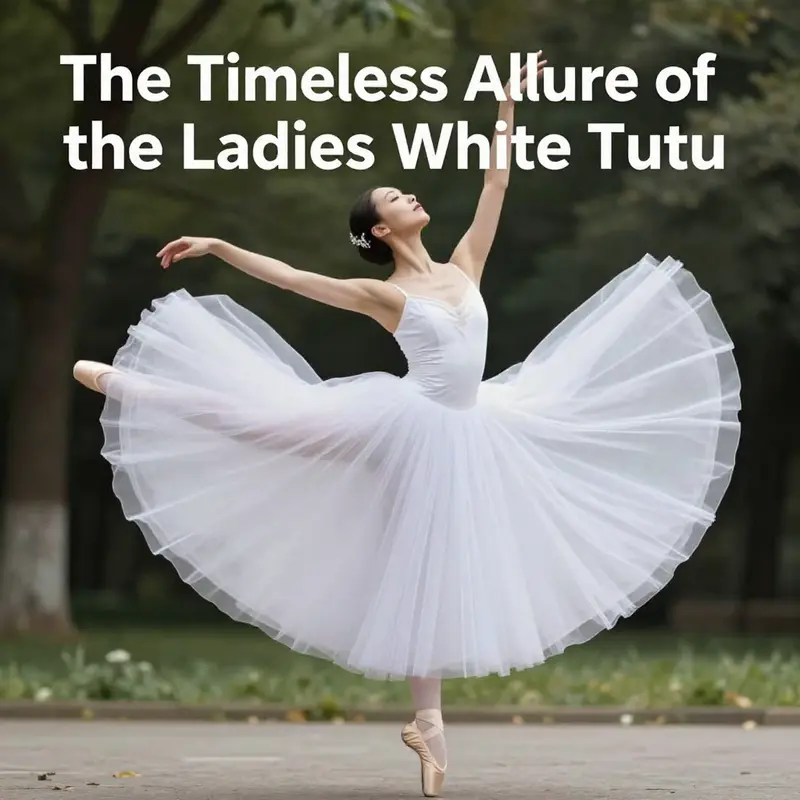
The ladies’ white tutu is more than just a piece of dancewear; it is a cultural icon that has transcended generations. Initially designed as a practical garment for ballet dancers, the tutu has evolved into a symbol of elegance and femininity, influencing both high fashion and mainstream streetwear. This article delves into its rich history, current trends, styling tips, and cultural significance, offering valuable insights for business owners looking to tap into this enduring fashion statement. By understanding the tutu’s journey from the ballet stage to contemporary wardrobes, entrepreneurs can better appreciate its market potential.
A Silken Arc: The White Tutu’s Century-Spanning Journey Through Ballet, Fashion, and Cultural Imagery
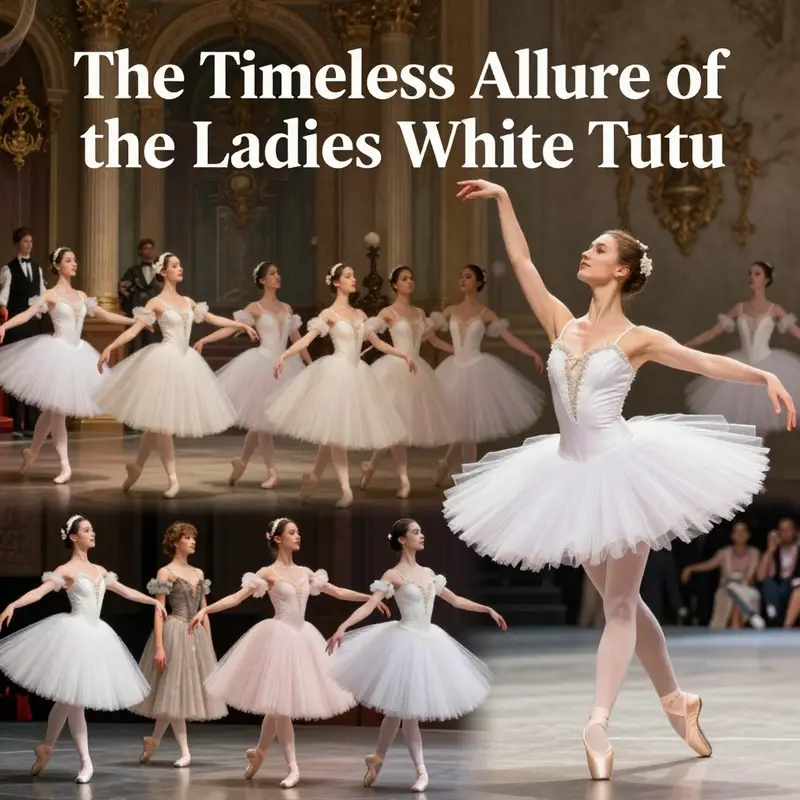
The white tutu begins as a practical instrument of movement and becomes emblem of refined grace, technical prowess, and cultural imagination. It is a garment that survives through shifting tastes and evolving technologies because it is more than fabric gathered into a shape; it is a storytelling device. As ballet’s progressions unfold, the white tutu travels from courtly silhouettes of the 17th century to the airy, almost supernatural, ephemerality of Romantic choreography, and then to the disciplined clarity of classical technique. In each phase, the tutu reflects a moment when dancers and designers experimented with how best to reveal motion, legwork, and line, while guiding audiences who yearned for beauty, transcendence, and technical marvel. The trajectory is not merely about a dress; it is about how a single silhouette becomes the visual shorthand for a discipline’s evolution, a symbol of purity and poetic aspiration, and a flexible fashion object that can slip into weddings, gala nights, Halloween revelry, or streetwear bravura.\n\nThe earliest seeds of the tutu lie in a world still shaping its formal language, where costumes served to dramatize status as much as to facilitate range. In the 17th-century courts of France under Louis XIV, ballet was a social ritual as much as art. Costumes were luxurious, layered, and often restrictive, signaling rank while constraining legwork that would later become ballet’s technical engine. The transition from long gowns to more compact attire did not happen overnight, but an impulse toward lighter, more angular line gradually coalesced. The nascent tutu emerged as a practical evolution—an answer to preserving the dancer’s silhouette while allowing feet and ankles to articulate clearly under the gaze of masters who demanded precision.\n\nBy the 1830s, European dance theater favored the ethereal—the airiness of spirits and sylphs. Marie Taglioni, in La Sylphide (1832), popularized a Romantic silhouette with a long, flowing ankle-length dress that fluttered on pointe, emphasizing airy line and delicate movement over athletic display. The Romantic tutu, longer and softer, invited audiences to glimpse vulnerability and otherworldly beauty, celebrating elevation, the sense of being airborne, and the subtle fidelity of a foot pressed into the air.\n\nThe shift to Classical precision arrived as ballet demanded speed, control, and legibility. In the late 19th century, choreographers such as Marius Petipa reshaped the stage with a new emphasis on clarity of line and technique. The classical or pancake tutu sat high on the hips, its stiffened layers fanning into a disk-like silhouette to keep the legs readable during leaps and turns. The disk, bell, or puff tutu framed the legwork, ensuring precise movement remained legible to audiences and judges alike.\n\nIf Romanticism offered a fairy-tale lens, the Classical tutu aligned with an era’s appetite for disciplined craft. Swan Lake crystallized the white tutu as the emblem of Odette’s purity, vulnerability, and quiet strength. While early productions did not always present today’s exact modern tutu, revivals solidified the association, imprinting an image of the pristine dancer as both graceful and technically exact. The tutu’s visual identity became a living score that guided gaze, movement, and storytelling.\n\nThis iconic association extended beyond the stage: the early 20th century saw fashion borrowing stage aesthetics, with white tutus inspiring bridal looks and ethereal evening wear. Hollywood further amplified the metaphor, translating the tutu’s lightness into mass culture through stars who embodied youthful vitality and refined glamour. Today the white tutu remains a dual symbol: a staple of classical training and a flexible fashion or performance device that designers reimagine with textiles while preserving legibility of the dancer’s line.\n\nAs Swan Lake continues to ripple through stages and screens, the white tutu remains a reminder of a lineage in which artistry, technique, and myth converge. Its history invites reflection on how performance shapes public perception, how fashion translates ritual into everyday life, and how a single silhouette can travel across centuries and contexts without losing its core identity. The modern tutu endures because it translates the discipline’s memory into new forms of display and choreography, inviting surprises from a dancer’s foot, a gaze, or a couture sleeve.\n\nFor readers curious about tangible embodiments of this legacy, contemporary designers and performers continue to adapt the tutu’s pale, reflective surface into new spectacles of motion and meaning. The tutu’s staying power is not relic worship but a living dialog between tradition and experimentation, a testament to how a simple silhouette can illuminate both the body in motion and the culture that watches it.\n\nThe sources anchor this history in dialogue with scholarship and practice, reminding us that the tutu’s story is not only about construction but translation—how a classical image speaks across centuries, between stage and street, and beyond the theater to everyday life.
Timeless Tulle, Timely Trends: Navigating the 2026 Wave of Ladies’ White Tutu Fashion
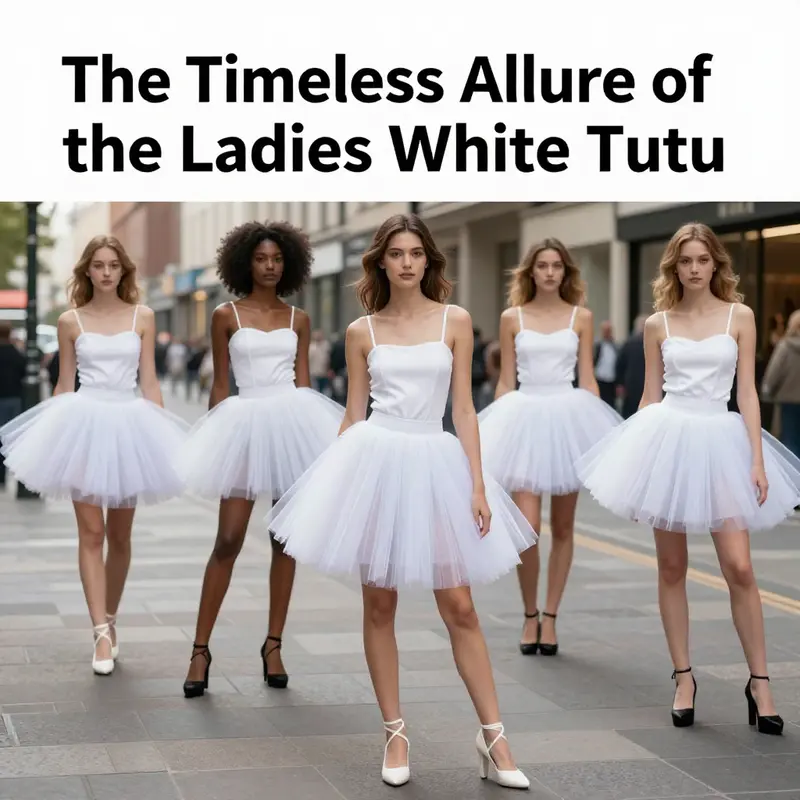
The white tutu has always carried a quiet eloquence, a circa-century-old balance between ballet’s discipline and fashion’s spontaneity. In the choreographic halls of classical repertoires, the tutu began life as a practical response to movement, a way to keep fabric from snagging the dancer’s steps while still signaling purity, lightness, and grace. By the early stages of the modern era, its intensity shifted from purely functional dress to an emblematic silhouette that could bridge stagecraft and streetwear. As we arrive in 2026, that bridge feels more like a continuum than a confrontation. The contemporary ladies’ white tutu has shed any lingering sense of rigidity while preserving the soul of the form: that crisp, sculpted line of tulle over the leg, the shimmer of white as a canvas, and a silhouette that can stretch from ceremonial elegance to festival edge without losing its intrinsic poetry. The evolution is not a disappearance of tradition but a reimagining of it, an invitation to move with intention through a wardrobe that blends memory and possibility in a single, luminous thread.
What stands out in the current moment is less a dramatic departure than a refined synthesis. The 2026 Summer White Irregular Sleeveless Cake Dress Princess style embodies this synthesis with a sly wink to Y2K aesthetics. The design takes the tutu’s hourglass, layered texture and translates it into a modern dress form, replacing the classic stiff, short skirt with asymmetrical cuts and a drift of chiffon that nudges the edge of whimsy while keeping the silhouette unmistakably tutu-inspired. The effect is not theatrical so much as cinematic: a look that reads equally well under the sun at a summer garden party and under staged lighting at a midnight soirée. It’s the epitome of what many fashion observers call effortless sophistication, a quality that makes the white tutu feel newly relevant without demanding a surrender of its heritage. In practical terms, this means a garment that wears with a calm confidence, one that suggests a poised center of gravity even when the wearer moves with unstudied spontaneity.
To understand why the white tutu remains so compelling, one must trace the way its language travels. It began with a public spark—dancers on stage crystallizing a moral and ethereal ideal through fabric manipulated to reveal or conceal motion. Later, it traveled through cinema and high society, becoming a symbol of grace that could translate across social strata. In contemporary times, the same symbol is repurposed for an era that prizes individuality alongside accessibility. The white tutu is no longer simply a costume; it is a versatile tool for personal storytelling. Designers reframe the piece with clean lines, soft whites, and a structure that allows the wearer to feel both anchored and buoyant. The aesthetic now embraces a minimalist elegance that is at once soothing and striking, a paradox that seems perfectly aligned with the pace of modern life where every moment asks for clarity and poise.
This balance between tradition and modernity is reinforced by the broader cultural environment that surrounds fashion in 2026. Influencer culture and social platforms have intensified the appetite for ready-to-wear that can perform across multiple settings. The idea of a single, dedicated wardrobe piece has given way to a spectrum of possibilities, where a white tutu-inspired silhouette can thread through a wedding, a garden party, an artsy gala, or even a relaxed corporate event with a creative twist. It’s no longer about a defined costume; it’s about a mood that can be dialed up or down with accessories, fabric choices, and the cadence of the wearer’s movement. The result is a democratic couture, where the value lies less in an extreme level of ornamentation than in intelligent tailoring, breathable fabrics, and careful draping that keeps the garment light on the body while making a statement that feels timeless rather than time-bound.
In that context, the materials and construction are the quiet engines of the trend. Breathable chiffons and layered tulle provide the essential airiness that defines a tutu’s legibility, even when the layers are arranged in a minimalist, almost architectural way. The modern white tutu often features adjustable waists and wider size ranges, a nod to inclusive design that acknowledges the diverse shapes and proportions of today’s wearers. The emphasis is not on excess but on proportion, texture, and the way light plays across the surface. When you combine this with the minimalist principle—clean lines, subtle volume, and restrained embellishment—the effect is sophisticated enough to anchor a formal look while flexible enough to be styled for a casual, city-chic moment. The garment communicates almost a sculptor’s sensibility: the body becomes the mold, the fabric the material, and the space around it the stage where personality is allowed to flourish.
One signature feature of the current wave is adaptability. A white tutu-inspired silhouette now appears in a spectrum of forms, from the streamlined mini dresses to tunic-length silhouettes that function as statements of elegance in everyday life. This adaptability aligns with broader fashion rituals that prize multi-functionality and longevity. Rather than chasing a single moment of trend, the white tutu today seeks resonance across seasons and occasions. It reads well in daylight as a street-style focal point and shines under evening lighting as a high-gloss accent in a formal setting. The appeal lies in the confidence it affords the wearer: a sense that one can transform a single garment into multiple narratives, moving seamlessly between roles with a few well-chosen accessories and a deliberate posture.
The social media ecosystem has a particular influence here. Instagrammable moments—the kind that reward a crisp pose and a well-lit backdrop—have helped propel the white tutu from a specialized costume into a broadly accessible fashion statement. Pinterest, too, has tracked a steady rise in searches for white tutu outfits for women, a trend that reflects a sustained curiosity about juxtaposing purity with edge. The data suggest that people are drawn to the purity of white as a canvas and to the rhythmic, almost musical, cadence of the tutu’s silhouette. In practical terms, that means more people seeking options that can be worn multiple times, with different shoes, accessories, and outer layers to reframe the same core shape. It’s not about a single event garment; it’s about a wardrobe that can grow with its wearer and respond to changing moods without becoming loud or fussy.
From a retail perspective, the democratization of the white tutu has accelerated. Platforms that connect buyers with manufacturers have expanded access to fashion-forward silhouettes that honor both design integrity and affordability. The rise in inclusive sizing and sustainable fabric choices signals a broader commitment to responsible consumption, a response to growing consumer awareness about ecology, waste, and the ethics of production. In this climate, the white tutu is not a relic but a canvas for experimentation. It invites designers to test new cuts, new fabrics, and new ways of wearing that still honor the garment’s iconic proportions. The result is a lively marketplace where creative interpretation is the norm rather than the exception, and the wearer’s personal story becomes the most important accessory.
A striking example of contemporary reinterpretation is the way designers fuse volume with restraint. The tutu’s signature fullness is often tempered with precise tailoring at the waist and a controlled hemline. The interplay between structure and softness creates a dynamic that feels contemporary rather than nostalgic. When the layers of tulle are cut with an angular precision or when a lightweight chiffon layer introduces a gentle asymmetry, the garment keeps its poetic core while appearing freshly engineered for a modern silhouette. This tension between memory and invention is perhaps the most convincing argument for the white tutu’s staying power: it is a fabric that invites us to remember and to re-author our memory at the same time.
The dialogue between the old and the new also surfaces in how accessories and footwear are paired with white tutu-inspired outfits. A clean, minimalist shoe—whether a sandal with delicate hardware or a sculptural heel with a soft shine—can amplify the outfit without stealing its central stage. On the other hand, a bold belt, a statement bag, or a contrast cap can introduce a playful register that makes the look memorable in a social setting or on a city street. The key is balance: any additional flourish should not overwhelm the purity of the silhouette but rather elevate it by giving the wearer room to express personality through the total ensemble. When done thoughtfully, the effect is a modern classic that can carry its wearer from a daytime stroll through a gallery opening to a twilight celebration with equal poise.
Within this evolving landscape, the practicalities of shopping and selection matter as much as the aesthetics. The accessibility of a white tutu-inspired style hinges on sizing, fabric choices, and the ease of alteration. Shoppers increasingly expect options like adjustable waists, breathable fabrics, and sustainable materials that align with contemporary values without compromising the garment’s essential elegance. The democratized supply chain means more opportunities for customizability, allowing individuals to tailor the proportion of fullness, length, and texture to their own proportions and preferences. It’s this level of personalization that makes the 2026 version of the white tutu feel less like a fixed, borrowed costume and more like a flexible form of self-expression. In short, it is a garment designed to be worn by many, in many places, for many moments—and to travel with the wearer as her life unfolds.
For those seeking direct inspiration online, the current ecosystem provides vivid exemplars of how the silhouette translates across contexts. One such example features a sophisticated take on the classic tutu in a way that preserves the garment’s integrity while allowing for a broader range of styling. A curated piece that embodies this philosophy can be explored here: High-Quality White Ballet Costume Tutu – Swan Lake. This reference underscores how archival elegance and contemporary tailoring can coexist in a single garment, offering a template for readers who wish to imagine the white tutu as a daily-wear option rather than a mere performance prop. Yet the chapter remains grounded in the larger narrative of accessibility and adaptability that characterizes 2026 fashion. The tutu then becomes a form of everyday theatre—not loud, not ostentatious, but quietly capable of transforming a mood and signaling a refined sense of self.
The broader cultural implication of this trend is less about a single look and more about a shift in how people relate to clothing as a language they speak daily. The white tutu, once confined to staged narratives and formal occasions, is blooming into a language of personal interpretation. It speaks of clarity and lightness, of movement that is at once deliberate and effortless. It invites wearers to curate their own stories with fabrics that breathe, and with silhouettes that lean into the wearer’s height, gait, and energy. The result is a wardrobe that feels deliberate but never overworked, a synthesis of the dancer’s economy of motion and the street’s casual confidence. And because the look travels so readily—from a sunlit terrace to a neon-lit club, from a formal ceremony to a casual brunch—it also carries with it a sense of continuity. The white tutu becomes not a costume of a past stage but a living piece of fashion history, continually re-authored by those who wear it.
The journey ahead for this silhouette in the next seasons will still revolve around the same core tensions: formality versus freedom, purity versus edge, tradition versus innovation. What the current moment has done is to show that those tensions can coexist in a single, versatile garment. The 2026 iterations encourage experimentation—an invitation to mix and match textures, to play with layers, to explore how a white tutu-inspired cut can be integrated into different cultural and social settings without surrendering its essential character. The result is a fashion story that feels both intimate and expansive, a narrative that can adapt to the wearer’s life as it unfolds. In that sense, the white tutu is less a static trend and more a living idea—one that continues to resonate because it asks only for poise, not perfection, and for lightness, not rigidity.
External resource: https://www.alibaba.com
A Ballet-Inspired Wardrobe: Styling and Accessorizing the Ladies’ White Tutu for Modern Life
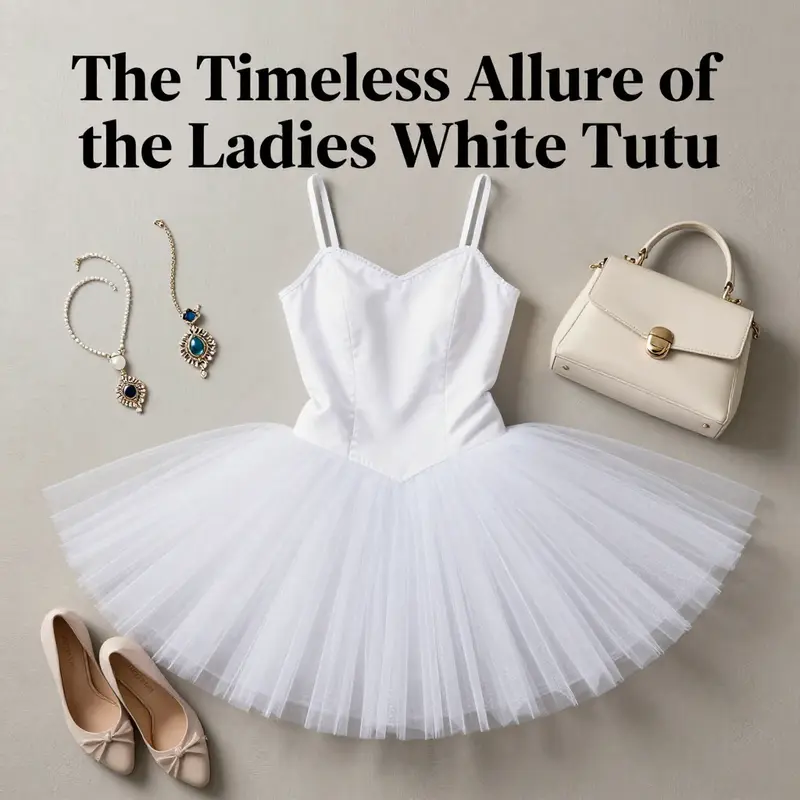
The white tutu has long been more than a costume piece on a stage; it is a study in balance, poise, and quiet drama. When styled with intention, this timeless silhouette can drift between whimsy and elegance, between street-ready ease and formal polish, without losing the dignity that comes from the careful construction of its lace-edged bloom and its delicate layers of tulle. The chapter that follows explores how to read the white tutu not as a single item but as a versatile fabric of possibility—a garment that invites a conversation between history and today, between the discipline of classical movement and the freedom of personal expression. In this light, styling becomes a form of choreography: a sequence of choices that reveals character as surely as footwork reveals technique. The tutu’s lineage, born out of the need for mobility and visibility of legwork in the 19th century, lends itself to contemporary interpretation precisely because its silhouette is both iconic and adaptable. Its fullness can swallow a moment in a photo, yet it can be tamed into a silhouette that travels from day to night with ease. The modern wearer, while honoring the tutu’s origins, can experiment with textures, tones, and silhouettes that read as contemporary rather than nostalgic, ensuring the garment remains a living piece of fashion rather than a museum relic. The core challenge—and the reward—lies in achieving harmony between volume and balance, between the tutu’s springy drama and the restraint required by the setting in which it appears. It is not simply about putting on a white skirt; it is about crafting an attitude, a mood, and a moodboard that speaks with the language of today’s wardrobe while nodding to the discipline and artistry of the dance world that first gave the tutu its signature lift. To begin, imagine the tutu as a canvas. Its base is often a supportive understructure, a conditioning layer, and a waist that holds firm through movement. The next layer is the sheer, shimmering fabrication—the tulle—whose multiple tiers catch light and sway with a dancer’s breath. The final note is the silhouette, which can range from the blunted, almost sculptural line of a classical tutu to a softer, more romantic halo around the legs. This is where styling steps in as a design language, translating centuries of ballet into a modern, lived-in look. When you approach the white tutu with this mindset, the act of dressing becomes a dialogue between the garment and the wearer’s identity. The same piece that once framed a dancer’s leaps can frame a late afternoon stroll or a gallery opening, provided the pairing is thoughtful. For a refined reference to a white tutu that signals both quality and care, see this resource: white tutu reference. The recommendation is not to imitate a performance, but to borrow the tutu’s essential virtues—its ethereal lightness, its sculpted shape, its radiant whiteness—and translate them into modern styling choices that honor comfort, movement, and context. The result is a wardrobe that feels cohesive, rather than costume-like, and that can carry a wearer through an array of life’s stages with grace. The history of the tutu also teaches us to respect proportion. In practice, that often means balancing volume with a fitted top, especially when the occasion calls for a more streamlined silhouette. A fitted top acts as a counterweight to the tutu’s buoyant volume, allowing the eye to travel smoothly from the line of the spine to the tips of the toes. This principle becomes a guiding thread through different looks, from casual to formal to event-specific, and it helps maintain a sense of polish without sacrificing playfulness. The casual daytime look, for instance, embraces the tutu as a statement piece rather than a costume. A simple, fitted graphic tee tucked into the waistband or an oversized denim shirt tied at the waist can transform the tutu into a playful, approachable ensemble. The aim is to preserve the skirt’s volume while grounding the rest of the outfit in everyday wearability. White sneakers or flat ankle boots keep the look accessible, while a crossbody bag and minimal jewelry—the kind of understated pieces that do not compete with the tutu’s drama—offer practical elegance. The combination is not about concealing the garment’s essence but about presenting it in a form that belongs in a real day’s rhythm. For those who want to push toward a more refined daytime aesthetic, a slim-fitting top in neutral tones can be paired with a tailored layer such as a leather or suede jacket. The juxtaposition of a sharp, structured outer layer with the tutu’s softness creates a tension that is modern and chic, a balance that mirrors the tension in classical ballet between restraint and expressivity. In this light, the white tutu becomes less about adherence to a single historical moment and more about the interpretation of movement, texture, and edge. The formality of an event invites another layer of consideration. An elegant or formal appearance calls for a quieter, more deliberate approach to color, finish, and adornment. A sleek, fitted top in black, ivory, or blush can anchor the tutu, while a refined outer piece—a tailored jacket or a velvet cape—can add architectural interest without competing with the skirt’s virtue. Footwear here moves toward the timeless: classic pumps or ankle boots that elongate the leg line and maintain a poised, upright posture. Accessories, when chosen with restraint, can become quiet enhancements rather than competing focal points. A single statement earring or a slim watch can pull the look together without overwhelming the tutu’s presence. The emphasis in formal styling should be on clarity of line and a sense of occasion rather than on ornament. The tutu, in its white transparency and multi-layered depth, can carry color with restraint. A top in a neutral tone can reflect light back onto the fabric, highlighting its luminosity; a blush tone can warm the overall mood, while black can provide dramatic contrast that heightens the tutu’s otherworldly feel. For special events such as weddings, baby showers, or holiday gatherings, the tutu can be dressed with subtle embellishments that preserve its dressy charm. Lace trims, satin ribbons, or delicate floral appliqués can be added to the tutu with care to maintain balance. A sheer overlay or a structured underskirt can shape the silhouette, improving durability for events that demand sustained motion or long periods of standing. The goal remains to preserve the tutu’s intrinsic delicacy while elevating its presence so that it reads as intentional, not decorative. The path to this outcome often runs through a careful layout of texture and surface. A leather jacket, for example, introduces an edge that sharpens the tutu’s romantic softness, while a tailored blazer can reinforce the sense of sophistication. When combining fabrics, aim for a tactile contrast that does not clash: silk or satin next to tulle offers a gentle gleam; matte wool or denim of a washed variety can ground the ensemble. The way light interacts with the layers matters as well. The tutu’s surface catches shadow and highlight in a way that can be exploited to create depth and movement even in photos or under gallery lighting. A deliberate play of light can transform the tutu from a simple white skirt into a dynamic, living form that speaks to the wearer’s intention. Beyond the dress, the hair and makeup can harmonize with the tutu’s mood. A low chignon or a sleek bun helps keep the line clean and unbroken, letting the skirt’s volume do the talking. Subtle makeup with a touch of luminance ensures the face stays fresh, while a lip color chosen to echo the garment’s tone can tie the look together without overpowering the overall composition. Hair accessories, if used, should be light and refined. A small crystal pin, a delicate floral clip, or a simple satin ribbon can punctuate the look with a whisper rather than a shout. For a more casual, street-ready approach, the tutu can be downplayed through the use of practical accessories and relaxed tailoring, enabling it to function as a contemporary garment rather than a costume. A fitted tee, a denim jacket, and sneakers—accents of white, gray, or pale neutrals—establish a calm, modern mood that remains faithful to the tutu’s essence. The choice of footwear, too, anchors the look. For daytime ensembles, sneakers with clean lines or flat ankle boots create a grounded base that lets the skirt float above it. For evenings or more formal events, a pair of classic pumps can elevate the look without overpowering the skirt’s delicacy. In all its versions, the white tutu rewards restraint and intention. It does not demand attention through loud branding or busy patterns; rather, it asks the wearer to think about balance, texture, and proportion. This is why the tutu returns so convincingly in contemporary fashion. It is a garment that carries a whisper of history, a promise of poise, and a readiness to adapt to whatever life demands. A practical note for those who enjoy a hands-on approach is the possibility of DIY embellishments that personalize the piece while respecting its proportion. For instance, adding a subtle lace trim along the hem or a satin ribbon along the waistband can create a bespoke quality without altering the garment’s fundamental shape. A sheer overlay can soften the lines and add a layer of depth, particularly when worn over a lined underskirt that helps the tutu keep its structure through hours of movement. The DIY path invites creativity but also discipline: measure carefully, test with safe fibers, and respect the tutu’s integrity by avoiding heavy attachments that might distort the silhouette. Those drawn to the craft can find practical guidance in widely available resources, such as step-by-step guides that walk through the process of crafting a stylish tutu skirt at home. The beauty of the white tutu lies in its capacity to be reframed through personal style. It invites experimentation—whether the wearer leans into minimalism, leans toward romantic excess, or explores a hybrid of the two. In all cases, the guiding principle remains consistent: the tutu should enhance, not overwhelm, the wearer’s natural line and movement. It should feel like an extension of the body, a second skin that glides with confidence rather than a fragile artifact that begs to be kept still. The final effect, in any scenario, is a look that communicates a narrative of grace balanced with modern practicality. The wearer is the choreographer of that narrative, choosing the elements that make the tutu speak in the present tense. The white tutu, with its storied past and enduring versatility, offers a language that translates across occasions with grace and clear intent. Its history informs the choices we make—about fit, fabric, and finish—while its present-day applications invite us to explore how far a single silhouette can travel when styled with awareness and imagination. The result is not merely a fashionable outfit but a curated expression of self—poised, luminous, and unapologetically alive. For readers seeking further practical guidance on DIY customization and layering, a detailed, visual guide is available here: https://www.hometalk.com/29751840/step-by-step-guide-to-crafting-a-stylish-tutu-skirt-for-women-at-home.
Ethereal Heritage, Contemporary Dialogue: The White Tutu’s Cultural Journey from Ballet Halls to Global Aesthetics
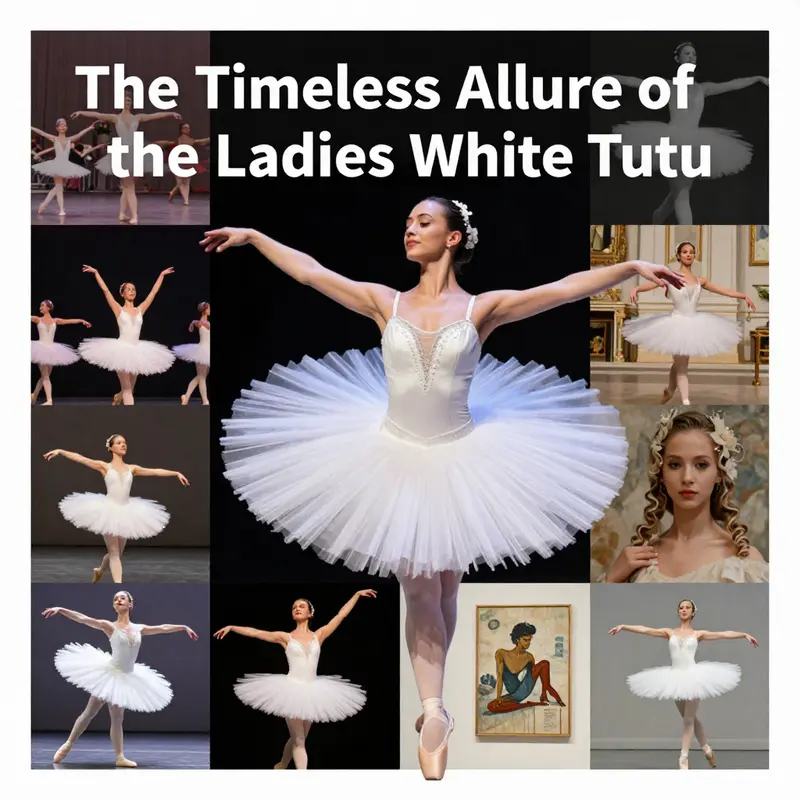
The white tutu has always stood at a crossroads where art, elegance, and social meaning meet. Its ascent from a practical stage garment to a powerful cultural icon reveals how a seemingly simple silhouette can carry layers of history, myth, and modern critique. In the centuries since its emergence during the Romantic era, the tutu has traveled beyond the orchestra pit and into wedding gowns, Hollywood frames, and fashion-forward runways. This chapter traces that journey, not as a catalog of changes, but as a single, flowing narrative about how the white tutu has come to symbolize more than grace or purity. It has become a canvas on which dancers, designers, and audiences negotiate identity, power, and possibility within the living art of movement. The tale begins with the origin story that gave the tutu its spine: its stiff, layered construction and its pristine whiteness, a deliberate counterpoint to the long, heavy skirts that once weighed dancers down and obscured their footwork. In the 19th century, choreographers and costume makers sought to reveal the lines of the legs, the precise articulations of feet, and the elevation of the torso that defined classic technique. The white tutu—thinly veiled, almost transparent in its aspiration—allowed light to play along the calves and knees, celebrated the dancer’s precise control, and, most importantly, showcased the arms and hands that held the emotion or drama of the moment. The effect was not simply beautiful; it was instructive. Viewers could read the dancer’s intention through the weight, angle, and reach of each gesture. In that sense, the tutu became a teacher as well as a garment, a visual language for how motion can carry what words cannot. And yet, even in its supposed clarity of form, the tutu invited ambiguity. Its whiteness, long associated with virtue and fragility, also carried and amplified the gaze of spectators, critics, and cultural authorities who imaged femininity in narrow terms. This is not to say the tutu was only a passive reflection of social norms. On stage, the garment organized the choreography. Its stiffness forced a particular economy of movement, a discipline that rewarded clean, legible lines and precise footwork. The dancer learned to translate breath into shape, to convert inner narrative into outward poise, and to do so in a way that could be read instantly by audiences separated by geography and language. In this way, the white tutu functioned as a universal signifier across cultures, a shared vocabulary in a world increasingly hungry for synchronized beauty and moral storytelling. The symbolism was not merely about innocence. It was also about transformation. The tutu suggested that the body could be almost otherworldly, buoyant, untouchable by gravity and by doubt. It offered a visual metaphor for transcendence—a script in fabric that invited spectators to suspend disbelief and enter a realm where movement becomes a kind of prayer. The imagery of the tutu—the image of a white skirt suspended in air, the dancer suspended in flight—was inseparable from classical myth and fairy tale. It aligned with narratives of sylphs, spirits, and immortal figures who exist beyond the ordinary world. This alignment with the supernatural became a vehicle for discussing larger questions about gender, power, and the idealized female form. As audiences witnessed the dancer’s back arch, the line of the leg, and the tiny pivot of the ankle, they encountered an ideal rendered in fabric and light. Yet the tutu’s purity was never merely a value; it was also a constraint. The early Romantic aesthetic insisted on an image of passive delicacy, a female gaze directed toward ideal beauty. The tutu’s very geometry—its flat, circular plane of stiffness—accentuated fragility, but it did so in a way that simultaneously exalted the dancer’s discipline and strength. The paradox is part of what makes the tutu so enduring: it represents a moment when beauty and physical prowess co-create meaning. As the century progressed, the tutu’s relationship to gender and performance evolved. The garment began to be interpreted through the lens of modernity, where questions of agency and voice began to challenge old norms. In contemporary works, choreographers have pushed against the tutu’s inherited expectations, treating it less as a fixed symbol of purity and more as a flexible instrument for inquiry. The result is a dialogue that still respects the tutu’s lineage but invites new readings of a dancer’s power, sexuality, and presence. In some performances, the tutu is reimagined through altered silhouettes, experimental fabrics, or even deliberate subversions of its classic form. Materials such as sheer overlays, metallic threads, or textural elements disrupt the traditional glide of white, turning the garment into a site of tactical tension. The tutu can be tucked, torn, or layered to reveal another layer of meaning, all while preserving the essential breath of the movement it enables. Such choices speak to a broader shift in the art form: the recognition that ballet is not a static museum piece, but a living practice that engages with social change, audience expectation, and the ethics of representation. The conversation about the tutu today often intersects with questions of gender identity and the evolution of the dancer’s body as a site of expression rather than a repository for inherited ideals. The rise of gender-neutral and non-binary dancers in premiere companies has sparked fresh discourse about what the tutu communicates when worn by performers who do not conform to a single gendered script. Some productions stage the tutu as a universal garment in which power and vulnerability coexist, while others replace it with imagined forms that keep the aura of the white color palette without binding the wearer to a single gendered script. In this sense, the white tutu has become more than costume; it is a vehicle for dialogue about who is allowed to inhabit certain bodies on stage and who is invited to reframe the meaning of beauty itself. Contemporary choreographers understand that the tutu’s aura can either fortify or critique cultural norms. Works by experimental ensembles and auteur choreographers have used the tutu as a counterpoint to aggressive modern movement, offering spaces where gravity, weight, and momentum are renegotiated. In these pieces, the fabric’s stiffness might yield to friction, ripples, or even generous folds that reveal a dancer’s core strength as much as their pliant sensitivity. The result is a layered performance language that remains unmistakably ballerina in its lineage but distinctly contemporary in its ambition. The tutu does not simply morph to accommodate new voices; it also welcomes new relationships between dance and spectators. Digital media, global touring, and cross-cultural collaboration have redefined the tutu’s reach. Audiences in different countries encounter a shared image that is simultaneously specific and universal: the white, layered skirt becomes a touchstone for a global conversation about artistry and identity. The tutu’s whiteness, once a clinical standard of purity, has evolving meaning in a world where whiteness can be read as a social signifier with multiple histories and implications. In some performances, the color palette expands to include pale hues or soft tones that maintain luminosity without the starkness of pure white. In others, the tutu remains white, but the performance context shifts—from a story of virtuous innocence to a meditation on resilience, struggle, or defiance. In either case, the garment remains legible to audiences because its shape—its signature silhouette—continues to anchor movement, line, and intention. The modern tutu, then, functions as a relay baton between the past and the present. It rests on a centuries-old tradition that elicited sublime, almost impossible grace, and it hands off to contemporary practitioners who test limits, reframe meanings, and invite dialogue across disciplines. Designers and choreographers collaborate to translate the tutu into a language suitable for new forms of storytelling—whether in the theater, on screen, or in public installations. The marriage of haute couture craft with kinetic performance yields an object that defies easy categorization. It can be a wedding ode to classic romance, a festival-grade spectacle, or a quiet, intimate study of breath and balance. The same garment can caption a gala with timeless elegance and a street scene with rebellious charm, depending on how movement, lighting, and context choreograph its presence. This flexibility is not retrograde nostalgia but an active invitation to reimagine what ballet can mean in a multicultural, media-saturated era. The modern tutu invites collaborations across disciplines—choreography, design, music, and technology—so that the fabric ceases to be merely decorative and becomes animating energy. It becomes a lens through which society examines beauty, gender, privilege, and power. In this sense, the white tutu is not a fossil but a living artifact, capable of reflecting emerging values just as it once reflected the aesthetics of a time when the stage was a space of moral storytelling and dream fulfillment. For those tracing the trajectory of the white tutu, it is essential to recognize both its historical gravity and its contemporary vitality. The garment’s evolution mirrors the broader history of ballet: a discipline that preserves its core grammar while welcoming risk, experimentation, and inclusivity. The tutu’s ability to travel across class boundaries—appearing in luxury gowns and in pop-culture shorthand—speaks to ballet’s ongoing negotiation with mass taste and elite craft alike. The enduring charm of the white tutu lies not in static purity but in its capacity to absorb new meanings without discarding its lineage. In the hands of a virtuosic dancer, the tutu becomes a living archive, a palimpsest where every performance writes a new layer over old text. In the end, the white tutu remains a brilliant paradox: it embodies both the dream of otherworldly grace and the responsibility of contemporary representation. It preserves a history that values precision, lineage, and discipline while inviting the present to contest, expand, and redefine what grace can look like when it wears a name that transcends trend. For readers curious about how this evolution translates into current stage practice, a practical glimpse into contemporary design and construction can be found through resources that showcase white tutu silhouettes tailored for modern performance, including examples that push beyond tradition while honoring its core essence. For a deeper look at how designers and companies are reimagining the tutu for today’s audiences, consider exploring this example of a white ballet costume that preserves the classic line while inviting new movement. You can learn more about the contemporary approach to the white tutu by visiting the linked page: white ballet tutu for Swan Lake. This moment of cross-pollination—between stage tradition and present-day experimentation—highlights the tutu’s enduring relevance as a symbol of both grace and inquiry. A broader cultural conversation about these shifts is explored in depth in the Guardian’s 2024 feature, which surveys productions across Europe and North America that challenge conventions of the classic white tutu. For readers seeking a wider critical perspective, the Guardian article offers interviews with dancers, designers, and directors who are pushing the visual language of ballet toward transformation: https://www.theguardian.com/stage/2024/jan/28/reimagining-the-tutu-from-tradition-to-transformation. The juxtaposition of respect for history with fearless experimentation is what keeps the white tutu alive in public imagination, long after the final curtain falls. It is not merely a costume; it is a living, evolving conversation about who we are when we stand on a stage and how we choose to represent the body, the movement, and the messages we hope to carry into the world.
Final thoughts
The ladies white tutu remains an enduring icon of elegance, a testament to its rich history and versatility. Its journey from the confines of the ballet stage to the forefront of fashion reveals its ongoing relevance in contemporary style. For business owners, tapping into this timeless piece offers a unique opportunity to engage with customers seeking both nostalgia and modern flair. As the tutu continues to inspire designers and fashion lovers alike, its legacy is a reminder of how traditional elements can continuously shape and evolve within the fashion industry.