
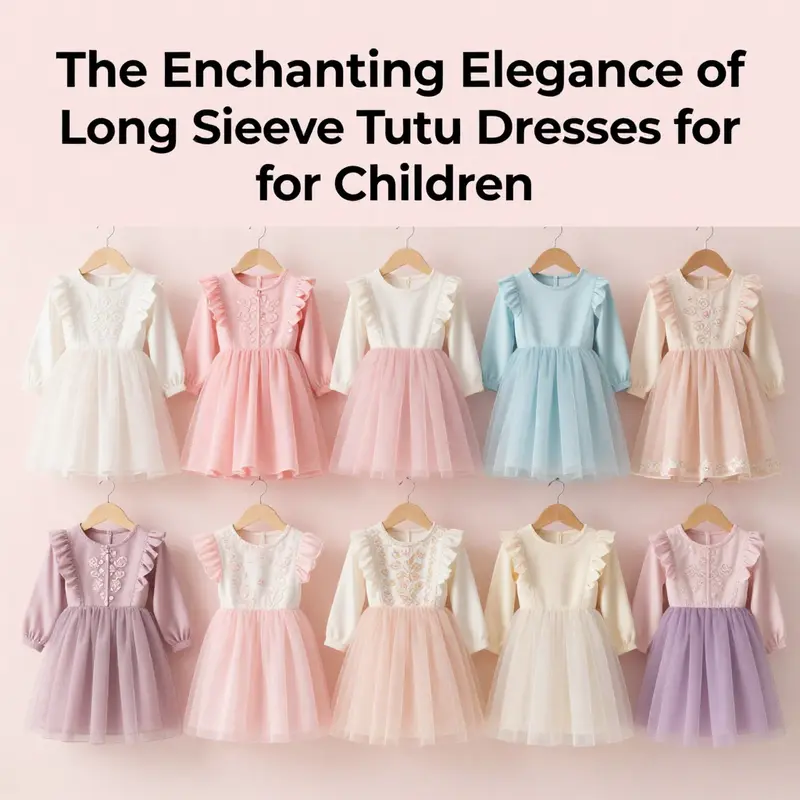
Long sleeve tutu dresses have emerged as a favorite among children’s clothing options, combining playful designs with elegance and practicality. These dresses not only provide comfort but also ignite the imagination of young ones, making them perfect for a variety of occasions. This article delves into the enchanting world of long sleeve tutus, exploring their design elements, materials, ideal occasions for wear, current market trends, and styling tips. Each chapter builds upon understanding how to integrate these charming dresses into your product offerings effectively.
Weaving Ballet Dream and Everyday Warmth: Design Elements of the Long Sleeve Tutu
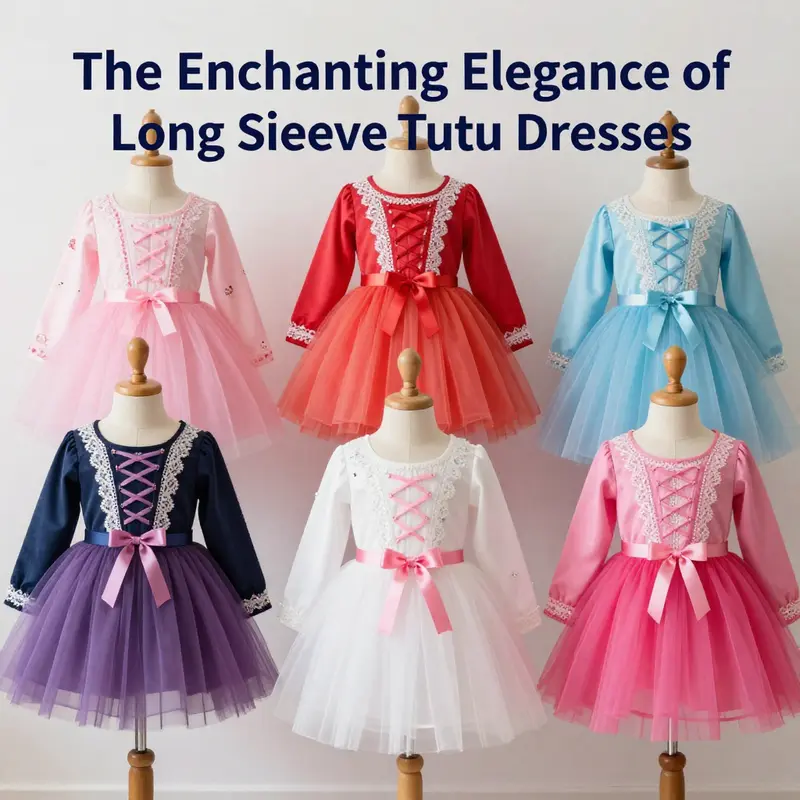
The long sleeve tutu is more than a dress; it is a design story that threads the soft humor of childhood with the discipline of ballet silhouettes. It blends two ideas that might seem at odds—the plush, airy drama of a tutu and the practical warmth of a knit sleeve—into a garment that invites movement, imagination, and comfort. This fusion creates something that holds its shape when a child spins, layers readily over a cardigan on a cooler morning, and still catches the eye with a quiet fairy-tale depth. It can anchor a festive look and function as a reliable everyday staple in a growing wardrobe. The result is not simply cute; it is a wearable stage set that respects a child’s need for freedom as much as a parent’s wish for warmth and durability.
At the heart of the design is the fluffy multi-layer skirt. Typically built from several tiers of lightweight fabrics like tulle, chiffon, or lace, the skirt fans out from a high or mid waist, creating that unmistakable ballet silhouette. Each layer adds movement, so when a child shifts, the skirt seems to ripple with the air. The interplay of opacity and translucence in different layers creates depth without weight, allowing the fabric to respond to a gentle breeze or a quick turn. In practice, this means the tutu can hover above leggings in a living room full of chatter, while still staying anchored to the waist so it won’t ride up during play. Material choices matter: polyester tulle delivers crisp fullness, nylon softens the sheen, and lace adds texture and vintage charm. The construction is designed to minimize bulk at the seams, so the garment remains comfortable across a child’s full range of motion. A high or mid waist is deliberate; it enhances the skirt’s fluff and helps elongate the torso, guiding the eye from waist to fingertip as the arms lift in a pretend ballet pose. This structural balance sets the tone for a piece that feels elegant yet unfussy enough for everyday life.
The long sleeve design introduces a practical, seasonal counterpoint to the skirt’s airy drama. Rather than a single, flat sleeve, designers shape sleeves into a range of forms—fitted cuffs that hug the wrist, puffed shoulders that nod to fairy-tale serenity, batwing silhouettes that glide with the arm, or pleated accents at the cuff to add subtle texture. The sleeve becomes a companion to the skirt, framing the waistline while preserving overall lightness. In cooler seasons or air-conditioned halls, the sleeve adds warmth without compromising freedom of movement. The fabrics chosen for the sleeves—soft cotton blends, modal-rich knits, or light jersey—complement the skirt’s sheer layers, producing a cohesive, breathable whole. Finishing details matter as much as the cut: flat-locked seams reduce irritation on sensitive skin, and gentle elastics at the wrist prevent discomfort during a long spin or a game of pretend tea.
The waistline’s elevation to a high or mid position is more than a fashion flourish. It emphasizes the skirt’s volume and helps the overall silhouette read as elongated and refined. This proportion is practical as well; a higher waist stays put as a child stretches, reaches, or twirls, reducing the chance of shifting garments during lively moments. Some designs incorporate a soft back elastic to accommodate growing bodies while keeping the front silhouette clean and polished. The effect is a garment that communicates poise without sacrificing accessibility, a piece a child can wear from a family party to a casual day at home without feeling overdressed or restricted.
Color and pattern choices broaden the wearability of long sleeve tutus beyond pale pastels. Modern palettes embrace candy hues like pink, lavender, and teal, alongside bolder tones such as magenta, royal blue, or emerald. Gradients, patchwork, and playful prints—mini florals, geometric motifs, or cheerful character-inspired emblems—lend personality and story to the outfit. Seasonal cues often guide color decisions: warm reds and greens evoke holiday gatherings, while soft silvers and icy blues suit winter celebrations. Even with richer tones, the fabrics maintain a light, dance-ready feel, so the wearer’s movement remains unimpeded and visually buoyant as light plays across the layers. The effect is a look that feels like a moment of storytelling, catching the eye not with sheer sparkle alone but with a layered, living texture that shifts with every turn.
Material integrity and tactility are the quiet engines behind these designs. Lightweight, drapable fabrics such as polyester tulle, chiffon, lace, or silk blends create a skirt that moves with a child’s body—soft, buoyant, and almost musical in its response. Some options integrate a touch of stretch into the fabric, easing the fit for restless toddlers and ensuring the garment returns to its intended shape after play. Skin-friendly textiles and breathable linings are non-negotiable; warmth should come without overheating or irritation. Subtle texture is often introduced through lace edging, delicate embroidery, or tiny beads and sequins along the neckline, cuffs, or hem. The aim is a tactile richness that invites touch but never scratches or constricts. When executed with restraint, decorations enhance the dreamlike quality of the look without turning the piece into a costume that competes with the child’s own energy and spontaneity.
Two-piece and three-piece formats further extend the design’s versatility. A coordinated top or jacket can complete the princess mood, while still allowing the skirt to function as a standalone party or performance piece. This modular approach respects a child’s evolving style and a family’s need for wardrobe longevity. A child can pair the tutu with a simple knit top for casual celebrations or layer it under a light cardigan for a more formal setting. The result is a small, adaptable fashion ecosystem: one that can glide between home, classroom, and festivity without losing its sense of whimsy or comfort. The long sleeve tutu thus becomes not a single showpiece but a versatile staple that supports a child’s self-expression across moments both ordinary and magical.
Detail decorations, when chosen with care, offer quiet focal points rather than loud statements. Bows at the back or along the waistline provide a gentle sparkle that catches light during spins. Ruffles along sleeves or near the hem add movement that the eye can follow as the child moves. Sequins, beads, and embroidery introduce texture and a subtle glow under party lighting without overwhelming the garment’s overall softness. The most successful embellishments are those that echo the gown’s color story and silhouette, so the outfit reads as a single, harmonious design rather than a patchwork of accents. When balance is achieved, these details elevate the piece from a charming costume to a memory-making outfit that accompanies a child through moments of celebration with grace and playfulness.
Care and practicality complete the picture. Parents should prioritize skin-friendly dyes, breathable linings, and clear garment care instructions. Accurate sizing matters: a well-fitted waist and sleeves prevent constant tugging and adjustment, preserving the garment’s silhouette and the wearer’s comfort. Easy return policies or flexible sizing options are welcome safeguards when a child is still growing. Care typically involves gentle washing, either by hand or on a delicate cycle, and air drying to maintain the skirt’s fullness and the sleeve’s shape. Heat can distort delicate layers, so low heat or line drying is preferred. Safety considerations guide trim selections and fastenings, minimizing small parts that might detach during active play. The larger message remains clear: this piece should invite movement, encourage imagination, and serve as a confident, comfortable expression of a child’s personality.
Inspiration for styling often travels through visual platforms, where families exchange ideas about how these designs come to life. For a practical sense of where this design family resides within a catalog, the basic tutu category offers a starting point to understand the wardrobe’s baseline complexity and how a long sleeve variant expands it. basic tutu category. In broader fashion discourse, color storytelling and fabric quality discussions illuminate how designers translate mood into texture and silhouette. This guidance helps caregivers select outfits that remain wearable across seasons and occasions. External references can provide deeper context on market evolution and material innovations, such as industry notes on fabric performance and trim sensibility. External resource: https://www.alibaba.com/product-detail/2024-autumn-winter-new-style-tutu-sets_1600889879544.html
Stitching Wonder: Materials That Shape the Long Sleeve Tutu

The long sleeve tutu is more than a silhouette; it is a compact study in how fabric and form come together to create movement, warmth, and whimsy for a child who is learning to express herself through dress. In this chapter, we explore how the materials chosen for the long sleeve tutu do more than simply cover the body. They choreograph the kid’s play, the mother’s or caregiver’s peace of mind, and the way a story can unfold around a small, twirling figure. The materials become a choreography of comfort and aesthetic, a careful balance between structure and softness, between glint and restraint. When we walk through the garment’s anatomy, we see that every fiber has a purpose, and every seam tells a part of the dress’s tale. The choice of fabric is the first sentence in a dialogue that ends with a child’s delighted giggle as she spins in the center of a room decorated with light and laughter.
At the core of the tutu is the tutu itself—the skirt portion that gives the piece its signature volume. Tulle remains the foundational fabric here because of its sheer, stiff nature that holds shape without weighing the child down. A multi-layer approach creates the floaty, cloudlike silhouette that catches air as the child moves, allowing for endless spinning without collapsing into a single plane. The sheer quality of tulle makes the bodice and sleeves appear lighter by contrast, enhancing a fairy-tale effect that adults often seek for photos and special occasions. Yet the material is not merely decorative; it supports the dynamic needs of a young wearer. Its lightweight texture glides over skin, and because the layers are fine and plentiful, the overall garment remains breathable even as it appears lush. The resulting motion is less about fabric fighting gravity and more about fabric inviting gravity to hold a moment in air—an essential quality for holiday gatherings, weddings, and birthday celebrations where a child’s movements become the main source of enchantment.
Complementing the voluminous skirt, the bodice—whether tightly fitted or softly structured—often leans on cotton or cotton blends. Cotton’s natural breathability is ideal for the sensitive skin of infants and toddlers who are still learning thermal cues. A cotton-spandex blend adds just enough stretch to accommodate a variety of body shapes while keeping the top securely in place during active play. This combination supports a comfortable wear for hours, whether the child is engaged in a staged performance or simply chasing cousins around a living room turned into a stage. The tactile quality of cotton is reassuring, a familiar touch against the skin that reduces the risk of irritation. The bodice may be lined or lightly interlined to further minimize itchiness and to keep the garment from clinging when a burst of movement sends a breeze under the skirt. It is a subtle, often overlooked detail, but one that can determine whether a child feels free to move without constantly adjusting her outfit.
The sleeves, long and gently fitted, extend the sense of warmth while preserving mobility. Knit fabrics with a touch of elasticity are common here, because they adapt to growing bodies and the choreography of arms in motion. A soft jersey or a cotton-spandex blend allows for easy dressing and quick removal, which is practical during costume changes in family gatherings or school performances. The sleeve fabrication balances warmth with airiness; it does not trap heat in the way a heavy fabric might, yet it provides enough coverage to keep chill at bay in cooler rooms or during evening events. This careful equilibrium between coverage and freedom is crucial in a garment designed for children who alternate between playful leaps and careful, poised poses for photos.
For those seeking a more formal or refined look, other fabrics enter the scene to lend a different texture and mood. Velvet, with its dense pile and rich drape, can elevate a long sleeve tutu into a gown-like piece suitable for weddings or family portraits. Velvet adds warmth and a sense of opulence, its plush surface catching light in a way that feels celebratory rather than costume-like. When velvet is used, the design often incorporates a smooth lining to prevent friction against tender skin, and the sleeve and bodice lines are kept clean to showcase the fabric’s luxurious texture without overwhelming the wearer. The contrast between the lightness of tulle and the depth of velvet creates a visual rhythm that is both striking and balanced—enough drama for a special moment, but not so heavy as to make the garment feel cumbersome during play.
Beyond these more traditional options, there are silk-like fabrics and mesh blends that bring a contemporary edge to the long sleeve tutu. A silk-inspired sheen can elevate the garment’s appearance, offering a refined luster that photographs beautifully under indoor lighting. When paired with breathable mesh or a lightweight lining, these fabrics maintain comfort while giving the ensemble a modern, couture feel. Such combinations are often reserved for premium designs or occasions that call for a parent’s desire to create a standout memory, like a family wedding or a festive Christmas event. The choice of this material family speaks to a broader design philosophy: costume can flirt with fantasy while staying anchored in the realities of a child’s comfort and safety.
Embellishment—lace, embroidery, and decorative motifs—forms the final layer of texture that defines character and occasion. Lace trims add delicate edges that catch the eye, while embroidery can narrate a theme, such as floral motifs or subtle, storybook patterns. These embellishments contribute to the garment’s personality without compromising movement, provided they are properly finished and securely attached. For younger wearers, designers favor softness and edge protection so that decorative elements do not rub or irritate the skin during extended wear. The careful integration of lace or embroidery often involves backing underlayers or satin labels that reduce roughness and ensure the wearer’s comfort remains the priority during long days of celebration or play. It is in this balance between ornament and practicality that the long sleeve tutu becomes not just stylish, but dependable as everyday magic for little ones.
From a safety perspective, material choice reflects a thoughtful response to the realities of children’s clothing. Fabrics are selected for gentleness on sensitive skin and for durability through many cycles of washing and daily wear. The importance of non-irritating labels, eco-friendly dyes, and clear care instructions cannot be overstated. The better the fabric and finish, the less likely the child is to experience discomfort—a small but meaningful factor in whether the wearer will reach for the dress again and again in the coming weeks. Careful attention to the inner linings and seams helps prevent skin irritation at the wrists, neckline, and waist where contact is most prolonged. In short, the material science behind the long sleeve tutu is a quiet but vital part of the garment’s charm: a promise that beauty does not come at the expense of comfort or safety.
A practical note ties together the theory and the daily realities of dressing a child in a long sleeve tutu. The fabric system must reconcile washability with colorfastness; it must survive the rough-and-tumble of a playful afternoon while keeping its silhouette intact for the next special moment. Designers and manufacturers often navigate a spectrum of options—from basic, everyday fabrics to more elaborate combinations—emphasizing that the selection is not arbitrary but a deliberate response to the wearer’s needs, the event’s tone, and the photographer’s light. If you are exploring options within the broader range of tutus, you may encounter the fundamental choices grouped under a foundational category, commonly labeled in catalogues as the basic tutu. This category is a starting point that often harmonizes comfort, durability, and a clean aesthetic, before parent and child decide whether to elevate the look with richer textures or more formal silhouettes. For readers curious about the spectrum of foundational designs, the basic tutu category provides a practical reference point as a stepping stone into more complex textures and finishes.
In conclusion, the materials used in the long sleeve tutu are not just materials; they are the instruments of a tiny wardrobe orchestra. Each fiber contributes to a melody of movement and mood, from the transparent airiness of tulle to the grounding warmth of cotton, from the elegance of velvet to the quiet luxury of silk-like finishes. Embellishments and trims punctuate the performance with visual interest, while careful lining and seam work ensure the child can dance, spin, and explore freely. The result is a garment that feels weightless yet complete, practical yet enchanted—a reminder that the magic of dressing a child lies not in spectacle alone but in the thoughtful craft that allows imagination to flourish while the wearer remains secure, comfortable, and truly cared for. For those who seek a natural entry point into this world of fabric choices, exploring the basic tutu category offers a grounded sense of scale and proportion before layering on the richness that higher-end finishes can provide. basic tutu category.
External reference: for broader standards on material safety, dye practices, and industry considerations, see FashionUnited’s resource on fabric standards and safety practices: https://www.fashionunited.com/.
Whims and Warmth: The Many Doors Opened by a Long Sleeve Tutu
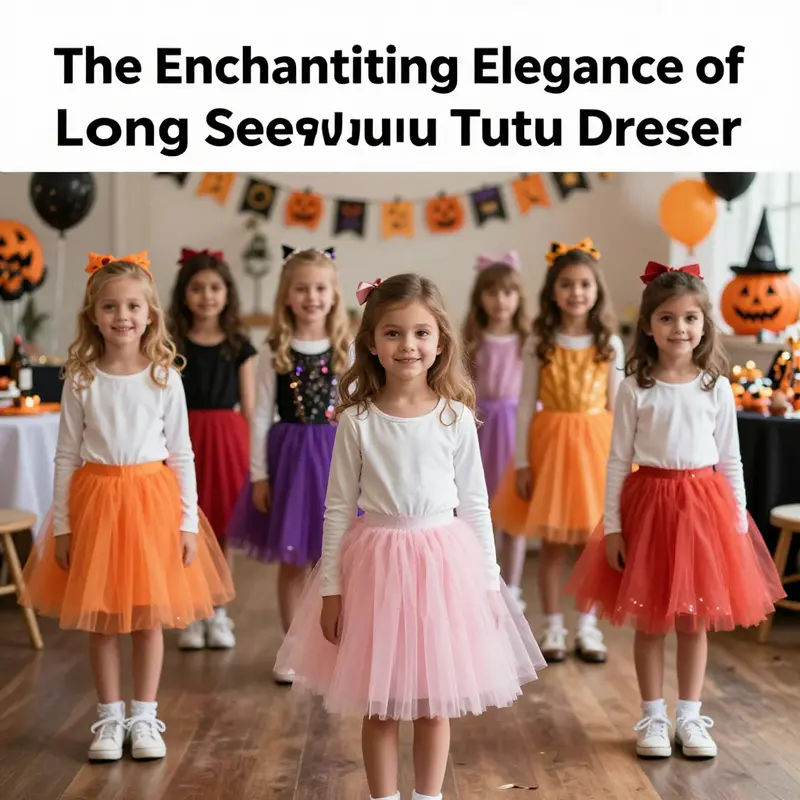
A long sleeve tutu does more than cover a child’s frame; it invites movement, sparks imagination, and folds the calendar into a sequence of moments that feel special without demanding ceremony. From the first frost of winter to the soft glow of late spring, this garment carves a reliable path between comfort and spectacle. Its silhouette—full, layered, and buoyant—paired with the gentle restraint of a long sleeve, creates a visual narrative that can bend to various occasions while preserving the ease that kids rely on when they play, run, or spin. The appeal lies less in a single occasion and more in the garment’s capacity to transform ordinary days into memories worth revisiting. The fabric choice—the way it breathes against the skin, how the layers catch the light, the gentle give of the knit at the cuffs—matters as much as the color or the lace. The result is a look that feels festive without being fussy, the kind of outfit that invites a twirl rather than a pose, a garment that makes room for a child’s authentic expression while offering a little stage magic for the adults watching nearby.
During festive celebrations, the long sleeve tutu becomes a soft anchor in the whirlwind of holiday color. Christmas gatherings, family photo nights, or quiet evenings under twinkling lights all become opportunities for the child to wear something that reads like a small celebration in fabric. The long sleeves deliver warmth during indoor concerts or winter family meals, letting the child enjoy the moment without worrying about a chill. The tutu’s multiple layers, often crafted from light tulle or netting, catch the light as the child moves, creating a halo of motion that feels almost like a collected miniature performance for the lilt of laughter in the room. For holidays with a playful mood, subtle patterns—gentle florals, soft stars, or delicate hearts—echo the season’s sentiment without overpowering a child’s natural glow. The design supports both bright, high-energy play and more intimate, family-centered moments, bridging the gap between party formality and everyday accessibility.
Valentine’s Day nudges the tutu toward romance in a child’s world—an invitation to celebrate affection with whimsy rather than romance. A dress or bodice might feature a gentle motif—hearts, bows, or soft florals—paired with the forgiving stretch of long sleeves that keep a child cozy during chilly Valentine events or weekend family gatherings. The effect is not about overt fashion statements but about crafting a silhouette that feels special to wear, a garment that signals a mood rather than a costume. In this context, the tutu becomes a stage for a child to imitate a princess, a heroine, or a beloved character at a small party or a school event. The layered netting enhances movement, so a simple twirl becomes a small performance, enough to spark pride in achievement or participation, whether the child is reciting lines, dancing, or simply leading a group game with bright eyes and a loud giggle.
Easter, spring recitals, and other seasonal milestones offer another seam in the tapestry of occasions. The longer sleeve provides practical warmth for early morning gatherings, while the tutu’s airy skirts keep pace with a child’s exuberant energy. A spring-ready palette—powders and pastels, a gentle shimmer, a hint of lace—helps the outfit capture the season’s optimism without overpowering the child’s natural charm. In this season, the tutu translates the idea of renewal into a wardrobe moment: a child steps out in something that feels ceremonial yet comfortable, like a small ritual that marks the turning of the year. The result is a look that fits both church events and neighborhood egg hunts, a reminder that festive style can be gentle, approachable, and practical at the same time.
Beyond holidays, the long sleeve tutu is a frequent guest at stages and screens. School plays, dance performances, and ballet classes become spaces where the garment’s silhouette has real stage presence. The thick, structured skirt adds visual impact on camera or in a small auditorium, where movement is a core part of the art. The long sleeves offer modesty and warmth, especially when rehearsals are in air-conditioned halls or chilly outdoor venues. The tutu’s dramatic effect—layer upon layer of delicate fabric that seems to float with every step—aligns naturally with the kind of storytelling that children love to enact. Even when performance is only a practice, the sense of belonging and achievement that comes from wearing something that feels like a costume can empower a child to attempt new steps, express a character’s mood through posture, and enjoy the rhythm of a routine that blends discipline with delight. The tutu thus serves as a bridge between the earnest work of learning and the spontaneous joy of performance, turning technique into a story that young wearers proudly carry with them offstage.
Yet the appeal of the long sleeve tutu does not end on a stage or in a seasonal party. It also suits everyday fashion and photo shoots, where parents seek outfits that endure a busy day of activities and still photograph with a sense of deliberate charm. In daily wear, the combination of a soft base and a voluminous skirt gives a child room to explore—whether running through a park, posing for a family snapshot, or simply imagining a new character while pretending to be a princess for a few hours. The long sleeves help with layering through fall and winter, enabling outfits that can be paired with leggings, boots, or fuzzy socks without losing the tutu’s signature silhouette. The practical side—breathable fabrics, gentle elasticity, and careful sizing—happens to complement the whimsy, ensuring that comfort and mobility stay intact as the day unfolds. For many families, this versatility is precisely what transforms a single piece into a wardrobe foundation: a garment that carries the child from a casual morning to a planned, celebratory afternoon without the need for constant changes.
In crafting an occasion-driven approach to the long sleeve tutu, it helps to view the garment as a blank, soft stage for a child’s personality. The color story can be anchored by event tone—a winter blue for a calm, wintry celebration; a pale pink or ivory for a wedding-like family gathering; a bright, cheerful hue for a birthday party. Accessories then waltz into the scene: a shawl for a ceremony, a headband or delicate bow for a recital, a lightweight cardigan for layering in a breezy afternoon. The interplay of textures—tulle against knit, satin against lace—adds depth to a look without sacrificing comfort. With its forgiving fit and a design that accommodates movement, the long sleeve tutu respects the pace of childhood, allowing kids to spin, skip, and climb without hesitation. The result is a wardrobe staple that becomes a memory-making device, turning ordinary days into little celebrations and turning big events into moments that feel intimate and personal.
If you are exploring how a long sleeve tutu can be integrated into a broader styling approach, a quick step is to browse a broader collection that focuses on varied costume themes. For a sense of the broader range, explore the costume-theme collection. This body of designs complements the tutu’s versatility by offering coordinated tops, skirts, and accessory ideas that can be mixed and matched across occasions, ensuring a cohesive look without sacrificing the child’s comfort or freedom of movement. The key is balance: choose pieces that harmonize with the layering of the tutu, not overwhelm it. In practice, this means selecting soft, breathable fabrics, avoiding heavy trims near the neckline or wrists, and favoring gentle closures that are easy for a caregiver to manage during busy days. The long sleeve tutu, at its best, becomes a canvas—one that supports imagination while standing up to the practicalities of daily life and social events.
External resource for further context and inspiration can be found here: https://www.alibaba.com/product-detail/Wholesale-Fashion-Plaid-Valentine’s-Long-Sleeve_1600584798388.html?spm=a2700.gallery-0-0.1.6f1a5c75NlBnGq
Blooming Silhouettes: Market Trends Redefining the Long Sleeve Tutu
The long sleeve tutu sits at a dynamic juncture in contemporary fashion, where whimsy and warmth converge to create a silhouette that feels both timeless and freshly current. Its signature fluffy, multi-layered skirt remains the focal point, a visual cue that movement brings life to fabric. Yet the addition of thoughtfully tailored long sleeves reshapes how the garment is worn, when it can be worn, and who might wear it. In the market frame of late 2025 into early 2026, this hybrid form has stopped being seen only as party costume or stage attire. It has become a versatile option that fits into spring and autumn wardrobes, for both children and adults who want a touch of fairy-tale charm without sacrificing practicality. Brands and retailers have noticed that the long sleeve tutu is not merely a novelty; it is a strategic entry point into a broader ecosystem of wear-anywhere whimsy that can glide from home gatherings to more polished social occasions with ease.
The momentum behind this category rests on a few core preferences that repeatedly surface in consumer conversations and purchase data. First, designers are exploring 3D printed vintage patterns integrated into the bodice or sleeve details. The precision and texture afforded by 3D printing allow for delicate lace-like motifs or sculpted florals that echo archival, classical silhouettes while staying within the comfort-driven priorities of today’s shoppers. This confluence of nostalgia and modern fabrication resonates with families seeking a refined look without overwhelming formality. Alongside this, the O-neck design has emerged as a popular neckline, delivering a clean, flattering line that works across age groups and pairing well with layered outerwear or shawls for cooler evenings. The effect is not just visual; it translates into wearability. A well-balanced neckline can reduce irritation under the chin and shoulder while keeping the silhouette airy enough to move with a child’s play or a slow dance at a festive gathering.
Another trend vector is the rise of coordinated sets. Shoppers increasingly favor ensembles that pair a long sleeve tutu with complementary pieces—whether a simple leggings-and-sweater pairing for everyday moments or a coordinated, performance-ready outfit for a family party. These sets promise efficiency in dressing, a value that families prize in bustling routines. The market’s emphasis on personalization also grows louder. Parents and wearers alike express a stronger desire for small, meaningful custom touches—selectable sleeve finishes, interchangeable skirts with subtle embellishments, or fabric choices that align with skin sensitivity and comfort. This shift toward customization is closely tied to perceived quality. Buyers increasingly scrutinize fabric texture, stretch, breathability, and seam durability before committing to a purchase. In response, manufacturers are investing in softer cotton blends, breathable knits, and smooth, non-irritating dyes, while making sure that labeling remains clear and skin-friendly.
The price spectrum around long sleeve tutus has widened in a way that supports both broad accessibility and perceived value. A practical range now commonly falls between roughly eleven and eighteen dollars in many markets, reflecting a balance between affordability and the premium cues conveyed by detailing, fabric hand, and finish. The affordability factor fuels market penetration, enabling families to experiment with multiple colors and styles as seasonal needs shift—from Christmas night gatherings, to birthday celebrations, to everyday moments in transitional weather. Yet even at the lower end, shoppers expect quality cues—well-finished hems, comfortable linings, and materials that hold their shape after repeated wear and washing. This is where the market’s emphasis on safety, comfort, and sustainability becomes a decisive differentiator. Eco-friendly materials and dye processes, transparent labeling, and reliable return policies help build trust, especially for products designed for young wearers who require gentle fabrics and careful construction.
From a distribution perspective, the long sleeve tutu has found a robust presence on mainstream e-commerce platforms, where breadth of selection meets easy discovery. The category appeals to a wide audience—from caregivers purchasing for toddlers to adults embracing a playful, doll-like aesthetic for themed events. The design language advertised in product pages often highlights rich textures, soft interiors, and practical features like stretch waistbands and easy-care fabrics. This accessibility does not come at the expense of sophistication; many items blend youthful charm with a refined finish that works for semi-formal occasions as well as casual, family-centered gatherings. The result is a category that travels well across occasions and geographies, inviting a broader conversation about how children’s fashion and adult fashion can cross-pollinate ideas about comfort, layering, and narrative dressing.
In parallel with these design and material considerations, social media and visual discovery continue to shape purchasing decisions. Platforms that curate images and mood boards—think scrollable lookbooks of how a long sleeve tutu can be styled with a shawl, a headband, or a delicate cardigan—offer actionable inspiration for parents and stylish wearers alike. The visual language circulating online reinforces the sense that this silhouette is more than a costume; it is a lifestyle cue that signals a moment of storytelling—whether a holiday evening, a family photo, or a spring party. As a result, the market’s storytelling around long sleeve tutus increasingly foregrounds not just the garment, but how it pairs with other wardrobe pieces to craft a complete, polished moment.
For shoppers who want to explore the broader ecosystem of tutu options while staying within a cohesive design philosophy, several catalog segments align with the long sleeve concept. A practical entry point is the basic tutu category, which provides a timeless contrast to the more embellished and seasonally themed pieces. Consider the Basic tutu category as a foundational reference for color, proportion, and surface texture, which helps shoppers calibrate how a long sleeve variation can translate into a versatile daily uniform or a festive accent. You can explore this range here: Basic tutu category.
As the market tilts toward personalization and quality, vendors are also refining sizing fidelity and return policies. Accurate measurements, inclusive size charts, and clear guidance on fabric feel and stretch help reduce post-purchase disappointment, which is especially important for families ordering online. While the core concept remains playful, the care taken in the production process—environmentally responsible fabrics, non-irritating dyes, and thoughtful finishing—becomes a competitive differentiator. These considerations align with broader consumer expectations across fashion segments, where shoppers increasingly seek styles that are both emotionally appealing and practically reliable.
The current market snapshot also hints at future evolution. The long sleeve tutu could intersect more with performance-inspired lines that blend athletic wear with drama-ready silhouettes, supporting active play while preserving the fantasy moment. In this sense, the category will likely continue to expand its fabric palettes and finishing techniques, offering more options for warm-weather layering and winter-ready ensembles without compromising the lightness and bounce that define the tutu’s charm. Designers may experiment with detachable sleeve configurations, reversible bodices, or subtle, seasonally appropriate embroidery that can be swapped across looks. These refinements would further enhance the sense of personal expression, allowing wearers to curate a wardrobe that feels designed rather than purchased, a nuance that resonates with modern consumer expectations for both craft and story.
The market trends for long sleeve tutus, therefore, reflect a broader shift in fashion toward pieces that are at once charming and capable. They acknowledge the demand for warmth and longevity without sacrificing the movement, texture, and imaginative appeal that make the tutu a perennial favorite. For retailers, the challenge becomes balancing cost, quality, and storytelling in a way that invites frequent return visits rather than one-off purchases. For designers, the opportunity lies in translating fantasy into everyday usability, a bridge that can expand the audience while preserving the garment’s signature magic. The long sleeve tutu thrives in this space because it speaks to a collective memory of celebration—yet it remains adaptable enough to accompany modern routines, from school plays to family picnics to evening gatherings. It is a garment that invites whimsy to linger, even as practicality becomes part of its daily rhythm.
External resource: https://www.aliexpress.com/item/10050079837528.html
Layered Whimsy: Elegant Styling for Long Sleeve Tutu Outfits
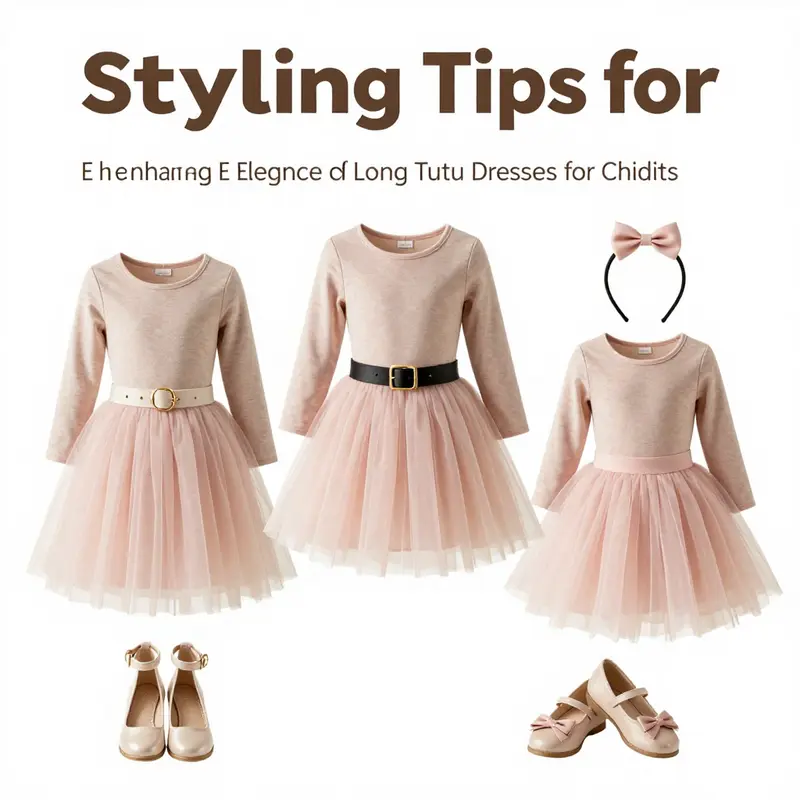
The long sleeve tutu has a quiet power. It pairs the softness of a twirl-worthy skirt with the practical warmth of a long-sleeve top, creating a silhouette that feels both fairy-tale and grounded. In many homes and party rooms, this combination invites movement, imagination, and a sense of poised play. The fabric story matters as much as the cut: a delicate tulle skirt that catches light and a skin-friendly knit or jersey top that rests softly against small shoulders. The result is a look that travels well from daytime play to a quieter, lit-up evening moment. As with any thoughtful outfit for a child, comfort anchors style. The layers should breathe, the seams should avoid scratch, and the weight of the ensemble should stay balanced so the child can run, spin, and bend with ease. This balance is the heart of styling long sleeve tutu outfits, and it underpins every choice from color to texture to the choice of accessories. When done well, the effect is not just a pretty outfit but a small performance—one that allows a child to feel seen, capable, and wonderfully coordinated without sacrificing the joy of movement.
Understanding the style foundation helps translate whimsy into wearable everyday magic. The upper half, with its long sleeves, often anchors the look by offering a clean, continuous line from shoulder to wrist. The lower half, with its multiple layers of soft tulle, creates a floaty counterpoint that catches light and swirls gracefully with every step. This harmony between a snug upper body and a voluminous skirt is especially appealing in transitional seasons when warmth is welcome but freedom of movement remains essential. The fabrics chosen for each component matter as much as the silhouette itself. A breathable cotton blend or a soft jersey on top prevents overheating and itchiness, while the skirt benefits from a lightweight, airy tulle that flares with a gentle sway rather than stiffly standing away from the body. Taken together, these details set the stage for a look that feels cohesive rather than pieced together, a sense of intention that both child and caretakers can feel.
From a styling perspective, balance is the guiding rule. The volume of the skirt calls for a more streamlined upper layer to avoid an exaggerated “top-heavy” effect. A slim knit sweater, a fitted turtleneck, or a cropped jacket all work to maintain a clear waistline and to keep the ensemble from overwhelming the wearer. For cooler days, consider a snug cardigan or a short, structured blazer that’s cut to sit at the waist. These pieces add architectural interest without flattening the silhouette. In terms of proportion, the eye should land on the waist and the ankles, ensuring the child’s natural movement remains the focal point. Shoes become a pivotal element in this equation. Ankle boots with a touch of shine can subtly lengthen the leg line when paired with a mid-length tutu, while classic Mary Janes or small ballet flats preserve a sweet, storybook charm. Tights or socks in skin tones or coordinating hues help to maintain unity between the legs and the skirt, creating a continuous line that keeps the look polished rather than segmented.
Color and texture offer another layer of depth. The palette is best approached with a gentle confidence: soft pastels, creamy ivories, and muted pinks or blues can create a cohesive, dreamy effect when matched with a neutral base. If the tutu itself reads as a brighter focal point, the top can lean toward a calmer tone—an ivory, a dove gray, or a pale blossom shade—to let the skirt sparkle without competing elements. Conversely, a deeper-toned skirt, such as midnight blue or forest green, invites lighter, more delicate tops in complementary shades to preserve balance. Texture plays into this as well; pairing a satin or micro-sparkle top with a matte skirt can create a nuanced, layered look that remains approachable for everyday wear. When a costume or party vibe is desired, subtle embellishments—like a discreet lace trim on the sleeve or a tiny velvet bow at the waist—can elevate the ensemble without tipping into over-accessorized territory.
Accessories are the final brushstrokes that complete the painting. A simple, thin pendant necklace can hover just above the neckline, adding a hint of sparkle without pulling focus from the dress. Small stud earrings or a delicate hairpin can frame a joyful face without introducing distraction. The footwear and hosiery choices carry similar weight; metallic accents work beautifully in evening settings, while matte finishes keep things soft and comfortable for daytime events. The approach to jewelry should favor restraint, allowing the dress to remain the principal storyteller while the accessories offer quiet, complementary cues. In crafting a look, it helps to imagine a scene—a Christmas morning, a family birthday, or a celebration at a grand party—so the outfit reads as a single, coherent moment rather than a collection of parts.
In practical terms, the shopping and fitting process should reflect the same philosophy of balance. Look for materials that are breathable and skin-friendly, with careful attention to seams and labels to avoid irritation. Size accuracy matters, especially for growing children who can quickly outgrow a beloved piece. Consider the ease of movement; a tutu that sits flush at the waist with a soft, elastic band tends to stay in place through active play, while a skirt with a heavier waistband or multiple stiff layers can restrict motion. When in doubt, lean toward slightly roomier fits that can be adjusted with a simple belt or sash, preserving comfort while maintaining the overall silhouette. It is also wise to verify return policies and care instructions, ensuring parents can manage any changes in comfort or fit as the child grows.
For parents who want a quick gateway into the world of long sleeve tutu styling, exploring a foundational collection can be a smart starting point. A straightforward, basic tutu category often serves as a reliable reference, offering options that emphasize clean lines and practical fabrics while leaving room for personal touches through color choices and accessories. basic-tutu category provides a useful touchstone for building knowledge about how different top choices and skirt lengths interact in real life, giving caregivers confidence to experiment with layering and proportion without losing the essence of the look.
As the looking-glass of fashion continues to be a playground for imagination, the long sleeve tutu remains a versatile canvas. It adapts from home dress-up to festive party wear, from candid photos to carefully choreographed moments on a stage or a wedding day, all while keeping the child comfortable and expressive. The key is to honor the child’s movements and preferences, letting the dress be a gentle framework within which personality can flourish. In practice, this means choosing fabrics that breathe, shaping the upper body with flattering, nonrestrictive lines, and rendering the skirt in a way that dances with the child rather than dominating them. It means focusing on a cohesive palette, selecting restrained but meaningful accessories, and ensuring the entire ensemble reads as a single story rather than a collage of disparate styling cues.
For those seeking further inspiration beyond the wardrobe, visual guides and fashion-forward outlets offer a wealth of ideas on how to stage long sleeve tutu looks for different occasions. A widely referenced external resource provides additional styling perspectives and case studies that extend the conversation beyond basic principles, helping parents and caregivers translate theory into tangible outfits. See more at The Fashion Spot guide.
Final thoughts
The charm of long sleeve tutu dresses lies not only in their whimsical design but also in their multi-functional uses, making them a staple in every young girl’s wardrobe. With careful consideration of design elements, material quality, and understanding the right occasions to wear them, business owners can effectively cater to the market’s needs. By staying informed about current trends and styling strategies, businesses can enhance their offerings and meet the growing demand for these delightful garments.