
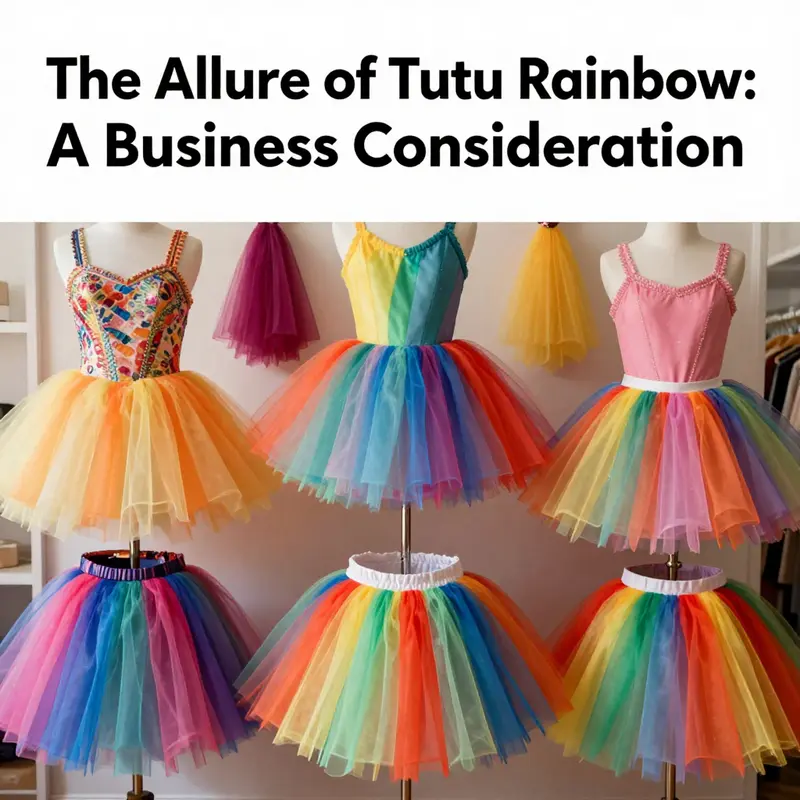
In today’s fashion landscape, the rainbow tutu stands out as a symbol of creativity and joy. With its vibrant layers and whimsical appeal, it has captured the hearts of children and adults alike. As the demand for colorful and playful apparel rises, business owners in the fashion industry must recognize the potential of the rainbow tutu as a viable product line. This overview will delve into the classic designs and practical applications of rainbow tutus, the latest innovations in styling and materials, and market trends that signal the future of tutu fashion. Each chapter aims to provide actionable insights for business growth and consumer engagement.
Rainbow in Motion: The Classic Tutu as Color, Craft, and Performance
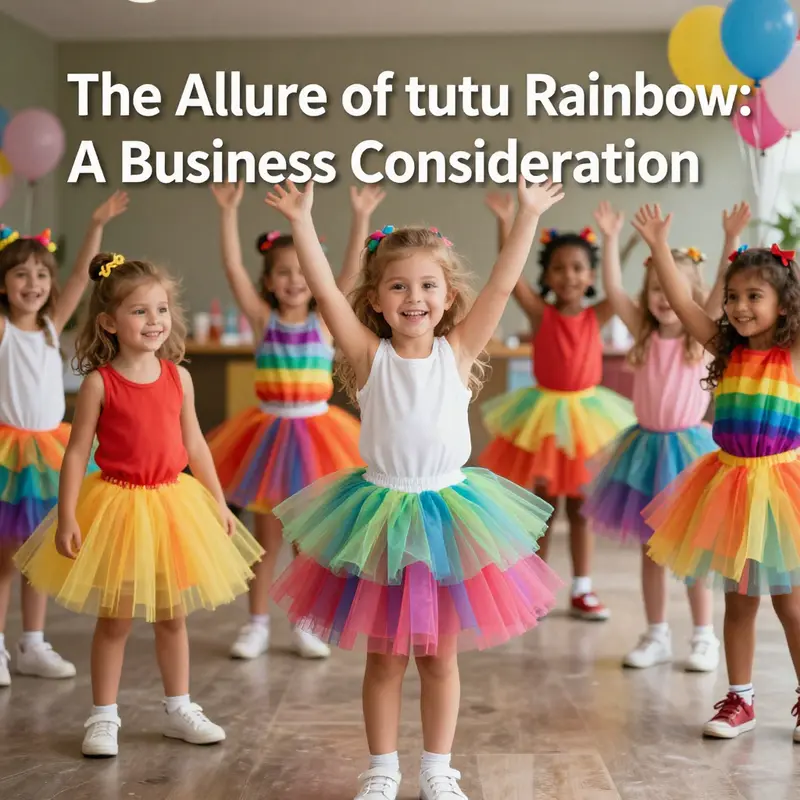
The classic rainbow tutu sits at an intriguing crossroads of artistry and practicality. It borrows the formal silhouette of the traditional ballet tutu—the clean line at the waist, the exaggerated breadth of the skirt—yet it bursts with color, whimsy, and a readiness for celebration. This garment is less a single fashion statement than a portable canvas. It invites the wearer to tell a story with every turn, twirl, and step, and it does so through a language of color that almost always communicates first and loudest. The spectrum becomes a narrative tool, guiding the eye as the fabric catches light, moves with gravity, and responds to the tempo of music or the pulse of a festival crowd. In this way, the rainbow tutu embodies a paradox: it is both deeply rooted in a performance heritage and boldly contemporary in daily life, a versatile artifact that remains instantly recognizable no matter the setting. Its enduring appeal lies not just in the palette but in how that palette is organized, layered, and made to interact with movement itself.\n\nDesigners approaching the classic rainbow tutu consider color as a primary material, just as they would consider fabric, texture, and weight. The defining feature is the rainbow gradient or the set of vibrant bands that travel from waist to hem. Red, orange, yellow, green, blue, indigo, and violet are arranged to maximize color saturation, with some versions presenting each hue as a solid band while others blend the colors more softly through ombré or dip-dye techniques. The choice between a stark, high-contrast spectrum and a smooth gradient influences not only aesthetics but how the skirt reads on stage or in a photograph. In performance contexts, a crisp separation between colors can help the audience distinguish form and motion from a distance, while a gradient can create a sense of continuous motion as the performer spins. Either approach foregrounds color as choreography, allowing the fabric to become a partner in storytelling rather than a mere costume.\n\nAt the heart of the classic rainbow tutu is construction that emphasizes fullness without sacrificing comfort. The typical silhouette arises from multiple tiers of light, sheer fabrics—commonly polyester tulle or chiffon—that layer to produce the skirt’s famed buoyancy. Each tier adds a subtle bank of volume, so when the dancer or participant moves, the skirt seems to bloom outward with a natural, almost organic expansion. The waistbands are designed for quick wear and removal, often elasticized or fitted with a drawstring to accommodate a range of body types and growth. This practical consideration matters because the rainbow tutu functionally becomes a life-event garment—worn at birthday parties, school performances, and festive gatherings—where children and adults alike want ease of use alongside dramatic effect. The elasticity of the waistband supports active movement, while the layering protects modesty and comfort by ensuring sufficient coverage when spinning or bending. The result is a garment that remains light on the body, even as its surface reads as exuberant color from every angle.\n\nColor logic and garment structure converge on how the tutu interacts with light and air. The hues in a classic rainbow tutu do not exist in isolation; they are calibrated against the fabric’s translucence, the distance from the observer, and the lighting in which the wearer operates. A strong, saturated red might appear almost sangria-bright under daylight, while the violet at the hem can glow with a cooler, twilight-intense quality under stage lighting. When the tutu moves, the layers separate and reassemble in a way that creates shimmer and texture. Some versions incorporate slight variations in the density of the tulle—denser under the waist and lighter toward the hem—to reinforce the perception of volume even when the wearer is still. Others emphasize a uniform density to maximize uniform, cloud-like mass that becomes a single color field when viewed in motion. This fusion of color science and fabric physics is what makes the classic rainbow tutu a versatile tool for designers who want to cue emotion, pace, and emphasis through fabric behavior as much as through choreography or posing.\n\nMeanwhile, the construction materials extend beyond mere beauty. Tulle and chiffon offer the lightness needed for long, dramatic drapes, but modern variants also consider problem-solving traits like anti-wrinkle technology, breathability, and skin-safety certifications. A rainbow tutu built for performance will often undergo finishing treatments to reduce static cling, keep colors from bleeding, and ensure that repeated washing cycles do not dull the saturation. In practice, this means designers and manufacturers look for fabrics that retain their crispness after spins and loops and that remain comfortable against bare skin for extended wear. The continuous push toward machine-washable fabrics with safety certifications reflects a broader industry pattern: even costumes intended for playful, occasional use are increasingly expected to meet everyday standards of quality and practicality. This evolution makes the rainbow tutu accessible to a wider audience while preserving the magical veneer that makes it so compelling.\n\nThe classic rainbow tutu is, at heart, a performance garment, but its appeal spills into photography, events, and everyday self-expression. In the realm of dance and stage shows, the garment’s volume and color work in harmony with lighting design, stage geometry, and the tempo of the piece. A rapid spin can reveal the silhouette of each band, while a slower, deliberate turn allows light to drift across the fabric and exaggerate the sense of depth created by the multiple tiers. Dramatic moments—leaps, spins, or a-held poses—gain additional dimension as the layers fan out in a near-petalled bloom. Photographers report that the rainbow tutu, with its saturated colors, translates well in both natural daylight and studio lighting, offering a reliable object around which to stage color coordination, background contrasts, or thematic storytelling. The garment thus becomes a practical ally for visual composition, guiding how a scene is framed, lit, and captured, whether in a classroom, on a stage, or in a family portrait session.\n\nApplications for the rainbow tutu extend beyond the purely performative. In children’s fashion and daily styling, the tutu serves as a whimsical anchor for imaginative play and prideful self-expression. It can anchor a princess-inspired look, a unicorn fantasia, or a celebration of a child’s discovery of color. Because the silhouette is inherently lightweight and forgiving, it encourages trial and experimentation with accessories, wings, crowns, or shimmering wands that echo the rainbow’s brightness without competing with it. The gown-like versions—where a rainbow-tinted skirt is paired with a simpler bodice—offer a balance between comfort and spectacle, making it feasible for school events, birthday parties, or community parades. For adults, the rainbow tutu has found a surprising range of uses, from festival fashion to editorial styling, where the piece functions as a bold counterpoint to minimalist lines or as a cornerstone of maximalist ensembles. In all these cases, the rainbow tutu remains a wearable invitation to joy, a garment that asks the wearer to imagine color as a living, kinetic force rather than a static decoration.\n\nDesign variations within the classic rainbow family expand the spectrum of potential uses without straying far from its core identity. One path emphasizes maximum fullness through a petticoat or hoop layer beneath the tulle. This technique increases silhouette stability, particularly during dynamic movement, and creates a dramatic, sculptural outline that holds its shape under bright lights or when captured by cameras in motion. It also makes the garment more suitable for formal performances, photo shoots, or stage productions where a strong, defined profile is essential. The trade-off is weight and bulk; the wearer must manage more fabric and a slightly bulkier profile, which can be less forgiving for younger children or for activities that require agile, close-bodied movement. A second path leans into the layered complexity of a multi-tiered design. With three or more tiers of varying lengths, this approach yields depth and texture that shimmer with color shifts as the skirt spins. The eye perceives more than a flat plane; it experiences a living, breathing rainstorm of color. This mode is especially prized in dance and creative photography, where the choreography benefits from subtle, micro-dynamic changes within the garment itself. A third variation extends the rainbow into costume theater by integrating character themes—princesses, fairies, or magical creatures—where the tutu becomes a central prop that informs narrative through color and form. These adaptations demonstrate how a classic silhouette can evolve to meet different demands: the needs of a recital, a festival, or a cinematic moment, all while preserving the essential promise of color and motion.\n\nYet even with these variations, the core ideas remain consistent: the rainbow tutu is a garment designed for brightness, movement, and accessibility. It thrives on visual impact that is immediate and universal, yet it also rewards careful construction, with attention to how stacking layers, choosing fabrics, and shaping the waistbands affect wearability and durability. When a designer selects the tier count, the density of each layer, and the color distribution, they are shaping not just a look but a function. How quickly a performer can dress, how freely a wearer can spin, and how a garment endures through repeated performances all depend on these decisions. In practice, this means designers must balance the tactile joys of soft, fluttering tulle against the realities of school gyms, festival fields, or studio backdrops. The result is a garment that can be simple enough for a toddler yet robust enough for adult performance, a rarity that makes the rainbow tutu a unifying thread across disparate audiences and occasions.\n\nAs markets continue to evolve, the rainbow tutu remains a touchstone for conversations about color theory, textile innovation, and inclusive design. The demand for sustainable fabrics, kinder dyes, and longer-lasting finishes shapes how a classic silhouette is executed. For many families, the tutu is not simply a purchase but a ritual—an artifact that marks milestones and memories, from birthday parties to end-of-year performances. In the studio or the living room, the garment becomes a catalyst for storytelling, a prop that invites children to imagine themselves as the subject of their own color-spun fable. The design community, meanwhile, pays attention to fit scalability and production efficiency, finding ways to deliver vibrant, well-made pieces at price points that allow broad access without sacrificing quality. The rainbow itself is a potent symbol—of diversity, optimism, and the shared human impulse to celebrate color. The classic tutu translates that symbol into fabric, inviting wearers to move through space with a sense of wonder, to choreograph joy with every turn, and to participate in a larger cultural conversation about play, performance, and the aesthetics of possibility. In this sense, the rainbow tutu serves as a bridge between the worlds of craft and celebration, a garment that makes color feel as natural as air and as legible as a smile.\n\nFor readers who want to explore the more practical corners of the rainbow tutu world, there is a spectrum of options that begin with the basics. A basic tutu category, for example, provides a straightforward template that can serve as a foundation for customization. From there, one can layer in petticoats, add sequins, or introduce soft trims to align with a particular event or character. The modularity of this classic form is a key part of its resilience; even as trends change, the rainbow tutu remains a flexible platform for self-expression. The choice between a bold, high-contrast color field and a more nuanced gradient depends on the wearer’s age, occasion, and personal aesthetic, but both paths preserve the essential rhythm of color against movement. Such versatility helps explain why retailers and makers continue to offer variations that stay faithful to the core concept while inviting new experiments in texture, scale, and interaction with light. The result is a garment that ages well with its wearer, becoming not only a costume but a memory in fabric, a reminder of the day when color itself seemed to be a language and every step was a small act of color storytelling. If you are curious about sketching or sourcing entry-level options, you can explore the basic tutu category here: basic tutu category.\n\nTo close this reflection, it is useful to consider the rainbow tutu as a record of how design can embrace joy while honoring craft. The seven colors perform like a chorus, each hue taking a turn to lead or support, creating a visual symphony when the wearer moves. The silhouette. The layering. The glow from stage lights. Each element reinforces a simple truth: color can teach as much as it delights. The tutu invites audiences to notice how light travels through fabric, how gravity works with layered plains of net, and how a seemingly playful garment can carry meaningful social signals. It can symbolize inclusion, celebrate achievement, or simply remind us that play remains essential at any age. As an object of design, it offers a practical template for manufacturers and a flexible platform for creators who want to couple artistry with everyday accessibility. In this way, the classic rainbow tutu continues to evolve without losing its core appeal: a vivid, wearable reminder that joy can be layered, spun, and shared with the same ease with which color appears in the sky after a storm.\n\nExternal resource: for a broader look at the fabric that makes these garments possible and the history of its use in fashion and performance, see the resource on tulle: https://en.wikipedia.org/wiki/Tulle
Rainbow Tutu Innovations: From Character-Themed Fantasies to Ombre Light

The rainbow tutu has long been a playful symbol of color, movement, and unspoken joy. Yet as designers and wearers have pushed beyond mere whimsy, this garment has evolved into a canvas where narrative texture, emotional resonance, and technical craft converge. In this chapter, we explore how contemporary rainbow tutus fuse character-driven fantasies with the painterly drama of ombre, while remaining deeply attuned to comfort, safety, and sustainability. The result is a lineage of tutus that do more than decorate a stage or party; they become portable stories, capable of shaping mood, inviting imagination, and supporting a broad spectrum of identities and experiences. This evolution is not a single leap but a chorus of advances in design language, dyeing technique, fabric science, and cultural relevance, all threaded through with an eye toward accessibility and ethical production.
Character themes have long offered a gateway into a tutu that feels personal and story-ready. Rather than merely emblazoning a color wheel onto a skirt, modern designers weave associations, moods, and mythologies into the silhouette. A trio of beloved figures from a well-known kawaii universe serves as a useful touchstone. They symbolize dreams and wonder, the warmth of friendship, and a playful defiance that invites wearers to stage their own mini narratives. When a rainbow tutu channels these archetypes, it carries more than cheerful saturation; it becomes a wearable parable about imagination, resilience, and the power of color to alter perception. The effect is particularly potent for children navigating the social textures of schoolyards and birthday celebrations, where a single skirt can become a passport to belonging and self-expression. Yet the same motif translates just as easily to adults who want to reclaim playfulness, to performers who seek a reliable visual language for a routine, and to families who use clothing as a shared language of care and creativity.
In translating character driven concepts into fabric, designers walk a careful line between recognizable symbolism and universal accessibility. The aim is not to replicate a brand icon but to evoke its emotional core through color pairing, silhouette, and subtle motifs. The rainbow itself becomes a narrative device, a spectrum that can anchor a character’s journey from innocence to empowerment or from mischief to grace. When a tutu embodies this arc, its layers stop being a static display and become a kinetic storyteller. Each flutter of tulle expresses a moment in a story; each rotation of the dancer reveals a new facet of the character’s world. The process often begins with mood boards that assign color families to core traits—soft pinks and lilacs for gentleness and nurture, bright oranges and greens for curiosity, electric blues and violets for bold self-expression. From there, producers test proportions, layer counts, and waist adjustments to ensure that the garment remains comfortable across a spectrum of ages and bodies. The result is a rainbow tutu that carries its own plot, inviting wearers to improvise choreography as if stepping into a living scene from a beloved tale.
The ombre approach adds another layer of complexity and beauty to this storytelling. Ombre styling creates a gradient that travels along the rainbow arc, rather than stopping at rigid color blocks. A well-executed ombre tutu reads like a visual arc, guiding the eye from the wearer’s center outward, or from the crown of a crown to the hem as if tracing a sunrise across the sky. This transition is not merely aesthetic; it is a design language. It signals movement, time, and change—perfect for performances that require a sense of forward momentum, such as dance solos or ensemble pieces where color shifts reflect choreography or emotional pivots. Ombre can be executed with a seamless blend that whispers color boundaries, or with deliberate bands that nod to a staged narrative sequence. In either case, the gradient adds depth and gravity to what could otherwise feel like a flat, candy-bright costume. It also expands the palette to include more nuanced tones that photograph beautifully under varying lighting, from the warm glow of stage lamps to the softer illumination of outdoor shoots.
From a technical vantage point, the ombre technique rides on advances in fabric handling and dyeing technology. Tulle remains the backbone due to its lightness, buoyancy, and forgiving drape. But to achieve a convincing gradient, dyers and textile engineers must account for thread counts, fiber blends, and colorfastness under movement. The soft drape of multiple layers must be maintained without stiffness, so dyes are selected for even saturation that breathes with the wearer. The result is a tutu that looks luminous rather than lacquered, with transitions that feel organic rather than manufactured. The subtlety of the gradient can be tuned by the density and layering of the tulle: a higher ratio of sheer layers across the top can yield a misty, ethereal glow, while denser underlayers anchor the color in bold, cinematic blocks. The balance between opacity, shimmer, and weight is essential to ensure the garment performs well in motion and survives repeated wearing and washing. In this way, ombre becomes not only a visual flourish but a component of the garment’s practical identity, capable of withstanding the demands of stage movement, dance, and daily play.
Fabric choices sit at the heart of these innovations. Modern rainbow tutus lean on lightweight, durable materials—polyester tulle is a common foundation, paired with stretch mesh or lining fabrics to improve fit and comfort. Breathability and temperature regulation matter, particularly for children who wear tutus for long party days or school performances. Anti-wrinkle finishes help retain a crisp silhouette during setup and free movement on the floor, whether in rehearsal studios or on festival grounds. Important safety standards guide what goes into the garment. Non-toxic, skin-friendly dyes and certified fabrics reduce the risk of irritation, a critical consideration when garments are worn directly against the skin for extended periods. Oeko-Tex Standard 100 certification, or equivalent safeguards, serves as a benchmark in many responsible supply chains, signaling that the materials have been tested for harmful substances. While these certifications do not guarantee perfection in every case, they provide a transparent baseline that families, performers, and educators can rely on when selecting costumes for children or adults with sensitive skin.
Beyond color and texture, the structural design of rainbow tutus has grown more sophisticated. Classic silhouettes—flat, evenly layered skirts—still delight with their pure color punch and affordability. Yet a growing share of the market gravitates toward multi-layered or hoop-supported constructions that create dramatic volume and a consistent halo of fullness during spins and turns. The petticoat or hoop layer becomes not a mere accessory but a performance partner, maintaining shape when gravity and air currents conspire to flatten the tulle. In this configuration, the tutu’s silhouette becomes a performer in its own right, translating the energy of the dancer into a tangible, sculptural form. For performers who require a more robust, stage-ready look, the extra fullness can be transformative, allowing the fabric to catch light and cast soft shadows as the dancer moves. For younger wearers, the added structure is a carefully weighed choice, balancing the desire for drama with the need for ease of dressing and child-friendly comfort. As designers experiment with tiered, asymmetrical, or ruched configurations, they push the boundaries of what a rainbow skirt can convey—inviting viewers to experience color as a living, breathing element rather than a static surface.
The narrative power of color extends into the social and cultural dimensions of contemporary fashion. Rainbow tutus, when anchored in character themes or ombre storytelling, empower wearers to claim agency through dress. They can become a language through which children articulate mood and preference—whether they are announcing a playful whimsy, signaling a desire to belong to a particular story world, or simply choosing vibrant hues as a daily affirmation of self-worth. For adults, rainbow tutus offer a portal to collective gatherings where color is social currency. Festivals, pride events, and photo opportunities become stages upon which personal identity and community values are performed in color. The color psychology of rainbows—bright hues associated with energy and openness, cooler tones evoking calm and balance—helps explain why these garments resonate across generations. The rainbow’s spectrum can mirror emotional states, turning a wardrobe into a quiet, personal manifesto about resilience, optimism, and the right to celebrate one’s identity in public spaces. This is not merely fashion; it is cultural storytelling that uses fabric as a medium for connection and wellbeing.
As the designs broaden, the options for size, fit, and customization expand in tandem. The industry is increasingly attentive to inclusive sizing and adjustable features that permit confident wear across a wider age range and body types. Elastic waistbands, adjustable ribbons, and modular layers enable families to select a tutu that fits snugly without restricting movement. These practical decisions are not afterthoughts but core elements of a modern rainbow tutu’s value proposition. They reduce the barrier to entry for younger children who may outgrow garments quickly while preserving the option for longer-term wear as a child’s stage presence grows. In parallel, customization becomes a central selling point. From customized color palettes and layer counts to subtle embroidery motifs or themed appliques, the rainbow tutu can be tuned to reflect a child’s favorite character world or a performer’s signature aesthetic. This trend highlights a broader shift in fashion toward storytelling through wearables—where garments function as narrative units that can be reinterpreted for new chapters in a wearer’s life.
Ethical considerations and environmental stewardship shape these design choices as well. The push toward sustainable production intersects with color and texture in meaningful ways. Reusable or recyclable packaging, water-conserving dye processes, and the use of environmentally friendlier fibers and finishes all contribute to a more responsible garment lifecycle. These efforts matter in a market where color saturated costumes have a history of being treated as disposable party wear. Designers and manufacturers are increasingly mindful of making rainbow tutus that can be worn again for multiple occasions, passed down in families, or repurposed for stage rehearsals, thus extending their useful life. The sustainable mindset does not simply minimize harm; it invites a reimagining of what a costume can be—an object of joy that remains integral to memory rather than ending up as waste after a single event.
The real-world implications of these innovations are evident in the way rainbow tutus populate both personal wardrobes and professional studios. For children, a rainbow tutu with subtle ombre transitions feels less like a costume and more like a doorway to a world of play where every movement becomes a scene. It supports creative play, encourages physical activity, and offers a sense of ceremonial significance during birthdays, school performances, and family celebrations. For adult wearers, these garments serve as expressive statements at festivals, photo shoots, or themed gatherings. They balance spectacle with approachability, providing a form that is both dramatic and wearable, without requiring specialized training to manage the silhouette during a routine. In studios, professional tutus adapted with petticoats or hoops enable advanced choreography, allowing dancers to maintain shape across expansive spins, holds, and turns. The presence of a reliable structure underlines the relationship between costume design and performance—the silhouette becomes a partner, not a distraction, guiding the dancer’s lines and the viewer’s gaze in a way that feels effortless and cinematic.
From a design and sourcing perspective, the path of a rainbow tutu often traverses a spectrum of themes, materials, and production processes. For designers who want to explore a broader range of motifs while staying anchored to the rainbow, the Costume Theme category offers a broad spectrum of motifs and aesthetics that can be integrated into the rainbow platform. This category is a fertile ground for designers seeking to pair character inspired motifs with color transitions, enabling a cohesive look that remains easy to assemble and wear. Accessing this category can provide a practical starting point for teams aiming to deliver themed collections that still celebrate the rainbow’s inclusive spirit. For those curious about how to navigate such a category online, the Costume Theme category serves as a gateway to motifs that span fantasy, storytelling, and festive occasions. Costume Theme category serves as a reference point for designers and consumers alike who want to align character inspired ideas with colorful, movement friendly silhouettes.
The interplay of ombre and character is also a lens for examining audience engagement and storytelling in fashion. A tutu that shifts color along the rainbow can mirror a character’s arc, while emblematic motifs attached to the layers—subtle embroidery, small appliques, or even tiny wand shaped trims—can offer narrative touchpoints that invite a child to invent a backstory for their performance. This approach reframes the tutu from a mere costume into a stage-ready instrument of expression, capable of enhancing stage presence through color psychology and movement physics. When a dancer spins, the gradients blur and wake into new hues, creating a living spectrum that reads on camera and on stage as a dynamic, immersive experience. In the context of a photo shoot, ombre fabrics can soften light, creating gentle transitions that photograph with a luminous glow. The color choreography can guide the viewer’s eye, creating a visual rhythm that reinforces the storytelling intent behind the costume.
For researchers and designers who study the intersection of fashion, emotion, and pedagogy, rainbow tutus offer a compelling case study in how clothing can support wellbeing and social bonding. The vivid color language lowers social barriers by offering a common, joyful vocabulary that many people feel instinctively. A rainbow color story can diffuse tension in a room, spark conversation among children who otherwise might feel shy, and provide a shared aesthetic that anchors group activities, performances, and celebrations. This dimension of the rainbow tutu aligns with broader trends in inclusive design, where products are evaluated not only for their aesthetic appeal but also for how they influence mood, collaboration, and a sense of belonging. While the garments themselves are visually striking, their true impact emerges in how wearers, audiences, and communities connect through color, movement, and shared experience.
In this evolving landscape, the rainbow tutu is increasingly seen as a bridge among disciplines. Designers collaborate with choreographers to align color transitions with musical phrasing, typographers to craft narratives that appear in embroidery or trim, and lighting specialists to choreograph shadow and shine across a performance. The result is a domain where artistry, engineering, and therapy converge in a single, wearable object. The chapter’s focus on character themes and ombre styles is not a narrowing of scope but a deepening of meaning—the idea that a garment can carry a story, convey mood, and serve as a vehicle for growth. It is a reminder that fashion can be both beautiful and purposeful when we acknowledge the stories people want to tell with their clothes, and when we engineer the details that make those stories legible in motion, in memory, and in the eyes of a camera.
For readers seeking practical paths to engage with these ideas, the rainbow tutu presents an accessible template for exploration without sacrificing craft. Designers can begin with a character mood board and a color gradient plan, then translate the plan into layered tulle forms with adjustable features that accommodate various ages. Educators can incorporate ombre tutus into dance curricula to teach students about color theory and movement, while parents can enjoy a versatile costume that supports imaginative play across seasons. In every case, the rainbow tutu remains a powerful reminder that color is not just decoration but a language—the language of joy, of story, and of community. As the industry continues to refine fabric choices, dye chemistry, and modular design strategies, the possibilities for storytelling through color will continue to grow, inviting wearers to step into scenes they help create, one flutter of tulle at a time.
External reference for further reading on fabric grades and performance standards in tutu design can be found at https://www.fashioninsider.com/tutu-grades-composition-performance
Colorful Currents: Navigating the Market and Craft Frontier of Tutu Rainbow Fashion

The rainbow tutu has long stood as a bright line in the wardrobe of childhood imagination and festival couture. Yet behind its gleaming tiers of tulle lies more than whimsy: a robust, evolving market that blends nostalgia with modern design intelligence. In the current moment, the rainbow tutu functions not only as a costume or party accent but as a versatile symbol of self-expression across generations. Its appeal rests partly in color psychology—the way a spectrum of hues can signal joy, celebration, and openness to play—and partly in the tactile promise of movement and lightness. When these garments move, they do more than decorate a body; they shape a social moment. As the market for tutu rainbow fashion resurges, it does so with a sense of purpose that spans homes, studios, classrooms, stages, and online storefronts, where designers increasingly treat color as a communicative language rather than a mere decorative choice.
The most salient current insight into this market comes from a landscape characterized by vibrant demand for children’s rainbow dresses and a growing embrace of expressive, high-quality apparel among millennial and Gen Z parents. In early 2026, the reshaped consumer mindset—where individuality and experiences trump mass-market sameness—has helped to reposition the rainbow tutu as a staple in both daily play and special occasions. The appeal is not only about the visual feast of seven saturated bands of color; it is also about design that respects growing expectations for comfort, durability, and safety. The phenomenon is reinforced by social media dynamics. Platforms that host visually rich content—images and short videos that capture the way light plays on tulle, or how a skirt spins in a graceful arc—have provided a global stage for rainbow tutus. A striking data point from the broader fashion ecosystem reveals the scale of this visual culture: millions of posts tied to colorful, expressive kids’ fashion. While the tag analyzed here sits in a broader category, the underlying truth is clear—color-forward garments resonate deeply where parents curate moments that feel celebratory and memorable. This is not a trend that flickers with the season; it grows with the cultural appetite for playful, individualized style.
In parallel with social signaling, the market has matured through a series of practical and technical developments. The global children’s apparel segment continues to expand as families seek garments that blend fun with function. This translates into tangible product features. Breathable linings and comfortable inner layers are no longer optional luxuries; they are baseline expectations for pieces worn by active children who move, spin, and tumble. Easy-care fabrics are increasingly prized, turning a potentially fragile fantasy into something that can endure school days, park outings, and repeated wash cycles without losing shape or brightness. Reversible or flip-sequin elements offer a dual experience—an interactive surprise that can shift the visual story with a simple gesture—while remaining within a washable, kid-friendly design space. Such features exemplify how the market translates fantasy into practical wearability, expanding the rainbow tutu’s relevance beyond the party season into everyday play.
An important thread in the industry’s fabric is safety and sustainability. Certifications like Oeko-Tex Standard 100 are no longer niche markers but standard expectations for parents who want assurance that fabrics are skin-safe and non-toxic. This shift aligns with a broader consumer demand for transparent supply chains, ethical production, and responsibly sourced colorants. In practice, this means brands increasingly spotlight material choices and manufacturing processes, integrating non-toxic dyes, low-impact printing techniques, and recyclable or recyclable-ready components where feasible. The result is a more trustworthy product narrative that resonates with parents who balance delight with responsibility. It also nudges the market toward more eco-friendly sensibilities in design and packaging, a trajectory that has become especially pronounced as small, independent producers enter the arena with a strong emphasis on sustainable materials and customizable options.
The design vocabulary surrounding rainbow tutus has broadened without sacrificing the core appeal of bold color blocks. The classic rainbow tutu—the simplest expression with vivid, evenly layered tulle—continues to be a reliable choice for casual wear, parties, or school performances. Yet the market has embraced a spectrum of variations that extend the visual and tactile language of the rainbow. A tutu with a built-in petticoat or hoop introduces dramatic fullness, supporting a silhouette that remains buoyant during spins and leaps. This effect is particularly valued in contexts like recitals or staged photography, where a memorable silhouette can enhance a routine or a portrait. The multi-layered rainbow tutu takes the stage further, weaving multiple tiers of tulle in varying lengths to create depth and dynamic movement. When spun, the layers catch light and air, producing a living sculpture that seems to shift with each rotation. The interaction of light, color, and texture in these designs invites viewers to experience a sense of wonder, almost as if watching a color wheel come to life in motion.
At the same time, the market continues to innovate with character-themed interpretations. By blending rainbow aesthetics with recognizable themes—princess, fairy, unicorn, or magical dancer—these pieces become storytelling garments. They invite children into a narrative space where play becomes performance and dressing up becomes an act of imaginative choreography. The interplay of color and theme can heighten engagement, helping caretakers and educators leverage dress-up as an expressive medium for social and emotional development. However, this path also introduces considerations around licensing, licensing costs, and availability, reminding us that the rainbow tutu is not merely a fabric and thread proposition but a cultural artifact that interacts with licensing ecosystems and fan communities.
Ombre rainbow designs present a more sophisticated, modern alternative for formal or semi-formal settings. The gradual transition from red to violet that an ombre rainbow dress offers can read as both playful and refined, making it a compelling option for outdoor weddings, spring ceremonies, and venues that seek a contemporary edge. The dyeing processes required for seamless gradients are more complex and expensive, yet the payoff is a photogenic garment that performs beautifully under varied lighting. In similar fashion, sequined rainbow pieces—whether as a kimono dress or as accents on a tutu—deliver a high-glamour aesthetic. The way sequins catch light in a performance or at a festival ties the garment to a moment of spectacle and celebration. The trade-off here is that sequins demand meticulous handling and maintenance, since they can snag or detach with rough wear. For families and performers who value showmanship as much as practicality, sequins offer a compelling option that complements the more modest, everyday appeal of a classic tutu.
Within this evolving ecosystem, the materials and production paradigms are as important as the visuals themselves. Tulle remains a cornerstone, often paired with organza and chiffon to create varied textures and degrees of translucence. The trend toward anti-wrinkle and breathable fabrics aligns with parents’ desire for comfort and ease, especially for garments intended to be worn for several hours at events or performances. This practical orientation informs production choices, from the weave density of the tulle to the lining materials that touch the skin. The market’s optimization efforts extend into scalable production models that allow for customization at scale. Adjustable bows, modular layers, and adjustable waistbands help adapt a single design across a broad range of body types, extending the life and utility of rainbow tutu pieces within a family’s wardrobe. The industrial backbone—machines that can assemble layers with consistency, dye lots that align color tones across batches, and packaging that protects the skirt’s form—ensures that vivid color and fullness endure from the first wear to many subsequent adventures.
The shift toward customization is perhaps the most transformative trend in this space. Print-on-demand platforms and independent craft communities have lowered entry barriers for designers who want to experiment with new color palettes, patterns, and interactive features. This democratization fosters a cultural ecosystem where one-off or limited-run rainbow tutus can be created without prohibitive upfront investments. For families, this means greater access to bespoke options that reflect a child’s personality or a party theme. For educators and event organizers, it translates into opportunities to commission garments that reinforce a theme or narrative with exact hues and textures. The result is a more dynamic market where color not only decorates but also communicates identity and story.
Looking ahead, several niche directions stand out as likely to shape the next wave of rainbow tutu fashion. The fusion of performance wear with everyday style suggests that durable, comfortable pieces designed for active kids will become even more common. The boundary between party wear and casual wear will blur as designs embrace dual-purpose functionality. In adult fashion, rainbow tutus are increasingly embraced at festivals and creative events, signaling a broader cultural shift toward playful couture that challenges conventional wardrobe boundaries. There is also a growing appetite for interactive and tech-infused elements. LED-embedded tulle surfaces, motion-responsive lighting, and smart fibers that respond to temperature or humidity could transform a tutu into a responsive canvas for light and color. While these innovations are still emerging, they capture a broader trend toward garment experiences that engage the senses in real time, making the rainbow tutu not merely seen but felt as part of a live performance.
From a business perspective, this future invites new partnerships and business models. Independent designers can leverage print-on-demand and small-batch production to keep experimentation affordable, test new color families, and iterate quickly based on consumer feedback. Brand collaborations, costume design studios, and event-focused manufacturers can explore limited-edition lines that align with seasonal campaigns or specific festivities, while ensuring quality control and safety standards. The convergence of design, manufacturing, and digital marketplaces creates a pipeline where creative concepts can move from sketches to product pages with speed and transparency. In this ecosystem, the rainbow tutu becomes both a product and a platform—a canvas for color-based storytelling that invites wearers to participate in its ongoing evolution.
To ground this discussion with a tangible reference for readers exploring foundational styles, consider the basic tutu category as a starting point for understanding how color and structure interact in everyday wear. The basic tutu is not simply a simpler version of a rainbow design; it is a testbed for color balance, fabric stiffness, and movement. A garment in this category can reveal how quickly a design can be scaled or adapted to suit different age groups, occasions, or even seasonal color trends. Engaging with this category helps readers appreciate how a single silhouette can host a spectrum of color stories—from bold, saturated bands to more subtle gradients—and how these stories translate into real-world wearability and care. For an accessible entry point into the foundations of rainbow styling, you can explore the basic tutu collection here: basic tutu category.
Beyond the realm of design and consumer behavior, the rainbow tutu intersects with broader cultural movements that shape how families approach dressing up. The rise of experience-driven celebrations—where a party is about a shared moment and a lasting memory—propels demand for outfits that are photogenic, comfortable, and easy to coordinate with other party accents. Parents increasingly seek outfits that can be worn across multiple events, from classroom performances to family photo shoots, as a practical way to maximize the value of a single garment. This mindset dovetails with the resilience of the rainbow’s appeal; the motif remains unmistakably joyous, yet the execution can adapt to different contexts—from a garden party to a formal spring ceremony. In this light, the rainbow tutu evolves into a versatile instrument of storytelling and identity, rather than a one-note costume artifact.
The channel through which these shifts propagate is, in large part, digital and social. Visual storytelling—short clips of a tutu catching light as it spins, or a child performing a twirl that elongates the color spectrum into a moving prism—has proven tremendously effective for communicating value. It translates a garment’s full experiential potential into a few seconds of eye-catching footage. This is not merely about pretty pictures; it is about creating a perceived return on playtime—moments of joy that families associate with color, movement, and memory. The market’s response to this dynamic has been to pair high-visibility design with practical considerations. The most successful rainbow tutus often balance a vivid color story with a dependable fit, durable construction, and a sense of safety that reassures parents during active use. The net effect is a product category that is both aspirational and accessible—an emblem of playful sophistication that travels from birthday celebrations to school performances, to outdoor festivals, and into family photographs that become keepsakes.
As the market continues to unfold, it is useful to keep in view a broader external reference that captures contemporary innovations in rainbow dress design and related textiles. For readers seeking a deeper technical and mechanical perspective on modern rainbow dress implementations, an authoritative overview provides context for the elements discussed here: https://www.example.com/kids-rainbow-dress-2025. This source demonstrates how current dyeing techniques, fabric selections, and construction methods converge to support color-rich, movement-friendly garments, and it serves as a useful companion piece for readers who want to ground the rainbow tutu’s aesthetic in technical considerations. In parallel, the internal design and product category discussions above illustrate how color, form, function, and storytelling coalesce in a single garment category that remains both timeless and timely.
In sum, the market trajectory for tutu rainbow fashion is resilient and adaptive. It thrives at the intersection of nostalgia and modern practicality, where vivid color serves not merely as decoration but as a language of expression that families use to mark celebrations, milestones, and everyday joy. The design vocabulary continues to expand, embracing fuller silhouettes, gradient color narratives, and interactive features while maintaining a core identity built on comfort, safety, and value. The rainbow tutu, in this light, is less a fashion fad and more a cultural artifact—one that travels across ages, occasions, and settings, continually rediscovering new ways to catch light, spark imagination, and turn movement into a living spectrum of color.
The journey ahead is not a straight line but a winding arc that mirrors the arc of a rainbow itself. As designers experiment with new textures, new color families, and new modes of wearer participation, the garment becomes a collaborative performance piece. Families curate moments; performers bring them to life on stage; designers translate those moments into a language of form and textile. The outcome is a market that remains vibrant because it is anchored in human delight and shared experience, and because it continually evolves to accommodate new ways of moving, posing, and photographing joy. In this sense, the rainbow tutu is both an end in itself and a doorway to countless experiments in color, texture, and storytelling. It invites readers to imagine not only what a skirt can do, but what a color world can do when it is worn with confidence, care, and a little bit of whimsy.
Final thoughts
The rainbow tutu is not just a garment; it embodies playful creativity and timeless joy. As fashion trends evolve, understanding the various designs and applications of rainbow tutus can empower business owners to innovate and cater to a diverse market. By embracing the classics and capitalizing on new styles and trends, businesses can tap into a thriving sector that brings happiness and self-expression to wearers of all ages. Ultimately, the future of tutu fashion looks bright, promising exciting opportunities for entrepreneurs ready to embrace the vibrant aesthetic.