
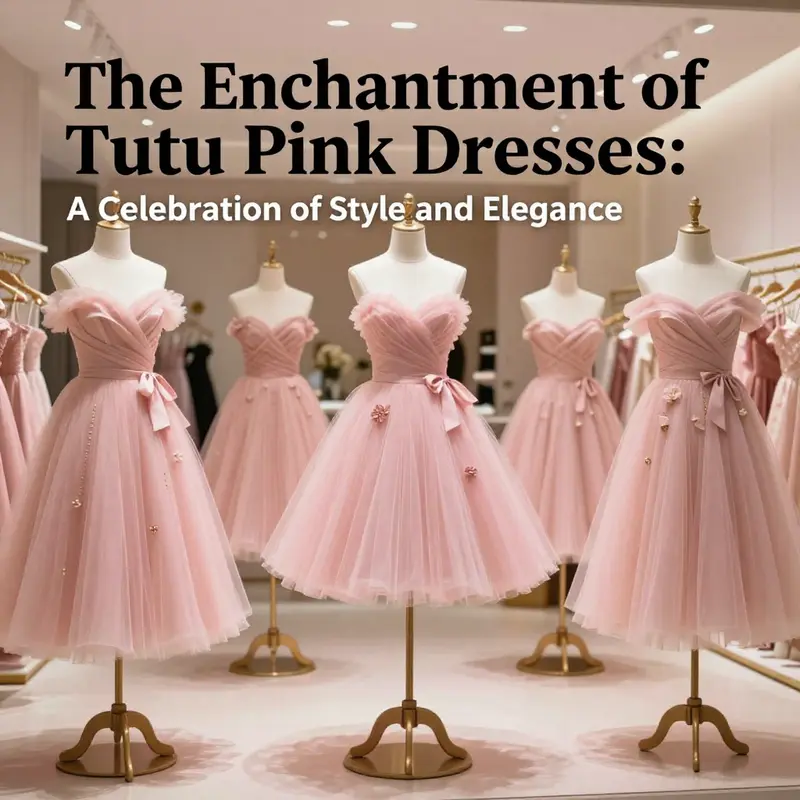
The tutu pink dress has long captured the hearts of children and adults alike with its enchanting structure and vibrant hues. Serving as a bridge between elegance and whimsy, this timeless piece draws influence from historical fashion while simultaneously dancing its way into contemporary wardrobes. In understanding the tutu pink dress, one must explore its fascinating history, key design features, cultural significance, and its evolving role within modern fashion trends. Each chapter importantly interlinks these aspects, presenting a cohesive view that not only showcases the dress’s aesthetic appeal but also its deeper values and versatile applications within various contexts.
Echoes in Pink: A Quiet History Behind the Modern Tutu Dress
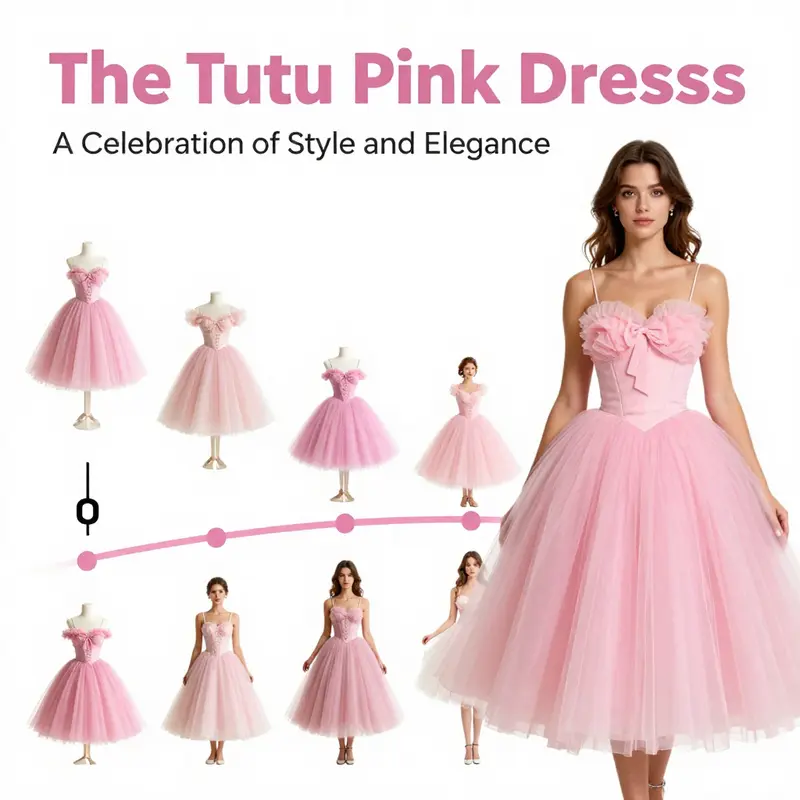
The tutu pink dress sits at a curious crossroads of memory and play, a garment that feels timeless even as its origins remain diffuse in the historical record. When we speak of a tutu in ordinary life, we conjure something buoyant and bright, a silhouette that seems to float above the world like a bubble of joy. Yet behind that surface, the fabric and form carry a language of costume making that travels from ballet stages to birthday parties, from studio corners to the small dramatic moments of a child’s day. The research surrounding this particular garment—often described as a princess dress because of its grand, pouffy shape—emphasizes contemporary design, material properties, and social uses rather than a documented lineage. There is a reason for this lacuna. The modern tutu pink dress is as much a product of current fashion culture as it is a descendant of much longer conversations about fabric, form, and fantasy. What follows is an attempt to honor that tension, to trace not a fixed chronology but a living thread that knits together technique, color psychology, and the social rituals that give the dress its enduring appeal.
The first image the mind often holds when encountering a tutu pink dress is the full, pouffy silhouette that makes the wearer look crowned by air. In practice, that silhouette is engineered through a careful layering of materials and a deliberate balance between flexibility and structure. Contemporary designers frequently rely on multiple layers of tulle, organza, or netting, sometimes backed by crinoline-like petticoats or lightweight interlinings, to create a shape that holds its outward curve without constraining movement. The stiff, fabric-elevated form of the tutu is a modern reply to older tailoring challenges—how to keep a skirt barring twirl and lift while a child dances and runs. Some variations lean into a delicate lace bodice or a satin waistline, which adds textural contrast and a touch of romance to the overall look. The result is a garment that feels magical at a glance, yet is designed for the practical realities of small performers who must bend, leap, and spin without losing their balance. In that sense, the contemporary tutu pink dress serves as a bridge between fantasy and function, a costume that enables expression while accommodating the sincerity of daily wear.
Color plays a crucial role in how the dress communicates its intent. Pink has long been associated with tenderness, warmth, and an uncomplicated form of joy. In childhood culture, pink often marks the realm of play and nurture, a signal that invites caretakers and peers to respond with care and encouragement. The tutu pink dress leverages that cultural shorthand, amplifying a sense of innocence without becoming saccharine. The pigment—whether a soft blush or a saturated magenta—works in concert with the fabric’s texture to create a visual softness that can feel almost edible in photographs and stage lighting alike. The color also supports a broad range of celebration contexts: a birthday, a recital, a family gathering, or a playful photo session that aims to capture a moment of unburdened delight. In these settings, pink is less about a fixed identity and more about a mood—an invitation to imagine, to be cheerful, and to inhabit a character moment briefly and wholeheartedly.
Though the pink tutu dress is widely used today, the technical core of its silhouette draws from a lineage that predates contemporary fashion rhetoric. The full, outward-facing shape evokes what costume historians often describe as a modern extension of historical skirt construction. In ballet terms, the silhouette is intimately tied to the tutu’s evolution from softer, Romantic-era forms to more structured, Classical interpretations that emphasize line and projection. The result for a child’s dress is a borrowed elegance: a nod to centuries of dressmaking that values texture, rhythm, and the drama of accentuated movement. Metal supports—thin, carefully concealed—and layered lining systems, as described in design literature, are not mere gimmicks; they are engineering choices that make a child’s performance legible from a distance. The interplay of supportive architecture and pliant fabrics allows the wearer to spring, twirl, and land with an ease that looks effortless but is born of thoughtful craft.
In this light, the tutu pink dress becomes more than a costume; it becomes a portable moment of storytelling. The dress invites a child to inhabit a role, whether it is a princess, a dancer, or a character drawn from a bedtime tale. This is not mere fancy. It is a practice of imaginative play, in which young people rehearse social roles, experiment with self-presentation, and test the boundaries of fancy within the safe frame of a party or recital. The texture of the fabric—soft, shimmering, lace-trimmed—offers tactile cues as well. When a child touches the edge of the skirt or runs a finger along the bodice, the garment becomes a medium of sensation, a way to translate emotion into physical form. The pink hue amplifies that sensation by signaling approachability and warmth, making the act of dressing a small person into a cooperative ritual of care—one in which adults and children negotiate space, pace, and pride with equal measure.
Yet for all its enchantment, this kind of dress also raises questions about comfort and practicality. A pouffy, multi-layered garment can be warm, heavy, or cumbersome on a summer afternoon or during an energetic dance routine. Designers increasingly respond by balancing aesthetics with comfort: selecting lighter-weight tulle, employing softer linings, and using breathable closures that minimize pinching at the shoulders or waist. Even as the dress aims to be visually captivating, there is a quiet ethic at work—one that values the child’s ability to move freely while still feeling dressed for the occasion. The care instructions that accompany such garments reflect this balance, emphasizing gentle washing, air drying, and the avoidance of harsh detergents that can degrade the delicate fibers. In practice, the best tutu pink dresses are those that respect both the spectacle of the moment and the daily realities of a child’s life, allowing a spark of wonder to endure long after the event has ended.
From a cultural perspective, the tutu pink dress functions as a symbol of youth and possibility. In many communities, these dresses are chosen for celebrations that mark milestones—birthdays, photo sessions, school performances, and even weddings where children participate in a larger choreography of family life. The dress’s appeal is not merely cosmetic; it acts as a prompt for imagination, a tangible artifact that anchors a story in the present while drawing upon a shared repertoire of fairy tales and stage traditions. The phrase that often surfaces in conversations about such garments—“The little girl loves wearing a pink dress”—speaks to a universal tenderness that people recognize across generations. It is this tenderness, threaded through with the energy of motion, that helps explain why the tutu pink dress has endured as a cultural object. It offers a doubleness: a reminder of childhood’s fleeting gravity and a doorway into a world where play can be both serious and silly at the same time.
Despite the storied past of the tutu as a costume form, the specific pink dress worn by children today rarely comes with a formal historical narrative. The available research tends to foreground contemporary design choices, material science, and usage patterns rather than a documented evolution. This absence is not a negation but a reality of how fashion histories accumulate. Some garments become legible through the archives of theaters and fashion houses, while others gain their meaning through everyday use—photos, performances, and family traditions that accumulate over time. In the case of the tutu pink dress, its historical footprint may be scattered across many small moments rather than consolidated in a single, authoritative chronicle. What emerges, then, is a picture of a garment shaped by ongoing conversations about form, function, color, and the social rituals that surround childhood dress. The lack of a singular origin story invites readers and designers alike to participate in the conversation, to observe how a modern piece borrows from the past while shaping new meanings in present-day contexts.
The design vocabulary surrounding the dress—pouffy silhouettes, layered fabrics, lace details, and shimmering finishes—also speaks to a broader democratization of dress-up culture. A tutu pink dress is not exclusive to a theater stage or a formal pageant; it operates in living rooms and backyards, in school recitals and promenade walks through neighborhood streets. In this sense, the garment becomes a cultural hinge: it is at once a costume that enables performance and a fashion object that sustains self-expression in everyday life. The dress’s accessibility matters as much as its glamour. It provides a premise for shared moments—parents guiding a child through a routine, siblings cheering from the wings, a camera capturing the glint of light on satin and sequins. In such moments, the pink dress ceases to be merely an item of clothing and becomes a vessel for memory, a piece of the family archive that grows with every new chapter of childhood.
For readers who wish to understand how these dresses can be approached from a practical, production-minded angle, a note about categorization may be helpful. Within the catalogues and small studios that offer this silhouette, there exists a spectrum of options that share a common DNA yet differ in mood and complexity. At the core is a foundational approach that values fit, fabric, and finish. From there, designers layer on personality through color saturation, decorative elements, and accessory coordination. The idea of a “basic tutu category” often anchors a more foundational set of choices that parents and caretakers may rely on when exploring a first tutu for a child. This approach emphasizes ease of wear, durability, and cost efficiency, without surrendering the essential DNA of the silhouette. It is in that space—the meeting of simple foundations and imaginative flair—that many households discover the most enduring magic of the tutu pink dress. For those who wish to explore these foundational options further, a practical starting point is a straightforward, user-friendly collection described as the basic tutu category, which provides reliable, versatile pieces that support growth and repeated use across different occasions.
In the broader landscape of children’s wear, many families approach the tutu pink dress as a ritual object rather than a one-time purchase. It becomes part of a yearly rotation of outfits for special events, a garment that can be passed down, shared among siblings, or reimagined with different accessories to suit a new story. This diffusion of use helps explain why the dress persists across generations and trends. It is not merely a dress that a child wears on a single day; it is a small stage on which a child rehearses social interaction, crafts a personal image, and learns how to inhabit a character with poise and joy. The dress’s pink hue, its layers of fabric, and its delicate adornments all contribute to a narrative that children internalize slowly, through repetition and surprise alike. The rhythm of dressing, the adjustment of a bow, the smooth glide of tulle against skin, all become part of the child’s sensorial education—an education that tends to be remembered long after the last twirl of satin fades from view.
If there is a moral to this quiet history, it is that the tutu pink dress operates best when it is allowed to be both wondrous and practical. It remains most compelling when designers and caretakers collaborate to honor the child’s comfort and autonomy. The silhouette should invite movement rather than constrain it; the color should prompt delight without overstimulation; the details should reward close looking without turning into distraction. In that balance, the dress becomes more than a stylish choice. It becomes a space where imagination can rise and confidence can grow, a small but meaningful contribution to a child’s sense of possibility. And because the contemporary landscape is rich with options—from lighter textures to more restrained embellishments—the wearer can inhabit many roles while still preserving the essential magic of pink and tulle. The modern tutu pink dress is, in this sense, less a single garment than a vessel for countless stories told in the language of fabric and light.
For readers who want to see how such pieces fit into a broader wardrobe strategy, the journey already begins with a thoughtful approach to layering and coordination. A simple base of comfortable underlayers, paired with a skirt that can be dressed up or down, allows the pink tutu to shine on stage or at a birthday without becoming burdensome after a few hours. The choice of accessories—shimmering headbands, soft gloves, or a restrained bouquet of artificial blooms—can tilt the mood toward fairy-tale elegance or toward playful camp, depending on the occasion. In a culture that prizes rapid trends, the tutu pink dress endures because it speaks to a more lasting form of imagination: a space where a child can try on a character, test a feeling, and then return to the real world with a renewed sense of possibility. The fabric becomes memory, the color becomes invitation, and the silhouette becomes a gentle introduction to the art of performance that lives in the everyday as much as in the theater.
In closing, while the exact historical development and origins of the tutu pink dress may not be thoroughly documented in the sources at hand, what is clear is its current vitality and cultural resonance. It stands as a testament to how fashion circulates between spectacle and everyday life, how a single shade of pink can carry a constellation of meanings, and how the pouffy, layered form continues to delight children and grown-ups alike. The garment invites us to acknowledge that history is not only found in dusty archives but also in the bright, recurring moments when a child twirls in a living room, when a family pauses to capture a photo, and when a performer takes the stage with a smile as wide as the skirts that surround them. For designers, families, and readers seeking a grounded entry into this world, the basic tutu category offers a practical entry point that respects the craft while welcoming fresh imagination. In this way, the tutu pink dress remains not only a cherished costume but a shared ritual of childhood—a small, luminous example of how history and play can dance together in the same frame.
Gossamer Lines, Regal Poise: The Design Features of the Tutu Pink Dress

The tutu pink dress stands at the crossroads of childhood fantasy and craft, a garment that translates fairy tales into form. It is not merely a dress; it is a small theater on the wearer’s frame, inviting imagination to inhabit a world where every step is a note in a longer song. The pink shade signals warmth and tenderness. Beneath its confectionary surface lies a careful choreography of design choices that balance beauty with wearability, storytelling with practicality, and tradition with modernity. To understand the tutu pink dress is to see how silhouette, structure, and texture collaborate to create an effect that feels instantaneous and timeless. The dress begins with weight and restraint at the bodice, then releases into a ballooning chorus of tulle at the hips—a silhouette that flatters while inviting movement that seems almost buoyant.\n\nThe bodice is typically fitted, cinching at the waist to define the wearer’s shape while serving as an anchor for the garment’s architecture. This is not a casual volume; it is a deliberate line that compels the eye upward and outward. The waist seam marks a pivot point where the dress shifts from close silhouette to the drama of the skirt. From there, the transition is decisive: layers of soft, lightweight tulle rise in a cascade that is at once delicate and structurally intentional. The volume is achieved not by a single layer but by an assembly of layers that can range from three to several, depending on the desired degree of poof. Each layer adds not just fullness but also a gentle texture, a whisper of color against the skin that shimmers as the wearer moves. Hidden within the layers, designers often embed wire or plastic hoops, or occasionally a light internal hoop, to maintain the skirt’s circular shape and keep the signature outpour of fabric intact even during quick turns and twirls. This structural backbone is essential because it preserves the fairy-tale silhouette when the wearer is in motion, whether on a stage, a dance floor, or a sunlit garden.\n\nThe choice of fabric amplifies the magic of the design. Tulle, the star material of the tutu, is celebrated for its weightless appearance and couture portability. It is soft and slightly sheer, a veil of color that catches light and breathes with the wearer’s motion. The pink spectrum available to tutu designers is broad—delicate blushes that glow with a soft luminescence, through warm baby pinks, to vibrant hot pinks that claim attention with confident whimsy. The color is never just pigment; it is tone and temperament, a mood that shifts with the angle of light and the tempo of the wearer’s gait. The layers themselves can be cut with varying degrees of stiffness or have subtle underlayers of gauze that soften the overall edge while maintaining the dress’s silhouette. In some designs, the tulle is reinforced with a fine underlayer of net or crinoline to offer additional lift without adding weight, ensuring that even complex dance steps remain effortless to execute.\n\nThe design vocabulary extends well beyond the core silhouette. Romantic tutus, which pay homage to the 19th-century ballet aesthetic, lengthen toward the ankle or calf, weaving multiple layers of gauze to create a dreamy, floating effect. The result is a garment that reads as a poem in motion—yesterday’s stagecraft reimagined for today’s wardrobes. By contrast, classical “pancake” tutus appear flatter and more rigid, thanks to tightly packed layers of stiff tulle arranged in a circular profile that resembles a shallow disc. This profile, often preferred for performances that demand precise lines and marching steps, relies on a slightly different construction approach, sometimes with less reliance on wires and more on the precise density of tulle layers. Modern interpretations, meanwhile, blend tradition with trend; embellishments such as lace appliqués, delicate ruffles, or subtle embroidery can elevate a pink tutu from costume to couture-inspired piece. These accents catch the light and create texture, inviting closer inspection and adding an element of tactile interest that compliments the dress’s visual drama.\n\nThe variations are not merely stylistic; they respond to different contexts and purposes. Shorter versions—mini tutu dresses—emerge as a bridge between pure fantasy and practical wear. They often feature puffed sleeves and bolder color saturations, designed to hold their own in outdoor settings like beach weddings or summer galas, where the breeze can carry the fabric in playful swirls. The shorter cut retains the essential line of the skirt but reinterprets it for a different kind of movement—from a quick spin on the dance floor to a carefree stroll at a garden party. In all these forms, the core relationship between bodice and skirt remains the same: the top anchors the silhouette, the bottom explodes with volume, and the two together choreograph how the wearer presents herself to the world.\n\nEmbellishments sit at the intersection of ornament and narrative. Lace trim along the neckline or the hem can soften the dress’s edges, inviting a whisper of refinement that aligns with the gown’s romantic sensibility. Appliqués—delicately positioned motifs, often floral or starry—add punctuations of interest without overpowering the overall shape. Ruffles, when used sparingly, breathe movement into the design, catching light as the wearer twirls and accentuating the dress’s swirling arc. The careful placement of these details matters: they should float in harmony with the skirt’s volume, not compete with it. The color of the embellishments can mirror or contrast with the pink base, creating a layered effect that reads well from a distance and rewards close viewing. The aim is to cultivate a sense of depth—a dress that looks serene from afar and richly textured up close, inviting the eye to linger and the mind to imagine a story.\n\nMovement is where the design’s philosophy becomes most visible. The tutu pink dress must not only stand still in a photograph but also breathe during motion. The layered tulle acts as a soft bell, shaping the wearer’s silhouette while allowing a wide range of hip and knee articulation. This is where the experience of the garment—its weight, its stiffness, its reaction to air—becomes tangible. The hidden structural elements keep the shape intact without impeding the dancer’s lines, ensuring that a grand battement or a simple twirl reads as effortless elegance rather than forced form. The interplay between fabric and frame is a conversation in physics and aesthetics: the skirt’s poise relies on a balance of tension and gravity, of lightweight layers resisting collapse while surrendering to the wearer’s motion. It is a rare design problem solved through a blend of craft discipline and artistic intuition, a testament to how fashion and performance share a common language of movement.\n\nBeyond technique, the tutu pink dress carries cultural resonance that deepens its appeal. The color pink itself is a shorthand for tenderness, youth, and warmth, a palette choice that signals approachable femininity while still lending itself to formality when paired with the right accessories. The dress resonates with memories of fairy tales and childhood celebrations, yet it also speaks to a modern appetite for playful sophistication. It is not simply about looking pretty; it is about dressing in a way that encourages imagination, a garment that makes a moment feel larger than life. Parents and guardians often choose this style for recitals, parties, or weddings because it carries a narrative promise: that the wearer has permission to step into a story where she is the heroine, the center of attention in a room that embraces whimsy and delight.\n\nThe historical arc of the tutu reveals an evolution from the long, Romantic skirts that once swirled in the wings of older ballets to a spectrum of forms that modern design systems can reinterpret for every occasion. The tutu’s lineage—stretching from Marie Taglioni’s ethereal lines to the bell, platter, and powder-puff variations—surfaces in today’s pink dresses through silhouette choices, fabric technologies, and decorative details. In one telling moment, the dress is a mirror of its own history: a modern garment that borrows from a repertoire of stage traditions, reinterpreting them to suit contemporary wardrobes and crowd-pleasing events. The result is a piece that remains instantly recognizable yet endlessly adaptable, a pink emblem that travels easily from a recital hall to a family celebration, from a festival stage to a styled birthday shoot.\n\nIn contemplating the design, one can imagine a future for the tutu pink dress that respects its origins while inviting new experimentation. Designers may explore lighter constructions that preserve sculptural volume with smaller ecological footprints, or they may experiment with color psychology by pairing pink with soft metallic threads, or even with complementary neutrals to temper the dress’s exuberance for more formal settings. The possibility space is wide because the core decision—the balance between a fitted bodice and a voluminous, layered skirt—retains its appeal across eras. The tutu pink dress is not a relic; it is a living form that invites new textures, new silhouettes, and new stories, all while preserving a recognizable image that instantly communicates whimsy and grace. When worn, the garment becomes a vehicle for expression: a child’s excitement at a recital, a guest’s celebratory posture, or a bride’s personal take on a fairytale moment. The design features thus do more than shape fabric; they shape experience, memory, and emotion.\n\nFor readers curious to see how these principles translate into real-world variations, a practical touchstone can be found in the tutu basics category, which serves as a bridge between theory and wearable garment. You can explore a representative range of foundational tutu silhouettes and related options at the following internal link: basic-tutu. This pathway offers a concrete sense of how the same core ideas—structured volume, layered tulle, and careful detailing—can be scaled or refined for different occasions, climates, and personal tastes, all while preserving the essential romance of the pink tutu.\n\nAcross contexts, the tutu pink dress remains a compact study in how dress design translates fantasy into everyday life. It demonstrates that the most arresting garments are often those that combine a precise architectural vision with a narrative impulse. The design features—bodice construction, waist emphasis, layered tulle dynamics, fabric choice, color range, and tasteful embellishment—work together to create a look that is at once cinematic and intimate, grand yet accessible. It is a reminder that clothing can be both a stage set and a personal emblem, a thing worn to spark delight and to signal a shared language of celebration. With every twirl, the dress answers a simple, enduring question: what if we could dress like a fairy tale and still feel grounded enough to walk, run, and dance through a world that often demands practicality? The tutu pink dress suggests that answer with poise, charm, and a generous measure of wonder. For a detailed visual and technical overview of classic tutu styles and their construction, see https://www.britishballet.org.uk/learn/tutus
Dancing in Pink: The Tutu Dress as a Cultural Bridge Between Ballet Heritage and Childhood Wonder

The pink tutu dress sits at an intersection where precision and playfulness meet. It is not merely a costume but a small theater piece that travels from studio mirrors to birthday candles, from recital stages to living room corners. Its pink hue carries a promise of gentleness and warmth. When a young wearer glides into a room in a tutu of pale rose or brighter fuchsia, the atmosphere shifts. Movement becomes music, fabric becomes a dialogue, and a child’s sense of possibility expands. In this way, the pink tutu has grown beyond the backstage world of ballet to become a beloved wardrobe choice for families seeking a fragment of enchantment in everyday life. The garment invites attention not as a statement of trend but as an invitation to story, rhythm, and the delicate balance between self possession and wonder that characterizes early imagination.
To understand why pink tutu dresses endure across generations, it helps to begin with the tutu’s long history. The tutu is inseparable from classical ballet, yet its origins drift further back into European fashion. In its earliest forms, ballet costumes borrowed heavily from long regal gowns that filled courts centuries ago. By the Romantic era, the silhouette began to shrink and simplify, allowing the dancer’s lines to breathe and the air around the dancer to shimmer. In 1832, the dancer Marie Taglioni wore a shorter ankle-length dress in a production remembered for its ethereal lightness. The effect was not only stylistic but symbolic: a move toward weightless ascent, a garment tuned to showcase the delicacy of a dancer’s turns and the barely perceptible flutter of fabric as the leg swept through space. The romantic tutu, with its skirt made from multiple layers of tulle, became a visual echo of the era’s fascination with the supernatural and the intimate, the wayndering wind and the sigh of a sighing fairy seemed almost tangible on stage. The choreography and the costume together predicted a new language of performance.
As ballet progressed into the Classical period, the tutu grew more structured and ceremonial. Choreographers like Marius Petipa shaped its silhouette for grand productions, where the choreography demanded a profusion of motion and a purity of line. The famous ballets—those that would become cornerstone narratives of Western theater—used the tutu not merely as clothing but as a narrative instrument. The white tutu, in particular, gained symbolic weight: Odette in Swan Lake embodies purity and vulnerability, while Odile embodies contrast and deception. The white fabric, stiffened by crinoline and supported by a disciplined understructure, translated musical phrasing into a visible texture. The tutu’s architecture—its stands and hoops, its stacked layers, its starched waistlines—was correlated with the storytelling requirements of the moment. Even without a single line of spoken dialogue, the dancer’s silhouette carried moral and emotional information, and the tutu served as the emblem through which those meanings traveled to every spectator in the house.
Pink then enters as a contemporary evolution within this storied lineage. It is not a departure from ballet’s heritage but a reinterpretation that makes the tradition legible to new audiences. In the modern world, pink tutu dresses are celebrated not only for stage performance but for their capacity to evoke a world of fairy tale charm in everyday life. The color pink is associated with tenderness, playfulness, and warmth. It can soften lines, brighten faces, and invite a sense of safety and comfort. For many families, pink is a color that signals care and approachability, a gentle invitation to participate in the rituals of dress up and celebration. The tutu’s poise remains—the layers of tulle still catch light, the silhouette still frames movement—but the pink adds a conversational tone, making the garment feel both timeless and accessible. Thus the pink tutu becomes a bridge between the art of ballet and the spontaneous social world of children’s gatherings, school performances, and family milestones.
From a design standpoint, the pink tutu dress is a study in balance and texture. The fullness of the skirt is rarely the result of a single element; instead it is the product of multiple layers of fiber that work together to catch air and glow under different kinds of light. Some garments rely on an internal framework that provides structure without constraining the wearer. Others use carefully arranged linings and soft tulle to achieve a cloudlike body that remains comfortable enough for play. The bodice often carries delicate lace, subtle floral appliques, or small sequins that catch the eye in a quiet, intimate way. These details do more than decorate they create a tactile narrative inviting a child to explore texture with fingertips as she spins and pivots lifting arms and guiding the body through a sequence of gentle motions that resemble a recital, a game, or a story she is inventing on the spot. In such moments the pink tutu becomes more than fabric it is a stage on which a child rehearses balance rhythm and the art of presenting herself with poise and confidence.
The cultural resonance of pink tutu dresses is also tied to the social contexts in which children wear them. Everyday life, family celebrations, and community events all contribute to a shared memory of what it means to dress up. A flower girl at a wedding may glide down an aisle in a pink tutu, her steps mapped in music and posed smiles. A birthday party might become a miniature performance space, where the child negotiates audience presence, timing, and expressive gestures—twirls, bows, and curtseys—within the comfort of familiar adults nearby. In classrooms and studios, such dresses offer a way to engage with movement and performance without the pressure of formal training. They invite participation, curiosity, and collaboration, turning a simple garment into a social instrument that can tune a group to shared experiences and collective joy. That social utility helps explain why pink tutu dresses persist across seasons and generations: they anchor memory in color, texture, and motion, all in one compact wearable form.
Another layer of resonance comes from how pink interacts with childhood development. Colors are not trivial in the rooms where children learn to notice themselves and others. Pink can signal safety and warmth, helping children feel at ease as they attempt new movements or stage new social roles being a dancer, a performer, a princess, or a curious explorer. Yet the tutu’s movement remains the core driver of the garment’s meaning. When twirls become spins and spins become leaps, the child learns about breath, timing, and space. The tutu frames this exploration, not by limiting it, but by highlighting the action. The fabric’s rustle, the shimmer of sequins, the soft weight of lace—all these sensory cues reinforce a sense of presence in the moment. It is in these micro moments—the tilt of a head, the adjustment of a hand, the way a dress catches the light at just the right angle—that the pink tutu dress becomes a tool for developing self-awareness and expressive capacity.
The popularity of pink tutu dresses in contemporary fashion is underscored by their broad appeal across a spectrum of households. They are worn for weddings as flower girl outfits, for school performances, at birthday parties, and for Saturdays when the living room becomes a stage. This ubiquity is not mere happenstance; it reflects a cultural willingness to celebrate the ritual of childhood in ways that honor movement, color, and story. The pink tutu is a ceremonial garment in the sense that it marks an occasion, but the experience it creates—glee, laughter, shared wonder—extends far beyond the event itself. The garment thus doubles as memory, a keepsake of a moment when a child felt seen, celebrated, and connected to something larger than the ordinary rhythm of daily life. In doing so it reinforces a broader cultural pattern in which dance, family life, and fashion merge to form a language of play that adults want to sustain for as long as possible.
Within this rich tapestry the pink tutu dress also speaks to the collaborative nature of childhood fashion. Parents, designers, seamstresses, and shopkeepers all participate in shaping the garment’s meaning. Choices about fabric weight, layer count, lace intensity, and color shade are not merely technical preferences; they reflect a shared intent to nurture a child’s sense of wonder while offering a practical, durable piece that withstands the rough and tumble of play. In that collaborative act the pink tutu becomes a family project, a small but meaningful ritual that teaches care, patience, and pride in creating something beautiful together. The dress thus functions as a bridge between the history of ballet and the daily life of a child, between the artistry of performance and the intimate theater of home, between memory and anticipation of future moments when movement and color will again intersect in a new and personal way. For readers who wish to explore a broader range of tutu styles while staying true to the essential spirit of the pink tutu, a simple classic tutu line offers a reliable starting point. This path emphasizes silhouette and proportion, encouraging a graceful line without overwhelming the wearer. To discover more about these timeless options you can explore a basic tutu collection see basic tutu collection. https://luneballet.com/product-category/basic-tutu/. In the end the pink tutu dress embodies a quiet enduring philosophy of childhood fashion. It signals that elegance can be gentle and that grace can be playful. It reminds us that clothing is not only about appearance but about participating in a shared cultural practice that values artistry, movement, and imagination. The color pink anchors this invitation in warmth and tenderness while the tutu’s layered fullness invites the eye to linger on the march and the turn, the lift of a chin and the flutter of a skirt. The garment carries forward a lineage that begins in the music halls and ballrooms of Europe and travels toward the playground, the classroom stage, and the family photo album. There, in those small rituals, the pink tutu dress becomes a cultural artifact, a portable theater of childhood that travels with the wearer wherever she goes, turning ordinary days into stories that are remembered long after the curtain falls. For further reading on the historical evolution and cultural impact of the tutu see Britannica’s tutu article: https://www.britannica.com/art/tutu
From Fairy-Tale Silhouette to Runway Staple: The Tutu Pink Dress in Modern Fashion

The tutu pink dress has long worn the aura of a fairy tale, yet it continues to adapt, shimmering at the edges of everyday style and stepping confidently onto runways, weddings, and casual gatherings alike. Its pouffy silhouette, historically reinforced to hold its shape, speaks of ceremony and childhood fantasy, while the same silhouette can be reinterpreted into lightweight, wearable shapes that move with a modern rhythm. The result is a garment that does not merely evoke whimsy; it becomes a canvas for personal storytelling. In contemporary wardrobes, the tutu pink dress is less a costume and more a statement about how joy, color, and texture can coexist with practicality and sophistication. The full, sculpted volume that once defined the look remains a defining feature, yet the way it is designed, cut, and finished has broadened dramatically. The dress has traveled from the studio to the street, from the stage to the ceremony, and now into everyday moments that call for a touch of celebration without surrendering comfort or versatility.
Final thoughts
The tutu pink dress not only holds a cherished place in the hearts of young girls but also reveals a rich tapestry of historical, cultural, and design significance. Its journey from ballet studios to children’s dress-up closets reflects a unique blend of tradition and contemporary fashion. As business owners in the children’s fashion industry, understanding the allure and enduring popularity of the tutu pink dress is crucial for capturing customer interest and delivering offerings that resonate with the joy and innocence associated with this garment. Embracing this knowledge positions brands to effectively cater to the desires of parents and their children, creating memorable experiences centered around the charm and elegance of the tutu pink dress.