
Why Your Leotard Rides Up in Class: An Overview
If you have ever paused mid-plié to tug at your bodice, you know how distracting it is when a leotard rides up. The problem shows up at every level, from a beginner’s first class to a professional rehearsal, and it is not simply a sizing mistake. Two mechanical factors decide most of it: fabric stretch recovery and seam placement.
Dancers who understand both can pick a leotard that holds through a full class. Instructors can steer students toward better-fitting balletwear instead of guessing. For designers, it is a reminder that how a garment is engineered decides how it performs, whatever it looks like on a hanger.
The sections below cover how fabric stretch recovery determines whether a garment returns to its original shape after stretching, and how seam placement routes that fabric around the body. They also cover how the design choices at dadatutu.com put quality and comfort first.
Fabric and seams only work when they work together. Get both right and the leotard stays where you put it.
The Science of Fabric Stretch Recovery in Leotards
When a dancer extends into a grand jeté, the leotard’s fabric stretches well past its resting size. Whether it returns depends on fabric stretch recovery – how reliably a knit snaps back to its original shape once the tension is released.
The behavior comes from elastane, also sold as spandex or Lycra. Unlike cotton or nylon filaments, elastane is built from segmented polyurethane chains that sit coiled like small springs. Tension straightens and stretches those coils; release lets them pull back toward their relaxed state. That is elastic recovery, and it explains why elastane content matters in performance wear. A blend with 15-20% elastane usually recovers better than one with 5%, because more of the knit carries that spring.
Fiber is only half of it. Knit construction – the interlocking loop pattern that gives fabric its stretch – decides how evenly the load spreads and how quickly the shape returns. A dense, well-built knit supports recovery; a loose, thin one sags.
Wear changes that. Each stretch cycle, wash, and pass through a hot dryer damages elastane’s polymer chains. Over time, fabric stretch recovery weakens as the fibers fatigue, break, and lose their recoil, and the garment stops returning to size.
The result is visible. Once leotard stretch stops rebounding, fabric stays stretched around the hips and the body’s movement pulls the slack upward: the classic ride-up. Poor recovery, rather than a poor fit, is often the cause. It is one reason designers compare blends by how long they hold their shape. This guide to ballet garment design covers more of the underlying construction principles.
Comparing Common Leotard Fabric Blends
The knit you choose decides whether a leotard stays put or shifts all class. Six common blends are compared below, so instructors and designers can weigh comfort against performance before committing to a material.
Table: Fabric blends and their stretch recovery performance in balletwear
| Fabric Blend | Fabric Composition | Elastane Percentage | Stretch Recovery Rating | Breathability | Riding-Up Risk |
|---|---|---|---|---|---|
| Nylon-Elastane | 80% nylon, 20% elastane | High (18-20%) | Excellent | Moderate | Low |
| Cotton-Elastane | 90% cotton, 10% elastane | Low (8-10%) | Fair | High | High |
| Polyester-Elastane | 85% polyester, 15% elastane | Medium (14-16%) | Good | Moderate | Medium |
| Specialty Performance Knit (Supplex) | 78% Supplex nylon, 22% elastane | Very High (20-22%) | Excellent | High | Very Low |
| Microfiber-Elastane | 88% microfiber, 12% elastane | Medium (12%) | Good | Moderate | Medium-Low |
| Tactel-Elastane | 82% Tactel nylon, 18% elastane | High (16-18%) | Very Good | High | Low |
Fabrics with more elastane and a tight four-way stretch resist ride-up best. Specialty performance knits and nylon-elastane blends recover quickly, snapping back after each grand plié or extension so the leg line holds. Cotton-elastane feels soft but recovers slowly, which lets a leotard ride up during jumps. Polyester-elastane trades some memory for durability. The balletwear construction guide covers seam placement in more detail; when recovery and softness conflict, recovery is what keeps dancers comfortable.
How Seam Placement Affects Leotard Fit
Dancers tend to blame the fabric when a leotard rides up, but seam placement is often the real cause. Where the seams sit, and which direction they run, decides whether the knit stays put or creeps upward with every plié and grand battement.
The gusset and crotch seam
The gusset is the shaped panel between the legs. Built well, it gives the knit room to stretch across the hips without dragging the crotch seam upward. If the gusset is too narrow, or the crotch seam sits too far forward, the fabric has nowhere to release tension and crawls toward the body’s narrowest point.
Center back and side seams
The center back seam follows the spine’s curve so the rear panel can stretch vertically instead of bunching. Side seams run down the torso and hips; when they sit on a flat, non-stretchy line, they anchor the fabric and the surrounding knit pulls inward.
Seam direction: along stretch or against it
Seam direction matters more than any single seam. A seam placed along the lines of stretch moves with the knit and lets it recover cleanly. A seam placed perpendicular to the stretch resists that movement, so the fabric bunches and climbs. In balletwear design, seam direction is often what decides whether a leotard stays put or hikes up mid-combination.
Why the gusset ties it together
A well-placed gusset spreads tension across the hips, thighs, and pelvis instead of concentrating it at one seam. A garment balanced that way moves with you; an unbalanced one you keep tugging down.
If you are comparing how different adult silhouettes handle construction and coverage, this breakdown of adult garment fit is a useful next step to explore.
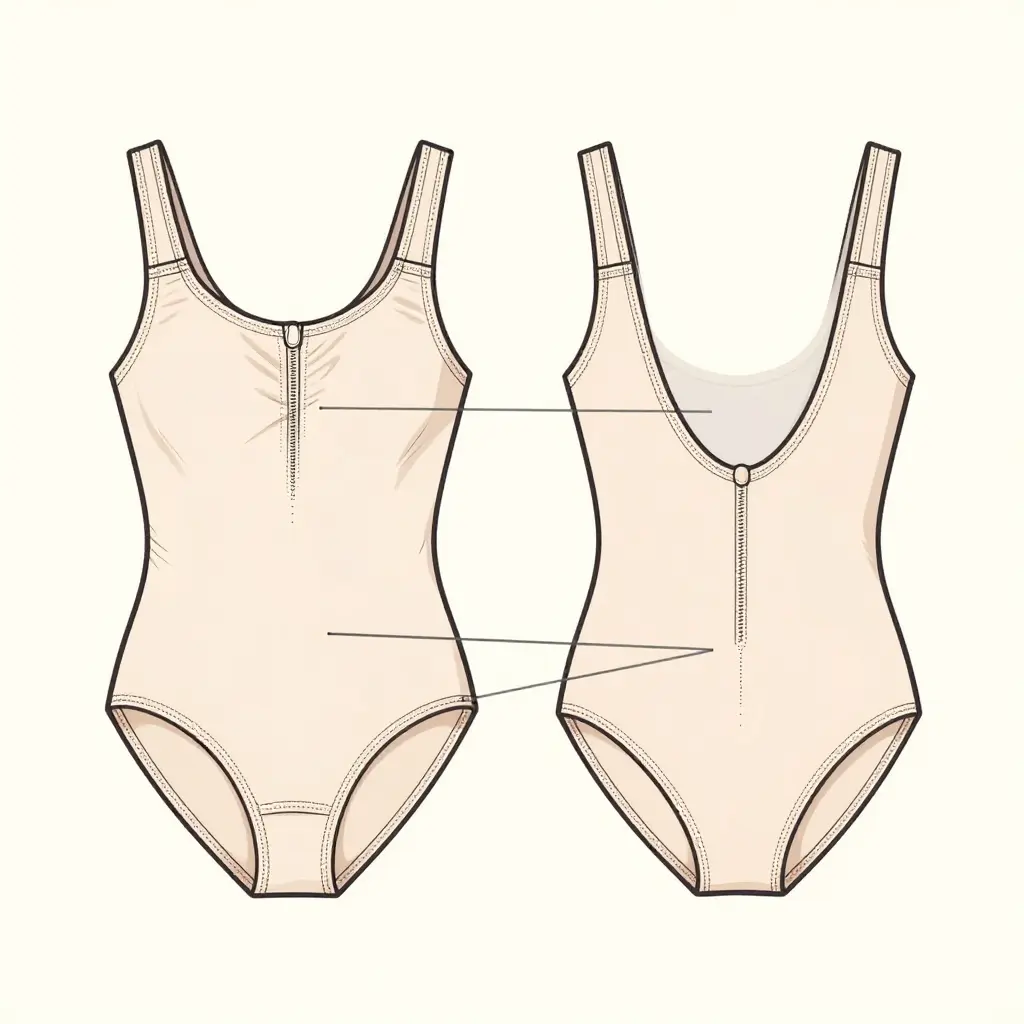
Seam Placement Diagram: Where the Tension Lines Run
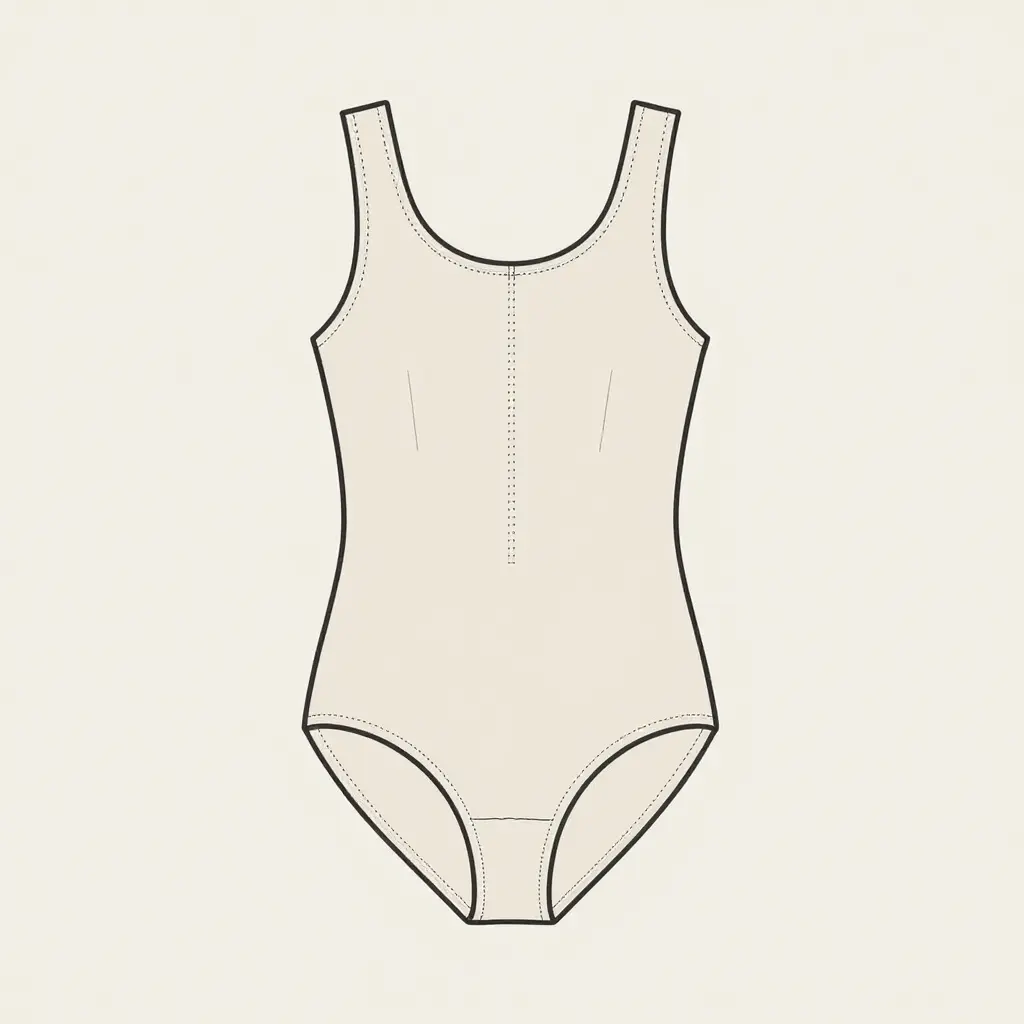
The schematic marks four lines that decide how a leotard holds its shape and recovers from stretch:
- Gusset – the small, low-stretch insert at the crotch that limits how far the fabric can travel upward.
- Crotch seam – the front-to-back join that sets the base of the fit and defines where the garment pivots.
- Center back seam – the vertical line down the middle of the back that controls rear coverage and recovery.
- Side seams – the two edges that map the body’s circumference and guide how tension distributes around the hips and torso.
The lines form a simple orthogonal layout: horizontal control at the crotch, vertical control down the back, structural edges at the sides. When one seam sits even slightly off, the others have to compensate, and the leotard starts to climb mid-combination. The ballet tutu guide follows these construction choices into finished performance pieces.
Common Causes of a Riding-Up Leotard
- Incorrect sizing – a leotard that is too tight or too loose shifts instead of conforming, so the fabric migrates upward.
- Low elastane content – fabrics with little spandex fail to snap back, so the hem creeps up.
- Worn-out elastic recovery – repeated wear and washing fatigue the fibers, leaving the fabric permanently slack.
- Misplaced gusset – a gusset set too far forward or back cannot anchor the crotch, so the fabric drifts upward.
- Insufficient rise length – a short torso rise pulls the fabric taut and forces it to climb.
- Heavy perspiration – moisture lowers friction between skin and fabric, allowing smooth sliding during class.
- Body proportions – a long torso or high hip line can overwhelm a standard rise, encouraging constant creep.
Every cause on that list comes down to fabric stretch recovery or seam placement. A knit with enough elastane springs back and holds your lines; worn elastic does not. Seams that follow the body’s curves keep a leotard anchored, while a misplaced gusset or a short rise lets it wander. When a leotard rides up, sizing is rarely the whole fix; well-constructed balletwear with materials that rebound class after class is.
Fabric Stretch Recovery Over Time
Recovery fades with every spin cycle and every grand plié. The chart tracks three common leotard blends across 60 wear-and-wash cycles, showing when each starts to slump. The balletwear construction insights cover how these textiles behave in performance wear.
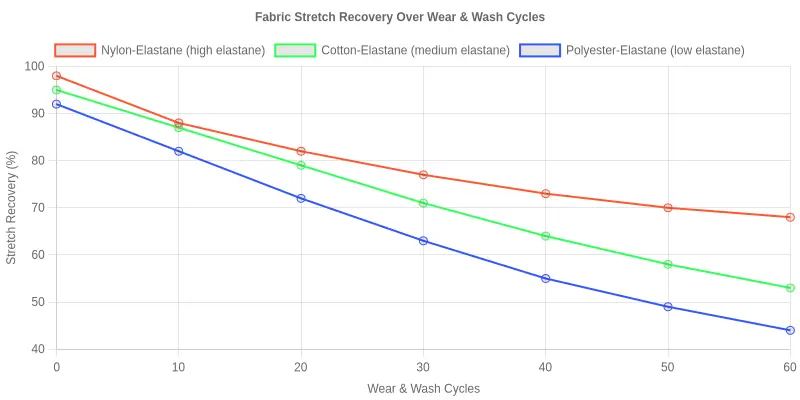
Figure caption: By cycle 60 every blend has lost some of its fabric stretch recovery, but not at the same rate. High-elastane nylon holds roughly 68% recovery, cotton-elastane drops to about 53%, and polyester-elastane falls to near 44%. More elastane means a leotard resists sagging and riding up longer.
Movement, Body Mechanics, and Riding Up
A leotard works like a second skin under constant tension. Every step asks the fabric to elongate, rebound, and hold its position against the body. When that balance fails, the leotard rides up in class – the fit may have been fine on the hanger, and the movement itself drags the garment upward.
What Each Movement Does to the Fabric
Hip flexion comes first. In a développé or a simple knee lift, the thigh travels through a large range, so the fabric over the hip joint compresses at the front and stretches hard across the back. If fabric stretch recovery is slow, the stretched fibers do not snap back into place; they creep, and every repetition nudges the crotch line a little higher.
Grand battement and leg extension make it worse. A high kick moves the leg through roughly 90 to 110 degrees, loading the gusset and the side seams with each pass. Plié adds a different force: the hips drop and rotate outward, the pelvis pushes forward, the thighs press down and away, and friction against the inner leg drags fabric up the torso. Jumps add vertical load. On landing the body compresses, the fabric bunches, and then it rebounds along the path of least resistance, which usually runs upward.
This is where seam placement becomes decisive. A seam set forward of the hip crease, or a gusset cut too low, gets caught by the moving leg and pulled upward with every step. A well-mapped seam anchors the leotard at the hips and spreads tension evenly, so stretch recovery works with the body instead of against it. How a garment is built matters as much as how it is worn. For a closer look at how construction choices shape fit and movement, see this guide to how ballet tutus and bodices are built.
Typical Leotard Fabric Composition
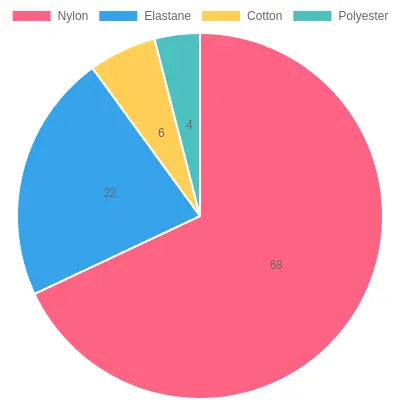
The pie chart breaks down the material share you will find in a typical studio leotard. Nylon leads at 68%, providing durability and a smooth, opaque hand feel. Elastane follows at 22%, the elastic core that governs stretch and recovery. Cotton adds 6% for breathability, and polyester makes up the last 4% for colorfastness and quick drying. Those proportions shape how the garment moves, snaps back, and stays in place, which is why fabric choice sits at the heart of every balletwear design decision.
Caption: At roughly 22% of this blend, elastane drives the stretch recovery that lets fabric snap back after every plié. Too little elastane and a leotard sags, creeps upward, and rides up mid-class. Pairing that elasticity with smart seam placement is what keeps balletwear comfortable and secure.
Designing Balletwear That Stays in Place
A leotard that creeps upward during grand pliés is rarely a sizing accident. Most of the time it is a fiber and construction decision made long before the first fitting. When dancers say their leotard rides up in class, that is a design signal: something in the stretch, the knit, or the seam is failing. The specifications below address each one.
Set your elastane percentage thresholds
Elastane is what gives a knit its fabric stretch recovery – the ability to return to its original dimensions after being pulled. Practical thresholds to design against:
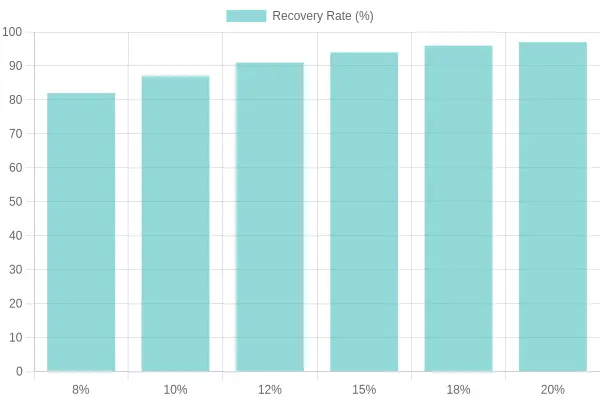
- Under 10% elastane: insufficient snap-back; the knit fatigues and creeps over a session.
- 12-18% elastane: the working sweet spot for most performance leotards.
- Above 20% elastane: the most snap-back, though the fabric can feel rubbery and tight.
Choose knit structure for stability
Warp knits such as tricot hold their dimensions better than weft knits, which feel softer but stretch more freely. Four-way stretch lets fabric move with rotation and elevation instead of dragging the gusset out of position.
Run elastic recovery testing, not guesswork
Before approving any fabric, run elastic recovery testing: stretch the swatch through repeated cycles (50 is a solid baseline), then measure permanent growth. Keep residual growth under 5%. Above that, seams migrate upward across a two-hour class.
Get seam placement and the gusset right
Seam placement is the most commonly skipped fix. Set the gusset 6-8 cm wide with three to four layers where coverage matters, and angle side seams slightly toward the back rather than directly over the hip bone, where rotation tugs them up. Reinforce stress points with a soft, low-tension binding so the opening never rolls inward.
Those specifications match how dadatutu.com builds its garments: fabrics that truly recover, seams that follow movement, and a gusset that keeps the leotard where it belongs. Designers scaling these choices into larger production runs can start with this tutu dress design guide for business owners.
Frequently Asked Questions
These are the questions dancers, instructors, and dancewear designers ask most often.
Does sizing or fabric cause a leotard to ride up?
Both matter, but fabric is usually the main cause. Stretch fibers that have lost their snap let the garment creep upward instead of holding its shape, and a too-small size makes it worse. Choose strong recovery over a tighter fit.
Can seam placement be altered on an existing leotard?
Sometimes, but it is delicate work. A skilled seamstress can reposition leg openings or insert a gusset, but changing seam placement often weakens the original structure. If the fit issue is minor, alterations help; for major redesigns, a new custom piece is usually more reliable and comfortable.
How do I test fabric stretch recovery?
Stretch a swatch to its limit, hold for ten seconds, then release. Quality fabric returns to its original length; poor fabric stays stretched or puckers. Repeat several times to reveal fatigue. This simple fabric stretch recovery test shows whether a leotard will hold its shape through class.
How often should I replace a leotard?
Replace it once it no longer recovers, seams pucker, or the fabric feels thin and slack. With heavy use, most dancers go through a leotard every six to twelve months. Rotating several leotards extends each one’s life, so explore choosing the right balletwear and keep your wardrobe performance-ready.
Do cotton or synthetic blends resist riding up better?
Synthetic blends, especially those with elastane or spandex, resist riding up far better than cotton. Cotton stretches but recovers poorly, so it sags and creeps during movement. A nylon-spandex blend delivers the elasticity and snap needed to stay put through tendus, jumps, and turns.
What else keeps a leotard in place during class?
Beyond fabric and sizing, adjust the leg openings and straps so they sit flush without pinching, and wash in cool water and air-dry to protect elasticity. Habits like these slow the recovery loss that lets a leotard creep mid-combination.
Conclusion: Choosing Balletwear That Moves With You
When a leotard rides up in class, the garment’s engineering is usually at fault, not the dancer. Fabric stretch recovery and seam placement work as a pair: recovery decides whether a fabric springs back to its original shape after every plié, tendu, and grand jeté, while seam placement decides which way the tension pulls. Weak recovery combined with a poorly angled gusset or a high-cut leg line is exactly what sends fabric creeping upward mid-combination.
For dancers, the practical move is to choose leotards whose fabric snaps back quickly and whose seams follow your natural movement lines rather than fight them. Instructors who understand these mechanics can guide students toward gear that lets them focus on technique instead of tugging at a waistline. For designers, comfort and elegance come from the same source: careful patterning and high-recovery knits. The comprehensive ballet tutu guide shows how the same principles shape other forms of dancewear.
At dadatutu.com, we build reliable, comfortable, and elegant balletwear that supports movement and gives every dancer confidence in what they wear.