
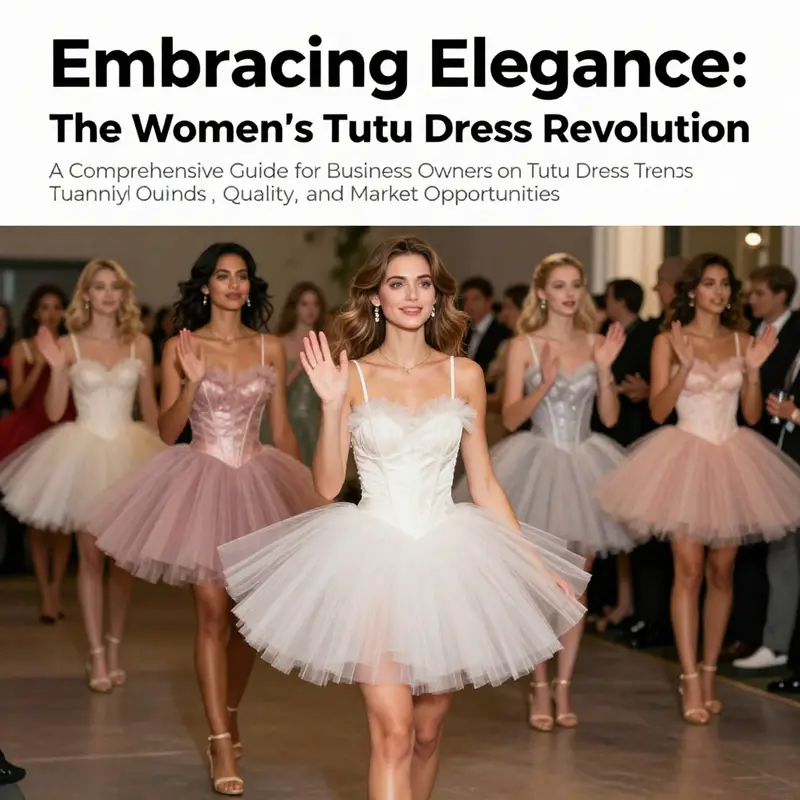
The women’s tutu dress has transcended its traditional ballet roots to become a fashionable staple that resonates with diverse consumers. This versatile piece, with its playful silhouette, serves various occasions, from casual gatherings to formal events. As a business owner, understanding the nuances of tutu dresses—from their evolving styles and quality materials to shopping trends—can provide valuable insights into market dynamics and enhance your offerings. This article will explore the style and versatility of tutu dresses, dive into the essential aspects of material quality, and highlight current shopping trends that can help inform your business strategies.
Layered Light, Limitless Style: The Evolving Versatility of Women’s Tutu Dresses
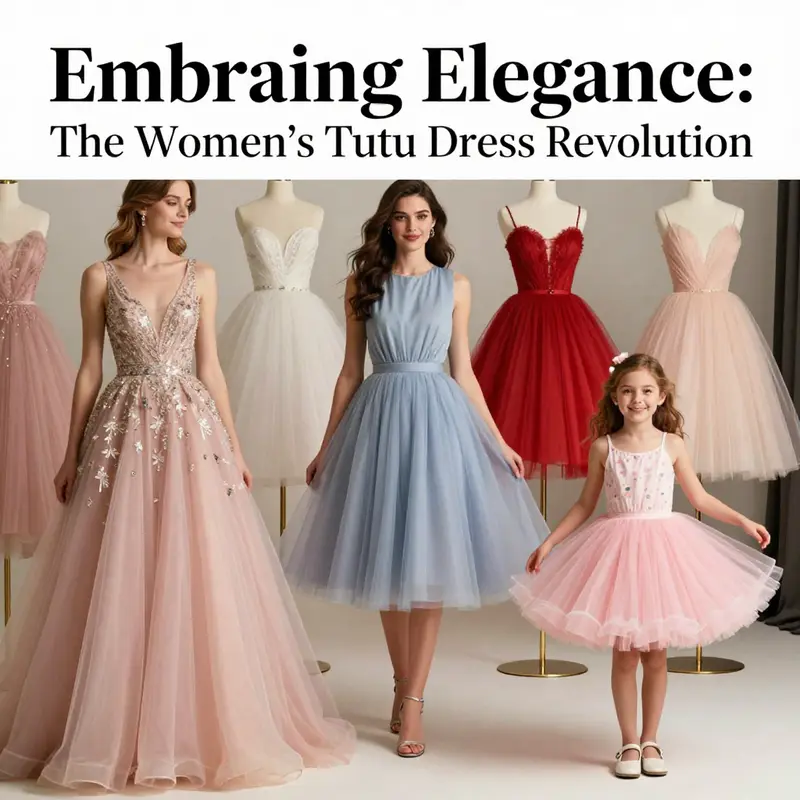
The women’s tutu dress has traveled far from its classical ballet roots to become a living canvas for personal expression. It is not merely a garment but a performance in fabric, a silhouette that moves with intention, offering a generous expanse of tulle that catches light and breathes life into a wearer’s posture. The tutu dress, in its modern form, relishes the space between whimsy and sophistication. Its full, layered skirt creates a rhythm of movement that can be tuned to the moment—whether a wedding aisle, a midnight celebration, or a playful daytime gathering. At first glance, the look may feel playful, almost childlike in its buoyant volume. Yet the way the layers fall, the texture of the net-like fabric, and the way a bodice holds shape all contribute to an elevated presence that can read as glamorous, romantic, or daring, depending on how it is styled. This adaptability is what keeps the tutu dress relevant across seasons, occasions, and personal moods. It is a garment that asks for imagination and offers structure in return, a rare combination that invites both performance and everyday wear when approached with care and a clear sense of intent.
The silhouette is the core vocabulary of the tutu dress. The fullness of the skirt—often achieved by four to five layers of light-tulle—creates a volume that moves as a single, sculptural entity. This fullness does not overwhelm all body types; instead, it frames the wearer with a halo of fabric that can enhance height, emphasize movement, and smooth lines where needed. The fullness is tempered by the bodice, which can be tailored, structured, and contoured to provide support while allowing the skirt to swing freely. The result is a garment that can feel fairy-tale-like in its grandeur or streamlined in its minimalist iteration, depending on the fabric weight, the number of layers, and the length chosen. Shorter versions offer a buoyant, contemporary edge when paired with sleek accessories, while midi and full-length gowns transform into statements of ceremony and grace. In this spectrum, the tutu dress functions as a chameleon, revealing different facets with the same fabric foundation.
The materials are as important as the silhouette in delivering the tutu dress’s celebratory feel. Soft, breathable tulle dominates, selected for its lightness and its capacity to hold shape without weighing the wearer down. When multiple layers are stacked, the skirt gains the signature cloudlike fullness that seems to float with every step. A lining or stretch mesh on the bodice adds comfort and a touch of structure, ensuring the dress sits securely through long events and busy dance floors. Modern designs may also incorporate subtle embellishments—delicate lace overlays, sequins that catch a hint of light, or metallic threads woven into the bodice to catch the eye without overpowering the overall balance. There is a quiet luxury found in these details: a well-cut bodice that supports rather than restricts, a skirt that moves with freedom, and surfaces that reflect light like a constellation when the wearer is in motion.
Beyond the classic full skirt, the tutu dress has branched into variants that accommodate different contexts. A midi-length tutu dress can skew formal without losing its playful edge, making it a versatile option for weddings, cocktail soirées, or a glamorous night out. Shorter tutu dresses, often designed with comfortable sleeves and flexible fits, are ideal for school events, birthday parties, or casual gatherings where ease and cheer are part of the equation. For those seeking a more dramatic impression, gowns with layered tulle, strategic pleating, and sculpted bodices create a regal, almost fairy-tale aura. In every case, the design intention remains clear: the garment should honor the wearer’s movement, frame posture with confidence, and offer a sense of possibility—like an empty stage waiting for the right presence to fill it.
Color and texture expand the tutu dress’s versatility far beyond its traditional pale tones. Bold red, emerald green, electric blue, and other saturated hues bring a contemporary punch to the silhouette, turning the dress into a focal point rather than a quiet backdrop. Color-blocking emerges as a strong trend, where contrasting panels or gradient effects guide the eye along the lines of the body and accentuate the wearer’s movements. Prints—ranging from florals to abstract motifs—inject whimsy and personality, making the tutu dress a playful partner for daytime adventures and festive nights alike. The material’s translucence—tulle’s sheer, airy nature—also brings a dimensionality to color, where multiple layers catch light at different angles, producing a soft, living glow that can shift with the wearer’s pace or the surrounding ambience.
The question of fit becomes central when the tutu dress is worn across different events and body types. A thoughtfully designed tutu dress embraces inclusivity through a range of sizes and adjustable elements. A well-cut waistband, elastic panels, and carefully placed seams can accommodate movement and comfort without compromising the garment’s shape. In this vein, the trend toward inclusive sizing is not a gimmick but a recognition that personal celebration comes in many forms. The goal is to ensure that every person who wants to experience the joy of a tutu dress can do so with ease, dignity, and a sense of belonging on the dance floor or at the ceremony. The result is a wardrobe that invites experimentation, where a single piece can be styled for different moments with only small tweaks—changing footwear, swapping accessories, or layering a jacket or cardigan to shift the mood from festive to refined.
The versatility of the tutu dress also extends to the way it is styled for different settings. For a formal event, pairing a mid-length or floor-grazing tutu with a structured bodice, luxe fabrics like satin or capelet-style outerwear, and refined jewelry creates an ensemble with a timeless, editorial appeal. The movement of the layered skirt adds drama as the wearer enters a room, the fabric catching light and swaying in a controlled, deliberate rhythm. For a daytime or casual mood, a shorter tutu dressed with ankle boots or clean sneakers and a simple tee or crisp blouse can read as charmingly modern rather than contrived. The trick lies in balance: keep the accessories sleek and let the skirt carry the visual weight, or introduce playful elements that echo the dress’s energy without competing with it. The tutu dress thrives on this balance, rewarding thoughtful restraint with a look that feels intentional and alive.
The practical side of choosing and wearing a tutu dress deserves attention as well. Maintenance considerations include the gentle handling that tulle requires and the careful cleaning that embellished pieces demand. Delicate detailing, such as lace overlays or sequined accents, asks for careful care to maintain their luster and integrity. When LED-lit versions exist for performances or themed events, the care notes multiply: batteries may need to be removed before washing, and metal accents require protection from moisture. The practicalities can be woven into the fashion narrative rather than treated as an afterthought. A well-cared-for tutu dress remains a reliable partner across seasons, offering consistent movement, structure, and color. The longevity of the garment comes not from a single moment of sparkle but from repetition of wear, layering of styling ideas, and the care that keeps the fabric buoyant and the silhouette honest.
Shopping for a tutu dress becomes an exercise in translating mood into material. A shopper might begin with the core idea of a tutu’s fullness and then explore whether a midi, mini, or maxi length best suits the event calendar and body type. The palette may guide a decision toward a single, bold color or toward a curated set of hues that can be swapped for different occasions. Different designers and retailers present a spectrum of options, from minimalist, refined pieces to highly decorative gowns with intricate detailing. The practical questions—how it sits on the shoulders, how the waist defines the torso, whether the lining provides the desired level of opacity—become essential. A practical approach blends vision with function: select a silhouette that flatters the movement you seek, choose fabrics that breathe, and consider the kind of undergarments or shapewear that maintain comfort over hours of wear.
Within this landscape, the tutu dress also serves as a storytelling garment. Its layers can be interpreted as a metaphor for personal growth, a playful nod to nostalgia, or a bold assertion of contemporary style. Some wearers choose a single statement color that resonates with their personality, while others craft a narrative through accessories—earrings that catch the light, a belt that defines the waist, a cape or jacket that adds texture. The result is a piece that invites conversation, a wearable stage on which the wearer can express optimism, romance, strength, or whimsy. The tutu dress becomes a vehicle for confidence, a means by which someone can claim space in a crowd and own it through the fluid motion of the fabric. In this sense, the garment transcends trend cycles; it becomes a lasting symbol of celebration and personal agency.
For those who want to explore the practical spectrum of options, a closer look at the catalog of tutu silhouettes can be illuminating. A category like the basic tutu offers a straightforward entry point into the world of tulle and fullness. It provides a foundation on which to build personal style, testing fit, color, and length without overwhelming the wearer with embellishments. The basic tutu is where comfort meets clarity, a chance to discover which proportions and textures align with one’s daily life and ceremonial ambitions. To see how this practical entry point translates into real wardrobe versatility, consider the experience of styling a simple, cleanly cut tutu with a few carefully chosen pieces: a delicate pendant, a tailored blazer for a smart-casual evening, or a cropped cardigan for a playful afternoon gathering. The result is a look that feels cohesive despite its seemingly divergent elements. This approach—starting with a solid base and layering in accents as needed—reflects a broader principle: versatility thrives when the design provides room to breathe, and the wearer, in turn, breathes life into the garment.
Seasonality also informs the tutu dress’s adaptability. In warmer months, lighter tulle and brighter colors read as fresh and buoyant, aligning with outdoor weddings, garden parties, and summer festivals. In cooler seasons, heavier fabrics or multiple layers can be modified with lining weight, subtle metallic finishes, or a structured outer layer to preserve warmth without sacrificing movement. Even as trends shift, the fundamental appeal remains: a silhouette that communicates invitation and cheer, a fabric that whispers elegance, and a design that invites experimentation. This convergence of lightness and structure makes the tutu dress a perennial favorite for people who want clothing that supports performance—whether actual dancing, stage presence, or simply the performance of daily life with greater grace.
Accessibility and inclusivity are increasingly shaping the tutu dress market. More brands recognize the importance of offering extended sizing, adjustable waists, and adaptive closures that accommodate a wider range of body types and abilities. The goal is not to dilute the charm of the garment but to ensure that its joyful energy is not restricted to a narrow group of wearers. In practice, this means more options for different torso lengths, arm configurations, and comfort-focused fabrics that drape well on diverse figures. When a dress accommodates movement—whether a swift spin, a quick turn, or a long, steady stride—it communicates respect for the wearer and acknowledges the many ways people enjoy dressing up. The tutu dress, in this light, becomes a democratic garment that invites everyone to participate in a shared moment of celebration without compromising comfort or dignity.
Cultural resonance also plays a role in how the tutu dress is perceived and adopted across communities. While rooted in the language of classical dance, the tutu has become a canvas for multicultural expression, seasonal celebrations, and artistic collaborations. The layers of tulle can be reimagined with embroidery, appliqué, or colorwork that nods to regional aesthetics or personal heritage. The result is a garment that remains modern without losing its sense of whimsy and wonder. This cultural openness feeds a broader conversation about fashion as a form of storytelling, a way to honor memory while creating new moments. As designers and wearers continue to experiment, the tutu dress stands as a reminder that fashion can be both generous in its proportions and precise in its craft—a garment that invites time and movement to co-author its meaning.
To bring this wealth of possibilities into everyday life, it helps to connect imagination with practical knowledge. The path from desire to dress involves considering the event, the mood, and the environment. It involves recognizing when to scale the silhouette up or down, how to pair with footwear that respects both comfort and style, and how to select accessories that complement rather than compete with the fabric’s drama. It also means acknowledging the role of care in preserving the garment’s beauty, from gentle cleaning to careful storage that guards against snagging and crushing. In a world that prizes instant gratification and fast fashion, the tutu dress stands out as a reminder that some pieces are worth a longer, more attentive relationship. They reward patience with a look that remains as fresh and relevant as the day it was first worn.
For designers and buyers seeking practical context within a broader catalog, consider the basic tutu category as a logical starting point for testing fit and color. This entry point can help refine preferences before moving to more ornate options. basic tutu category offers a concrete example of how simple structure can translate into limitless styling. Meanwhile, the broader ecosystem of tutu-inspired garments demonstrates how educators, performers, and fashion enthusiasts alike can harness the volume and movement of tulle to convey emotion, build character, and celebrate individuality. The tutu dress thus becomes not only a wardrobe choice but a point of connection across ages and cultures—a garment that invites everyone to find their own narrative within its folds.
As this expansive view of the tutu dress evolves, it is useful to hold two ideas in balance. First, the fullness of the skirt invites a stage-ready presence. The counterpoint to this is the discipline of fit and restraint that prevents the look from tipping into costume. A well-proportioned tutu dress respects the wearer’s shape, moves with intention, and stays comfortable for extended wear. Second, versatility is not a motif coded into a single season but a sustained practice. It is the art of layering, accessorizing, and reimagining the same silhouette across moments that demand different energies—romantic, festive, minimalist, or theatrical. In this practice lies the tutu dress’s enduring appeal: it is not locked into one mood, but rather ready to play any role the wearer chooses, with grace, ease, and a touch of sparkle.
The chapter of the tutu dress is never closed. It continues to unfold as designers experiment with new textures, finishes, and sustainable practices. It continues to welcome a broader audience through inclusive sizing and thoughtful design that respects diverse bodies and lifestyles. It continues to inspire wearers to step into a space where movement, color, and texture become a language of their own making. And it invites readers to imagine not just what a dress can be, but what a life can be when the fabric becomes a partner in celebration and expression. In this sense, the tutu dress remains a timely emblem of confidence and creativity—a reminder that fashion can be both a celebration of joy and a thoughtful craft that endures beyond the moment.
External resource: for further inspiration and a broader look at tulle-based dresses in contemporary fashion, you can explore a global marketplace’s collection of women’s tulle dresses at https://www.aliexpress.com/wholesale?catId=0&initKey=1&SearchText=women+s+tulle+dress
Weaving Light and Luxury: Material Mastery in Women’s Tutu Dresses
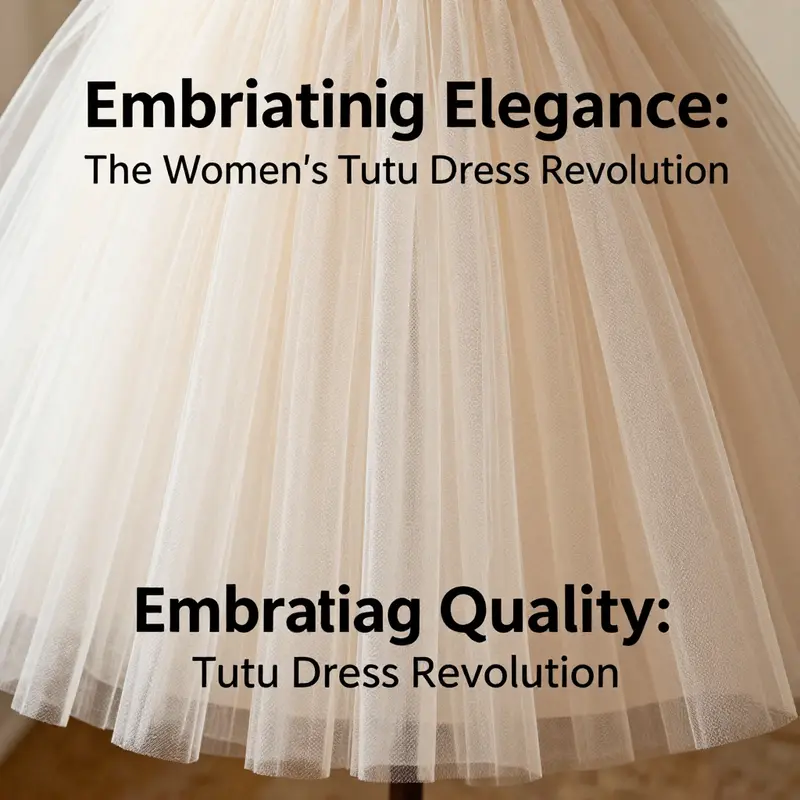
The women’s tutu dress is more than a playful silhouette. It is a study in material poetry, where the choice of fabric, the precision of construction, and the care woven into every seam come together to create a garment that can be worn from a casual gathering to a formal debut. The material quality of a tutu dress is not an adornment but the very scaffolding that holds its signature volume, its buoyant movement, and its comfort across hours of wear. When we speak of material quality in this context, we are tracing a lineage from the delicate yet resilient tulle that forms the skirt to the supportive layers that cradle the body, to the finishing touches that prepare the dress for the stage, the aisle, or the dance floor. The result is a garment that not only looks sculptural but feels right against the skin, moves with ease, and endures the tempo of events without sacrificing its shape or its charm. To understand this fully, one must see how each material choice interacts with the dress’s restlessness of motion, the demands of performance, and the desire for a garment that can be worn again, season after season, without surrendering its character. In practice, this means looking beyond aesthetics to the careful engineering of fabric, underlining that the tutu dress is, at its core, a fabric assembly engineered for lightness, drama, and longevity.
At the heart of every tutu dress lies tulle, the mesh-like fabric that creates the garment’s buoyant volume. High-quality tulle is typically lightweight yet surprisingly sturdy, with a texture that feels soft to the touch but holds its shape with poise. The sheer magic of the tutu comes from layering, most often four to five layers, sometimes more in gowns destined for formal events. Each layer adds depth to the silhouette, enabling a fullness that remains airy rather than heavy. The layering is more than a visual effect; it is a practical design choice that distributes weight evenly and enables the dress to maintain a springy, dancerly balance. When the layers are properly cut and basted, the skirt can rise with the wearer’s motion, catching air and flashing color in a way that reads as choreography even when the wearer is standing still. The result is a skirt that behaves like a living sculpture, its movimento dictated by fabric physics as much as by the wearer’s steps. Alongside plain tulle, designers may incorporate satin overlays, textured tulle, or subtle lamination. A satin layer beneath the tulle can add a gentle sheen and a smoother surface against the skin, while textured tulle—ribbed, woven, or embellished with a delicate pattern—can introduce visual interest that catches the light without appearing heavy.
The material story is not complete without attending to the inner components that determine comfort across hours of wear. Inner lining is more than a courtesy; it is a practical necessity for extended wear. Fabrics such as cotton blends, spandex blends, or satin are commonly chosen because they minimize friction, reduce irritation, and provide a supportive counterpoint to the stiffness of the tulle. A soft lining wicks moisture away, accommodates movement, and helps the dress glide over the body rather than cling. The lining’s finish matters as much as its fiber content. A smooth surface reduces chafing during leaps, spins, and general activity, while a slightly cooler touch can prevent heat buildup when performance schedules extend late into the evening. The interaction between lining and outer layers is a delicate balance: the lining must be compatible with the skirt’s drape, ensuring that the fullness remains visible and the silhouette reads as intended from every angle.
In assessing fabric quality, a number of practical cues emerge. Texture is a quick gauge: premium tulle tends to have a consistent, even mesh with a soft hand, resisting pilling or snagging. Weight matters as well. A dress built from too-light a tulle can appear wispy and may struggle to hold its shape after a few wears; too-heavy a tulle tends to flatten and restrain movement. The ideal choice is somewhere in the middle, a fabric that cooperates with gravity, breathes reasonably well, and returns to its full form after each stride. Color integrity is another signal. High-quality tulle holds color evenly across the layers, remaining vibrant under stage lighting and camera flashes. When designers layer patterns or textures, the clarity of those details should remain crisp rather than blurred by inferior fabrics or uneven finishing.
The discussion of material quality would be incomplete without addressing finishes and accents. Embellishments such as beads, sequins, or metallic threads must be anchored securely to withstand the stress of movement. Seam finishes should be robust, with reinforced seams along the waist and the tier junctions to prevent tearing where the layers meet the bodice. The edges of the tulle, if left unfinished, risk snagging or fraying as the wearer moves through doors, aisles, or dance floors. A well-made tutu dress anticipates these moments, with careful edge finishing and an internal architecture that preserves both shape and comfort. Even the hardware—the zippers, hooks, snap closures, and elastic waistbands—speaks to quality. Durable zippers that glide smoothly, reinforced waistbands that distribute tension evenly, and secure, flexible closures assure that the dress remains reliable through a night of celebration.
For those who seek a more performance-oriented expression, LED-equipped tutu dresses have emerged as a striking option. These designs illuminate the skirt, turning the ensemble into a living beacon under stage lights or at Halloween celebrations. The materials behind LED versions must accommodate electronics and still maintain the same brightness, fullness, and movement as non-lighted designs. The LED elements require careful integration: a lightweight, well-sewn battery compartment, discreet but accessible wiring, and protective linings that keep electronics away from skin and moisture. The wearability of such pieces hinges on the quality of the tuck, the seam allowances around the lighting components, and the ease with which the elements can be removed for maintenance or washing. It is essential to approach LED tutus with an understanding of care requirements; many versions advise battery removal before any cleaning to prevent corrosion or short circuits, and embellishments like metal accents or certain glitters may be advised against contact with water. These subtle constraints reflect a broader truth about modern tutu dress materials: as the design evolves to incorporate new technologies or textures, the fabric construction must adapt to preserve wearability, safety, and style across the life of the garment.
In the realm of material evaluation, synthetic fibers are pervasive and practical. Polyester, the backbone of many tutu fabrics, offers resilience, colorfastness, and relative ease of care. The best high-end tutus often use carefully engineered blends that marry the durability of synthetics with the comfort and breathability of natural fibers. A blend might feature a voile or satin lining paired with a tulle shell, or a satin overlay stitched atop multiple tulle layers to catch the light in a refined, nuanced way. The goal is to achieve a fabric system that breathes enough for comfort during long events, holds its shape under lights and movement, and remains visually dynamic as the wearer performs. The construction lip is to avoid stiffness that would hamper flexion; instead, the layers should invite motion, with the fullness peaking under the right angles and thinning gracefully as the dancer shifts weight or the wearer sits.
Material quality also extends to the underpinnings that quietly support the overall effect. In a well-made tutu dress, the bodice may include a structured lining or interfacing that shapes and sustains the torso, ensuring the neckline and waist hold their position as the skirt explodes into motion. The shoulder seams should lie flat, and any delicate lace or beaded elements placed near the neckline or waist must be anchored with reinforced interiors to prevent tugging or shifting during wear. When thoughtfully executed, these details contribute to a dress that feels deliberate rather than decorative in a way that is fragile or easily damaged. It is this alignment of body-skin comfort, silhouette integrity, and resilience that differentiates a well-made tutu dress from a costume that looks good in a photo but falters in real life. The investment in high-quality materials, therefore, is not merely a matter of luxury; it is a practical decision that affects comfort, reliability, and long-term wearability.
In practice, choosing a tutu dress with superior material composition begins with understanding fiber content and construction. Look for explicit fiber content labels that reveal whether the fabric is 100 percent polyester or a blend with cotton, silk, or elastane for stretch. Multi-layer construction speaks loudly about quality: a dress that lists four to five layers of tulle, with a secondary lining or a satin underlayer, signals a well-considered approach to fullness and drape. The presence of reinforced seams, high-grade elastic at the waist, and a well-finished back closure all point to durability. Consider also how the dress behaves under different lighting and movement; a high-quality constructed tutu will maintain its form in bright light and will not collapse into a flat sheet when the wearer spins. In contrast, a quick, inexpensive version may appear voluminous in static pose but lose its flattering dimension once motion begins. A careful, tactile inspection can reveal these differences: test the fabric’s weight in your hands, examine the edge finishes, and assess how the layers breathe and move as you gently manipulate the garment.
From a consumer perspective, the practical implications of material quality extend to care, maintenance, and longevity. Tulle fabrics respond best to gentle care. Many practitioners recommend hand washing or machine washing on a delicate cycle in cold water, followed by air drying away from direct heat. The repackaging of a tutu into a closet or a suitcase for travel should not cause towering creases or permanent flattening, so the fabric’s resilience to packing is also a clue to its quality. A well-made tutu dress will tolerate occasional washing with minimal distortion; it will also come with careful care instructions that respect the fabric’s wants—whether that means avoiding exposure to chlorine, keeping metal embellishments from rubbing against delicate surfaces, or removing LED components before washing to protect the circuitry. The relationship between material quality and care is intimate: the better the fabric and construction, the clearer the care path, and the longer the garment will maintain its character.
Sustainability has quietly shifted material conversations in recent seasons. Designers and brands are increasingly turning to recycled or biodegradable tulle and to dyes that minimize environmental impact while preserving color clarity. The movement toward sustainable practices does not merely address ethics; it also influences how a tutu dress wears over time. A dress crafted from responsibly sourced materials can retain its volume and color for longer, maintaining the sense of joy that a tutu dress is meant to evoke. Inclusive sizing and adaptable patterns also contribute to material efficiency, as garments can be adjusted rather than discarded in the pursuit of a perfect fit. In this broader context, the tutu dress becomes not just a piece of fashion but a statement about how a product is made, how long it lasts, and how its materials align with values around sustainability and inclusivity. The trajectory of material quality, then, is inseparable from the broader arc of fashion that seeks to combine beauty with practicality, performance with care for people and planet.
A practical lens helps translate these ideas into concrete steps for shoppers and makers alike. When evaluating a tutu dress, begin by inspecting the inner lining and the fabric’s feel against the skin. A high-quality lining should glide smoothly and feel cool, even after contact with the outer layers. Next, assess the tulle’s density and its ability to hold fullness after gentle compression; simply put, if the dress immediately collapses when pressed, the layers may be too thin or poorly bonded. Next, examine the seam lines for neatness and strength; reinforced stitching at tier junctions and around the waist ensures longevity through repeated wear. If you see misaligned edges or uneven overlays, take note that the costume may not endure a night of dancing or a routine with multiple spin moves. Finally, consider the care requirements. A label that recommends dry cleaning, gentle hand wash, or specific washing temperatures is a sign of thoughtful construction, while vague guidance or no guidance at all suggests a potential risk of damage during cleaning.
On balance, material quality is the compass that guides both design and purchase decisions for tutu dresses. It informs how fullness is achieved without sacrificing wearability, how color and texture are sustained under lighting and movement, and how the dress can be enjoyed beyond a single occasion. For those seeking a material story that translates into real-world confidence, the right tutu dress is a blend of science and art: layer by layer, fiber by fiber, stitch by stitch, it speaks to a long-standing obsession with buoyancy, drama, and a sense of timeless celebration. As you explore options, consider not only the surface impression but the underlying fabric system and construction philosophy that makes the garment resilient and wearable. For a sense of how these principles translate into actual products and to explore options that emphasize professional-grade construction, you can explore the professional tutu category. professional tutu category. This reminder is not merely a shopping tip; it is a prompt to value materials that honor both comfort and craft, ensuring that the tutu dress remains a source of joy rather than a disposable trend. The fabric story, in other words, is the thread that ties fashion to performance, and performance to lasting memory. In this light, material quality becomes an invitation to invest in a piece that can accompany a wearer through celebrations, performances, and everyday moments with the same sense of wonder that first drew people to the tutu in the studio and on the stage. Finally, it is worth noting a vital external reference that foregrounds textile safety and labeling guidelines as a benchmark for quality in apparel, including tutus: https://www.cpsc.gov. This resource provides a framework for understanding how fabrics are tested, labeled, and judged for consumer safety, reminding us that the pursuit of beauty in a tutu must also be grounded in responsibility and care for wearers and their surroundings.
Couture-Ready Whimsy: How Modern Women’s Tutu Dresses Redefine Everyday Glamour

The tutu dress has traveled far from its first stage entrance as a pure costume prop into a realm where it behaves like a multi-faceted garment, capable of crossing from casual whimsy to formal ceremony with equal ease. In 2026, the fashion conversation around women’s tutu dresses centers on something quietly radical: versatility that reads as high fashion. The tutu, once a familiar silhouette perched on the edge of novelty, now anchors outfits that are meant to be worn again and again in different contexts. This is not about chasing a single party look but about building a wardrobe where a single piece can anchor a wedding party, a gala, a music festival, or a sophisticated evening out. The shift reflects broader consumer desires for pieces that deliver both emotional resonance and practical wearability, a marriage of bold statement and everyday usability. The result is a tutu dress that invites experimentation without demanding it, a garment that speaks in multiple voices depending on how it is styled, layered, and accessorized.
The most striking hallmark of this shift is the move toward couture-ready versatility. Designers are reimagining the tutu not as a costume accent but as a foundational element of a modern, grown-up wardrobe. The dress is being crafted with the same care and construction one would expect from luxury silhouettes: precise bodice shaping, architectural draping, and multi-layered skirts that hold their volume while remaining light and poised. These gowns and dresses favor clean lines and restrained silhouettes when paired with the right elements, yet they can explode into drama when the moment calls for it—an instant caption for a red carpet, a festival stage, or an artsy cocktail hour. The result is a tutu dress that feels intentional, not whimsical by accident, with a line of refinement that makes it resonate beyond a single season or a single event.
Material choices are central to this elevated concept. Tulle remains the backbone, but the fabric is often upgraded to premium varieties. Silk organza can give a tutu a whisper-weight sheen, while metallic threads woven through the tulle catch the light as the wearer moves, creating a subtle but unmistakable halo of luxury. Lace overlays scribble intricate patterning over bodices or skirt panels, adding texture and depth that lift the garment from festive to formidable. The skirt construction itself has matured; instead of a single fluffy shape, many designs use a carefully engineered profile—multiple layers, with the top layers cut in slightly different lengths or with sculpted hemlines—to create movement that feels choreographed rather than merely decorative. This is not fabric play alone; it is a statement about how fabric interacts with the body and the room around it. It also means color is used more thoughtfully. Jewel tones—emerald, sapphire, amethyst—sit beside neutrals like champagne and ivory, while deeper charcoals and graphite provide a modern counterpoint to the tutu’s traditionally buoyant aura. Far from being loud by default, the color story is curated to offer options that flatter a wide range of skin tones and lighting conditions, making the tutu dress adaptable to day or night settings and to varied event atmospheres.
Another dimension in this couture-ready evolution is the integration of the tutu into broader garment ecosystems. A tutu-inspired skirt can be paired with a tailored blazer for a business-casual event, or a short-sleeve, color-blocked tutu dress can be layered over a sleek bodysuit for a night out that still reads polished. There is a growing interest in incorporating tutu elements into other garments—think a sheer-overlay skirt stitched to a structured dress, or a goddess-like tutu panel that drapes over a column gown to create an ethereal peak of volume at the hem. The aesthetics of the tutu thus migrate beyond the standalone dress, inviting designers to explore combinations that blend costume logic with couture savour. Such cross-pollination widens the circumstances in which a tutu can feel appropriate, elevating the piece from novelty to necessity for certain wardrobes.
Wearability in 2026 is less about maintaining a childlike charm and more about translating that charm into confidence and poise. Consumers are gravitating toward pieces that feel grown-up but delightfully expressive. This means a tutu dress is often built with a more supportive, structured bodice, sometimes including boning or a lined interior to coax posture into an elegant silhouette rather than relying on sheer volume alone. A well-constructed bodice anchors the look, allowing the skirt’s fullness to animate the wearer’s movements rather than overwhelm them. The result is a garment that can be worn comfortably for longer periods, whether the wearer is seated at a ceremony or spinning on a dance floor. Comfort, of course, remains a function of fit and fabric. Breathable linings, stretch mesh in strategic zones, and thoughtful weight distribution help the dress feel less like a showpiece and more like a personal statement that one can carry through hours of activity. The couture approach, then, is not just about appearance; it is about an ergonomic design philosophy that respects the wearer’s body as much as the fabric’s memory.
From the wardrobe perspective, the tutu dress becomes a chameleon. A midi-length tutu dress with a satin-smooth bodice can read as a bridesmaid dress or a cocktail-ready number depending on the accessories and tailoring. A floor-length gown with a layered tulle skirt and a jewel-toned hue stands up to gala lighting and formal portraits, while its counterpart in a lighter, shorter form can be styled down for a garden party or an intimate reception. The key is versatility in the layering and the finish. A simple belt can cinch the waist and transform the proportions of a voluminous skirt, while a velvet or patent-leather jacket can temper the playful aesthetic for a more restrained evening tone. Footwear follows suit: a tutu dress can ride on a sky-high stiletto for formal events, or be paired with sleek ankle boots and opaque tights for a day-to-night urban look. The play between textiles, color, and silhouette is where the contemporary tutu reveals its real power—the ability to morph into various personas without demanding a new garment altogether.
Sustainability and ethical considerations have increasingly informed how designers approach the tutu’s evolution. Eco-conscious producers are exploring recycled tulle and biodegradable trims, seeking to reduce waste across production cycles. This is not mere trend-saving; it is a practical response to the growing demand for responsible luxury. For many shoppers, a tutu dress that is designed to endure and to be repurposed across seasons is a stronger value proposition than a single-use costume. Inclusivity in sizing also marks a meaningful shift. Where the tutu once lived mostly in smaller size ranges, brands are expanding options up to plus sizes, ensuring that the joyful, empowering feel of the garment can be embraced by a broader range of bodies. That move toward inclusive sizing aligns with the broader fashion industry’s current emphasis on accessibility and representation, signaling that what is worn on the dance floor or at a gala can be owned by a larger audience rather than a select few.
In the social economy surrounding fashion, the tutu dress has found a potent stage in digital storytelling. Pinterest and other visual platforms function as laboratories for experimentation. A single image or short clip can spark a matrix of styling ideas—from pairing with a cropped tailored jacket to layering over a sleek bodysuit for a bold, streamlined effect. The shareability of these looks feeds demand, creates a sense of community around a garment that is inherently celebratory, and nudges mainstream audiences to view it as wearable art. Celebrities and influencers contribute to this dialogue by introducing the tutu dress to new demographics, reframing it as a vehicle for confidence and personal narrative rather than a costume prop. When a public figure steps onto a platform wearing a tutu dress in a sophisticated, grown-up way, it validates the concept of the tutu as a versatile fashion tool rather than a one-note novelty. The aspirational appeal is thus reinforced by real-world demonstrations of how to style and carry a tutu with grace, poise, and a modern aesthetic.
Shopping for these refined tutu pieces has likewise matured. The landscape has shifted from a focus on novelty and price to one that foregrounds craftsmanship, long-term value, and the ability to adapt to multiple contexts. Shoppers increasingly seek a tutu dress that they can wear for more than one event, that travels well, and that remains flattering as trends shift. In practical terms, this means a premium for higher-quality tulle, better interior construction, and coatings or finishes that resist snagging and maintain color integrity after repeated wear. It also means attention to care. Delicate embellishments, LED elements, and lace overlays require careful handling. Some LED-infused options, for instance, call for battery removal before washing and a precise drying protocol to prevent any moisture-induced damage to electronics. The care instructions for these pieces underscore the broader truth: the tutu dress is becoming a long-term investment piece, one that is meant to grow with the wearer’s evolving style rather than function as a disposable novelty. For many shoppers, the decision to purchase a tutu dress rests on the confidence that the garment can be reimagined through styling rather than replaced when fashion cycles shift.
If you begin your exploration with a focus on a modern, versatile tutu, you might start with a straightforward option—a midi-length silhouette with a structured bodice and a modest amount of volume that serves as a reliable anchor for future experimentation. The look can be dressed up with lace overlays for a formal event or dressed down with a cropped jacket for a chic day-to-night transition. It is in the careful balance of line, texture, and color that the tutu reveals its most elegant potential. For those who want to browse with intention, a practical gateway is to explore the basic tutu category, which often hosts a curated range designed to stay timeless while offering subtle updates for each season. You can glimpse that curated approach by visiting the basic tutu collection: basic tutu category. The category serves as a reminder that a tutu dress is not merely about volume but about the artistry of proportion and the elegance of restrained embellishment.
Within this evolving framework, the shopping journey becomes a conversation between the wearer and the garment. It asks the wearer to consider where the dress will live in their life: a wedding party that requires a certain polish, a gala that rewards a dramatic entrance, or a festival that invites playful self-expression. The tutu dress offers a spectrum of possibilities. The style decisions—how much volume to tolerate, whether a longer hem is appropriate, whether metallic threads or lace should be the focal point—are less about following a trend and more about translating personal narrative into fabric language. In that sense, the tutu is a democratizing luxury: it makes the wearer a co-creator of the look, inviting thoughtful tailoring, careful accessory pairing, and deliberate color choices that reflect mood and occasion rather than conformity.
As we look toward the future of tutu dresses, the trajectory seems to lean more heavily into modularity and customization. Designers are experimenting with detachable panels, adjustable waistlines, and interchangeable overlays that let a single dress morph to suit multiple events without needing different garments. This idea of modularity reinforces the broader fashion impulse toward complete styling—an approach where the tutu dress is not a single garment but a canvas for storytelling. Accessories become crucial partners in this narrative: a clutch that echoes the dress’s color story, a belt that emphasizes the waist, or a cropped jacket that introduces a sharp silhouette against a soft, voluminous skirt. The choreography of styling, lighting, and movement is what makes the tutu dress come alive in a moment. It is no longer the survival of a look through a single evening but the creation of a wardrobe that winks with whimsy while standing firmly in contemporary aesthetics.
What lessons emerge for the consumer who wants to incorporate a tutu dress into a thoughtful, long-lived wardrobe? First, invest in quality over impulse. A well-made tutu with a sturdy bodice, durable lining, and well-sewn seams travels better and maintains its structure over time. Second, prioritize a design that speaks to a mature sense of taste—one that harmonizes volume with restraint, and color with adaptability. Third, think about care and longevity. Delicate fabrics require respectful handling, and any extra features like LED lighting or sequins deserve careful maintenance. Finally, embrace the tutu as a means of self-expression rather than as a costume cue. When styled with intention, a tutu dress becomes a versatile instrument for personal storytelling—an outward signal of confidence, creativity, and the wearer’s unique sense of style.
The broader implication for the women’s tutu dress landscape is a redefinition of what a dress can be. It is not a single-purpose garment meant for one moment; it is a central piece in a dynamic, self-curated wardrobe. The tutu dress now stands for a philosophy: that fashion can be both joyful and aspirational, both comfortable enough for daily wear and striking enough for occasions that demand presence. It invites customers to experiment within a framework of quality and craftsmanship, to explore color and texture as a language, and to approach every event as an opportunity to tell a new chapter of their own story through a single, transformative silhouette. In this way, the tutu dress ceases to be a novelty and becomes a signature—a reliable canvas for celebrating moments large and small with a sense of wonder that remains deeply rooted in modern style.
External resources contribute additional context on how couture-ready fashion narratives evolve in contemporary dress design. For readers seeking a broader perspective on elevated evening wear and the role of playful silhouettes in high fashion, see an external overview on current trend developments: https://www.vogue.com/article/tutu-dress-trend
Final thoughts
Understanding the evolving landscape of women’s tutu dresses can provide business owners with a competitive edge in the fashion market. By recognizing the styles and versatility of these garments, appreciating the importance of material quality, and staying abreast of shopping trends, businesses can better cater to consumer demands. Tutu dresses are not just fashion pieces; they represent a growing market full of opportunities that embrace creativity and individuality. By effectively integrating these insights into your business strategy, you can enhance your product offerings and connect more deeply with fashion-conscious consumers.