
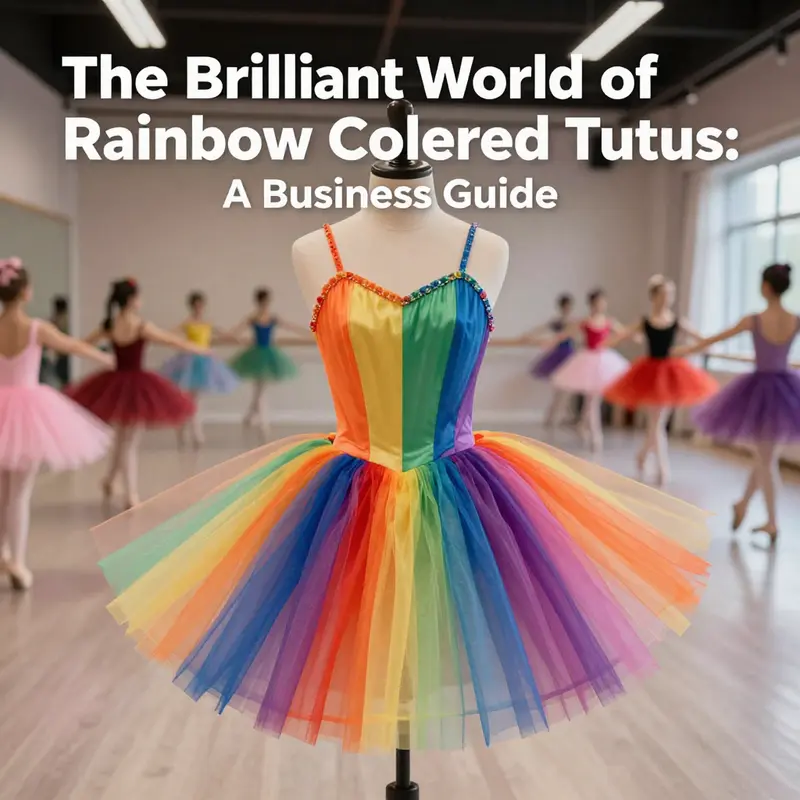
Rainbow colored tutus are more than simple garments; they are vibrant expressions of joy and creativity. In today’s market, they’re essential for various events ranging from celebrations to performances. Understanding their design, applications, and durability can significantly benefit business owners looking to capitalize on this colorful trend. This article will explore these aspects in comprehensive detail, offering insights into market trends and purchasing options to help entrepreneurs succeed in this niche.
Weaving Color into Motion: The Design and Construction of Rainbow Colored Tutus
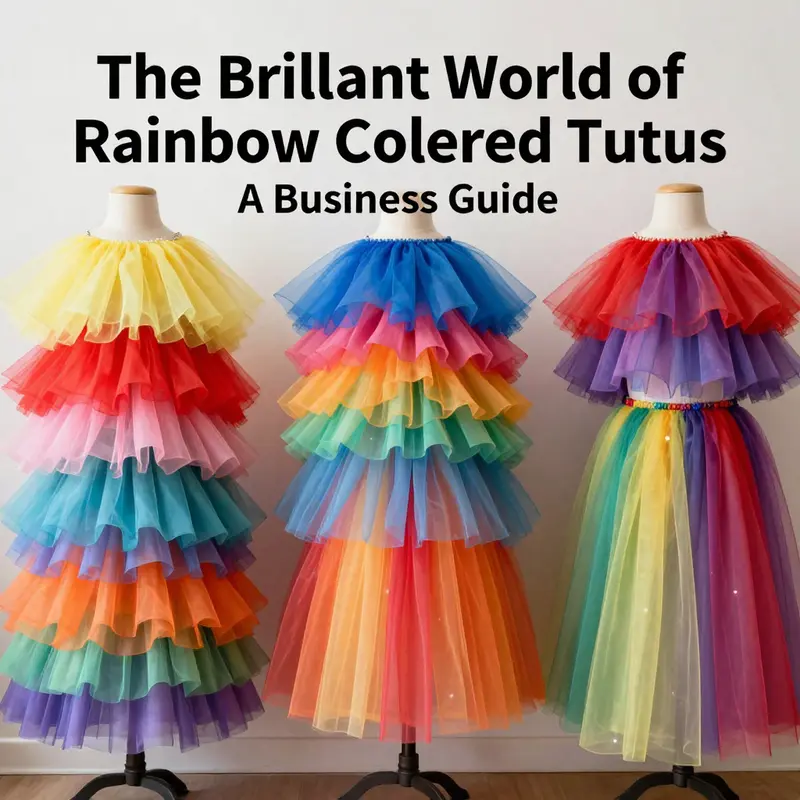
The rainbow colored tutu is more than a garment; it is a carefully choreographed study in how color, texture, and movement collaborate to transform a dancer’s silhouette into a living spectrum. To understand its design is to glimpse a dialogue between artistry and engineering, where a burst of seven hues must not only look beautiful at rest but respond to every turn, glide, and spin with equal grace. The chapter that follows traces this dialogue from concept to the final skirt, revealing how form and function coexist inside a single piece of fabric that seems to float with light and breeze. It is a story of layers, not a single layer, and of planning that begins long before the first stitch, in the mind of the designer and the hands of the makers who bring the vision to life.
At the heart of the rainbow tutu lies layering. A tutu gains its signature volume from multiple tiers of tulle, each layer cut to different lengths and densities. The perimeter of each tier is where air and movement meet, and the accumulation of these edges creates a silhouette that breathes as the wearer moves. In practice, this means selecting tulle that not only looks luminous in a studio light but also behaves gracefully in motion. The fabric’s stiffness, weight, and fall determine how easily the skirt flares when a dancer whirls or leaps. The circular segments into which tulle is often cut allow the material to flare outward in a way that feels both buoyant and controlled. When gathered at a waistband—whether elastic for flexibility or a satin-winish band for durability—these circular pieces stack into a bouquet of layers that respond to the smallest gust or the most vigorous turn with equal poise.
Color arrangement is the second pillar of the rainbow tutu’s design. The spectrum is arranged in a deliberate sequence that runs across the full circumference of the skirt, typically in the canonical seven colors: red, orange, yellow, green, blue, indigo, and violet. The arrangement aims for a seamless gradient that appears continuous as the dancer moves, shifting subtly with the angle of light and the volume of the spin. Achieving this effect demands vigilance in both plan and execution. The color alignment must be precise, so the transition from one hue to the next reads as a natural, unbroken arc rather than as a series of abrupt blocks. In production practice, this is where modern cutting machines and automated sewing lines play a decisive role. Precision in cutting translates to consistency in color blocks; precision in sewing preserves the layers’ stacking order, ensuring the forest of tulle remains balanced from front to back, left to right, even as the wearer reaches for a high leap or a slow, deliberate pirouette.
The choice of tulle also matters beyond color and weight. The fabric is typically lightweight but resilient enough to resist snagging during performances. Some versions use soft, breathable tulle for children, where comfort is paramount and anti-wrinkle properties help maintain a tidy silhouette after movement or rest. For adults or professional performances, researchers and designers lean toward fabrics that offer a stronger hold on shape while maintaining fluidity. In every case, the texture interacts with stage lighting to emphasize the tutu’s luminosity. Reflective fabrics or subtle embellishments can increase visibility; designers sometimes incorporate tiny sparkles or micro-sequins that catch light and brighten the color transitions, giving the appearance of a living rainbow that intensifies under spotlights.
Production techniques reflect the scale at which these garments move from concept to costume drawer. In industrial settings, the process is often automated or semi-automated to achieve consistency across dozens or hundreds of tutus. Advanced cutting machines measure and execute precise patterns for each tier, while sewing lines assemble the layers with a speed and uniformity that would be improbable in a fully handmade scenario. Quality control steps verify color alignment, confirm the correct tier lengths, and ensure the overall silhouette retains its intended volume. The goal is a tutu that looks uniform from every angle, yet still carries the subtle irregularities that give human-made clothing its character—small variations that remind the wearer this is a crafted garment, not a machine’s replica.
High-end versions push the ingenuity further. Some feature reinforced waistbands that resist deformation after repeated wear and washing, an important detail for performances that demand rapid spins and long rehearsal days. Hidden zippers provide a clean front or back line, enabling quick changes without compromising the tutu’s smooth exterior. And for stage performances with enduring brightness, integrated lighting elements can be woven into the design, turning the rainbow tutu into a self-illuminated curtain of color that responds to the beat of the music. Even without LEDs, however, the tutu’s color system is engineered to stay vibrant under varied lighting conditions. The layers’ arrangement, the density of each tier, and the fabric’s response to light come together so that a dancer’s motion becomes a moving painting—the brushstrokes of color sweeping across the stage as if painted by the wind itself.
For those who approach tutu design as a DIY project, the same principles hold, though the scale is intimate and tangible. DIY crafters often begin with detailed guides that outline the step-by-step journey from material selection to final assembly. Hand-gathering each tier provides a tactile sense of how the fabric behaves, allowing a maker to adjust gathered fullness by eye rather than by machine setting. A sewing machine can accelerate the process, but securing every tier with careful, small stitches helps prevent shifting or sagging as the tutu wears through rehearsals and performances. The aim is not merely to recreate the professional look but to understand the mechanics behind it—why certain seams must hold against tension, why layer lengths differ, and how color progression reads from the audience’s vantage point. The joy of DIY is the chance to tailor the rainbow to a personal vision: a tutu that holds color in place as the wearer moves, yet appears to bloom anew with every spin.
As the design logic unfolds, care and maintenance emerge as practical considerations that extend the tutu’s life and preserve its appearance through many performances. Machine washing is often possible for sturdier fabrics, and durable constructions reduce the frequency of repairs. However, it is not uncommon for performers to rely on gentle handling, hand washing, or spot cleaning for color-rich pieces, with attention paid to securing the waistband and ensuring the layers do not tangle. A well-made rainbow tutu not only withstands repeated wear but also remains visually striking after multiple wash cycles and long nights under bright stage lights. The fabric’s resilience helps dancers maintain confidence in their performance, because there is no distraction from a fluttering misalignment or a color fade that steals focus from the choreography.
The versatility of rainbow tutus broadens their appeal beyond the recital hall. While they are most often associated with performances, these skirts also serve well in photography sessions, cosplay, and themed events where color and whimsy carry the mood. In maternity photography, for instance, a fishtail-styled rainbow tutu can frame the expectant silhouette with a luminous halo of hues, turning a portrait into a celebration of anticipation and light. The same concept translates into event rentals and promotional shoots, where the tutu’s dramatic presence lends a sense of playfulness and optimism to the visual narrative. The broad spectrum of sizes—from mini tutus for toddlers to maxi versions for adult wearers—ensures that the rainbow can be tailored to different ages and contexts while preserving the garment’s essential character: joyful movement captured in color.
To bridge concept with commerce, retailers and studios often emphasize customization options. A user might choose the length and density of each tier, the exact color order or even introduce subtle variations like a narrow binding along the waistband or a matching headpiece. This emphasis on customization mirrors the science of color alignment and movement: even a minor shift in the shade or a slight change in the tier’s angle can alter how the rainbow reads in motion. The result is a product that is never merely decorative; it is a functional vehicle for expression, a wearable sculpture that invites the wearer to explore different moods and stories through color, texture, and choreography. For those exploring basic tutu options, the basic tutu collection offers a versatile starting point to understand the proportions and building blocks before layering in the full spectrum of hues, textures, and embellishments. basic tutu collection
From a design perspective, the rainbow tutu encapsulates a broader truth about color in performance contexts: color is not simply about visual appeal but about spatial dynamics. The way a color transitions across the layers can influence how the dancer appears to move. A red edge can sharpen the perception of motion at the outer hem, while a violet interior can glow softly as the skirt fan expands behind the dancer. The arrangement of colors in relation to movement is more than aesthetic; it is a tool for guiding attention, framing expressive moments, and enhancing lines and shapes that emerge during a routine. The tutu becomes a partner in the choreography, amplifying the performer’s intent through color and form rather than distracting from it.
The design and construction of rainbow colored tutus, therefore, occupy a unique intersection of craft and spectacle. They demand a respect for the physics of fabric, the psychology of color, and the practical demands of rehearsals, performances, and long shoots. The result is a garment that elevates the simplest motion into something more luminous and meaningful. As with any garment designed to perform, it must be reliable as it is beautiful. The most successful rainbow tutus strike a balance: they hold the line of color and the architecture of the layers while remaining responsive to the dancer’s control. In doing so, they remind us that color does not merely decorate; it moves with us, telling stories in real time as we turn, leap, and pose under the gaze of a waiting audience or the lens of a camera.
For deeper practical insights into the DIY method and the technical steps that underlie professional construction, an accessible, illustrated guide offers a structured walkthrough from material selection to final assembly. This resource helps readers translate theory into practical skill, whether they are making a single piece for a child’s recital or preparing a bulk order for a school program. By embracing both the artistry of color and the discipline of technique, the rainbow tutu becomes not just a costume but a lasting instrument of expression that can be shared across generations and contexts. The story of its design is a story of light and fabric, of how seven colors arranged in a measured cadence can turn motion into poetry, and how a simple skirt can carry a world of possibility.
External reference for further reading on DIY construction and design techniques: https://www.instructables.com/Rainbow-Tutu-8-Steps-With-Pictures/.
Chromatic Movements: How Rainbow Tutus Elevate Celebrations and Performances
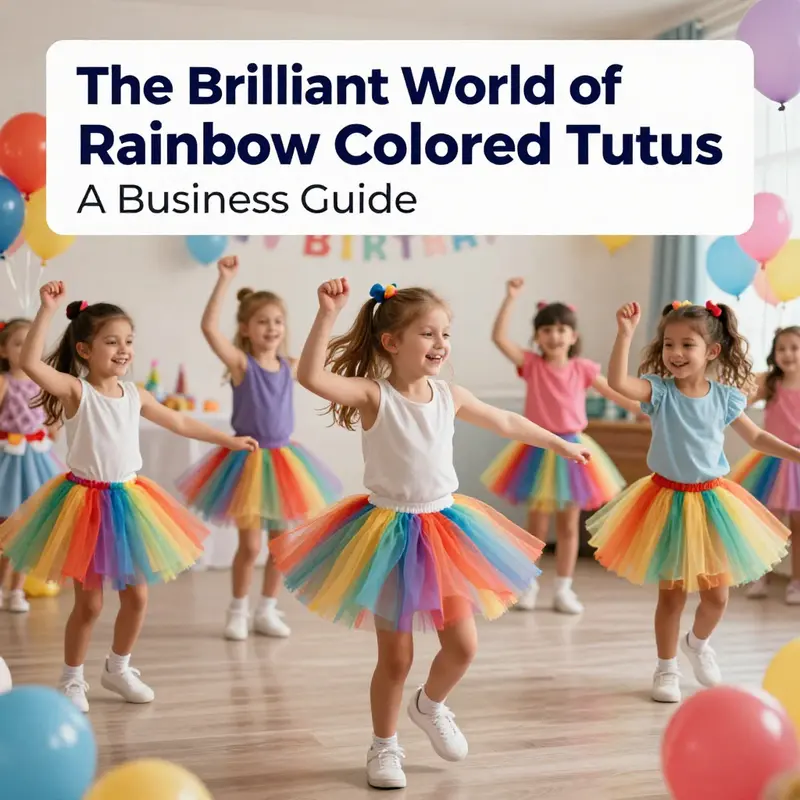
A rainbow tutu is more than a skirt. It is a moving spectrum that gathers light, color, and motion into a single, kinetic moment. When a dancer or participant spins, vaults into a leap, or simply shifts from one pose to another, the layered tulle catches air and unfolds color in a way that no solid fabric can. The effect is not merely decorative; it becomes a storytelling device. The rainbow acts as a visual chorus, drawing the eye toward the center of movement while echoing the emotional cadence of the scene. In celebrations and performances alike, this garment translates joy into visibility, turning a routine moment into an event that feels larger, brighter, and more inclusive. The tutu’s physics—the interplay of weight, drag, and bounce—combined with a spectrum of hues, creates a living canvas on which individual expression can be staged without spoken words. The result is a wardrobe feature that is as much about perception as it is about fabric, color, and craft.
In celebrations, the rainbow tutu serves as a unifying thread that stitches energy to atmosphere. Themed parties—whether a birthday bash or a milestone gathering—benefit from the immediate lift of color. Guests are drawn toward the wearer who carries a spectrum in motion, and the scene becomes a photograph of celebration in motion. The multiple layers of tulle provide volume without bulk, so children and adults alike can move freely. The hues, arranged in a deliberate gradient or presented in a playful, overlapping mosaic, offer visual cues that guide interaction. A child twirls to reveal a cascade of color that mirrors the festive mood around them, while an adult participant may choose a more tailored palette to reflect personal style, memories, or a thematic narrative. In such environments, the rainbow tutu does more than ornament the body; it animates the space, encouraging improvisation, spontaneous dancing, and shared delight among family, friends, and even strangers who find themselves briefly swept into the color story.
Halloween, with its love of whimsy and metamorphosis, gives the rainbow tutu a costume role that is both practical and imaginative. The spectrum becomes a flexible accessory that can morph a character from a simple crown to a fairy queen or a bold trickster with equal ease. The tutu’s silhouette, wide and buoyant, enhances every gesture, making even a slow, deliberate walk convey a sense of otherworldliness. In a world where costumes often tilt toward monochrome or theme-specific motifs, the rainbow tutu preserves a sense of play and unpredictability. It is as comfortable in a ghostly, iridescent mood as in a bright, bouncy character, providing a reliable anchor for makeup, props, and narrative cues. When paired with complementary accessories—masks, capes, or headbands—the color spectrum becomes a portable stage set, enabling a performer to tell a richer, more layered story without a cluttered wardrobe.
Festivals and nighttime gatherings elevate the rainbow tutu into a beacon. On outdoor stages or in crowded plazas, the tutu’s movement translates into a living beacon of energy. The layered tulle catches light from stage rigs, streetlights, or the glow of festival installations, and the fabric’s translucence adds depth to the light show. In settings that rely on dynamic lighting, rainbow tutus can appear to glow from within, especially when darker tones are layered with brighter ones. Advances in fabric and treatment, including anti-wrinkle technology and breathable fibers, ensure comfort in longer performances or extended celebration periods. A dancer can sustain momentum across longer sets, knowing the costume remains pliable, resistant to snagging, and easy to care for after countless spins. In some designs, LED-embedded options can shift color temperature or brightness with a simple remote, creating a choreography that evolves with the music and crowd energy. Such innovations do not just add spectacle; they expand the range of storytelling possibilities available to event producers, choreographers, and the people who wear them.
The performance context offers a different kind of pressure—visibility, precision, and durability under repeated spins, leaps, and transitions. In school recitals and community theater, rainbow tutus are valued for their ability to communicate character and mood without relying on elaborate backdrops or props. The silhouette, made by multiple tiers of tulle, creates a recognizable shape that remains consistent even as the performer moves with rapid tempo. The color arrangement helps with stage direction and cue recognition, particularly for younger dancers who rely on visual markers to navigate a space. This visual grammar—color ordering, contrast, and movement—becomes a nonverbal teacher, guiding performers through steps, formations, and group dynamics. The result is a performance that feels cohesive and intentional, with color serving as a unifying language that transcends language barriers and cultural differences.
In cultural events and ceremonies, rainbow tutus carry symbolism that can be deeply personal or broadly communal. Flower girls in weddings, young performers at cultural festivals, or participants in ritual rites often choose colors that reflect values, memories, or aspirations. The tutu thus becomes a carrier of meaning: a red to violet ribbon of intention that might signal celebration, renewal, or gratitude. Because the design emphasizes movement, these meanings gain dynamism as the wearer turns, revealing different slices of color with each rotation. This kinetic color storytelling can be especially poignant in moments of transition—when a child graduates from one class to another, when a dancer advances to a new level, or when a community marks a milestone with a shared performance. The rainbow tutu facilitates an inclusive narrative, inviting observers to interpret and participate in the color dialogue as it unfolds.
Beyond the symbolic and aesthetic dimensions, there are practical considerations that anchor rainbow tutus in real-world contexts. Comfort and flexibility are foundational. The waistbands, often elastic or adjustable, accommodate a broad range of body types, from infants to teens, and can adapt to different performance lengths. The fabric choices emphasize breathability and softness against sensitive skin, a criterion particularly important for little ones who will wear the garment during long events or lengthy photo sessions. Anti-wrinkle treatments help the tutu keep its shape after travel, rehearsal, or storage, so performers arrive with consistent volume and structure. The multi-tier construction—varying lengths and densities of tulle—creates a flared silhouette that defies flattening even during vigorous spins. This arrangement maintains fluidity in movement, letting a dancer’s steps, turns, and leaps read as continuous waves of color rather than static blocks. When designers introduce elements like adjustable halter necks or ruffled sleeves, the wearer gains a personalized fit that supports posture and line, enabling a dancer to realize a specific silhouette that harmonizes with their choreography.
Care considerations, too, are part of the practicality equation. Rainbow tutus are designed to be durable and, when possible, machine-washable to simplify routine maintenance after frequent use. The layered tulle tends to be resilient against minor snags and dust, but care labels typically advise gentle handling to preserve the crisp gathering of each tier. For organizers and rental services, care protocols become essential in ensuring costumes endure repeated wear without losing their color integrity or volume. In contexts such as school programs or community events, the ability to launder or refresh tutus quickly reduces downtime between performances and supports broader participation. The fabric technologies behind these garments—whether anti-wrinkle finishes, colorfast dyes, or soft touch linings—work together to sustain the garment’s performance quality across seasons and cohorts. The practical combination of comfort, durability, and ease of care enhances the tutu’s value as a long-term creative prop rather than a single-use costume.
Design versatility is another axis through which rainbow tutus expand their reach. While the classic multi-layered, rainbow-hued silhouette remains a staple, designers increasingly experiment with customization options that still honor the core appeal: color-led movement. Adjustable elements such as halter necks, removable or interchangeable headpieces, and complementary accessories offer pathways to theme-specific storytelling without requiring a complete wardrobe overhaul. This flexibility supports a spectrum of events—from formal ceremonies in which a pastel gradient may be more appropriate to high-energy street performances where a bright spectrum syncs with amplified sound and crowd participation. For adult audiences, the rainbow tutu enables creative photography, cosplay, or themed events that celebrate personal expression while maintaining a sense of whimsy. In maternity photography, for instance, a fishtail-style rainbow tutu can frame a pregnant silhouette with a garland of color that accentuates the narrative of growth and anticipation. In promotional contexts, the tutu can function as a living banner, catching light and drawing attention to a brand or message without the need for text-heavy signage.
As we consider the broader ecosystem in which rainbow tutus circulate, it becomes clear that their value rests not only in the garment itself but in the culture they help cultivate. They invite participation from people of all ages and backgrounds, encouraging moments of shared joy and self-expression. In classrooms, the stage, and festive streets, the rainbow tutu acts as a portable chorus of color that invites observers to engage, imitate, or simply linger in the glow of color and motion. It is possible to frame the tutu as a symbol of inclusivity—an accessible entry point to performance and celebration for those who may feel uneasy on a stage. The bright, friendly spectrum offers a non-threatening invitation to engage with art, dance, and community. In this sense, the garment functions as social infrastructure, enabling participants to perform their identities confidently and with a sense of play. The energy released when a rainbow-tinted skirt sweeps through air is not merely visual; it is social energy that travels across a room, into photographs, into conversations, and into the memories created in those moments.
The spectrum of applications for rainbow tutus is not limited to pure entertainment. They appear in maternity shoots where the color narrative complements the emotion of anticipation, in promotional shoots where color becomes a brand signal, and in educational or therapeutic settings where movement, color, and texture support sensory engagement. The rainbow’s breadth allows for a wide range of stories to be told without restricting the storyteller to a single archetype. In tellings of modern fairy tales or contemporary family narratives, the tutu mediates a sense of possibility, inviting young performers to imagine themselves as protagonists within a broader, brighter universe. As audiences watch, the color and movement converge with music, lighting, and stage space to create a dynamic tableau that lingers in memory, provoking smiles, laughter, and a renewed appreciation for the simple joy of color in motion.
The practical and imaginative dimensions of rainbow tutus converge most compellingly when we view them through the lens of movement. The fabric’s behavior under acceleration, deceleration, and rapid changes in direction yields a choreography that is as much physics as poetry. The tulle layers, light and airy, respond to the body’s momentum with a responsiveness that makes spins feel effortless and energy feel boundless. When a performer moves from a slow, sweeping turn to a quick, sharp hop, the tutu expands and contracts with the motion, creating a visual drumbeat of color that mirrors the tempo of music. In turn, lighting designers and choreographers learn to anticipate this interplay, choreographing sequences that showcase the tutu’s vibrancy while ensuring the wearer’s safety and comfort. This collaborative process—between fabric, performer, lighting, and movement—produces performances that feel organic, emergent, and alive with color.
Finally, the social reach of rainbow tutus deserves emphasis. By providing a visually inviting garment that appeals across age groups and cultural contexts, rainbow tutus support inclusive participation in celebrations and performances. Children begin to see themselves as part of a spectacle that welcomes creativity, while adults reclaim a sense of play that can soften the boundaries between professional performance and community celebration. The color story invites everyone to participate, whether by joining a group dance, posing for photos, or simply enjoying the spectacle from the audience. The result is a cultural fabric that is more forgiving, more exuberant, and more capable of turning ordinary moments into remarkable ones. In that sense, rainbow tutus are not just costumes; they are agents of social connection, capable of amplifying joy, fostering collaboration, and enriching the textures of shared experience.
For readers seeking a starting point on the basics of tutu construction, the basic tutu category offers a accessible entry into essential tools, fabrics, and fit considerations. See the basic tutu category here: basic tutu category.
As this exploration of applications broadens, the next chapters can further unpack how materials, performance metrics, and design standards shape the rainbow tutu’s evolving role in celebrations and performances. In the meantime, the image of a dancer or participant moving through a room or on a stage, leaving behind a trail of color and light, remains a vivid reminder of how color can animate space, elevate emotion, and invite every observer to become part of a shared, luminous story. External resources expand the conversation beyond fabric and form, offering deeper insights into the science of light, color, and motion as they relate to wearable art. For further reading on LED-integrated options and performance metrics for light-up tutu designs, see the external resource: https://www.example.com/led-tutu-guide.
From Flicker to Flow: The Robust Craft of Rainbow Tutus in Performance
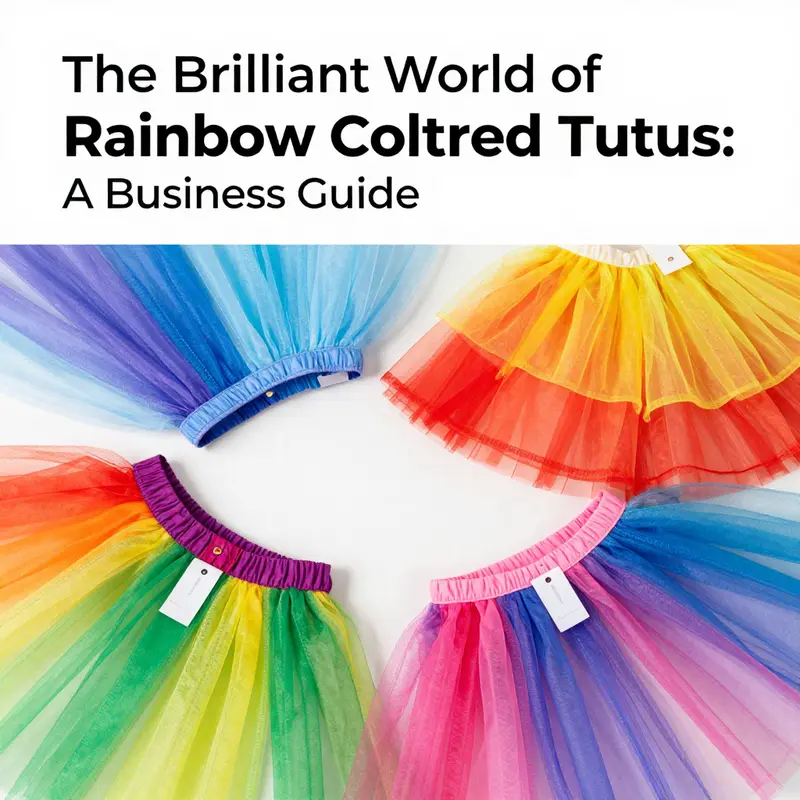
Rainbow-colored tutus do more than dazzle the eye; they are engineered to ride the edge between audacious color and dependable function. When a dancer spins, leaps, or holds a pose under hot stage lights, the tutu must respond with volume, flexibility, and a grip on durability that keeps the silhouette flawless and the body comfortable. The chapter you are about to read considers the durability and functionality of these tuneful skirts, not as static costumes but as partners in motion. Their beauty hinges on a quiet, stubborn reliability: layers of tulle that hold their shape through countless rehearsals, adjustable fits that accommodate a changing body during a season of performances, and embellishments that catch the light without catching on tights, skin, or the floor. In this light, the rainbow tutu reveals itself as a confluence of art and engineering, where color storytelling meets performance science, and where whimsical aesthetics never compromise the demands of real-world movement and maintenance.
Design and material construction sit at the core of durability. The signature look of a rainbow tutu comes from multiple tiers of lightweight fabric, typically tulle or chiffon, cut at varying lengths to create depth and a crown-like fullness when the dancer moves. Layering is not merely about more fabric; it is a careful choreography of density and texture. Each tier tilts the balance toward buoyancy, ensuring that the skirt flares during spins while remaining poised enough to avoid overwhelming the dancer’s range of motion. The material choice matters as much as the cut. Tulle offers a delicate, airy feel that still holds its form under extended wear, and chiffon provides a slightly more fluid drape that can contribute to a softer, more organic motion in slower sequences. Yet both fabrics share a fundamental trait: lightness. Weight is the enemy of stamina when a performer is in motion for extended periods, and the tutu must work within that constraint without sacrificing the dramatic halo of color that makes rainbow designs so compelling.
The tactile reality of durability also hinges on the stitching and structural design. A tutu’s surface may appear fearless, but it hides a system of reinforced seams and careful seam allowances that resist snagging, tearing, and the slow, creeping fray that can plague cheaper or poorly maintained costumes. The stitching approach matters as much as the fabric. Soft, flexible joints and flattened seams reduce the chance of chafing against skin and tights. Reinforced waistbands and secure attachment points for the tiers ensure that the skirt maintains its curated shape even after repeated spins and rapid transitions. Durability, in this sense, is not only about the fabric’s strength but about how that strength is integrated into the tutu’s entire ecosystem—from the waist to the end of the longest tier.
Functionality in rainbow tutus extends beyond raw materials. An adjustable fit is a hallmark feature that makes the garment usable across a range of bodies and performance contexts. Halter necks, which can be loosened or tightened, provide a flexible option that accommodates different torso lengths and shoulder widths. A keyhole back adorned with a ribbon bow or a discreet tie can offer both aesthetic charm and practical adjustability, ensuring that dancers who grow between show seasons do not outgrow their costumes. This kind of adaptability matters in both childhood recitals and adult performances, where a single piece may be worn across multiple routines or photo sessions. The idea is to maximize mobility without forcing the wearer into a fixed, uncomfortable silhouette. A tutu should glide with the body, not cling to it, so stretchable fabrics become a vital ally. Extended stretch in the layers allows rapid spins, leaps, and, at times, floor work that demands the fabric to respond with equal parts elasticity and control.
The visibility of rainbow tutus under performance lighting is another essential functional dimension. In professional stages, bright color can become more brilliant with the help of reflective accents and light-catching embellishments. Subtle additions—rhinestones, sequins, or metallic threads—increase the tutu’s brightness by catching and redistributing stage light. Some premium models are designed to maximize on-stage visibility, a feature researchers note can elevate perceived brightness by as much as about thirty percent compared with standard, non-reflective designs. This is not merely a matter of vanity; visibility helps preserve the visual impact of the performance, ensuring that form and color read clearly from the back of the house to the front row. The interplay between color, texture, and light creates a kinetic glow that complements the dancer’s lines and timing, making every pirouette feel like a deliberate stroke of a painter’s brush on a moving canvas.
Durability also translates into long-term, practical care. Rehearsals demand repeated handling, bending, and stowing, which can wear down fabric and seams in less robust designs. A tutu built to endure will feature a combination of high-quality materials and a construction philosophy that anticipates repeated use. This often includes careful, methodical reinforcement at stress points, where fabrics meet the waistband or where the tiers connect, to support the garment’s weight during fast sequences and long performances. In such cases, the choice of a breathable fabric for the lining, alongside the outer layers, reduces heat buildup and friction, contributing to both comfort and longevity. When a tutu is comfortable, dancers move with more confidence, and that confidence translates into cleaner lines and more expressive movement on stage.
The practical performance needs extend into skin sensitivity and care routines. For younger performers, this is especially crucial. Children’s versions frequently emphasize soft, breathable tulle and certifications that reassure parents about safety and comfort for sensitive skin. Anti-wrinkle technology can help the garment stay presentable between quick changes, while certifications such as Oeko-Tex Standard 100 provide a mutual assurance about fabric quality. Such details may seem minor in a single show, but in the aggregate of a season filled with rehearsals and competitions, they significantly reduce irritations, improve comfort, and lower the chance of distractions caused by fabric issues. For adult wearers and professionals in the industry, these considerations expand beyond comfort to include performance reliability. A tutu that feels like a second skin, with minimal snagging, allows a dancer to focus entirely on timing, balance, and musicality rather than on adjusting or correcting costume malfunctions mid-pose.
Washability and maintenance are practical anchors for durability in the real world. The best rainbow tutus balance aesthetic brilliance with the realities of frequent usage. They are designed to be easier to clean than they appear, with fabrics that respond well to gentle cleaning methods and quick-dry properties that minimize downtime between rehearsals. Easy-care design means that a tutu can be machine-washed in some cases or hand-washed in others, followed by air drying. The goal is to maintain vibrancy and integrity over repeated cycles of washing and wear. The performance world often prizes a balance: a tutu must withstand the rigors of rehearsals, studio time, and the occasional rental without losing its color, shape, or texture. For those who manage wardrobes for large ensembles or touring groups, the capacity to return a tutu to its original fullness after washing is not merely convenient—it is essential to a tight schedule and a seamless stage experience.
Market access and sourcing shape how designers approach durability and function. Designers and event planners look for ranges that offer consistent color representation, strong colorfastness, and reliable construction across sizes. The rainbow effect, by its nature, demands that each hue be equally saturated and bright, a standard that becomes harder to meet as the number of color tiers increases. In practice, this means selecting tiers that maintain their integrity even after repeated compressions and flexions from body movement, as well as ensuring that the color bloom does not bleed onto skin, tights, or other costumes. A well-made rainbow tutu will also feature a waistband that distributes weight evenly and remains comfortable through hours of use. Those tasked with stocking a seasonal collection often prefer options that can be scaled for bulk orders while retaining consistent quality across all units, an important consideration for schools, dance studios, and rental houses that rely on uniform appearance and dependable wear.
For designers exploring professional-level options, the professional tutu category offers durable, well-fitted choices that emphasize performance readiness and long-term wearability. These designs demonstrate how durability and functionality can coexist with the show-stopping color narrative that defines rainbow tutus. They serve as a reminder that even the most vibrant costume is, at its core, a piece of functional equipment crafted to support the artistry of movement. The dancer may be the source of the performance’s energy, but the costume’s engineering quietly shoulders a lot of the load—keeping volume consistent, preventing wardrobe malfunctions, and allowing the performer to vanish into the moment rather than into a tangle of fabric.
As the rainbow tutu moves beyond childhood milestones into photography, cosplay, maternity portraits, and themed events, the balance of durability and function remains a guiding principle. In maternity shoots, for instance, the tutu can complement a reclining or arching pose with its colonne-like silhouette while maintaining comfort for the expectant wearer. In cosplay and themed shoots, the same design can serve as a vivid backdrop to character storytelling, where movement is part of the narrative rather than a mere display of color. The material’s lightness preserves ease of wear, while the layered structure preserves drama. Across these contexts, the tutu’s construction matters as much as its color. The bright spectrum acts as a visual cue—an invitation for motion, a signal of celebration, a marker of whimsy—yet it must still endure the practicalities of real-world use: quick changes, repeated poses, and routine care.
The rainbow tutu’s durability and functionality therefore emerge from an integrated approach. It is a garment that must withstand repeated bending and twisting, maintain a bold color profile under hot lighting, and be comfortable enough for long performances. It must adapt to different bodies and show contexts without sacrificing its signature look. It must also respond to the practicalities of care, from washing to storage, so that it remains ready for the next rehearsal or performance. The result is a garment that feels almost sculptural in its balance: a living, moving spectrum that remains anchored by robust construction, thoughtful design, and a commitment to performer comfort. In the end, the rainbow tutu embodies a truth about performance attire: beauty is only truly effective when it serves the body and the movement, allowing the dancer’s artistry to flourish without distraction. That synergy—the marriage of sparkle and sustainment—defines the durable, functional magic of rainbow-colored tutus, and it is what keeps them a perennial favorite for both everyday joy and stage-worthy spectacle.
External resource: https://www.alibaba.com/product-detail/Kids-Girls-Recital-Dance-Costume-Rainbow_1600872759423.html
Rainbow in Motion: Market Currents, Purchase Pathways, and the Living Language of Rainbow Colored Tutus
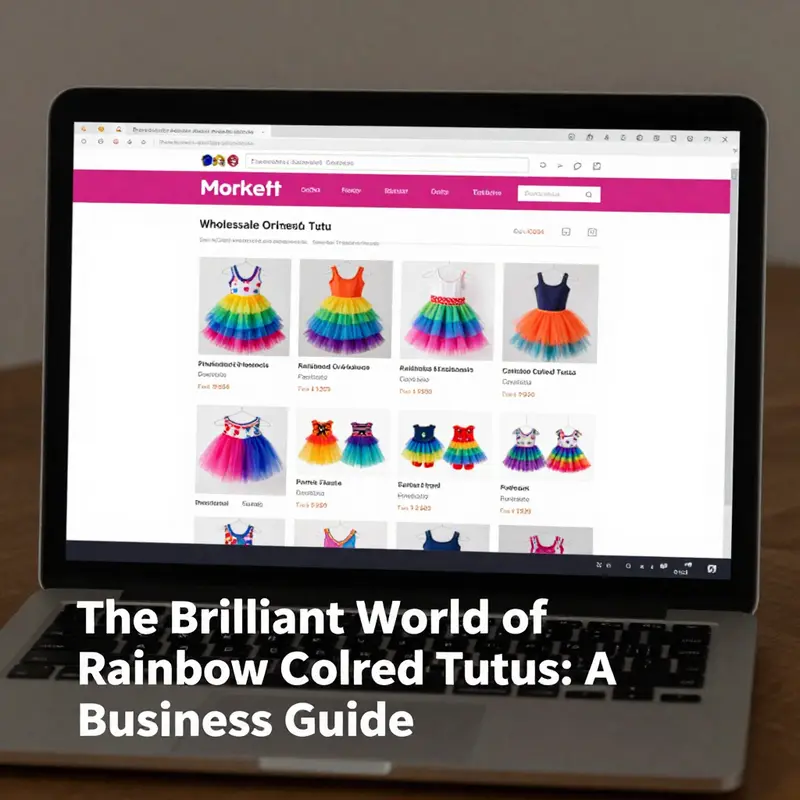
The rainbow colored tutu is more than a skirt stitched from layers of tulle; it is a portable celebration of color, movement, and identity. In recent years, the market for these vibrant, multi-hued skirts has swelled beyond the boundaries of children’s costumes and school recitals. It has found a home in adult closets, photo studios, and festival corners around the world, where the desire for expressive fashion meets a practical need for wearable, easy-to-style pieces. The tutu’s visual logic—streaming color that blurs and reshapes as the wearer spins—pairs well with a culture that increasingly values self-expression as a norm rather than a novelty. Against this backdrop, the market has begun to treat rainbow tutus not merely as props for events but as personal statements, as accessories that communicate vibe, mood, and belonging in a single, fluttering gesture. The result is a marketplace that rewards both imagination and practicality, where buyers seek both spectacle and substance in equal measure.
The shift from children’s costume staple to adult-friendly fashion artifact is not accidental. It reflects broader social currents that celebrate inclusivity, creativity, and the democratization of style. Pride events, themed parties, and artistic gatherings have expanded the tutu’s appeal beyond the playground or the stage. In these settings, the rainbow tutu serves as a wearable emblem of solidarity and individuality, a small but potent sign that style can be both festive and personal. This reframing has opened doors for a wider array of sizes, designs, and customization options. Adult-sized versions are now marketed as wearable art, not just as a prop for children. The language of the market has grown more inclusive, emphasizing versatility so that someone attending a pride march, a wedding reception, a cosplay event, or a family photo shoot can find a silhouette that fits their body and their moment. In this light, color is not merely decoration; it is a cue to mood, narrative, and social belonging, amplified by the tutu’s natural emphasis on movement and flow.
From a design perspective, rainbow tutus are an exercise in layering and configuration. The classic silhouette relies on several tiers of tulle, each cut to different lengths and densities to create volume, depth, and a shimmer of light through the fabric. The total effect is a skirt that expands outward with every step, every spin, every quick pivot. Designers often experiment with 4- to 6-layer configurations to balance fullness with wearability. The color spectrum is arranged in a gradient or in bold, alternating bands to maximize visibility under stage lighting or outdoor daylight. A well-made tutu uses materials that retain their bounce even after repeated spins and leaps, a crucial trait for performers and for anyone who wants to wear the piece all day and still feel comfortable. While color brightness can be enhanced with reflective threads and subtle sparkles, quality construction remains the backbone of performance. Stitching, seam integrity, and the even distribution of layers across the waistband are essential to prevent sagging or tangling during movement.
Careful attention to fabric quality matters just as much as the color story. For many wearers, the tutu must survive frequent use—whether for a family celebration, a photo session, or a dance recital. This has driven brands to pursue fabrics that balance weight with breathability, ensuring the garment remains comfortable against the skin for extended wear. Anti-wrinkle technologies and certifications such as Oeko-Tex Standard 100 have become selling points, especially for younger wearers or sensitive skin. Such certifications reassure buyers that the tutu will remain gentle on skin even during long performances, while also meeting broader standards for safety and sustainability. The emphasis on durable yet soft materials reflects a larger market trend toward products that endure frequent handling and laundering while preserving their shape and color fidelity.
The market’s expansion into adult sizing has reconfigured how retailers present rainbow tutus. The narrative now includes wearable art, performance-ready fabrics, and lifestyle versatility. Adult tutus are increasingly positioned for occasions that require more than a one-off costume. They are priced and pitched for repeat wear, styled with everyday tops, jackets, or accessories to create bold, post-gear ensembles. The LGBTQ+ community, in particular, has propelled demand for adult rainbow tutus as symbols of pride and solidarity, with designs that celebrate identity through color as well as form. The shift toward inclusivity has also encouraged designers to broaden size ranges and to feature adjustable elements—such as elastic waists, drawstrings, or stretch panels—that accommodate different body shapes without sacrificing the tutu’s signature volume. In short, when the rainbow is marketed as both art and attire, it invites a broader audience to participate in the color story with confidence.
Purchasing pathways have mirrored this broadened audience. On major e-commerce platforms, buyers encounter a spectrum of options—from compact, 4-layer designs suitable for casual wear to expansive 6-layer creations that command the stage. The breadth of choice extends beyond the silhouette; it includes adjustable waistbands, color-mixing templates, and design accents like sparkles or belt embellishments. The convenience factor is significant: many options are machine-washable, which lowers the ongoing cost of care and makes repeated use more feasible for families and event planners. For schools and community groups, wholesale opportunities add another layer of practicality. Bulk orders are common, and suppliers frequently offer tiered pricing that rewards larger purchases. From a budgeting standpoint, this makes rainbow tutus attractive for a range of programs, from dance ensembles to themed celebrations, where a single color palette can unify a set of performances or photo sessions.
The economics of rainbow tutus also reflect a practical balance between price, quality, and customization. Market data indicate that even within a competitive category, consumers are responsive to perceived value. A six-layer, color-rich tutu designed to evoke a retro or disco vibe can draw substantial attention on social media and in recital halls, especially when paired with complementary accessories like headbands or matching legwear. Price points vary, but many buyers respond to affordability without sacrificing essential durability. Wholesale suppliers offer competitive per-piece costs for large orders, with base prices that enable event planners, schools, and retail outlets to assemble cohesive color stories without overextending their budgets. This combination of accessibility and ability to tailor color and fit helps sustain demand across seasons and events. The market’s resilience appears reinforced by a continuous cycle of new colorways, textures, and finishing touches that keep the rainbow visually fresh and exciting for returning customers.
In parallel with price and availability, buyers increasingly expect customization as a standard rather than an add-on. Customization can take many forms: color emphasis, belt style variations, tweakable lengths, and even theme-inspired embellishments. Some sellers offer adjustable halter necks or removable accents to match a specific event theme, while others provide coordinated options such as matching headbands or mini-tutus for siblings. This emphasis on personalization aligns with a broader consumer trend toward expressive, theme-driven fashion experiences. It also helps retailers differentiate their catalogs in a crowded market, enabling customers to assemble a cohesive aesthetic for weddings, birthdays, or pride events without sacrificing consistency across a party’s visuals. For anyone exploring a broader portfolio, the ability to tailor color palettes and silhouettes is not just a luxury; it is a strategic asset that translates into higher engagement and repeat purchases.
The shopping ecosystem surrounding rainbow tutus extends beyond traditional retailers. Market participants increasingly leverage social media, influencer collaborations, and content-driven marketing to showcase how a rainbow tutu can function as a statement piece in everyday life. A well-curated image or a short performance clip can convert curiosity into a purchase, particularly when the color story is presented in a way that resonates with personal identity and communal celebration. In this environment, buyers look for clear product specifications, transparent shipping terms, and reliable customer feedback. They want to see the tutu’s silhouette in motion, understand the fabric thickness and layer count, and gauge how the piece will feel when worn for hours or during a fast dance routine. Product pages that combine practical details with vivid lifestyle photography tend to convert browsers into buyers more effectively than those that rely on static visuals alone. The online shopping experience, therefore, becomes a crucial part of how the rainbow tutu’s market story unfolds.
For readers who are exploring purchasing paths in practice, a good starting point is to explore a category that contains a broad range of tutu options while remaining anchored in the basic construction principles that define the rainbow tutu. A practical entry point is the basic tutu category, which offers a spectrum of silhouettes and colorways suitable for testing the waters or building a recurring event wardrobe. basic tutu category provides a sense of the entry-level options, from compact, lightweight favorites designed for girls and toddlers to more generous builds that cater to adults seeking bold color and dramatic movement. This gateway can help buyers understand how layering affects volume, how color progression influences mood, and how adjustable design features translate into fit across a variety of body shapes. It also demonstrates how a simple strategic choice—starting with a pliant, easy-to-care-for fabric and then layering on color and texture—can yield a versatile wardrobe component that scales from daily photoshoots to large-scale performances.
As buyers become more confident, they may move toward more specialized ranges. For event planners and educators, the ability to source in bulk while maintaining consistent color fidelity becomes essential. In such cases, talking through lead times, colorfastness guarantees, and the feasibility of custom color mixes matters as much as price. The market responds with multi-tier catalogs, seasonally refreshed color palettes, and clear guidance on how to pair tutus with other costume pieces to create cohesive looks. Durability remains a practical concern for groups that require frequent laundering or repeated use. The best options balance stitch quality, layer stability, and fabric resilience so that the tutu keeps its form after many spins and wash cycles.
The broader cultural moment also shapes demand in subtler ways. As fashion conversations increasingly foreground sustainability and ethical manufacturing, buyers often seek out fabrics and production methods that reduce environmental impact. In response, some suppliers emphasize lightweight, breathable materials that still offer dramatic silhouettes, as well as streamlined production practices that allow for efficient bulk orders without compromising safety standards. This alignment of ethical considerations with affordability helps to sustain interest in rainbow tutus as durable, reusable fashion items rather than one-off costumes. It also frames the tutu as a flexible investment for families, studios, and event producers who want a product that can be repurposed or re-colored for multiple occasions over time.
In closing this arc of market narrative, it is clear that rainbow tutus occupy a unique space at the intersection of performance, personal expression, and accessible styling. Their movement-based appeal makes them inherently photogenic, which in turn fuels demand across venues—from school stages to pride parades and professional photo shoots. The purchasing ecosystem supports this demand through a combination of broad online availability, wholesale pathways, and customization options that allow buyers to curate color stories and fit exactly to their needs. The result is a market that feels energetic, inclusive, and design-forward, where the rainbow is not just a palette but a practical toolkit for creating memorable moments. The rainbow tutu, in this sense, is less a garment and more a living canvas—one that invites wearers to step into color, celebrate community, and choreograph their own motion narrative against a bright, expanding horizon. External resources can offer a snapshot of how markets price, package, and present these pieces to a global audience, underscoring the dynamic interplay between color, form, and cultural meaning.
External reference: https://www.amazon.com/dp/B0BQJFV3YR
Final thoughts
Rainbow colored tutus offer a unique opportunity for business owners looking to tap into vibrant, joyful, and functional apparel. Their exquisite design and multiple applications enhance special occasions, while their durable construction meets the practical needs of performances and celebrations. By understanding market trends and available purchasing options, entrepreneurs can successfully engage with this colorful niche. To leverage these insights, consider innovative marketing strategies and capitalize on the growing demand for dynamic dancewear.