

The ballerina white tutu is more than just a costume; it symbolizes the grace and precision that define classical ballet. From its historical significance to its construction, each element of the tutu plays a crucial role in ballet culture. This article delves into the various aspects of the white tutu, exploring its importance in ballet culture, how it is constructed, its role in performances, the different dress codes by which it is governed, and key considerations for purchasing and care. Each chapter offers insight into how this beloved dance attire enhances not only the performance but also the identity of the ballerina herself.
Purity in Motion: How the White Tutu Shapes Ballet’s Language and Legacy
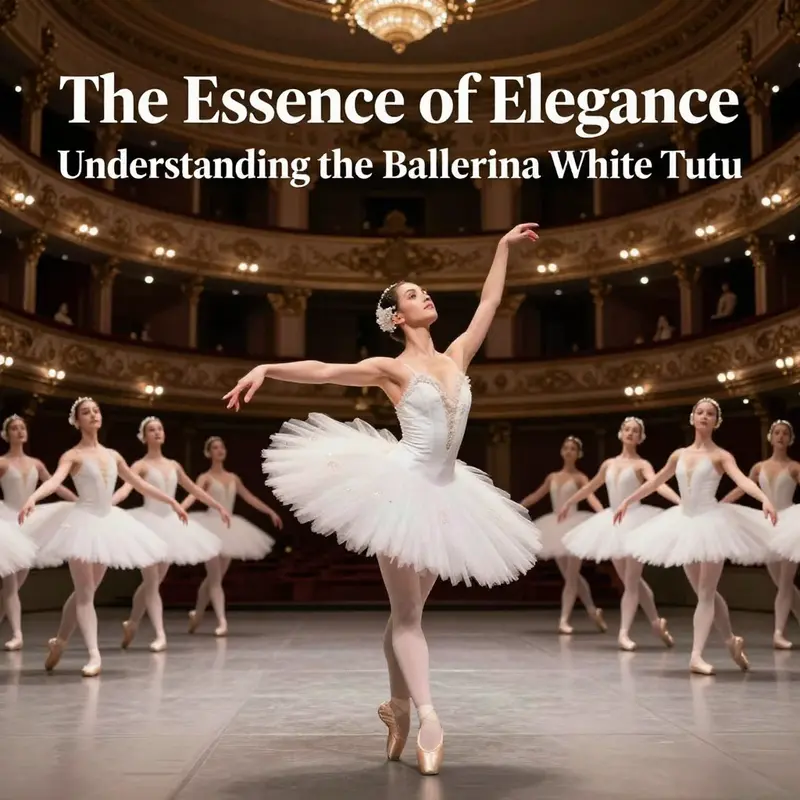
Across the stage, the white tutu is more than a garment; it is a banner of ballet’s history, a symbol that travels with every leap and waltz. In the trained gaze of an audience, it reads as a declaration: movement has a form, and form has meaning. When the dancer rises onto pointe, the stiffened layers catch air and create a halo of light at the hip, framing the leg as an instrument of precise geometry. The white tutu does not merely cover the lower body; it reveals the choreography’s architecture, turning each step into a measured stroke on the stage. The garment becomes a lens through which audiences read the kinetic poetry of a performance, a boundary that both contains and amplifies the energy of motion.
Its origin lies in the Romantic era of the 19th century, a time when ballet began to trade the freer lines of medieval costume for a more sculpted silhouette that could withstand the close scrutiny of gaslight and theatrical flood. Early tutus were longer and more flowing, but as choreographers sought a clearer picture of the dancer’s legwork, the costume shortened into the iconic mid-calf, then just above the knee, and finally into the multiple layers of stiffened tulle that define the romantic tutu. The result is a garment that can be seen from the farthest seat and still read as a precise, fixed frame around the dancer’s limbs. It is both costume and instrument, a boundary that guides but does not restrain. This evolution marks ballet’s shift from narrative embellishment toward a discipline of form, where every angle of the body is an element of storytelling.
The connection to roles such as Giselle and the swan scenes in Swan Lake is more than aesthetic; it is a shared language. The tutu’s crisp stiffness amplifies the otherworldly mood of these narratives, lending the stage a dreamlike purity that supports, even necessitates, the dancer’s transformation from mortal in the wings to ethereal presence on stage. In this sense, the white tutu becomes a living symbol, a visual echo of innocence and vulnerability that simultaneously houses a dancer’s strength. The color and the silhouette work together so that light and shadow can play across the choreography, highlighting every coupe, every relevé, and every extension in a way that a looser garment could never achieve. It is a partnership between fabric and performance, where the tutu acts as both frame and chorus, guiding the audience’s eye to follow the line of motion rather than the silhouette alone.
Beyond symbolism, the tutu’s form serves a practical purpose. Its rigid frame makes the dancer’s posture legible to the audience and to the corps de ballet’s synchronization. The layers of stiffened tulle flare outward, creating a clear boundary between the body and space, a radial canvas that makes the lines of the legs and the arcs of the arms instantly legible, even as the dancer moves with astonishing speed and agility. This visibility is crucial on pointe, where the feet become the focal point of the narrative’s tempo and precision. The tutu creates a moment of clarity that allows a choreographer to design a sequence that reads with absolute certainty, from the first port de bras to the last pirouette. It is not simply decoration; it is a design choice rooted in the needs of classical technique and the demands of a stage that thrives on precision.
Historically, the shift toward the tutu correlated with ballet’s evolution from romantic storytelling to a more technical, display-focused discipline. The tutu helped to crystallize the visual vocabulary of classical ballet: the line of the leg in pointe work, the alignment of the spine, the architecture of the upper body, and the geometry of the steps. Audiences came to expect a certain silhouette in white, a silhouette that could be recognized in every lighting scenario, on every stage, no matter the orchestra. This continuity gave the tutu a stabilizing presence as the art form grew more global, while still holding fast to its Romantic-era roots. The costume thus embodies a bridge between the past and the present—an artifact that continues to be reused and reinterpreted, even as new fabrics, dyes, and construction techniques appear. It is a reminder that tradition and innovation can coexist within the same garment, each enhancing the other rather than opposing it.
In training rooms and competitions today, the white tutu remains a benchmark. It is a reminder of a lineage that prizes technique as a form of expression and not merely as an end in itself. Dancers learn to move with a sense of the frame the tutu provides; they learn to turn, leap, and glide while maintaining the posture that reveals the choreography’s exact geometry. The tutu’s influence extends beyond the stage; it informs the pedagogy of ballet schools, where instructors emphasize alignment, core strength, and leg line from the very first months of training. In this sense, the white tutu is not a nostalgic costume but a living instrument that continues to shape how dancers understand space, tempo, and narrative intention. It teaches the art of disciplined grace, where effort is meticulous and restraint becomes expressive.
Contemporary interpretations have not discarded the tradition; they have expanded it. Designers and choreographers play with the tutu’s silhouette, pushing the boundary between history and modernity. Some reinterpretations retain the mid-calf, multi-layered form while adding subtle modern touches—lighter fabrics that still hold their shape, or color accents that acknowledge contemporary storytelling within a classical frame. Yet at the core, the tutu remains anchored in its original purpose: to illuminate the dancer’s lines, to provide a stable field for expression, and to carry the aura of a storied tradition into new performances and younger audiences. The lineage is not merely about fashion; it is about the continued belief that dance can be read as a language in which movement and garment speak in unison. Through this lens, the white tutu becomes part performance artifact, part pedagogical tool, and part cultural memory—a living thread that connects the past to the present and to the future of ballet.
For students and professionals alike, the discussion about the white tutu also invites a broader reflection on the way ballet teaches us to see the body in motion. The costume demands a disciplined economy of movement, a focus on the subtleties of weight transfer and ensemble timing. It makes visible the quiet power behind every quiet after-beat in the music, the way the dancer slows and accelerates as if in conversation with light itself. In this sense, the tutu acts as a translator, translating the body’s potential into a legible onstage narrative that can be understood across cultures and languages. The tutu’s role is collaborative, requiring not only the dancer but the seamstress, the lighting designer, and the conductor, to align their crafts toward a single, shared vision of beauty and precision. It is this collaborative magic that keeps the white tutu at the center of classical repertoire while inviting modern creators to reimagine its boundaries.
If one follows the lineage of tutus across the centuries, a thread remains constant: the white tutu’s ability to frame motion while revealing the dancer’s craft. The garment invites the audience to watch the technique behind the emotion. It also invites new generations to connect with a tradition that uses fabric and form to stabilize a moment of transformation—the moment in which a girl becomes a dancer and a dancer becomes a story. For those who want to explore this continuum in a tangible way, there is a lineage of options within the romantic tutu category, where designers honor the historical silhouette while allowing personal expression within fit and construction. romantic tutu options
This integration of history and modern practice is why the white tutu remains a living cloth rather than a museum piece. It is a symbol of discipline, yes, but also of possibility—proof that a single garment can carry centuries of performance culture while still inviting contemporary interpretation. The tutu’s presence on stage encourages dancers to be precise, to trust their technique, and to believe that elegance is an achievement of practice as much as inspiration. And as audiences watch from the stalls to the balcony, the white tutu serves as a reminder that ballet’s most enduring images are not simply about beauty; they are about clarity, momentum, and the quiet power that comes from making the difficult look effortless. In this light, the tutu remains more than clothing; it is a vessel for the art form’s ongoing dialogue between memory and possibility.
External resources for further historical context can be consulted via established summaries and archives such as the tutu article on Wikipedia: https://en.wikipedia.org/wiki/Tutu
The White Halo of Movement: The Hidden Craft Behind a Ballerina’s Tutu
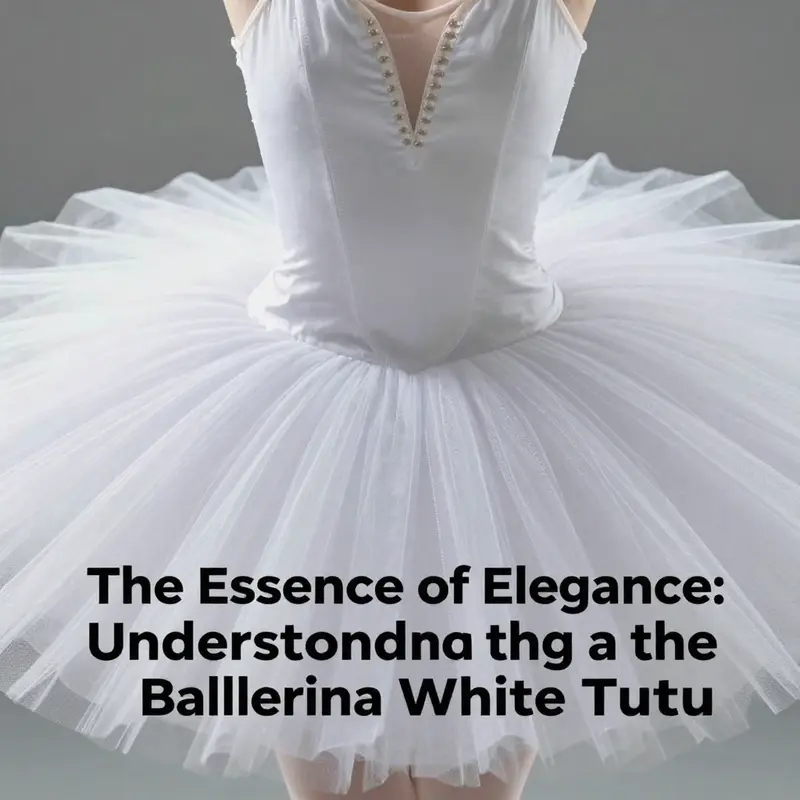
The white tutu is more than a costume; it is a carefully engineered instrument that translates a dancer’s breath, balance, and timing into a luminous line that reads clearly from the far wings to the center of the stage. Its brilliance comes not from mere fabric, but from a lineage of technique, material science, and an intimate dialogue between dressmaker and dancer. When a ballerina rises en pointe and begins to glide, the tutu becomes a halo of light and form, its layers catching and releasing the air in a rhythm that supports the illusion of effortless flight. The white palette, ancestors of purity and refinement, heightens this impression, demanding a precise balance of stiffness, drape, and transparency so that the angle of a leg or the sweep of an arm remains legible to the audience, even at the extreme elevations of the stage lights. In ceremonies of rehearsal and performance alike, the tutu’s design must endure the unyielding demands of repeated movement, quick changes, and the myriad textures of stage environment, from wooden floors to the glare of follow spots. And yet, behind the visible silhouette lies a meticulous practice rooted in centuries of technique that preserve the tutu’s integrity without robbing it of its delicate beauty.
To understand the tutu’s personality, one must begin with its core, the skirt itself. The iconic classical shape is built from multiple layers of tulle, a lightweight netting that is both sheer and resilient. These layers, often ten or more, are not merely stacked; they are carefully gathered and secured at the waist to create a controlled buoyancy. Each layer adds volume, but only in a way that keeps the skirt light enough to permit the dancer to move with ease. The stiffness needed to hold the silhouette comes from the combination of fabric choice and how that fabric is treated during construction. The result is a skirt that seems to float around the dancer, yet remains anchored to the body so that every plié, jeté, and relevé reads as a precise, deliberate gesture rather than a flutter of fabric. The balance between fullness and freedom is subtle and exact, and it is this equilibrium that allows the tutu to read cleanly in bold, stage-wide shots while remaining unobtrusively gentle in intimate, close-up moments.
The structure of the tutu speaks volumes about the dancer’s range of movement. The attire relies on a fitted bodice that not only flatters the torso but also provides essential support for the upper body. The bodice is often crafted from smooth, lustrous fabrics that contrast with the matte texture of the tulle, a pairing that accentuates the geometry of the dancer’s line. Embellishments, when present, are chosen with restraint; beads, embroidery, or delicate lace serve to heighten the visual drama without overwhelming the eye or restricting motion. The bodice and skirt are joined in a way that the silhouette maintains its integrity even as the arms lift and the torso twists. This cohesion is crucial because a disrupted seam or a misaligned bodice can throw off a dancer’s balance, ripple through the skirt, and break the visual illusion that is so essential to classical repertory.
Beneath the layers, a practical world exists. Some tutus incorporate a discreet understructure—an almost invisible corset-like frame or a stiffened lining made from canvas or a light plastic mesh. This understructure strengthens the tutu against repeated wear, guarding against sagging and helping the skirt retain its crisp, near-vertical shape throughout a long program. The materials chosen for this internal framework must be durable but not so heavy as to encumber the dancer. Modern textiles have offered alternatives that resist deformation after sweat, repeated washing, and the rough abrasions that can occur during lifts and partnering. Yet, for many performers and designers, there remains a preference for traditional, natural fibers in specific components because they carry a particular feel and a historical authenticity that aligns with the classical repertoire.
The color itself—white—adds another layer of complexity. Pure white can illuminate the dancer in ways that other shades cannot; it makes the musculature and line of the leg more legible, and it reflects stage lighting in a way that can broaden or narrow the perceived space around the dancer. However, white also presents challenges: it shows every speck of dust, every fingerprint, every hint of yellowing that creeps in with time. This is why the craft of producing a white tutu involves careful attention to fabric treatment, laundering, and storage. The tulle is chosen not only for its texture and stiffness but for its capacity to maintain whiteness after repeated cleanings and long exposure to heat, light, and humidity on tour. The result is a silhouette that remains bright and consistent, allowing audiences to perceive the dancer’s line with a minimal veil of distraction.
The construction process itself reads like a choreography. It begins with a precise pattern and a careful selection of layers, each cut to the same width and length to ensure uniform tension around the waist. The layers are lined up, then gathered in small, exact intervals so that no fluttering or uneven puffing distorts the overall circle. The waist—often a narrow elastic band or a ribbon-taced closure—must fit snugly without translating into discomfort during long rehearsals. The gathering is not merely decorative; it sets the skirt’s envelope around the torso, dictating how the volume rises away from the hips as the dancer shifts weight. The seamlines are kept out of sight and away from articulations of the legs, preserving the illusion of a seamless, unbroken plane of fabric when the leg executes high extensions. The threadwork—hand-stitched in many studios, machine-stitched in others—must be robust enough to withstand tension without cutting into the dancer’s skin or the fabric’s delicate surface. The goal is not to create a stiff garment but to sculpt the air itself into a part of the dancer’s body, a partner that resists gravity and aids grace rather than resisting or competing with it.
The relationship between tradition and innovation is most visible in how modern tutus balance durability with artistry. On one hand, there is a reverence for technique, for the hand-stitch, the measured hand-tick of the needle, the careful layering that has defined classical productions for generations. On the other hand, there is a willingness to experiment with tougher yet lighter composites, to substitute certain elements with modern textiles that resist wear, weigh less, and respond predictably to cleaning processes. The dancer benefits from both a sturdy, reliable silhouette and a tunable obedience in the fabric’s behavior—silence in the wings when needed, but a responsive snap as the leg sweeps through a grand battement. In these choices, designers respect the tutu’s lineage while ensuring that every performance remains technically feasible across a demanding touring schedule and a modern stagecraft environment that often demands faster changes and more vigorous movements.
The tutu’s care and maintenance are themselves a craft. A white tutu deserves careful handling to preserve its bright appearance and its structural integrity. After performances, it waits in a clean, cool space where heat, humidity, and sunlight cannot dull the fabric’s clarity. Cleaning is慎慎—gentle, sometimes manual, never aggressive—because the fibers are delicate, and repeated washing can alter stiffness and loft. Storage is equally important; the tutu must retain its rows of tulle without crushing, so hangers or archival boxes are chosen to keep the layers evenly distributed and the edges unwrinkled. The dancer’s body and the garment’s relationship with it require ongoing communication; adjustments may be made to keep the waistband comfortable or to restore a silhouette after a long run of performances. In the end, the white tutu is a triumphant blend of art and engineering, a garment designed to disappear as clothing and reappear as a living extension of the dancer’s form.
For readers who want a quick grounding in tutu basics while exploring broader concepts, see the basics of tutu construction here: basic tutu construction.
A broader historical perspective on how the tutu has evolved—from its early, lengthy skirts to the shorter, stiffer silhouettes seen on classical stages—can deepen understanding of its current form. A detailed overview is available from a renowned theater institution that charts the evolution and construction of the tutu, complementing the practical insights with historical context: https://www.roh.org.uk/articles/ballet-costume-the-evolution-and-construction-of-the-tutu.
Silhouette of Purity: How the White Tutu Shapes Movement and Meaning in Classical Ballet
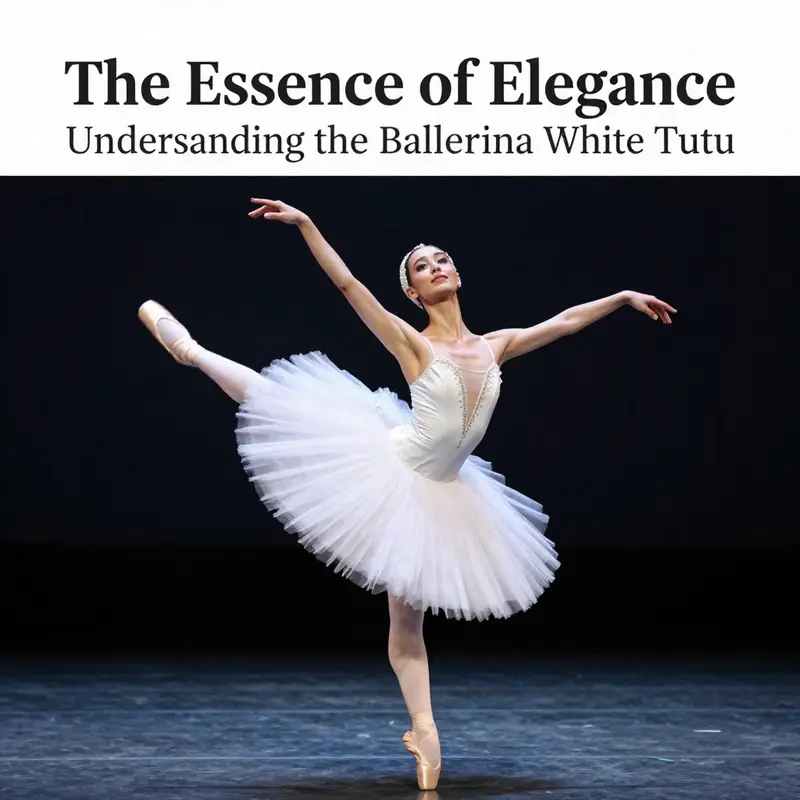
The white tutu is more than a costume in classical ballet; it is a language written in fabric, light, and air. Dancers speak this language with the precision of a metronome, with the turn of a hip, the extension of a leg, and the quiet intensity of a gaze. The white tutu, with its compact silhouette and layers of crisp tulle, anchors a performance in a shared code of beauty and discipline. It is at once a symbol and a tool, signaling purity and grace while granting the dancer the visual space to reveal, in real time, the centuries of technique that have become a dancer’s craft. The effect is not merely aesthetic. The tutu defines a boundary between limb and stage that clarifies movement for the audience, letting the eye follow the exact lines and shapes that classical ballet makes central to its grammar. In this way, the tutu functions as the visible skeleton of a performance, supporting the choreography and the storytelling that lie at the heart of the art.
Aesthetically, the tutu’s hushing white creates a bright, almost sculptural silhouette against the darkened wings of the theater. The cut—short enough to expose the line of the thigh and knee—ensures that the audience witnesses the precise articulation of the foot and ankle. This is crucial in a form where even the subtlest flex or pointe work can alter the balance of a turn or the path of a leap. The stiffness of the tulle layers, built into the skirt’s petticoat, preserves shape as the dancer moves through spins and fast-direction changes. In performance, the tutu’s structure keeps the ensemble visually legible, translating fast, complex choreography into a readable stream of lines that the audience can follow without distraction. The result is a balance between motion and form: the body remains the source of energy, while the white skirt acts as a transparent stage for that energy to unfold.
Historically, the color white carries a long resonance in romantic and neoclassical ballet. It became a marker of innocence, otherworldliness, and ethereal presence in works staged during the 19th century and beyond. In revivals of pieces like Giselle or Swan Lake, the white tutu became a cultural shorthand for purity and the supernatural, turning a costume into a narrative cue that audiences instantly recognize. The whiteness also helps performers catch light in varied ways. Under bright stage lighting, the tutu reflects and diffuses illumination, enhancing the dancer’s step- and leg-work with an almost luminous quality. This visual amplification would be less effective in any other color, where the subtleties of line and turnout might be overwhelmed by shadow or color instead of body line. Thus, the white tutu is not a mere garment but a carrier of story and technique, a visible thread that ties together artistry, history, and audience perception.
The fit of the tutu is a critical agent in performance. It is not enough for the skirt to look pristine in a studio mirror; it must fit with the dancer’s body so as not to impede balance or mobility during the most demanding phrases. A tutu that sits too loosely can abrade the torso, shift during turns, or ride up during a leap, altering the dancer’s center of gravity at a moment of peak technical demand. Conversely, a tutu that is cinched too tightly can restrict respiration, limit hip rotation, or impede the delicate alignment needed for pointe work. Professional tailoring and careful handling are essential, and the tutu represents a collaboration between dancer, designer, and seamstress. Small, almost invisible alterations—adjustments to the waistband, a tweak to the stiffness of a layer, or the way the bodice sits on the torso—can influence balance, turnout, and the dancer’s peace of mind during performance. This precision underscores a broader truth of classical ballet attire: the garment is a tool, and like any tool, it must be calibrated to the dancer’s body and the demands of the work.
The evolution of the tutu mirrors shifts in choreography and stagecraft. From the Romantic era’s softer, flowing silhouettes to the sharper, rigid forms favored in contemporary productions, the tutu has tracked a changing philosophy about movement and space. The Romantic tutu emphasized sweeping lines and a lush, almost dreamlike aura, while the modern version prioritizes crisp edge, rapid weight shifts, and the audibility of foot and legwork. This progression parallels developments in lighting, stage mechanics, and even audience expectations. As choreographers explored increasingly complex rhythms, leaps, and ensembles, the tutu adapted to preserve leg visibility without sacrificing the dancer’s freedom. The result is a garment that respects tradition while meeting the needs of new choreography. The white tutu remains a touchstone—an emblem of classical grammar that can be reinterpreted for current works without losing its core function or symbolic weight.
Behind the scenes, the tutu is a testament to the craft of costume design and the discipline of maintenance. Proper care—careful laundering, air drying, and storage that preserves stiffness—ensures the fabric does not weaken or deform over the course of a long season. The rigidity that defines the modern tutu depends on a training in its own right: a dancer learns to move with the garment rather than against it, recognizing how the tutu’s resistance can energize certain lines and restraint others. Even minor alterations in fit can ripple through the body’s mechanics, affecting balance in turns or the ease of a delicate port de bras. The dancer’s relationship with the tutu is, in essence, a partnership grounded in mutual respect: the garment must support the technique, and the technique must be disciplined enough to honor the garment’s geometry. This dynamic relationship illuminates why classical costuming is rarely a decorative afterthought; it is a central pillar of technique and performance.
In considering the broader ecosystem of ballet attire, the white tutu sits at a crossroads between tradition and professional aspiration. It is the archetype that students and professionals study alike, both for its aesthetic language and for the technical discipline it demands. The tutu invites a practice that is patient and exacting—measurement and fitting, rehearsal with the ensemble, and careful attention to how the body performs within a prescribed shape. While many stage garments now enlist advanced fabrics and internal supports, the white tutu’s essential principle remains unchanged: clarity of line above all else. This emphasis on leg visibility and clean silhouettes continues to inform how dancers approach their training, how designers anticipate the needs of movement, and how audiences receive the narrative that unfolds on stage. The tutu thus bridges the gap between technique and storytelling, enabling the dancer to embody both the geometry of the body and the poetry of the character.
For those who want to explore the practical spectrum of tutu designs, the basic tutu category offers a timeless starting point. It provides a dependable foundation that preserves classic proportion while accommodating a range of body types and performance contexts. This approach speaks to the art of fitting as much as to fashion itself, emphasizing that garment choice is inseparable from technique. In the broader world of ballet costumes, such foundations matter because they cultivate consistency across studios, stages, and careers. They support the dancer’s confidence, enabling a focus on musicality, expression, and partnership rather than on fighting against a garment that misreads the body’s needs. As aspiring dancers grow into professionals, the tutu becomes more than a uniform; it is a partner in skill development, a constant reminder of the lineage of technique that has shaped generations of performers.
Within this landscape, the white tutu remains a luminous anchor. Its aesthetics align with the purity of movement that classical ballet celebrates, while its functional demands push dancers toward ever finer control and discipline. It is a symbol that has endured not because it is decorative, but because it translates the language of technique into a form that audiences instantly recognize and cherish. The tutu teaches that artistry is cultivated through attention to detail, through the discipline to maintain a shape under pressure, and through the humility to respect a garment that has carried the art’s most cherished choreographic stories for more than a century. In this sense, the white tutu is a living artifact of ballet—at once nostalgic and forward-looking, a reminder that beauty in motion is born from precision, patient practice, and a shared belief in the power of the body to tell a timeless tale.
To connect this understanding with practical exploration, readers may reference the basic tutu collection as a concrete example of how tradition and usability intersect in today’s studios. This resource illustrates how a classic silhouette can serve as a reliable canvas for technique, rehearsal, and performance, reinforcing the tutu’s enduring relevance within the field. For a broader context on construction, grading, and performance optimization of ballet costumes, including the white tutu, consult the guide on classical ballet costumes. External resources provide a wider lens on how designers balance aesthetics, movement, and audience perception across productions.
External resource: Costume guide for classical ballet costumes. https://www.balletus.com/guide-to-classical-ballet-costumes
Internal link: Explore the stable, foundational options in the basic tutu collection to appreciate how the silhouette supports technique and stagecraft. basic tutu collection
White Tulle, Clear Lines: The Dress Codes and Variations that Shape the Ballerina’s White Tutu
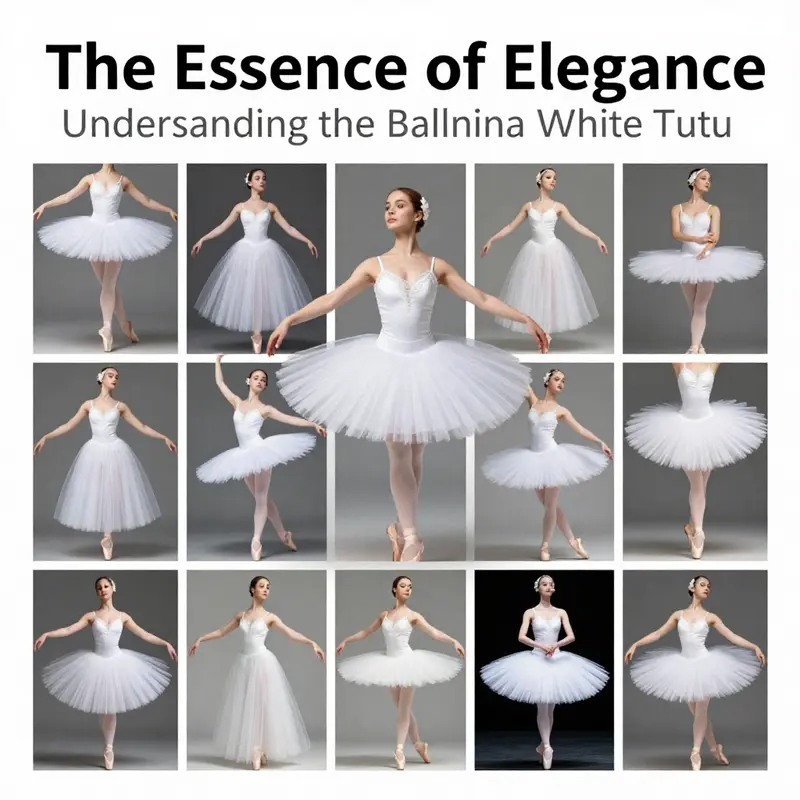
A white tutu is not merely a costume; it is a language spoken in fabric and light. In the theater, where every gesture travels a measured distance and every breath costs a beat, the tutu becomes a translator between memory and moment. It carries centuries of tradition while bending to the demands of contemporary staging. The result is a delicate balance: a silhouette that is at once instantly legible to an audience and quietly intimate to the dancer who wears it. The white tutu, with its crystalline hue, acts as a mirror for movement, catching and throwing light in a way that makes leg lines, hip articulation, and grand jetés read clearly from every corner of the house. Its dress code—how stiff the fabric is, how many layers of tulle live above the bodice, how short or long the skirt, and how pronounced the bell‑curve of the silhouette—matters as much to storytelling as to technique. It is through these choices that a character’s inner life is translated into outer form, and the choreography’s architecture becomes visible to the audience.
At the heart of the white tutu’s identity lies the classical tutu, a short, stiff skirt built from layers of tulle that create a rigid, bell-shaped profile. This geometry is not merely decorative; it is functional, guiding the dancer’s lines into the precise angles required by the repertoire. The classic silhouette honors the historical precision of ballets like Swan Lake and The Nutcracker, where Odette’s purity or the Sugar Plum Fairy’s ethereal calm are legible in every second of movement. In this sense, the white color and the tutu’s architecture work in concert to illuminate narrative clarity. The tutu’s stiffness renders the footwork and leg extensions more legible to audience eyes. The bodice remains fitted to emphasize the torso’s stillness and control, while the voluminous skirt provides a floating counterpoint that makes even a poised port de bras feel like an inevitable part of a larger story. When viewed under stage light, white fabrics reflect and refract with a subtleness that keeps the dancer’s center of gravity calm while the arms and legs appear to hover, almost suspended in air.
Within this framework, Odette and Odile—two faces of a single swan—represent a pinnacle of the white tutu’s expressive potential. The classic White Swan Tutu, sometimes called the Odette Tutu, is the archetype: a crisp, pristine layer cake of tulle anchored by a bodice that hugs the torso and keeps the upper body securely poised for the delicacies of turns and balances. Subtle embellishments—embroidery in pale silks, delicate lace around the neckline, or a touch of beadwork—will often be used to accent the character’s innocence or sorrow without breaking the purity of the color or overwhelming the silhouette. The intention is not to distract from the choreography but to reinforce it, allowing light to kiss the fabric and the audience to feel the dancer’s breath as it lifts into a perfect, almost sculptural line. A tutu of this kind does not surge with flamboyance; it articulates instead through restraint and restraint’s quiet power.
Yet the white tutu is not a fixed monolith. Ballet history, like any living tradition, bends to the needs of the story being told or the tempo of the production. In Don Quixote, the courtly, celebratory mood of Kitri’s world invites a broader spectrum of dress codes. The wedding variation in particular demonstrates how a white base can be paired with brighter accents to convey personality and social tone while still maintaining the white tutu’s essential clarity. In this space, the tutu’s silhouette may remain short and structured, but the adornments—sashes, embroidery, or colored trimming—offer a visual cue to Kitri’s bold, festive spirit. The contrast between the more conservative Odette lines and the more exuberant Kitri lines reveals how white can function as a neutral canvas that accommodates a spectrum of character voices. For audiences, the tutu becomes a map of identity, its form signaling allegiance to tradition or a wink to modernity without ever losing its core whiteness.
Beyond the classical and the festival‑like wedding, variations such as the Bell Tutu or the flying tutu introduce a different grammar of movement. The Bell Tutu, sometimes referred to as the flying tutu, is shorter and less rigid, designed to free the dancer for high-speed phrasing, rapid turns, and athletic leaps. This version preserves the white mood of elegance but shifts its emphasis toward kinetic clarity. The structure is intentionally lighter, allowing the legs to travel with less resistance and the joints to articulate with greater freedom. It is a design that speaks to contemporary or neoclassical works where velocity, precision, and a sense of breathless momentum take center stage. In such contexts, choreographers exploit the tutu’s form to reveal the dancer’s technique—the way a fast assemble or a boundary‑pushing developpé becomes visible in the way the skirt moves and the air catches around it. The magic here lies in how a seemingly simple garment becomes a vehicle for speed and expression, aligning the dancer’s body with the music’s tempo and the narrative’s pulse.
Another variation, the White Pancake Tutu, offers a different aesthetic altogether. This flat, pancake-like profile reads softer and more restrained than the bell silhouette, yet it retains the white color’s purity and the material’s tactile lightness. The pancake form creates a more even plane of tulle that can soften lines without sacrificing the silhouette or the stage picture. It is often chosen for ballets or scenes that require a gentler, more intimate mood, where the choreography leans toward lyrical phrases, delicate port de bras, and a sense of stillness amid movement. In these moments, light interacts with the fabric to sculpt a subtler halo around the dancer, inviting the audience to lean into emotional nuance rather than physical flourish.
In considering these variations, it becomes clear that the tutu’s dress code is never merely about fashion. It is about storytelling, choreography, and the dancer’s technical reach. The decision to deploy a classic, a wedding variation, a bell tutu, or a pancake profile is the choreographer’s answer to questions of pace, character, and scene design. The same white color can yield a different mood when coupled with a stiffer or a lighter silhouette; the same dancer’s lift can look either restrained or exhilarating, depending on the garment’s resistance or its freedom. These choices shape the audience’s perception of the character’s inner life and set the tone for how the story unfolds on stage. The tutu thus becomes an instrument of narrative discipline, helping to ensure that the choreography’s lines, the dancer’s lines, and the audience’s lines all converge into a single, legible vision.
In the realm of visual references and production design, the tutu’s white of choice continues to operate as a beacon for imagery and mood. Designers and photographers often point to the White Tutu family as a source of cohesive symbolism—an aesthetic anchor that makes it easier for audiences to read a character’s arc across different scenes and even different productions. For those seeking to understand or visualize these possibilities, reference images and design collections can offer a practical sense of how the white tutu reads on stage, how the light catches the fabric, and how different silhouettes transform the same color into varying emotional sensations. For an explicit look at Swan Lake‑inspired design, see the Swan Lake tutu category. This resource demonstrates how the classic silhouette sits within a broader palette of white options, each chosen to serve a specific choreographic intention and narrative moment.
The practical considerations behind choosing among these dress codes are substantial as well. Real-world productions must balance aesthetic ideals with the realities of stage mechanics, quick changes, and the dancer’s comfort during long performances. The stiffened tulle of the classical tutu provides the most reliable projection of lines under intense lighting and from a distance, while the lighter variants demand more careful choreography to preserve leg visibility and line integrity. Maintenance is another factor: the stiffness of the classical tutu depends on the treatment of the fabric and the layers’ construction, which in turn affects cleaning, storage, and longevity on tour. In the end, the white tutu remains a flexible instrument—its color and structure adjustable to the demands of the story, the dancer’s technique, and the director’s vision. This adaptability is what allows the white tutu to endure as a symbol of purity and grace even as taste evolves and new choreographic ideas emerge.
As a final reflection, the white tutu’s dress codes and variations reveal a philosophy of ballet that values both tradition and invention. The silhouette is a stage for gravity and light, a constant reminder that the body moving within it is capable of immense control and expressive subtlety. When a dancer takes the stage in a classic Odette form, the audience feels the weight of history and the clarity of intention. When the same dancer shifts to a Bell or Pancake variant, the performance becomes a demonstration of current energy, technique, and mood. And when the tutu’s whiteness is tempered by the choreography’s tempo, the fabric seems to disappear into the music, making the dancer’s motion the true star of the moment. In that sense, the white tutu is not only a costume but a living grammar of ballet—a language that translates movement into meaning, moment by moment, across generations of spectators.
External resource: Freepik’s White Tutu Ballerina images can provide additional visual context to these discussions of silhouette, luminosity, and stage presence. https://www.freepik.com/free-photos-vectors/white-tutu-ballarina
Grace in White: Choosing, Wearing, and Caring for the Ballerina’s Classic Tutu
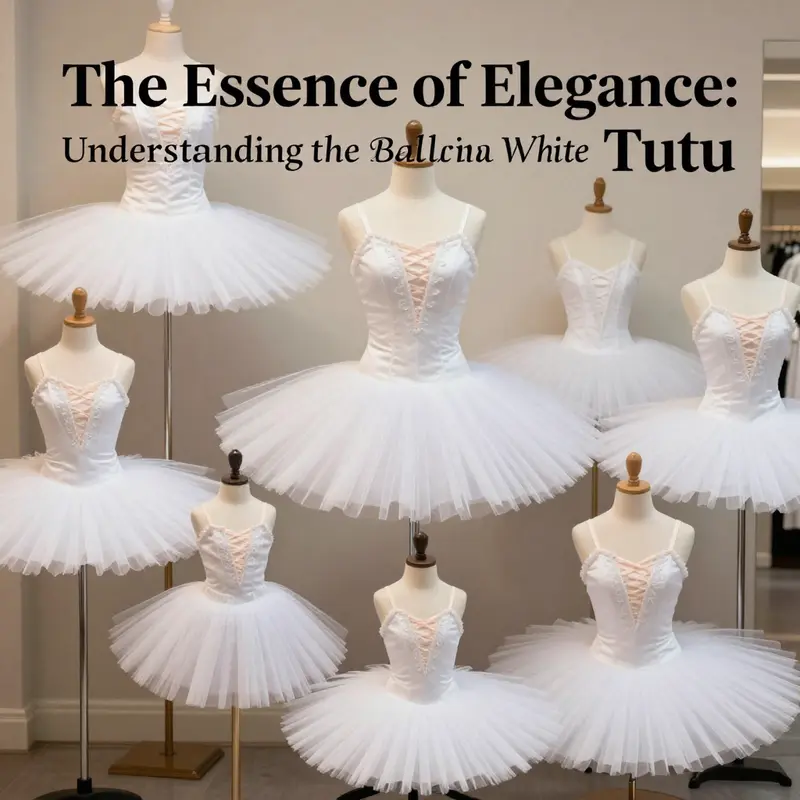
Every white tutu tells a story before the first beat of the music. It is not merely fabric; it is a sculpted silhouette that catches light, moves with breath, and frames the dancer’s every gesture. The classic tutu, built from multiple layers of stiffened tulle, flares from the waist and holds its posture through hours of practice and performance. In ballets like Swan Lake and The Nutcracker, the tutu becomes a visual language as precise as a turnout or a pirouette, signaling purity, discipline, and grace. For a dancer, selecting this garment is an act of trust: the skirt must support the line of the legs and the integrity of the spine while remaining light enough to feel almost weightless on the stage. The challenge is not only to find a white tutu that looks immaculate in photos but to choose one that responds to the dancer’s movement, the seat of the core, and the shifting angle of the lighting.
Across the dance world, the path to a reliable white tutu begins with fit and sizing. The waist measurement is only part of the equation; the overall length from waist to hem and the circumference of the hoop determine whether the tutu sits at the right height and flares in just the right arc. Dancers should compare their measurements to the retailer’s size chart, noting whether the design is built for a snug bodice or a forgiving, one-size-fits-most approach. A tutu that runs small can pinch the torso and restrict turnout, while one that is oversized can obscure lines on stage. Beyond numeric measurements, look for adjustable features—elastic waistbands, ribbon ties, or subtle internal boning—that can be tuned to the dancer’s form. The goal is a garment that feels secure yet buoyant, so every step, leap, and extension is supported rather than resisted. The qualitative feel—the way the layers separate and catch light as the leg moves—often reveals more about suitability than a chart alone.
Material quality lies just as strongly at the heart of a tutu’s performance as its measurements. The ideal white tutu uses a multi-tiered tulle construction that holds its shape when projected into the house lights. The stiffness and stiffness-to-weight ratio must be calibrated so that the skirt maintains its outward silhouette while remaining flexible enough to permit near-silent footwork and controlled extensions. A high-grade tulle resists fraying at the edges and dries quickly after cleansing, yet it should not look rigid or harsh. The color must be a true, evenly bright white, not a shade that veers toward ivory or chalk, because lighting on stage can alter perception dramatically. Dancers often seek options that offer a balance: a crisp, structured outer layer that reads cleanly in close-ups and a softer underlayer that provides a smooth, comfortable feel against the skin. For performances with long shows and rapid costume changes, durability becomes even more critical: the tutu must withstand repeated spins, fast footwork, and the occasional misstep without losing its form. This is where the choice between a specialized, performance-focused tutu and a more general-utility option becomes meaningful. A garment designed for stage use typically includes reinforced seams, improved waistbands, and a hoop structure that retains its shape after a long run on stage. These attributes translate into fewer repairs, less downtime between numbers, and a better sense of security for the dancer.
Care for a white tutu follows a clear, respectful routine. After a performance, gentle cleansing helps preserve the fabric and the delicate tulle. Hand washing in cool water with a mild detergent is best, as machine washing can twist, snag, or distort. A careful rinse and a gentle squeeze release the most stubborn dust or makeup that can cling to the fibers. Drying requires patience: lay the tutu flat on a clean surface away from direct sun, which can fade or alter the fabric’s stiffness. The light, consistent air helps the layers fall back into place without causing creases that persist when the tutu is worn again. Storage is where many tutus earn or lose their longevity. A breathable garment bag or a padded hanger allows the skirt to keep its shape and prevents the tiers from crushing together. Long-term storage calls for avoidance of plastic bags, which trap moisture and invite mildew. This small etiquette—keeping the tutu away from moisture and heavy compression—extends both the garment’s life and its visual resonance on stage, where every seam and edge must read as pristine under the brightest stage lights.
Beyond personal use, a shop or a company that outfits dancers faces practical decisions about procurement. For commercial use, the choice often shifts to supplier types that can balance consistency with customization. Some buyers seek direct production partners who can finish pieces to exacting specifications, enabling unique fittings or color-matching with a troupe. Others opt for wholesalers who curate a reliable range of styles, ensuring quick restocking and predictable sizing. The decision hinges on the intended scale of purchases, the variability of sizes, and the speed at which new productions come together. When a business plans a bulk order, it pays to request feeds on lead times, return policies, and quality guarantees, so that the troupe can maintain its schedule without surprises. For performers or studios that frequently stage new productions, the flexibility to order multiple sizes in the same season becomes a practical advantage, not a luxury. In every scenario, the fabric, the fit, and the care standard translate into a single outcome: a white tutu that presents with uniform elegance across countless performances, from rehearsal to curtain call. For those exploring professional lines, see the Professional tutu category. The right choice harmonizes the dancer’s artistry with the garment’s technical demands, and that harmony is what carries the chorus of a production from good to memorable.
Color and silhouette also intertwine with choreography. The white tutu, while symbolic of purity and refinement, requires a careful partnership with the bodice, the neckline, and the dancer’s headpiece. Lighting can make the whiteness glow with a soft, almost pearly sheen or cast it as a brighter, more clinical white, depending on angle and intensity. In classical repertory, where the tutu must align with noble gesture and precise port de bras, the garment’s stiffness helps the leg lines to read cleanly while the dancer works to keep the torso elongated and the pelvis aligned. The tutu’s volume should balance with the dancer’s height and arm reach, never overpowering a line but never receding so far as to dull the silhouette. In practice, that balance emerges through thoughtful choice at purchase and a disciplined care routine at home or in a studio. The goal is a tutu that feels almost like a partner—present, supportive, and trustworthy—so that the dancer can focus on timing, phrasing, and nuance rather than adjusting fabric mid-performance.
Ultimately, the decision to buy a white tutu is rooted in respect for the art form and a commitment to longevity. A well-chosen piece becomes part of a dancer’s vocabulary, a tool that can travel through seasons and roles with only minor adjustments. The best options honor the lineage of ballet’s most cherished classical works while offering a practical edge for modern stages and backstage hustle. When evaluating options, consider the balance between form and function: the tutu must be dramatic enough to read in the back row yet light and flexible enough to permit fast footwork and expressive port de bras. In practice, that balance emerges through thoughtful choice at purchase and a disciplined care routine at home or in a studio. The tutu’s volume should balance with the dancer’s height and arm reach, never overpowering a line but never receding so far as to dull the silhouette.
To close the circle, consider how a white tutu travels beyond the studio. It becomes part of a state of mind that connects audience, artistry, and discipline. A tutu’s gleam under the stage lights can turn a simple bow into a moment of quiet triumph if the garment has been chosen with care and cared for with patience. The dancer’s confidence, the instructor’s trust in the fit, and the crew’s confidence in the garment all converge to create the illusion of effortless motion. That is the essence of the tutu’s magic: not the weight of fabric but the clarity of line it helps produce. In this way, the white tutu is not a mere costume but a living instrument that can help shape the dancer’s presence as surely as any step or phrase in the choreography. In this final sense, a white tutu becomes a trusted companion on stage and in rehearsal, a shimmering reminder that discipline and artistry walk hand in hand.
For those seeking broader perspectives on choosing and maintaining a professional-grade white ballet tutu, a detailed guide offers deeper considerations and practical steps that align with the needs of performers and studios alike. External resource: https://www.balletbazaar.com/guide-to-white-ballet-tutus
Final thoughts
Understanding the ballerina white tutu offers insight into its symbolic significance in ballet, its intricate craftsmanship, and the importance of proper care. As a business owner in the dance industry, being informed about the elements that contribute to a dancer’s performance attire can aid in making better choices for inventory and marketing. Emphasizing quality, style, and practical recommendations can enhance the experiences of both amateur and professional dancers alike, as they step onto the stage in elegance and confidence.