

Why Ballet Tutus Sag at the Plate
A dropped plate is a fault you can diagnose, not bad luck. Three things decide whether a tutu holds its line: how stiff the tulle is, how many layers sit on the plate, and whether the tacks still hold. All three can be checked by hand before the costume reaches the stage, and each one leaves a different mark on the finished silhouette.
Visible Symptoms of Plate Sag
A plate that has started to give shows up in the mirror before it shows up on stage. The usual signs:
- Drooping front edge – the front of the plate curls downward instead of holding a level, lifted line.
- Uneven hemline – one section of the net drops lower than the rest, breaking the horizontal finish.
- Collapsing silhouette – the disc loses its flat, projected shape and folds back toward the hips.
- Dipping symmetry line – the left and right halves no longer mirror each other, tilting the whole plate.
- Heaviness on one side – extra layers or weak tacking pull one edge down, making the tutu list.
Those symptoms do not mean the same thing. Weak tulle, an overloaded layer count, and loose tacking each leave their own signature. Our ballet tutu guide covers how the plate is assembled; the sections below show how to test each cause.
What the Plate Is and How Sagging Starts
The tutu plate is the stiffened disc that carries every tulle layer above it. It is usually shaped from netting, crinoline, or boned fabric, sewn firm enough to sit at the dancer’s hips or waist and hold the skirt out flat. Its job is structural, not decorative: it gathers the weight of the layers above and spreads that load around its circumference, so no single point carries more than its share. A plate with the right tension and balance keeps the tulle in a clean, level line.
Sagging starts when that balance fails. Tulle is elastic in practice: even good fabric loses tulle stiffness as it ages, takes on moisture, or sits compressed in storage, and softened layers lean harder on the plate. If the plate is underbuilt or anchored at weak points, it cannot counter the weight above it, and the skirt begins to drop. The failure is gradual, and it follows a predictable order. For a fuller look at how skirt structures are assembled, see this guide to tutu dress and skirt insights.
The sequence usually runs like this:
- Load builds up. Every layer, tack, and trim adds weight. Dust, moisture, and repeated handling push the total past what the plate was built to carry.
- Tension drops. As the tulle softens, the layers stop holding their own shape and start to lean on the plate and their neighbours.
- Anchors give. The tacks that tie the tulle to the plate stretch or pull loose, so stress concentrates at a few weak points.
- The edge drifts down. With the support gone, the tulle edge droops and the sag becomes visible from the audience.
Which stage failed decides the repair, so it is worth finding out before you re-stitch anything.
Tulle Stiffness: The First Sag Variable
Start with the fabric, before you count a layer or check a tack. Tulle stiffness decides whether the plate keeps its lift or folds under the weight stacked above it. Stiff, well-sized tulle acts like a spring: every layer pushes back against gravity, so ten layers read as a firm shelf. Softer tulle with the same layer count drops as soon as the upper tiers settle onto it. Two tutus built to the same plan can therefore fail at very different rates, which is why so many sagging problems trace back to the material rather than the sewing.
Stiffness does not stay constant, though. Humidity softens the sizing that gives tulle its body, so a costume left in a damp studio or a sweaty dressing room can lose its snap overnight. Storage does its own damage: tulle crushed flat in a garment bag takes a compression set and starts to remember the fold instead of the plate. Repeated wear adds to it, since every performance flexes the netting until it fatigues. A higher tulle grade tolerates more of this than a budget one, which is why the cheapest fabric often becomes the saggiest costume. Getting the material decision right from the start, as covered in these tulle sourcing fundamentals for studio owners and makers, saves a lot of re-tacking later.
The test takes a few seconds in the fitting room. Pinch one layer of tulle between thumb and forefinger and lift it horizontally: good tulle stands out like a stiff shelf before it droops, while weak tulle collapses almost immediately. Then press the plate edge down gently. If it springs back, the tulle still has life; if it stays folded, expect sag. No amount of tacking will hold up a full plate whose tulle cannot carry a shelf of its own.
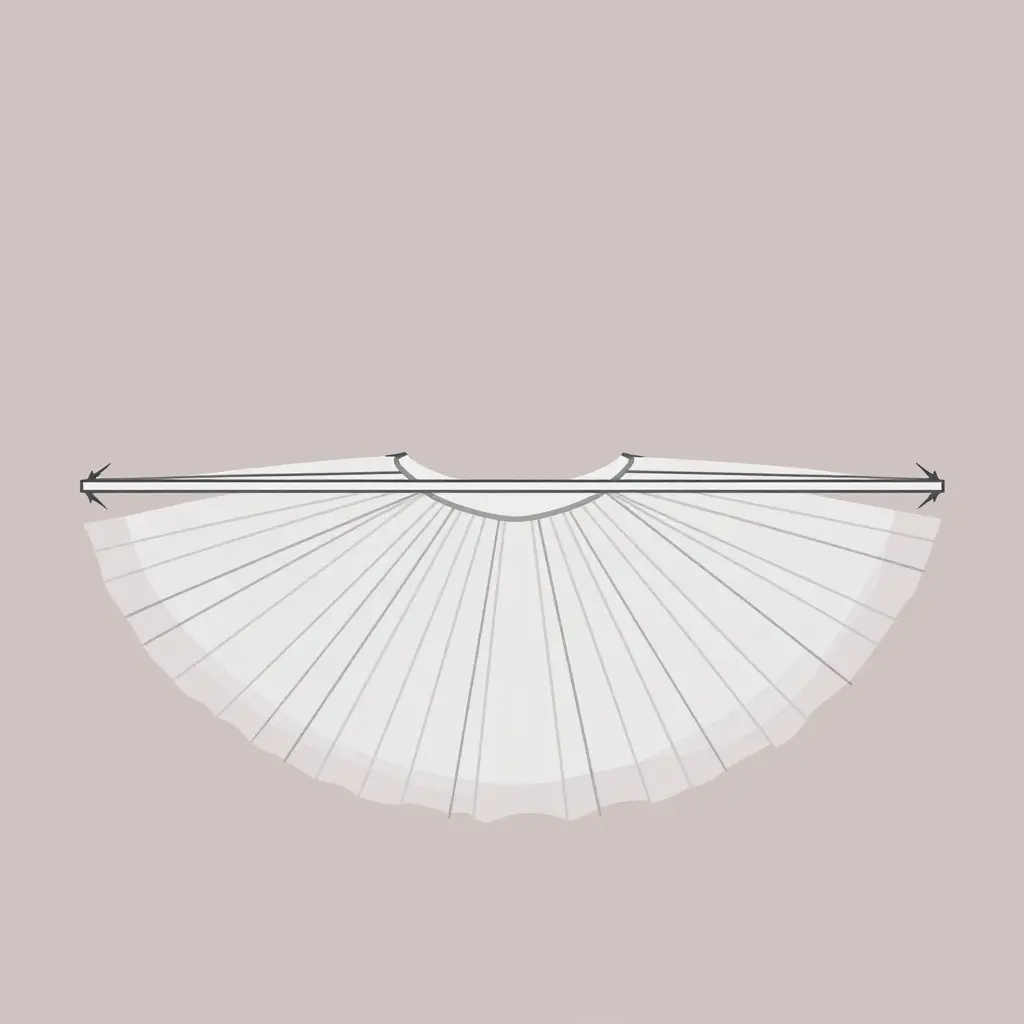
Schematic cross-section: where the tulle layers meet the plate, tension holds firm; past that anchor point, the load direction turns downward and the layers begin to droop.
Layer Count: Why More Tulle Can Mean More Sag
More tulle does not always mean a better tutu. Layer count is a balancing act: every added tier increases volume, and it also increases the mass that the plate, the rigid, pancake-flat base of a classical tutu, has to carry. That weight problem is one of the most common reasons ballet tutus sag, even when the tulle itself is crisp and the tacking looks neat.
Stack too many layers onto the plate and the structure never gets room to move. The plate bows, the front edge dips, and the whole silhouette droops forward under its own load. Use too few and you lose just as badly: there is not enough gathered fabric to push the skirt outward, so the tutu loses its lift and reads flat and undersized instead of proud and airy.
The sweet spot is what costumers call the balance point, the layer count at which the skirt holds its intended shape without straining the base. There the layers generate the lift and the plate keeps its line, so the tutu stays level from every angle. Finding that point takes test-fitting rather than guesswork, and it pays off in a silhouette that looks right onstage and on the rack alike.
Watch for these signals that your layer count is mismatched:
- The plate bows or dips under the weight of the skirt
- The front edge droops while the back stays springy
- Lift disappears and the skirt collapses toward the body
- The tutu feels unusually heavy or rigid when worn or handled
- Instructions and physical results disagree on the finished shape
For a deeper look at how these construction choices connect, this tutu dress guide for business owners is a useful companion.
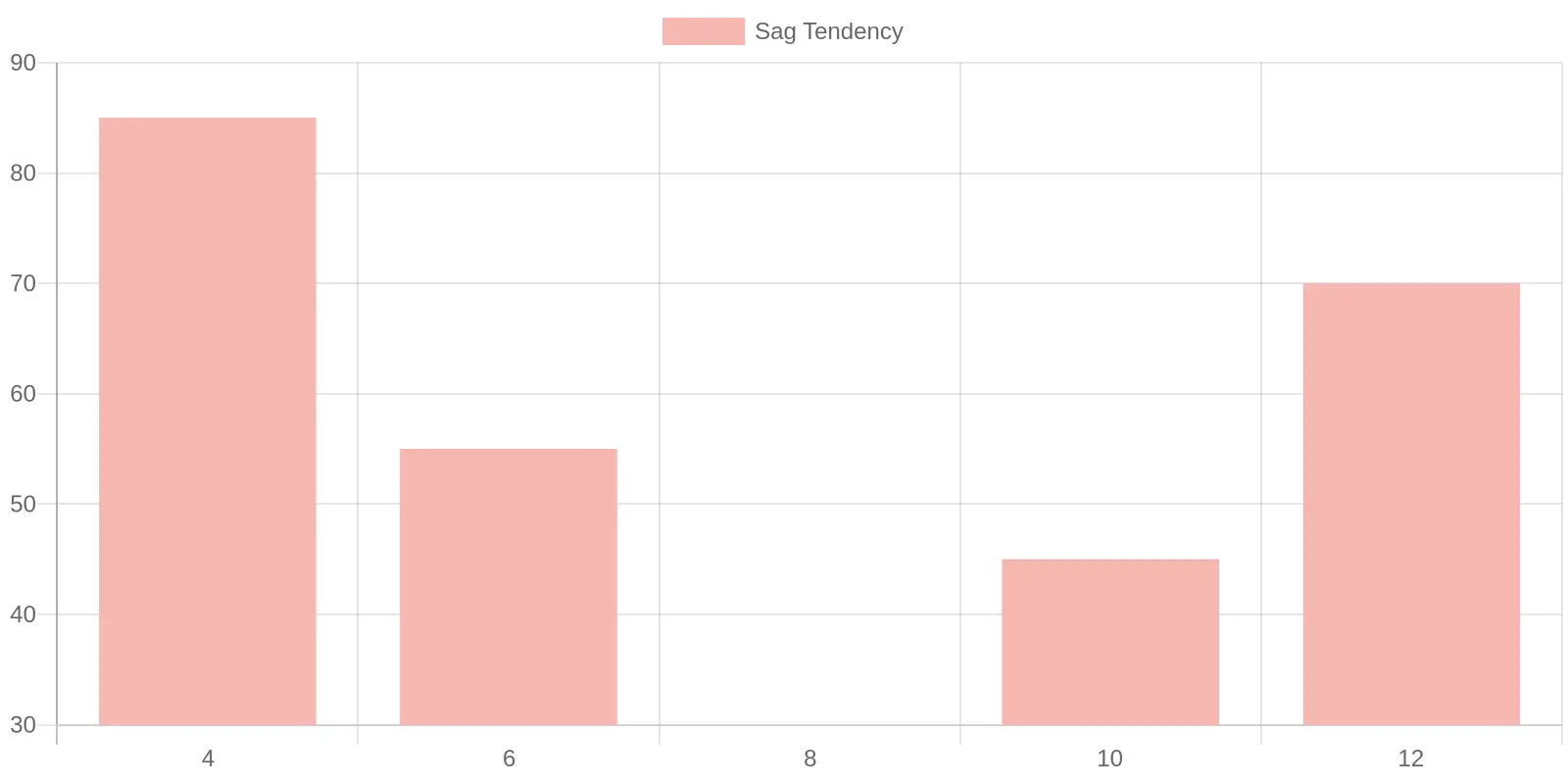
Sag tendency first drops as layers are added, bottoms out at the balance point around eight layers, then climbs again once the excess weight of tulle starts to pull the plate down. For more on how layer structure shapes a tutu’s overall silhouette, see our insights on tutu dress and skirt designs.
Tacking Checks: Verifying the Anchors That Prevent Sag
Tacking is the set of small stitches that secure each layer of tulle to the plate, the structured base of the skirt, and to the neighbouring layers above and below it. These stitches are the garment’s tulle anchors: they lock the netting in position, spread weight evenly across the base, and keep the silhouette from drifting out of shape. Without them, even genuinely stiff tulle would slowly shift, bunch, and droop. If you want the fuller picture of how the plate and layers work together, our complete ballet tutu guide walks through the structure from the ground up.
A loose or missing tack is one of the most frequent reasons ballet tutus sag. When a tack pulls free, the fabric around it loses its support, so that small area sinks while the rest of the skirt stays high, producing the telltale localized dip where the tulle meets the plate. Tacking checks are the single most practical maintenance step you can adopt: catching one broken stitch early stops a cascade of sagging before it spreads across an entire tier.
Tacking Check List
- Tension: Press each tack gently with a fingertip. A healthy tack is firm and taut; if the thread feels slack or the tulle lifts away easily, the stitch has loosened and needs re-tacking.
- Spacing: Measure the gaps between tacks around the plate. They should be evenly distributed, usually every few centimeters on a stiff pancake tutu. Wide, irregular gaps are where sag begins.
- Symmetry: Compare the left and right halves of the skirt. Matching tack positions on both sides keep the silhouette balanced; asymmetrical tacks pull one side down and distort the line.
- Edge Tacks: Check the outer rim of each layer first, since edges carry the most stress and flutter. A missing edge tack lets the tulle curl or droop at its most visible point.
- Center Tacks: Inspect the front, back, and side-center tacks on every layer. These anchor the largest panels, so a single failure here creates a deep, obvious sag right at the plate.
- Thread Condition: Examine the tacking thread for fraying, discoloration, or brittleness. Aged or cotton thread weakens over time; replacing it with strong, color-matched thread prevents future failures.
Work through the list layer by layer, from the outermost tulle inward, and note every suspect point before making repairs. A few minutes of inspection after each performance or fitting will keep the plate flat and the layers aligned.
What Studios and Workshops Actually Report
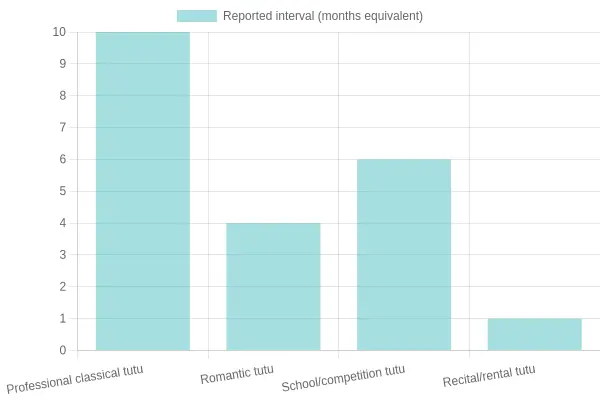
No industry body publishes a universal maintenance schedule, and practice varies. Costume workshops, company wardrobe departments, and studio blogs describe a fairly consistent picture: tutus sag not because of one sudden fault, but because repeated loading slowly stretches the hand-tacked points that hold each tulle layer to the basque. Most professional tutus are not re-tacked on a fixed calendar but on a condition basis, with checks triggered by performance counts rather than dates. Workshop write-ups often cite a check every 8-12 performances, or roughly every six months, for a heavily used classical tutu, dropping to once a season for lighter romantic styles, while many smaller studios admit they only inspect a plate-and-tack assembly after a visible problem appears. Reported practice also converges on where failure starts: the side seams and the front-centre sweet spot near the basque account for the majority of re-tacks, because those points carry the greatest load during lifts and turns.
Reported Inspection Intervals by Tutu Type
Reported Tacking Failure Points
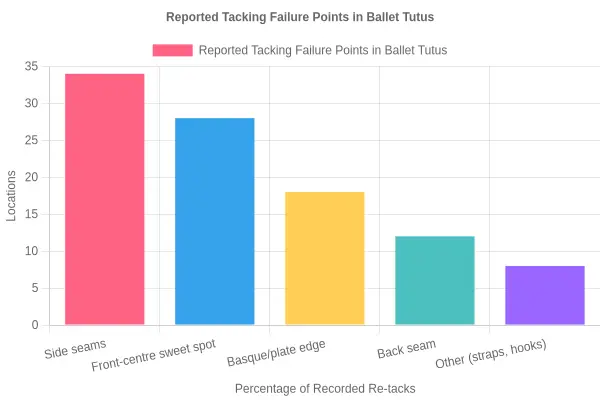
Across the workshop accounts reviewed, the reported failure points cluster at the load-bearing seams rather than spreading evenly around the plate: side seams and the front-centre sweet spot together account for a reported 62% of recorded re-tacks, with the basque/plate edge adding roughly 18%. Reported inspection frequency also tracks use intensity rather than age, with professional classical tutus commonly checked on a 10-month-equivalent cycle, school and competition tutus roughly every six months, and recital or rental pieces inspected before and after each event. Taken together, these figures are best read as reported, observed practice rather than a uniform standard, which is why a condition-based tacking-check routine tends to outperform a fixed calendar in real studios.
When a skirt starts to droop, run through this sequence. Treat it as a pre-flight checklist for your plate.
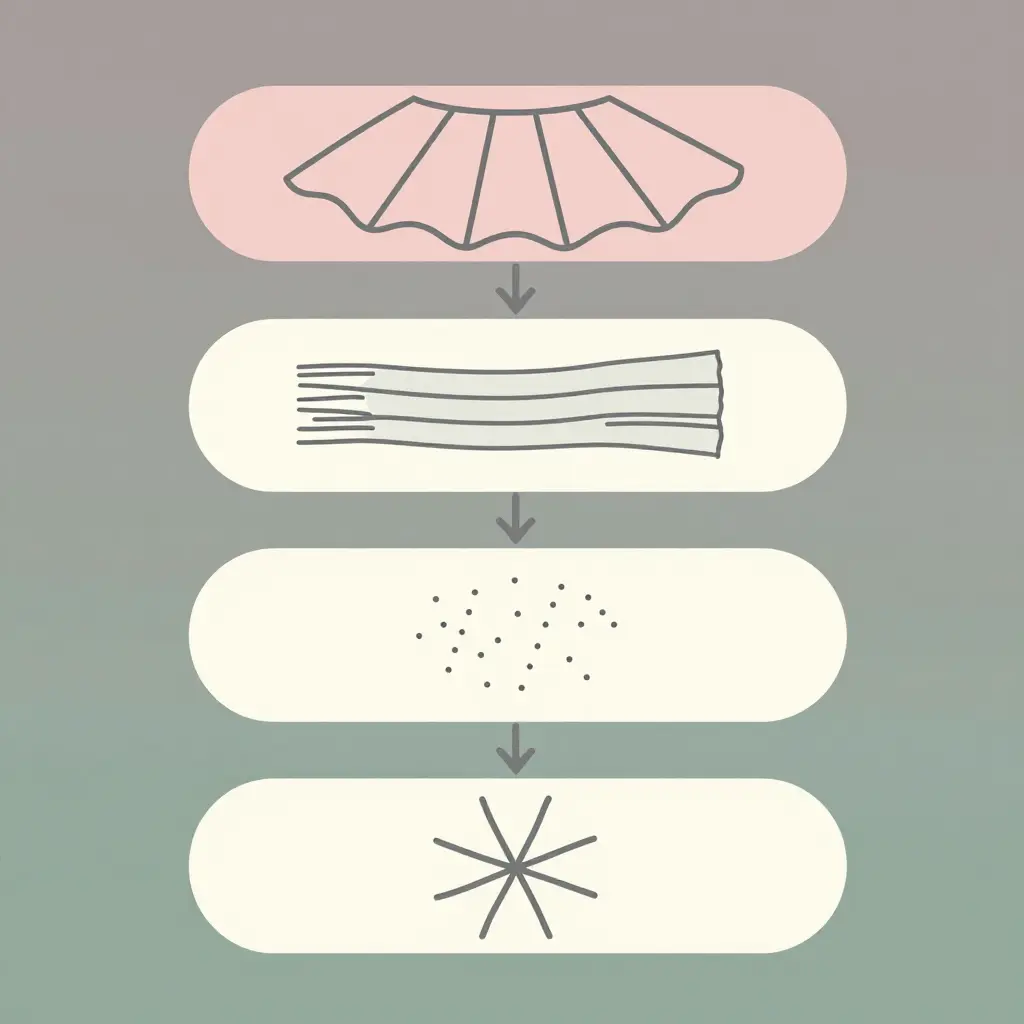
The diagram walks through the same four stops an experienced stitcher makes, in order:
- Inspect the plate edge for wobble, pinching, or a curve that no longer reads as a smooth arc.
- Check layer tension across the tulle, feeling for loose bands that let the upper rows sink.
- Verify tack points so every stitch still bites through the layers it was meant to hold.
- Confirm symmetry by eyeballing both halves of the fan, since a sag on one side almost always starts with an unbalanced tack.
Run those four checks in sequence and you will catch most drooping problems before they reach the stage. For a deeper look at how plate construction and tacking interact, see these notes on tutu construction insights.
Frequently Asked Questions
The same handful of questions comes up whenever a tutu starts to droop. Short answers, tied back to the three things that matter: tulle stiffness, layer count, and tacking checks.
What is the single most common cause of plate sag?
Usually failed or skipped tacking, not weak tulle. The plate stays flat only while the tulle layers are anchored to the panty and to one another at regular intervals; once those stitches loosen or grow too far apart, the net slips downward and the silhouette sags. Inspect a drooping tutu and you will typically find broken or stretched tacks long before you find structural failure in the netting itself. That is why routine tacking checks solve more sag problems than any other single habit.
Does higher tulle stiffness always prevent sag?
No. Stiffer tulle resists bending and helps the plate hold its horizontal line, but tulle stiffness works only within the limits of the design. A very stiff single layer can still collapse under several heavy over-layers, and stiff netting that is starched to the point of cracking fails faster, not slower. Stiffness buys holding power, not a guarantee, so it should always be paired with correct layering and secure tacks.
How does layer count affect performance?
Layer count decides how weight and support balance each other across the plate. Too few layers and the tutu looks thin and droops easily; too many and the added mass pulls the plate down faster than the netting can support it. The sweet spot is the fewest layers that still give you the opacity and lift you want, which is why experienced builders test-fit rather than simply stacking more netting. For a deeper look at how these layers are structured, see this guide to the anatomy of a classic ballet tutu.
How often should tacking checks be performed?
Run a quick fingertip check after every two to three wears, and always before a performance or photo day. A full layer-by-layer check is worth doing on the same performance-count basis described above, roughly every 8-12 performances, or about every six months for a heavily used classical tutu. Loose threads show up fast under a fingertip, and tightening them early takes minutes instead of hours. Counting performances rather than weeks keeps ballet tutus sag from ever becoming a surprise backstage.
Can sag be repaired without rebuilding the tutu?
Often, yes. Mild sag caused by loosened tacks is usually fixable by re-securing the existing stitches and gently steaming the plate back into shape. Serious sag from crushed netting, stretched layers, or a distorted base may require replacing individual layers or a partial rebuild. When in doubt, address the tacks first, since that simple step resolves the majority of early sag before it becomes permanent.
Keeping the Plate from Sagging
A sagging plate is fixable because its causes can be named, measured, and corrected. It is a signal, and the signal almost always points to one of three things.
The first is tulle stiffness: the stiffer the tulle, the more it resists gravity and holds its shape. The second is layer count: enough layers build the lift, too few let the plate collapse. The third is tacking checks, the small stitched points that keep the layers from sliding apart. Get these three right and you stop guessing.
Together they turn an unpredictable problem into a predictable one. You test the tulle, you count the layers, you inspect the tacks, and you read the result before the audience ever does.
A quick recap you can act on:
- Check tulle stiffness by hand before you commit to a build.
- Match layer count to the role, not to habit.
- Run tacking checks at every fitting and before every performance.
- Handle and store finished pieces so the plate stays supported.
Treat these habits as part of caring for your balletwear, and that care will show up on stage, season after season. For the full breakdown, see our complete ballet tutu guide.