
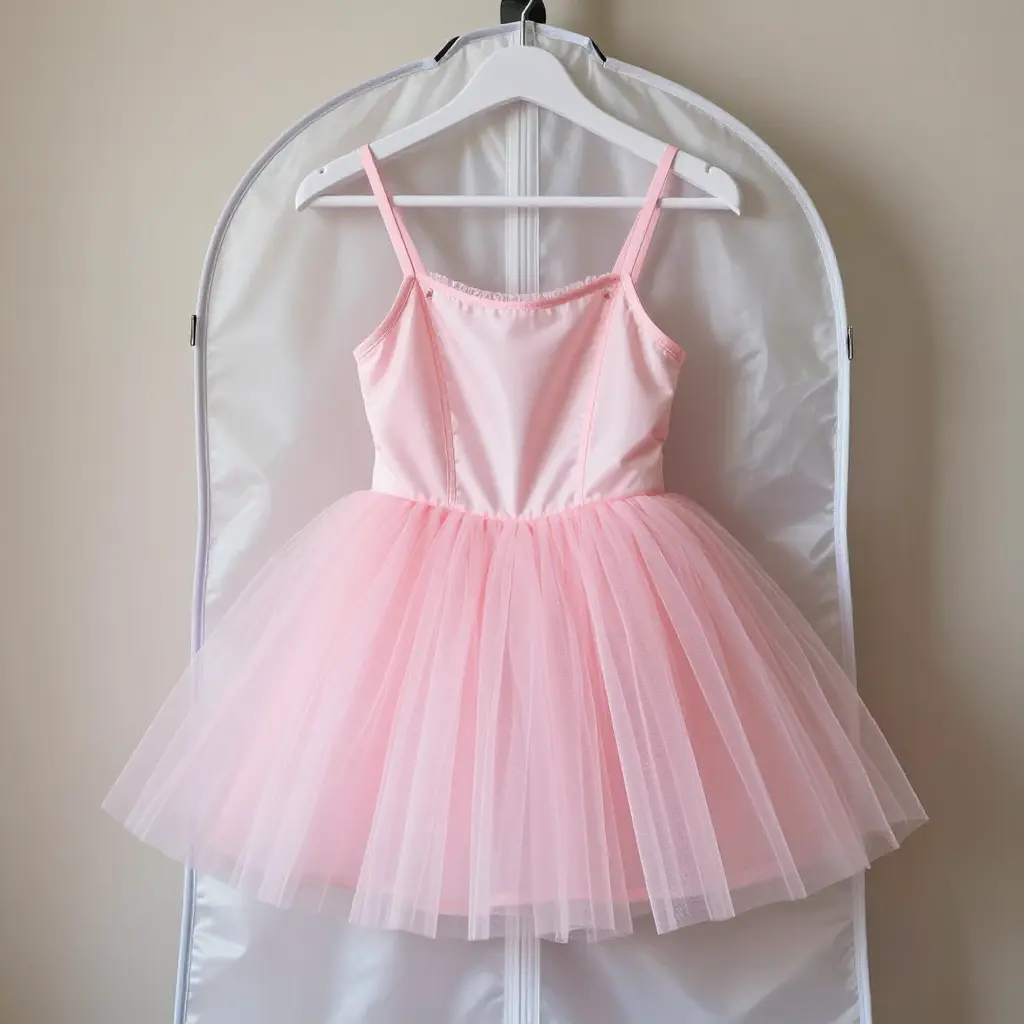
Introduction: Why Storage and Packing Define a Tutu’s Life
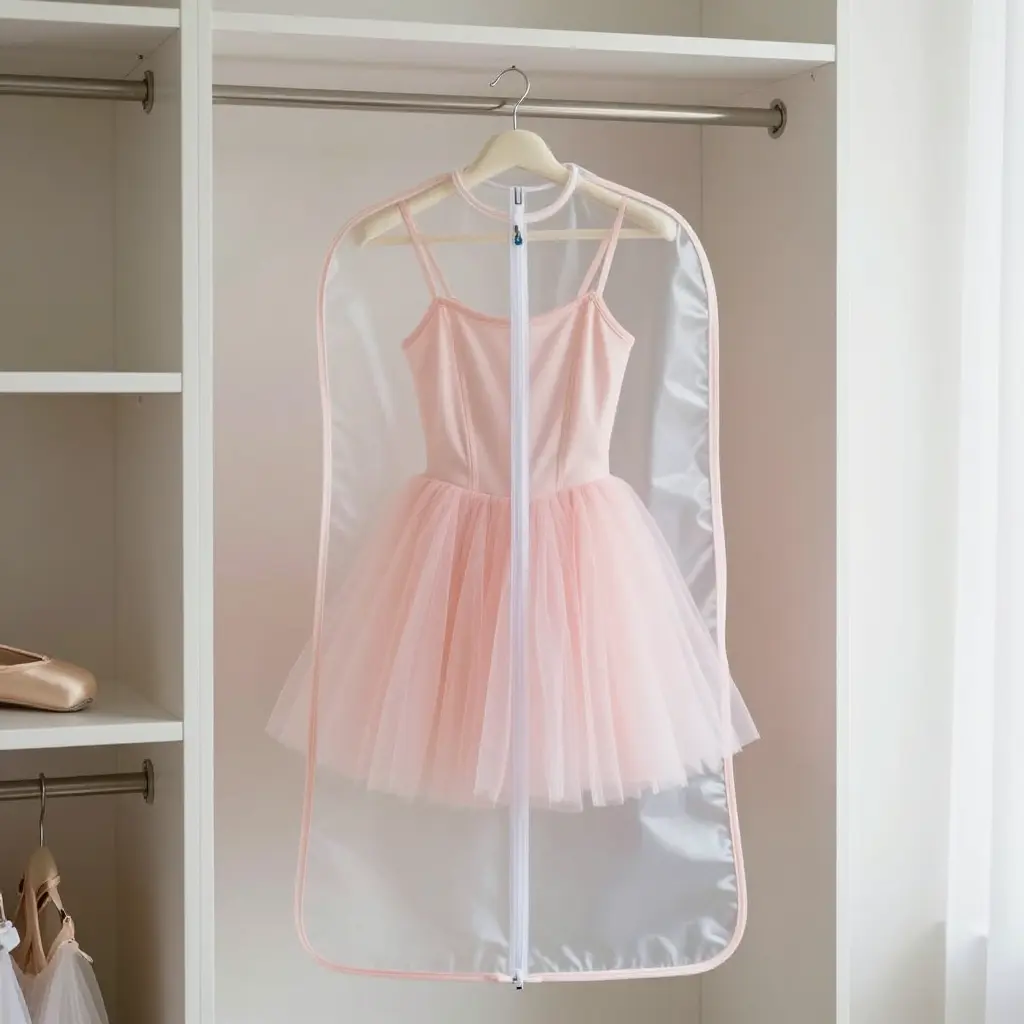
A tutu dress is one of the most delicate and architecturally structured garments a dancer will ever own. Its many layers of tulle are held in shape by fine stitching, gentle tension, and a fabric that responds poorly to pressure, moisture, and careless folding. Once you understand the construction of the skirt, it becomes obvious why the way you store and pack a tutu between performances decides whether it keeps its crisp silhouette or collapses into a flattened, lifeless skirt. For anyone responsible for these costumes, storage is not a minor chore – it protects the garment’s appearance and value.
The risks are quiet and cumulative. Tulle does not wrinkle the way cotton does, but it can crush, and the creases it takes can be permanent – no amount of steam will lift them completely. That is why this guide sticks to three practical things: preventing tulle crushing through correct layering and support, making the right hanger choice for the shape and weight of the skirt, and running simple re-steaming checks before each wear so the tutu looks stage-ready. Each one takes a few minutes and protects the garment for years.
This guide is for the people who handle tutus most often: parents of young children who need a costume to survive a full season of recitals, dance instructors managing racks of shared costumes, and costume designers protecting one-of-a-kind pieces. Nothing here is expensive or complicated, and the routines are easy to repeat.
Why Tulle Crushing Happens – and How to Avoid It
Tulle is a fine mesh fabric woven into an open, airy grid. That open grid – not the threads themselves – is what gives a tutu its lift. The shape lives in the tiny air pockets caught between the mesh. Flatten those pockets, and the whole silhouette sinks.
Tulle crushing and the weight of layers
Most tutu skirt construction stacks many tulle layers to build volume. Individually each layer is nearly weightless, but together they add up. When a tutu rests on a single point, gravity presses the lower layers flat against the ones above. Over time the ruffle structure flattens and the bounce fades. That is why how you support a skirt matters as much as the fabric itself. Seeing how tulle layering builds a tutu skirt makes it easier to spot which areas need the most care.
Pressure, folding, and humidity
A fold leaves a crease line that tulle remembers for a long time. Unlike cotton, it barely springs back once a fold takes hold, so each crease is close to permanent. Weight does much the same damage – anything heavy resting on a skirt compresses the mesh from every side. Humidity adds a third factor: moisture softens the finish that helps tulle hold its puff, so damp air makes crushing likelier and harder to undo.
Protecting the silhouette
The overall ballet tutu silhouette depends on keeping layers separate and undisturbed. A simple rule follows: hang instead of fold, keep weight off the fabric, and store away from dampness.
- Hang on a padded hanger that carries the waistband, not the net.
- Give each skirt its own space so nothing presses on it.
- Store in a breathable bag in a dry spot.
- Refresh volume with gentle steaming rather than ironing.
How Tulle Layers Stack – and Where They Crush
Before we talk hangers, it helps to picture what is actually inside the skirt. A tutu is not one solid piece of fabric; it is a stack of airy tulle layers fanned out from the waistband. Those layers stay poufy only while the gaps between them stay open. The moment weight presses down from the top, the layers collapse into each other, and flat, creased spots appear where the fabric can no longer spring back.
The schematic below shows this in cross-section: evenly spaced layers on one side, and the pressure points on the other where a tight pack or a heavy stack flattens the tulle first. Think of it as a map of “handle-with-care” zones.
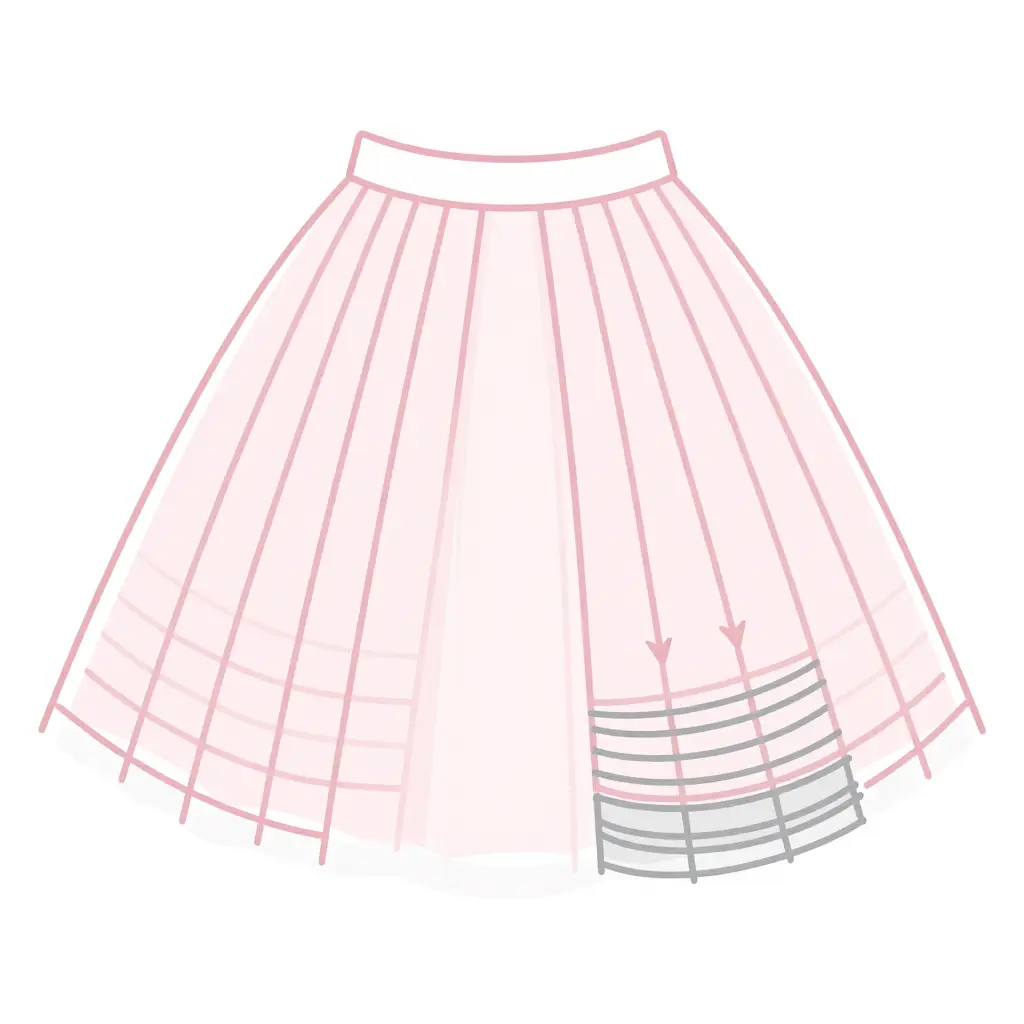
The most fragile area is not the outer edge you see but the deep, stacked layers near the waist, where pressure accumulates. Keep that zone lofted and uncompressed, and your tutu holds its shape. The pressures that crush tulle the fastest are steady weight, tight folding, and long-term stacking – and all three get worse the longer a costume sits stored. For a closer look at how skirt construction affects the way tulle behaves, see this guide to tutu dress skirt insights.
Choosing the Right Hanger for a Tutu Dress
Of everything you use to store and pack a tutu dress, the hanger is the one object in contact with the garment the whole time. It decides whether the bodice keeps its line and whether the tulle stays soft or collapses into creases. Get that hanger choice right and the dress comes out ready to wear; get it wrong and it needs rescuing.
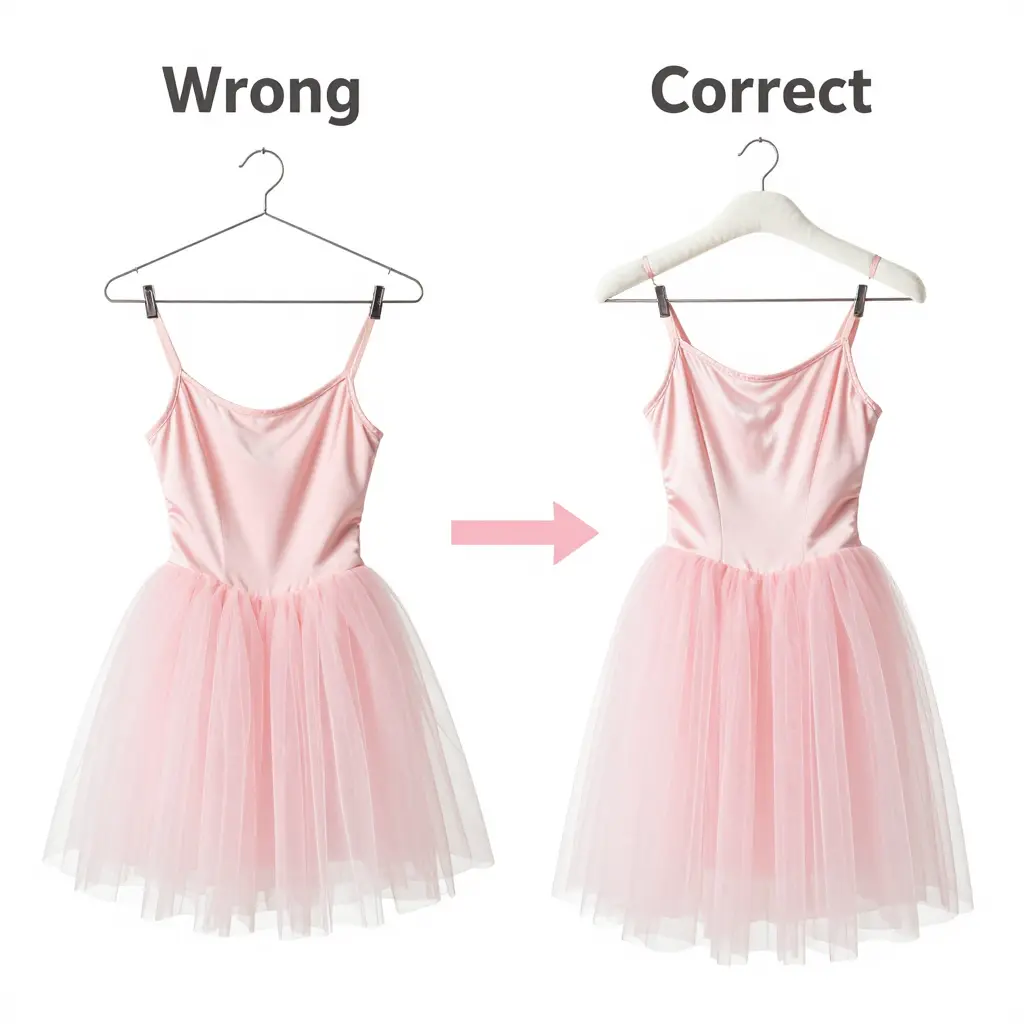
Why These Four Details Matter
Shoulder width. A hanger should mirror the shoulder span of the bodice. Too narrow, and the straps slide inward, the neckline folds, and the fabric pulls at the seams. The right garment sizing keeps the bodice square on the frame. A sizing reference for tutu dresses helps you match the hanger to the actual shoulder measurement instead of guessing.
Clip type. Spring clips are convenient but aggressive. Clamped straight onto tulle, they leave bite marks that may never steam out. Reserve clips for the inner lining or waistband, never the netting itself.
Padding. Bare wire or plastic edges press hard lines into the bodice and straps. A padded hanger spreads that weight across a soft surface, which delicate fabrics need.
Structure. A tutu skirt carries real weight. A flimsy hanger bends under it and drops the skirt into a heap, flattening the layers. A sturdy, wide frame lets the skirt volume hold its shape and breathe.
The Recommendation
For a tutu dress, choose a wide-shouldered, padded, clip-free hanger, or one whose clips sit on the inner bodice only. Hang it by the bodice, let the tulle fall freely, and never drape the skirt over the bar. This single hanger choice protects both the straps and the tulle, so the dress comes out of storage ready to wear without an emergency steaming session.
Hanger Comparison at a Glance
Use the table below to match a hanger to your tutu’s construction and how long you plan to store it. Pair it with the surrounding guidance on how a tutu dress is built and best stored for the most protective setup.
| Hanger Type | Best For | Crush Risk Level | Support Provided | Recommended Use |
|---|---|---|---|---|
| Padded fabric hangers | Beaded, lace-trimmed bodices that snag easily | Low | Wide, soft surface that grips fabric and cushions seams | Everyday home storage of a finished tutu |
| Wooden wide-shoulder hangers | Structured ballet bodices and heavier costumes | Low to moderate | Firm, contoured shoulder line that holds shape | Long-term wardrobe storage or display |
| Clip hangers | Skirt-only storage or separated bodice-and-tutu sets | Moderate | Pinpoint grip at the waistband, no shoulder pressure | Hanging a tutu flat without stretching the bodice |
| Plastic tube hangers | Lightweight tulle with no heavy embellishment | Moderate to high | Narrow, stiff bars that concentrate weight | Short-term or travel use only |
| Wire hangers | Essentially nothing – emergency last resort | High | Thin rigid line that creases and dents fabric | Avoid for tutus; brief transit at most |
Re-Steaming Checks: Bringing a Tutu Back to Life
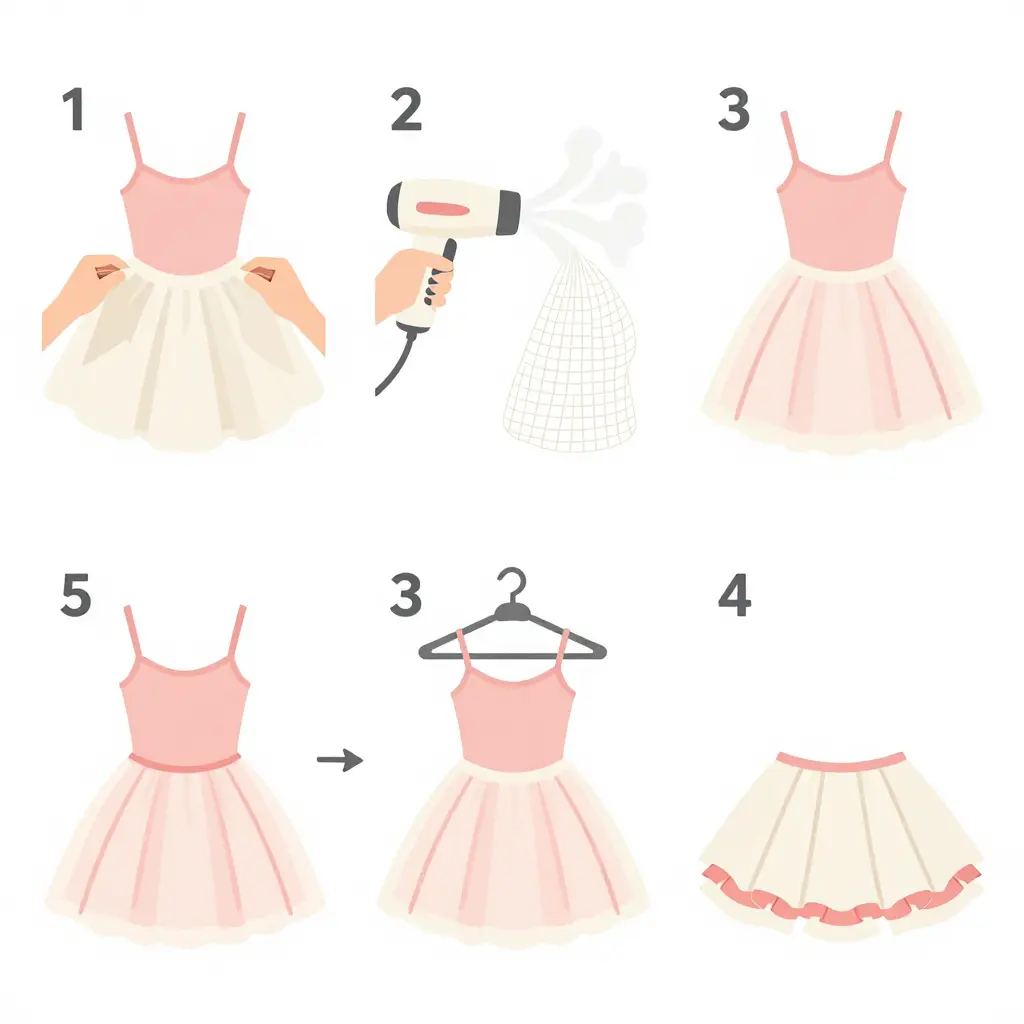
Tulle is resilient, but it is not immune to time in storage. A tutu that hangs perfectly one season can flatten quietly inside a bag or box, and a quick shake rarely restores the lift. Running a short set of re-steaming checks – inspect, steam gently, verify – is the most reliable way to return a garment to a crisp, stage-ready appearance before it is worn or packed away again.
The crispness of tulle comes from its stiffened netting structure and the finish applied to the fibers. When layers press together for weeks, that fullness is the first thing to go. This is where tulle crushing begins: netting settles into tight folds, ruffles lie flat, and the silhouette loses its bounce and volume. Steam relaxes the fibers just enough to let them spring back, but heat held too close or too long can dull the finish, add shine, or warp synthetic netting. Gentle, patient correction works; heavy pressing does not. If you want to understand how the fabric is finished, this overview of caring for dyed tulle and its finish is a useful reference.
Re-steam any tutu that has been stored for more than a few weeks, travelled in a garment bag, or sat compressed under other items. If the layers hang limp or the edges curl, steam is usually the fix. If the fabric feels gummy or sticky, or smells scorched, stop and inspect the finish before applying any heat.
Use a handheld steamer on a low setting, hold the nozzle several inches from the fabric, and let the steam do the work instead of touching the net. Work in short passes from the waistband outward. Never press tulle with a hot iron, and never rest the steamer directly on the mesh. Hang the tutu to cool and dry completely before handling it again.
Before you wear it or store it again, run through this check:
| Check | What to verify |
|---|---|
| Layers | Each tier lifts on its own, with no flat or stuck-together sections |
| Edges | Ruffles and hems hang evenly, without curling or drooping |
| Finish | Surface looks matte and crisp, not shiny, sticky, or scorched |
| Waistband | Firm and flat, with no creases or stretched elastic |
| Dryness | Fully cool and dry, so no moisture is trapped in storage |
Working through this routine keeps a garment polished and prolongs its life between wears. For a sense of what a well-finished stage-ready appearance should look like, compare against reference photos before committing the tutu to storage.
Crush Risk by Storage Method
If you have just finished re-steaming a flattened tutu, the last thing you want is to squash it all over again. This chart ranks the most common storage and packing options by how much pressure they place on delicate tulle layers. The lower the bar, the safer your tutu stays.
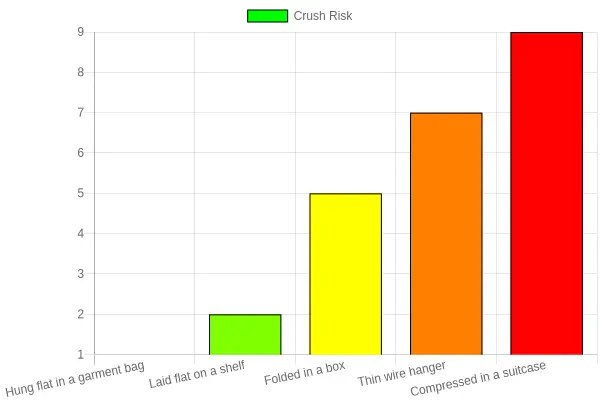
How to read it
- Hung flat in a garment bag (1): The gold standard. Tulle hangs loose, so almost nothing presses against it.
- Laid flat on a shelf (2): Great for short trips or at-home storage, as long as nothing is stacked on top.
- Folded in a box (5): Convenient but risky. Fold lines crush the layers where they meet, so keep folds soft and few.
- Thin wire hanger (7): A common mistake. The narrow wire concentrates weight and digs ridges into the waistband and skirt.
- Compressed in a suitcase (9): The worst offender. Vacuum bags and tightly packed cases flatten tulle permanently.
Putting it into practice
Treat the chart as a quick decision tool. Whenever you have a choice, work your way toward the bottom-left bars, and treat anything scoring 7 or higher as a last resort. If you want to know how tulle construction affects the way these folds behave, our guide on tutu dress and skirt insights breaks down the layers behind the fluff. Pair low-risk storage with a gentle re-steam, and your tutu will look stage-ready every time it comes out of the bag.
Travel and Transport Packing: Moving a Tutu Without the Crush
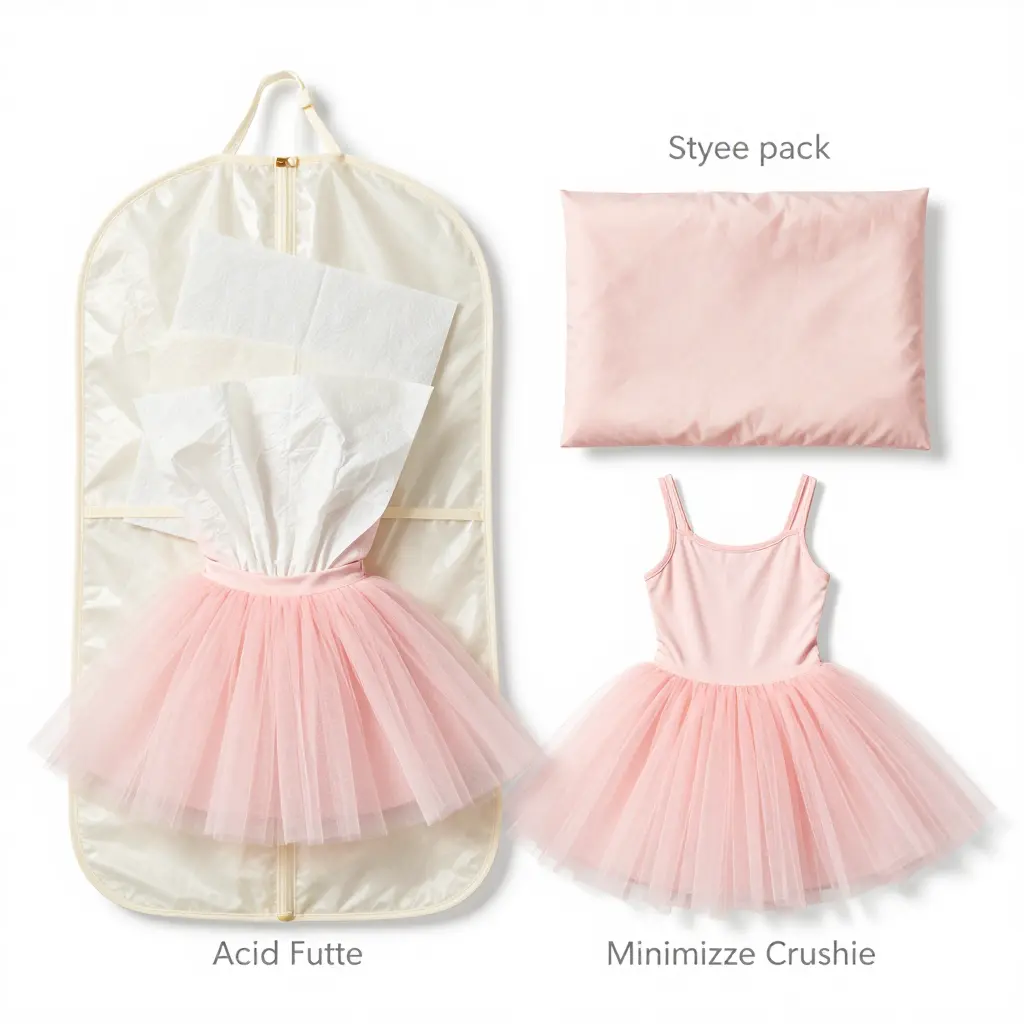
Tulle has a long memory. Press it into a tight corner once, and the netting tends to hold that shape longer than anyone would like. So the goal when you store and pack a tutu dress for travel or a performance run is simple: keep the volume intact while reducing the pressure that flattens it.
Start with a protective bag
The bag is your first line of defense. A breathable garment bag or a soft, structured tutu carrier holds the silhouette without sealing in moisture. Avoid thin plastic sacks, which trap humidity and invite mildew on damp tulle.
Layer before you fold
Wherever the dress has to bend, slide sheets of acid-free tissue or soft fabric between the layers. These inserts act like tiny cushions, spreading force across the ruffles instead of letting a single crease dig in.
Reduce folds, protect volume
Aim for the fewest bends possible. Roll rather than fold when the skirt length allows it, and pad the curves with extra tissue. This is where volume management matters most: a loosely filled bag keeps air around the layers, which supports the shape and prevents the sag that comes from heavy stacking.
Position for the journey
Lay the dress flat and let the skirt rest on top of other soft items, never beneath hard cases or shoes. On arrival, unpack promptly and let the tulle relax before it is worn again.
Getting these habits right protects more than a single garment. When many dresses travel together, the same thinking sits behind tutu business logistics.
The rule is straightforward: protect first, layer generously, fold rarely, and let the dress sit on top. Do that, and a tutu can survive a journey looking almost as crisp as the day it was steamed.
Long-Term Storage Best Practices for a Tutu Dress
A Structure Built on Tension
A tutu is engineered from tension, not weight. Its tulle layers hold their silhouette only while the fabric retains its crimp and loft, and once that structure is compressed or exposed to the wrong conditions, it does not reliably spring back. Long-term storage, therefore, is less about putting a garment away and more about preserving an architecture that depends on space, support, and stability.
Control the Environment
The forces that degrade tulle over time are predictable: light, humidity, temperature, and physical pressure. Managing each one directly determines whether a stored tutu stays wearable or becomes a flattened, discolored shell.
Ideal conditions
- Temperature: keep it moderate and steady, roughly 15-21 °C (60-70 °F), and steer clear of attics and garages where swings are extreme.
- Light: store in darkness or near-darkness. UV exposure yellows white tulle and fades dyed layers, so opaque covers and interior closets outperform open display racks.
- Humidity: aim for low, steady relative humidity of about 45-55 percent. Excess moisture invites mildew and softens any starch, while overly dry air makes fibers brittle.
Preventing tulle crushing
Crushing is the leading cause of tulle damage. Never fold a tutu into a tight stack or rest weight on top of the skirt. Each layer should hang or sit with minimal contact so the netting keeps its airy volume and resists permanent creases.
Hang or Box?
There is no single answer; structure and size decide. For heavily layered performance tutus, hanging is usually preferable because gravity helps maintain shape, provided the hanger choice offers genuine stability. A wide, padded hanger with a reinforced bar distributes weight evenly across the waistband, whereas thin wire hangers concentrate stress at one point and invite distortion. For smaller garments, a structured box is often the safer route.
Size matters here. Larger adult performance pieces benefit from a sturdy hanger, as outlined in this guide to adult tutus, while tiny infant garments are better cushioned and boxed, an approach covered in this infant tutu dress resource.
Protection from Dust
Dust is abrasive and settles deep into netting. Wrap the skirt in acid-free tissue and place the whole piece inside a breathable cotton or muslin bag, which shields the tulle without trapping moisture. Avoid sealed plastic, since it can create condensation and stale air that accelerate deterioration.
Periodic Checks
Inspect stored tutus every three to six months. Look for compression, dust accumulation, discoloration, and any sagging of the waistband. Where creases appear, a gentle re-steam restores loft and catches damage before it becomes permanent.
The Short Version
Treat long-term storage as active preservation rather than passive shelving. By controlling light and humidity, choosing a stable hanger or cushioned box, guarding against crushing, and checking periodically, you protect both the shape and the life of the garment for years to come.
Tutu Storage and Packing FAQ
Does folding ruin tulle?
Folding won’t permanently destroy tulle, but it can leave stubborn creases and flatten the airy volume that gives a tutu its shape. Tulle is fairly resilient, yet repeated sharp folds lead to tulle crushing that is difficult to reverse. Whenever possible, store the skirt as flat as you can or pad the fold lines with soft tissue. When creases do show up, a light pass of steam usually restores the bounce.
Which hanger is best?
The strongest hanger choice for a tutu is a padded or wide-shoulder hanger with a clip or bar that supports the waistband without stretching the net. Thin wire hangers dig into delicate fabric and create dents, so it is best to avoid them entirely. For very full skirts, hanging from the bodice on a padded hanger keeps the layers from sagging. Always match the hanger to the weight and width of the tutu.
How often should I re-steam?
Schedule re-steaming checks before each wear and any time the tutu looks limp or wrinkled. A quick steam every few weeks keeps stored tulle fresh if it is hanging in a breathable bag. Avoid over-steaming, since too much heat and moisture can weaken net over time. Always let the tutu dry completely before returning it to storage.
Is a vacuum bag safe?
Vacuum bags are generally not safe for tulle because the compression causes severe tulle crushing and a permanent loss of volume. The vacuum seal flattens the delicate net and can crease it beyond easy repair. If you truly need to save space, use a breathable garment bag instead. Reserve vacuum bags for sturdy fabrics, not tutus.
How do I store multiple tutus?
To hold several tutus, hang each one on its own padded hanger so the skirts never press against one another. If hanging space is limited, layer them in a large flat box with acid-free tissue between each layer. Keep that box in a cool, dry, dark spot away from direct sunlight. This approach helps you store and pack a tutu dress while protecting the volume of every skirt.
How do I remove dents from tulle?
To lift dents from tulle, hang the tutu in a steamy bathroom or use a handheld steamer held a few inches away from the fabric. Gently shake and finger-fluff the layers while the net relaxes. Never iron tulle directly, since heat can melt or scorch it. If a dent lingers, gentle steaming over several days usually coaxes it out.
Do different tulle types need different storage?
Yes, stiffness and layer count change how forgiving a skirt is. Crisp, starched tulle holds shape well but creases sharply, while softer tulle drapes and recovers more slowly. Heavily layered professional tutus benefit from flat storage, whereas simple single-layer skirts tolerate hanging. Match your method to the fabric so you avoid unnecessary damage.
Conclusion: A Simple Routine That Keeps Tulle Beautiful
Looking after a tutu comes down to three habits. Give the skirt room to breathe so it does not get crushed, rather than folding it or stacking weight on top. Choose the right hanger – a padded or wide-shouldered one that supports the bodice and keeps the layers hanging free. And run regular re-steaming checks so you catch flattened ruffles before they set. Together they make one loop you can repeat without thinking: hang, inspect, steam, store.
The payoff looks different depending on who you are. Parents get peace of mind knowing a recital tutu stays performance-ready between classes. Dance instructors keep studio wardrobes looking crisp, which makes show day easier. Costume designers protect the structure and value of pieces that take real time and craftsmanship to build. Learn to store and pack a tutu dress this way and the routine stops feeling fussy and starts feeling automatic.
Keep it simple, keep it consistent, and check in often. A little routine care today is what keeps a tutu floating beautifully season after season.