
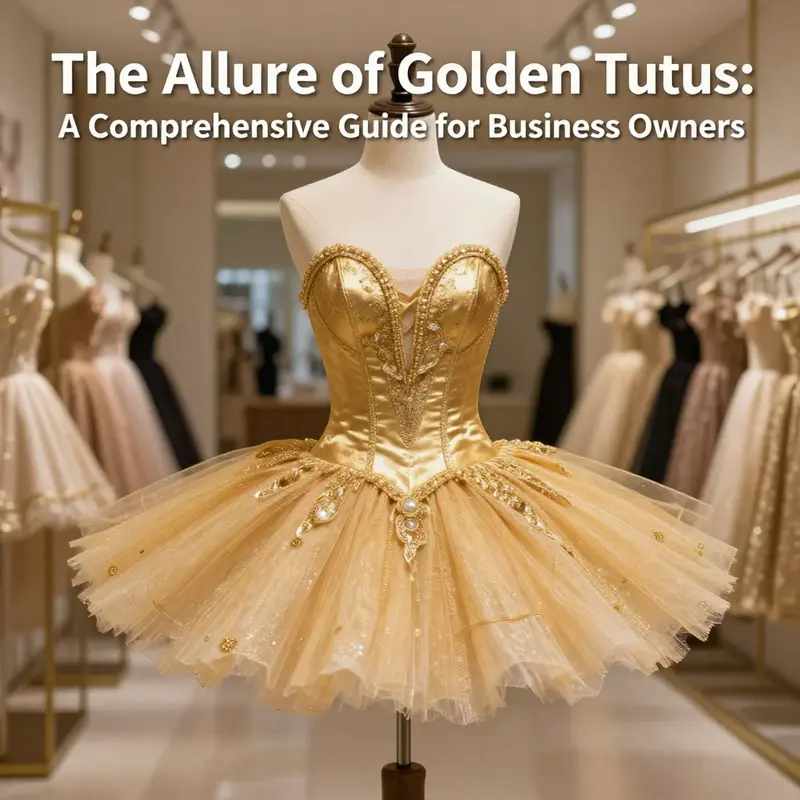
Golden tutus have transcended beyond mere costume pieces to become symbols of elegance, creativity, and personal expression. For business owners in the fashion, events, or performance industries, understanding the multifaceted applications and designs of golden tutus can provide valuable insights. This article explores various styles of golden tutus, highlighting their design features, ideal uses, material compositions, and cultural significance. By the end, readers will have a rounded understanding of this vibrant fashion staple that blends glamour with practicality.
Gilded Silhouettes: An In-Depth Journey Through Golden Tutu Styles for Stage and Celebration
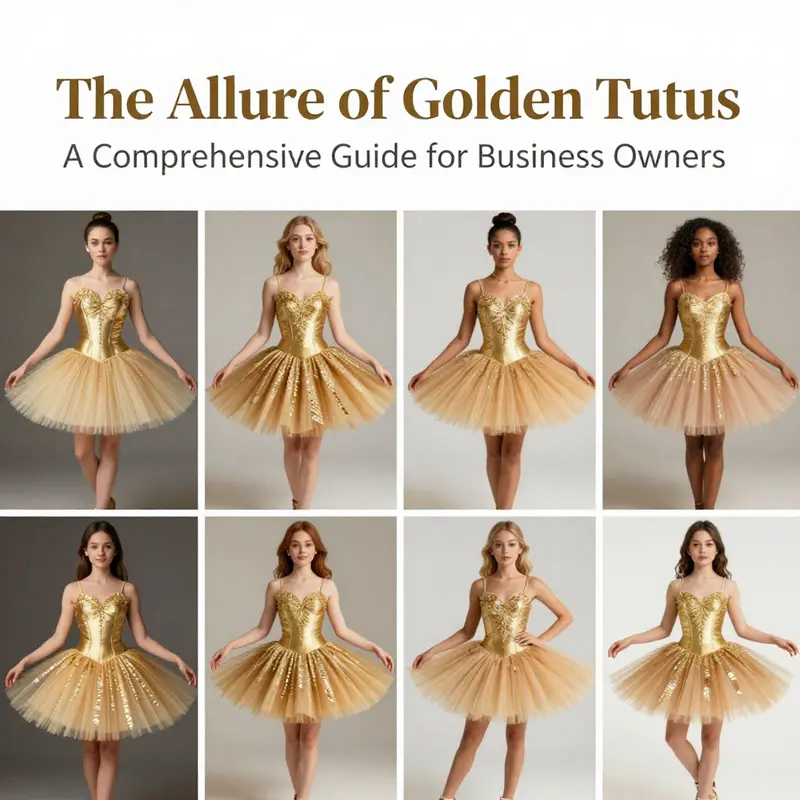
The gold tutu is more than a garment; it is a language spoken in light and movement. In performance spaces, at themed gatherings, and in moments of personal expression, the gold tutu translates mood into presence. Its radiance is a constant, yet the way that radiance is organized—through silhouette, fabric, and embellishment—begins to tell a story before any step is taken. The choice of style becomes a conversation between intention and opportunity. A dancer seeking ethereal grace might lean into a romantic silhouette where soft layers of tulle cradle the body and sway with every breath. A performer rehearsing a classical repertoire may opt for a pancake, or flat, tutu that defines the line of the leg and strengthens the dancer’s clarity of form. For festive events, a 3-layered tutu can deliver a bold statement, a ballroom or gala night transformed into a shimmering tableau. Even within these broad categories, the fabric itself carries a quiet vocabulary: the density of tulle, the fineness of the weave, and the way colors catch the light govern how the gold reads on stage. The material choice matters as much as the design, because it sets the baseline for durability, washability, and even the way the tutu interacts with movement under different lighting conditions. In this context, the evolution of the golden tutu becomes a study in balance—between structure and fluidity, between visibility and refinement, and between personal style and the demands of the event. While historical associations with opulence color the perception of gold as a symbol of celebration, today’s designs invite a broader conversation about how height, volume, and luster can serve both performance and personal expression. The goal is not simply to dazzle in the moment but to sustain a sense of elegance across the arc of an occasion, from the opening moment to the final bow. This requires careful attention to how each silhouette interacts with form, space, and light, and how that interaction supports the story the wearer intends to tell. In other words, the decision to wear a gold tutu calls for a narrative as much as a fashion choice. Consider the classic romantic line, which relies on the interplay of drape and motion to capture an almost supernatural glide. The layers of soft tulle weave a delicate atmosphere that feels almost suspended in air. The bodice typically stays carefully fitted, letting the pure movement of the skirt become the focal point. Subtle embellishments—pressed metallic threads, or fine gold foil accents—may punctuate the waist or neckline, adding a touch of shimmer without overwhelming the overall quiet of the silhouette. If you want to explore a closer example of this gentle, timeless approach, you can browse the romantic-tutu category here: romantic-tutu. The result is a garment that remains legible from any distance, so even under bright stage lighting the silhouette does not compete with the choreography; it supports it, almost becoming a partner in the dance. The romantic form is especially compelling for wedding celebrations staged as performances, formal portraits, or intimate recitals where restraint amplifies the sense of grace. Yet the same silhouette can be adapted for other moments, proving that the underlying principle is the same: light, layered fabric that moves with the body rather than fighting it. This is the through-line that connects the variations that follow and the contexts in which they flourish. If the environment calls for a more architectural impact, the pancake tutu offers a counterpoint to the romance of soft layers. Its name belies a seriousness of form: a flat, rigid profile that hugs the hips and holds the line of the upper legs with a defined crown of tulle. Historically tied to the needs of classical ballet, the pancake tutu is all about precision and control. The silhouette highlights the dancer’s legs, the lines from hip to knee, and the extension of the foot through the toe. In gold, the effect shifts from softness to regality; the metallic sheen catches the light with sharper, more articulate flashes. This makes the pancake tutu particularly suited to roles that require a strong, clear silhouette—where clarity of form matters as much as the music itself. The material choices here are exacting because rigidity is part of the performance. High-grade tulle, reinforced seams, and a tightly constructed waistband all contribute to a silhouette that remains poised under the pressure of turns, leaps, or pauses. Care becomes crucial; the stiff structure must be stored in a way that preserves its shape, and washing practices must respect the stiffness to prevent sagging or distortion over time. For performers and designers who value line and discipline, the pancake tutu serves as a reminder that elegance can be a statement of form as much as ornament. Beyond these two poles lies the celebratory impulse of the multi-layered, or 3-layered, tutu. This variant embraces abundance as a virtue. Multiple tiers of tulle create a voluminous, buoyant effect that seems to lift the wearer with every step. It is, in many ways, a festival garment—a vivid canvas for movement, color, and light. In gold, the layers work together to reflect and refract illumination, producing a shimmering aura that travels outward from the body. The look is festive and exuberant, well suited to costume parties, galas, and theatrical productions that thrive on spectacle. At its best, the 3-layered tutu is engineered to balance volume with comfort: elastic waistbands or adjustable closures ensure a secure fit without compromising mobility; the foiled or foil-printed tulle adds depth of color and a modern edge without sacrificing the softness that makes the silhouette readable from stage left to stage right. This style, frequently sold in various pack formats for events, invites a playful experimentation with scale and pairing. It pairs beautifully with metallic accessories and with fabrics that echo the same golden mood. In the heat of performance, the layers catch air, creating undulating waves that read as a continuous accent to the music rather than separate decorative elements. The result is a joyous, radiant statement about the wearer’s spirit. For those who crave drama with a cultured touch, flamenco-inspired gold costumes add another hue to the palette. Red-gold pairings evoke the traditional Spanish flair—ruffled edges, vibrant movement, and a dramatic contrast between fire and light. In these designs, the emphasis shifts toward texture and energy: volantes, fitted bodices, and sweeping silhouettes designed to capture the eye as much as the ear. These pieces often involve more intricate embellishments and require careful tailoring to maintain balance between the bold outer layers and the wearer’s torso. Because of the complexity, such costumes demand attentive care, with hand-washing and meticulous storage to protect the delicate detailing. The flamelike intensity of this style offers a different kind of stage authority. It’s not only about gleam; it’s about rhythm and tempo. The gold becomes a chorus line, supporting the dancer’s footwork, hip isolations, and arm dynamics. Across all these forms, the common thread is clear: the gold tutu invites a performance that is both luminous and legible. The dancer’s body becomes a moving sculpture, and the audience reads the character through line, air, and glow. Materials matter here as well. The base fabric and the weight of the tulle influence how the garment responds to a dancer’s momentum. Heavier tulle can sustain a more dramatic halo of light, while lighter fabrics allow for quicker, flightier movements. The weave quality, the edge finishing, and the stability of the waistband all contribute to how long the piece holds its shape between rehearsals and final bows. Lighting design, too, plays a pivotal role. Warm tungsten tones can coax a deeper gold out of the fabric, while cooler LEDs reveal subtler, champagne-like glints. The right combination ensures the tutu reads as intended in rehearsal footage and in the moment of performance. Beyond the mechanics of fabric and hue lies a broader artistry—how a gold tutu enables a wearer to utter a personal statement through gesture. The one you choose will reflect not only the event’s mood but also your own stage presence: a quiet, ethereal glide; a crisp, unyielding line; a jubilant cascade of shimmer. As a creator or a wearer, you do not simply select a color; you select a stance. The ongoing dialogue between silhouette, embellishment, and occasion is what makes the gold tutu a living garment—one that can be reinterpreted for different moments, audiences, and stories. In shaping your choice, lean on a sense of proportion that honors both form and function. The romantic line invites subtlety; the pancake emphasizes architecture; the three-layered style invites celebration; flamenco-inspired designs demand boldness and precision. Each option speaks to a particular facet of golden expression, and each can be adapted with accessories, footwear, and even choreography to suit the performance or celebration at hand. The broader takeaway is that the golden tutu is a flexible instrument for storytelling, not merely a costume. Its success hinges on thoughtful selection, quality construction, and mindful care that preserve its glow over time. Reading the room, listening to the music, and tuning the fabric to the body are the steps that transform fabric into movement into meaning. This is the heart of choosing a gold tutu: a harmony of mood, technique, and memory that turns a dramatic color into a lasting impression. For writers and designers looking to expand their understanding of how these silhouettes translate into real-world wardrobe choices, the journey through romantic, pancake, and multi-layered forms demonstrates how a single color can become an entire performative language. The story moves with you as you learn to balance the shimmer with restraint, the volume with control, and the light with form. External resource: https://www.balletco.com/gold-tutu-styles-guide
Gilded Threads and Celestial Light: Design Features of Golden Tutus
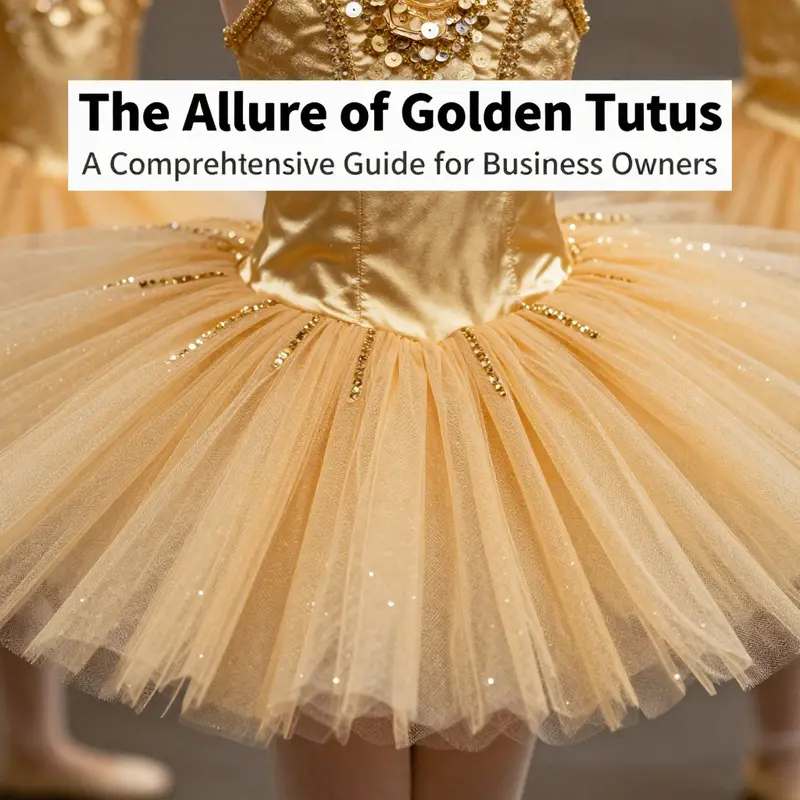
A golden tutu for adults speaks in a language of light and movement, where every tier of fabric and every carefully placed embellishment translates into motion that feels almost sculptural. The design vocabulary of golden tutus balances drama with wearability, ensuring that elegance does not surrender to impracticality. When a dancer pivots, when a performer spins, or when a guest moves at a festive gathering, the costume responds with a glow that seems almost self-generated, as if the wearer has borrowed a fragment of sunlight. This effect is not accidental but the result of deliberate choices in construction, materials, and finishing touches that together form a cohesive aesthetic—one that preserves grace while inviting bold expression. The most striking golden tutus accomplish this by weaving together several design features that work in concert, each element reinforcing the others as the choreography of a costume unfolds on stage or at a celebration.\n\nMulti-tiered tulle forms the backbone of most golden tutus, and in doing so, it creates a visual cadence that mirrors the tempo of a performance. Layer upon layer of tulle add volume without sacrificing fluidity, allowing the skirt to respond to the air and the dancer’s momentum with buoyant lift. The layers catch and refract light at different angles, so a single movement can appear to bloom into multiple facets of gold. This dynamic is especially effective under stage lighting, where the fabric acts like a living canvas, its texture shifting from a satin-like gleam to a more crystalline shimmer with each turn. The multi-tiered approach also provides practical benefits: it sustains the tutu’s silhouette through vigorous movements, ensuring that the shape remains recognizable from every audience vantage, whether the performer is near the front row or at the far end of a large hall. For photographers and videographers, this layered structure translates into a rhythm of highlights and shadows that can be captured as a sequence of luminous punctuations rather than a single, static image.\n\nAdornments are where the golden tutu reveals its personality, turning a luminous base into a constellation of sparkling details. Shimmering gold sequins scatter across the upper tiers to catch the light, creating a sense of constellations assembled on fabric. Clear rhinestones are often embedded along edge seams or strategically placed within a motif to maximize light reflection without overpowering the overall color harmony. Delicate beadwork adds depth, drawing the eye to the subtler contours of the design and lending a tactile richness that invites close inspection. Careful placement matters: sequins and rhinestones must be anchored so they withstand repeated flexing and the friction of movement, yet they should be arranged in ways that avoid catching on other fabrics or choreography cues. The balance between sparkle and elegance is delicate—too many embellishments can overwhelm the silhouette or create glare in bright lighting, while too few can make the costume read as merely ceremonial. The best designs achieve a glow that seems to emanate from within the fabric itself, a glow born of light reflecting off facets and layered textures rather than from a single, overpowering highlight.\n\nThe bodice construction anchors the entire silhouette and determines how the tutu feels to wear, which is the crucial link between aesthetics and performance. In many high-end golden tutus, the bodice is crafted from semi-stretch satin or a similarly smooth, weight-balanced fabric that gestures toward luxury without sacrificing comfort. The choice of a semi-stretch material helps accommodate the natural movement of the torso while maintaining a snug, flattering fit. Corset backs are a common feature, offering adjustability that allows a performer to tailor the fit to a changing posture or varying undergarment choices across a long event. This architectural detail is more than fashion; it serves as a practical tool for dancers who spend hours in rehearsal and performance, providing support where it matters most and ensuring the upper body remains free for expressive arm work. Necklines often lean toward off-the-shoulder silhouettes, which read as romantic and timeless against the exuberance of gold. This design cue frames the neck and collarbone with a soft line that counterbalances the tutu’s voluminous skirt, creating an overall proportion that feels both classical and contemporary.\n\nBeyond these core elements, designers consider how the tutu performs in different contexts. For a formal wedding or gala, the look may lean toward a smoother surface with a restrained sheen, drawing attention to precision tailoring and the quiet radiance of fewer, larger rhinestones rather than a storm of tiny sequins. In contrast, for a themed event or a dance recital, the same golden canvas might welcome more dynamic texture—larger clusters of beads along the bodice, scattered star motifs across the tulle, or foil-printed accents that catch the light in variable ways as the wearer moves. This adaptability is not merely cosmetic; it reflects a practical philosophy: golden tutus should honor the wearer’s intention, whether that intention is to command the stage with majestic presence, to glow softly in a formal portrait, or to celebrate a festive moment with playful exuberance. For photographers and choreographers who seek to capture a particular mood, the choice of tulle weight, the density of embellishment, and the height of the waistline all work in tandem to influence how a sequence looks on camera or in motion.\n\nIn practice, the care and handling of these design features are as important as their aesthetic intention. Tulle, while delightfully light, is also susceptible to snagging and abrasion if treated without mindfulness. The layering must be finished with care to resist edge fraying and to preserve the crisp lines of the silhouette after repeated use, storage, or transport. Embellishments require gentle maintenance: rhinestones and beads should be checked and re-secured periodically, and any delicate appliqués should be kept away from rough surfaces that could abrade the fabric. The bodice, with its delicate balance of stretch and structure, benefits from proper storage—hung gently, with enough space to prevent flattening of the cups or the corset’s contour. When cleaning, a careful approach is essential; many designers recommend spot cleaning or professional care, avoiding aggressive washing that could loosen beads or distort the foiled surfaces. The result of meticulous care is a golden tutu that maintains its luminosity across seasons and performances, a garment that seems to accumulate, rather than lose, light with each appearance.\n\nThese design decisions—tiered volume, deliberate adornment, careful bodice construction, and thoughtful adaptations for different occasions—combine to create a garment that is more than a costume. It becomes a vehicle for expression, a stage for character, and a beacon of personal style. For those drawn to the romance of gold and the drama of movement, the right tutu offers a pathway to embodying a mood as ancient as glamour and as modern as a spotlight. If you are exploring the many facets of this golden language, you may wish to browse the romantic interpretations that align with a softer, more intimate aesthetic while maintaining the same luminous core. See the romantic tutu collection to discover how this design lineage translates into approachable, wearable elegance for daily wear, photoshoots, or special occasions. And for readers who crave a deeper dive into the craftsmanship and materials that underpin these dazzling pieces, a supplemental resource on construction and design considerations offers expanded insights into the balance between form and function that defines every gold-tinted silhouette. For a broader context, consider the guidance found in expert design discussions that explore how to choose the best gold romantic tutu costume, which can illuminate the decisions behind achieving both drama and comfort on stage. External reference: https://www.dancewear.com/gold-tutu-design-guide.
null
null
Gleaming Foundations: Material Quality, Composition, and Sustainable Craft in Golden Tutus
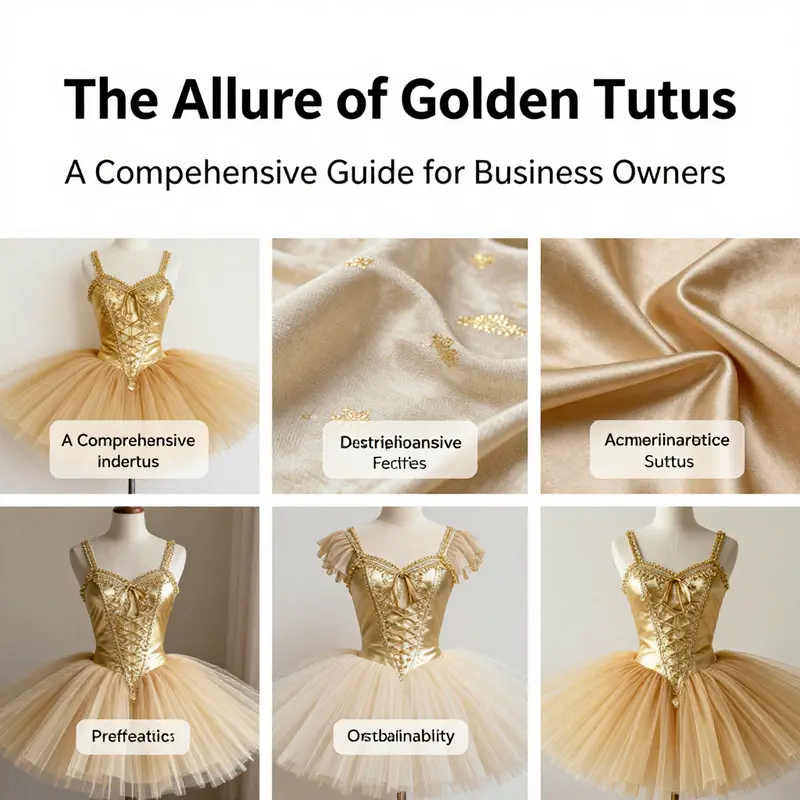
Material quality is the quiet backbone of every golden tutu, a detail that reveals itself not in a single flash of light but in the steady, practiced geometry of a silhouette under stage lighting and in the quiet resilience of a fabric that moves with a performer rather than against them. When the eye catches that even, warm glow—the hue that defines a golden tutu—the true story often begins with the fabric underneath. High-quality tulles crafted from premium nylon or silk-blend fibers offer a durability and a surface texture that feel smooth to the touch and behave predictably in motion. These materials deliver a metallic sheen that resists fading and flaking, maintaining their luster through repeated performances and countless spins. In contrast, lower-grade polyester tulle tends to be brittle, may feel slightly sticky or powdery, and can shed tiny flakes as wear wears on. Such signs are not merely cosmetic concerns; they signal reduced longevity and a less reliable silhouette, particularly when a dancer requires the tutu to hold its form through turns, leaps, and long sequences on a sunlit or spotlight-steep stage.
The anatomy of quality matters as much as the material itself. A well-made golden tutu often hinges on features that are easy to overlook in casual scrutiny but essential in practice. A higher thread count indicates a fabric with tighter, more resilient weaves that resist fraying and resist snagging during dynamic movement. When two layers are employed, the construction can transform into a fuller, more voluminous cast that retains its shape even after hours of performance or a busy party circuit. This double-layered approach also helps the tutu resist the hollow collapse that can happen after a long day, ensuring that the golden glow remains evenly distributed across the skirt rather than pooling unnaturally at its base. Yet the technique must be exercised with care; too heavy a buildup can impede fluidity, so skilled designers balance mass with mobility to achieve both drama and comfort.
Embellishments, too, play a pivotal role in material quality, especially for designs that lean toward the magical or the formal. Delicate star motifs, foil accents, or shimmering threads can elevate a look from simply radiant to unforgettable. But embellishments add a layer of responsibility for wearers and care teams. They demand mindful handling—reliable hook-and-eye closures, securely sewn trims, and finishes that won’t abrade or sag with repeated use. The goal is a harmonious blend where the reflective or metallic touches amplify light and movement without compromising the fabric’s core integrity. In practical terms, this means examining how seams are finished, whether edges are bound to prevent fraying, and how the weave interacts with the adhesive or stitching that holds decorative elements in place. For performers, this translates into a tutu that stays smooth under the arms and around the waist, so the silhouette remains clean and uninterrupted from the first rehearsal to the final bow.
From a sustainability perspective, recent advances have shifted the conversation from purely aesthetic criteria to lifecycle considerations and responsible sourcing. Traditional synthetics like polyester raise questions about biodegradability and reliance on fossil fuels, which can feel discordant with a performance ethos that celebrates light and vitality. Yet the textile industry is responding with innovations that broaden the spectrum of eco-friendly options without compromising performance. Recycled polyester offers a way to reduce waste while preserving the dependable properties that dancers and event-goers rely on. More transformative are bio-based alternatives and recycled fibers that reimagine the supply chain toward renewables. Some brands now highlight recycled nylon or sustainable dyeing and finishing practices as part of a broader stewardship approach. When choosing a golden tutu, the savvy consumer can look for transparency in sourcing, certifications that confirm responsible practices, and clear lifecycle information. Such diligence does not merely align with values; it informs a smarter choice about long-term use, care, and afterlife of the garment.
For the wearer who wants both performance assurance and a clear conscience, material selection becomes a narrative of compatibility and stewardship. A tutu that blends nylon or silk-blend tulle with a sustainable finishing regime can deliver the same luminous effect on stage while supporting a less resource-intensive production cycle. It is not just about opting for a greener option at the cost of tactile or aesthetic quality; it is about recognizing how sustainability can coexist with resilience and beauty. In practice, this means seeking fabrics where the dyeing processes minimize chemical load, where water use is managed efficiently, and where suppliers demonstrate traceability from fiber to finish. Consumers who prioritize these aspects often discover that high-quality materials are not a barrier to ethical production but a gateway to richer stories behind the garment’s sparkle and durability.
The practical implications of material quality extend into the realm of care and maintenance. A golden tutu’s long life hinges on how it is laundered, stored, and transported. Hand washing or gentle cycles, cold-water treatments, and air drying help preserve the fabric’s integrity and sheen. Proper storage—hanging or carefully layered in breathable conditions—prevents crushing of the tulle’s weave and preserves fullness. When embellishments are present, protective storage becomes even more important; a soft garment bag and avoidance of overly abrasive surfaces reduce the risk of snags and lost glitter. In many high-performance contexts, a quick-access care guide from the manufacturer or designer can be the difference between a costume that lasts a season and one that survives multiple tours. The steps are simple: inspect seams, test a small patch for color fastness, and follow recommended cleaning instructions that are compatible with any metallic threads or foil accents. These small rituals reinforce a reliable, repeatable quality that performers and hosts can count on.
The decision to invest in a golden tutu with premium composition is not merely about texture or frost-like shimmer; it is about choosing a garment that aligns with the event’s demands and the wearer’s ambitions. A piece built on a robust, well-considered fabric foundation will typically offer more than cost efficiency—it will deliver consistency under the eye of a photographer’s lens, under a dancer’s flash, or under the soft glow of a ballroom’s chandeliers. The choice between dense, multi-layered tulle versus lighter, streamlined silhouettes will shape how the garment moves, how it reads in photographs, and how it feels to perform in it. For those who want a sense of exclusivity rooted in craft, exploring the professional tier of tutu construction can be especially enlightening. This is not simply a matter of choosing a higher price point; it is about acknowledging the expertise involved in balancing weight, resilience, and shine to create a garment that performs as beautifully as it looks. If you are curious about categories that emphasize professional-grade construction and support, you can explore the professional tutu category to understand how construction choices translate into stage-ready reliability.
In the broader arc of golden tutu storytelling, these material considerations are the quiet origin of the drama—where a single thread can determine whether light travels through the fabric as a golden halo or a dull outline. The shimmer, the bounce, and the posture all trace back to the materials and the way they’re assembled. The aesthetic promise of a golden tutu—its ability to illuminate a moment, to accentuate the wearer’s posture, to catch a gaze and hold it—depends on a foundation that is anything but ordinary. It is a reminder that beauty in performance often begins in the loom, long before the first bow, with a fabric that can endure the choreography of expression as gracefully as the dancer traverses the stage.
For readers seeking a broader technical lens on fabric grades, performance benchmarks, and lifecycle considerations, the following external resource offers a detailed framework that can complement the practical takeaways discussed here: Understanding Pettiskirts Tutus: Material Grades, Performance, and Industrial Uses.
Crowning Trends: The Cultural Significance and Evolving Fashion of the Golden Tutu
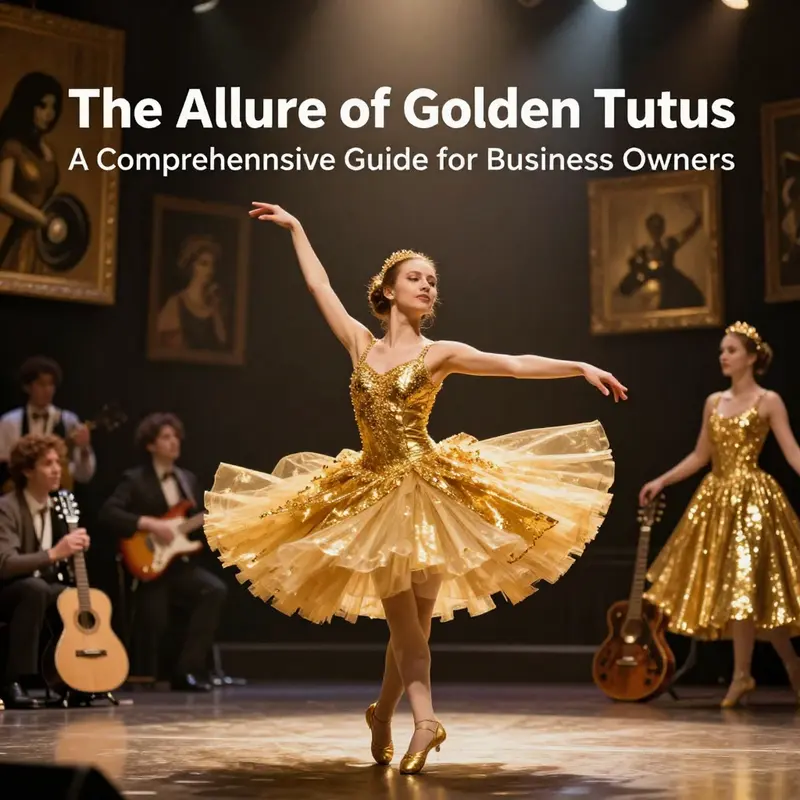
The golden tutu sits at a crossroads where ritual reverence meets runway audacity, a garment that does not merely clothe the body but also frames the way a performer or participant tells a story. Its radiance invites attention, yet its deeper appeal lies in how it encodes cultural memory and personal intent. When we explore the golden tutu as a cultural artifact, we glimpse a lineage that travels beyond the dance floor and into celebrations, ceremonies, and everyday moments of self-expression. It becomes a symbol that can simultaneously evoke royal authority, theatrical transformation, and intimate joy. In this sense, the golden tutu is less a single wardrobe choice than a language, one that communicates aspirations, histories, and a readiness to inhabit a moment with confidence.
Cultural connections illuminate how color and form carry social weight. In West African contexts, the Golden Stool represents the soul of a people and the sovereignty of lineage, a vessel of collective memory that asserts continuity and unity. While the Golden Stool is not a dance costume per se, its meaning—divine kingship, ancestral power, and communal identity—resonates with the way modern audiences read outfits that gleam with gold. The tutu, in its simplest sense, is a garment designed to shape movement and silhouette; when gold is chosen, the effect is magnified. The symbolic charge shifts from mere adornment to a declaration of occasion, status, and a willingness to stage one’s own narrative in a luminous way. The parallel is not accidental. Fashion has always borrowed from ritual fabrics and ceremonial color palettes to signal worthiness and presence, and the golden tutu embodies that transfer with a contemporary twist. In this sense, the modern tutu becomes a wearable totem, a glittering reminder that performance, in all its forms, can be a form of sovereignty exercised on a stage, at a party, or in a moment of personal triumph.
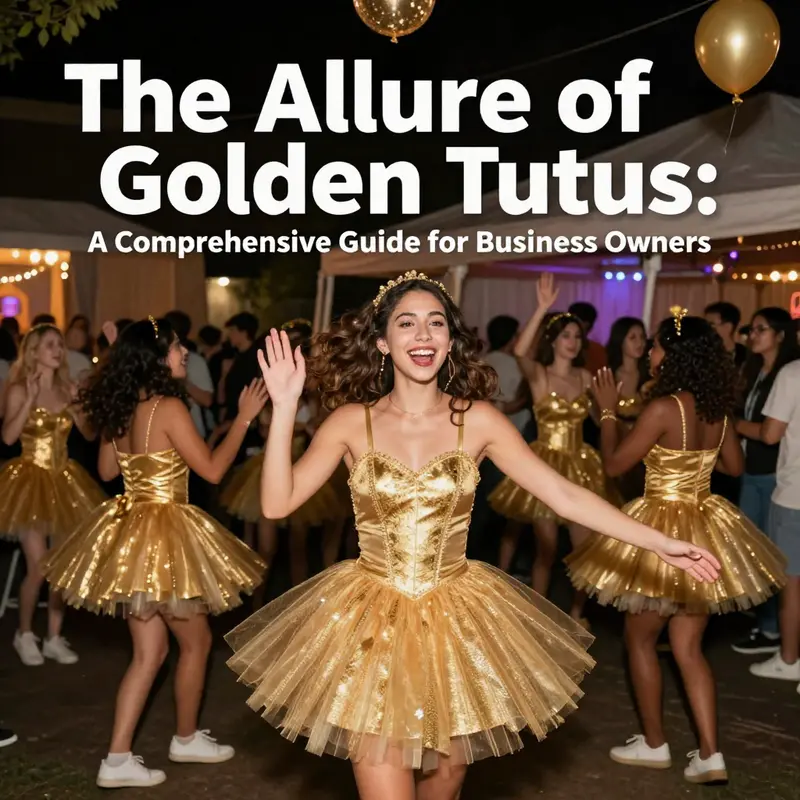
Dance has long used texture, cut, and hue to cue emotions and unlock a dancer’s character arc. The golden tutu, in particular, is a potent case study in transformation. Classic ballets often rely on white or pastel tutus to convey purity, fragility, and ethereal radiance. When gold enters the frame, it signals an escalation—from beauty to command, from grace to grandeur. The shimmer of metallic tulle, the layered structure that adds volume, and the way light scatters across a gilded surface—these features contribute to a performance vocabulary that elevates a role into a proclamation. Golden designs are especially favored for contemporary reinterpretations, for character work that asks the audience to suspend disbelief and believe in a heroine forged in luminous certainty. In festive contexts like milestone celebrations, the golden tutu can transform a participant into a centerpiece of the event, a living emblem of achievement and auspicious energy. The effect—dramatic, memorable, and intensely photogenic—speaks to a broader cultural appetite for spectacle paired with craft.
Fashion and pop culture have absorbed this fascination with gold into a wider, more democratic palette. The golden tutu has moved well beyond its performance roots into themed parties, red-carpet moments, and personal experiments with self-styling. Designers and makers have offered a spectrum that ranges from minimalist gold-and-sheer silhouettes to richly embellished, multi-layered constructs that push the boundary between costume and couture. This accessibility is part of the tutu’s enduring appeal. A person can choose a version that suits a wedding reception, a club night, a charity gala, or a casual photo shoot, all without losing the sense of drama that a gold hue inherently carries. The same garment can thus serve multiple identities: a dancer’s projection of precision and discipline, a celebrant’s shout of joy, or a fashion-forward individual’s statement about fearless self-expression. The continuity across these settings underscores a shared modern impulse: to infuse everyday life with a sense of fantasy and aspiration without surrendering practicality.
Cultural meaning, however, is not static. The golden tutu’s popularity has grown alongside a broader cultural shift toward personalization and agency in fashion. People want outfits that are both meaningful and adaptable. The tutu’s inherent structure—its skirted silhouette and its ability to hold shape—lends itself to both performance and everyday wear. Some versions prioritize durability and comfort, designed with elastic waistbands or breathable fabrics that invite dancers, runners, or party-goers to move freely without sacrificing shimmer. Others lean into formality, offering longer lengths or more refined finishes that pair easily with elegant blouses or tailored jackets. In this way, the golden tutu becomes a versatile anchor for an event’s mood: it can anchor a fairy-tantasy vibe, anchor a glamorous gala, or anchor a bold, joyful moment when the wearer decides to own the stage.
The interplay between tradition and trend is especially visible when we consider how audiences interact with these garments. Audiences respond not only to the gleam but also to the choreography of color and fabric. A well-cut golden tutu that catches and refracts light can elevate a movement into drama and can reveal nuances in a dancer’s lines and timing. This effect is amplified by the audience’s associations with gold—signals of celebration, achievement, and ritual significance. In weddings, anniversaries, graduations, and other rites of passage, gold is a symbolic currency that communicates blessing and prosperity. When worn as part of a costume or a celebratory outfit, the tutu becomes a bridge between personal milestone and collective sentiment, an outward expression of internal radiance that invites others to witness a moment of transformation.
The examples within the broader cultural landscape—from theatrical ensembles to festive party wardrobes—also highlight how the golden tutu intersects with art and spectacle without losing its authenticity as a personal choice. For an audience that values storytelling and visual impact, the tutu offers a legible, immediate language. It speaks of confidence, artistry, and a readiness to participate fully in an event, whether it’s a staged performance, a themed gathering, or a quiet, intimate celebration. That resonance helps explain why gold remains such a compelling hue across contexts: it is not merely a color but a signifier that conjures light, heat, and a sense of ceremonial importance. When worn thoughtfully, the golden tutu becomes more than a garment; it becomes a narrative device—one that invites both wearer and observer to lean into possibility and to celebrate performance as a shared act of cultural imagination.
For readers who want to explore related costume themes within this cultural frame, a look at pieces tailored to a dramatic, narrative-driven style can be enlightening. As an additional reference, you might explore the Swan Lake tutu collection, where the combination of classic silhouette with modern embellishments mirrors the blend of heritage and contemporary flair discussed here. See more at: Swan Lake tutu collection.
Finally, the broader arc of this topic invites a deeper historical resonance beyond fashion alone. The Golden Stool’s enduring symbolism—sacred authority, ancestral memory, and communal identity—remains a touchstone for how a community imagines sovereignty and celebration. The official perspective from the Asantehene’s office offers authoritative insight into the continuity of these ideas, and it helps anchor the discussion in a rich cultural lineage that transcends trends. For a deeper historical understanding, consult the official site of the cultural leadership: https://www.asantehene.org. This resource helps situate the golden tutu within a larger narrative about gold as a sign of legitimacy, dignity, and shared aspiration, reminding us that fashion can carry meanings that outlast a single season and reach into collective memory.
Final thoughts
Golden tutus represent more than just a fashion statement; they encapsulate a blend of style, functionality, and cultural richness. For business owners, understanding the range of designs, materials, and applications can enhance their offerings and appeal to a wider audience. As the world continues to evolve in fashion trends, golden tutus remain an eye-catching and meaningful choice, perfect for a variety of occasions. By incorporating these elements into your product or event strategy, you can effectively engage customers seeking elegance and flair.