
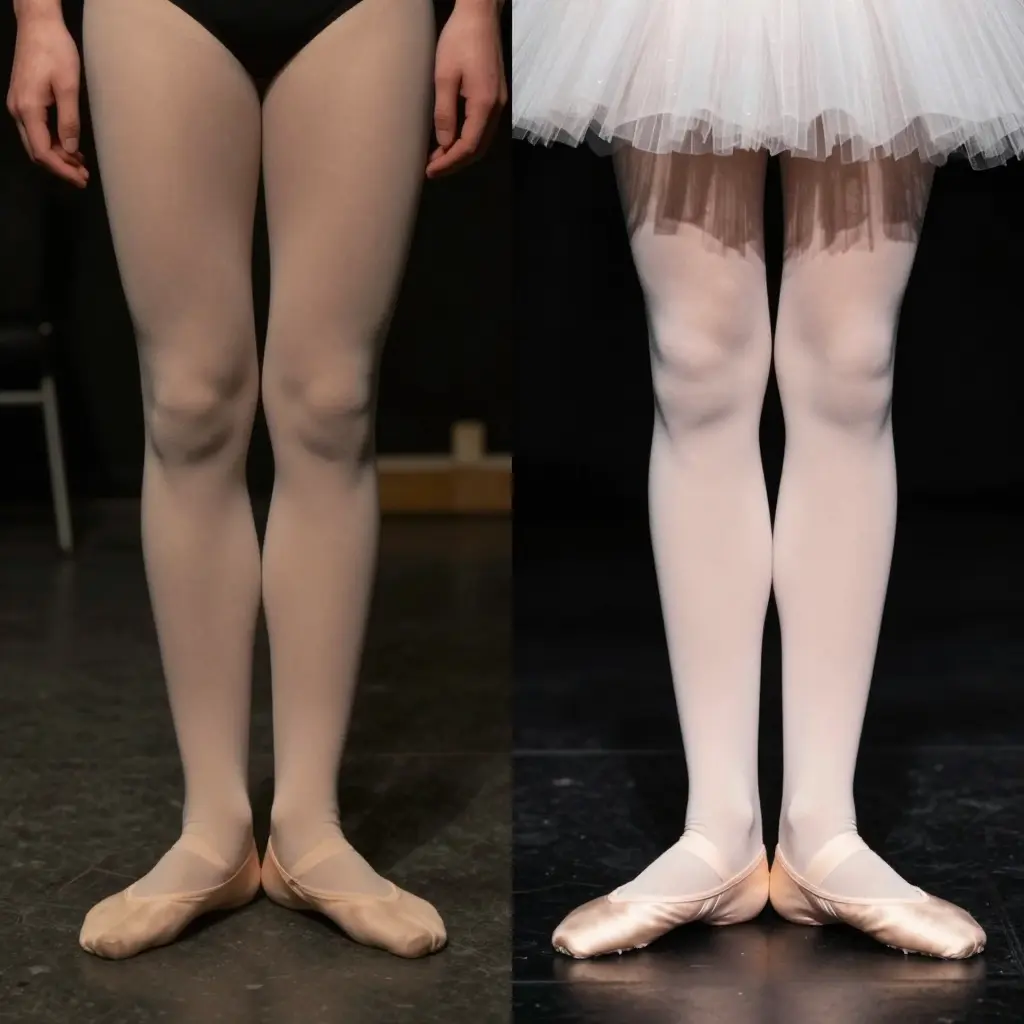
Why Ballet Tights Turn Sheer Under Stage Lights
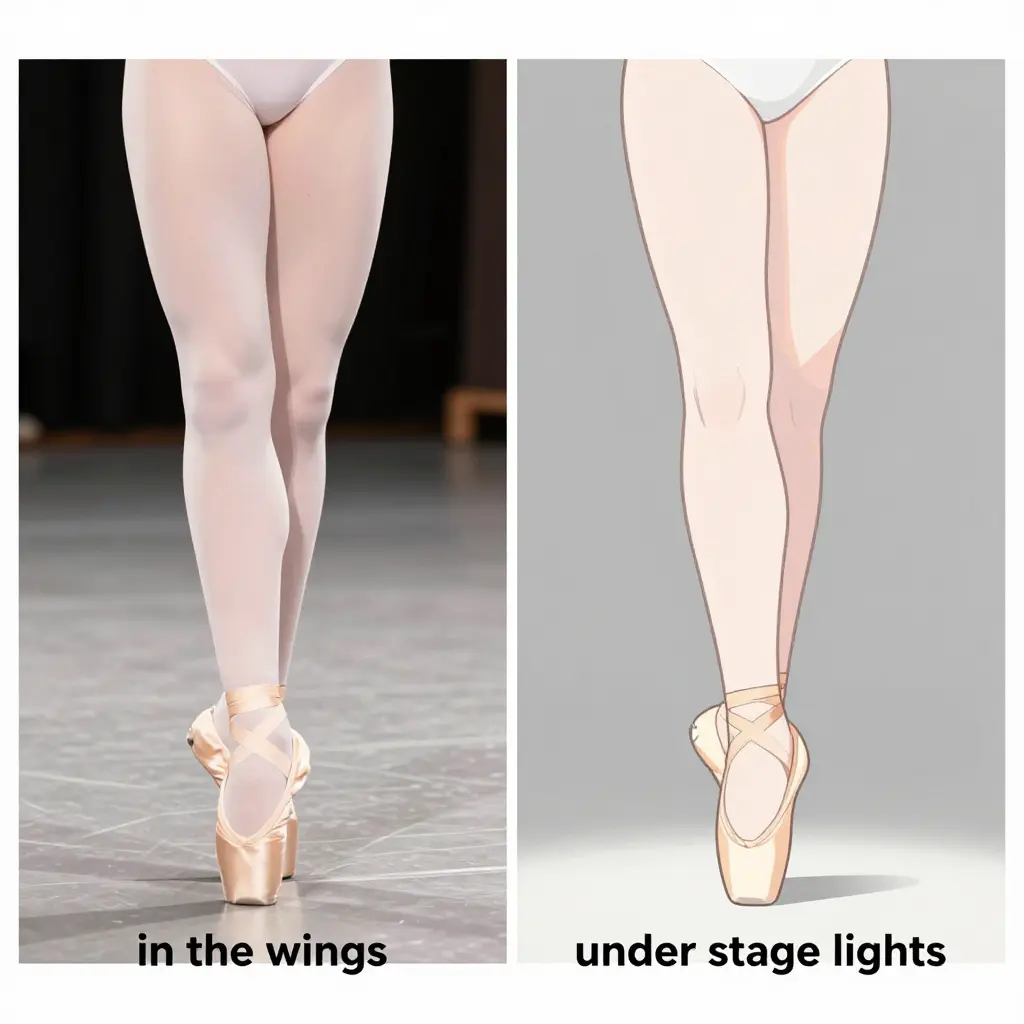
Ballet tights turn sheer on stage for reasons that are predictable, and in most cases preventable. In the wings or a dressing room, tights can look solid enough. Step into the theatrical lighting and the same fabric seems to thin out: skin, seams, and the line of the leg show through where they did not a moment ago. Nothing about the fabric changed. Light is simply passing through a thin, stretched textile instead of bouncing off it.
Stage lighting is far more intense and directional than the diffuse light of a rehearsal studio. Fixtures aim concentrated beams at performers from steep angles, and that brightness pushes light straight through the knit. A knit blocks light by the density of its structure; stretch that structure over a moving leg and hit it with a focused beam, and the balance tips toward transparent.
Three things explain most unwanted sheerness: yarn denier, knit density, and fit. Each can be adjusted before a performance rather than discovered during one.
Yarn denier measures the thickness of the individual fibers knit into the tights. Low-denier yarns make a fine, comfortable fabric that also lets more light through; high-denier yarns make a denser, more opaque surface. Knowing the denier lets a dancer pick a specification for the lighting they will actually perform under.
Knit density is how tightly the yarns are looped together. A tight knit leaves less open space for light; a loose or highly elastic one opens up as the garment stretches. Tights stretch most over the knees, thighs, and seat, so density decides where sheerness shows first.
Fit is the relationship between the garment and the body. Tights that are too small over-stretch and lose opacity; tights that are too large bunch and cover unevenly. A fit check before curtain confirms the fabric is neither strained nor slack. Tights never perform in isolation: the same wardrobe discipline that shapes a well-constructed ballet tutu applies to every layer worn beneath it.
Working through each factor in turn shows how to diagnose the cause in your own tights and fix it before the stage, so dancers, technicians, and designers can make confident decisions about what to wear under the lights.
How Stage Lighting Interacts With Fabric Opacity
Tights that look opaque in a dressing room mirror can read as sheer the moment a dancer steps into a lighting cue. The fabric itself rarely changes. What changes is how much light travels through the yarn instead of bouncing off it, and that shift alone can transform a costume under stage lights.
The insight: light does not create sheerness, it reveals it
Opacity is a conversation between the yarn, the knit density, and the light hitting it. A tight weave of high-denier yarn blocks transmitted light almost completely when lit from the front. Move the source, and the same panel becomes a translucent screen. Under stage lights the useful question is not “how thick is this fabric?” but “from which direction is the light arriving, and how much of the performer sits directly behind it?”
Why directional and rear light change everything
Light intensity. Focused instruments push far more light through a knit than ambient sources. The contrast between what the yarn scatters and what passes through the open loops rises, and the gaps become visible.
Beam angle. Frontal light mostly reflects off the surface and keeps tights opaque. As the beam steepens toward a side or low position, it grazes and then pierces the fabric, lighting individual filaments rather than the panel as a whole.
Backlighting. A strong source directly behind a dancer is the decisive case. Light passes through the knit and silhouettes the yarn structure: every loop and ladder becomes a bright lattice. The fabric behaves like a membrane rather than a solid surface.
Skin contrast. Pale tights read differently depending on what sits behind them. Skin that is warmer or darker than the yarn forms a shadowed backdrop, making thin tights look more revealing; a matching underlayer keeps the same tight looking solid.
Costume layers behave the same way across a whole silhouette, as this guide to light and structure in ballet costume design shows.
Ambient room light versus a focused stage wash
| Condition | What the eye perceives | Why it happens |
|---|---|---|
| Ambient room light | Fabric looks dense and uniform | Diffuse, multi-directional light scatters off the surface; little passes through |
| Focused stage wash | Gaps and weave become visible | Concentrated, single-direction light transmits through the knit |
| Side or rear cue | Strongly sheer and glowing | Light passes behind the panel, silhouetting the yarn |
Check tights in the actual wash during rehearsal, not backstage. Shop lighting, mirrors, and even the wings flatter a knit that fails under a hard, low side light.
The practical takeaway
Lighting design and tight selection are one decision. A designer who wants a dramatic rear silhouette, the kind that turns a dancer into a glowing edge, is deciding how sheer the tights will read before the first cue is written. Pair the lighting plan with the tight’s denier, knit density, and color so the two reinforce each other. Test the combination on stage from the balcony and the front row, and adjust the fabric or the beam until the look holds. When yarn and light agree, sheerness becomes a deliberate choice instead of an accident.
What Exactly Is Yarn Denier?
When a costume designer needs to know whether ballet tights will read as solid or sheer under a follow spot, the most useful number is yarn denier. Denier is a unit of linear mass density: how much a filament weighs across a fixed length. One denier equals one gram of fiber per 9,000 meters of yarn. The practical translation is simple: denier tells you how thick and heavy the individual filament is.
Low denier means a fine, lightweight filament that feels silky and thin against the skin. High denier means a thicker filament with more body. Think of spider silk versus upholstery thread: both are “yarn,” but once knitted into fabric they behave very differently.
The Insight: Filament Diameter Controls Light
The opacity of a knit is not mainly about color. It is about how much yarn stands between the light source and the viewer’s eye.
A thicker filament has a larger diameter, casts a bigger shadow, and covers more surface area with every loop. As yarn denier climbs, each loop grows wider and taller, packing more material into the same square inch.
Cover factor, the ratio of yarn area to total fabric area, rises with denier, so more light is blocked. Denier sets the ceiling on how opaque a knit can be.
How Denier Interacts With the Gaps Between Loops
A knit is a mesh of interlocking loops with tiny openings between them, and those openings are where light escapes and the sheer effect begins.
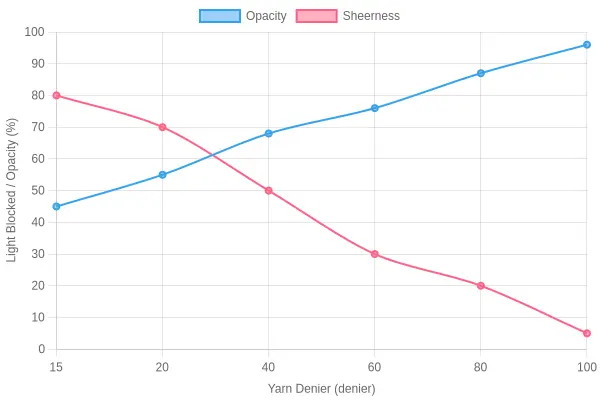
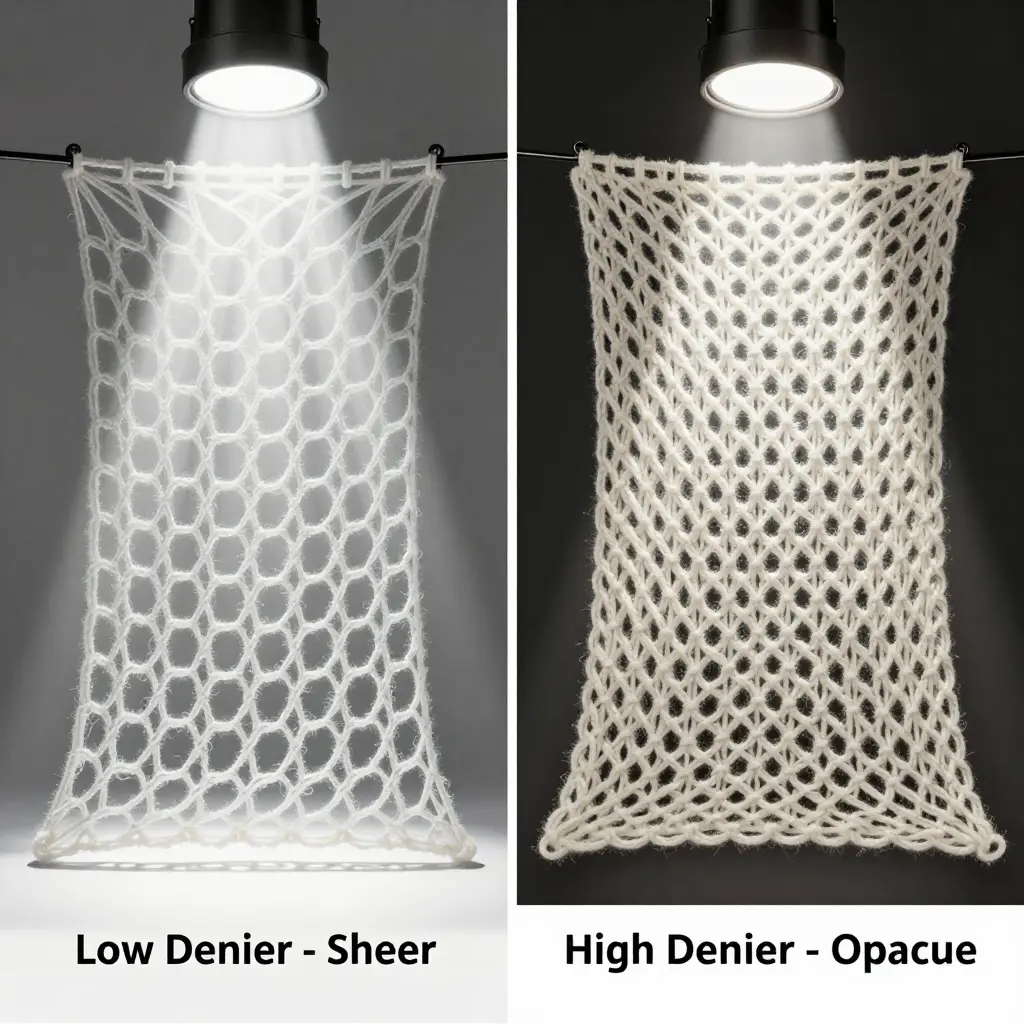
With low-denier yarn the loops stay thin and the spaces between them stay open. Under a strong stage light, much of that light passes straight through and the tights glow translucent. With high-denier yarn the loops swell and crowd together: the gaps shrink, light struggles to pass, and the fabric reads as solid.
Fit amplifies all of this. Stretch a tight too far and every gap widens, thinning the cover no matter how high the denier. The yarn sets the potential; the fit decides how much of it you get.
Choosing Denier: Stage Performance vs. Rehearsal
The right denier depends on the job. On stage, bright lighting and distance demand a clean, opaque line, so higher denier is the safe choice. In rehearsal, where dancers move constantly and want breathability and durability, a lower-to-mid denier balances coverage with comfort. That pairing is part of building a complete ballet costume that reads well from the audience.
| Purpose | Suggested Denier | Coverage Under Stage Light | Feel |
|---|---|---|---|
| Bright stage performance | 70-100 | High, near-opaque | Substantial |
| Run-throughs and photos | 50-70 | Medium to high | Balanced |
| Rehearsal and class | 40-60 | Medium | Light, breathable |
| Layering under costumes | 15-40 | Low, intentionally sheer | Feather-light |
The next time a pair of tights betrays you onstage, check the denier first. It decides whether your line stays solid or turns sheer, and once you understand it you can choose instead of guess.
The schematic below shows yarn thickness and loop spacing together. On the left, a fine yarn forms wide, loosely spaced loops and leaves plenty of open space for light. On the right, a thicker yarn is knit into a dense, tightly packed structure, so far less light gets through the same area. The arrows trace the light path in each case.
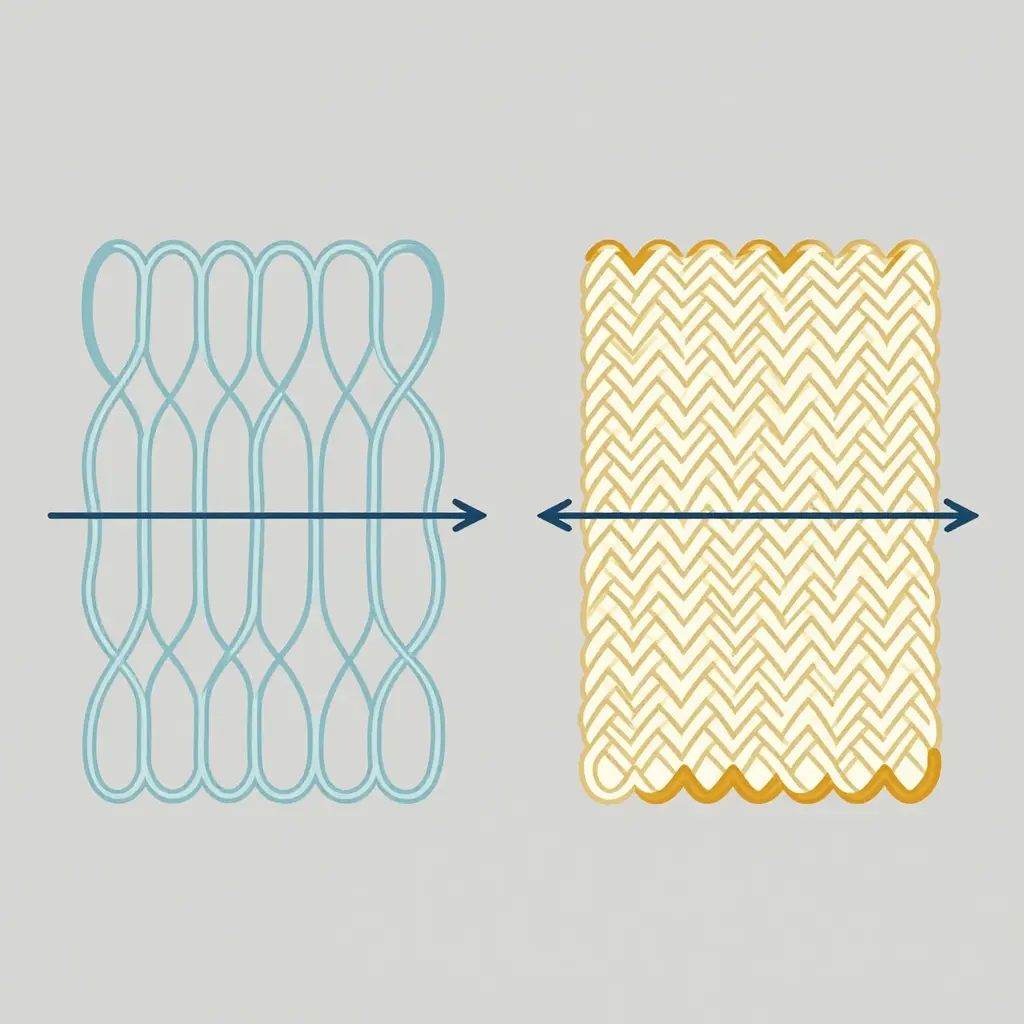
Keep the image in mind when you shop: lower denier and looser knitting mean more sheer; higher denier and tighter knitting mean more coverage. These fabric choices shape what dancers actually wear, and you can read more in understand the full range of ballet tutu construction and materials.
Knit Density and Gauge: The Physics Behind Sheer Tights
Tights can look solid in the dressing room and glow like tissue paper the moment the stage lights come up. The culprit is rarely color; it is the geometry of the knit.
What Knit Density and Gauge Actually Mean
Two technical numbers govern how ballet tights behave on stage: knit density and gauge.
Gauge describes the knitting machine: the number of needles per inch of needle bed. A low-gauge machine (say, 20 needles per inch) uses fewer, thicker needles, so every stitch is large. A high-gauge machine (40 per inch and up) packs fine needles together for small, delicate stitches.
Knit density is the result: how tightly the yarn loops are packed into a given area. The same yarn at a different gauge gives a completely different surface. Think of floor tiles laid loosely, with big gaps, versus the same tiles pressed close together into a near-solid sheet.
From Mechanism to Consequence: Why Dense Knits Block Light
Every yarn loop curls back on itself, and the spaces between loops become tiny windows in the fabric.
- In a tightly knit fabric, the openings are small and there are fewer per square centimeter.
- Most rays that hit the fabric strike yarn and are absorbed or reflected; few find a clear path through.
- The result is high opacity: the fabric blocks light instead of passing it.
Loosen the knit and the reverse happens. The openings swell into visible windows, light streams through, and your skin reads as a bright backdrop behind it. Sheerness comes from a wider gap, not a thinner fiber.
Denier and Knit Density Work Together
Neither denier nor density tells the whole story alone; they multiply.
A heavy yarn knit loosely can still read sheer, because the large openings dominate. A fine yarn knit tightly can gain surprising coverage, because dense loops compensate for the thin fiber.
| Yarn weight | Knit density | Likely stage opacity |
|---|---|---|
| Heavy (60 denier) | Loose | Moderate – gaps still show |
| Heavy (60 denier) | Tight | High – solid coverage |
| Fine (15 denier) | Loose | Very sheer – skin visible |
| Fine (15 denier) | Tight | Medium – gains coverage |
Why It Matters Under the Lights
Bright, hot stage lighting magnifies every opening. A knit that looks opaque under room light can turn translucent onstage, which is why dancers and designers weigh gauge and density together, not just denier, when choosing performance tights. Judge them under the actual stage wash rather than the shop mirror, and the difference between a covered line and an exposed one is obvious. To see how these choices fit a complete stage look, explore this complete guide to ballet performance wear.
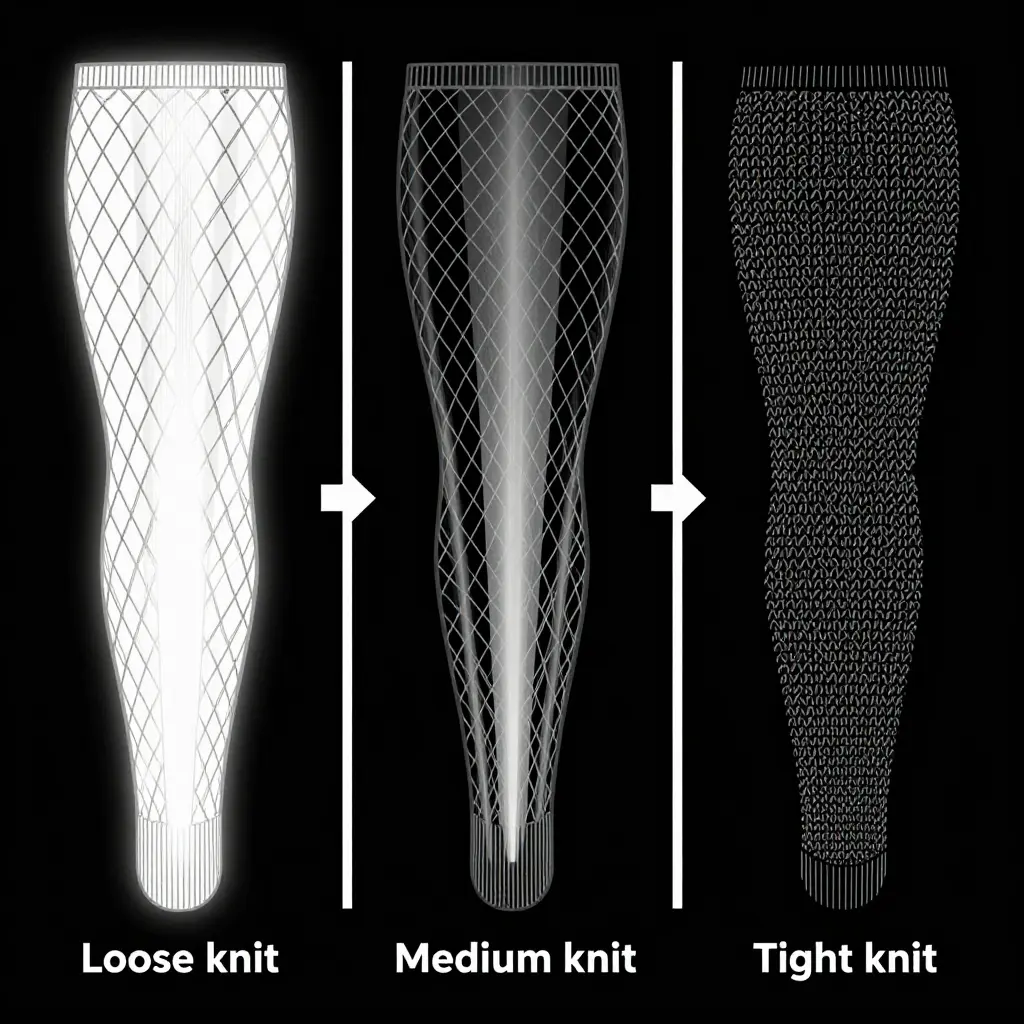
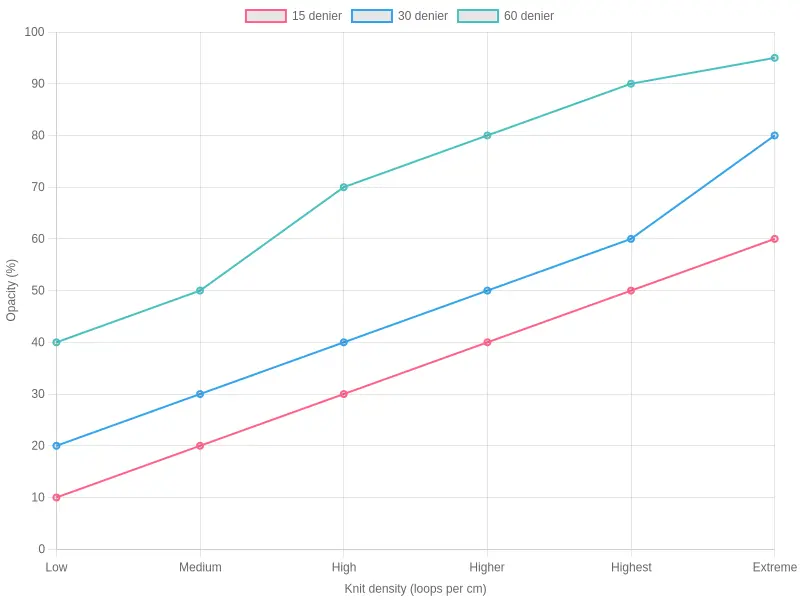
Not all ballet tights read the same under a follow spot. The difference between “elegant” and “obviously sheer” often comes down to yarn weight and construction. The table below maps denier and knit density to sheerness risk.
| Specification Level | Typical Denier Range | Knit Density / Gauge | Relative Sheerness Under Stage Lights | Best Use (Rehearsal vs Performance) |
|---|---|---|---|---|
| Low coverage | 8-15 denier | Low gauge, open knit | Extreme – nearly transparent | Rehearsal only |
| Light | 15-20 denier | Fine gauge, loose knit | High – clearly see-through | Rehearsal, dim scenes |
| Medium | 20-40 denier | Medium gauge | Moderate – subtly sheer | Studio, warm lighting |
| High coverage | 40-70 denier | Dense gauge | Low – mild sheen only | Performance, bright stages |
| Full opaque | 70-120+ denier | Tight, closed knit | Minimal – reads solid | Performance, high-lux lights |
Higher denier paired with a denser knit is the most reliable way to keep ballet tights opaque, especially alongside a solid stage-ready ballet wardrobe. If a performance demands full coverage, choose a dense 40-denier or higher and save the delicate sheers for rehearsal or dimly lit scenes.
Denier and knit density set the potential for sheerness; fit checks decide whether it is triggered. A ballet tight cut and worn correctly reads deep, opaque black under a hot stage wash. The same tight pulled to its elastic limit over a larger body area reads grey, washed-out, and translucent. Same fabric, same lights, very different result.
The Insight: Transparency Is a Moving Target
Most dancers treat sheerness as a property of the garment. It is really a property of the garment plus how far you stretch it. Tights are a stretchable grid, not a solid sheet. Move from a relaxed fit into a strained one and you physically change the material you stand in on stage.
The Evidence: Stretched Loops Open, Light Passes Through
Every knit is a lattice of yarn loops. Relaxed, the loops sit close together and block most light. Stretch the fabric horizontally or vertically and each loop elongates, the gaps widen, and the fabric effectively thins. The evidence shows up on the body:
- Knees. Deep pliés and half-toe work pull the knit over the kneecap, where a tight radius and constant flexion open loops fast.
- Thighs. A horizontal pull across the quad is where stretch first converts to visible sheen.
- Seat. The rear seam and seat take the highest combined tension, so undersized tights go sheer at the back under side light.
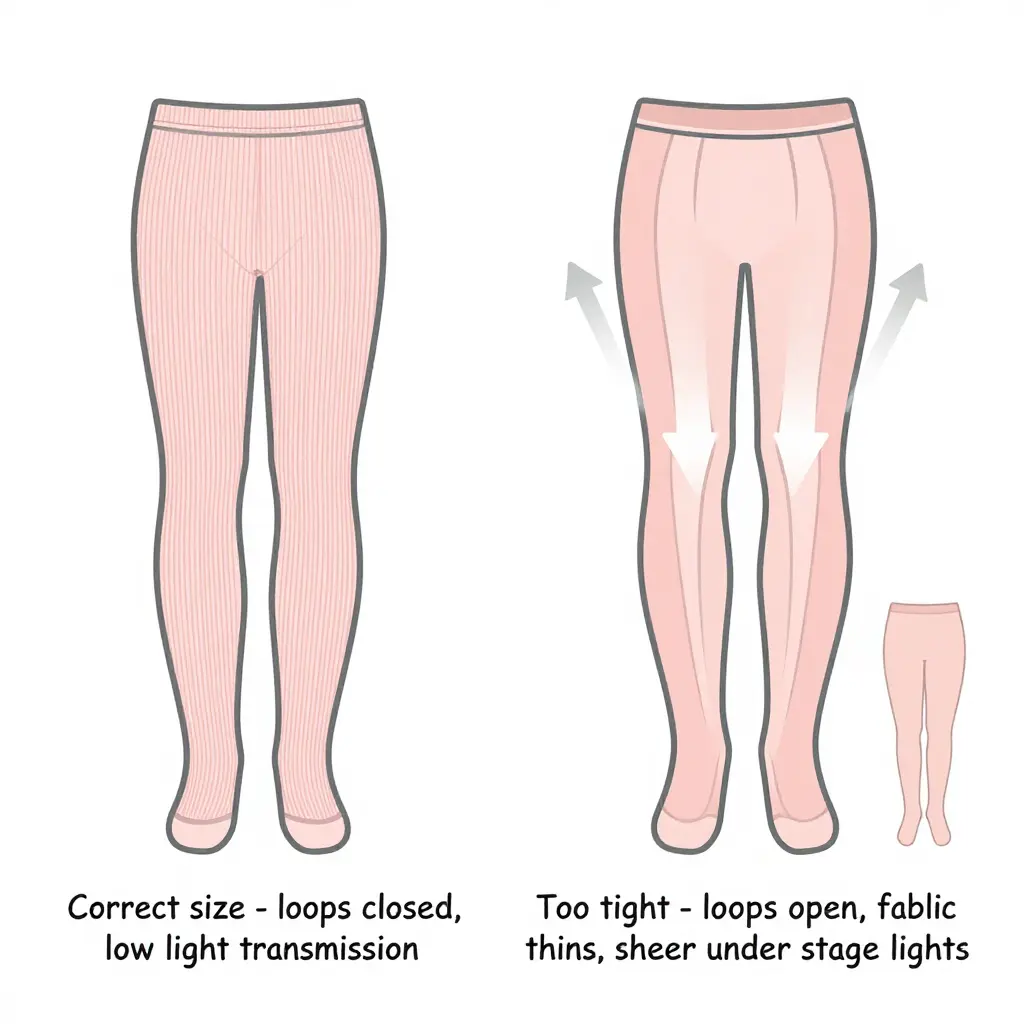
The Evidence: Baggy Tights Sheer Differently
A poor fit cuts both ways. Tights that are too loose sag and fold instead of hugging, creating uneven texture, ripples, and bright highlight bands where a crease catches a Fresnel. Loose fabric also shifts during turns, so the dancer adjusts constantly. Looseness is not safe; it is a different failure mode.
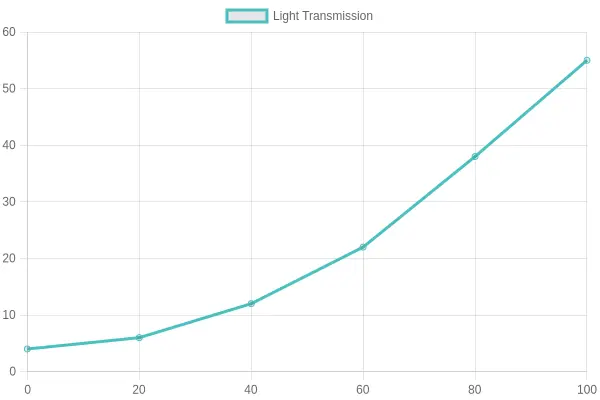
The chart above captures the rule of tights sizing: transmission stays low through moderate stretch, then climbs steeply once the fabric is pulled past roughly 40% of its relaxed length.
The Conclusion: Sizing, Rise, and Waistband Placement Control the Outcome
Correct sizing keeps stretch inside the yarn’s elastic range. Three details matter:
| Stress point | What happens when over-stretched | Fix |
|---|---|---|
| Knees | Loops open on deep plié, bright sheen | True-to-size fit or higher elastane content |
| Thighs | Horizontal pull thins the weft | Correct size, avoid yanking waistband up |
| Seat | Vertical tension opens loops at the rear seam | Check rise and seam placement |
| Waistband | Digs in, rolls, or gaps | Sit flat at the natural waist |
- Waistband placement: the band should sit flat at the natural waist, not rolled or riding on the hipbone, so it anchors tension instead of pinching and pushing stretch downward.
- Rise: too short and it pulls the crotch down and drags tension up the seat; too long and the fabric gathers at the knee.
- Stress points: prioritize knees and seat, where stage lights read sheerness first.
Practical Fit Checks Before Performance
- Measure at the end of the day, when legs are slightly swollen, so the fit holds through a full performance night.
- Measure height and hip together, not just shoe size. Tights sizing keys off height and hip circumference, not dress size.
- Do the plié test in front of a mirror: a lighter patch at the knee means the size is wrong.
- Do the sit test: sheerness at the seat while seated means the rise is too short.
- Do the light test: hold the fabric in front of a bright lamp and pull gently. If light passes through easily at performance tension, it will pass through on stage.
Pair the right fit with a balanced silhouette using our ballet tutu guide, and the whole costume reads as one clean, opaque line.
Key Takeaway
Denier gets you in the door; fit sells the illusion. Measure carefully, size honestly, keep the waistband where it belongs, and your fit checks will hold long after the lights go up.
Sheerness Index vs. Denier and Knit Density
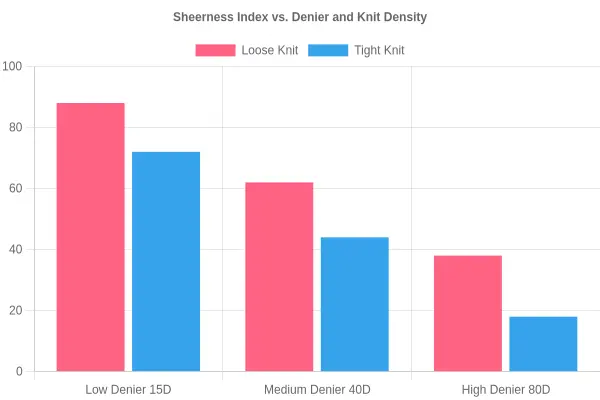
Reading the chart. The index runs from 0 (fully opaque) to 100 (completely see-through), so lower bars mean less transmitted light and less risk of a wardrobe reveal. Two levers work together: as yarn denier climbs from 15D to 80D every bar drops, and within each denier group the tight-knit bar sits well below its loose-knit twin. The worst case is the low-denier, loose-knit combination at 88; the mid-range options fall in between. The clear winner is high denier paired with tight knit at just 18, which cuts transmitted light to roughly a fifth of the flimsiest option. To stay opaque under hot stage lights, choose the darkest practical yarn in a densely knitted weave, then confirm the fit with a bend-and-stretch check before curtain, as outlined in our ballet tutu guide.
The Pre-Performance Fit-Check and Fabric Checklist
A polished stage picture begins backstage. A few unhurried minutes inspecting ballet tights can save a dancer from a distracting reveal under the lights.
-
Check size and rise first. Tights that are too small creep up, flatten the leg line, and dig into the waist during grands pliés; oversized pairs pool at the ankles. Make sure the rise settles at your natural waist, the waistband sits flat without rolling, and the gusset stays centered when you bend and turn.
-
Stress-test the stretch at the knees, thighs, and seat. Drop into a deep plié, sweep a grand battement, and sit fully. Look for opening loops, the small gaps where stretched yarn pulls apart and lets light bleed through. These are the first places tights turn sheer onstage.
-
Confirm the denier suits the lighting design. A pair that looks opaque in the studio can read almost transparent under a 1000-watt profile or a tight follow spot. Compare the intended denier against the brightest cue in the show, and choose a heavier knit when the rig runs hot or the fabric sits close to side light.
-
Test under stage lighting where you can. Stand in the actual key light and gels at performance intensity. Colored washes, sidelight, and backlight all change how fabric reads, and a two-minute test beats a guess made in a fluorescent dressing room.
-
Inspect seams and stress points. Run your fingers along every seam, the gusset, the waistband, and the toe for loose stitching, snags, pilling, or thin spots. Repair or retire anything questionable; one popped seam under bright light draws the eye faster than a missed step.
-
Carry a backup pair. Pack an identical spare in the same denier and shade. A run or blown seam just before an entrance is survivable only if a replacement is already at hand.
For a fuller picture of how undergarments and skirts work together, review a complete ballet tutu guide before tech rehearsals.
Routine fit checks turn guesswork into certainty, which protects the stage appearance you rehearsed for weeks. When fabric, fit, and lighting align, the audience sees the dance, not the seam.
Color, Dye, and Lining Factors That Affect Sheerness
Under stage lights, tights do not simply cover the legs; they interact with the light. Color and dye play a large part in how opaque a pair looks once the spotlights hit, and understanding that helps dancers and designers avoid surprises on opening night.
Light, Tint, and the Illusion of Coverage
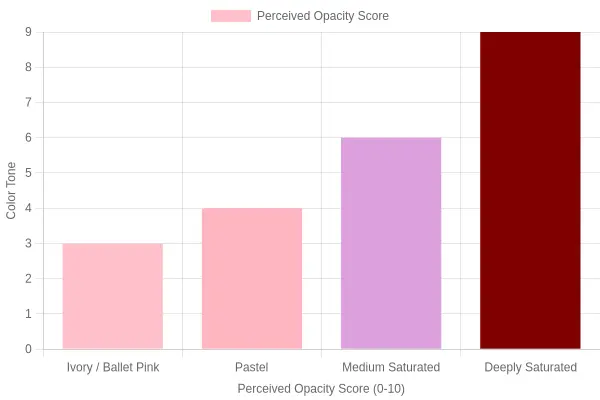
When light strikes a leg, part of it bounces back toward the audience (reflected light) and part passes through to the skin (transmitted light). Perceived opacity depends on how far those two readings differ from actual skin tone. Pale and pastel tones sit close to skin in both hue and brightness, so the contrast between “tights” and “skin” stays low. The eye reads that low contrast as sheer even when the fabric is technically opaque.
Deeply saturated colors flip the equation. A rich burgundy, forest green, or classic black absorbs far more visible light, so the reflected reading diverges sharply from skin. That contrast registers as more coverage, which is why dark tights can look denser at the same denier and lighting.
The Role of Dye Saturation
Dye saturation matters as much as hue. A heavily pigmented yarn carries more colorant through its core and blocks transmitted light better than a lightly tinted one. Two tights can share the same denier and read very differently because one fiber took up more dye. Layering compounds it: two deeply saturated pairs stack the absorption and push perceived opacity higher.
Liners and Layering in Practice
Color alone rarely guarantees full coverage, so many performers use liners or layering. A liner, a second pair or an underlayer in a neutral or matching tone, adds a barrier between light and skin without changing the outer look. Some dancers pair a sheer pastel outer tight with an opaque liner to keep the delicate appearance while blocking the see-through problem. Others wear two pairs, trading a slightly different texture for reliable coverage.
Color Works With Denier, Not Instead of It
Color is a supporting factor, never a standalone fix. A deeply saturated tone cannot rescue a yarn that is too fine or a knit that is too open. Denier sets the material thickness; knit density determines how tightly it closes the gaps; color tints the result. If the denier is low or the knit loose, no amount of dye hides skin. Choose denier and knit density first, then use tint, liners, and layering to fine-tune the finish. Coordinated with the rest of the costume, the result looks intentional.
Quick Reference
| Color Tone | Typical Perceived Opacity | Best Pairing |
|---|---|---|
| Ivory / ballet pink | Low | Use higher denier or a liner |
| Pastel (mint, lavender) | Low to medium | Layer with an opaque underlayer |
| Medium saturated (peach, tan) | Medium | Standard performance weights |
| Deeply saturated (black, burgundy) | High | Fine denier can still work |
See how color and fabric choices come together across a full ballet costume design before committing to a shade.
Related Reading
Why tights turn sheer is one part of a larger question about how balletwear behaves on stage, in rehearsal, and in the hands of costumers. Choices about yarn, knit density, and fit rarely stand alone, and the same principles behind a dependable pair of tights shape how a tutu reads from the audience. The reads below connect the technical detail above to the wider world of ballet costumes.
Start with our complete ballet tutu guide, which walks through the anatomy of a tutu, from the basque and bodice to the layered netting that gives each style its silhouette. It explains why a costume photographs and moves the way it does. Ballerina tutu fundamentals then covers the classical shapes audiences picture first and how they have evolved across companies and decades.
For a broader reference that ties terminology together, our tutu ballet guide gathers the vocabulary costume designers, stage managers, and dancers use for fit, line, and construction. Dancers moving into teaching or performance later in their careers will appreciate the adult tutu guide, which covers how proportions, support, and comfort change when costumes are built for grown bodies rather than young students.
If you are sourcing materials or building a wardrobe at scale, the tutu dress guide for business owners offers a practical view of evaluating quality, consistency, and value across suppliers. Dadatutu.com makes dependable balletwear focused on quality, comfort, and design, and it is a useful reference when comparing options for a studio or production.
Read together, these pieces make one point: the fabric decisions behind a pair of tights and the structural decisions behind a tutu serve the same goal, helping a dancer look and feel confident under unforgiving stage lighting.
FAQ: Ballet Tights and Sheerness Under Stage Lights
Dancers, costume designers, and stage crews ask the same questions every season about why tights look transparent under performance lighting. Here are the common ones.
Does a higher denier always prevent sheerness?
No. A higher denier increases yarn thickness, which usually reduces transparency, but the number alone does not guarantee opacity. How tightly the yarn is knit and how the fiber reflects light matter just as much, so even a 70 denier tight can read sheer under a powerful spotlight. Judge ballet tights by construction, not the label alone.
Does the stretch from a tight fit cause transparency?
Yes. Stretching a knit pulls the yarn loops apart and opens tiny gaps that let light through, which makes the fabric look sheer. A fit that is too tight causes the most transparency, because the yarns sit near their limit before you move. The correct size keeps the knit relaxed enough to stay opaque through jumps and extensions.
Does knit density or denier matter more for opacity?
Knit density usually matters more for blocking light, because dense stitching leaves less open space between yarns. A thinner yarn knit at high density can be more opaque than a thicker yarn knit loosely. The best ballet tights pair a moderate denier with a tight, even knit.
How can I test tights before a performance?
Put them on, stand under a bright light, and stretch the leg to mimic a full extension. Look for bright spots at the thigh, knee, and seat, since these areas pull thin first and show up fastest on stage. If you can see the outline of your hand through the fabric, the pair is too sheer for performance.
Can color choice reduce visible sheerness?
Yes. Darker, more saturated colors hide transparency better than pale tones because they absorb more light instead of letting it pass. Classic stage pink can look sheer quickly, so many dancers layer it or choose a denser version for the stage. When matching tones to a costume, this ballet tutu guide explains how color and layering work together.
Does the fiber or finish change how sheer tights look?
Yes. Shiny nylon reflects stage light and can appear brighter than the skin beneath it, which makes the fabric look sheer even when the weave is solid. Matte and microfiber blends scatter light more evenly and often read as denser under spotlights. If glare is your problem, switching finish can matter more than increasing denier.
Conclusion: Opacity Is the Result of Three Factors Working Together
There is no single answer to why ballet tights turn sheer under stage lights. Three factors interact: yarn denier, knit density, and fit. Denier sets how much material sits between the leg and the light. Density determines how tightly the yarns are packed and how much light slips through the gaps. Fit checks reveal whether the garment is stretched beyond its limits, thinning at the knee, thigh, or hip. Change one variable and the result shifts: a high-denier tight in a loose knit can still glow under a beam, a dense knit pulled too tight can still read sheer, and a perfectly fitted low-denier tight may simply not offer enough coverage under a hard spotlight. No single factor guarantees opacity, which is why no single fix reliably solves it.
Key Takeaways
- For dancers: Treat denier, knit, and fit as one decision, not three. Check tights under real stage lighting during dress rehearsal, not just the dressing room mirror, and size up if the fabric pulls pale across the thigh.
- For theater professionals: Coordinate lighting with costume stock. Softer angles, warmer tones, and thoughtful beam placement reduce the hot spots that make thin tights turn sheer; sharing those plans with the costume team early prevents opening-night surprises.
- For costume designers: Specify denier and knit density together, and build a fit check into every fitting. Fabric that looks opaque on a mannequin can behave very differently on a live dancer under a follow spot.
The lesson is consistent: choose an appropriate denier, evaluate the actual knit density, and run regular fit checks rather than relying on any one of them. That combination keeps a costume predictable from rehearsal to performance.
Looking Ahead: Choosing Reliable Balletwear
As lighting rigs grow more powerful and precise, thoughtfully constructed balletwear matters more, not less. Dancers, directors, and designers who understand the relationship between yarn, knit, and fit can make confident choices, whether restocking a company wardrobe or preparing for a single recital. A reliable reference for those decisions, from ballet costume fundamentals to the details of fabric behavior, sets clearer expectations for how a garment will perform once the curtain rises.