
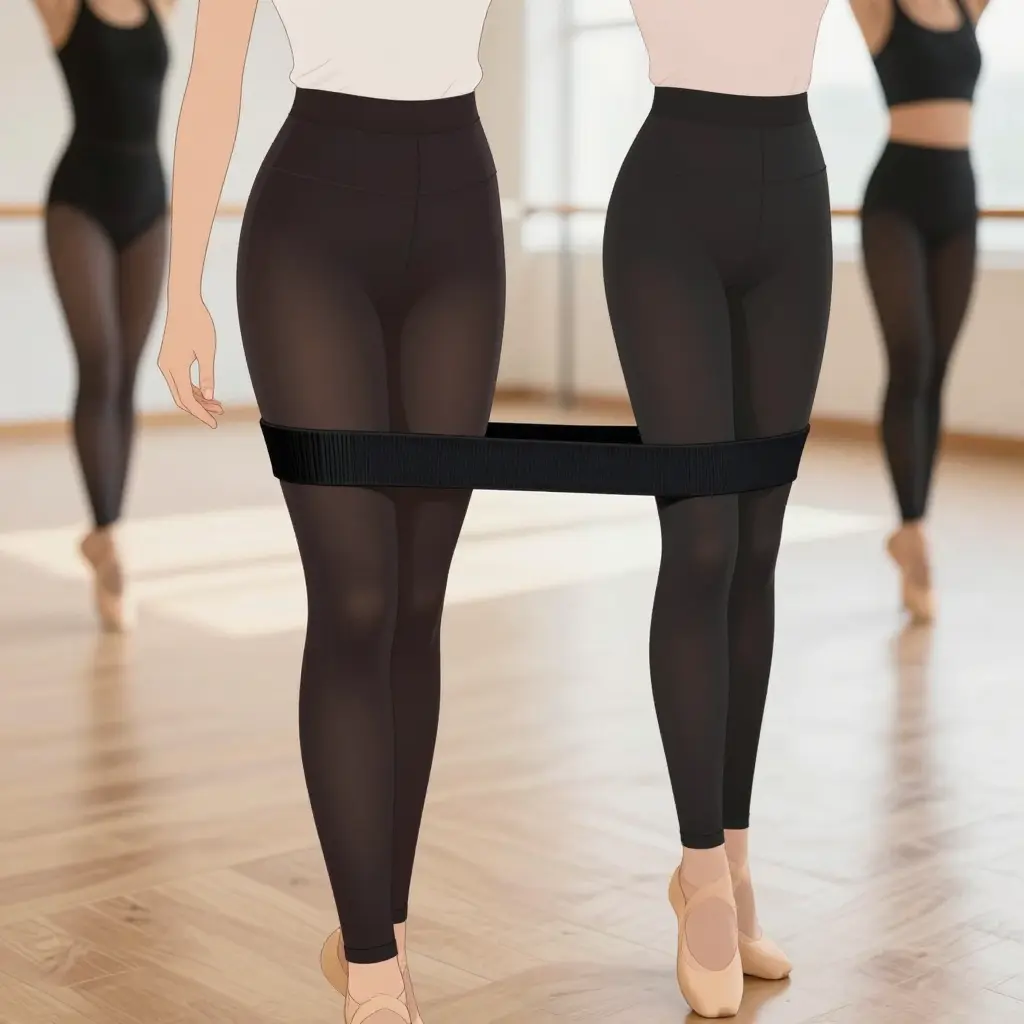
In a dance studio, few distractions are worse than a waistband that starts sliding the moment you move. If you have ever paused mid-combination to tug at your waistline, you know how tights waistbands roll down and interrupt your focus in class. The cause is rarely poor posture or a bad brand. More often it comes down to how the garment is built and how it meets your body, which is why dancewear fit deserves more attention than it usually gets.
Three things explain most of it: elastic width, torso rise, and practical fit checks. Each plays a distinct role, and together they account for most rolling and slipping complaints.
Elastic width decides how hard the band grips. Torso rise decides where the band sits. Fit checks tell you whether those two match your body before class begins. Readers who want the broader picture of how dancewear is put together can start with our guide to the foundations of ballet tutu design.
Why Elastic Width Matters
A waistband has one job: grip the body firmly enough to stay put through movement. How well it does that depends heavily on the width of the elastic sewn inside the channel. Get the width wrong and your tights travel downward during class; get it right and you stop thinking about them.
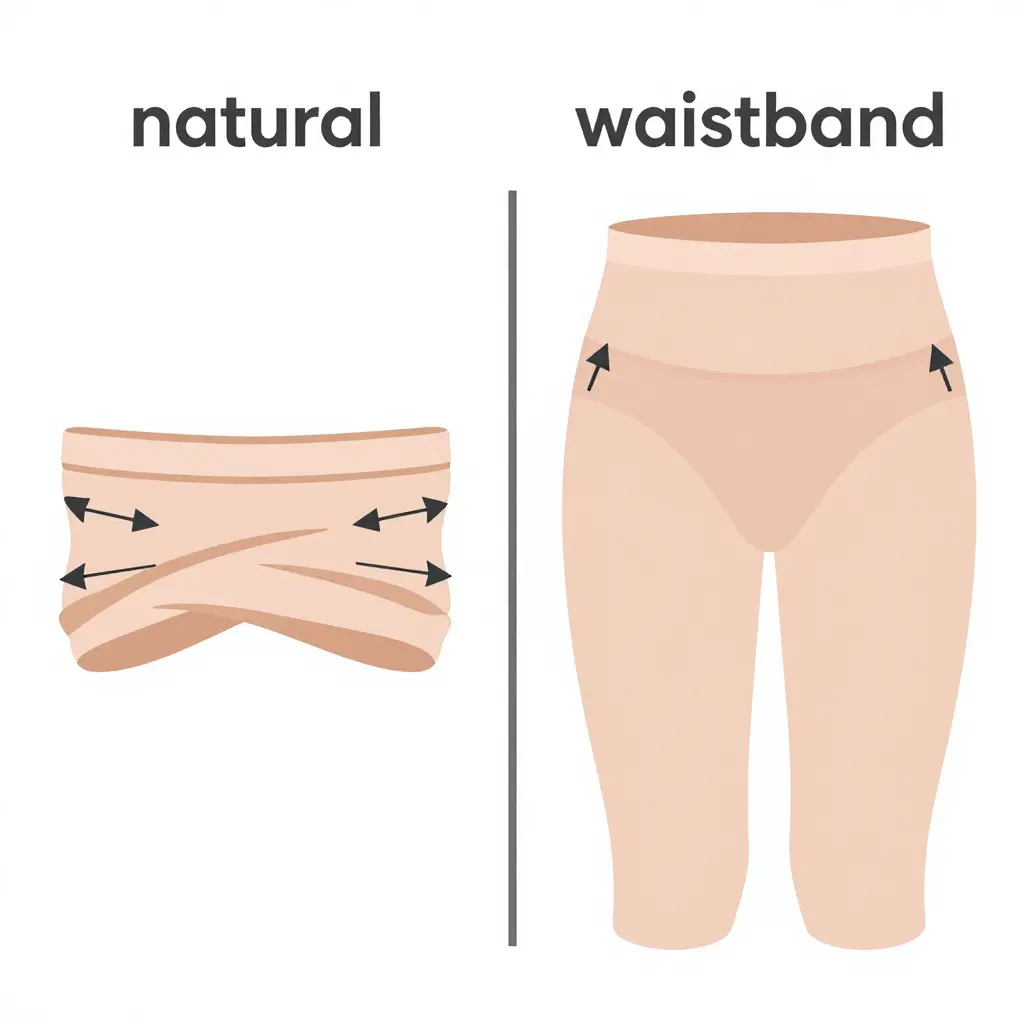
Narrow elastic: grip that concentrates and collapses
A narrow elastic puts its whole holding force into a thin line of fabric. Pressure per unit of area is high, so it digs into the skin and feels tight while touching only a slim strip of it. When you bend, twist or breathe deeply, that strip has almost no room to absorb the change. Rather than gripping evenly, the band folds over on itself – the familiar rollover – and each flip shrinks the contact surface further. Grip drops and the slow slide starts.
Wide elastic: grip that distributes and stays
A wider elastic spreads the same tension over a much larger surface. Pressure at any single point is lower, so the band feels gentler and still holds securely. That broader footprint resists folding: when the fabric flexes, a wide band bends with the body instead of curling inward, which gives steadier grip and less rollover even in vigorous movement.
Width as a mechanical trade-off
Width is a trade-off, not a “better or worse” setting. Too narrow and the band rolls; too wide and it can feel bulky or bunch under fitted clothing. That trade-off is also why the same tights behave differently on different bodies, and in different movements.
| Elastic width | Pressure pattern | Behavior in motion |
|---|---|---|
| Narrow | Concentrated, high force per point | Digs in and folds over (rollover) |
| Wide | Distributed, lower force per point | Stays flat and resists folding |
For anyone weighing fit, knowing how dancewear is constructed makes these choices easier to read. Our guide to how dancewear is constructed covers the rest of the garment.
Understanding Torso Rise
Torso rise is the vertical distance from the crotch seam to the top edge of the waistband. On tights, that one measurement decides where the band actually rests and whether the garment stays put or fights you all class long. Choose the right rise and the waistband settles at the natural waist, the narrowest point of the torso, where it can grip without digging in or creeping upward.
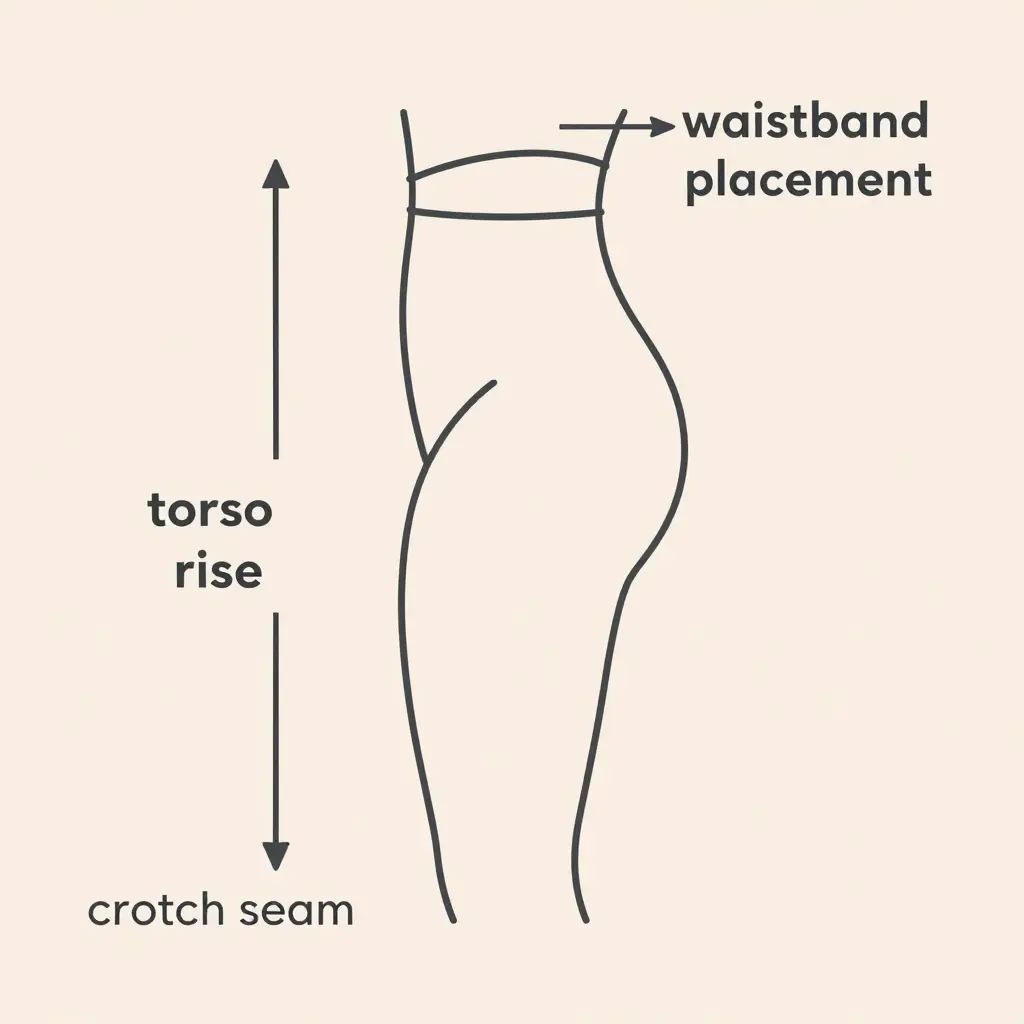
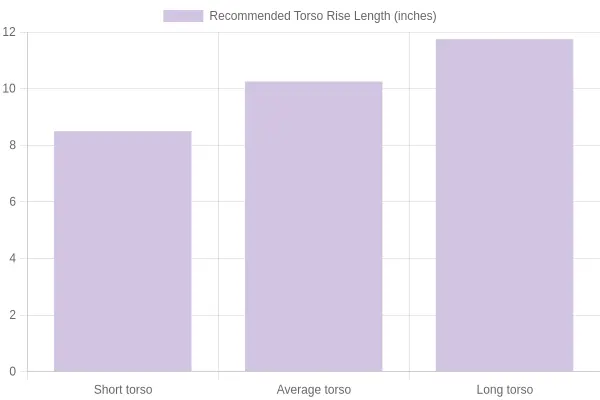
Proportions matter more than overall height. Two dancers of the same height, one short-torsoed and one long-torsoed, need different rise lengths; no single waistband placement suits both. Crotch-to-waistband distance has to follow the wearer’s anatomy rather than a generic size chart, which is why a careful fit check matters as much as the label. Rise and silhouette also work together, so dancers who want the full ballet fit picture usually look at both.
A rise that is too short is the more common problem. The waistband cannot reach the natural waist, so it sits low on the hips and slides downward, rolling under tension whenever the fabric pulls. Too much rise fails the other way: the extra length travels upward, bunches around the midsection and eventually loses contact.
Waistbands move most during stretching, bending and jumping, because those actions repeatedly lengthen and compress the torso. A band that only fits while you stand still will slip as soon as your body changes shape. To hold through a full class, rise has to match your proportions, balancing crotch depth against waist height so the band stays anchored while you move.
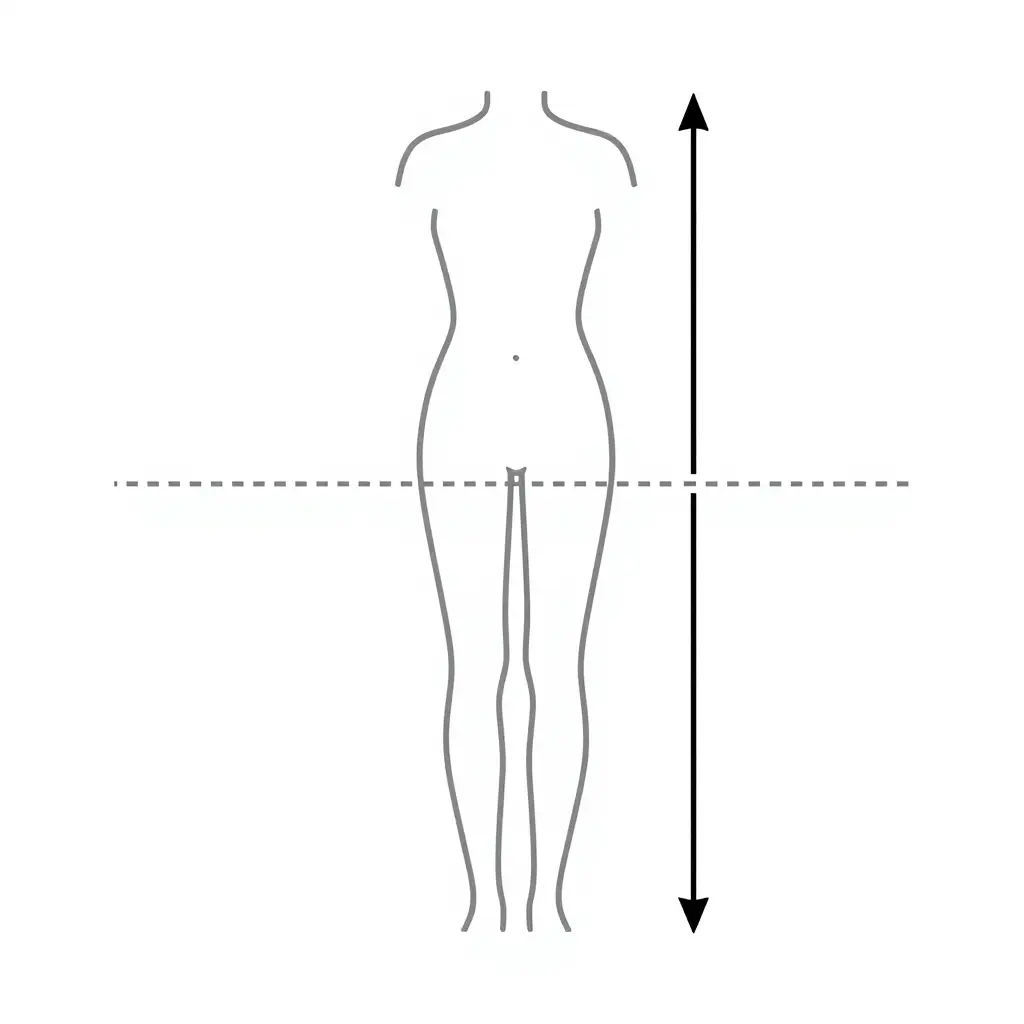
How to read this diagram
The diagram reduces torso rise to three dashed lines and two arrows.
- Natural waist line – the dashed line at the top marks where a waistband is designed to sit on the body.
- Crotch point line – the dashed line in the middle marks the body’s crotch level, the anchor that defines where the rise begins.
- Rise distance – the short vertical double-headed arrow spans only from the crotch line up to the waist line. That gap is the torso rise.
- Leg length – the separate, longer vertical double-headed arrow runs from the crotch line down to the ankle, deliberately drawn apart from the rise arrow so the two measurements are never confused.
Because the rise arrow is short and the leg arrow long, the point is easy to read: a waistband that rolls down is usually not a leg-length problem but a rise that cannot stay anchored between the crotch and the waist.
Fit Checks to Prevent Roll-Down
A waistband that stays put is not luck. It is the product of a few deliberate fit checks you can run in seconds before class, ideally in front of a mirror or a classmate who will tell you the truth. Try them in order.
- Check the rise height before class. Hold the tights up at the waist and confirm the crotch sits snugly against your body instead of hanging low, because a rise that is too short pulls the band downward the moment you move.
- Test the waistband while bending forward. Bend at the hips and reach toward your toes; if the band slips or folds, the elastic is losing its grip and needs a tighter fit or a different size.
- Check the elastic width against your frame. Pinch the band and notice how tall it is where it crosses your waist, since a narrow elastic digs into a thin line while a wider band spreads pressure and resists rolling much better.
- Do a squat and twist test. Perform a few deep squats and torso twists to mimic class movement, then check whether the band has crept down or bunched up at your waistline.
- Check the fabric-to-skin grip. Run your fingers along the inside of the band, because a rubberized or lightly textured lining clings gently while a slick one slides across the skin.
- Re-adjust and mark your sweet spot. Once the band sits flat and secure, note the position or size you used so future fit checks stay quick and consistent.
For a deeper look at how structure and fit shape a ballet silhouette, see our ballet tutu guide on fit and form. Run these checks before every class, and you will spend far less time tugging and far more time dancing.
Elastic Width, Torso Rise and Roll-Down Risk
How a waistband behaves in class depends less on fabric alone than on how the elastic width pairs with the rise your torso needs. The table below sets the two side by side.
| Elastic Width | Typical Torso Rise Need | Roll-Down Likelihood |
|---|---|---|
| Narrow elastic with low rise | Short-waisted, low-cut fit | High risk |
| Medium elastic with medium rise | Average torso, mid-hip support | Moderate risk |
| Wide elastic with medium-to-high rise | Balanced torso, secure coverage | Low risk |
| Wide elastic with high rise | Long-waisted, full waist support | Very low risk |
The pattern: a wider elastic combined with a rise that matches torso length produces the least creep, folding and roll-down once you start to move. For how these construction choices shape the whole garment, see this ballet tutu guide.
Elastic Recovery and Fabric Behavior
Elastic recovery is a stretch fabric’s ability to spring back to its original shape after being stretched. With strong recovery, a waistband hugs the body throughout movement and returns to form the moment the stretch is released. With weak recovery, the band slowly relaxes, widens and begins to roll.
Elastane, also called spandex in the US and sold under the brand name Lycra, is the stretch fiber that makes recovery possible. More elastane generally means a snappier return to shape, while too little leaves a band that sags over time. Fabric structure matters just as much: a dense knit with tightly interlocking loops holds tension better than a loose weave that gives way under load.
Surface texture changes how a band behaves against the skin too. Smooth, low-friction fabric slides easily, so it can creep downward during jumps and turns. A textured or lined waistband creates more friction and stays anchored. On balance, a wide, high-recovery, lightly textured band holds far better than a narrow, slick one.
Materials with these traits make dancewear that survives a class, so students can focus on technique instead of a slipping band. To see how construction shapes other ballet garments, explore how ballet pieces are designed for the stage.
Ordered by how directly each cause produces roll-down, a narrow elastic width comes first, followed by insufficient torso rise, then poor elastic recovery, with low-friction fabric last. So if you want your tights to stay put through every plié, start by examining that elastic band.
How Class Movement Tests the Waistband
A tights waistband can feel perfect in the dressing room and betray you five minutes into barre. Class movement loads the band in ways a quick mirror check never does. Every plié, grand battement, jump and rise to pointe asks the elastic to hold its place while your torso moves in a completely different direction.
How Each Movement Stresses the Band
Bending and extending at the hips pulls the front of the waistband downward again and again. When you cambré or hinge forward, the distance between your natural waist and the band stretches, and a narrow elastic simply cannot recapture that distance. Jumps add vertical force: each landing drives the band down before the fabric has time to settle. Rising to pointe lengthens the whole body, lifting the ribcage away from the hips and exposing any weakness in waistband stability.
The effect is cumulative. A tiny shift in first position becomes a full roll by the end of allegro, because mobility and fabric tension keep fighting each other rep after rep.
Reading the Roll-Down
Pay attention to where and when the band rolls. If it folds only during deep bends, the issue is usually elastic width – the band is simply too thin to grip the torso. If it slides during jumps or pointe work, the rise is likely wrong, or the fit sits too low or too loose for your proportions.
Reading that pattern tells you which cause to fix instead of leaving you to guess. For a broader look at how ballet garments are built to move, this guide to ballet tutu construction explains the layering and support that keep performance wear in place.
Diagnose, Don’t Guess
Watch the band across a full class: tendus, adagio, petit allegro. The first exercise that triggers a roll tells you which factor – width, rise or fit – to address next.
Frequently Asked Questions
Can a wider waistband stop tights from rolling down?
A wider waistband often helps, but only when it matches your torso shape and the fabric has enough grip to stay put. If the band is too wide or too slick, it can still slide, which is why the common complaint that tights waistbands roll down is rarely answered by width alone. In most cases, pairing a moderate band with a snug rise gives a more reliable hold than simply going wider.
Does torso rise matter for every body type?
Yes. Rise decides exactly where the waistband lands on your frame, whatever your frame looks like. A rise that is too short for a long torso keeps tugging downward, while an overly long rise can bunch and fold. That is why a personal fit check is essential instead of trusting a single universal size.
Are high-waisted tights always better?
No. High-waisted tights genuinely suit dancers who want extra coverage and a secure feeling during class, but if the elastic width is too thin, even a high waist can dig in or slowly roll down your ribs. The smarter choice depends on your proportions and how you move, not just on the height of the band.
How often should tights be replaced if the elastic loses recovery?
Once the elastic stops snapping back, replace your tights rather than waiting for them to fail in the middle of a combination. A sensible rhythm for everyday pairs is every few months, or sooner if you notice sagging, twisting or constant rolling. Rotating two or three pairs extends their life and keeps every fit dependable.
Getting the Fit Right
When tights waistbands roll down in class, the fix is rarely a mystery. It almost always comes back to three fundamentals: elastic width, torso rise, and fit checks.
Elastic width does the quiet work. A broader band spreads tension across more surface area, so it grips instead of digging in and curling over. A narrow band concentrates pressure in one line, which is exactly where rolling begins.
Torso rise decides where that band actually sits. If the rise is too short, the waistband lands below the natural waist and fights every bend, plié and stretch. Get the rise right, and the band rests where your body wants to hold it.
Fit checks tie it together. A quick pinch, bend and mirror test before class catches gaps, slippage and twisting early, so small problems never become mid-class distractions.
The three interact rather than work alone. A wide elastic on the wrong rise still migrates, and a perfect rise with a flimsy band still loses recovery. Only when width, rise and a thoughtful check line up does the waistband stay put.
That is why investing in well-made dancewear matters. Reliable elastic recovery and a correct rise are not luxuries; they are what keep you comfortable and focused, whether you are a student, an educator, or simply someone who loves the look of quality dancewear.
Check before you move, and choose pieces built to hold their shape. The right waistband should disappear into your routine, not tug at your attention.